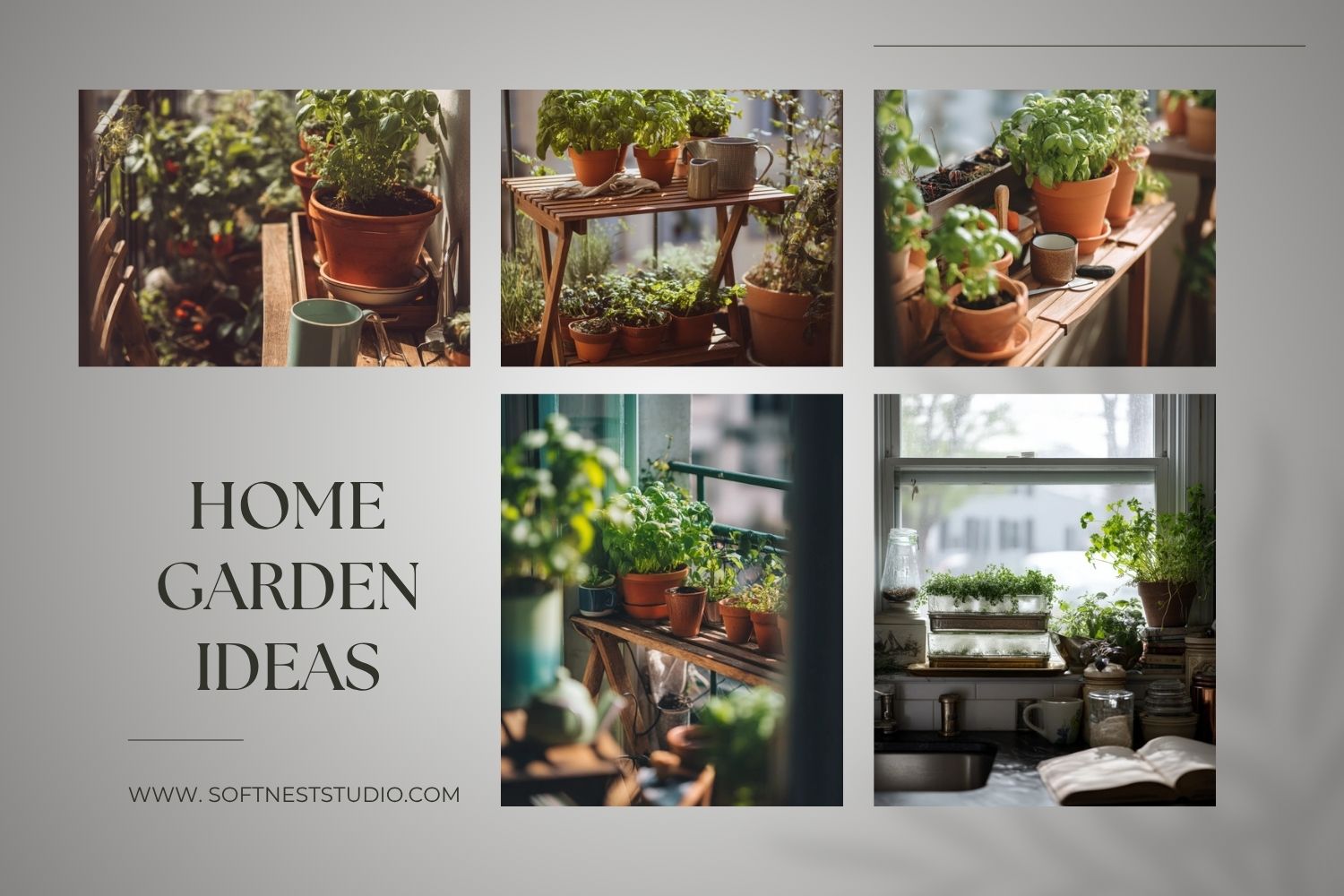
Looking for home garden ideas that fit real life, not perfect photos. This guide shows small and practical ways to grow herbs, flowers, and veggies in spaces like a compact balcony, a tiny patio, a kitchen windowsill, or a small backyard.
Each section matches a common scene people pin on Pinterest, like terracotta pots on a slim wooden shelf, raised beds edged in cedar, or a calm courtyard with river stones and a water basin. You will get styling ideas that still feel lived in, plus simple care tips.
These ideas work for renters, busy families, and anyone who wants greenery without a big budget. You will also learn how to add light, storage, and easy routines so your plants keep growing.
Use the headings to jump to the space you have. Pick one setup, start small, and build from there.
Intro
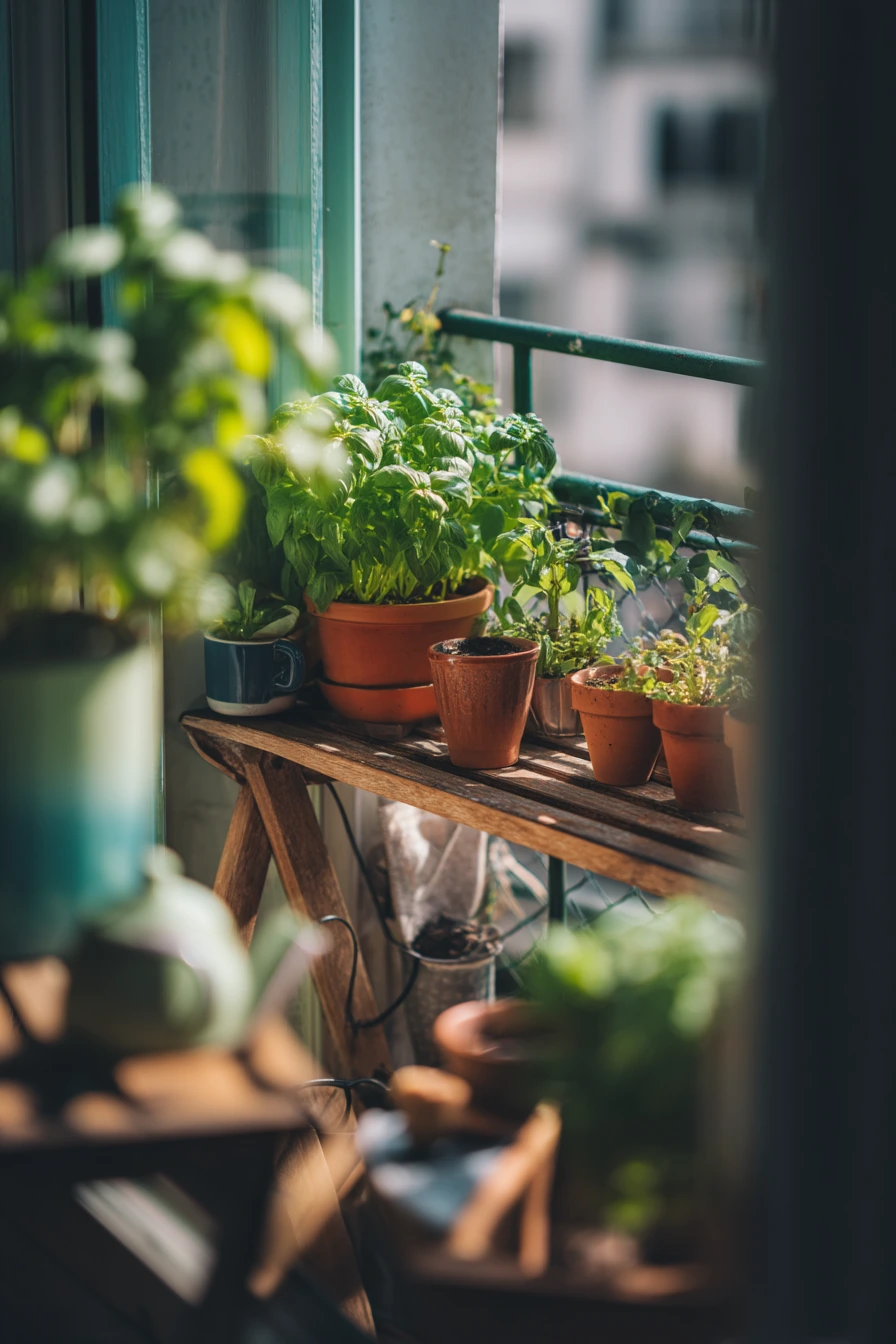
If you are starting from zero, focus on two things first: light and watering. Most herbs and vegetables need several hours of sun, while many indoor plants prefer bright, indirect light near a window.
Next, plan for daily use. A home garden should fit your routine, like watering after coffee or checking leaves while you open the door. Small lived in cues, like gloves on a chair or a mug on the railing, are not clutter if they help you garden more often.
Finally, keep your first choices simple. Pick sturdy plants, containers with drainage, and a place to store tools. You can always add more pots or a second bed later once you know what grows well in your space.
- Check sun and shade for one full day before you buy plants
- Start with 3 to 5 plants you will use or enjoy every week
- Use pots with drainage holes and a saucer or tray
- Keep a small watering can and pruners where you can reach them
- Label plants so you remember what you planted and when
Pro Design Tip: Repeat one material across the setup, like terracotta, cedar, or black metal, so the garden looks calm even when it is busy.
Budget Considerations: Start with a few containers and add more over time; plain nursery pots inside thrifted baskets can look good for less.

1. Compact Balcony Herb Garden for Renters


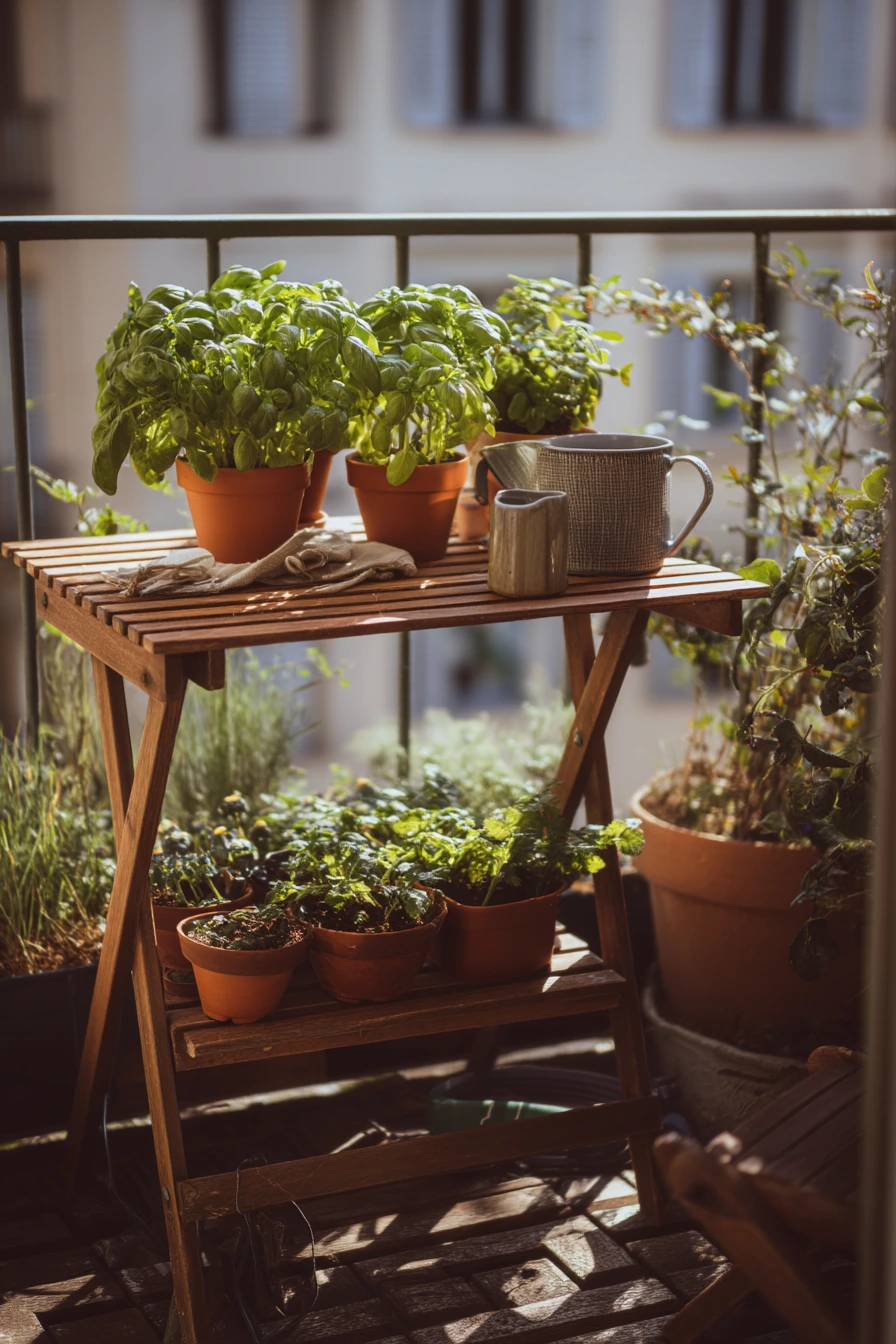
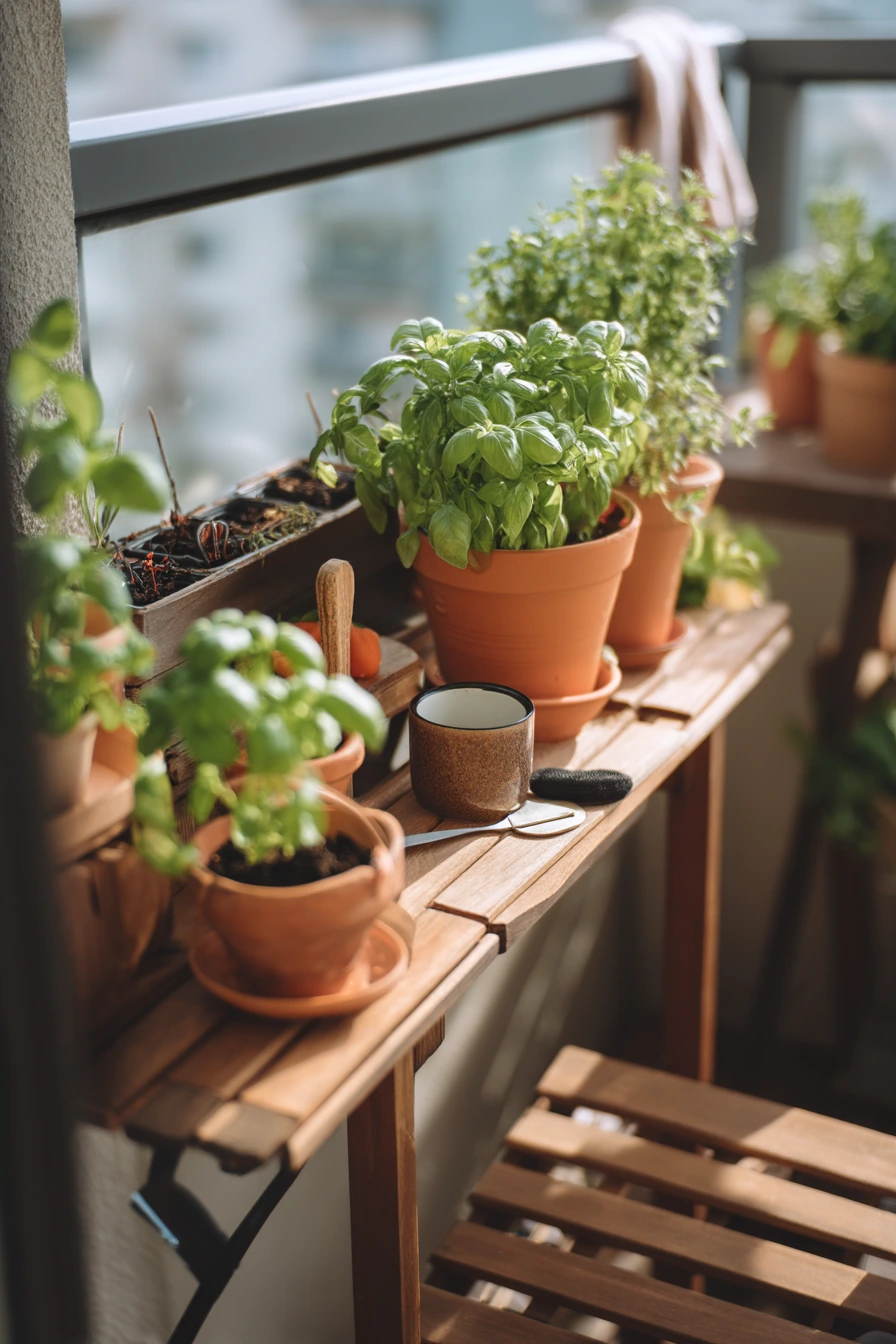
A compact balcony garden is one of the best home garden ideas for renters because it uses vertical space and moves easily. Start with terracotta pots for herbs like basil and mint, then add a cherry tomato in a slightly larger container. A slim wooden shelf keeps everything off the floor and makes watering faster.
Make it feel practical and lush by mixing leaf shapes. Pair the soft leaves of basil with upright chives or thyme. Keep the folded watering can close by, and leave your gloves on a chair so you remember to water. A single mug on the railing can be your morning reminder to check soil moisture.
For styling, group pots in odd numbers and keep taller plants in back. If your balcony gets strong sun, add a small tray or saucer to catch runoff and protect the floor. If wind is an issue, tuck lighter pots behind heavier ones and use a simple railing tie for tall tomato stakes.
- Choose 4 to 6 inch pots for herbs and a 10 to 14 inch pot for cherry tomatoes
- Use a lightweight potting mix and add slow release fertilizer once a month
- Water in the morning so leaves dry fast and stay healthy
- Pinch basil tips weekly to keep it full and prevent early flowering
- Add a small hook or bin on the shelf for pruners and plant tags
Pro Design Tip: Keep the shelf and pots in one warm tone, then add one accent color with a single glazed pot to avoid a messy look.
Budget Considerations: Terracotta is affordable, but it dries fast; if you want fewer waterings, use plastic pots inside terracotta sleeves or thrifted cachepots.
2. Small Backyard Patio Garden with Raised Beds
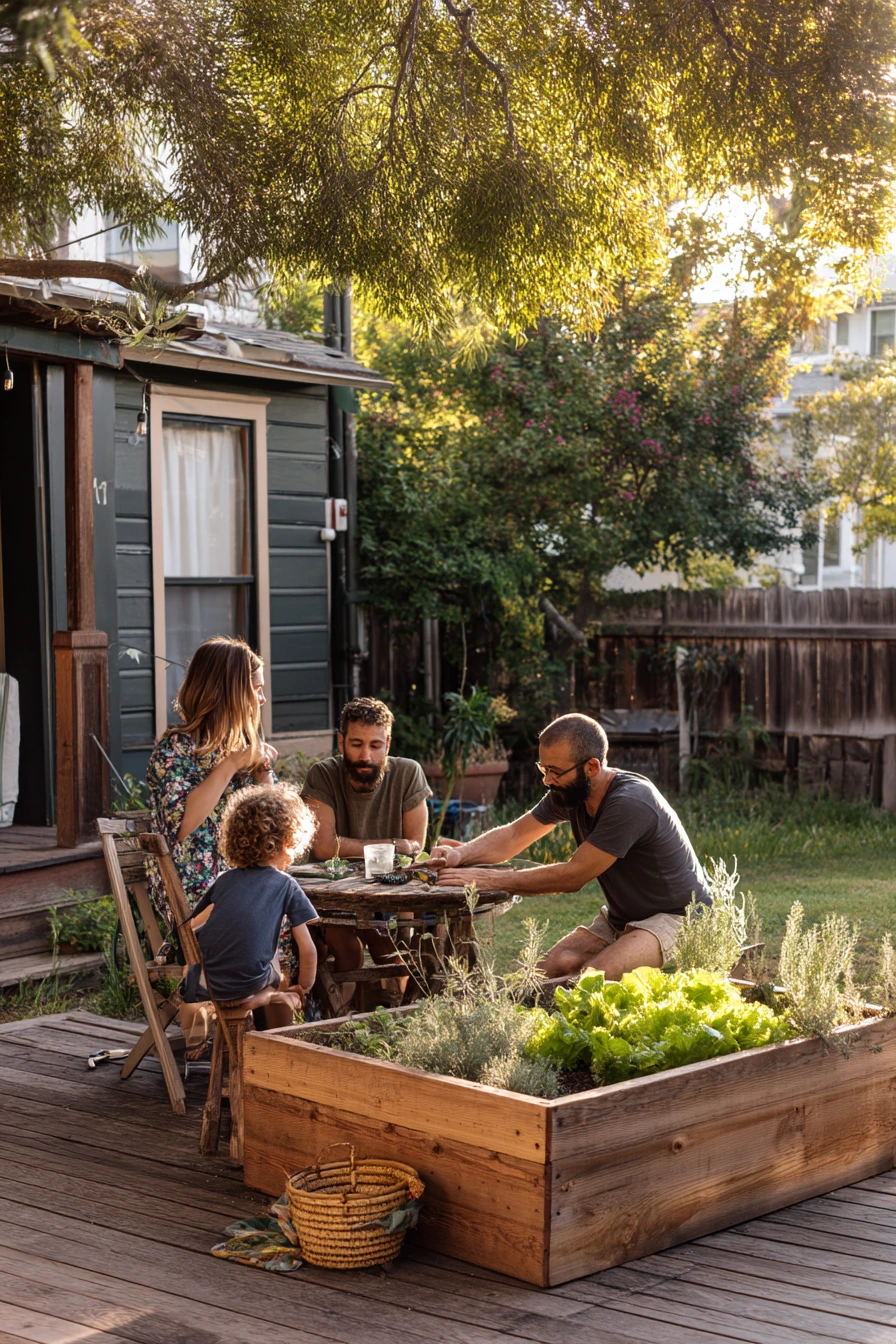
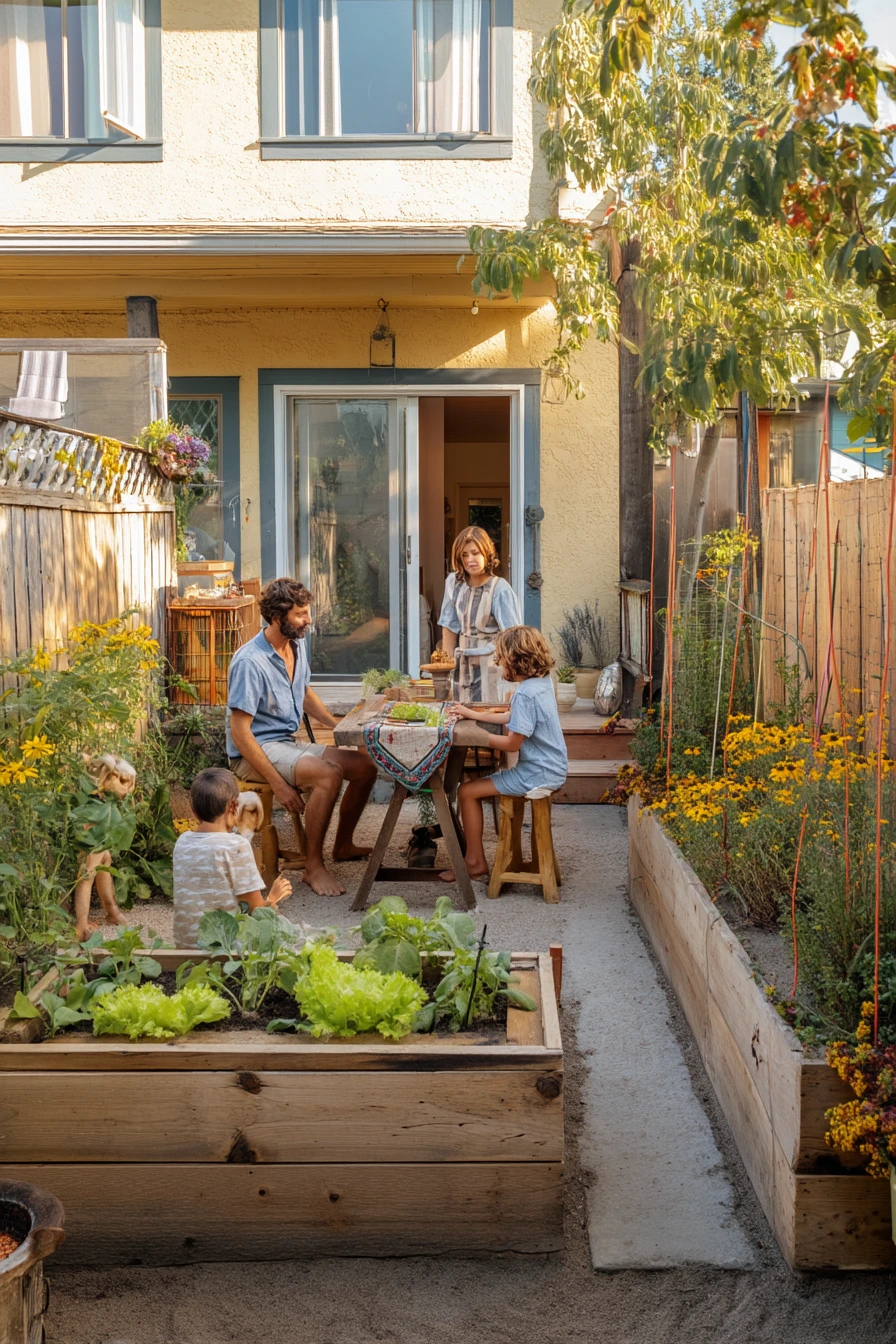
A small backyard patio garden works best when food plants and seating share the same zone. Raised beds edged in weathered cedar look natural and are easy to reach, which helps kids and adults garden together. Plant rosemary near the edge for quick snips, then fill the rest with lettuce and a row of marigolds for color and pest help.
Keep it family friendly by building a simple routine. Put a toy basket by the door so outdoor play stays tidy, and keep scissors on the bistro table for fast harvesting. A half full water glass is also a good cue that someone is already outside, which makes the space feel used, not staged.
To style it, aim for a clear path between the door, the beds, and the table. Use one soft throw on a chair for comfort, but pick a washable fabric. In warm late afternoon light, cedar and green leaves look rich, so you do not need extra decor. Add one small tray on the table for seed packets and plant markers so they do not blow away.
- Place beds where they get at least 6 hours of sun if you want greens and herbs
- Mix lettuce types so you can cut leaves often instead of harvesting all at once
- Border the beds with marigolds and herbs to add scent and color
- Set a watering schedule, like every other day, then adjust for heat
- Keep a small bucket for weeds so cleanup takes 2 minutes
Pro Design Tip: Match the cedar bed tone with your table or chairs so the patio feels like one outdoor room.
Budget Considerations: Cedar costs more than pine; you can save by using untreated pine with a liner, or look for reclaimed boards in good condition.
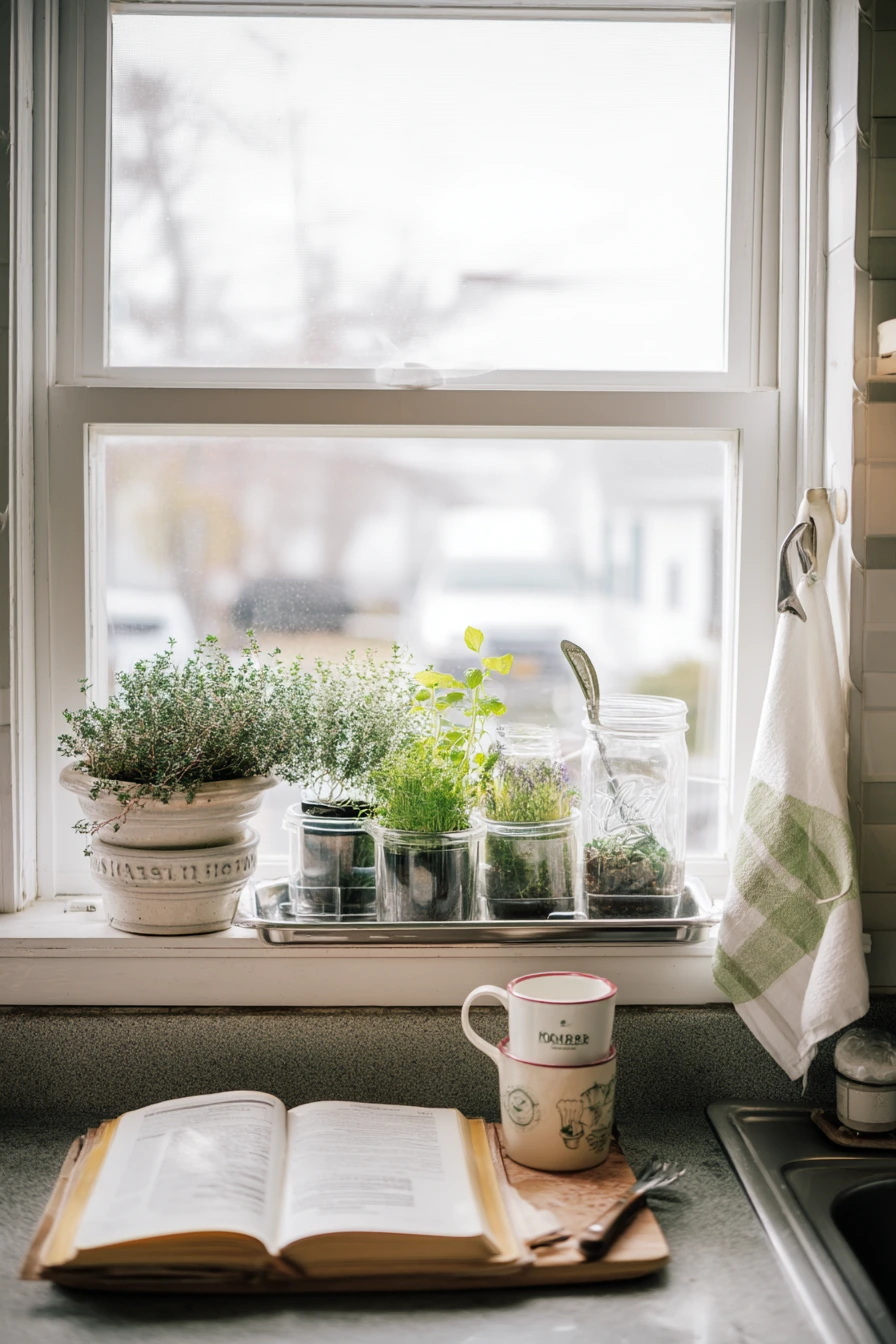
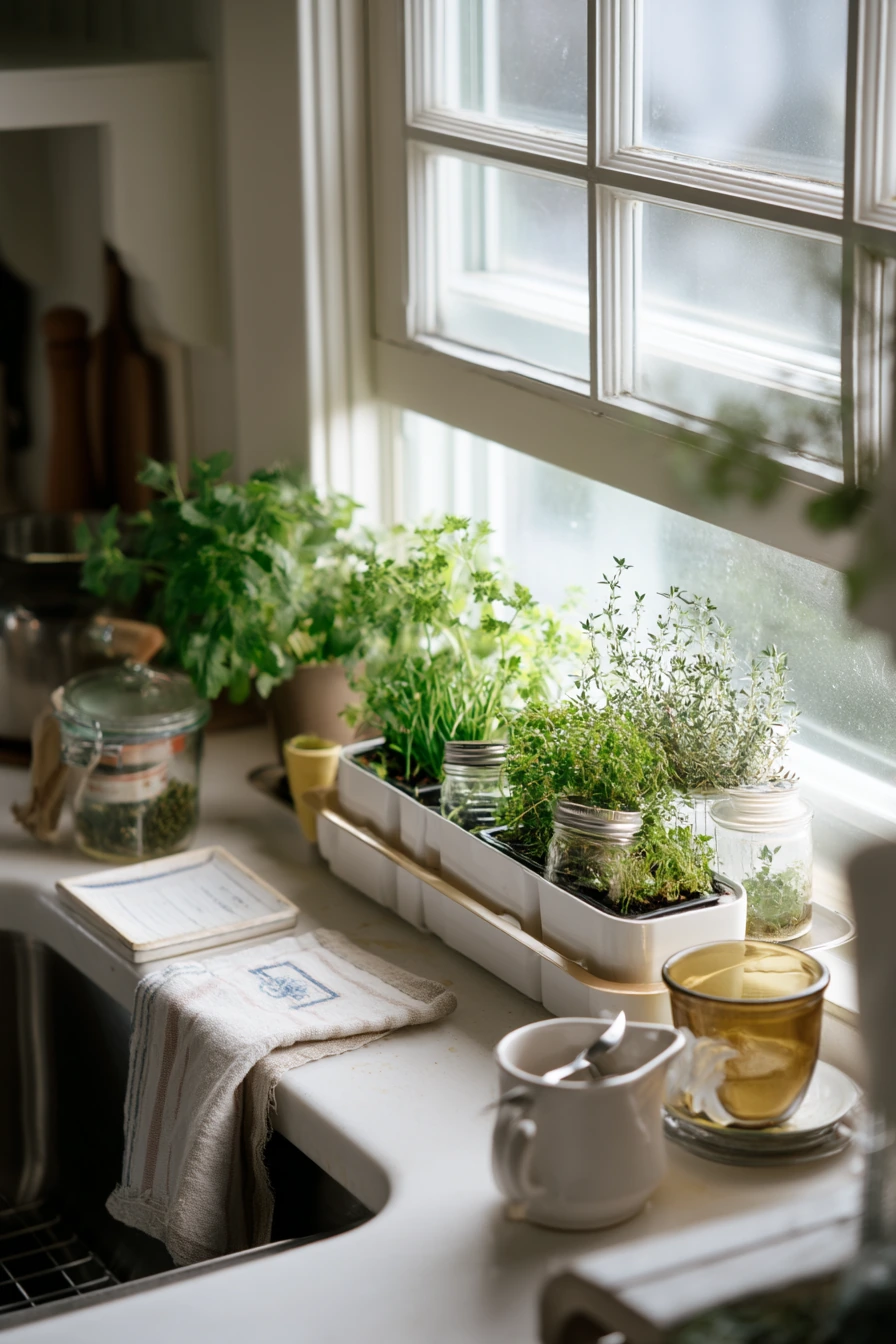
3. Kitchen Windowsill Herb Garden with Stacked Planters
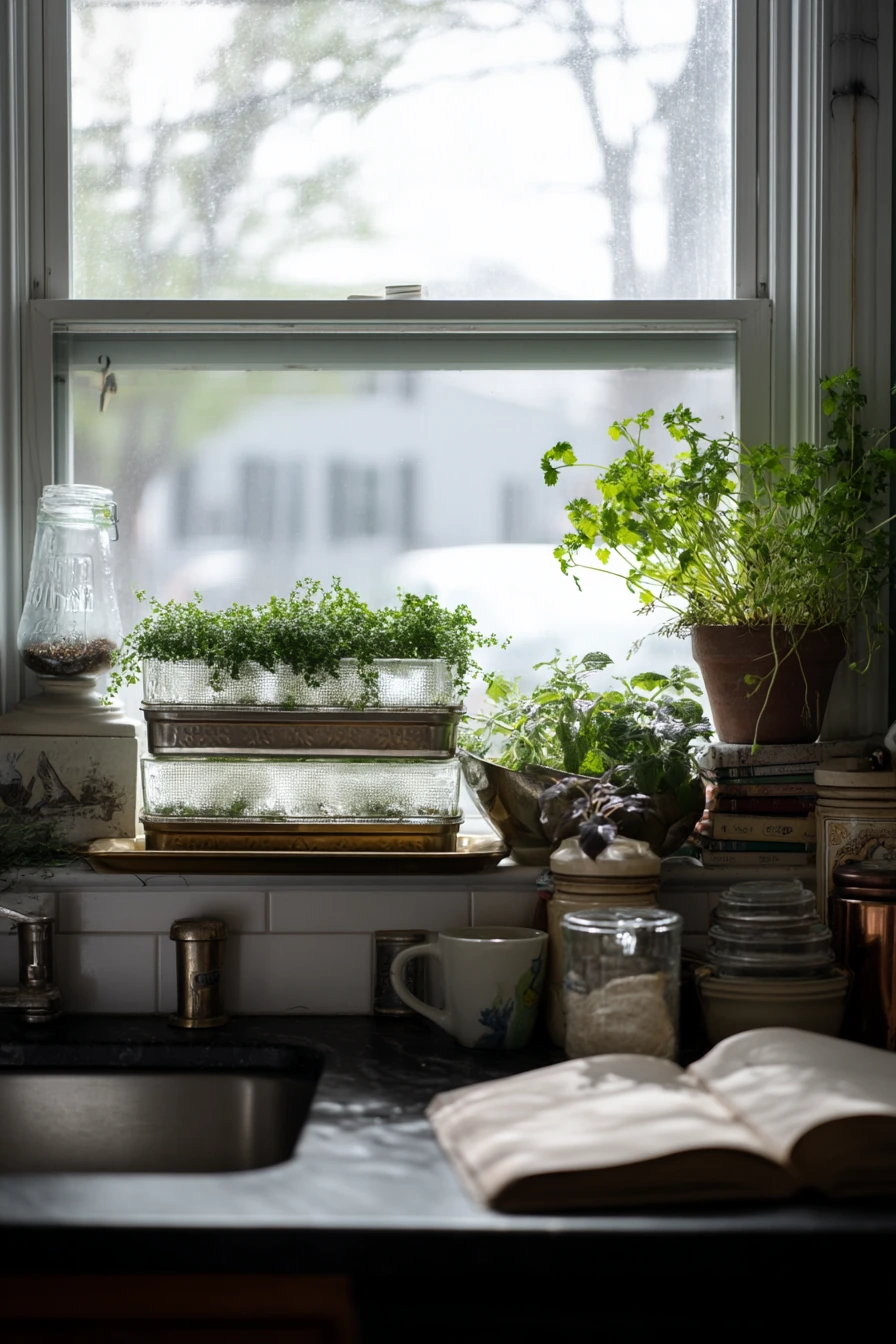
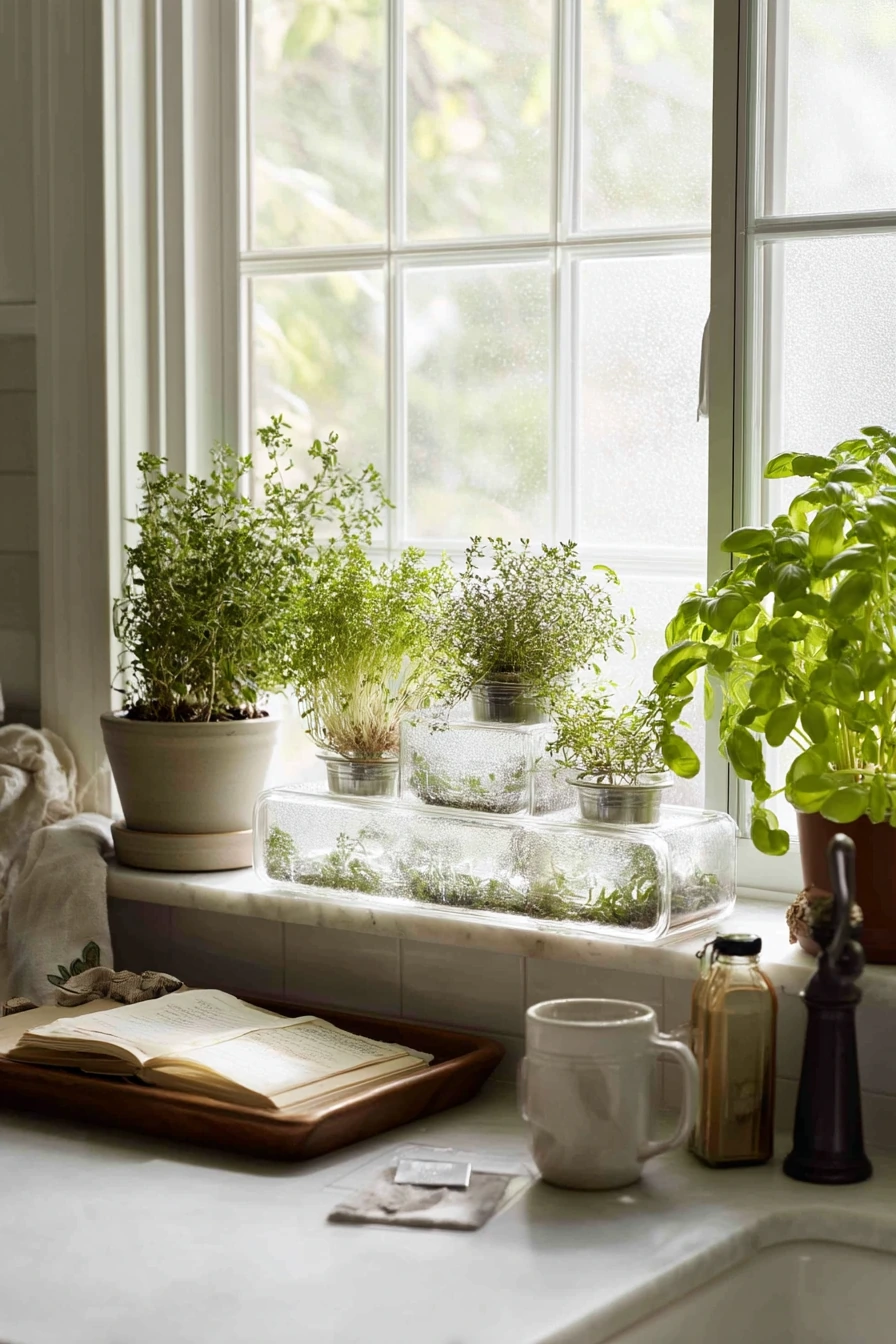
A renter friendly kitchen windowsill garden is perfect if you cook often and want fresh flavor without going outside. Use stacked herb planters to save space, and set them on a narrow tray beside the sink to catch drips. Thyme, parsley, and chives do well on many windowsills and handle frequent trimming.
Keep the look clean and intimate by using glass jars for tools or extra plant markers. Clip on grow lights can help in winter, even if they are off most of the time. The lived in details make it real, like a dish towel hanging loose, a cookbook open to a favorite page, and a receipt tucked under a pot as a quick note for what you bought.
For styling, stay with one simple color palette so the area does not feel crowded. White, clear glass, and green leaves look good in small spaces. If your sink area gets splashes, choose a tray with a lip and wipe it daily. Rotate planters every few days so stems do not lean toward the window.
- Pick the sunniest window and keep herbs within 12 inches of the glass
- Water when the top inch of soil feels dry, not on a strict calendar
- Harvest little and often to keep plants compact
- Use a small fan or crack a window sometimes to reduce mildew
- Label each herb so family members snip the right plant
Pro Design Tip: Line up jars and planters so the tops form one clean visual line, which makes a small windowsill feel organized.
Budget Considerations: Stacked planters and clip on lights can add up; start with one tray and three small pots, then add lighting only if growth is slow.


4. Cottage Front Garden with a Curved Stone Path
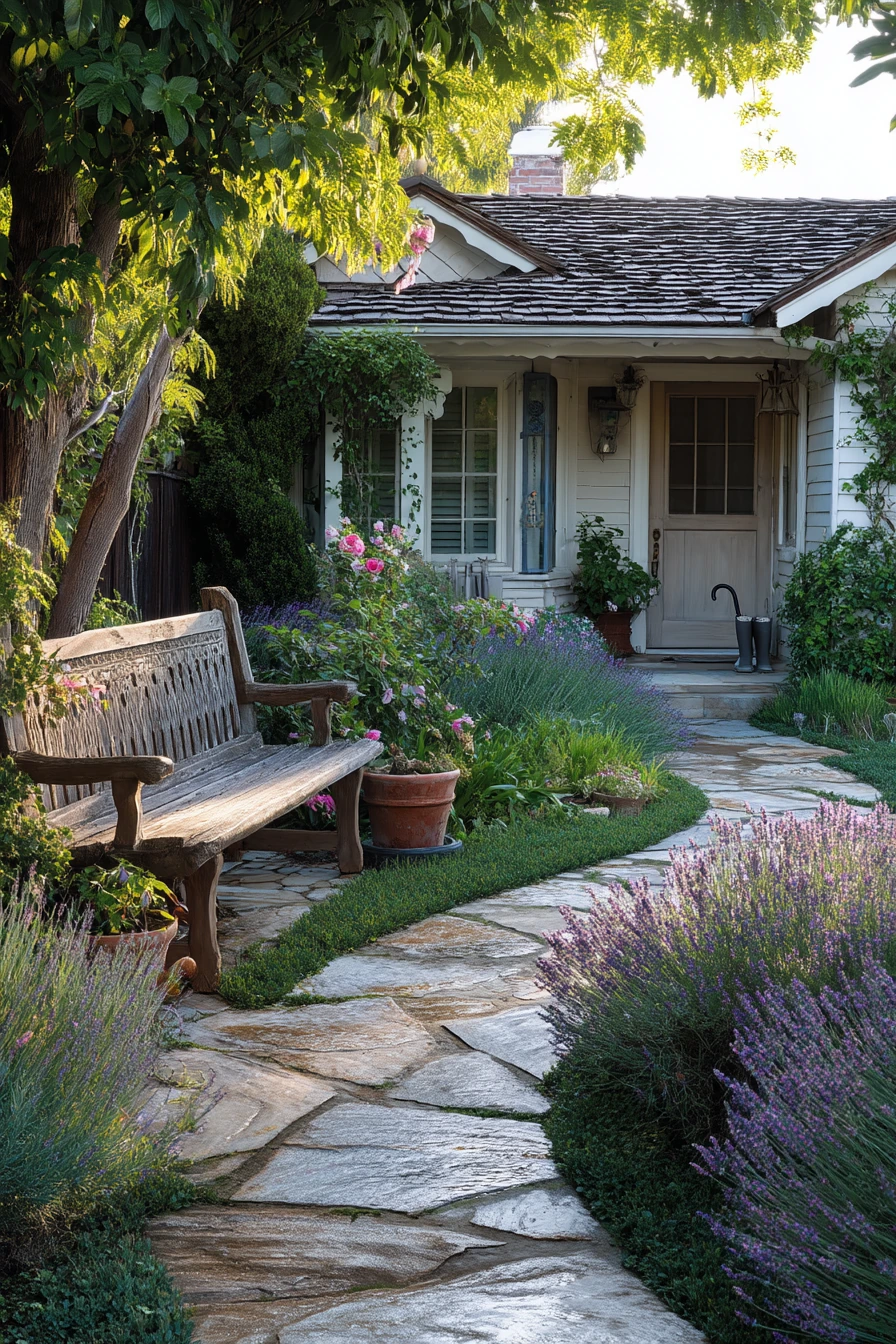
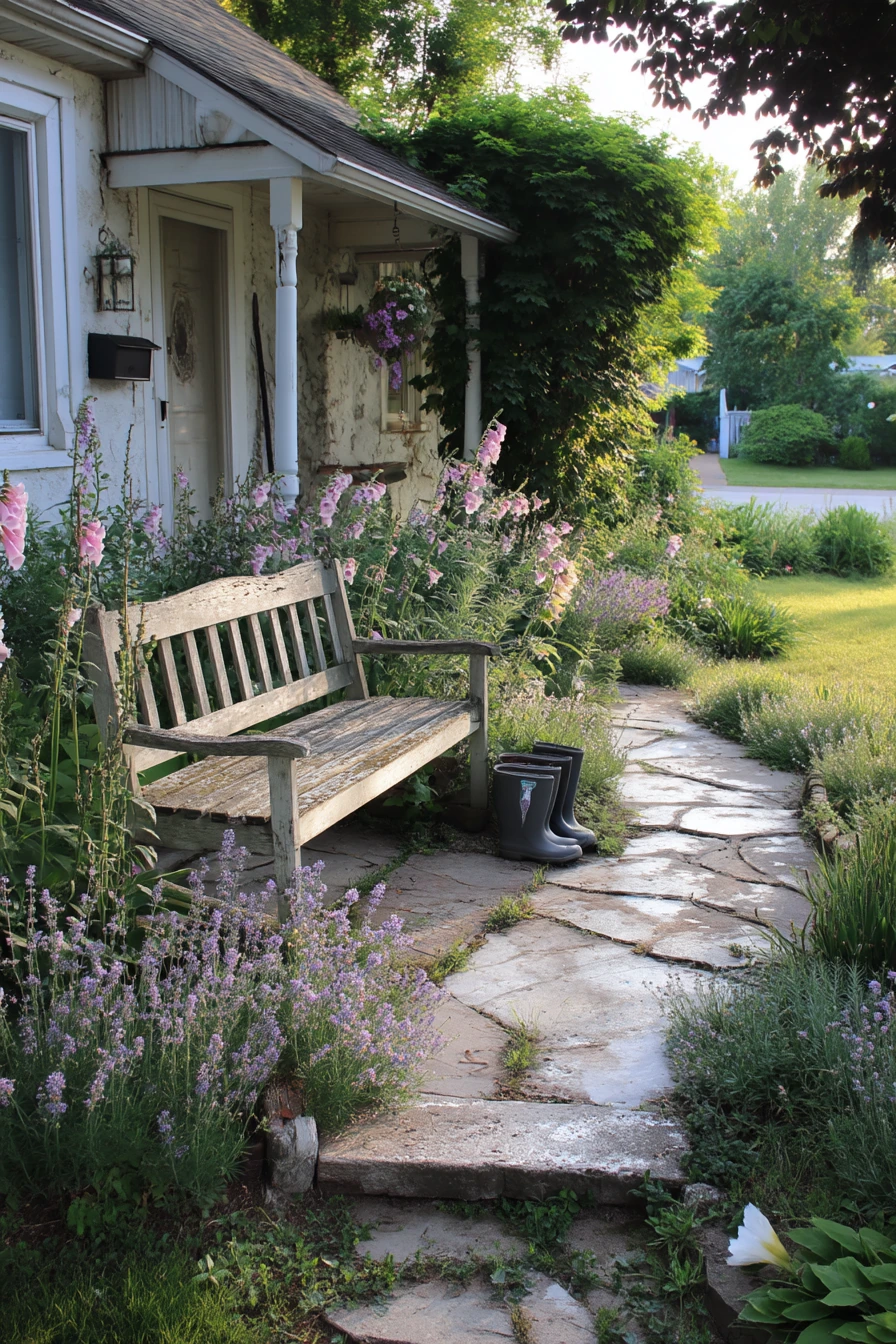
A cottage front garden can be welcoming and easy to keep up with when you plan it around everyday arrival. A curved stone path guides you to the door and protects plants from foot traffic. Plant lavender along the path for scent, then add taller foxglove and roses behind it for layered height.
Make the space feel lived in with practical items that belong there. Muddy boots by the step, a mailbox flyer, and a hose coiled loosely are normal in a working garden. A weathered bench near the porch gives you a spot to set down bags, pull a few weeds, or enjoy morning light while you check for new buds.
For styling, repeat plants in small groups so it looks full but not messy. Use 3 lavender plants in a row, then repeat that rhythm on the other side of the path. Keep the edge tidy with a quick weekly trim. If you want less work, choose disease resistant roses and add mulch to hold moisture and reduce weeds.
- Keep the path wide enough for two feet side by side so it is comfortable
- Plant lavender in the sunniest spot and avoid overwatering
- Place roses where they get airflow to help prevent leaf problems
- Use mulch around plants to cut down weeding and water loss
- Add a small hook by the door for a hand trowel and gloves
Pro Design Tip: Use one main curve in the path and echo it with a curved planting edge so the front garden feels planned.
Budget Considerations: Stone can be pricey; mix salvaged pavers with gravel or use stepping stones set in mulch for a similar cottage look.

5. Backyard Dining Garden with String Lights and Citrus Pots


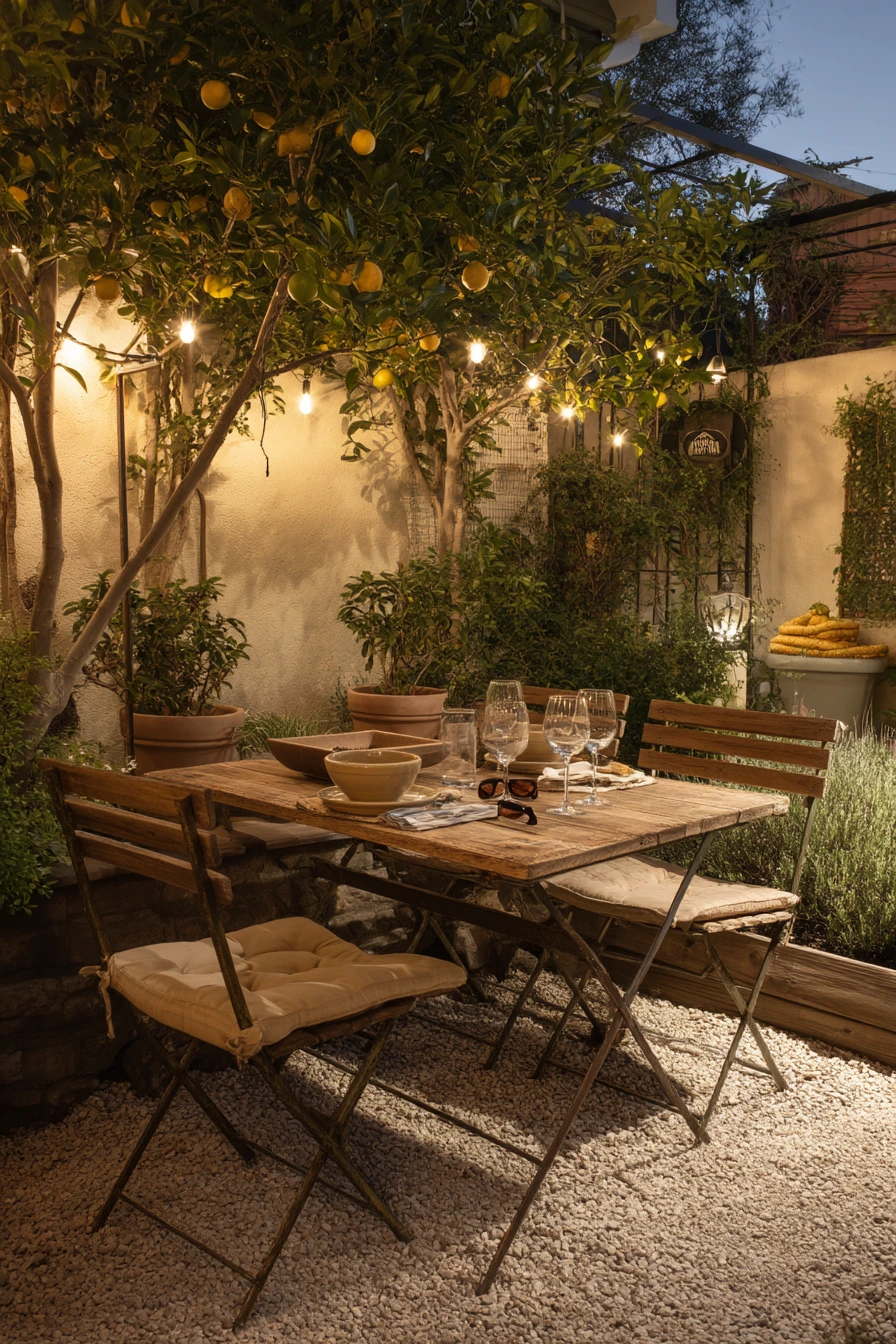
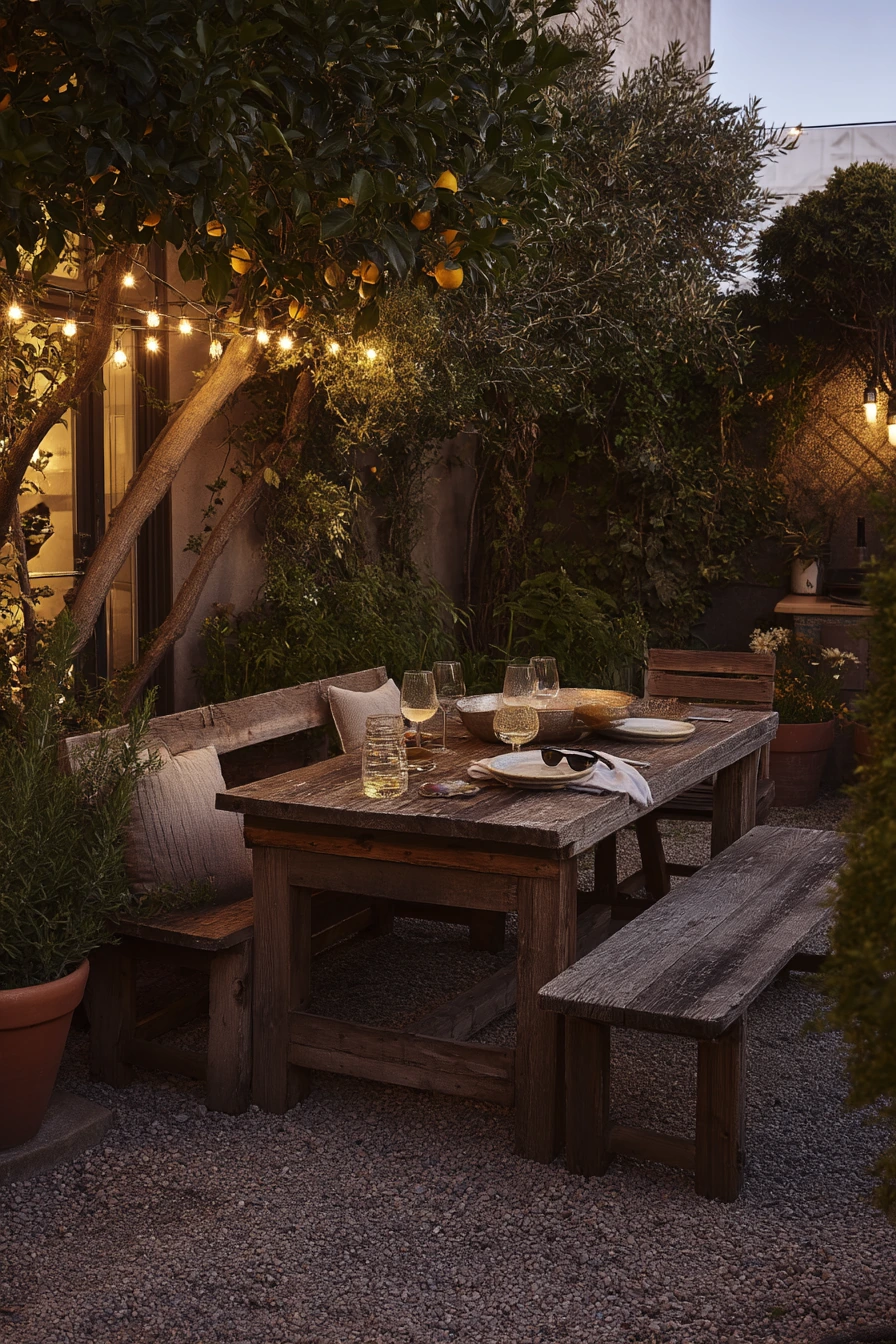
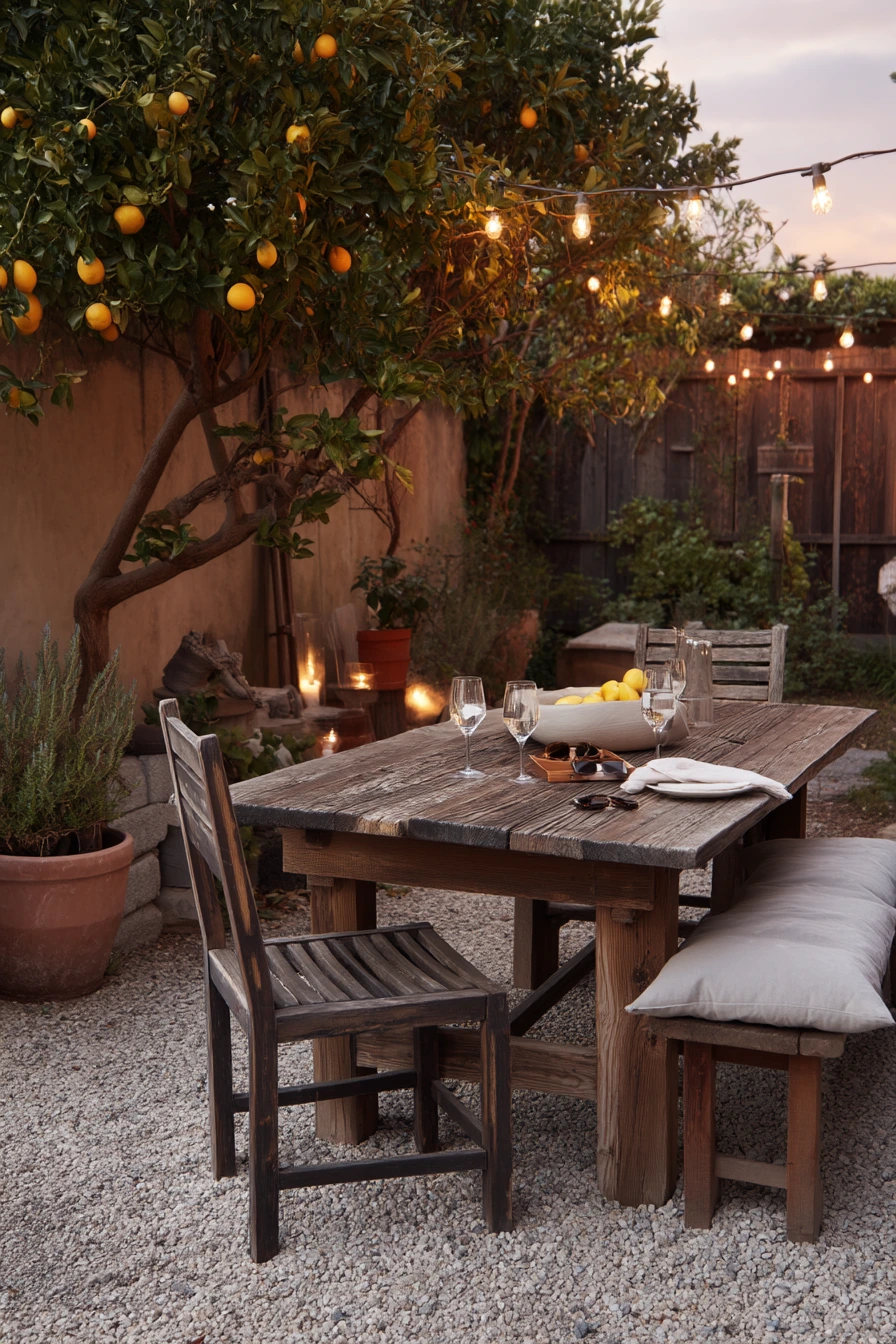
A small backyard dining garden is a smart way to turn a plain yard into a space you use every week. Start with a reclaimed wood table beside a gravel patch for easy cleanup. Add simple string lights for soft glow, then place potted citrus trees at the corners to frame the dining area.
Climbing jasmine adds scent and makes the space feel finished without extra decor. Train it on a trellis or wire on a fence. Lived in details matter here, like wine glasses on the table, a napkin tucked under a plate, and sunglasses on a chair. They tell visitors this is a real outdoor room, not a display.
To style it, keep the table setting casual and avoid too many small items that blow away. Use heavier plates, one serving bowl, and a simple runner you can wash. At dusk, warm lamps plus string lights look best when the surrounding plants are grouped, not scattered. Place citrus where it gets sun and rotate pots so fruit and leaves grow evenly.
- Use gravel or pavers under the table to reduce mud and weeds
- Choose outdoor string lights with warm bulbs for a calm look
- Group pots in pairs to frame the table and guide movement
- Train jasmine early with soft ties so it climbs neatly
- Keep a small tray for matches, bug spray, and a lighter for candles
Pro Design Tip: Hang lights in straight, simple lines and let plants provide the texture so the space feels relaxed, not busy.
Budget Considerations: Citrus trees cost more; start with one smaller tree or use hardy herbs in large pots until you are ready to upgrade.

6. DIY Raised Bed Vegetable Garden with a Potting Bench
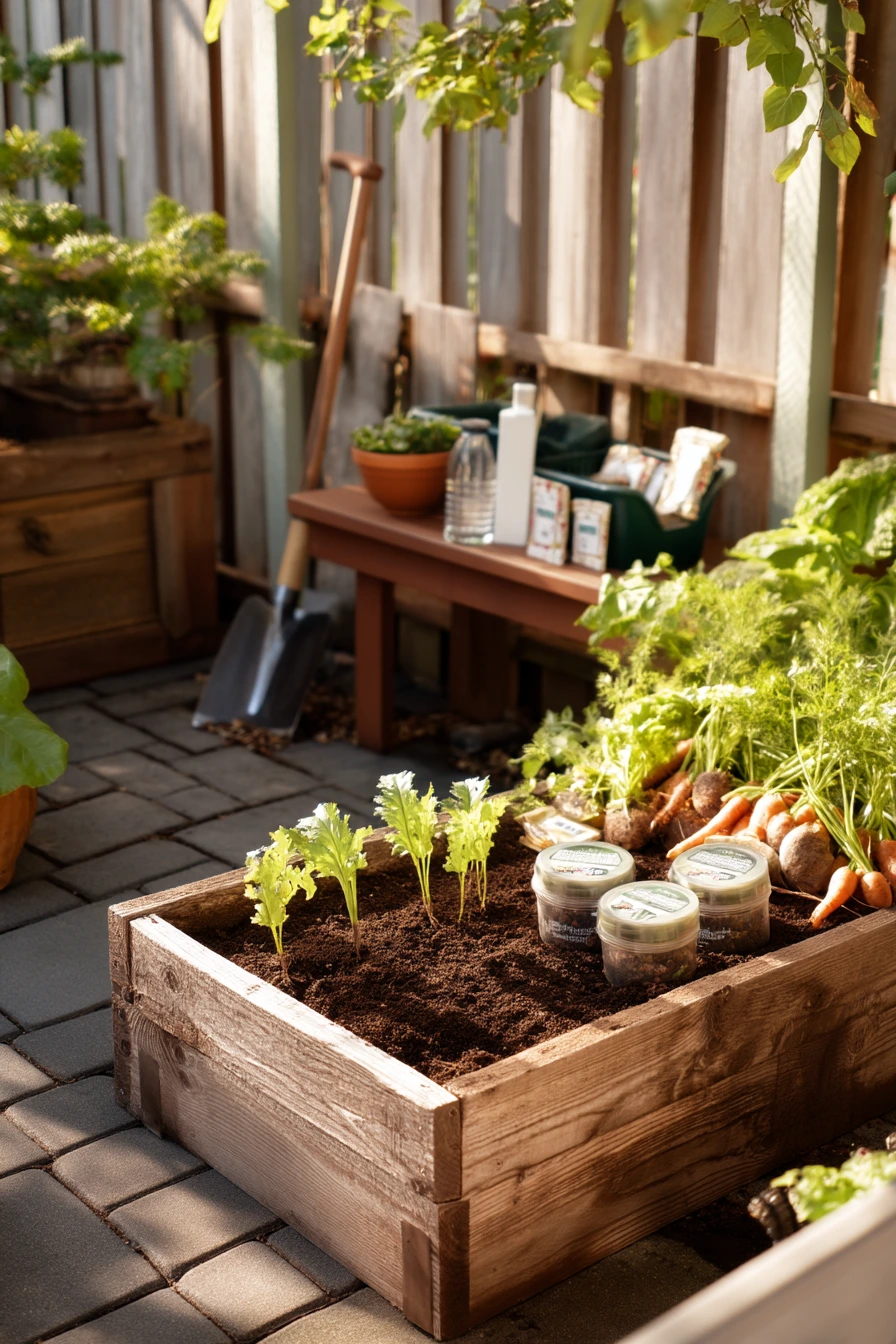
A hands on vegetable garden is easier to manage when you keep it simple and organized. Two DIY raised beds give you clear growing zones, and tomato stakes keep vines off the ground. Fill one bed with lettuces for quick harvests, and use the other for carrots and larger summer plants.
A small potting bench turns gardening into a smooth routine. Keep seed packets, labeled tins, and garden twine in one spot so you do not waste time searching. Soil on the pavers is normal in a working space, and a shovel propped against the fence is a good reminder that this garden is meant to be used.
For styling, you can still make it look neat. Use matching labels and keep tools in a simple row. Add a small mat under the bench to catch soil and make cleanup easy. If you want a more polished look, edge the beds with the same wood and keep the pathways clear with mulch or gravel.
- Build beds 12 to 18 inches high for easier planting and less bending
- Use a mix of compost and garden soil to support steady growth
- Stake tomatoes early so roots are not disturbed later
- Sow carrots in short rows every 2 weeks for a longer harvest
- Store seeds in labeled tins so they stay dry and easy to find
Pro Design Tip: Keep one bed for fast crops like greens and one for long crops like tomatoes so watering and harvest timing feels simpler.
Budget Considerations: DIY beds can be low cost with basic lumber; to save more, use concrete blocks or untreated boards with a safe liner.

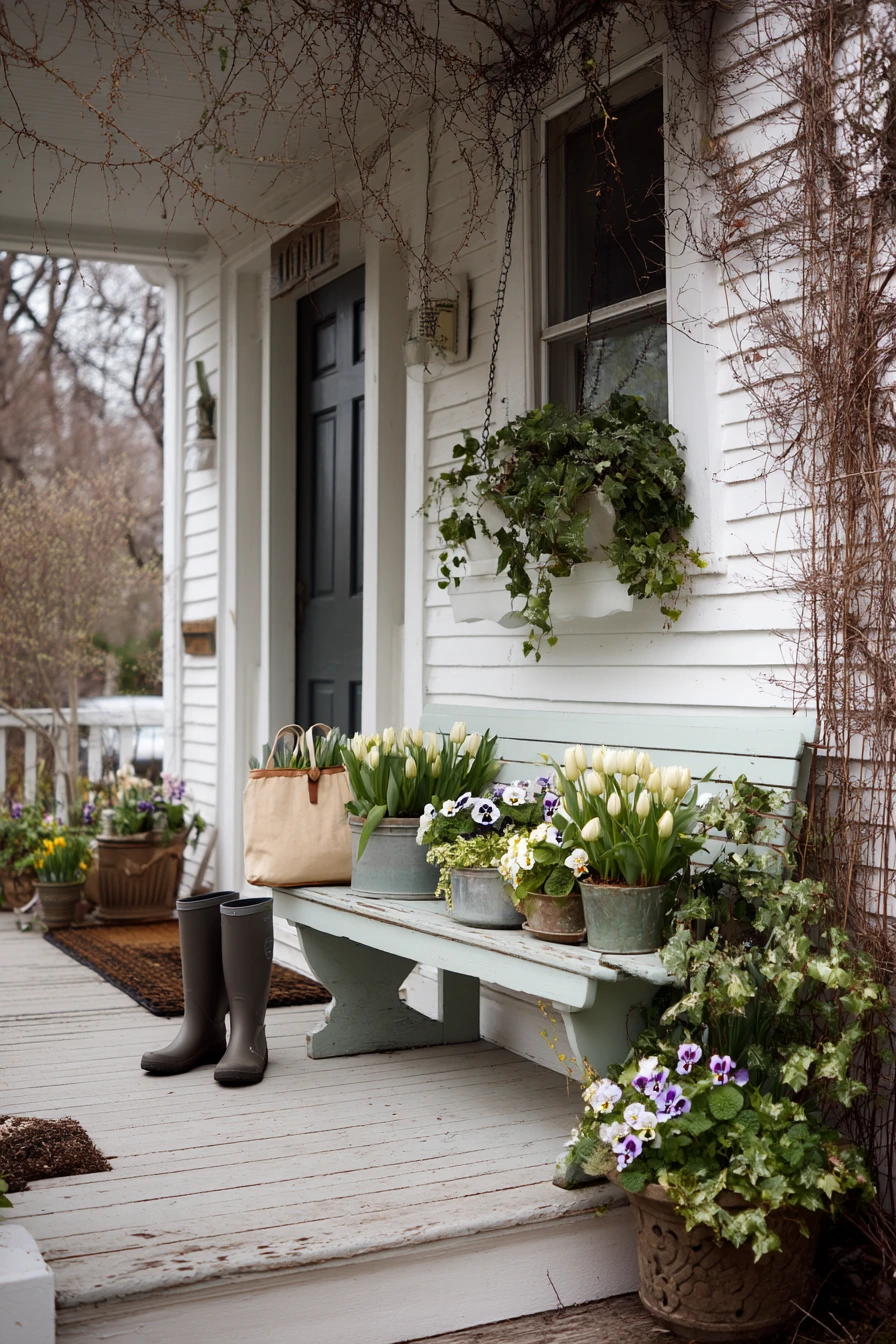
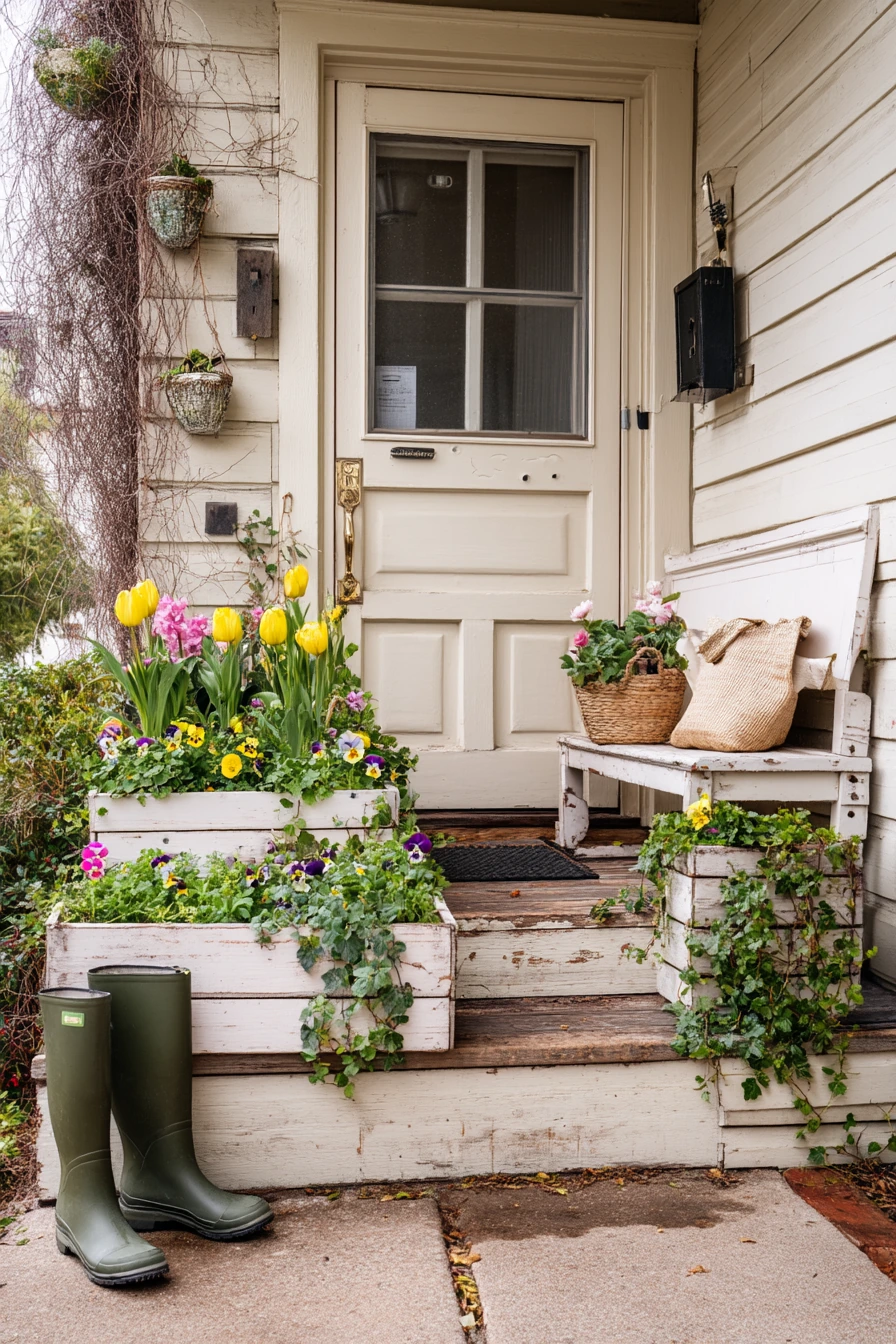
7. Spring Porch Garden with Layered Planters

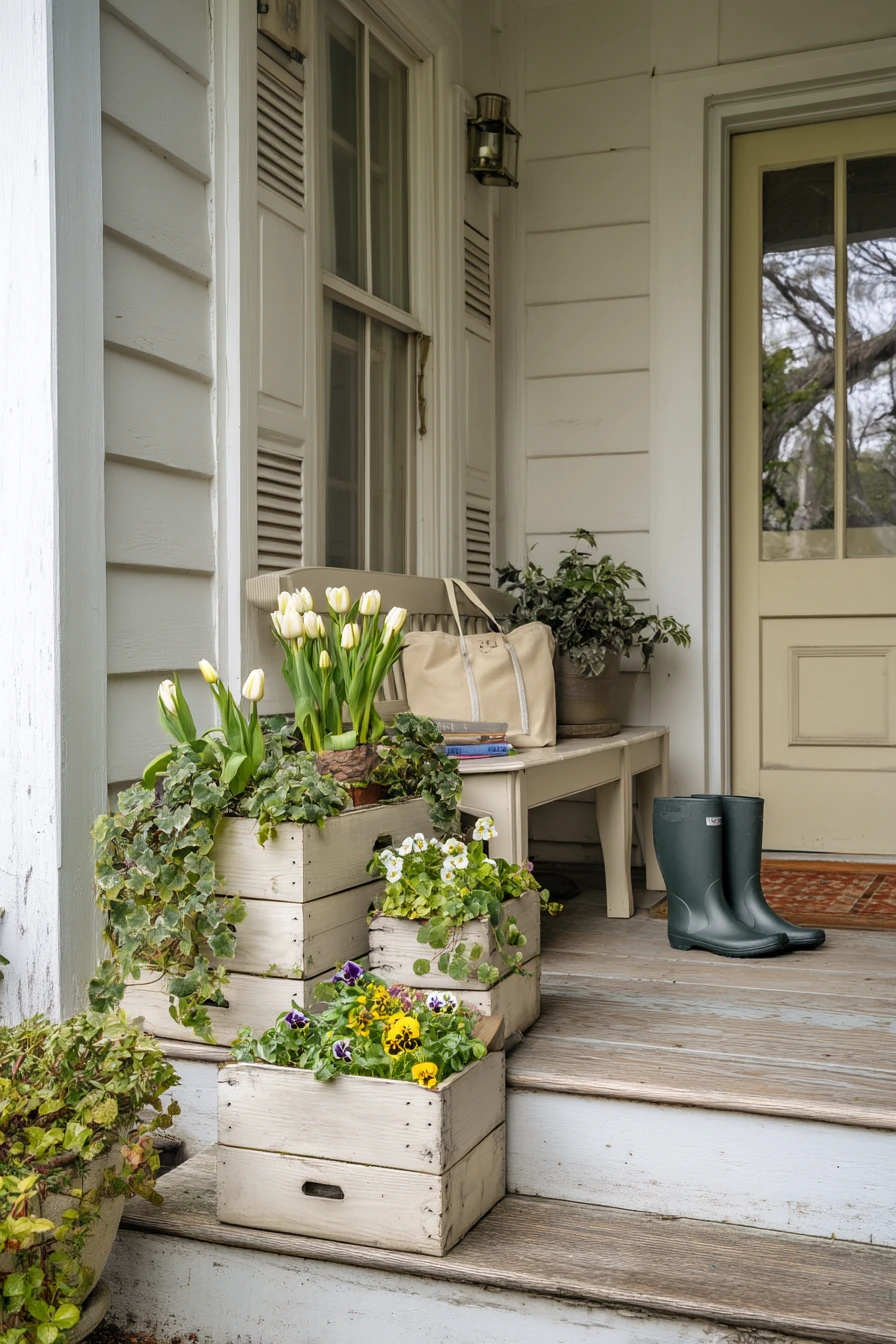
A spring porch garden is one of the easiest home garden ideas because it upgrades your entry in a weekend. Use layered planters to create height, with tulips and pansies for color and trailing ivy to soften the edges. A painted bench by the front door adds function and gives your plants a backdrop.
Keep it welcoming and real with everyday items. Rain boots can sit near the planters, and a folded tote bag can live on the bench for quick errands. A wet doormat is normal in spring, so choose one that dries fast and does not stain. A small stack of seed catalogs can sit in a basket, which looks cozy and keeps paper from blowing away.
For styling, pick two main colors for flowers and repeat them in multiple pots. This makes a small porch feel planned. Use one larger planter near the door and two medium ones to balance it. If the porch is shaded, choose pansies and ivy, and treat tulips as a short seasonal feature you can swap later for summer herbs.
- Use pots with drainage and risers so water does not sit under them
- Group planters in threes with one tall, one medium, one low
- Deadhead pansies to keep blooms coming longer
- Rotate pots weekly so stems grow straight toward light
- Keep a small basket for gloves and pruners by the bench
Pro Design Tip: Paint the bench in a calm color and repeat that tone in one planter to tie the whole porch together.
Budget Considerations: Seasonal flowers add up; buy smaller packs and fill gaps with ivy or greenery that can last into summer.
8. Low Maintenance Courtyard Garden with Stones and Bamboo

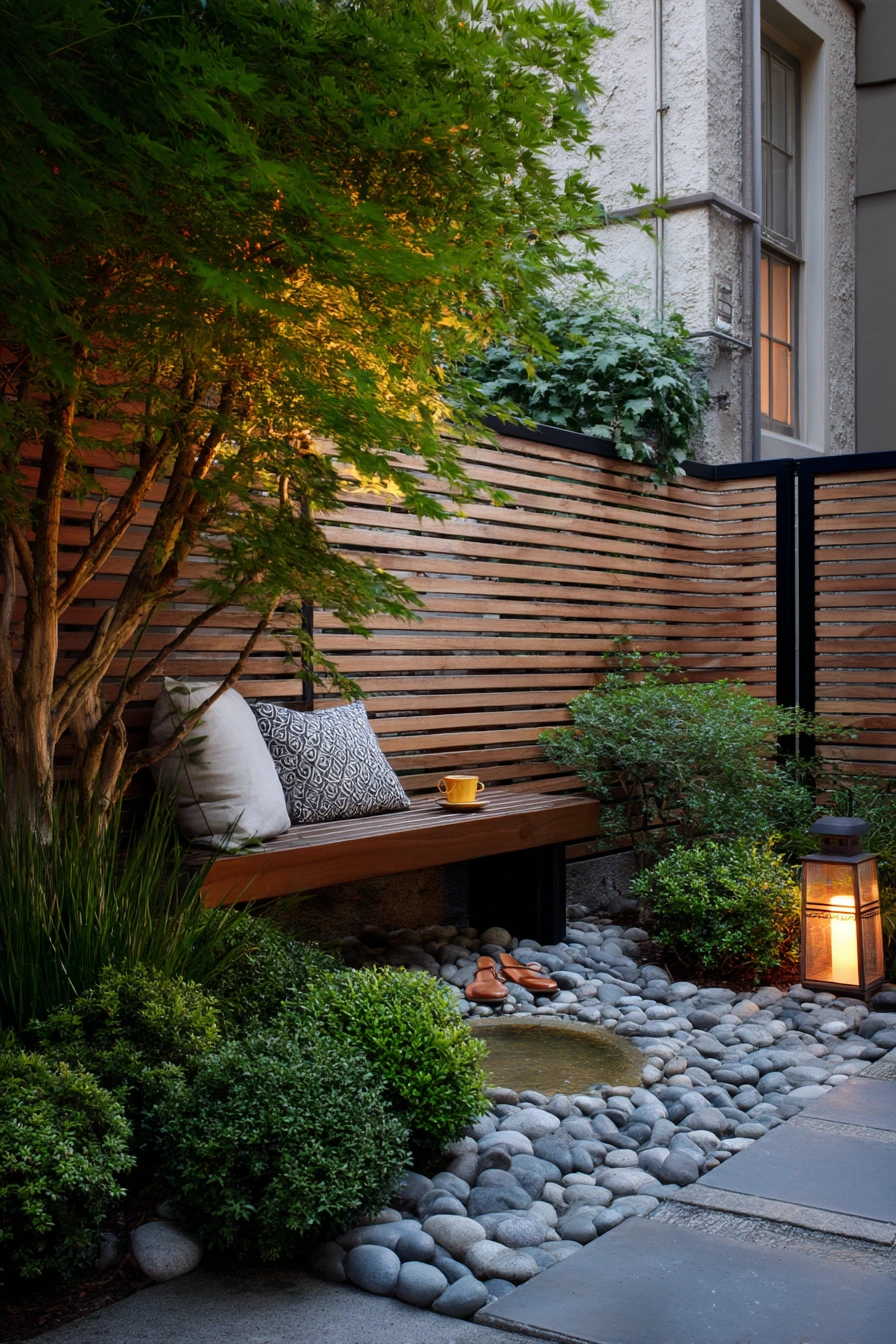
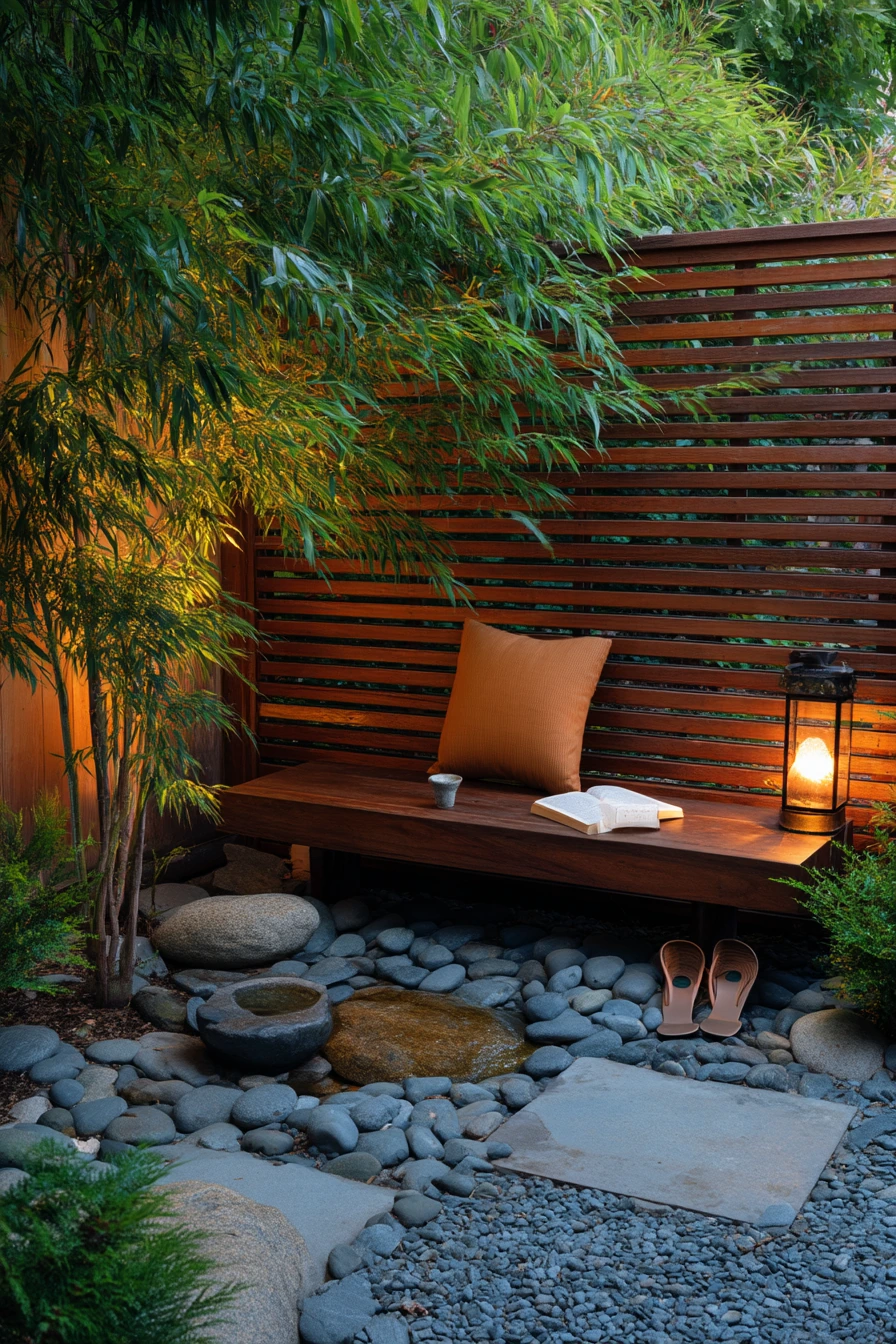
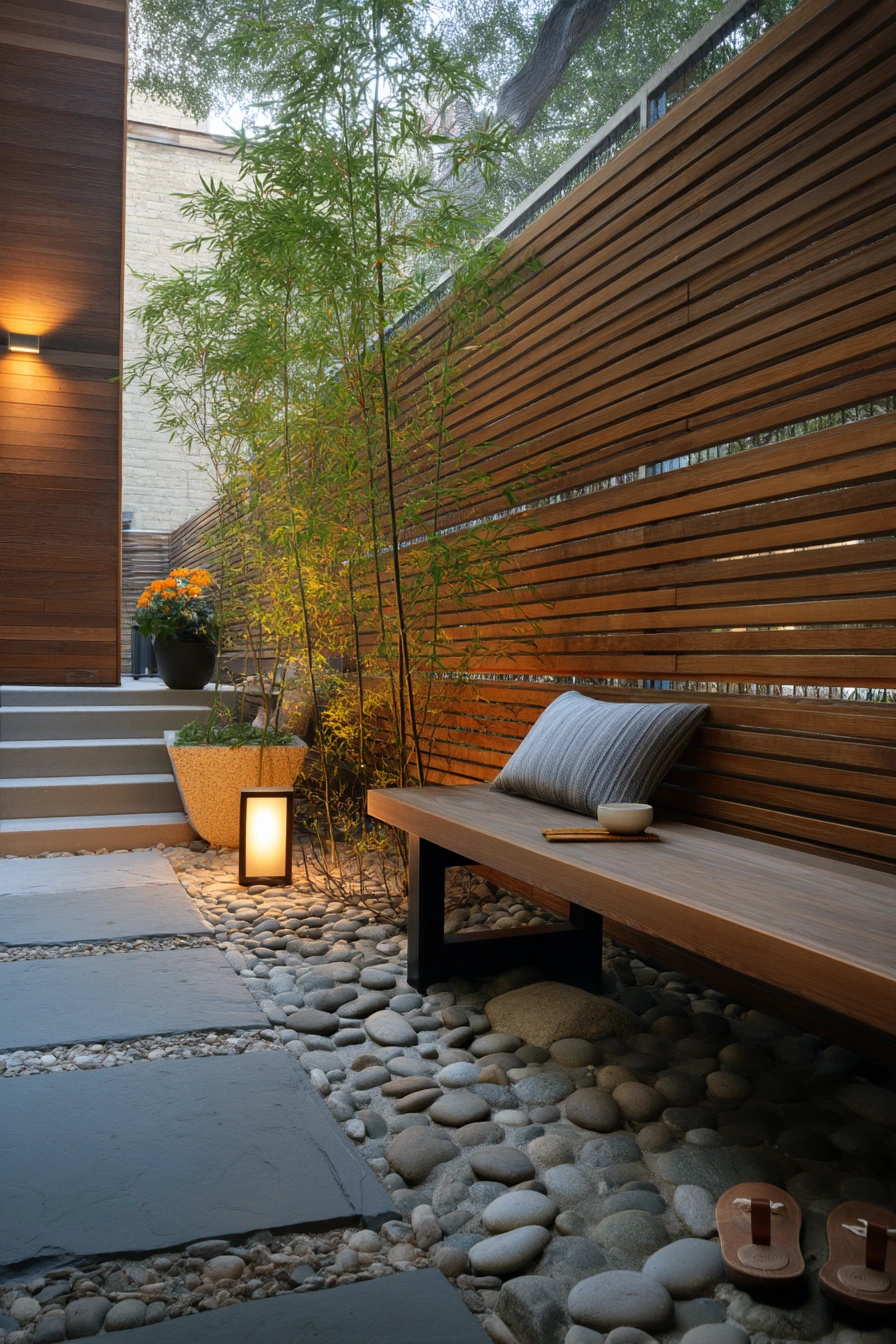
A low maintenance courtyard garden is ideal if you want a calm spot for quiet evenings. Use smooth river stones as ground cover to reduce weeds and keep the area clean. Add bamboo for soft movement, a compact maple for structure, and a shallow water basin for a simple focal point.
This style feels meditative because it is not crowded. A wood slat fence gives privacy without heavy walls. Lived in cues fit well here, like a reading pillow on the bench, a tea cup, sandals near the step, and a lantern with a warm bulb. They make the courtyard feel used and cozy at dusk.
For styling, keep the plant count low and repeat materials. Choose one type of stone and one or two pot styles. Place the water basin where you can see it from your seat, then add a small maple slightly off center so the view feels balanced. For care, sweep stones now and then and prune bamboo to keep it tidy. If mosquitoes are a concern, refresh the basin water often or use a small solar fountain.
- Use landscape fabric under stones to cut down on weeds
- Pick clumping bamboo to avoid aggressive spreading
- Place the bench where it catches the last light of the day
- Keep the basin shallow and change water weekly
- Add one lantern or low light for a soft evening glow
Pro Design Tip: Leave open space on purpose, because negative space is what makes a courtyard garden feel calm.
Budget Considerations: River stones can be expensive by the bag; buy in bulk if possible or mix stone with gravel in less visible areas.


9. Kid Friendly Garden Corner with Berries and Stepping Stones
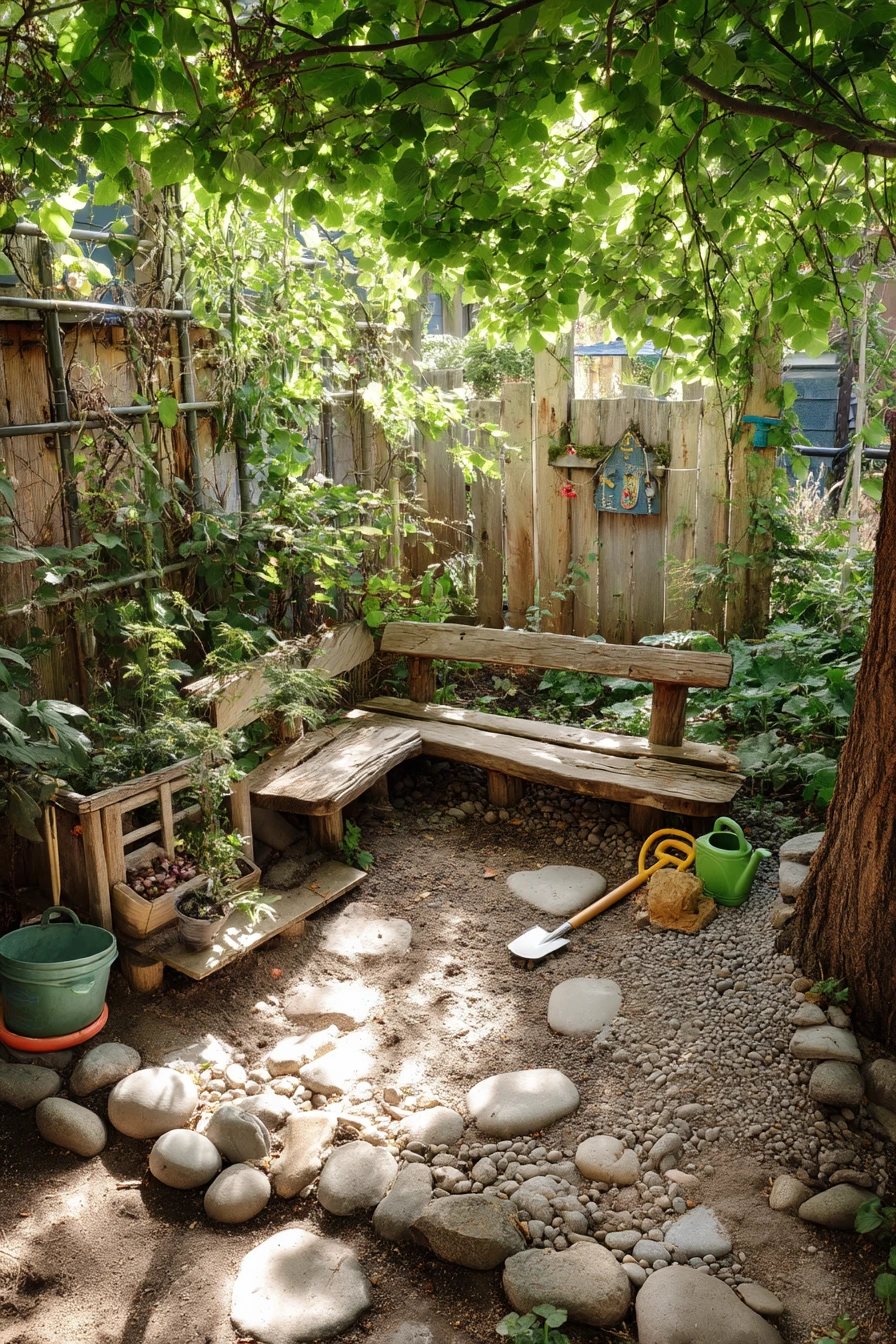
A kid friendly garden corner helps children learn while keeping the rest of the yard tidy. Start with berry bushes along the fence, because they are fun to pick and give a clear goal. Add sensory herbs like mint, lemon balm, and rosemary so kids can touch and smell plants safely. Stepping stones create a path and protect the soil from constant running.
A small digging patch is a smart add on. It gives kids a place to dig without ruining beds, and it can be used for simple projects like planting beans or hunting for worms. Lived in cues belong here, like a plastic shovel, a basket of chalk, and a watering can tipped on its side. Even a lost sock near the bench is a sign this space is used by real families.
For styling, choose bright but limited colors, like one chalk bucket and one watering can color, so it looks cheerful but not chaotic. Keep tools in a low bin kids can reach. Add a small sign with plant names to make it feel like their garden. For care, prune berries in winter, mulch to reduce weeds, and check for thorns when kids are playing.
- Plant thornless berries when possible for safer picking
- Create a clear stepping stone path to guide movement
- Add a small digging zone with loose soil or sand and a border
- Choose sturdy herbs that bounce back after touching
- Keep a child sized watering can to encourage daily care
Pro Design Tip: Give the kid area a clear edge, like a low border or stones, so the rest of the garden stays neat.
Budget Considerations: Berry bushes cost more upfront but produce for years; start with one or two plants and add more each season.
10. Indoor Plant Nook with Shelf and Grow Lamp
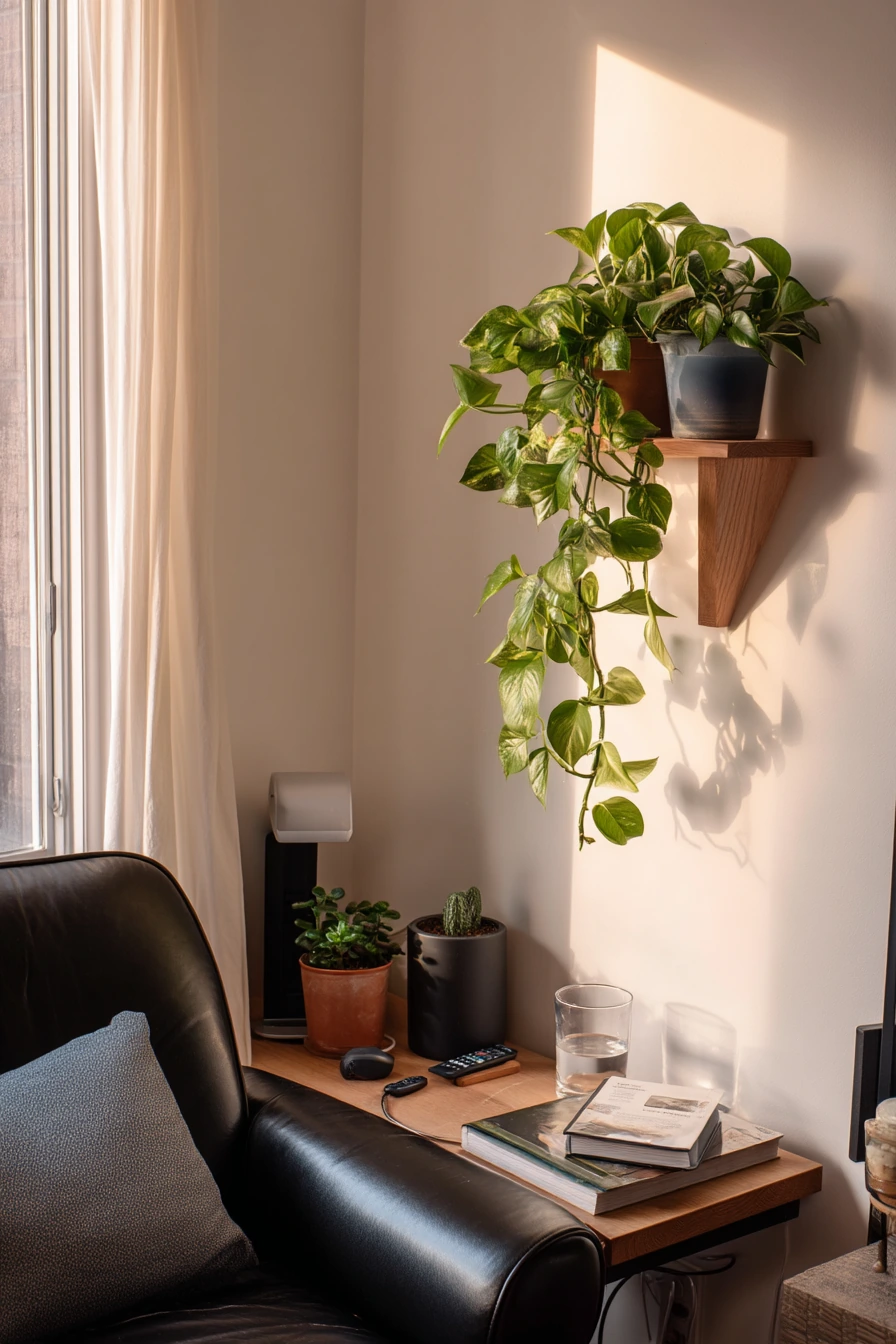
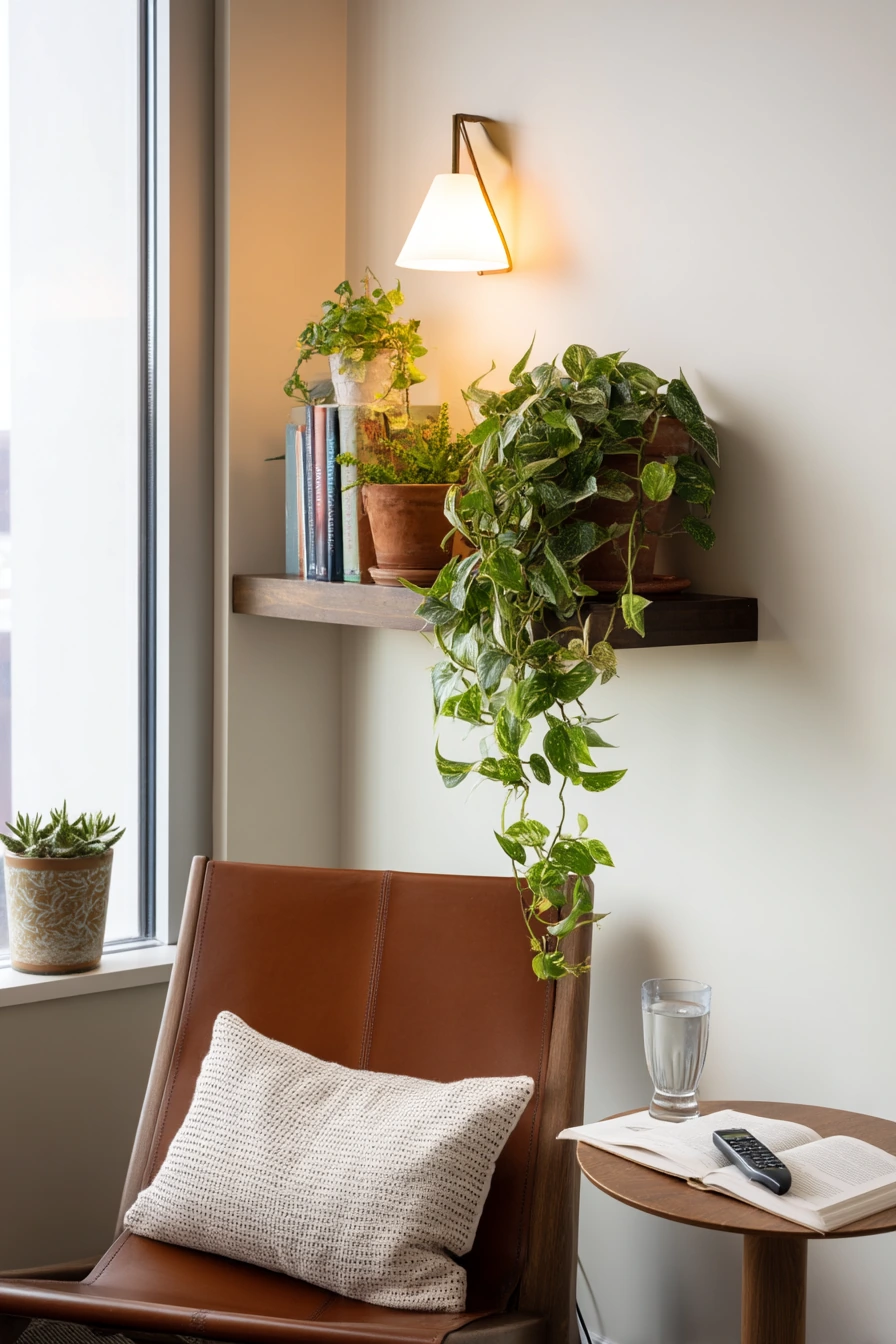
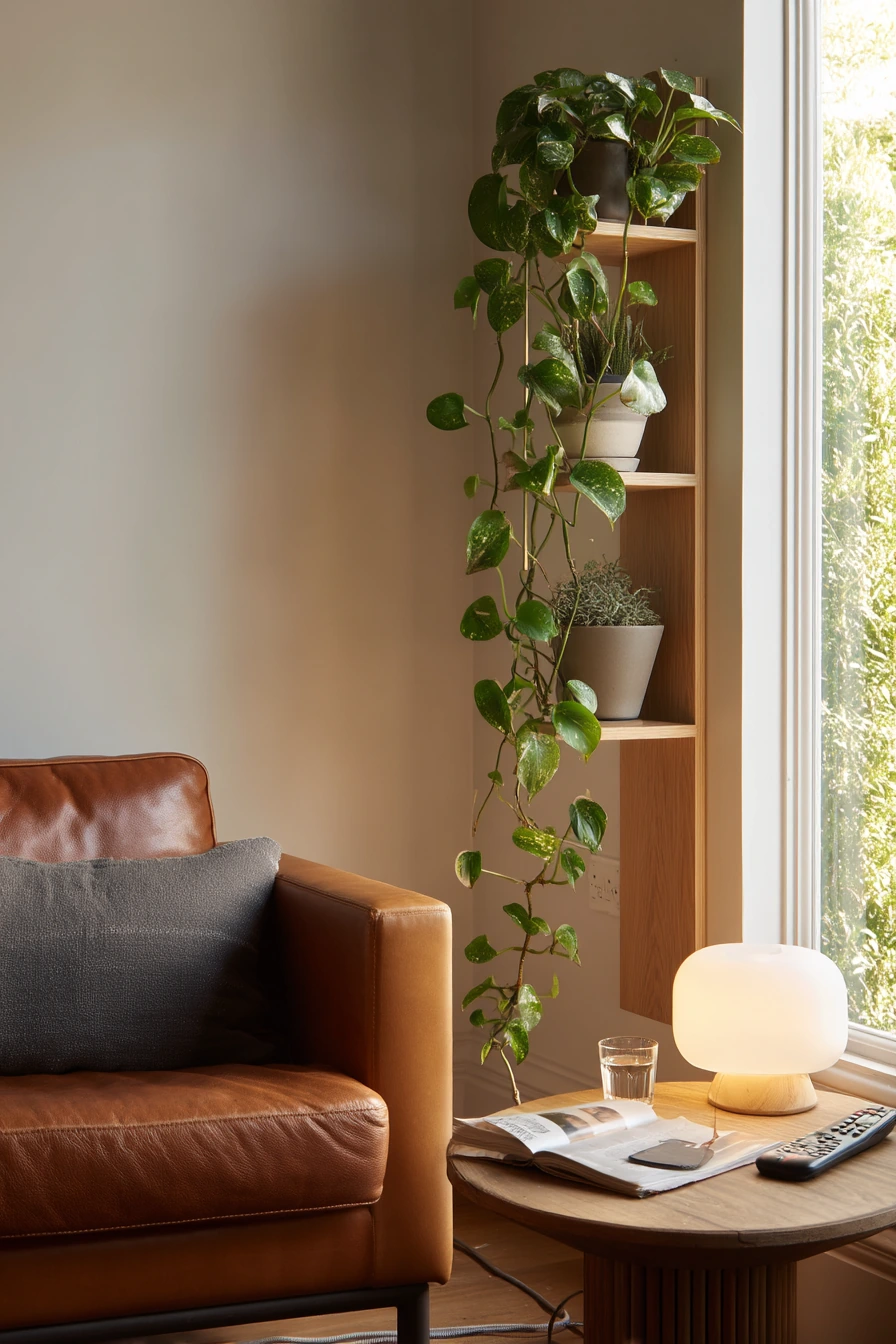
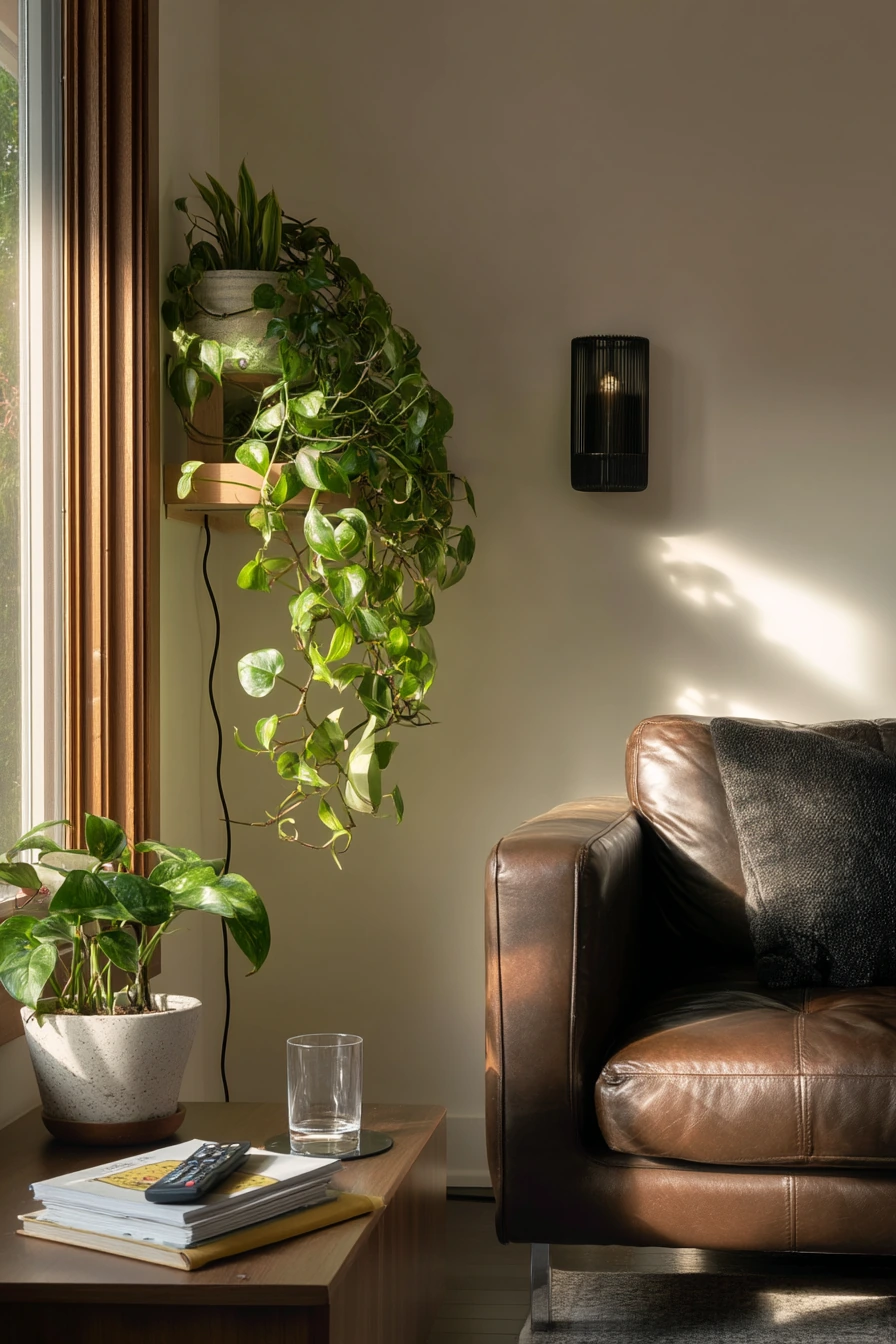
A modern living room plant nook is a strong option when outdoor space is limited. Use a slim oak shelf with ceramic pots to keep plants off the floor and close to light. Trailing pothos is a great starter because it grows well in many homes and looks full as it drapes.
This setup works best when it blends into daily life. A leather chair nearby makes it feel like a reading corner, not a plant station. Lived in cues, like a paperback with a folded page, a remote on the cushion, a water glass, and a charging cable along the baseboard, make the nook feel real and usable.
For styling, keep pot shapes simple and vary heights using risers or stacked books on the shelf. Add a compact grow lamp for darker rooms and use it on a timer so care is consistent. Wipe leaves monthly so they can absorb more light. If you want a cleaner look, hide cords with a cord cover that matches the baseboard.
- Place the shelf near a bright window for steady growth
- Use a timer for the grow lamp so lighting stays consistent
- Water pothos when the top half of soil feels dry
- Group plants by similar light needs to avoid constant moving
- Use a tray on the bottom shelf for watering supplies and towels
Pro Design Tip: Repeat one pot finish, like matte white or warm stone, then let leaf shapes add variety.
Budget Considerations: Ceramic pots and grow lights can be costly; start with basic plastic pots inside simple covers and add a lamp only if the room is dim.
These home garden ideas are meant to fit real homes, from a compact balcony and a kitchen windowsill to raised beds and an indoor plant nook. Start with one small area, choose plants you will use, and set up simple storage so care stays easy.
If you want quick wins, begin with herbs, pothos, or a few greens in a raised bed. As your routine grows, add one new feature at a time, like string lights, a bench, or a small water basin.
FAQ
1. What is the easiest home garden to start with: A windowsill herb tray or a balcony herb shelf is usually the simplest.
2. How often should I water containers: Water when the top inch of soil is dry, then adjust for heat and wind.
3. What grows well in partial shade: Mint, parsley, chives, and many leafy greens can handle less sun than tomatoes.
4. How do I make a renter friendly garden: Use pots, slim shelves, clip on lights, and avoid permanent changes.
5. How can I keep a family garden tidy: Use a toy basket, a tool bin, and a quick daily reset of 2 minutes.
6. How do I stop weeds in paths: Use landscape fabric under gravel or stones, and pull small weeds early.
7. What is one styling trick that always helps: Repeat materials and colors so the space looks calm and planned.