
Basement design ideas work best when they fit real life. A basement can be a movie lounge, a home office, a guest room, or a play space that stays easy to clean.
This guide uses practical, lived-in room themes, like a sectional facing a low media console, a built-in desk under a window well, and storage baskets that hide the daily mess. Each space is designed for comfort, safety, and simple upkeep.
You will get styling ideas you can copy, plus small layout tips that help with low ceilings, egress windows, and mixed lighting. If you found this post on Pinterest, you can use it as a checklist while planning your own basement update.
Each section includes a pro design tip and a budget note, so you can make smart choices before you buy furniture or start built-ins.
1. Family Basement Lounge for Movie Nights

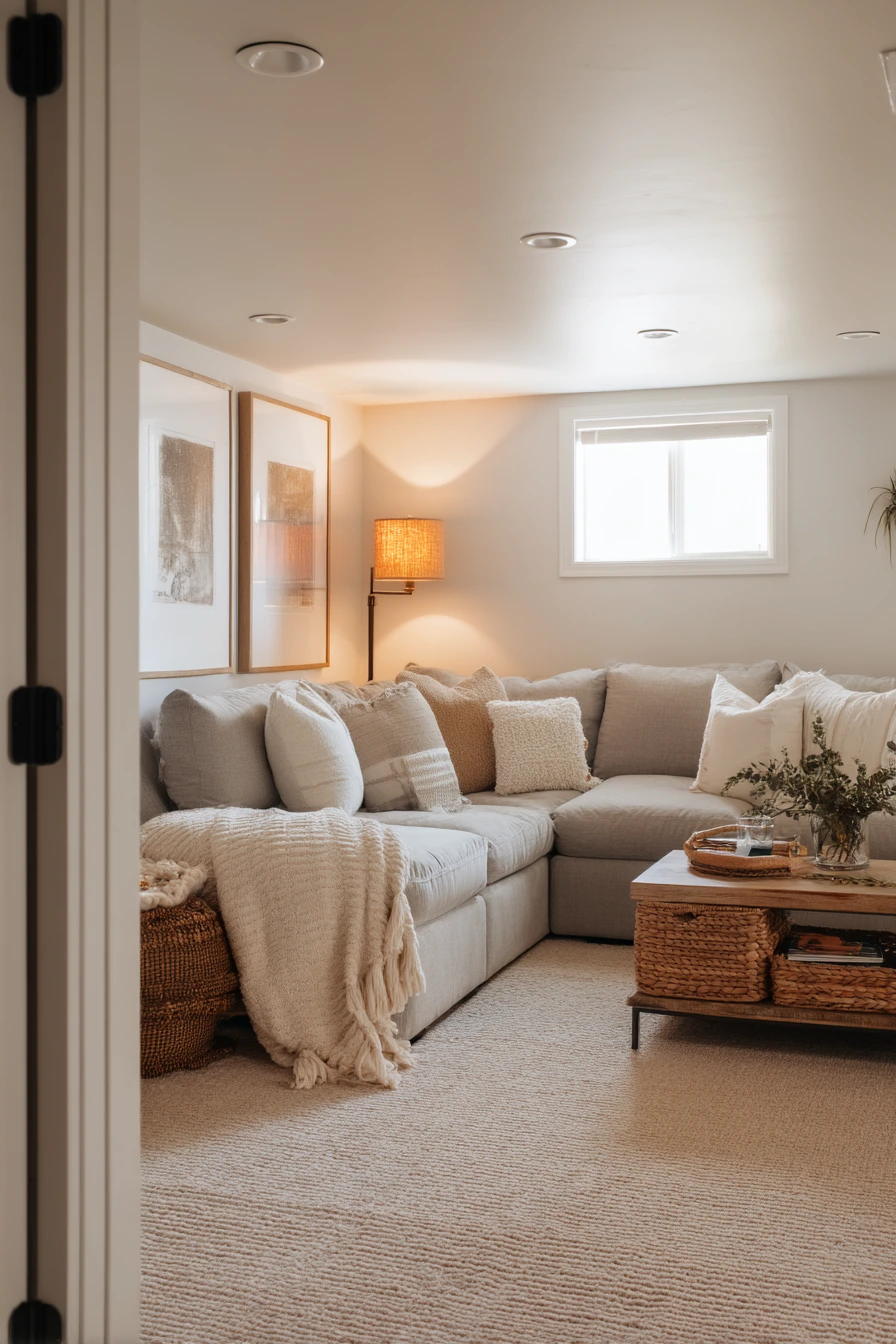
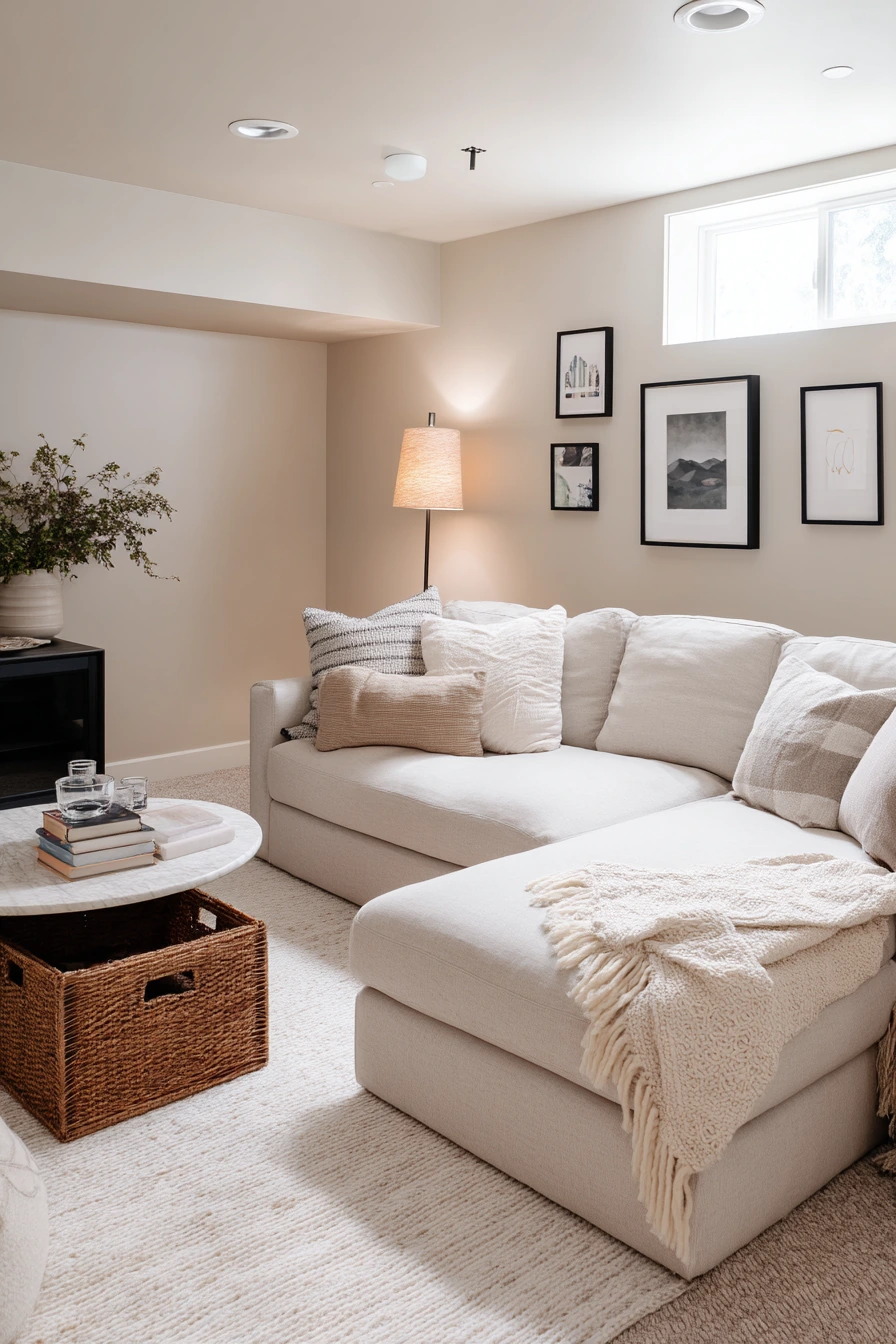
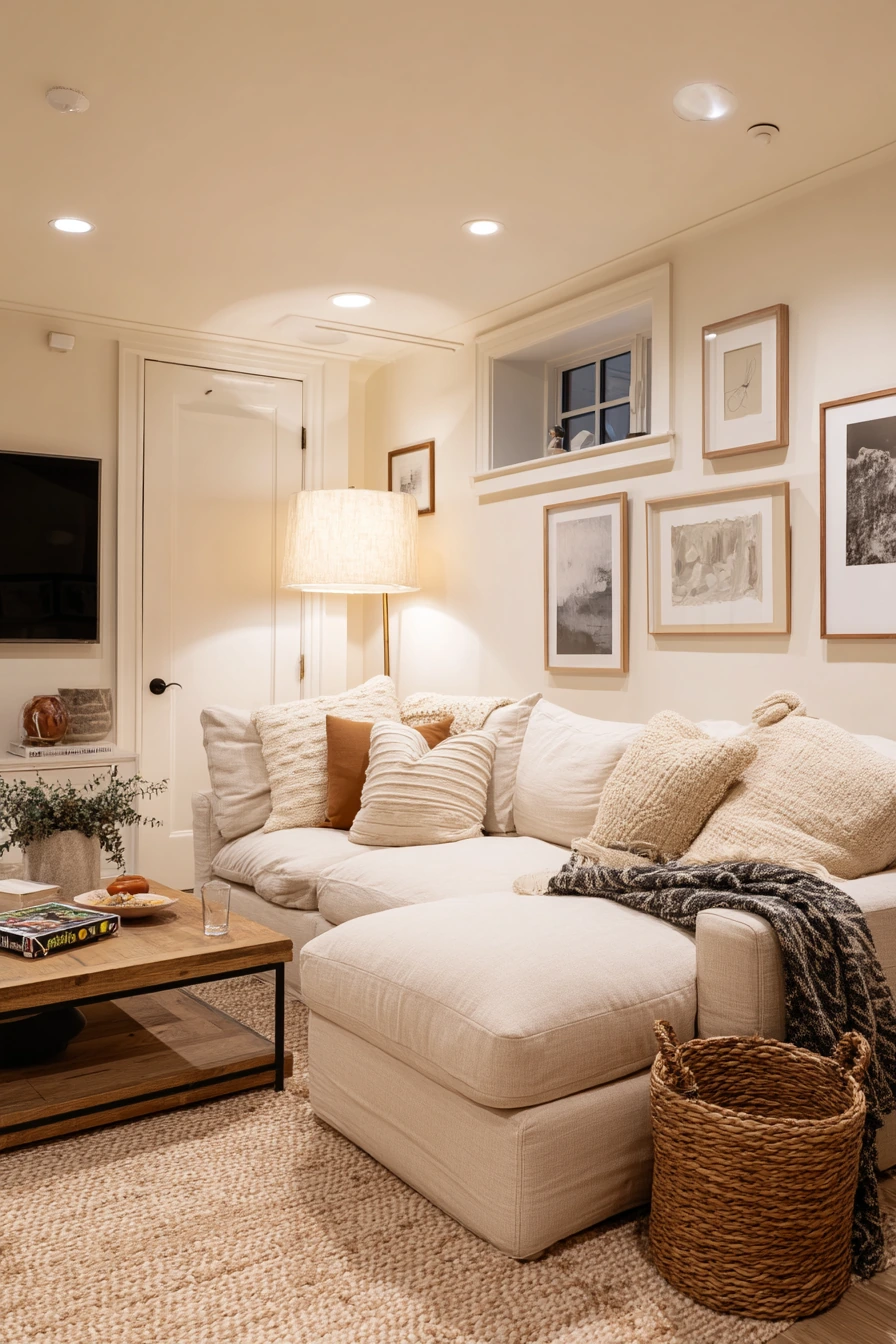
A family basement lounge should feel soft, grounded, and easy to live in. Start with a sectional that faces a low media console, so the screen is not too high. Anchor the seating with an oversized rug to warm up basement floors and reduce echo. Keep the look calm with framed art that is simple and not too small for a wide wall.
Plan for the real stuff that shows up during weekend movie nights. Add hidden storage baskets near the sofa for remotes, chargers, and extra throws. Leave one corner open for a kid’s blanket fort, because flexible floor space makes the room feel welcoming. A stack of board games on a shelf or in a cube organizer adds personality and gives guests something to do when the movie ends.
Lighting matters in a basement. Use warm lamp pools to avoid harsh overhead glare, and let gentle window spill from a small egress window do what it can during the day. Choose fabrics with texture, like a nubby rug and a soft throw, so the room feels cozy even with subtle shadows.
- Place the coffee table close enough for snacks, but leave a clear path to the stairs.
- Use a lidded basket to hide charging cables and a power strip.
- Pick washable slipcovers or performance fabric for the sectional.
- Hang one large art piece instead of many tiny frames.
- Add a slim side table for a half-full water glass and popcorn bowls.
Pro Design Tip: Mount the TV at seated eye level and use a low console so the wall feels taller, which helps low basement ceilings feel less heavy.
Budget Considerations: Skip custom built-ins at first. Use cube shelving, thrifted baskets, and a large low-pile rug to get the same function for less.
2. Compact Basement Home Office Under a Window Well
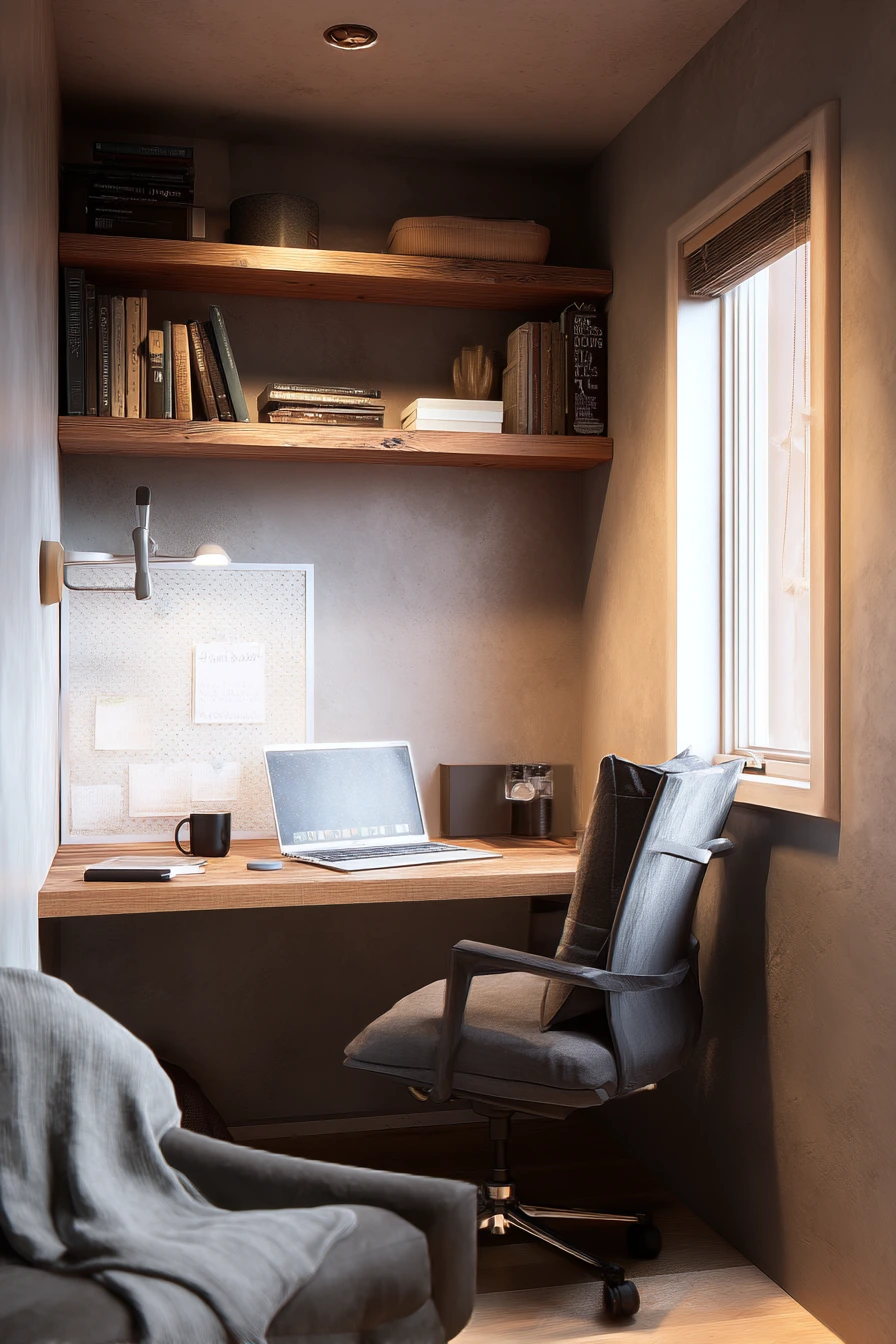
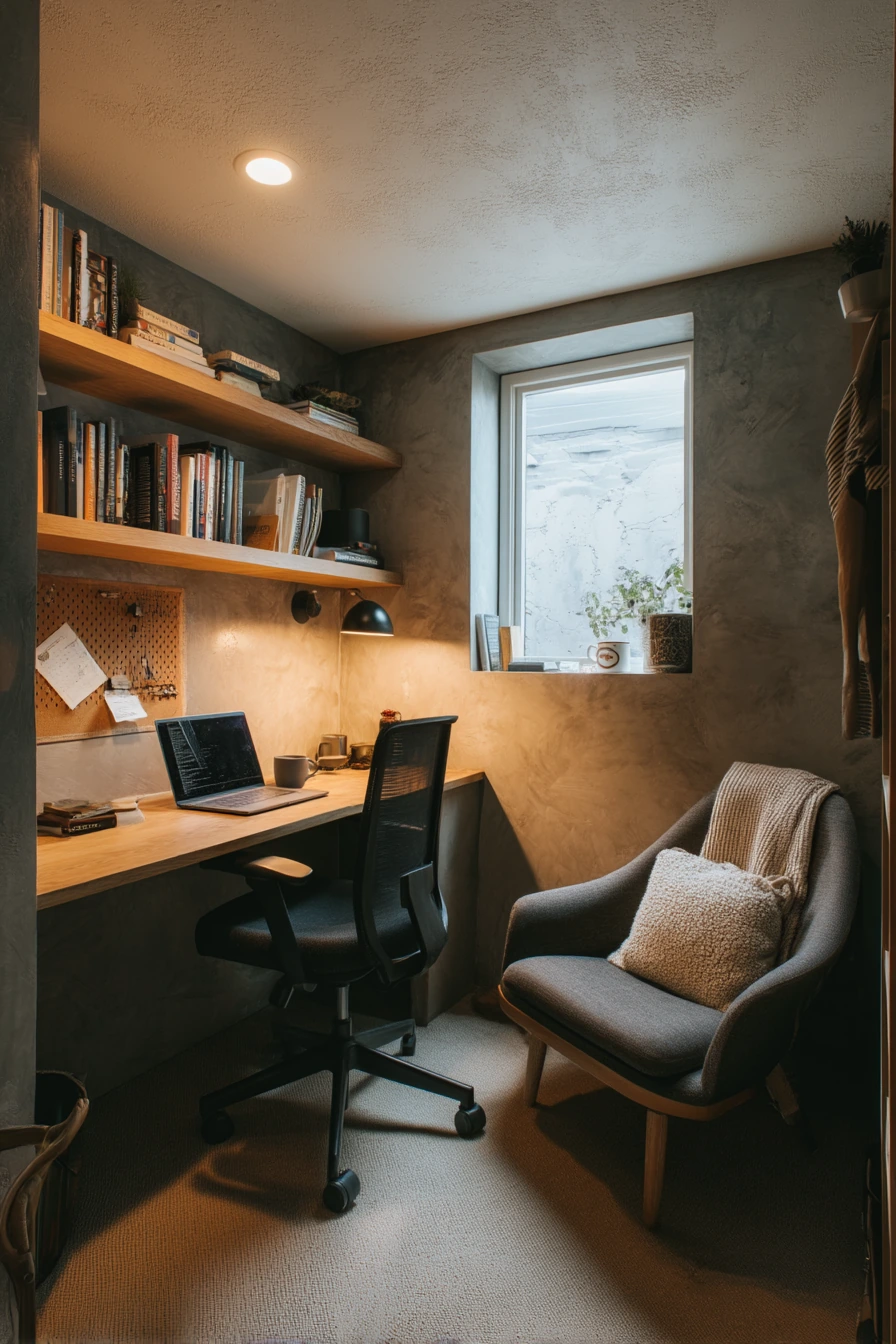
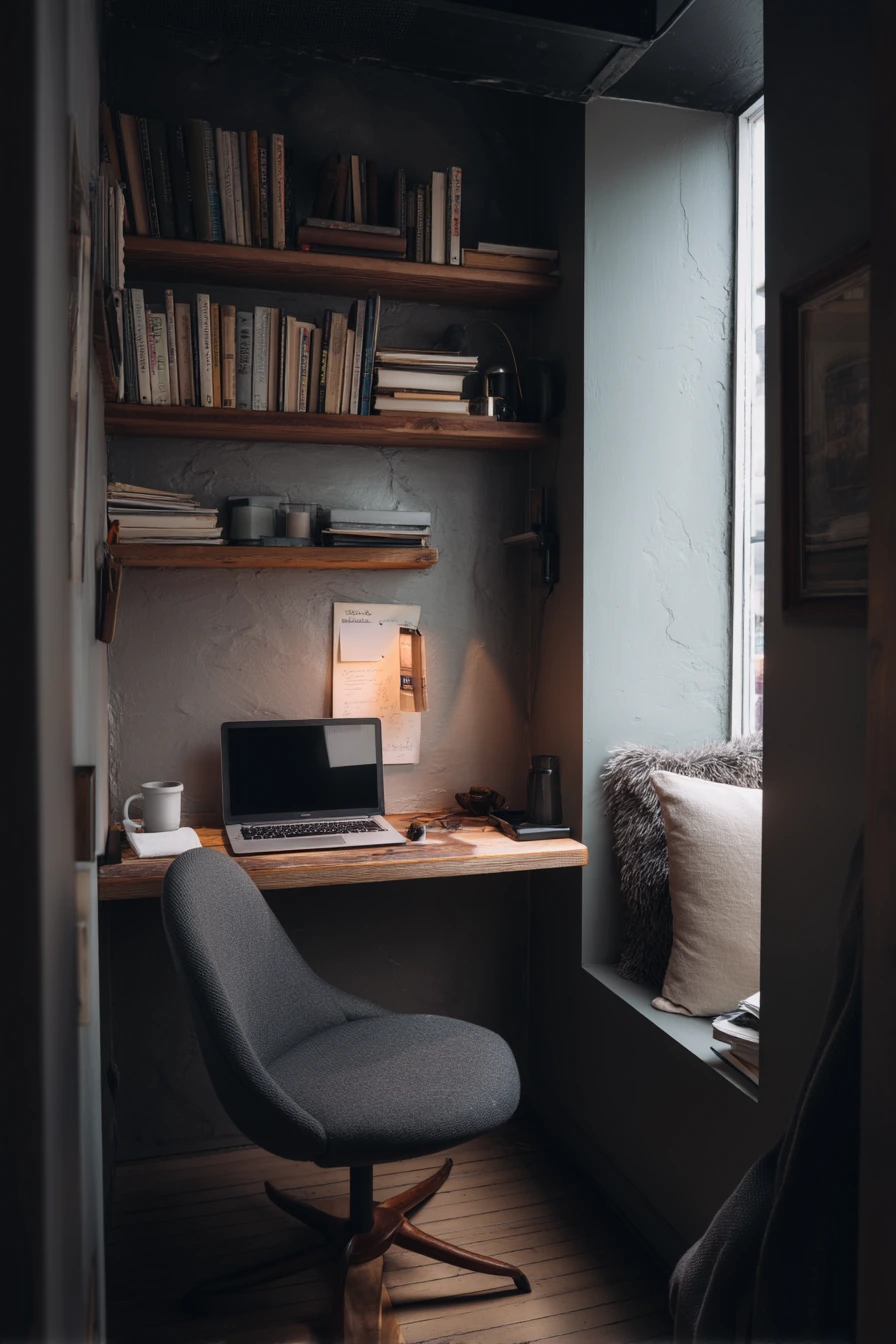
A compact basement home office can still feel calm and efficient. A built-in desk under a slim window well makes the most of limited daylight and keeps your work surface in the brightest spot. If built-ins are not possible, use a wall-mounted desktop with simple brackets to keep the floor open.
Keep storage vertical. Floating shelves hold books, notebooks, and a few work items without taking up precious square footage. Add a pinboard above the desk for notes, schedules, and small reminders. An ergonomic chair is the one place to spend more, because comfort matters when you work long hours.
Style the office so it feels like a real room, not a utility corner. A nearby lounge chair with a slightly wrinkled throw adds softness and gives you a place to read. Use muted wall color to hide basement texture, and pick a desk lamp that fills in shadows during morning window light. Small everyday details, like a pen cup, a phone charger, and a closed laptop, make it feel organized without looking staged.
- Use a narrow desk depth if the walkway is tight.
- Choose closed storage for cables, paper, and extra tech.
- Add one plant near the window to brighten the wall.
- Use a task lamp plus a warm bulb in the ceiling light.
- Place a small tray for a coffee mug ring and keys.
Pro Design Tip: Install an outlet strip under the desk and run cables through one grommet hole, so chargers stay hidden and the desktop stays clean.
Budget Considerations: Floating shelves and a simple wall desk cost less than full cabinetry. You can upgrade later by adding drawer units or a custom face trim.

3. Quiet Basement Guest Suite for Visiting Parents
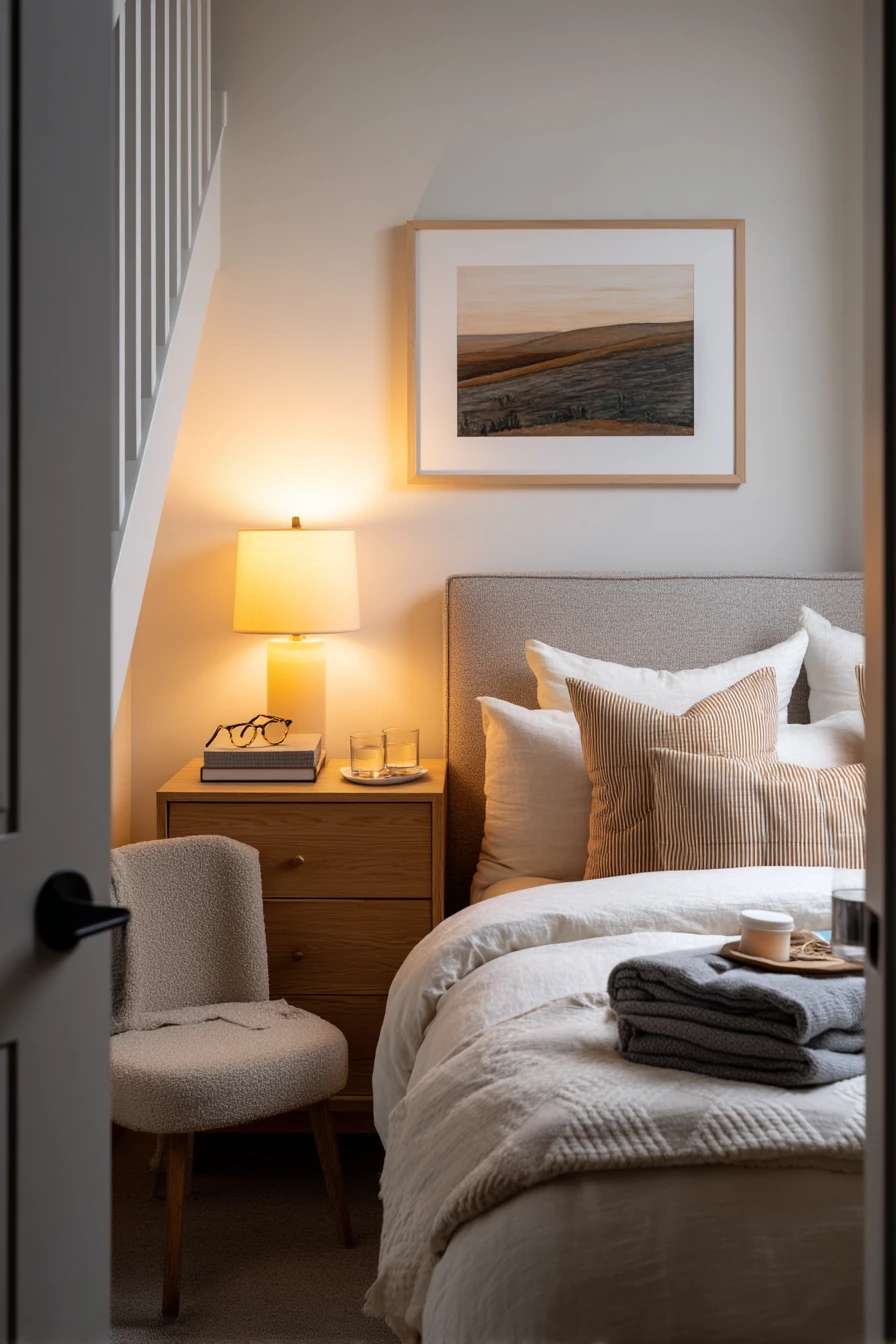

A quiet basement guest suite should feel restful, not like a spare storage room. Use a low upholstered bed to keep the space feeling open under a modest basement ceiling. Linen bedding in warm neutrals looks relaxed and is easy to refresh with a simple duvet cover wash. Add two warm bedside lamps so guests can control their own light.
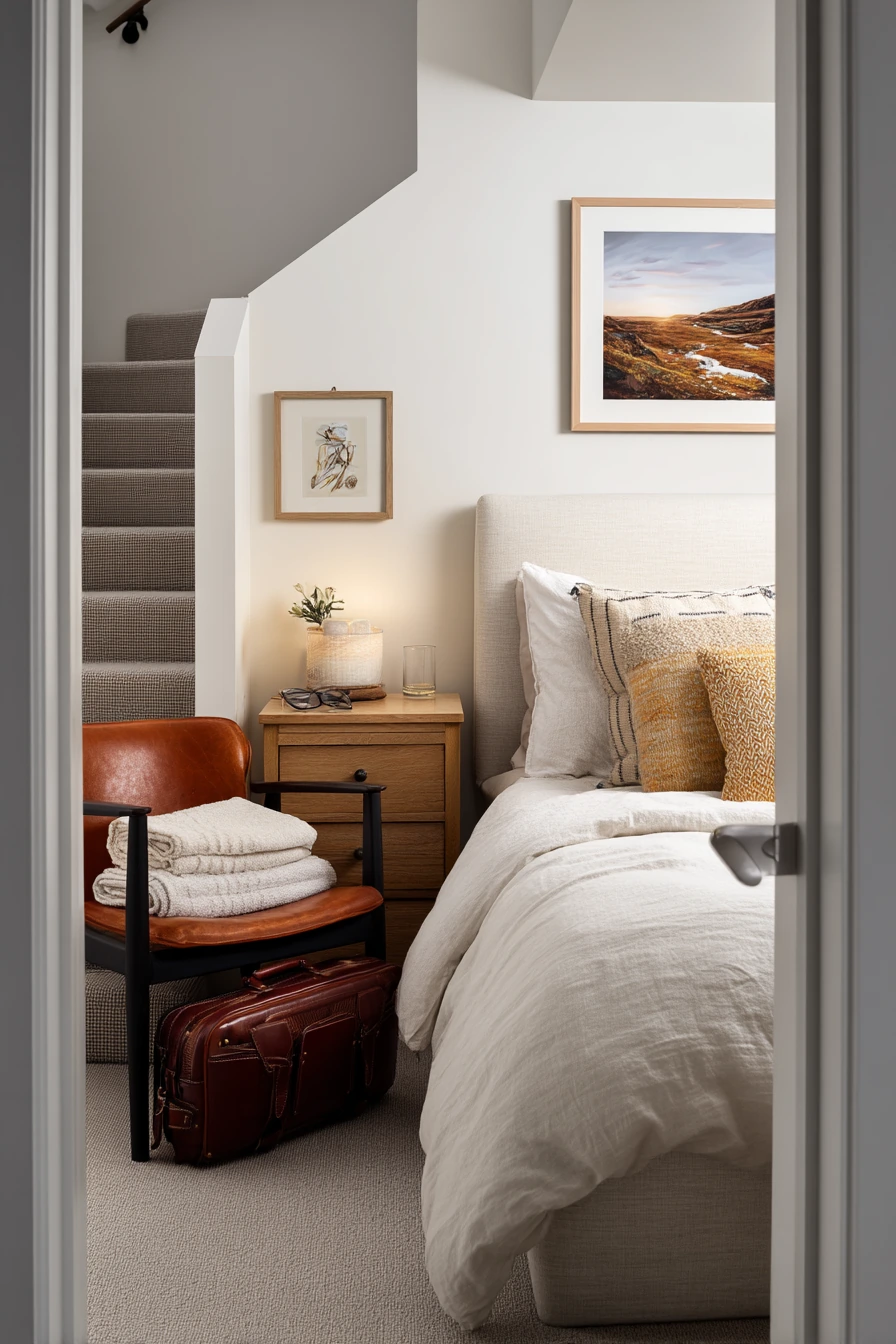
Make the room work for short stays. A compact reading chair in the corner gives your guests a place to sit that is not the bed. A small dresser or chest helps them unpack, and a folded towel stack on top signals that the space is ready. A framed landscape print adds a calm focal point without making the room feel busy.
Think through the little moments. Guests often bring a travel bag that stays half-open, so leave a luggage spot at the foot of the bed or along one wall. Add a small nightstand for reading glasses and a glass of water. If daylight is faint at the stair landing, use layered lighting and soft amber bulbs to keep the room soothing at night.
- Use blackout or light-filtering window coverings for the egress window.
- Keep one empty drawer and a few hangers available.
- Add a soft rug next to the bed for cold floors.
- Place a small hook rail for jackets and bags.
- Use a lidded hamper or basket for used towels.
Pro Design Tip: Choose a headboard with gentle curves and texture to soften basement walls and make the bed feel like a real suite, not a temporary setup.
Budget Considerations: If a new bed is not in the budget, upgrade with crisp linen-look bedding, matching lamps, and one quality area rug to change the whole feel.

4. Teen Hangout Basement Den With Gaming Zone

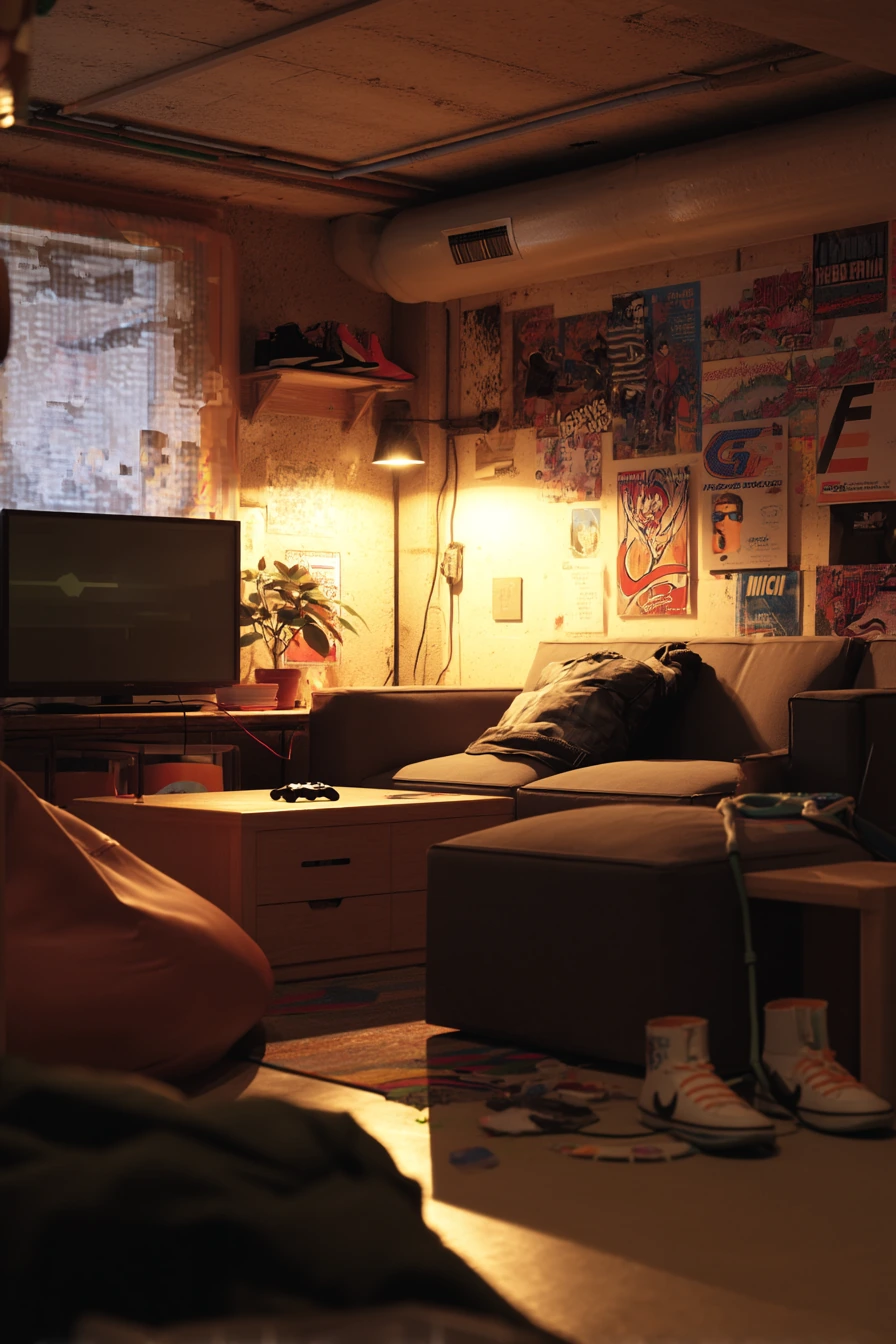
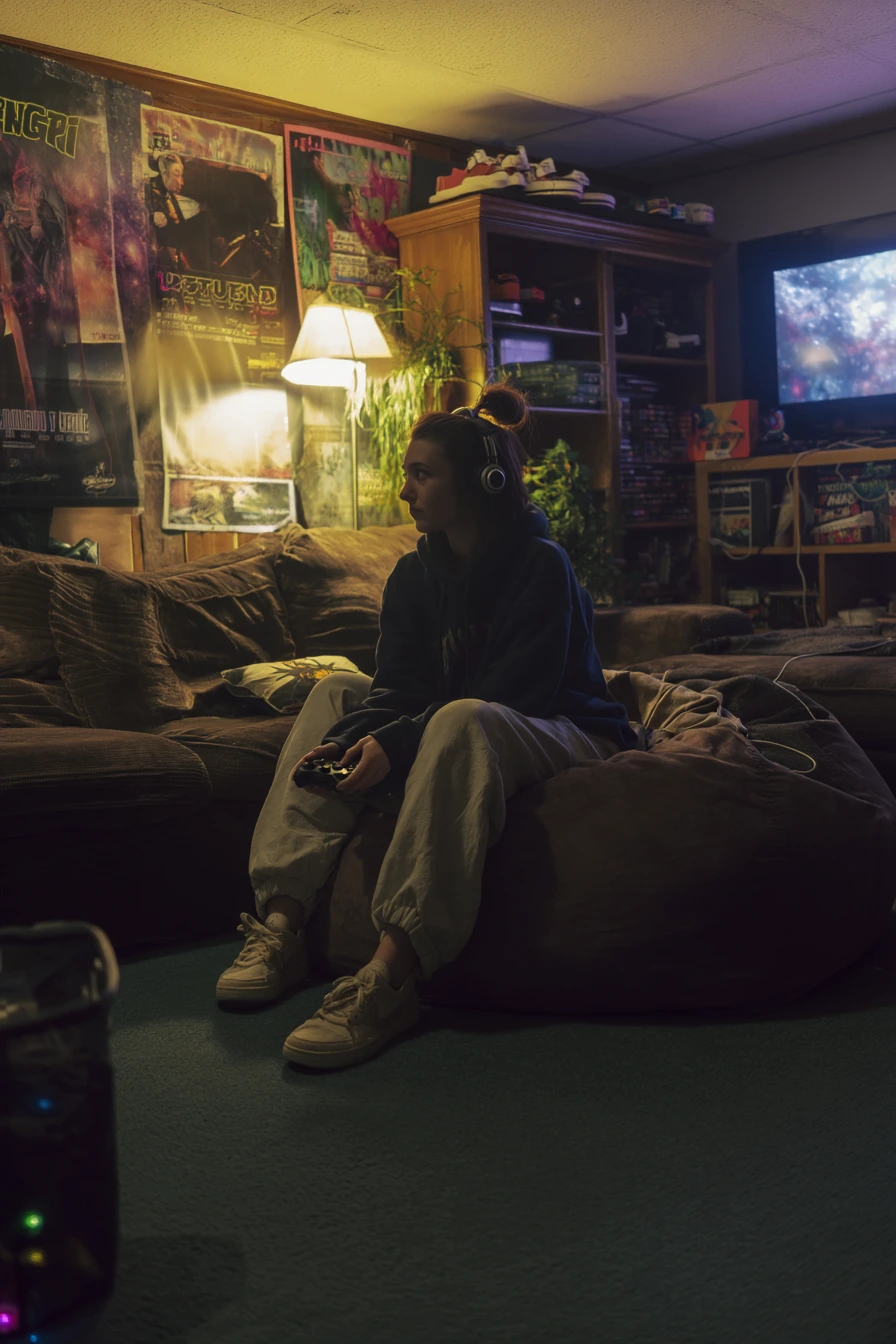
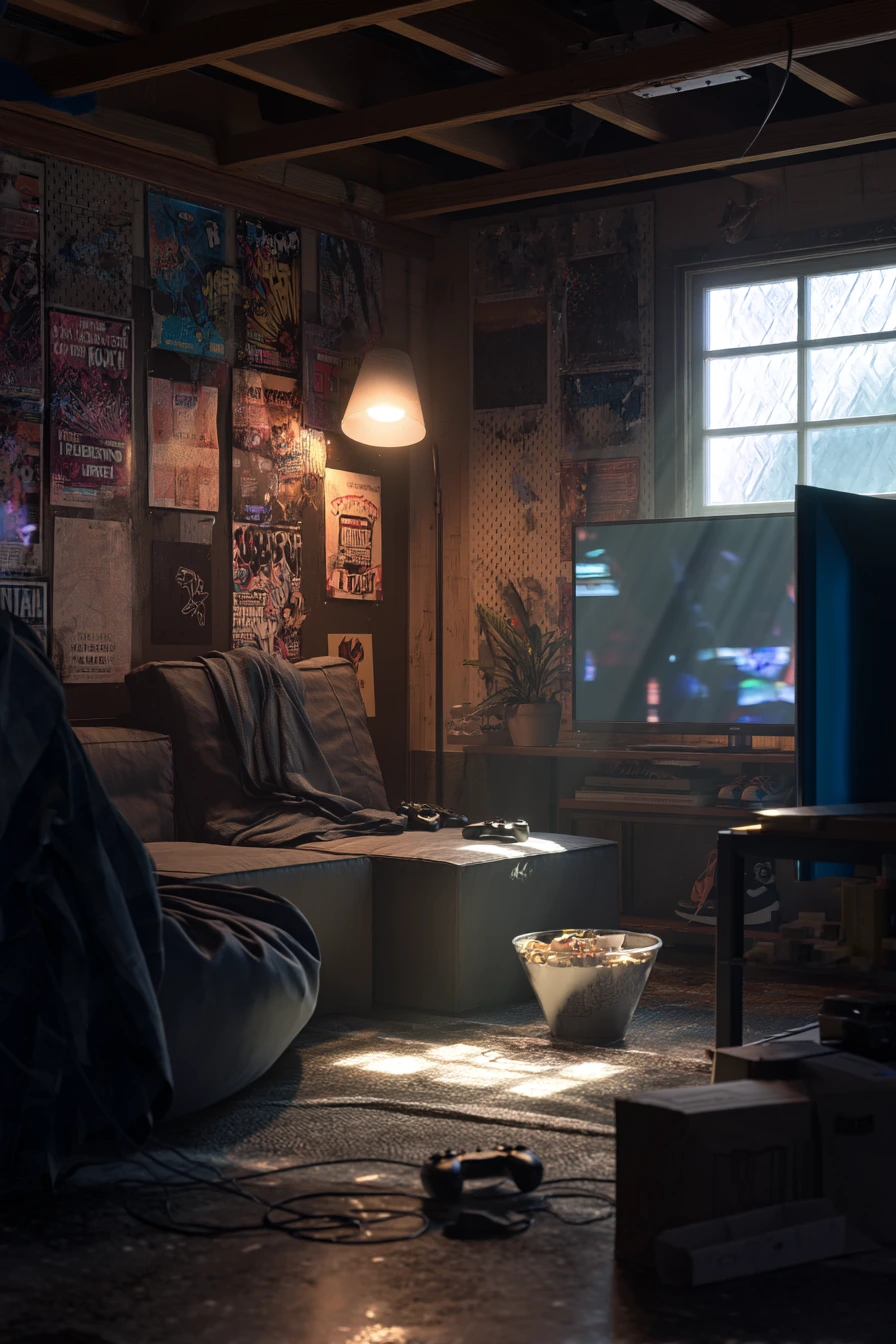
A teen hangout basement den needs flexible seating, a spot for gaming, and storage that can handle clutter. Start with a modular sofa so the layout can change when friends come over. Add a beanbag for extra seating that can slide into a corner when not needed. Keep a clear view to a gaming monitor, but avoid placing screens where glare from a small window will hit.
Give the room zones. A sneaker rack and a small shelf near the entry keeps shoes and bags from taking over the sofa area. A poster wall adds personality and is easy to update as interests change. Add a snack bowl and a small side table so food stays off the controller area. Expect the lived-in details, like a hoodie tossed over a chair and a headphone cable trailing across the floor, and plan for easy resets.
Lighting makes the space feel cool but still comfortable. Mix warm lamp light with dim screen glow, and add a soft plant near the window so you get interesting shadows on the wall. Choose durable fabrics and darker colors that hide wear, while adding one lighter pillow to keep the room from feeling heavy.
- Use cord clips and a cable sleeve to keep wires safer.
- Add a slim console table behind the sofa for chargers.
- Choose a rug that can handle spills and heavy foot traffic.
- Install wall hooks for hoodies and backpacks.
- Use a bin or drawer for controllers and extra headphones.
Pro Design Tip: Plan power first. Put an outlet and surge protector near the monitor and seating so cords do not cross the main walkway.
Budget Considerations: Use peel-and-stick poster frames and affordable cube storage. Spend on one good rug pad and a sturdy sofa piece that lasts through teen years.
5. Functional Basement Playroom With Storage Baskets


A family basement playroom can stay cheerful and still look tidy-but-lived-in. Start with a soft foam rug for safety and comfort, especially on colder basement floors. Use low toy shelves so kids can reach what they need and learn to put items back. Labeled baskets make clean-up faster, and they hide visual clutter when guests come over.
Keep a kid-sized work area. A tiny table for drawing helps contain crayons and paper in one spot. Leave space for floor play, like a train set partly assembled, without blocking paths to doors and stairs. Add a small book ledge or bin for picture books so reading is easy to grab at any time. For the everyday mess, plan for spilled crayons and a stuffed animal by the wall and choose finishes that can handle it.
Lighting should feel bright but not harsh. Use daylight from a small window well when possible, then add a warm ceiling lamp so shadows do not make the room feel gloomy. Pick simple wall color that bounces light, and hang one or two playful prints at kid height to make the room feel like theirs.
- Use clear bins for sets with many small pieces.
- Rotate toys and store extras in a closet or lidded tote.
- Keep a sippy cup zone with a wipeable tray or basket.
- Add a low bench with storage for dress-up items.
- Use a washable rug cover or foam tiles you can replace.
Pro Design Tip: Group storage by activity, like art, building, and pretend play, so kids know where things go and clean-up takes less time.
Budget Considerations: Basic shelving plus matching baskets is cheaper than custom cabinetry. Print labels at home and upgrade baskets over time as they wear out.


6. Compact Basement Gym for Morning Workouts

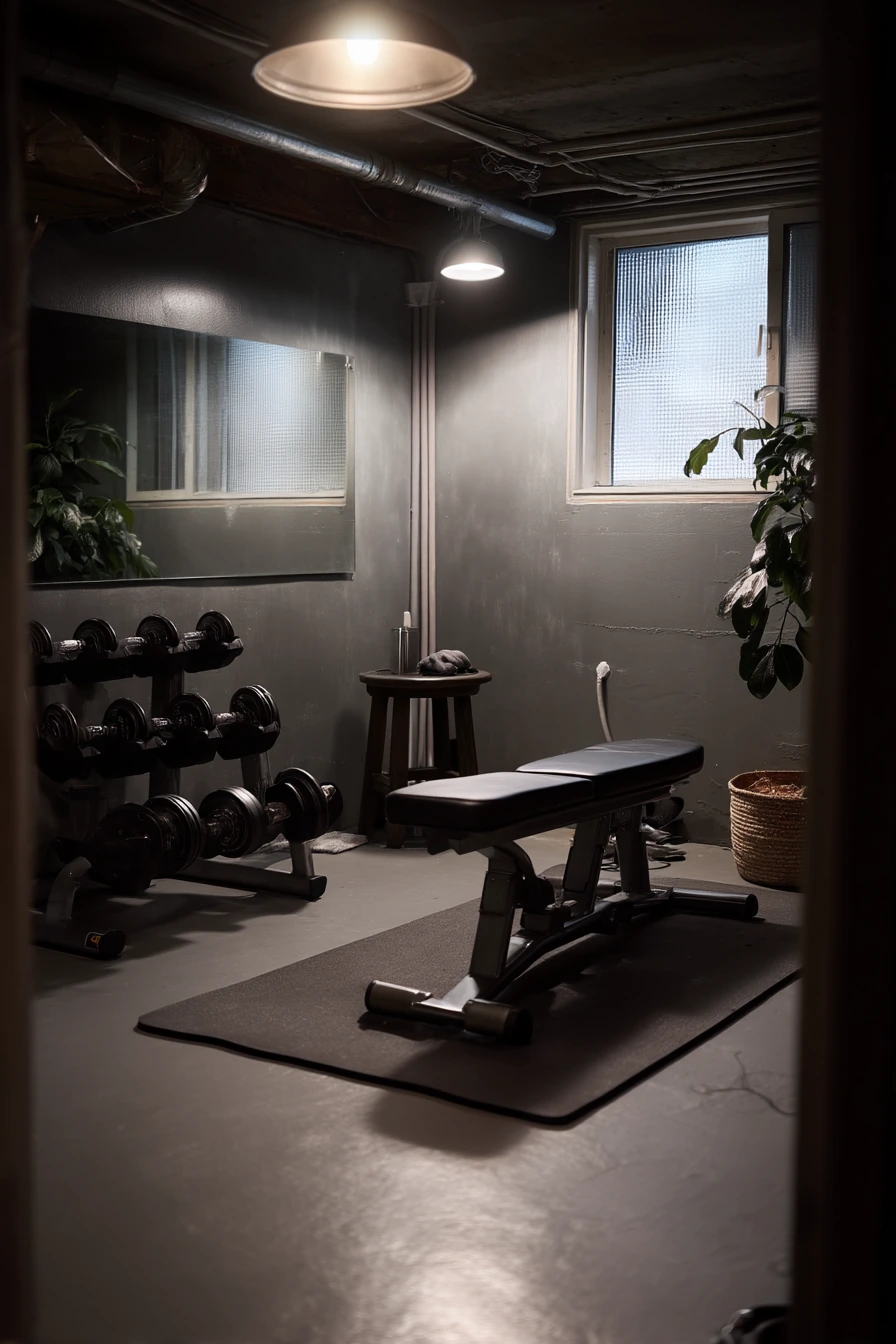
A compact basement gym should feel clean, energized, and easy to use. Start with rubber flooring to protect the slab and reduce noise. Place an adjustable bench along one wall, with dumbbells stored on a low rack so you do not trip. A mirrored panel helps with form and makes the room feel larger, especially in a basement with limited light.
Keep gear simple and visible. A folded yoga mat and resistance bands on wall hooks make it easy to start a quick workout. Add a small stool or shelf for a towel, a protein shaker, and your phone on a charger. If the basement has a window well, place a plant nearby so you get crisp shadows and a bit of life in the space.
Mix lighting so it does not feel like a dark cave. Use cool daylight during the day and one warm practical lamp for early mornings or evenings. Keep walls a light neutral so you can see clearly, and choose closed storage if you have kids, so weights and bands stay out of reach.
- Leave a clear 6 to 8 foot stretch zone on the floor.
- Use wall hooks for bands, jump rope, and headphones.
- Add a small fan or vent booster if air feels stale.
- Store cleaning wipes and a small trash can nearby.
- Choose a mirror location that does not reflect clutter.
Pro Design Tip: Lay out equipment based on movement paths, not looks. Make sure you can squat, hinge, and press without hitting walls or low ceiling lights.
Budget Considerations: Start with used dumbbells and a foldable bench. Add rubber tiles in phases instead of installing a full wall-to-wall gym floor at once.


7. Cozy Basement Bar and Game Night Spot


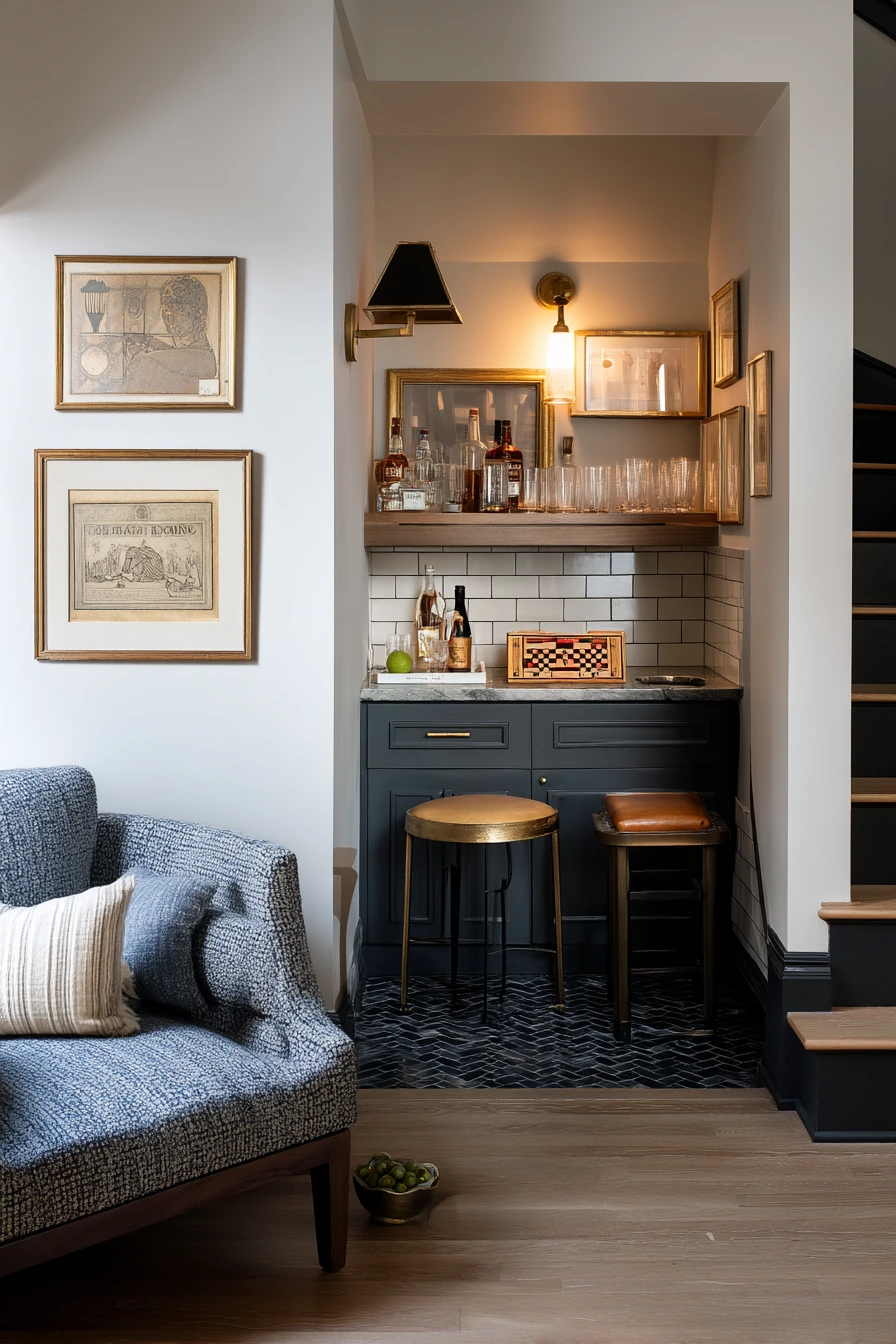
A cozy basement bar and game night spot should feel intimate and polished-but-lived-in. A slim wet bar works well in smaller basements and keeps plumbing and storage in one line. Use open shelves for glassware so friends can grab what they need, and add two stools that tuck in to keep the walkway clear.
Make it feel like a real hangout. A backgammon board or card deck left out signals that the space gets used. Add a small dish for olives, a coaster stack, and one cocktail napkin holder to keep spills under control. Framed vintage prints add character without making the bar area feel cluttered.
Lighting is the mood setter. Warm brass lamp glow makes the space feel cozy, and faint window light at the stair helps with safety. If you have mixed lighting, keep bulbs in the same warm range so the room does not look patchy. Choose easy-clean surfaces for the counter and use a tray to corral bottles.
- Use a small bar mat to protect the counter during mixing.
- Add a narrow rolling cart if the bar has limited cabinets.
- Keep extra glasses on the top shelf and daily ones within reach.
- Place a small rug to soften sound and add warmth.
- Store games in a lidded box so the room resets fast.
Pro Design Tip: Use under-shelf lighting or a small sconce near the bar to highlight glassware and make the counter area easier to use without bright overhead lights.
Budget Considerations: Skip a full wet bar if plumbing is costly. A simple cabinet with a butcher-block top and a bar cart can create the same game night feel for less.

8. Practical Basement Laundry Room With Style
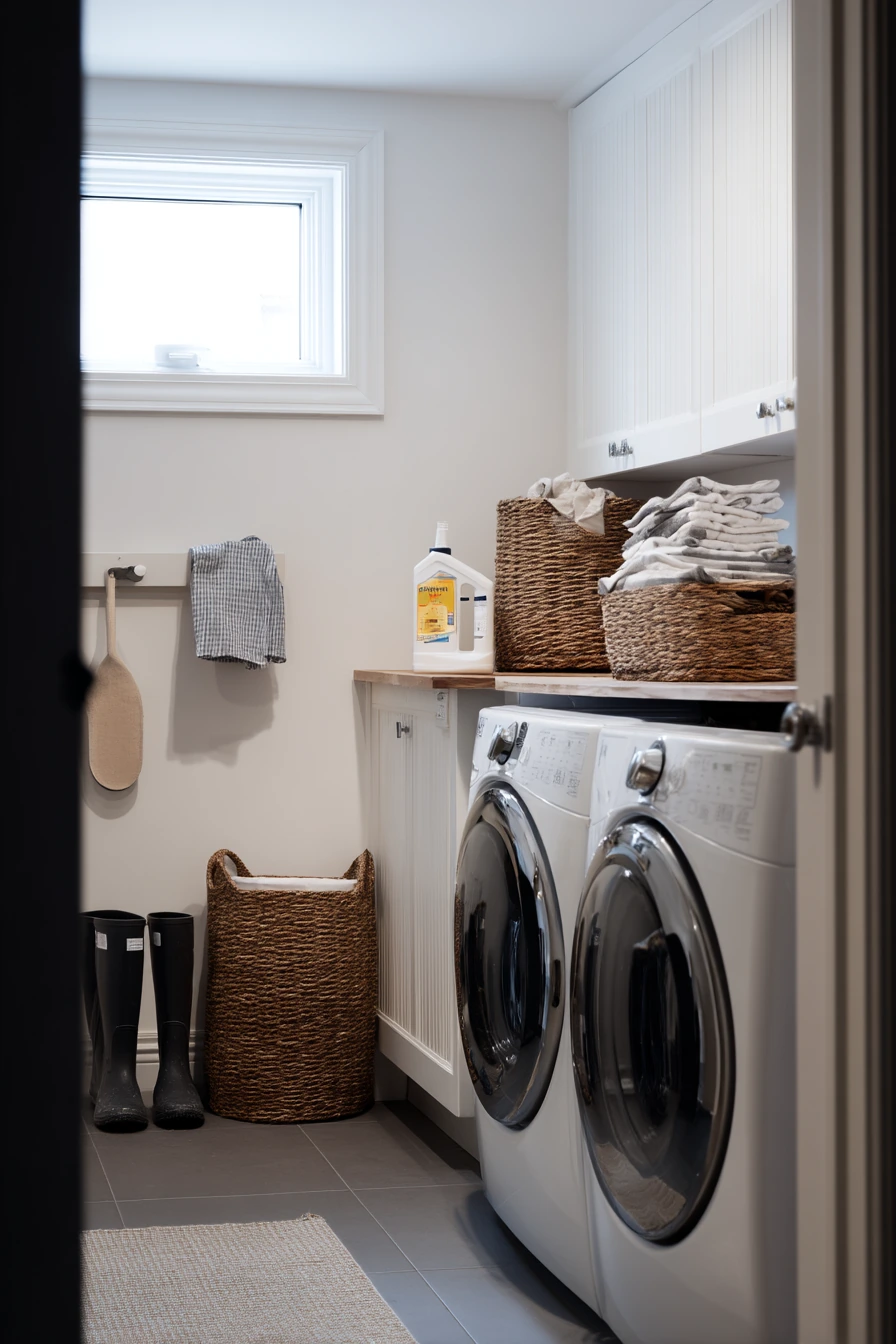
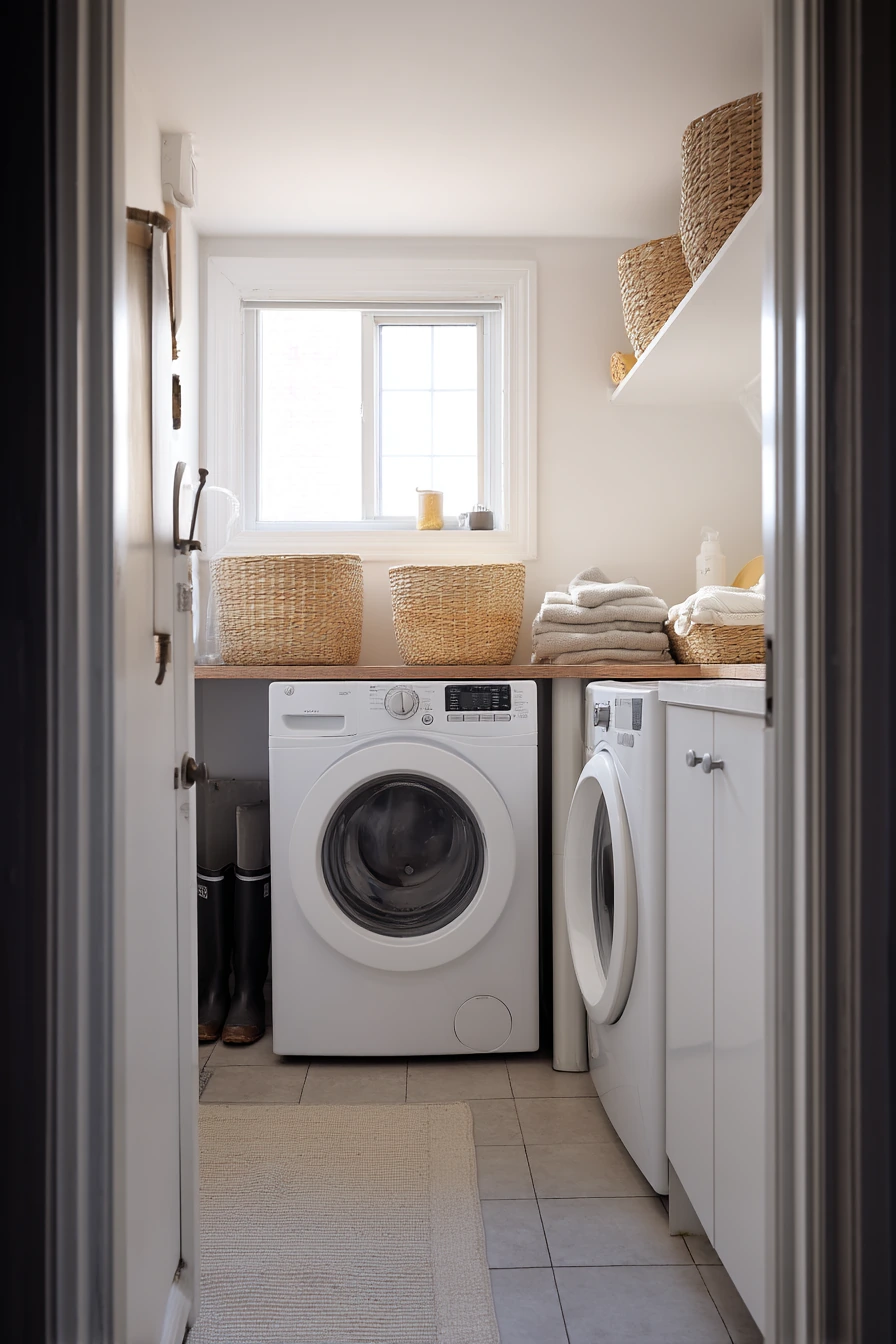
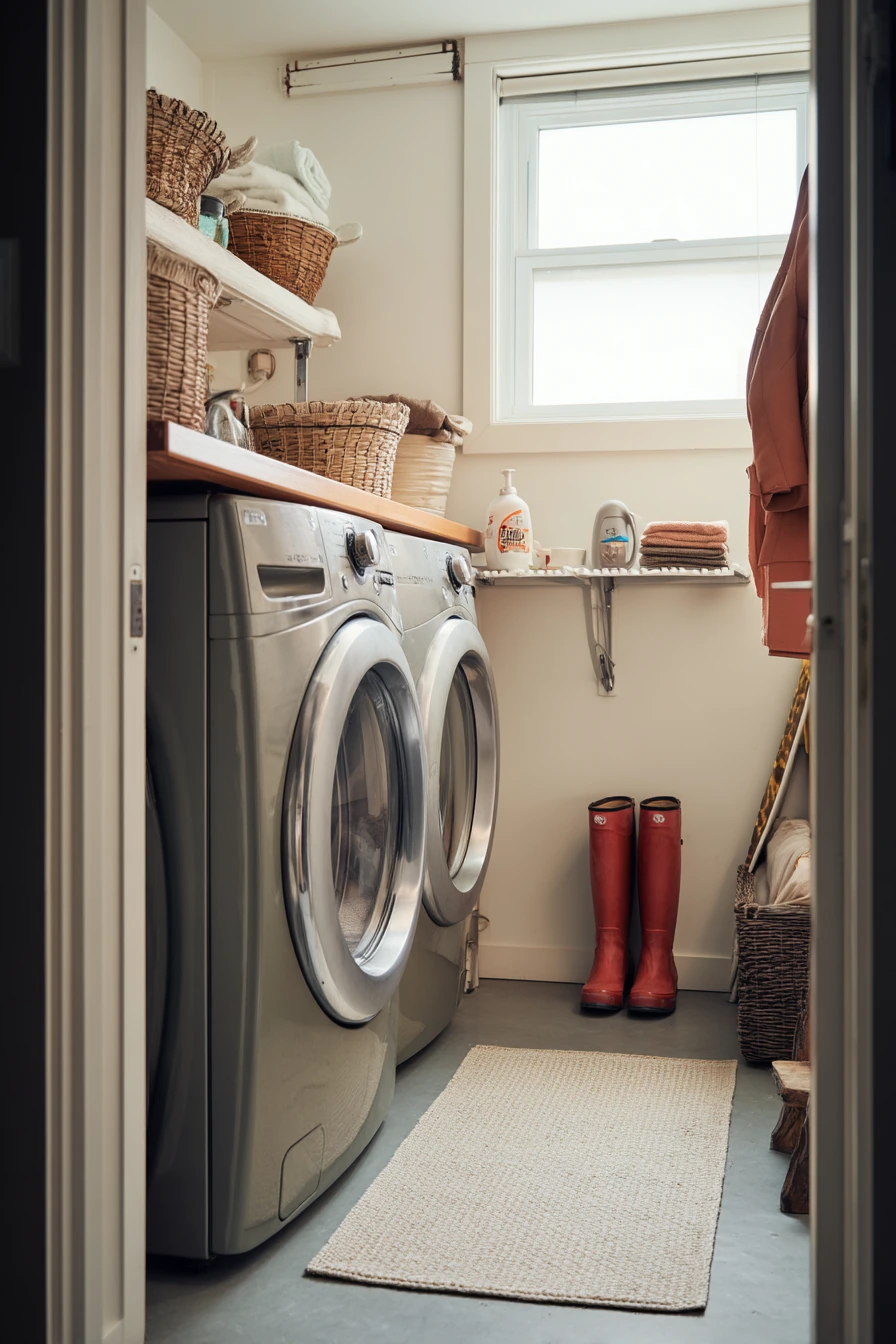
A practical basement laundry room can look clean and still handle daily chores. Front-load washer and dryer units work well with a countertop folding zone above them. Add woven baskets for sorting, plus a spot for detergent and stain remover so supplies do not end up on every surface.
Organize for real routines. Keep folded towels in one open basket and store extras on a shelf. Tuck an ironing board aside so it is easy to grab, but not in the way. A pair of rain boots by the door makes sense in a basement entry, and a mug on the machine is a reminder that people actually use this room.
Basement laundry rooms often have small windows, so use soft daylight from a tiny window plus good overhead light. Choose a light wall color to brighten the space and add hooks for aprons, lint rollers, and small bags. Plan a safe charging spot near a wall outlet so a charging cable does not cross the floor.
- Add a wall rail with hooks for hang-dry items.
- Use labeled bins for cleaning cloths and spare supplies.
- Place a small rug runner for comfort and slip resistance.
- Use a tray to corral detergent bottles and sprays.
- Keep a small bowl for pocket finds like coins and hair ties.
Pro Design Tip: Install the folding counter slightly deeper than the machines, so socks and baskets do not slide behind the washer and dryer.
Budget Considerations: A laminate counter and simple brackets are affordable. You can upgrade later with cabinetry doors or a custom butcher-block top.

9. Serene Basement Reading Lounge With Fireplace
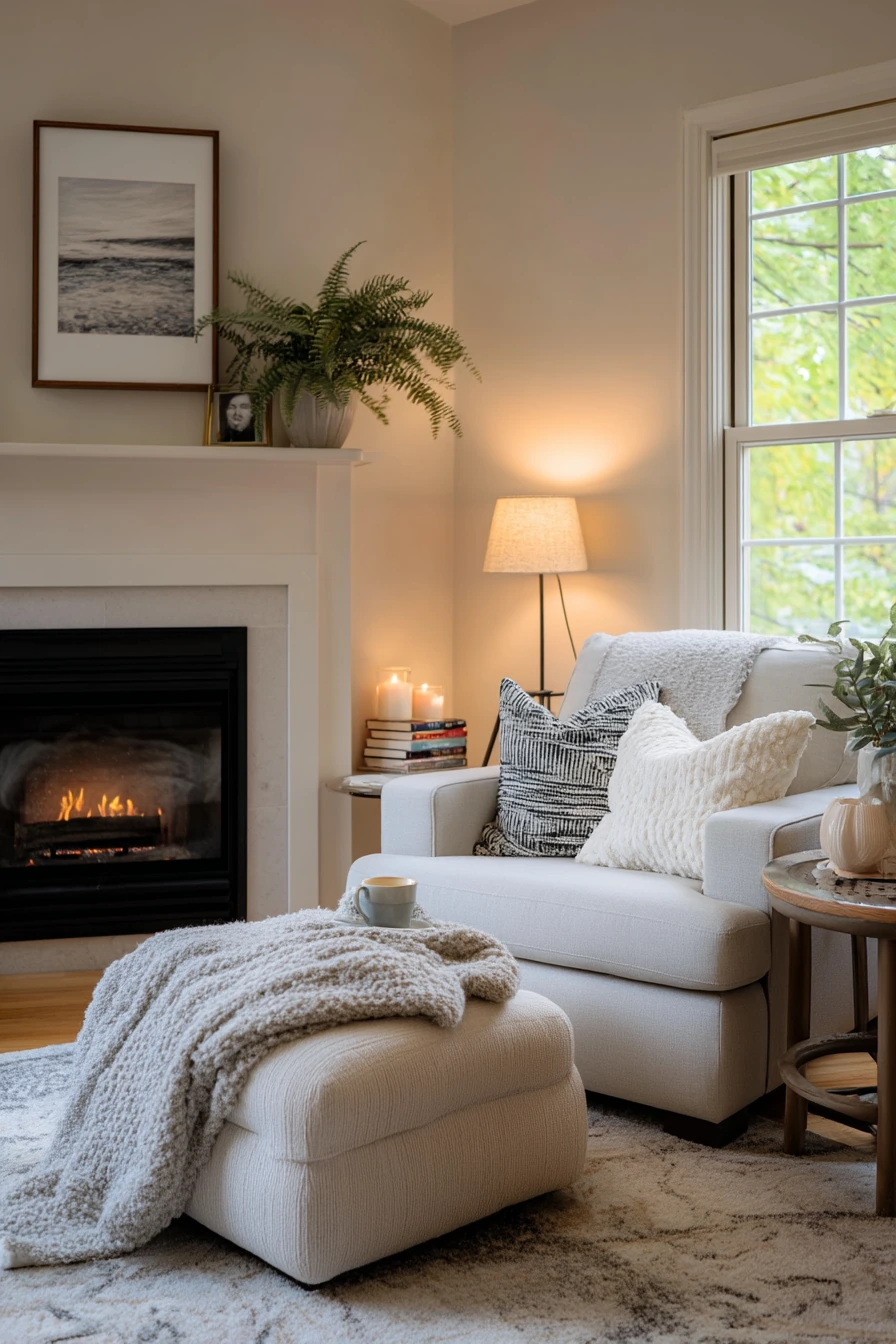

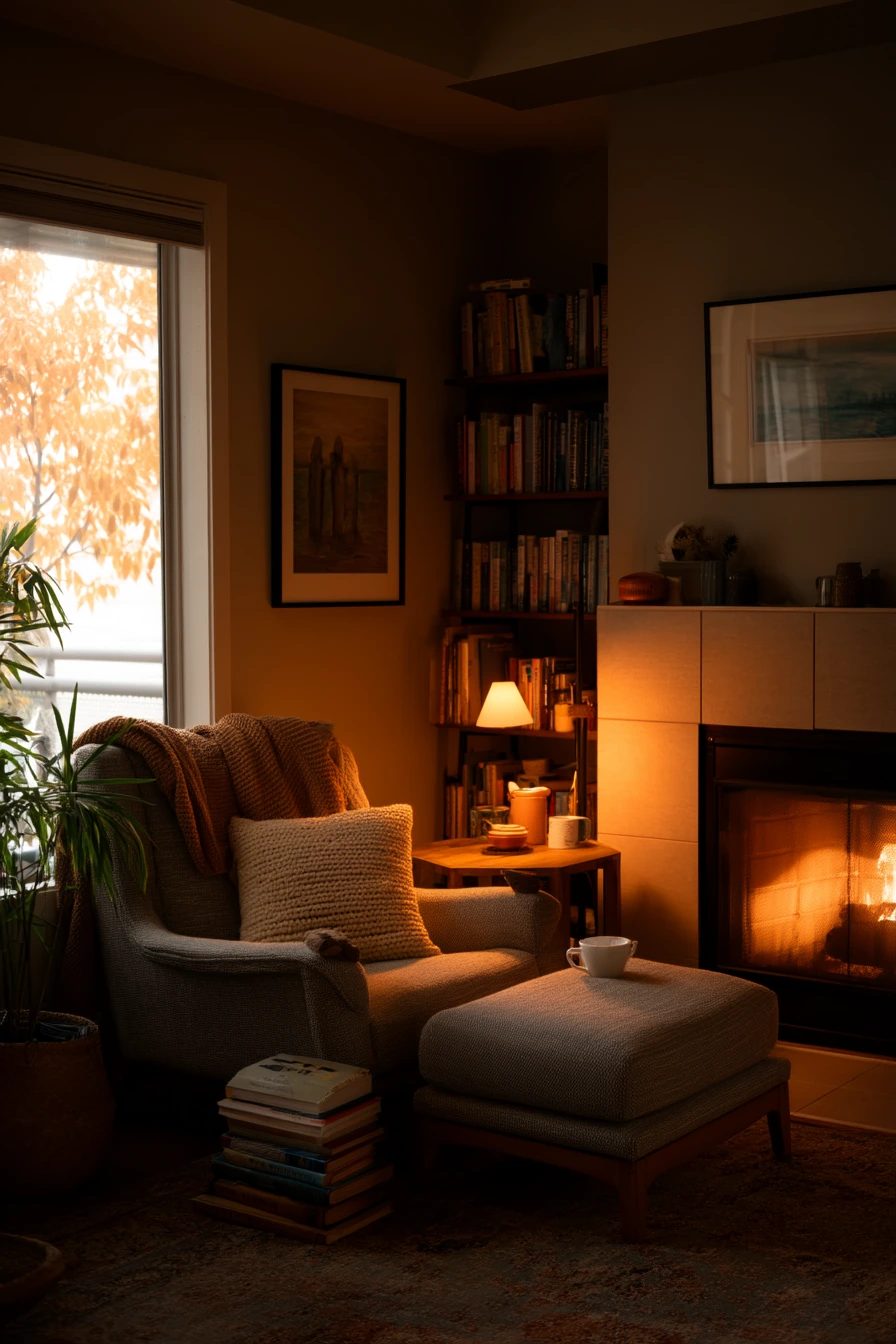
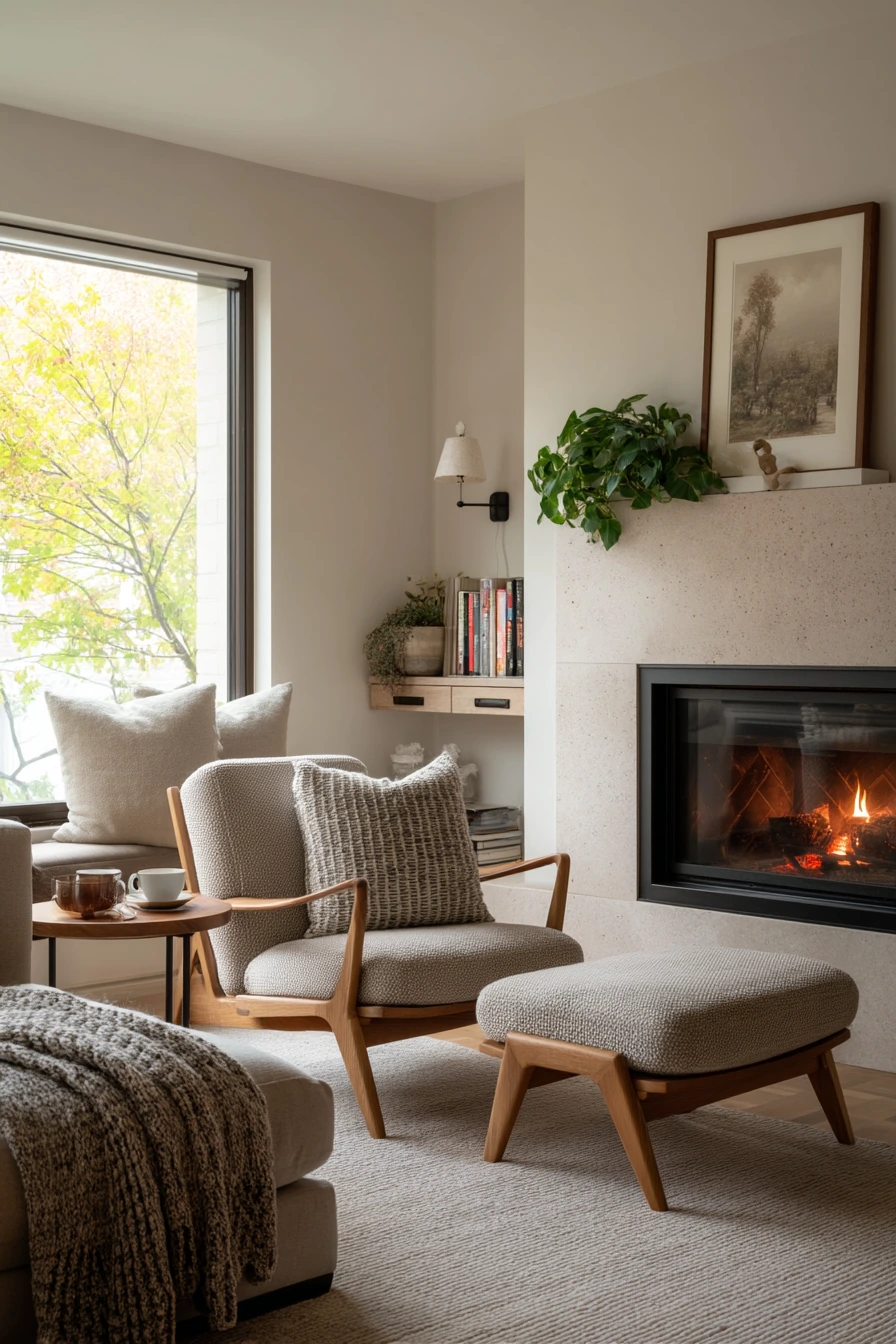
A serene basement reading lounge should feel hushed and comforting. A compact fireplace, even an electric insert, creates a warm focal point that pulls the room together. Place two lounge chairs across from each other with a low ottoman between them, so the space supports conversation and quiet reading.
Style with soft layers. Add a reading lamp near each chair so light lands on the pages, not in your eyes. Stack a few novels on a side table or a low shelf so the room looks lived in, not staged. A wool throw slightly rumpled makes the seating look inviting and helps with basement chill.
Keep it personal and calm. A framed family photo adds warmth without turning the room into a gallery. Add a plant near the window so leaves catch soft window light and bring movement to the corner. Use warm fire glow and gentle practicals, and choose a simple rug to reduce echo and make footsteps quieter.
- Use small side tables for a tea cup and reading glasses.
- Choose chairs with arms for better long reading sessions.
- Add a basket for extra throws and magazines.
- Keep wall art minimal to support a calm mood.
- Use dimmable bulbs to control evening light levels.
Pro Design Tip: Set the chairs on the front edge of the rug so the seating group feels anchored and the room looks finished, even in a larger basement.
Budget Considerations: Try an electric fireplace or a mantel shelf with candles for the look. Shop secondhand for solid lounge chairs and spend on new lamp shades for a clean finish.
10. Basement Craft Studio for DIY and Making


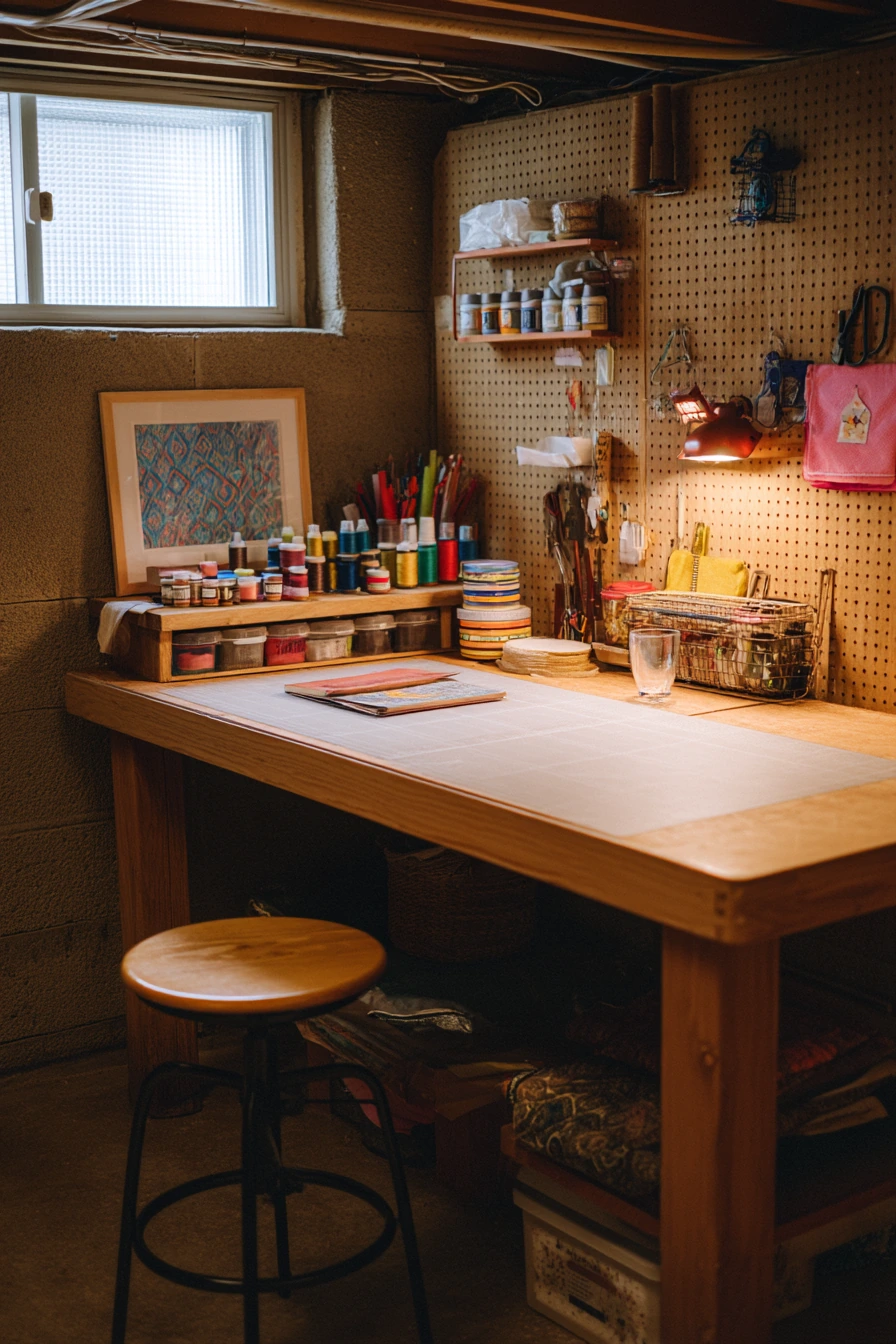
A basement craft studio should be hands-on, organized, and easy to clean. Start with a long worktable that fits your main projects, whether it is sewing, painting, or cutting. Place it near the window well so you get the best daylight for color matching and detail work. Add a warm task lamp for evenings and cloudy days.
Use wall space for tools. A pegboard with hooks keeps scissors, rulers, and small tools visible and easy to grab. Store paint jars, thread spools, and fabric rolls in clear bins or open shelves so you can see what you have. Keep a cutting mat on the table and use a small scrap basket for fast clean-up during a project.
Make the room feel comfortable so you will use it. Add a stool with back support if you sit for long periods. Keep a water glass on a stable tray so spills are less likely. If the basement is dusty, use lidded containers for paper and fabric. A calm color palette helps the room feel focused, even when the workspace is quietly busy.
- Use a rolling cart for supplies that move between projects.
- Label bins by category, like paint, sewing, and paper crafts.
- Hang a small corkboard for sketches and measurements.
- Add a washable rug for comfort at the worktable.
- Keep one empty surface area for drying or layout work.
Pro Design Tip: Set up the table so the main tool wall is within one step. Less reaching and walking makes it easier to stay organized during projects.
Budget Considerations: Repurpose a sturdy dining table or door slab as a work surface. Pegboard and basic hooks are low cost and give big storage gains fast.

Good basement design ideas start with how you actually live. Pick one purpose for the space, then add storage, lighting, and durable materials that make it easy to use every day.
If you want the fastest results, start with a rug, layered lamps, and baskets or shelves that hide clutter. Then build toward bigger upgrades like a wet bar, built-in desk, or a guest suite setup.
FAQ
What is the best flooring for a basement?
Rubber, vinyl plank, and low-pile rugs over a proper pad work well. They handle moisture better than many hardwood options.
How do I make a basement feel brighter?
Use light wall colors, add more lamps, and choose mirrors or glossy accents to bounce light. Keep window wells clear so you get all available daylight.
How do I design around a low basement ceiling?
Use low furniture, keep the TV and shelves lower, and avoid bulky chandeliers. Recessed or flush-mount lights help the ceiling feel higher.
How can I reduce echo in a basement lounge?
Add a large rug, curtains if you have windows, and soft seating. Fabric art panels or bookcases also help absorb sound.
What storage works best for a basement playroom?
Low shelves with labeled baskets are easiest for kids. Rotate toys and keep extras in lidded bins to reduce daily mess.
Do I need an egress window for a guest bedroom?
Local codes vary, but many areas require egress for a legal bedroom. Check your local rules before calling it a bedroom in listings.
How do I keep a basement office from feeling cold?
Add a rug, a warm desk lamp, and a soft throw on a chair. A small space heater can help, but use it safely and avoid overloading outlets.
Choose the section that matches your goal, copy the layout ideas, and adjust the details to fit your basement size and light. Small upgrades can make the space feel finished without a full remodel.