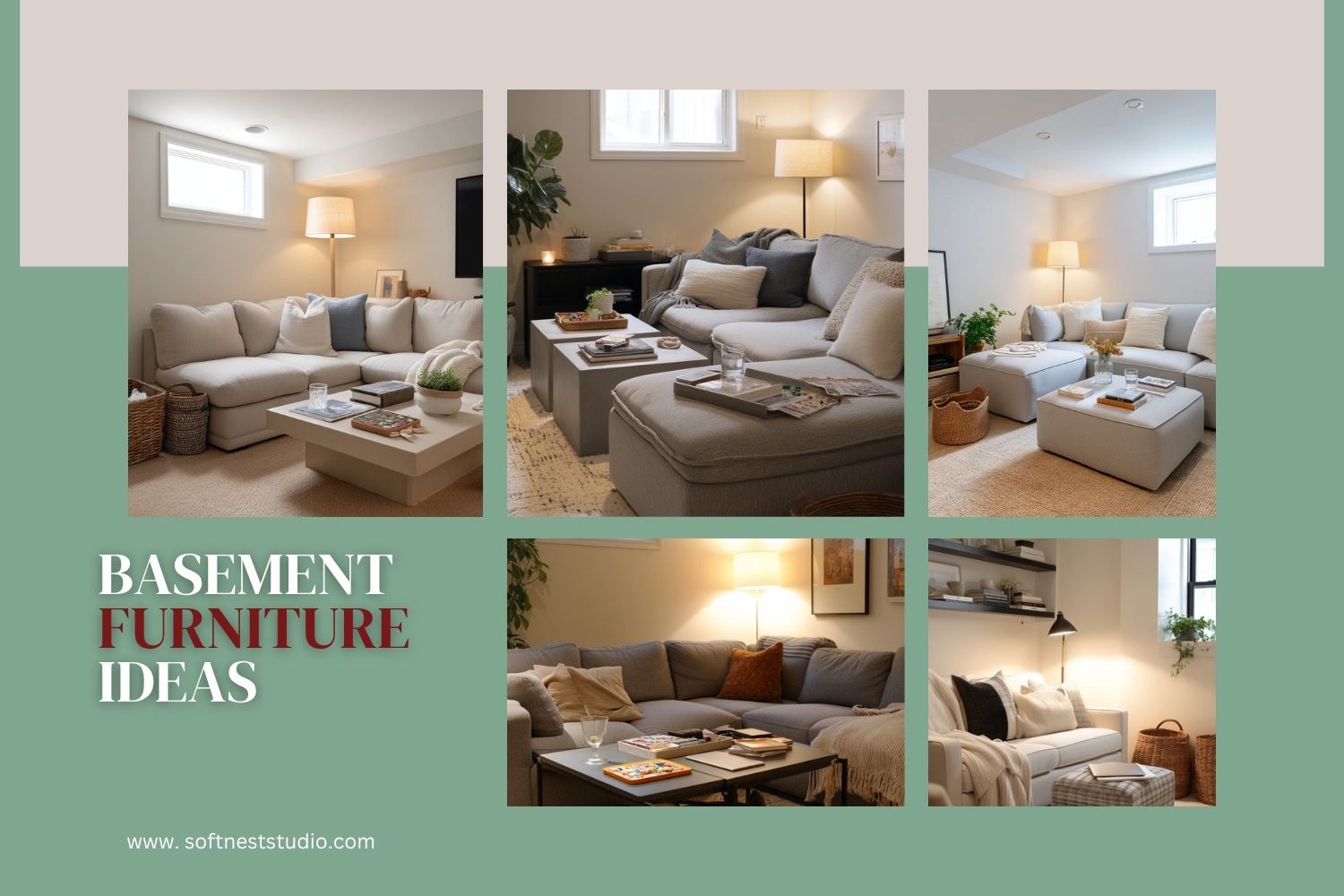
Basement furniture ideas can be tricky because the room often has low light, odd corners, and many jobs to do. A basement might be a movie room, homework zone, guest spot, or a play space, all in one.
This guide walks you through 10 realistic setups based on real-home styling. Each space uses practical pieces like a modular sectional, compact loveseat, recliners, a sleeper sofa, and smart storage.
You will get layout tips, what to buy first, and small “how to style it” ideas you can copy. Each section also includes a pro design tip and a budget note to help you plan.
Use these ideas to make your basement feel warm, calm, and lived-in, with the right lighting, easy-care rugs, and furniture that fits the space.
1. Family Basement Hangout With Modular Sectional and Washable Rug
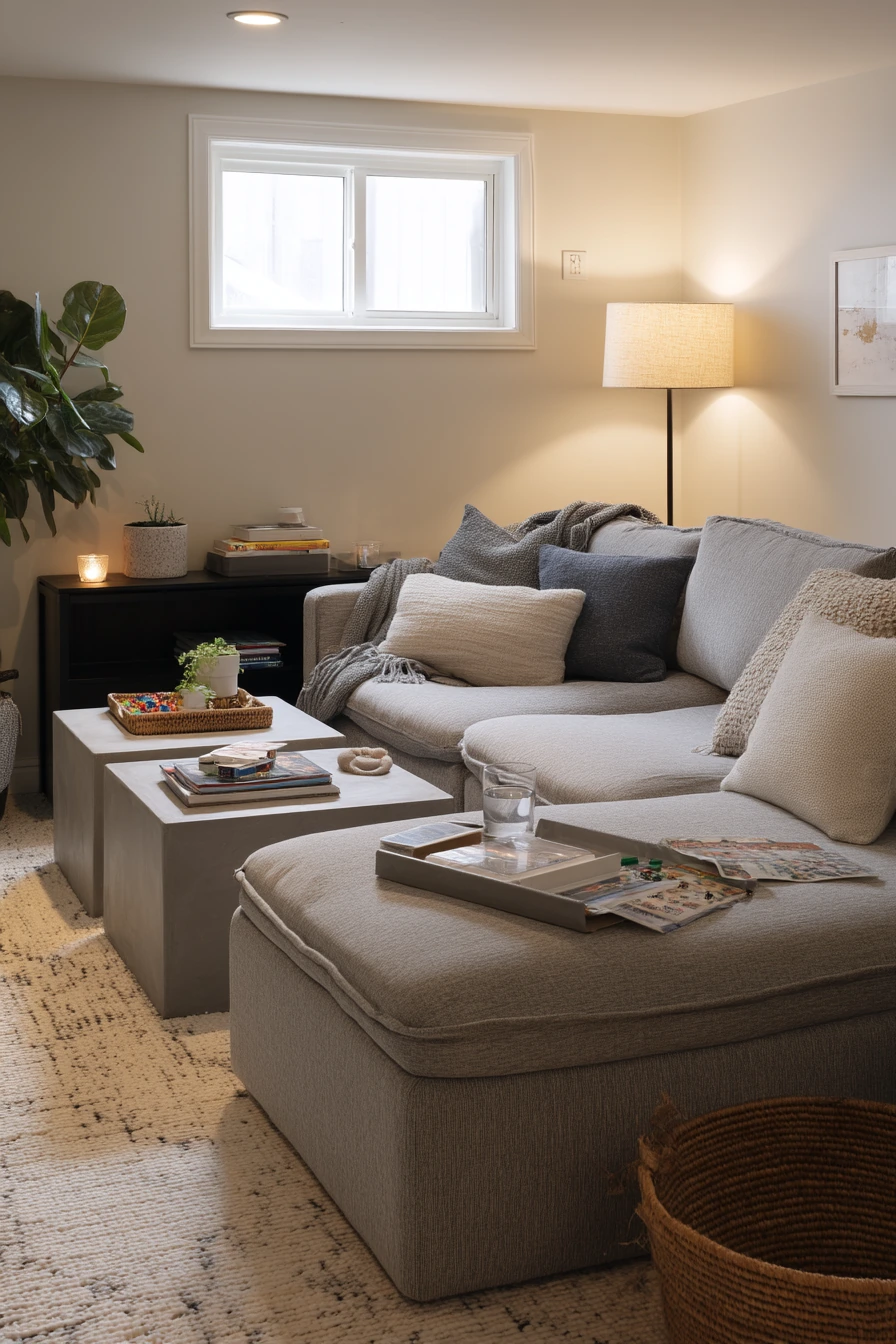
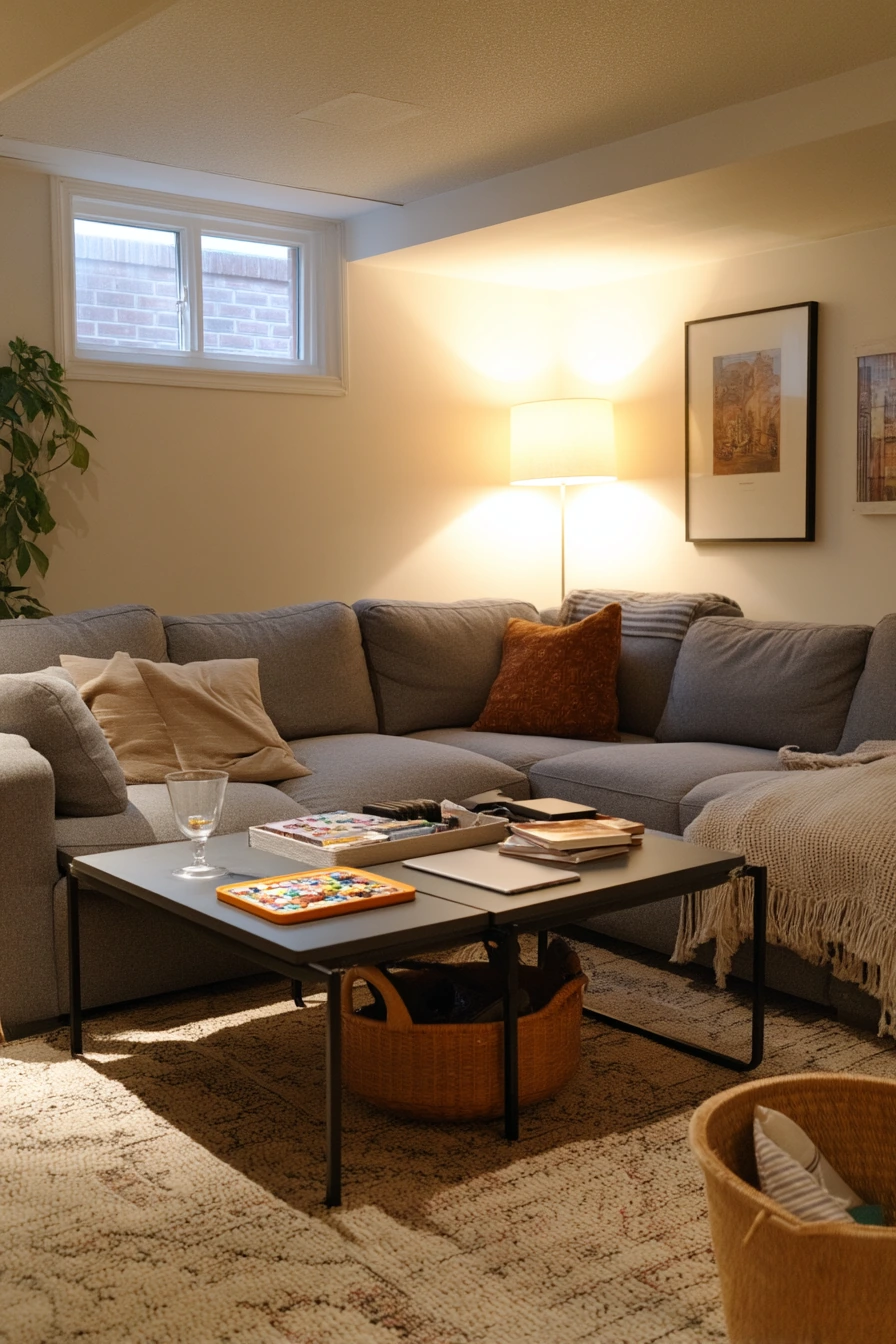
This family basement hangout is built for movie nights and homework at the same time. A low modular sectional keeps the room open, and it is easy to re-shape for guests or a big board game. Nesting tables are a smart match because you can spread them out for snacks, then tuck them back in.
To keep the space feeling calm, anchor the seating with a washable rug and choose a compact media console instead of a bulky wall unit. The small egress window gives soft daylight, so add a warm floor lamp near the sectional for evening use. Lean into the lived-in look: a toy basket beside the sofa, a charging cable near a lamp, and two books left out makes the room feel real, not staged.
How to style it: keep surfaces simple and useful. Let the coffee table hold a half-finished board game, and add one tray for remotes and a water glass. Use one main color for big pieces, then bring in texture with a soft throw and a few pillows that can handle kid use.
- Pick a modular sectional with low arms so the room feels wider.
- Use nesting tables so kids have space to work, then clear the floor fast.
- Add a washable rug with a tight weave for easy vacuuming.
- Choose a compact media console with doors to hide clutter.
- Place a lidded toy basket by the sofa for quick cleanups.
Pro Design Tip: Keep the sectional about 12–18 inches off the media console wall so cords can run behind, and the room still breathes.
Budget Considerations: Look for modular sectionals sold as individual pieces; you can start with two or three sections and add more later. A washable rug look can be copied with an indoor-outdoor rug and a soft pad.

2. Small Basement Living Room With Loveseat and Storage Ottoman

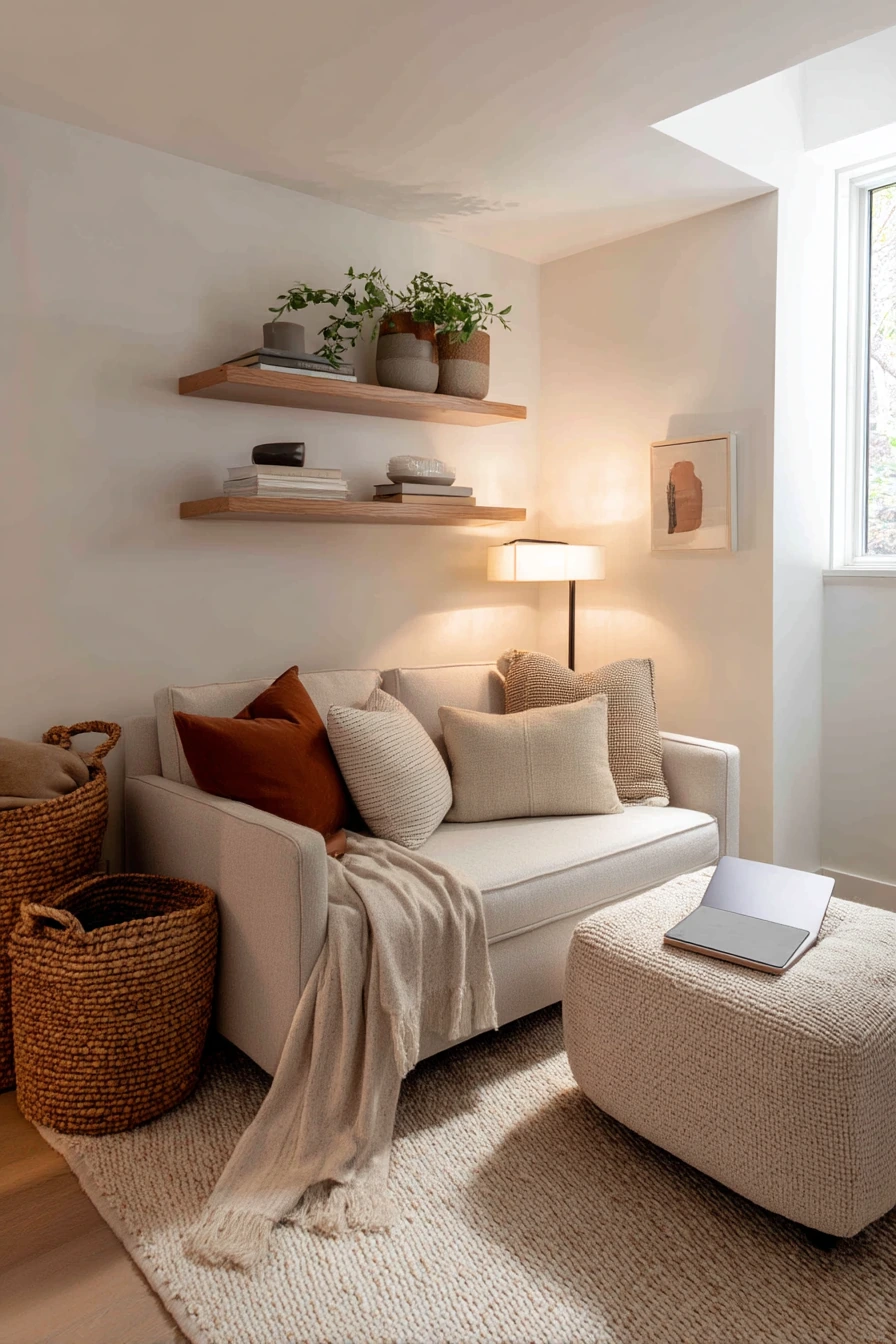
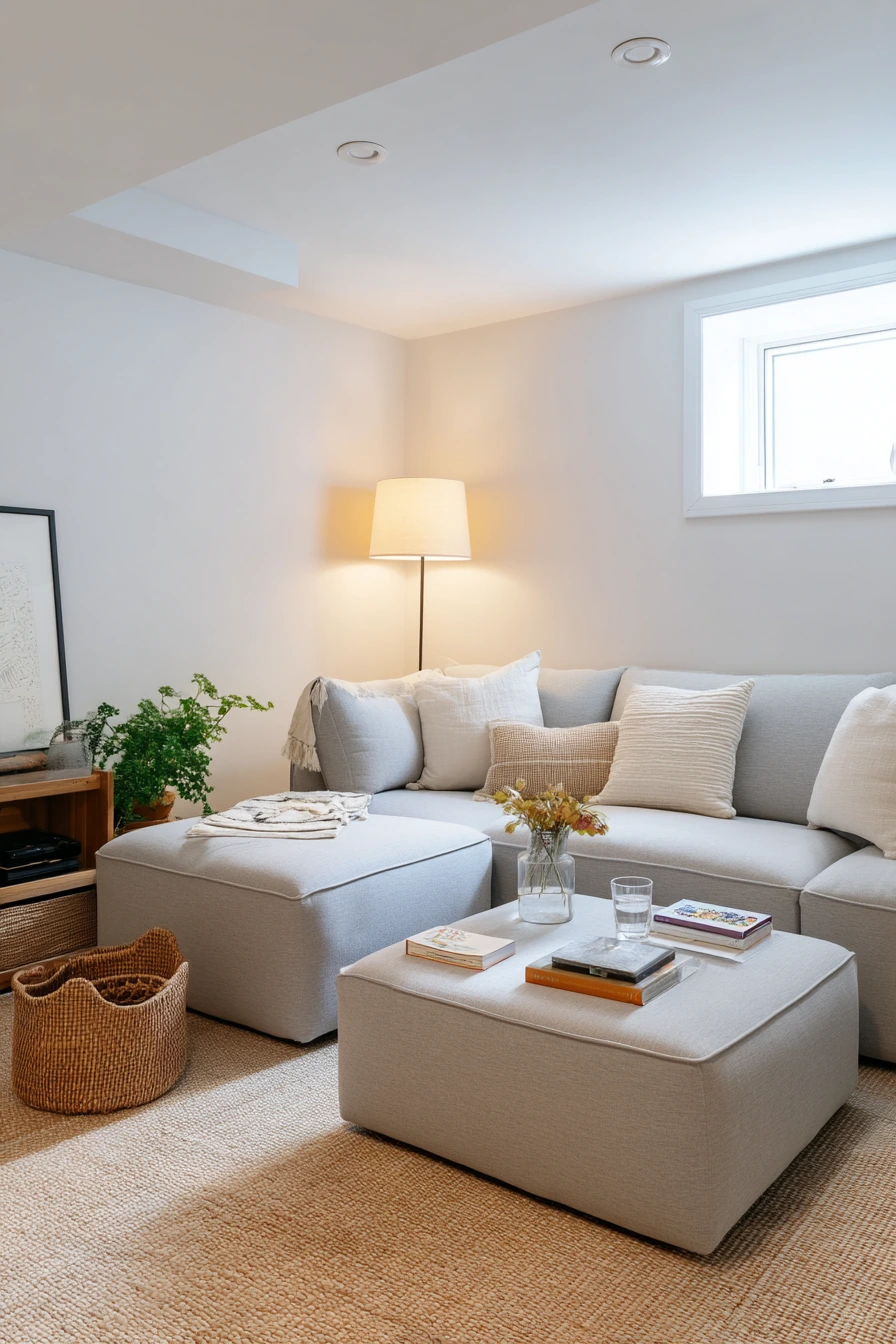
A small basement living room can still feel complete when you choose compact, high-function furniture. A loveseat gives comfortable seating without eating up the whole floor, and a storage ottoman works as a footrest, coffee table, and hidden bin for games or extra throws.
Wall-mounted shelves are key in a tight basement because they add storage without taking walking space. Add woven baskets for blankets and cords, then keep one shelf spot open for a laptop and notebook so the room can shift into a light work zone. Soft daylight from one window helps, but a warm table lamp will stop the room from feeling flat at night.
How to style it: use one simple accent chair to balance the loveseat, then layer in one textured throw that can look slightly wrinkled and still feel nice. Add a plant near the window so plant shadows soften the wall. If you have a blank wall, hang one large art print to avoid a busy look in a compact room.
- Choose a loveseat with slim arms to save inches.
- Use a storage ottoman instead of a hard coffee table.
- Mount shelves above seated height to keep the room open.
- Store blankets in matching baskets for a tidy look.
- Add one warm lamp and keep bulbs in the same color tone.
Pro Design Tip: In a small basement, keep the biggest piece (the loveseat) in a solid, calm fabric, then add pattern only in pillows or a rug.
Budget Considerations: You can thrift a solid loveseat frame and update it with a fitted slipcover. Storage ottomans are often cheaper than coffee tables plus bins.
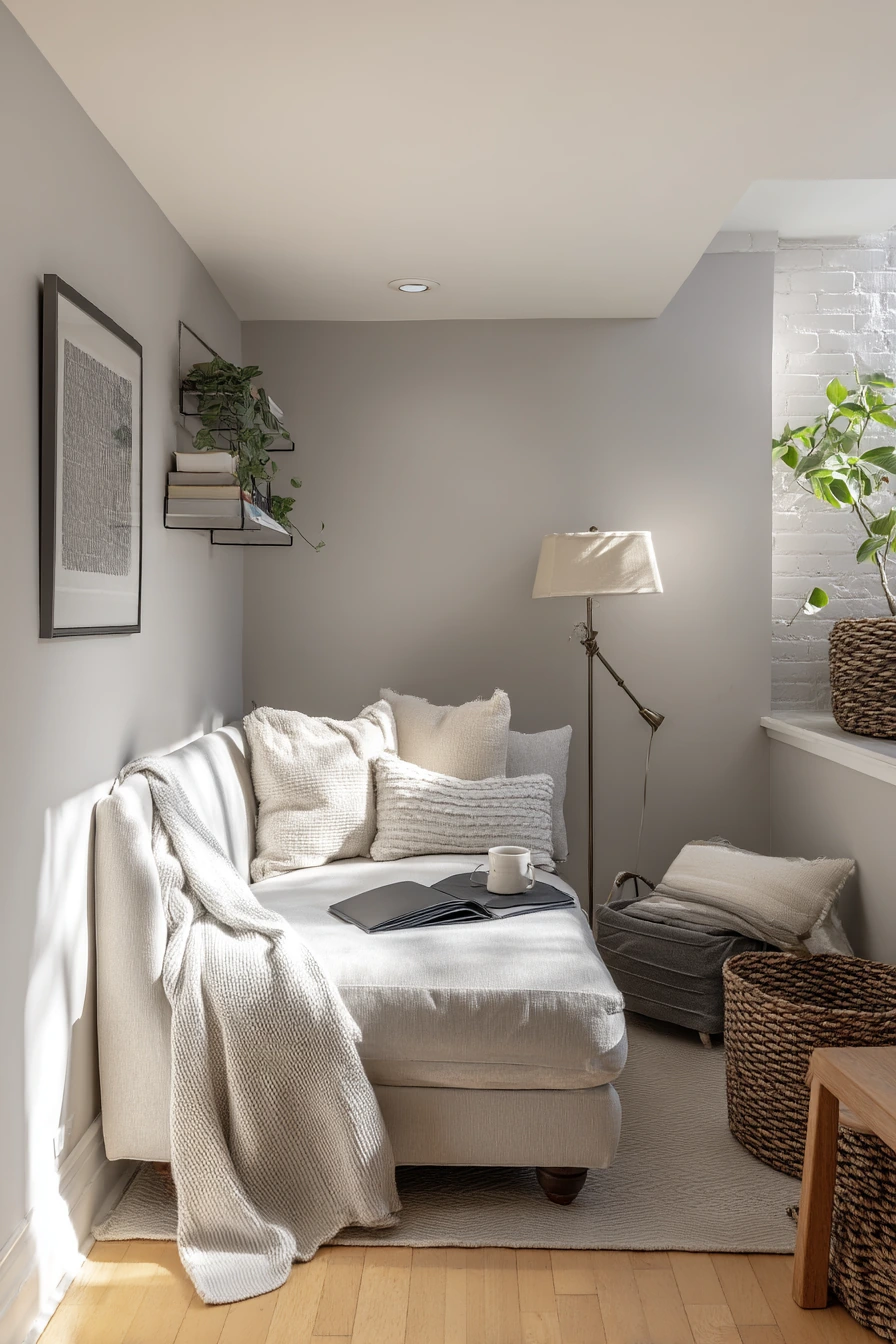
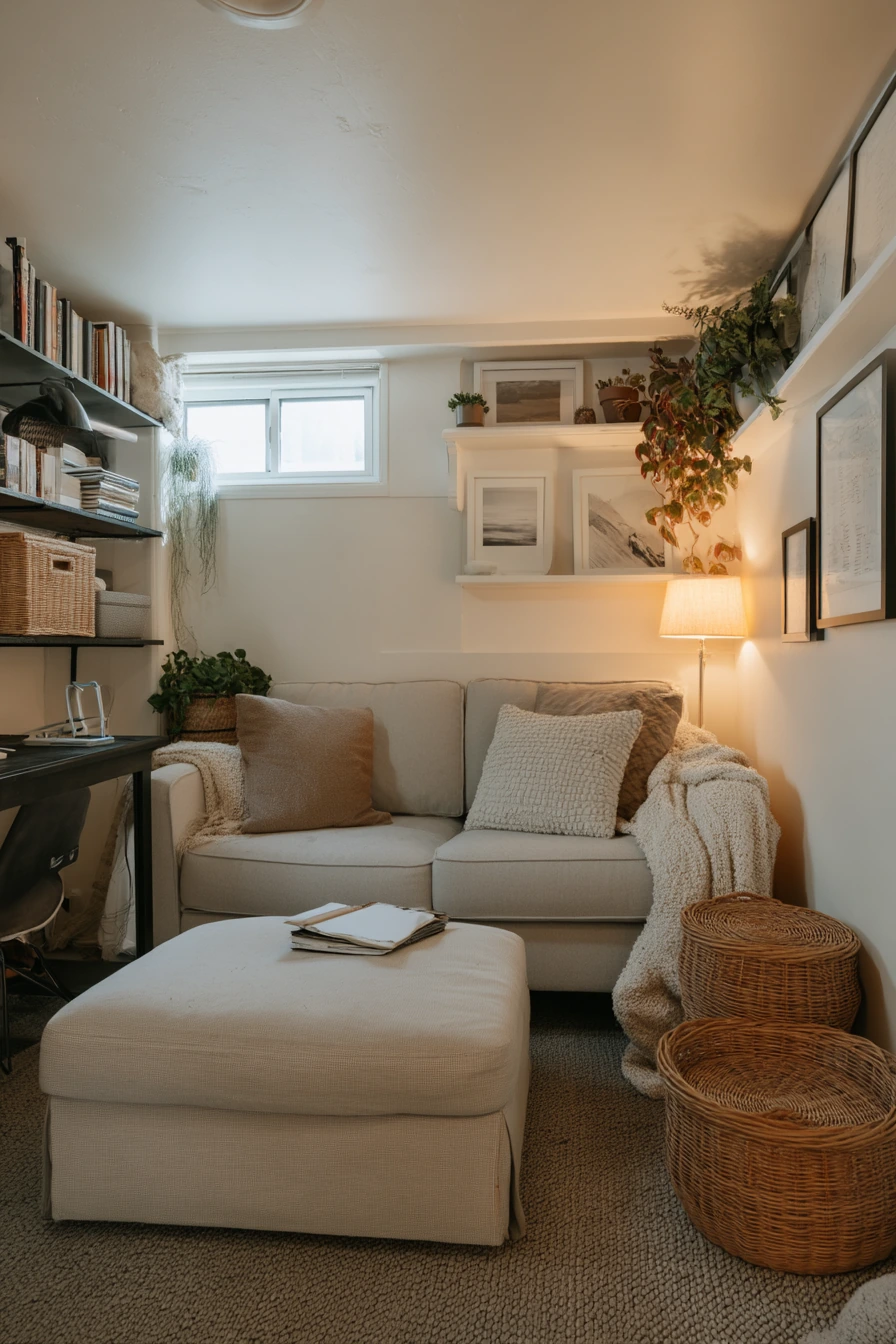
3. Basement Media Room With Recliners, Deep Rug, and Hidden Cables
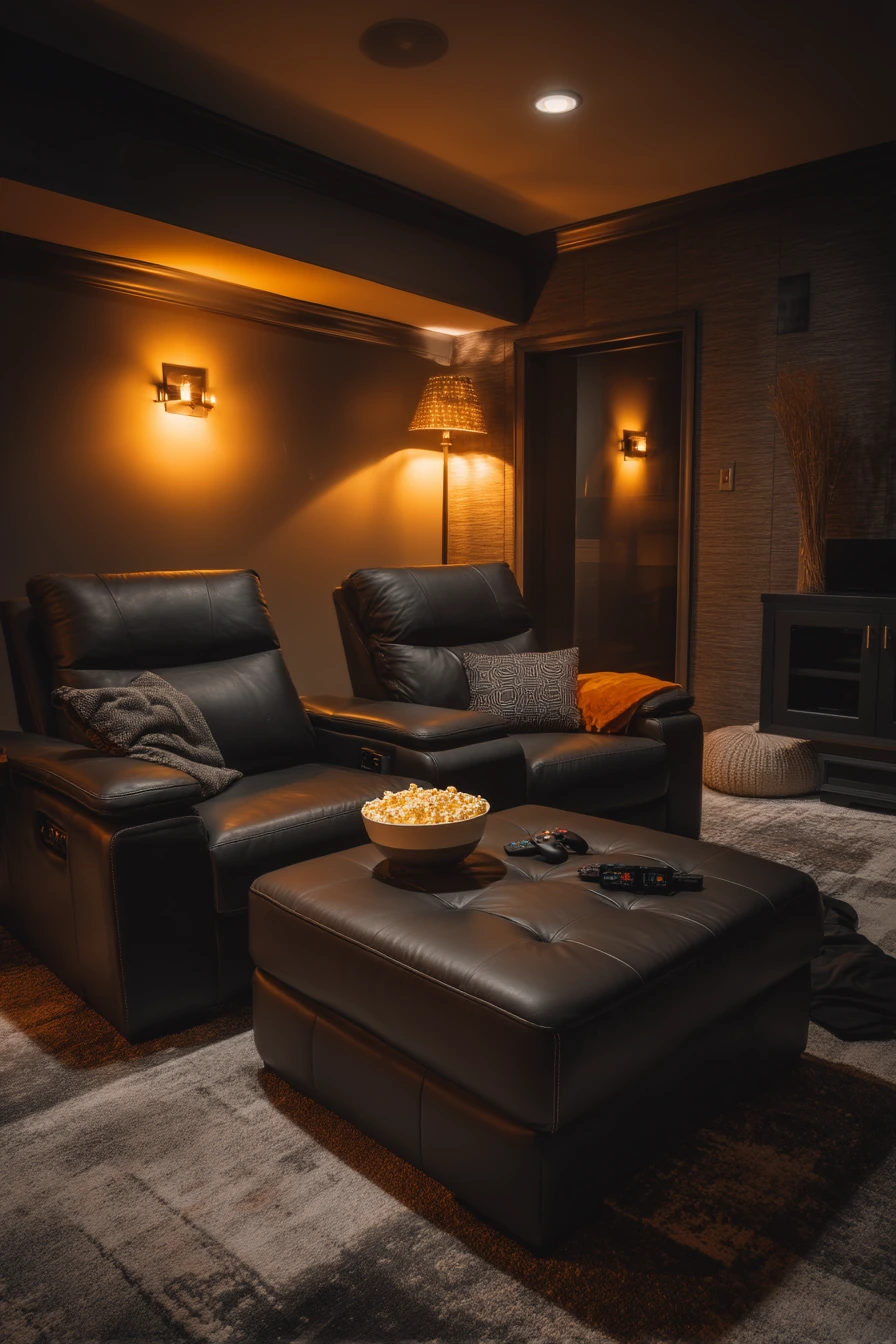
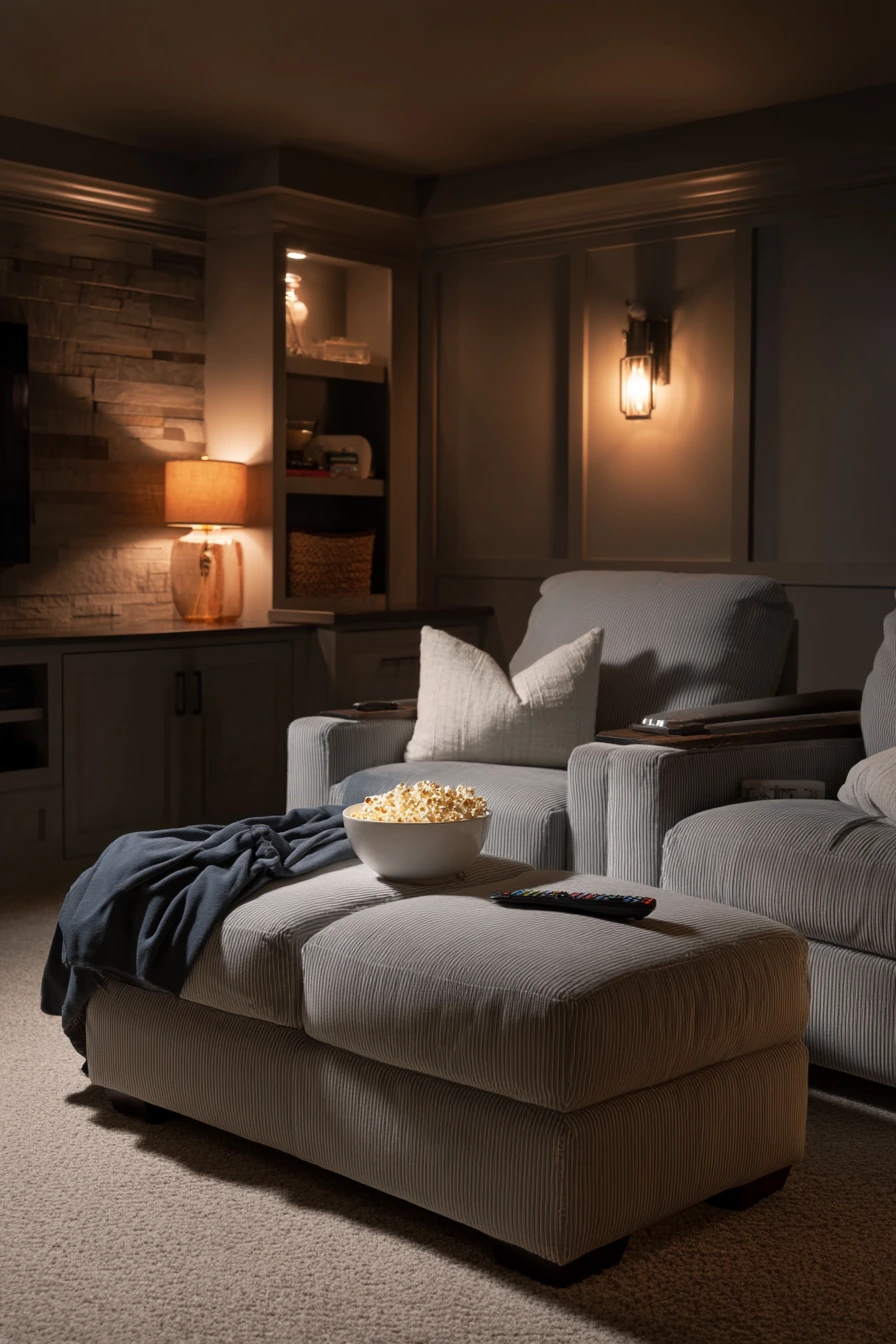
A practical basement media room works best when comfort and cleanup are planned from the start. Two cushy recliners give each person their own seat, which helps for teens and parents who watch different shows or play games. A low console keeps the screen wall simple and gives you space for a soundbar and game storage.
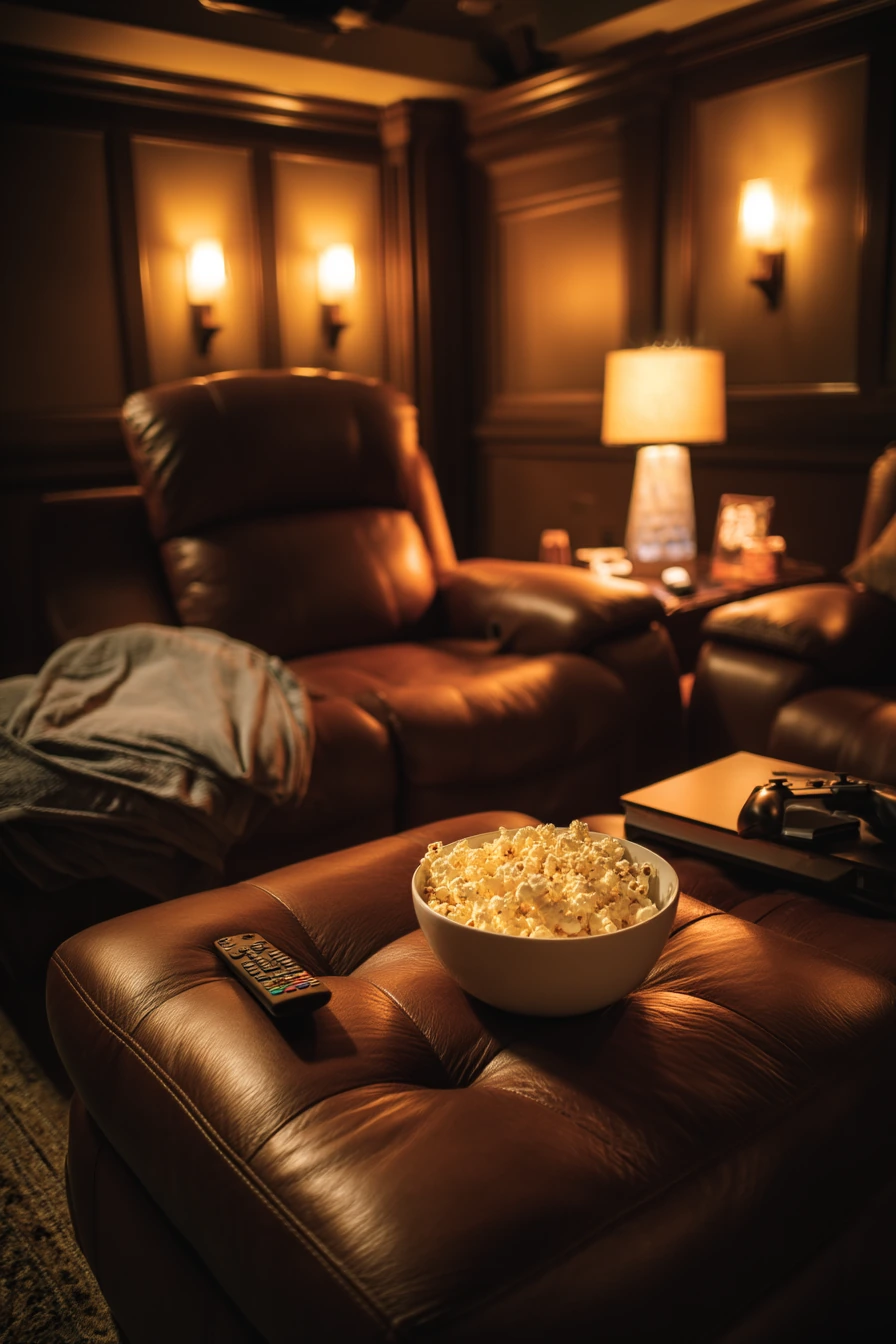
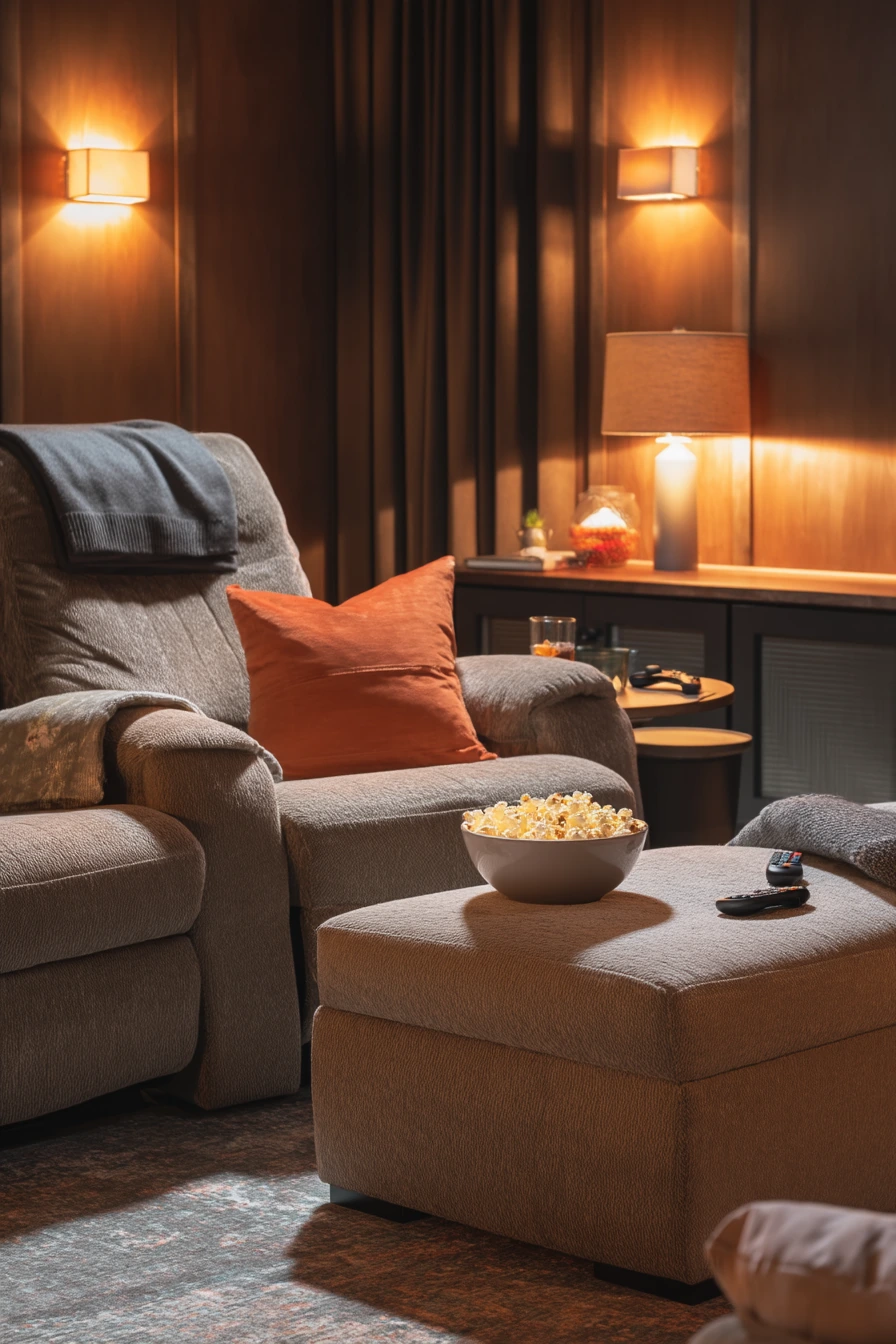
Hidden cable management is what makes a media room feel finished. Use cord covers, a power strip mounted behind the console, and a basket or box for extra cords. A deep rug under the seating helps with echo and makes the room feel warmer. The small details matter, too: a popcorn bowl on an ottoman, a remote on the armrest, and a game controller with a charging cord shows how the space will really be used.
How to style it: keep lighting moody but not dark. Warm sconces plus a dim lamp create soft amber pools of light that are easy on the eyes during a movie. Add one throw for each chair and pick a basket near the console for hoodies and blankets so the floor stays clear.
- Pick recliners with a smaller footprint made for tight rooms.
- Use a low console with doors to hide consoles and games.
- Add a thick rug to reduce noise and add comfort.
- Plan cord paths before placing furniture, then secure cables.
- Use warm wall sconces on a dimmer for flexible light.
Pro Design Tip: Mount a slim power strip behind the console and label each plug so it is easy to reset gear without pulling furniture away from the wall.
Budget Considerations: If recliners are pricey, mix one recliner with a comfy accent chair. Stick-on wall sconces can give a similar glow without hardwiring.
4. Basement Guest Lounge With Sleeper Sofa and Small Drink Table
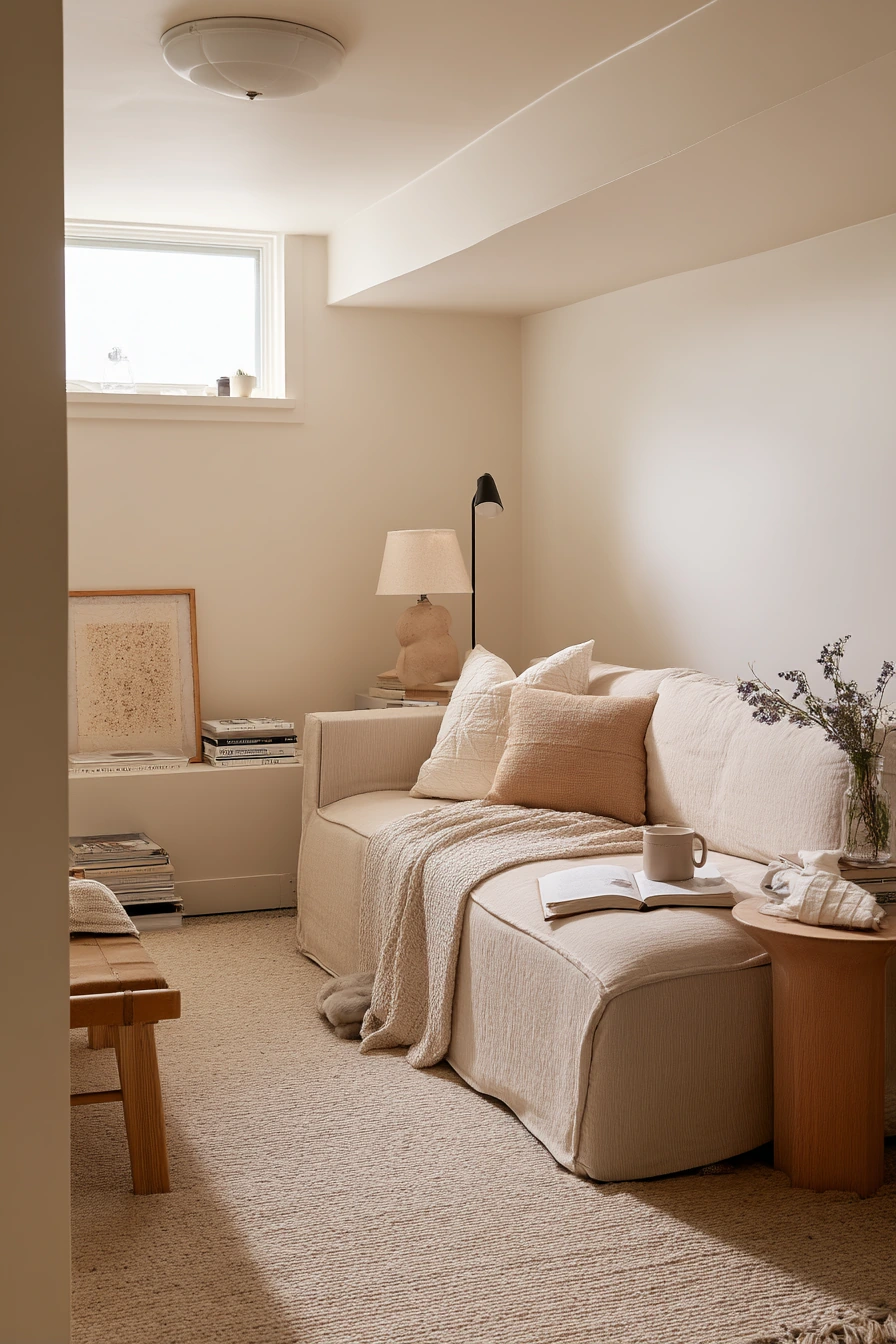
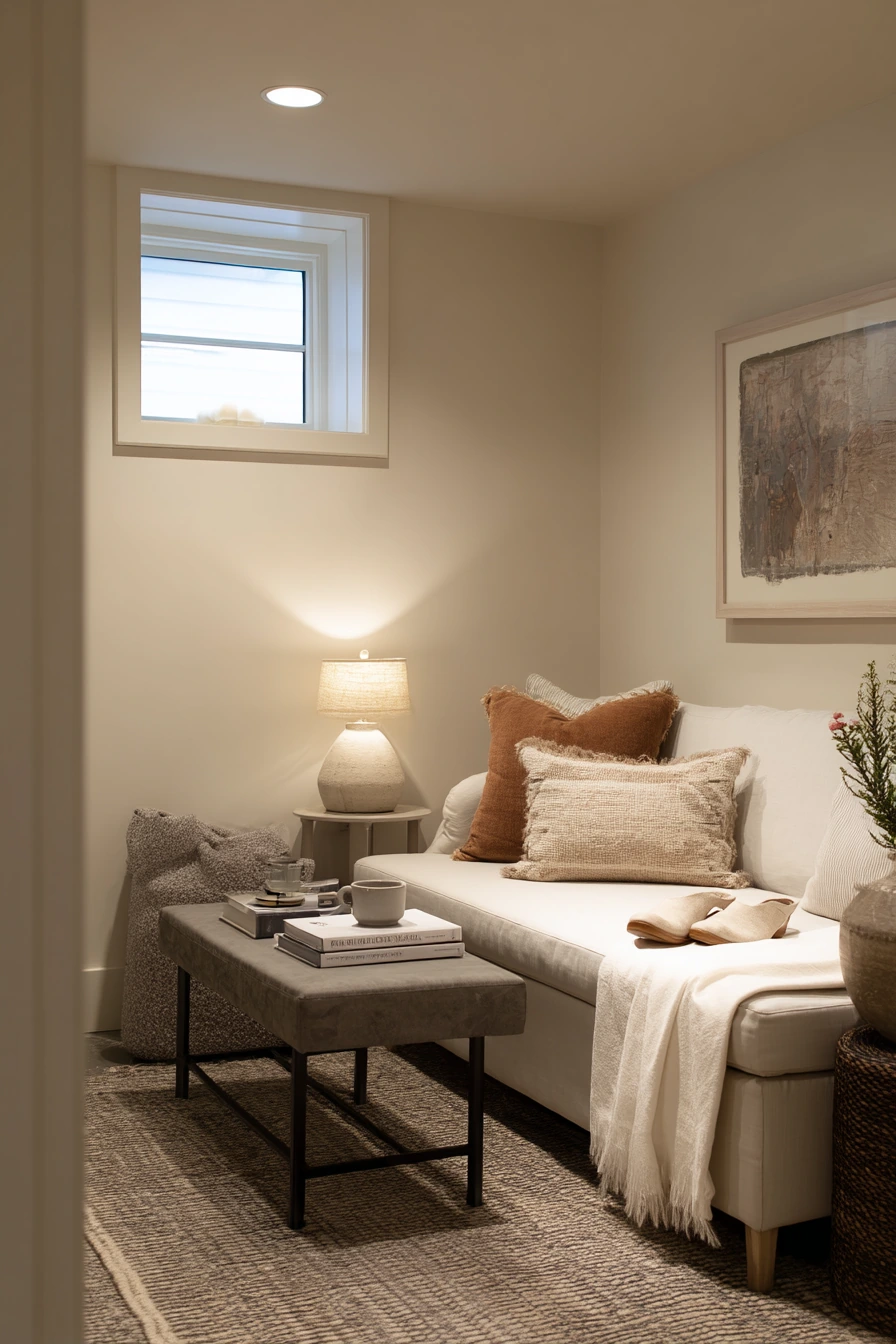
A basement guest lounge can feel welcoming without needing a full guest bedroom. Start with a sleeper sofa so the room can be a lounge most days and a sleeping nook when needed. A petite bench at the foot of the sofa gives a landing spot for a folded towel, a bag, or extra pillows.
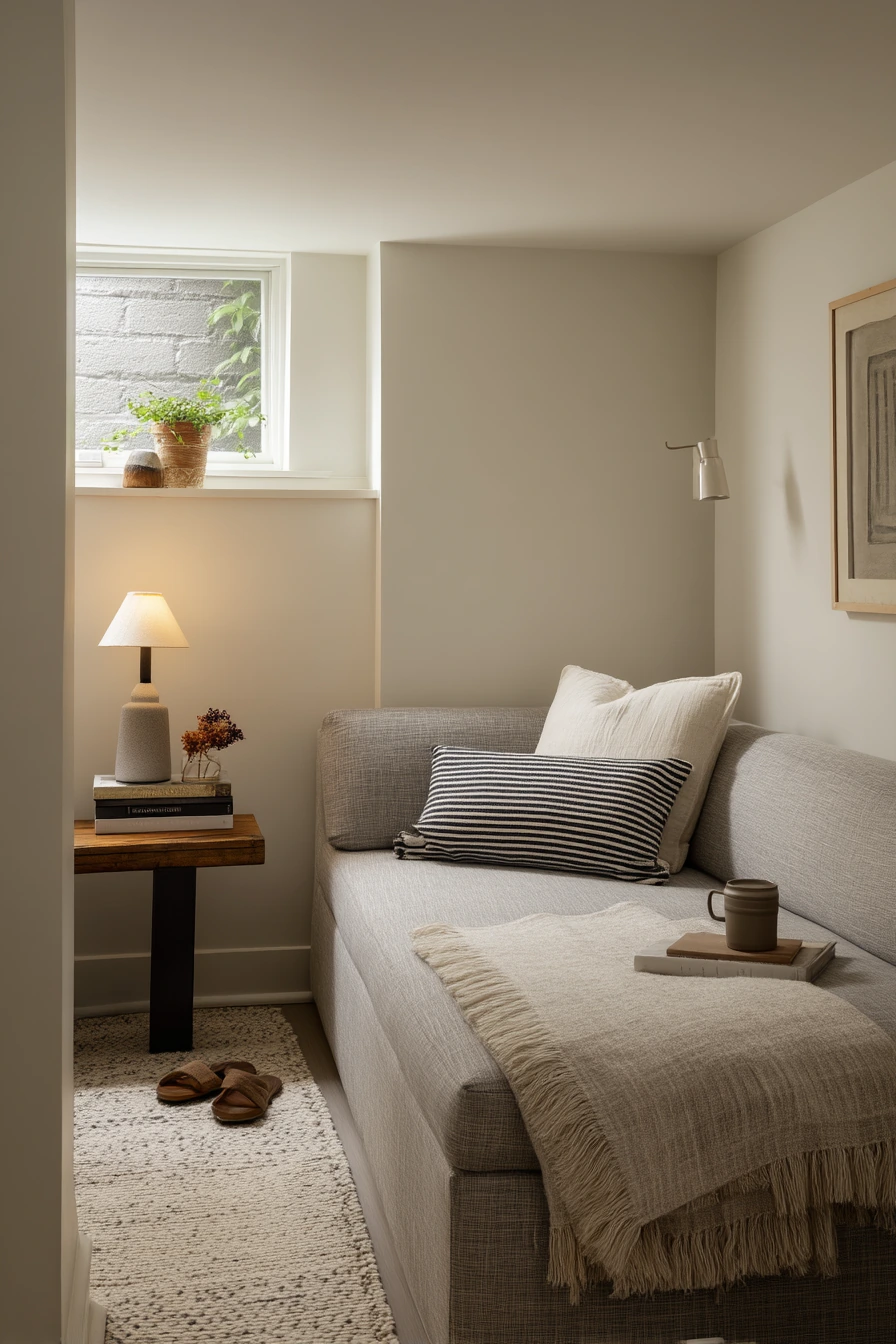
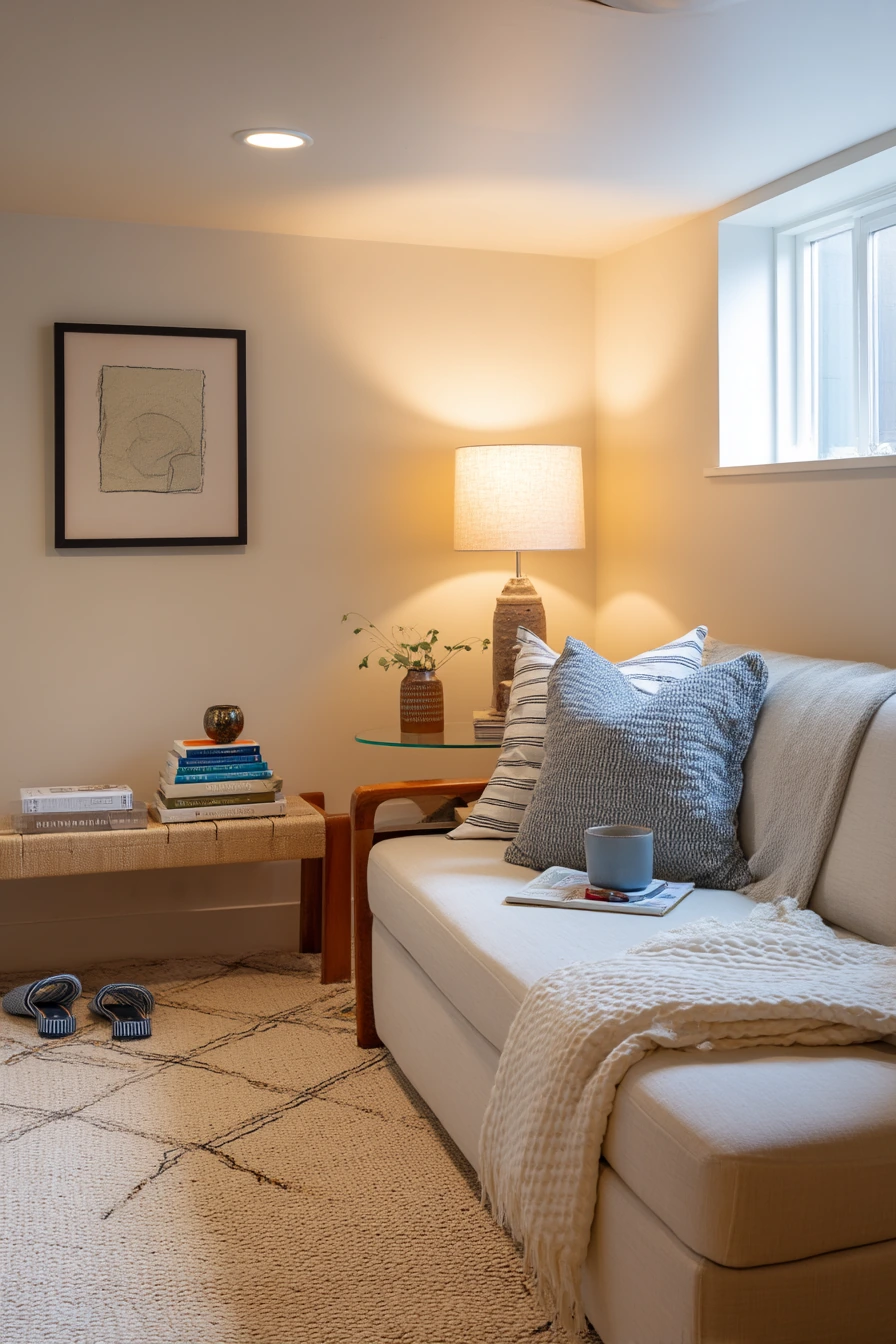
Because basements can feel quiet and cool, layer in warm, practical lighting. A small ceramic lamp on a side surface adds a gentle glow that feels like a real bedroom. A narrow drink table is a smart add-on in tight spaces, giving guests a spot for a travel mug or water. Details like slippers near the rug and one pillow slightly dented make the space feel lived-in and calm, not like a storage room.
How to style it: keep bedding simple and easy to wash. Store extra sheets in a basket inside the bench or on a shelf nearby. Place a small stack of books where guests can reach them, and use a soft rug to define the sleeping area. If the egress window brings in daylight, hang a light-filtering shade for privacy.
- Choose a sleeper sofa with a simple pull-out or easy fold.
- Add a small bench for towels, bags, and extra bedding.
- Use a narrow drink table to save floor space.
- Keep a lamp close to the bed area for night lighting.
- Store guest items in a labeled basket for quick setup.
Pro Design Tip: Use two pillows per person, one firm and one soft, and store the extras in the bench so the room always looks neat.
Budget Considerations: If a new sleeper sofa is expensive, use a standard sofa plus a quality air mattress stored in a cabinet. Thrift a bench and paint it, then add a washable cushion.
5. Teen Basement Study Corner With Desk, Peg Rail, and Loveseat
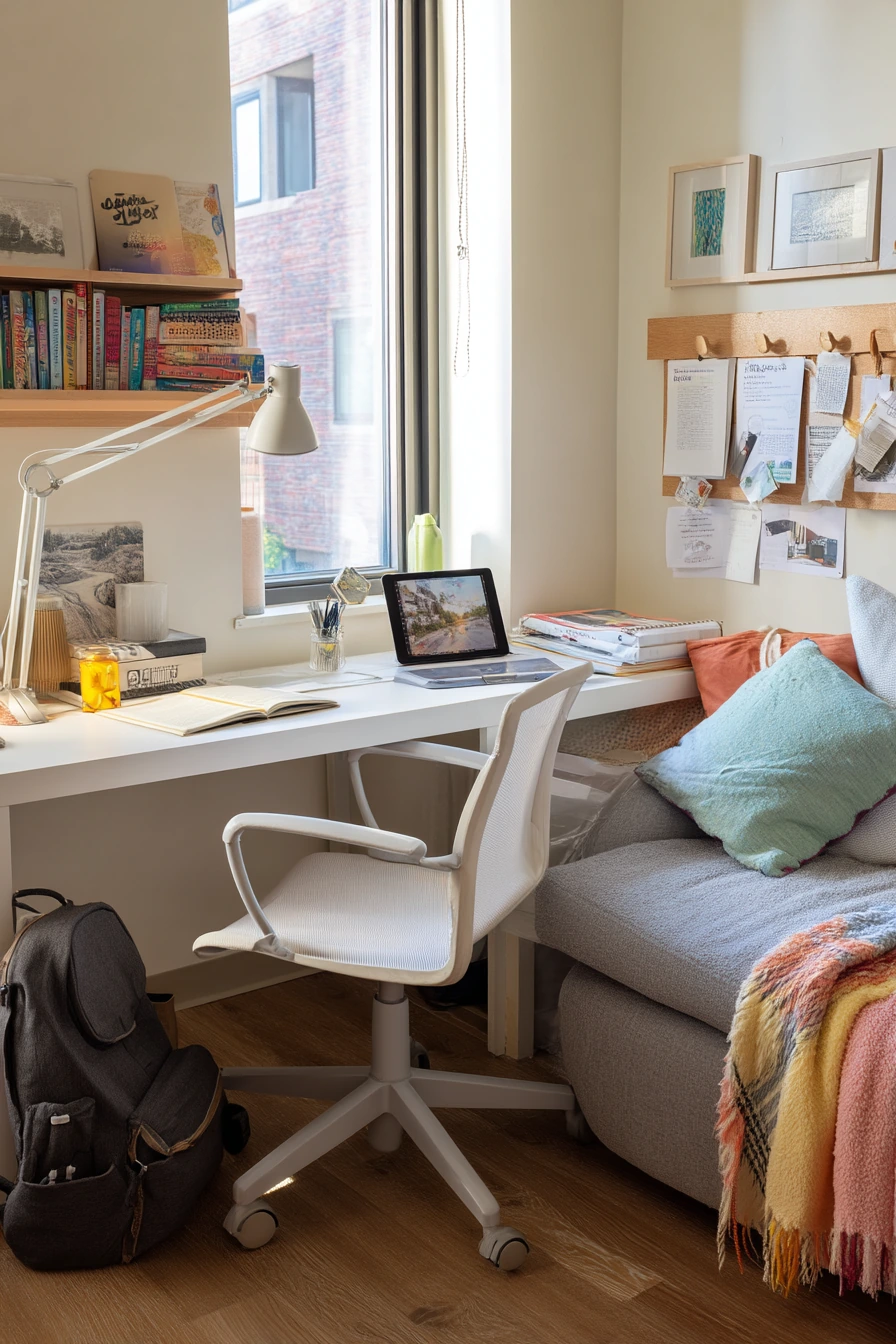
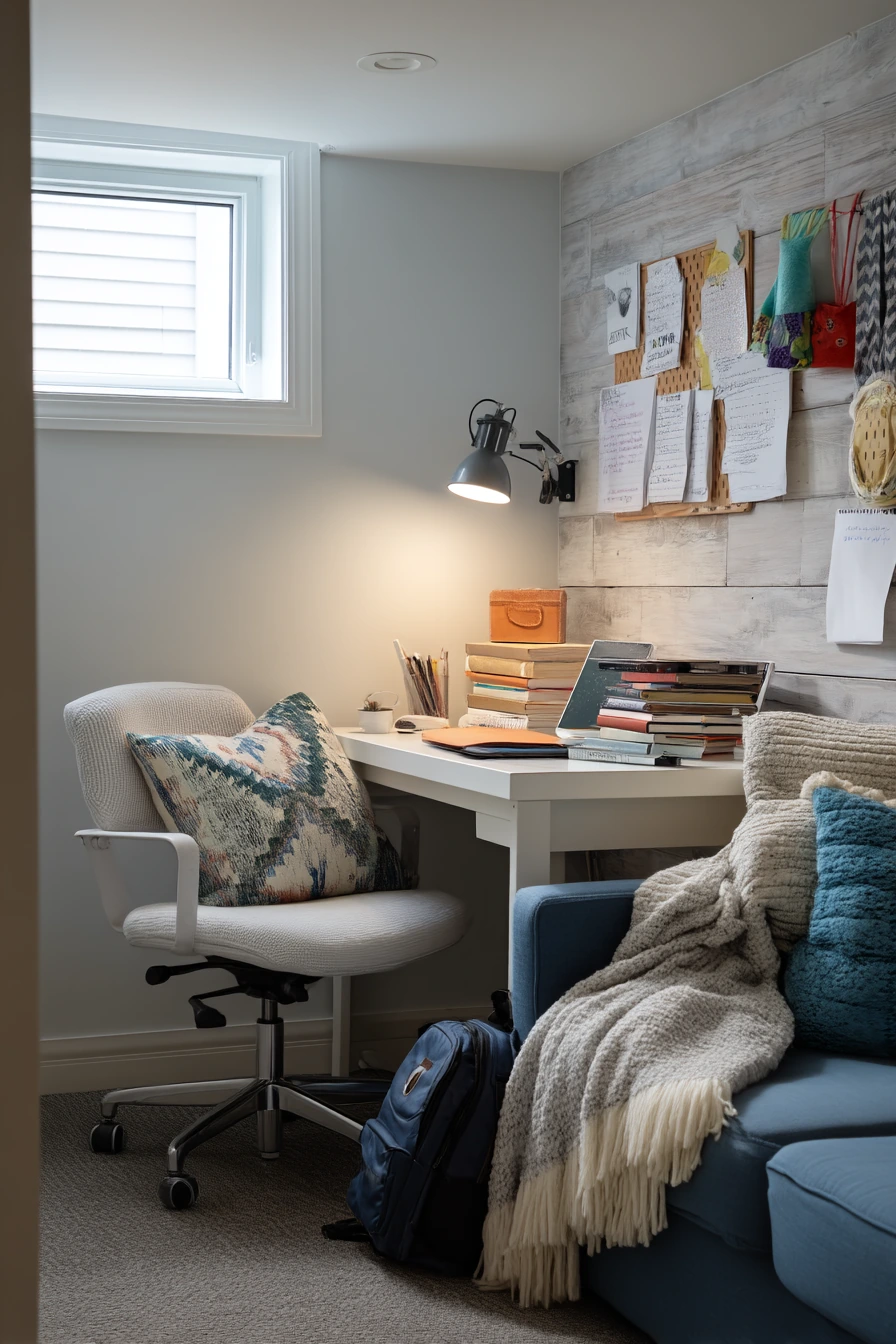
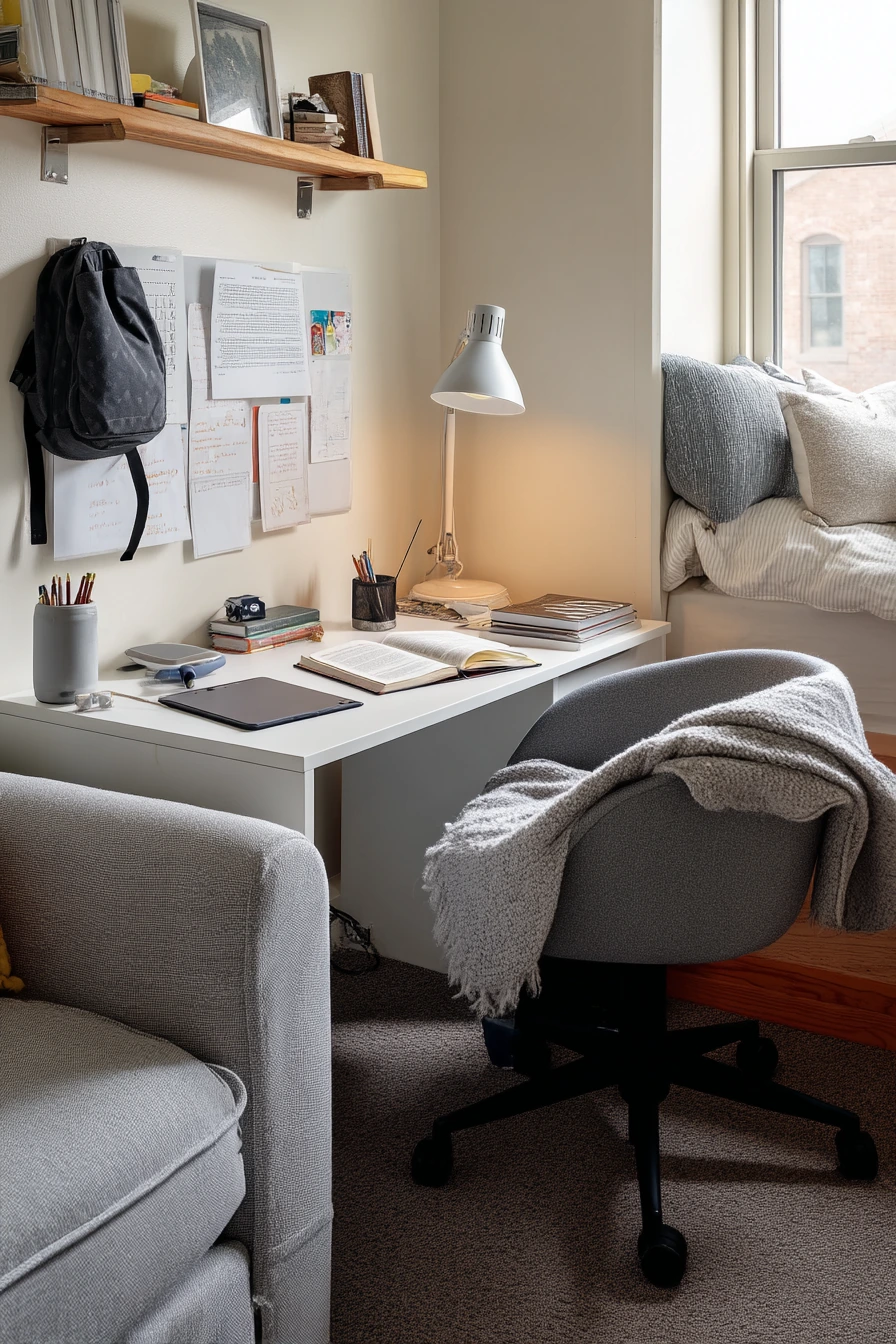
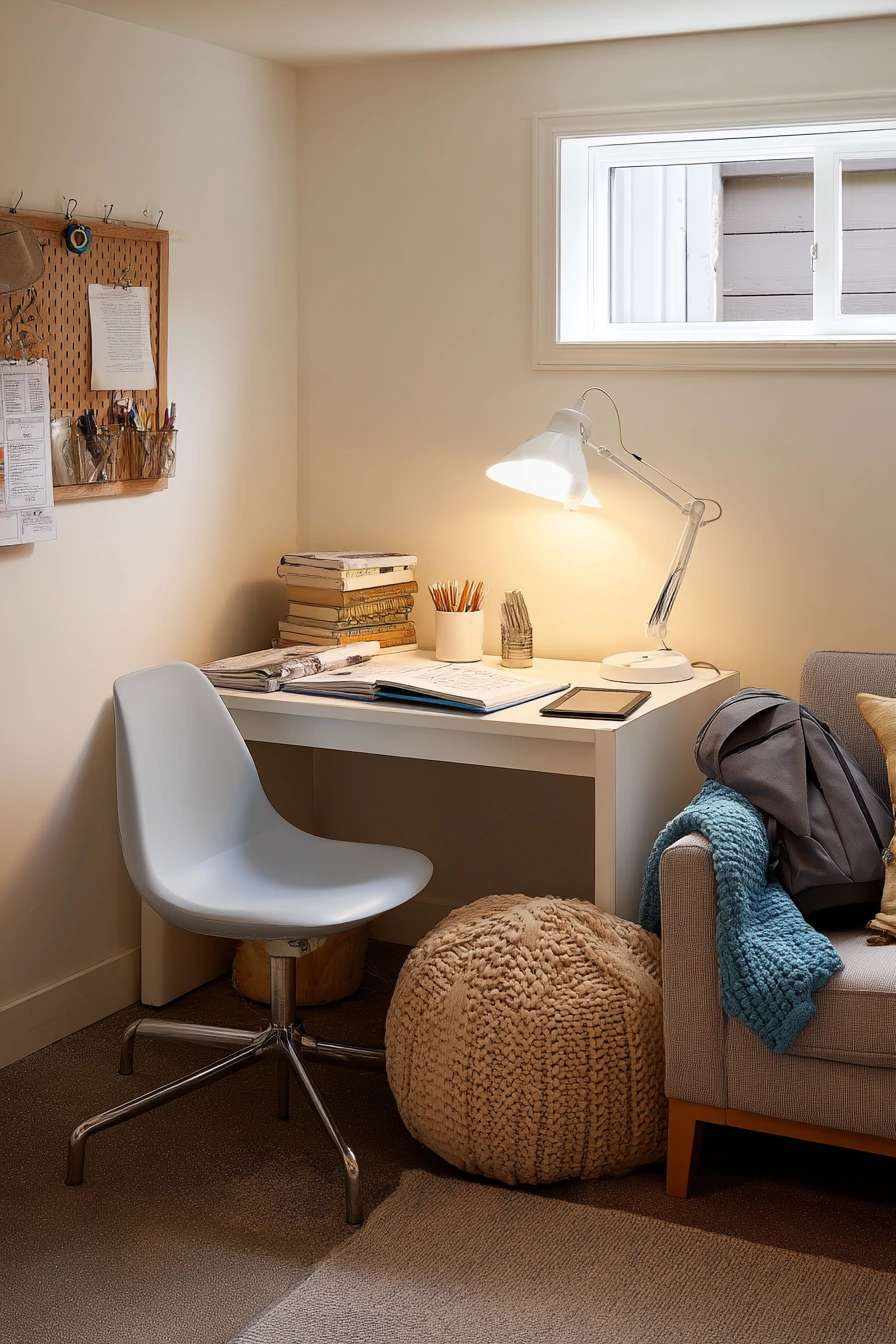
A basement study corner for a teen needs good light, smart storage, and a place to take breaks. Start with a compact desk that fits the wall, then add an ergonomic chair that supports long homework sessions. A peg rail above the desk is a simple way to keep supplies off the surface while still easy to grab.
This setup feels real because it plans for daily mess in a controlled way. Open textbooks, earbuds, and a pencil cup belong on the desk, while a backpack dropped by the wall needs a hook or bin nearby. A slim loveseat adds comfort for reading or a quick rest between tasks. Cool daylight from a small window can feel crisp, so balance it with a warm task lamp aimed at the work area.
How to style it: use one color family for storage pieces so the area looks calm, even with stuff out. Add a small rug under the desk to soften sound. Keep a basket by the loveseat for a blanket that can be casually bunched but still contained. If the teen uses a tablet, set up a charging spot so cords do not sprawl across the floor.
- Pick a desk with drawers or add a small file box underneath.
- Use an ergonomic chair with adjustable height and back support.
- Install a peg rail for headphones, keys, and small bins.
- Add a loveseat as a break zone to reduce desk fatigue.
- Use a warm task lamp and keep the desk facing the light.
Pro Design Tip: Set the desk so the teen looks toward the room, not the wall, when possible; it helps the space feel less cramped and improves focus.
Budget Considerations: A simple table can work as a desk when paired with a good chair. Peg rails and hooks are low-cost and often easier than buying extra shelving.
6. Budget Basement Family Room With Thrifted Sofa and Cube Storage
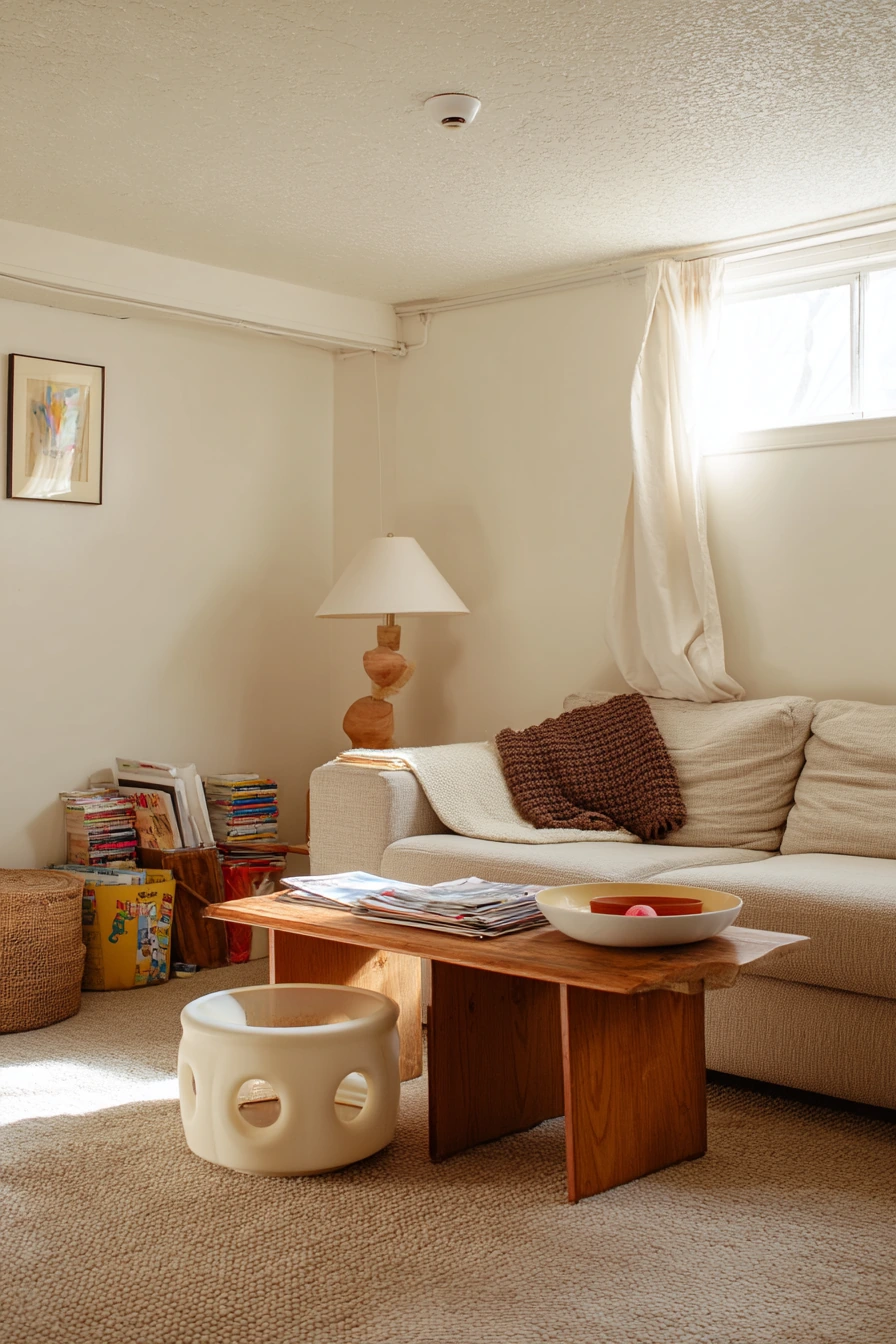

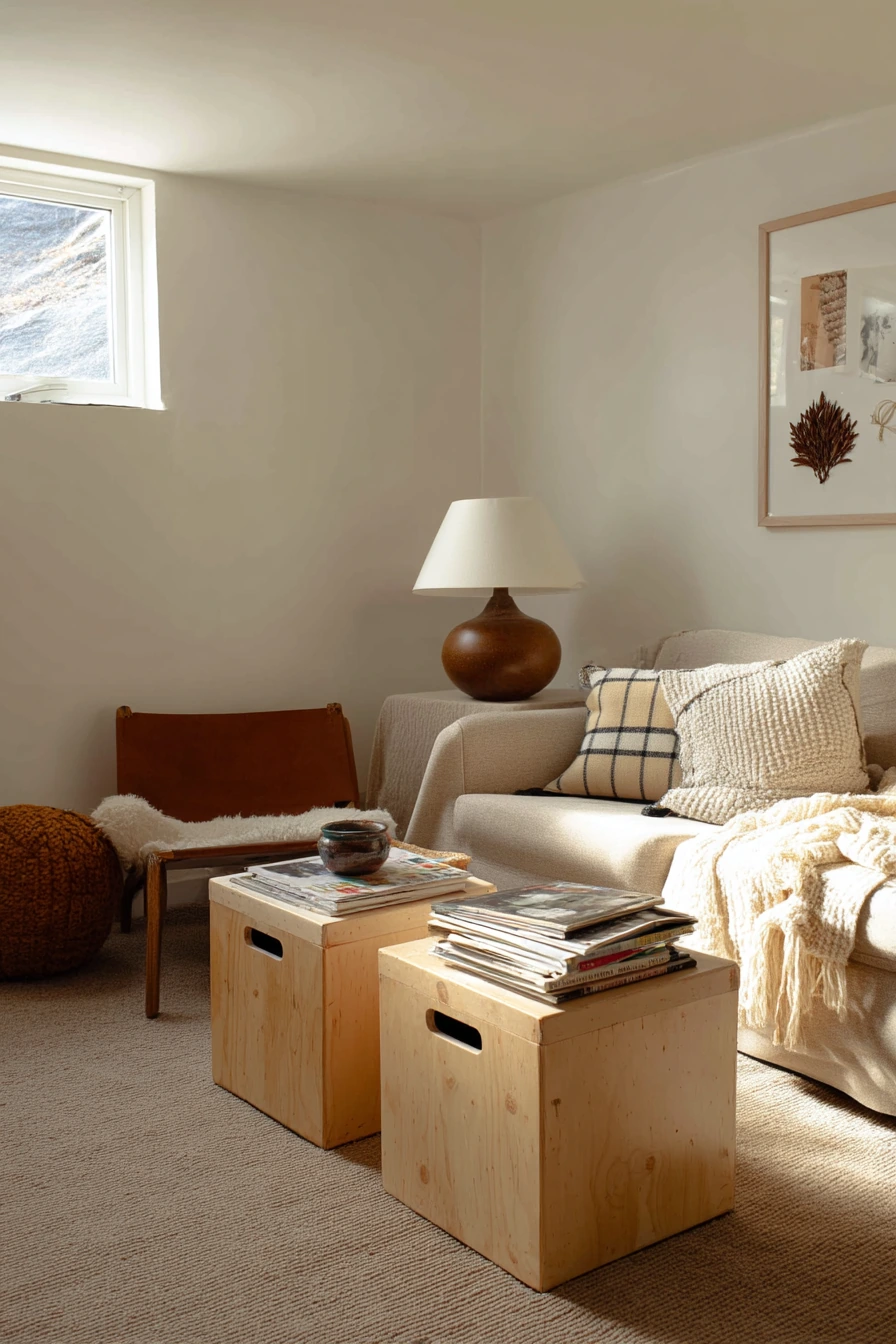
A budget-friendly basement family room can look warm and intentional when you focus on shape, function, and texture. Start with a secondhand sofa in a neutral tone, then add a simple coffee table and cube storage to control clutter. A vintage armchair brings character, especially when the rest of the pieces are basic.
The charm in this kind of room comes from honest, everyday items: stacked magazines, kid drawing paper, a chipped ceramic bowl, and a slightly wrinkled knit throw. Soft window light plus a single warm floor lamp keeps the space grounded and cozy. If the basement has uneven light, choose bulbs with the same color temperature so the room does not feel mixed and harsh.
How to style it: unify thrifted pieces with one repeat detail, like black hardware, wood tones, or the same basket style in the cubes. Keep the walls simple and use one large rug to tie the seating together. Put a tray on the coffee table to make small items look organized, even if they are used daily.
- Buy the best used sofa frame you can find, then clean it well.
- Use cube storage with bins to hide toys and cords.
- Mix one vintage chair for contrast and comfort.
- Add a large rug to make mismatched pieces feel cohesive.
- Use one strong floor lamp to brighten the main seating area.
Pro Design Tip: When mixing thrifted furniture, keep the scale consistent; avoid one tiny table next to an oversized sofa so the room feels balanced.
Budget Considerations: Check local resale shops for sofas and armchairs, then spend your money on a new rug pad and lamp shade for a fresher look. Baskets and bins can be bought in sets to save cost.

7. Renter-Friendly Basement Lounge With Freestanding Furniture Only
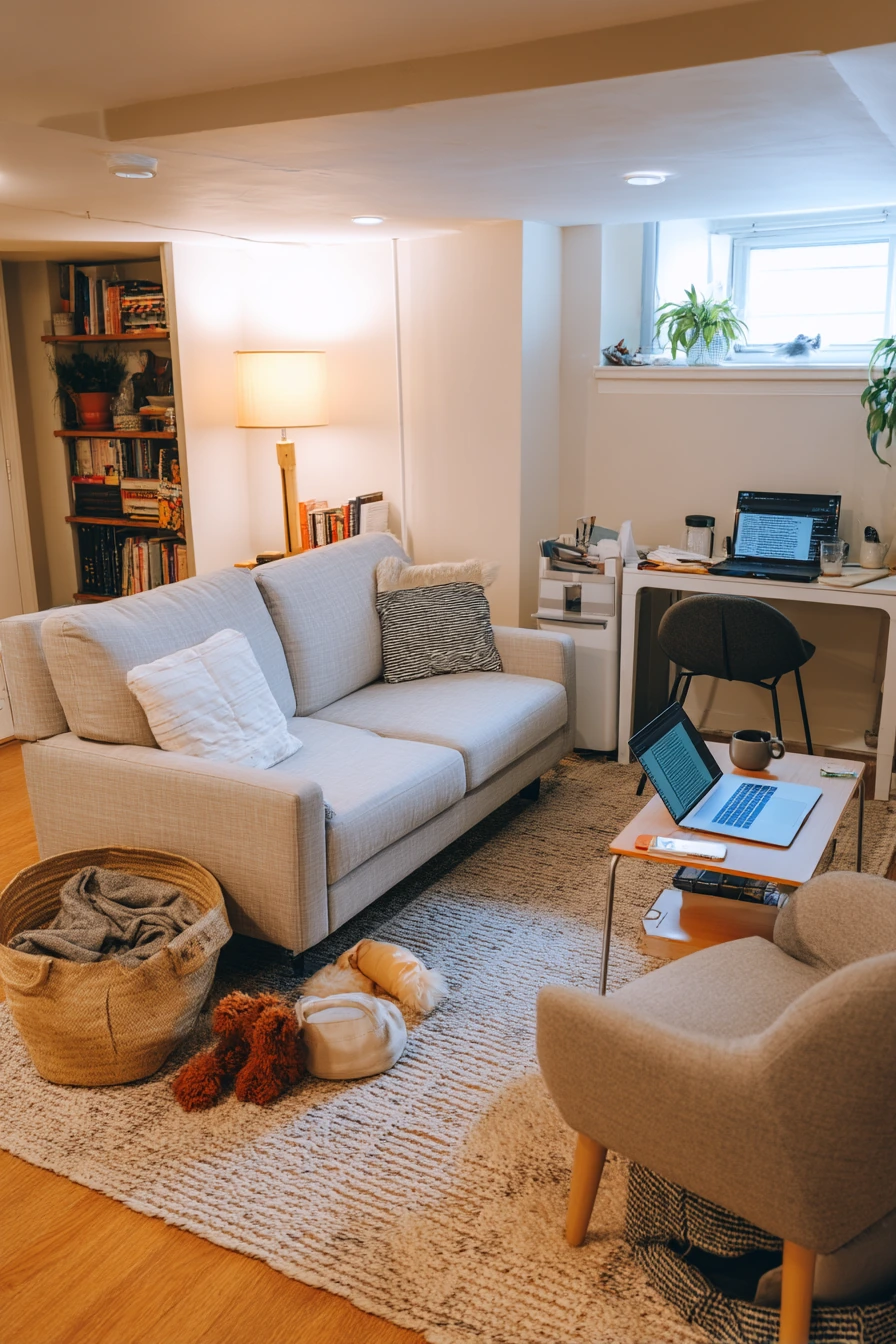

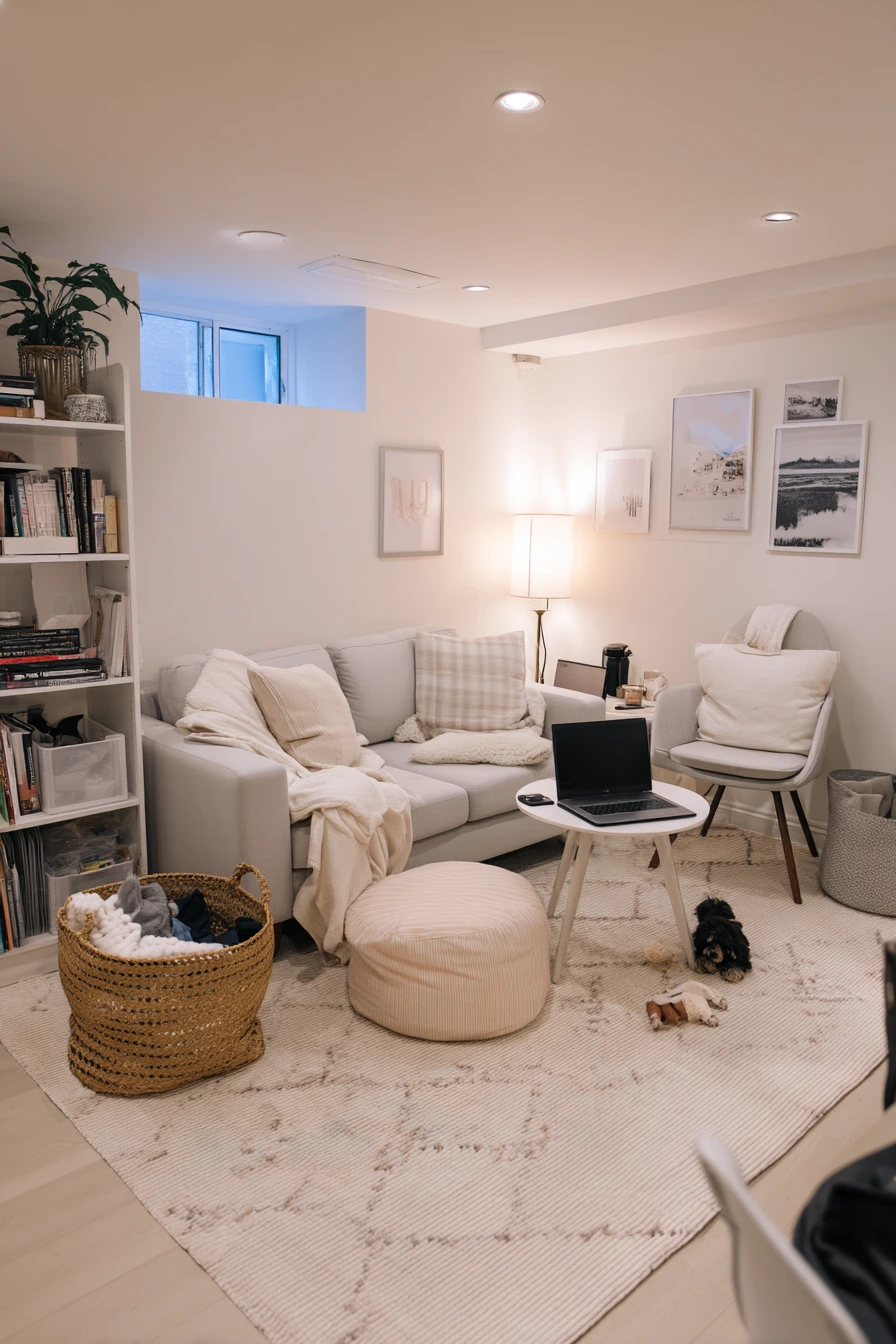
A renter-friendly basement lounge should be flexible and easy to move, with no built-ins and no wall changes required. Start with a slim sofa that fits the room length, then add movable accent chairs that can shift for guests or game night. A rolling cart is a great helper for snacks, laptop use, or art supplies.
A lightweight bookshelf gives vertical storage without anchors, and it can double as a room divider if your basement is open. Keep the room feeling lived-in with everyday items in the right places: a laptop on the sofa arm, a coffee mug on a side surface, a folded laundry basket waiting to be put away, and a dog toy by the rug. Daylight from the window plus warm lamp light helps the space feel clean but still comfortable.
How to style it: use matching storage boxes on the bookshelf so the room looks calm even when you have lots of small stuff. Choose a rug that is easy to roll up if you move. If the basement has cold floors, add a thick rug pad for comfort. Keep one clear path from stairs to seating so the room does not feel crowded.
- Choose freestanding pieces that can fit through narrow stairways.
- Use a rolling cart for flexible storage and serving space.
- Add a lightweight bookshelf for books, bins, and decor.
- Pick accent chairs that are easy to lift and re-place.
- Use a durable rug that hides pet hair and daily wear.
Pro Design Tip: Create a “move plan” by keeping all large pieces on one wall line; it makes the room easier to reconfigure and keeps traffic flow open.
Budget Considerations: Shop for secondhand accent chairs and repaint or re-cover the seat. A basic utility cart can become a stylish bar or craft cart with contact paper and baskets.

8. Basement Playroom With Modular Floor Seating and Low Toy Storage
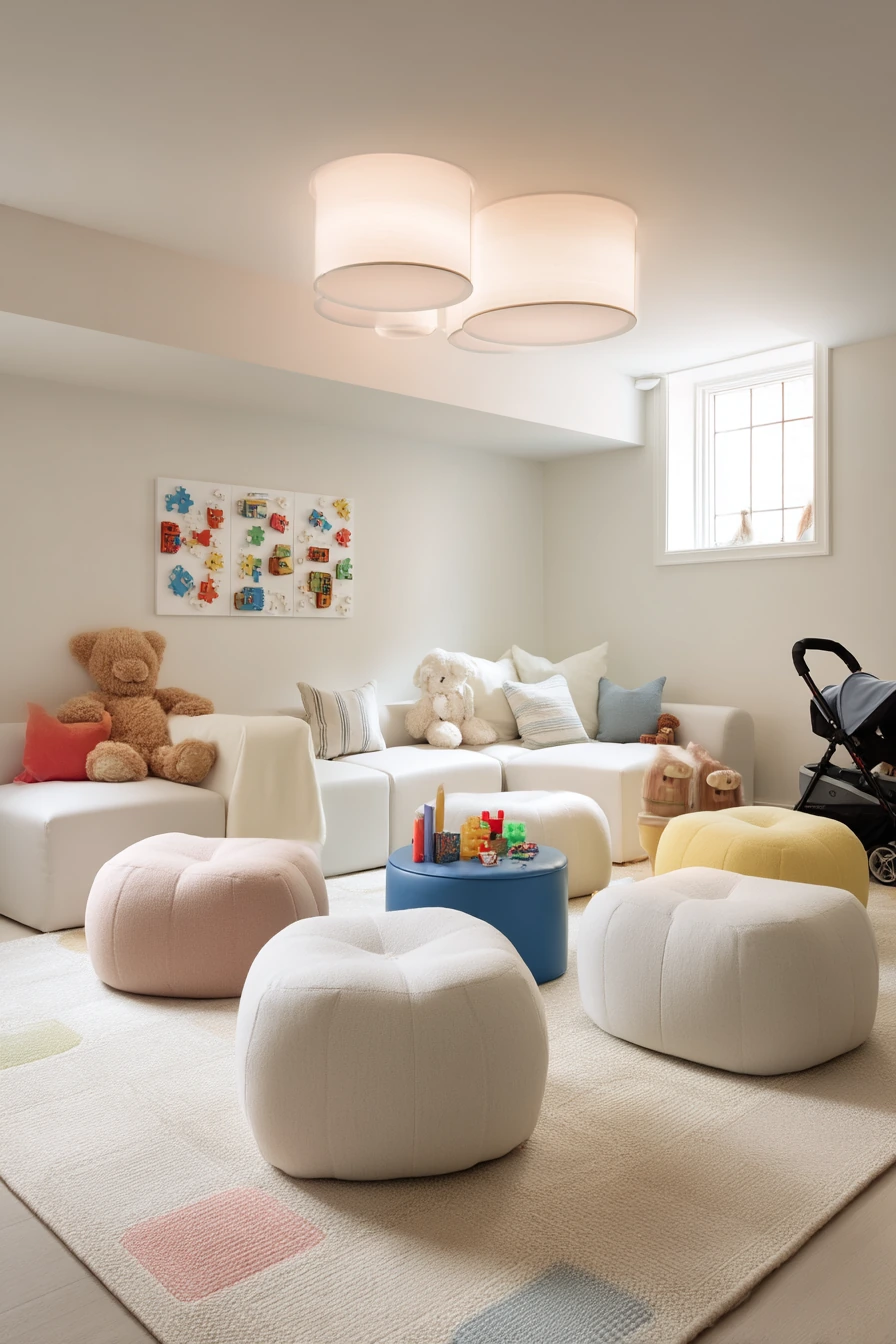
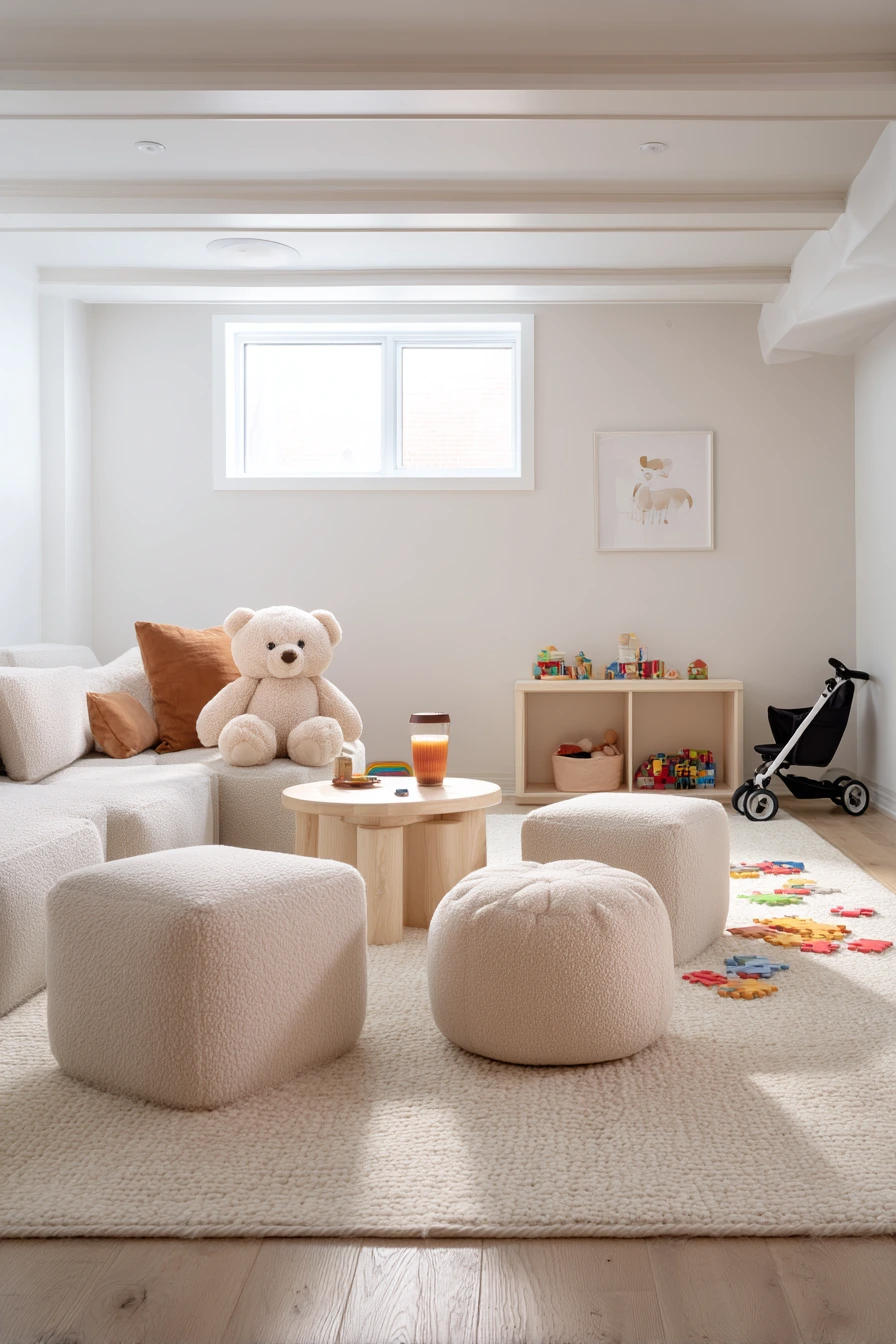
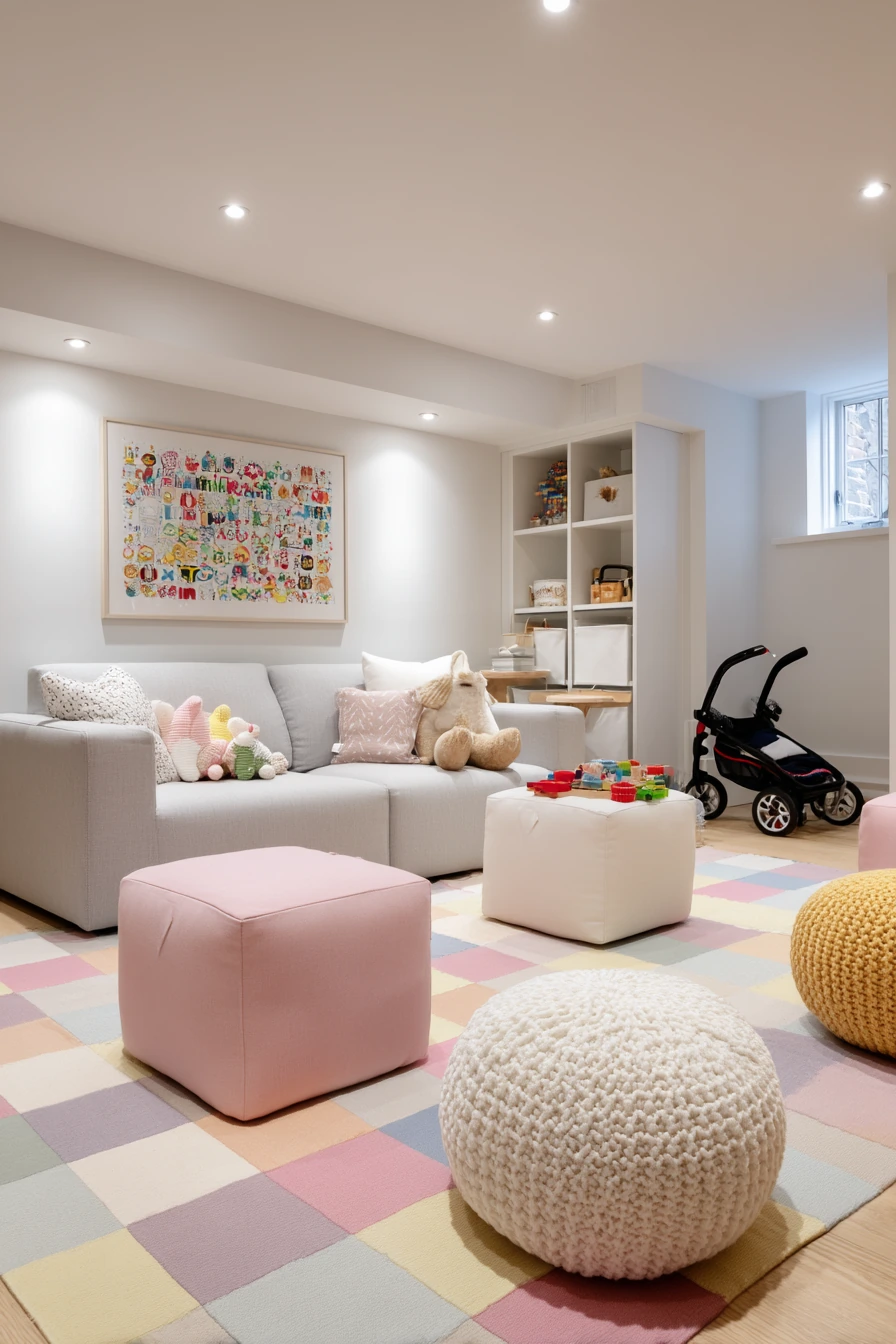
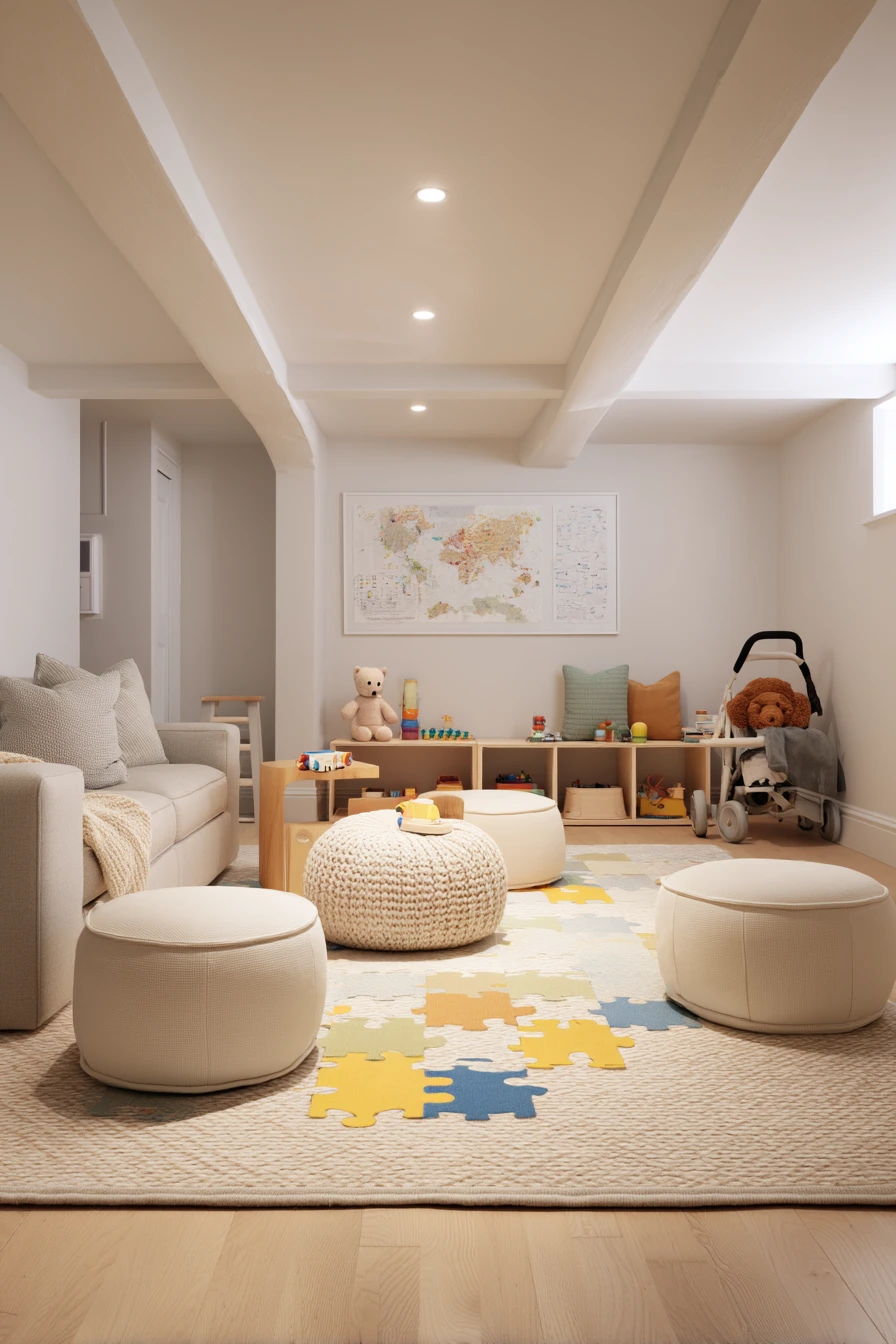
A basement playroom works best when the furniture is soft, low, and safe. Modular floor seating lets kids build their own spots for reading, blocks, and movies. Low storage benches and toy cubbies keep the room organized without tall units that can tip. Rounded pouf ottomans add extra seating and are easy to move.
This kind of family basement is about real use: puzzle pieces on the rug, a stuffed animal by the sofa, a snack cup on a side tray, and a stroller parked near the wall. Bright but gentle daylight and warm overhead practicals help the room feel cheerful while still soft on the eyes. A large rug defines the play zone and makes the floor more comfortable.
How to style it: pick a simple color palette so toys do not make the room feel busy. Use bins with picture labels so young kids can help clean up. Keep one bench top clear for building or coloring. If the playroom shares space with adult seating, place storage between zones so each area feels separate.
- Use modular floor seats for flexible play and easy rearranging.
- Choose low benches with lids for fast toy pickup.
- Add rounded poufs for safe seating with no sharp corners.
- Set up cubbies with bins to sort toys by type.
- Keep a parking spot for strollers and ride-on toys near the wall.
Pro Design Tip: Leave 30–36 inches of open floor in the center so kids can spread out puzzles and still have a safe walking path.
Budget Considerations: Foam floor seating can be pricey; mix a few key pieces with large floor cushions and a thick rug pad. Use affordable cube shelves with fabric bins instead of custom built-ins.
9. Quiet Basement Reading Nook With Lounge Chair and Warm Lamp

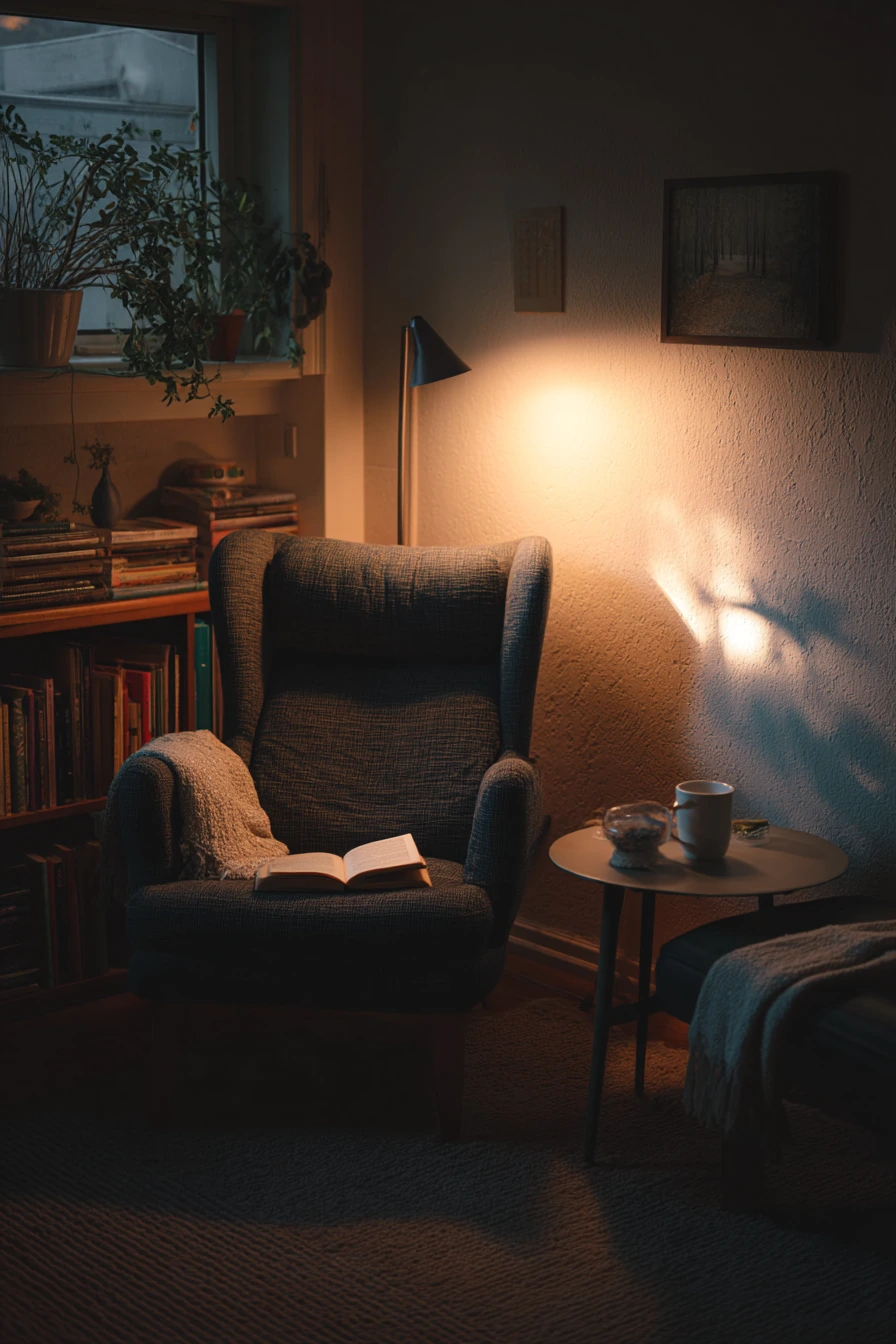
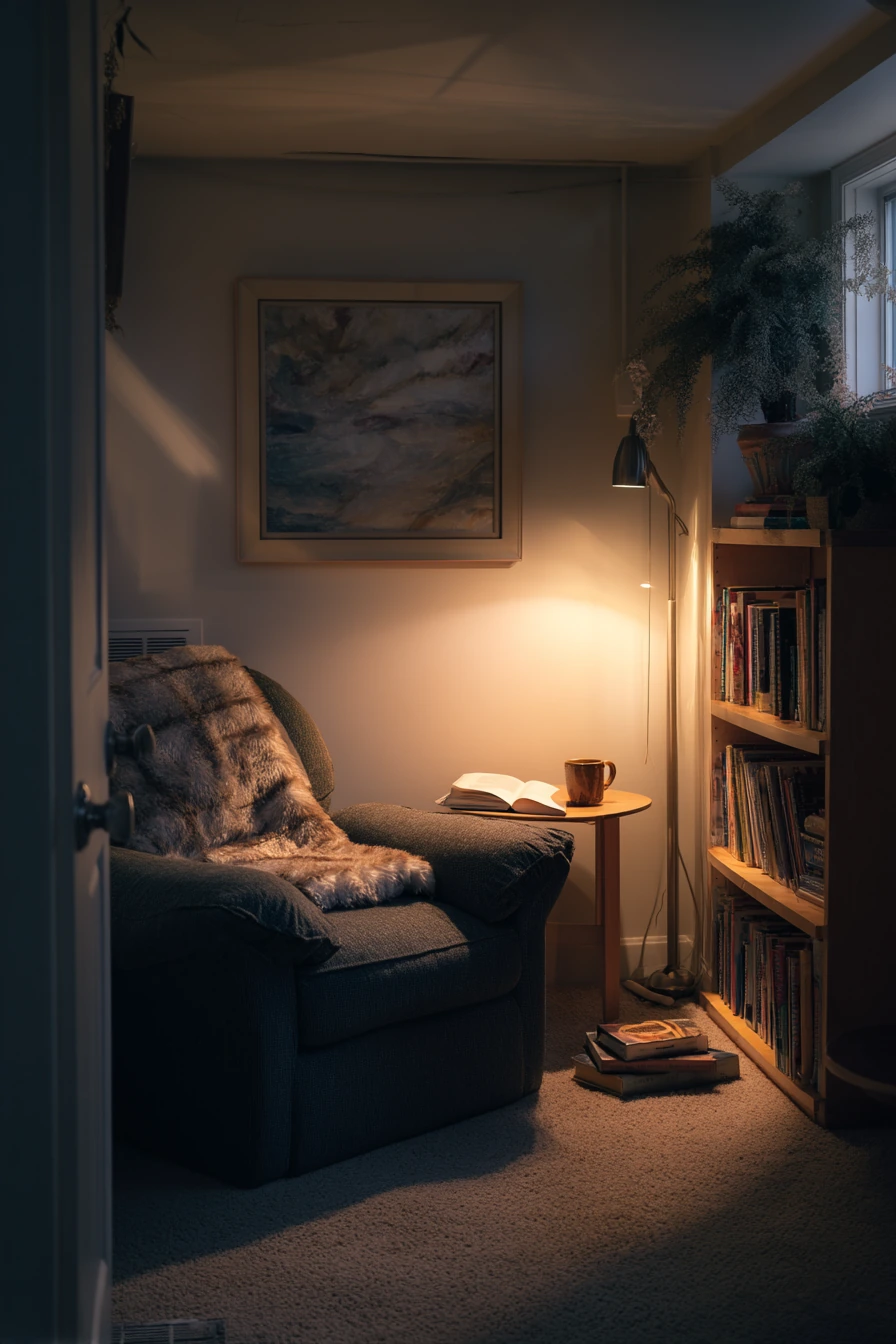
A quiet basement reading nook can turn an unused corner into your favorite spot. Start with a deep lounge chair that supports your back and arms, then add a slim floor lamp to bring warm, focused light. A tiny round table is enough for a tea mug, reading glasses, and a coaster.
Muted, cool window light from a basement window can make the space feel calm, and the lamp adds warmth so it does not feel cold. A low bookcase keeps your current reads close without blocking light. Small, real-life details help the nook feel inviting: an open novel, a folded throw within reach, and soft plant shadows across the wall.
How to style it: choose one texture that feels good, like a knit throw or velvet pillow, and keep the rest simple. Add a small basket for extra blankets or journals. If the basement has echo, place a rug under the chair to soften sound. Keep decor minimal so your eyes can rest while you read.
- Pick a lounge chair with a deep seat and supportive back.
- Use a warm bulb in a floor lamp for cozy evening reading.
- Add a small table that fits close to the chair arm.
- Use a low bookcase to store books without visual clutter.
- Layer a rug and throw for warmth in cooler basements.
Pro Design Tip: Aim the lamp so the light hits your book from behind your shoulder, not straight in your eyes, to reduce glare.
Budget Considerations: A secondhand armchair can work well if you add a firm seat cushion. Swap in a new lampshade and warm LED bulb to upgrade the look for less.

10. Multipurpose Basement Office and Lounge With Sofa Bed and Compact Desk
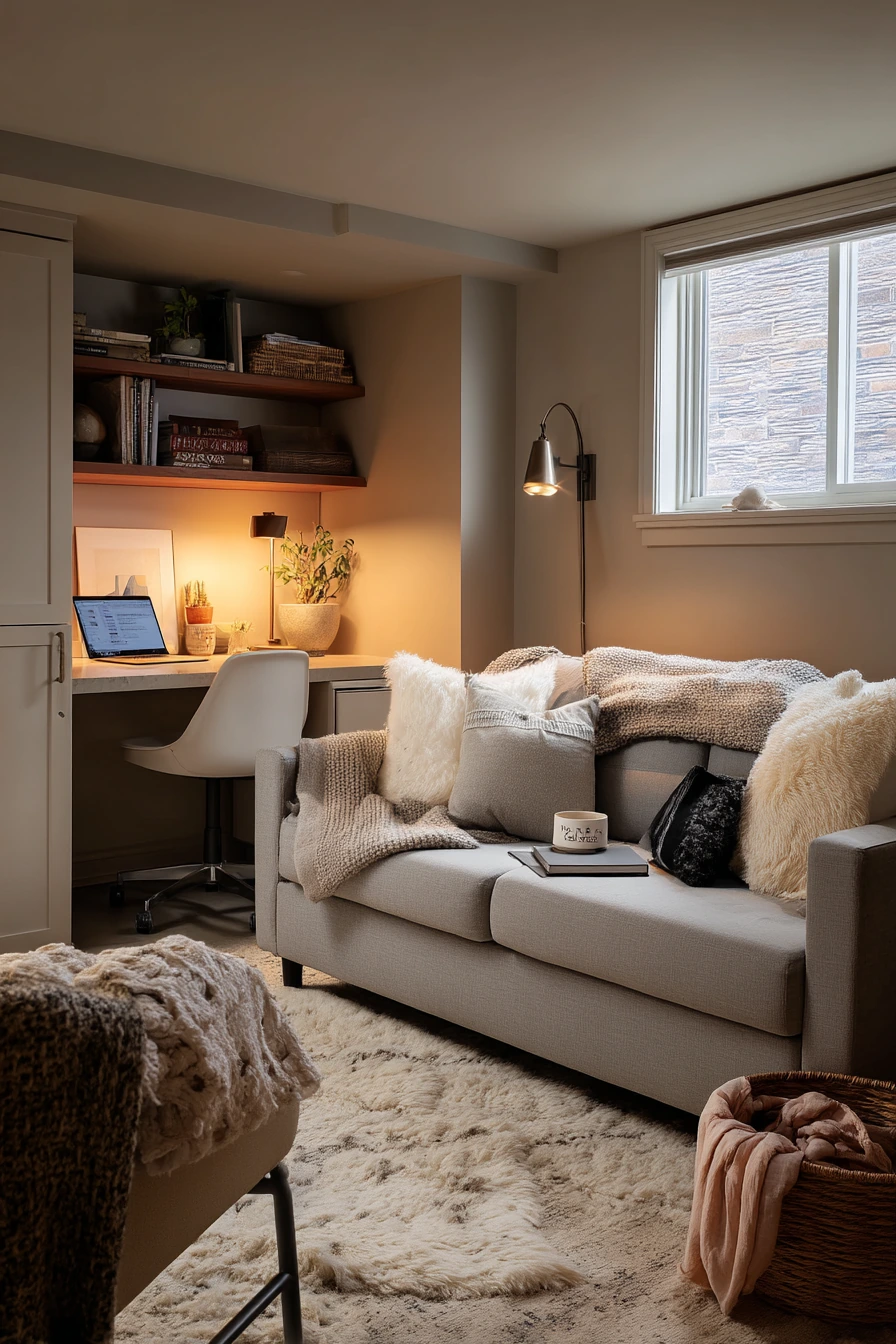

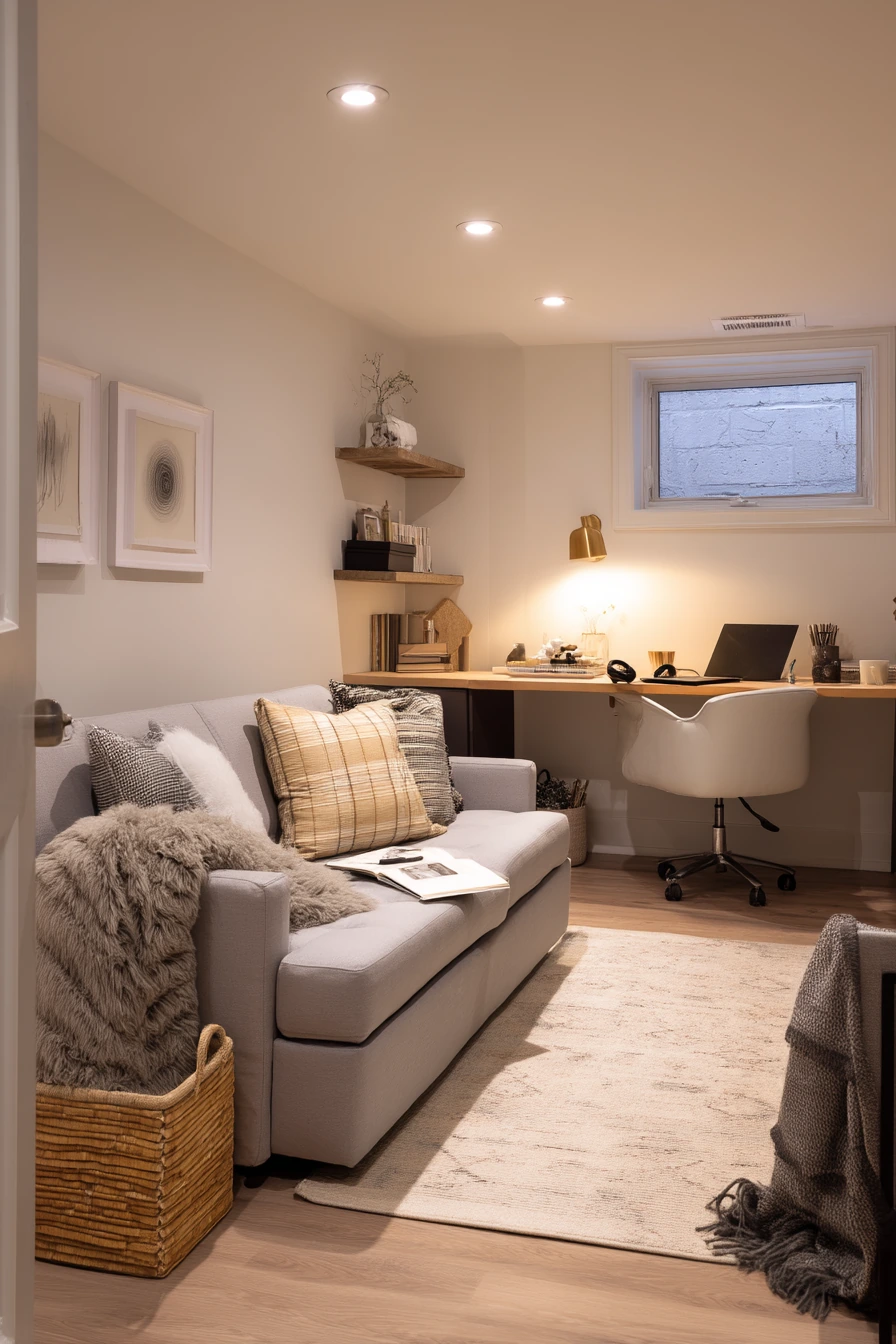
A multipurpose basement that works as an office by day and a lounge by night needs furniture that earns its space. A sofa bed is the anchor because it covers seating and sleepovers. Pair it with a compact desk and a swivel chair so the work zone feels real, not like an afterthought.
Add a slim storage cabinet for office supplies, chargers, and board games. A basket of throws near the sofa keeps the lounge side cozy and makes it easy to tidy fast. This room should look tidy but real: a notebook open, a coffee ring on the desk, headphones visible, and a phone charger ready. Soft egress window light mixed with a warm desk lamp glow helps the room shift through the day.
How to style it: separate the zones with placement. Put the desk closer to the window for daylight, and keep the sofa bed on the opposite wall for relaxing. Use one shared color palette so the office pieces and lounge pieces match. Add one piece of wall art above the sofa to pull the room together without adding clutter.
- Choose a sofa bed with a simple mechanism for quick switching.
- Use a compact desk with cable control to reduce visual mess.
- Add a swivel chair that tucks in fully when not in use.
- Use a slim cabinet for supplies and guest items.
- Keep a throw basket near the sofa for comfort and fast cleanup.
Pro Design Tip: Hide a power strip under the desk and run one cable to the wall outlet; it keeps chargers reachable without cords crossing the room.
Budget Considerations: If a sofa bed is out of reach, use a standard sofa plus a foldable foam mattress stored in the cabinet. A small writing desk can replace a full office desk in tight basements.

The best basement furniture ideas start with how you really live, not a perfect photo. Pick pieces that fit the scale of the room, add storage that hides clutter, and use warm lighting to balance low daylight.
Whether you need a family hangout, a small loveseat setup, a teen study corner, or a guest-ready sleeper sofa, a clear layout and a few flexible items make the basement easier to use every day.
FAQ
What furniture works best in a small basement? Choose compact pieces like a loveseat, slim sofa, nesting tables, and wall-mounted shelves to save floor space.
How do I make basement seating feel cozy? Use a large rug, warm lamps, soft throws, and seating with comfortable cushions like a modular sectional or recliners.
What is the easiest way to add storage without built-ins? Use cube storage, baskets, a rolling cart, and a lightweight bookshelf. They are flexible and renter-friendly.
How can I make a basement guest area without a full bedroom? Use a sleeper sofa, a small bench for towels and bags, and a narrow drink table with a lamp for bedside light.
How do I handle cables in a basement media room? Use cord covers, mount a power strip behind the console, and bundle cords with ties so they stay hidden and safe.
What type of rug is best for a basement family room? Pick a washable rug or a low-pile rug that is easy to vacuum and handles spills well.
How do I light a basement with one small window? Layer lighting with a floor lamp, a table lamp, and a task lamp, all with warm bulbs, to reduce shadows and add comfort.