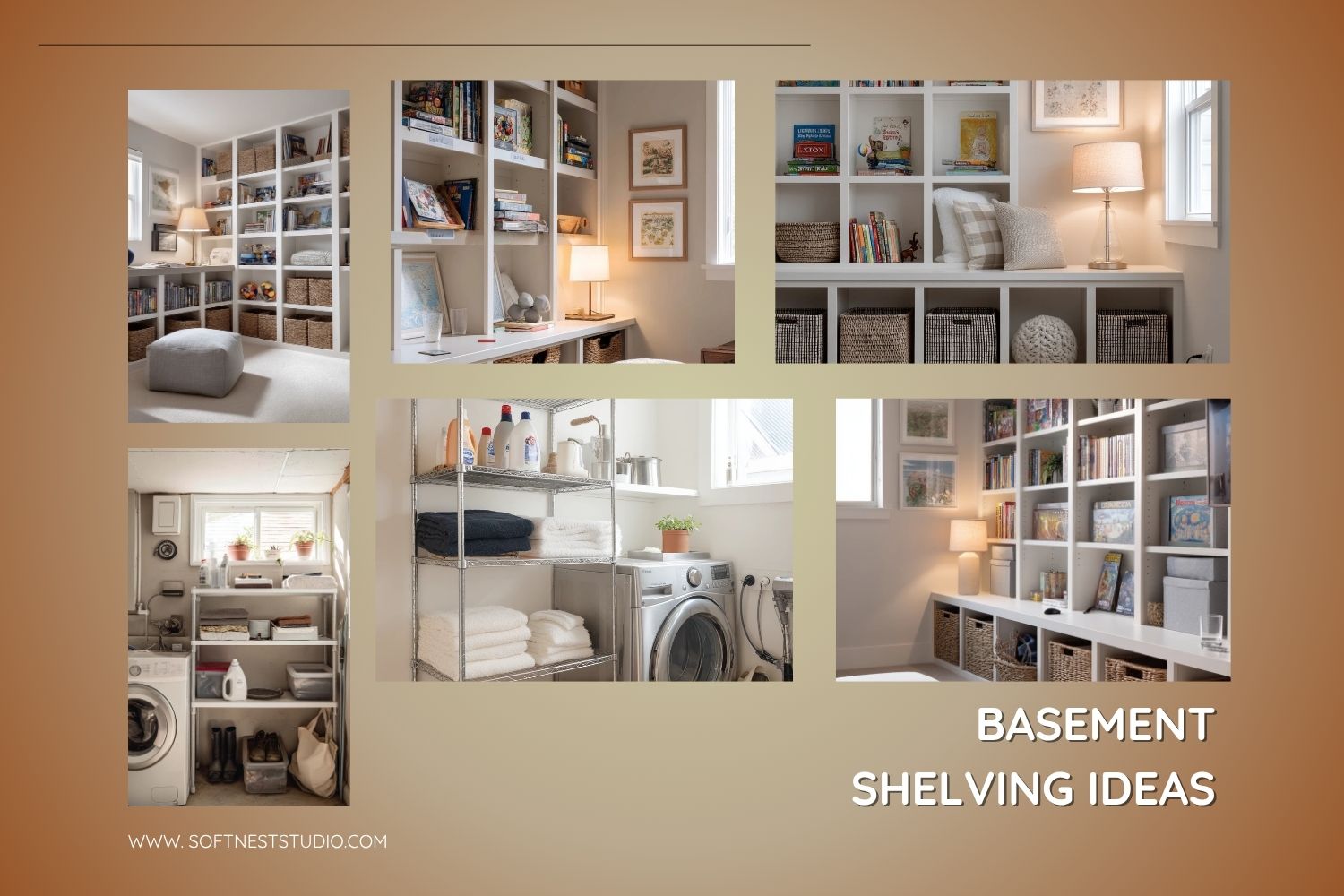
Basement shelving ideas can turn a messy lower level into a space your family can use every day. The right shelves keep board games, laundry supplies, sports gear, and seasonal bins easy to find.
This guide shares basement storage setups based on real rooms, from a family rec room with built-ins and woven baskets to slim steel shelves next to a washer and utility sink. Each section includes simple styling tips so your shelves look calm, not crowded.
You will also get practical details that matter in basements, like moisture control, safe weight limits, and how to use labeled bins and clear containers. These ideas work for homeowners and renters, even if you have painted concrete walls and low windows.
Use the list items to copy the setup fast, then adjust it to your space and budget. Small upgrades like lighting, basket choice, and grouping by category can make a big difference.
1. Built-In Basement Shelving for a Family Rec Room

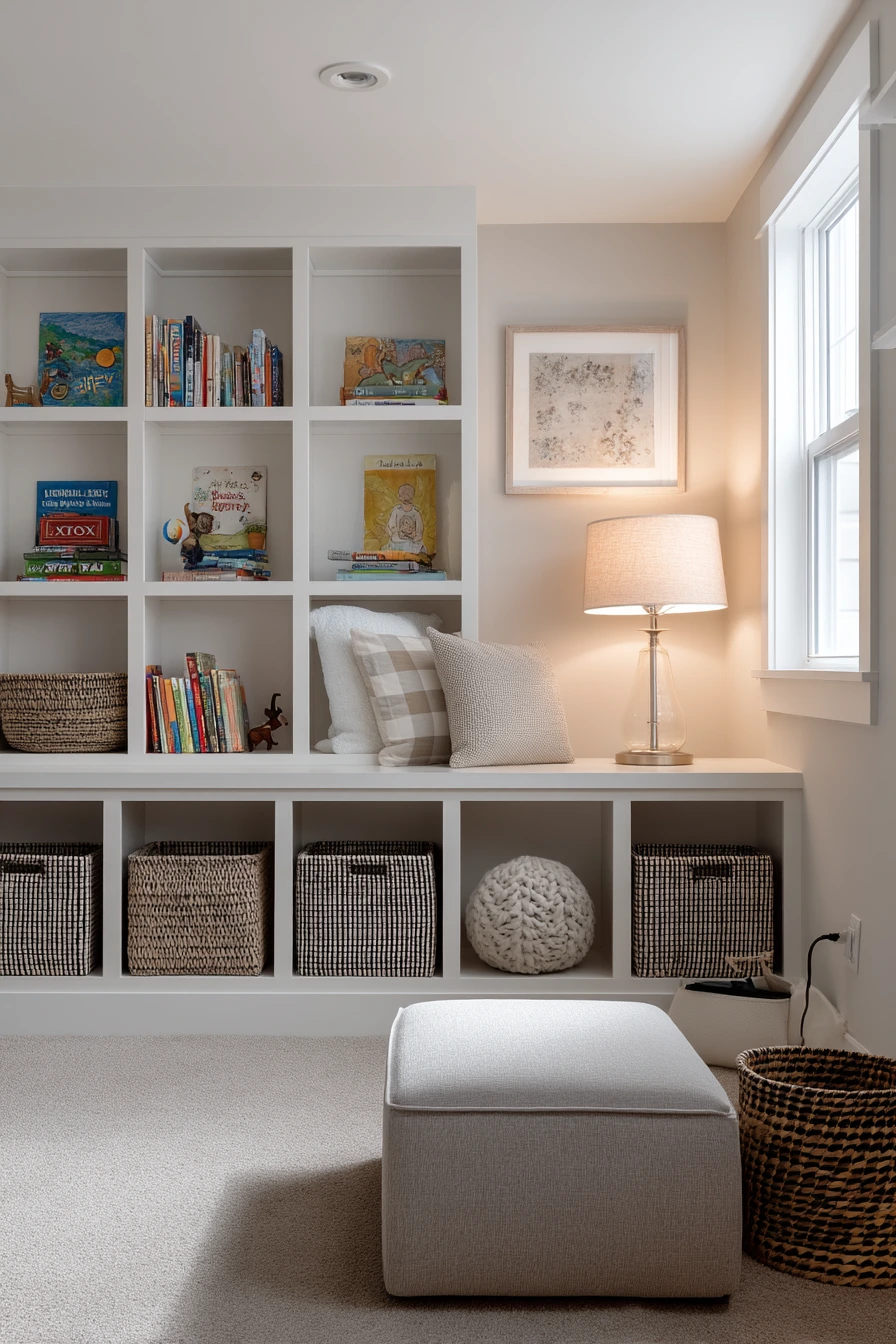
In a busy family rec room, full-height built-in shelves make the space feel finished and easy to keep up. Use a mix of woven baskets, labeled bins, and open shelves for the items you grab often, like board games and paperback novels. A few framed kid art pieces add color without needing extra wall space.
To keep it lived-in but calm, leave a little breathing room on each shelf. Real life shows up in small ways, like a charging cable draped near a console, a toy basket tucked below, or one water glass on a lower shelf. Plan for those moments by making one “drop zone” cubby so clutter does not spread.
Lighting matters in basements. A warm practical lamp glow mixed with faint window light makes baskets and books look cozy, not dingy. If the shelves feel heavy, balance them with a soft ottoman nearby and a simple tray on the console for remotes and chargers.
- Group games by type: card games, puzzles, family favorites.
- Use woven baskets for odd shapes like toys and controllers.
- Add labeled bins for craft kits, LEGO, and extra cables.
- Display 2 to 3 framed kid art pieces at eye level.
- Keep one lower shelf open for a toy basket or floor pillows.
Pro Design Tip: Build visual rhythm by repeating the same basket style in every other cubby, then break it up with a few book stacks and one framed print.
Budget Considerations: Custom built-ins cost more; to save, use tall bookcases and add trim strips to mimic a built-in look.


2. Slim Utility Shelving by the Washer and Sink
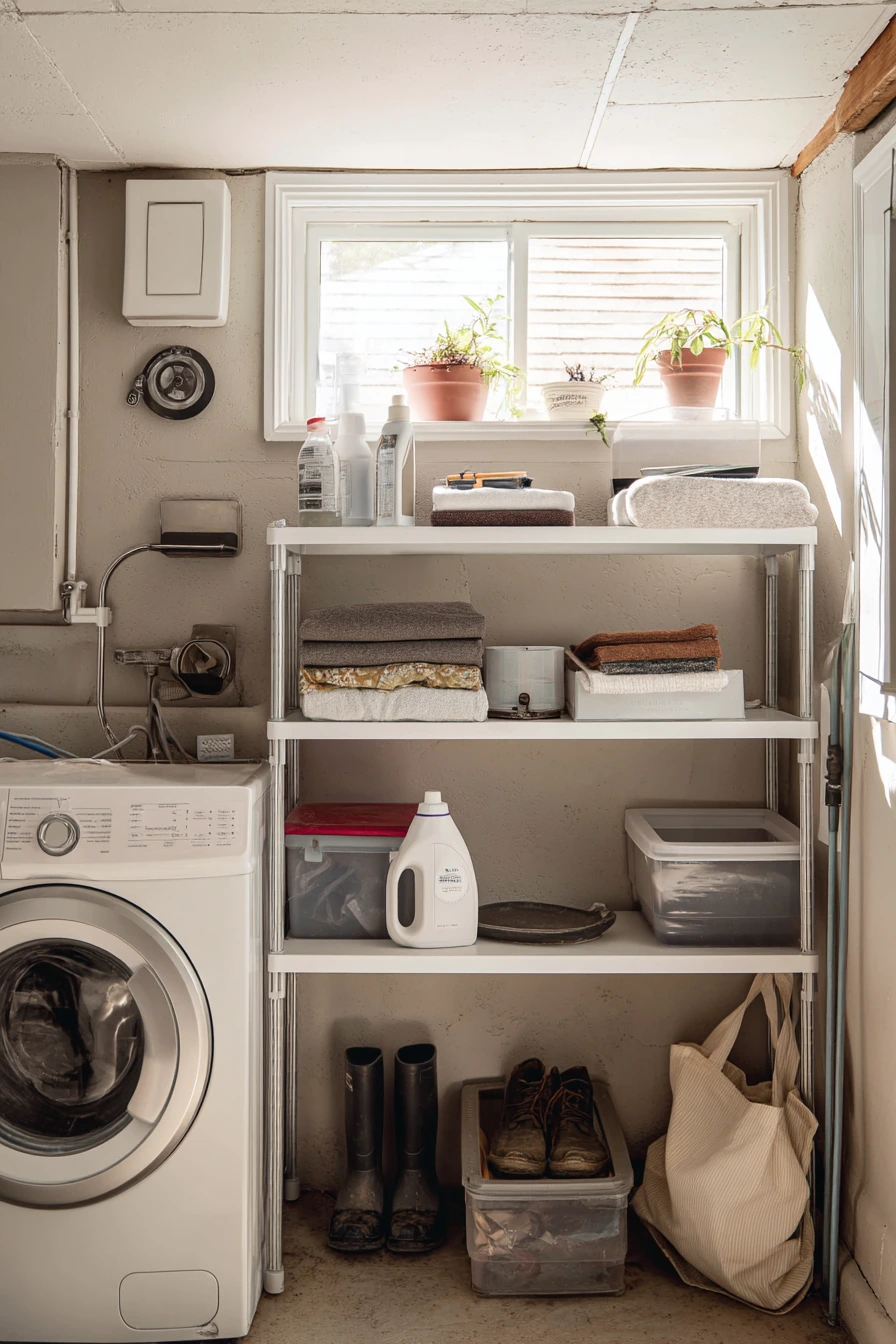

Compact basement shelving ideas work best when every inch has a job. Next to a washer and utility sink, slim steel shelves keep detergent, folded towels, and storage boxes off the floor. This setup is clean but still real, with a mud-caked boot tray, a wrinkled tote bag, and an unplugged phone charger nearby.
Start by sorting items into “wet zone” and “dry zone.” Keep detergents, stain spray, and cleaning tools higher up and away from splashes. Store towels, paper goods, and vacuum attachments in bins so they do not collect dust. A small plant catching window shadows softens the look and makes the corner feel cared for.
Styling in a utility area is about tidy grouping, not decor. Line up bottles in a shallow tray so drips stay contained. Use one color family for bins so the shelves read as organized even if the contents change. Leave one shelf partly empty for the weekly rush, like a pile of rags or an incoming laundry basket.
- Add a waterproof mat under detergents and sprays.
- Use labeled boxes for vacuum parts and filters.
- Keep folded towels in a lidded bin to block dust.
- Place a boot tray on the floor for muddy shoes.
- Use one small plant or jar to make the space feel finished.
Pro Design Tip: Measure the clearance for washer doors and sink plumbing, then choose shelves with adjustable feet so the unit stays level on basement floors.
Budget Considerations: Basic steel racks are low cost; if you want a cleaner look, add matching bins and labels instead of upgrading the shelf unit.

3. Renter-Friendly Freestanding Basement Shelves on Concrete Walls


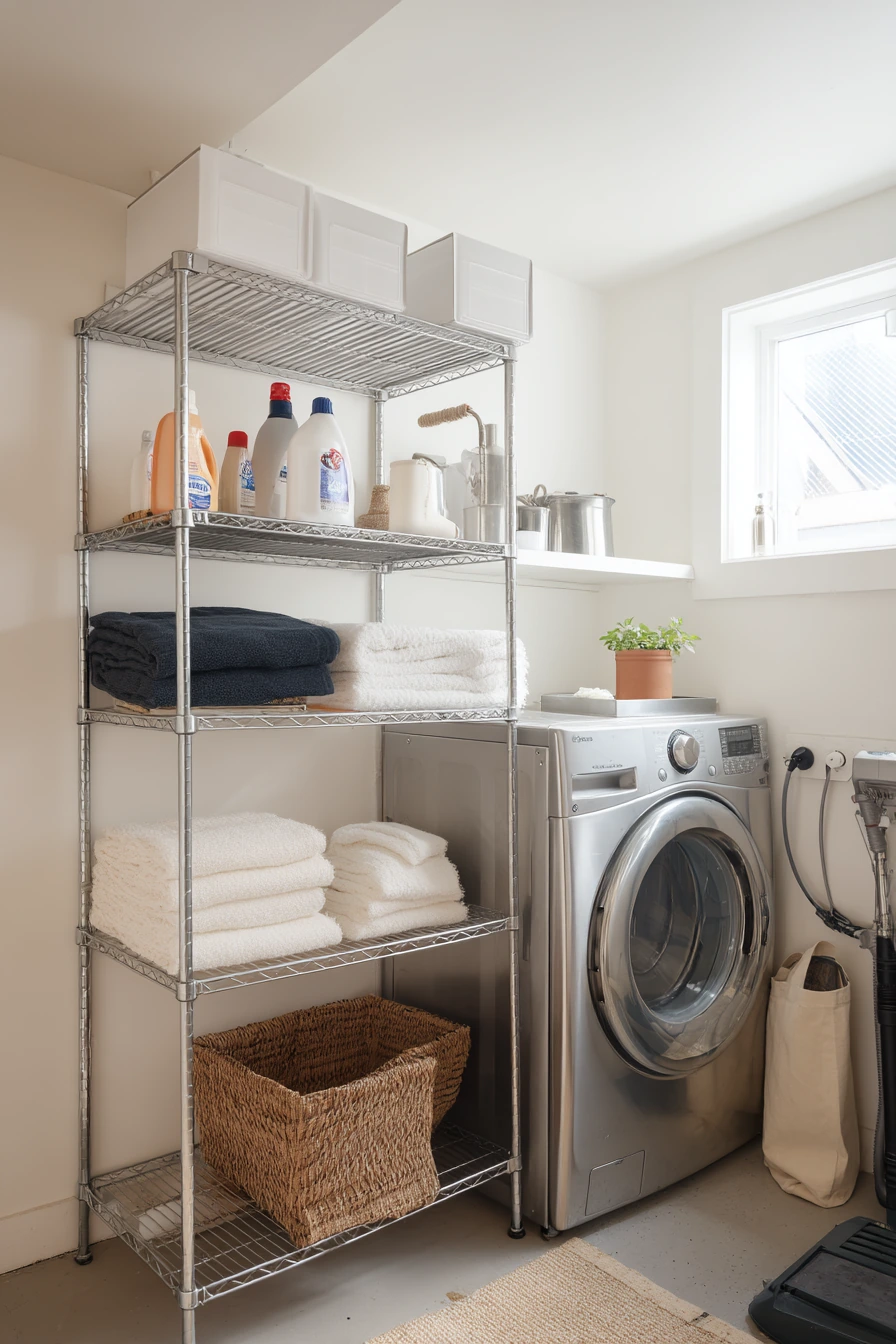
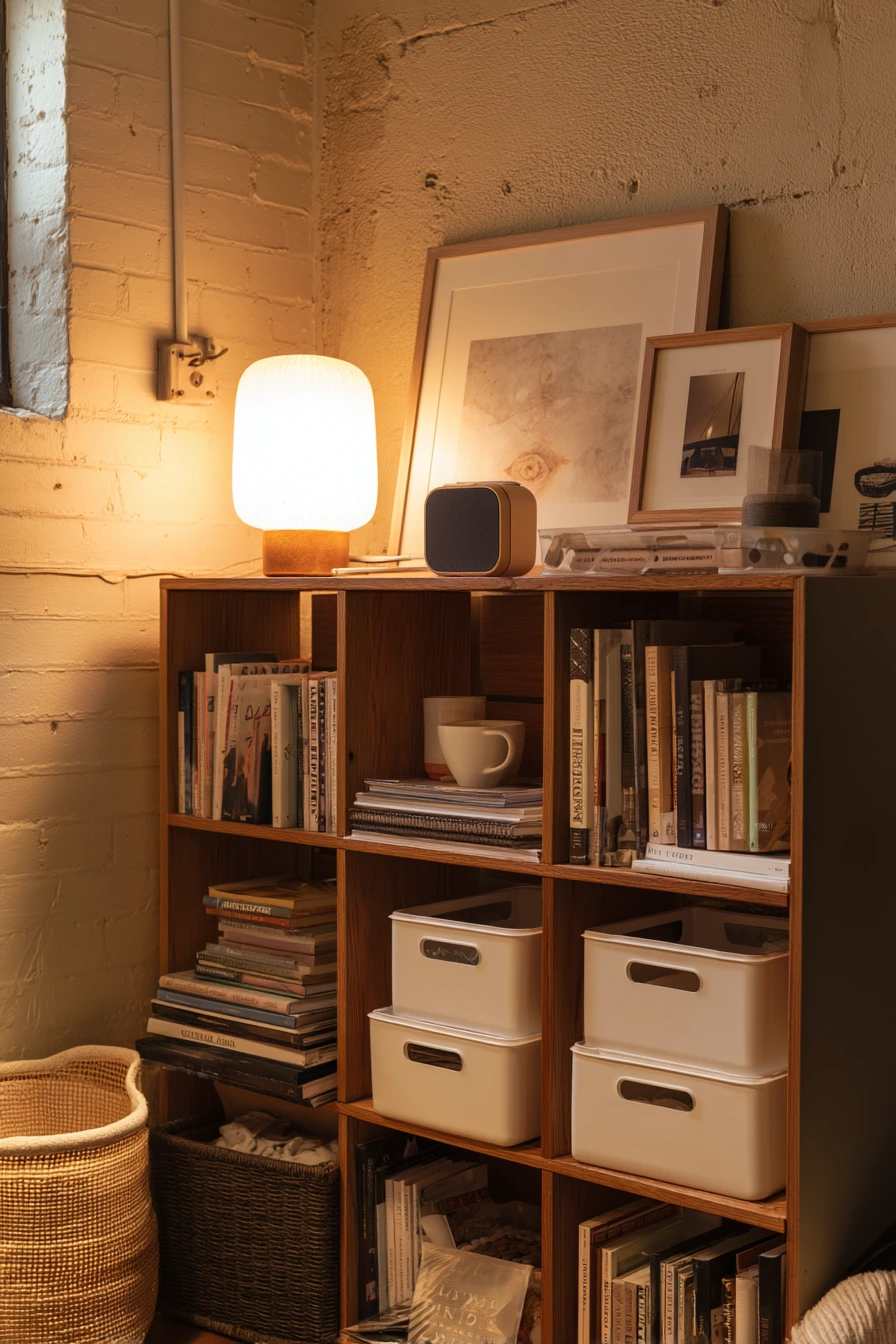
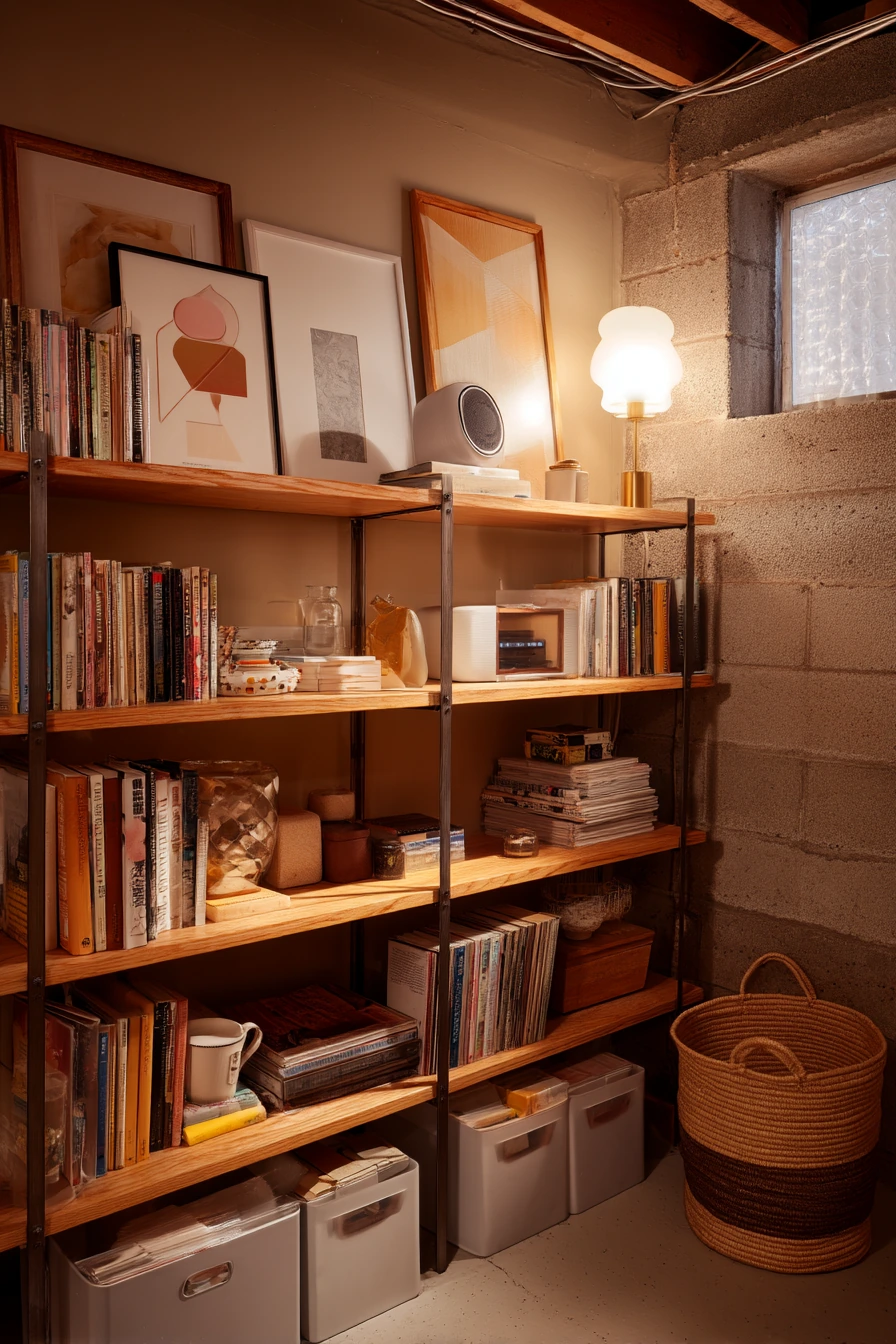
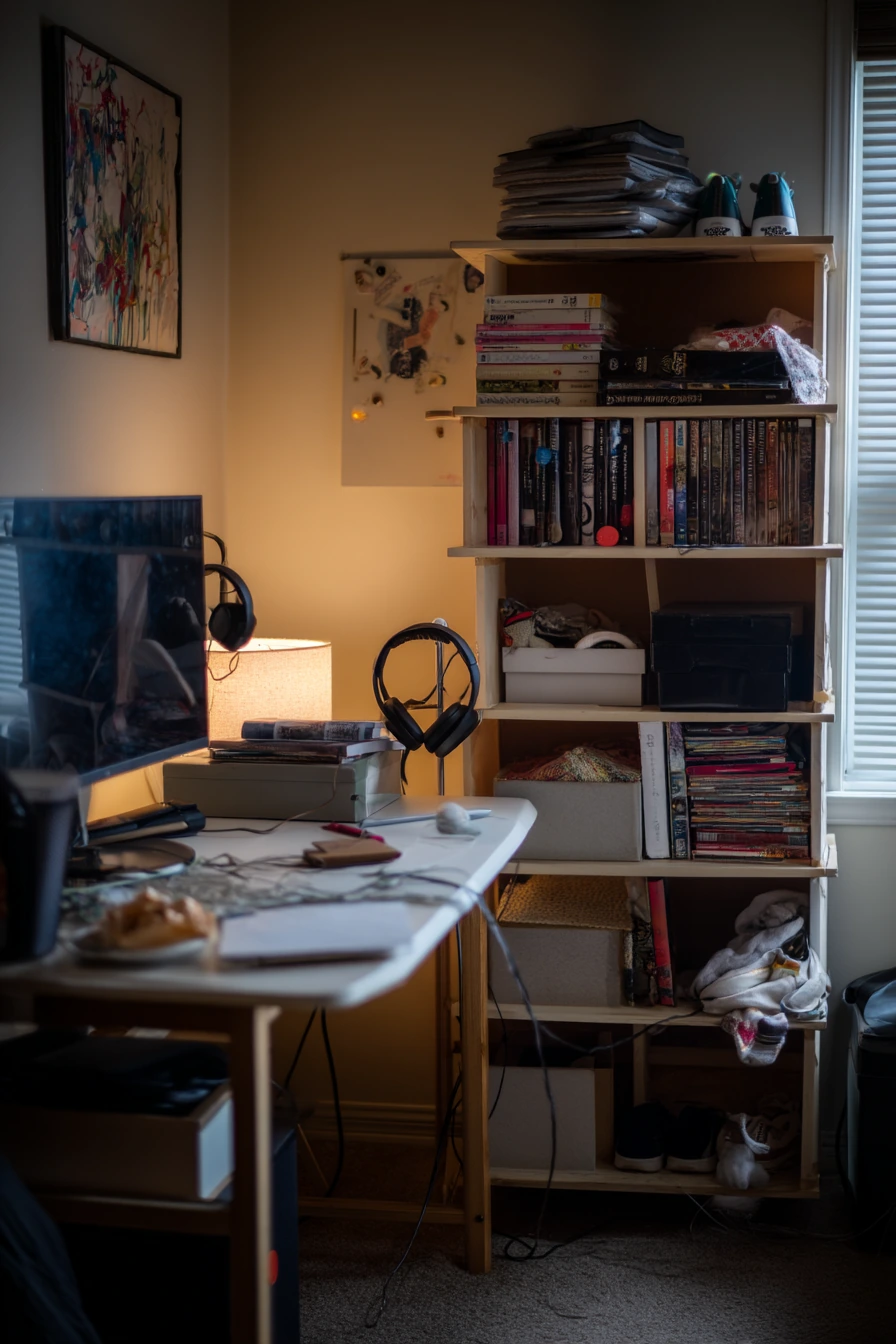
If you rent, basement shelving ideas need to be flexible and easy to remove. Freestanding oak shelves against a painted concrete wall give warmth without drilling into masonry. Add stackable cubes for smaller items, then mix books, lidded storage bins, and a few framed prints so the setup feels like part of the home, not a storage locker.
The room feels occupied when you allow a few everyday items to live there, like a laundry basket, a half-read magazine, or a coffee mug on a lower shelf. The key is to contain the mess. Give yourself one “open landing spot” cubby for drop items, and keep the rest behind doors or in bins.
Basements often have mixed light, like warm lamp light with cool spill from a tiny window. Use that to your advantage. Put decor and art where the lamp hits, and store the plain bins lower. For styling, repeat a simple palette, like oak, black, and off-white. Add a small speaker and one plant to make the shelf wall feel like a lounge corner.
- Choose shelves with a closed back if the wall is rough.
- Use lidded bins for tools, cables, and seasonal extras.
- Place framed prints on shelves instead of hanging them.
- Add stackable cubes for shoes or small baskets.
- Keep one cube empty for a laundry basket or tote.
Pro Design Tip: Anchor tall freestanding shelves with anti-tip straps to studs when possible, or use a wide base unit to reduce wobble on uneven basement floors.
Budget Considerations: Solid oak costs more; for less, choose a veneer shelf and upgrade the look with matching fabric bins and simple frames.
4. Craft Room Basement Shelving for Supplies and Tools


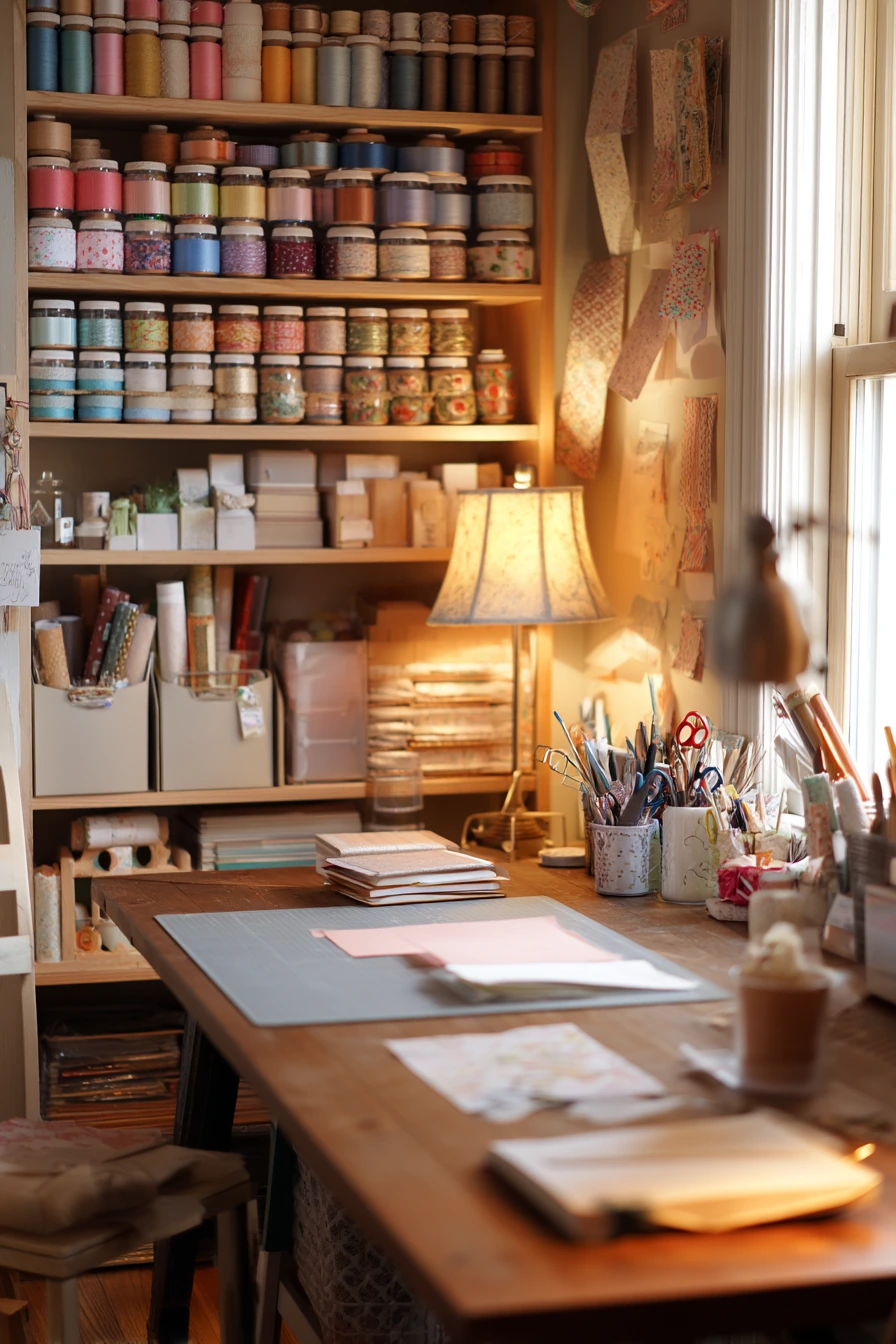
Craft-focused basement shelving ideas should make it easy to start and stop projects without losing pieces. Open shelves work well for ribbon spools, labeled jars, wrapping paper tubes, and fabric bins. Keep scissors in a cup and tools in clear containers so you can see what you have at a glance.
This type of room will always be a little busy, so plan for it. A cutting mat on the table, a stray roll of tape, two greeting cards, and a notebook left open are normal signs of use. Instead of fighting that, create “project parking.” Use one shelf just for active projects, and another shelf for finished items ready to gift or mail.
Style the shelves by color and shape. Line up jars and bins in rows, then add one or two larger items, like a basket of fabric scraps, to break up the small pieces. Soft side window light and a warm task lamp help you see labels and true colors, which reduces mistakes. For an easy upgrade, label everything with the same font and keep duplicates together, like all adhesives in one bin.
- Store ribbons on a dowel or in shallow bins by color.
- Use labeled jars for buttons, beads, and clips.
- Keep wrapping paper tubes upright in a tall basket.
- Make one shelf the “active project” zone.
- Use fabric bins to hide bulky supplies like yarn.
Pro Design Tip: Set up zones from left to right, like cut, assemble, and pack, so your shelves support your workflow instead of slowing you down.
Budget Considerations: Matching jars can add up; save money by reusing food jars and upgrading them with consistent labels and a wipe-clean shelf liner.

5. Sports and Gear Basement Shelving for an Active Family


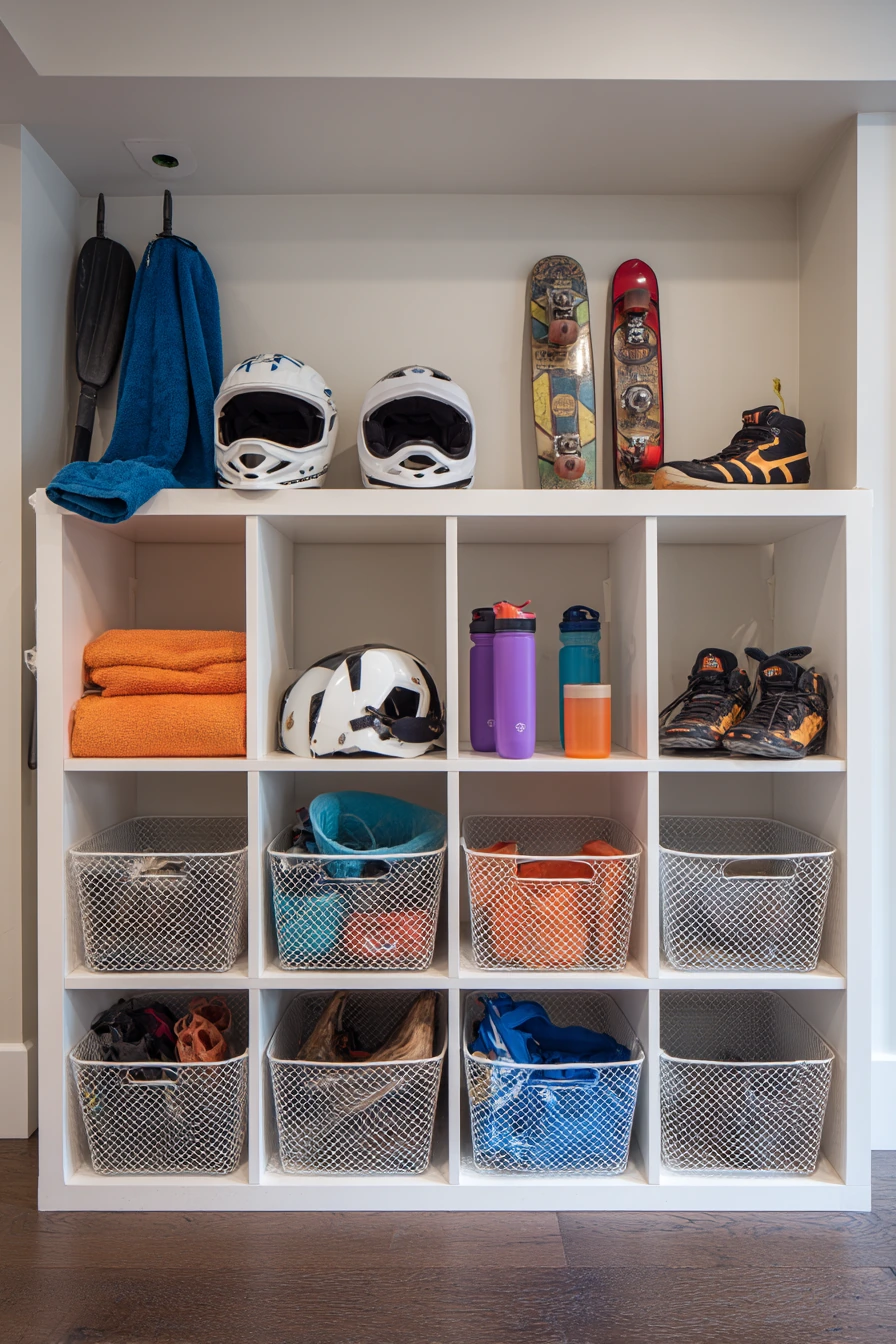
For an active family, basement shelving ideas need to handle weight, dirt, and quick grab-and-go routines. Sturdy white shelving keeps helmets, baseball gloves, skateboards, water bottles, and mesh bins sorted by season. Real life will show up here, like a damp towel, muddy cleats, and a kid’s sneaker beside the shelf.
Start by planning for the messiest items. Put a drip tray or rubber mat at the bottom for cleats and wet gear. Use mesh bins for items that need airflow, like pads and practice jerseys, so odors do not get trapped. Store smaller pieces, like mouth guards and extra laces, in a labeled box so they do not disappear.
To style it, keep the shelf colors simple and let the gear provide color. Add labels that kids can read fast. If you have cool daylight from a basement egress window, place the shelf where that light hits, so the area feels crisp, not gloomy. Keep one “return bin” for items that need to go back upstairs, like water bottles and towels, so clutter does not pile up.
- Use a bottom tray for muddy shoes and cleats.
- Add mesh bins for sweaty items that need air.
- Sort helmets and balls by sport, not by person.
- Keep water bottles in one handled basket for easy carry.
- Label a season bin for off-season gear and rotate it.
Pro Design Tip: Mount a narrow wall rail with hooks beside the shelf for helmets and bags so the heaviest items are not stacked on top of each other.
Budget Considerations: Heavy-duty shelves can cost more; you can start with one strong rack and add inexpensive labeled bins as the system grows.

6. Media Console and Floating Shelves for a Cozy Basement Lounge
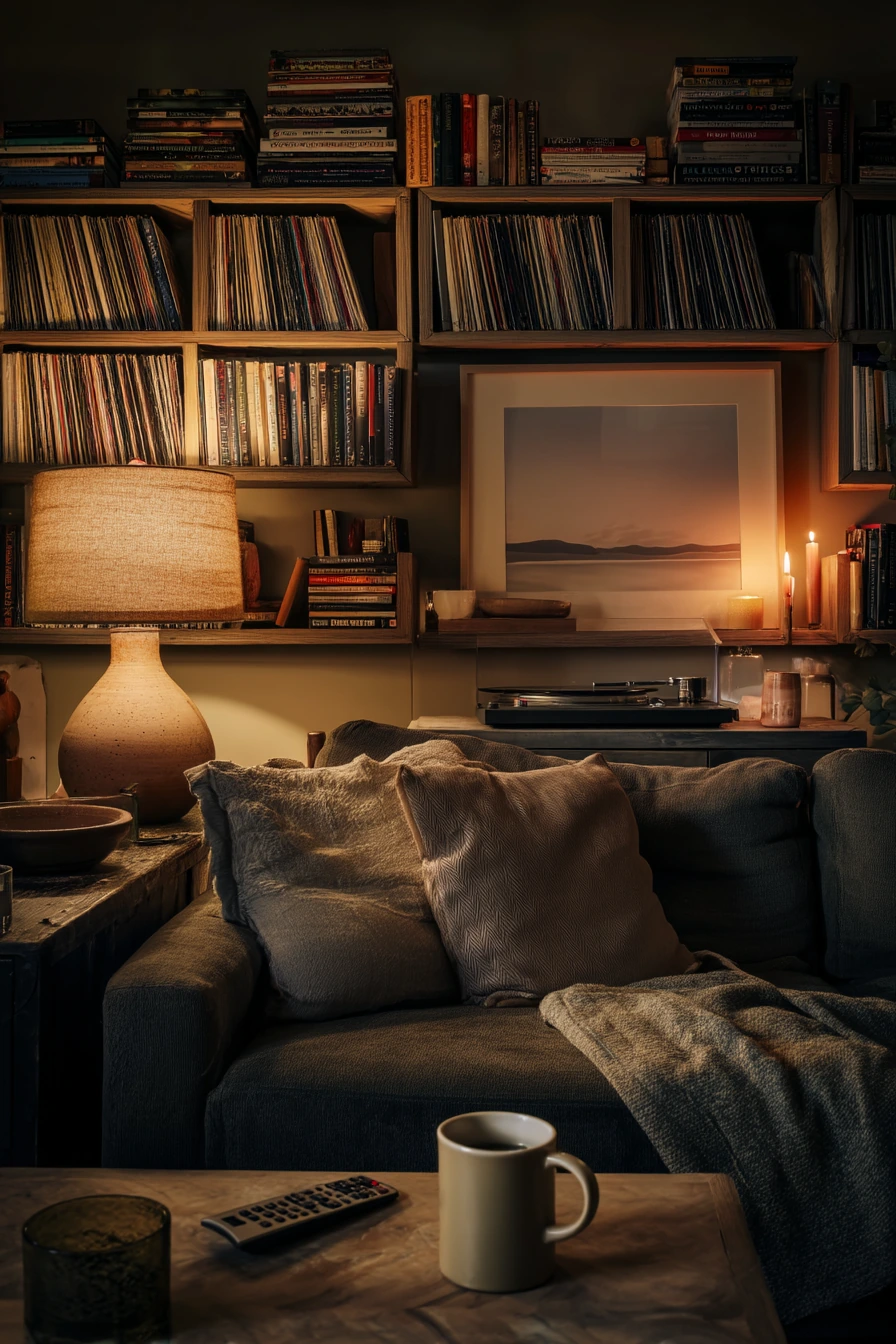

Basement shelving ideas can be storage and decor at the same time, especially around a low media console. Floating shelves are great for novels, vinyl records, candles, and a framed landscape. A ceramic vase adds texture and keeps the look grounded.
To keep the space honest and comfortable, allow a few lived-in details, like a remote control, a half-full tea mug, and a folded throw on the sofa after movie night. The trick is to give those items a home. Use a small tray on the console for remotes, and add a basket for blankets so they look intentional, not tossed.
Warm lamps and soft shadows make a basement feel inviting. Place one lamp near the seating area and one small light near the shelves to reduce dark corners. For styling, mix vertical and horizontal stacks of books, and leave space around art so it can breathe. Keep candles away from records and paper, and consider flameless options if kids use the room.
- Use floating shelves for light items like books and frames.
- Store vinyl records upright with sturdy bookends.
- Add a tray on the console for remotes and chargers.
- Use one basket for throws and extra pillows.
- Keep decor simple: one vase, one frame, a few candles.
Pro Design Tip: Hang floating shelves into studs or use proper anchors rated for the load, especially if you store records, which are heavier than they look.
Budget Considerations: Floating shelves vary in price; a lower-cost option is wall-mounted brackets with stained boards for a similar look.


7. Heavy-Duty Workshop Basement Shelving for Tools and Hardware

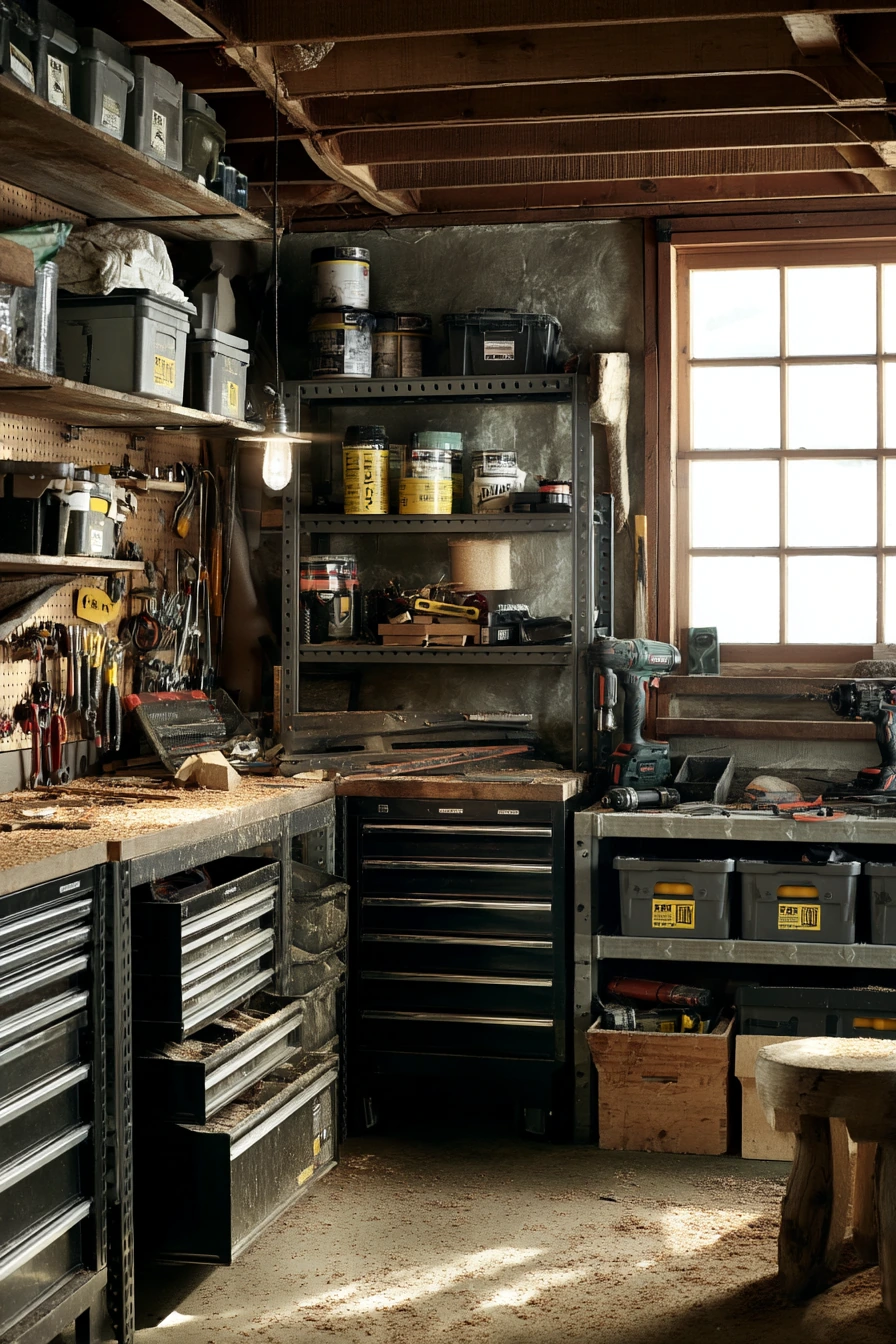
In a home workshop, basement shelving ideas should be tough, clear, and easy to reset. Heavy-duty metal shelves hold toolboxes, paint cans, clamps, and labeled hardware drawers without sagging. A cordless drill charger can live on a middle shelf so batteries are always ready.
Workshops get messy fast, and that is normal. Sawdust on the floor, a folded shop rag, and a pencil on the workbench show the space is used. The goal is to keep the mess contained. Put small hardware in drawers with labels, and store chemicals up high and away from kids. Keep a dedicated shelf for safety gear like goggles and masks so you do not skip it.
For styling, think “clean lines.” Match bins and drawer fronts, and use bold labels that are easy to read in mixed light from a window and one bare bulb. Put the most-used tools at chest height. Keep heavier items low to reduce tipping and strain. If you want the shelves to look less harsh, add one wood top or a pegboard panel nearby for a warmer finish.
- Store heavy toolboxes on the lowest shelf.
- Use labeled drawers for screws, nails, and anchors.
- Keep paint and chemicals in a separate contained bin.
- Set a charging station shelf for cordless tools.
- Add a small bin for shop rags and gloves.
Pro Design Tip: Create a “one-touch put away” rule by labeling shelf edges, so every tool and can has one clear spot you can reach without moving other items.
Budget Considerations: Industrial racks can be affordable; spend extra only on quality drawer organizers and a fire-safe cabinet if you store flammables.


8. Seasonal Storage Basement Shelving with Clear Bins and Labels
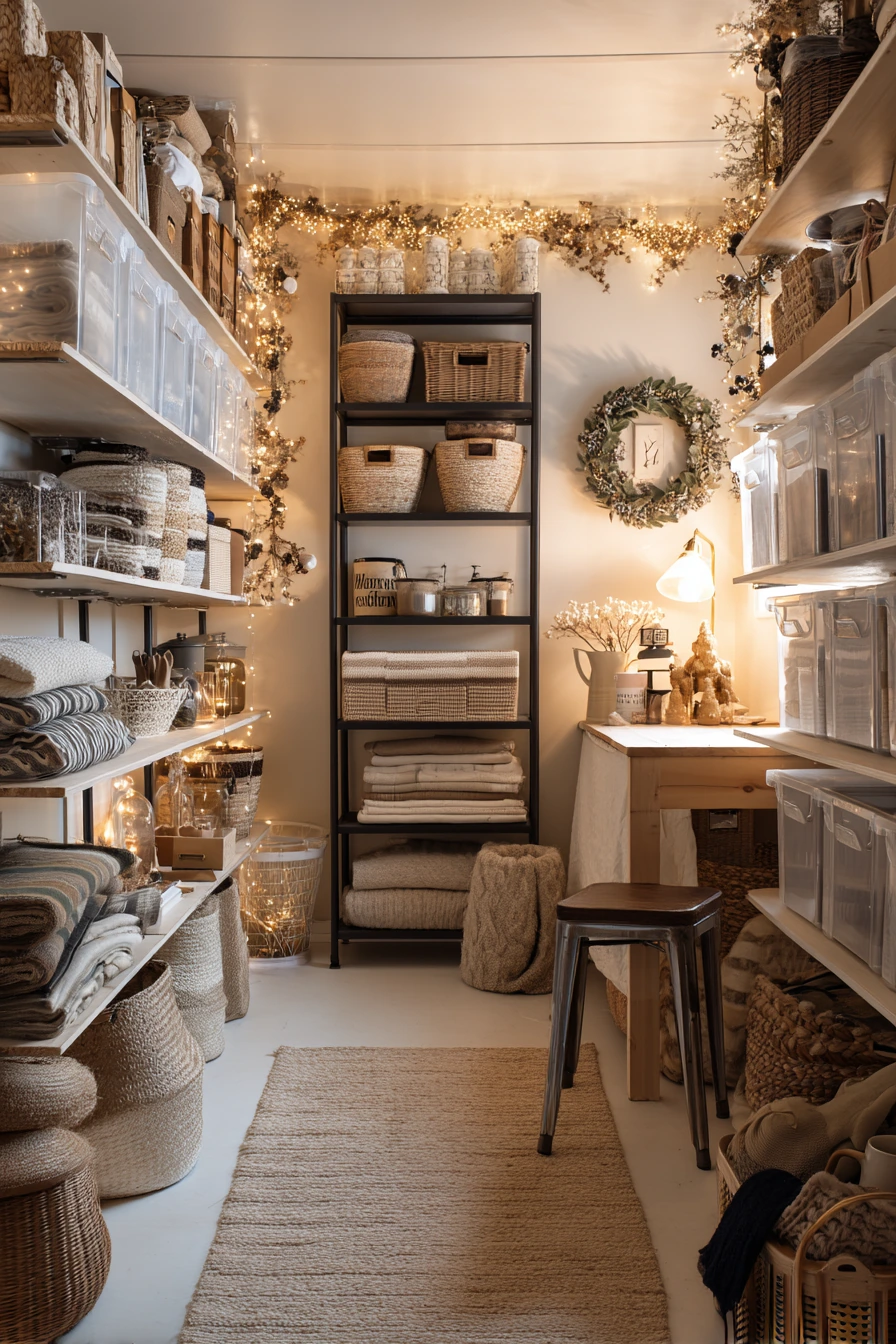
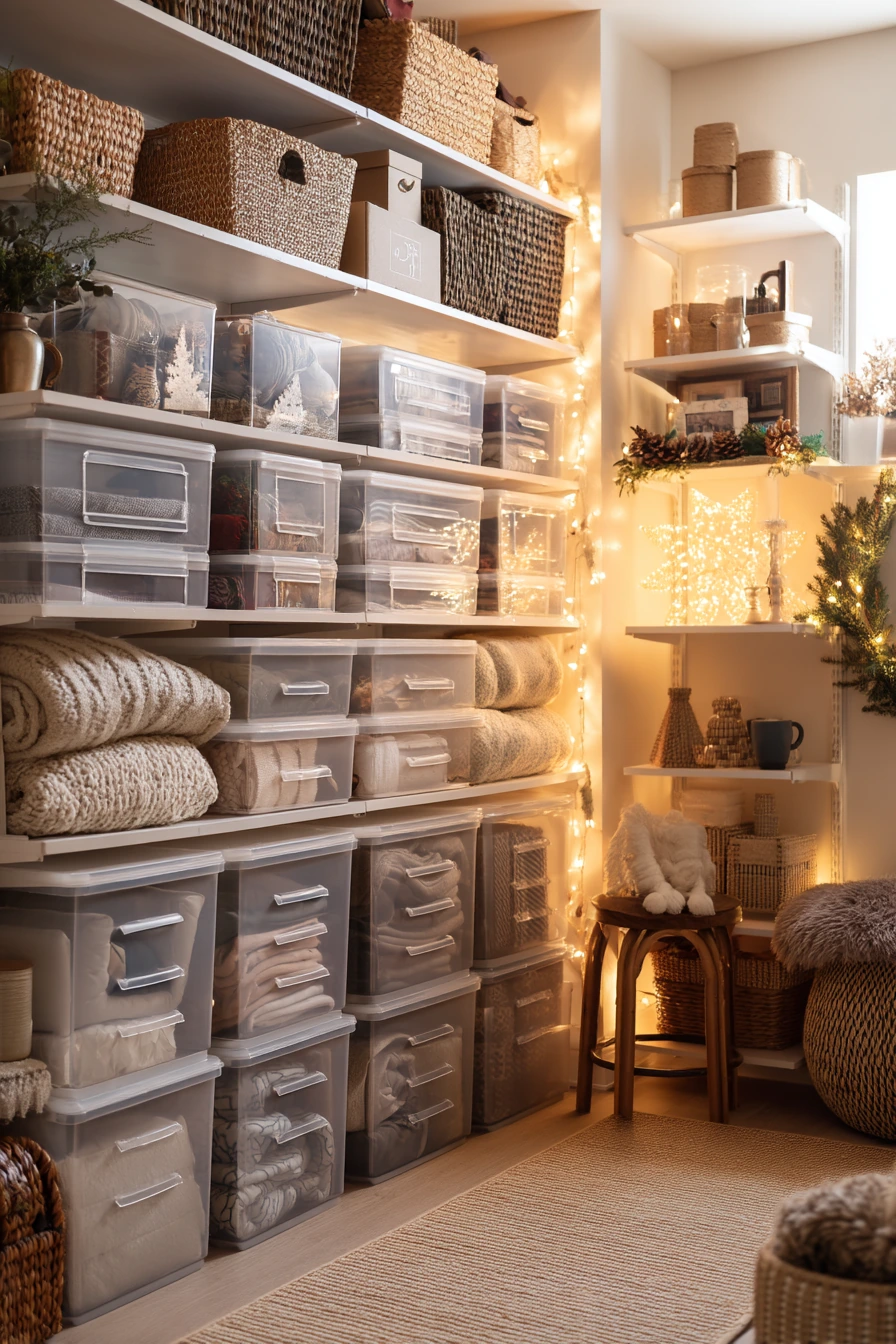
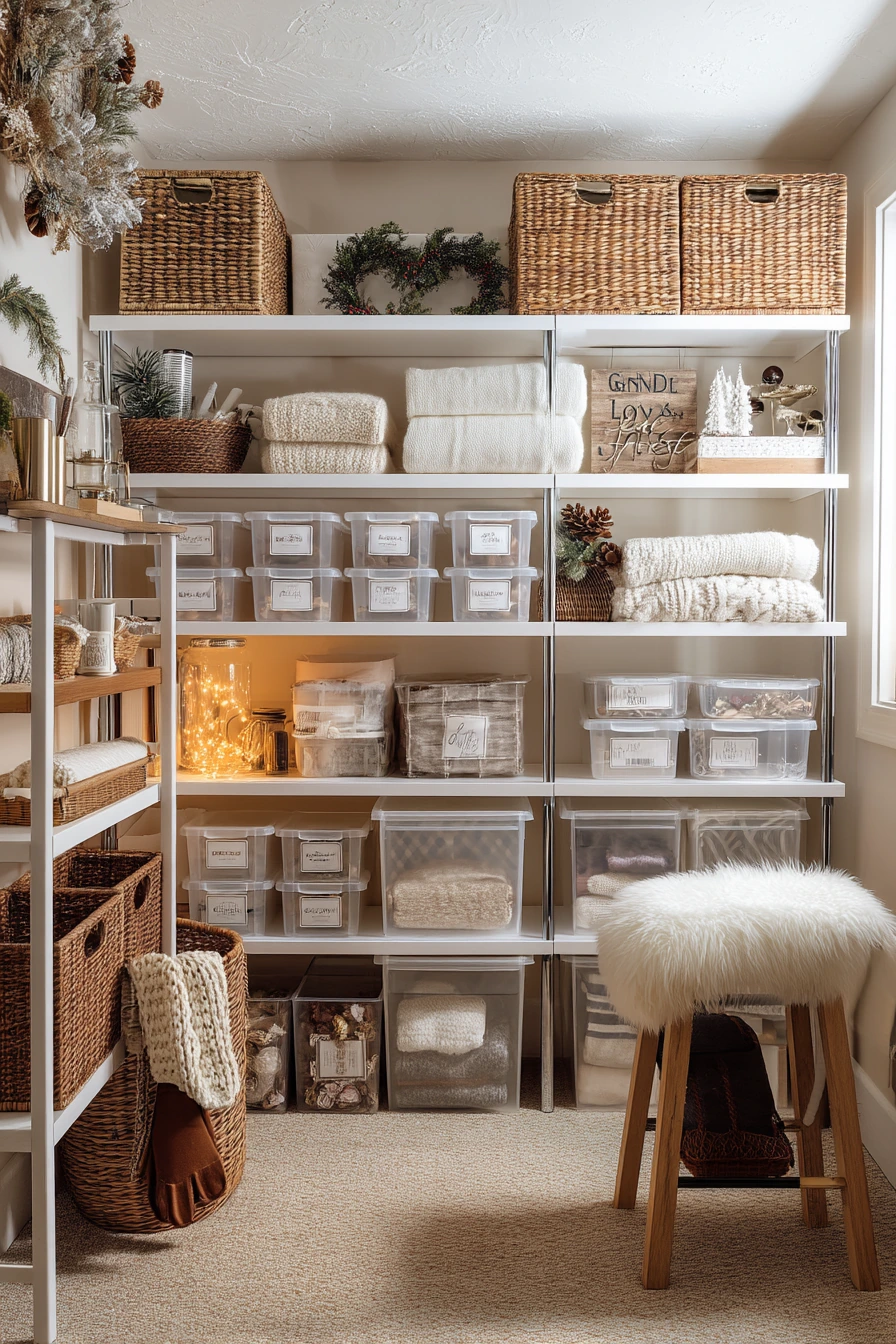
Seasonal storage is where basement shelving ideas can save the most time. Tall shelves filled with clear bins make it easy to see holiday decor, wreath boxes, winter blankets, and labeled baskets. The space still feels active with small signs of use, like a strand of fairy lights in a box, one mitten on the floor, or a mug on a side stool while you sort.
Build the system around your calendar. Give each season its own zone, and keep the current season at eye level. Put the least-used bins on the top shelf, and heavy items like ornaments and light strings lower. Clear bins help you spot what you need, but labels are still important because many decorations look similar when stacked.
To style it, keep bins consistent in size and color so the wall of storage looks neat. Add a few woven baskets for soft items like blankets to warm up the look. Soft daylight and warm lamp glow make the room feel less like a warehouse, which helps you stay motivated to put items back. Keep an empty “donate” bin on the floor so you can edit as you go.
- Assign one shelf section to each season.
- Use clear bins for quick visibility and easy stacking.
- Store wreaths in flat boxes to prevent crushing.
- Label bins on two sides so you can read from any angle.
- Keep one empty donate bin for quick decluttering.
Pro Design Tip: Write a simple bin map on the inside of the storage room door, so anyone can find decorations without opening five boxes.
Budget Considerations: Clear bins can be pricey in bulk; mix in sturdy cardboard banker boxes and upgrade them with uniform labels.

9. Teen Hangout and Study Nook Basement Shelving

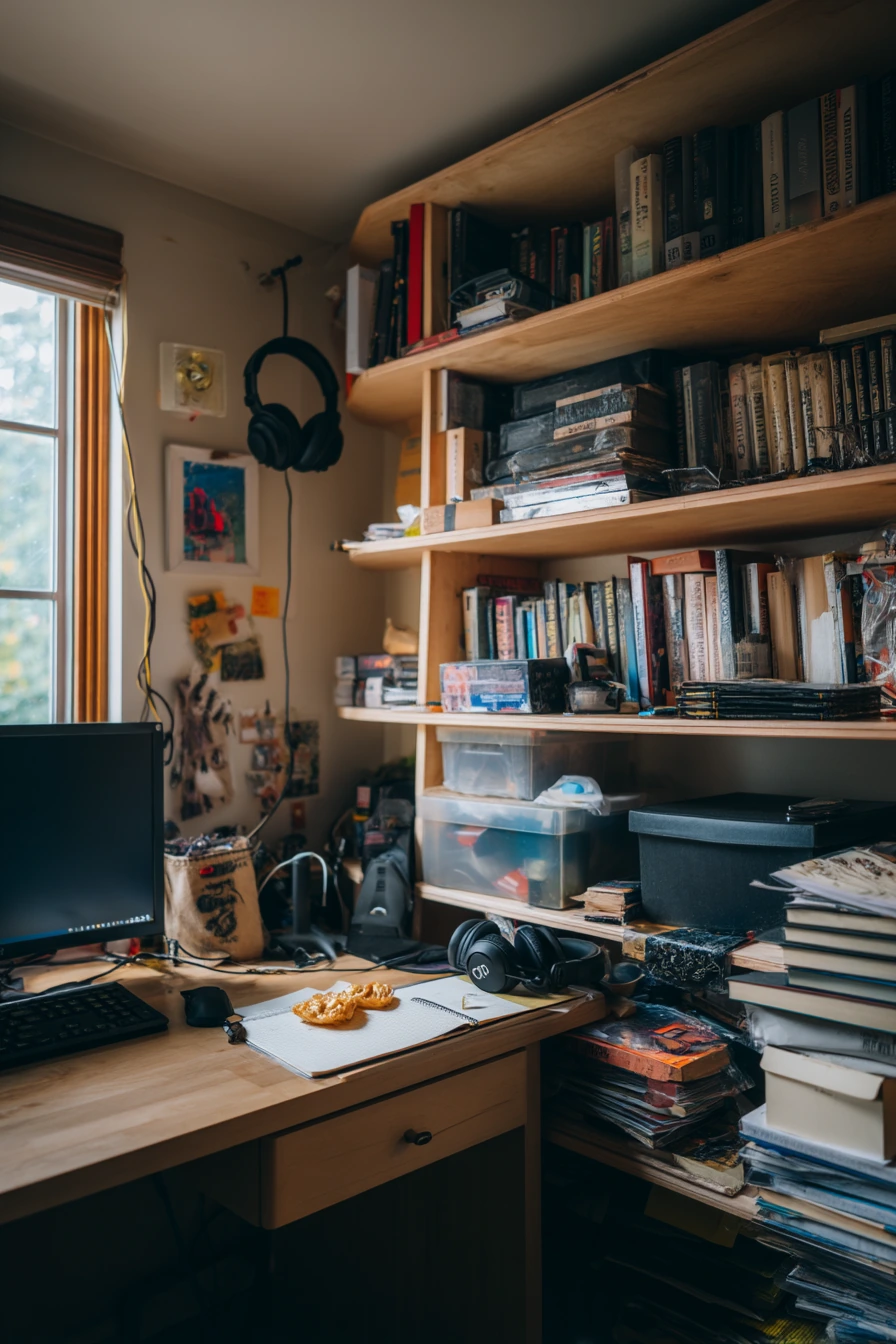
Teen-friendly basement shelving ideas need to support school work, hobbies, and a bit of personal style. Open shelves can hold textbooks, art supplies, headphones, and stacked shoe boxes without feeling too precious. A desktop monitor and a few framed prints make the corner feel like their own zone.
Keep the setup honest and functional. A notebook with scribbles, a charging cable, and a half-finished snack on the desk are common, so plan for quick resets. Add a small trash can and a snack bin, and keep wipes in a drawer so crumbs do not turn into bugs. Use one shelf for “today’s stuff” and one shelf for “store it” so the surface stays open for homework.
For styling, let the teen choose one color accent, like black, green, or blue, and repeat it in a bin, a desk mat, and a folder set. Gentle window light can be moody, so add a task lamp to reduce eye strain. Use bookends and file holders so papers do not slump. Shoe boxes look cleaner when they match, or when they are hidden in larger fabric bins.
- Use open bins for art supplies and notebooks.
- Add a cord clip or box to manage charging cables.
- Store textbooks upright with sturdy bookends.
- Keep shoe boxes on one shelf or inside a big bin.
- Set a “reset basket” for loose items and snacks.
Pro Design Tip: Keep the desk wall shelves shallow, so they do not crowd the work area and everything stays within reach without knocking items over.
Budget Considerations: Matching bins and organizers can be done slowly; start with a few key pieces like a file holder and cord box, then add more later.
10. Built-In Basement Shelving for Pets, Linens, and Cleaning Supplies

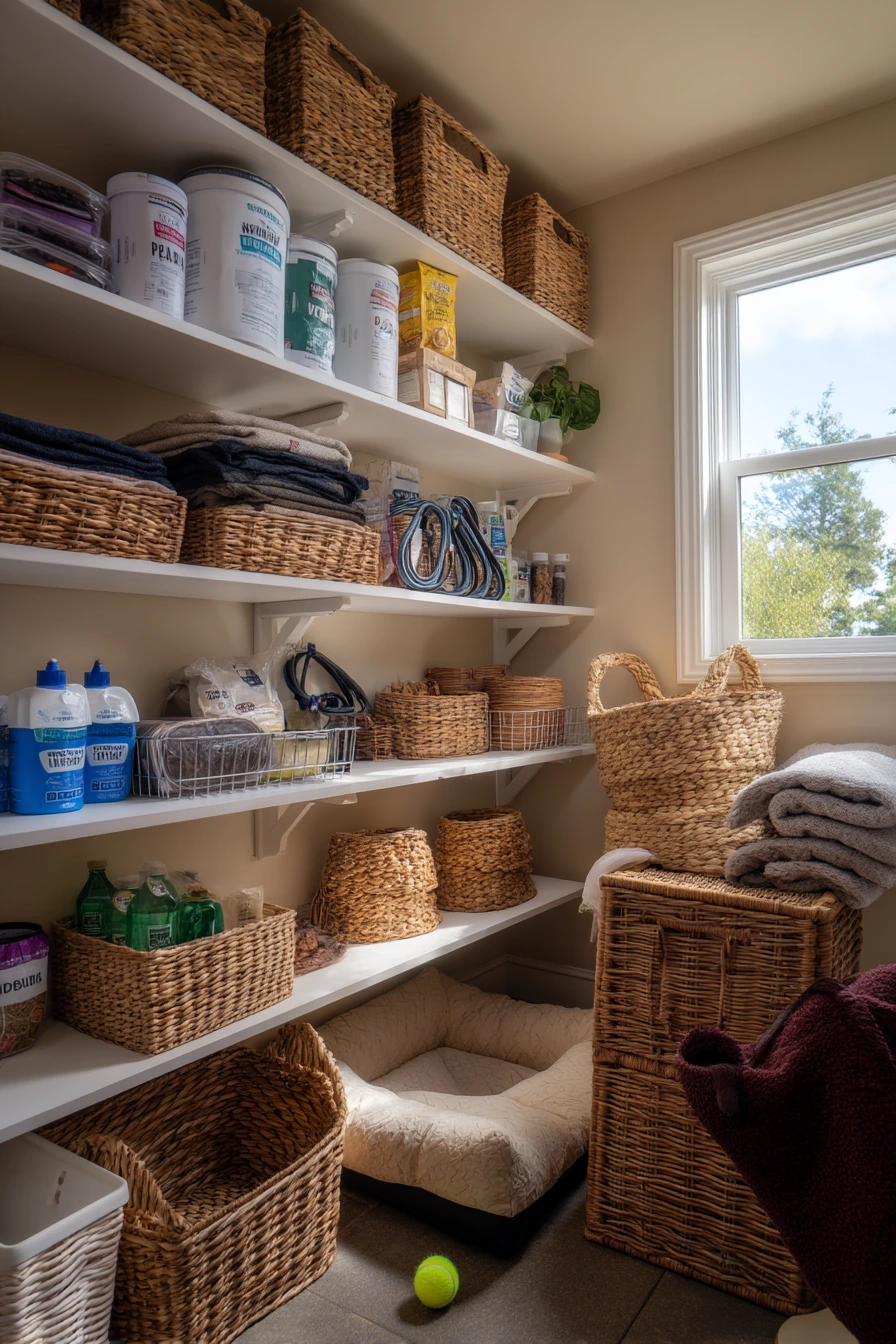
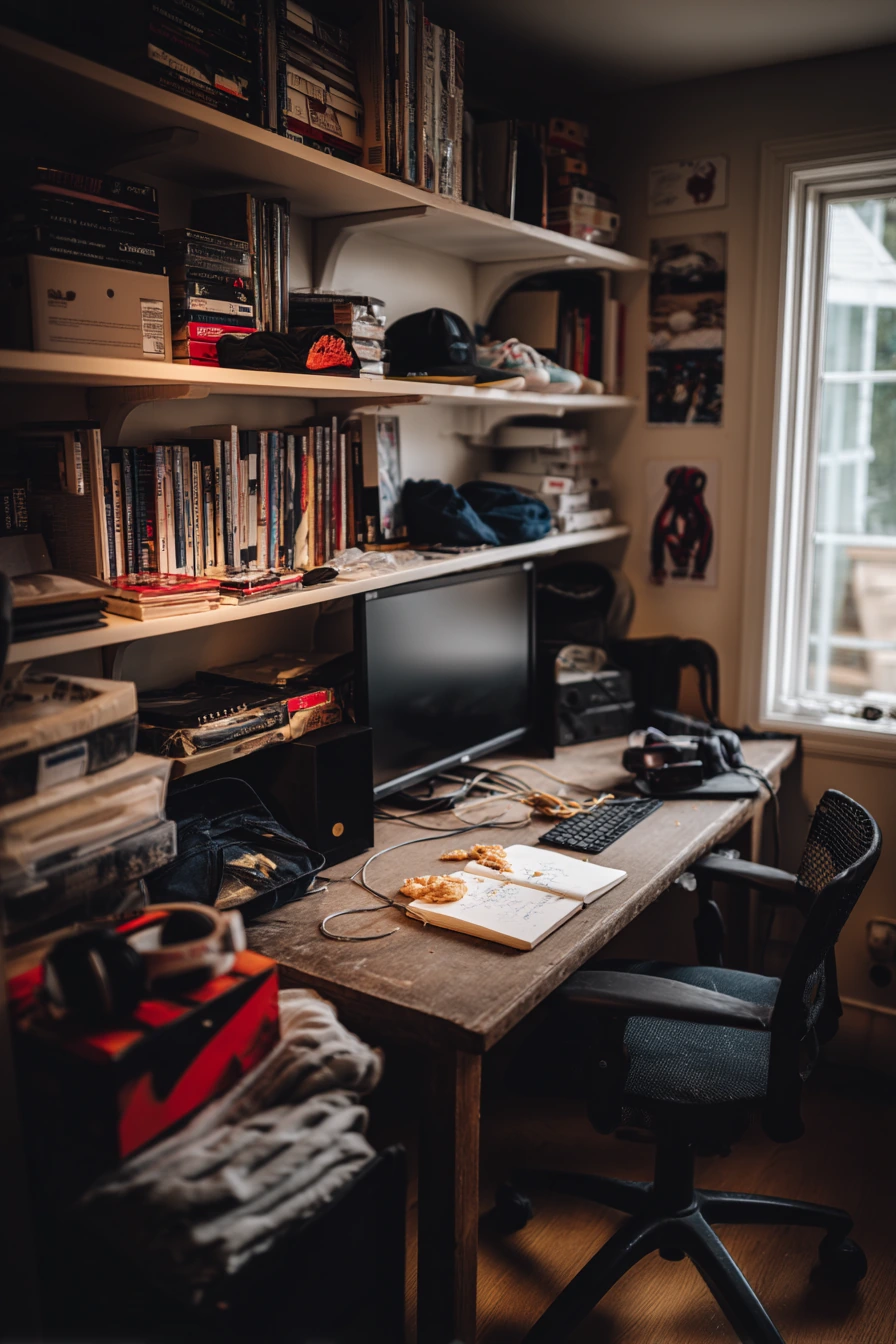
In a busy household, basement shelving ideas often need to cover many categories at once. Built-in shelves can hold dog food containers, leashes, cleaning supplies, baskets of extra linens, and spare toiletries. A pet bed below, a folded blanket, and a dropped tennis ball make the space feel like it is used daily.
Start with safety and cleanliness. Store cleaning products up high or in a locked bin, especially if kids or pets use the basement. Use sealed containers for pet food to keep it fresh and to prevent pests. Put leashes and waste bags in one grab spot near the stairs or door so walks are easy. Keep linens in baskets with labels like “guest towels” and “extra sheets” so you do not dig.
To style a mixed-use shelf wall, stick to one basket type and one label style, then separate zones by shelf. Soft morning window light helps, but add a small lamp if the area is dark. Put the pet zone on the bottom, the cleaning zone on one side, and the linens in the center for a calmer look. Leave a little open space for overflow, because real homes need it.
- Use airtight containers for dog food and treats.
- Store leashes and collars in a labeled basket or hook bin.
- Keep cleaning supplies in a high shelf or closed tote.
- Label linen baskets by item and size.
- Make a small pet corner with a bed and toy bin.
Pro Design Tip: Use shelf dividers or bins as “walls” between zones, so pet items and toiletries do not mix and the system stays clear over time.
Budget Considerations: Built-ins cost more; a budget setup can use two tall shelves side by side with matching baskets to mimic a custom wall.
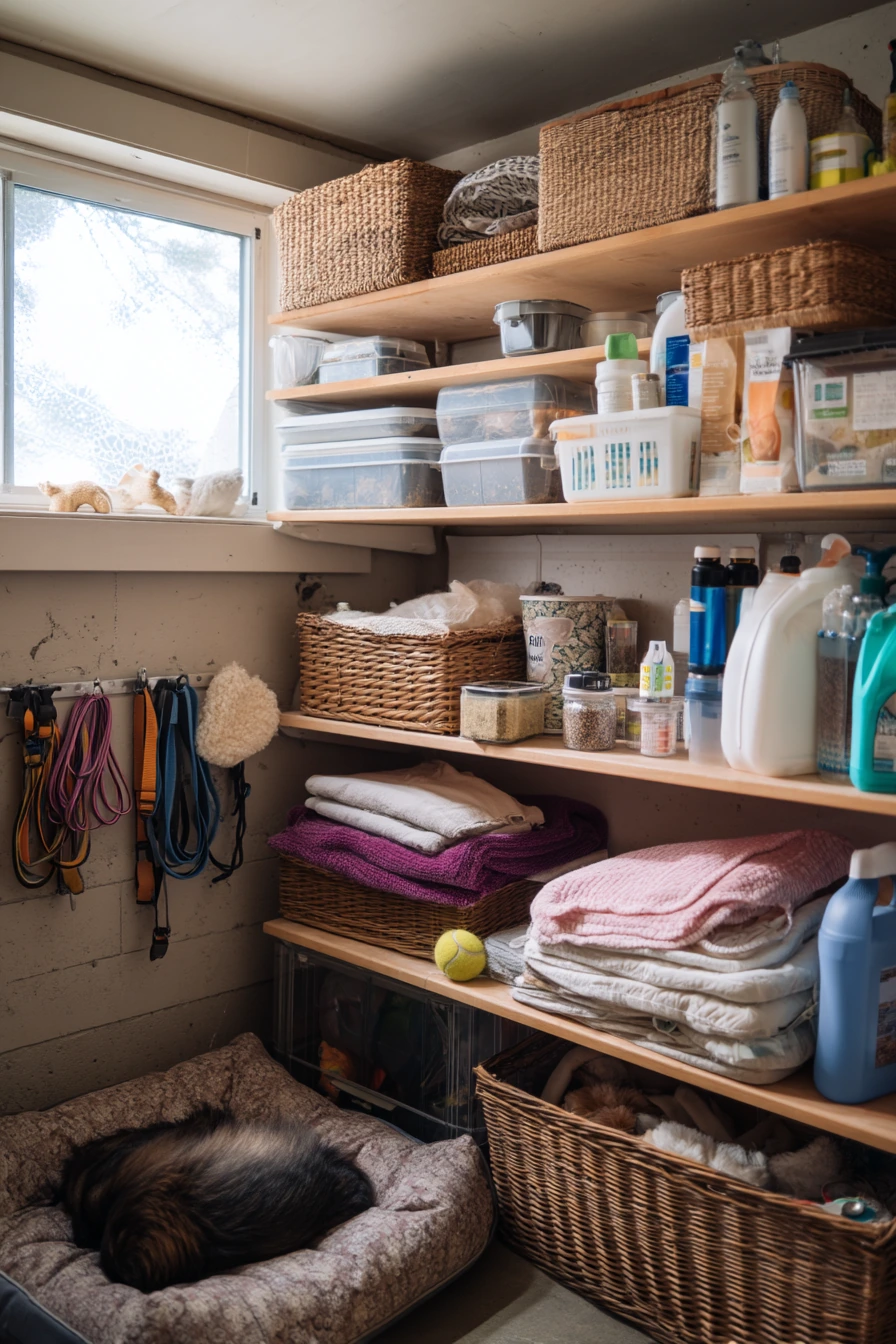

Basement shelving works best when it matches how your home really runs. Start with one problem area, like sports gear, seasonal bins, or the laundry corner, then build a simple system with labels and easy categories.
Use lighting, consistent bins, and a small drop zone to keep shelves looking neat even on busy days. With a few smart choices, your basement can feel calmer and be easier to use.
FAQ
What is the best shelving for a damp basement? Metal shelving or sealed plastic units handle moisture well. Use a dehumidifier and keep items in lidded bins.
Should I use clear bins or opaque baskets? Clear bins are best for seasonal storage you do not open often. Opaque baskets look cleaner in living areas like a rec room or media space.
How do I keep basement shelves from looking messy? Use fewer categories, repeat the same bin style, and leave some empty space. Add labels so everything has a clear home.
How high should heavy items be stored? Keep heavy items on lower shelves, ideally below waist height. This is safer and reduces strain.
Can renters install basement shelving? Yes, freestanding shelves and stackable cubes work well. For safety, use anti-tip straps when allowed.
How do I organize sports gear on shelves? Use mesh bins for airflow, a bottom tray for muddy shoes, and labels by sport or season. Add hooks nearby for bags and helmets.