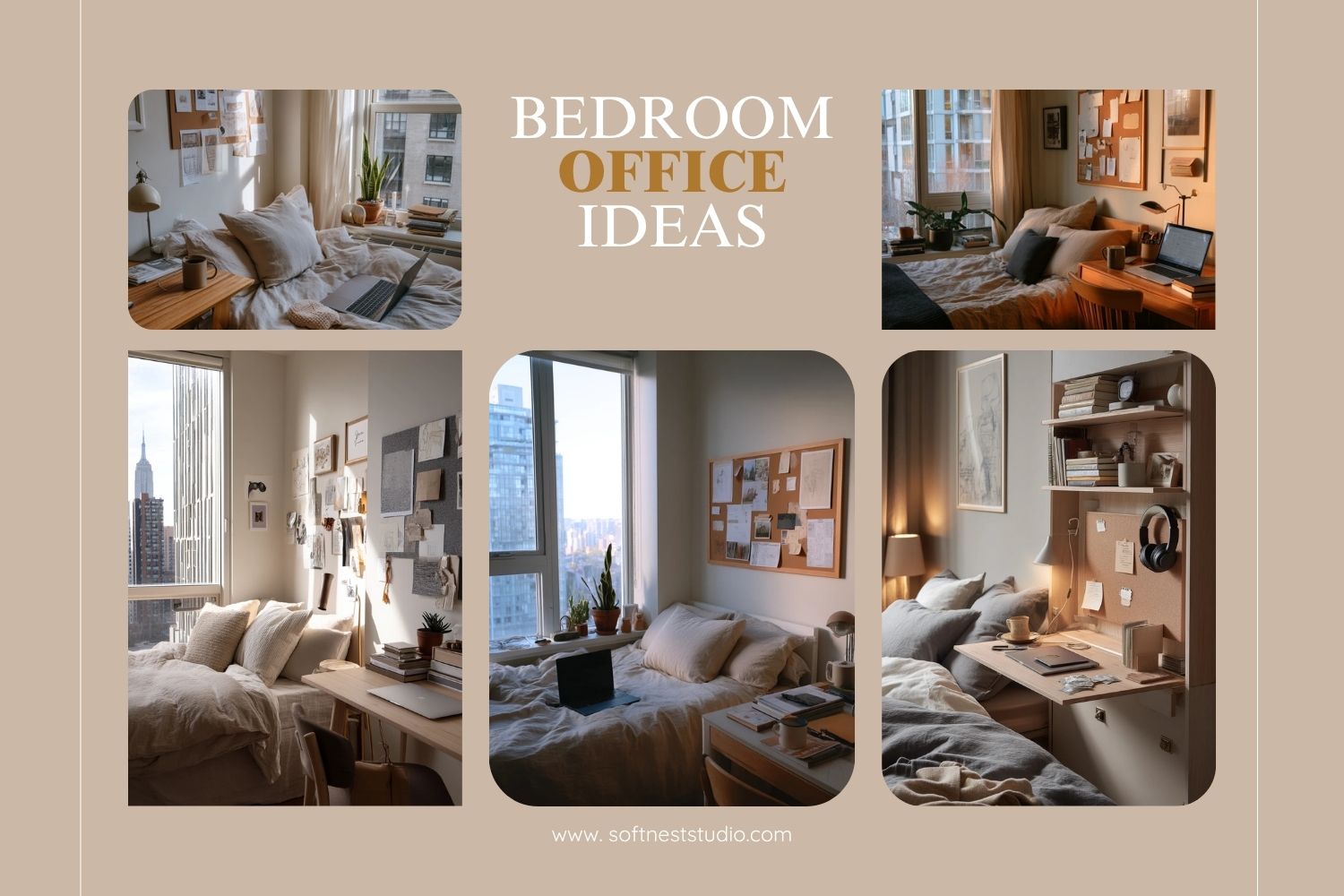
Bedroom office ideas can help you work from home without giving up a calm place to sleep. When your desk is a few feet from your bed, layout and habits matter.
This guide shows 10 realistic bedroom office setups, from a one-bedroom apartment with a slim oak desk by the window to a studio with a fold-down desk beside a wardrobe. Each one is designed to look lived-in and still feel tidy.
You will get simple layout choices, styling tips, and small upgrades that make your space feel more focused. Each section includes a pro design tip and a budget note so you can pick what fits your room and your wallet.
If you came from Pinterest, use this post like a checklist. Match a setup to your bedroom size, light, and storage, then copy the details like task lighting, pinboards, and charging cable control.
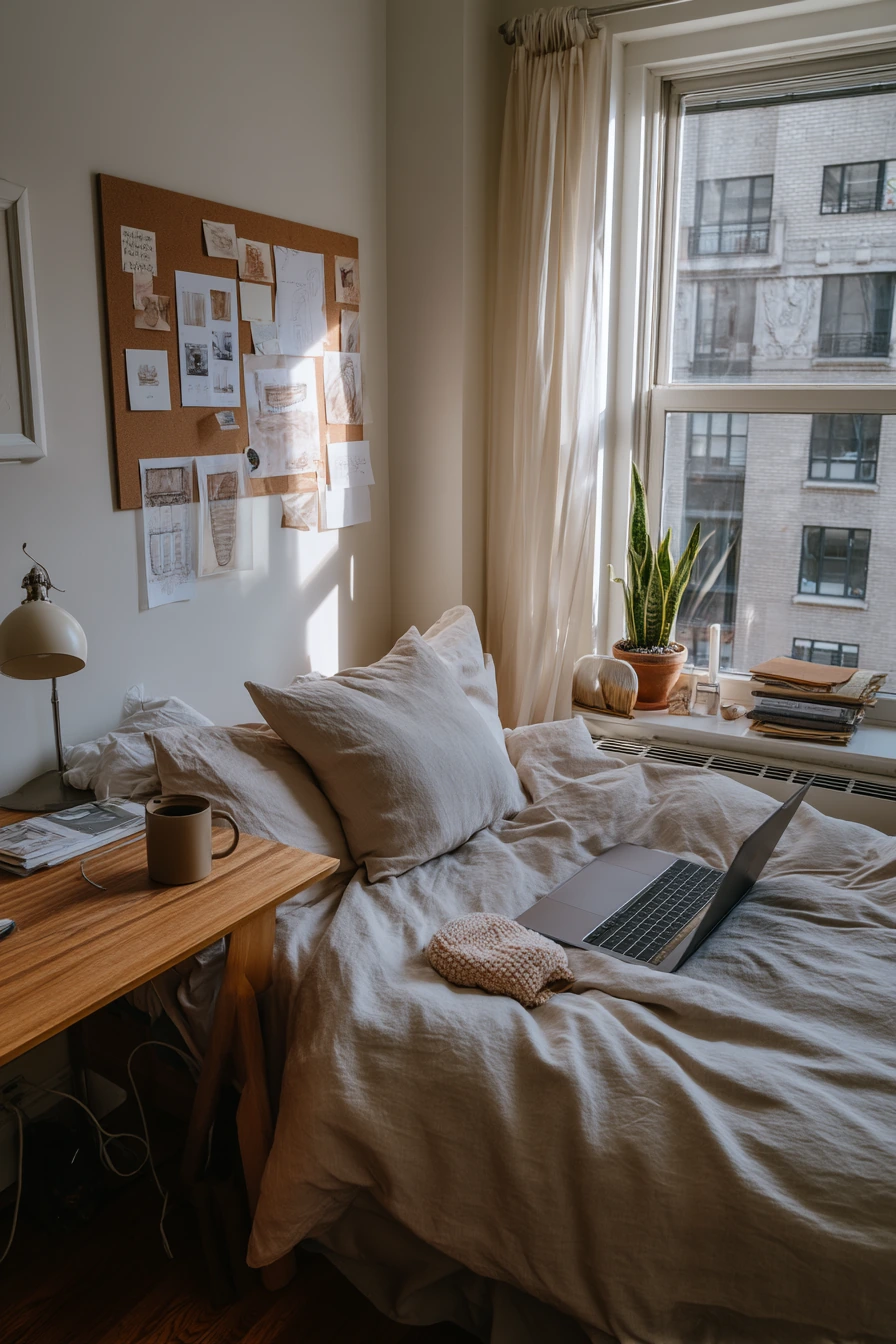
1. One-Bedroom Bedroom Office With a Slim Desk by the Window


This one-bedroom apartment bedroom office works well for a remote designer because it keeps the room practical and uncluttered. Put the queen bed on one side and a slim oak desk by the window. The window spot gives you soft morning light for calls and makes the desk feel less like it is taking over the room.
Style the desk like a real work zone, not a display. A compact task lamp, stacked notebooks, a ceramic mug, and a half-open laptop look natural and help you stay ready to work. Add a pinboard with sketches above or beside the desk so ideas stay off the bed. A small snake plant is enough greenery without crowding the surface.
Keep the calm look by managing the charging cable draped from the desk. Use a stick-on clip under the desktop so cords drop in one place. For bedding, tactile linen in a simple color helps the sleep area feel separate from the work area. If your desk faces the bed, angle the chair slightly so your eyes land on the window instead of the pillows.
- Choose a desk depth of about 16 to 20 inches to keep the walkway open.
- Place the task lamp on the side opposite your writing hand to reduce shadows.
- Use a pinboard for sketches and a small tray for pens to prevent desk clutter.
- Add one plant and one framed item to keep the look simple.
- Use a slim bedside table so the bed side stays airy.
Pro Design Tip: Keep the desk and bedding in the same warm wood and linen tones so the room reads as one calm space, then use black or brass only for small accents like the lamp.
Budget Considerations: A basic oak-look desk and linen blend bedding can give the same feel as solid oak and full linen, and a cork pinboard is a low-cost way to add function.
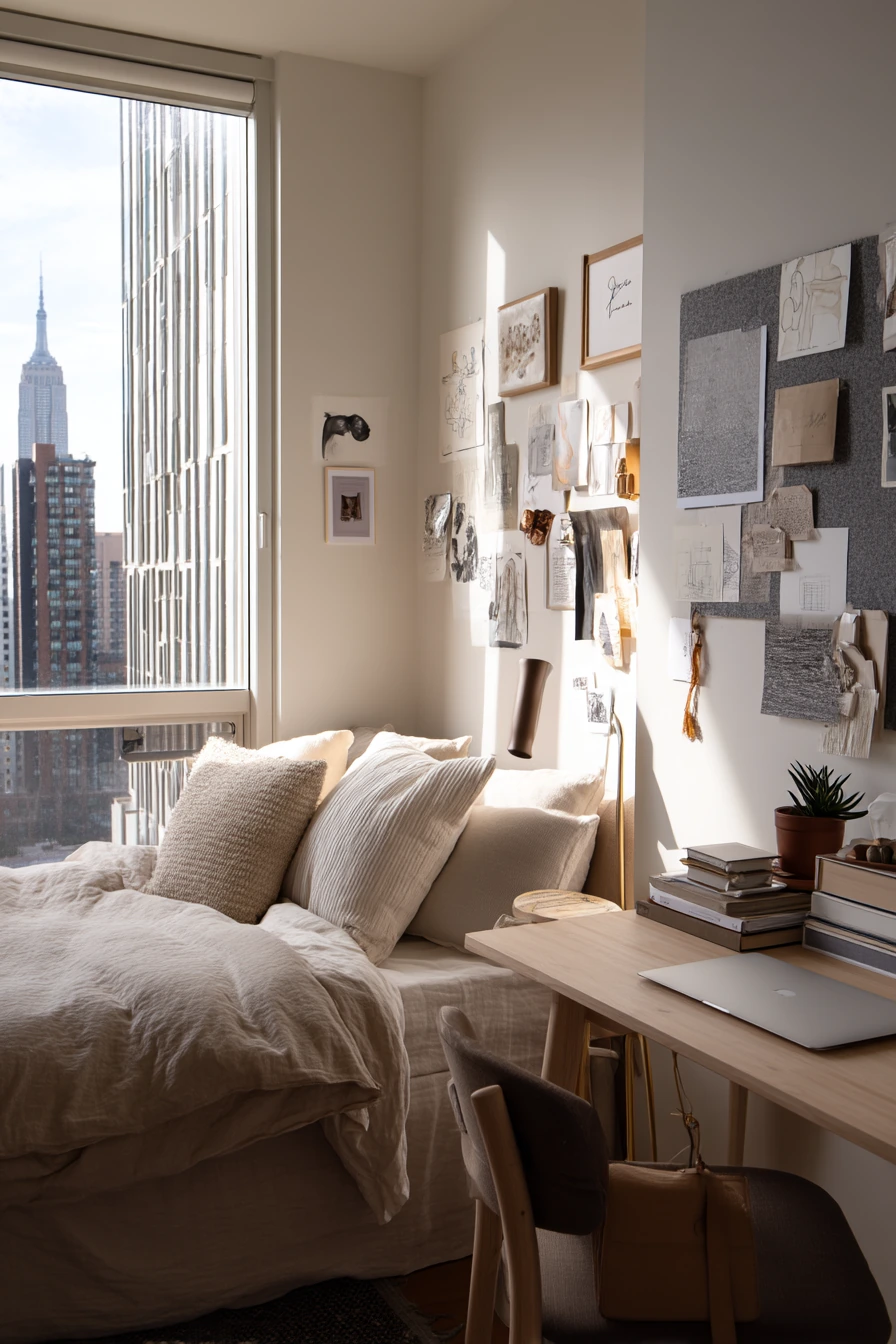
2. Studio Bedroom Office With a Wall-Mounted Fold-Down Desk
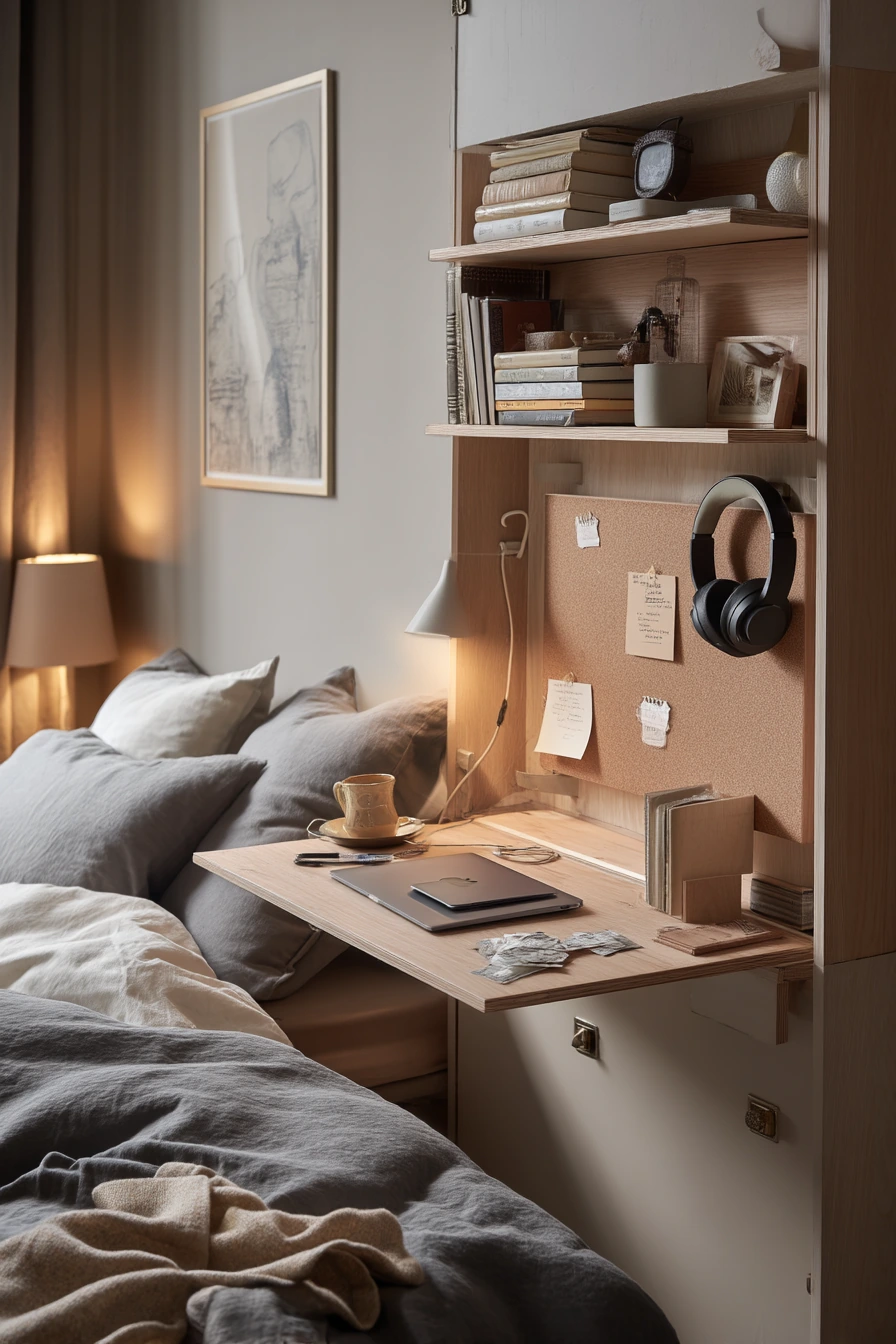
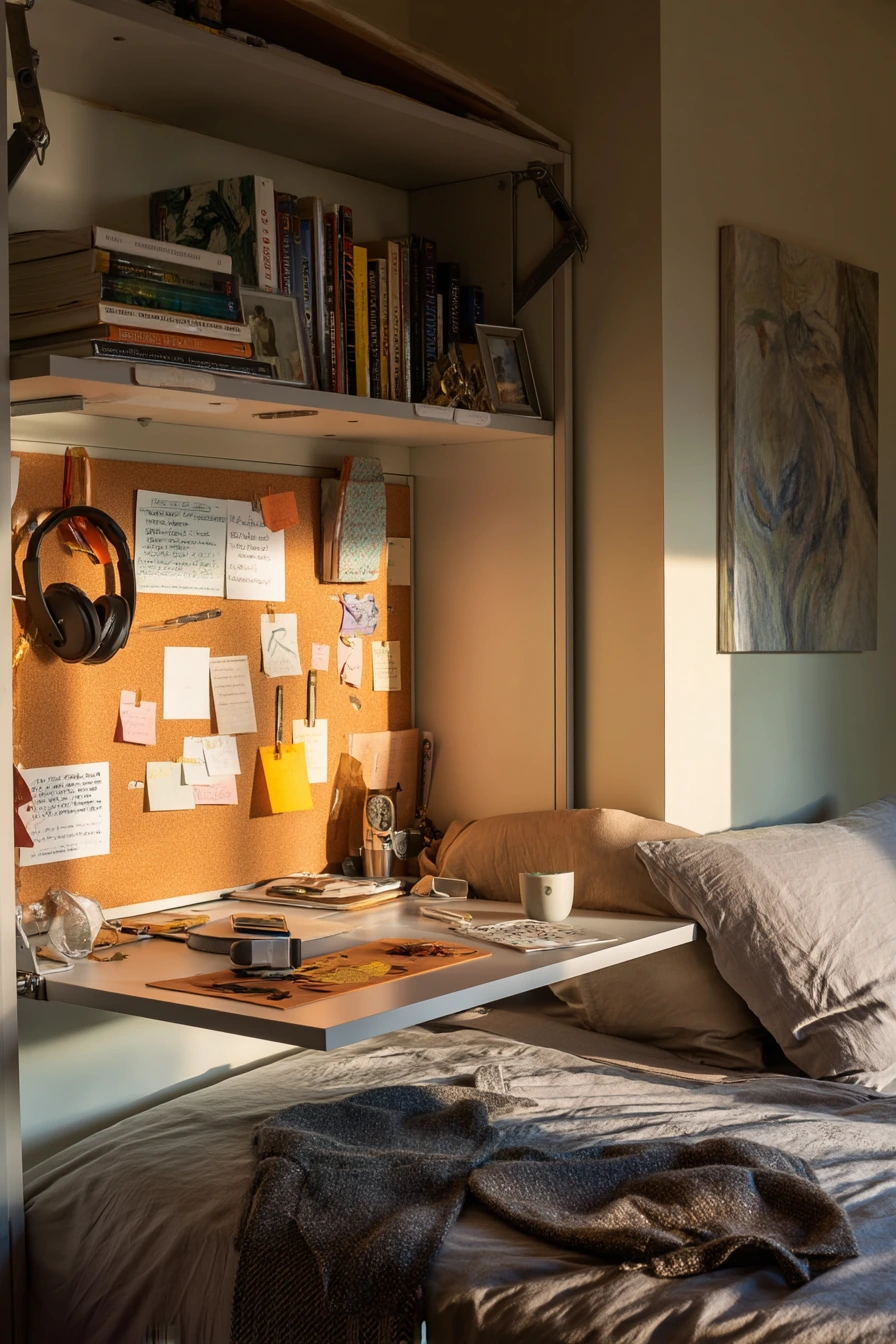
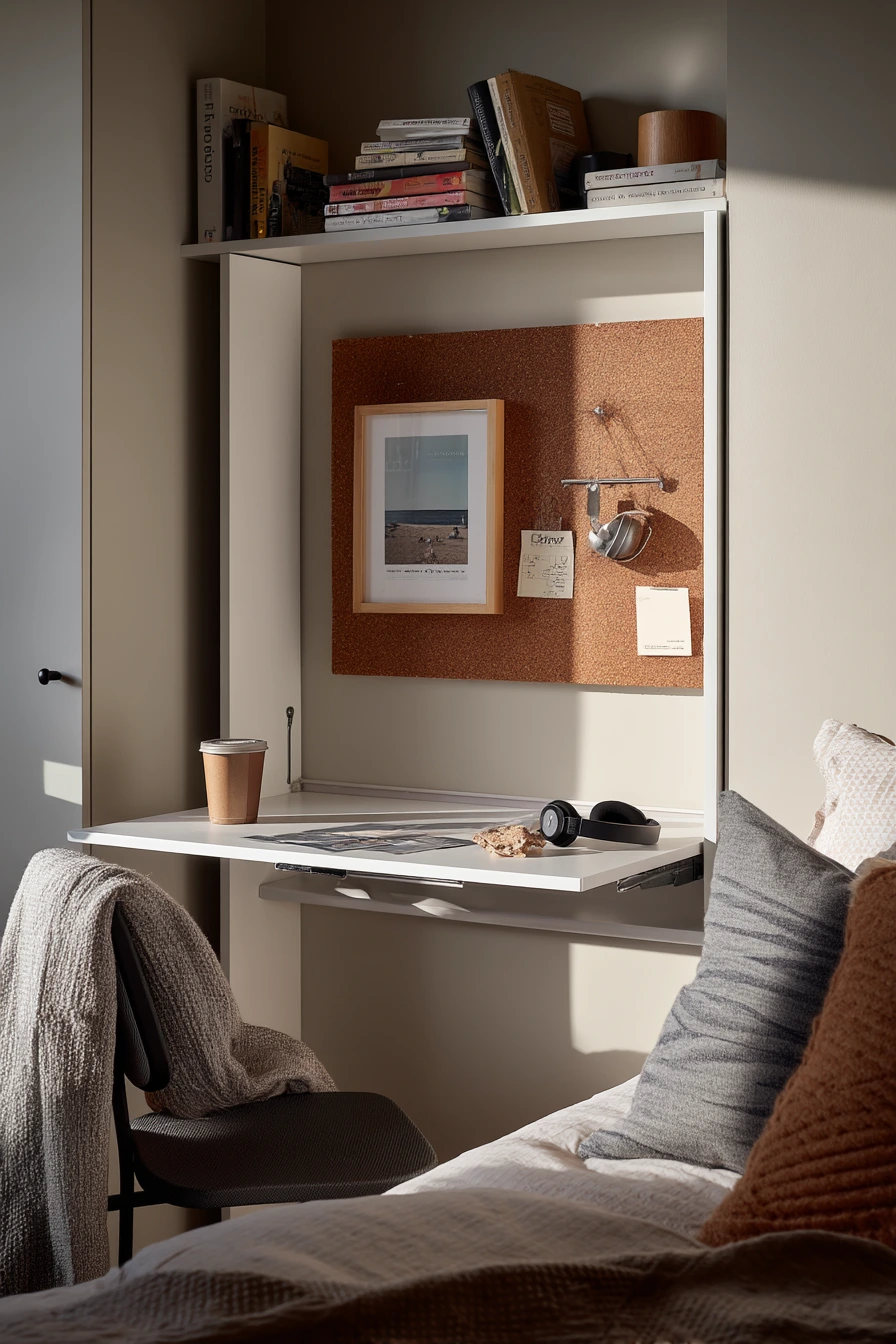
A studio-bedroom office setup needs one big win: you should be able to close work at the end of the day. A wall-mounted fold-down desk beside a wardrobe does that. When you fold it up, the bed tucked close feels like the main focus again, not the laptop.
To make this space feel lived-in but not messy, use floating shelves for books, a framed print, and a small tray for headphones. Keep a coffee cup spot and a tiny catch-all for a receipt pile, so paper does not spread across the bed. A corkboard with notes can sit above the desk, which keeps reminders in your eye line without adding more desk clutter.
Lighting matters in a studio. Mix a warm lamp glow with soft daylight so the corner does not feel harsh. Place the lamp so it bounces light onto the wall, not straight into your face. If the throw on the bed is slightly wrinkled, that is fine, but keep the color close to your bedding so it looks intentional. When the desk is folded down, use one slim chair that can slide under the wardrobe edge or double as a bedside chair.
- Pick a fold-down desk with a strong hinge and a shallow profile.
- Use floating shelves to hold books and keep the desktop clear.
- Hang a corkboard for notes and to-do lists near the desk.
- Add one warm lamp to balance daylight in the corner.
- Create a “paper home” using a small file box or tray for receipts.
Pro Design Tip: Keep the wall behind the fold-down desk light and plain so the corner feels larger when the desk is open and when it is closed.
Budget Considerations: A basic fold-down desk and inexpensive floating shelves can create the same function as built-ins, and you can frame cheap art prints to make the wall look finished.

3. Shared Bedroom Office for a Couple With Two Slim Workstations


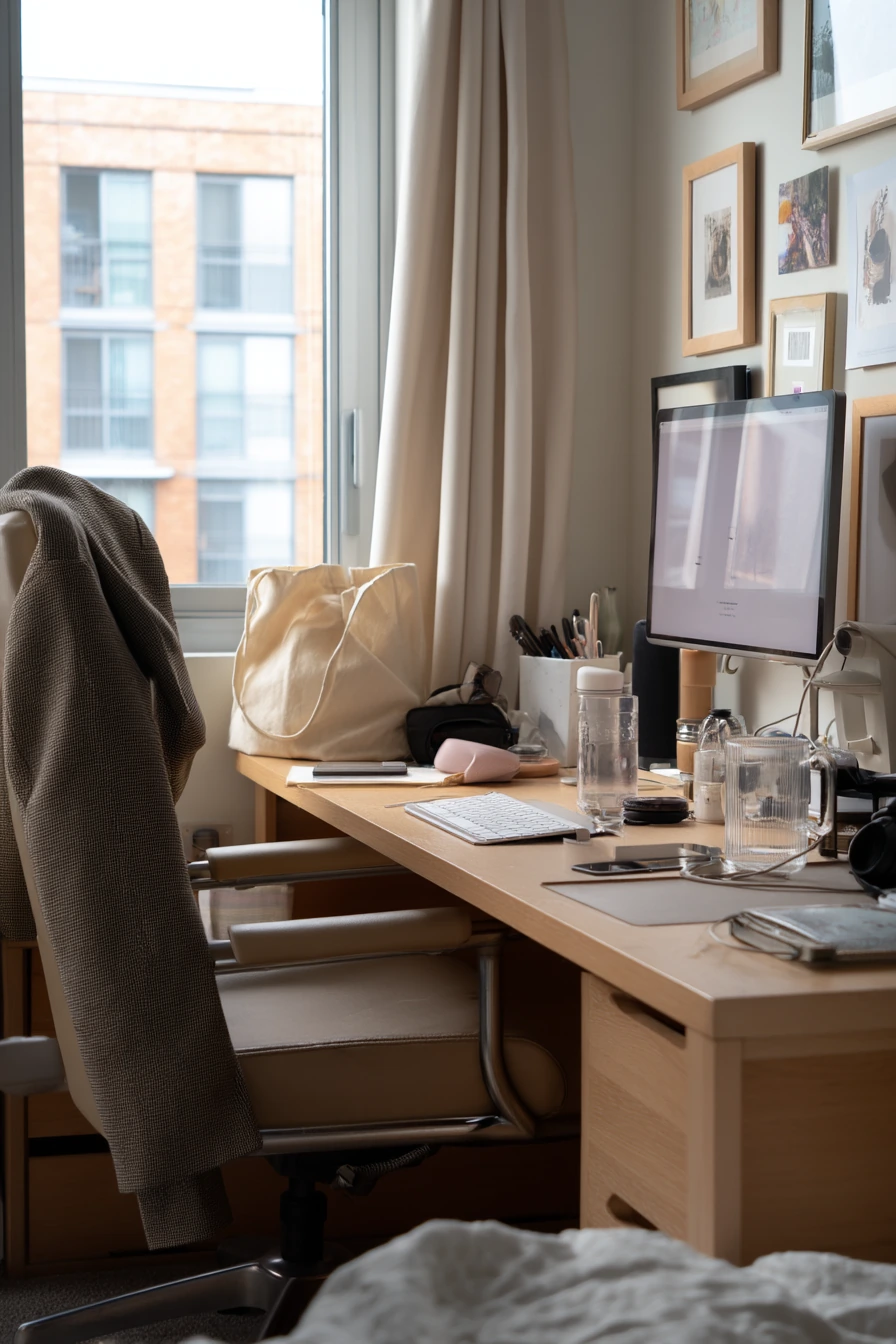
A shared bedroom office for a couple needs clear zones so you do not feel on top of each other. Two slim workstations separated by a low dresser is a smart layout. The dresser acts like a buffer, holds supplies, and gives both people a little privacy without blocking light.
Keep the decor muted oak and cream so the space feels restful at night. Let each desk match the person using it: one desk can hold a monitor and wireless keyboard, while the other can be set up for a sketchpad and drawing tools. The key is to keep surfaces “ready,” not packed. Small real-life details like a water glass, phone charger, tote bag, and tangled earbuds belong in containers so they look casual but controlled.
Pay attention to chair space and traffic. If a folded blazer hangs on the chair, make sure it does not touch the bed to avoid a cluttered look. Put a small basket near each desk for cables and chargers, and label them if you share devices. Use gentle window light to your advantage by placing the monitor desk at a slight angle to reduce glare. At night, use two small task lights instead of one bright overhead bulb so each person can work without waking the other.
- Use a low dresser between desks to separate zones and add storage.
- Choose slim desks with similar wood tones for a unified look.
- Store earbuds, chargers, and small items in two labeled bins.
- Angle the monitor away from the window to cut screen glare.
- Use two task lamps so each person controls their own light.
Pro Design Tip: Repeat the same material twice, like oak desktops and cream chair cushions, so the shared setup looks planned even when each desk has different tools.
Budget Considerations: Two narrow desks can cost less than a double workstation, and a secondhand low dresser can work as the divider and storage piece.
4. Family Bedroom Office With a Compact Corner Desk and Real-Life Storage
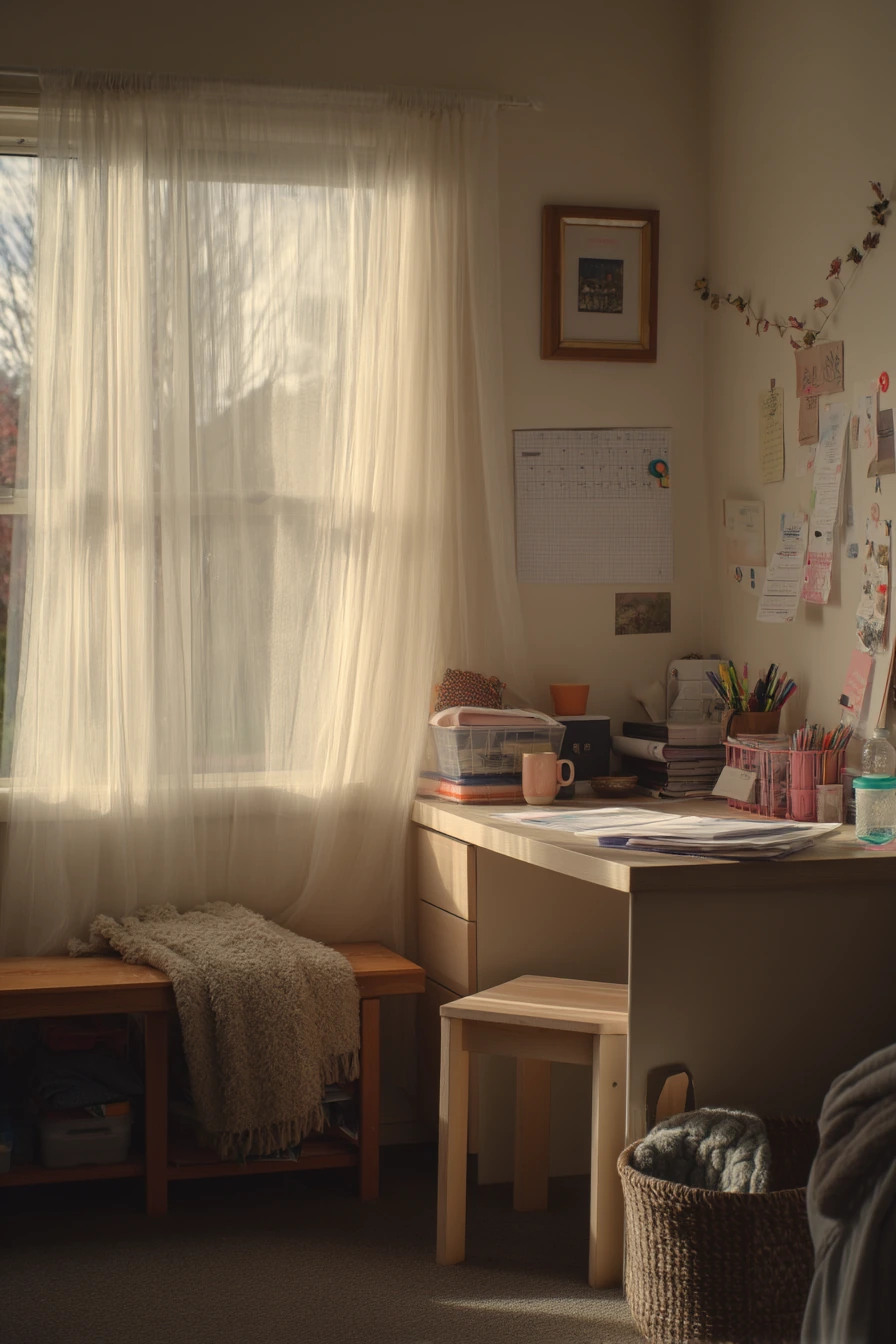

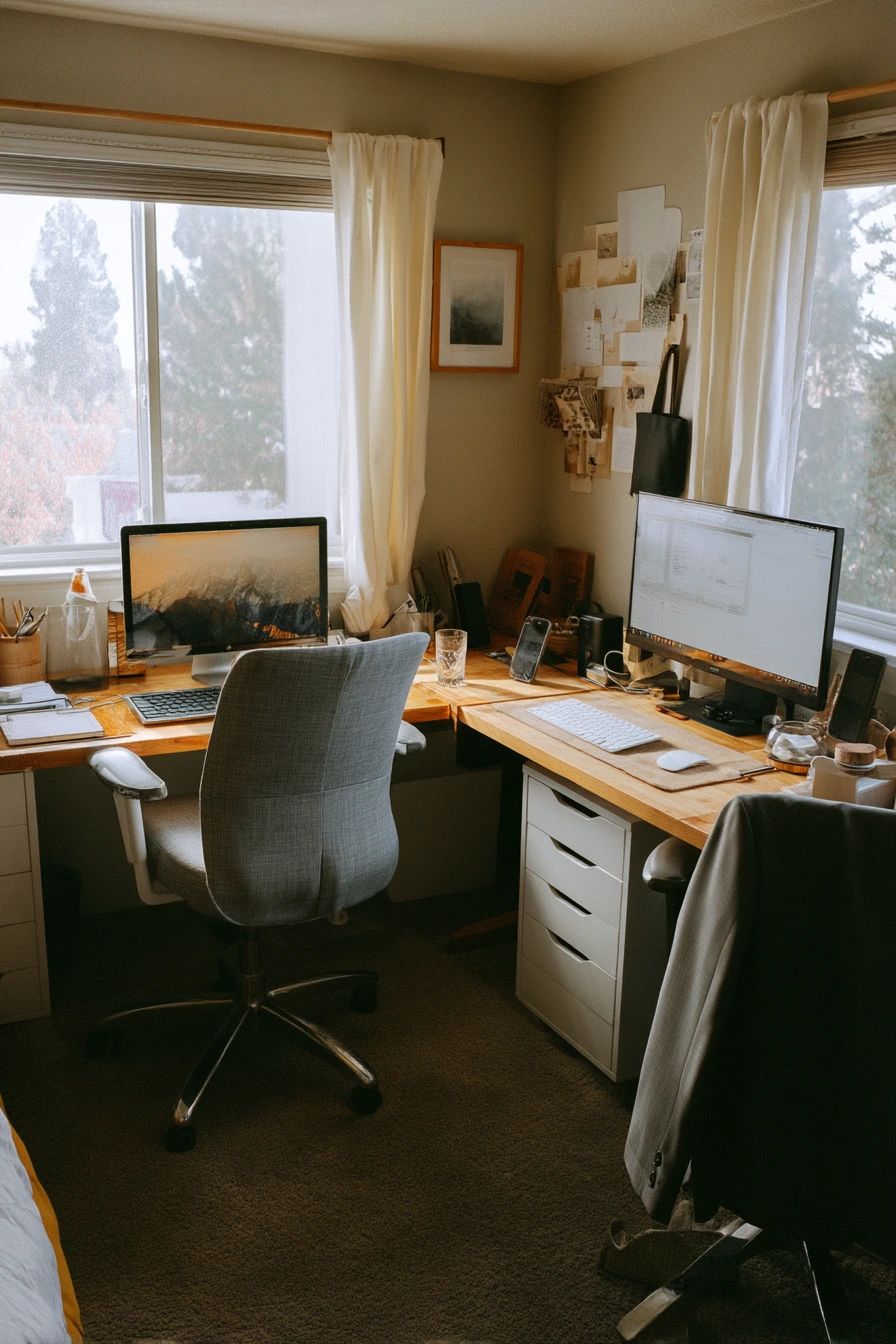
A family bedroom office has to handle work, paper, and kid stuff without feeling chaotic. A compact desk in the corner near the bed keeps the work zone contained. It also makes it easier to close your laptop and shift back into home mode.
Use the walls for planning. A family calendar on the wall and an open planner on the desk help you see the week at a glance. Keep school papers in one upright file holder so they do not spread. A pencil cup, a spot for a half-finished tea, and a small tray for keys are normal, but they need a home. Under a bench, tuck a kid toy basket so toys are easy to grab and easy to put away.
Soft daylight filtered through sheer curtains helps this setup feel calm and grounded. Choose a throw blanket that matches the bedding so the room still feels like a bedroom. If you can, keep the desk chair light and easy to move, so the corner can flex for packing, folding laundry, or bedtime routines. The goal is “orderly but real,” not perfect. Create a 5-minute reset routine: put papers in the file, toss toys in the basket, and clear the mug.
- Pick a small corner desk with drawers or add a rolling cart beside it.
- Hang a family calendar at eye level near the desk.
- Use a file holder for school papers and mail.
- Store toys in one basket under a bench for quick cleanup.
- Use sheer curtains to soften daylight and reduce screen glare.
Pro Design Tip: Use matching containers (one color or one material) for papers, toys, and supplies so the room looks calm even when it is busy.
Budget Considerations: A simple desk plus low-cost bins and a basic wall calendar can replace pricey built-in storage, and a thrifted bench can add hidden space.


5. Renter-Friendly Bedroom Office With No Permanent Changes
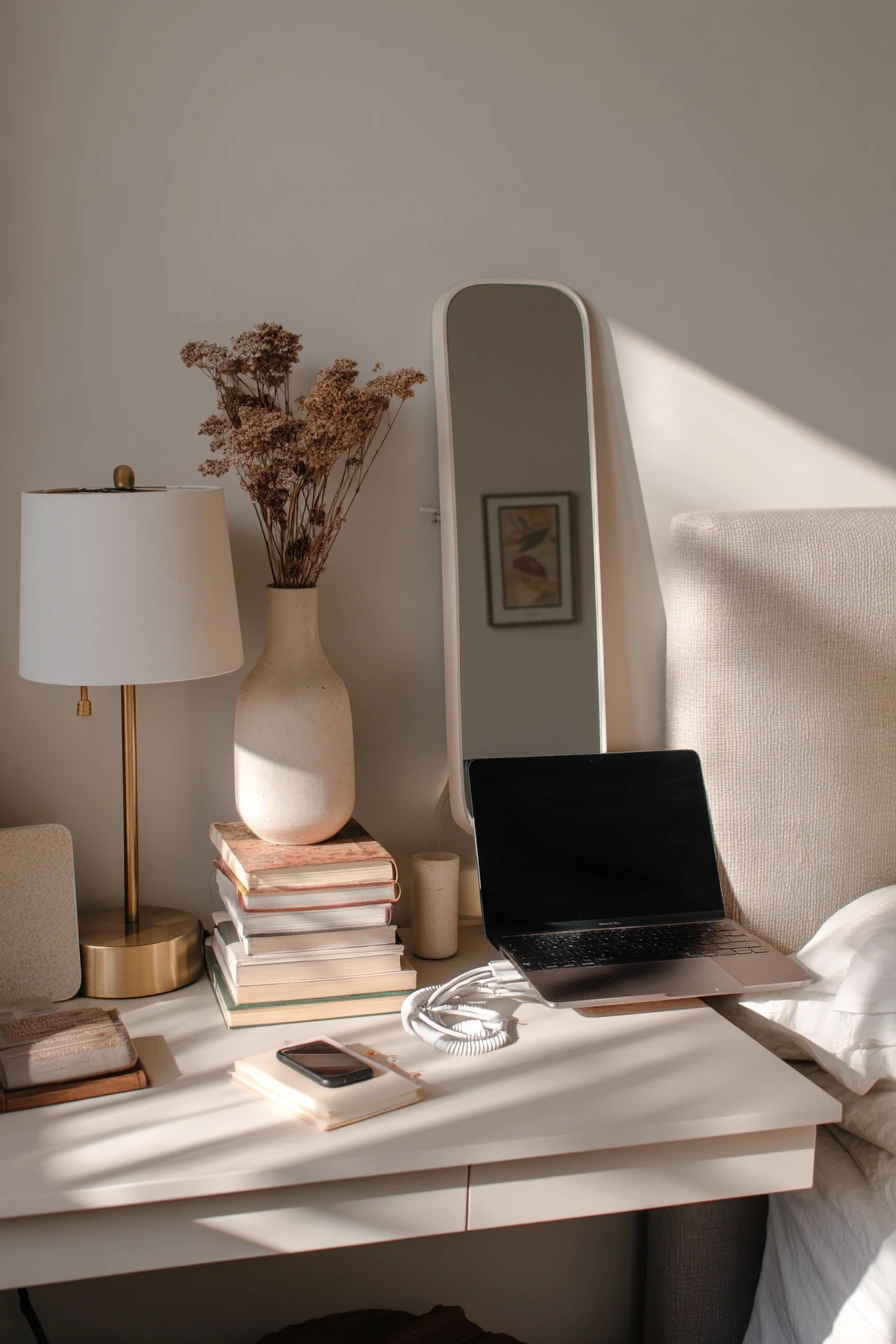
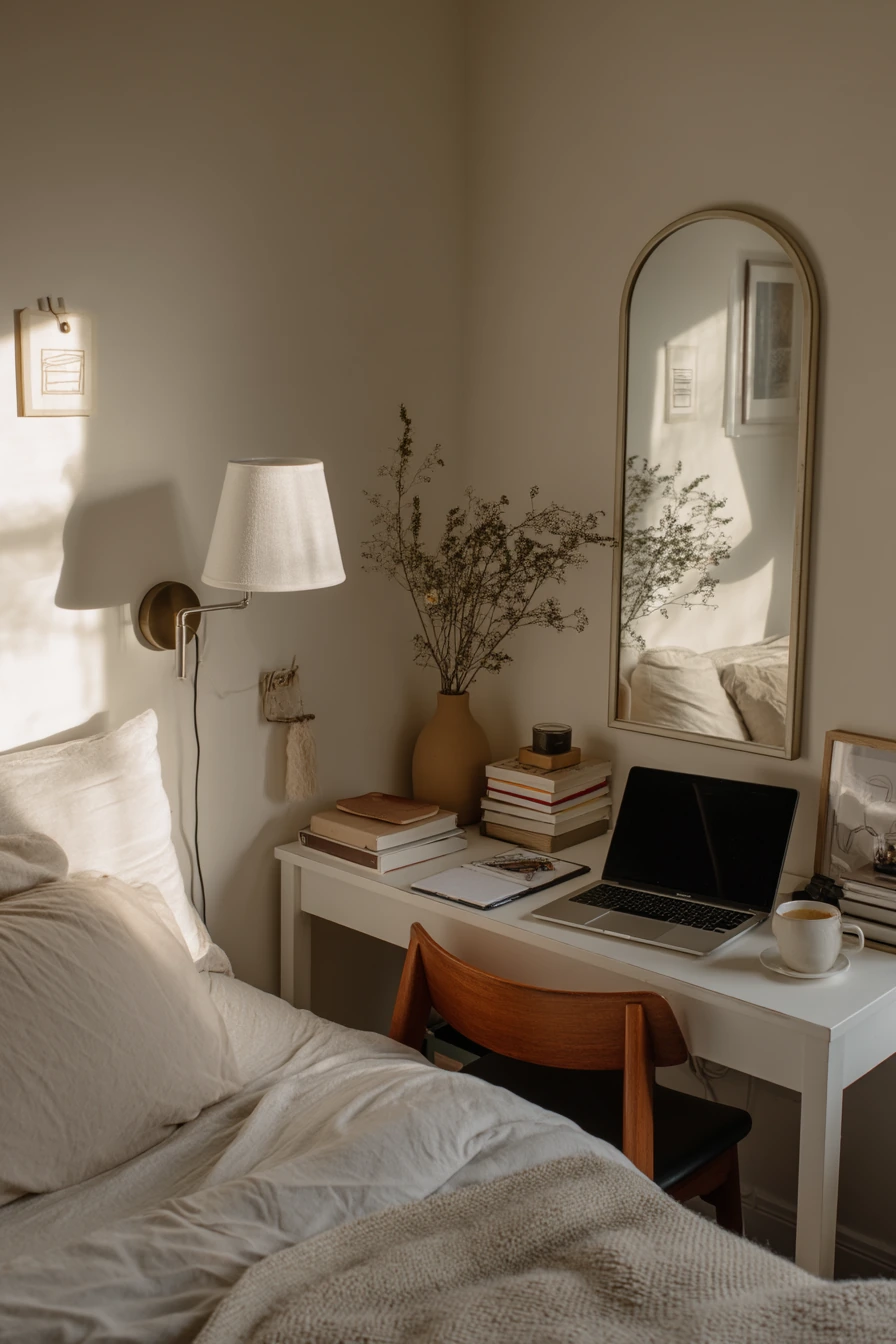
A renter-friendly bedroom office should feel finished without holes in the wall or big construction. Start with a slim freestanding desk that fits beside the bed or under a window. Add removable wall hooks for headphones, a tote, or a light jacket so the chair stays clear.
Lighting is easy to upgrade with a plug-in sconce. It gives you focused light without wiring, and it frees up desk space. Keep the desktop simple: a laptop stand, a phone cable, and a small stack of paperbacks is enough. A thrifted vase adds softness, and neutral bedding keeps the room from looking like a work cubicle.
For styling, add one leaning mirror to bounce light and make the room feel larger. Let subtle plant shadows on the wall do the decorating for you by placing a small plant near the window. Keep the look fresh but unperfected by allowing a few everyday items to show, as long as they are grouped. Use a lidded box or fabric bin under the desk for chargers and mail, and do a quick sweep at night so you do not wake up to work clutter.
- Choose a freestanding desk that can move with you.
- Use removable hooks to hang headphones and bags.
- Add a plug-in sconce for better light and more desk room.
- Use a laptop stand to improve posture in a small setup.
- Lean a mirror against the wall to reflect light and open the space.
Pro Design Tip: Group small items into “stations,” like a charging station and a writing station, so the desk reads as organized even when you use it daily.
Budget Considerations: Removable hooks, plug-in lights, and a secondhand mirror are low-cost upgrades that give big impact without risking your deposit.


6. Budget Bedroom Office With an IKEA-Style Desk and Secondhand Chair


A budget-conscious bedroom office can still feel good to use. Start with an IKEA-style desk or any simple table with a clean top. Pair it with a sturdy secondhand chair. Comfort matters more than the brand, especially if you work long hours.
Make the space functional with a few basics: a desk mat to define the work zone, a basic monitor if you need a bigger screen, and sticky notes for quick reminders. Add a woven storage basket under or beside the desk for extra cords, notebooks, and work gear. Real-life messiness happens, like a folded hoodie on the bed and a paperback novel nearby, so give those items a repeatable place to land.
Use light to make the room feel better. A mismatched lamp is fine if the bulb is warm and bright enough. Put a small pothos on the sill for a bit of green, and let the sunlit corner do the heavy lifting. If your desk is in a wide corner perspective, push it tight to the wall and keep the center of the room open. Finish with one small habit: at the end of the day, put the water bottle and sticky notes in the basket so your mind can switch off.
- Buy the desk new and the chair used to balance comfort and cost.
- Use a desk mat to protect the surface and reduce visual clutter.
- Store cords, papers, and extras in a woven basket.
- Upgrade the light bulb before you replace the lamp.
- Add one plant on the sill for color and a calmer feel.
Pro Design Tip: Keep one “clear zone” on the desk, about the size of your laptop, so you always have space to start work without rearranging.
Budget Considerations: A used chair, a low-cost monitor stand, and a simple basket can improve daily comfort without a full furniture upgrade.

7. Guest Bedroom Office That Doubles as a Work Zone
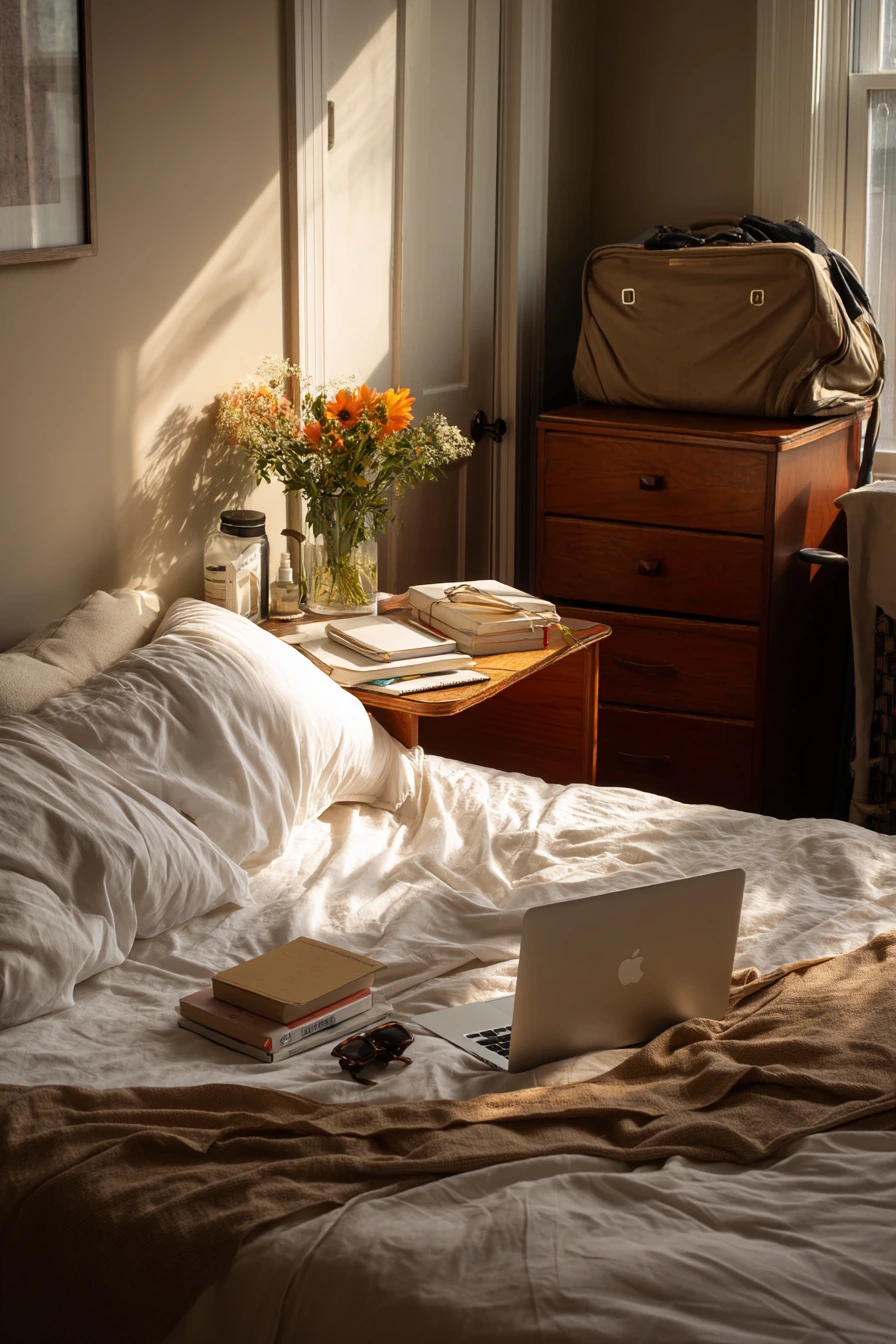
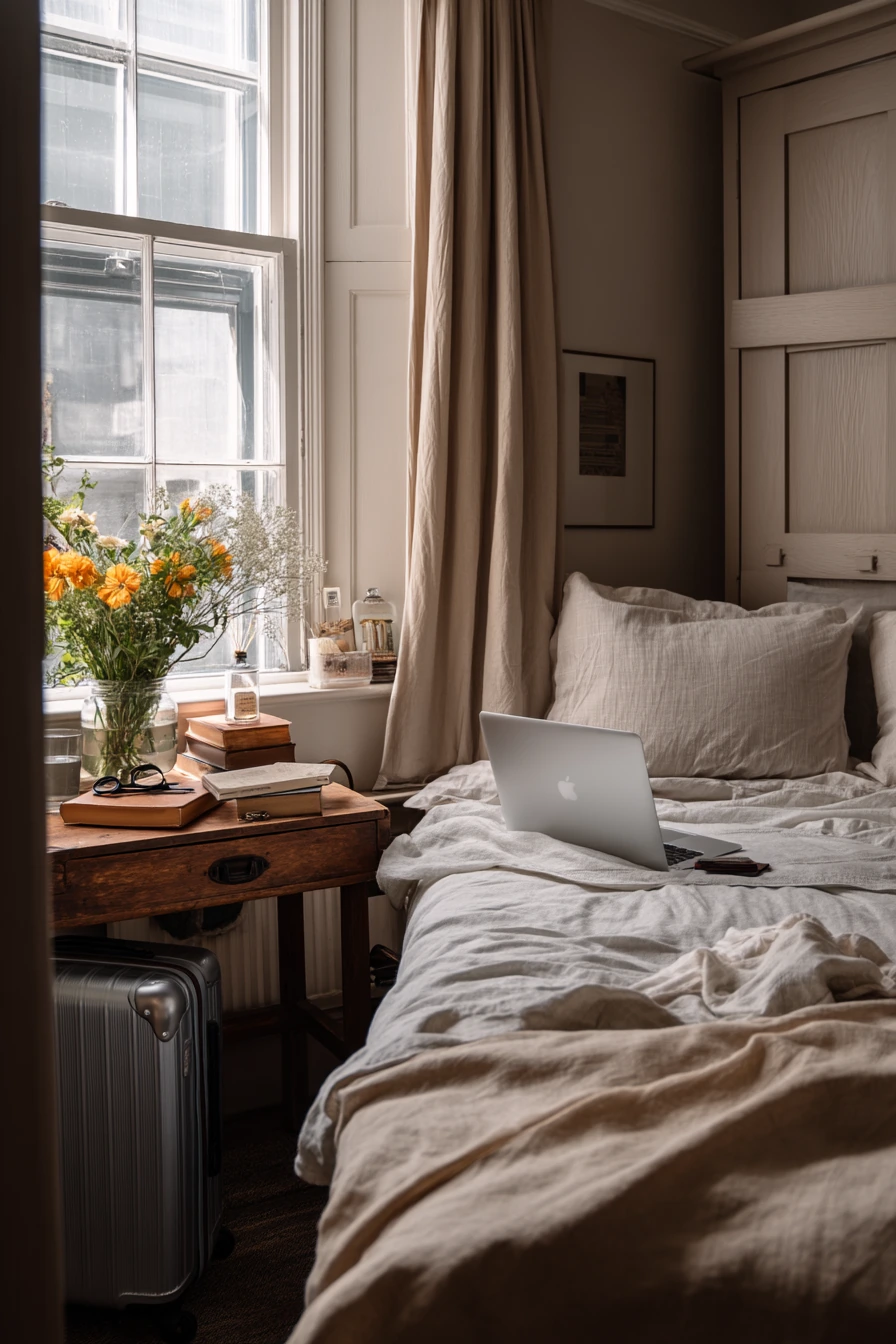
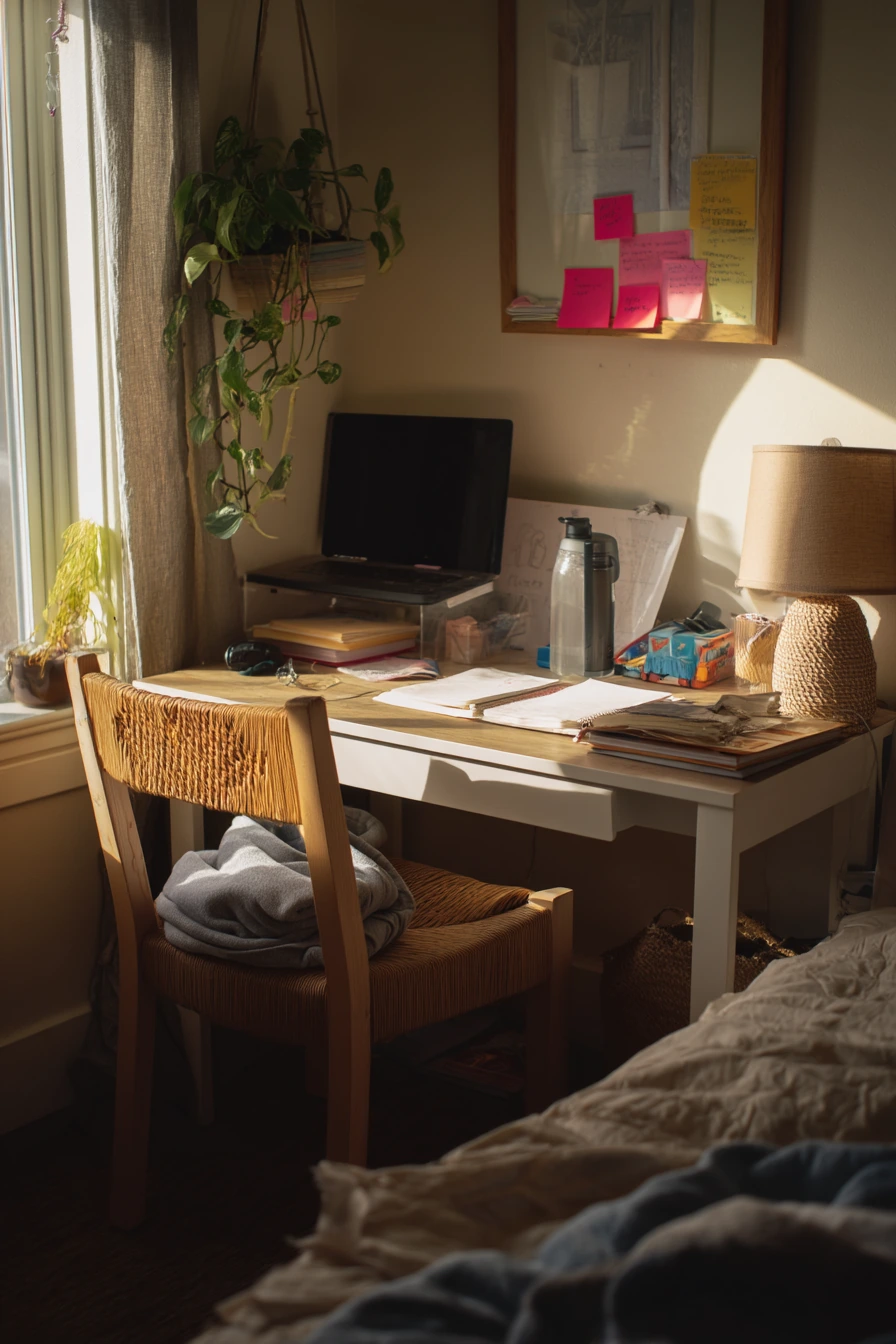
A guest bedroom that doubles as a work zone should feel welcoming first and practical second. Start with a tidy bed with crisp but slightly rumpled sheets so it looks real, not staged. Place a compact writing desk near the window so the workspace gets natural light and guests still have room to move.
Keep work items easy to hide. Use one drawer or a small box for your laptop charger, pens, and cords. When guests arrive, you can clear the top in two minutes. Add small touches that work for both modes: books, a notebook, reading glasses, and fresh flowers in a simple vase. A spare blanket at the foot of the bed adds comfort and also covers the chair if you want the room to read more like a bedroom.
Think about storage that does not shout “office.” A suitcase tucked beside the wardrobe is normal in a guest space, and it also shows guests where to put their bag. If you take video calls, hang a calm framed print behind the desk so your background looks tidy. Use warm morning light when possible, and add a soft lamp for evenings. The goal is multifunctional without feeling cramped.
- Use a small writing desk that can act as a vanity for guests.
- Keep cords and supplies in one box so you can clear the desk fast.
- Add fresh flowers or greenery for a welcoming look.
- Store a spare blanket where it can hide chair clutter if needed.
- Choose calm wall art behind the desk for a cleaner call background.
Pro Design Tip: Use matching containers on the desk (one tray, one pen cup) so the space looks intentional in both “guest” and “work” mode.
Budget Considerations: A small secondhand desk and a simple vase of grocery-store flowers can refresh the room without buying new furniture.


8. Creative Bedroom Office for an Illustrator With a Lived-In Desk

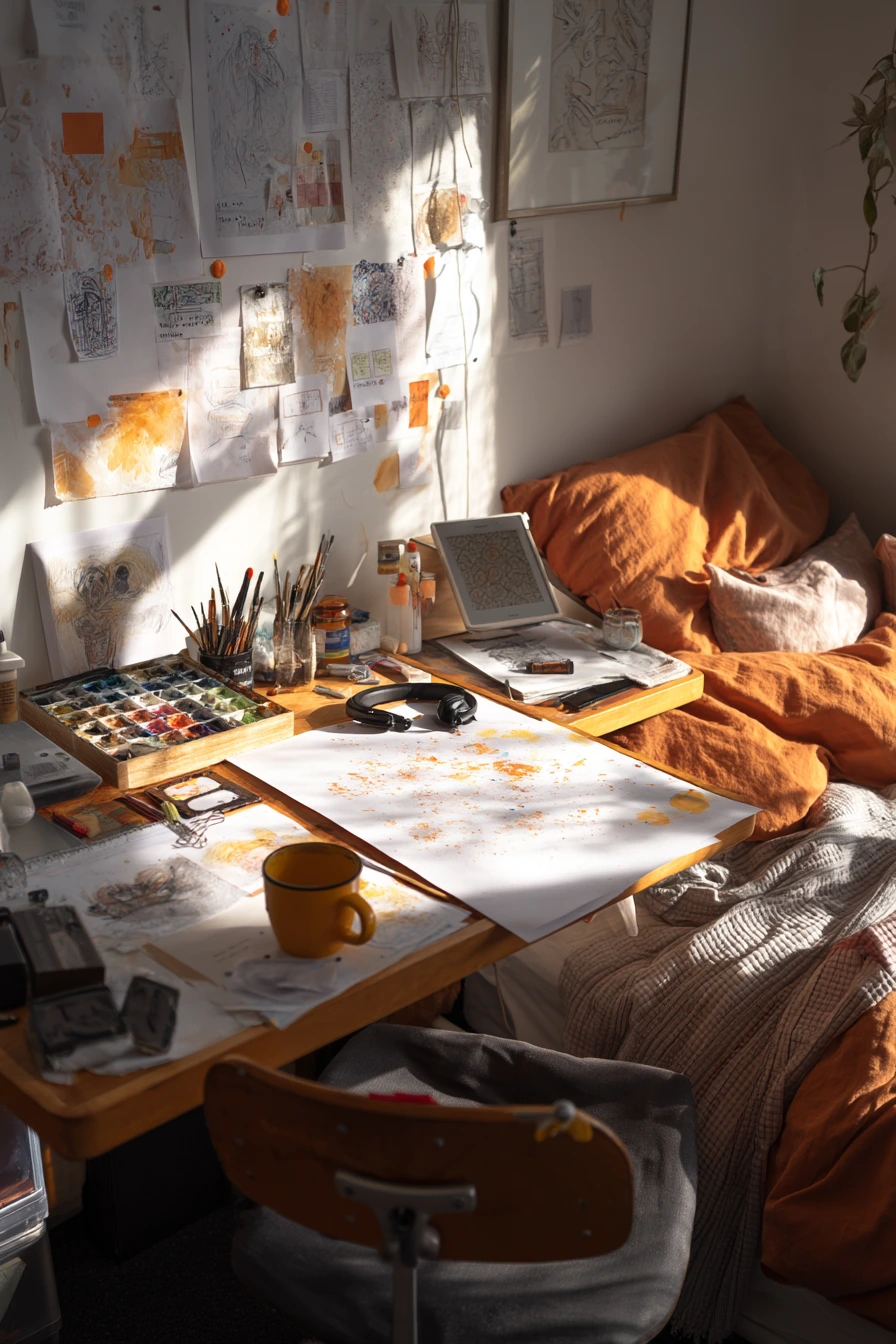
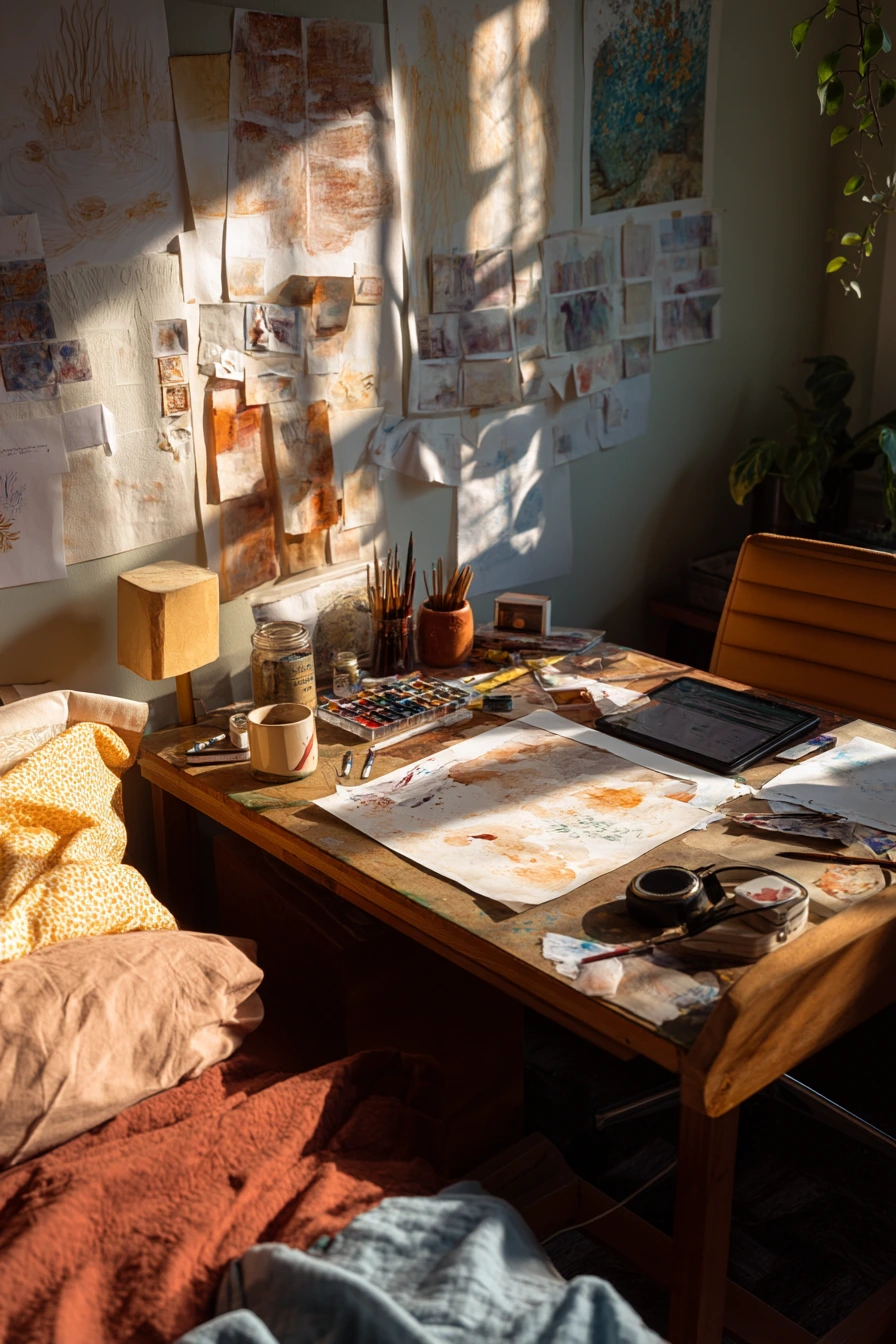
A creative bedroom office for an illustrator needs room for tools and room for ideas. Let the desk be active, with sketch paper, a tablet, and a jar of paintbrushes. Small signs of work, like ink stains and a coffee mug ring, can feel honest as long as they are contained to a mat or a dedicated side of the desk.
Use the wall for inspiration. Pin mood images and references above the desk so you do not stack piles on the bed. Keep headphones on a hook and store extra paper in a vertical file so it does not curl. A rolling chair makes it easier to shift between desk work and bed-side sketching, but keep the bed styled with layered textiles so the room still feels like a restful place.
Lighting helps you see color correctly. Mix amber lamp light with cool window fill so the space feels warm but not yellow. Place the lamp to one side to avoid glare on a tablet screen. Add one plant that casts delicate shadows to soften the corner and make it feel immersive. End-of-day cleanup should be simple: clip loose sketches into one folder and put brushes in the jar. That way, your creative space stays ready without taking over the whole bedroom.
- Use a desk mat to protect the surface and define the messy zone.
- Pin reference images on the wall to keep ideas off the bed.
- Store paper upright in a file holder to prevent piles.
- Hang headphones on a hook to free up desktop space.
- Use a warm lamp plus window light for better color balance.
Pro Design Tip: Pick one “hero texture,” like linen bedding or a woven throw, to balance the busy desk and keep the room feeling calm.
Budget Considerations: Clipboards, corkboards, and basic file holders are low-cost tools that organize art supplies better than extra furniture.
9. Polished Bedroom Office for a Senior Professional in Dark Wood
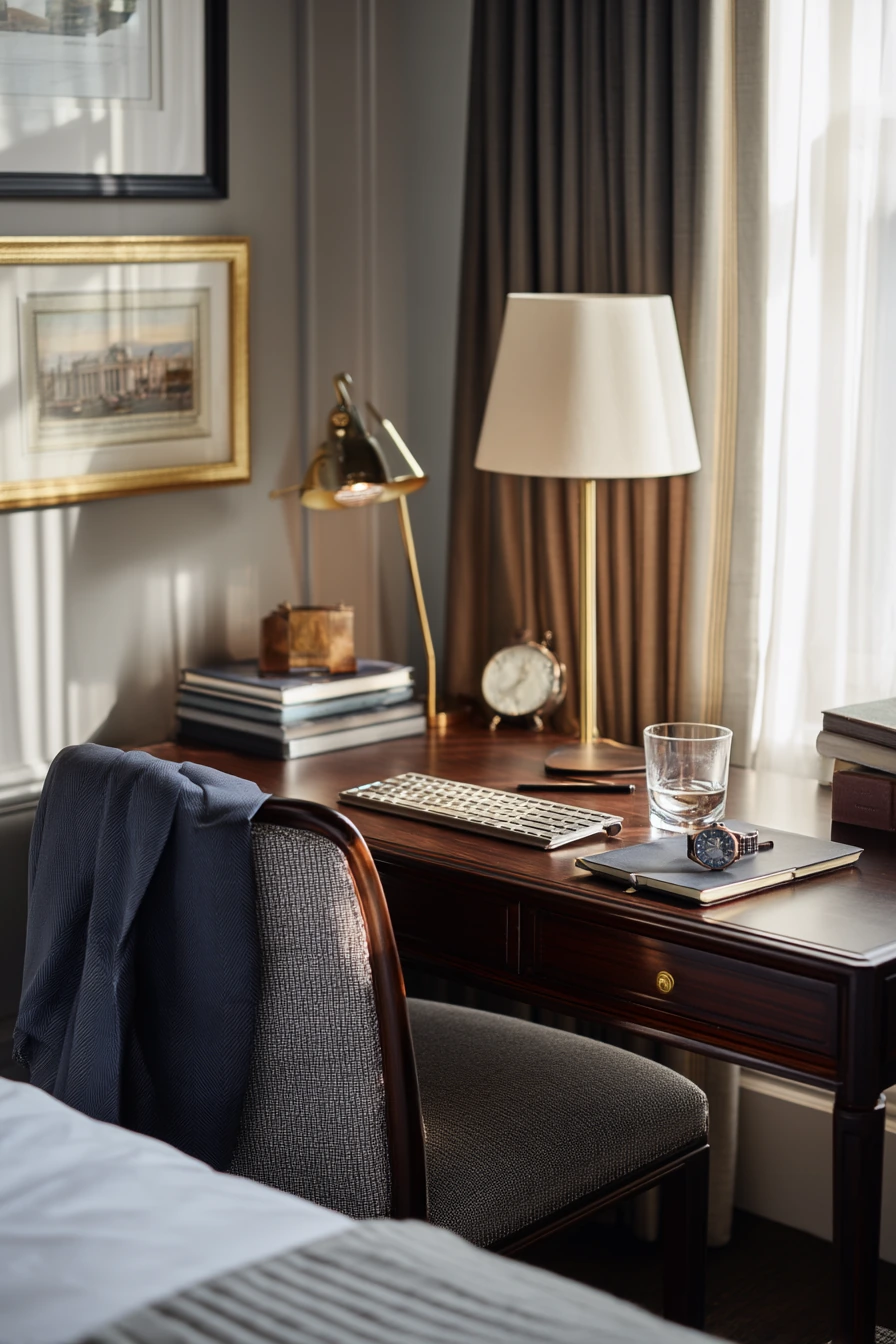
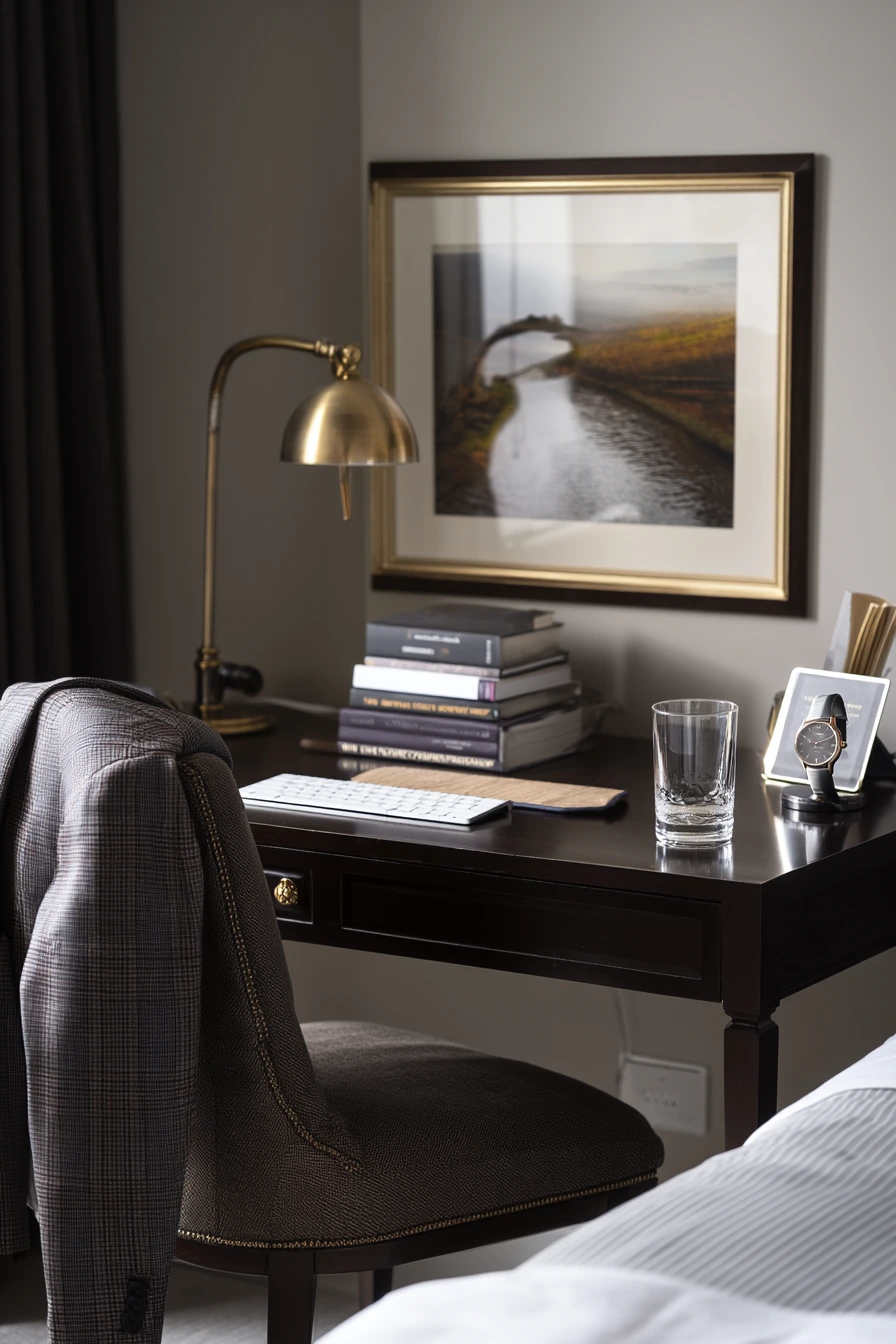
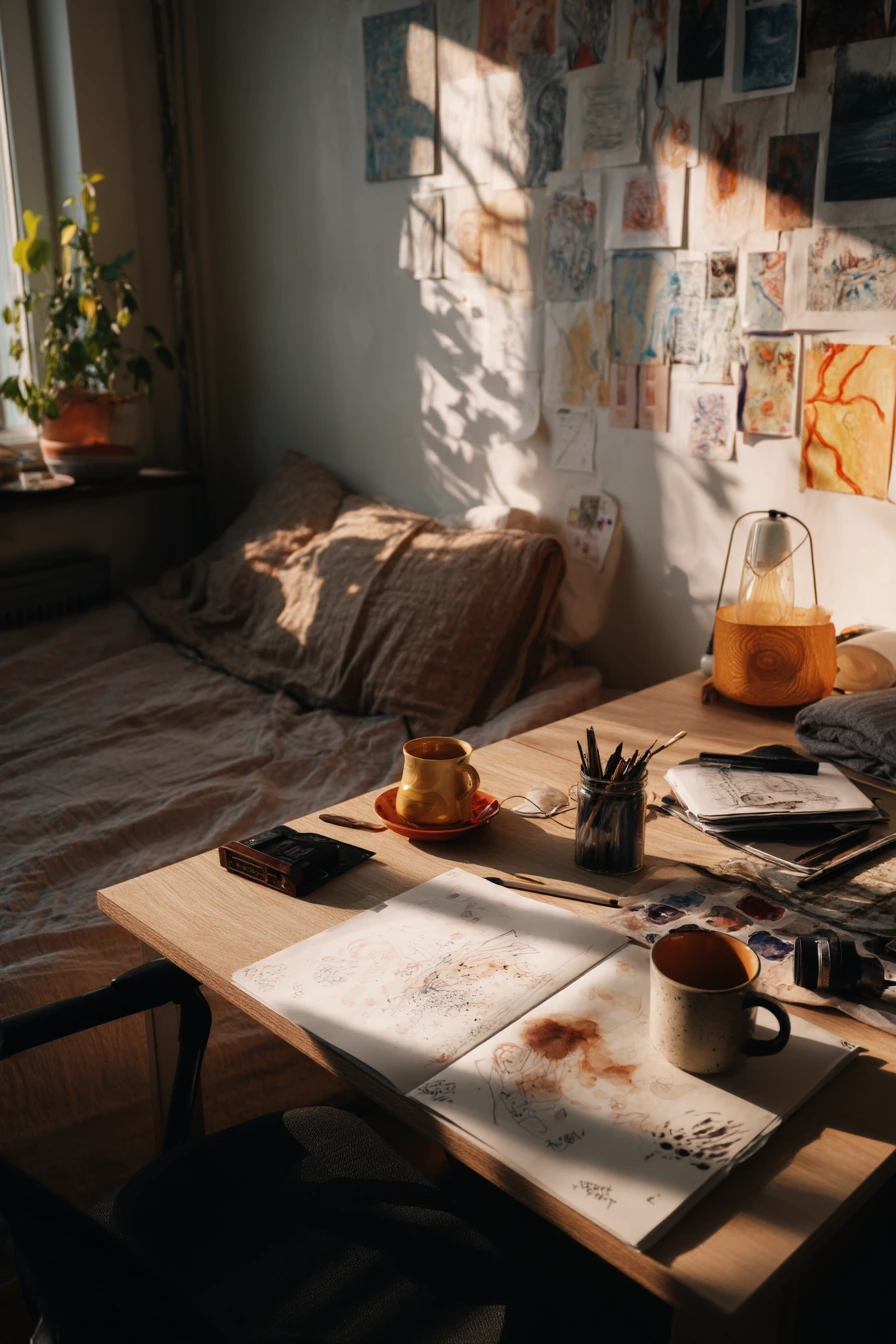
A polished but real bedroom office for a senior professional should feel grounded, not flashy. A dark wood desk and a tailored chair create that quiet authority. Keep the setup simple: a reading lamp, wireless keyboard, and a neat stack of books is enough for a strong look.
Add personal items that feel adult and calm. A framed travel photo, a watch, and a water glass bring life to the desk without turning it into decor clutter. It is also okay if the duvet has subtle wrinkles and a blazer is draped on the bedpost. Those details make the space believable while still refined.
To style this bedroom office, focus on contrast and texture. Pair the dark desk with lighter bedding so the room does not feel heavy. Use soft morning light if you can, and add a warm lamp for late work. Keep cables hidden with an under-desk tray or cable sleeve so the desk stays clean. If you take calls, position the chair so your background is a plain wall or a simple piece of art, not the bed. The goal is a bedroom that supports work and still feels like a place to rest.
- Choose a dark desk with clean lines and a comfortable chair.
- Use one reading lamp with a warm bulb for focused light.
- Keep personal items limited to a few meaningful pieces.
- Hide cords with a tray or sleeve to keep the desk neat.
- Balance dark wood with light bedding and soft textures.
Pro Design Tip: Use one strong focal point, like the dark desk, then keep everything else quiet so the room feels calm and high-end.
Budget Considerations: A secondhand dark wood desk and a new supportive chair cushion can create the same polished look for less than buying all new furniture.

10. After-Hours Bedroom Office for Late-Night Work
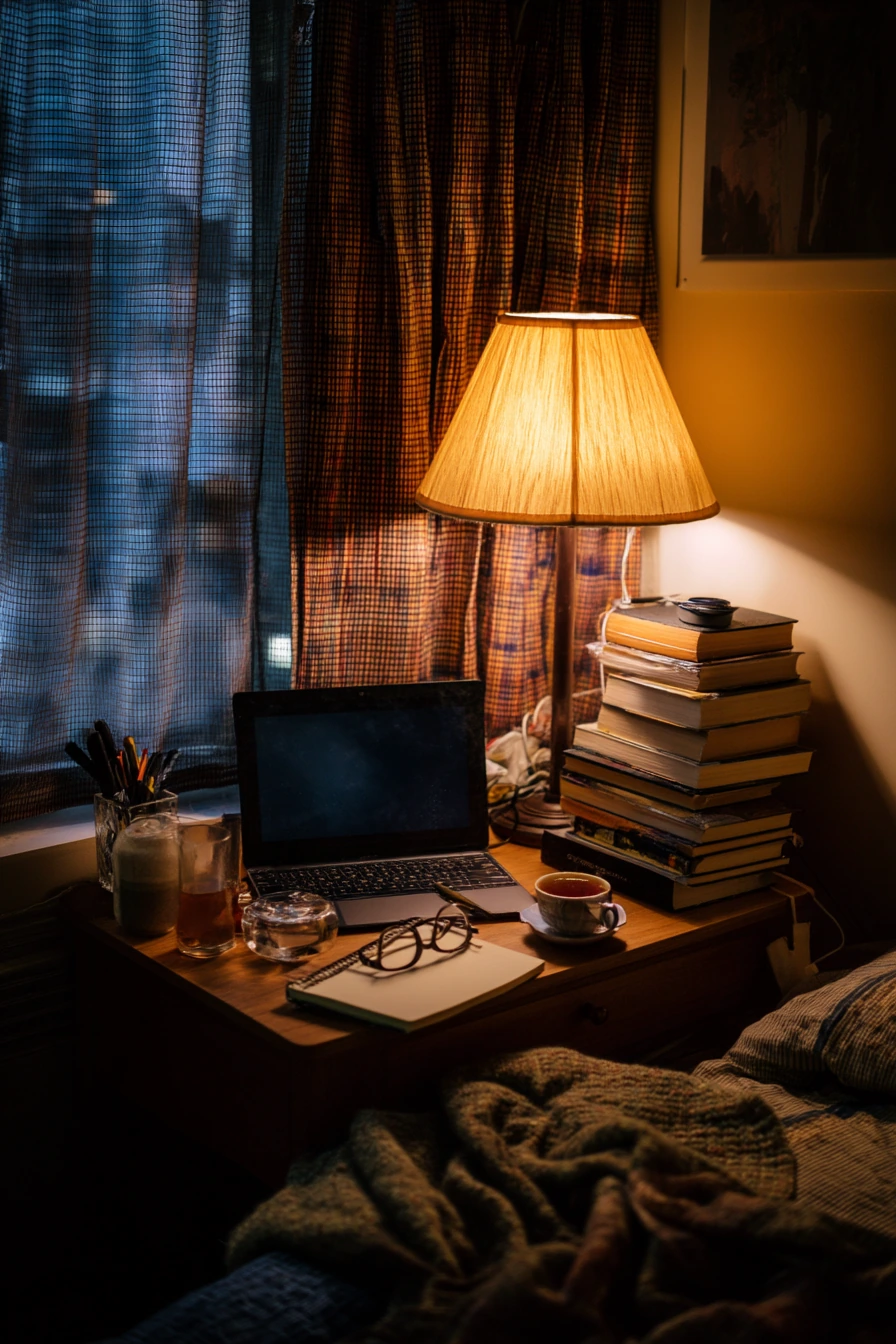

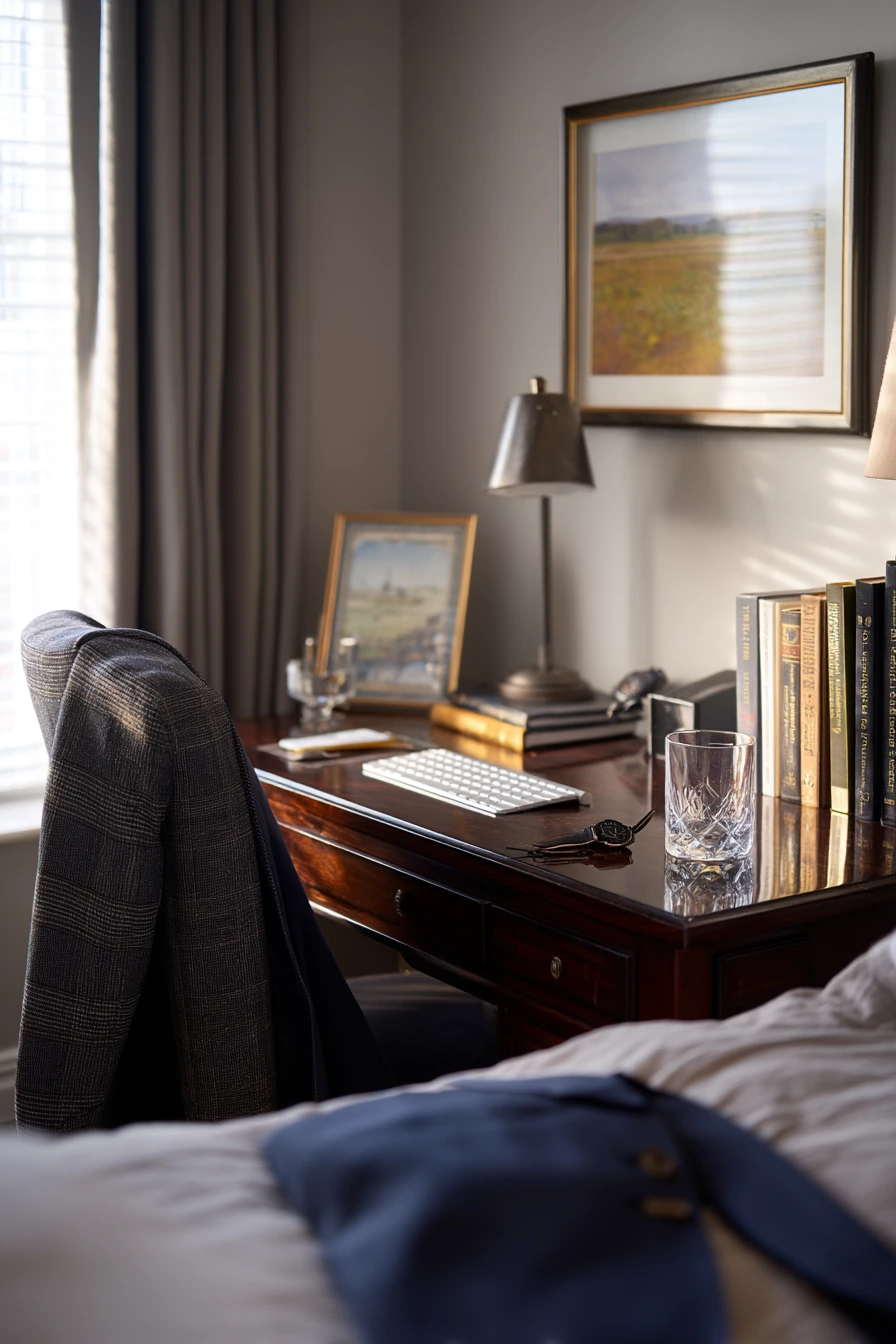
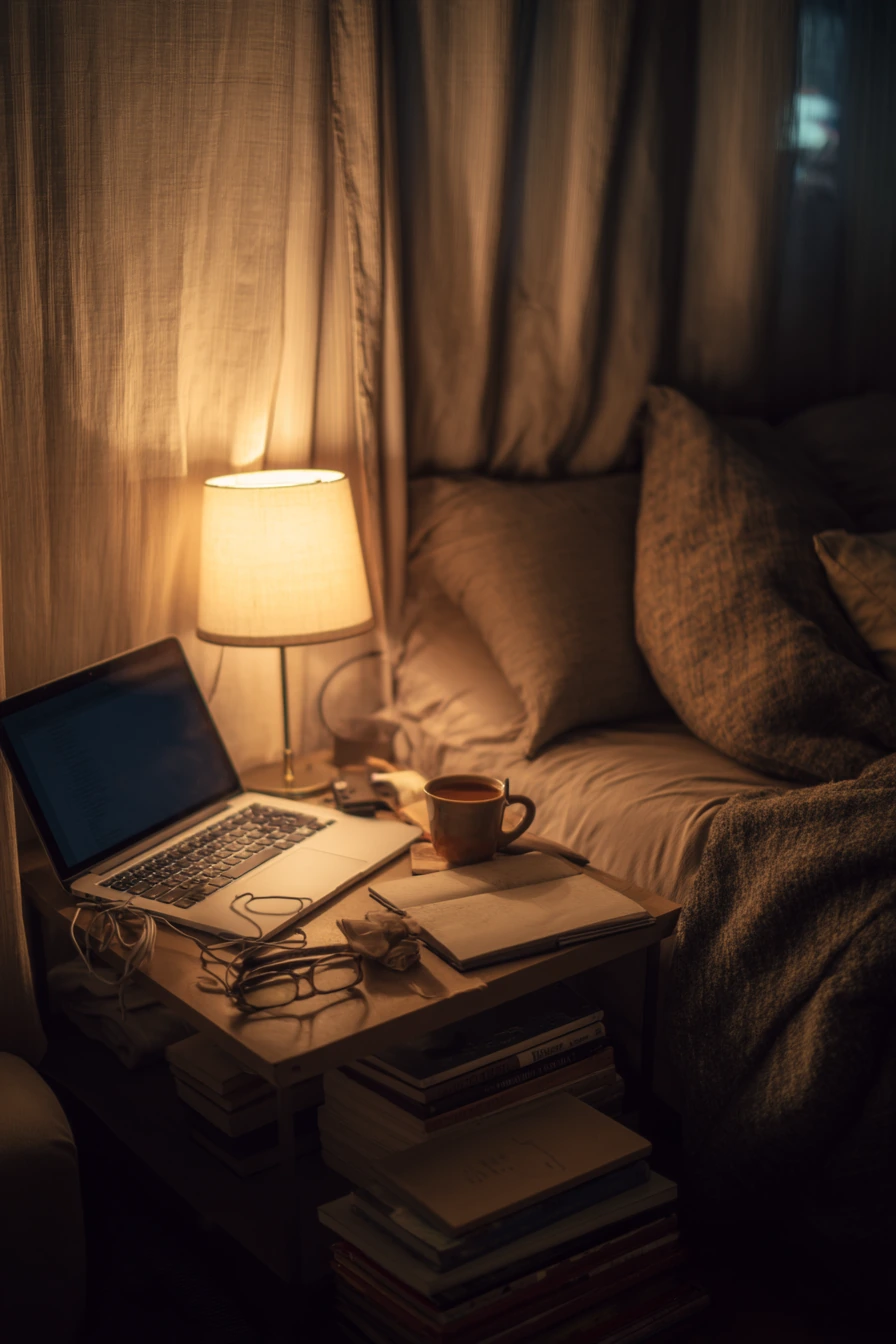
An after-hours bedroom office needs to support focus without ruining sleep. A small desk beside the bed can work well if you keep the setup minimal. An open laptop, a notebook, and blue-light glasses cover most late-night tasks without spreading across the room.
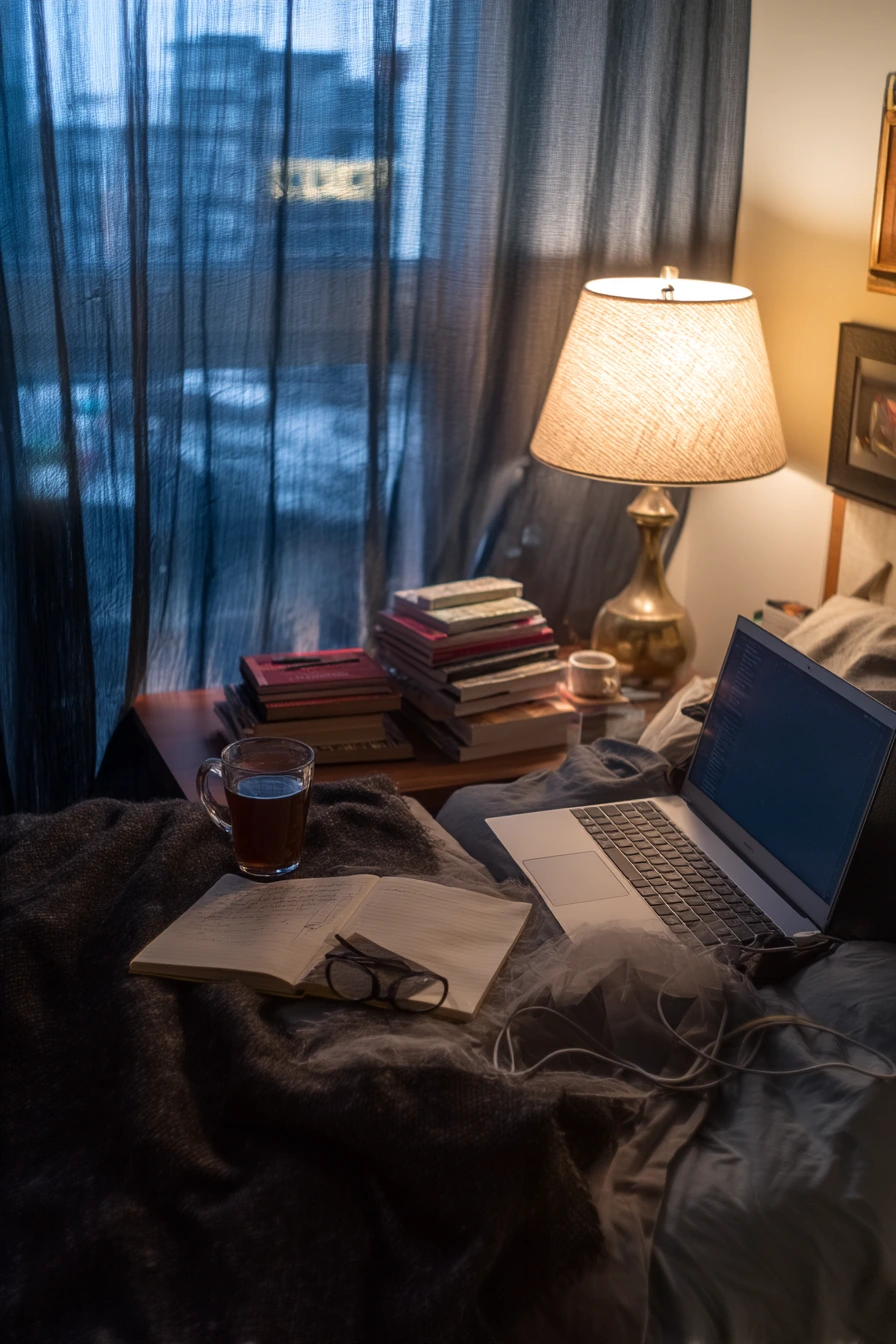
Lighting is the main styling tool here. Use a warm practical lamp instead of a bright ceiling light. It keeps the space cozy and helps your eyes relax. Keep a half-drunk tea on a coaster and place books stacked unevenly in a single pile so the desk still feels under control. Dim city light slipping through curtains can look nice, but if it bothers you, add a blackout liner and leave a small gap for morning light.
Cable control matters most at night. A charging cable should run in one path, not across your pillow area. Use a bedside cable clip and a small tray for your phone so it always lands in the same spot. Add a fleece blanket that stays on the bed, not on the chair, so the chair remains ready for work. When you are done, close the laptop, stack the notebook on top, and turn off the lamp. That simple routine helps your brain switch from work to rest.
- Use a small desk or narrow table that fits beside the bed.
- Choose a warm lamp to avoid harsh light late at night.
- Keep one tidy book stack instead of spreading items out.
- Use a cable clip so chargers stay off the bed.
- Set a “closing routine” to reset the desk before sleep.
Pro Design Tip: Keep the desk surface 70 to 80 percent clear so late-night work feels easy and you can reset the room fast.
Budget Considerations: A clip-on lamp, a basic cable organizer, and a small tray can improve nighttime comfort without buying new furniture.
Bedroom office ideas work best when you keep the layout simple, the lighting soft, and the clutter contained. Pick the setup that matches your room size and daily routine, then copy the small details like shelves, pinboards, and cable control.
If you want the easiest win, start with one change: move the desk toward the window or add better task lighting. After that, add storage that makes cleanup quick so your bedroom can still feel restful.
FAQ
1. Where should I put a desk in a bedroom? Place it near a window if possible, or in a corner where it will not block walkways. Avoid placing it where cords and papers will spill onto the bed.
2. How do I separate my bed from my work area in a small room? Use a low dresser, a bench, a rug under the desk, or a different lamp style to create two zones. Keeping colors consistent also helps the room feel calm.
3. What is the best desk for a studio apartment bedroom office? A wall-mounted fold-down desk or a slim freestanding desk works well. It saves floor space and makes it easier to “close” work.
4. How can I make a renter-friendly bedroom office without drilling? Use removable wall hooks, plug-in sconces, and leaning mirrors. Choose furniture that stands on its own and can move with you.
5. How do I hide cords and chargers in a bedroom office? Use stick-on cable clips under the desk, a small cord box, and one charging station tray. Keep cables running in one path instead of across the floor.
6. What lighting is best for a bedroom office? Use a task lamp for work and a warm lamp for evenings. If you have daylight, angle your screen to reduce glare.
7. How do I keep a bedroom office from hurting my sleep? Clear the desk at night, dim the lights, and keep work supplies off the bed. A simple shutdown routine can help you switch off faster.