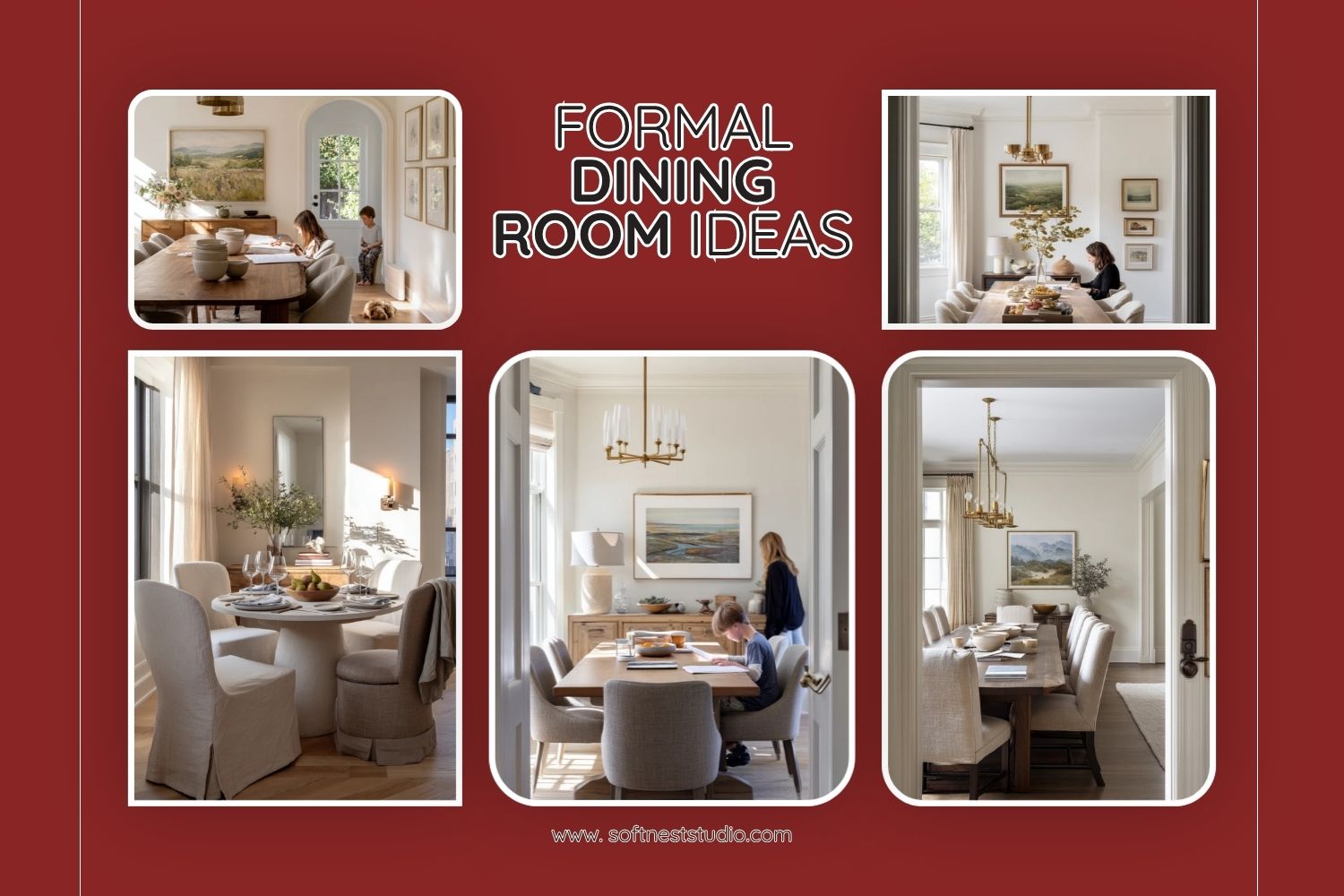
Formal dining room ideas do not have to feel stiff or unused. The best rooms look elegant, but they still work for homework, weeknight dinners, and big family meals.
In this guide, you will see ten formal dining room looks based on real home scenes, from a walnut dining table with a brass chandelier to a compact city setup with a round pedestal table. Each section includes simple styling steps you can copy.
You will also get practical choices for lighting, art, rugs, and storage like a low sideboard, narrow console, or built in banquette. These details help a formal space stay calm and organized even when life is busy.
Use these ideas to plan your layout, pick finishes that last, and add lived in cues that feel natural, not messy. Each theme ends with a pro design tip and a budget note.
1. Warm Walnut Formal Dining Room That Handles Family Life
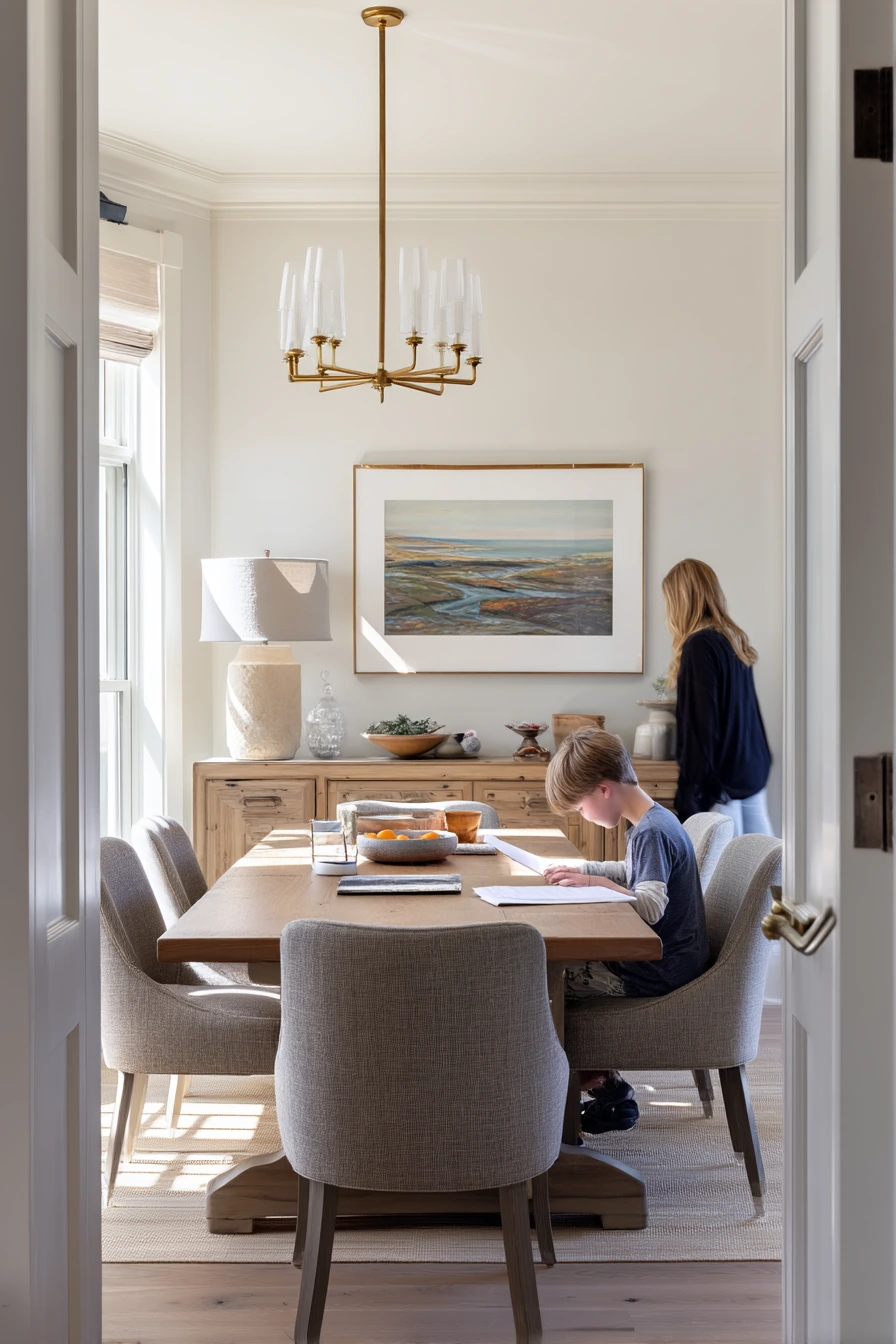
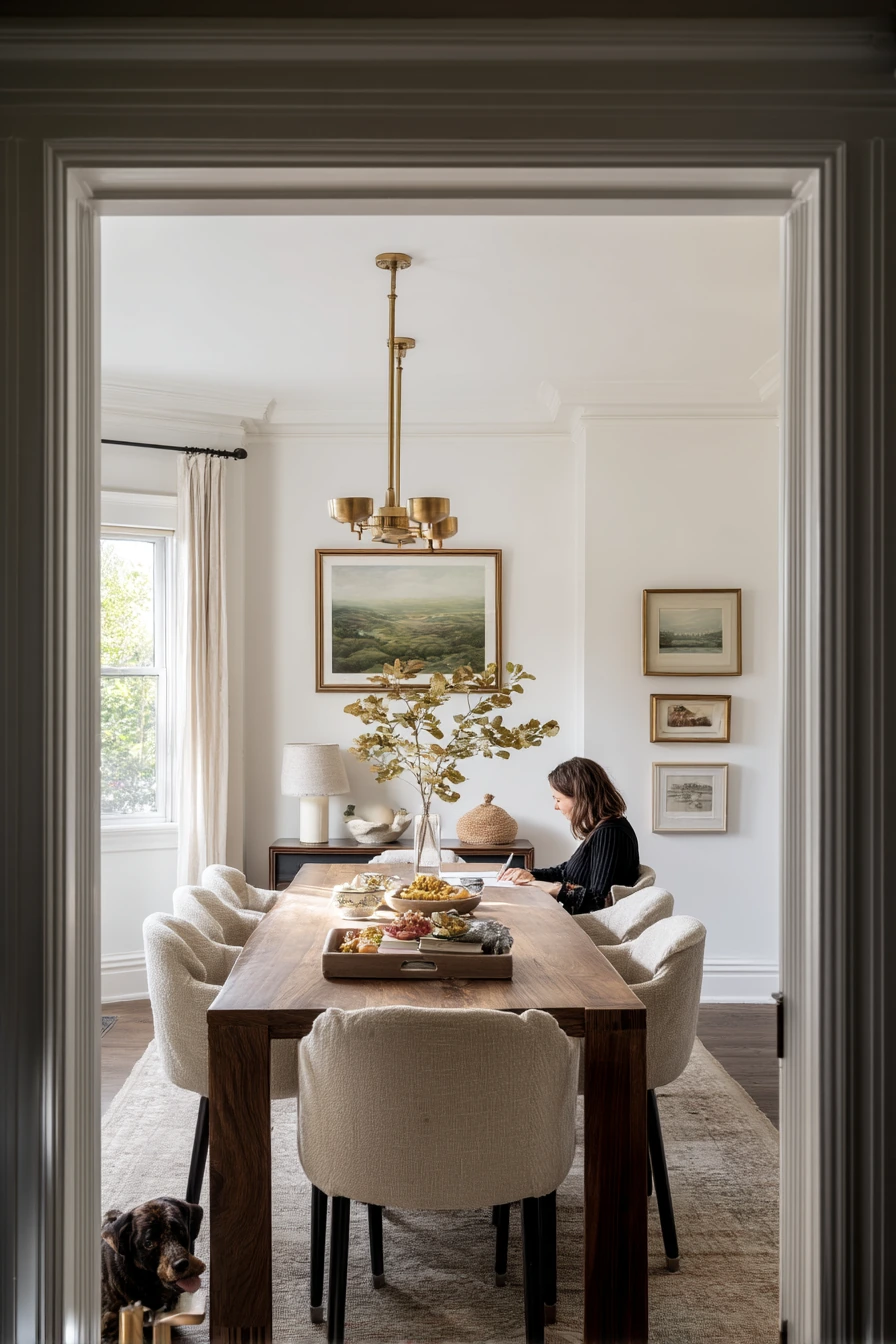
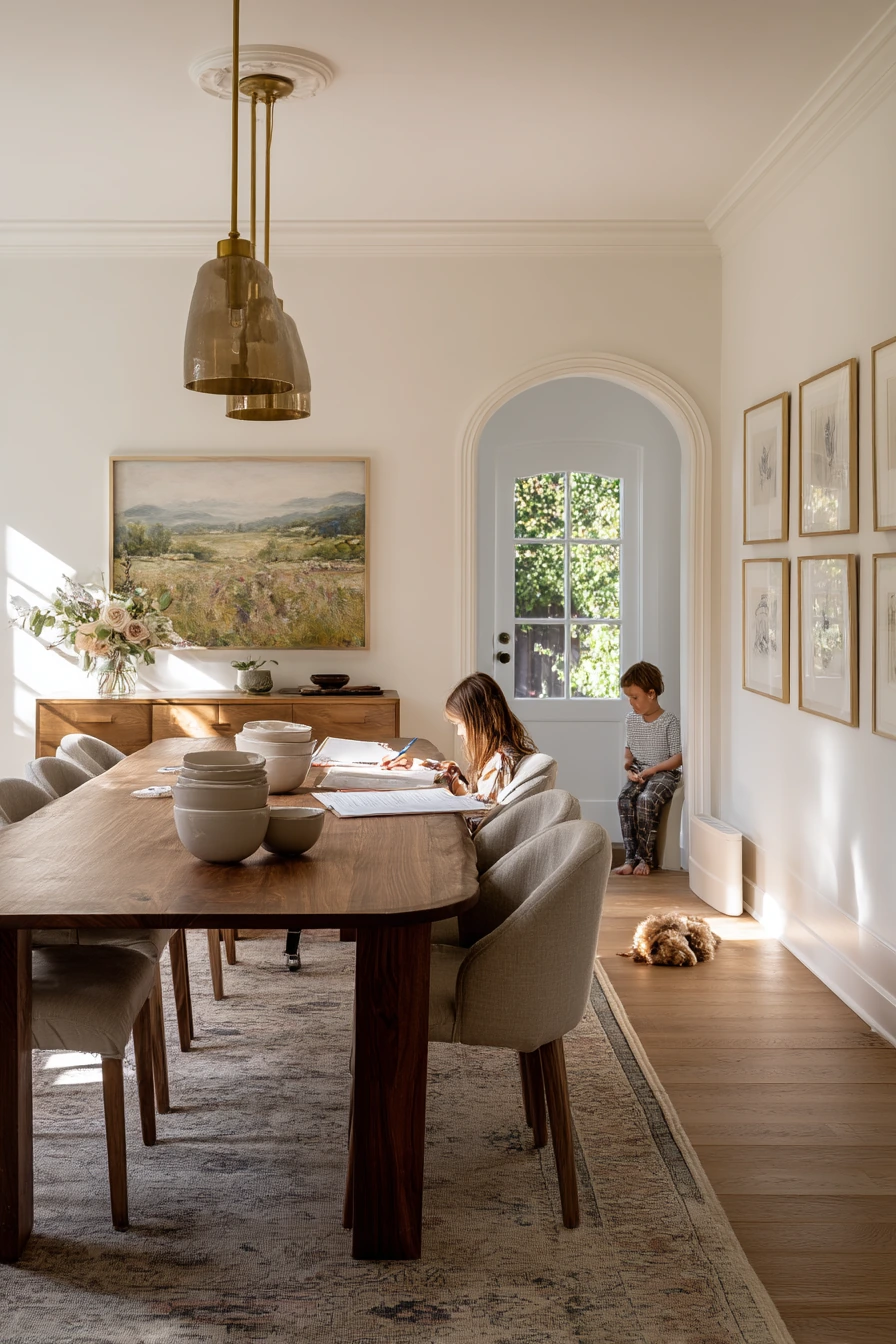
This formal dining room idea starts with a walnut dining table and eight upholstered chairs. It feels polished, but it still makes room for real life, like homework sheets near a water glass and a half folded napkin. The key is balance: classic pieces like a brass chandelier and framed landscape art, paired with simple everyday storage like a low sideboard with ceramic bowls.
To keep it lived in without looking cluttered, group small items into zones. Let the sideboard hold a tray for mail and a small bowl for keys, so the stack of paper does not spread across the table. Hide the charging cable with a cord cover or route it behind the sideboard. If you have pets, pick a woven basket for toys and park it near the baseboard so the dog toy has a home.
Warm window light works well with walnut and brass, so keep the window treatment light and textured, like linen. Add softness with a neutral rug under the table, and keep the landscape art centered so the wall looks calm. When clearing plates, reset quickly with folded napkins and a simple centerpiece so the room is ready for the next meal.
- Choose performance fabric for upholstered chairs to handle spills and sticky fingers.
- Style the sideboard with three levels: bowls, a small lamp, and one framed photo.
- Use matching napkins to make homework and plates feel less chaotic on the table.
- Store placemats in the sideboard so the tabletop stays clean between meals.
- Add a lidded box for charging cords to avoid a tangled look.
Pro Design Tip: Hang the chandelier so the bottom sits about 30 to 34 inches above the tabletop to keep sight lines open and lighting flattering.
Budget Considerations: Upholstered dining chairs add cost; mix in two upholstered end chairs and use simpler side chairs to lower the total.
2. Compact City Formal Dining Room With a Round Pedestal Table

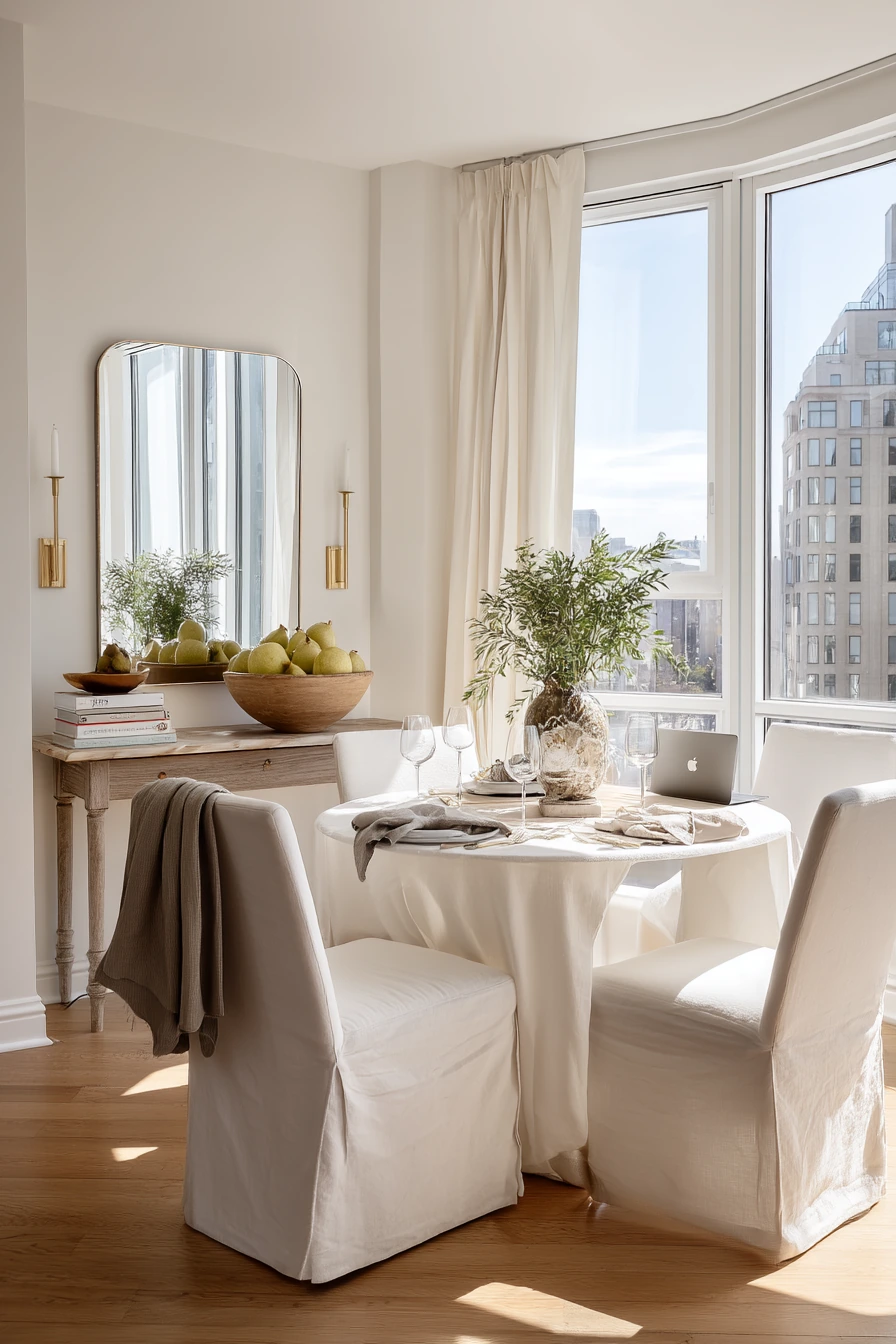
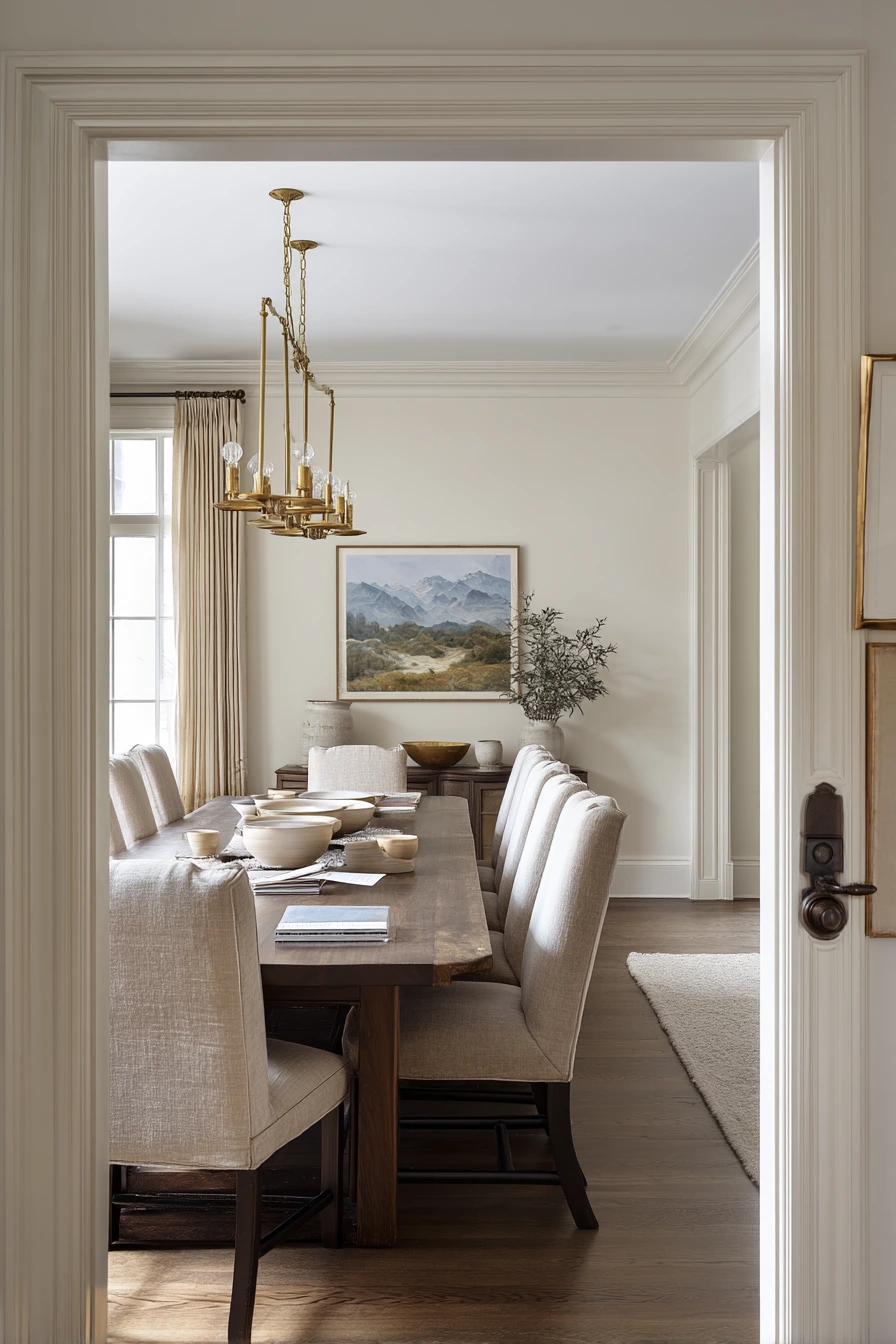
A compact formal dining room can still feel refined when the shapes are simple and the storage is slim. A round pedestal table helps traffic flow in a city apartment, and four linen slipcovered chairs keep the look light. Add a slim mirror and wall sconces to bounce late afternoon window light and make the space feel larger.
Because small rooms show clutter fast, use a narrow console as a landing zone. A bowl of pears and stacked books give height and color, while a small dish can hold mail so it does not spread out. If you work at the table, tuck the laptop away in a console drawer or a basket below. A jacket draped on one chair can look intentional if you keep the rest of the chairs clear and evenly spaced.
For styling, keep the centerpiece low so the table feels open. Use two or three wine glasses per setting only when you are hosting. On normal nights, set just what you need and let the mirror and sconces carry the dressy feel. A plant that casts soft shadows adds life without taking up table space.
- Pick a pedestal base that is narrow so knees do not bump in a tight layout.
- Use slipcovers you can wash, especially in a rental or busy apartment.
- Place the console under the mirror to create one strong focal wall.
- Use battery candles on the console for warm light without wiring.
- Keep one pretty tray on the console for mail, keys, and the candle stub.
Pro Design Tip: Mount sconces at about 60 to 66 inches from the floor to the center of the fixture for a balanced look beside a mirror.
Budget Considerations: A large mirror can be pricey; try a secondhand mirror or a simple frameless option and spend more on the table base.
3. Host Ready Formal Dining Room With Oak Table and Cane Chairs
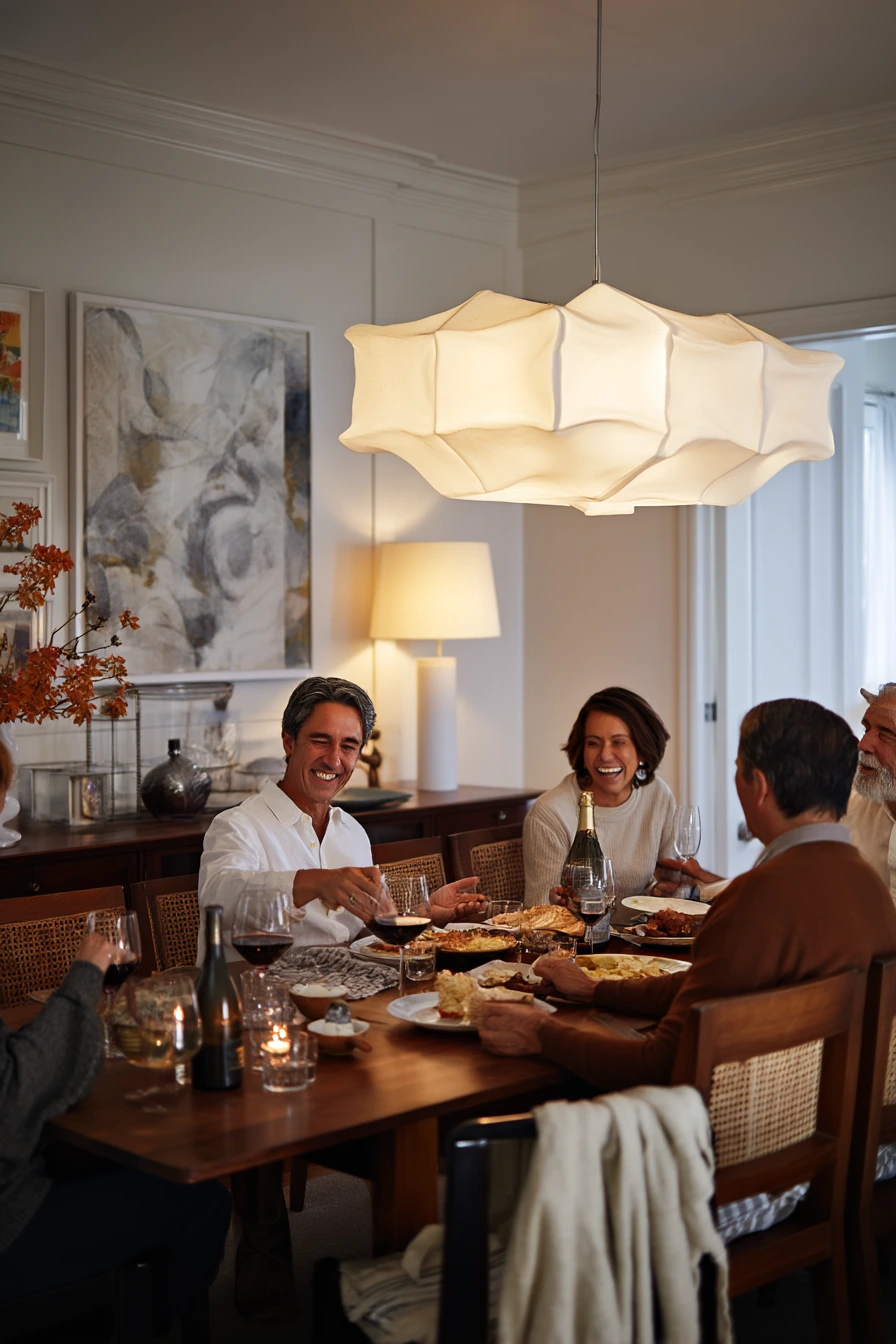
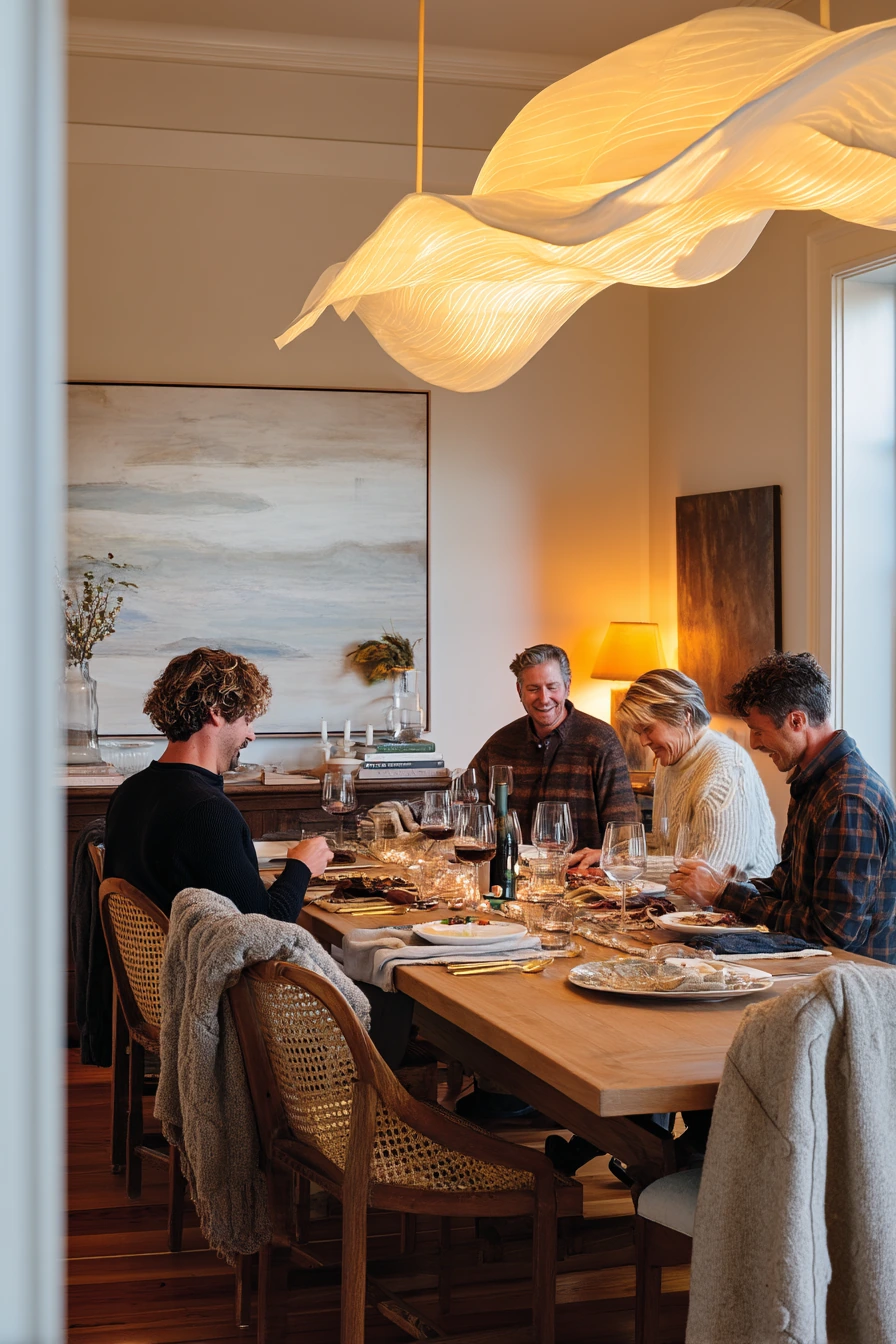
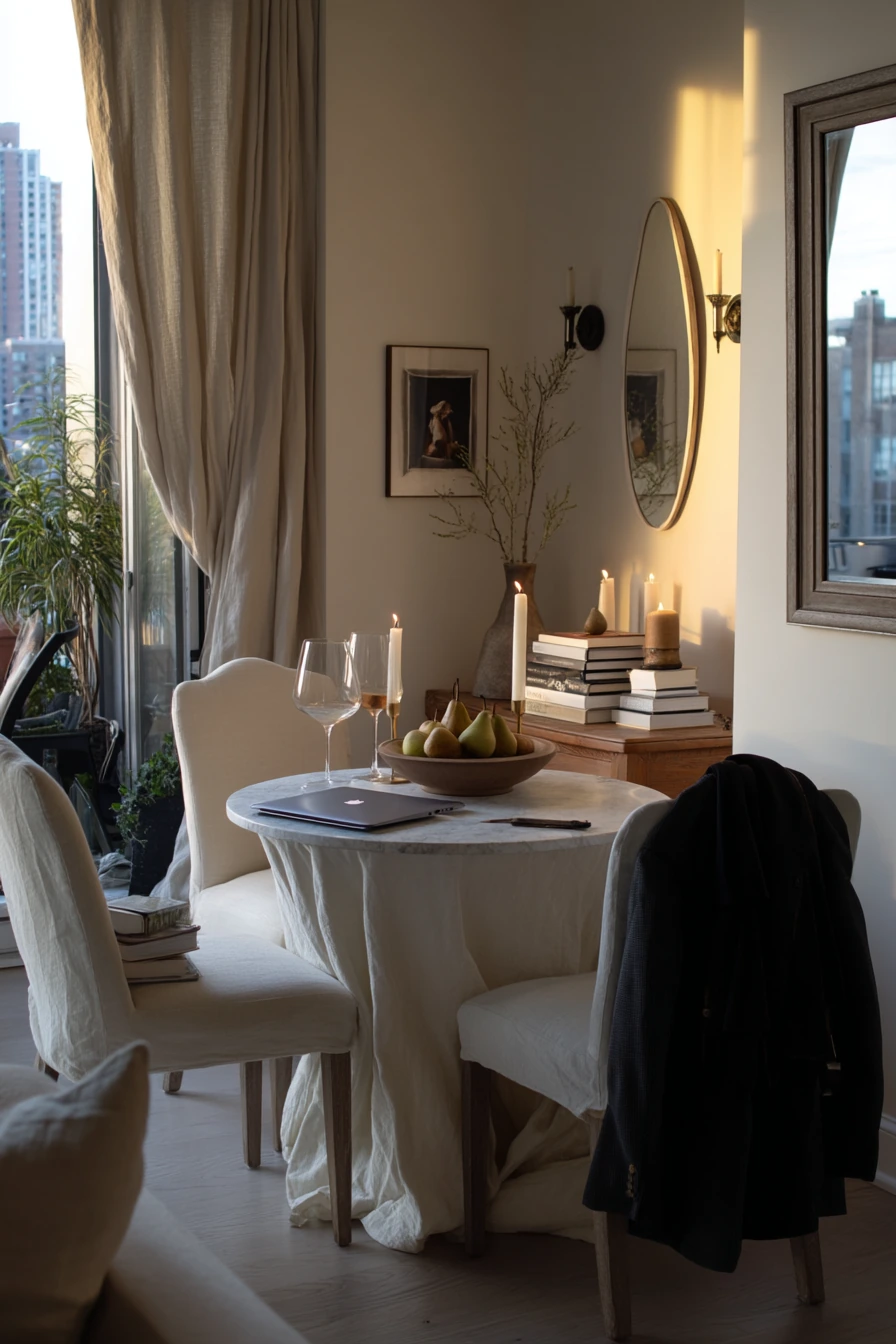
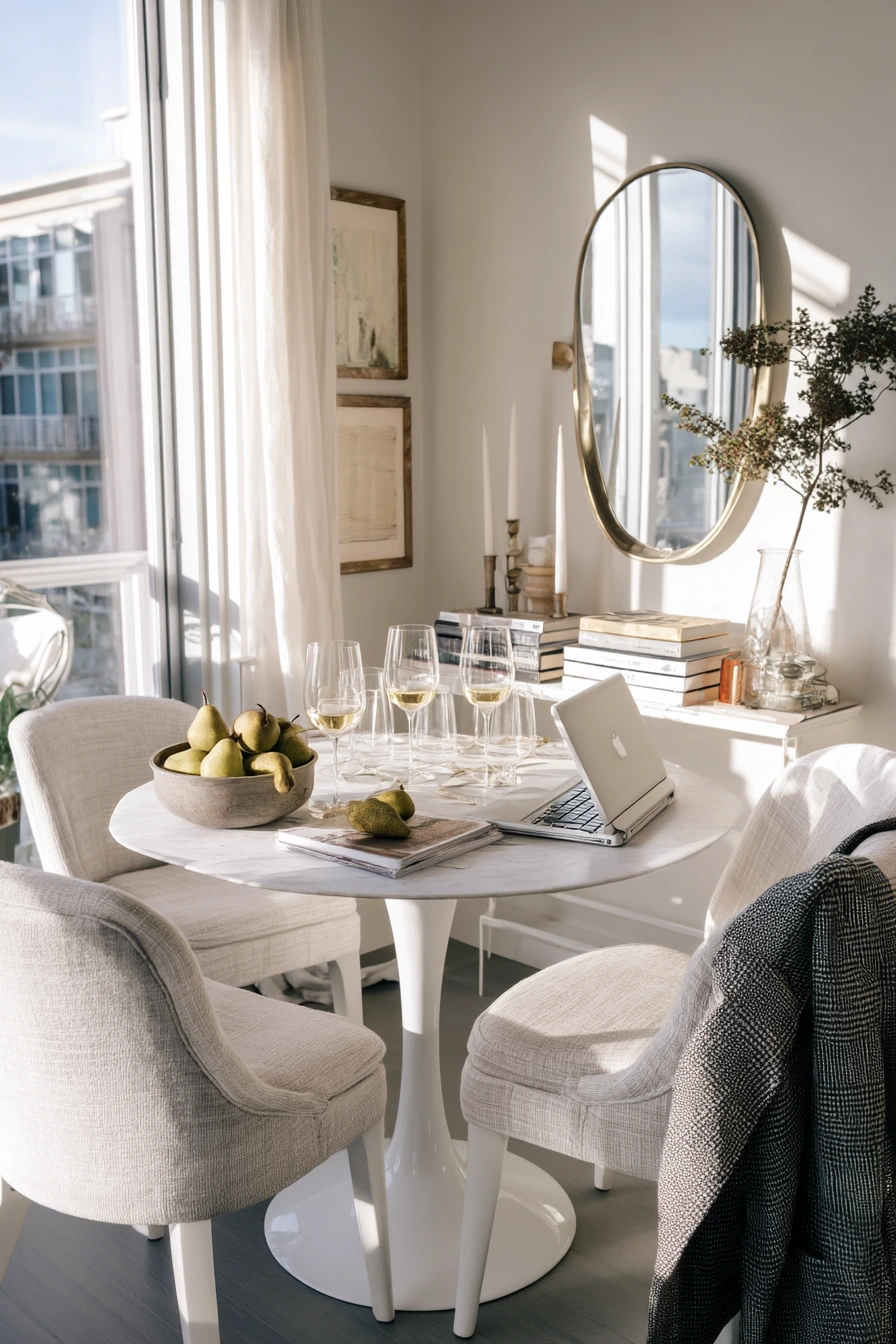
If you love hosting friends, build your formal dining room around a long oak table and six cane backed chairs. This mix looks tailored but relaxed, especially with a sculptural pendant overhead and layered artwork on the wall. A sideboard with glassware and a decanter tray makes serving easy and keeps the table clear between courses.
For a lived in but polished feel, let a few signs of the evening show, like folded linen napkins and a half finished red wine. Keep it controlled by using one consistent fabric, such as natural linen, and one metal finish, such as aged brass. When dessert comes out, clear plates quickly and reset with small dessert forks and water glasses, so guests do not feel crowded.
Lighting is what makes this room feel intimate. Use warm lamp glow from the sideboard area and let dusk window light soften the edges. Put one table lamp on the sideboard for a hotel style layer. An open cookbook can sit on a stand near the sideboard, not in the center of the table, so it reads as a hosting detail, not clutter. A sweater tossed over a chair feels normal if the chair is at the end and not blocking the main view.
- Choose chairs with comfortable seats so people linger after dinner.
- Set up a drink station on the sideboard with glasses, ice bucket, and napkins.
- Layer art with one larger piece and one smaller piece to add depth.
- Use a simple runner to protect the oak top and soften sound.
- Keep a small tray for corkscrews and bottle stoppers to avoid searching mid meal.
Pro Design Tip: Size the pendant so it is about one half to two thirds the table width for a balanced focal point.
Budget Considerations: Cane chairs vary widely in price; look for used frames and replace the seat cushions, or mix cane end chairs with simpler side chairs.
4. Vintage Formal Dining Room With Mahogany Table and Heirloom Mix
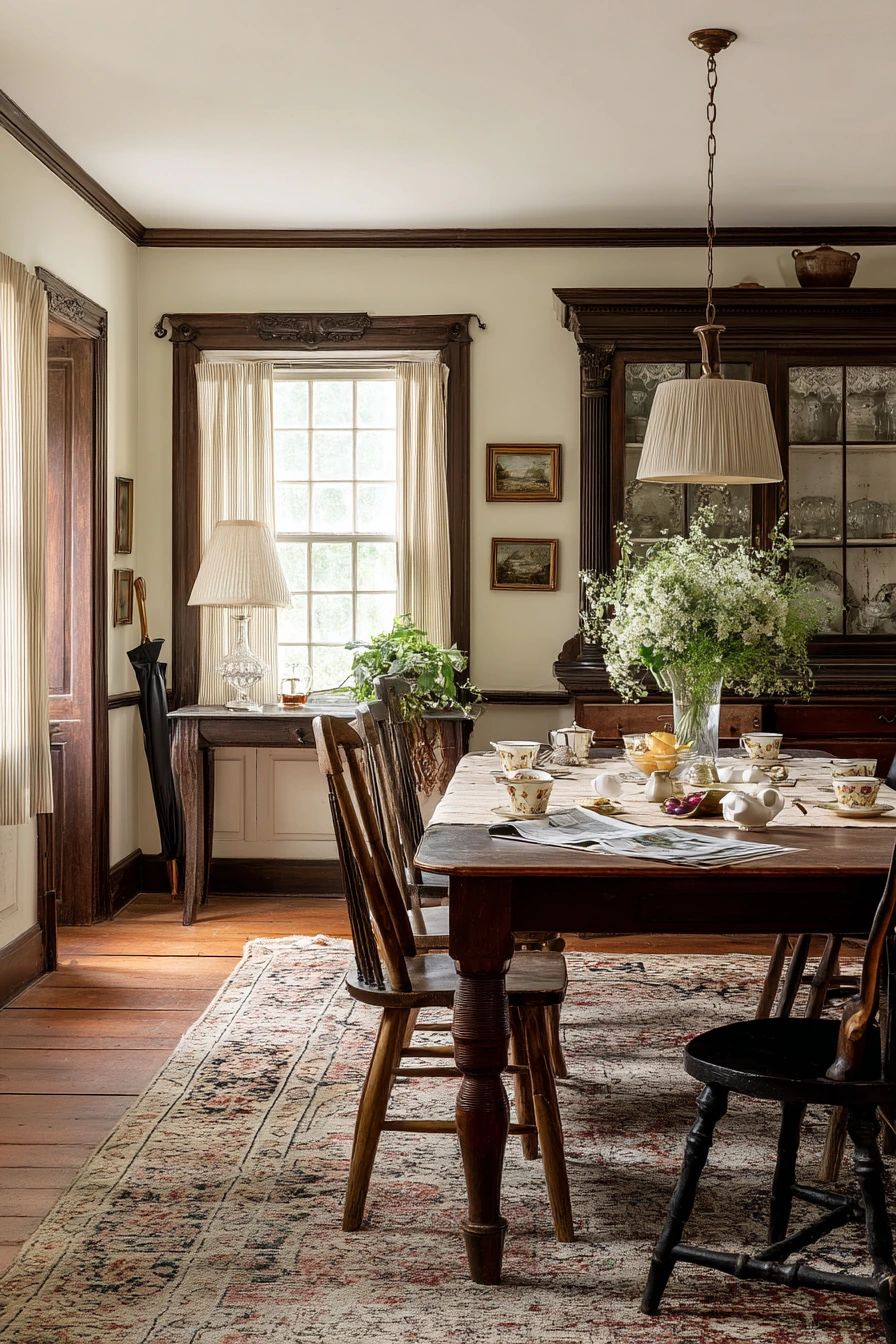
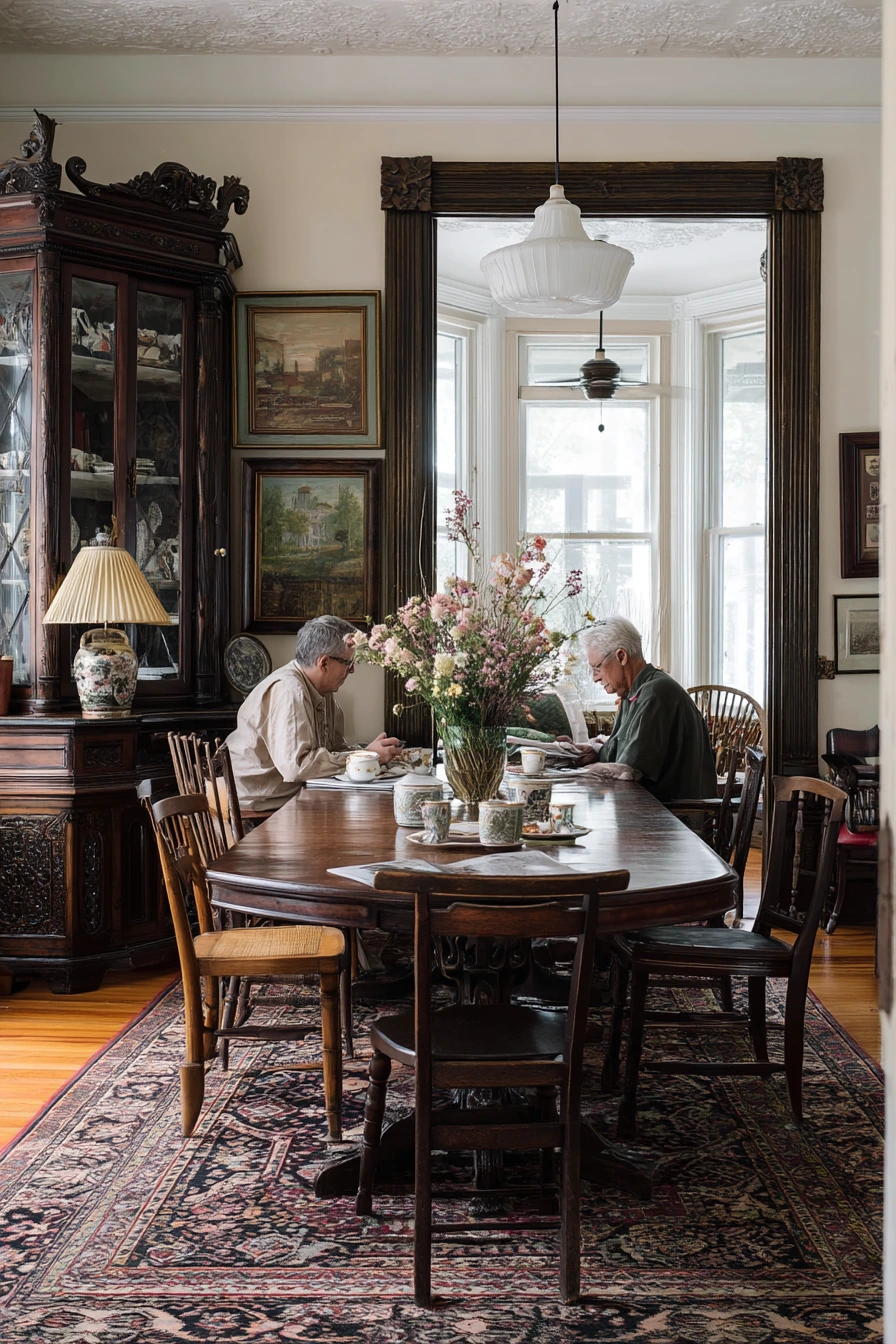
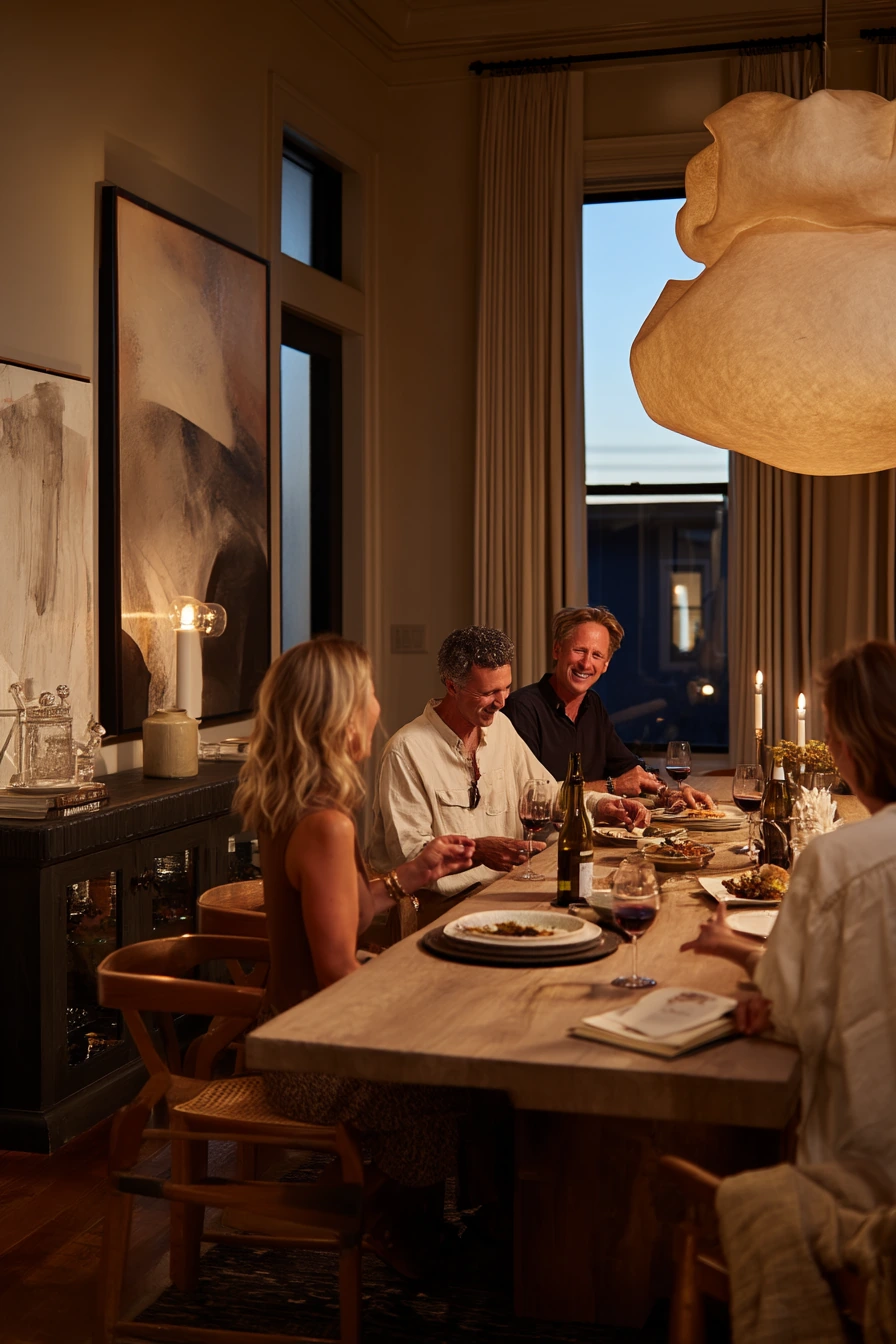
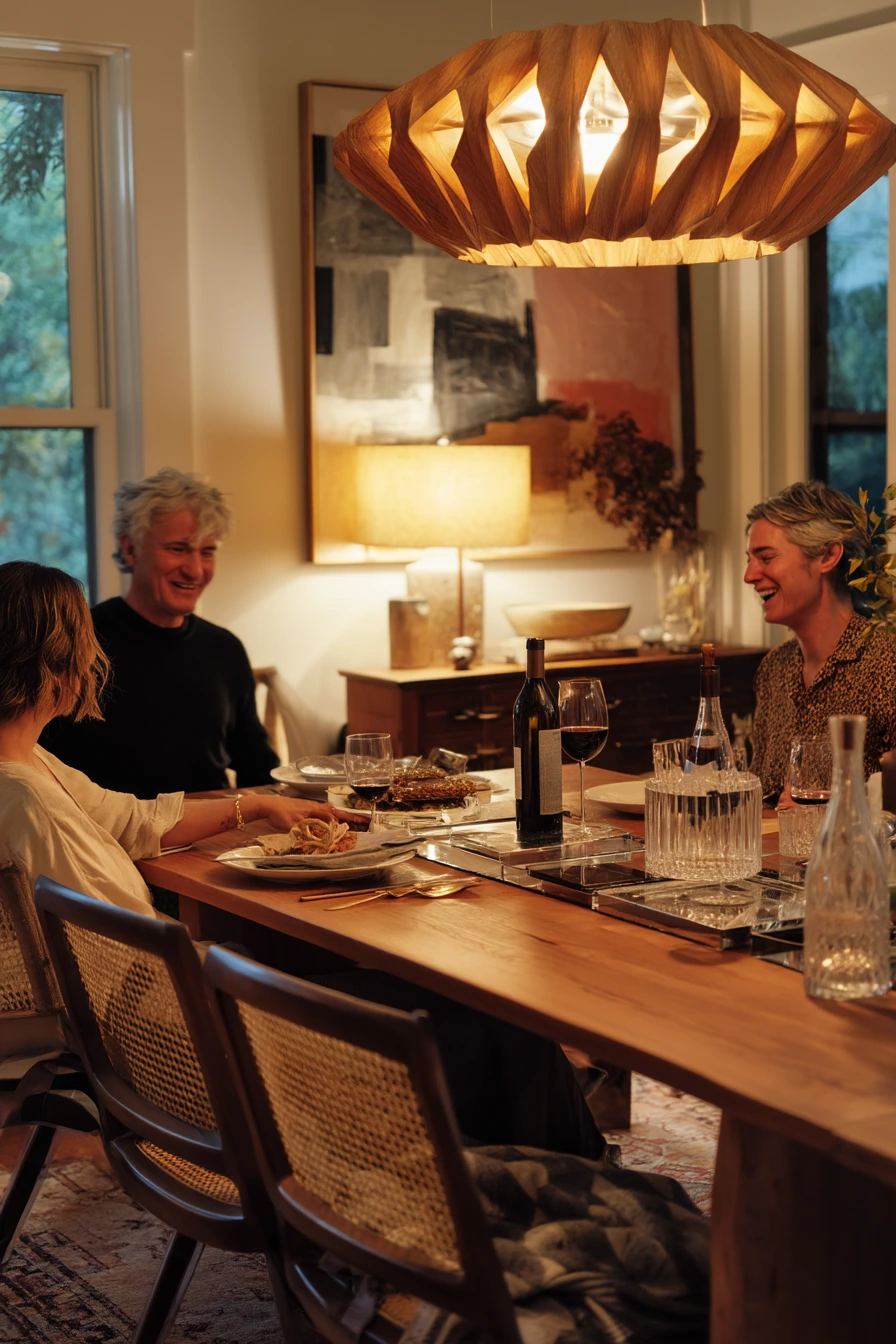
A vintage leaning formal dining room feels special because it has history. Start with a dark mahogany table, then mix in mismatched heirloom chairs for a collected look. An antique hutch gives tall storage for serving pieces, while a pleated shade lamp adds warm light that flatters wood tones. A patterned rug with softened edges keeps the room from feeling too formal.
To style this kind of space, lean into small, real details. Teacups, reading glasses, and a folded newspaper on the table make the room feel used and loved. Keep those items in a neat cluster, not spread across every place setting. Fresh flowers in a cut glass vase brighten the darker palette and tie into the nostalgic feel. If chair legs are scuffed, do not hide it. That wear reads as authentic when the rest of the room is tidy.
Make the room work daily by adding a few invisible helpers. Put a felt pad under each chair to reduce noise and protect the rug. Use the hutch to store cards, extra coasters, and a small tablecloth so you can switch from dinner to a game night fast. An umbrella by the door is fine, but place it in a tall crock so it looks intentional and does not drip on the floor.
- Mix chair styles by keeping one shared detail, like wood tone or seat color.
- Use the hutch lower cabinets for less pretty items like paper goods and games.
- Add a table runner to protect the mahogany and soften the look.
- Choose a rug large enough so chairs stay on it when pulled out.
- Keep a small lamp on a nearby surface to avoid harsh overhead light.
Pro Design Tip: Repeat one shape, such as a curved chair back or round vase, in three places to make mismatched pieces look planned.
Budget Considerations: Antique hutches can cost a lot; try a smaller used cabinet, then add height with art above it.
5. Modern Formal Dining Room With Boucle Chairs and Built In Banquette
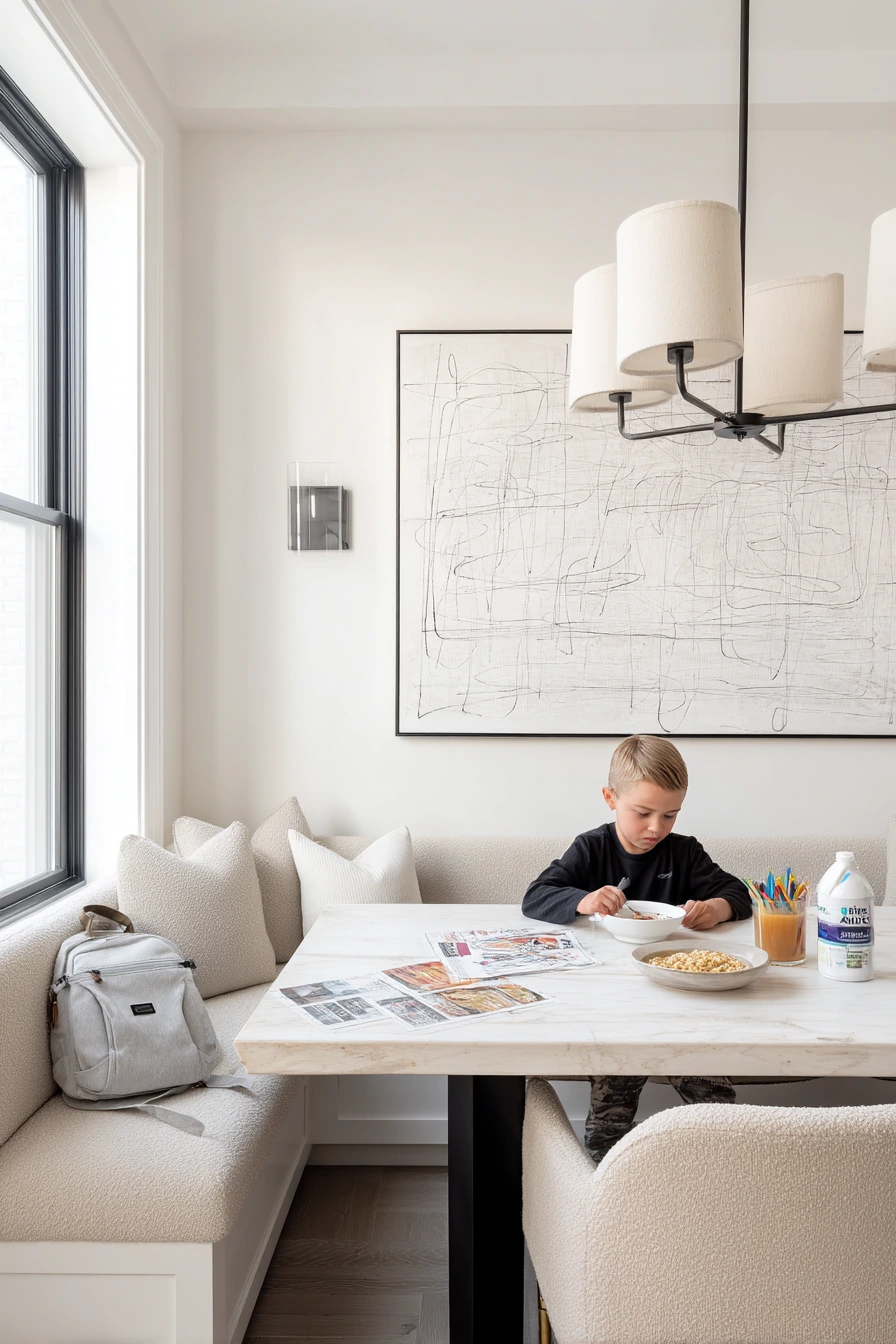
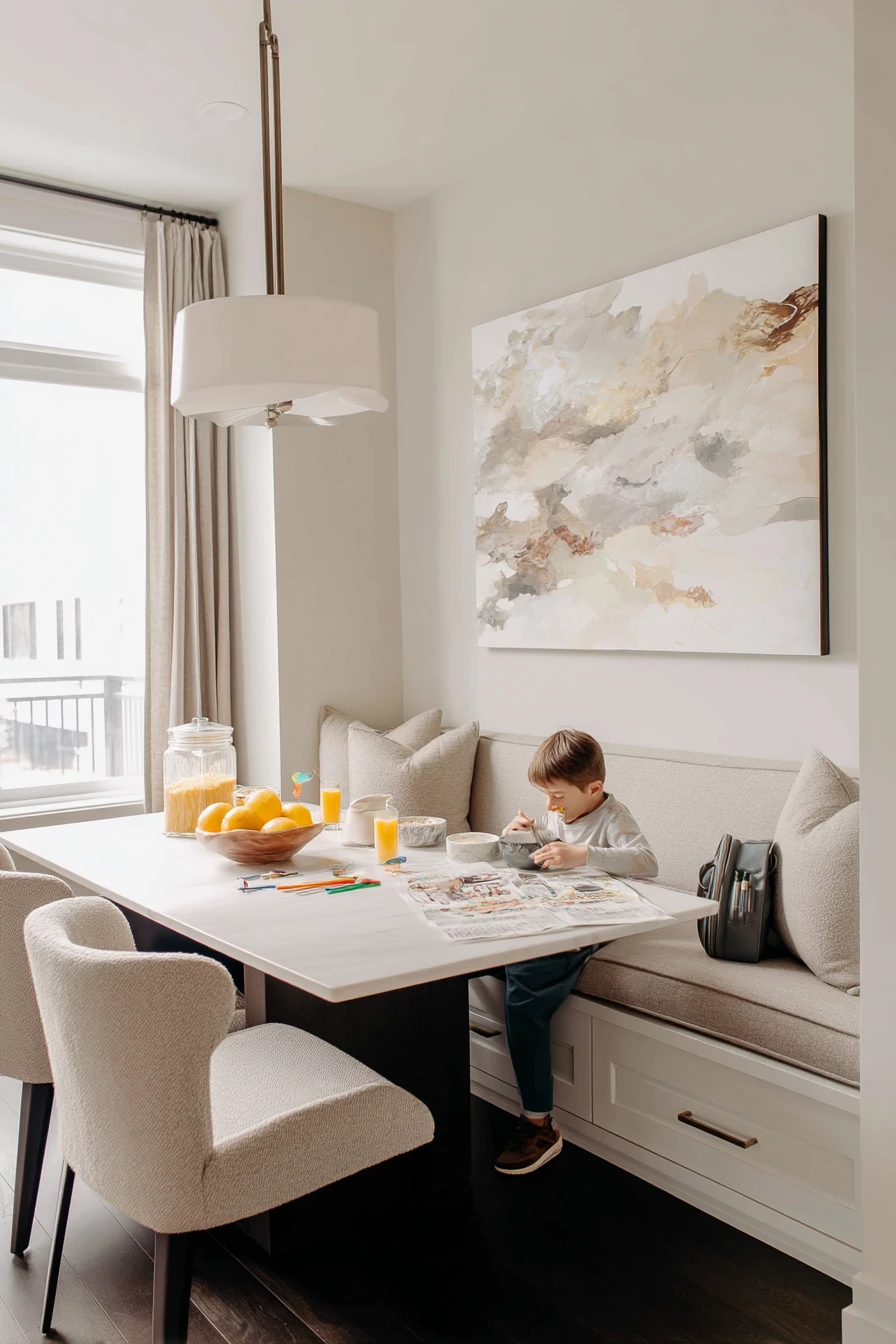
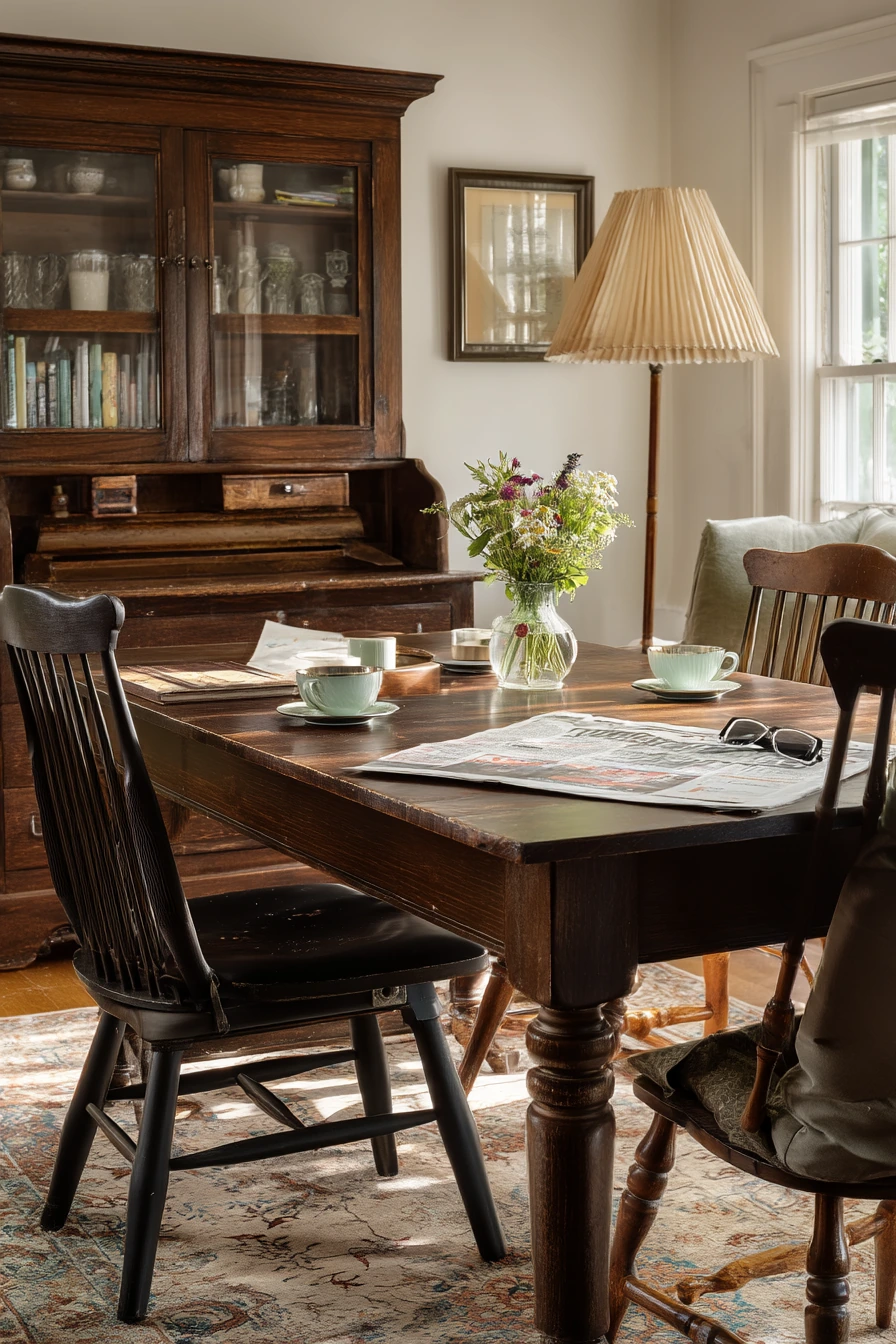
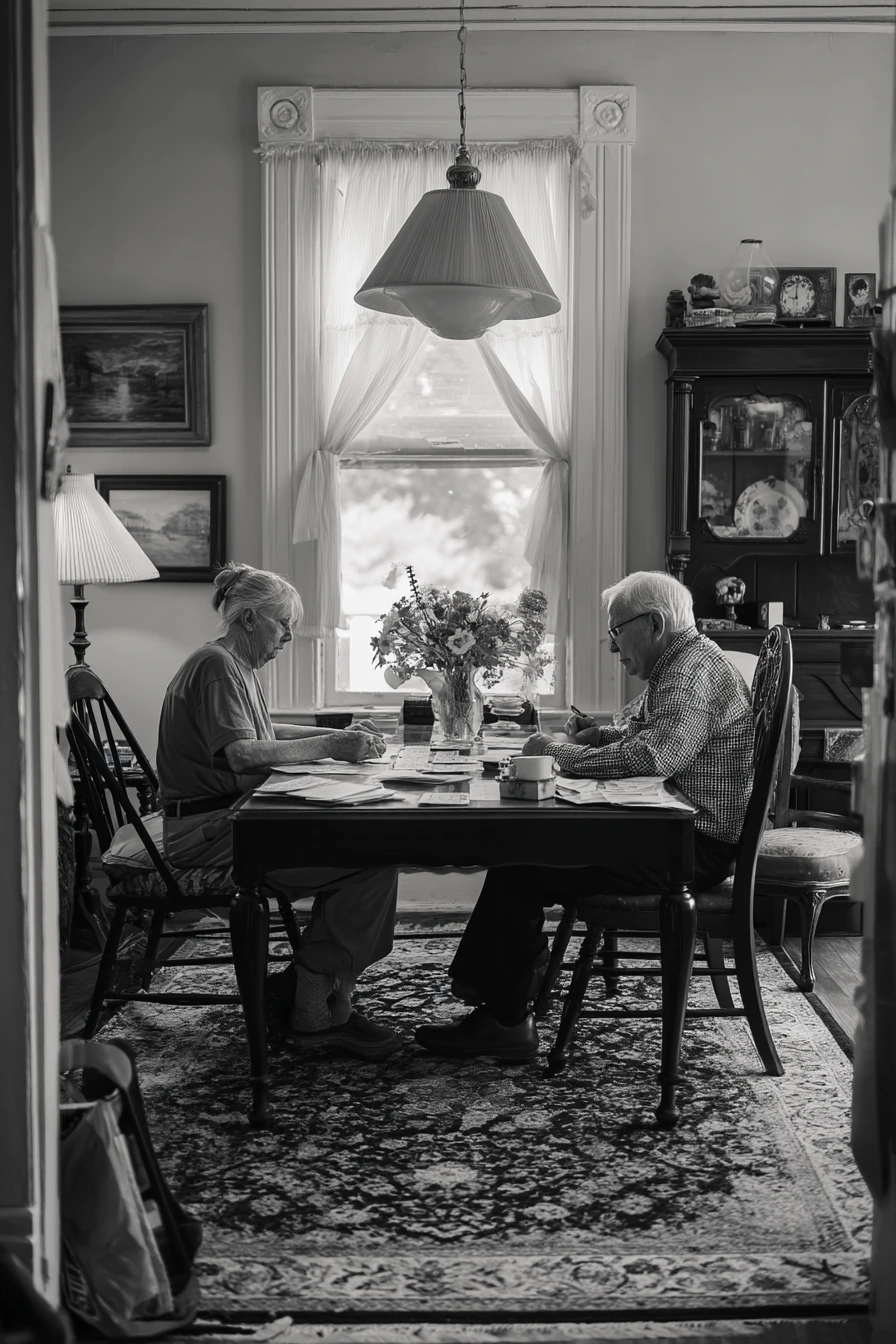
A sleek formal dining room can still be family friendly when the materials are durable and the layout is smart. A rectangular table paired with boucle chairs feels modern and tactile. Add a minimal chandelier and a large abstract art piece for a clean focal wall. A built in banquette with neutral cushions adds extra seating and keeps the room calm.
For real life styling, let the scene stay honest: cereal bowls, a backpack by the chair, crayons beside a folded newspaper. The trick is to limit the colors so the mess looks quieter. Keep art, cushions, and tabletop items in a tight palette of warm whites, tan, and soft gray. If you see water rings on the table, add coasters in a small dish and teach everyone where they live. A fruit bowl can stay out all the time and doubles as decor.
Use the console or side surface to catch daily items like a toddler bib and a phone charger. Add a small tray so chargers and keys do not sprawl. Because modern rooms can feel cold, bring in texture with a woven rug and thick drapery. If the banquette is near a window, use a washable cushion cover and keep a small throw nearby for comfort.
- Pick a table finish that hides marks, like matte wood or a textured top.
- Use a banquette to save floor space and create a cozy corner.
- Keep crayons and school papers in a lidded box on the console.
- Choose one large art piece instead of many small frames for a cleaner look.
- Add soft lighting with one dimmable lamp to balance bright window light.
Pro Design Tip: Use a washable, low pile rug under a banquette setup so crumbs and chairs are easier to manage.
Budget Considerations: Custom banquettes can be expensive; use a freestanding bench with wall mounted cushions to get a similar look for less.
6. Renter Friendly Formal Dining Room With Removable Wallpaper

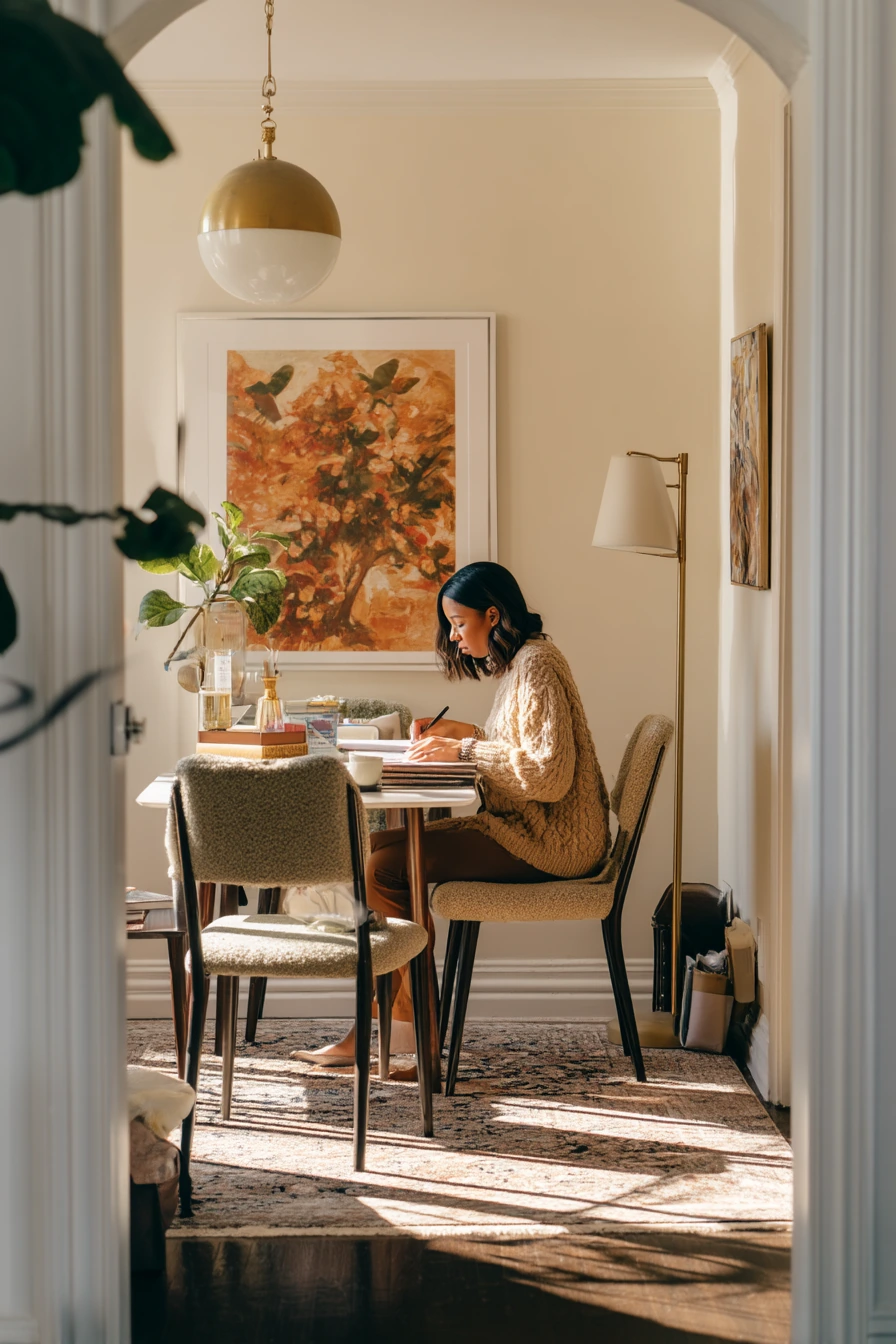
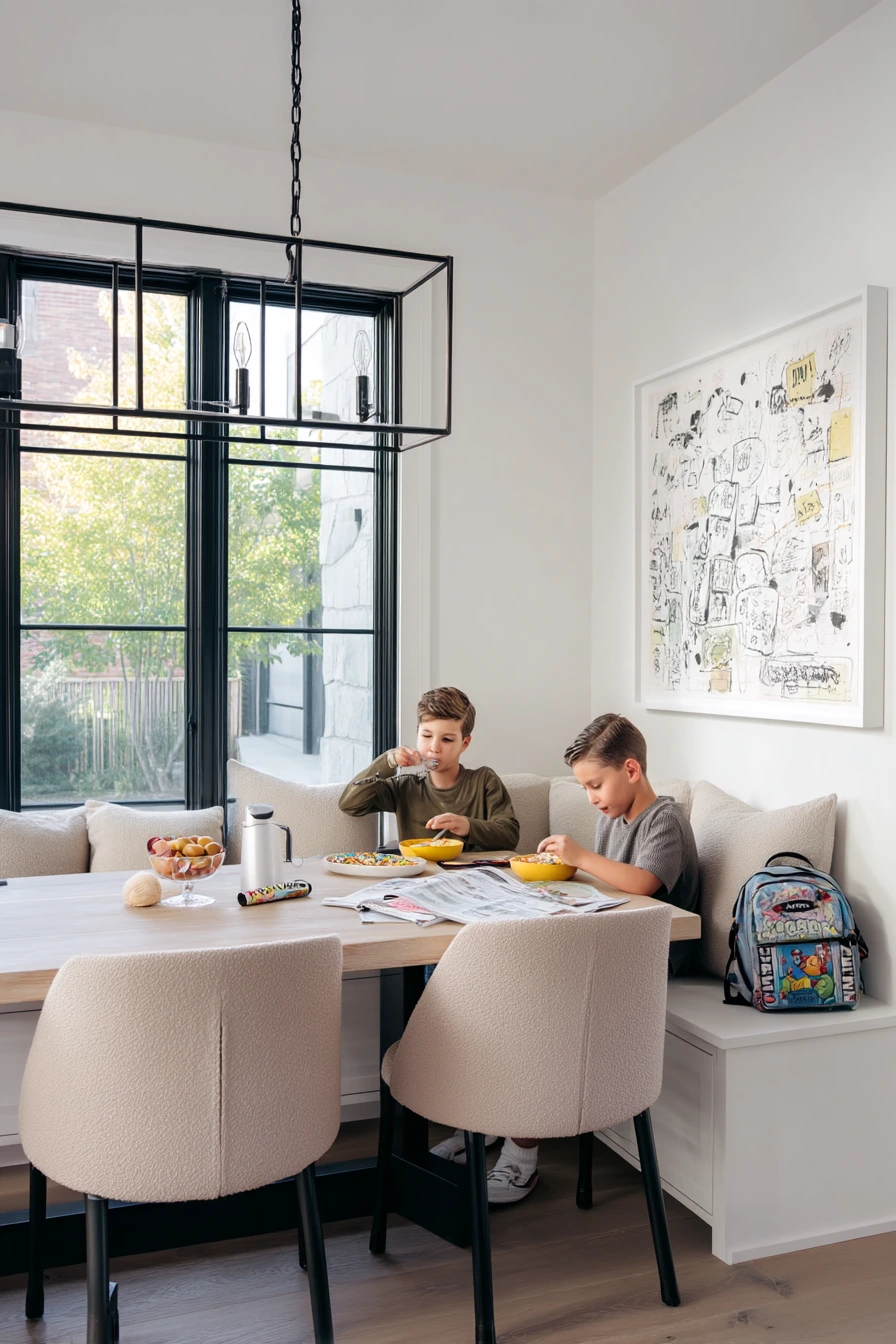
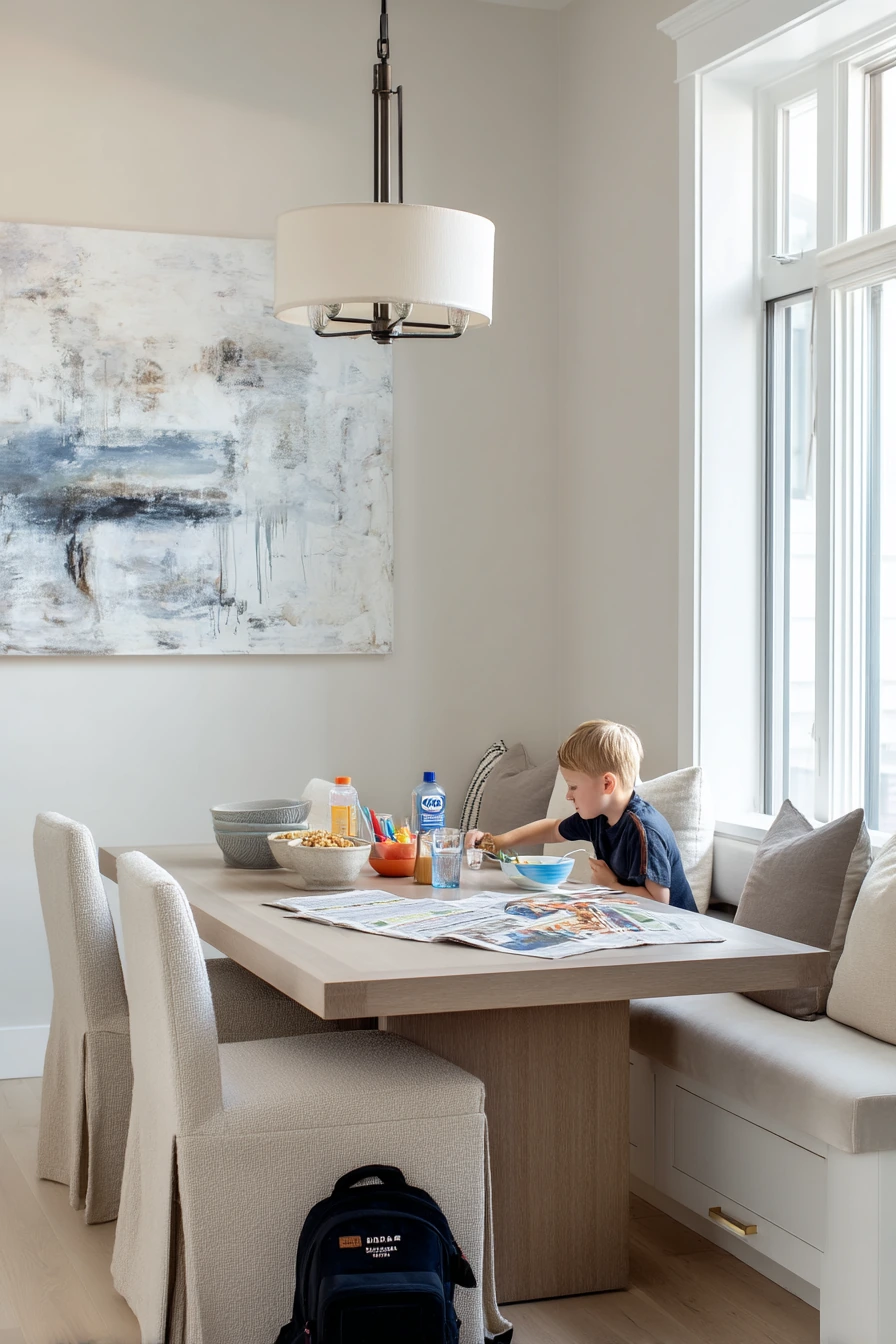
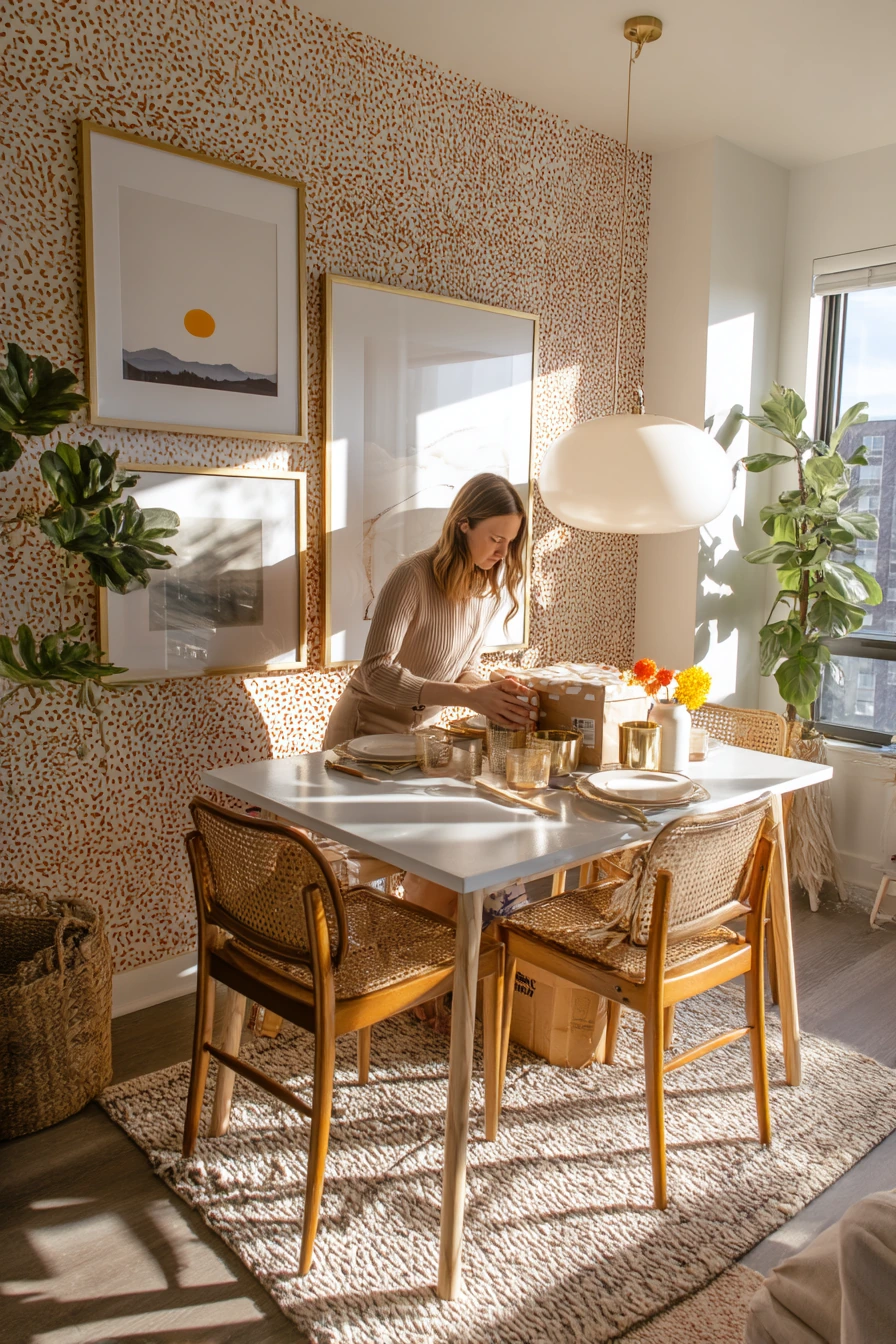
A renter friendly formal dining room can feel elevated without permanent changes. Start with a removable wallpaper accent wall to add pattern and depth. Pair it with a compact dining table and thrifted chairs that you can refinish or paint. A brass floor lamp adds a warm glow, and oversized art can lean on a console or shelf so you do not need extra holes in the wall.
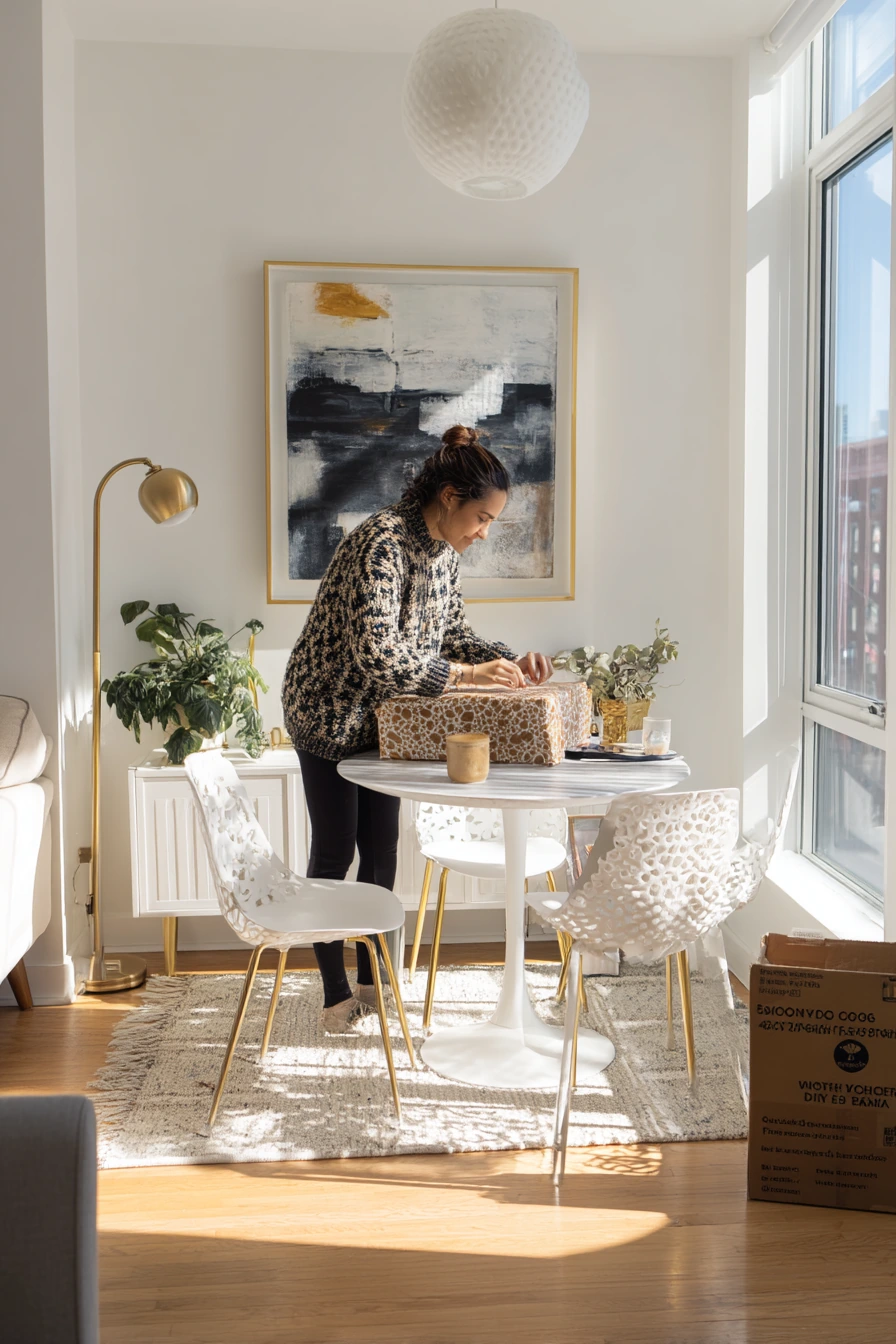
This setup works well for multi use days, like wrapping a gift at the table while a delivery box sits by the wall. The room still looks put together if you keep the work items in one zone. Use a small caddy for tape, scissors, and ribbon so the tabletop clears fast. A folded throw over one chair adds softness and hides a less perfect seat. Add a plant that casts sunlit shadows to make the room feel welcoming and lived in.
To make the wallpaper look intentional, repeat one color from the pattern in your napkins or a small vase. Use a slim rug to define the space, especially if the dining area is near a hallway. Choose lighting that plugs in, like the floor lamp, so you can skip electrical work. When guests come, clear the table, add simple plates, and let the wallpaper and big art do the decorating.
- Choose peel and stick wallpaper with a subtle pattern for a formal look.
- Lean oversized art on a console for an easy, layered wall moment.
- Refinish thrifted chairs with matching stain or paint for a cohesive set.
- Use a narrow rug to protect rental floors and add warmth.
- Store wrapping supplies in a basket so the table can switch back to dining.
Pro Design Tip: Line up wallpaper seams behind the art or the console to make any tiny gaps harder to see.
Budget Considerations: Removable wallpaper costs add up; use it on one wall only, or apply it inside a glass front cabinet for a smaller project.
7. Festive Formal Dining Room for Holiday Meals and Cozy Hosting

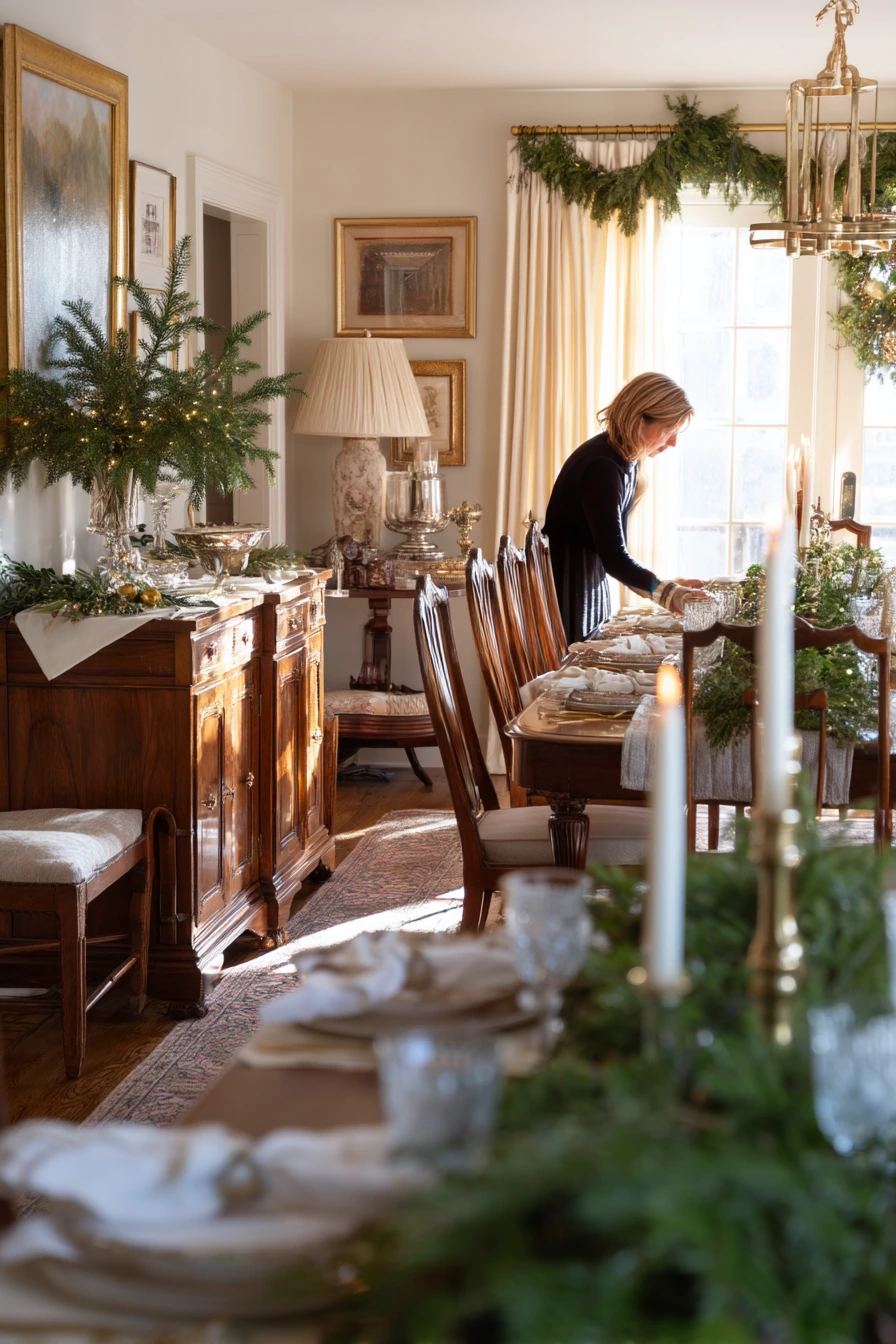
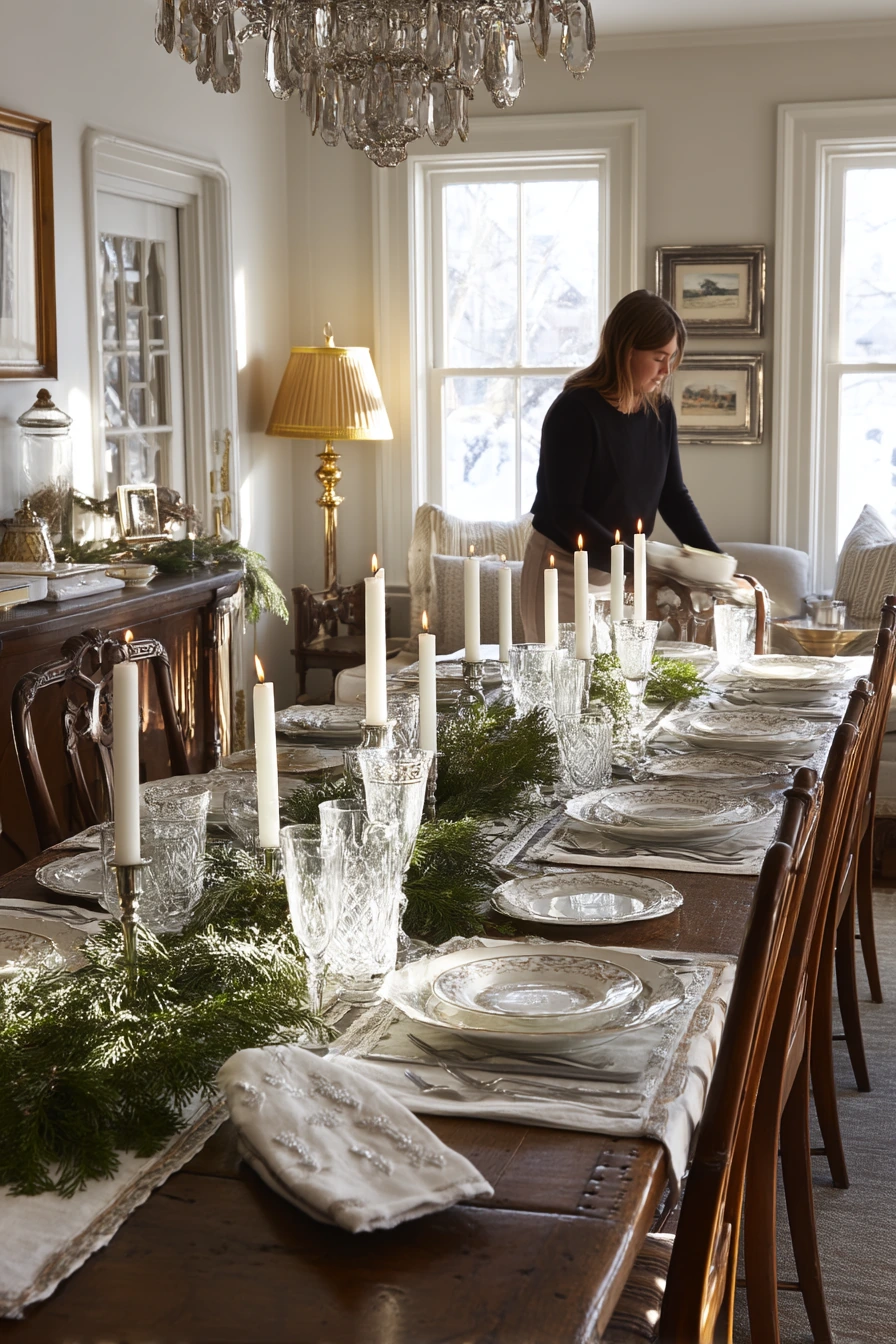
A festive formal dining room does not need heavy decoration to feel ready for a holiday meal. Start with a long table, classic chairs, and a sideboard topped with a silver tray. Add white candles, evergreen garland, and crystal glasses for a traditional look that feels bright and warm under golden lamp light.
Make the table feel real, not staged, by letting a few lived in cues show. A recipe card near the serving area and a few bread crumbs after a tasting moment are normal. Keep those details contained by using a runner and a crumb brush tucked in the sideboard. If a child peeks in carrying napkins, plan for it by using easy napkin rings or simple folds. A mitten dropped near the chair reads as sweet when the rest of the floor is clear.
For styling, keep the centerpiece low and long so people can talk across the table. Use mixed heights with candles, but place them in stable holders. On the sideboard, create a serving zone with plates, a water pitcher, and the silver tray for desserts. If there is a wrapped gift tucked under the console, keep it to one or two so it feels intentional and not like storage overflow.
- Use unscented taper candles so food smells stay in control.
- Mix real and faux evergreen to keep the garland fresh longer.
- Set out extra napkins on the sideboard for quick swaps.
- Keep glassware simple by using one crystal style for the whole table.
- Add a small bin near the doorway for mittens and hats during the meal.
Pro Design Tip: Build the table center with three repeating elements, like garland, candles, and one accent, to avoid a crowded holiday look.
Budget Considerations: Crystal glasses can be costly; buy a small set for the head of the table and use clear everyday glasses elsewhere.

8. Minimalist Formal Dining Room That Still Feels Human
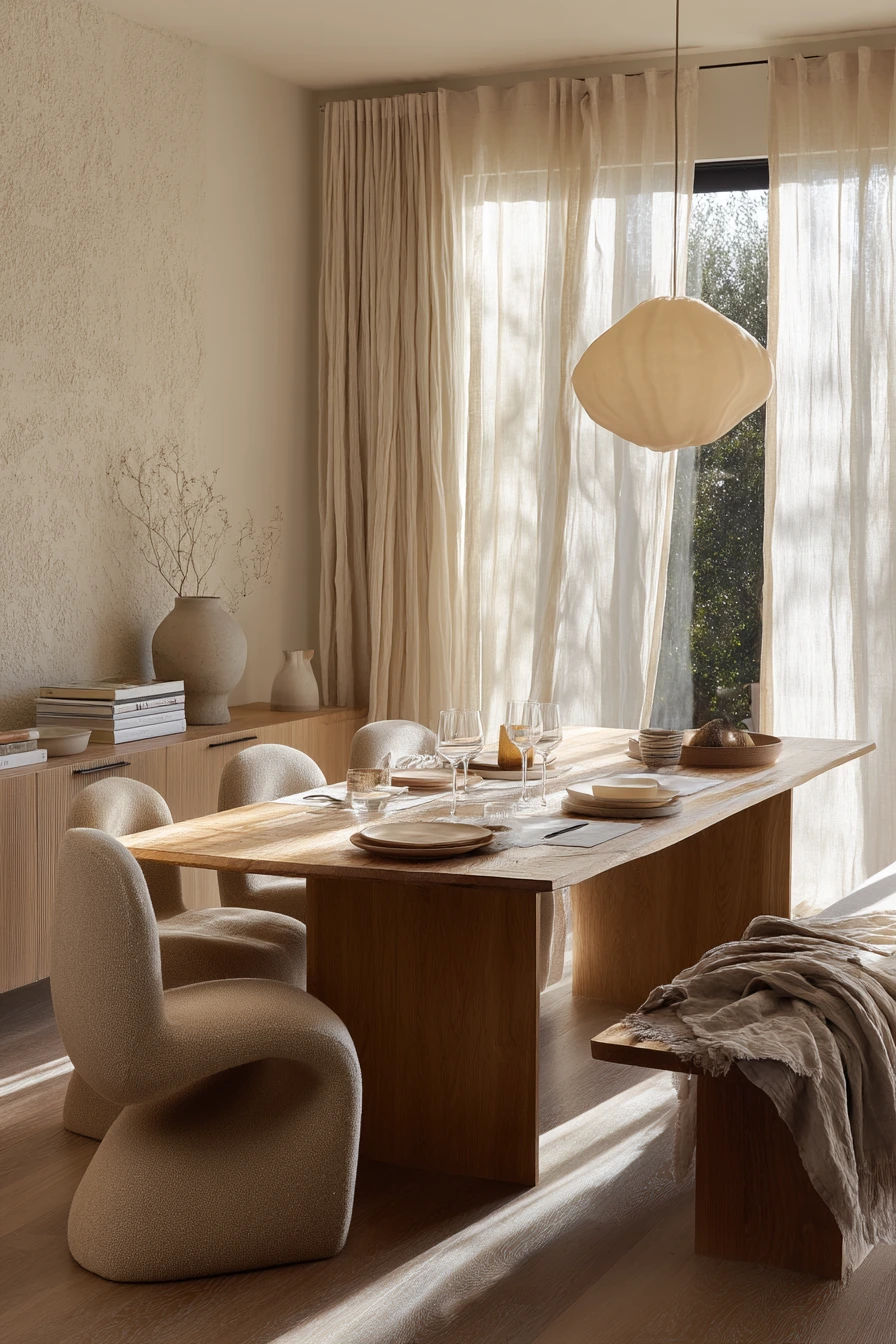
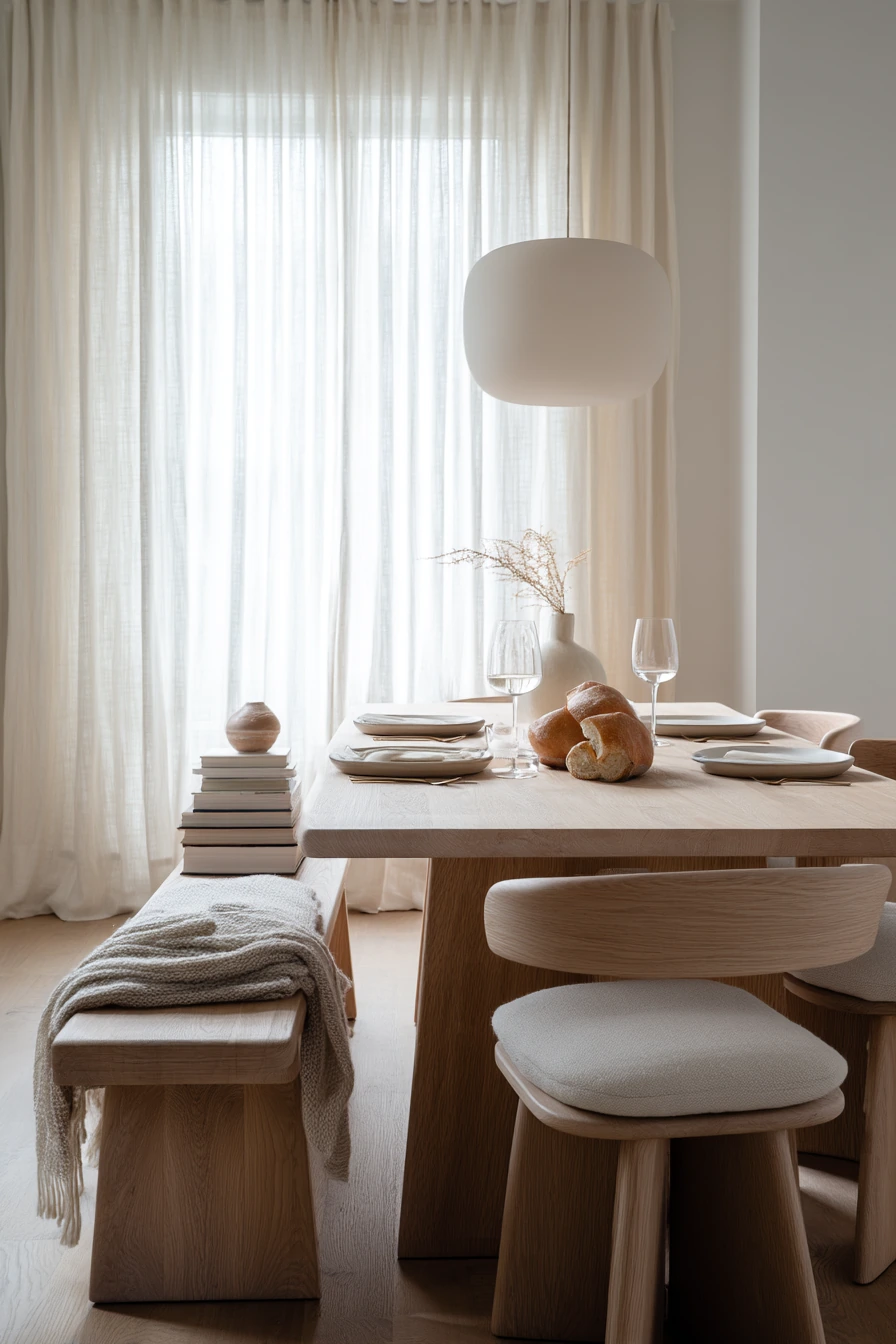
A minimalist formal dining room can feel calm without feeling empty. Start with a simple oak table and four sculpted chairs. Add a plaster pendant for soft texture overhead, then use textured drapery to frame the window. A low credenza styled with a single vase and stacked books gives storage without visual noise.
To keep the room human, let small dinner details stay visible. Two plates, one wine glass, a bread basket, and a folded napkin are enough to show the room is used. Hide the rest. A charging cable near the credenza is common, but it looks better routed through a cable box or clipped along the back edge. A soft blanket on the bench adds comfort and stops the room from feeling too strict.
Minimal spaces rely on good spacing. Keep the tabletop mostly clear and choose one centerpiece that is low and simple, like branches in a vase. Use one wood tone across the table and credenza so the room feels steady. Diffused morning light works best, so choose sheer layers that soften glare. When you want more formality, add matching linen napkins and a simple bowl in the center, then remove them after dinner.
- Pick chairs with sculptural lines to add interest without extra decor.
- Use a credenza to hide small items like chargers, matches, and spare napkins.
- Choose one vase and one stack of books to keep the styling tight.
- Add texture with drapery, not with lots of tabletop accessories.
- Use a bread board and basket as functional decor that fits the style.
Pro Design Tip: In minimalist rooms, keep contrast intentional by using two main tones and one accent, such as oak, warm white, and black.
Budget Considerations: Plaster pendants can be expensive; look for a simple matte dome pendant and use textured bulbs or warm dimming to get a similar softness.


9. Traditional Formal Dining Room With China Cabinet and Family Photos
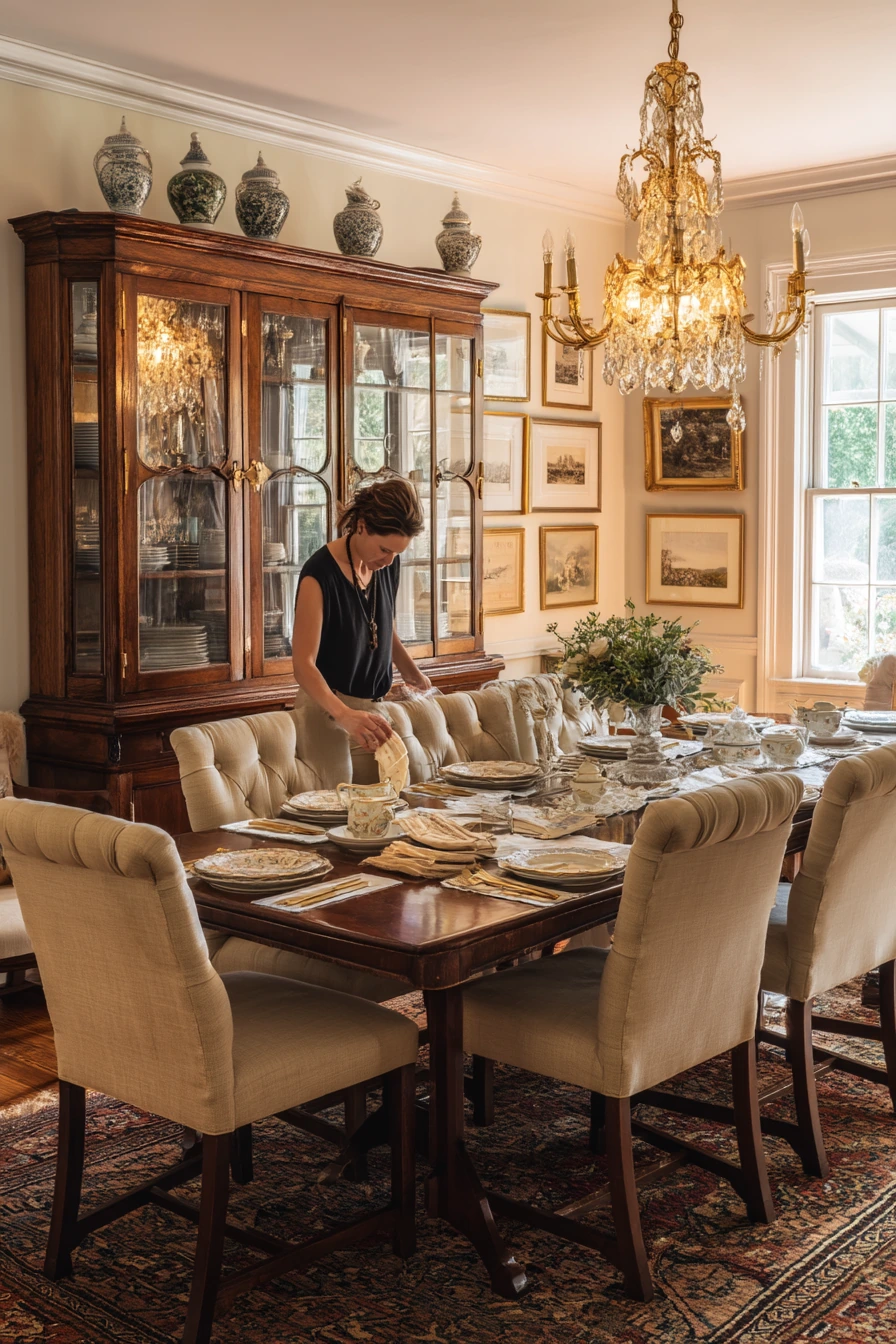

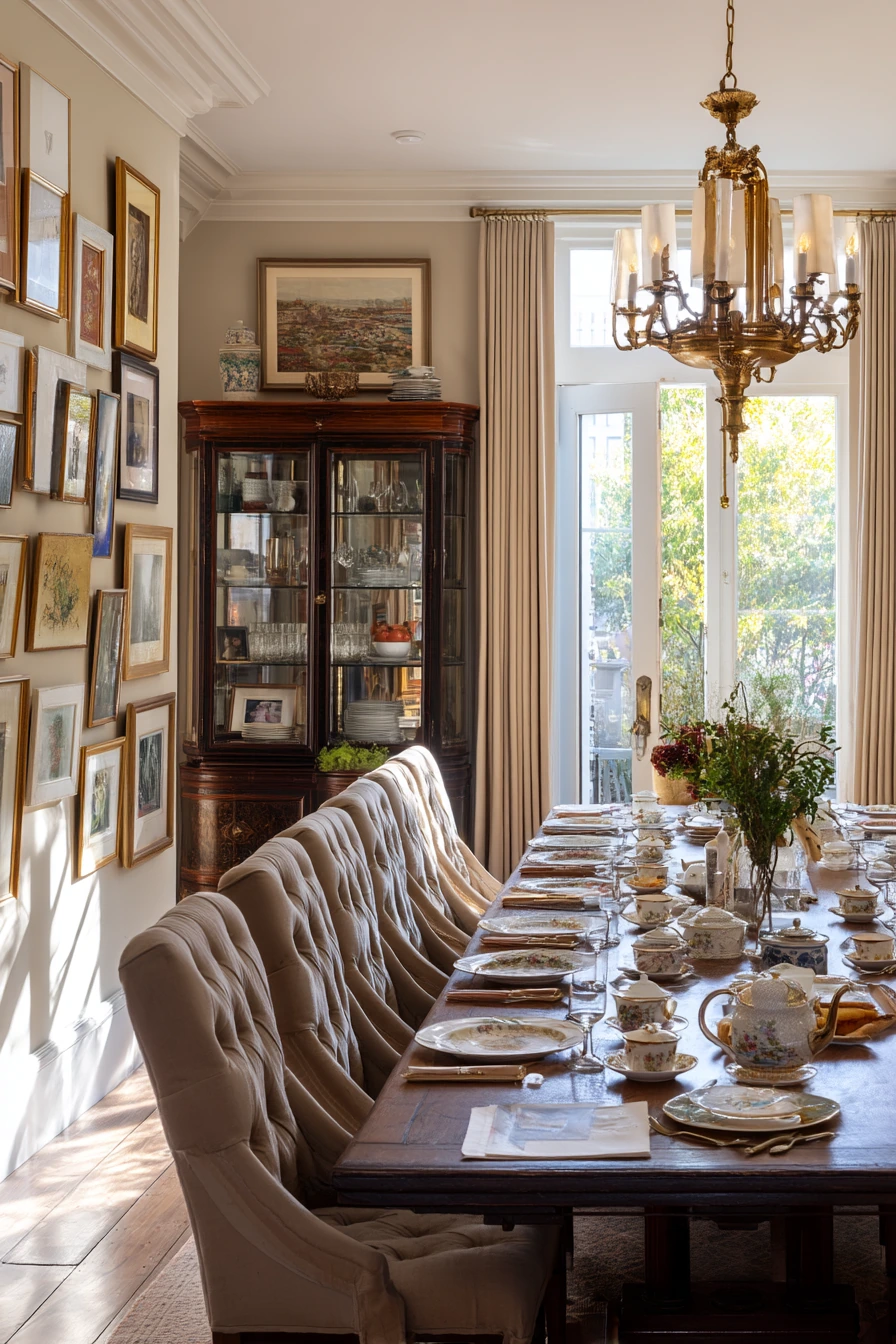
A traditional formal dining room feels welcoming when it is layered and personal. Start with a long table and tufted chairs for comfort. Add a china cabinet to display dishes and store serving pieces. A classic chandelier with warm brass tones sets the mood, while framed family photos bring in meaning and make the room feel like part of the house, not a museum.
For a realistic scene, style it like you would before relatives visit. An older homeowner arranging dessert plates, with tea service already set, feels warm and practical. Keep reading glasses and a recipe book nearby on the sideboard so the host is not running to the kitchen. A small vase with garden clippings adds a fresh, simple centerpiece that fits the collected look.
To keep the room from feeling heavy, watch the mix of patterns. If the chairs are tufted and the cabinet is ornate, choose simple linens and a plain rug. Use the cabinet lighting if you have it, or add small puck lights inside to highlight glassware. Keep the tabletop clear between meals by using a decorative bowl for everyday items like keys and note cards, then move it to the cabinet when guests arrive.
- Group family photos in matching frames for a tidy, classic gallery look.
- Use the china cabinet lower shelves for table linens and serving trays.
- Choose a warm white bulb in the chandelier to soften brass and wood.
- Keep a dessert plate stack on the sideboard during gatherings for easy serving.
- Use a small vase of clippings instead of a large floral arrangement for better conversation.
Pro Design Tip: Place the china cabinet on the longest wall and leave at least 36 inches of walkway so the room stays comfortable when chairs are pulled out.
Budget Considerations: Built in cabinets cost more; a secondhand china cabinet plus simple interior lighting can create the same effect for less.

10. Open Plan Formal Dining Room That Still Feels Defined


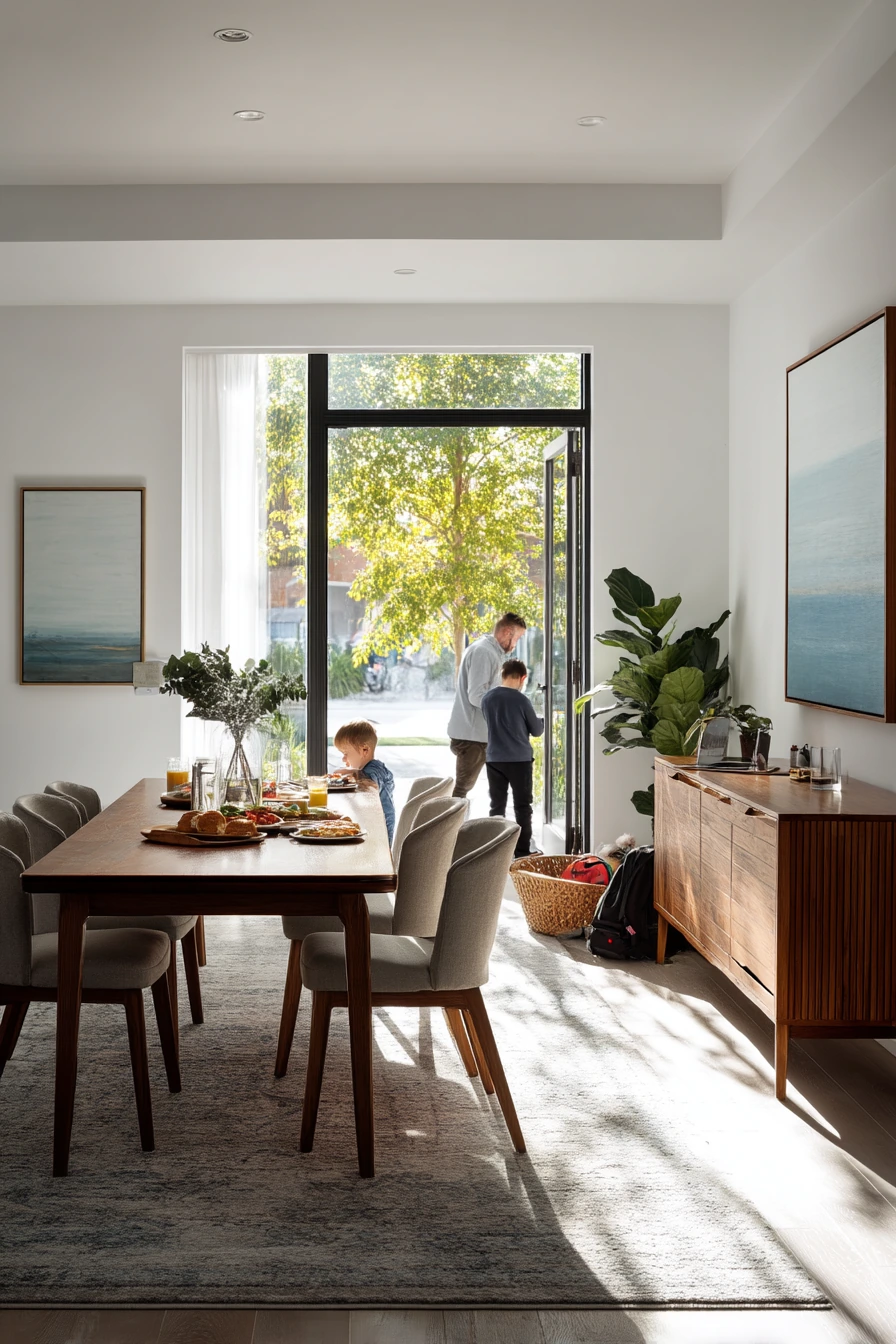
An open plan home needs a formal dining room area that feels connected but clear. Start with a statement table and upholstered chairs, then anchor the space with a rug. Add a sideboard and one large art piece to create a strong dining zone even when the living area is close by.
This layout works best when you plan for daily life. A family of four clearing lunch, a toddler toy basket near the threshold, and a laptop closed on the sideboard are all normal. Keep the dining area from blending into the rest of the house by using repeat elements, like matching wood tones or one metal finish across the chandelier and sideboard hardware. Use the sideboard as a control center for paper, devices, and serving pieces, so the table stays ready for meals.
For styling, let plant shadows across the rug add movement, but avoid too many small objects on the table. Use a simple bowl in the center and keep water glasses on a tray when not in use. If backpacks land nearby, add wall hooks or a slim bench just outside the dining zone. Soft noon window light can wash out art, so choose a piece with contrast and hang it at eye level to hold the space visually.
- Use a large rug to mark the dining zone and reduce echo in open layouts.
- Keep the sideboard top mostly clear with one tray for daily items.
- Add a toy basket that matches the room colors so it blends in.
- Choose chairs with arms only on the ends to keep the layout flexible.
- Use one large art piece to create a clear focal point for the dining area.
Pro Design Tip: Leave at least 42 inches between the dining table and nearby living room furniture to keep walkways easy in an open plan.
Budget Considerations: Large rugs can be expensive; look for indoor outdoor rugs for a lower price and easier cleaning in high traffic spaces.

Formal dining room ideas work best when they fit your real routine. Start with the right table shape, add comfortable seating, and use storage like a sideboard, console, or credenza to keep clutter contained.
Focus on lighting, a strong art moment, and a few textures like linen, wood, and a rug. Then let small lived in details show in a neat way, so the room feels welcoming every day.
FAQ
1. What makes a dining room feel formal? A formal look comes from a clear layout, a statement light fixture, coordinated seating, and finished details like art, drapery, and a sideboard.
2. How do I make a formal dining room kid friendly? Use performance fabrics, washable rugs, and storage bins for school papers and supplies. Keep breakables in a cabinet with doors.
3. What is the best table shape for a small dining room? A round pedestal table saves space and improves flow because there are no sharp corners and the base is easier to navigate.
4. How high should a chandelier hang over a dining table? A common range is 30 to 34 inches from the tabletop to the bottom of the fixture, depending on ceiling height and chandelier size.
5. How do I style a sideboard in a formal dining room? Use a simple formula: one lamp, one tall item like art or a mirror above, and one tray or bowl to hold small items.
6. How can I create a formal dining area in an open plan home? Anchor it with a rug, add a sideboard, and use one large art piece. Keep walkways wide so the zone feels intentional.
7. What are renter friendly upgrades for a dining room? Try removable wallpaper, plug in sconces or floor lamps, leaning art, and slipcovered chairs that can move with you.