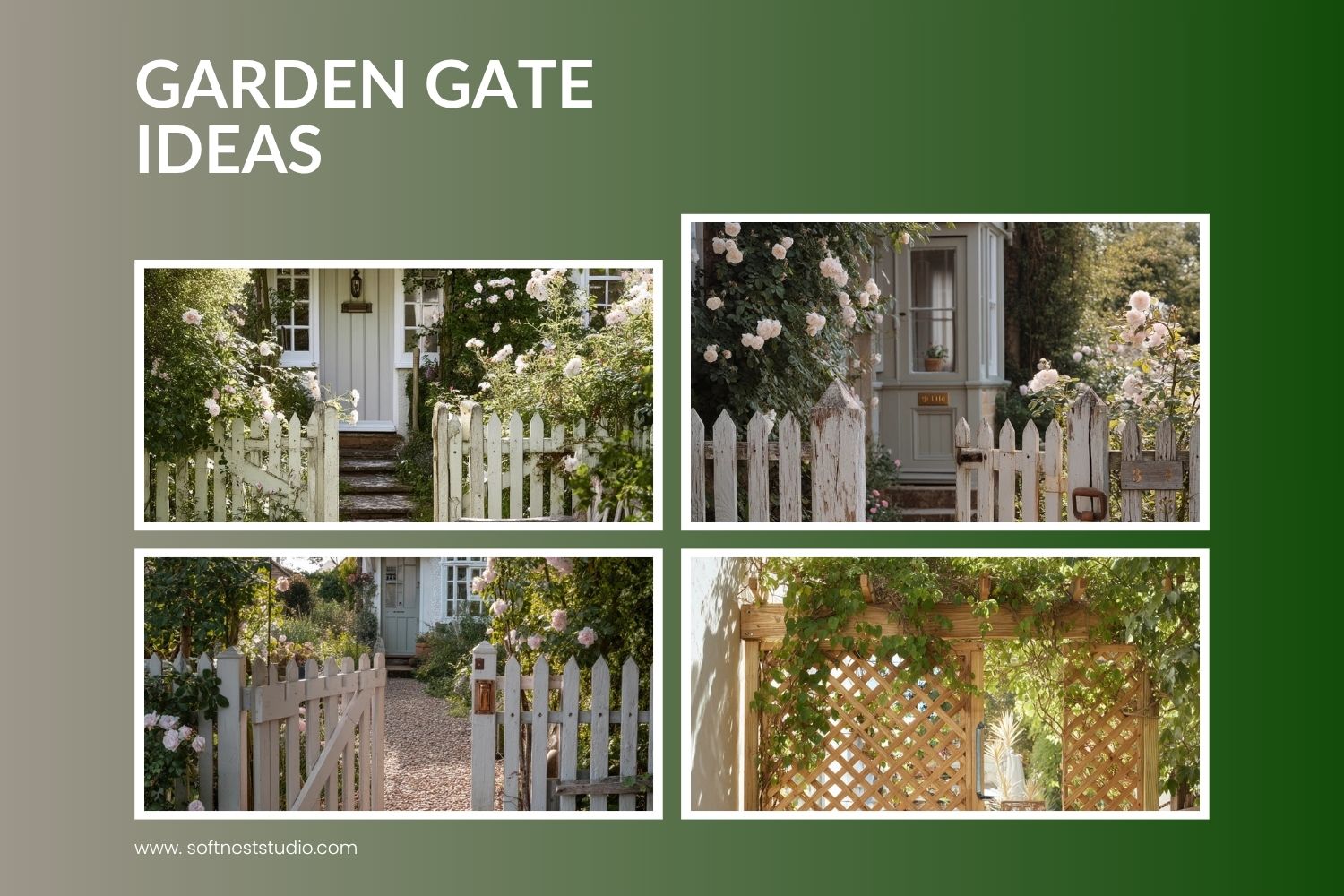
Garden gate ideas can change how your whole yard feels. A gate is the first thing you touch when you come home, and it sets the tone for the path, plants, and porch.
In this guide, you will see 10 real-life gate styles, from painted wooden pickets with climbing roses to matte black steel privacy slats and arched wrought iron by stone posts. Each one includes simple styling tips you can copy.
You will also get practical details that matter, like latches, hinges, gravel for drainage, and how to add planters, trellis panels, and lighting without making the space feel crowded.
If you are saving ideas from Pinterest, use this post as your checklist. It will help you pick a gate that fits your home, your budget, and the way your family actually uses the yard.
1. Painted Wooden Picket Garden Gate With Climbing Roses
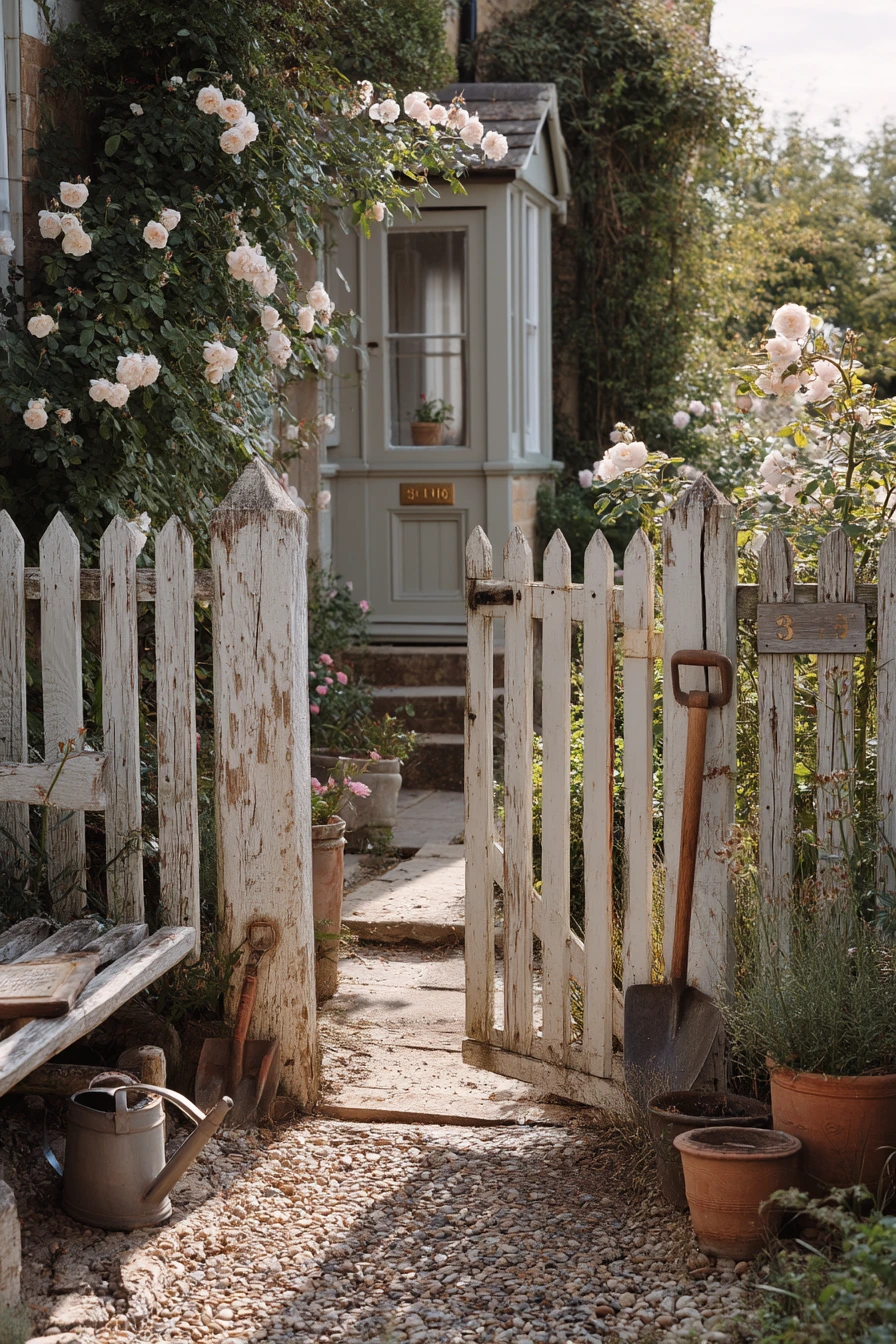
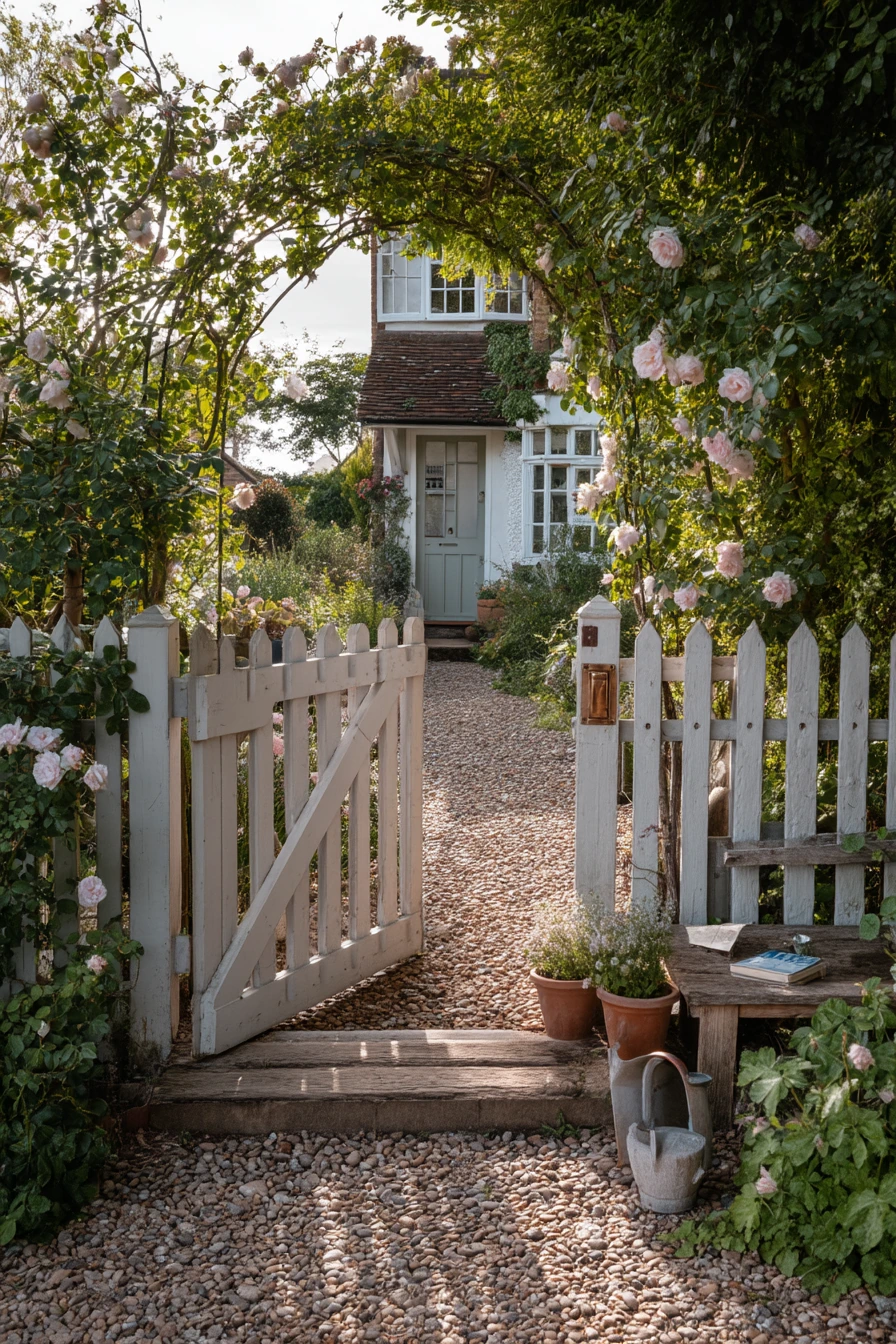
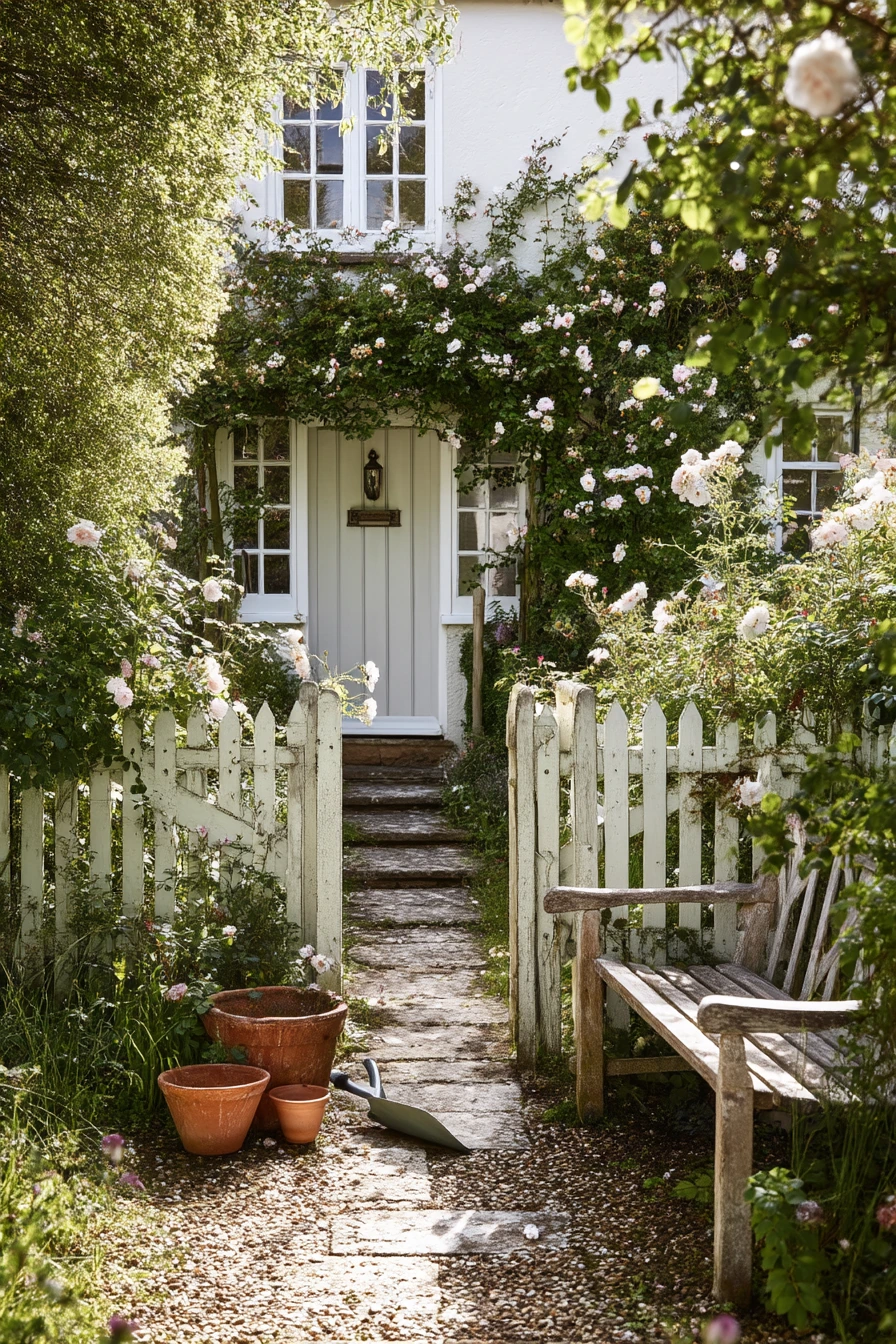
A painted wooden gate with soft white pickets is a classic garden entrance because it feels friendly and clear. Pair it with a gravel path and terracotta pots, and the entry looks neat even when life is messy. Details like a weathered brass latch and a handwritten house number plaque make it personal without trying too hard.
To style this look, let the planting do some of the work. Train climbing roses so they spill over the fence line and soften the straight edges of the pickets. Keep the path simple with compacted gravel, then add one bench or small landing spot where you can set mail, a watering can, or a basket for garden tools.
For daily use, choose a latch that feels solid in your hand and closes with one motion. If kids run in and out, keep the swing smooth and check that the bottom rail clears the gravel after rain. A few lived-in cues are fine, like muddy boot prints or a child’s spade by the steps, because they make the entry feel like a real family home.
- Pick an exterior paint in soft white or warm cream for a calm look.
- Add a brass or bronze latch for a timeworn finish that hides small scratches.
- Use terracotta pots in two sizes to frame the opening without blocking the gate.
- Place roses on the hinge side so stems do not catch on the latch.
- Keep a small tray or hook near the bench for keys and garden gloves.
Pro Design Tip: Use the same paint color on the gate and a small nearby detail (like a fence cap or planter stand) so the entrance reads as one zone.
Budget Considerations: If new hardware is pricey, clean and wax existing brass, or choose a simple zinc latch and let it patina over time.
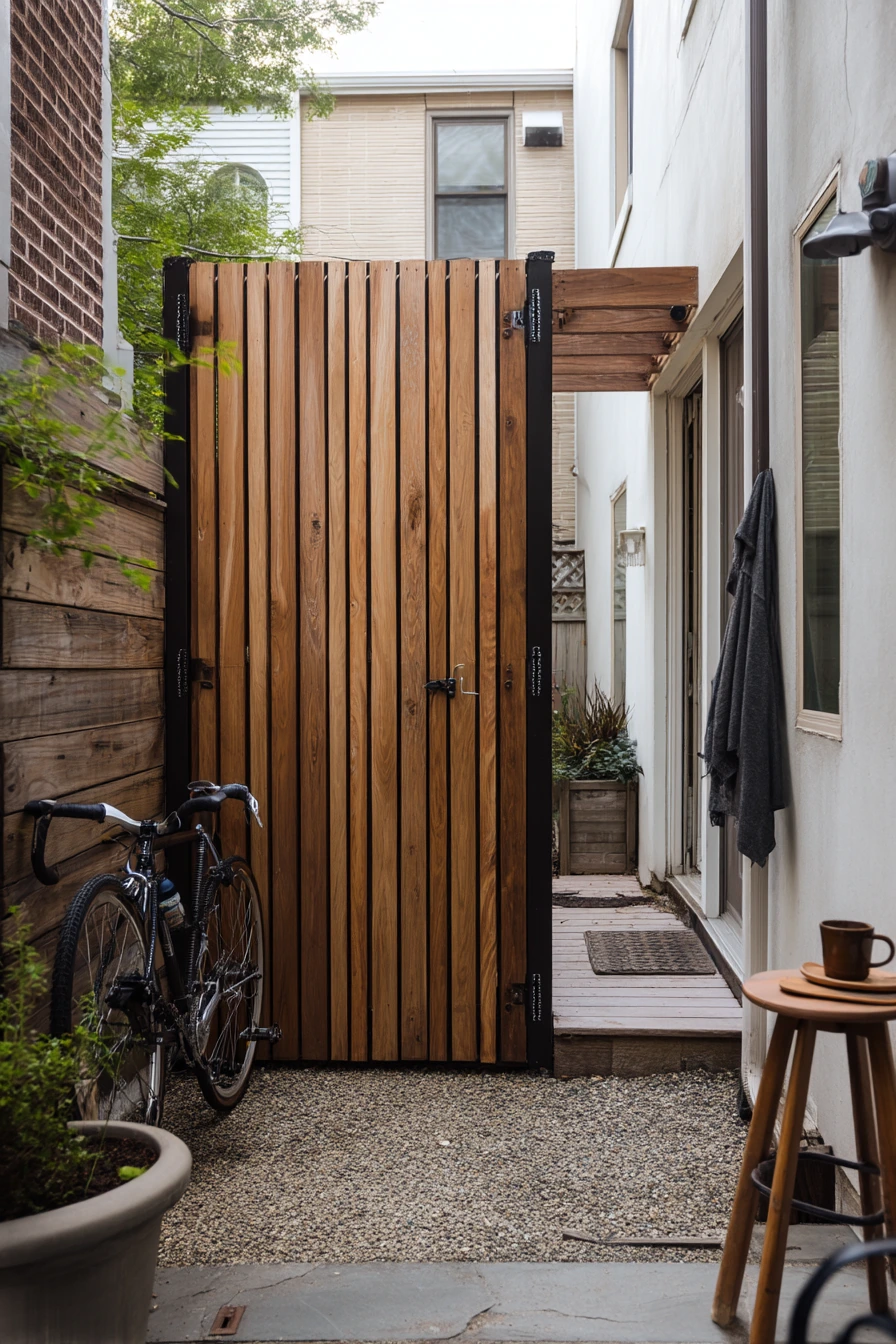
2. Narrow Side Yard Cedar Slat Gate for a Townhouse
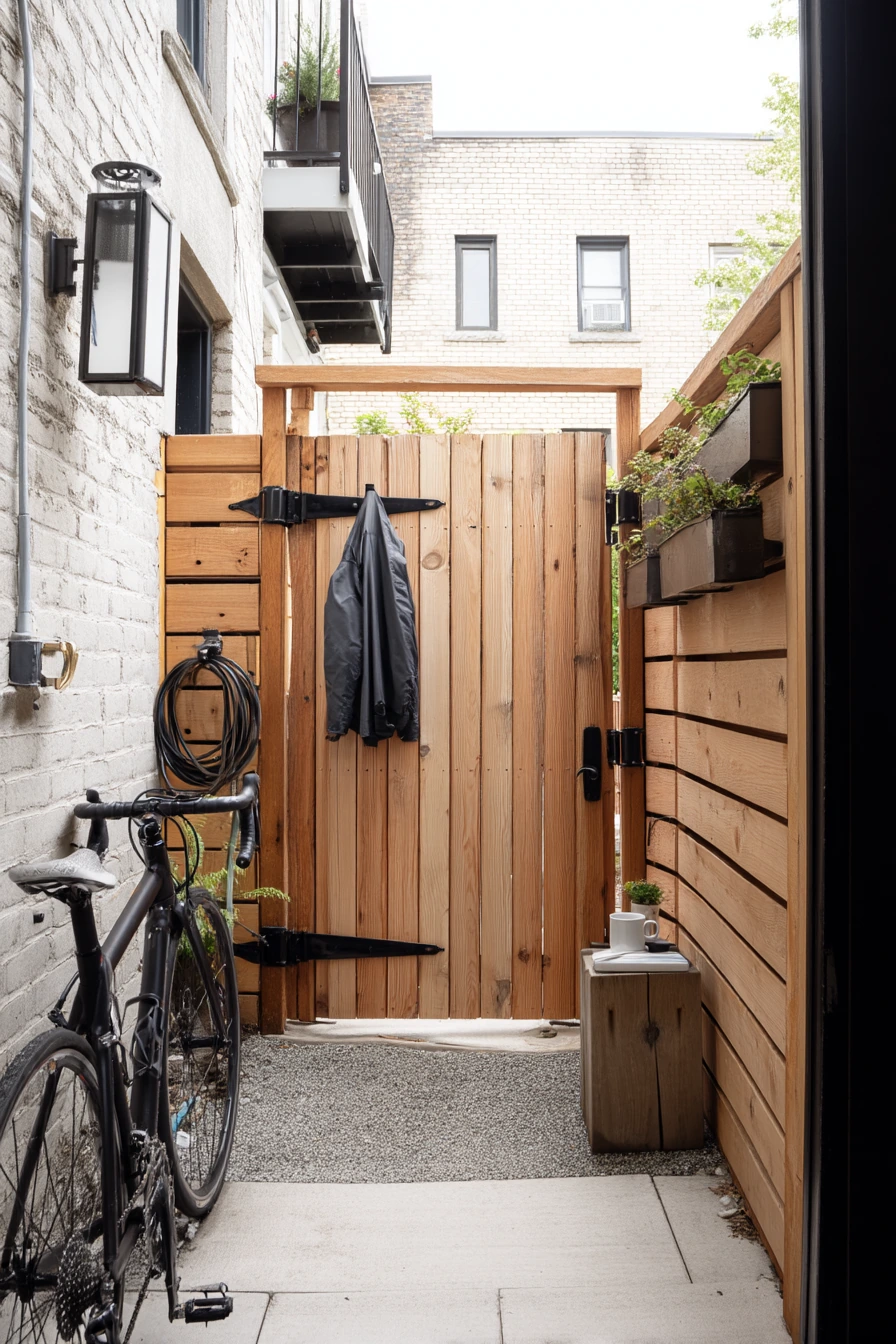
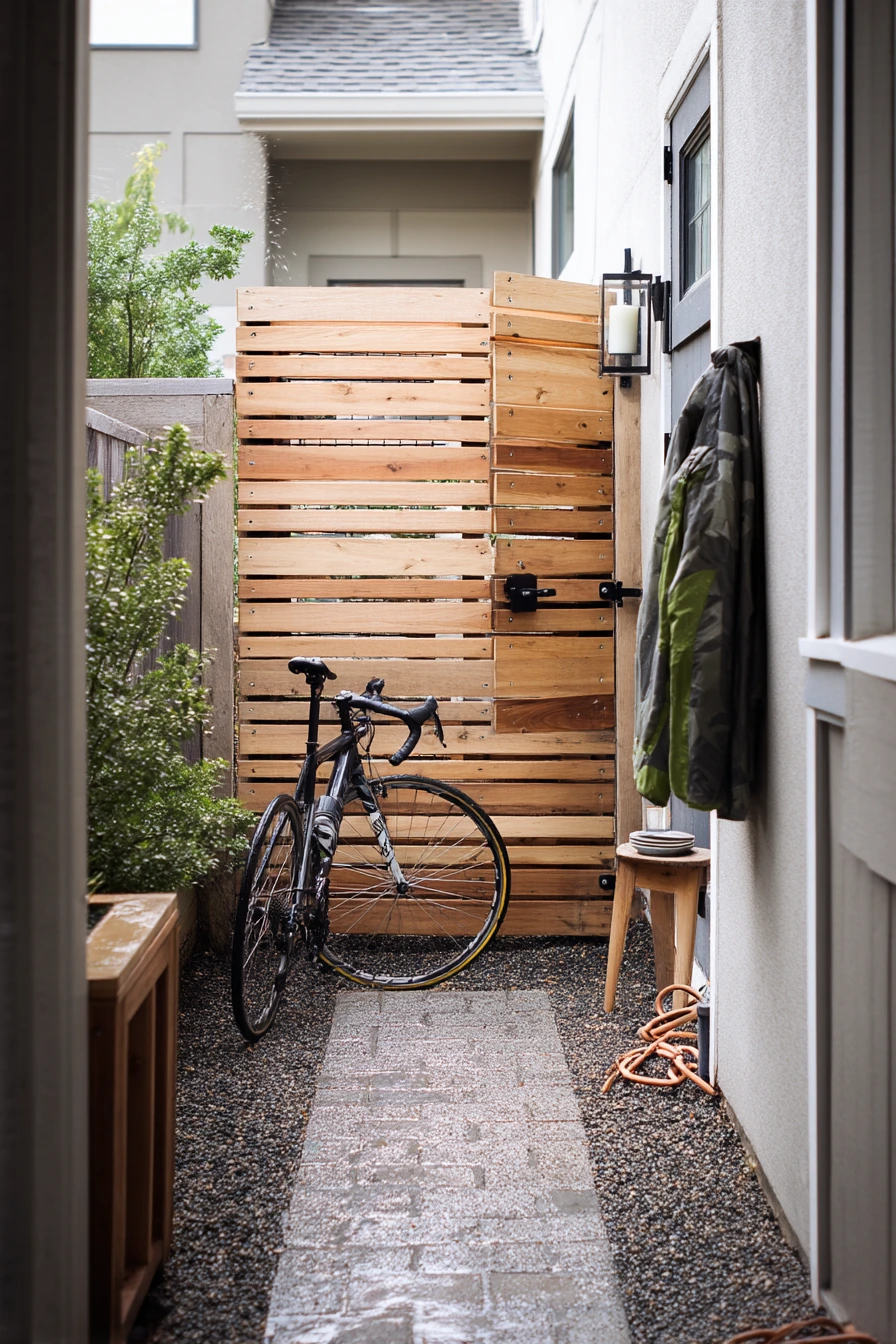
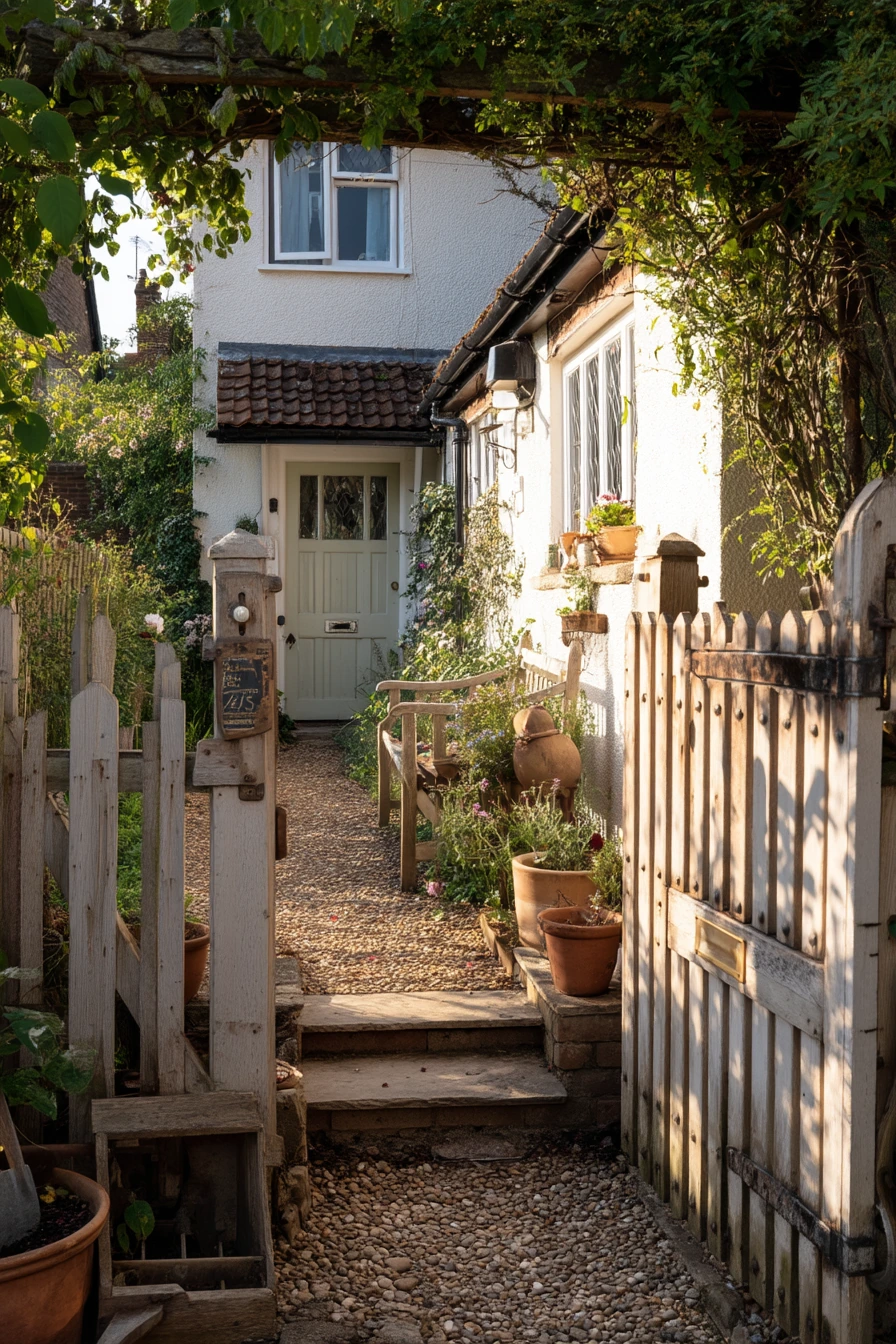
A narrow city backyard side gate needs to be slim, strong, and easy to open with one hand. Vertical cedar slats work well because they give privacy without feeling heavy. Black iron hinges add contrast and look sharp against warm wood.
In a tight passage, think in layers. Use compact trellis panels on the fence to add green without taking up walking space. Add slim herb planters along one side, and keep the path simple with a pea gravel strip that drains fast and stays clean in wet weather.
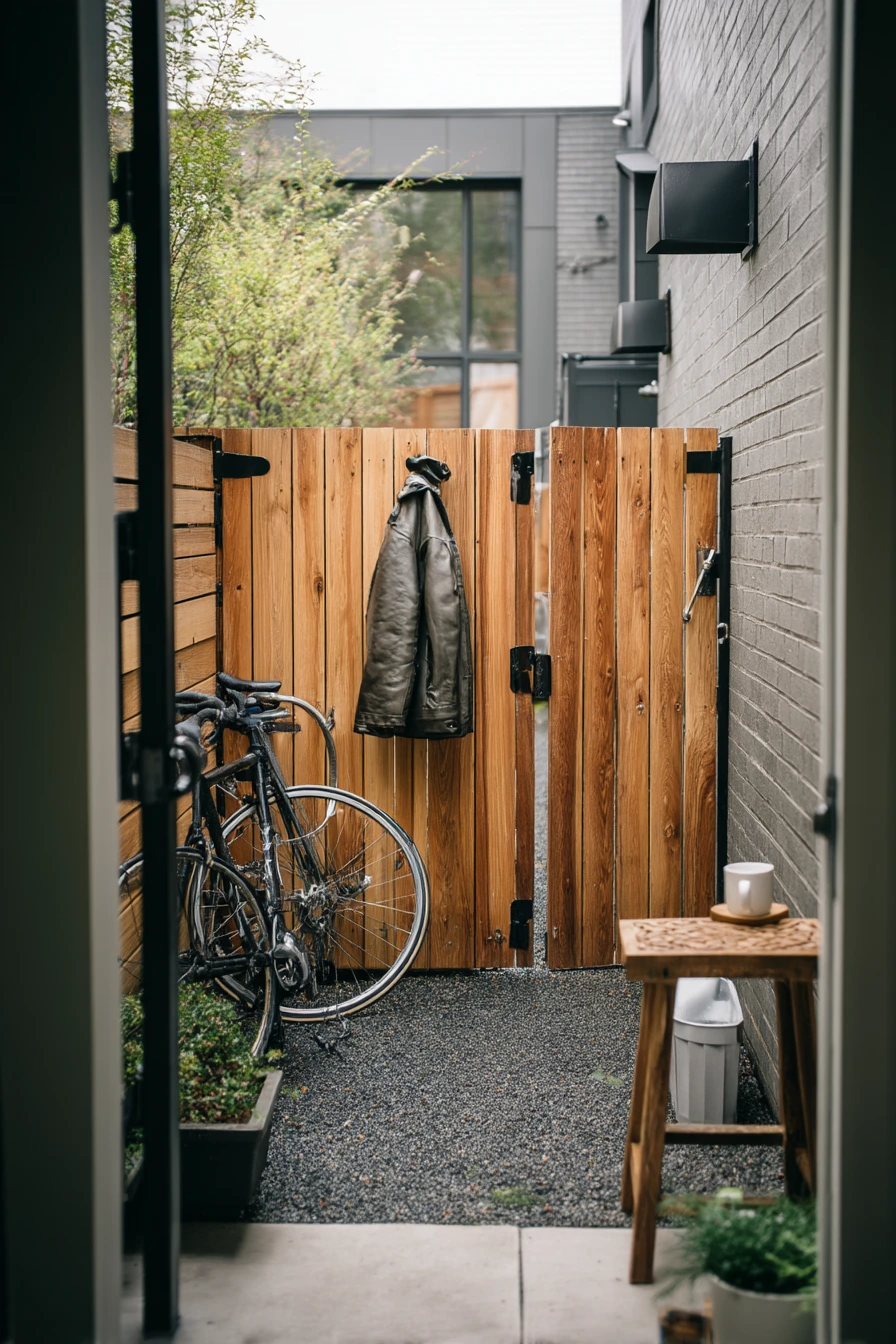
Make it feel practical, not staged. A coiled hose, a rain jacket on a hook, and even a coffee mug on a small outdoor stool fit the townhouse vibe. If bikes are stored nearby, leave a little clearance inside the gate so handlebars and wheels do not scrape the slats.
- Space cedar slats evenly for a tidy look and fewer warps over time.
- Choose heavy-duty iron hinges rated for outdoor use.
- Use pea gravel over landscape fabric to cut weeds in the strip.
- Mount a narrow trellis panel at shoulder height for climbing herbs or sweet peas.
- Hang one hook for a rain jacket or hose nozzle to keep the ground clear.
Pro Design Tip: Paint the hinge screws black or use black-coated fasteners so the hardware looks clean and intentional.
Budget Considerations: Cedar costs more than pine; for a lower price, use pressure-treated wood and stain it a cedar tone.
3. Matte Black Steel Garden Gate With Privacy Slats
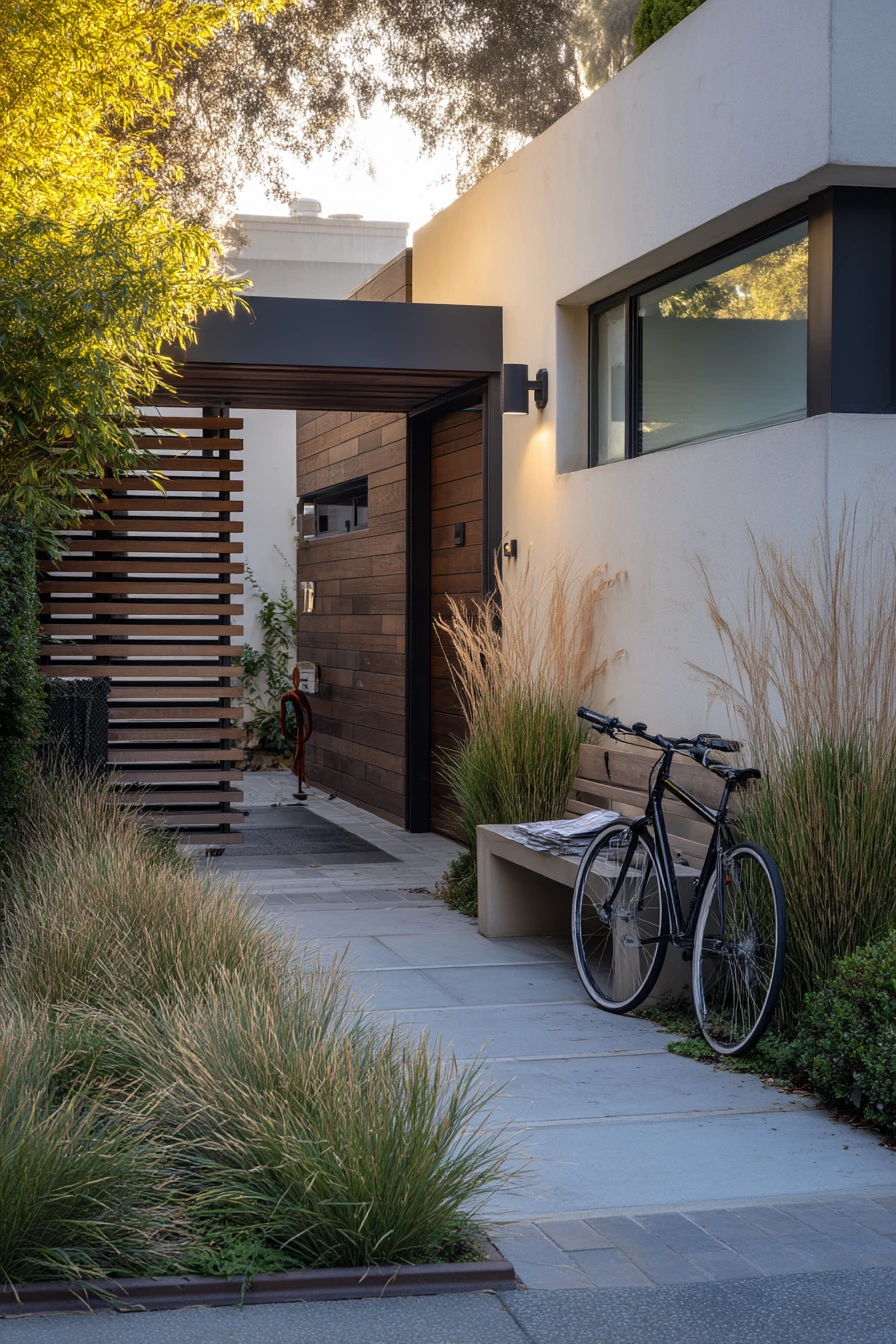
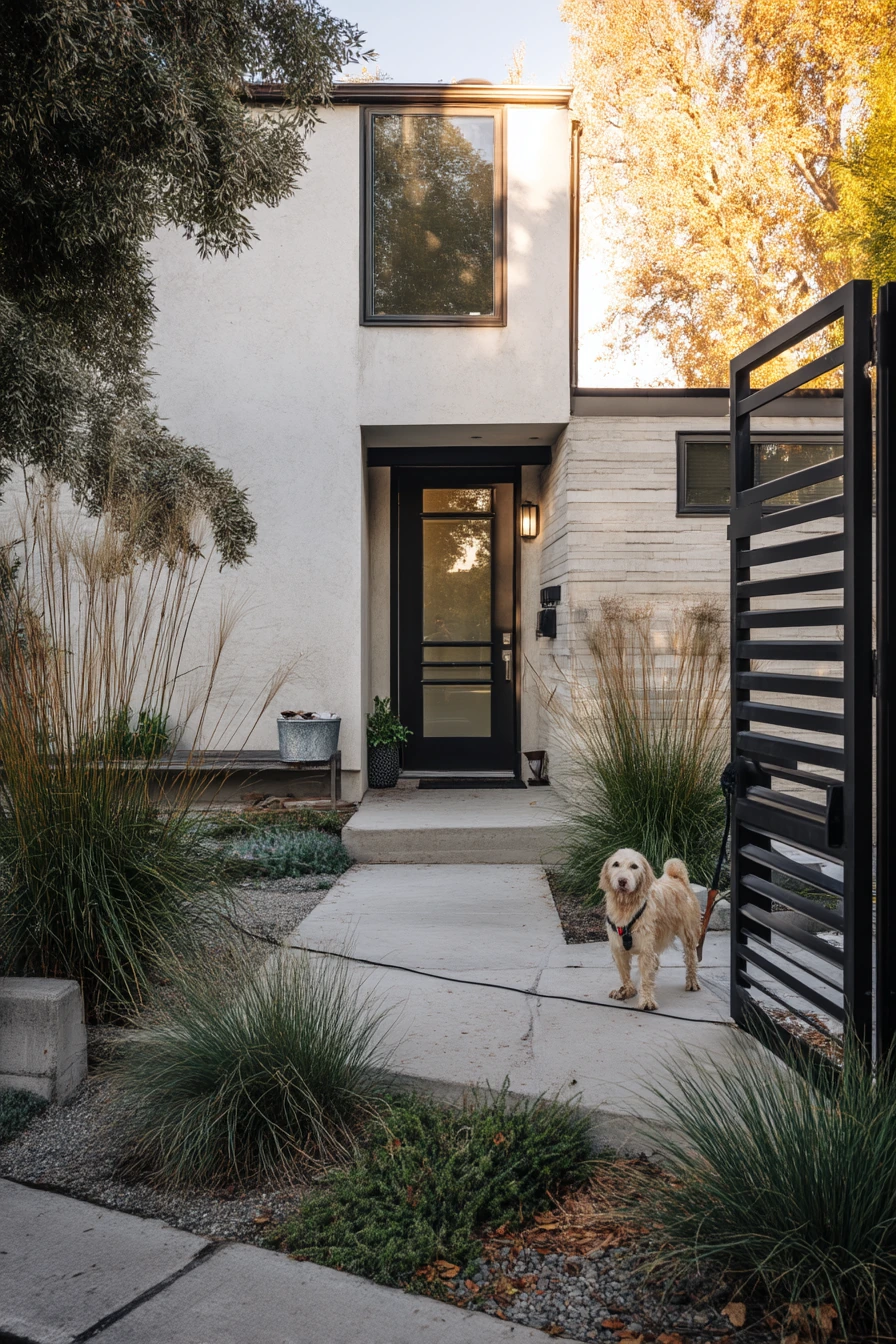
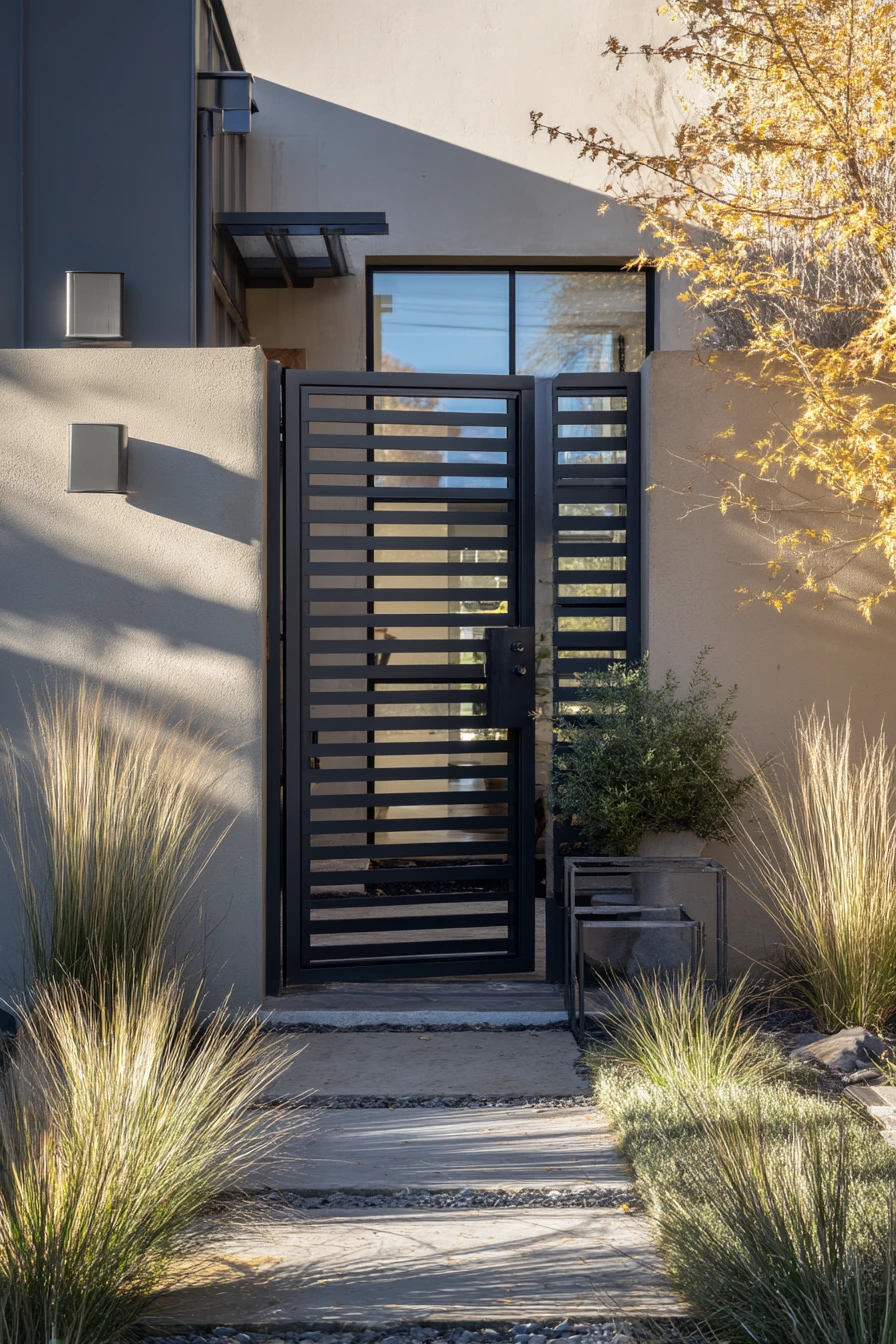
A matte black steel garden gate gives a modern frontage a crisp, grounded feel. Horizontal privacy slats block the view into the yard while still looking light. Pair it with pale limestone edging, ornamental grasses, and a low hedge so the dark gate looks balanced, not harsh.
To style this entry, keep the planting simple and repeated. Use the same ornamental grass in small groups, then run a low hedge to frame the approach. Limestone or light stone edging is a good match because it brightens the base and highlights clean lines.
Function matters at the front of the home. Make sure the latch is easy for adults and secure at night. Add a small bench or ledge near the gate area for everyday items like a folded newspaper, and keep a clear spot where delivery boxes can sit without blocking the swing. A key bowl inside by the window and a dog leash near the door tie the look to real life.
- Choose a matte finish to reduce fingerprints and glare.
- Use limestone or light pavers to contrast the black gate.
- Plant grasses in clusters for a soft border that moves in the wind.
- Keep the hedge low so the gate stays the main feature.
- Plan a drop zone for packages so the entry stays clear.
Pro Design Tip: Match the gate color to other small exterior details, like a house number, light fixture, or mailbox, for a pulled-together front view.
Budget Considerations: Custom steel can be expensive; look for ready-made metal panels and have a local fabricator fit them to your opening.
4. DIY Reclaimed Timber Backyard Gate With Sage Paint
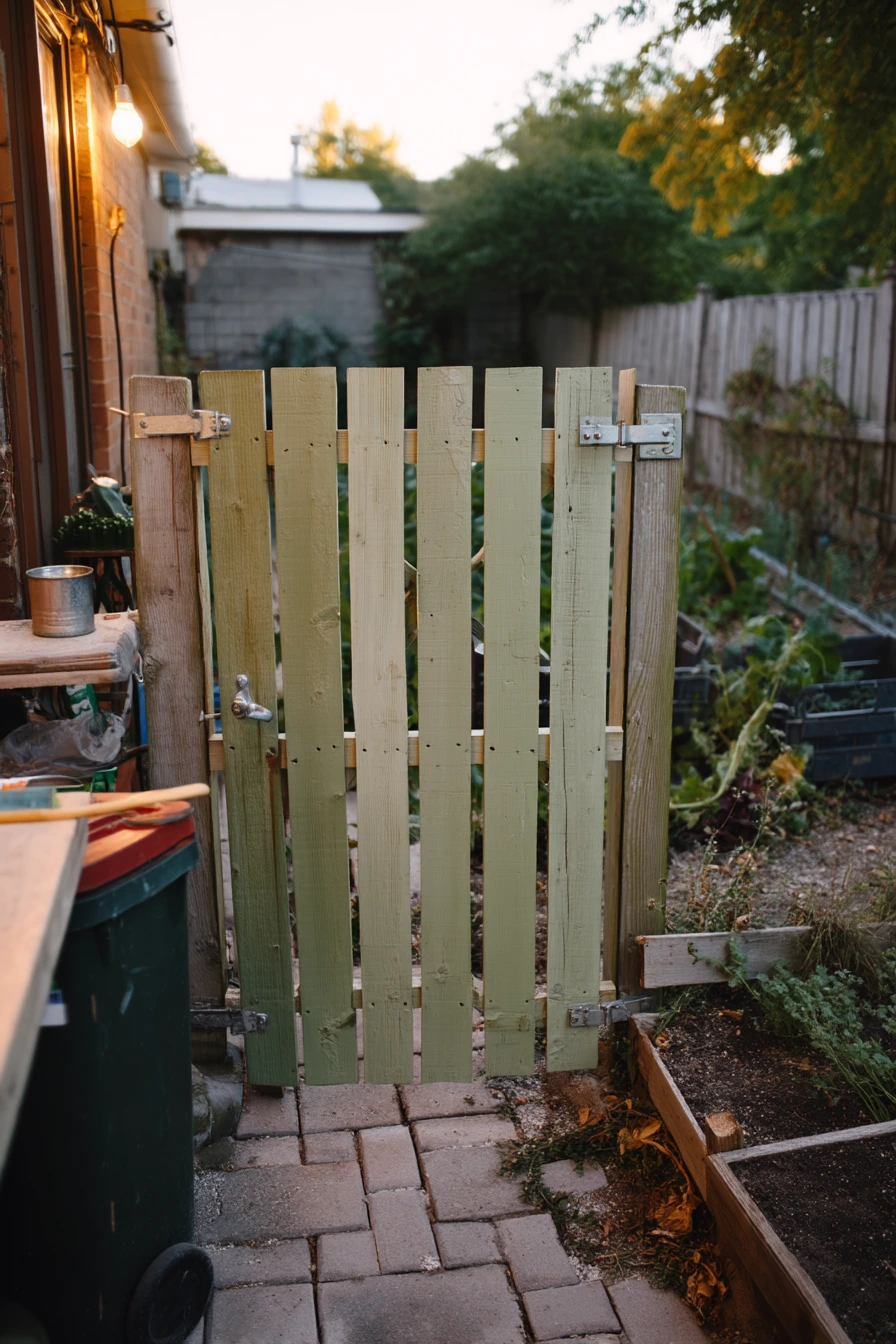
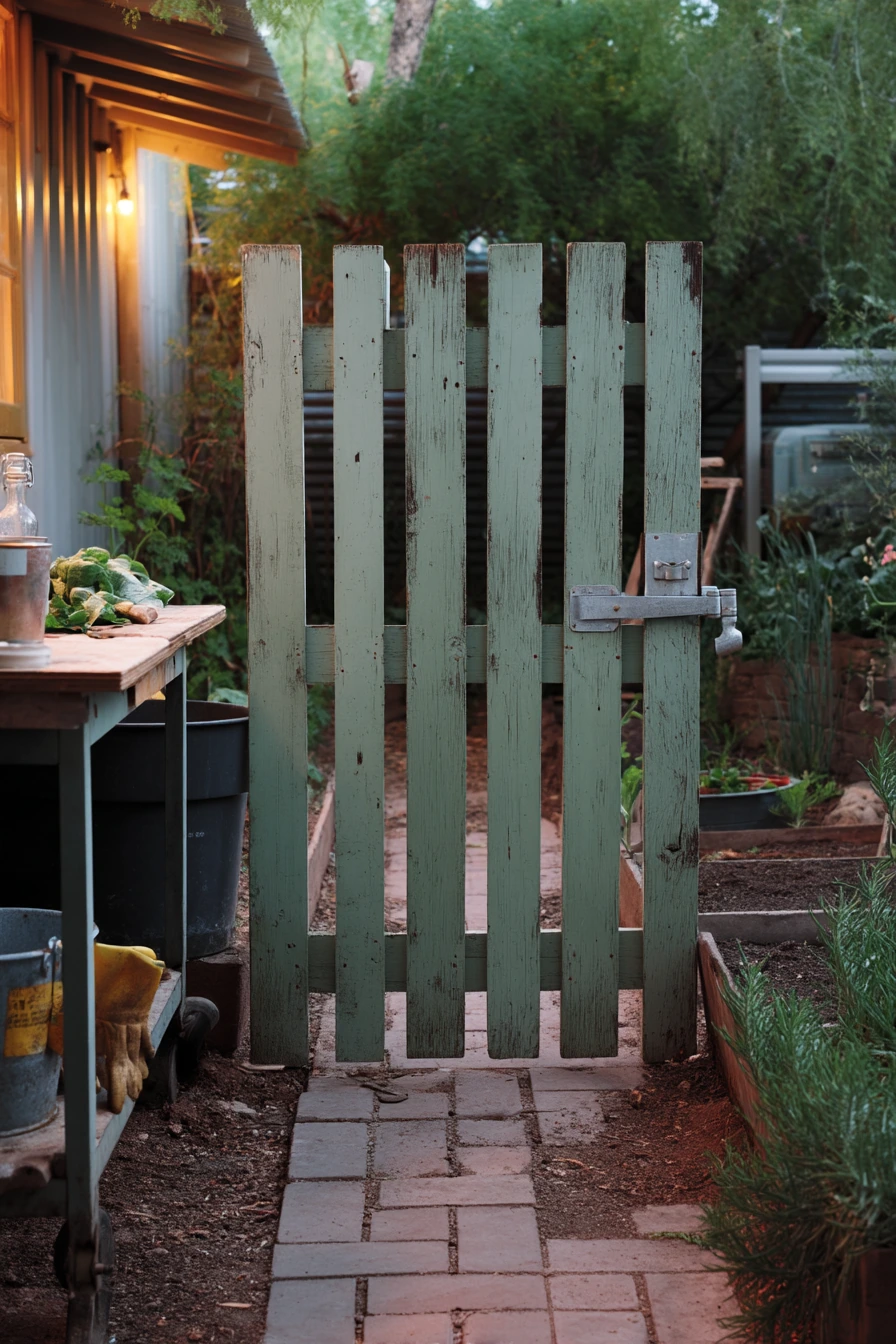
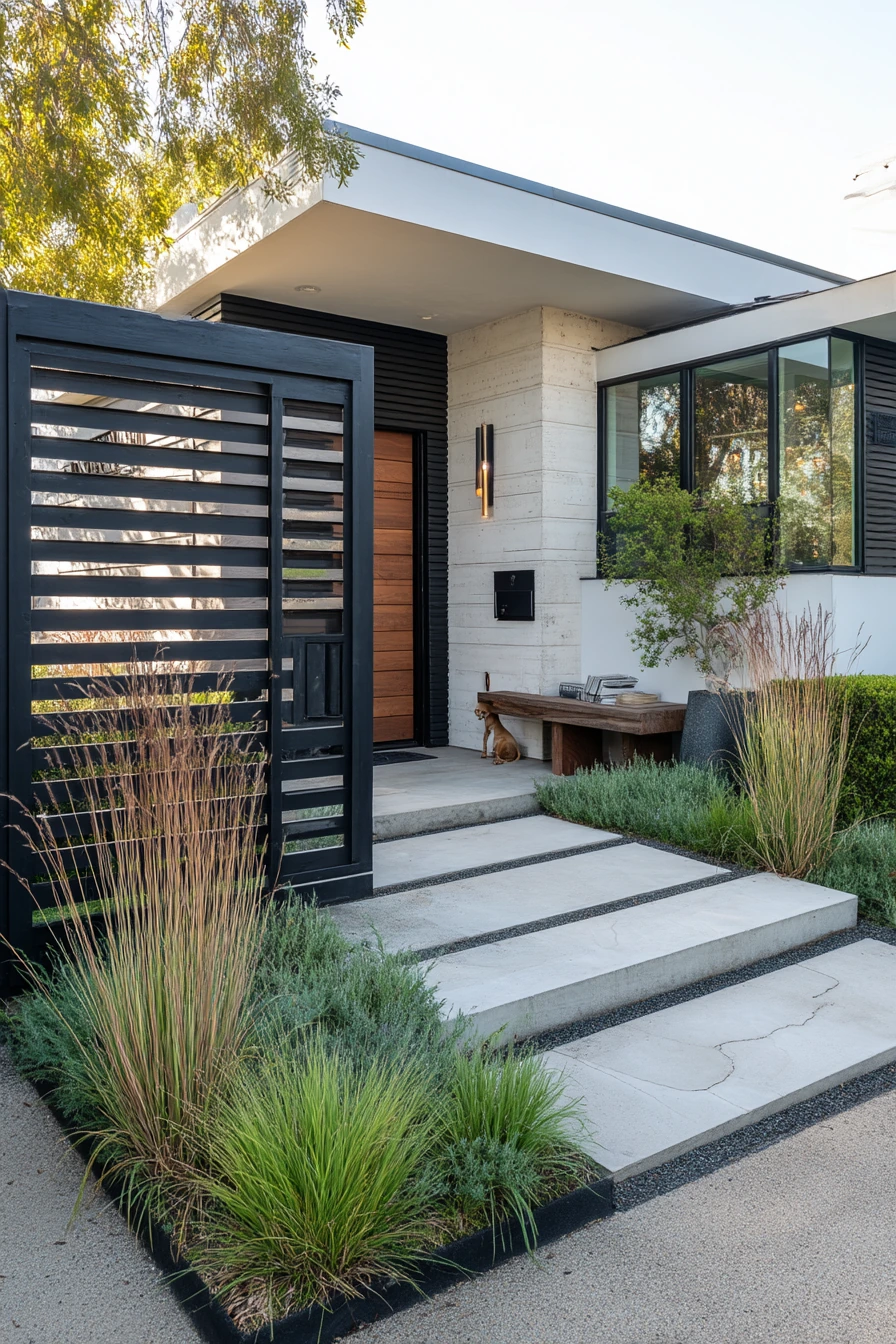
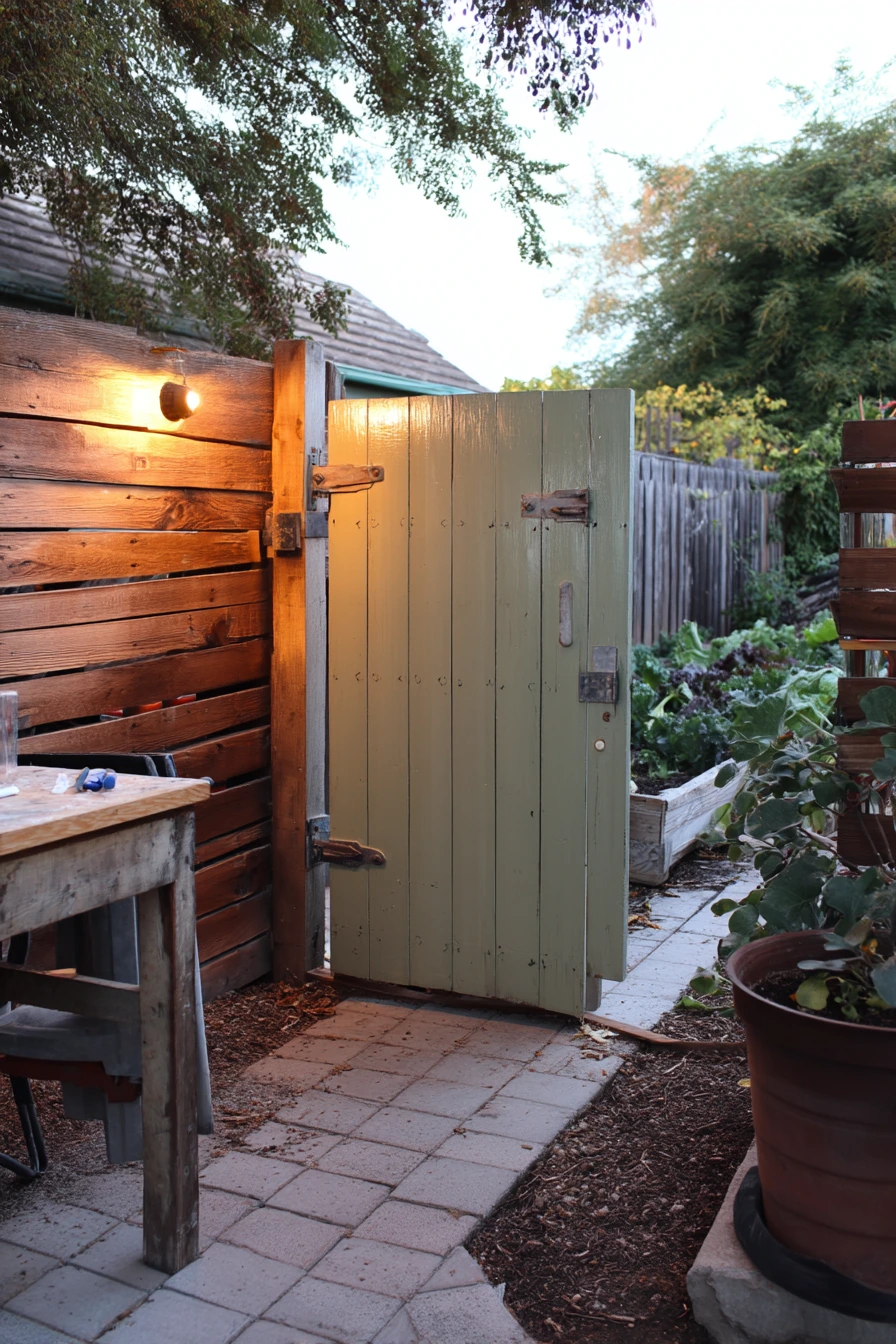
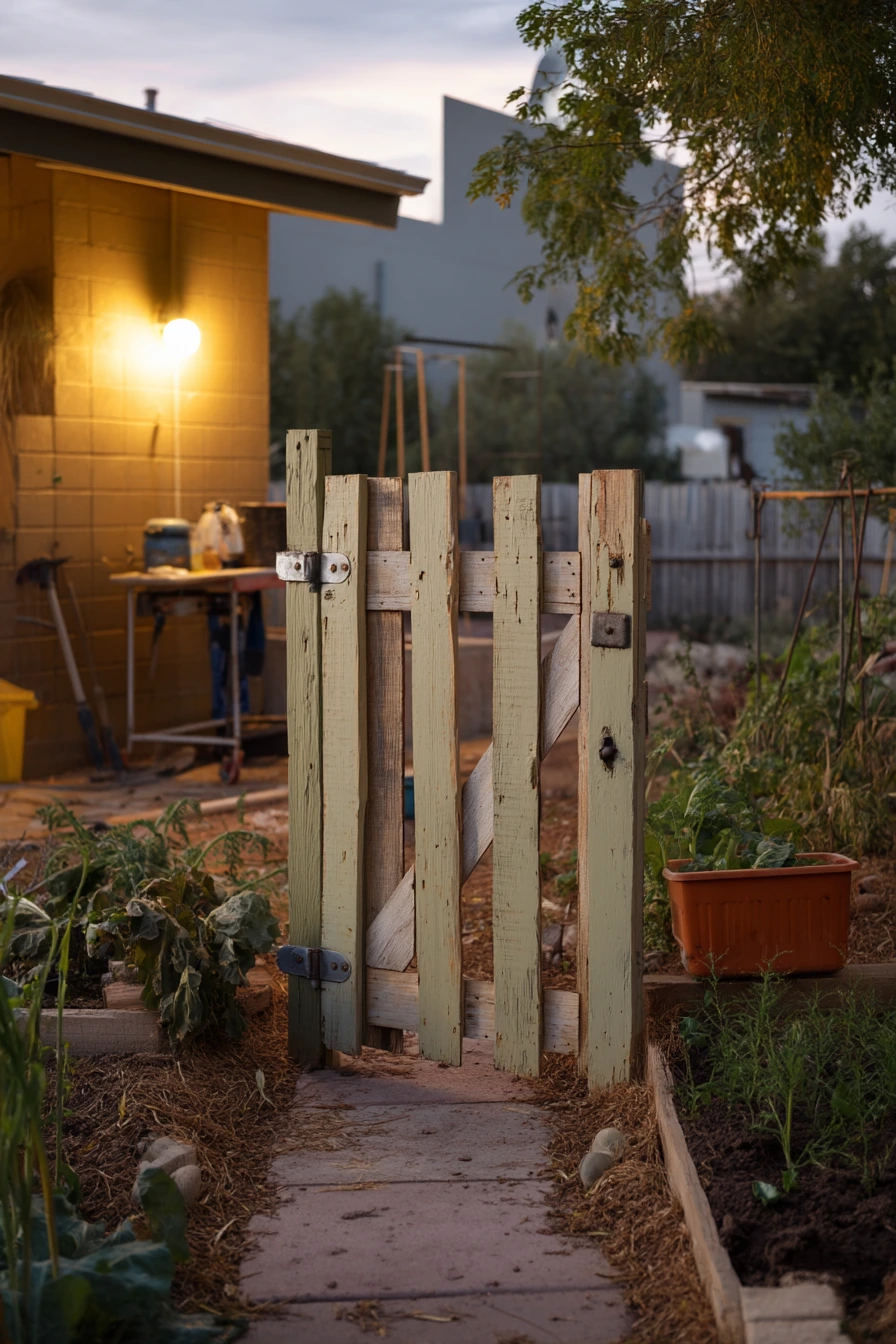
A DIY backyard gate made from reclaimed timber slats is a solid choice when you want function first and charm second. Uneven boards and an imperfect sage finish can still look good, especially next to a vegetable patch and compost bin. Galvanized hinges and a simple latch with visible screws fit the honest, handmade feel.
To style a reclaimed wood gate, focus on texture. Let the wood grain show through the paint in spots, and keep the surrounding area tidy so the gate looks intentional, not unfinished. A small potting table, a workbench with a drill, and a few paint drips on the pavers make the zone feel like a real project space.
Build for daily use. Check that the slats are aligned enough to prevent gaps that snag sleeves or garden hoses. If the ground shifts near garden beds, leave a little clearance at the bottom so it does not drag. Add a path of compacted gravel or pavers leading to the gate so you can move a wheelbarrow easily in and out.
- Sort reclaimed slats by thickness so the gate stays flat.
- Use galvanized hardware to resist rust near wet soil.
- Apply an exterior primer before sage paint for longer wear.
- Install a simple stop block so the gate does not hit planters or beds.
- Keep a hook nearby for gloves so they do not end up on the ground.
Pro Design Tip: Repeat the sage color on one small item nearby, like a watering can or a planter, to make the finish look planned.
Budget Considerations: Reclaimed wood can be cheap or costly; check salvage yards, old fencing, or leftover decking before buying new boards.
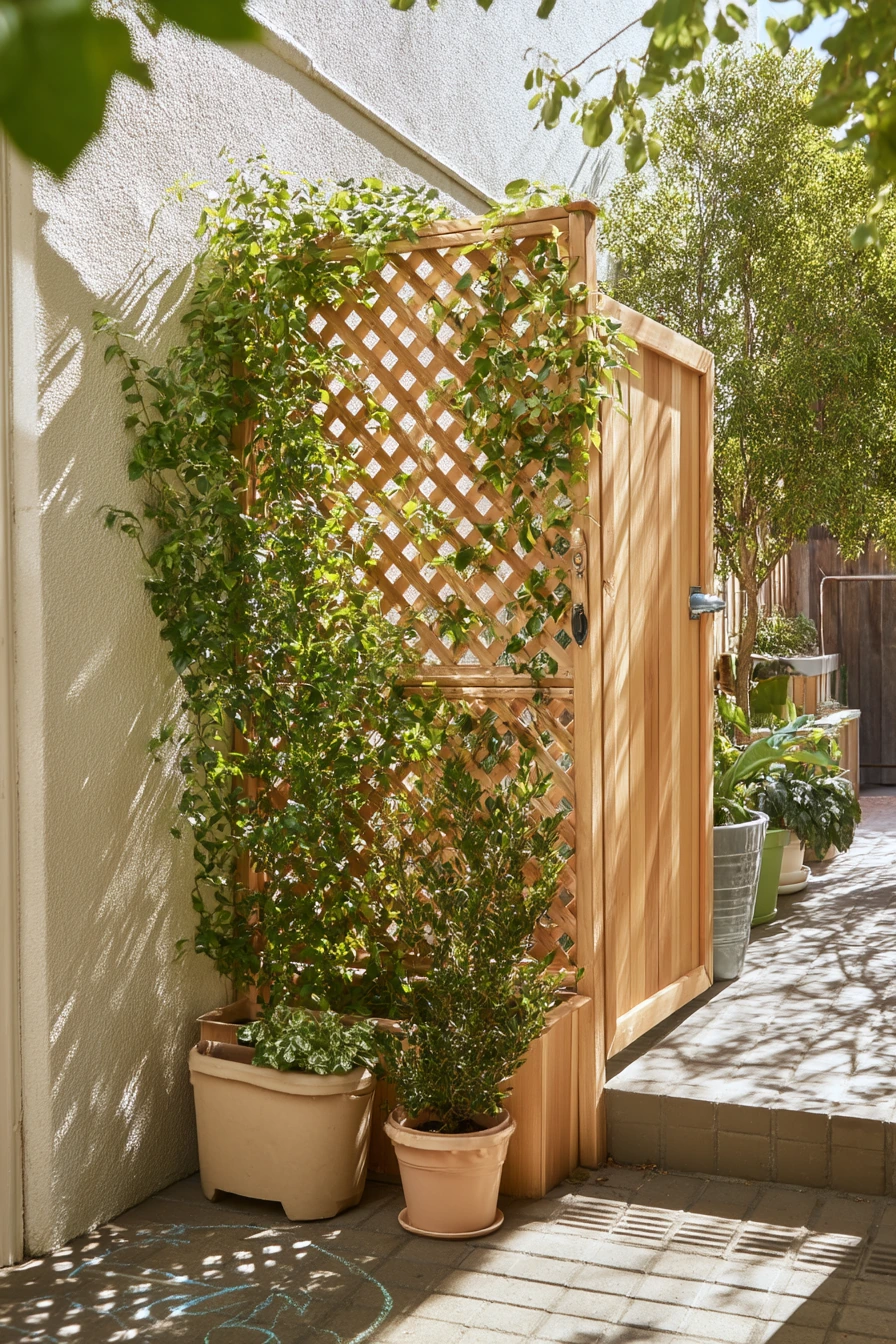
5. Renter-Friendly Freestanding Lattice Gate for a Small Courtyard
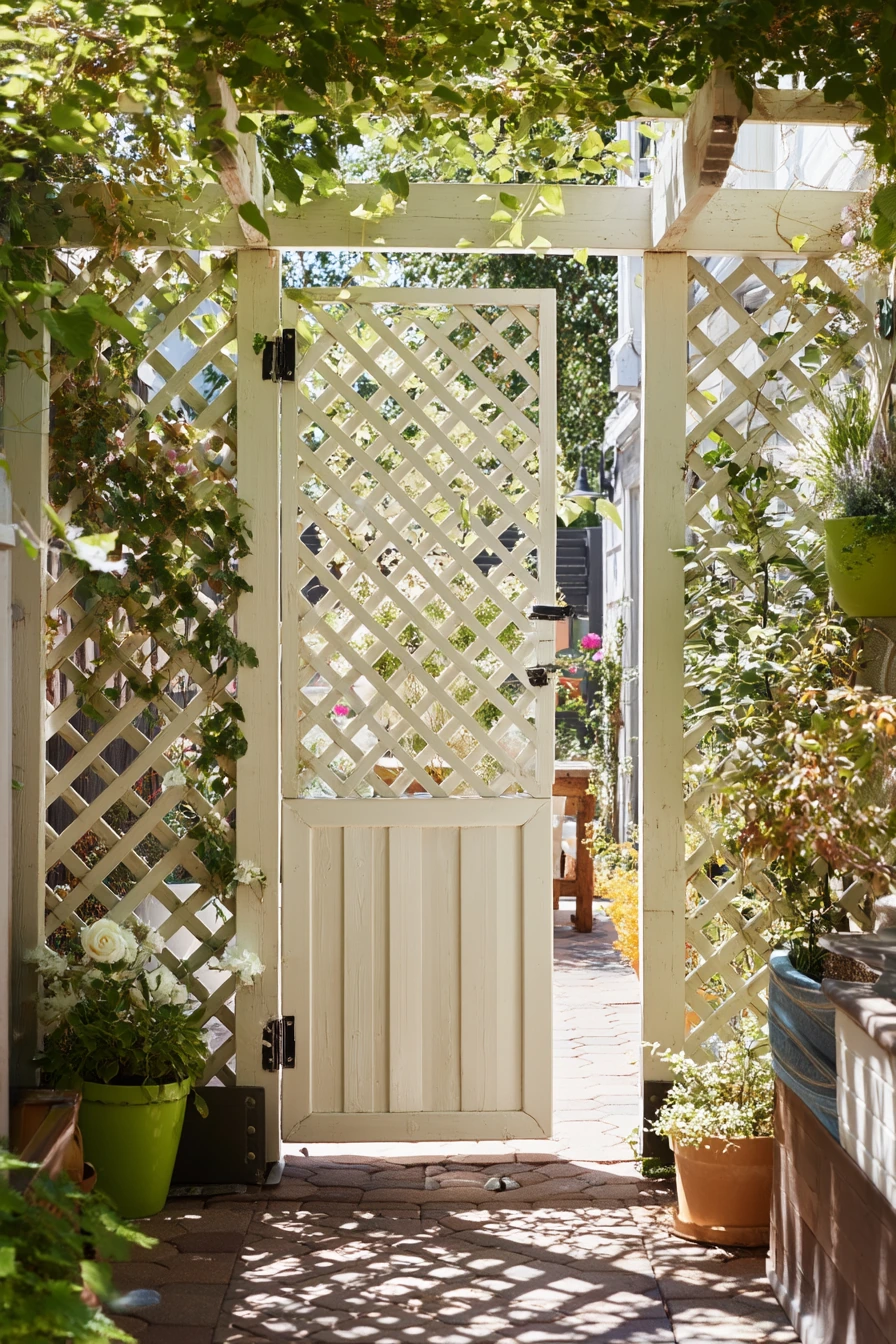
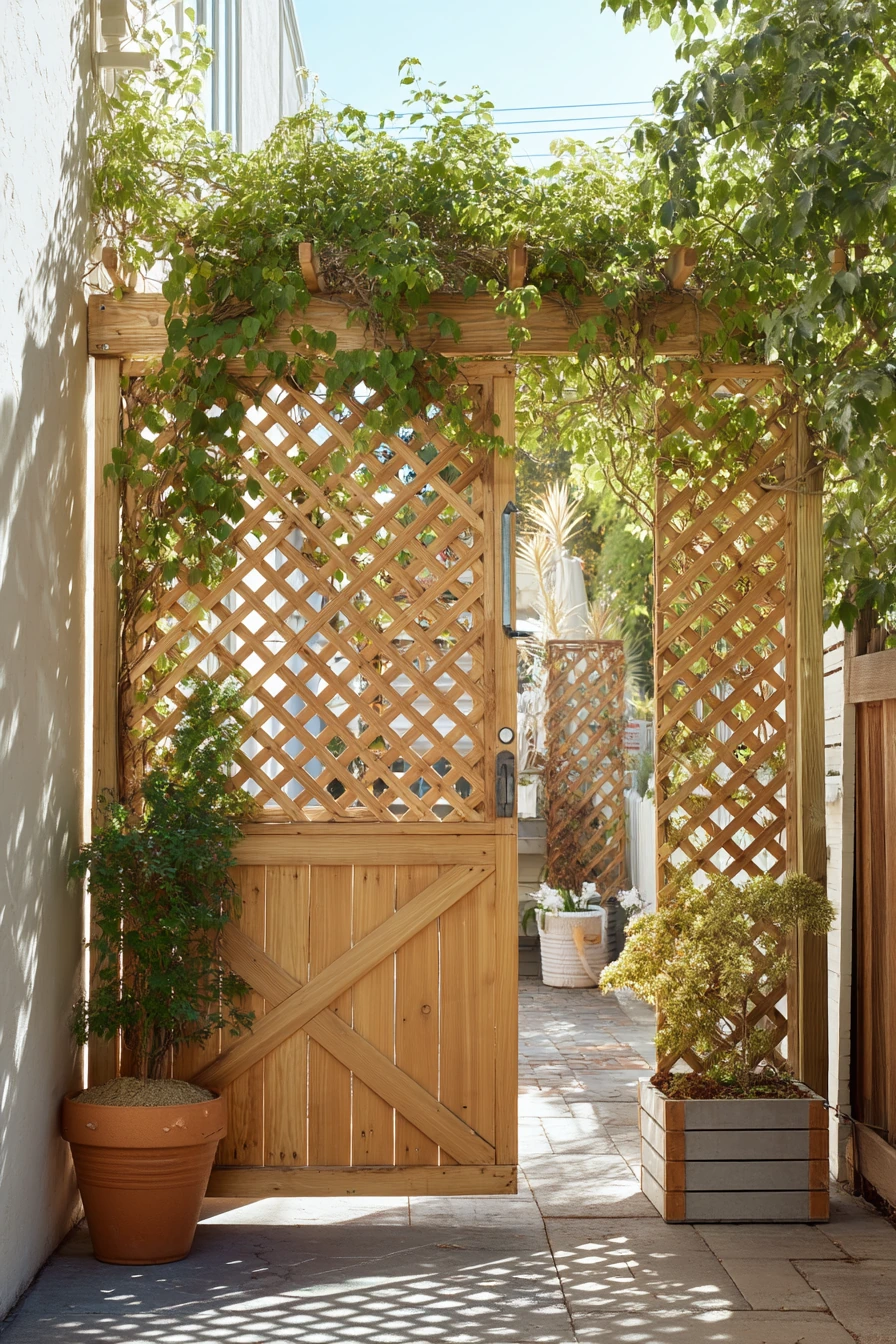
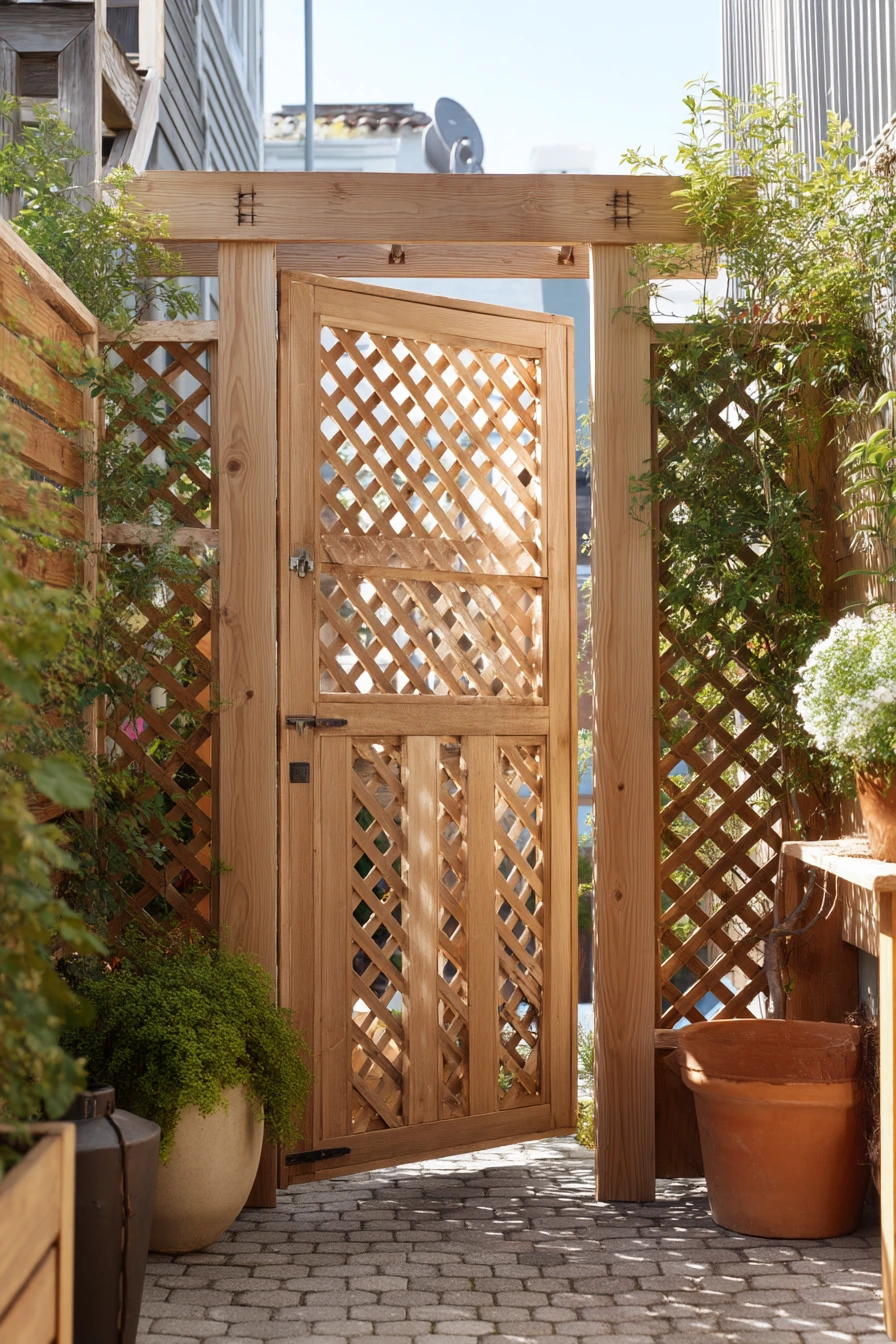
A renter-friendly garden gate solution needs to be stable but removable. A freestanding lattice screen and a lightweight cedar gate panel can define a small courtyard without drilling into walls. Tension-mounted trellis pieces are helpful when you want vertical greenery with minimal damage.
For a soft look, use potted jasmine or other scented climbers in containers that can move with the sun. Removable hooks can hold small items like a watering can or market tote, and stackable planters give you extra growing space without taking over the walkway.
Keep the setup safe and easy. Use a wide base or planters as anchors so the gate does not tip in wind. If kids play in the courtyard, check that the latch is simple and that corners are smooth. A kid’s chalk drawing on the paving can stay, and it still looks neat if you keep the rest of the space calm and uncluttered.
- Choose a cedar panel that is light enough to lift but not flimsy.
- Anchor the screen with heavy pots or a weighted stand.
- Use tension rods or no-drill brackets for trellis support.
- Add one vine, not five, to avoid a crowded entry.
- Store small tools in a lidded bin so the courtyard stays clean.
Pro Design Tip: Pick planters in one color family so the temporary gate area looks like a designed outdoor room.
Budget Considerations: No-drill systems can add up; start with one freestanding screen and a single vine, then expand if you stay long-term.
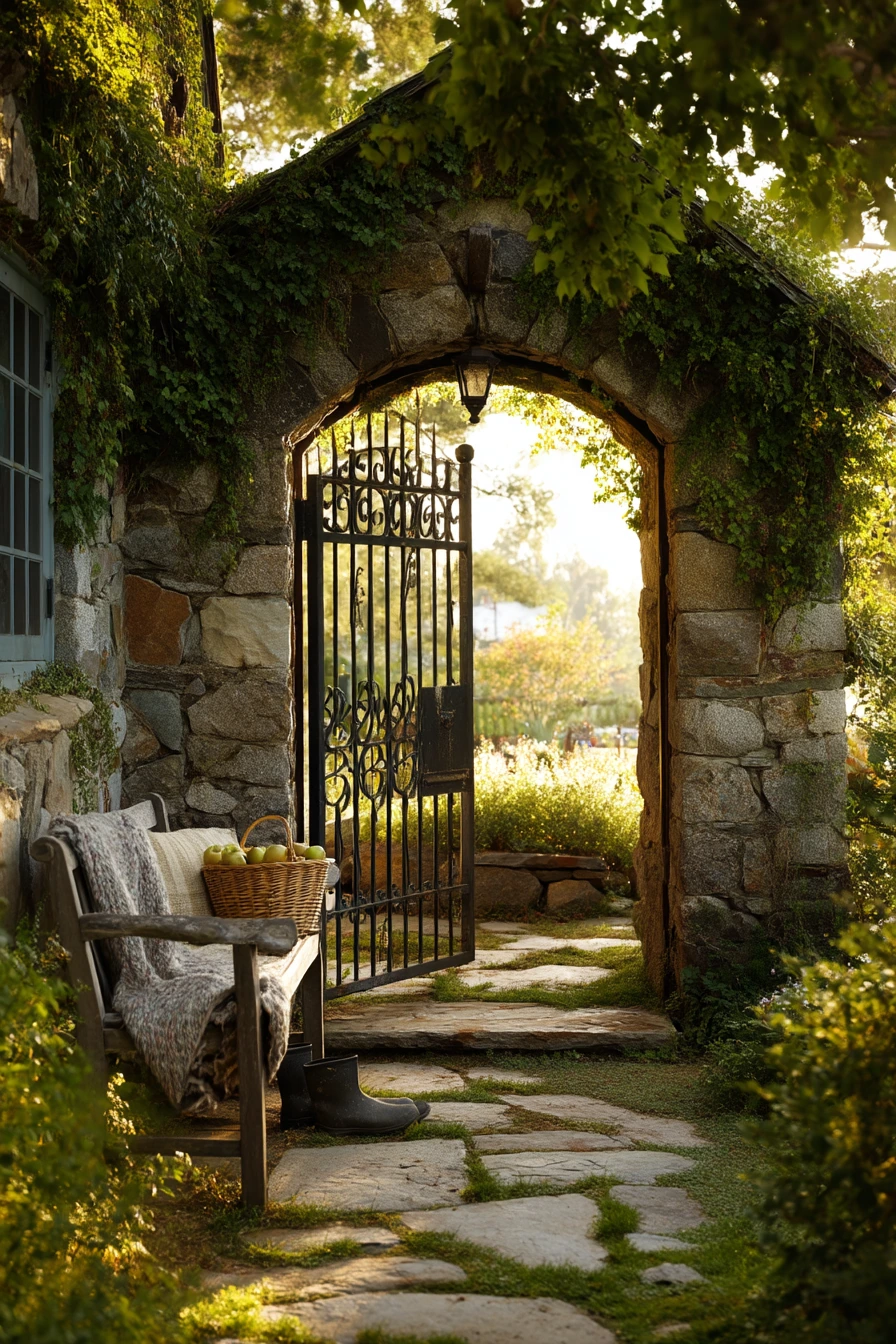
6. Arched Wrought Iron Heritage Gate for a Stone Cottage Look
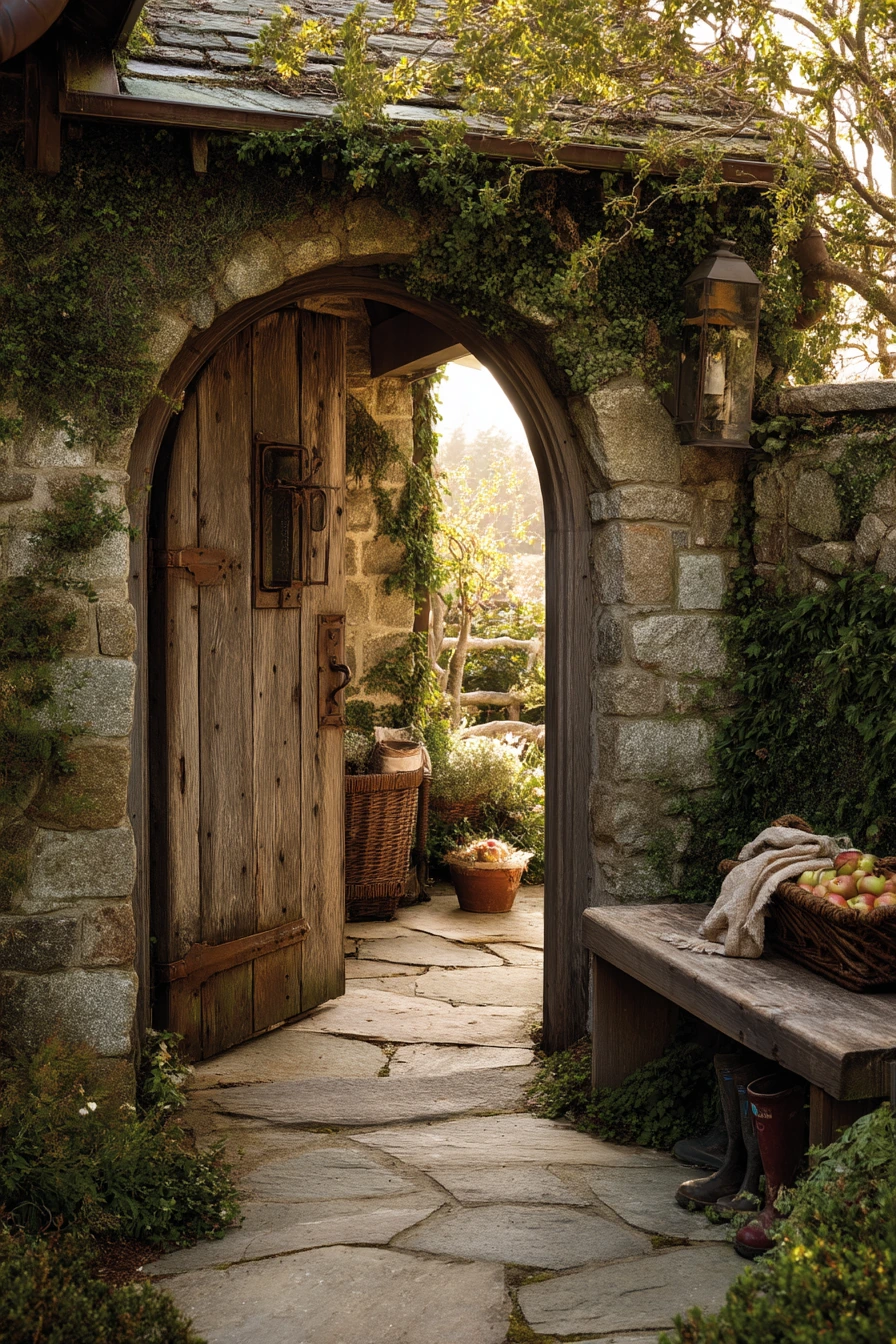
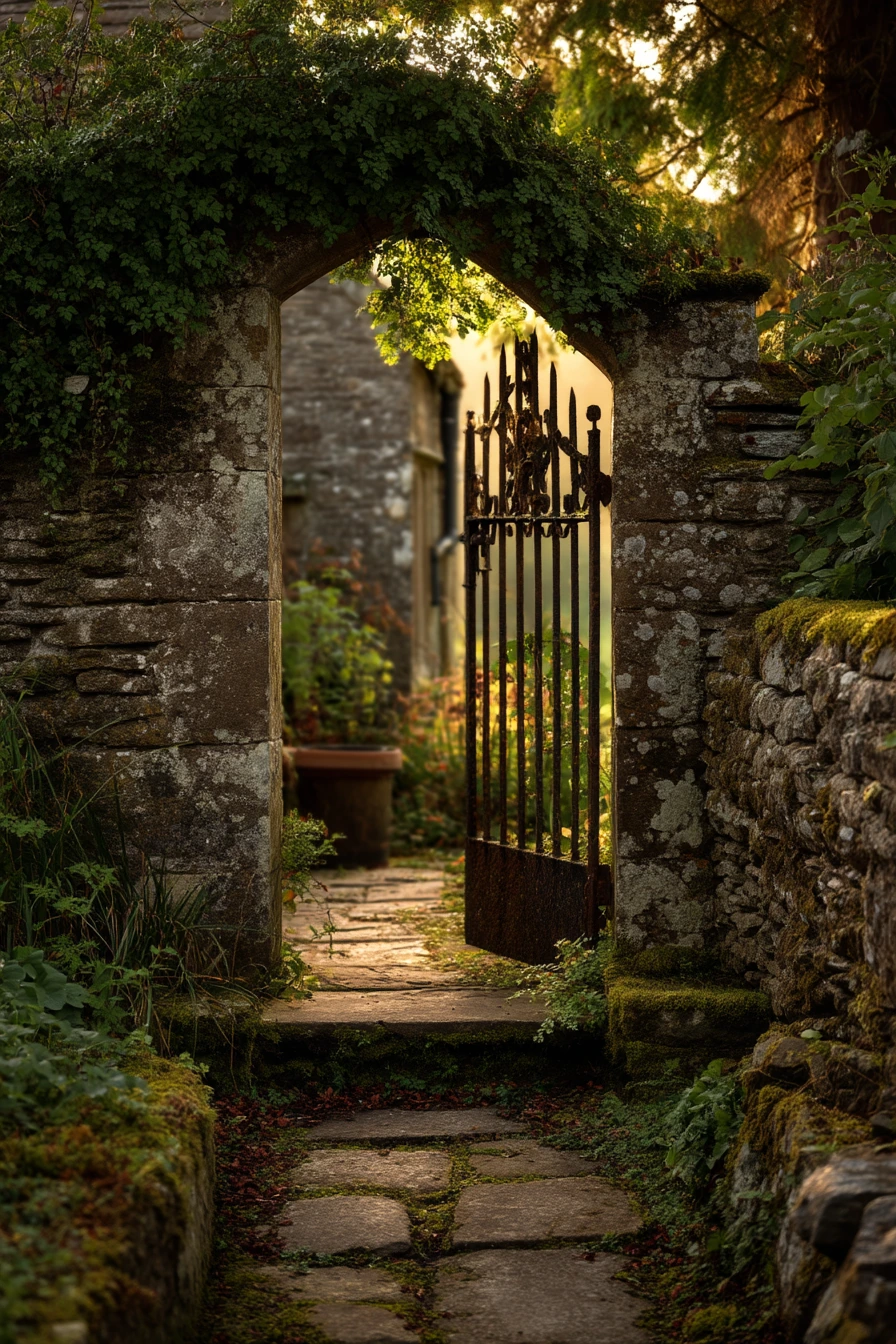
An arched wrought iron garden gate is a strong match for an old stone cottage style. The curve softens the entry, while mossy stone posts and an aged hinge plate add history. Ivy tracing the frame helps the metal feel part of the garden instead of a separate object.
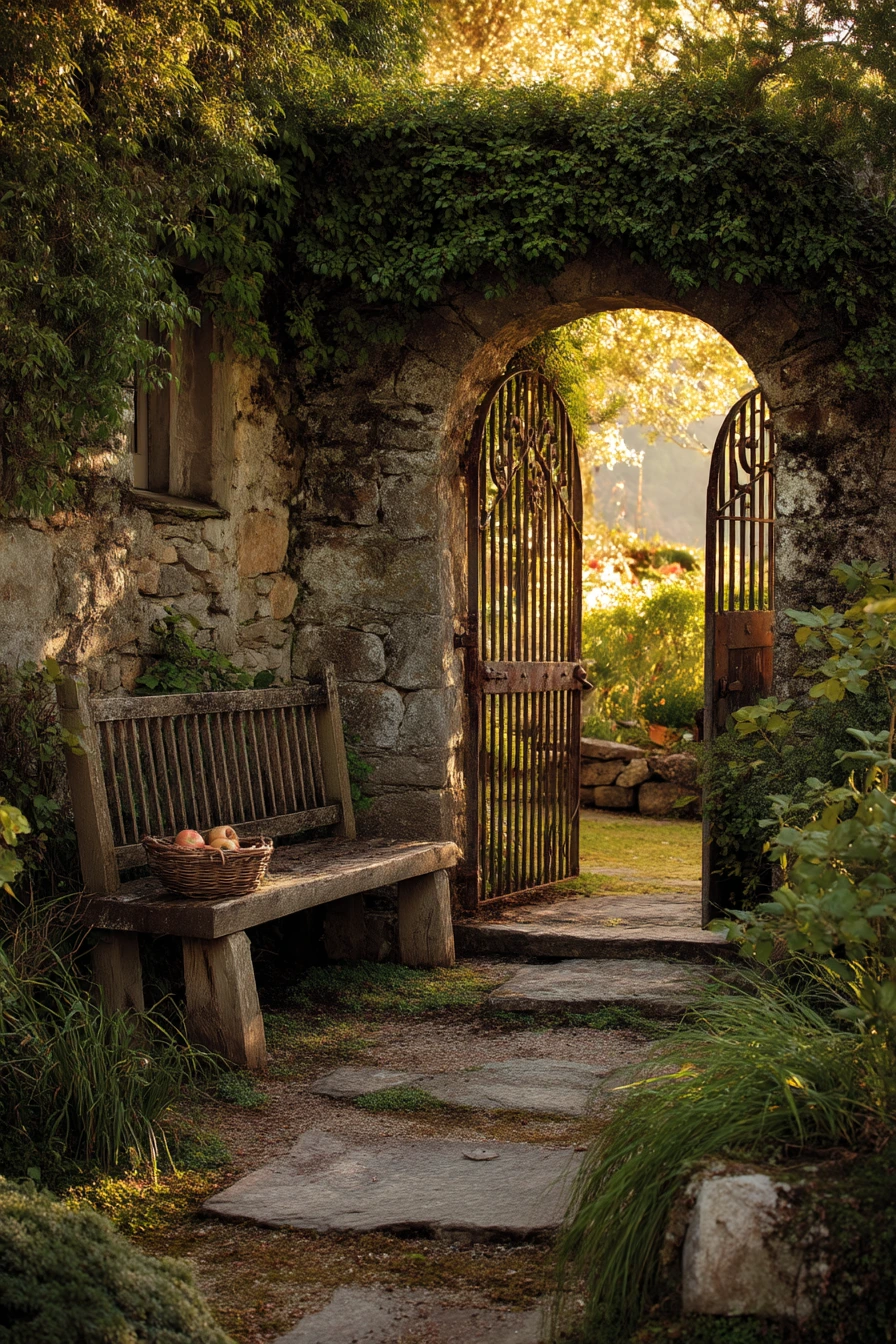
To style this look, lean into natural materials. Use worn flagstone at the threshold and keep planting loose and layered. A simple bench with a knit throw, a basket of apples by the door, and gardening clogs on the step make the scene feel warm and lived-in.
For comfort, check the swing and latch. Iron gates can be heavy, so hinges need to be set well, and the latch should close cleanly without slamming. If the path is uneven, level the landing stones near the gate so you do not trip when carrying a watering can or garden harvest. Soft golden hour light from the house or a small lantern by the post makes the ironwork stand out at night.
- Choose a slightly arched top to echo cottage rooflines.
- Let ivy climb one side only so it does not jam the latch.
- Add a simple lantern light to guide the step after dark.
- Use flagstone or gravel that suits old stone and drains well.
- Keep hardware in a dark finish to blend with ironwork.
Pro Design Tip: Balance the gate with a matching curved detail nearby, like an arched trellis or a rounded hedge line.
Budget Considerations: New wrought iron can be costly; look for salvage gates and have them resized or repaired by a local metal shop.
7. Child-Safe Family Garden Gate With Rounded Timber Slats
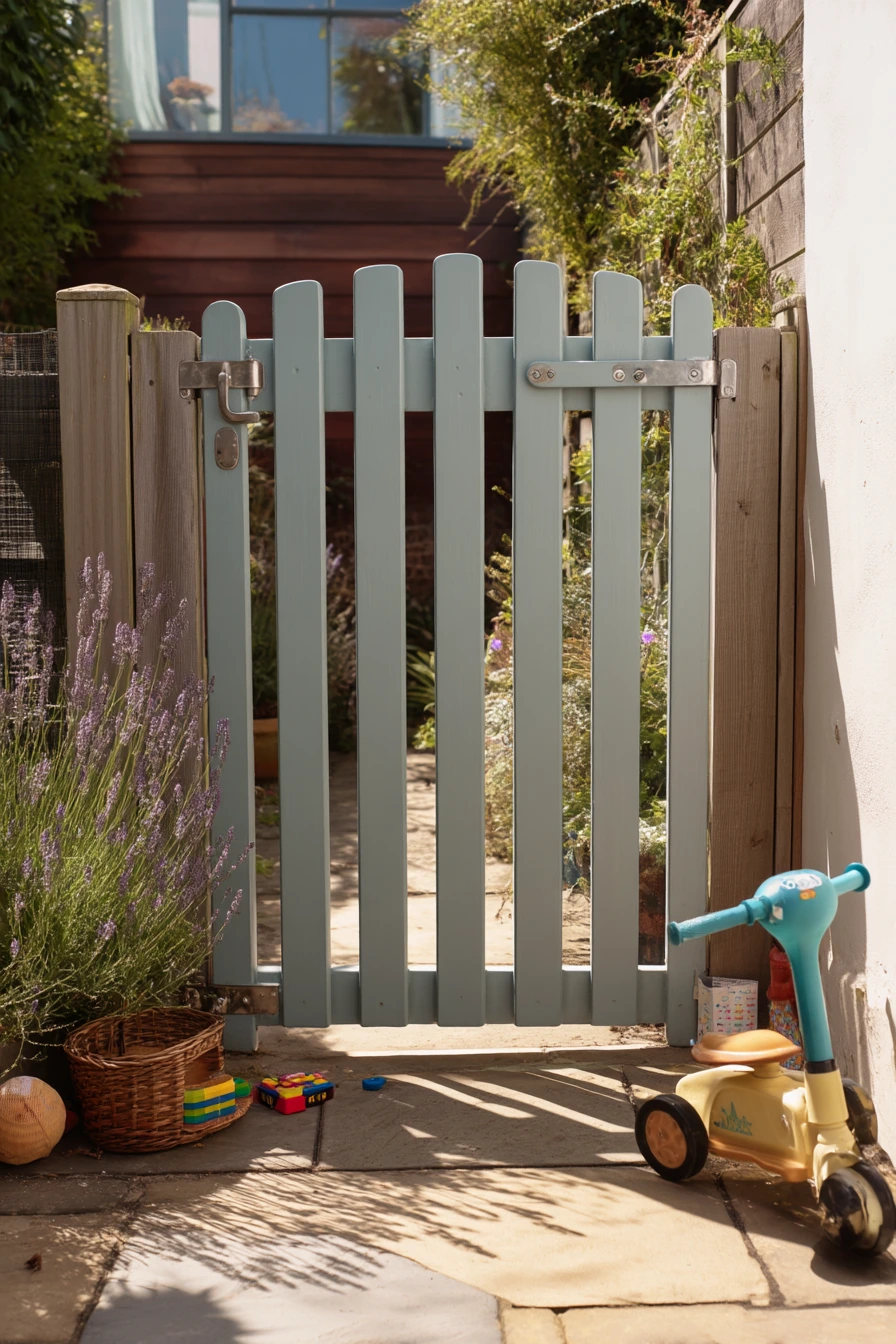
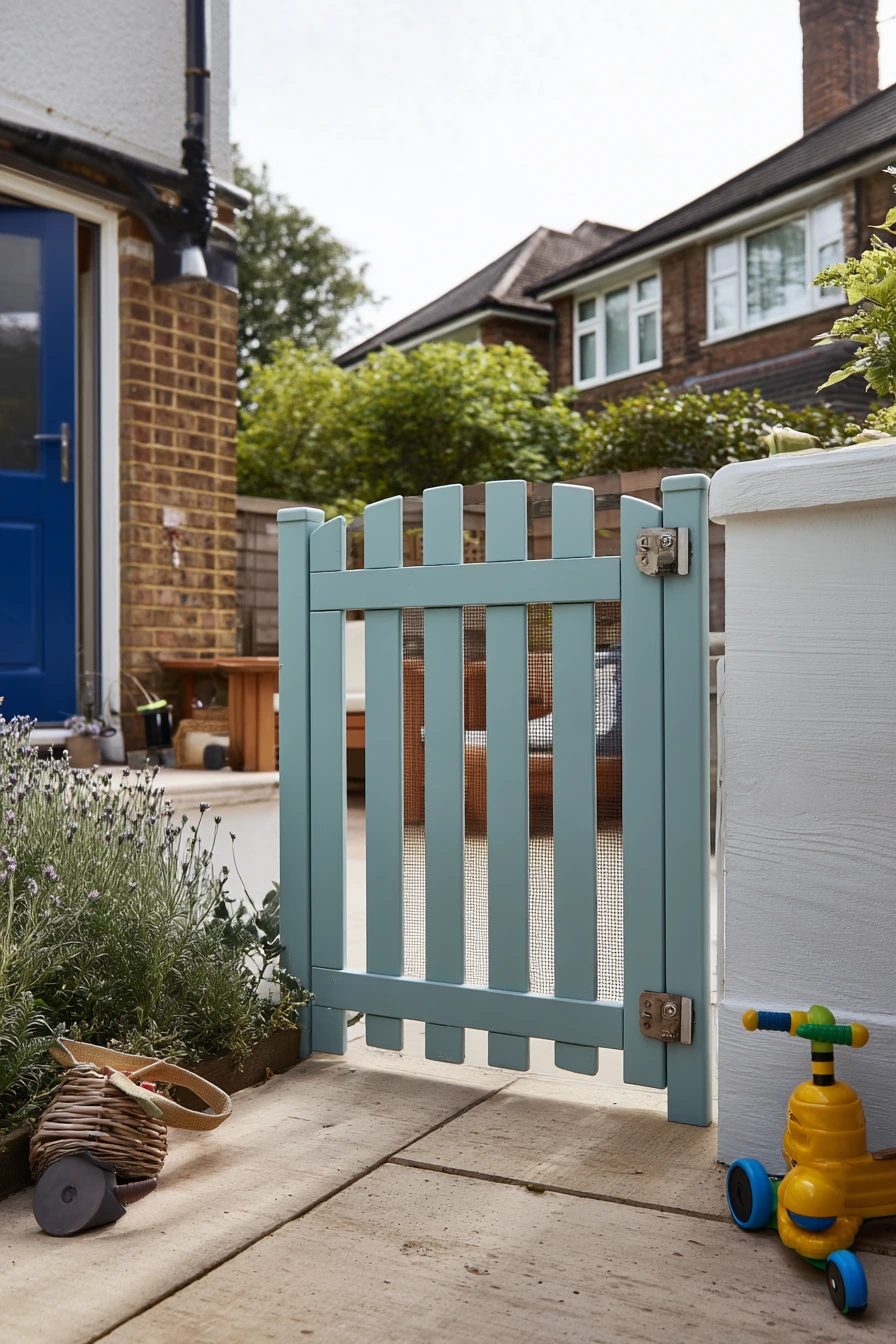
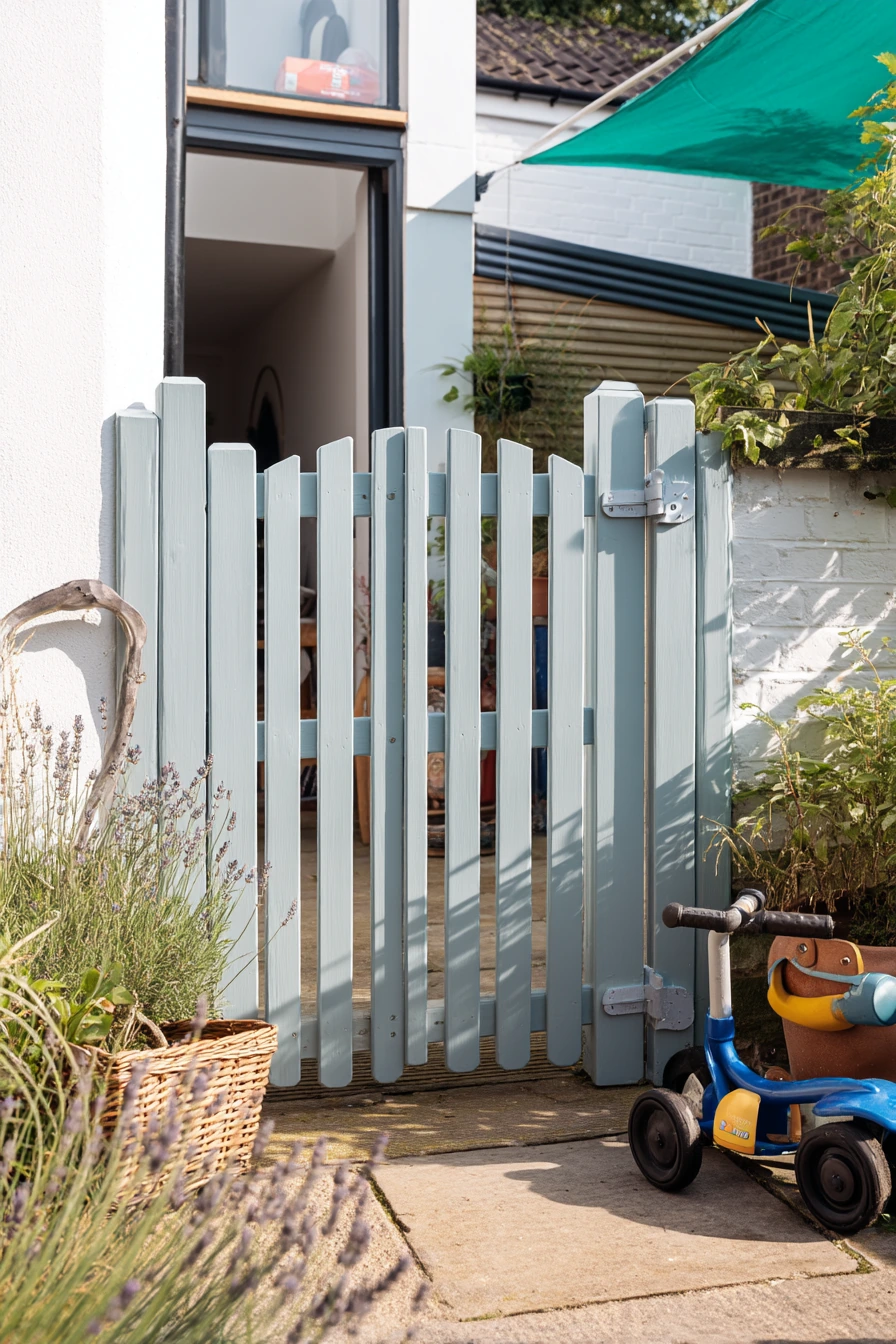
A practical family garden gate should feel safe and calm, not fussy. Rounded-top timber slats soften the look, while a child-safe latch helps keep little ones in the right area. A durable muted blue paint adds color without being too bright.
Style the area so it handles everyday mess. Mesh side panels can protect small planting beds while still letting you see through. A small side bed with lavender adds a clean scent and brings in pollinators, and it also hides scuffs on the lower rail.
Plan for real use: scooters leaning nearby, fingerprints on the paint, and a snack cup on the step. Choose a paint finish that wipes clean, and make sure the latch is high enough that toddlers cannot reach it but adults can still open it easily. If pets share the yard, check for gaps under the gate and add a small threshold board if needed.
- Use rounded slat tops to reduce sharp corners at kid height.
- Pick exterior paint in satin or semi-gloss for easier cleaning.
- Add mesh panels where you need visibility and extra safety.
- Plant lavender in a narrow strip to soften the edge of the path.
- Keep a small basket by the door for toys to cut clutter.
Pro Design Tip: Paint the inside and outside of the gate the same color so it looks neat from every angle, even when it is open.
Budget Considerations: If a custom child-safe latch is expensive, use a standard latch plus a simple add-on slide bolt mounted higher.
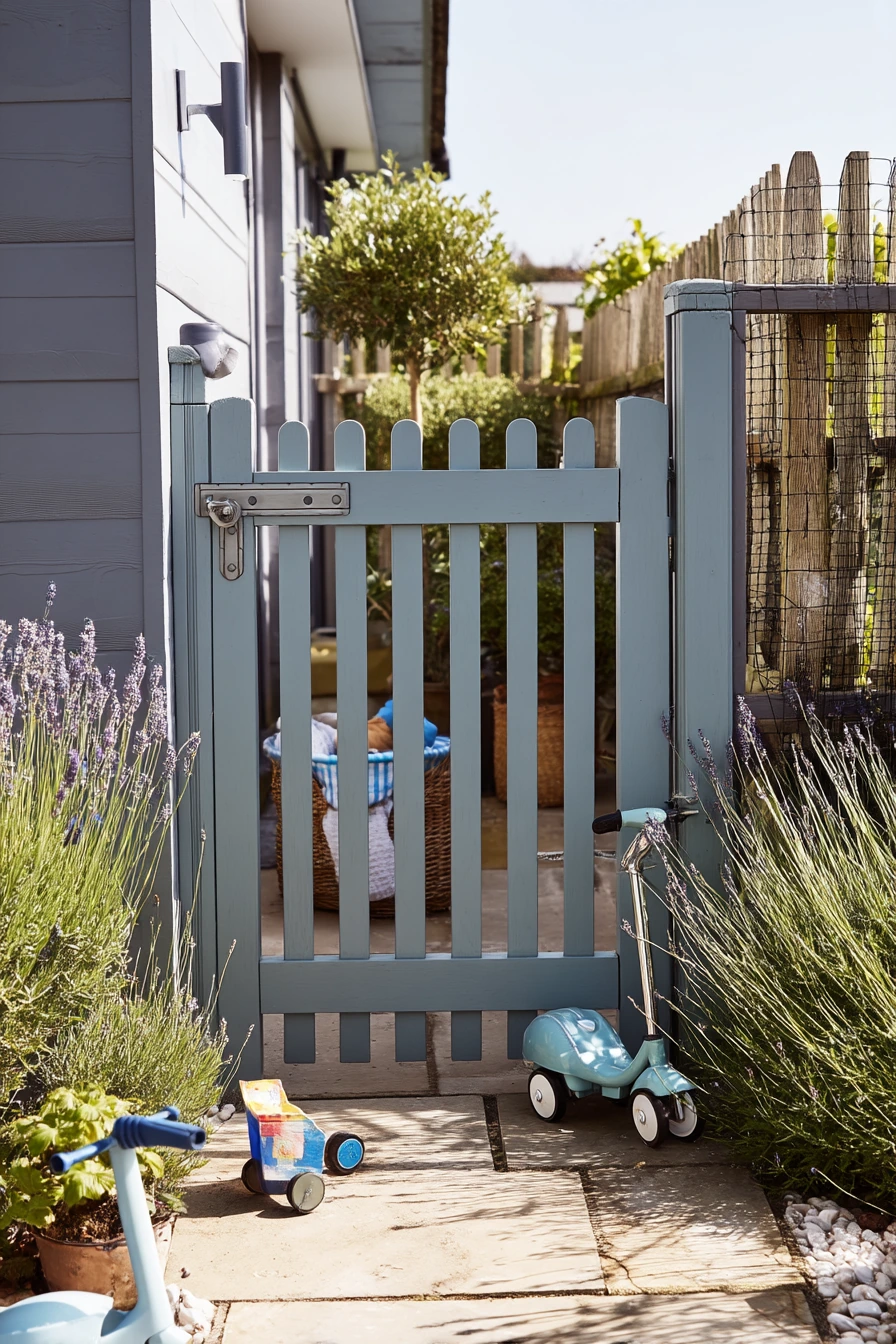
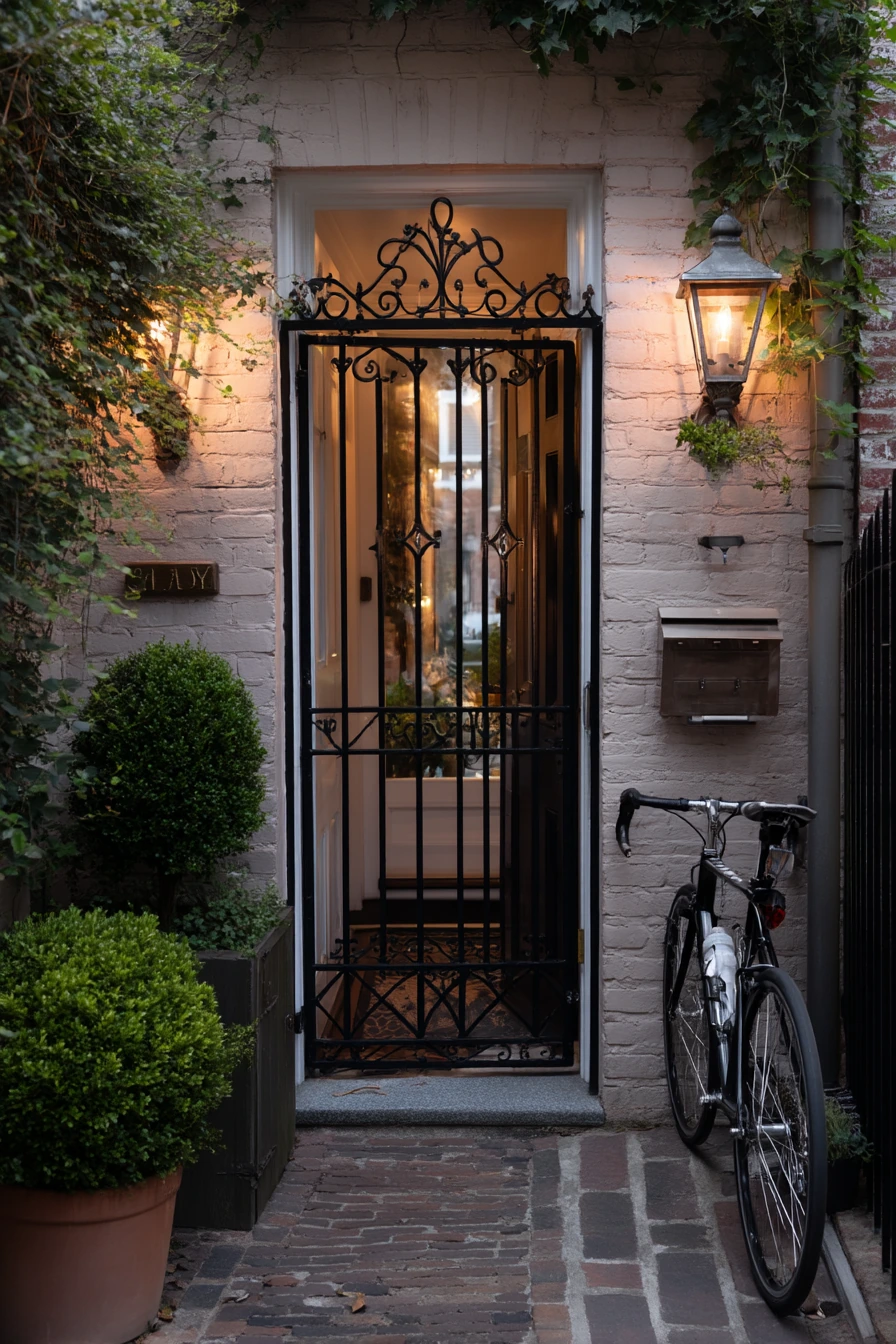
8. Elegant Black Iron Side Passage Gate With Lantern Lighting
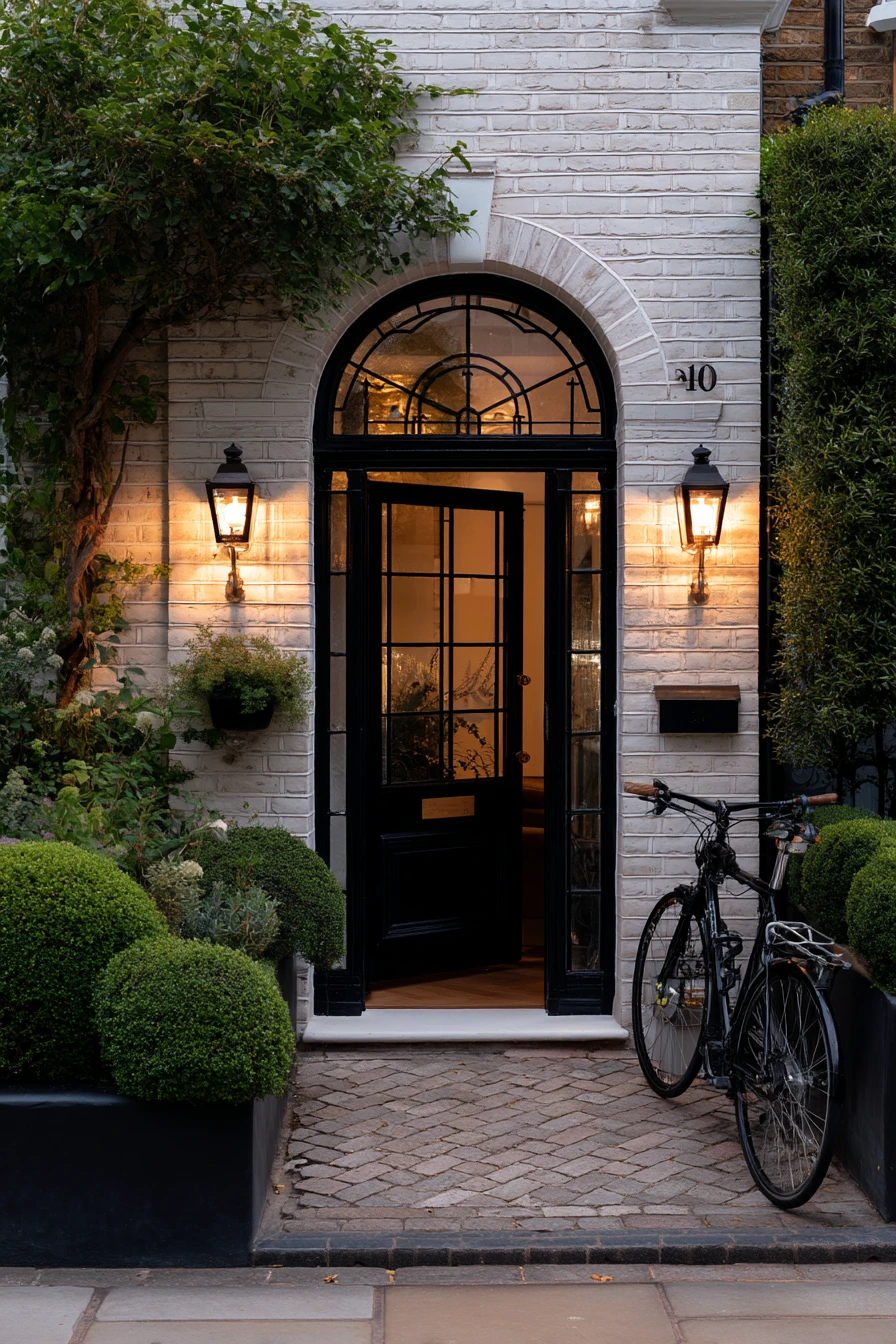
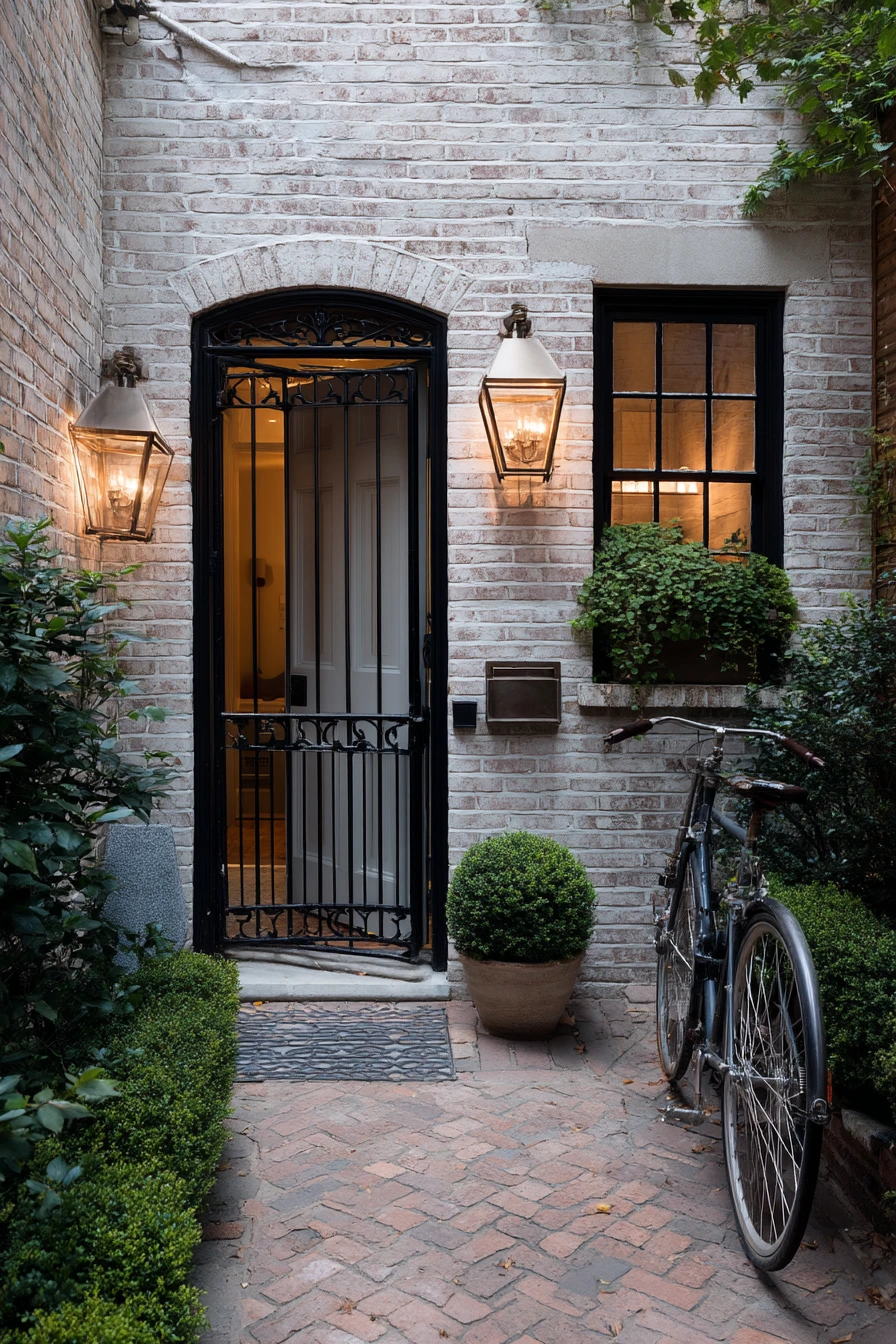
An elegant side passage gate can make a townhouse feel more private and more polished. Slender black ironwork looks light but still secure. Painted brick walls and clipped boxwood keep the space structured, and lantern sconces add warm light at dusk.
To style this narrow area, keep shapes clean. Boxwood in simple lines works well with iron details, and one trailing pothos in a window adds a softer note. A discreet letter slot built into the wall is a smart upgrade if the side passage is used for deliveries or mail.
Make it feel lived-in without looking messy. A folded umbrella by the threshold and a bicycle helmet on a hook show how the space works day to day. Use a shallow tray just inside for keys, and keep the floor clear so the passage does not feel tight. If you have steps, add a small non-slip strip so wet shoes do not slide in rainy weather.
- Choose ironwork with simple lines for a timeless look.
- Add lantern sconces at eye level for soft, practical light.
- Use clipped boxwood or low shrubs to keep the passage tidy.
- Install a small hook rail for umbrellas, helmets, or dog leads.
- Keep the wall color light so the space does not feel narrow.
Pro Design Tip: Use warm white bulbs in the lanterns and aim for even spacing so the passage feels longer and calmer.
Budget Considerations: If boxwood is costly, use smaller plants spaced farther apart, or swap in a similar low shrub that fits your climate.
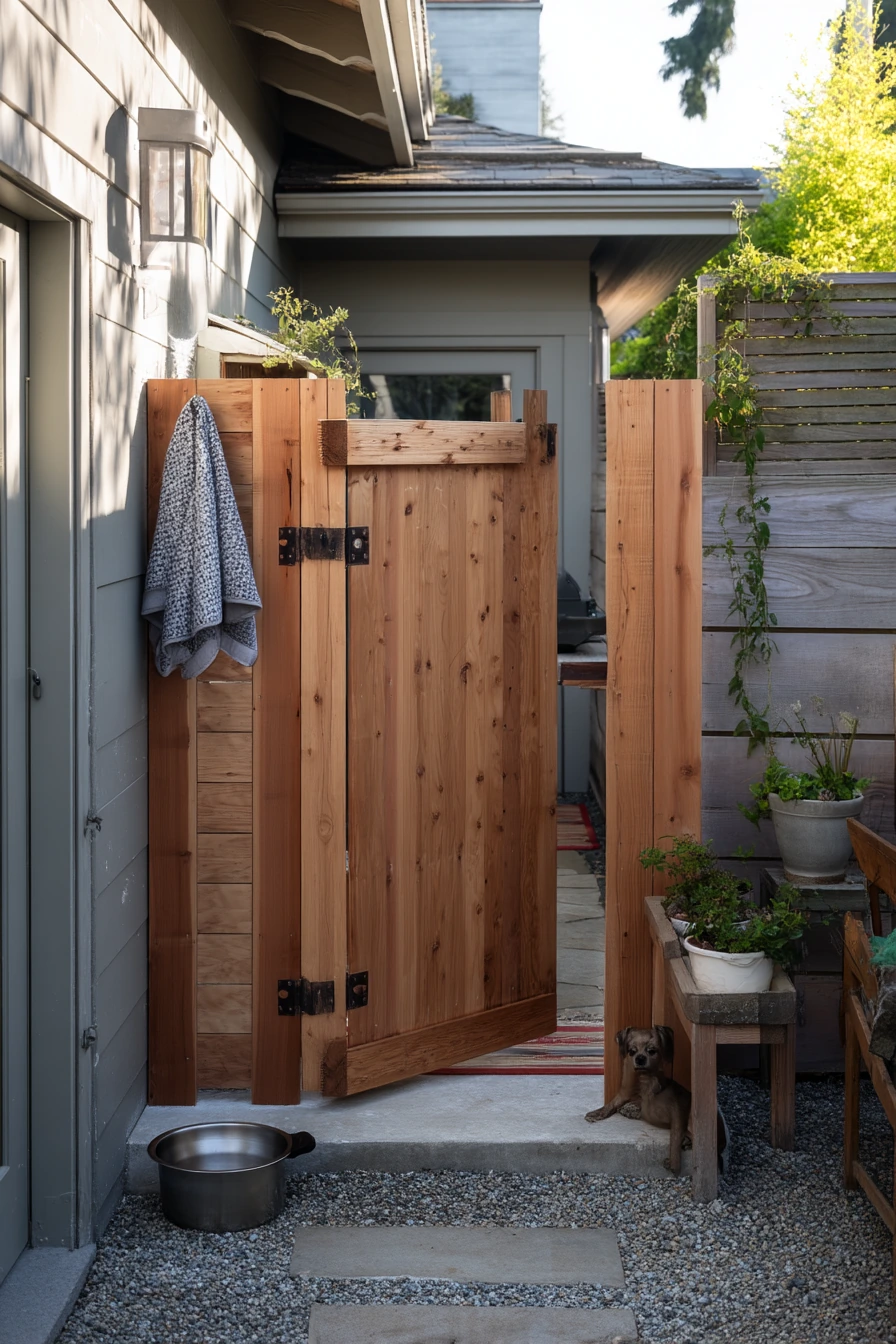
9. Pet-Friendly Cedar Garden Gate With Secure High Latch
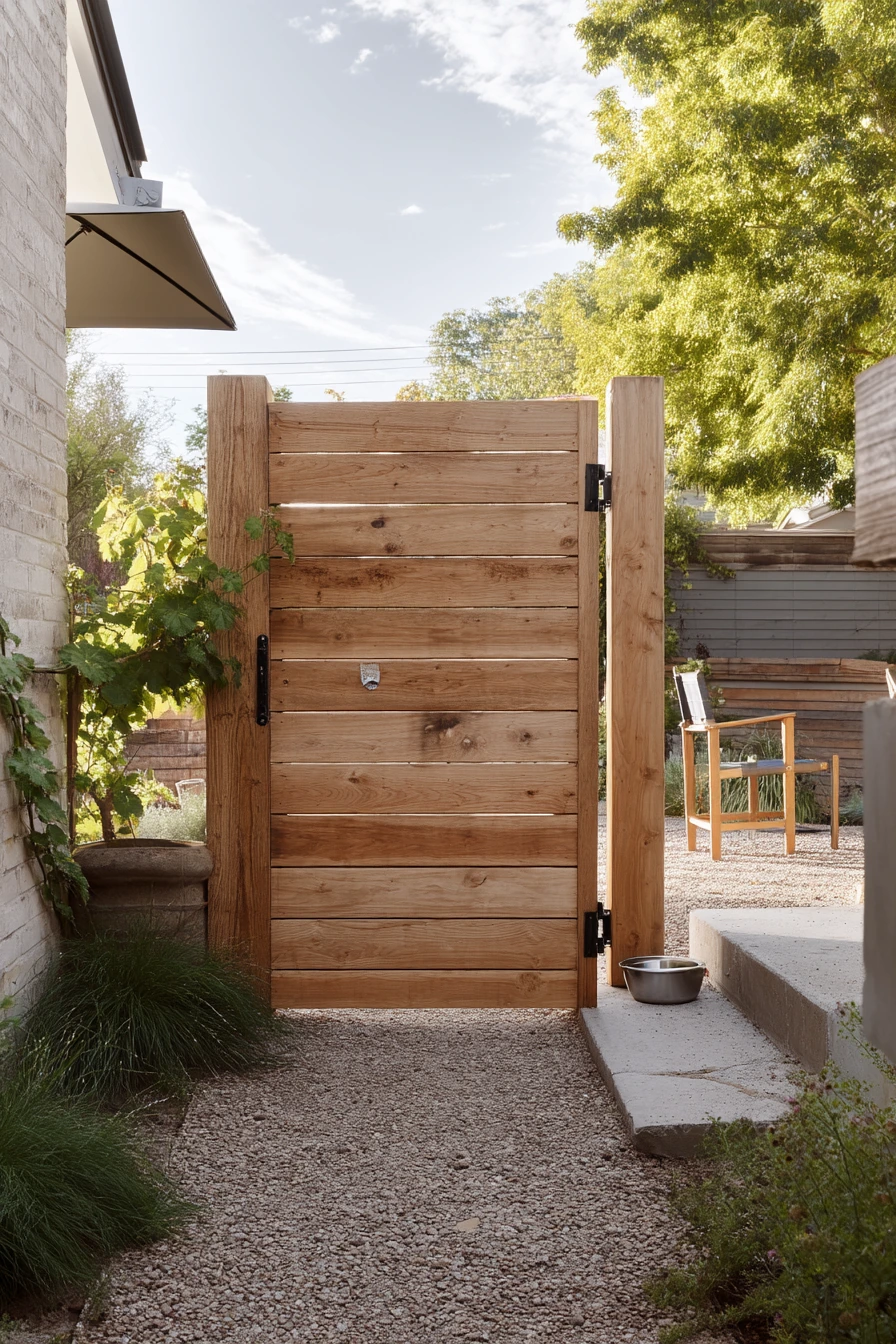
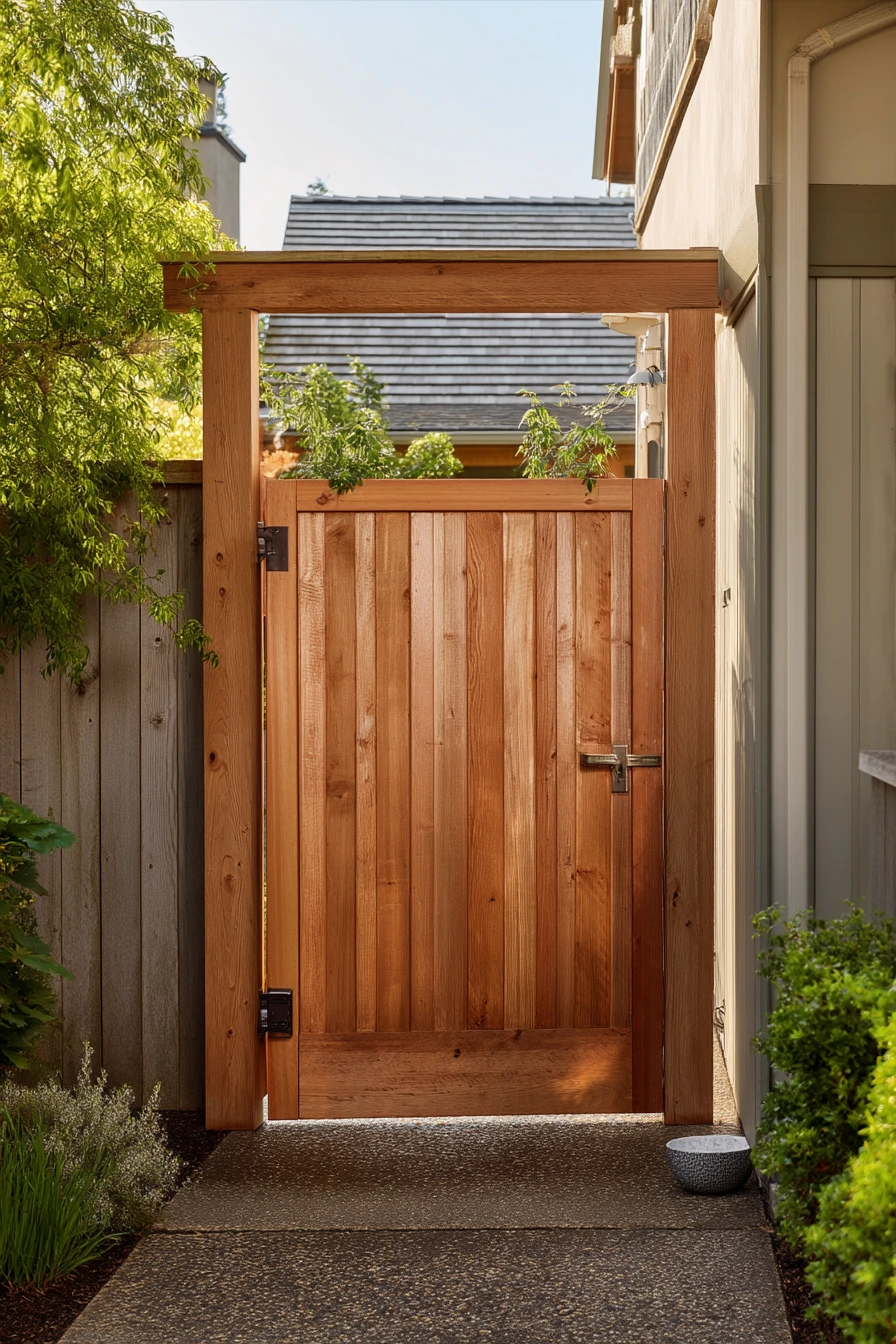
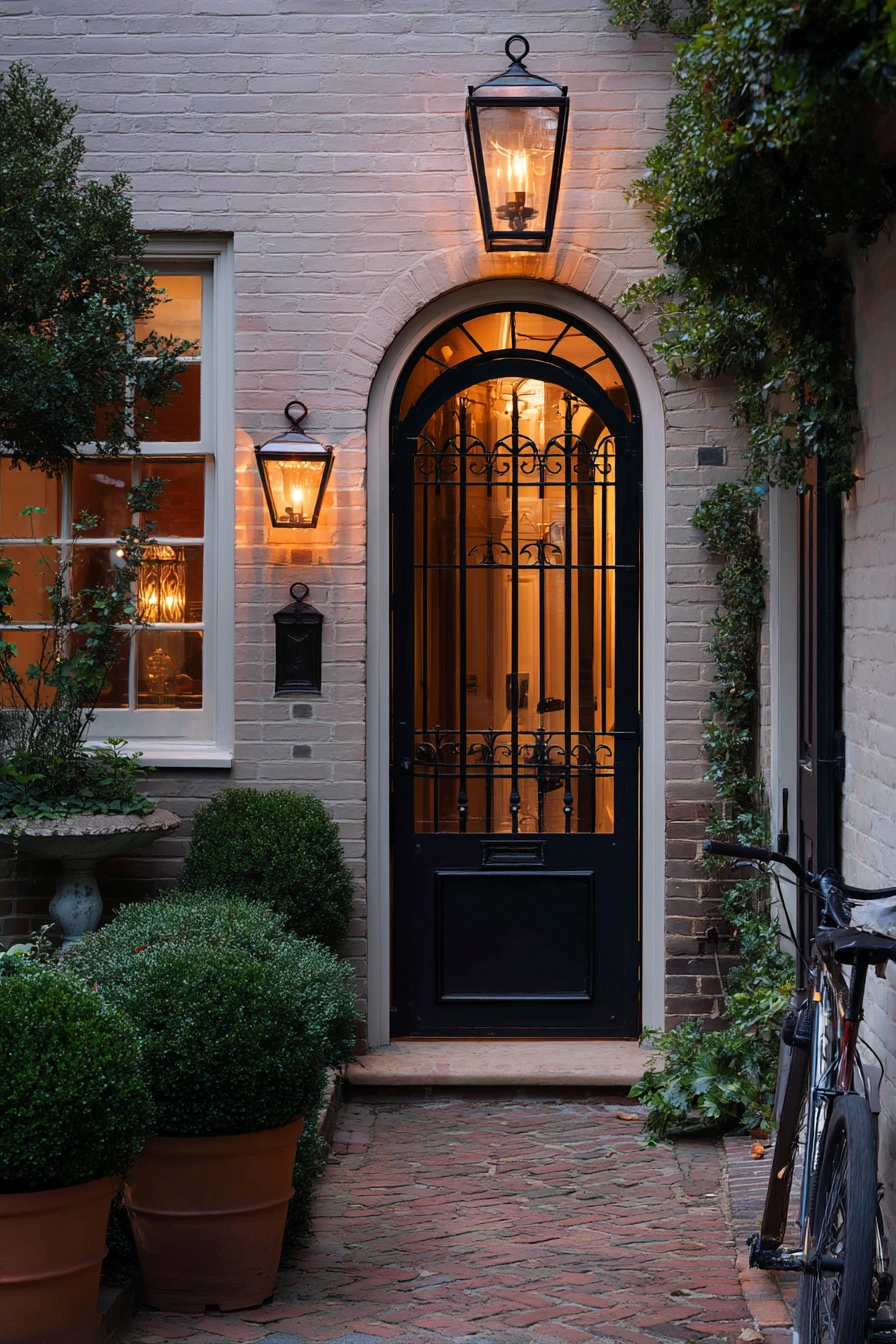
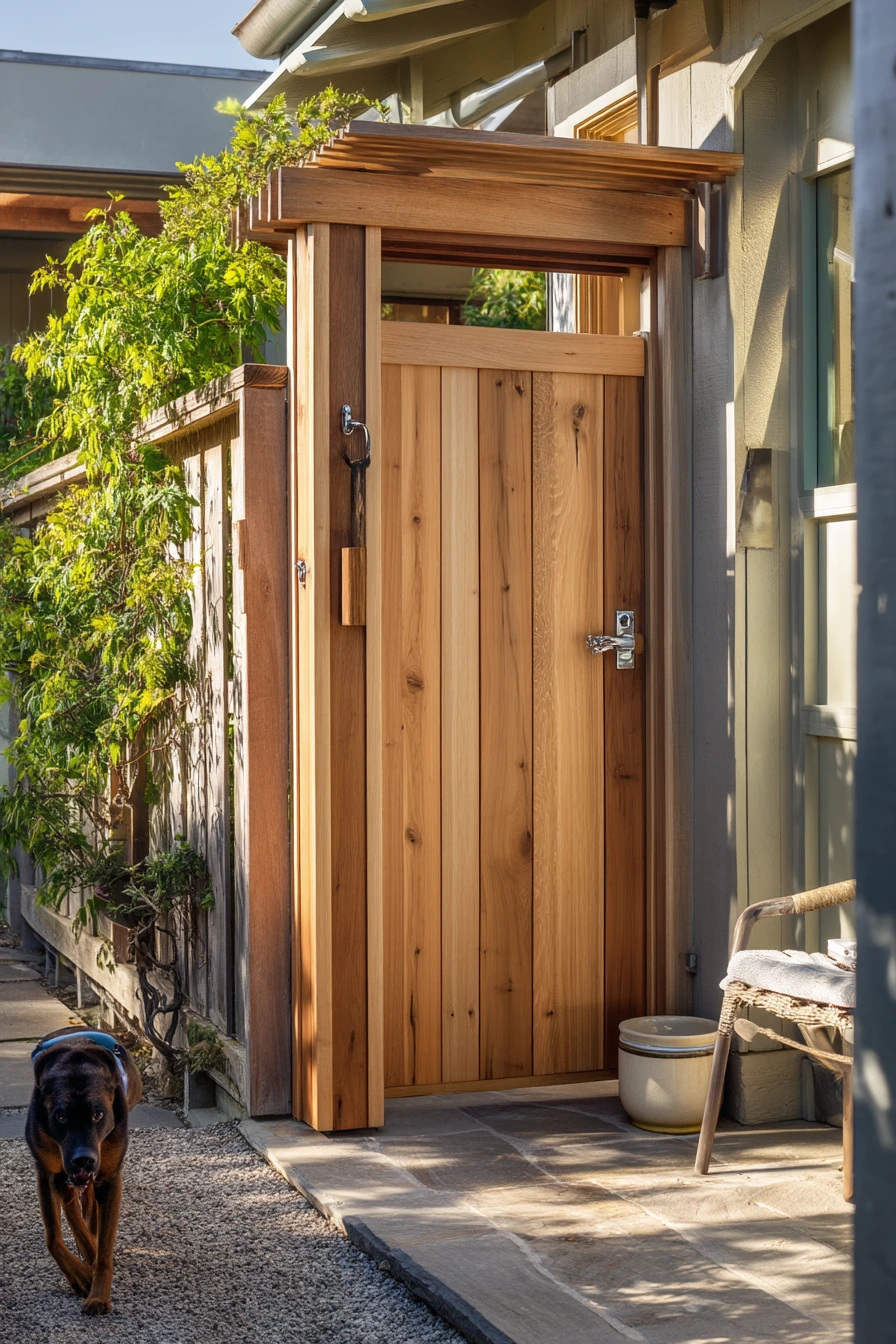
A pet-friendly garden gate needs to do one main job: stay closed. Tall cedar boards help block tempting sights and reduce barking. A secure latch placed high on the frame keeps smart dogs and small kids from opening it.
For the base, gravel is a simple win. It supports drainage, helps reduce mud, and makes paw prints easier to manage than soft soil. Add a narrow viewing panel if you want a little sightline without giving pets a full view of the street. Durable climbing clematis can soften the height of the boards and add flowers through the season.
Keep the entry set up for routine. A leash on a hook, a damp towel on a chair, and a dog bowl near the step make the space work. Check the bottom gap often, since digging can create a quick escape route. If you have a gate that meets a fence, make sure there is no weak point at the hinge side where a dog can push through.
- Use a latch that clicks firmly and cannot be bumped open.
- Place the latch high and add a second lock if needed.
- Choose gravel below for better drainage and less mud.
- Add a narrow panel for visibility without losing privacy.
- Train clematis up a wire support so vines do not pull on the gate.
Pro Design Tip: Install a metal anti-dig strip or paver edge along the bottom if your dog tends to dig near the gate line.
Budget Considerations: Cedar lasts well but costs more; pressure-treated boards with a pet-safe stain can lower the price.
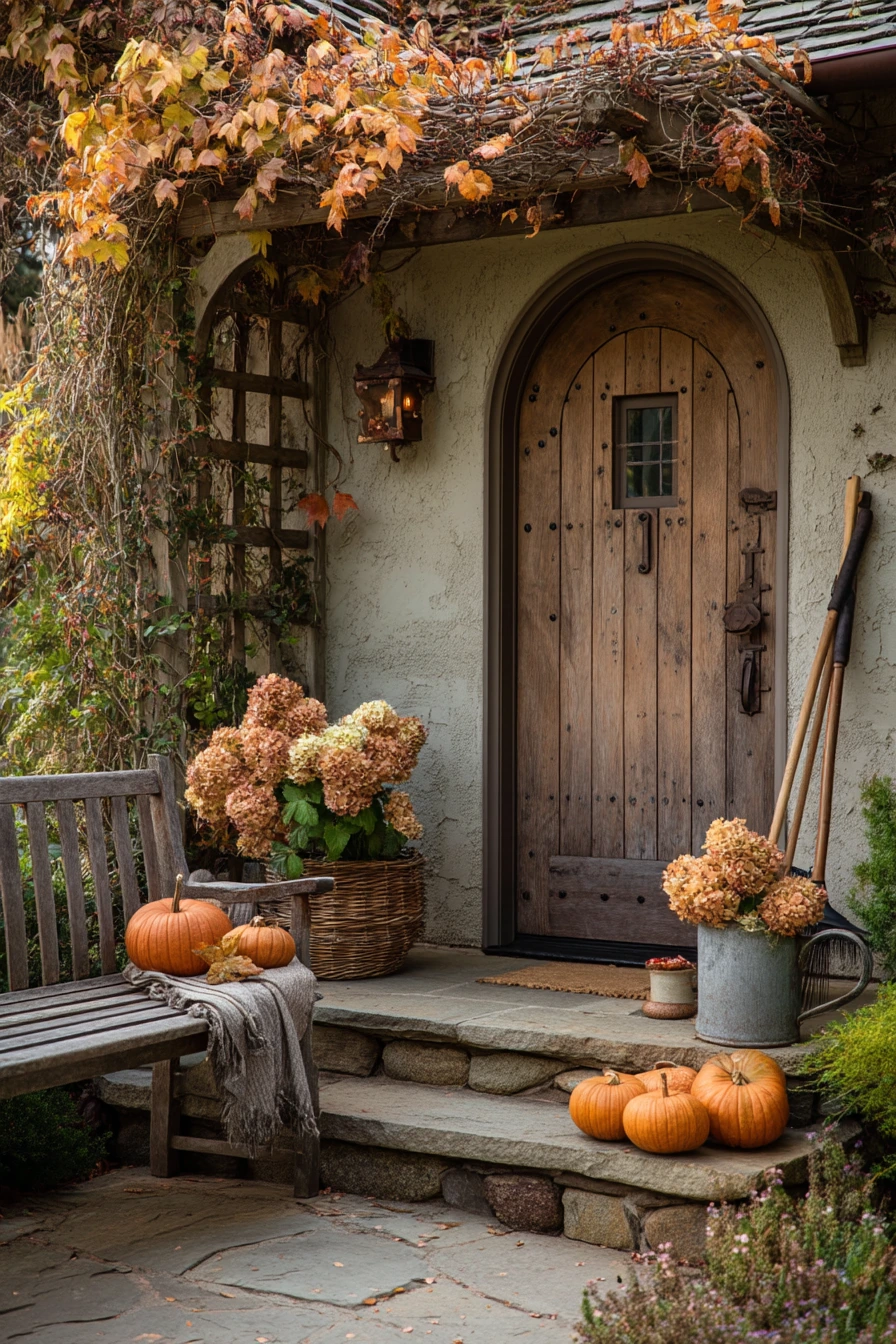
10. Autumn Garden Gate Styling With Pumpkins and Copper Hardware
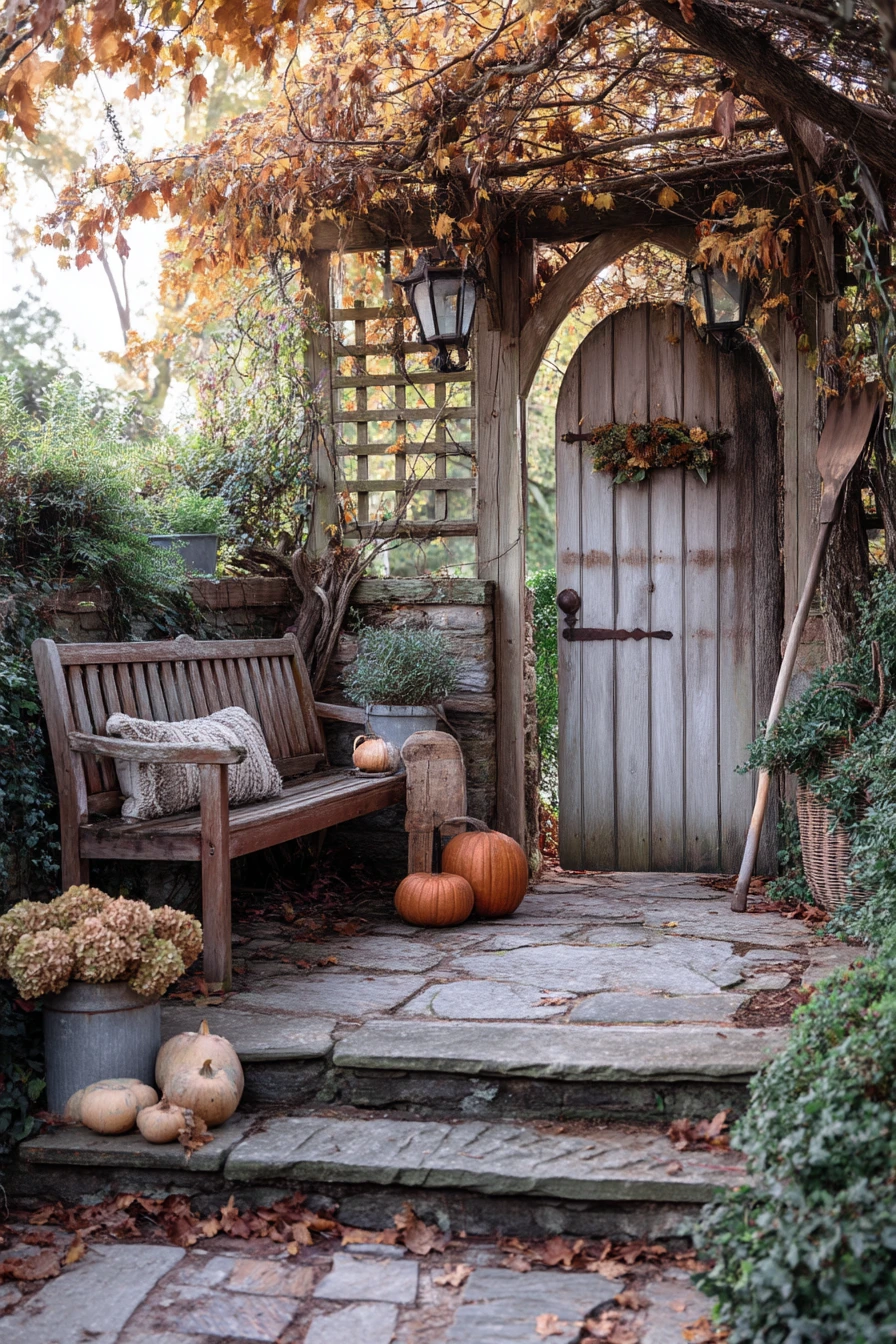
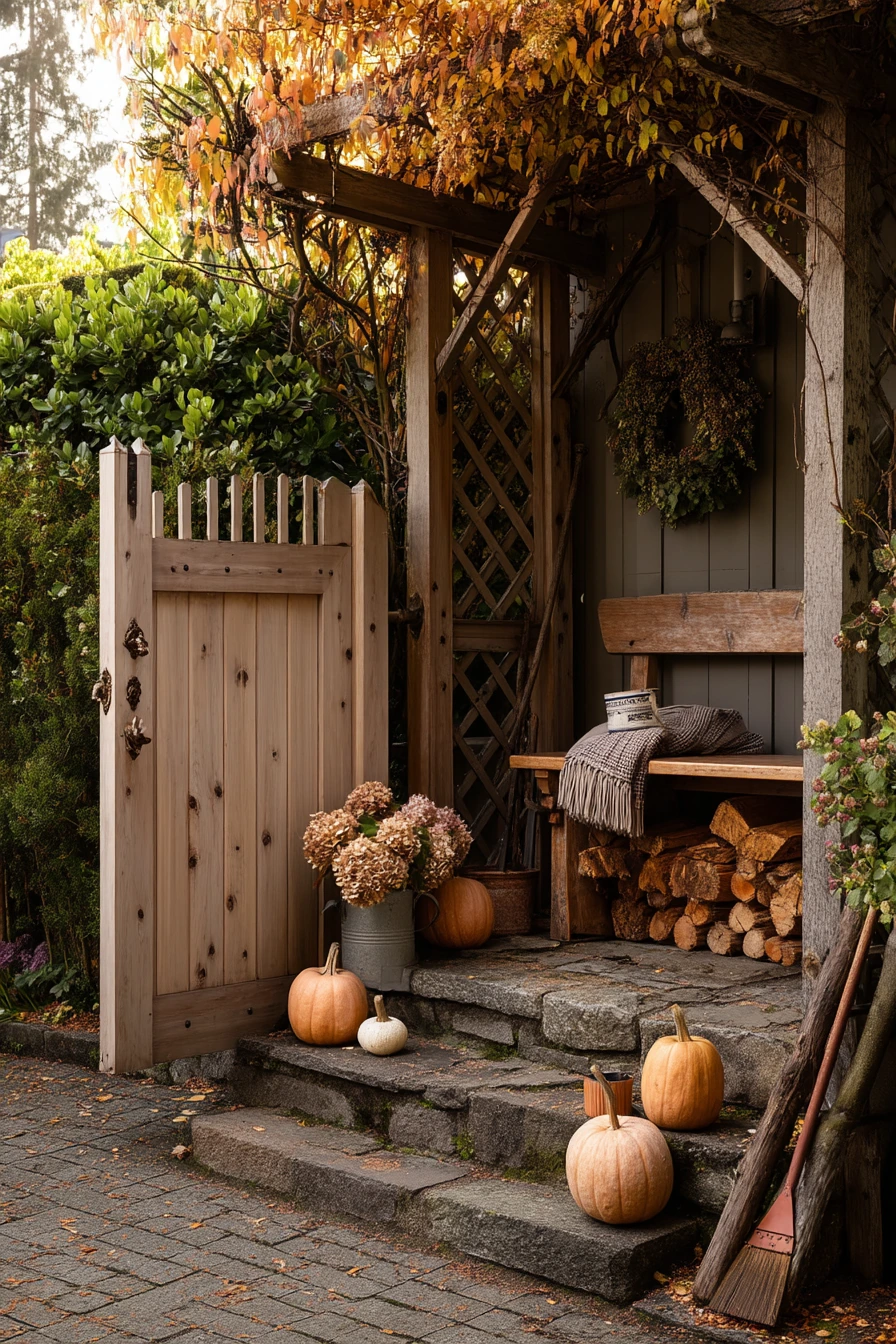
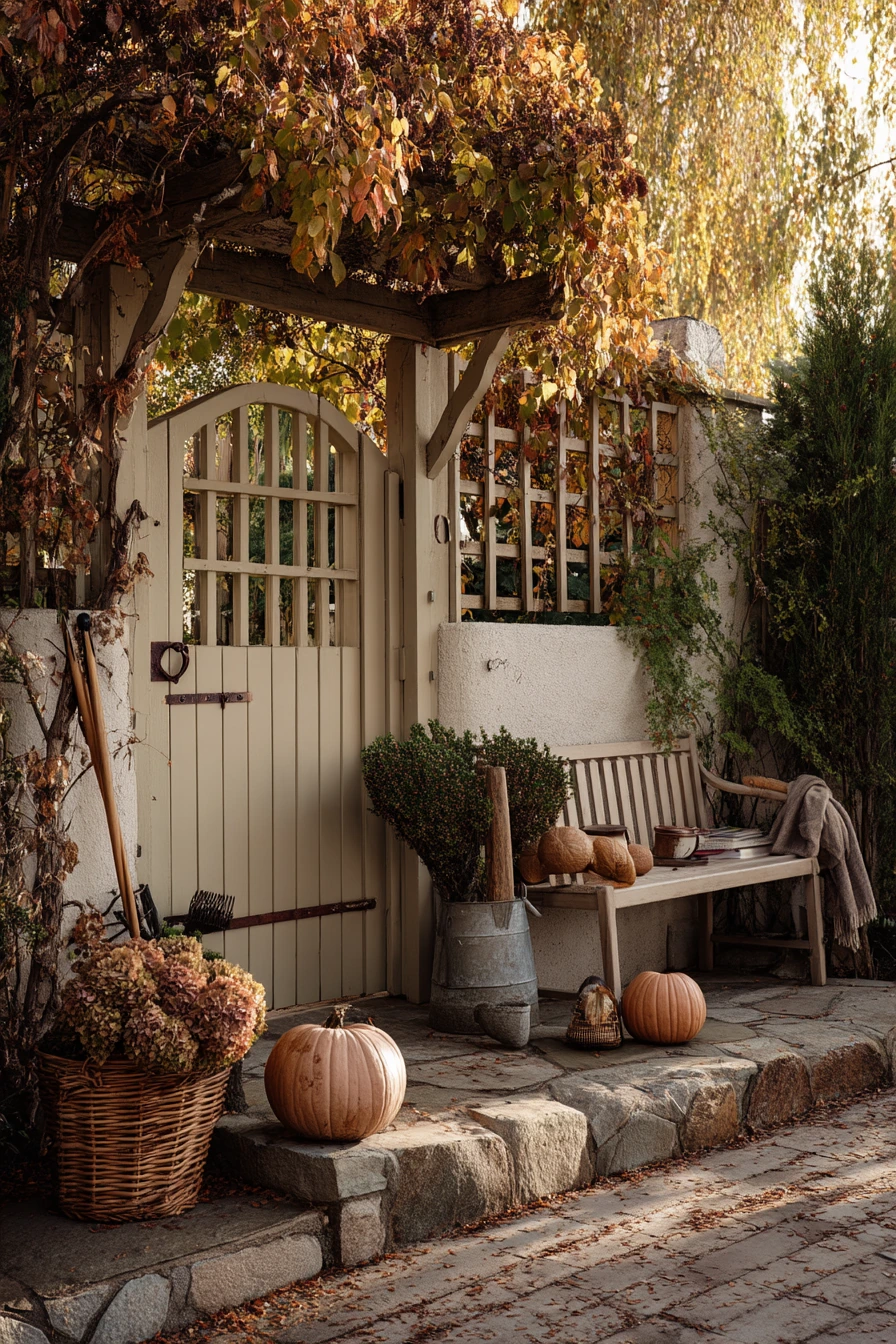
A welcoming autumn garden gate is more about styling than a full rebuild. A painted oak gate with copper hardware feels warm and seasonal. Add pumpkins on the stone step, dried hydrangeas in a galvanized bucket, and a garland of amber leaves woven through a trellis for an easy fall update.
Keep the color palette simple so it does not look busy. Oak, copper, and muted orange tones work well together. Place decor in small groups: two to three pumpkins, one bucket of dried blooms, and one garland. A wool scarf on the bench and a travel mug by the door add real-home cues that make the entry feel used, not staged.
Think about weather and cleanup. Secure the leaf garland so wind does not pull it into the latch. Keep a leaf rake close and stack firewood neatly so the area stays safe to walk through. If the gate gets more traffic during holidays, check the hinge screws and adjust the latch so it closes smoothly even when hands are full.
- Use copper or copper-tone hardware for a warm fall finish.
- Pick one garland style and keep it tight to the trellis.
- Group pumpkins in odd numbers for a natural look.
- Use a galvanized bucket for dried hydrangeas to add texture.
- Keep one clear spot for walking and carrying firewood.
Pro Design Tip: Repeat the copper tone once more near the gate, like a small lantern or house number, so the hardware looks like part of a set.
Budget Considerations: Real copper can be expensive; use copper spray paint on existing hardware or choose copper-finish pieces with a similar look.
The best garden gate ideas are the ones that match how you live. A simple latch, good drainage, and the right height matter as much as the style.
Use these examples to choose a look you can keep up with, from a painted picket gate with climbing roses to a secure cedar gate for pets or a renter-friendly lattice setup.
FAQ
1) What is the best material for a garden gate? Wood is easy to customize and repair, while metal can last longer with less movement. Choose based on weather, privacy needs, and maintenance.
2) How wide should a garden gate be? Many garden paths work well with a 36-inch opening. If you move bins, bikes, or a wheelbarrow, consider 42 to 48 inches if space allows.
3) How do I keep a wooden gate from sagging? Use strong hinges, add a diagonal brace, and set posts deep and plumb. Recheck screws and hinge alignment each season.
4) What type of latch is best for kids and pets? A self-closing latch with a higher-mounted release is a good option. For extra security, add a slide bolt or padlock hasp.
5) What should I put under a garden gate for drainage? Gravel or compacted stone helps prevent mud and rot near the bottom rail. It also keeps the swing path clear after rain.
6) How can renters add a gate without drilling? Use a freestanding screen, weighted planters as anchors, and tension-mounted trellis pieces. Pick lightweight panels you can move later.
7) How do I make a gate entrance look more inviting? Add one strong detail, like a matching planter pair, a house number plaque, or a lantern light. Then keep the path clear and the planting simple.
Choose one gate style that fits your home, then add small upgrades over time. A clean path, a reliable latch, and a few well-placed plants can make the entrance feel finished.