
Kitchen curtain ideas can change how your kitchen feels without a big remodel. The right fabric and length can soften hard surfaces, add privacy, and still let in morning light.
This guide uses real-life setups like tiny apartment galley kitchens, family breakfast nooks, and calm modern spaces. You will see options like cafe curtains, tension-rod panels, tier curtains, Roman shades, lace, plaid, and sheers.
For each look, you will get simple styling steps, what to pair it with, and small details that make it feel finished. You will also see a Pro Design Tip and a Budget Consideration so you can decide what fits your home and your wallet.
If you found this post from Pinterest, save your favorite section and use the checklist bullets to shop and style fast. These ideas work for renters and homeowners.
1. Cafe Curtains for a Tiny Apartment Kitchen Window


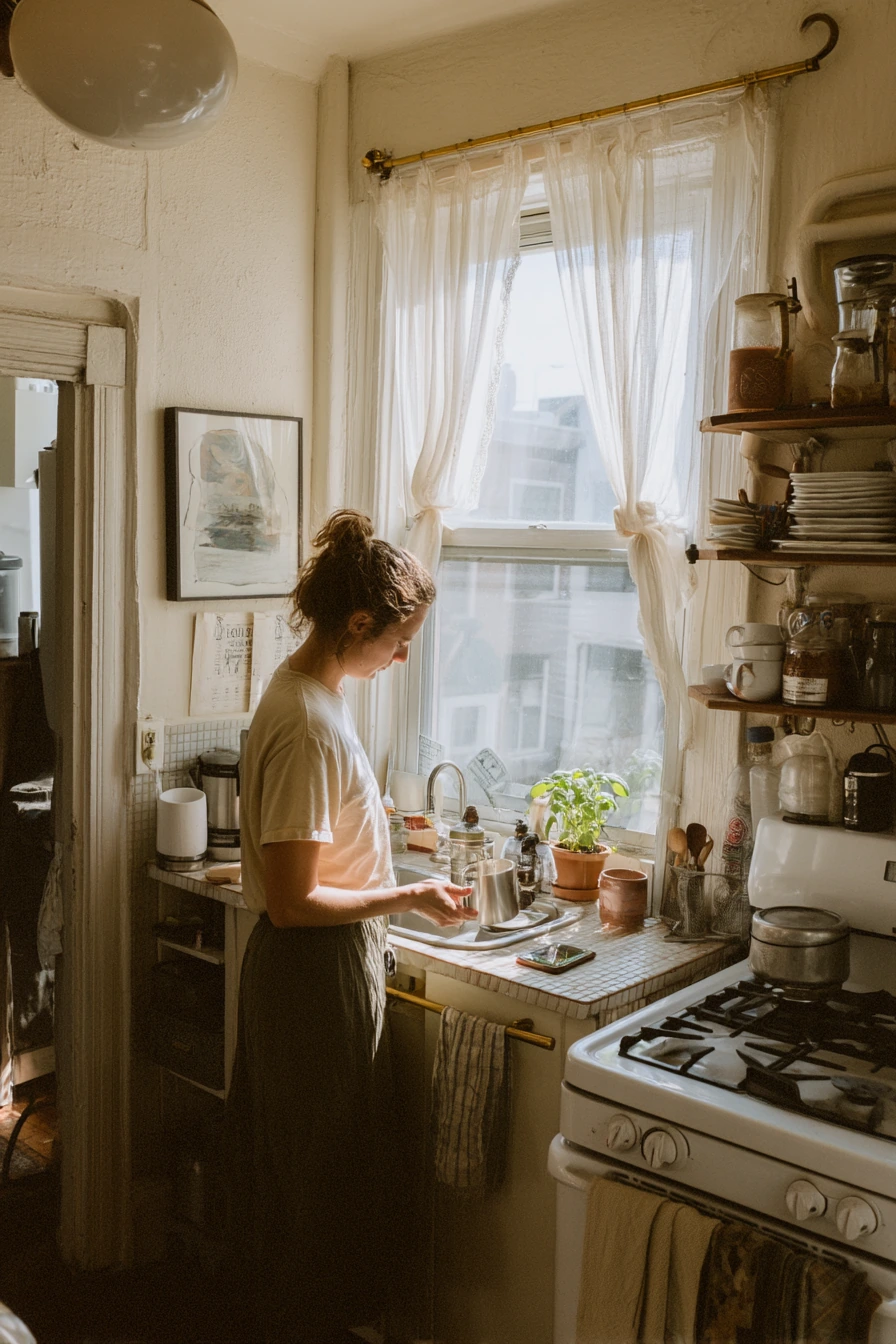
Cafe curtains are a strong choice for a tiny city apartment kitchen, especially over a sink window in a narrow galley. They cover the lower half of the glass, so you get privacy at eye level while keeping the top open for sun-washed light. White cotton panels on a brass rod look clean and warm, and they fit the modest, real-home vibe of stacked mugs, a dish towel on the oven handle, and a basil plant in a chipped pot.
To style this look, keep the fabric simple and breathable. Cotton or cotton-linen blends hang well and are easy to wash. If your counter is busy with a phone charging, a coffee setup, and daily clutter, cafe curtains help the space feel calmer without blocking the view. For a small window, choose a rod that sits just above the frame to make the window feel taller.
Finish the scene with small, useful items. A matching dish towel, a simple mug stack, and one herb pot are enough. If you want more softness, add a second layer later, like a thin sheer above the cafe panels. In a rental, this style is low-commitment and easy to take down for cleaning.
- Hang the brass rod 1 to 2 inches above the window trim for a taller look.
- Pick white cotton panels with a simple hem, not heavy trim.
- Use clip rings if you want easy on and off for laundry days.
- Keep decor near the window minimal so the light reads brighter.
- Repeat one warm metal finish, like brass on the rod and cabinet pulls.
Pro Design Tip: Choose cafe curtains that hit just below the window midpoint so you still see sky and trees, which makes a narrow galley kitchen feel wider.
Budget Considerations: Ready-made cafe panels are often cheaper than custom; if sizes are odd, buy longer panels and hem them with iron-on tape.

2. Tension-Rod Linen Curtains for Renters
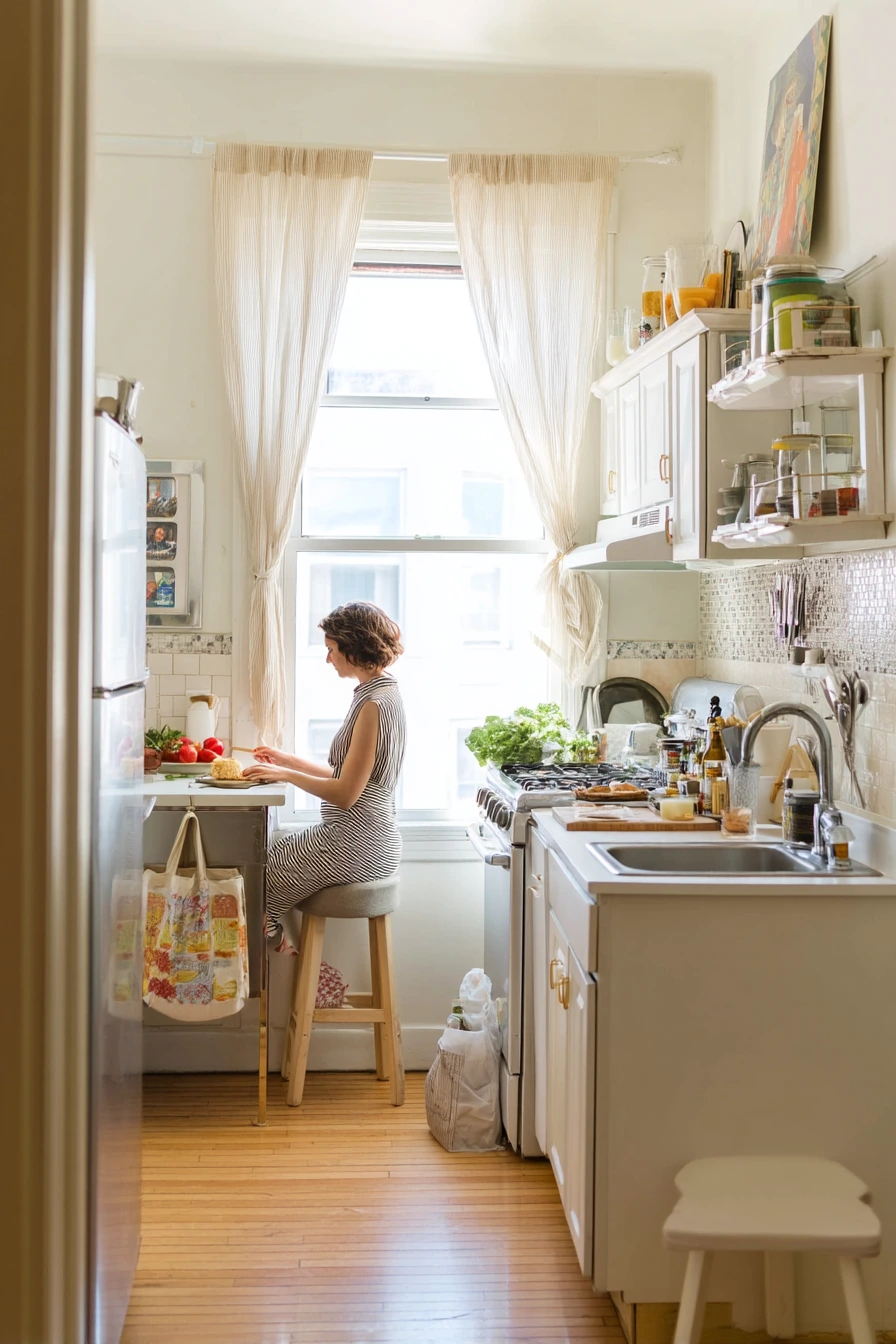
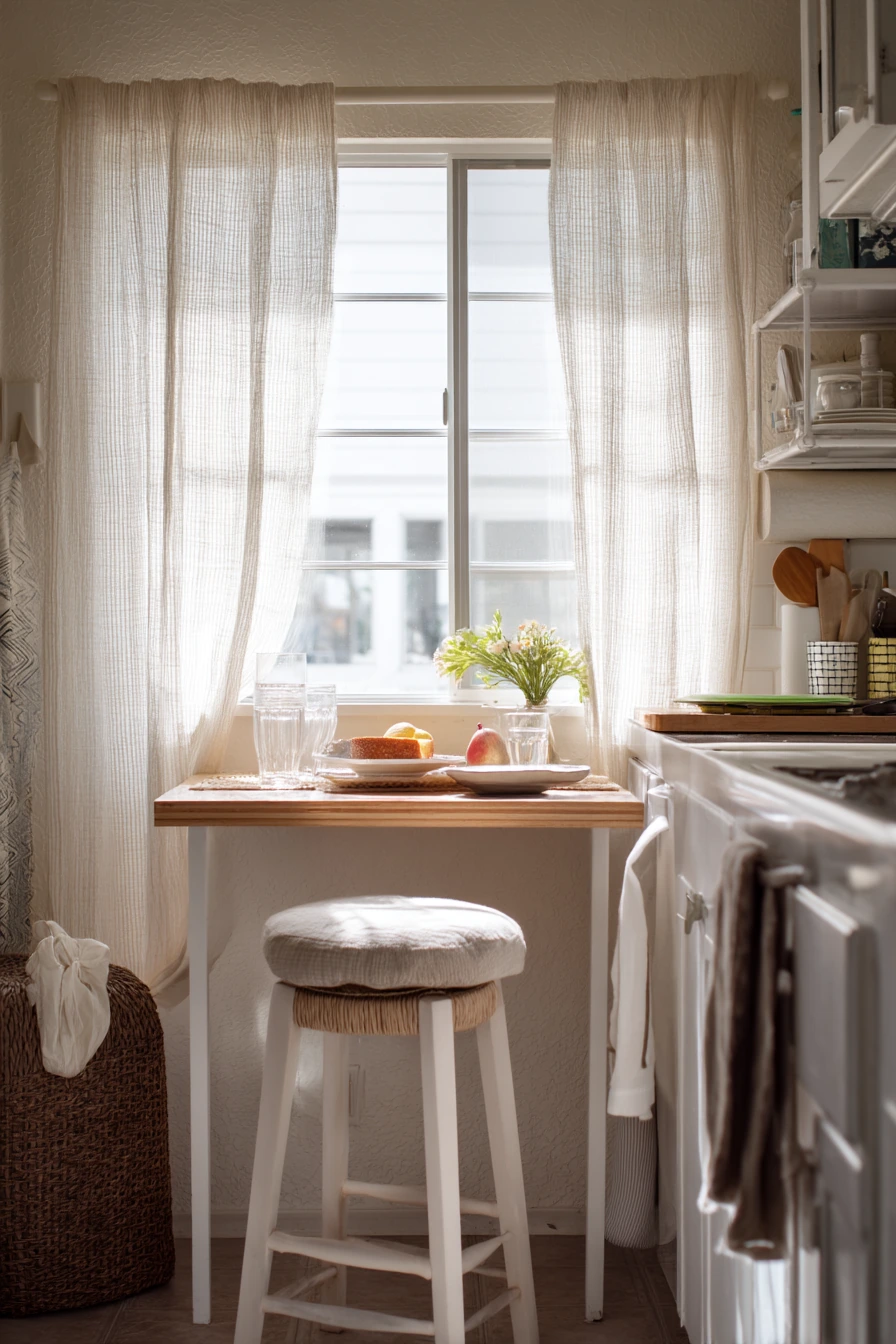
Tension-rod curtains are one of the easiest renter kitchen curtain ideas because you do not need screws. Washed linen panels framing a small breakfast window can make a basic rental feel more relaxed and lived-in, even with a peel-and-stick backsplash and a leaning recipe book by the sink. Linen has gentle texture, and slight wrinkles look normal, not messy.
To style this, decide if you want two side panels or a single center panel. For a breakfast window, two narrow panels that open in the middle feel balanced. Keep them lightly gathered so they look soft, not tight. If the space is busy with toast prep, fruit on a plate, a water glass by the sink, and a grocery tote on a stool, the linen helps the scene feel calm.
Color matters in rentals. Soft neutrals like oatmeal, flax, or pale gray work with many cabinet colors and can hide small stains better than bright white. Pair the curtains with a simple seat cushion and one small countertop tray for daily items. This gives you a tidy spot for keys, soap, or a sponge, so the window area stays clean.
- Measure the inside of the window frame for the right tension rod size.
- Choose washed linen or linen-look fabric for a relaxed drape.
- Use tiebacks only if you need more light during the day.
- Match the curtain tone to your backsplash or countertop for a seamless look.
- Wash on gentle and hang to dry to keep the fabric from shrinking.
Pro Design Tip: If your window is small, use panels that are slightly longer than the frame and let them graze the sill for a softer, taller effect.
Budget Considerations: A basic tension rod and two café-length panels cost less than hardware and full drapes; shop off-season colors or buy curtain fabric by the yard and hem it.

3. Tier Curtains in a Warm Family Kitchen
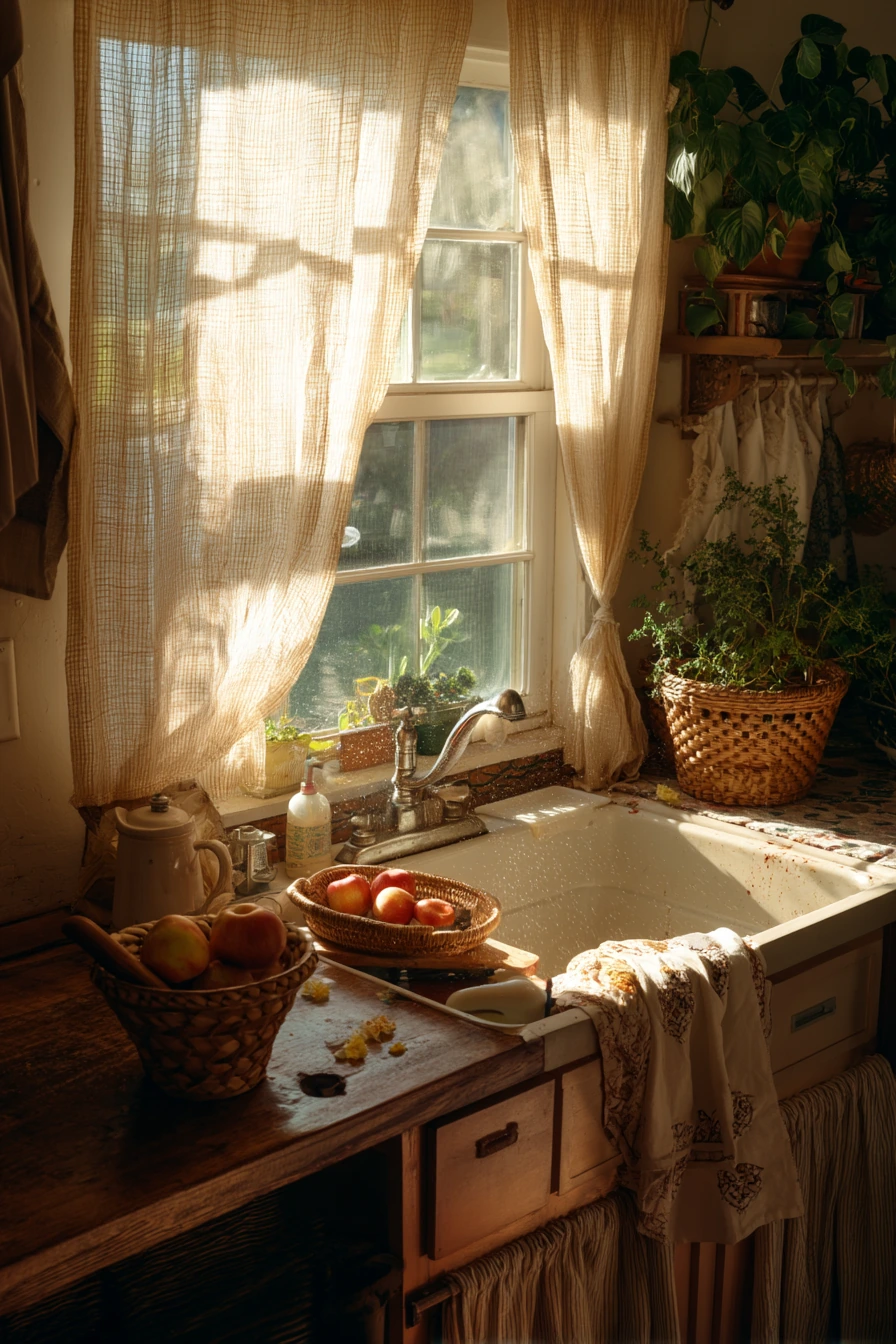

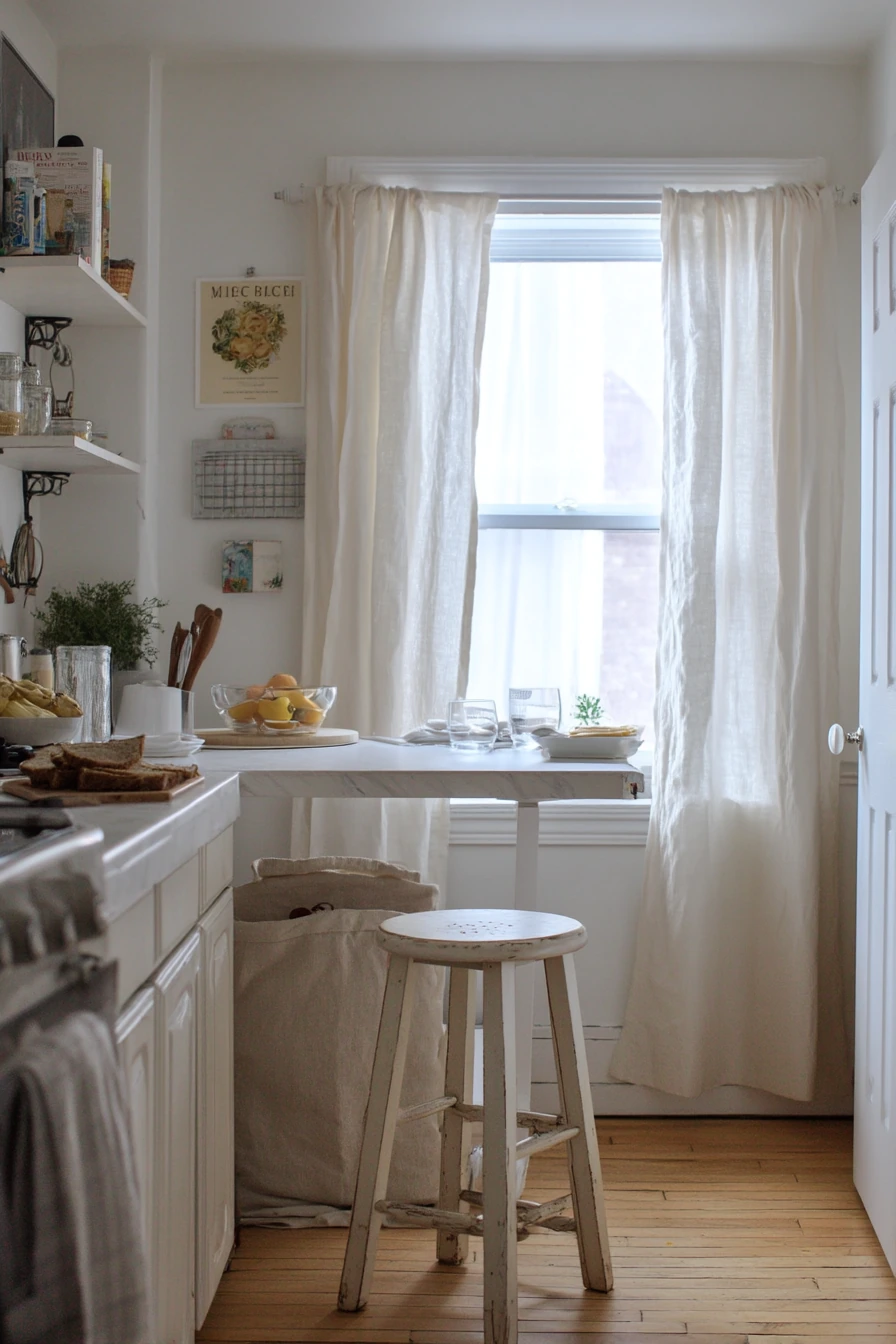
Tier curtains are a practical middle ground between cafe curtains and full panels. In a warm family kitchen with a farmhouse sink, creamy cotton tiers can flutter with the window open and still handle daily life. This style fits a space where hands rinse apples, crumbs land on the counter, and tea towels get folded a little imperfectly.
Tier curtains usually come in two pieces, a top tier and a bottom tier. You can use one or both depending on privacy needs. For a family home, using just the lower tier keeps the room bright during late afternoon light while hiding the sink area from outside. If your window faces a neighbor, add a short top tier for more coverage without making the kitchen feel dark.
To style the rest of the area, lean into hand-me-down charm with wood and simple cotton. A wooden cutting board, a small herb plant casting shadows, and a toy basket near the table all look natural with this curtain type. Keep patterns subtle, like a small weave or a tiny stripe, so the room does not feel busy. Choose a washable fabric, because kitchens get splashes.
- Use a double rod if you want separate top and bottom tiers.
- Pick creamy cotton for a soft look that still feels clean.
- Keep the hem just above the sink edge so it stays dry.
- Repeat the fabric tone in tea towels or napkins for unity.
- Add one plant near the window to make the light feel warmer.
Pro Design Tip: Hang tiers slightly wider than the window so the fabric stacks to the sides, which makes the glass area look larger.
Budget Considerations: Tier sets are often sold as affordable bundles; if you already own sheets, you can cut and hem them into tiers for a low-cost custom size.
4. Gingham Curtains for a Cheerful Breakfast Nook


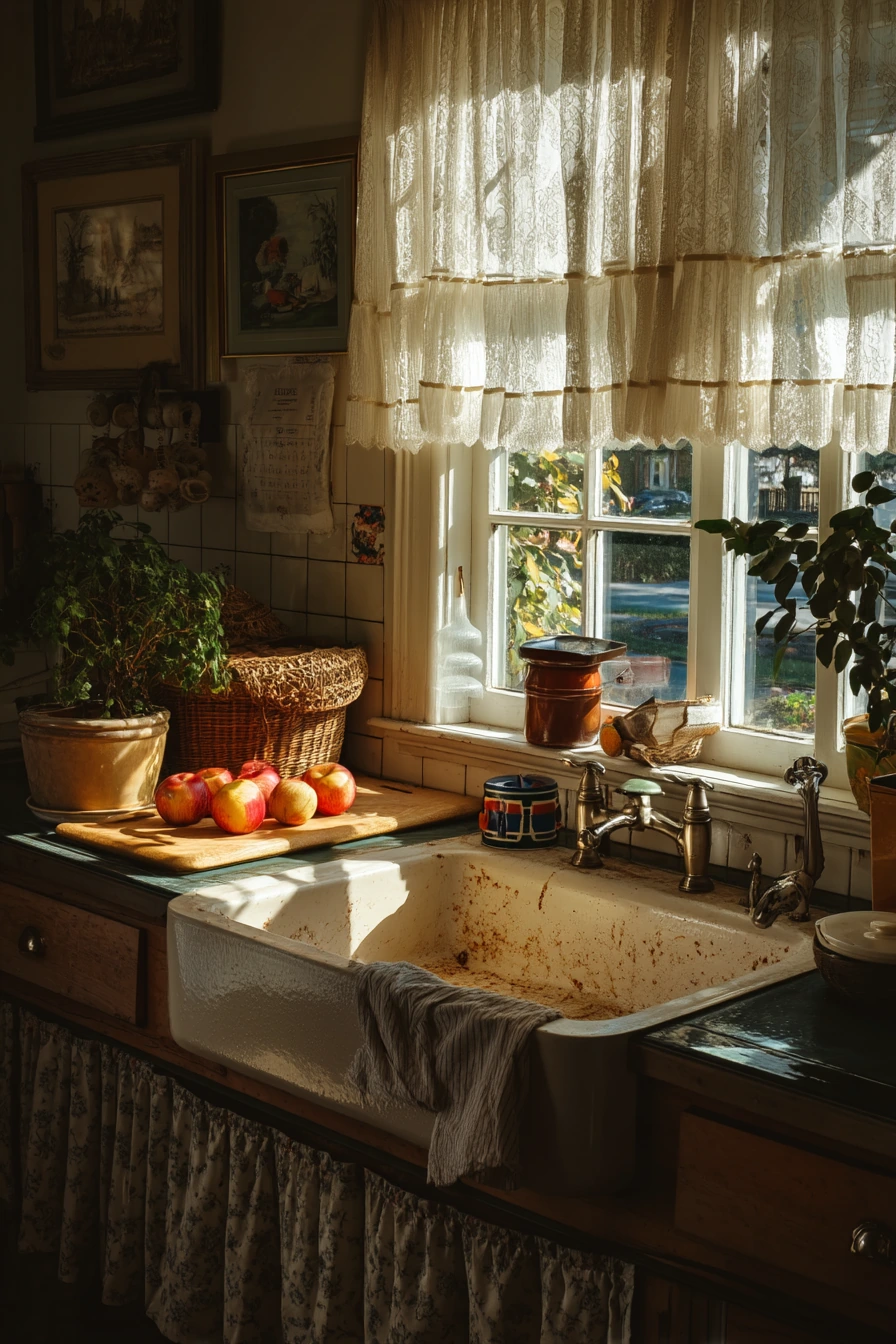
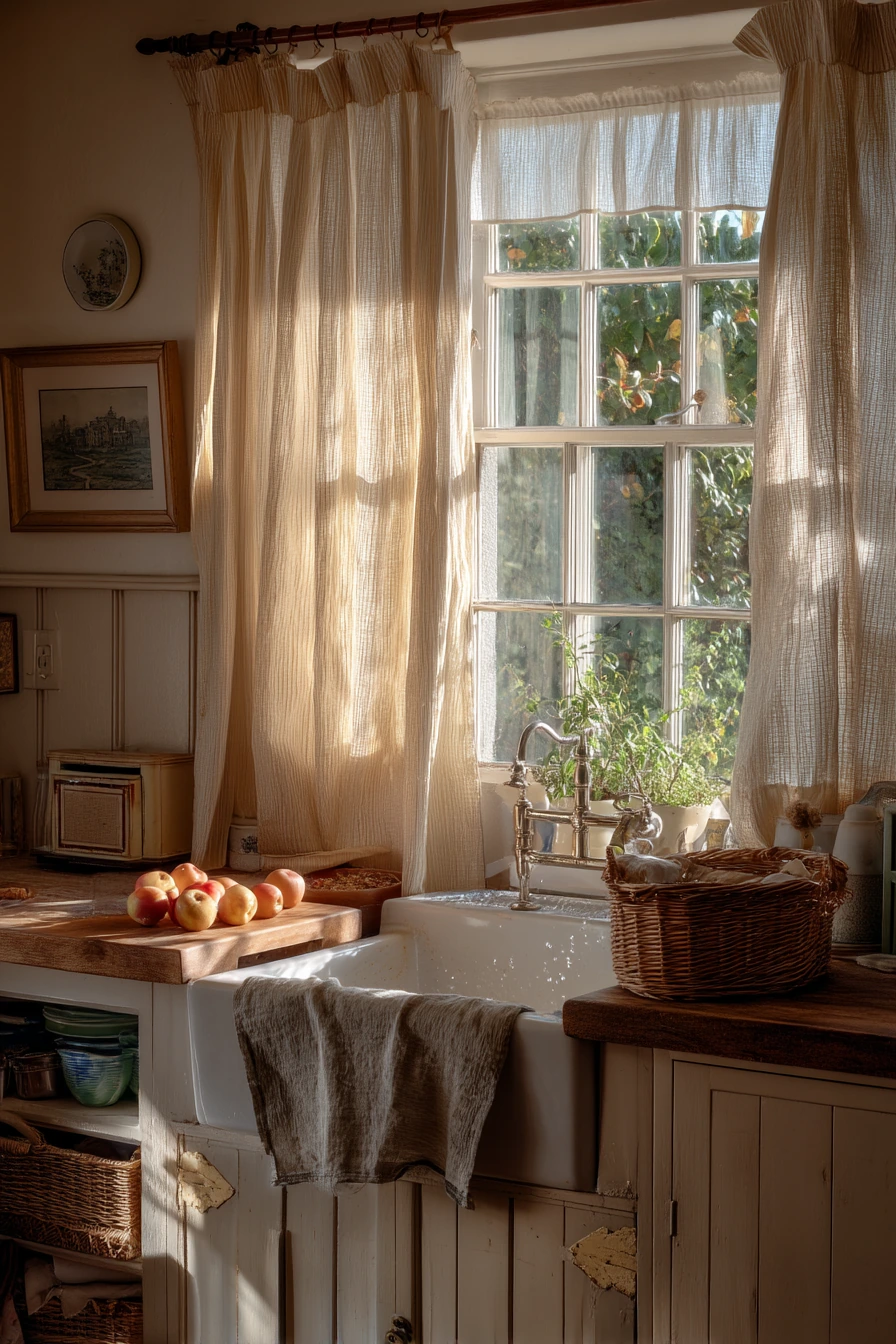
Gingham kitchen curtains are a classic way to add a friendly, homespun mood in a breakfast nook. A small gingham valance or short curtains above a bench seat looks right at home with real family details like a parent packing lunch, a kid eating cereal, an enamel bowl, and school notes pinned nearby. The pattern adds energy without needing extra decor.
To keep gingham from taking over the room, scale and color matter. Small checks feel softer and more casual than large checks. Choose colors that match what you already see every day, like navy with white, sage with cream, or warm red with beige. If you have a half-read cookbook on the counter and a backpack by the chair, gingham helps the scene feel organized even when life is busy.
Style it with a few simple repeats. If the curtains are blue, add one blue item like a dish towel or a small tray. Keep the bench cushion solid to balance the pattern. If the nook is tight, mount the rod higher than the window to lift the eye and make the corner feel bigger. Use a fabric that can go in the wash, because breakfast areas get spills.
- Choose small-check gingham for a lighter look.
- Pair patterned curtains with solid cushions and simple dishes.
- Hang the rod higher to make the nook feel taller.
- Add one pinboard or rail nearby to match the practical vibe.
- Use a simple tie or clip if you want the curtains open during breakfast.
Pro Design Tip: Keep gingham as the main pattern and make everything else mostly solid, so the nook feels cheerful, not cluttered.
Budget Considerations: Gingham fabric is widely available; you can sew straight panels easily or use iron-on hem tape for no-sew curtains.


5. Long Linen Curtain Panels for a Quiet Modern Kitchen


Long linen curtain panels can soften a modern kitchen without adding visual noise. In a quiet space with matte cabinets and a side window, full-length panels bring texture and gentle movement. This works well when the styling is minimal, like a stoneware bowl, two wine glasses drying on the counter, and a single olive branch in a vase.
For modern rooms, the key is clean lines. Choose panels in a solid neutral, like warm white, sand, or light gray. Hang them high and wide so the window feels larger, and keep the header simple, like back tabs or a hidden rod pocket. If you use your kitchen for real tasks, like slicing lemons and working with a laptop open beside a notebook, linen keeps the room from feeling too hard or cold.
How to style it: limit countertop items and group what stays out. Put the notebook and laptop on a tray when not in use, and keep the bowl and vase as your only decor. If you need more light control, layer a simple roller shade behind the linen. This keeps the serene, restrained look and helps with glare during work hours.
- Hang panels close to the ceiling to add height.
- Use a rod that extends past the window so panels stack off the glass.
- Pick medium-weight linen for better drape and fewer wrinkles.
- Keep hardware simple in black, brushed nickel, or matching cabinet tones.
- Layer a roller shade if you need privacy at night.
Pro Design Tip: Use wide panels with a soft, even wave so the folds look intentional and calm, which suits modern kitchens.
Budget Considerations: Linen can be pricey; linen-blend or textured cotton panels give a similar feel for less, especially in standard sizes.


6. Lace Curtains for a Cottage Kitchen Window


Lace curtains bring instant cottage charm and a soft glow when sunlight hits the pattern. In a lived-in kitchen with a worn wood table, flour dust, and an older cook kneading dough, lace feels right. The detail looks heirloom and warm, and it pairs well with everyday items like a butter dish, reading glasses, a tea mug, and a basket of onions.
To keep lace from feeling too formal, choose a simple motif and avoid heavy ruffles. Cream or soft white usually reads more natural than bright white. Hang the curtains so they just skim the sill, or use cafe-length lace if you want privacy while still showing light at the top. This style works well in older homes where trim and windows are not perfectly square, because lace hides small uneven edges.
Styling idea: let the lace be the focal point and keep nearby items simple and useful. A wood cutting board, a ceramic crock for utensils, and one vintage-looking towel is enough. If you want a more updated cottage look, pair lace with a plain bamboo shade behind it. Pull the shade down when you need privacy, and keep it up when you want the lace to glow.
- Choose a simple lace pattern with open space for more light.
- Pick cream tones for a softer, older-home feel.
- Keep the rod thin so it does not overpower the lace.
- Wash gently and air dry to protect delicate threads.
- Layer with a plain shade if you need more coverage at night.
Pro Design Tip: Use lace with a larger open weave if your kitchen is small, since it reads lighter and keeps the window feeling airy.
Budget Considerations: Vintage lace can cost more; affordable lace panels from big-box stores look better when you hem them to a custom length and use a quality rod.


7. Neutral Roman Shade for a Busy Sink Window
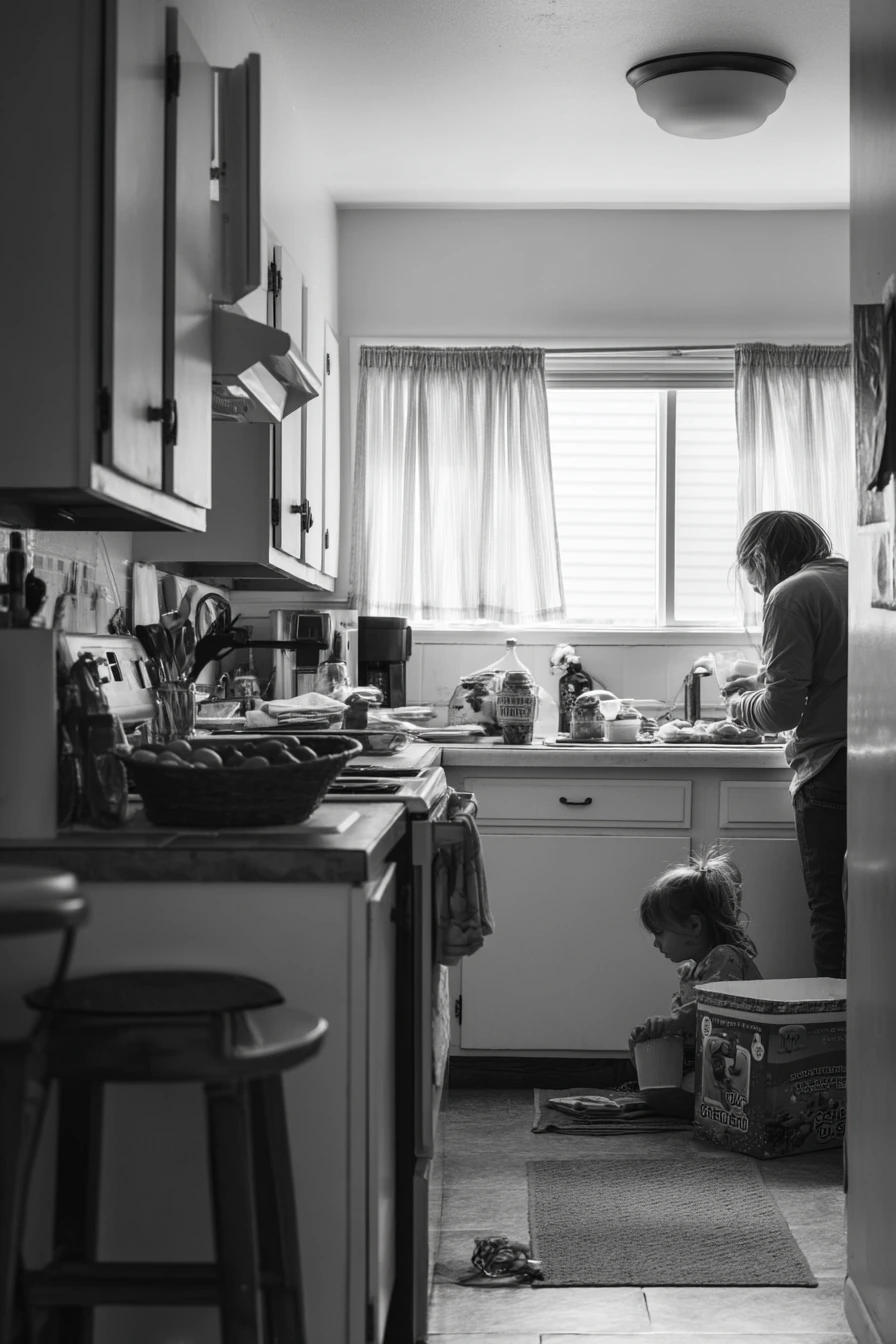
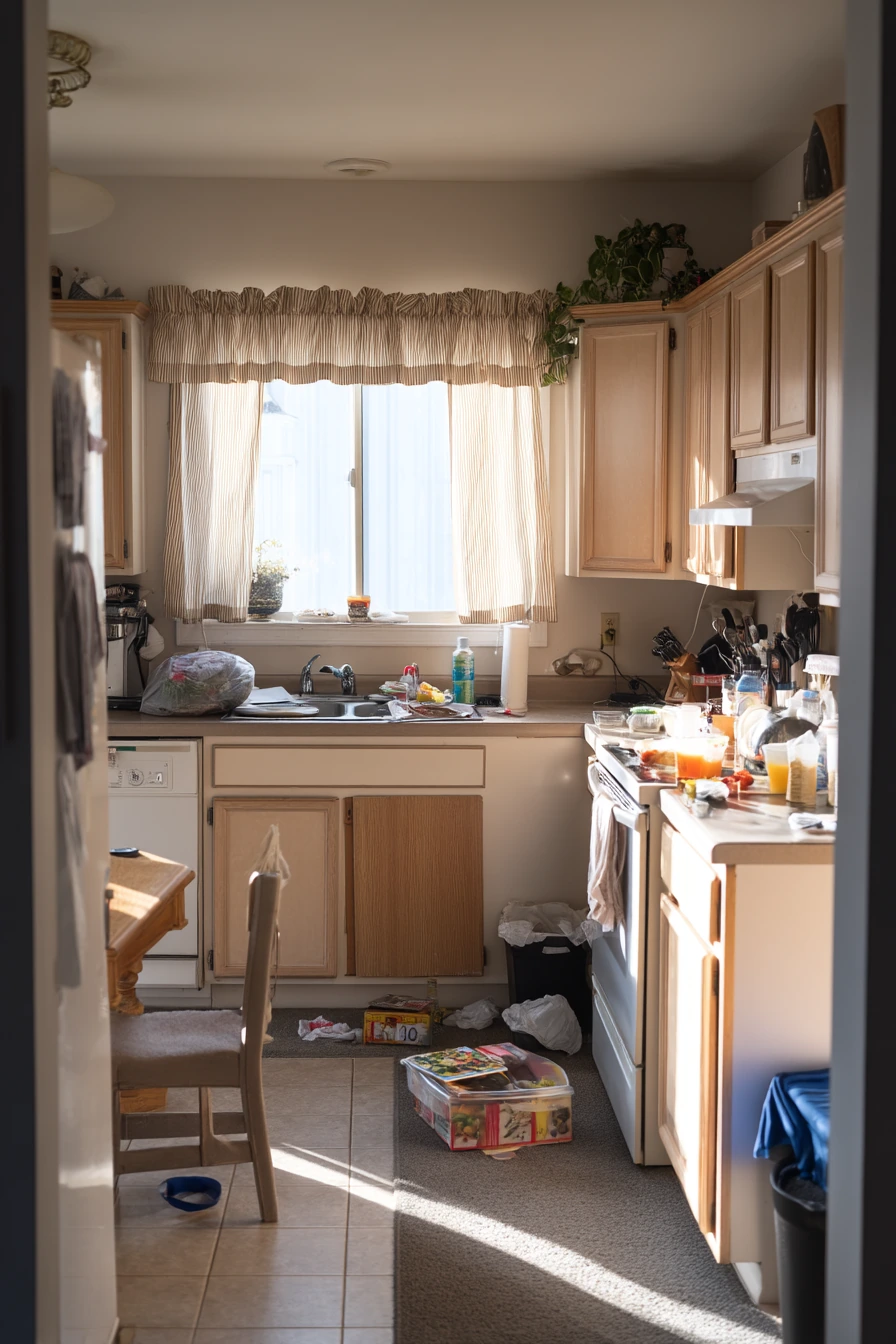
A neutral Roman shade is one of the most functional kitchen window treatments. It gives clean lines, easy light control, and less fabric near splashes. In a family kitchen with breakfast chaos, like lunches being packed, a cereal box half-open, keys by the fruit bowl, and dish soap by the sink, a simple shade keeps the space grounded.
Choose a durable fabric in a medium tone, like oatmeal, stone, or warm gray. Light colors can show stains, and very dark shades can make the window feel heavy. If you like a soft look, pick a textured weave rather than a bold print. Corded shades can look a bit crooked after use, so consider cordless options for a tidier front and better safety around kids.
How to style it: treat the shade like a neutral backdrop and focus on keeping the sink zone organized. Use one small caddy for soap and brushes, and store extras under the sink. Add a simple fruit bowl and keep the rest of the counter clear. The Roman shade will make the whole corner feel more pulled together, even when the day is busy.
- Pick a wipeable or easy-clean fabric for the sink area.
- Choose a cordless Roman shade for a neat look and kid safety.
- Mount it inside the frame for a clean, built-in feel.
- Keep nearby items grouped in one tray or caddy.
- Add a slim under-sink mat to catch drips and protect floors.
Pro Design Tip: Match the Roman shade fabric to your wall paint, not your cabinets, so the window blends in and the room feels calmer.
Budget Considerations: Custom Roman shades add up fast; look for standard sizes and use a simple hem tape adjustment, or try a cordless woven shade for a similar effect.
8. Plaid Curtains for a Cozy Winter Kitchen


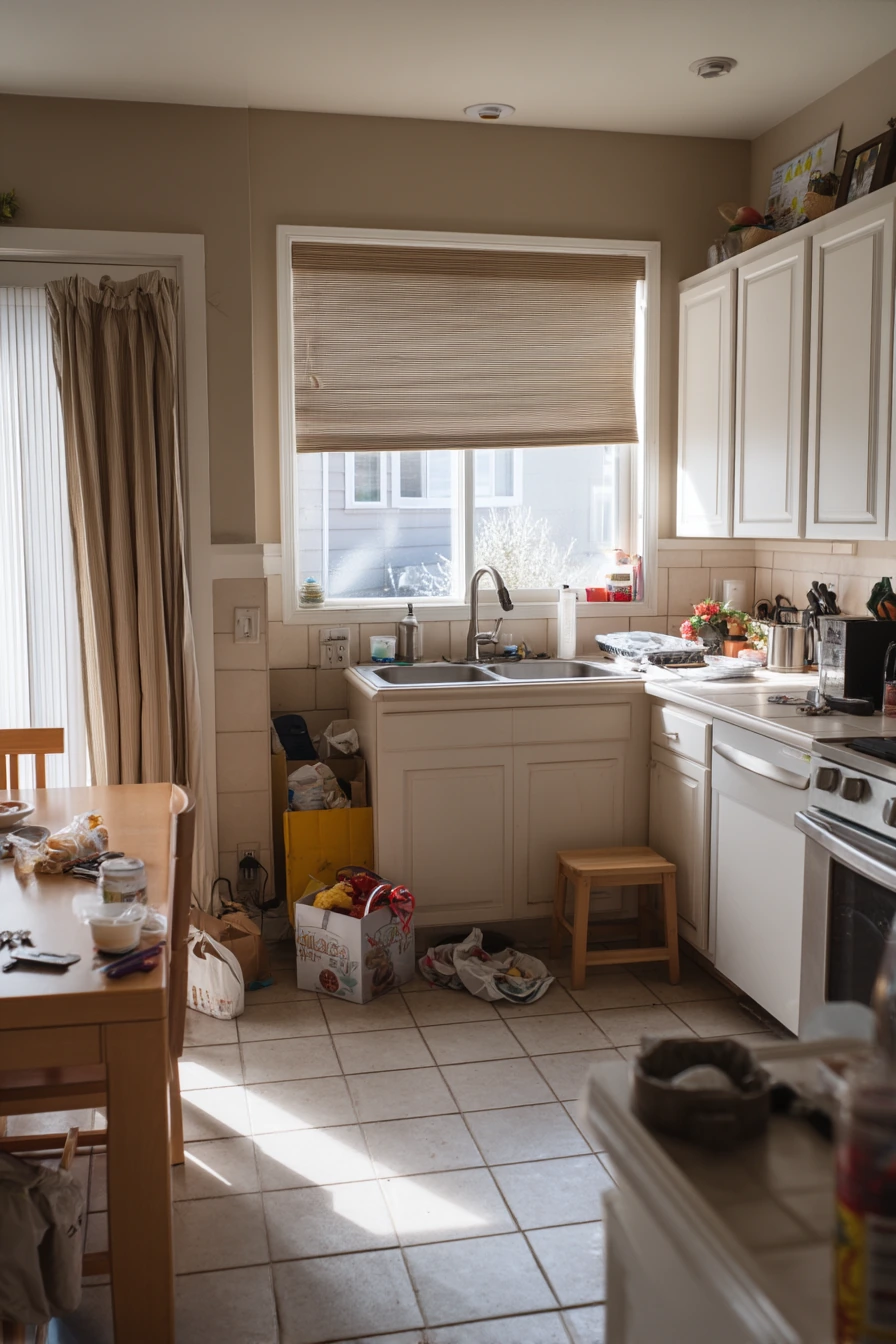
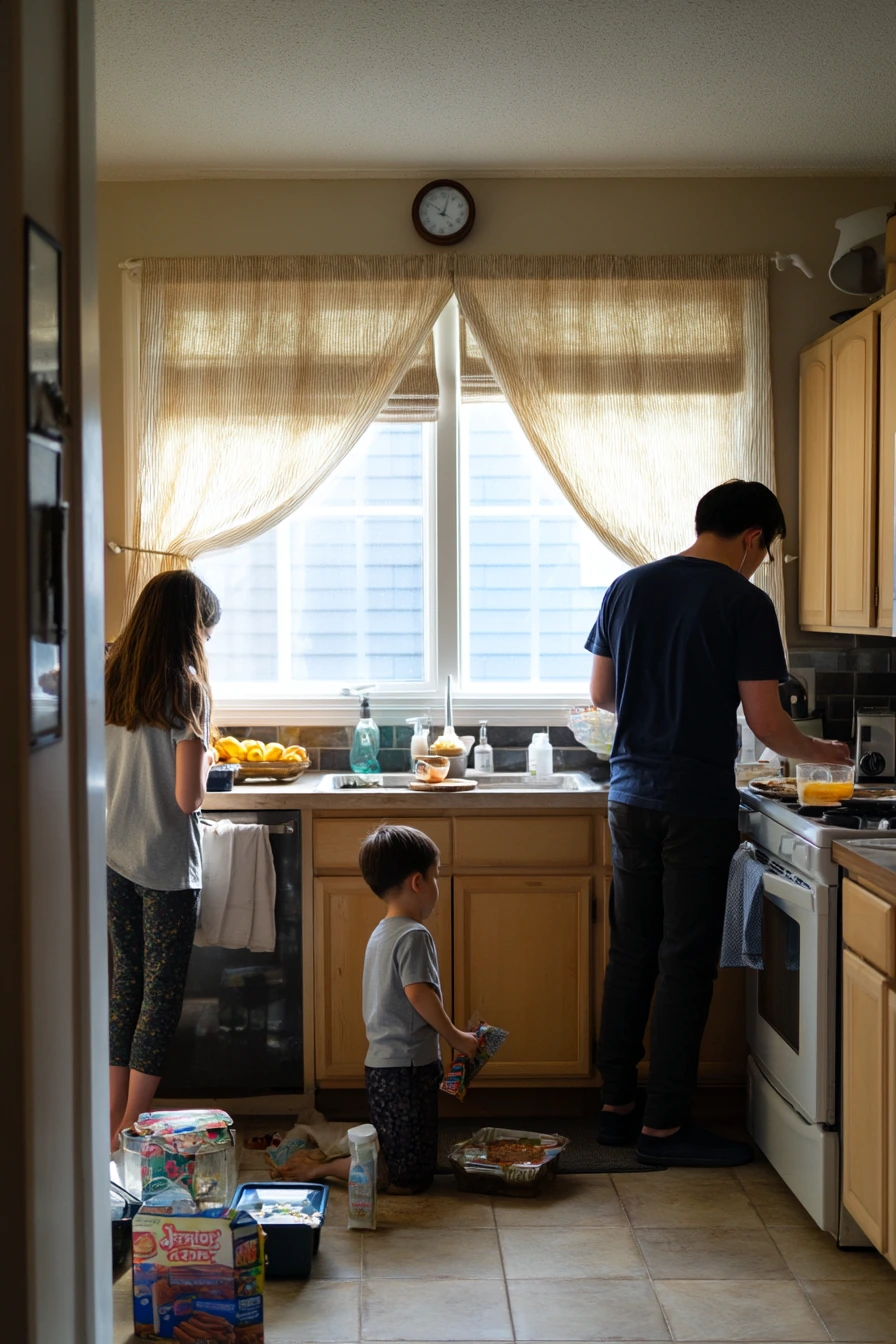
Plaid curtains make a kitchen feel cozy in winter, especially near a glowing stove while rain taps the glass. The pattern brings warmth and a cabin-like comfort without changing your cabinets. This look fits real life details, like someone stirring soup, a cookbook open to a soup page, snow boots by the mat, and a wool throw on a chair.
To style plaid well, keep the rest of the room simple. Choose a plaid with two or three colors, not many. Good winter tones include charcoal and cream, forest green and tan, or navy and warm white. If your kitchen already has a lot of pattern, like busy counters or tile, go with a small plaid. If your kitchen is plain, a larger plaid can add interest.
Lighting matters with this look. Warm lamps mixed with dim daylight can make plaid look rich and soft. Add a few practical items that match the cozy theme, like a wooden spoon crock, a thick cotton towel, and one candle on a safe surface away from the stove. Keep curtains away from heat sources by using tiebacks or choosing a shorter length near the range.
- Pick plaid colors that match one existing item, like a rug or towel.
- Use thicker cotton or brushed fabric for a winter feel.
- Keep the hem above radiators and away from the stove.
- Add a simple mat near the door for wet boots.
- Use a warm bulb in a nearby lamp for a cozy glow.
Pro Design Tip: Repeat one plaid color in a solid accessory, like a chair cushion or towel, to make the pattern feel planned.
Budget Considerations: Seasonal plaid curtains can be found on sale after winter; buy then and store them, or use plaid tablecloth fabric to sew basic panels.


9. White Sheer Curtains for a Bright Garden View


White sheer curtains are a top choice when you want the window to feel fresh and airy. In a garden-facing kitchen, sheers lifting near an herb-filled sink window let sunlight in while softening the view. This pairs well with everyday plant care, like trimming rosemary, terracotta pots on the sill, a watering can, and sun shadows from leaves across the counter.
Sheers work best when they are simple and not too shiny. Look for voile, cotton gauze, or linen sheers with a little texture. Hang them so they move slightly, but do not drag into the sink area. If you want more privacy at night, layer a roller shade behind them. During the day, you can keep the shade up and let the sheers do the softening.
To style this space, keep the window zone clean and green. Limit the number of pots so it does not feel crowded. Use matching terracotta or one neutral planter style. Keep dish soap and brushes in a simple container, and clear away paper clutter like receipts by using a small wall hook or drawer. The goal is clean, quietly lived-in, not perfect.
- Choose matte, textured sheers for a natural look.
- Hang the rod wider than the window to make the view feel bigger.
- Keep plants grouped in odd numbers, like three pots.
- Layer a roller shade if you need nighttime privacy.
- Wash sheers often to keep them bright near cooking oils.
Pro Design Tip: Use a double rod with sheers in front and a simple shade behind, so you can control glare without losing the airy look.
Budget Considerations: Basic white sheers are low-cost; spend a little more on a sturdy rod and rings so they slide easily when you water plants or open windows.


10. DIY Handmade Cafe Curtains for a Budget Kitchen


Handmade cafe curtains are a smart budget-friendly update, especially when you want a custom look without custom prices. Slightly uneven hems and simple clip rings can still look charming and real. In a kitchen where a young couple is hanging curtains above the sink, with a paint swatch on the fridge and a tool bag on the floor, this style fits the moment.
To plan a DIY cafe curtain, start with the window width and decide how much gather you want. A little extra fabric makes the panels look softer. Washed cotton is easy to sew and easy to wash. If you do not sew, iron-on hem tape works well for straight hems. Use a simple rod or a thin tension rod, depending on your window and rental rules.
How to style it: keep the colors calm so the handmade look feels intentional. White, cream, and pale stripes look clean with most kitchens. Add one small detail that matches the project vibe, like a cotton towel, a small tray for the coffee stuff, or a notebook for measurements. If your counters show real life, like takeout containers or coffee stains, the new curtains still make the whole sink wall feel more finished.
- Measure the glass area and decide the finished curtain height first.
- Use clip rings for quick hanging and easy washing.
- Press hems well so the curtains look crisp even if handmade.
- Choose cotton that can handle frequent laundry.
- Keep hardware simple so the fabric is the focus.
Pro Design Tip: Add a small bottom hem weight, like a hidden chain or a double hem, so cafe curtains hang straight and do not bunch up.
Budget Considerations: DIY costs stay low if you use cotton remnants or thrifted fabric; clip rings and hem tape are often cheaper than sewing tools and still look neat.


Kitchen curtain ideas work best when they match how you live. Cafe curtains and tiers suit busy sink windows, tension-rod panels are easy for renters, and Roman shades keep things simple in high-traffic homes.
If you want cozy, choose plaid or gingham. If you want bright and fresh, pick white sheers. For a calm modern look, long linen panels add softness without clutter.
FAQ
What curtains are best for a kitchen sink window? Cafe curtains, tiers, or a Roman shade work well because they stay out of the way and still give privacy.
Are cafe curtains outdated? They can look current when you use simple cotton or linen and clean hardware, like a thin brass or black rod.
How do I hang curtains in a rental without drilling? Use a tension rod inside the frame or clip rings on a tension rod for quick setup and removal.
What fabric is easiest to keep clean in the kitchen? Cotton and cotton blends are easy to wash often. Avoid heavy fabrics that hold cooking smells.
Should kitchen curtains touch the sill? For sink windows, it is better if they skim the sill or stop just above it to avoid splashes and damp hems.
How do I add privacy at night with sheer curtains? Layer a roller shade or a simple blind behind the sheers so you can cover the window after dark.
What length looks best for a small kitchen window? Cafe-length or tier-length usually looks best because it keeps the space light and prevents fabric from getting in the way.
Pick one style that fits your window and your routine, then add small matching details like a towel, tray, or plant. Those simple choices help the kitchen feel warm, bright, and finished.