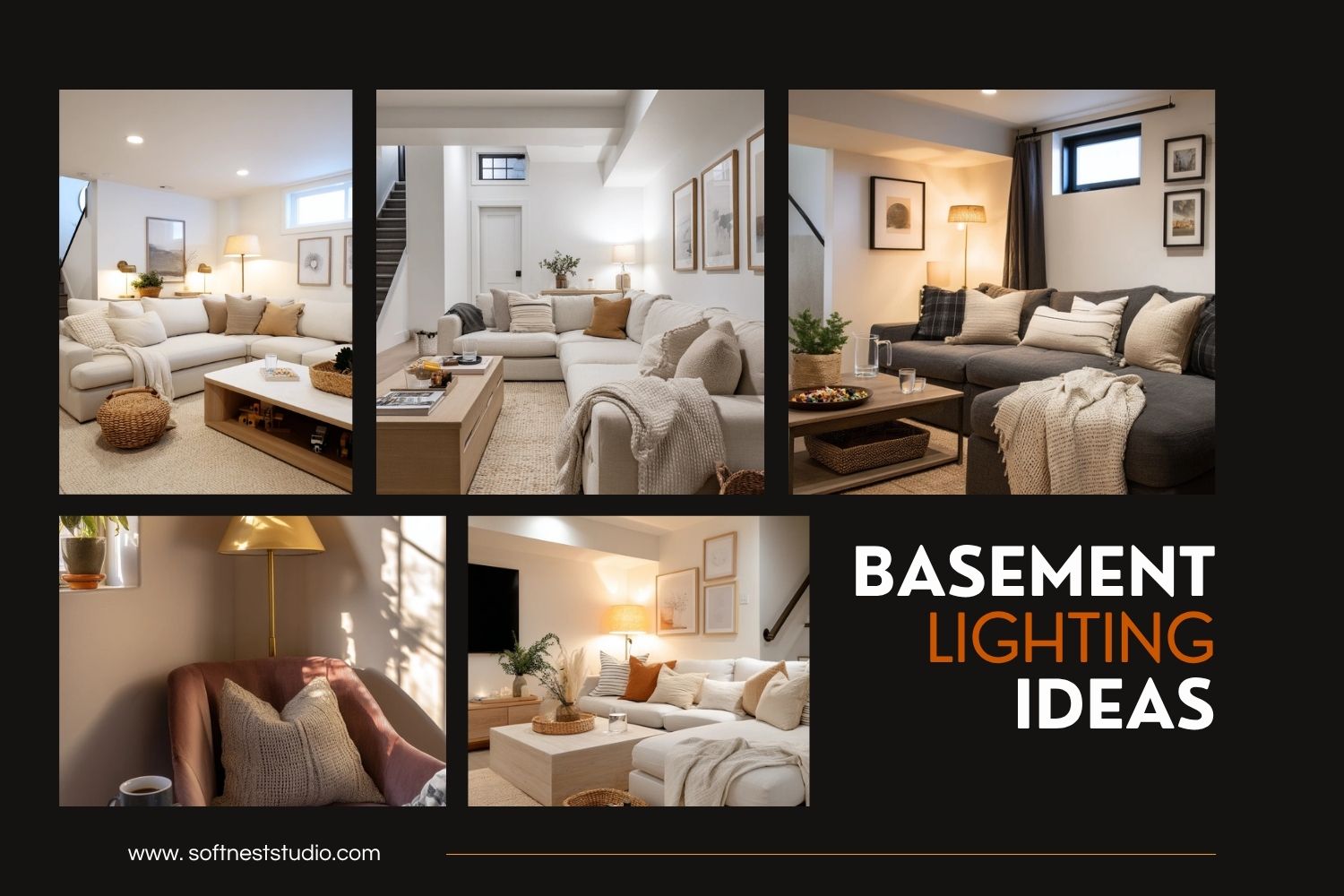
Basement lighting ideas can change how your lower level feels. A dark room can look smaller, messier, and less welcoming, even when it is clean. The right lights make it brighter, safer, and easier to use every day.
This guide shares simple ways to light a basement lounge, reading corner, den, home office, playroom, bar nook, guest suite, home gym, craft room, and TV corner. You will see how to mix dimmable recessed lights, warm table lamps, sconces, and soft ceiling lights for a real, lived-in look.
You will also get small styling ideas, like where to place a floor lamp, how to avoid screen glare, and how to use window light from a stairwell or egress window. Each section includes a pro design tip and a budget note so you can plan fast.
Use these basement lighting ideas as a checklist. Pick one room, start with one better light source, and layer from there.
1. Basement Lounge Lighting for Movie Nights

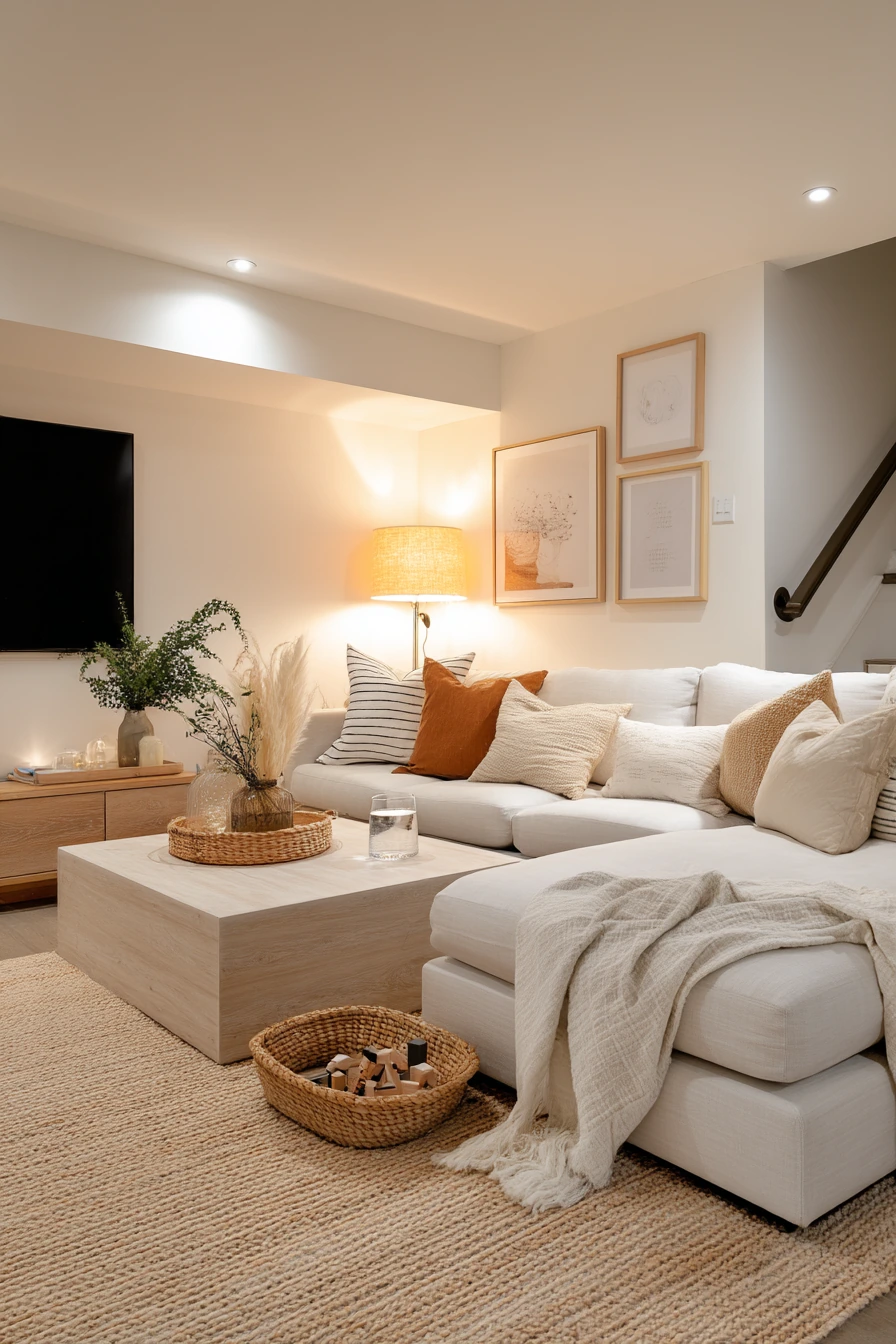
For a family basement lounge, aim for warm, layered light that works for movie nights and messy real life. Start with dimmable recessed lights for general lighting, then add warm table lamps on a low media console or side tables. This lets you keep the room bright for cleaning and toys, then lower it for a cozy film.
Place lamps behind or beside the sectional sofa so the light lands on the textured rug and framed art, not directly in your eyes. If you have soft window light from the stairwell, treat it like a bonus fill light during the day. At night, use lamps to keep the space inviting, even if a charging cable trails from the sofa or there is a half-full water glass on the coffee table.
Style it so it still looks calm when it is lived-in. A woven basket for kid toys hides clutter fast. A slightly wrinkled throw on the armrest is fine, but make sure it does not cover a lamp shade or block a floor vent. Use warm bulbs (around 2700K) so skin tones look natural and the room feels comfortable.
- Put recessed lights on a dimmer and group them by zone (seating vs walkway).
- Add two table lamps at different heights for a softer glow.
- Use a matte finish bulb or shade to cut harsh glare on the TV.
- Choose a light-colored rug to bounce light back up.
- Tuck charging cords into a cord cover or under a sofa leg to reduce visual clutter.
Pro Design Tip: Use two dimmers, one for recessed lights and one for lamps on smart plugs, so you can switch from “play time” to “movie time” in seconds.
Budget Considerations: If you cannot add recessed lights, use two plug-in lamps and a wall plug dimmer. You can still get the layered look for less.


2. Basement Reading Corner Lighting by an Egress Window


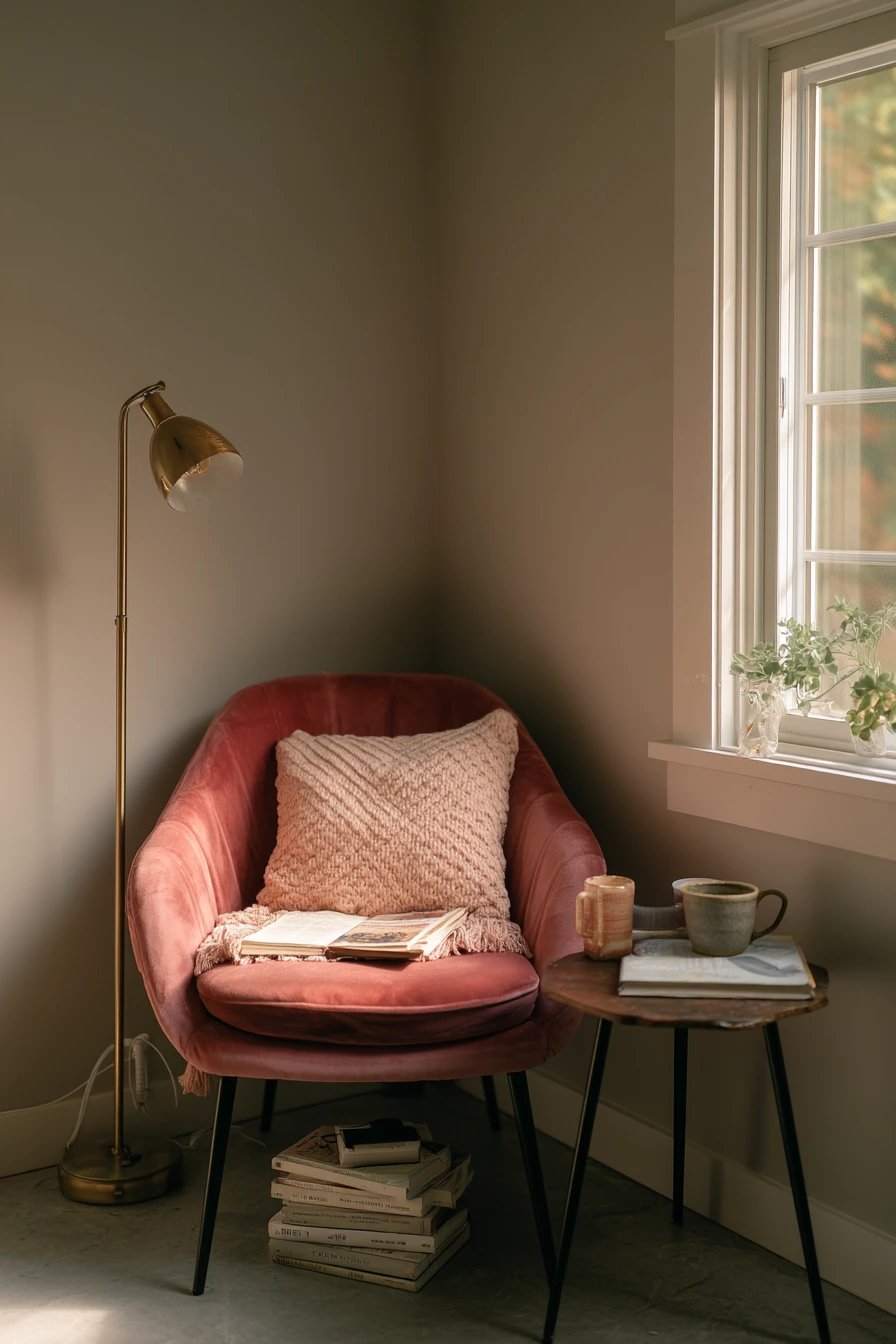
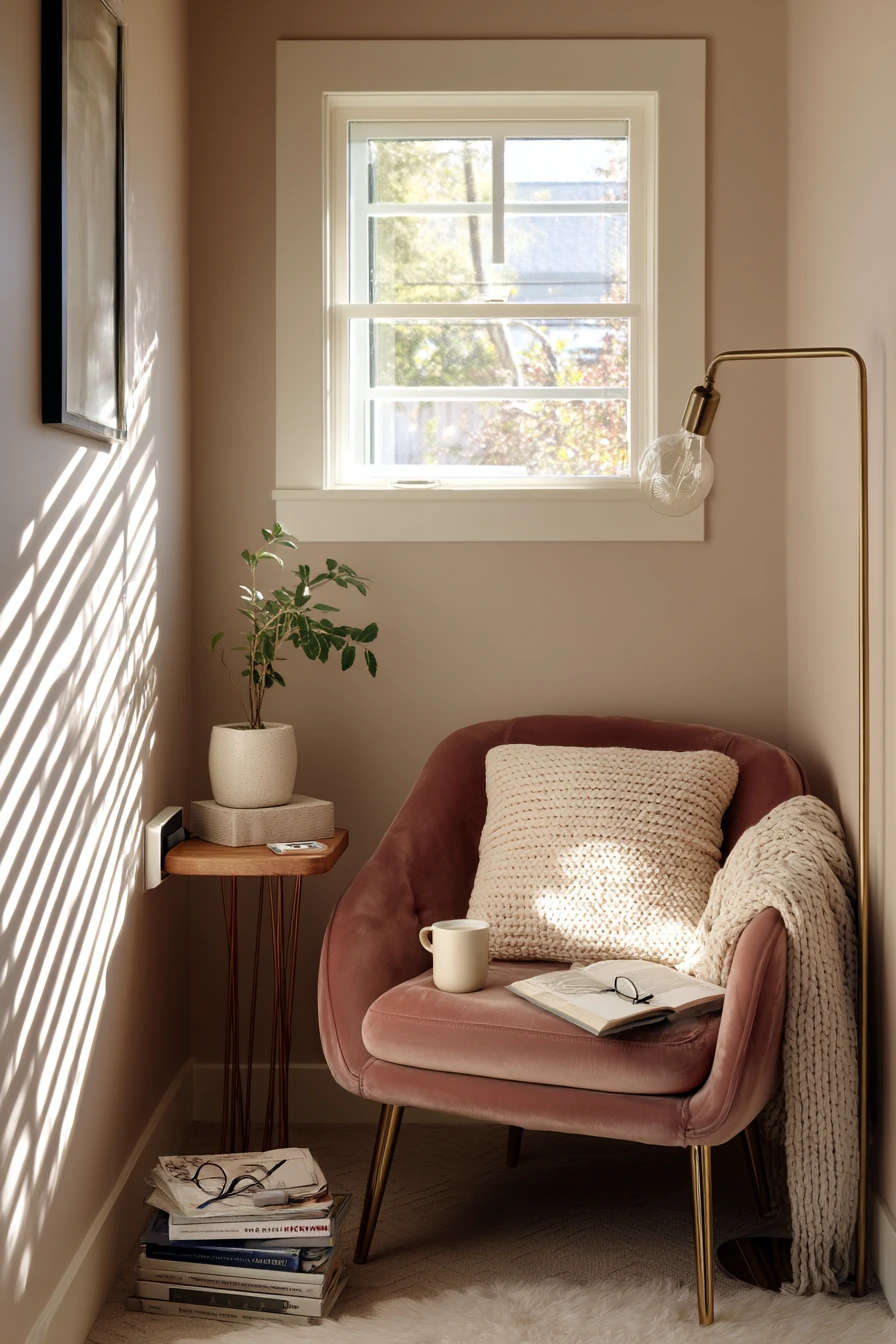
A compact basement reading corner needs light that feels calm and focused. Place a slim floor lamp next to a velvet chair so the light hits your book, not your face. If you have a small egress window, use its natural window light during the day and add a warm bulb at night to keep the corner from feeling like a cave.
Keep the setup tight: a narrow side table for a ceramic mug, a paperback, and reading glasses. A knit pillow and a slightly rumpled throw blanket make it look used, not staged. If plant shadows ripple across painted walls, that is a good sign you have gentle light, not harsh overhead glare.
Make it easy to live with. Tuck a phone charger beside the lamp base or run it behind the chair so it does not cross the walking path. Add a small tray on the side table to keep pens, bookmarks, and earbuds from spreading out. If you like to read at night, choose a bulb with a high CRI so pages look clear and colors do not look dull.
- Pick a floor lamp with an adjustable head for better book light.
- Use a warm-white bulb to keep the corner cozy.
- Add a light curtain or shade to soften the egress window light.
- Place a small mirror nearby to bounce light deeper into the basement.
- Keep cords short with a flat extension cord behind the chair.
Pro Design Tip: Aim the lamp so light falls over your shoulder onto the pages. This reduces shadows from your hands and makes reading easier.
Budget Considerations: A basic floor lamp plus a good LED bulb is often enough. Thrift a side table and use a simple clamp light if you need to save more.
3. Affordable Basement Den Lighting That Feels Brighter
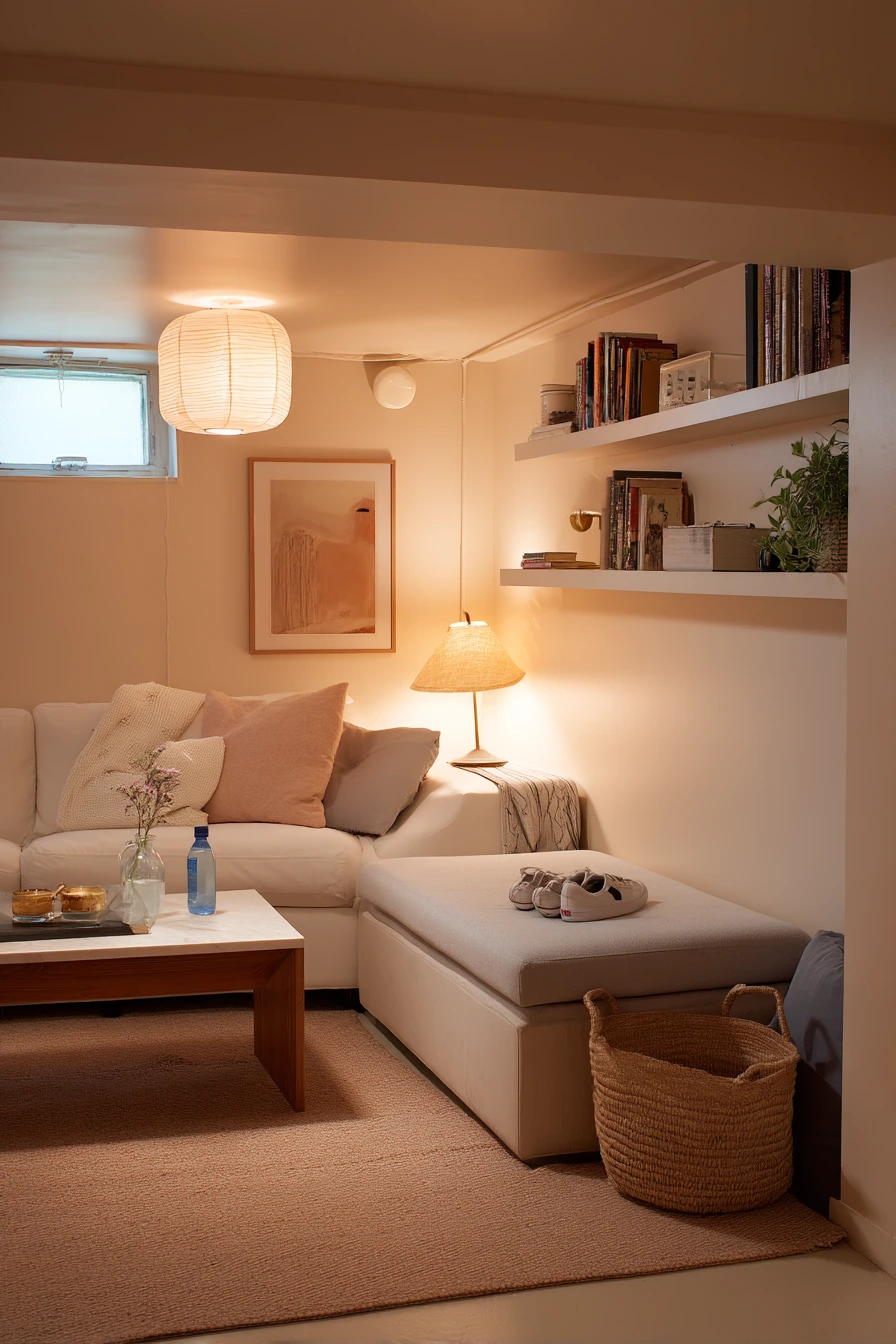
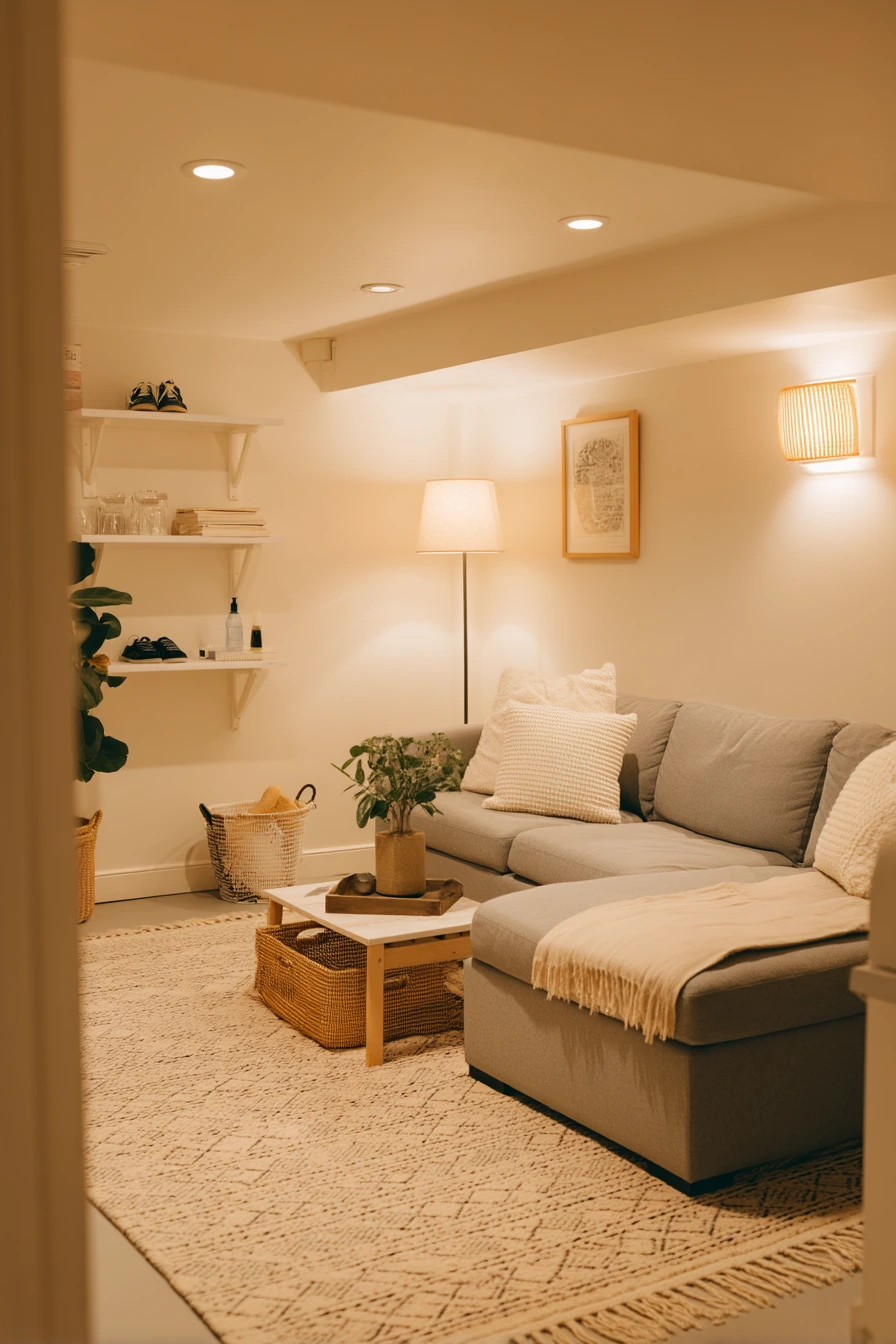
If your basement den feels dark, you do not need expensive fixtures to fix it. Affordable lighting can come from plug-in sconces, paper-shade floor lamps, and warm bulbs placed at different heights. This spreads light across the room and keeps it from looking flat.
Start with the spots you use most: the modular sofa, coffee table, and simple shelves. Put plug-in sconces on the wall to lift the light up, then add a floor lamp near the sofa for reading or scrolling. Keep the glow warm and soft so the room looks honest, like a real evening hangout, not glossy and harsh.
Style around real-life items so the room still looks tidy. A remote control, folded laundry basket, water bottle, and sneakers by the wall can all live here, but give them “homes.” Add a small tray on the thrifted coffee table, a lidded basket on the shelf, and a hook for the sneakers area. A washable rug helps the space feel finished while also reflecting a bit more light than bare concrete.
- Use two paper-shade floor lamps to create soft, even light.
- Add plug-in sconces to brighten corners without hardwiring.
- Choose lighter paint or a satin finish to reflect more light.
- Put one lamp on a timer for a welcoming glow at night.
- Keep bulbs consistent (same color temperature) so the room feels balanced.
Pro Design Tip: Place one light source behind the seating area and one across the room. Cross-lighting reduces shadows and makes the basement feel wider.
Budget Considerations: Plug-in sconces and paper shades are usually low cost. Shop secondhand for lamps, then replace the shade and bulb for a fresh look.
4. Basement Home Office Lighting for Hybrid Work
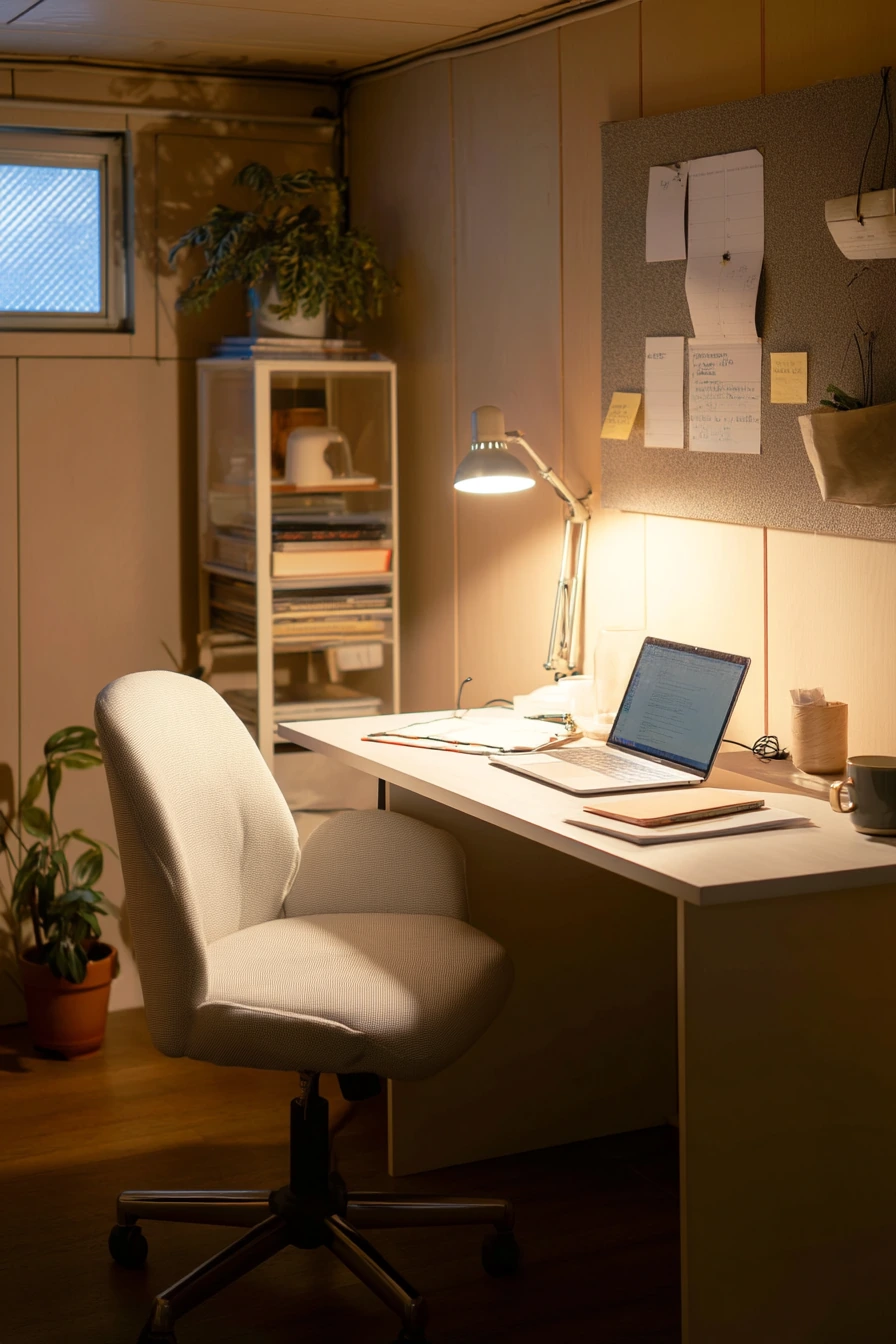

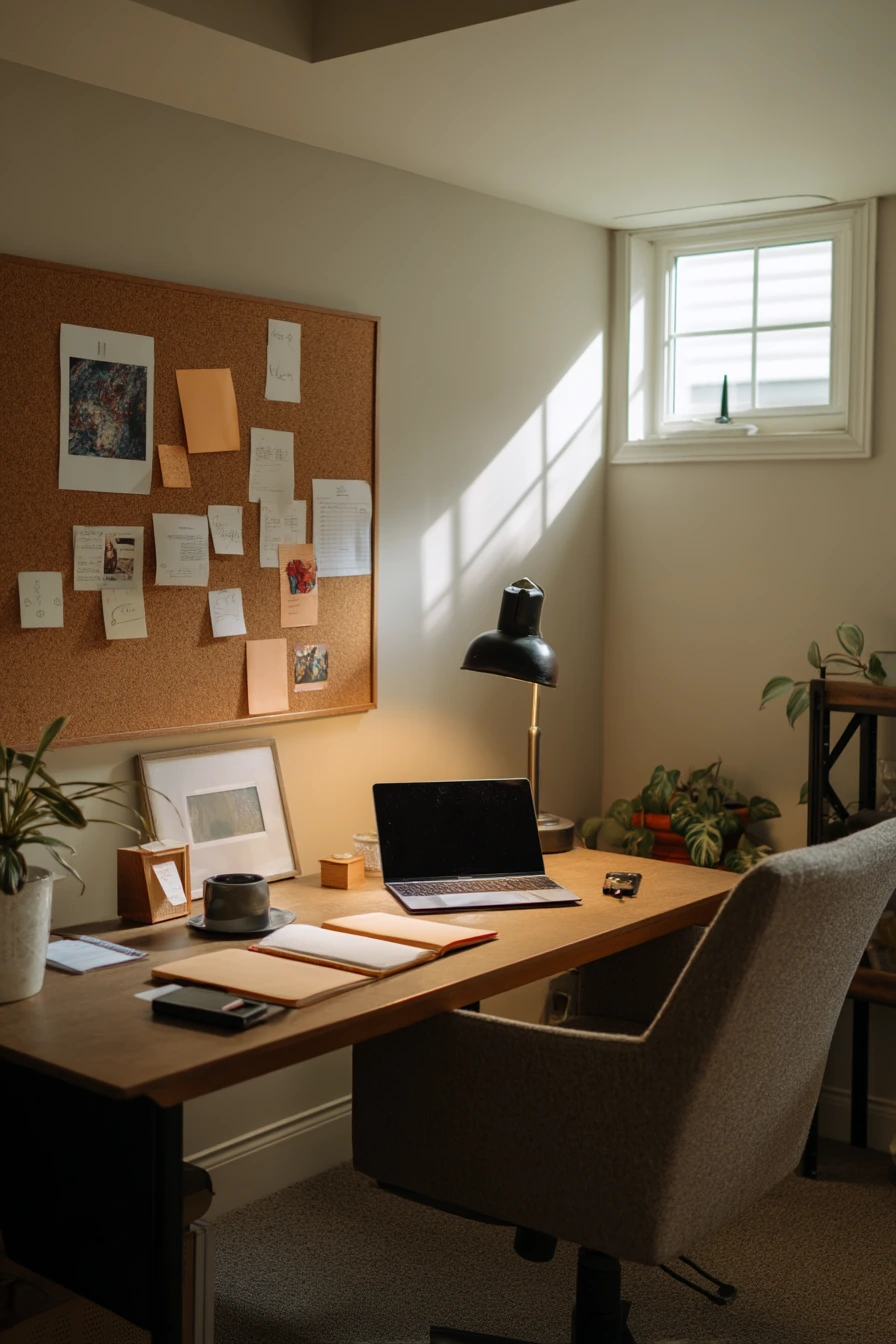
A finished basement home office needs both clear task light and soft ambient light. Put the desk near a tiny window to grab as much daylight as possible. Then add an adjustable task lamp to brighten your keyboard and notebooks when the sun drops or the weather is gray.
Mix cool daylight with warm lamp light in a way that still feels focused. A warm bulb helps the room feel comfortable, but do not go too yellow if you do video calls. If you have acoustic wall panels, they often look best with gentle side light that shows texture without creating strong shadows.
Keep the work zone organized with smart lighting placement. If a laptop charger loops across the desk, clip it to the underside with adhesive cable clips so it stays off your work surface. Use a slim bookcase and pinboard to keep papers vertical, which also keeps light from being blocked by piles. A plant that casts soft shadows on the wall adds life, but keep it out of the direct task beam to avoid flicker and moving shadows while you type.
- Use an adjustable task lamp with a swivel head for glare control.
- Add a soft overhead or wall light for even background brightness.
- Place your monitor at a right angle to the window to reduce reflections.
- Use warm-neutral bulbs so skin tones look natural on calls.
- Light your pinboard with a small picture light or sconce for easy planning.
Pro Design Tip: For video calls, add a small lamp behind your monitor aimed at the wall. It creates a gentle “halo” of light that makes you look more even on camera.
Budget Considerations: A simple LED desk lamp and plug-in wall light can replace a pricey ceiling fixture. Cable clips and a power strip mount cost little but improve the look fast.

5. Basement Playroom Lighting That Stays Calm and Safe

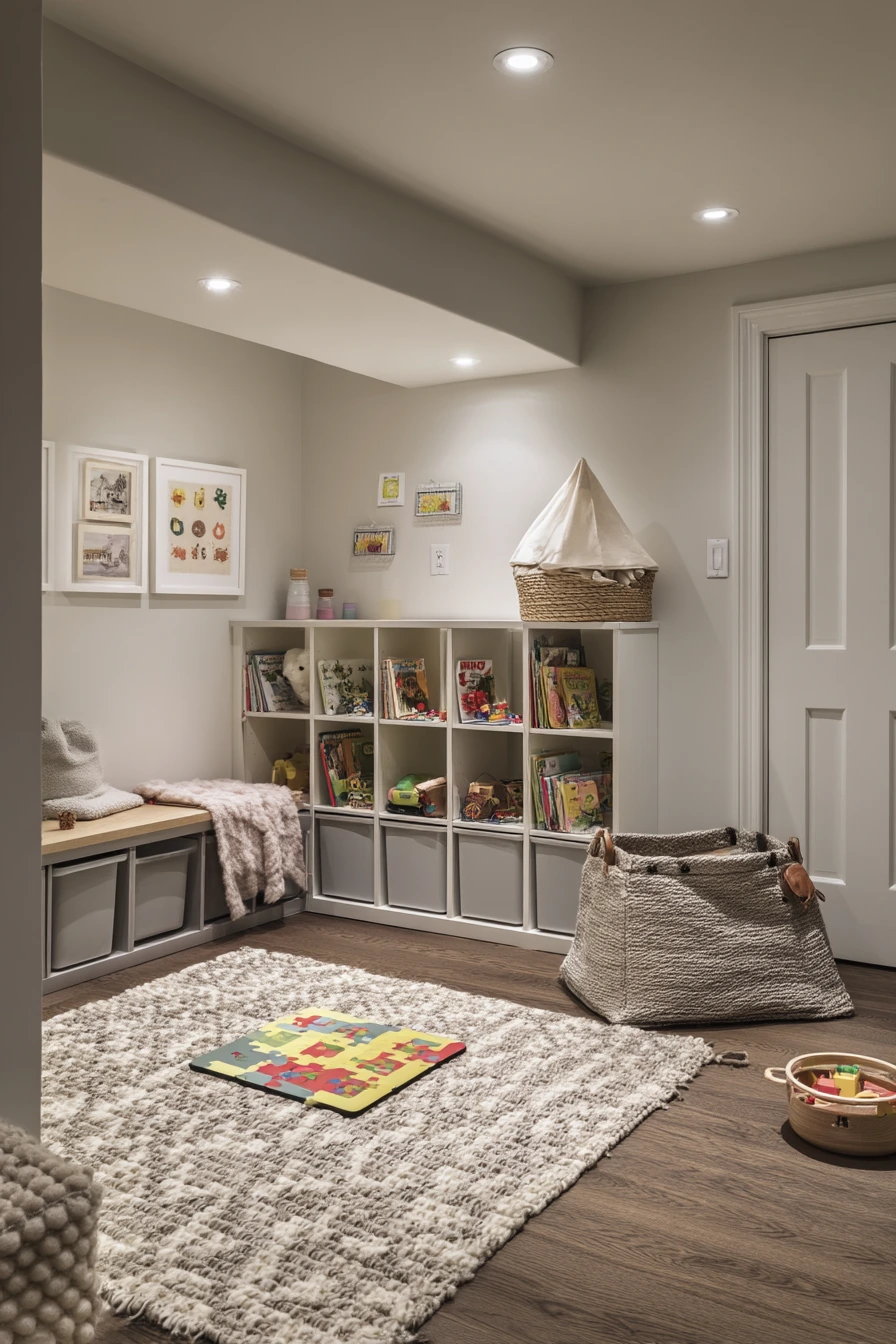
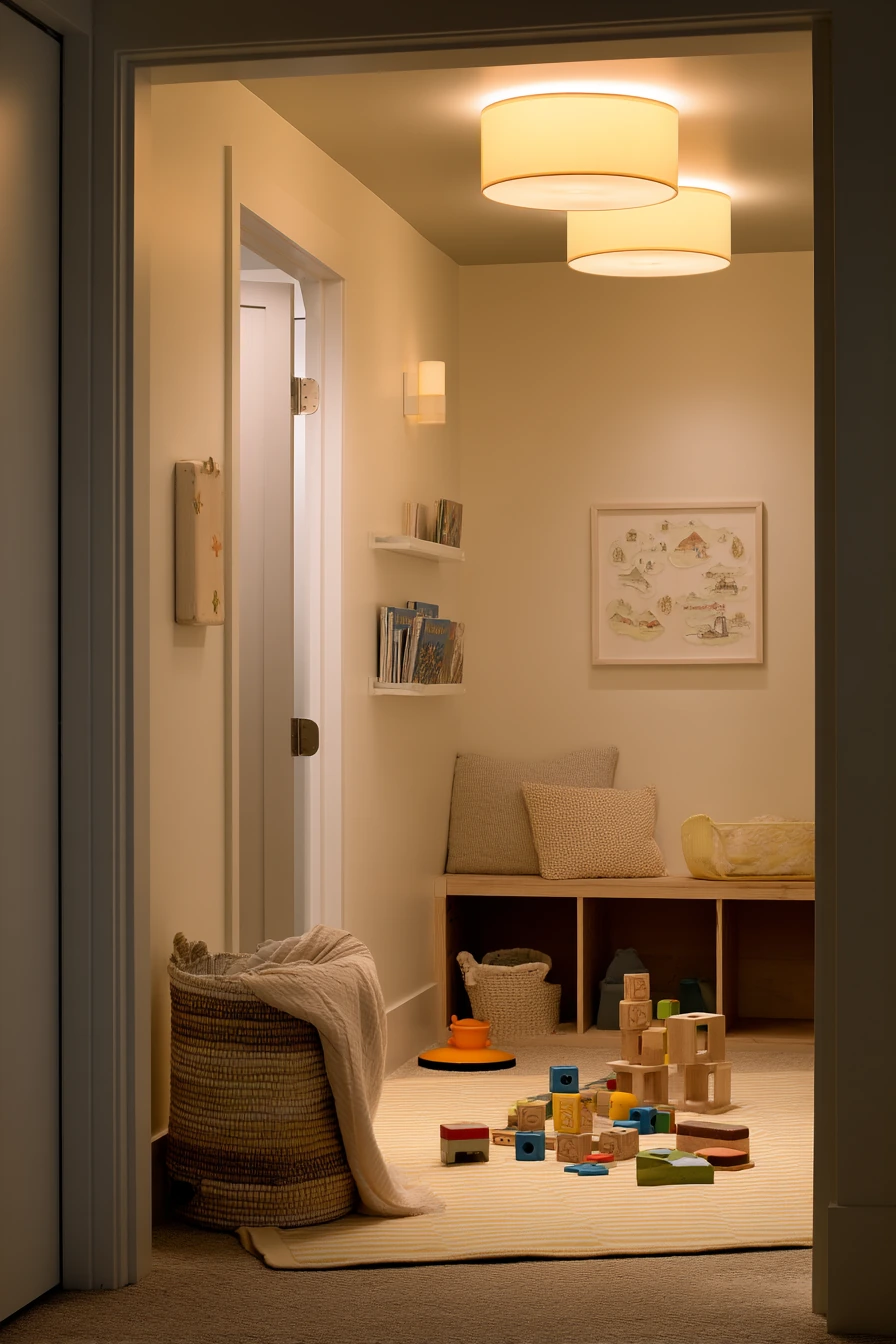
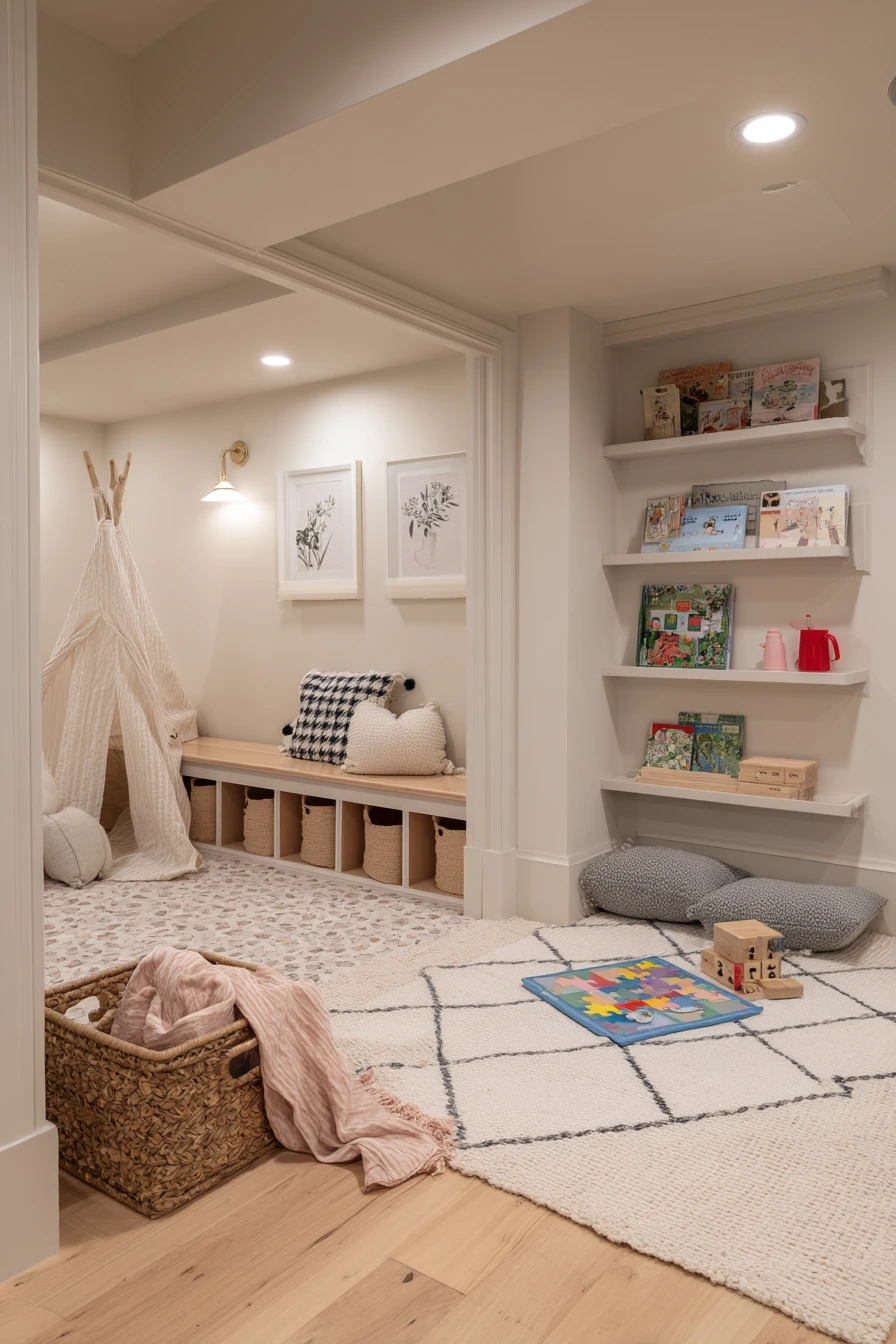
A basement playroom after dinner should feel soft, calm, and safe. Use soft ceiling lights on a dimmer so you can keep it bright for building blocks and puzzles, then lower the light for story time. Even lighting helps kids see clearly and reduces dark corners that can feel spooky.
Support the main ceiling light with smaller, warm lights. A small lamp near the reading tent can make the corner feel like a special spot, and it helps adults read picture books without turning the whole room bright. Keep light sources out of reach or choose kid-safe fixtures that do not get hot.
Style the room so it stays tidy with minimal effort. Low storage cubbies and a toy basket that spills a few blocks is normal, but add labels so clean up is quick. Place the play mat and puzzle board in the best-lit area, not under a shadowy beam. If a sippy cup rests on the shelf, use a tray so it does not sit near cords. A blanket half folded over a bench looks homey, but keep it away from any lamp shade.
- Put ceiling lights on a dimmer for flexible brightness.
- Add a night light or low lamp for gentle late-evening use.
- Choose warm bulbs to keep the mood relaxed.
- Light the reading tent with a clip light rated for fabric use.
- Use cord covers and outlet caps to keep cords safer.
Pro Design Tip: Use layered lighting with one overhead source and one low reading light. Kids play better with bright, even light, and wind down faster with a softer secondary glow.
Budget Considerations: If you cannot install a dimmer, use smart bulbs in the ceiling fixture. They let you lower brightness from your phone without rewiring.
6. Basement Bar Nook Lighting with Warm Pendants


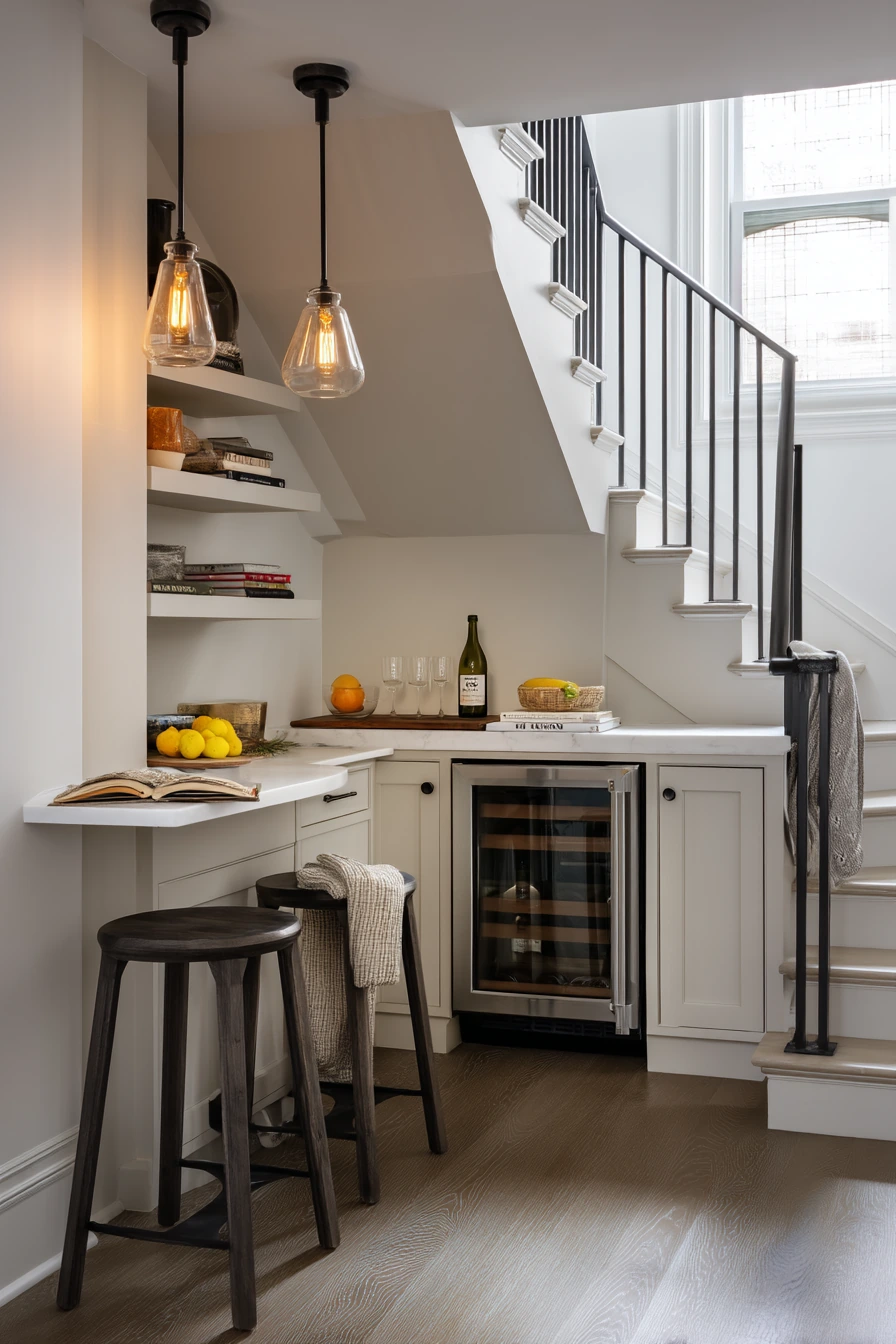
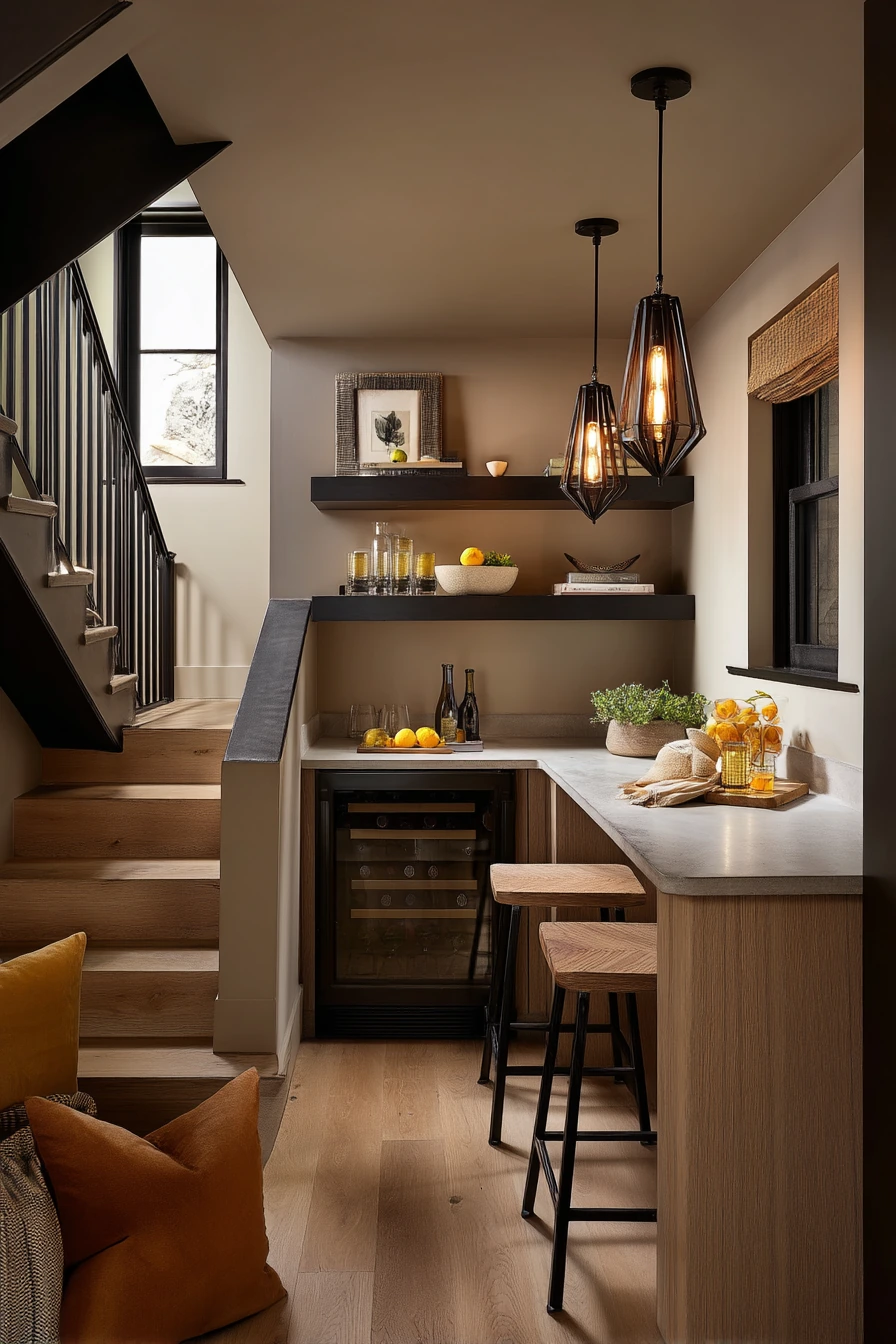
A basement bar nook looks best with focused, warm lighting that feels intimate. Two pendant lights with warm bulbs can define the counter area and make the space feel finished, even if it is small. Aim for a gentle amber tone that works with wood shelves, bottles, and glassware.
Balance the pendants with a second layer so the nook does not turn into a spotlight. If you have soft window light from above the stairs, use it during the day, then add an under-shelf strip or a small lamp on open shelving at night. This helps you see labels and tools without turning on harsh overhead light.
Keep it polished-but-lived-in with simple styling. A cutting board with citrus peels, a crooked dish towel, a cocktail napkin, and a cookbook left open can look great if you keep the surfaces mostly clear. Use one tray for bar tools and one basket for extras, so the counter still has space for mixing. Choose bulbs that show color well so drinks and citrus look fresh, not dull.
- Hang pendants so the bottom sits above eye level when seated.
- Use warm bulbs to avoid a cold, blue bar feel.
- Add under-shelf lighting to highlight bottles and reduce shadows.
- Choose matte pendant shades to prevent glare on glassware.
- Put lights on a dimmer to shift from prep to relax mode.
Pro Design Tip: Use a dimmer and set pendants slightly lower than general lighting. It creates a “pool of light” that makes the bar nook feel like a destination.
Budget Considerations: Swap existing pendants for affordable shades and keep the electrical box. Battery puck lights can stand in for under-shelf lighting when outlets are limited.
7. Basement Guest Suite Lighting with Layers
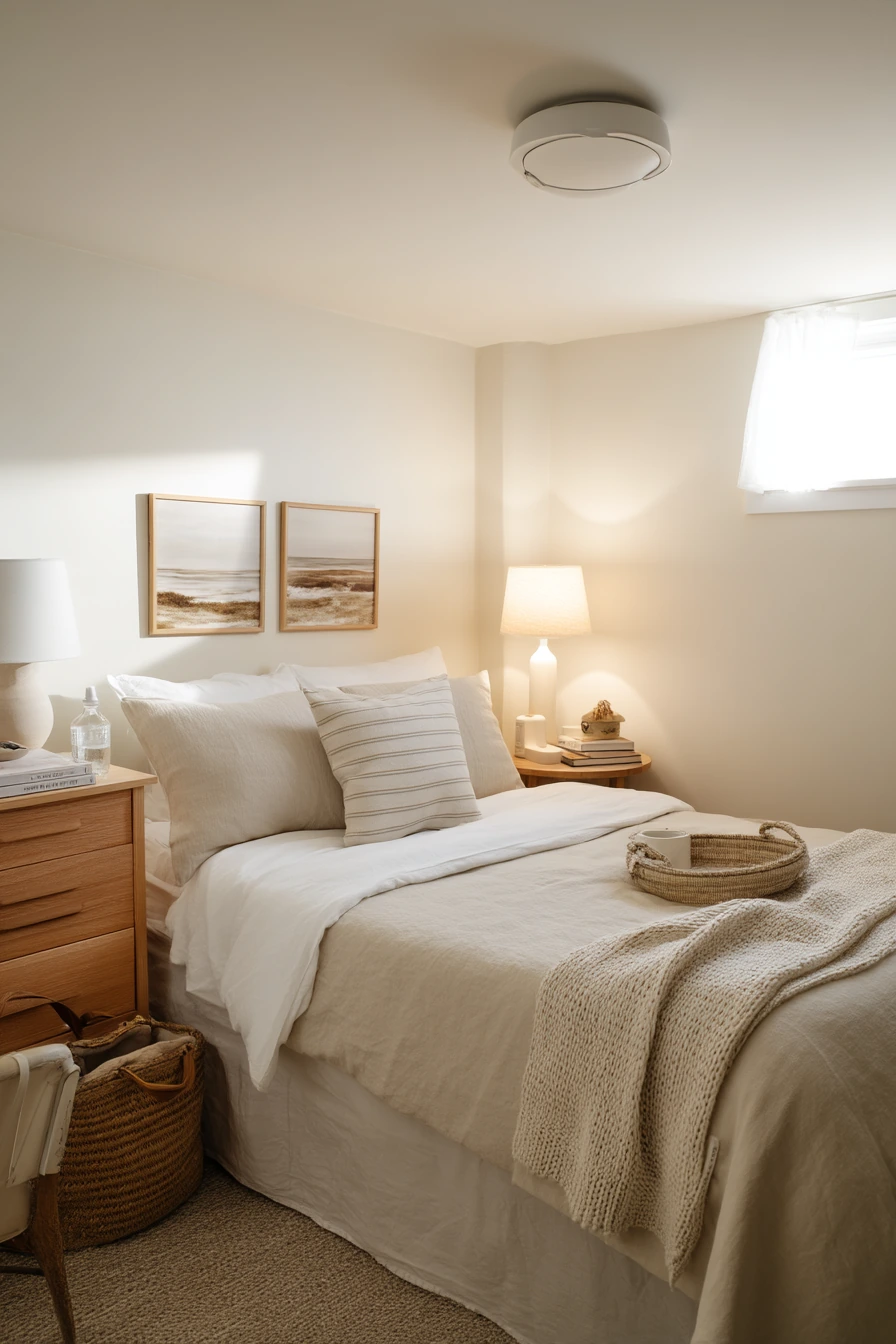
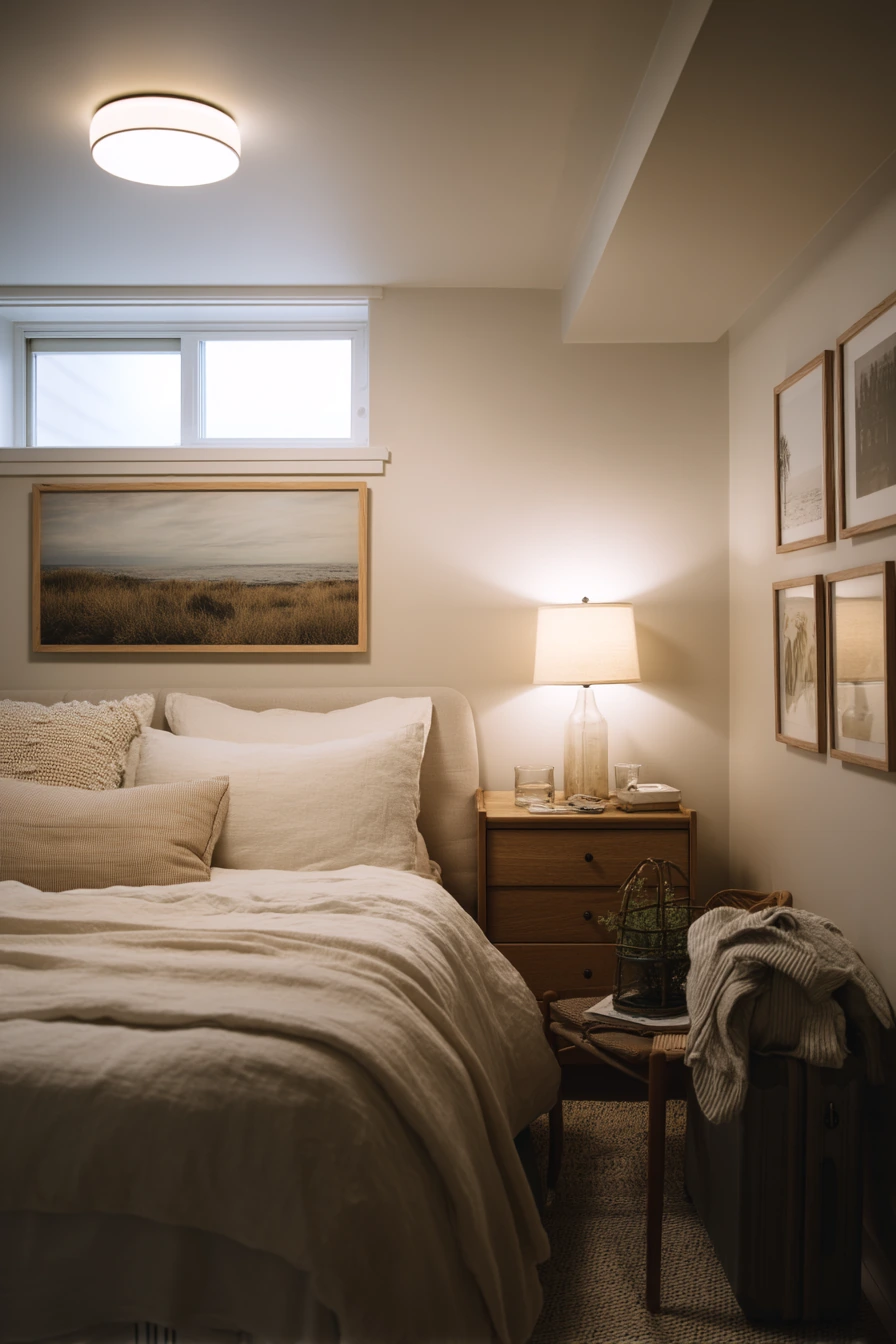
A finished basement guest suite should feel restful, not like a spare room. Layered lighting is the key. Use a flush mount on a dimmer for general light, then add bedside lamps for a soft glow. A warm reading sconce gives guests a focused light that does not wake another person.
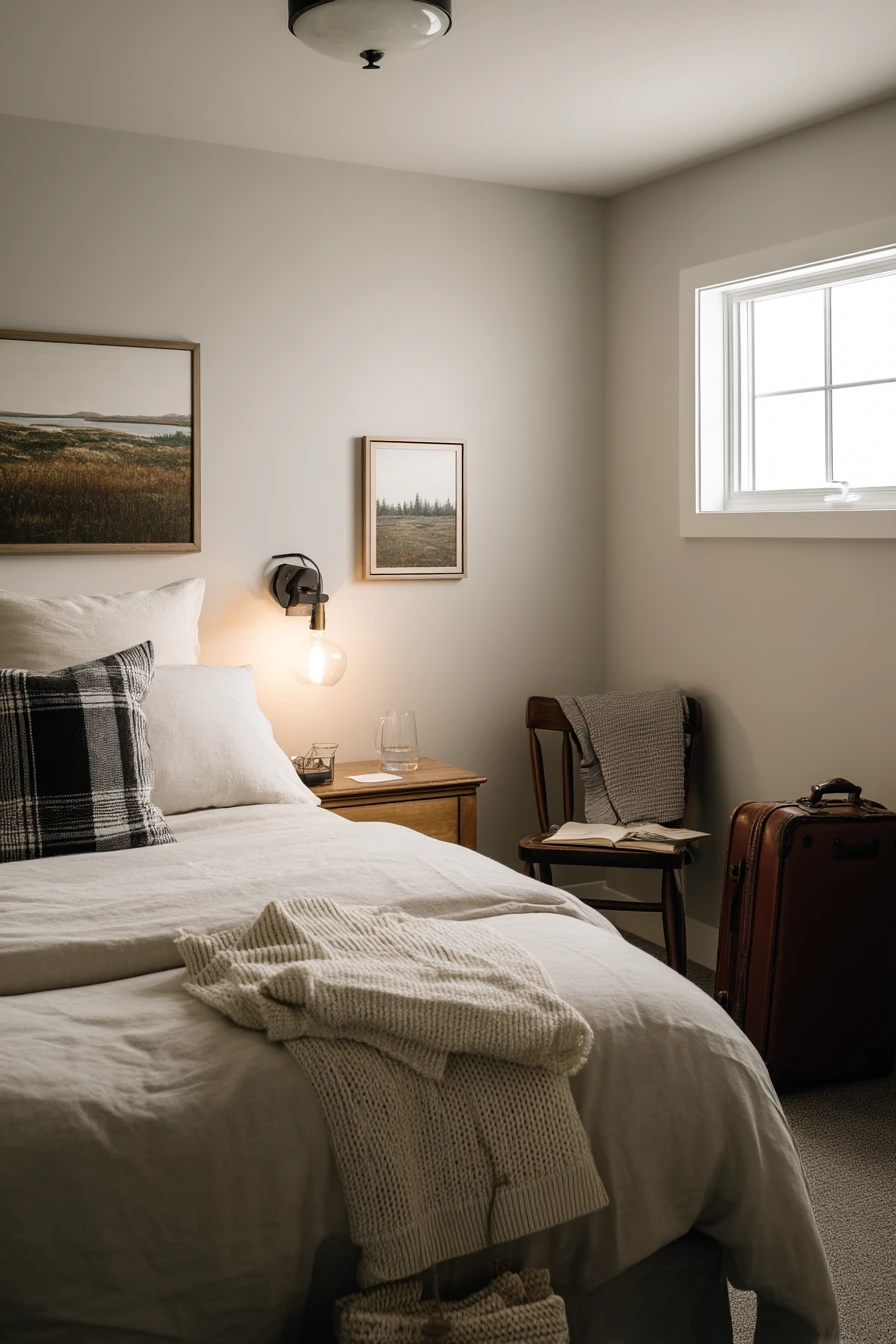
Work with the daylight you have. If gentle daylight filters from a high window, keep the window covering light so the room stays bright in the morning. At night, avoid a single overhead light that makes the room feel flat. Lamps make linen bedding look softer and help framed landscape prints stand out.
Style it so it feels ready for someone to unpack. A folded sweater on the chair and a suitcase partly unpacked near the wall are realistic details, but give guests clear surfaces. Leave a glass of water on the nightstand, and keep a small space free for a phone. If outlets are far, add a nightstand lamp with a built-in USB port so charging is easy and cords do not cross the floor.
- Use bedside lamps with shades for gentle, diffused light.
- Add a reading sconce aimed at the pillow for comfort.
- Put the flush mount on a dimmer for flexible brightness.
- Use warm bulbs to make bedding and skin tones look natural.
- Keep a small night light for safe trips to the bathroom.
Pro Design Tip: Use three lighting heights in a guest room: ceiling, bedside, and wall reading light. This makes the space feel like a real suite, not a basement.
Budget Considerations: Plug-in wall sconces can look built-in for less. Choose matching lamp shades even if the lamp bases are thrifted.

8. Basement Home Gym Lighting That Feels Clean and Energizing
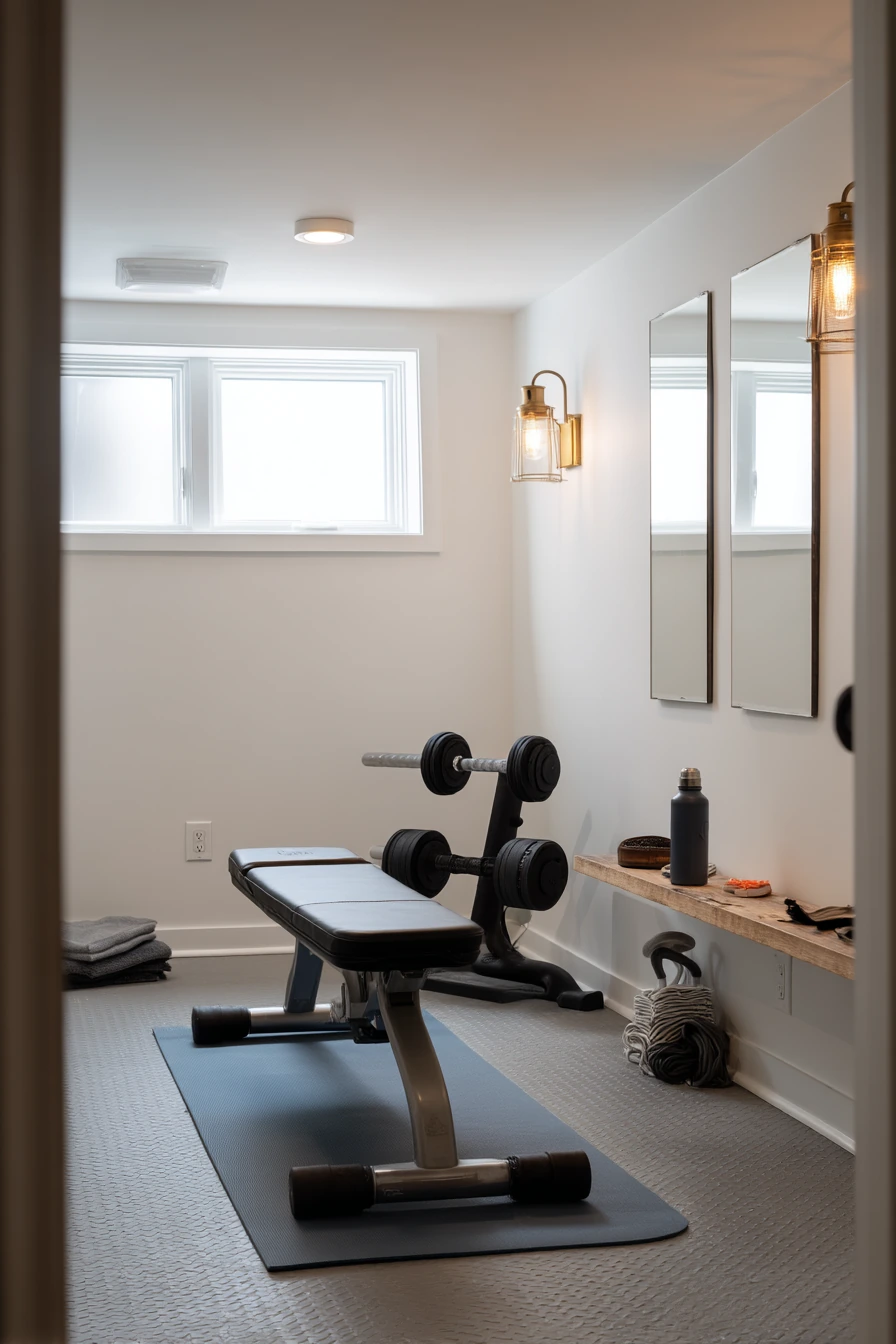
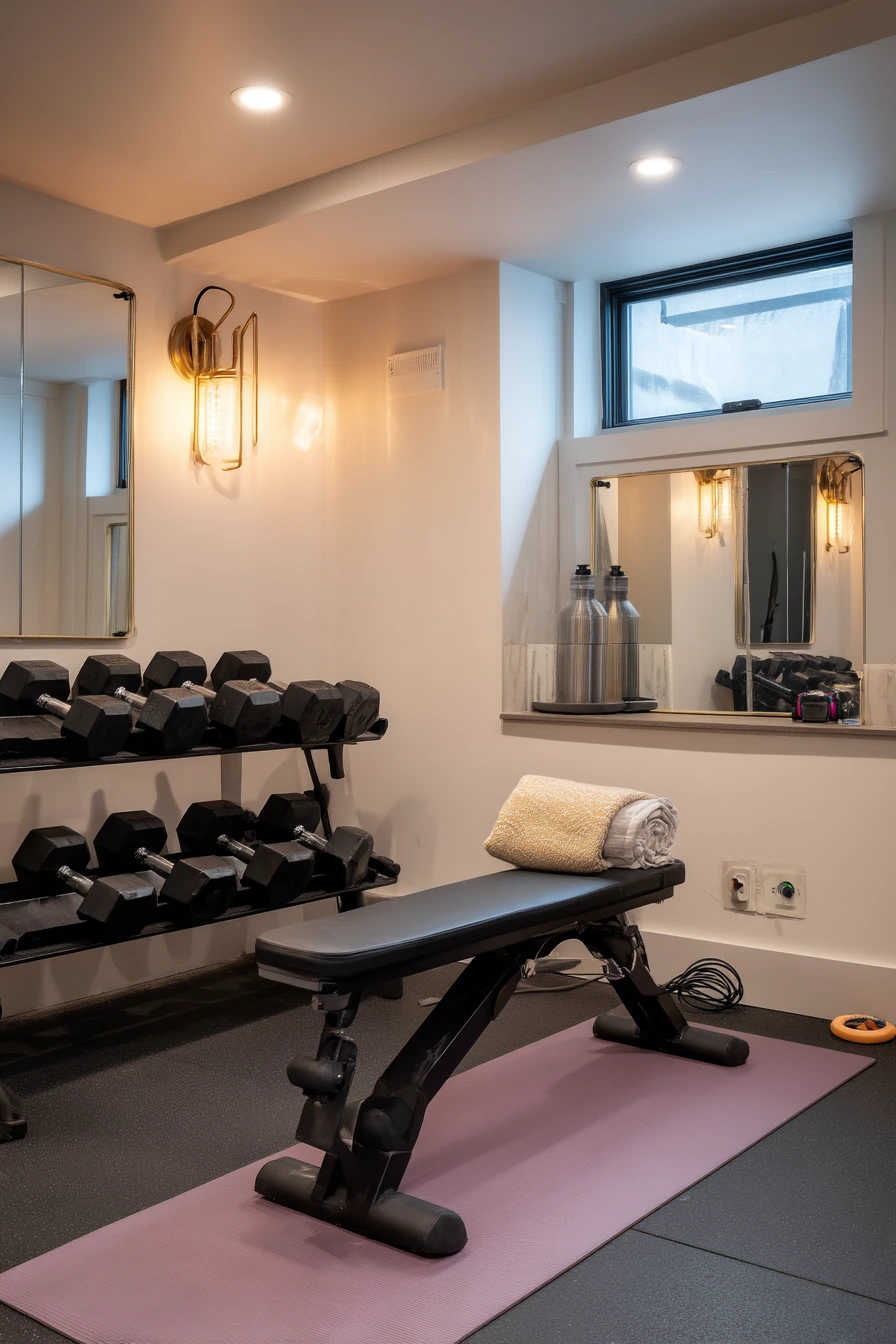
A basement home gym needs bright, clean light so you can move safely and see your form in wall mirrors. Start with even overhead lighting, then add compact wall sconces with warm-white bulbs to reduce harsh shadows. Warm-white can still feel energetic if the room is bright enough.
Use any daylight you can get. Soft daylight leaking through a window well helps the space feel less closed in. Keep the window area clear and use a moisture-friendly shade if you need privacy. Make sure the light does not create strong glare in mirrors, which can be distracting during workouts.
Style it for real use, not a showroom. Rubber flooring, adjustable dumbbells, a yoga mat, and a bench should be easy to reach. A water bottle, towel, resistance bands, and a Bluetooth speaker can sit in a small bin or on a wall hook. If you have faint chalk marks, that is normal, but keep lighting aimed so it does not highlight every scuff. Hide a charging cable by the outlet with a cord cover so the floor stays clear.
- Use bright, even overhead light to reduce trip hazards.
- Add wall sconces to soften shadows around mirrors.
- Choose bulbs that do not flicker for comfortable workouts.
- Light the stretching zone with a softer lamp for calm cool-down time.
- Keep cords off the floor with clips and a mounted power strip.
Pro Design Tip: Place lights slightly to the side of mirrors instead of straight in front. This reduces glare and helps you see your form more clearly.
Budget Considerations: LED shop lights can be a low-cost option for overhead brightness. Add inexpensive sconces or plug-in lights to make the room feel more finished.


9. Basement Craft Room Lighting for Detailed Work

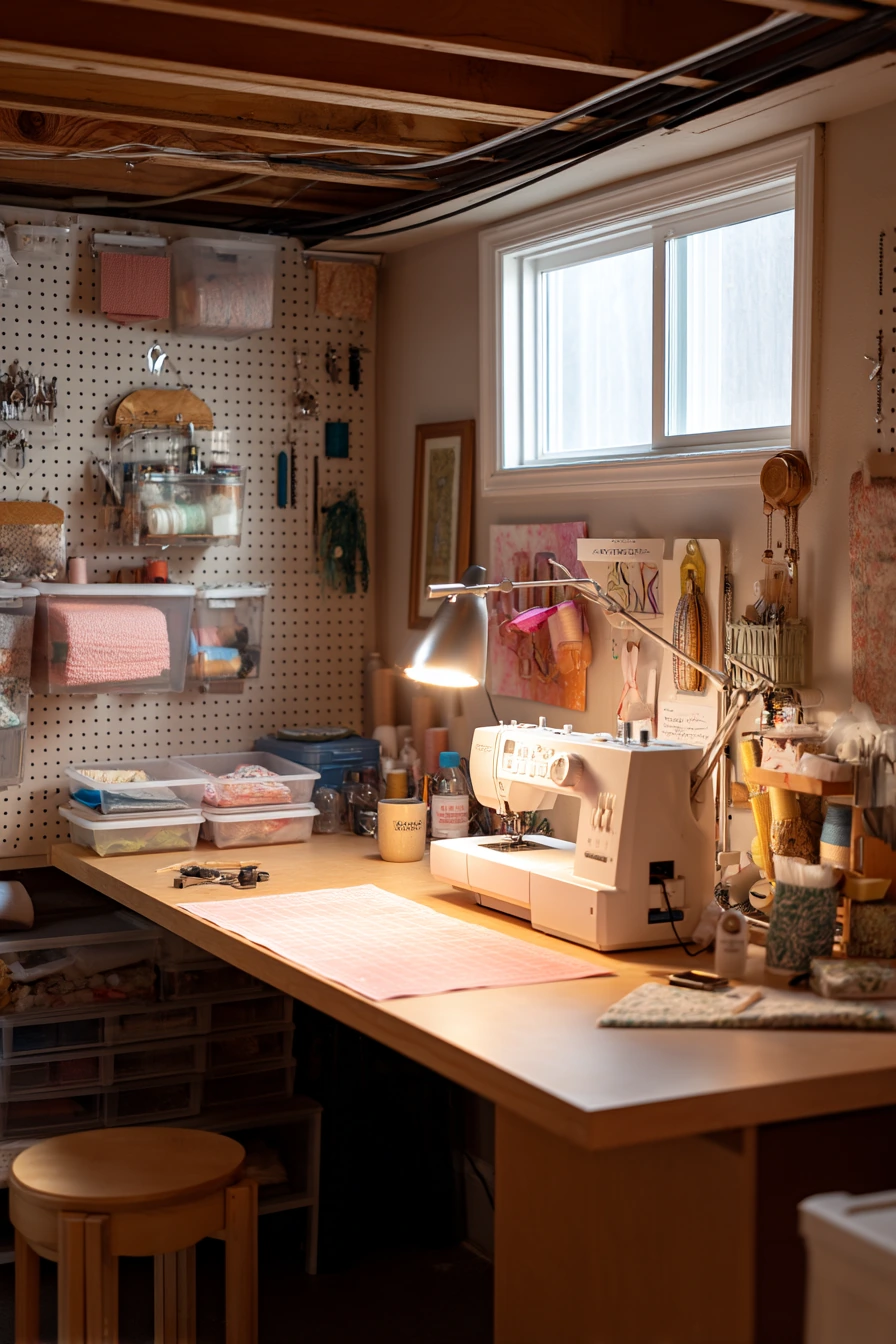
A basement craft room needs lighting that is bright, accurate, and easy on the eyes. A task lamp over the work table is a must, especially for sewing, cutting, and small repairs. Add warm under-shelf lighting to brighten labeled bins and reduce shadows under shelves.
Use the small window as a guide. Daylight from the window helps you judge color, but it can change through the day. Balance it with a steady lamp so fabric and paint look consistent. A pegboard and corkboard also look better with even light, since it makes tools easy to spot.
Style the space like a real working zone. Fabric scraps, scissors, a half-finished project, and a tea mug can stay out if you give them clear zones. Keep the center of the table open and push supplies to the back edge in bins. A phone on charge should sit on a shelf, not on the cutting surface, so cords do not tangle. If you take photos for sharing, add one soft light aimed at a blank wall to create a clean background.
- Use a bright task lamp with a wide beam over the table.
- Add under-shelf lighting to reduce dark work areas.
- Pick bulbs with good color accuracy for crafts and fabric.
- Use a small desk lamp for the sewing machine area.
- Keep shadows low by lighting from two sides when possible.
Pro Design Tip: Set up “triangle lighting” around your main work spot: one overhead, one task light, and one side fill. It cuts hand shadows when you cut and sew.
Budget Considerations: LED strip lights under shelves are often cheap and easy to install. A clamp lamp can replace a designer task light and still work well.


10. Cozy Basement TV Corner Lighting Without Screen Glare
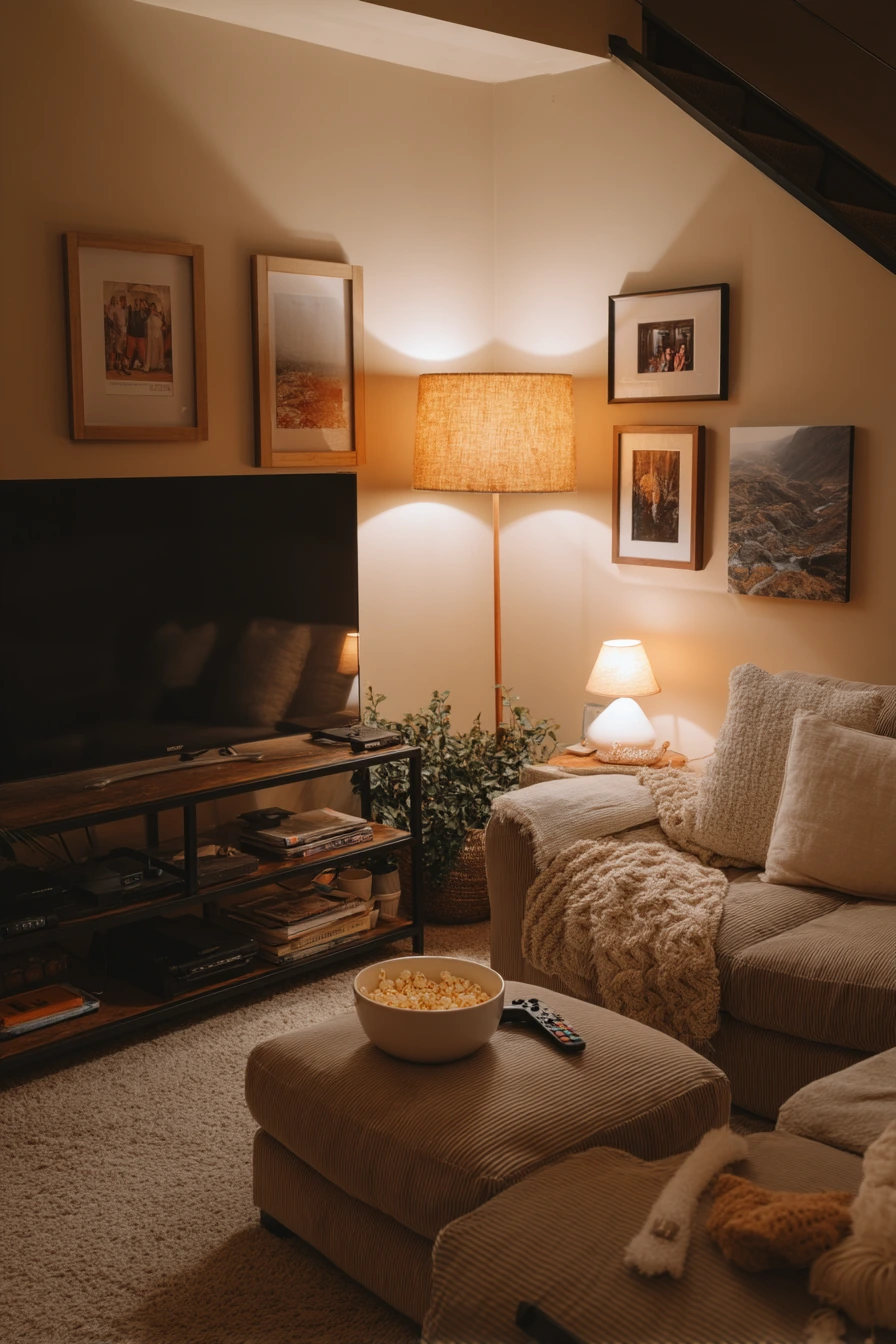
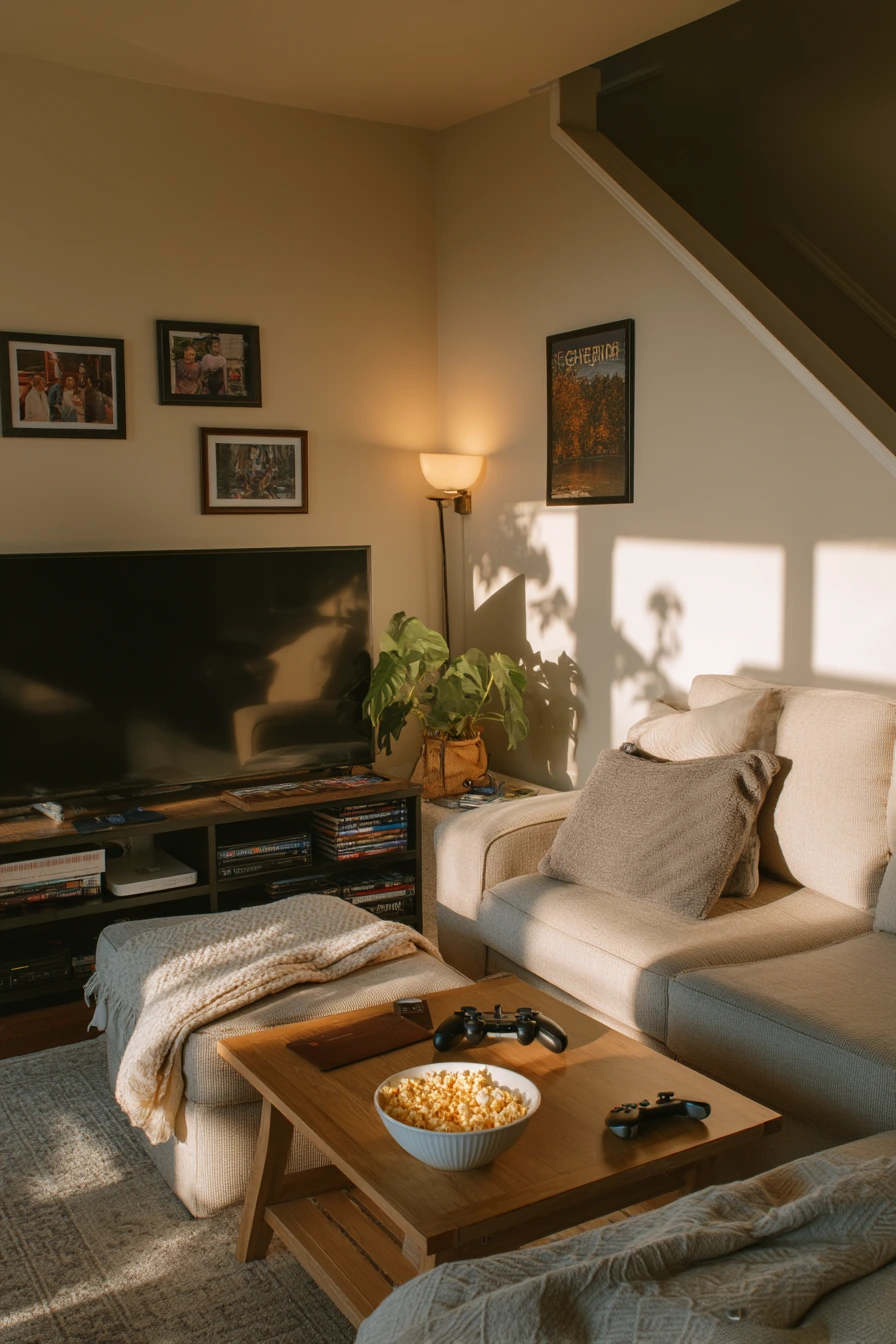
A modest basement TV corner should feel snug, not harsh. Use a floor lamp beside the screen to add warm light, but keep it behind the viewing line so it does not reflect on the TV. If you have faint stairwell glow, let it act as soft background light instead of turning on bright overhead fixtures.
Layer your lights so the room stays comfortable for long viewing. A small lamp or LED strip behind the media shelf can reduce eye strain by lowering contrast between the bright screen and dark walls. Warm lamps also make framed family photos and a plant with soft shadows look more inviting.
Style for real life. A blanket bunched on the cushion and a bowl with popcorn on the coffee table are part of the charm. Keep a game controller near a book in a small basket or tray so it looks tidy. If the media shelf is open, add one dimmable light inside to highlight a few items and avoid a dark, heavy wall. Use bulbs that are warm and not too bright so the space still feels like a place to relax.
- Place the floor lamp slightly behind the TV plane to avoid glare.
- Add a low backlight behind the screen for comfort.
- Use dimmable bulbs so you can adjust for day and night.
- Keep one small light on near the walkway for safety.
- Choose shades that block direct view of the bulb from the sofa.
Pro Design Tip: Add bias lighting behind the TV using a dimmable strip. It makes the picture feel smoother and helps your eyes during long shows.
Budget Considerations: A basic floor lamp and a low-cost LED strip can change the whole corner. Use smart bulbs if you want dimming without buying new fixtures.


Good basement lighting ideas come down to layers. Combine overhead light, lamps, and small accent lighting so each space works for how you live.
Start with one room and one problem, like glare at the TV or a dark reading corner. Then add a dimmer, a better bulb, or one more light at a different height.
When your basement is brighter and softer at the same time, it feels more like the rest of the home. That makes it easier to use every day, not just when guests come over.
FAQ
What is the best color temperature for basement lighting? Warm white around 2700K to 3000K works well for lounges, TV areas, and guest rooms. For work spaces like an office or craft room, 3000K to 3500K can feel clearer without looking cold.
How do I brighten a basement with low ceilings? Use flush mounts or recessed lights for clearance, then add wall sconces and table lamps to spread light. Lighter wall paint and a light rug also help reflect light.
Are recessed lights enough in a basement? Usually no. Recessed lights give general light, but lamps and sconces add comfort and reduce shadows, especially near seating and corners.
How do I stop glare on a basement TV? Keep lights out of the screen reflection path, use shades that hide the bulb, and add a dim backlight behind the TV. Avoid bright ceiling lights pointed toward the screen.
Can I use plug-in sconces in a basement? Yes. Plug-in sconces are a simple way to add wall lighting without opening walls. Use cord covers to keep it neat and safer.
What lighting is best for a basement playroom? Soft ceiling lighting on a dimmer plus one low reading light is a strong combo. Keep bulbs warm and avoid exposed bulbs that are too bright for kids.
How many lights do I need in a basement room? It depends on size and use, but plan for at least two to three sources: one overhead and one or two lamps or sconces. More sources at lower brightness often feels better than one very bright fixture.