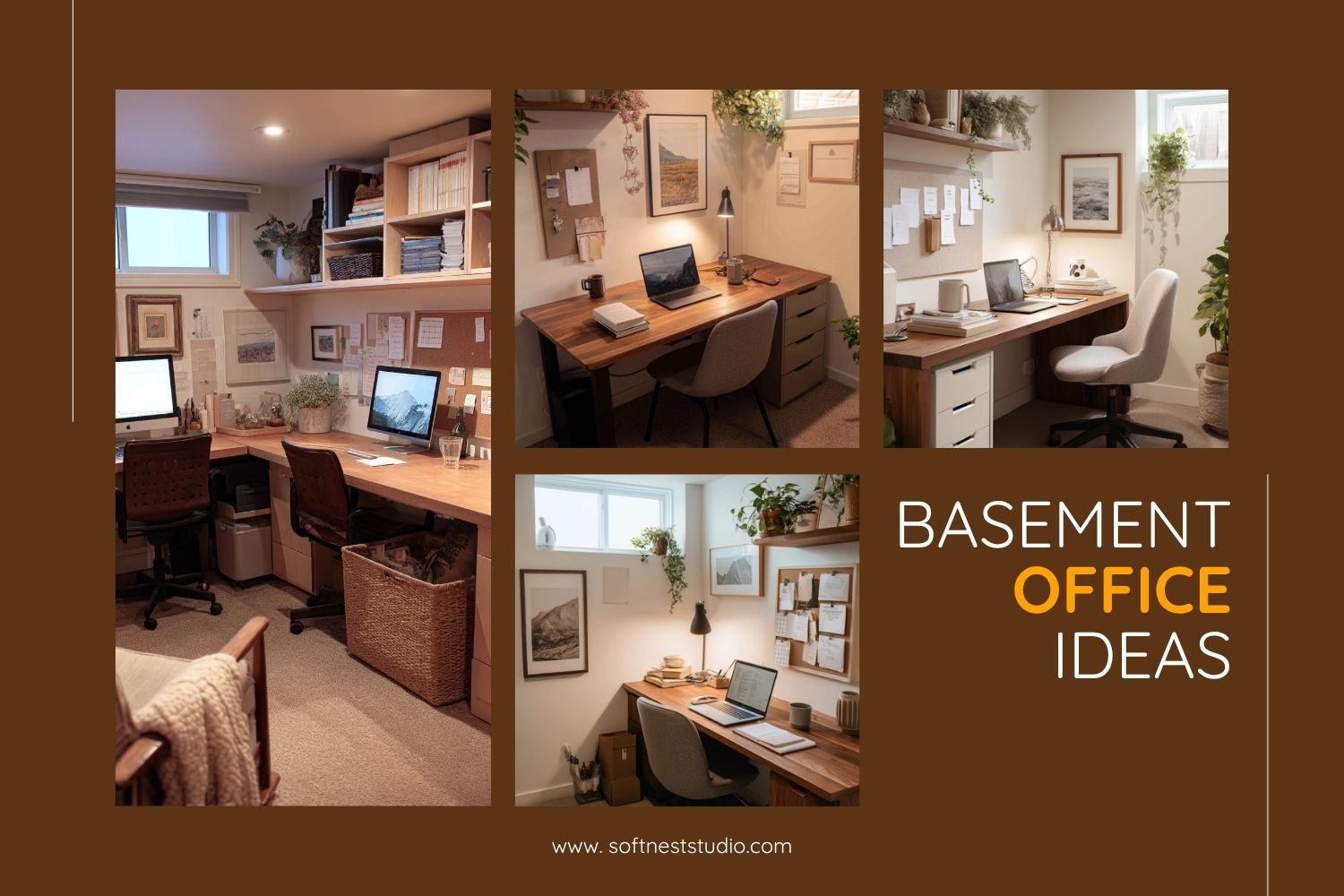
Basement office ideas can help you turn an underused room into a work zone that feels calm and practical. With the right desk, lighting, and storage, a basement can work just as well as a main-floor office.
This post walks through 10 real-life basement office setups, from a compact walnut desk space to a shared family desk and a renter-friendly corner. Each section includes easy styling steps, what to prioritize, and ways to make the room feel lived-in without looking messy.
You will also find pro design tips and budget considerations for every setup, so you can plan around your space and your schedule. These ideas focus on small details that matter, like cable clips, task lamps, pinboards, and the kind of seating you can use all day.
If you are here from Pinterest, use this as a checklist. Pick one layout that matches your work style, then copy the lighting, storage, and finishing touches that make it feel grounded and comfortable.
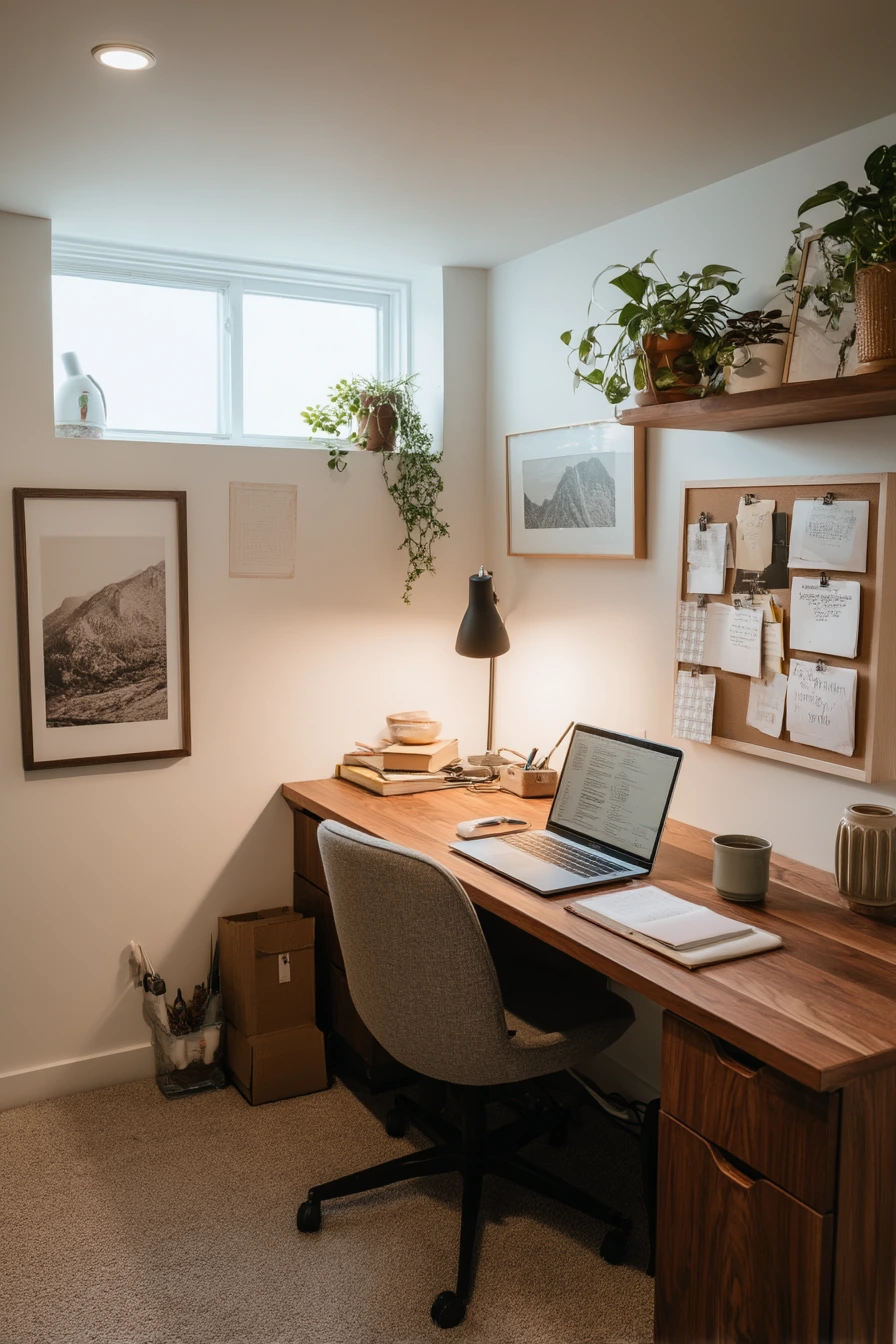
1. Compact Walnut Desk Basement Office


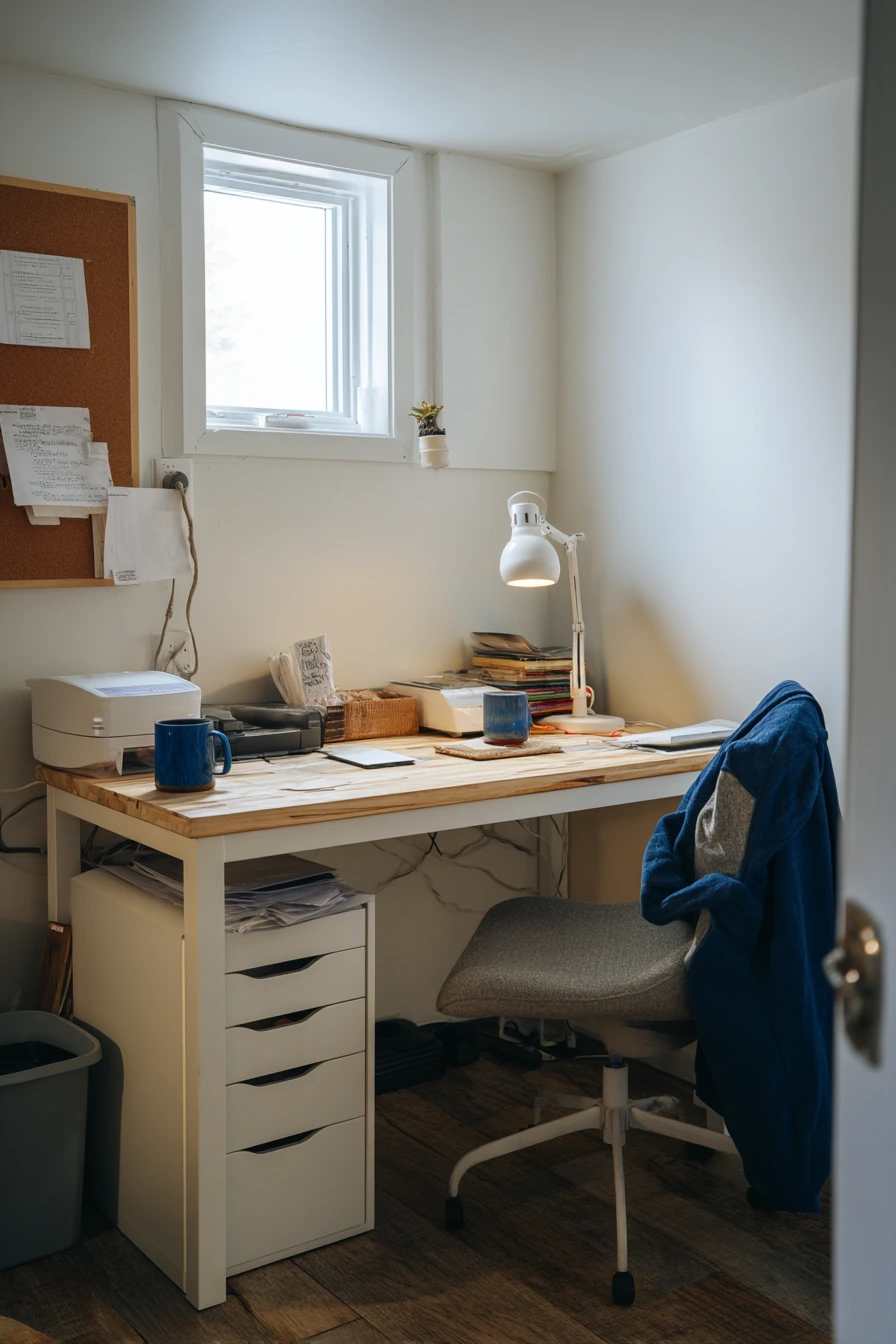
A compact basement office works best when every item has a clear job. Build the space around a walnut desk with a task lamp, a simple pinboard, and closed storage cabinets. This keeps the room orderly, even when you have stacked notebooks, reading glasses, and a charging cable on the desk.
To keep it feeling real, leave a laptop open next to a ceramic mug. Add one framed print and a pothos trailing from a shelf for texture. Soft carpet helps with sound, and it makes the office feel warmer underfoot, which matters in a basement.
Use the small egress window as your anchor for natural light. Place the desk so the light hits your work area without glare on your screen. If the window is tiny, keep wall colors light and choose a slim ergonomic chair so the corner feels open, not crowded.
- Hang a pinboard above the desk for weekly priorities and one personal photo.
- Use closed cabinets for cords, paper, and backup supplies.
- Add one plant on a shelf to soften hard lines and reduce the “office box” look.
- Keep a desk tray for mail so it does not spread across the surface.
- Use a warm task lamp and a soft floor lamp to avoid harsh shadows at night.
Pro Design Tip: Pick one wood tone as the “main” finish (like walnut), then match metal details (lamp, pulls) in one quiet color so the space looks calm even with daily clutter.
Budget Considerations: Walnut can be pricey; get the look with a walnut veneer top or a stained solid-wood desk, and spend more on the chair since comfort pays off.

2. Shared Parents Basement Office With Long Built-In Desk
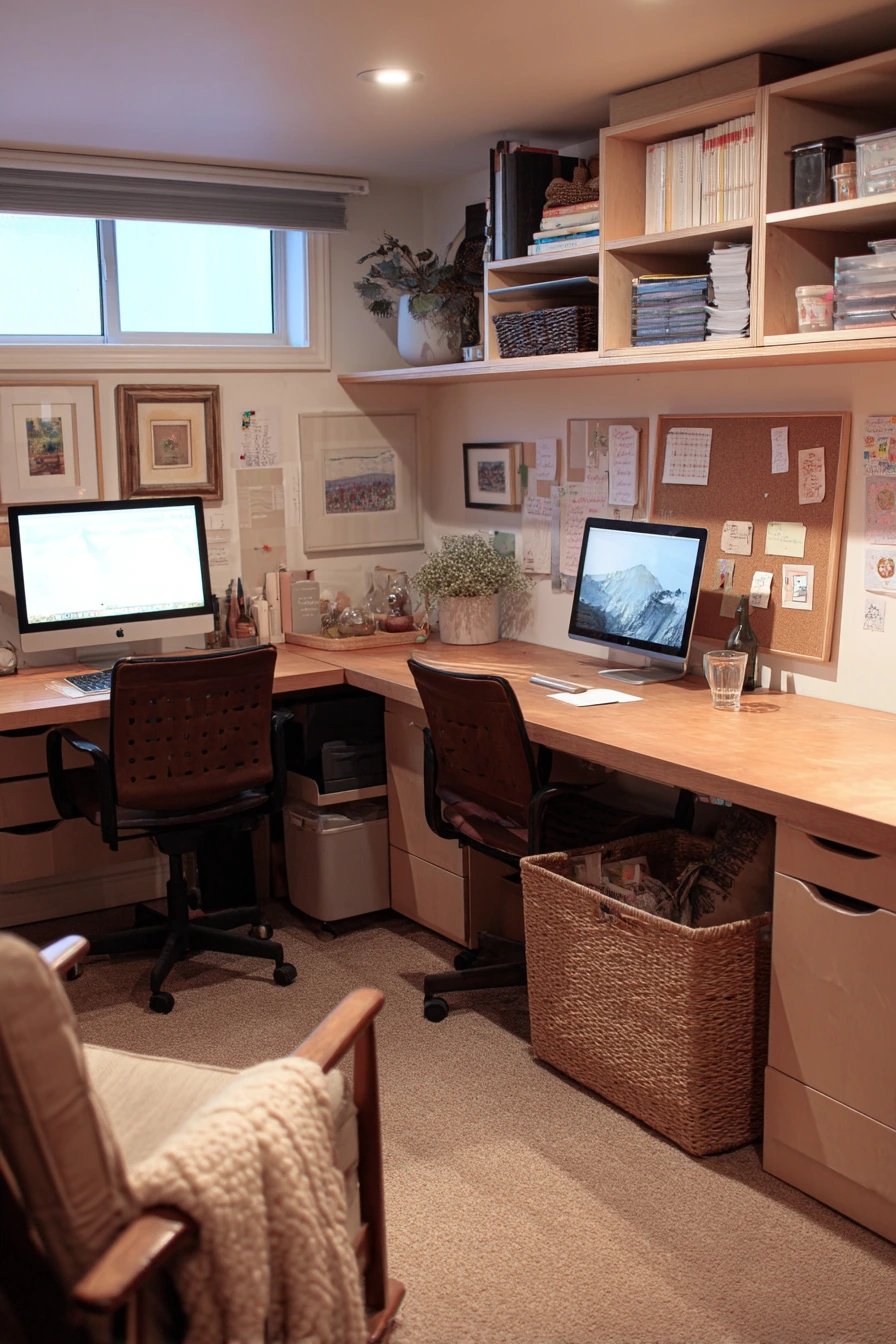
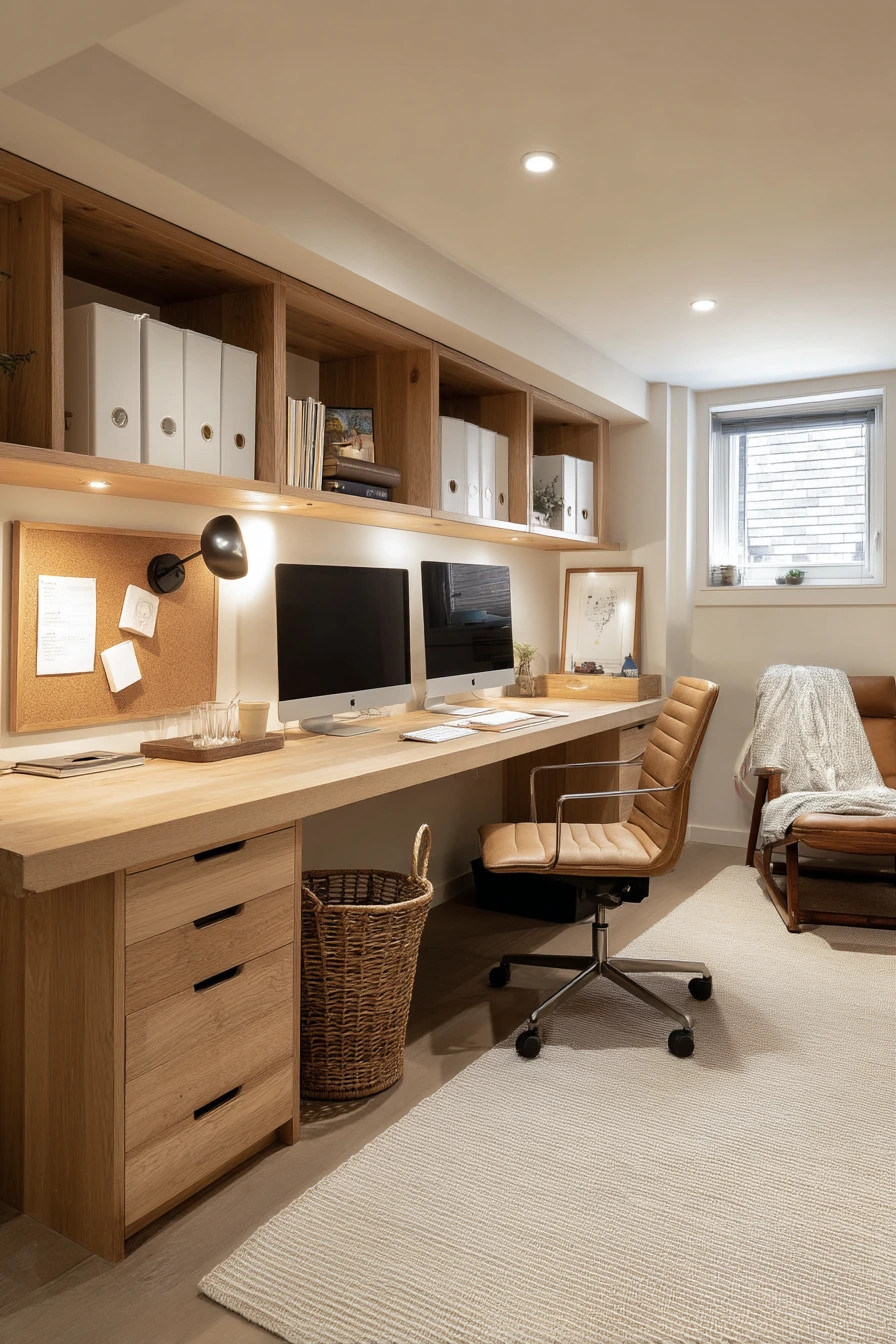
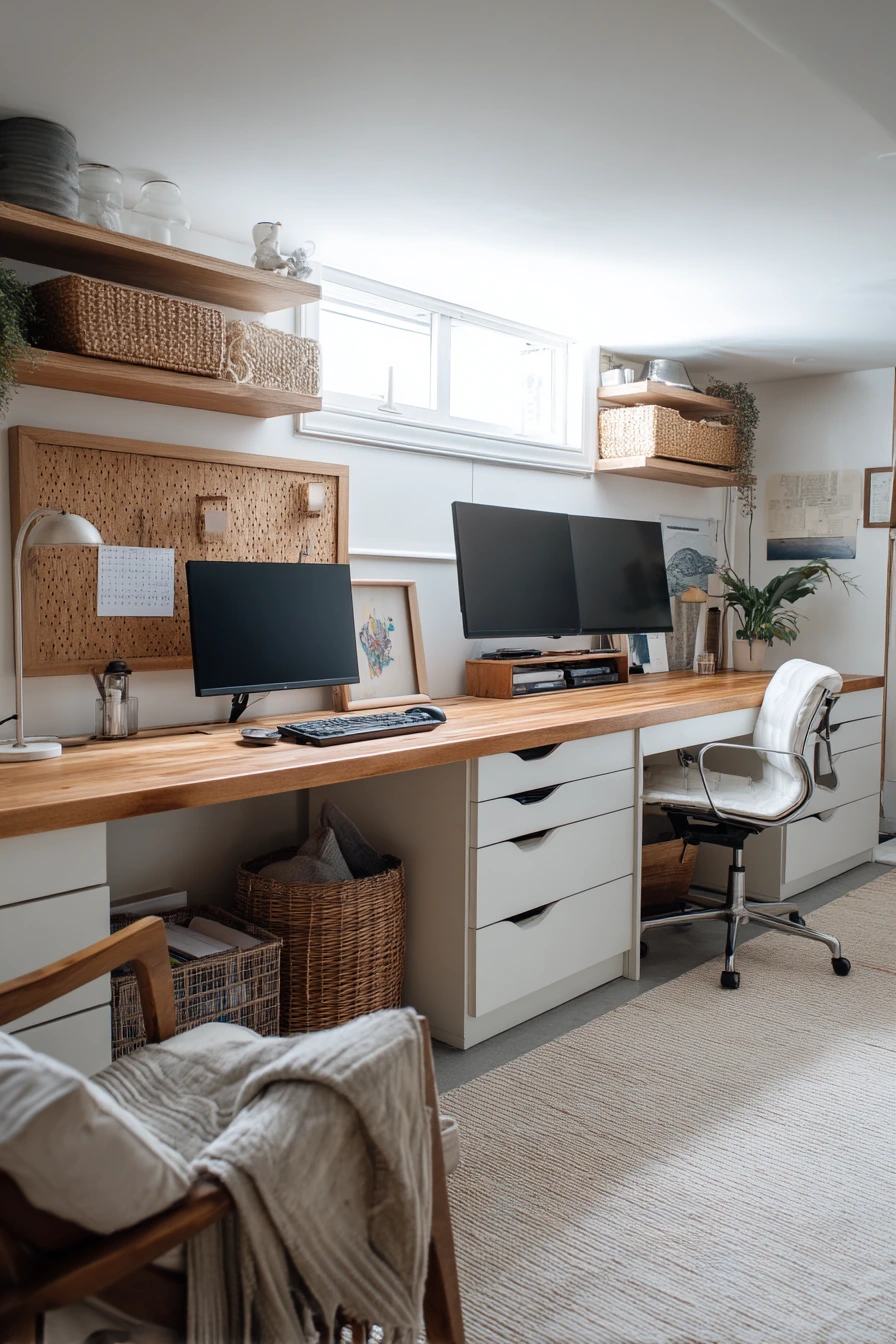
A shared basement office for parents needs more surface area and better division. A long built-in desk lets two people work at once, with two monitors, filing baskets, and a cork board for schedules. Warm oak shelving adds storage without taking up floor space.
Keep the mood practical by making room for real life. A kid toy basket half tucked under the desk is a smart way to contain mess. Add a lounge chair with a wrinkled throw so one person can take calls or review notes away from the screens.
Lighting matters with high basement windows. Mix soft daylight with warm lamp light so the room does not feel cold. Give each seat its own desk lamp, and keep a water glass and sticky note pad within reach to cut down on trips upstairs.
- Mark two work zones with separate desk mats and separate cable paths.
- Mount a power strip under the desk to keep cords off the floor.
- Use filing baskets labeled by person, plus one “family” bin for bills and school papers.
- Keep a toy basket under the desk and reset it once a day.
- Add one cork board section for shared reminders and one for each person’s tasks.
Pro Design Tip: Build the desk depth to fit monitor stands and still leave writing space, then add a shallow shelf above for supplies so the worktop stays clear.
Budget Considerations: A built-in can be done with stock cabinets and a butcher block counter; paint the base and save money for good task lighting.

3. Renter-Friendly Basement Office Corner
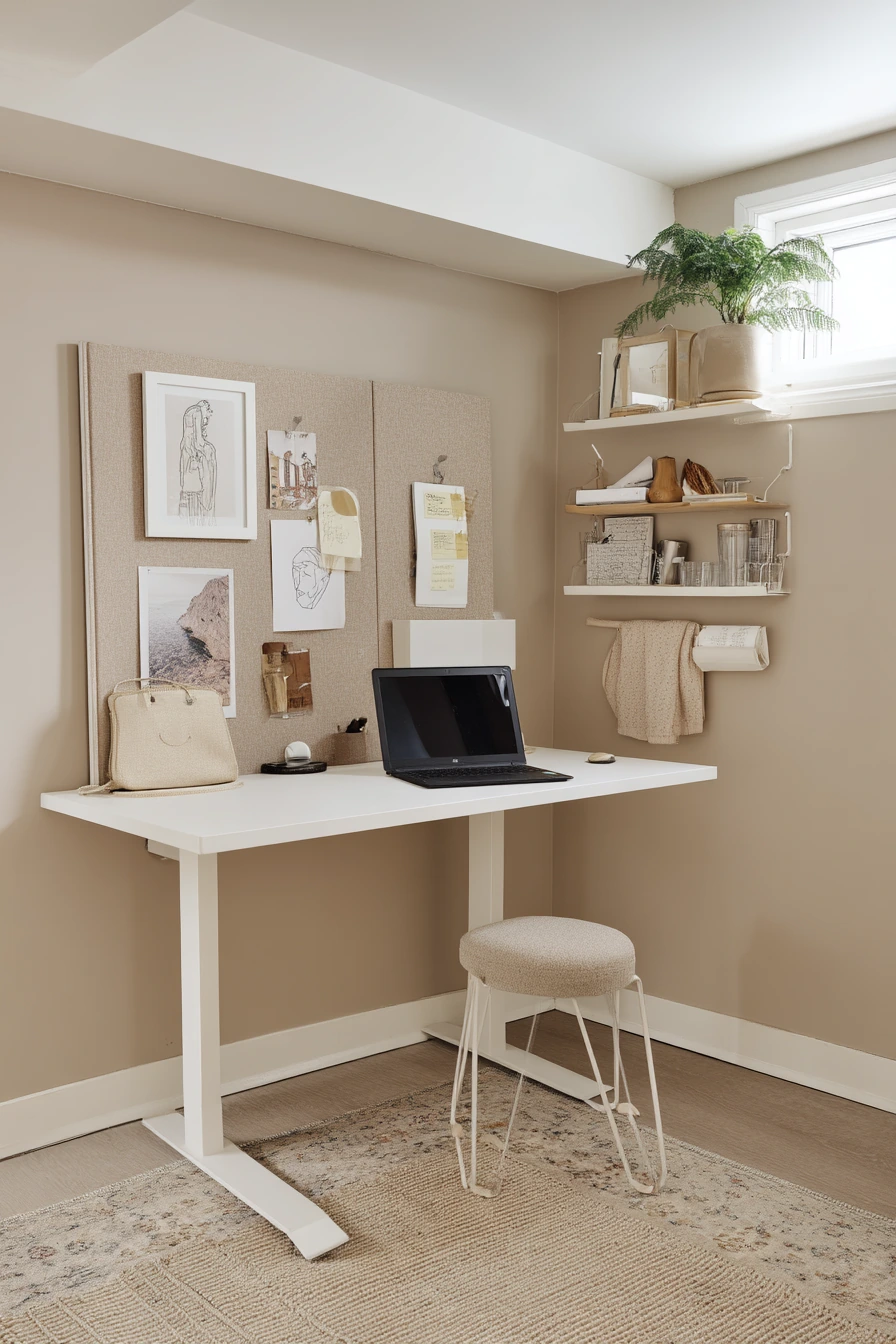
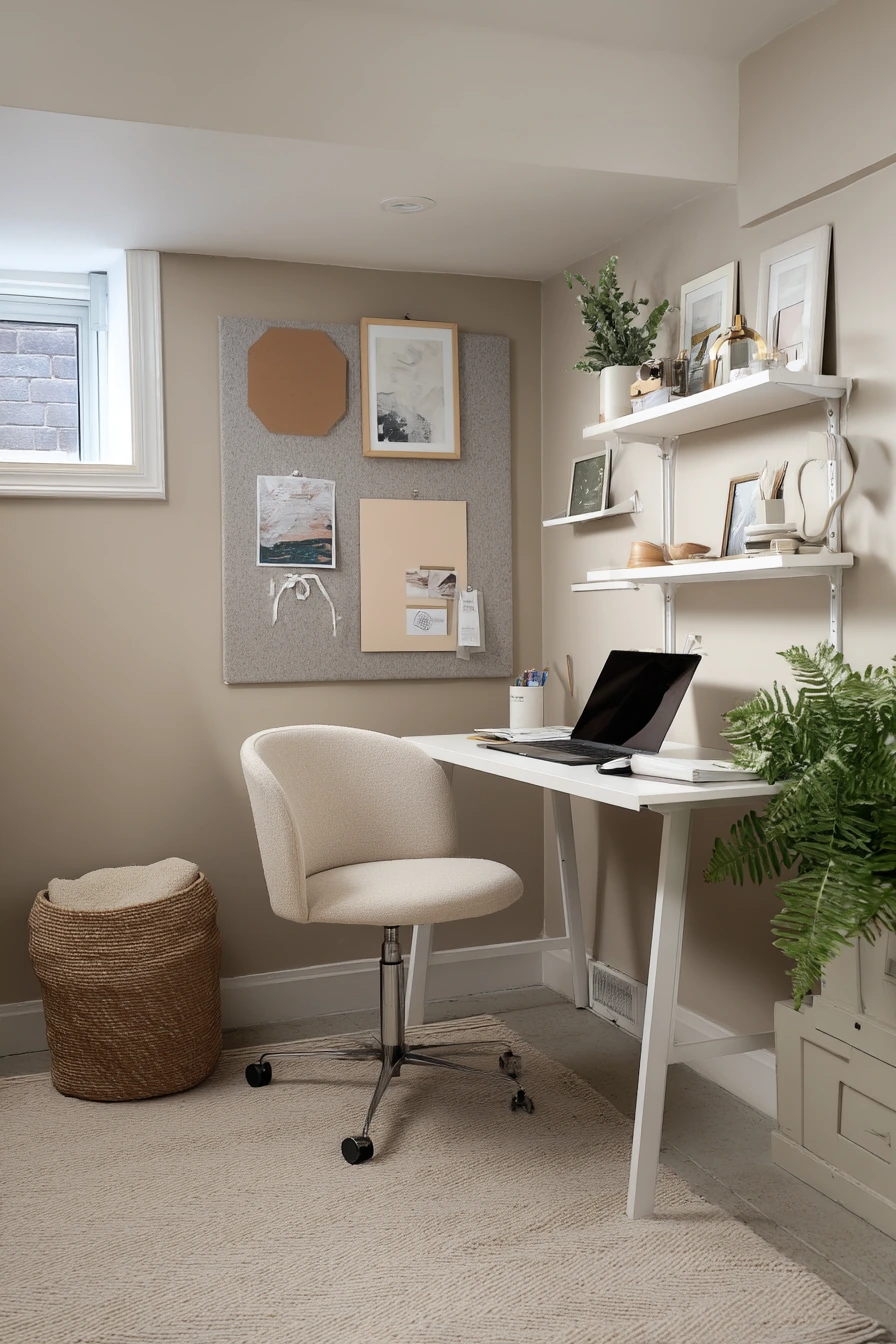
A renter-friendly basement office is all about reversible choices. Start with a freestanding desk and a neutral rug to define the corner. Add peel-and-stick wall shelves for small storage, and use a moveable fabric pinboard for notes without putting holes everywhere.
Make it feel actively used, not staged. Leave a laptop out with an earbuds case, a small mail stack, and one potted fern. Keep the walls simple in soft taupe tones, then lean modest art against the wall instead of mounting it.
Basement windows can be narrow, so aim for soft, even light. Place the desk near the window if you can, and add a warm lamp on the opposite side to balance shadows. If the corner feels tight, choose a chair with open arms and slim legs so you can see more floor.
- Use peel-and-stick shelves for light items like notebooks and small bins.
- Choose a rug that is low pile so the chair rolls easily.
- Sort mail into one tray labeled “today” and one labeled “later.”
- Lean one or two frames on the floor or on the desk to avoid wall damage.
- Add a fabric pinboard on a stand so you can move it for calls or filming.
Pro Design Tip: Keep a tight color palette (taupe, cream, black) and vary texture with fabric, paper, and greenery so the corner looks finished without permanent changes.
Budget Considerations: Peel-and-stick products add up; start with one shelf set and one pinboard, then expand only if you still need more storage after two weeks.


4. Freelance Designer Basement Office With Creative Wall
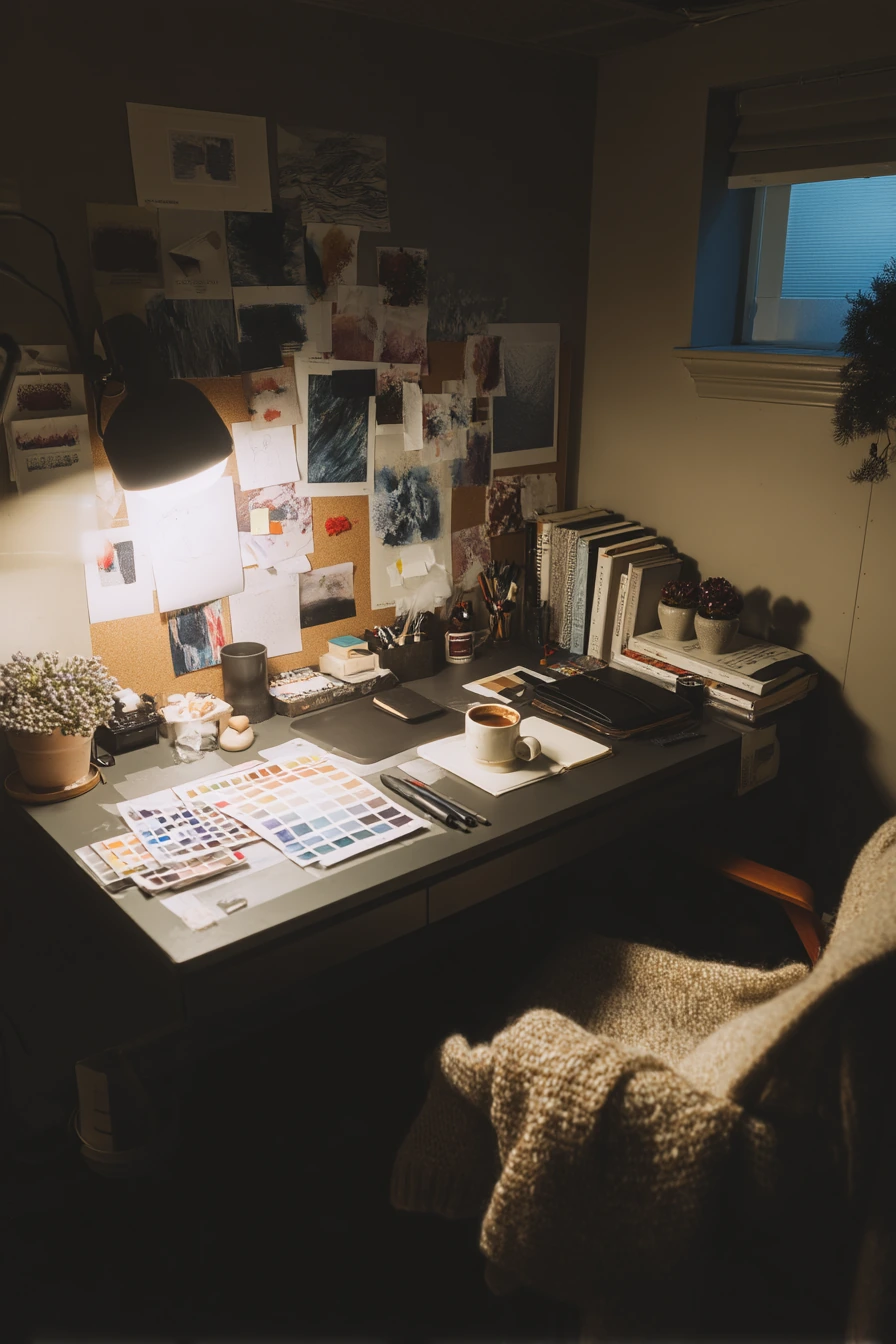

A basement office for a freelance designer needs room to spread out and a place to capture ideas fast. An oversized desk supports a tablet, sketchbooks, and sample chips without feeling cramped. A cork rail or long pin area keeps references visible, which helps when switching between projects.
This type of workspace should look lived-in. Color swatches, a coffee ring on a notebook, and a small stack of books near a desk plant make it feel like work is happening. A knit throw over the chair adds comfort and keeps the mood warm, even in a moody basement.
For lighting, blend warm lamp pools with pale daylight from the basement window. Use one strong task light for color checks and one softer lamp for evening work. If you do client video calls, place a lamp behind your screen aimed at the wall so your face is not lit from below.
- Pin current project references only, and store older items in a labeled folder box.
- Use a desk blotter or large cutting mat to protect the surface from tools and ink.
- Keep swatches in clear envelopes sorted by color family.
- Put a small side stack of books on a stool or low shelf, not on the desk.
- Add a plant to cast soft shadows and reduce the hard “studio” feel.
Pro Design Tip: Create a “review strip” on the cork rail at eye level for the top 10 items you need today, and move everything else to a lower zone so your eyes stay calm.
Budget Considerations: Oversized desks can be expensive; use two simple tables side by side and cover them with one large mat to make a wide work surface.


5. Budget Basement Office With IKEA Storage and Clean Cables


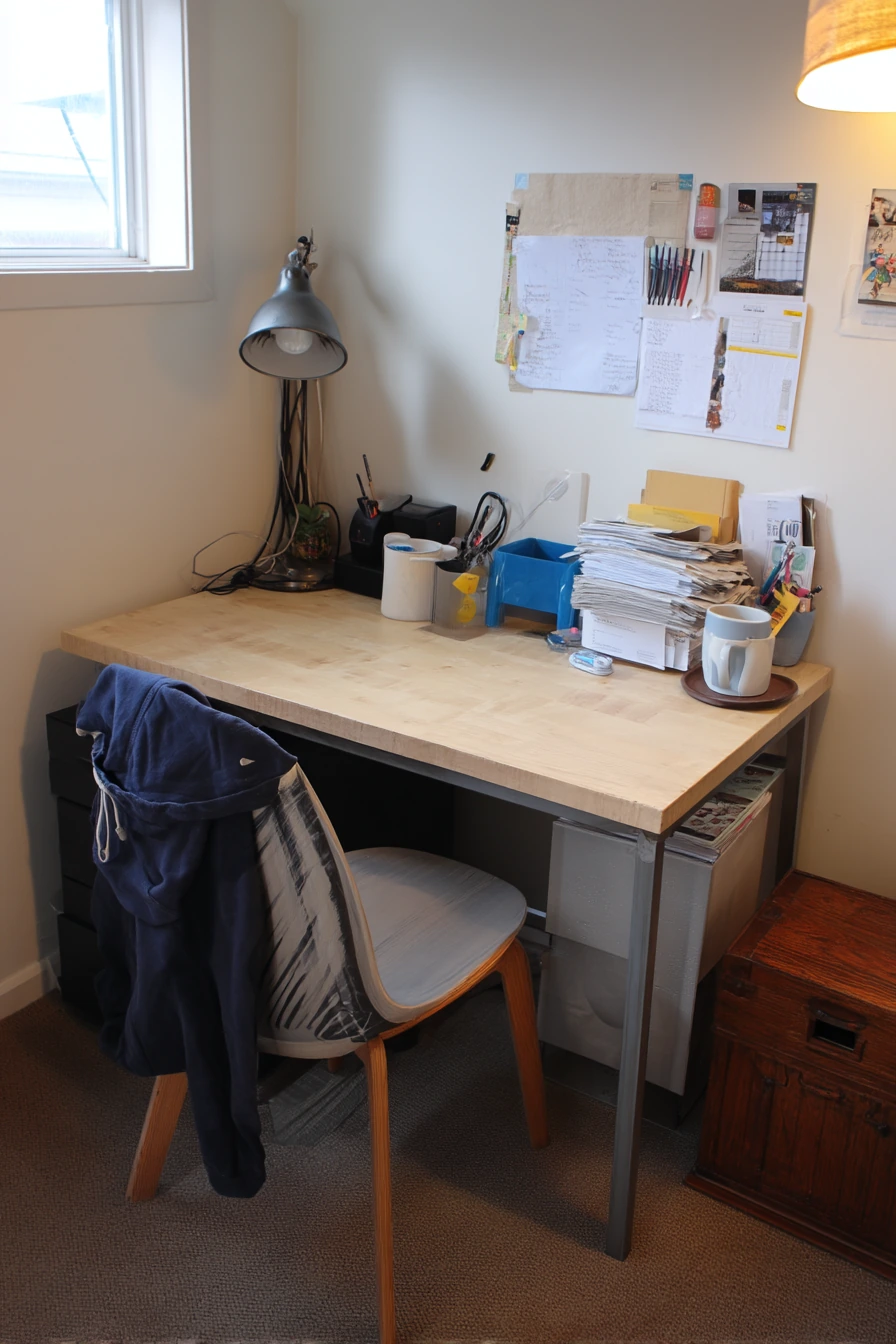
A budget-conscious basement office can still look clean and efficient. Start with a simple laminate desk and add IKEA storage for papers, tech, and supplies. A thrifted chair works fine if it supports your back and lets your feet rest flat on the floor.
Keep it honest and easy to maintain. Small lived-in cues like a mug ring, a printer paper stack, a blue pen cup, and a hoodie on the chair back make it feel real. The goal is not a perfect photo, but a space that works for two days a week and resets fast.
Basements can feel dim, so use soft daylight from a small window plus one warm floor lamp. Tidy cable clips make a huge difference. Route the charging cable to one side, and keep a small box or drawer for extras so cords do not drift across the desk.
- Use cable clips and a single power strip mounted under the desk.
- Store printer paper in a closed bin to avoid humidity and dust.
- Add one small tray for daily items like keys, pens, and sticky notes.
- Choose a desk chair cushion if the thrifted chair is firm or low.
- Use a floor lamp with a shade to soften light and reduce glare.
Pro Design Tip: Pick storage with doors or drawers at eye level so the space reads “tidy” even when your workday ends quickly.
Budget Considerations: Spend on lighting first; a good floor lamp and bulb temperature can make a low-cost desk setup feel much higher quality.
6. Lawyer Basement Office With Dark Wood and Diplomas

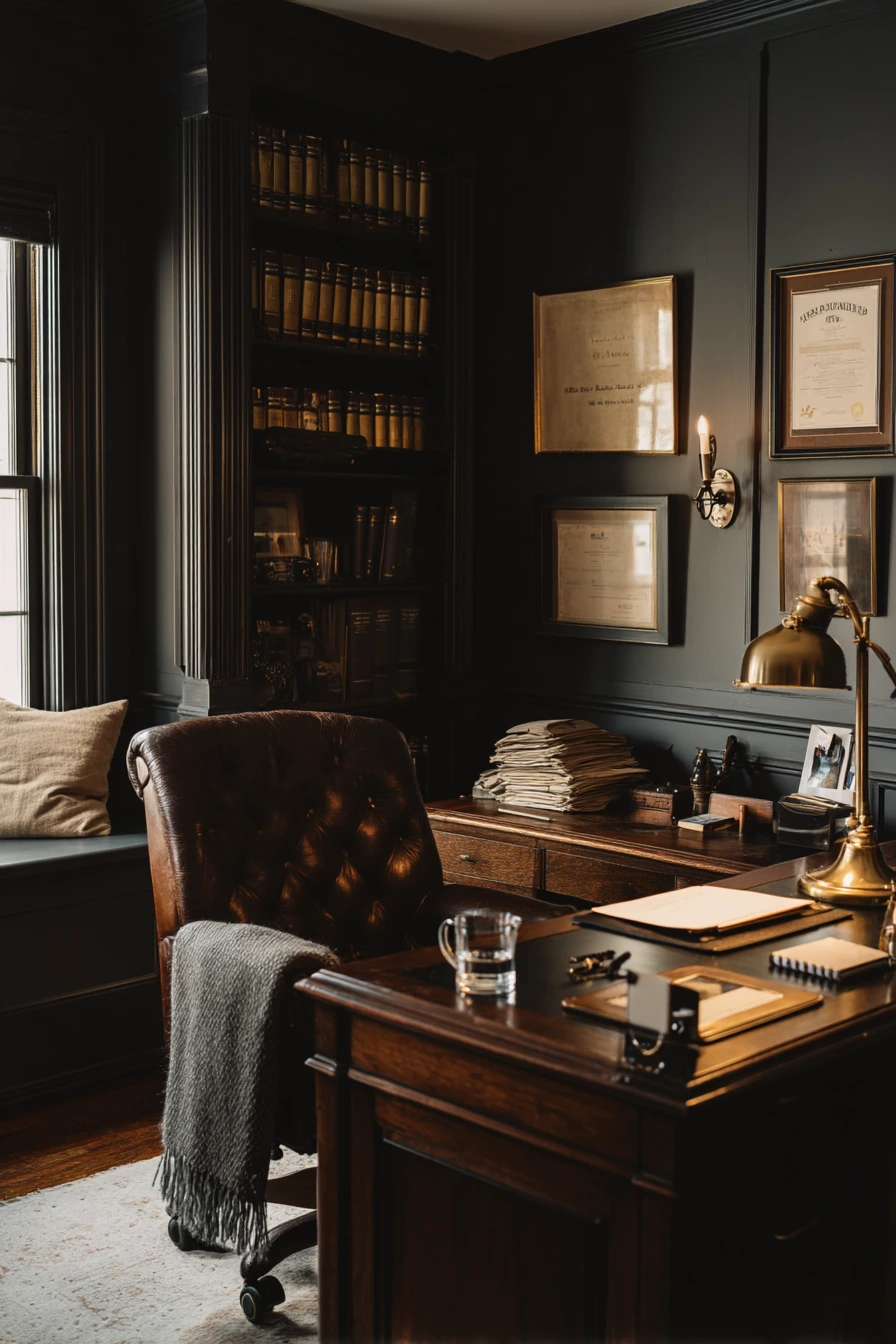
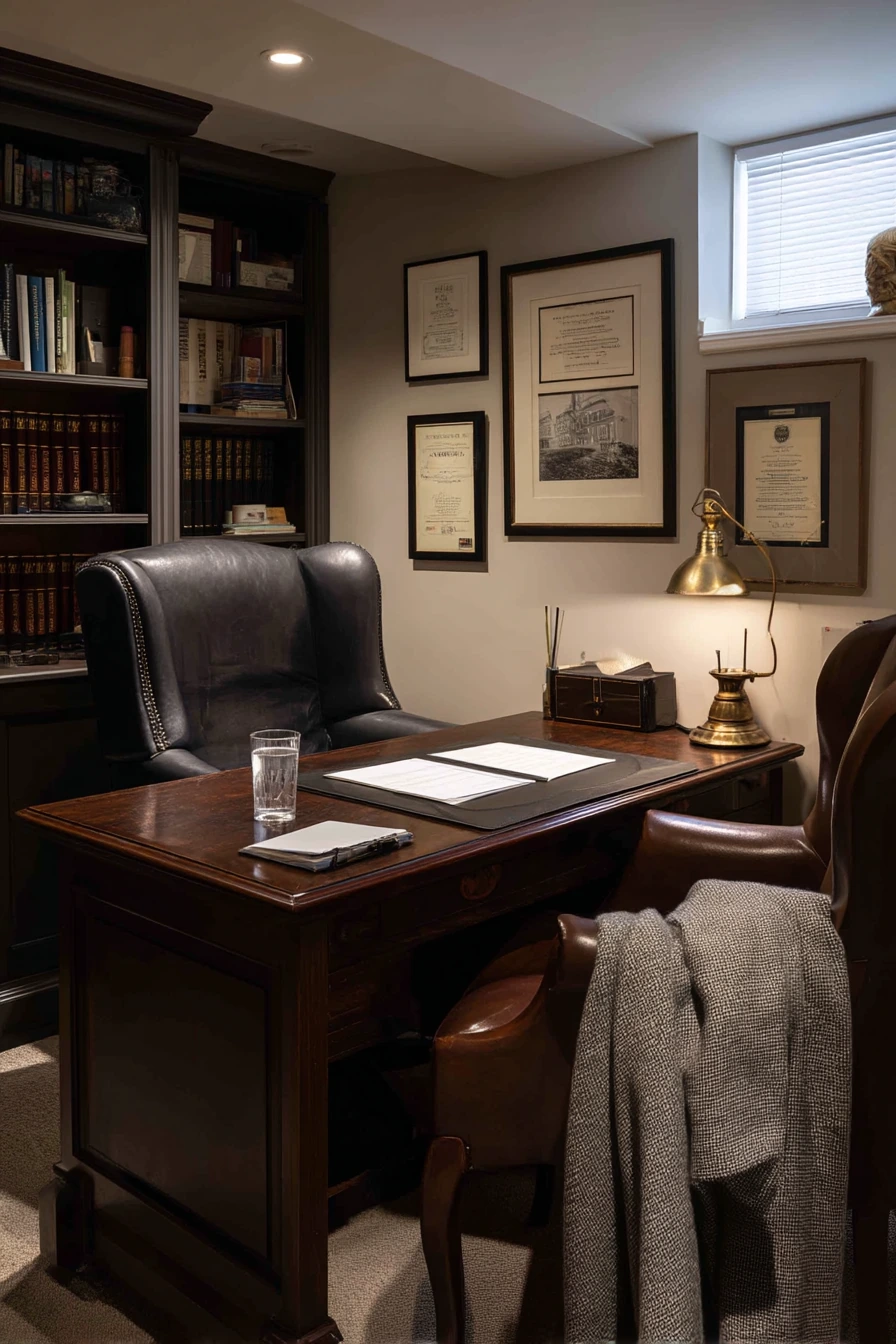
A lawyer’s basement office should feel composed and quiet. Center the room on a dark wood desk and a supportive leather chair. Add a brass lamp for warm, focused light, and place a bookcase nearby for reference materials and organized binders.
Keep the decor restrained. Framed diplomas can go on one wall, aligned and spaced evenly. Use annotated folders, reading glasses, and a tumbler of water as everyday items that stay within reach. A slightly rumpled wool throw on a side chair adds softness without making the room look casual.
Basement light can be cool, so use natural window light when you can and layer in warm lamps. If the window is small, avoid heavy drapes and choose a simple shade. Add a low-pile rug to improve acoustics for calls and to make footsteps quieter.
- Use a desk blotter to protect the wood and create a writing zone.
- Keep one “active” file tray and one “archive” tray to prevent piles.
- Place diplomas at eye level and keep the frames matching.
- Use bookends and labeled binders for a clean, professional shelf.
- Add a side chair for reading and a small table for water and notes.
Pro Design Tip: Use three layers of light: a desk lamp for tasks, a floor lamp for fill, and a small accent light on the bookcase to avoid a dark, heavy corner.
Budget Considerations: Look for secondhand solid wood desks and leather chairs; a quality used piece often costs less than a new “executive” set and lasts longer.

7. Hybrid Basement Office for a Young Couple
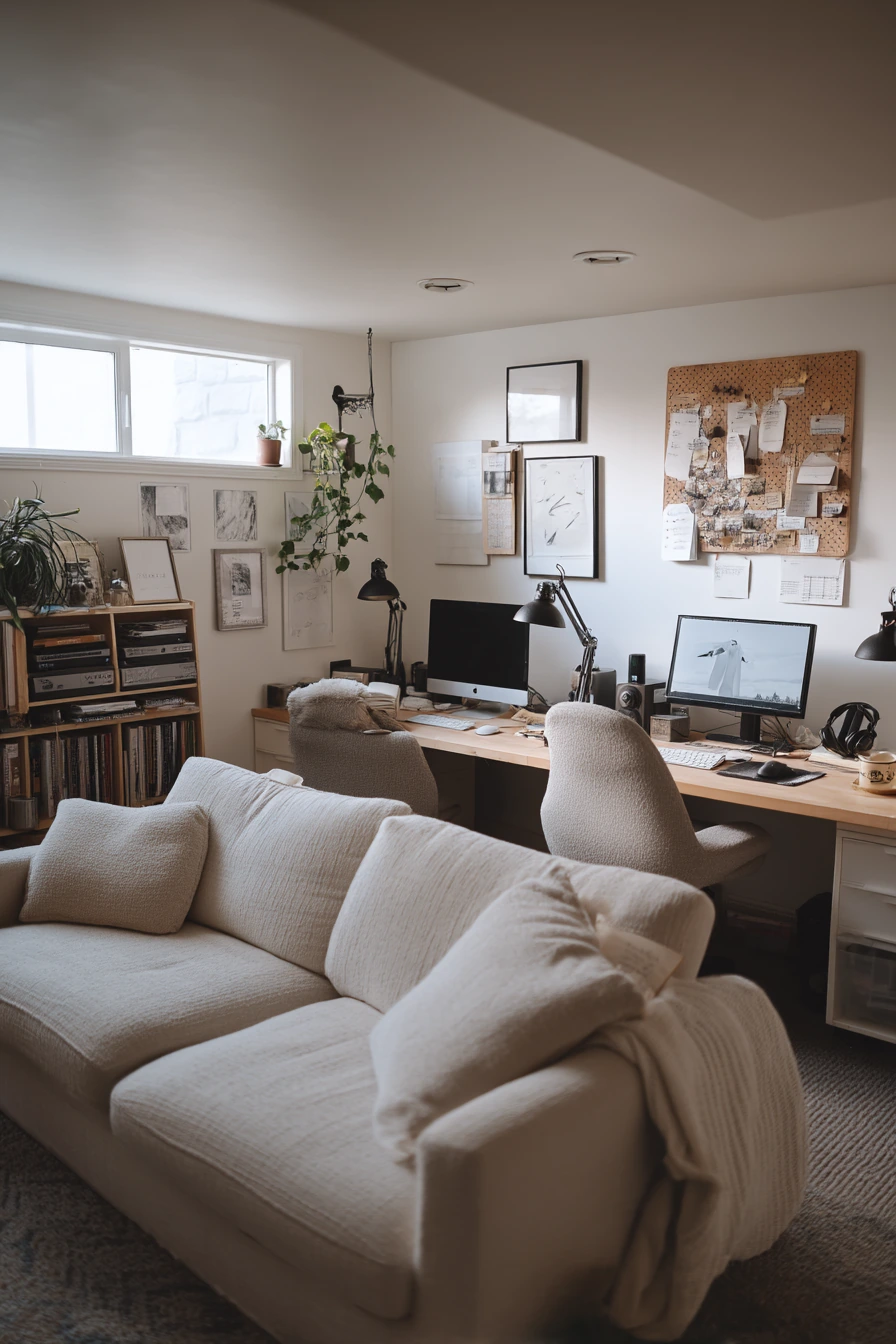

A hybrid basement office for a young couple works best when it is shared but still balanced. Place two compact desks along one wall to keep the center of the room open. Add shared shelving above for supplies, plus a small bulletin board for calendar items and mail.
Make it feel realistic with everyday details. Headphones, a half-finished tea, a phone charger, and a stack of mail near the keyboard are normal. The trick is to contain these items so they do not spread. Use matching desk lamps to keep the setup cohesive.
To stop the room from feeling like a row of workstations, add a soft sofa nearby. A slightly wrinkled throw and one plant leaning toward the light makes the space feel like part office, part lounge. Gentle daylight is enough in many basements, but add a floor lamp to prevent shadows during evening work.
- Give each person one drawer bin for personal items and one shared supply bin.
- Use matching lamps and similar chairs for a calm, paired look.
- Place a mail sorter between the desks to catch papers fast.
- Keep a small charging station on a shelf to reduce desk clutter.
- Add a sofa or chair for breaks and laptop work away from monitors.
Pro Design Tip: Run one long cable tray under both desks and label the plugs, so swapping devices does not turn into a cord mess.
Budget Considerations: Two matching desks can cost more; buy one desk now and add a second later, or use two simple tables and unify them with matching lamps.
8. Professor Basement Office With Floor-to-Ceiling Bookshelves
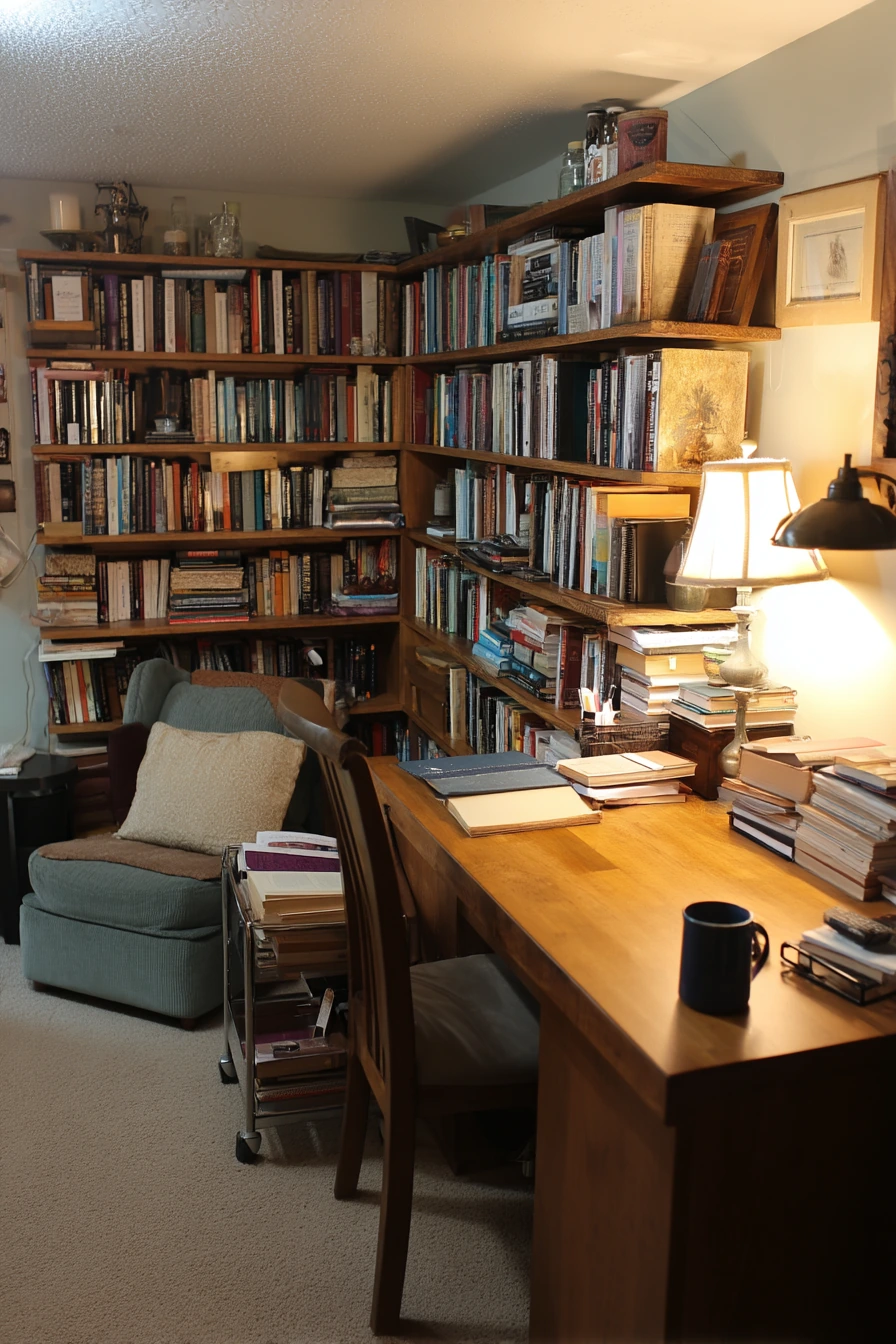
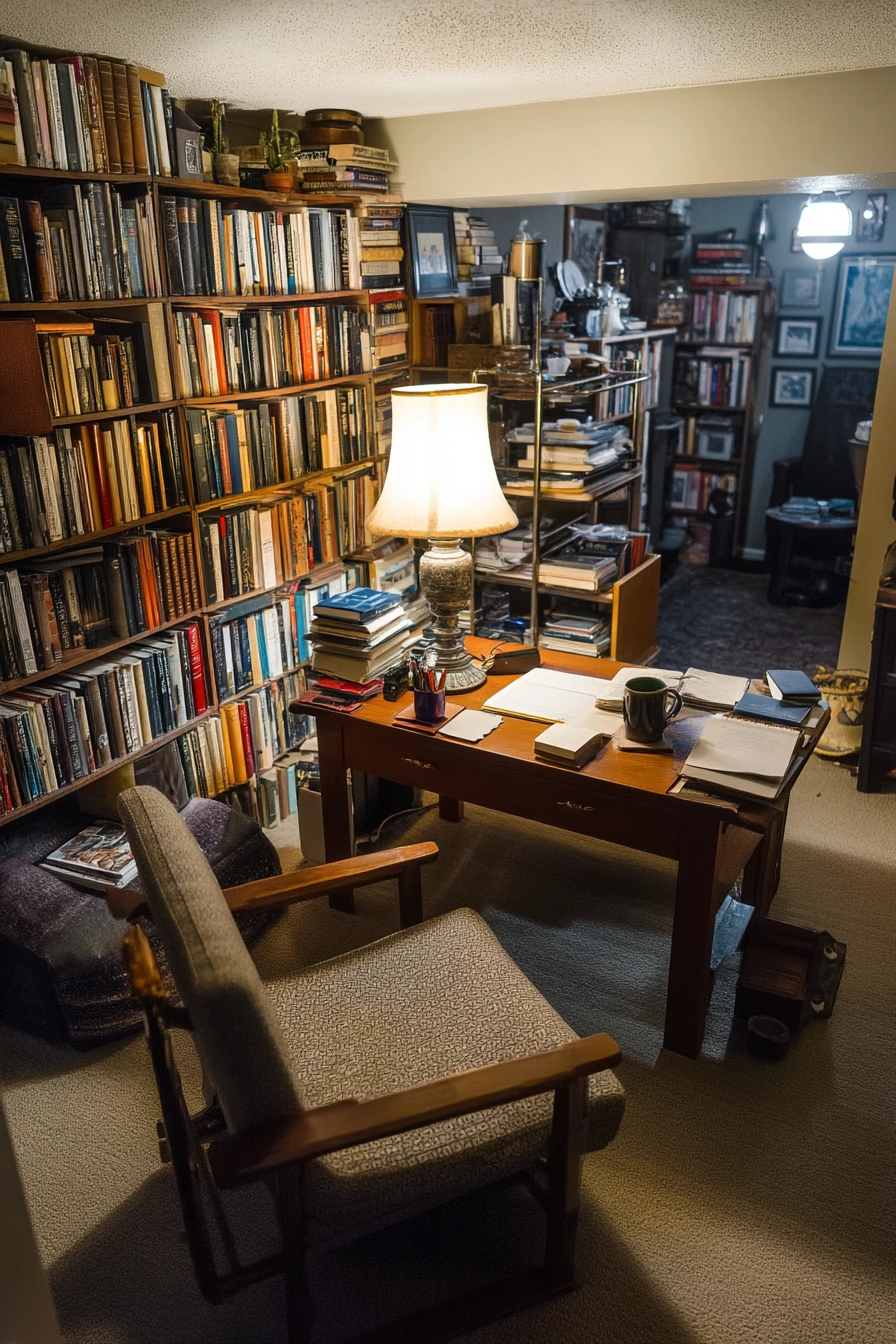
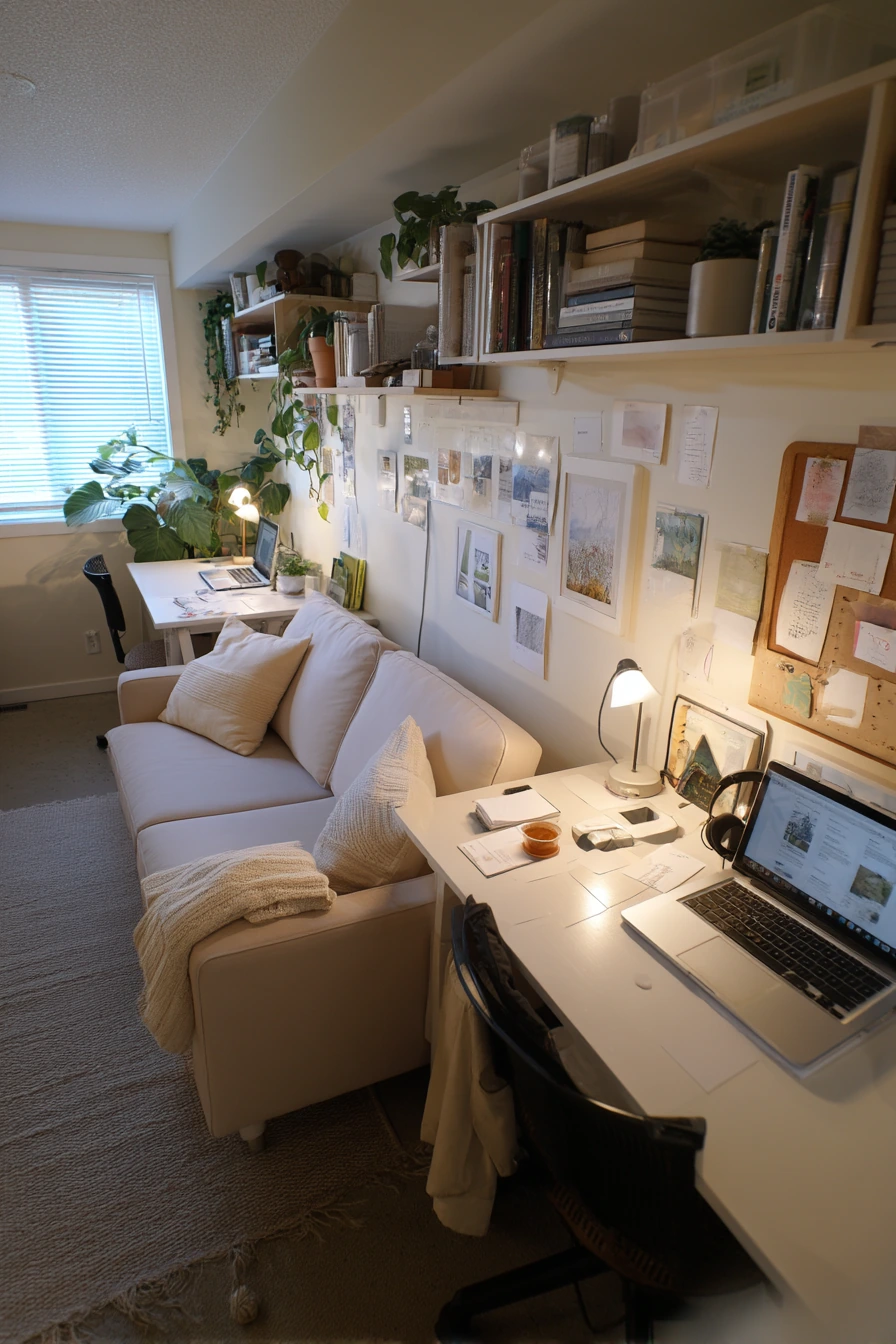
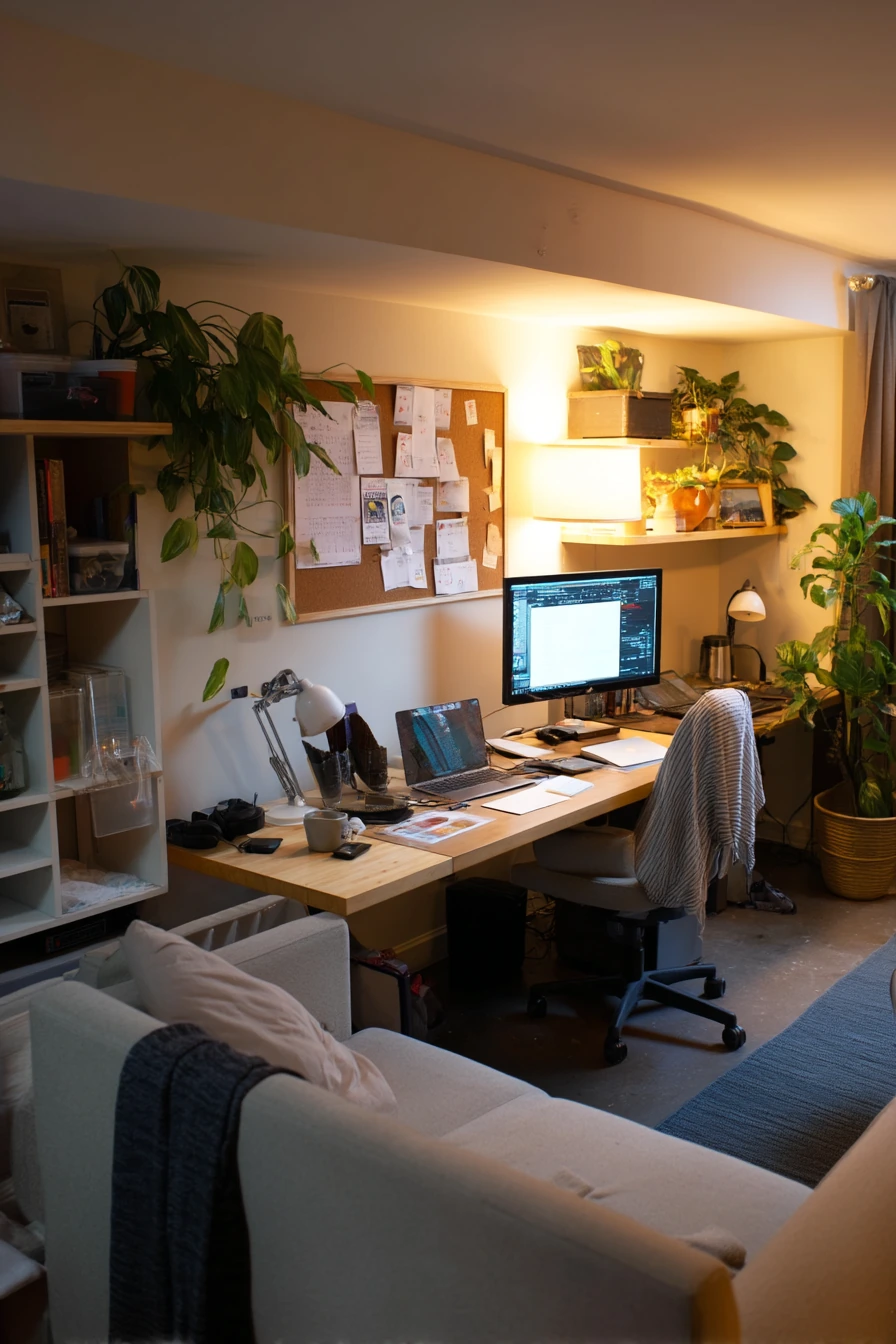
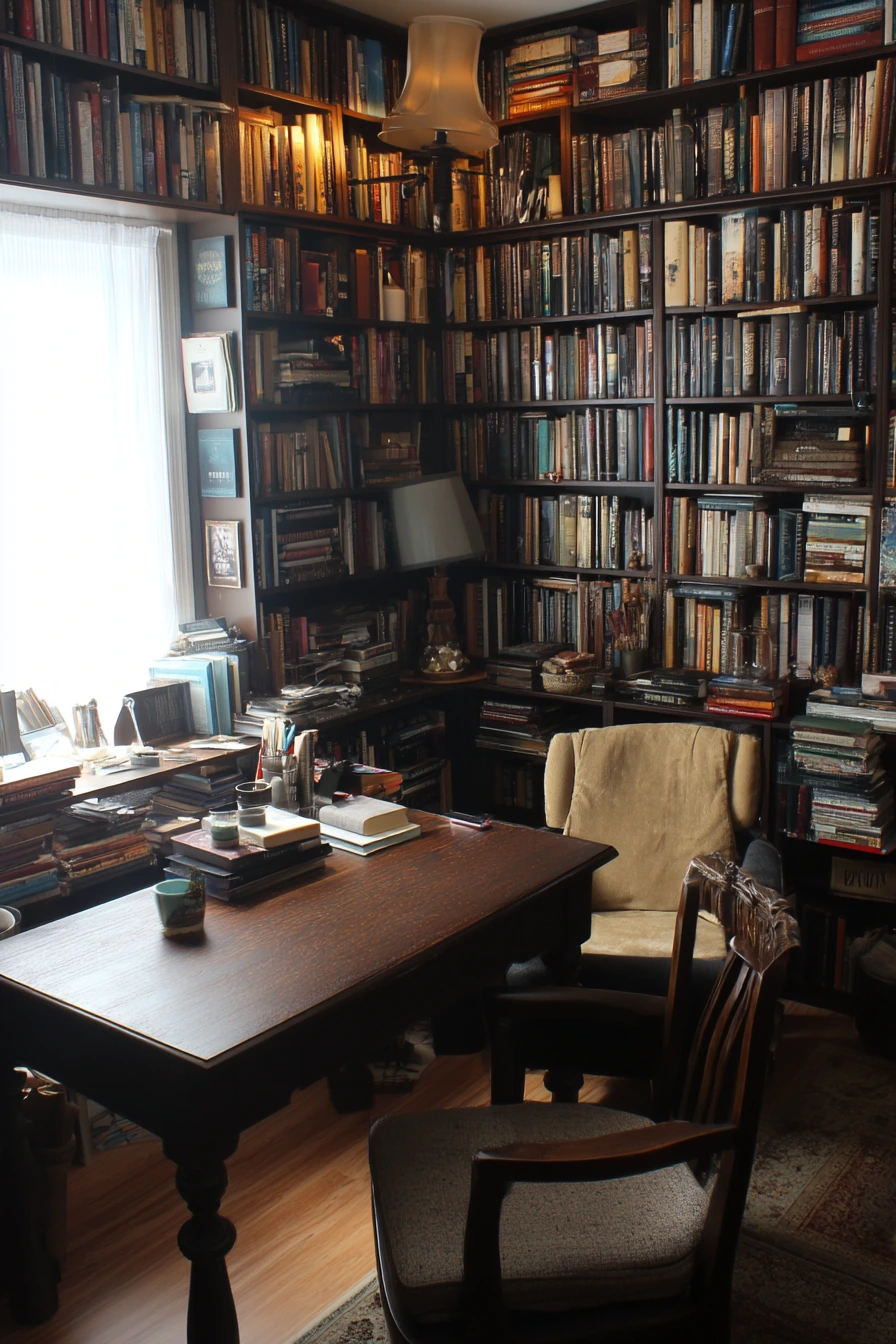
A basement office for an avid reader and part-time professor needs strong storage and a quiet mood. Floor-to-ceiling bookshelves make the space feel like a study, and they keep research materials easy to grab. Pair them with a sturdy oak desk that can handle stacks of journals and open books.
Comfort matters for reading and grading. Add a cushioned armchair and a small rolling cart for research books you use all the time. Lived-in details like a fountain pen, tea mug, and bookmarks peeking out of open volumes make the room feel personal without adding clutter.
Light the shelves with soft daylight, then add a warm table lamp for evening work. If the basement is dry, consider a small humidifier to protect paper and keep the air comfortable. Use a rug to reduce echo and to make the chair area feel like a separate zone from the desk.
- Sort shelves by category first, then by author to make searching faster.
- Keep a rolling cart for current classes and rotate it each term.
- Use book stands to hold open texts at a better neck angle.
- Place a lamp near the armchair for low-glare reading light.
- Add a desk tray for grading tools, pens, and sticky tabs.
Pro Design Tip: Leave 10 to 15 percent of shelf space empty so new books do not become stacks on the floor or desk.
Budget Considerations: Built-ins are costly; use tall bookcases anchored to the wall and add trim later if you want a more custom look.

9. Contractor Basement Office With Rugged Utility Style
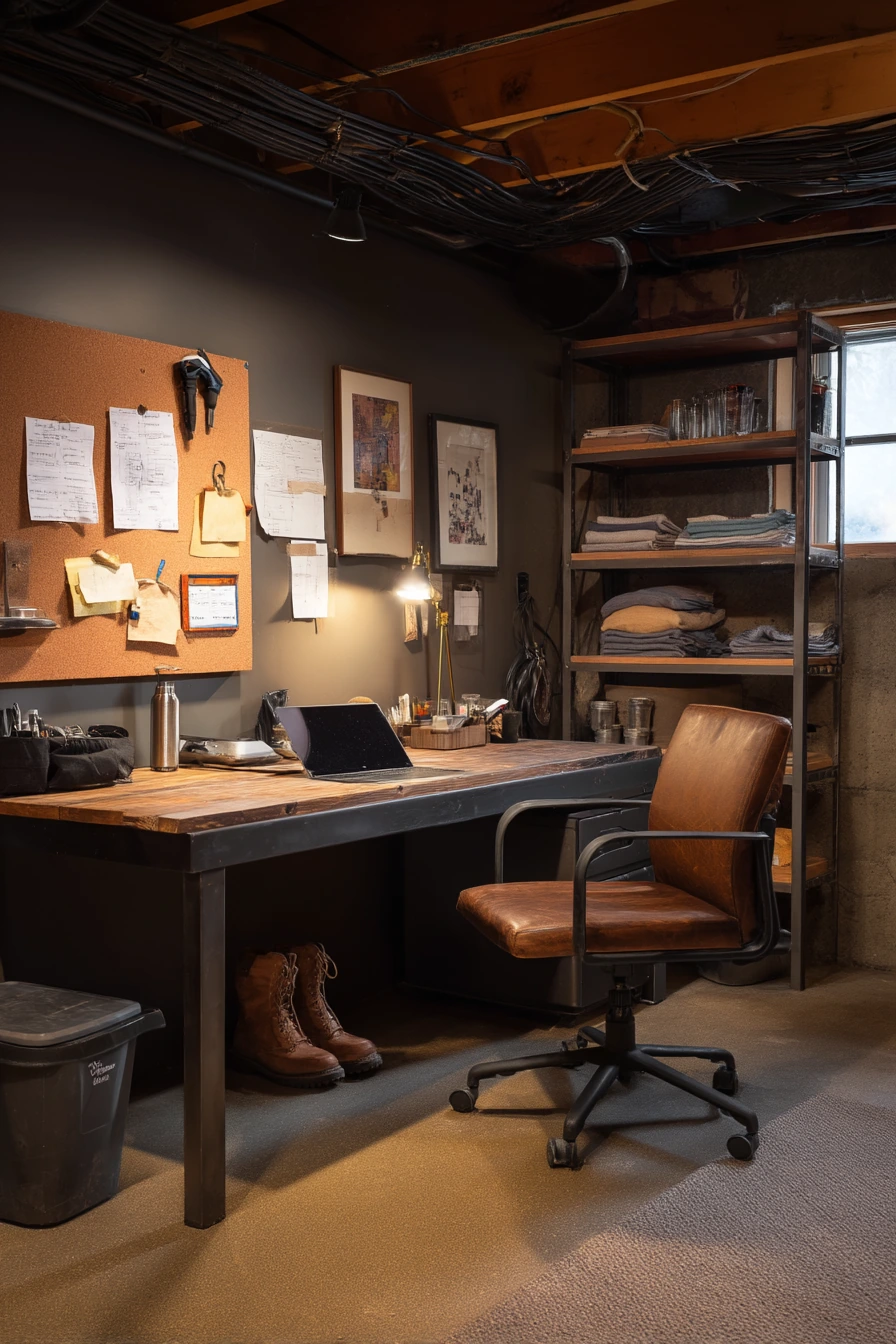
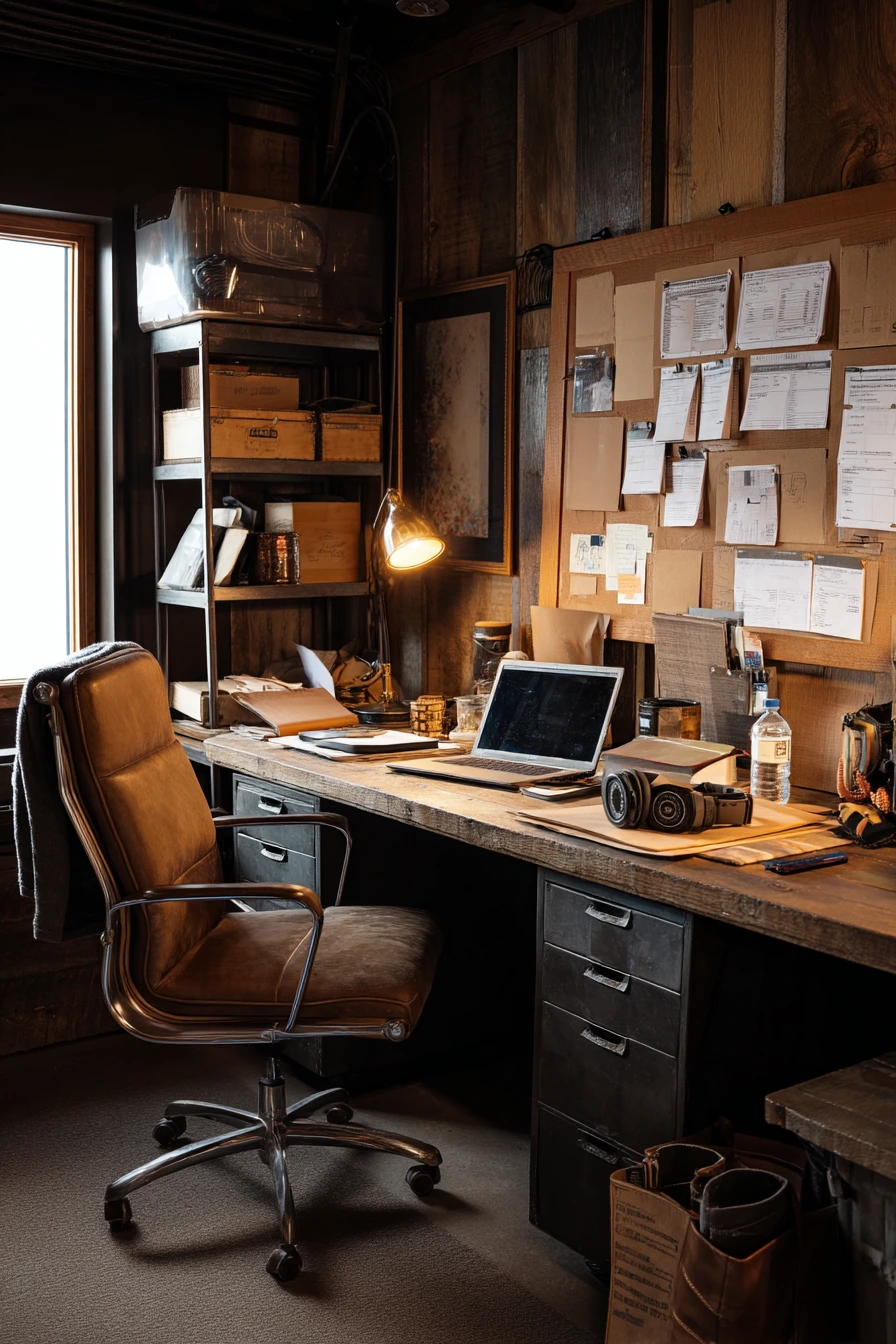
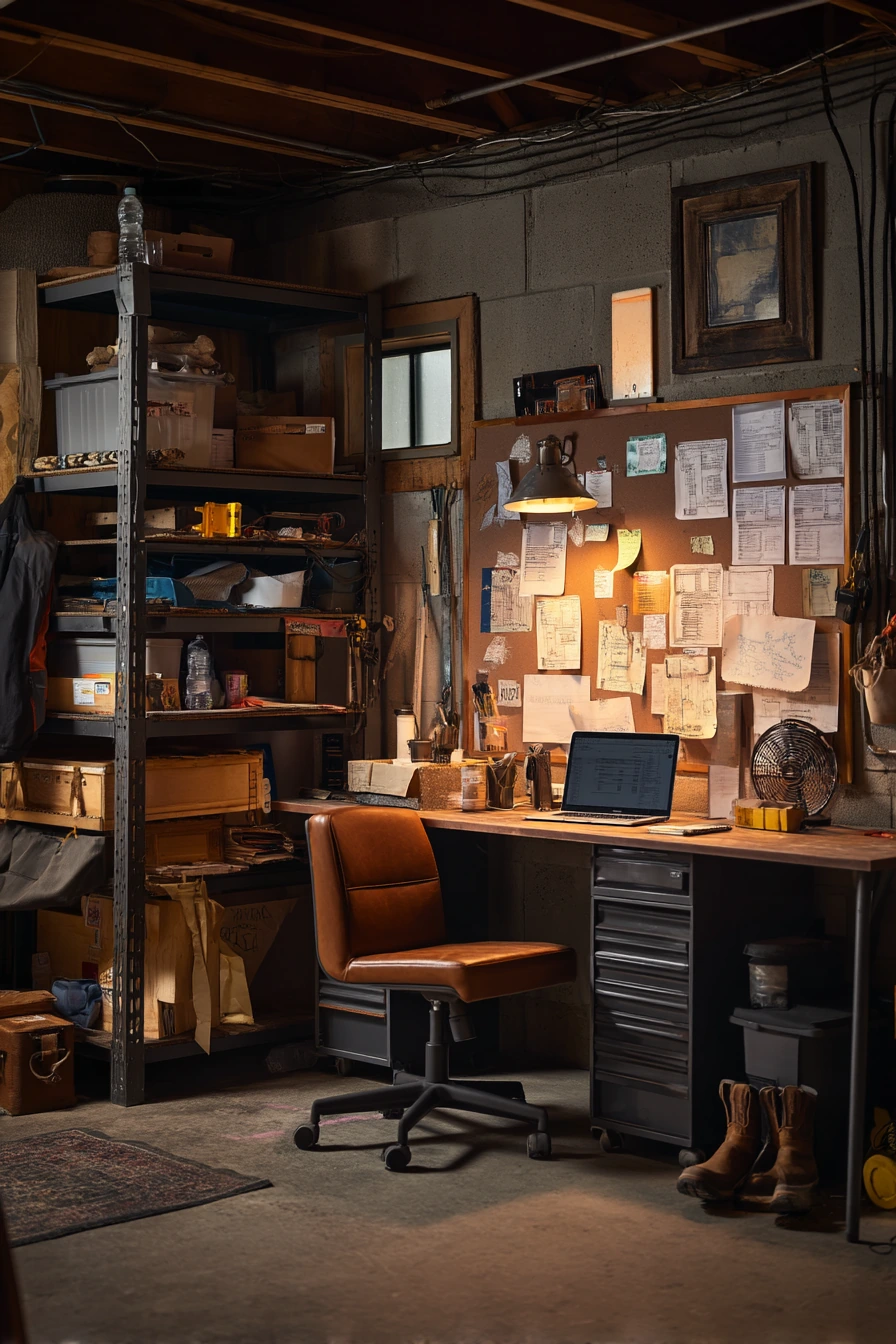
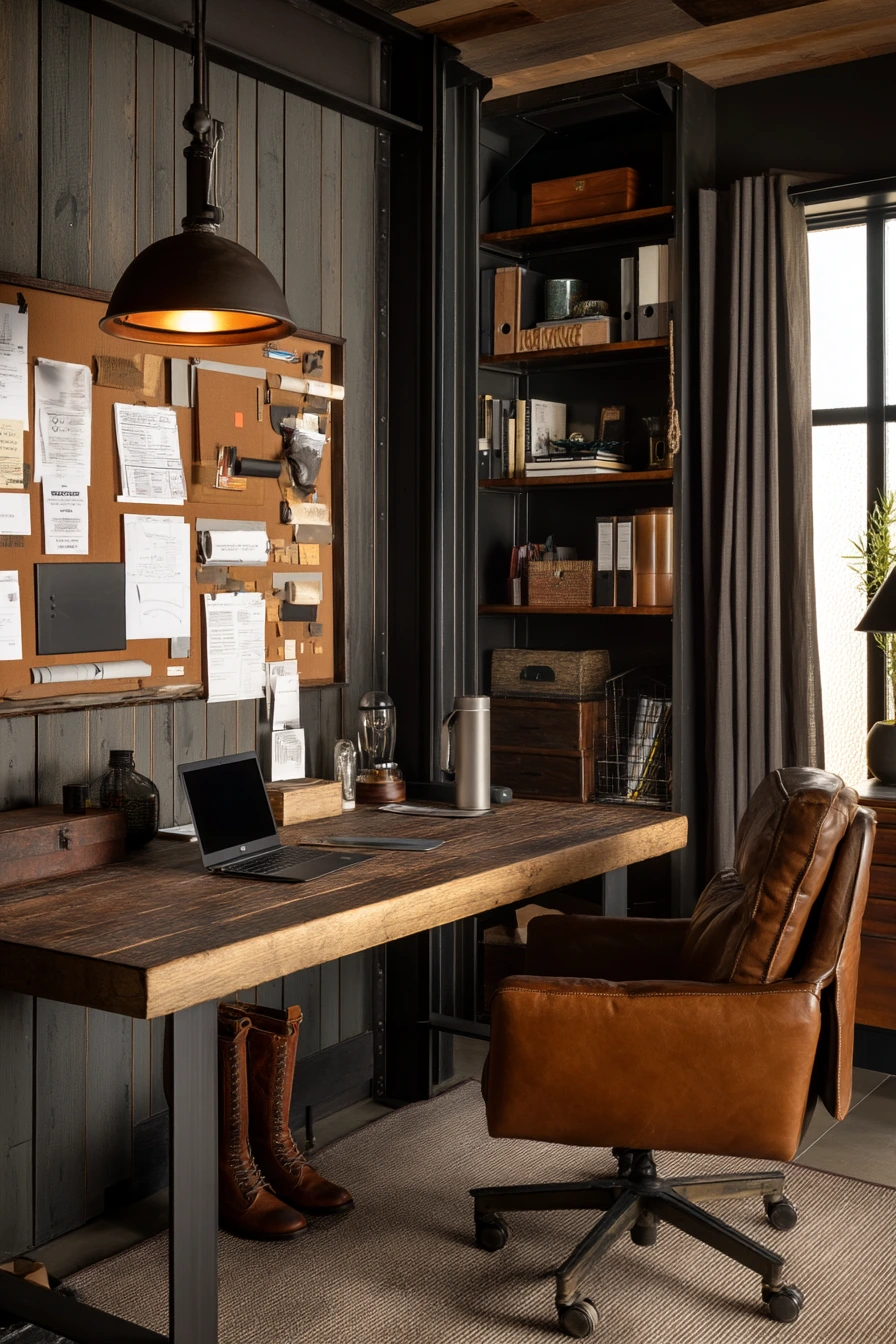
A contractor’s basement office should handle paperwork without feeling fussy. Start with a heavy desk that can take daily use, then add metal shelving for bins and tools. A bulletin board with invoices and job notes keeps active tasks visible, which helps after a long workday.
Blend rugged utility with comfort using a leather task chair and muted textiles. Everyday items like a tape measure, work boots by the wall, a water bottle, and a charging cable next to the laptop make the space feel true to the work. Keep the palette earthy with wood, steel, and simple fabric.
Basement window light may be low, so add one warm lamp to reduce eye strain. Put a small tray by the door for keys and receipts, and use labeled folders for each job so papers do not mix. If dust is common, choose closed bins on shelves and wipe surfaces weekly.
- Use a bulletin board with sections: invoices, bids, and “this week.”
- Store job folders in a crate or file box, one per project.
- Keep a boot mat near the wall to protect the floor from dirt.
- Add a desktop scanner or phone stand to quickly capture receipts.
- Use a lamp with a warm bulb to make late-night paperwork easier.
Pro Design Tip: Set up a “drop zone” shelf at arm height for the items you bring in daily, so the desk stays clear for paperwork and the laptop.
Budget Considerations: Metal shelving and used desks are often cheap at local resale shops; spend your money on a good filing system and a chair that supports long sessions.
10. Serene Therapist Basement Office With Calming Decor
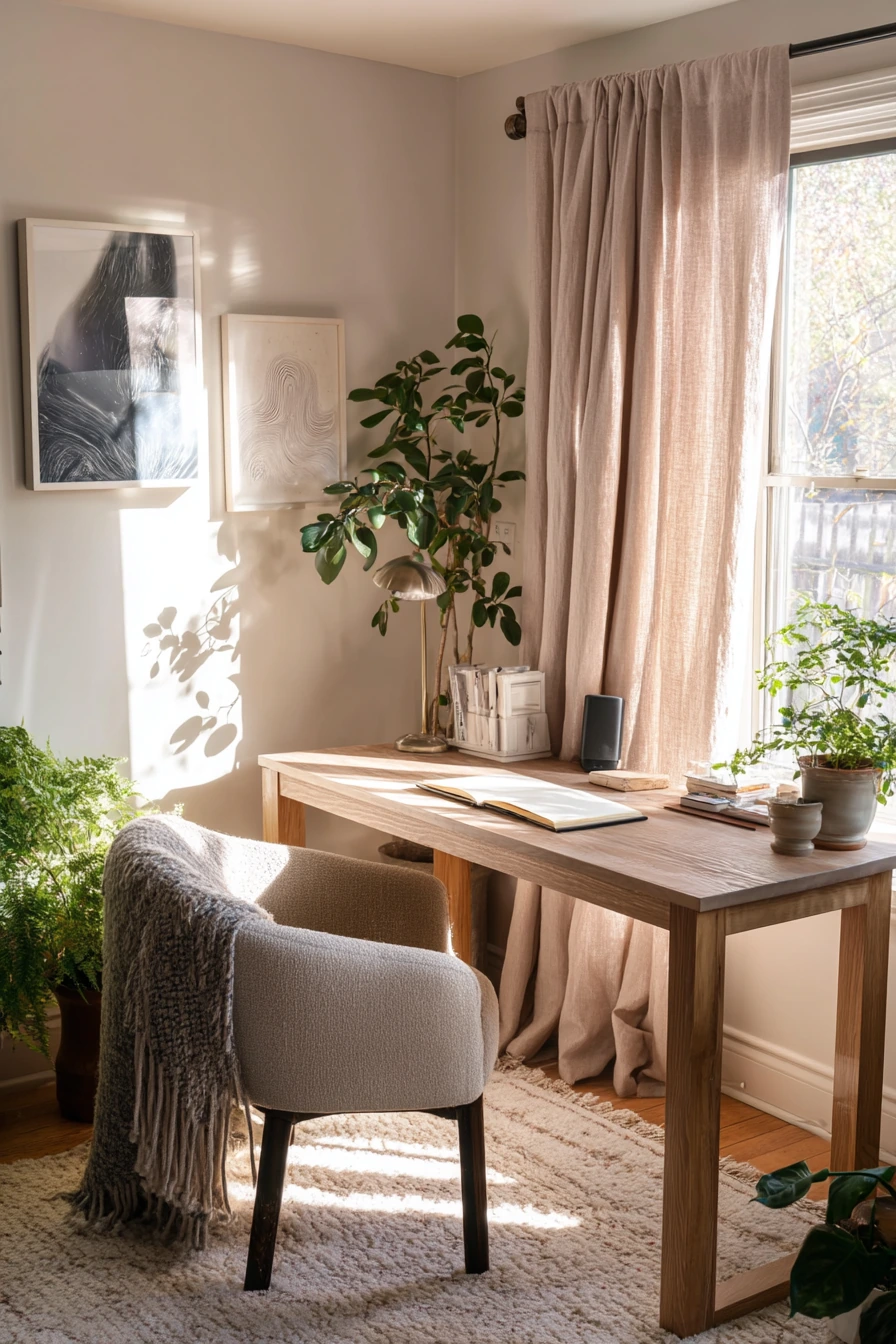

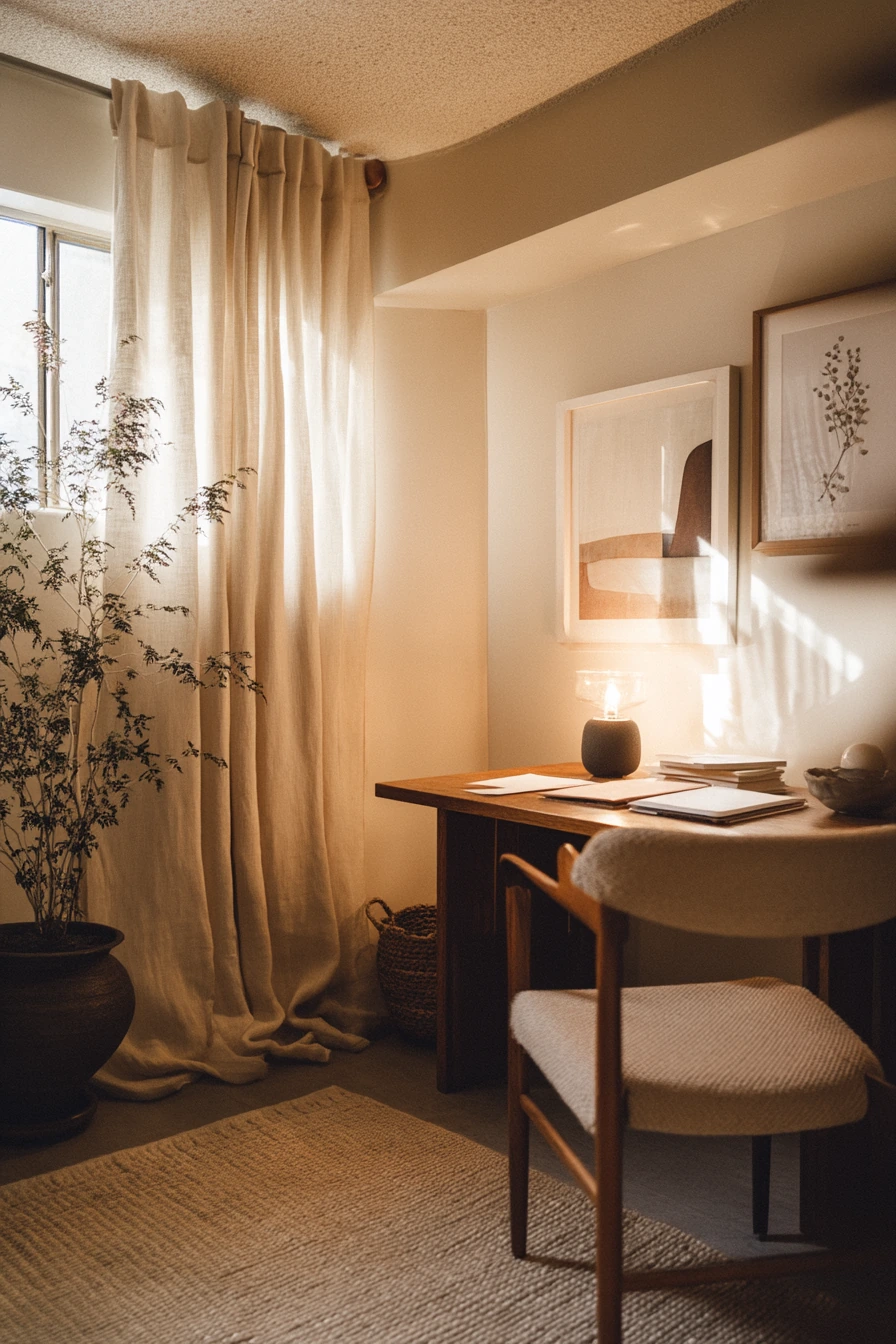
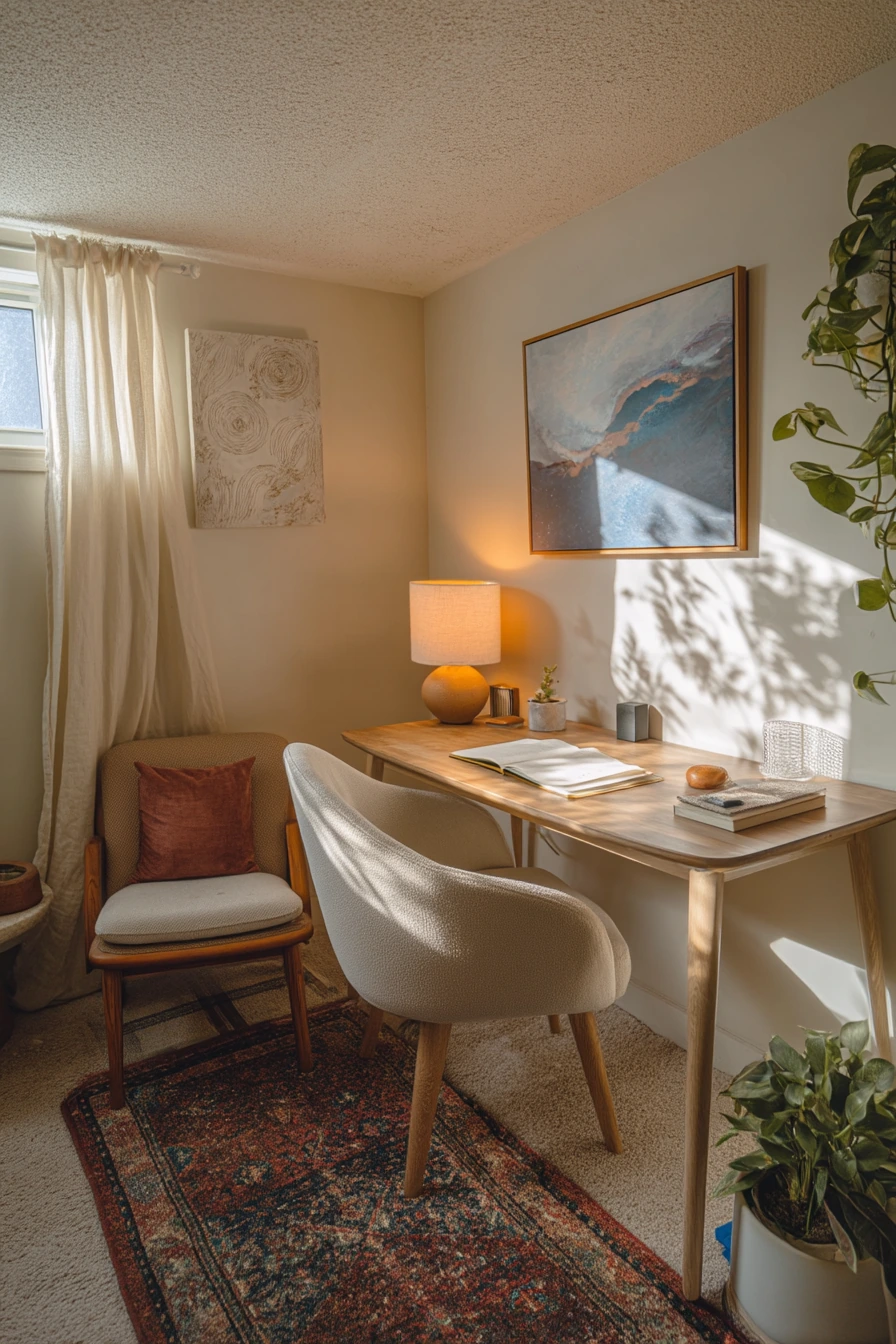
A serene basement office for a therapist should feel grounded and restorative. Choose a slim desk so the room stays open, and add a comfortable reading chair for client notes and reflection time. A grounding rug helps define the space and adds warmth in a basement.
Keep the styling soft and simple. Use calming art, a linen curtain, and a plant that casts delicate shadows on the wall. Add lived-in cues that support the work, like a ceramic water glass, a notebook, tissues, and a small speaker for gentle background sound between sessions.
Lighting should be balanced and soothing. Use soft daylight from the basement window, then add a warm lamp to avoid a clinical feel. Place the lamp so it lights the wall, not just the desk, which reduces harsh contrast. If you do telehealth, sit facing the light source so your face looks even on camera.
- Choose quiet colors like cream, soft beige, and muted green for calm.
- Keep tissues, a pen cup, and a notebook in one tray for quick resets.
- Use a linen curtain to soften the window without blocking light.
- Add a reading chair and small side table for water and notes.
- Use a rug pad to reduce sound and make the room feel warmer.
Pro Design Tip: Use two seating “heights” in the room (desk chair and reading chair) to support different tasks and help the space feel more like a wellness office than a workstation.
Budget Considerations: Linen curtains and calming art can be costly; start with simple cotton panels and printable art, then upgrade one piece at a time.
The best basement office ideas focus on comfort, light, and smart storage. Start with the layout that matches your work style, then improve one thing at a time, like your chair, your task lighting, or your cable setup.
Small details make a basement office feel real and easy to use, such as a pinboard for priorities, closed cabinets for clutter, and a rug for warmth and sound control. Choose the setup that fits your day, and build from there.
FAQ
1. How do I make a basement office feel brighter? Use light wall paint, add two to three lamps, and keep window coverings minimal. Place a mirror or light art near the window to bounce daylight.
2. What is the best lighting for a basement office? Layer lighting: a task lamp for the desk, a floor lamp for general light, and a small accent light for shelves. Choose warm-neutral bulbs to avoid a harsh look.
3. How can I reduce echo in a basement workspace? Add a rug, curtains, and upholstered seating. Bookcases and fabric pinboards also help absorb sound.
4. What desk size works in a small basement office? A compact desk around 40 to 48 inches wide works for a laptop setup. If you use two monitors, aim for 55 inches or more, or add a monitor arm.
5. How do I hide cords in a basement office? Use cable clips, a cable tray under the desk, and a mounted power strip. Keep one charging station on a shelf to prevent loose cords on the worktop.
6. How do I set up a renter-friendly basement office? Choose a freestanding desk, peel-and-stick shelves, and art that leans instead of hangs. Use a moveable pinboard and avoid permanent built-ins.
7. What should I do about basement humidity around books and paper? Use closed bins for paper, keep items off the floor, and consider a dehumidifier. This helps protect books, documents, and electronics.