
Bathroom organization ideas can make a small space feel calmer and easier to clean. When counters stay clear and storage has a place, mornings go faster and you waste less time looking for basics.
This post walks through real-life setups like a compact family bathroom, a renter-friendly layout, and a busy shared bathroom before school. You will see simple ways to use shelves, baskets, hooks, trays, and drawer dividers without making the room look staged.
Each section includes practical steps plus small styling ideas so your bathroom still feels warm and lived-in. You will also get a pro design tip and a budget note to help you choose what to buy and what to skip.
Use these ideas for a quick weekend reset or build them slowly over time. Even one change, like a rotating caddy or labeled bins, can keep things tidy with less effort.
1. Compact Family Bathroom Storage That Still Feels Lived-In

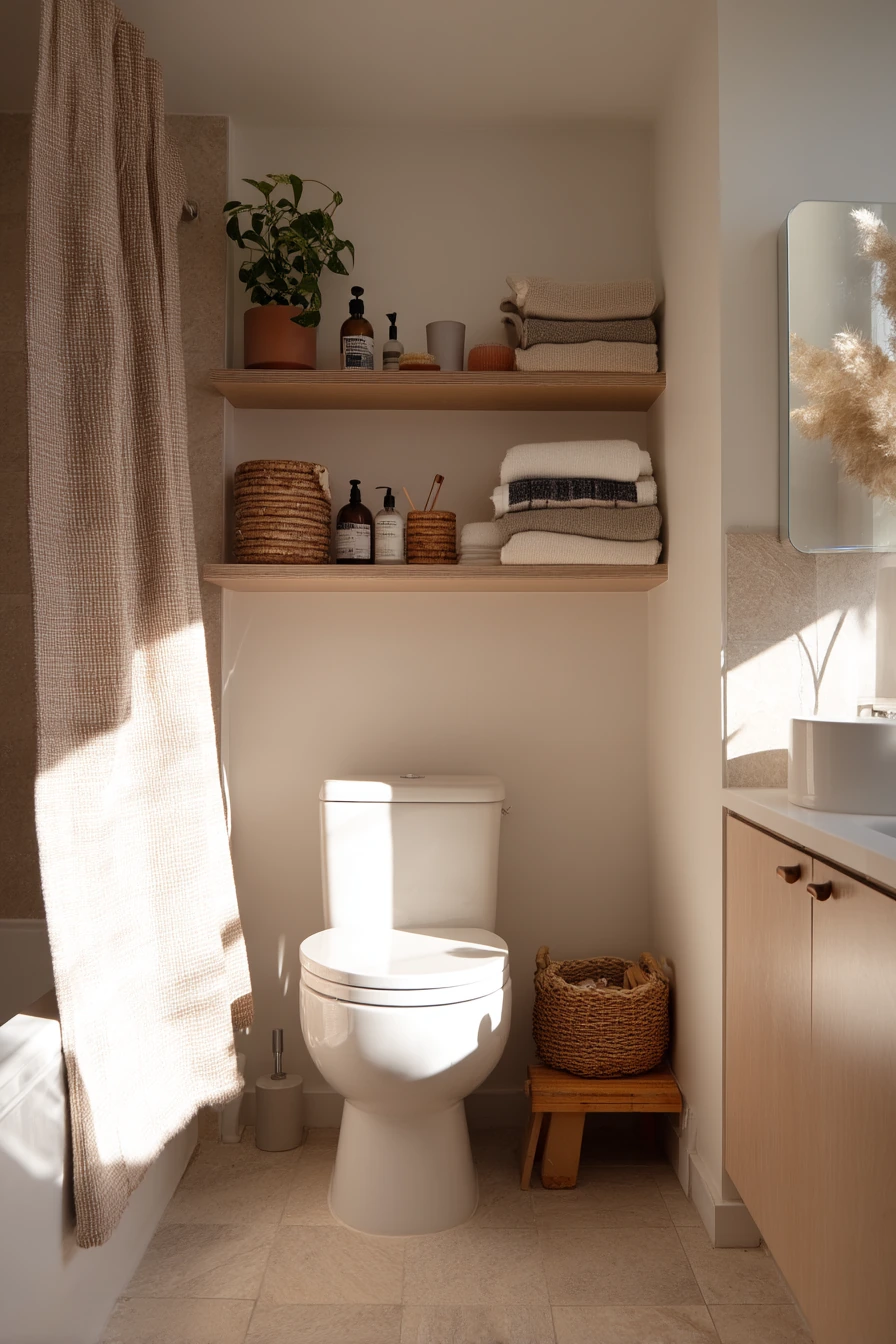
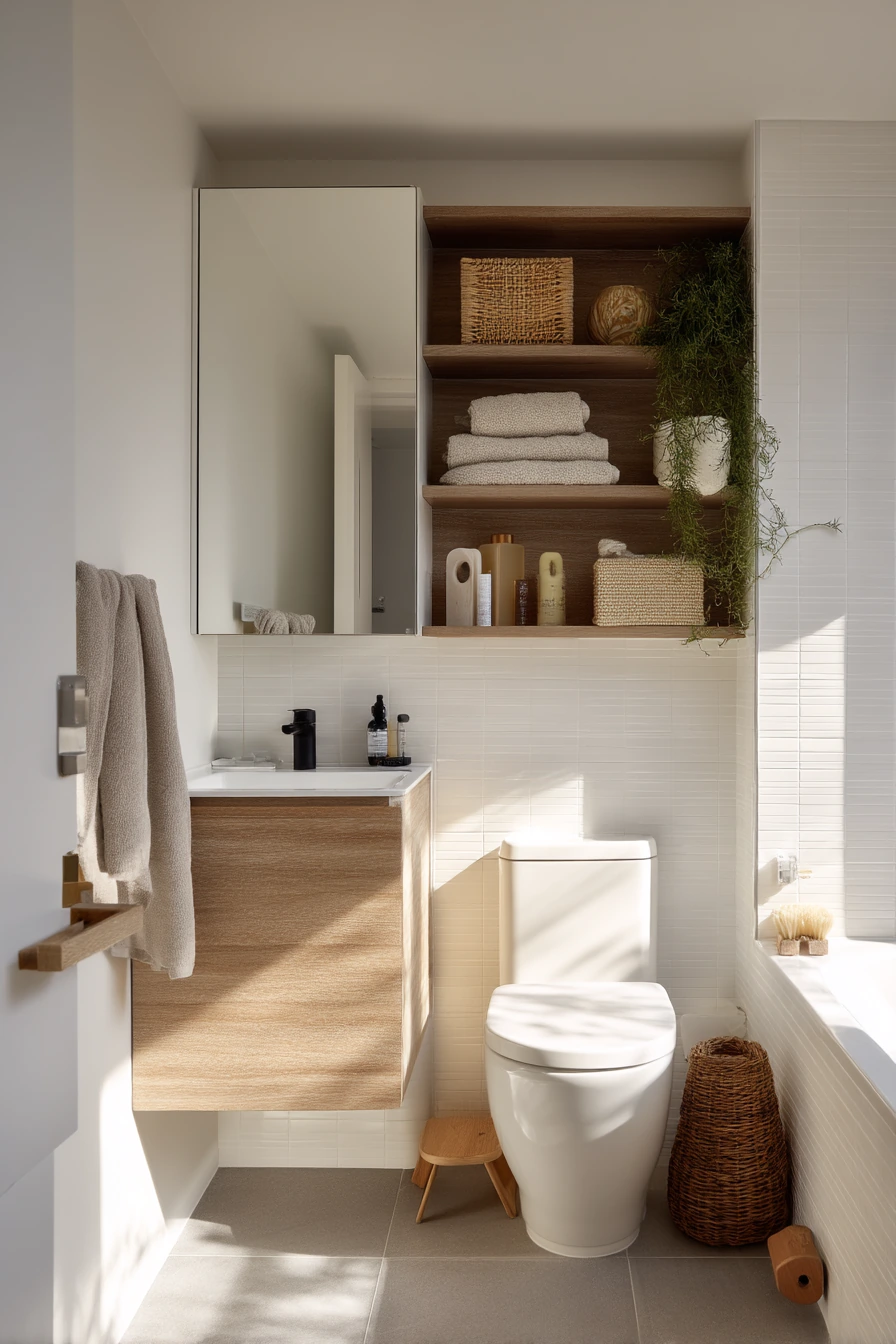
In a compact family bathroom, the goal is not perfect. It is to keep daily items close, while making cleanup quick. Start with the wall-mounted medicine cabinet for anything small and messy, like extra toothpaste, bandages, and half-used lotion. Use the inside shelves for items you do not want on the counter, but still need often.
Add slim oak shelving above the toilet for stacked towels in muted neutrals and a few basics like a toothbrush cup refill pack. Keep the shelf height easy for adults, and use the lower shelf for kids items. Under the sink, woven baskets work well because they hide clutter but still breathe, which helps in a humid room. Leave room for the kids step stool tucked beside the tub, so it is always ready but not in the walkway.
Keep the floor realistic but safe. If there is one bath toy left on the floor, add a small open bin near the tub so it can be tossed in fast. To style the space, use one small plant near the window so plant shadows on the tile add softness, and keep labels simple so the room does not feel busy.
- Group daily items in the medicine cabinet and move backups to baskets.
- Use slim shelving above the toilet for towels and small bins.
- Choose two towel colors in muted neutrals for a calmer look.
- Add a small open toy bin by the tub for quick pickup.
- Keep the step stool in one consistent spot beside the tub.
Pro Design Tip: Keep the top shelf for decor and the bottom shelf for use. One plant and one basket look clean, even in a busy family bathroom.
Budget Considerations: Wall shelves in oak can be pricey. A basic shelf in pine with a clear matte sealer can look similar for less.

2. Renter-Friendly Bathroom Organization With Hooks and Tension Storage
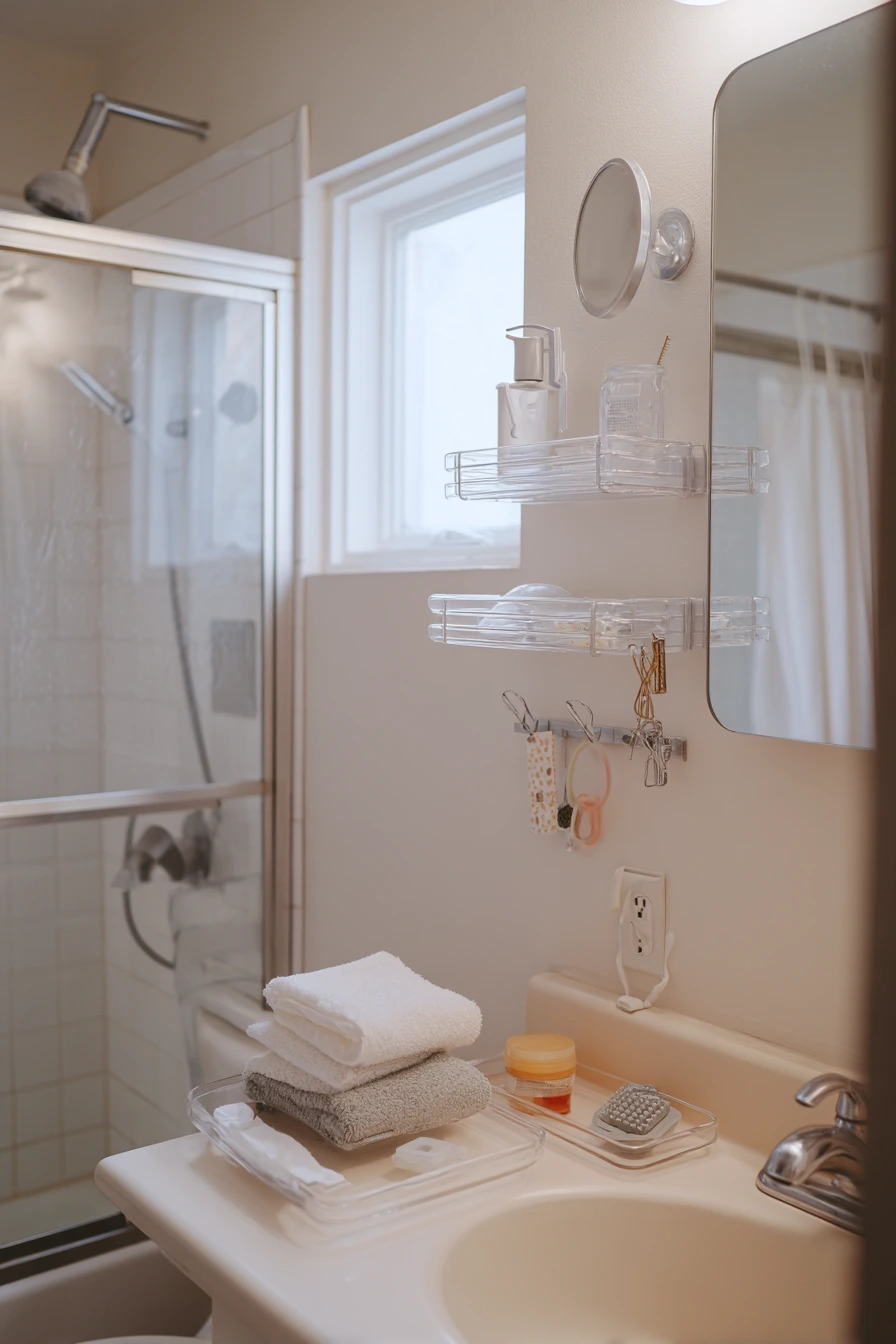
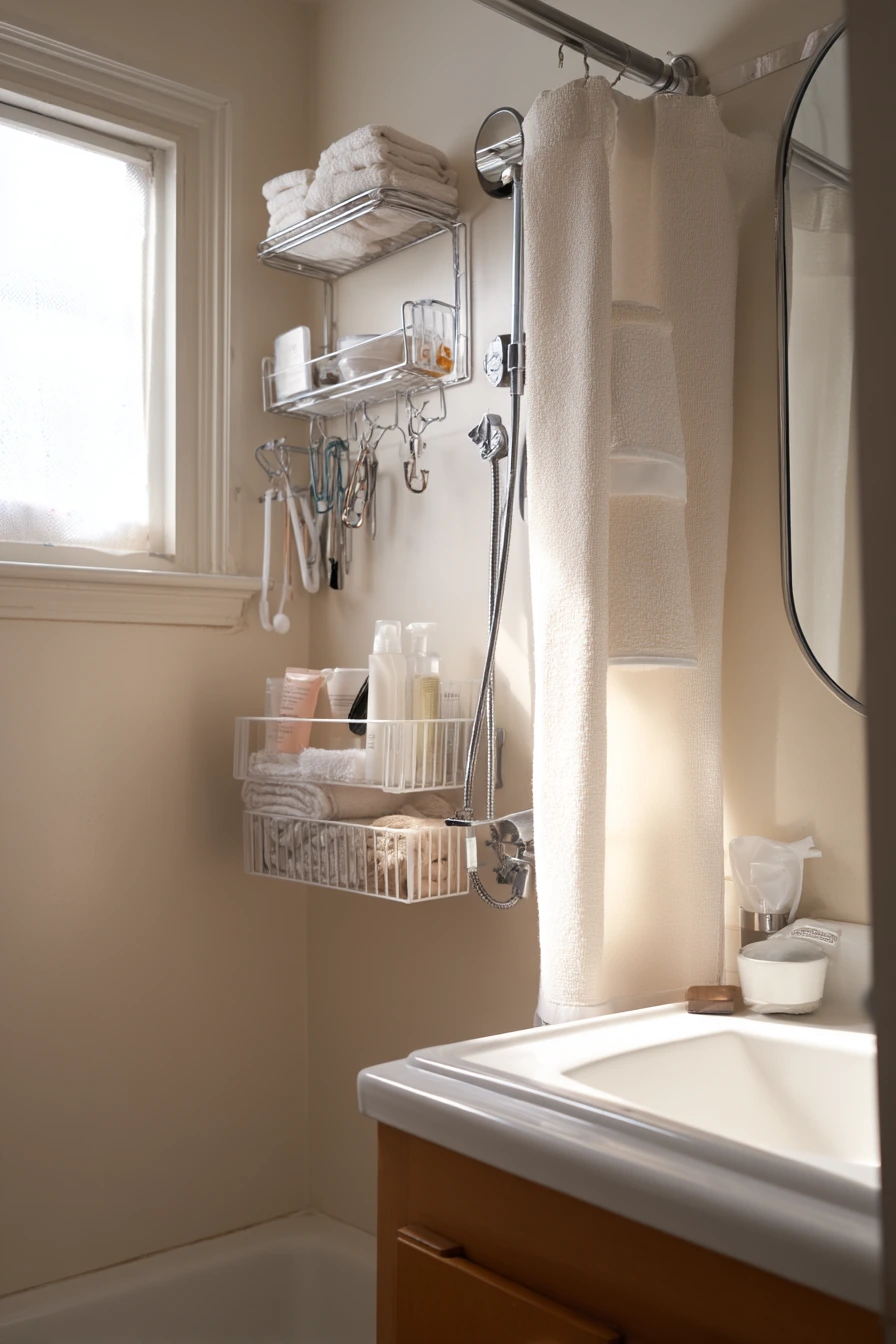
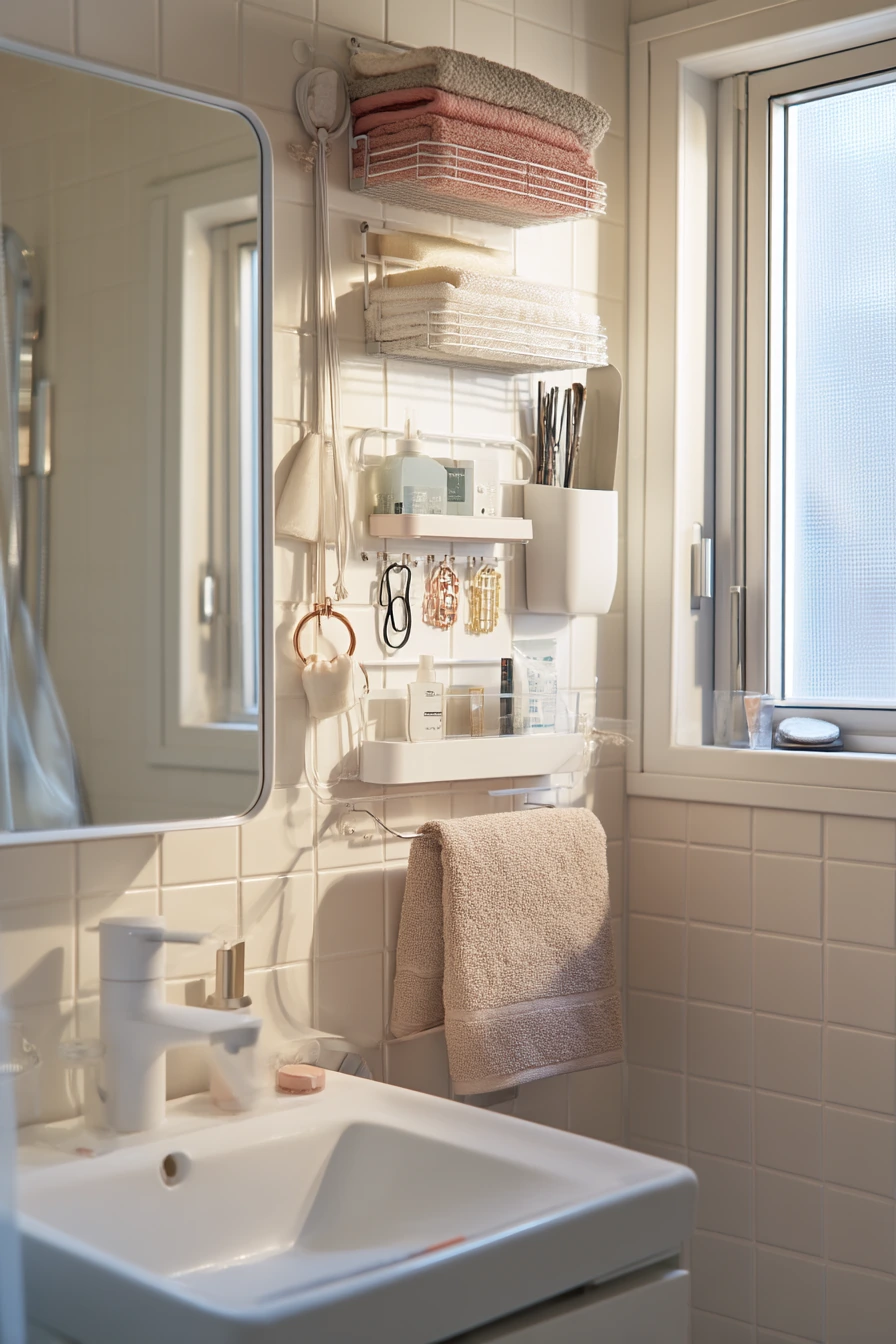
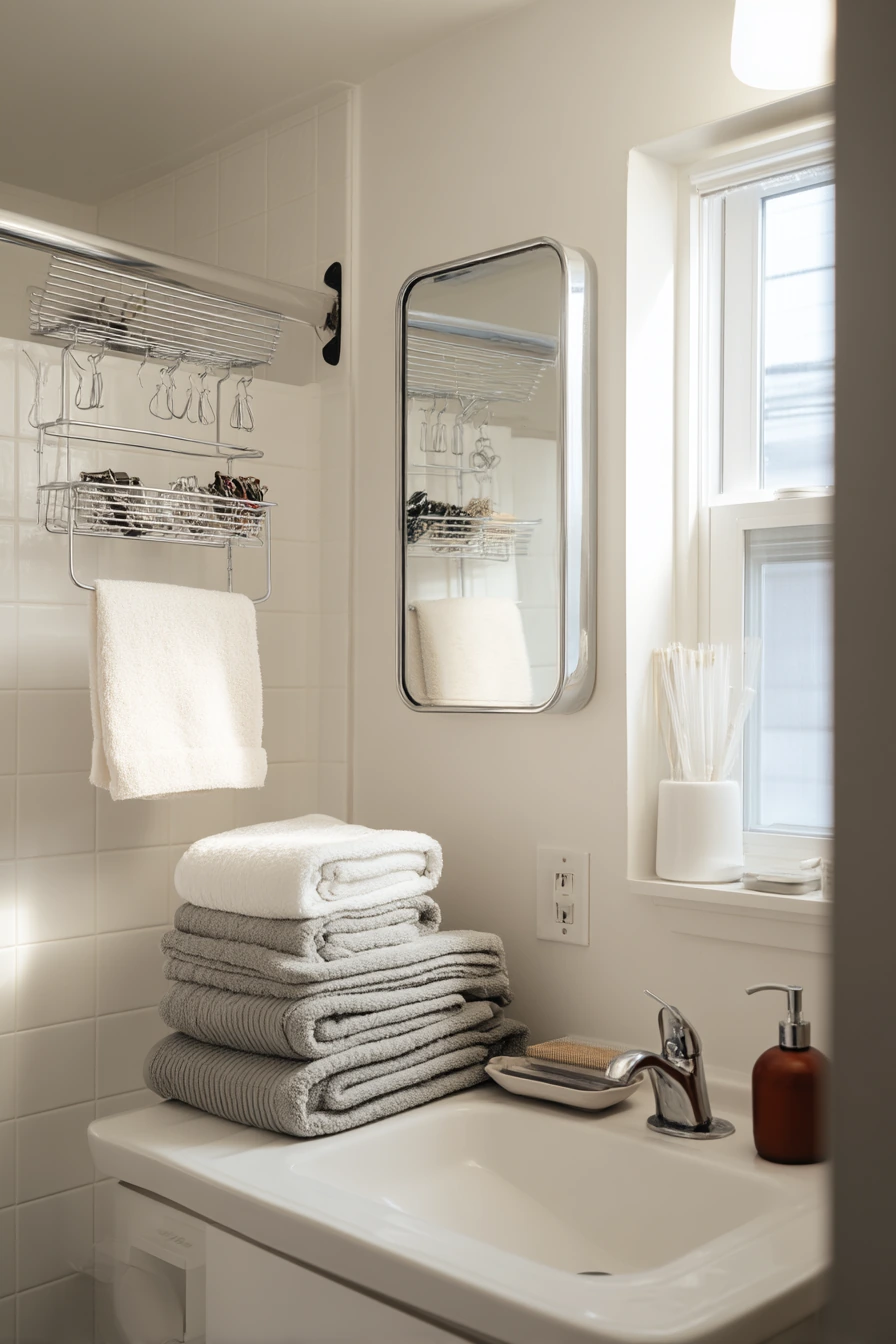
If you rent, you can still create strong bathroom organization without drilling. Peel-and-stick hooks are great for a slightly wrinkled hand towel, a robe, or a small basket with hair tools. Place hooks where they will not get soaked, so the adhesive lasts longer.
In the shower, a tension shower caddy keeps bottles off the tub edge and makes cleaning easier. Choose one with shelves that have holes so water drains. Over-the-door organizers are helpful for tall items like hair spray, extra shampoo, or a spare roll of toilet paper. For the vanity, clear trays keep things from spreading out. They also make it easy to wipe the counter because you can lift the whole tray.
A removable mirror shelf adds a spot for items used every morning, like deodorant or skincare. Store stacked washcloths in a small bin, and keep hair clips in a dish so they do not disappear. If a charging cable curls near the outlet, give it a home with a small adhesive cord clip. To style it, pick trays in the same shape and keep one small item, like a simple soap bottle, out in front.
- Use peel-and-stick hooks for towels and a small hanging basket.
- Add a tension shower caddy to clear the tub ledge.
- Hang an over-the-door organizer for backups and tall bottles.
- Corral daily items in clear trays on the vanity.
- Control charging cables with adhesive cord clips near the outlet.
Pro Design Tip: Use the same material family across the room, like clear trays and white labels, so modular storage looks planned instead of temporary.
Budget Considerations: Removable shelves and caddies add up. Start with one set of hooks and one clear tray, then add pieces only if you still need more space.
3. Shared Kids Bathroom Setup for Fast School Mornings

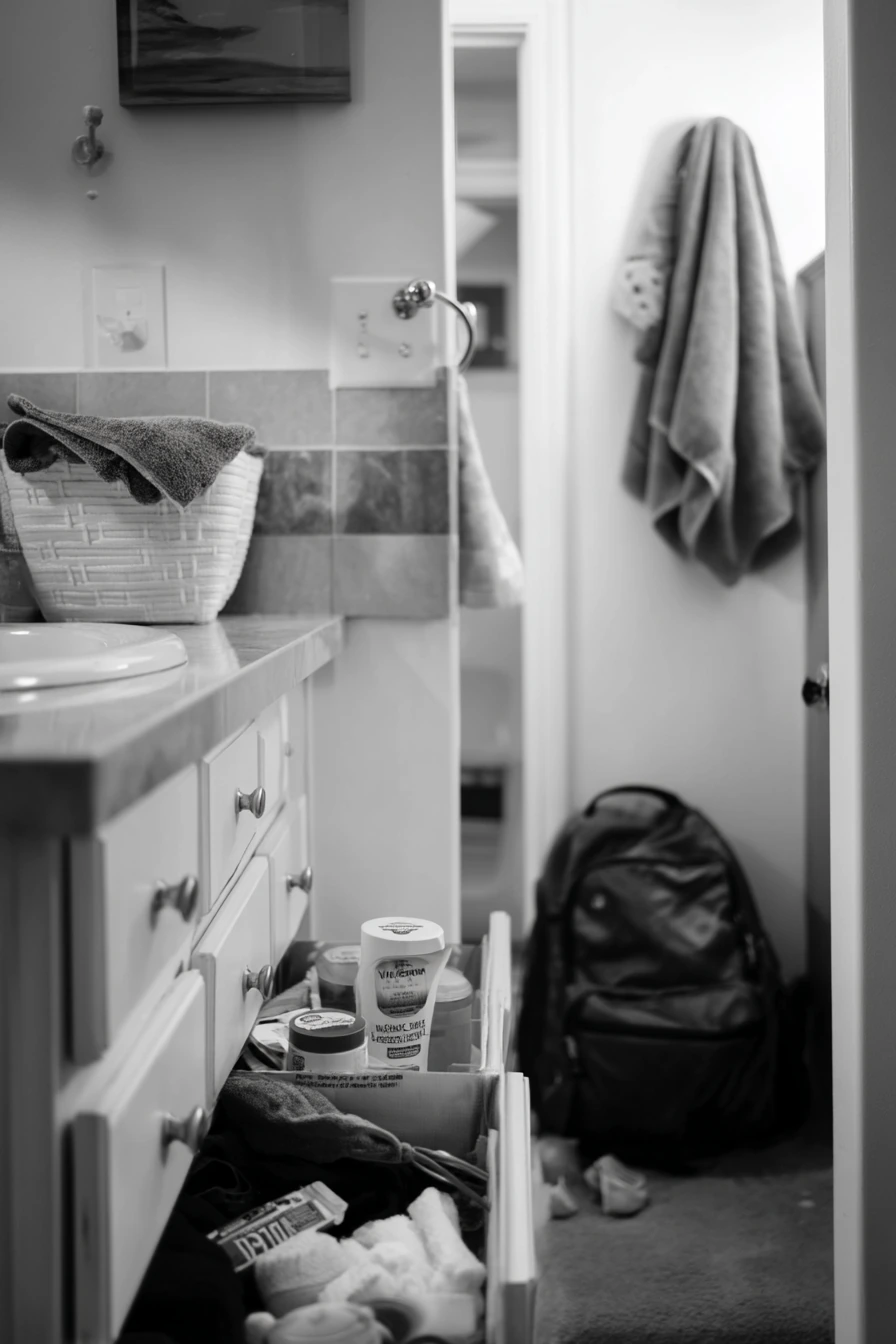
A busy shared bathroom before school needs clear ownership. Labeled bins for each child stop the mix-ups and reduce arguing. Put each bin at the same height so kids can reach their own items. A low basket of toothpaste and combs can sit on the counter or a lower shelf, so the basics are easy to grab without digging through drawers.
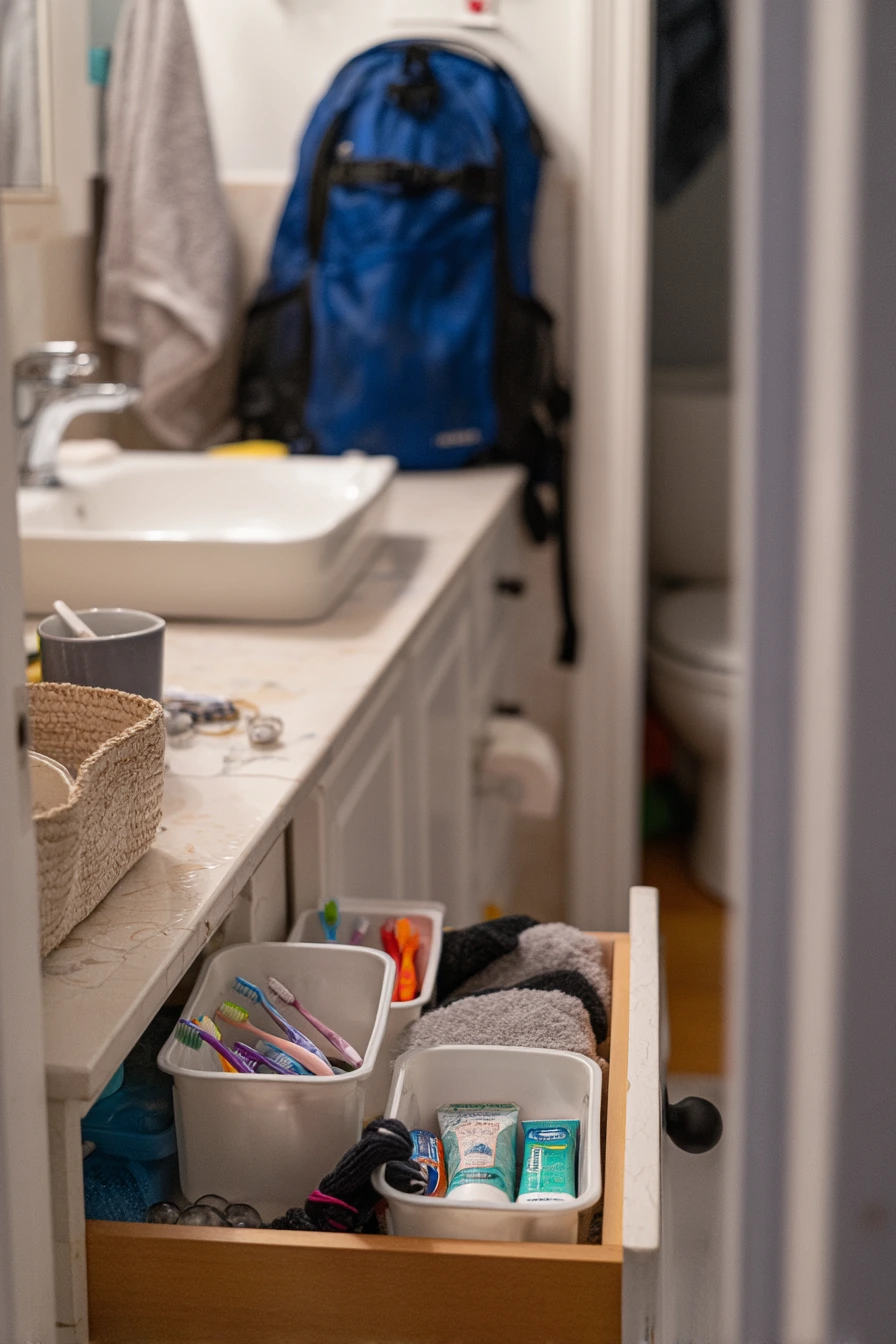
Use an open drawer system with simple dividers for small pieces like hair ties. If socks end up in the bathroom during a rush, give them a small “get ready” spot in the drawer, then move them back later. Keep toothbrushes in a ceramic cup, but separate them with a simple divider insert so they do not touch. If there is a damp towel on a hook, add a second hook so one towel can dry while the other is used.
Accept that the bathroom will show signs of life, like tiny water spots on the counter or a backpack strap peeking from the doorway. Your system should still work on those days. For styling, keep labels the same font and color, and choose one basket type throughout so the room looks calm even when it is moving fast.
- Create one labeled bin per child for daily items and small tools.
- Place a shared low basket for toothpaste, combs, and face wash.
- Add drawer dividers for hair ties, clips, and small extras.
- Separate toothbrushes inside a ceramic cup with an insert.
- Use two hooks so damp towels can dry better.
Pro Design Tip: Make the morning path simple: bin, sink, hook. When each step has a home, kids can reset the space on their own.
Budget Considerations: Custom labels can be expensive. Use painter’s tape and a marker first, then upgrade to waterproof labels once the system proves it works.

4. Primary Bathroom Vanity Organization With Trays and Calm Styling

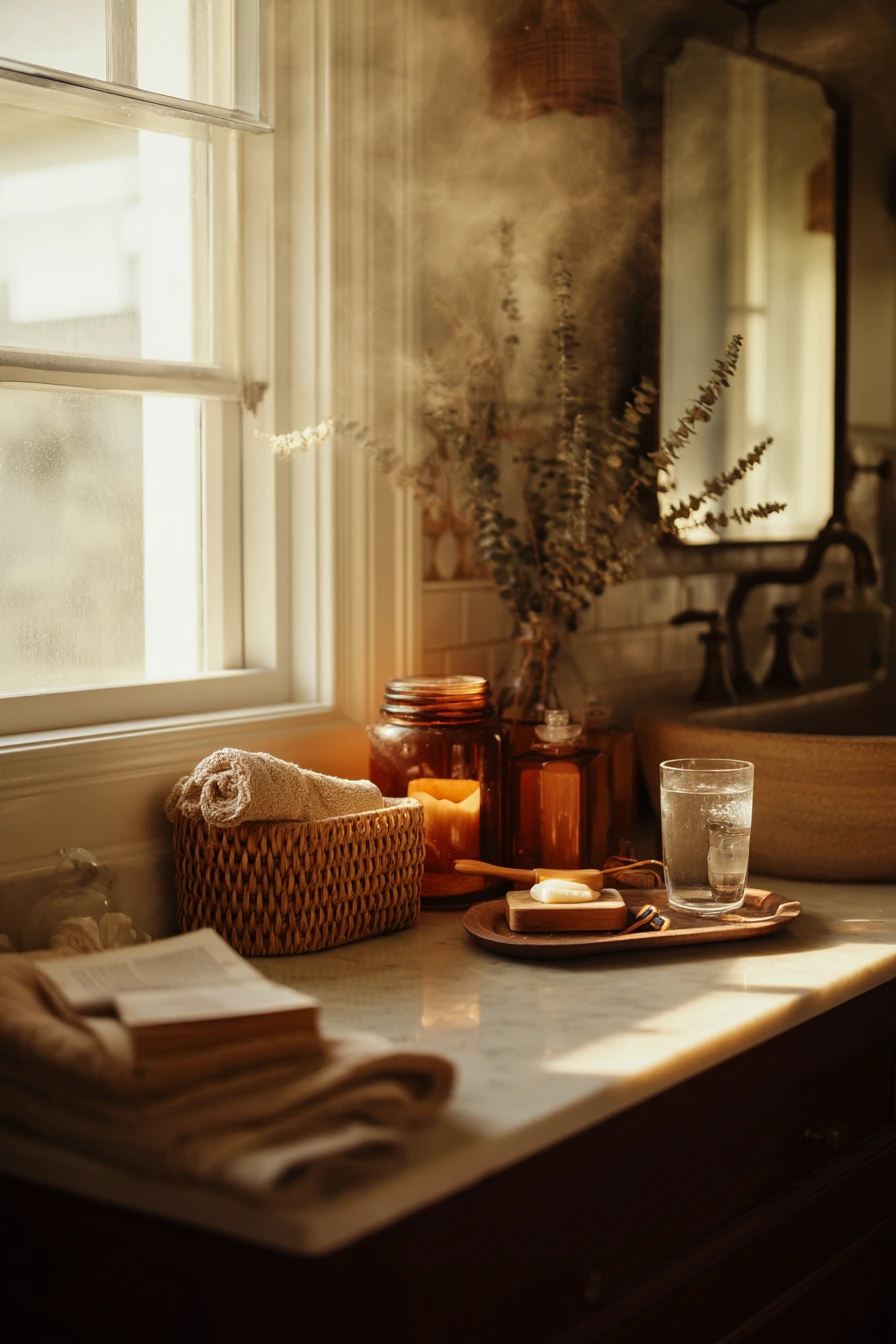
A primary bathroom vanity can feel organized and still look warm. Start with a small tray for daily skincare so bottles stay together and do not leave rings on the counter. Keep only what you use each day on that tray. Everything else should live in a drawer, cabinet, or a basket.
Amber glass jars are useful for cotton pads and small items because they look cleaner than torn packaging. Rolled hand towels in a shallow basket save space and look neat, even if one is slightly uneven. A linen basket can hold backup items like extra soap, travel minis, or an extra candle. If you keep reading glasses by the sink, give them a dedicated dish or tray corner so they do not get splashed.
This kind of space often has real-life details, like one open novel near the sink or a water glass half full. Plan around those items. Leave one clear zone on the counter so it still looks tidy. Add soft eucalyptus stems in a small vase for color, and let warm lamp light mix with window light for a calm feel. The key is fewer, better groupings, not more storage pieces.
- Use one small tray for the exact skincare you use every day.
- Store cotton pads and swabs in amber glass jars to reduce visual clutter.
- Roll hand towels and place them in a shallow basket near the sink.
- Keep reading glasses in a dish so they stay dry and easy to find.
- Leave one empty counter corner as a built-in “drop zone.”
Pro Design Tip: Pick one hero texture, like linen or amber glass, and repeat it twice. Repetition makes the vanity look styled without adding more items.
Budget Considerations: Amber jars and trays can be thrifted. If buying new, start with one tray first, then add jars only if you need them.

5. Under-Sink Bathroom Cabinet Organization With Clear Bins and Labels


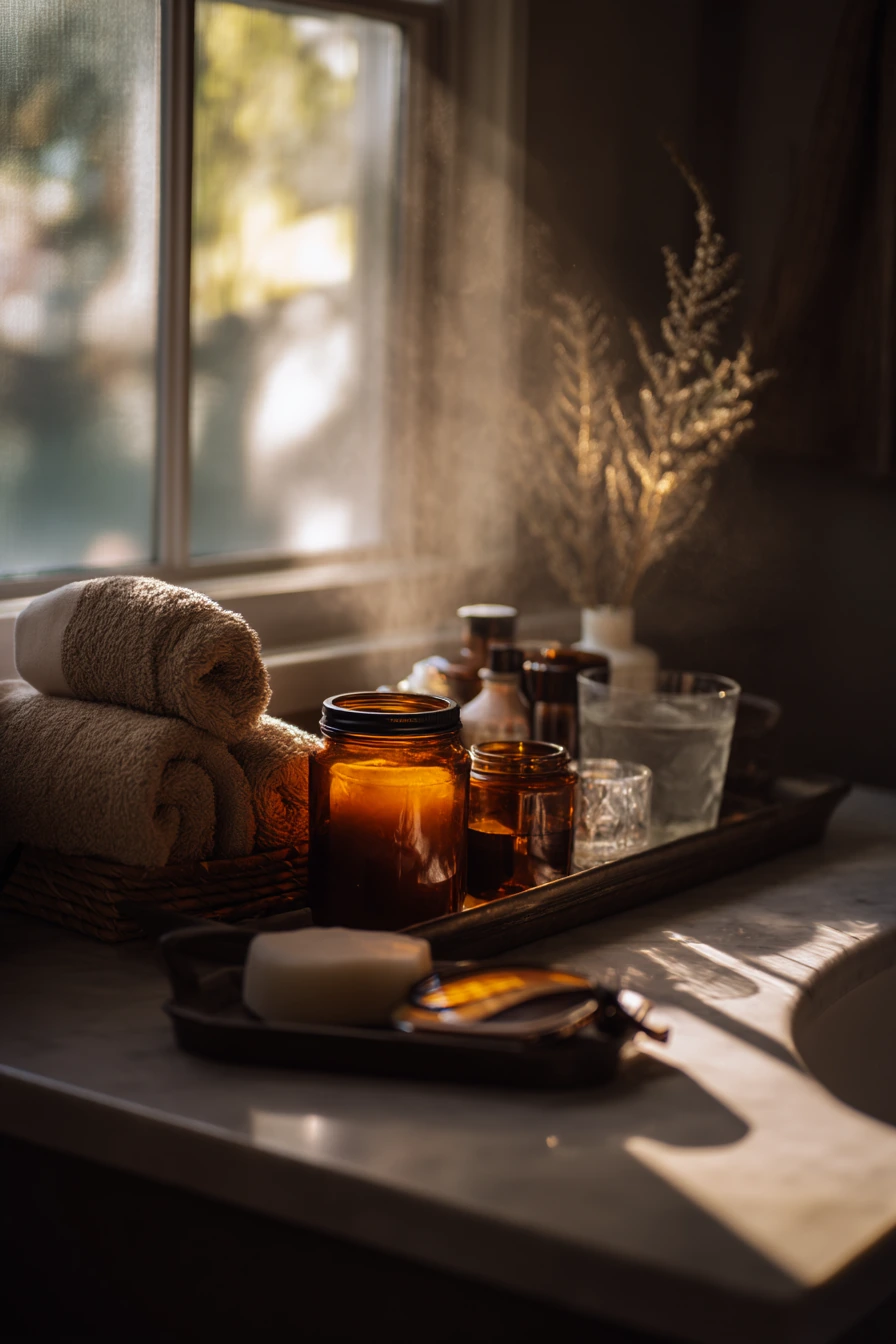
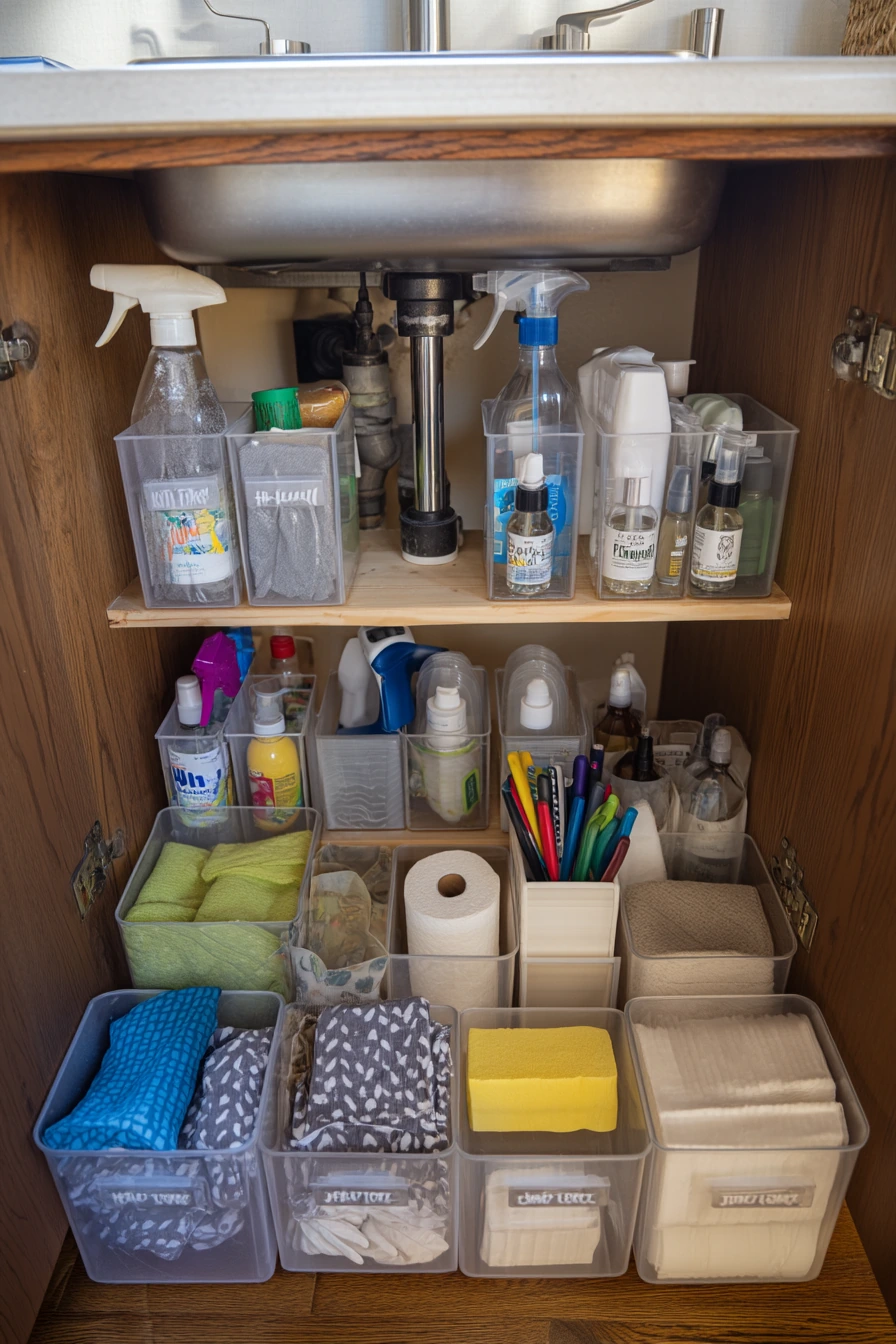
Under-sink storage is often the most wasted space, mostly because plumbing blocks the middle. Work around it with clear bins on the left and right, and keep the center for tall items or a narrow stackable drawer unit. Clear bins help you see what you have, so you do not buy doubles of backup soap or sprays.
Create zones: one bin for cleaning supplies, one for extra toilet paper, and one for personal care backups. Labeled spray bottles look neat and reduce confusion, especially in a shared home. If you store dish gloves or cleaning gloves, hang them on a hook inside the cabinet door so they can dry. Keep a folded microfiber cloth in the same spot, so you can wipe the sink fast without hunting.
Real cabinets are not perfect. A storage bin slightly crooked is normal. The system should still work when you are in a hurry. Keep heavy items low, and avoid stacking tall bottles where they can fall. For styling, use matching labels and bins in the same shape so the area feels tidy, even with plumbing visible and faint daylight spilling in.
- Use clear bins on both sides to work around visible plumbing.
- Add stackable drawers for small backups and refill packs.
- Label spray bottles and keep them in one cleaning zone.
- Store extra toilet paper in a dedicated bin so it stays dry.
- Hang gloves on a hook and keep a microfiber cloth nearby.
Pro Design Tip: Measure the cabinet depth and buy bins that leave a finger-width gap. That small gap makes it easier to pull bins out without scraping the frame.
Budget Considerations: Acrylic bins cost more than basic plastic. Start with inexpensive clear shoe boxes and upgrade only the bins you handle every day.
6. Bathroom Counter Organization With a Rotating Caddy and Small Jars

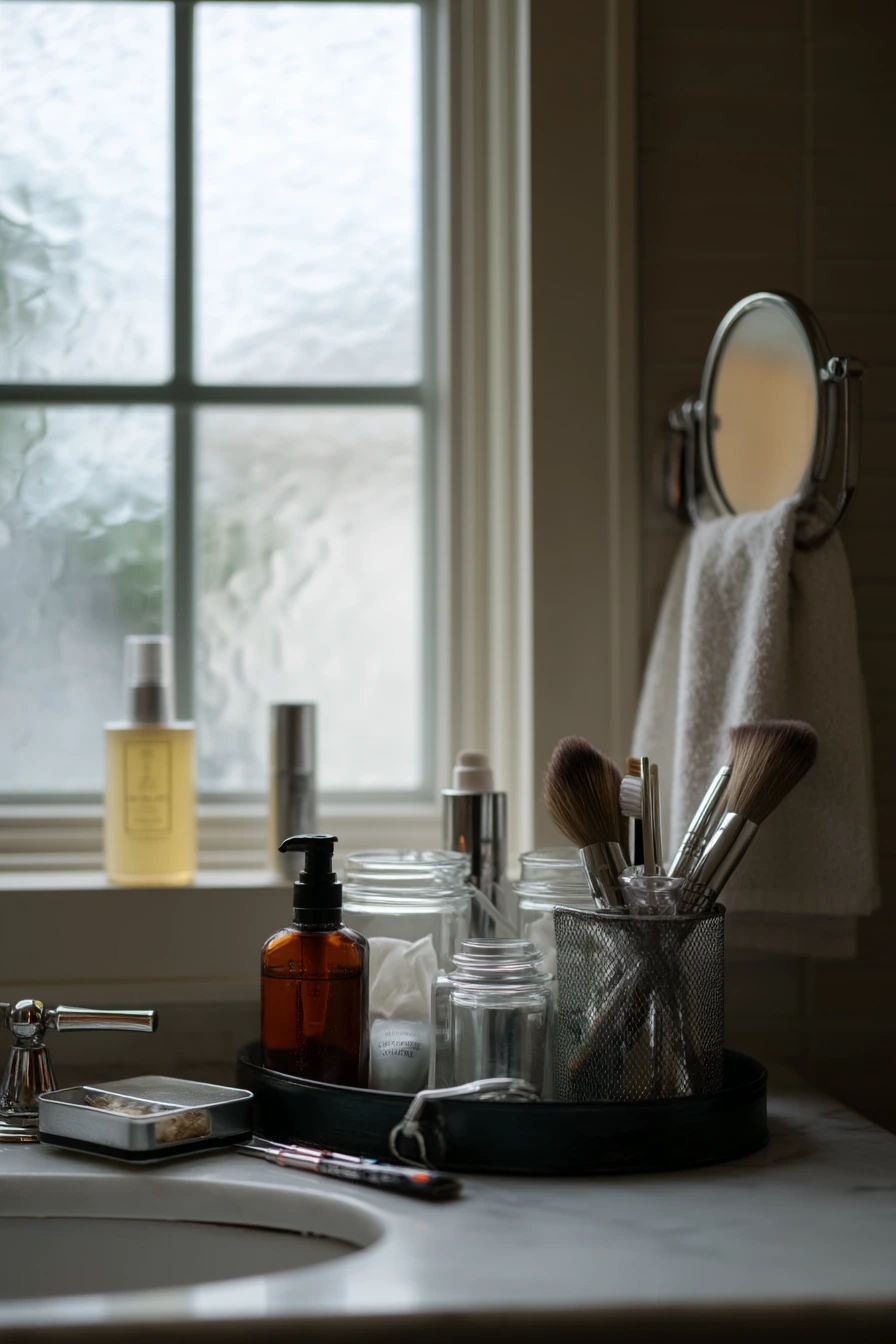
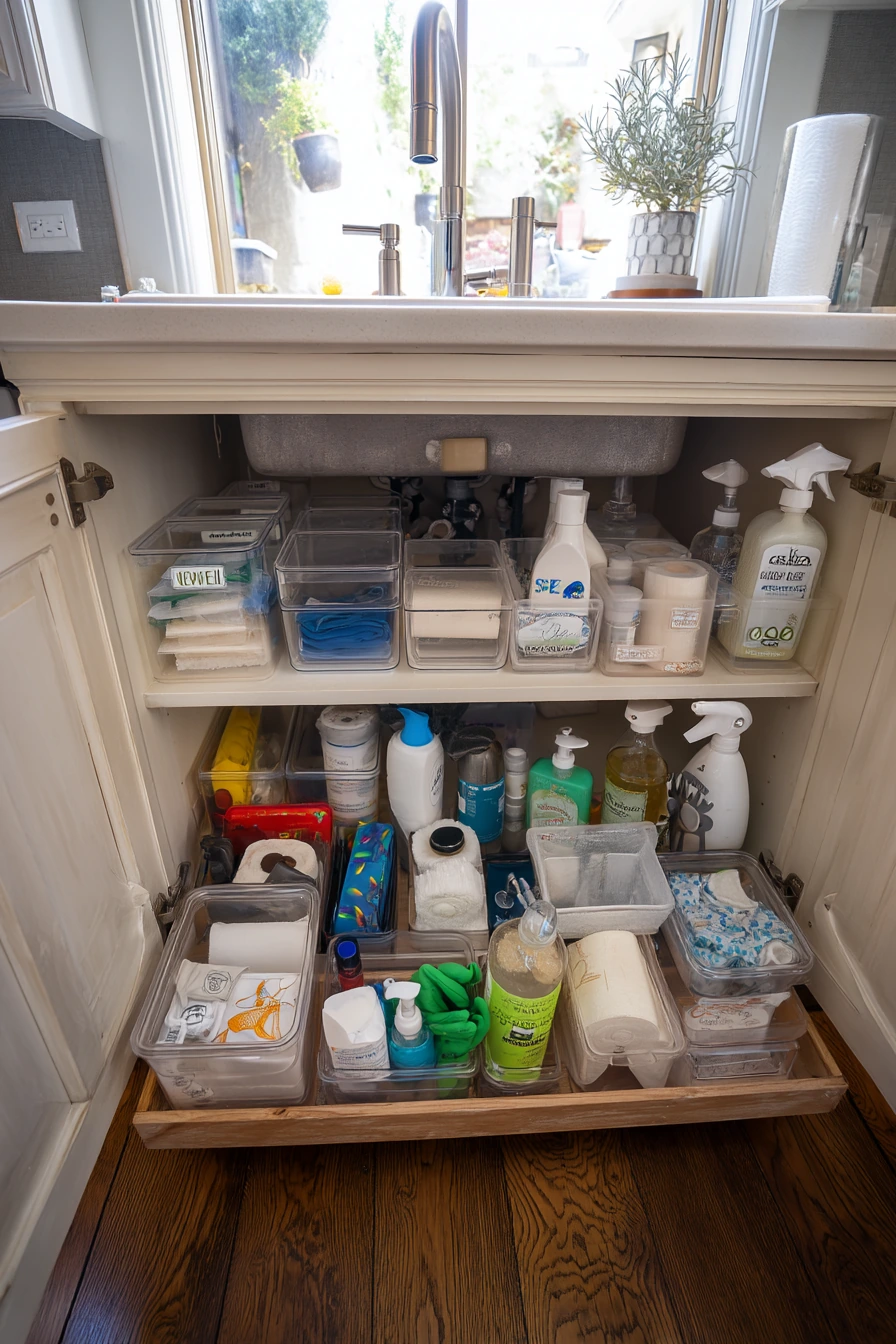
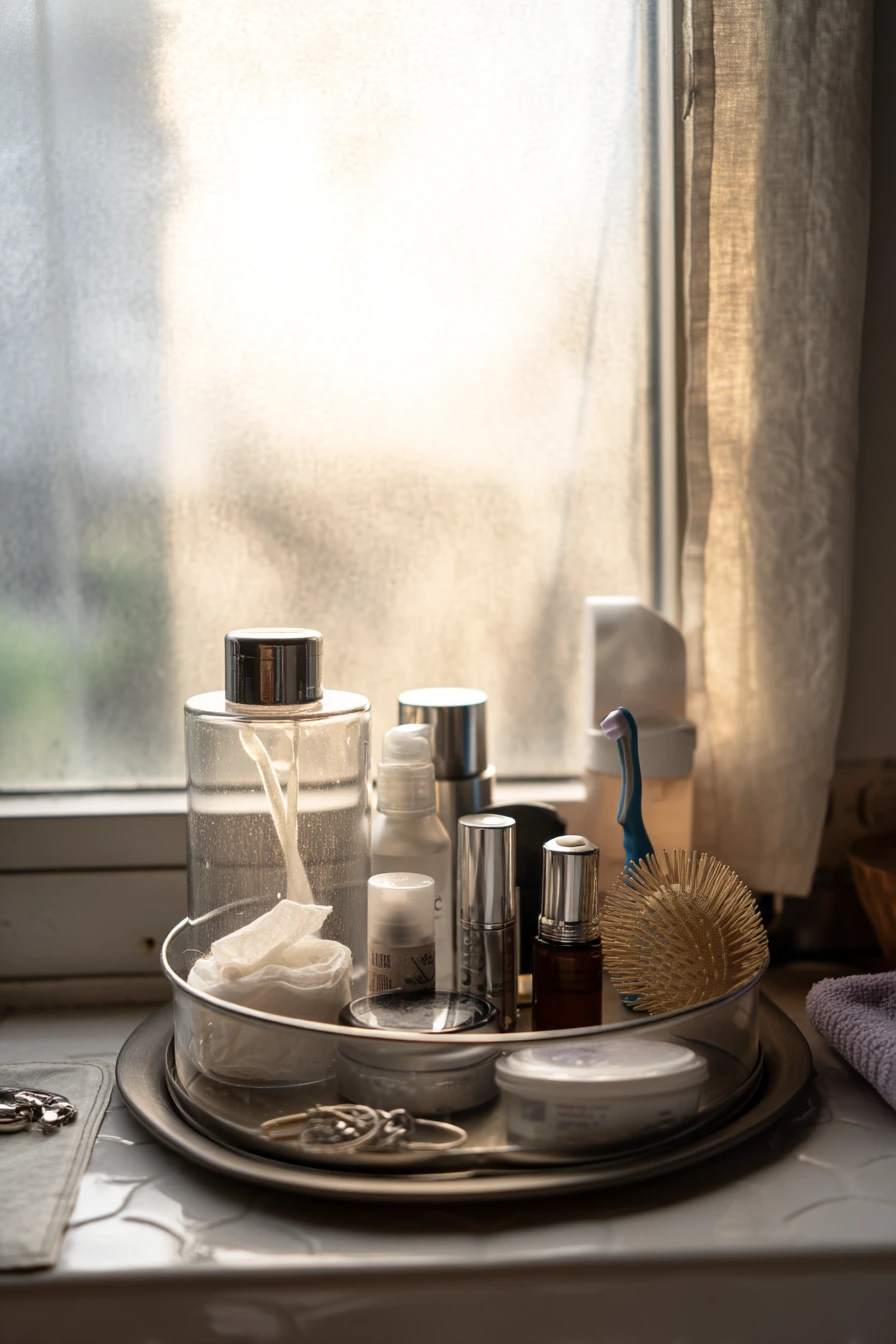
A lived-in bathroom counter can look clean when you limit what stays out. A rotating caddy is one of the easiest tools because it keeps daily essentials together and turns, so you do not knock things over. Put your most-used items, like serum bottles and hand cream, on the caddy. Keep the rest stored away.
Glass jars for cotton pads and Q-tips reduce box clutter and make restocking simple. Add a small tray for rings and a watch, especially if you take them off to wash your hands. This stops jewelry from rolling into the sink area. If you have a toothbrush charger plugged in beside the mirror, keep it on a small waterproof mat so water does not sit underneath.
Real bathrooms have little moments, like a damp face cloth or a lipstick cap missing. Plan for that by adding one small “catch tray” that can hold random items for the day. Then empty it at night. To style the counter, choose two main materials, like clear glass and one neutral tray, and keep space around the faucet so the counter still feels open.
- Use a rotating caddy for the items you touch every morning and night.
- Decant cotton pads and swabs into glass jars for a cleaner look.
- Add a small tray for rings, watch, and tiny items.
- Keep the toothbrush charger on a mat to protect the counter.
- Create a small catch tray for items that do not have a home yet.
Pro Design Tip: Give yourself “one surface rule.” Only one organizer lives on the counter, and everything else must fit inside it.
Budget Considerations: Rotating caddies range in price. A basic lazy Susan from the kitchen aisle works the same and is often cheaper.

7. Zone-Based Bathroom Organization for Families Sharing One Space


When multiple people share one bathroom, zones prevent clutter. Divide the space into clear areas: one side for skincare, one for grooming, and one for kids. This can be as simple as giving each person a drawer section and one counter corner. A mirrored cabinet above a double sink is perfect for hiding items that do not need to be seen all day.
Open shelving with baskets helps when you need grab-and-go storage. Use baskets for categories like “kids hair,” “first aid,” and “extra washcloths.” Roll towels by color, so each person can tell what is theirs. Keep grooming tools like a shaving kit and hair dryer in a single bin, and coil the cord neatly with a reusable tie so it does not sprawl across the counter.
Family bathrooms show real use, like a toothpaste smear on a faucet. Make cleaning easier by keeping wipes or a microfiber cloth in an easy spot, and by limiting what sits around the sink. For styling, choose matching baskets and simple labels. Add a small toy bin by the tub so bath items stay contained, even on busy mornings with natural light coming in.
- Assign sink-side zones: skincare, grooming, and kids items.
- Use the mirrored cabinet for clutter-prone small items.
- Place baskets on open shelves for category storage.
- Roll towels by color so everyone knows what to grab.
- Store hair tools in one bin and secure cords with a tie.
Pro Design Tip: Make zones visible. Use the same basket size for each zone so the shelf looks even and the system is easy to keep up.
Budget Considerations: Matching baskets can be costly. Mix low-cost bins, then unify the look with the same label style and one towel color set.


8. Tiny Powder Room Organization With Vertical Storage and Guest Touches

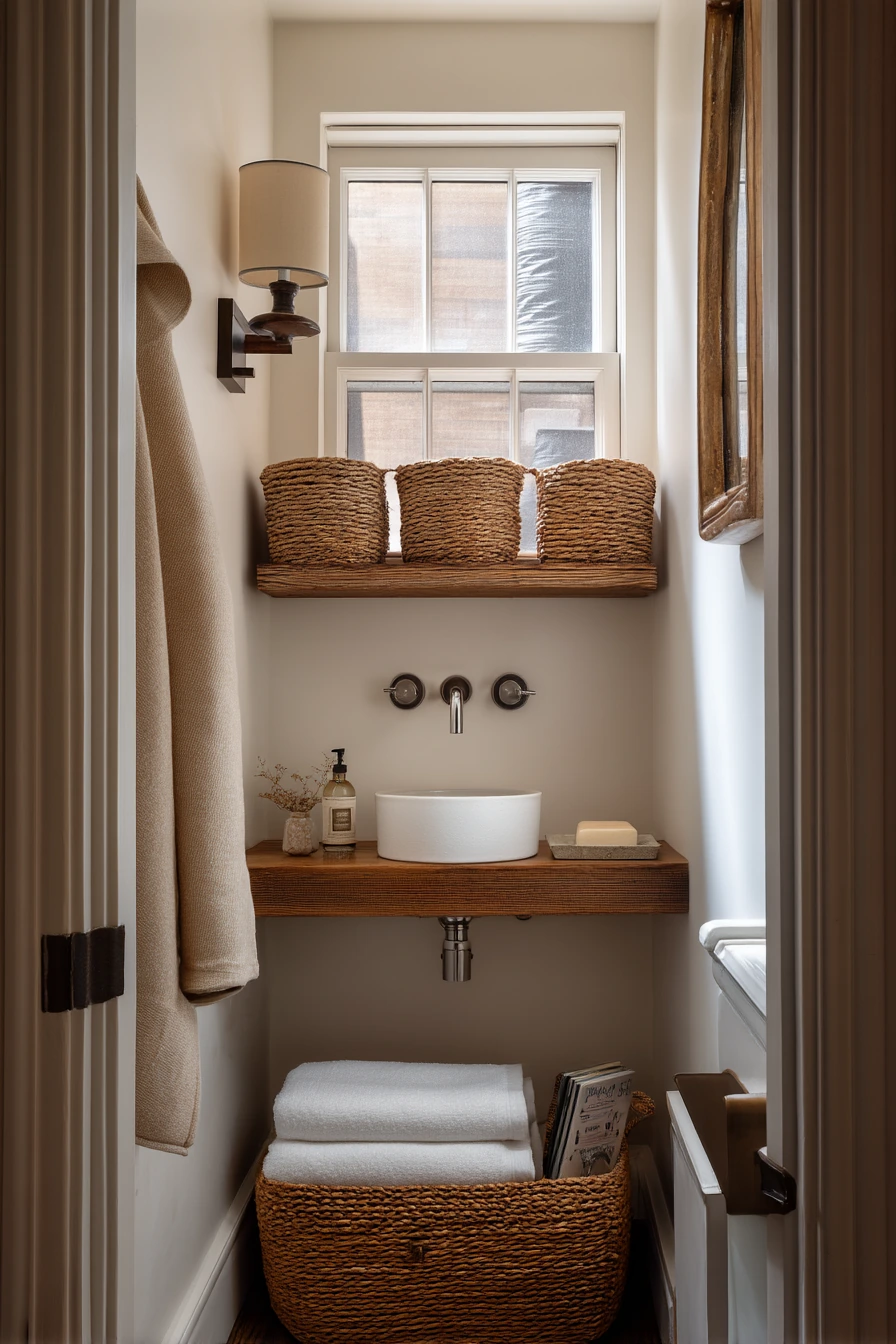
A tiny powder room needs vertical storage because floor space is limited. A narrow wall shelf can hold hand soap refills, a small basket of guest towels, and a simple vase. Keep items shallow so they do not feel crowded. If you have a floating sink, use the space above and around it, not below it.
For tissues, tuck extra tissue in a woven holder so it looks intentional and stays close to the toilet. Add a small tray for hand soap and lotion so drips stay contained. If you have a bench or small stool, a magazine stack under it can make the room feel welcoming without taking up much room. Use the back of the door for a hook, but set a rule that only one coat can hang there. Too many layers make the room look messy fast.
To style a powder room, choose one metal finish and stick to it, like black or brushed nickel. Keep the color palette soft so the room feels airy in lamp glow and faint window light. Use one small scent item, like a candle, but keep it off the sink edge so it does not get knocked over.
- Add a narrow wall shelf to use vertical space above the sink or toilet.
- Use a slim basket for guest towels so they are easy to grab.
- Store extra tissue in a woven holder for a cleaner look.
- Place magazines under a bench to keep surfaces clear.
- Limit the door hook to one coat to prevent visual clutter.
Pro Design Tip: Use “tiny layers.” One shelf, one basket, one vase. In a powder room, fewer items read as more space.
Budget Considerations: Floating shelves vary in price. A basic picture ledge can work as a narrow shelf and often costs less.


9. Vanity Drawer Organization With Acrylic Dividers and Height Sorting


Vanity drawers can become a junk zone without dividers. Acrylic dividers are helpful because you can see everything at a glance. Start by emptying the drawer, then sort items into simple groups: skincare, makeup, hair items, and travel minis. Put the items you use most in the front so you do not dig around.
Line skincare up by height so taller bottles sit in the back and shorter ones in front. This keeps labels visible and helps you notice when you are running low. Keep makeup brushes in a ceramic cup inside the drawer if it fits, or use a brush divider so bristles do not bend. Hair ties and lip balm need small compartments, or they will spread across the drawer fast.
Real life shows up, like one open drawer above a slightly messy sink, a towel edge hanging loose, and a phone on charge. Make the drawer system easy enough that you can close it in one motion. Avoid overfilling; leave one empty section for new items so the system can adapt. To style it, choose dividers with clean lines and keep packaging colors limited by using small refill bottles when possible.
- Empty the drawer and sort into skincare, makeup, hair, and travel categories.
- Use acrylic dividers to keep each category in its own lane.
- Arrange skincare by height so everything is easy to see.
- Store brushes upright in a cup or in a dedicated brush section.
- Leave one divider space empty so the system stays flexible.
Pro Design Tip: Pick divider sizes that match your products, not the other way around. Measure your tallest bottle before you buy inserts.
Budget Considerations: Acrylic dividers can be expensive. Start with inexpensive drawer trays, then upgrade only the drawer that you use every day.


10. Weekend Bathroom Reset Routine With Baskets, Hampers, and Backups


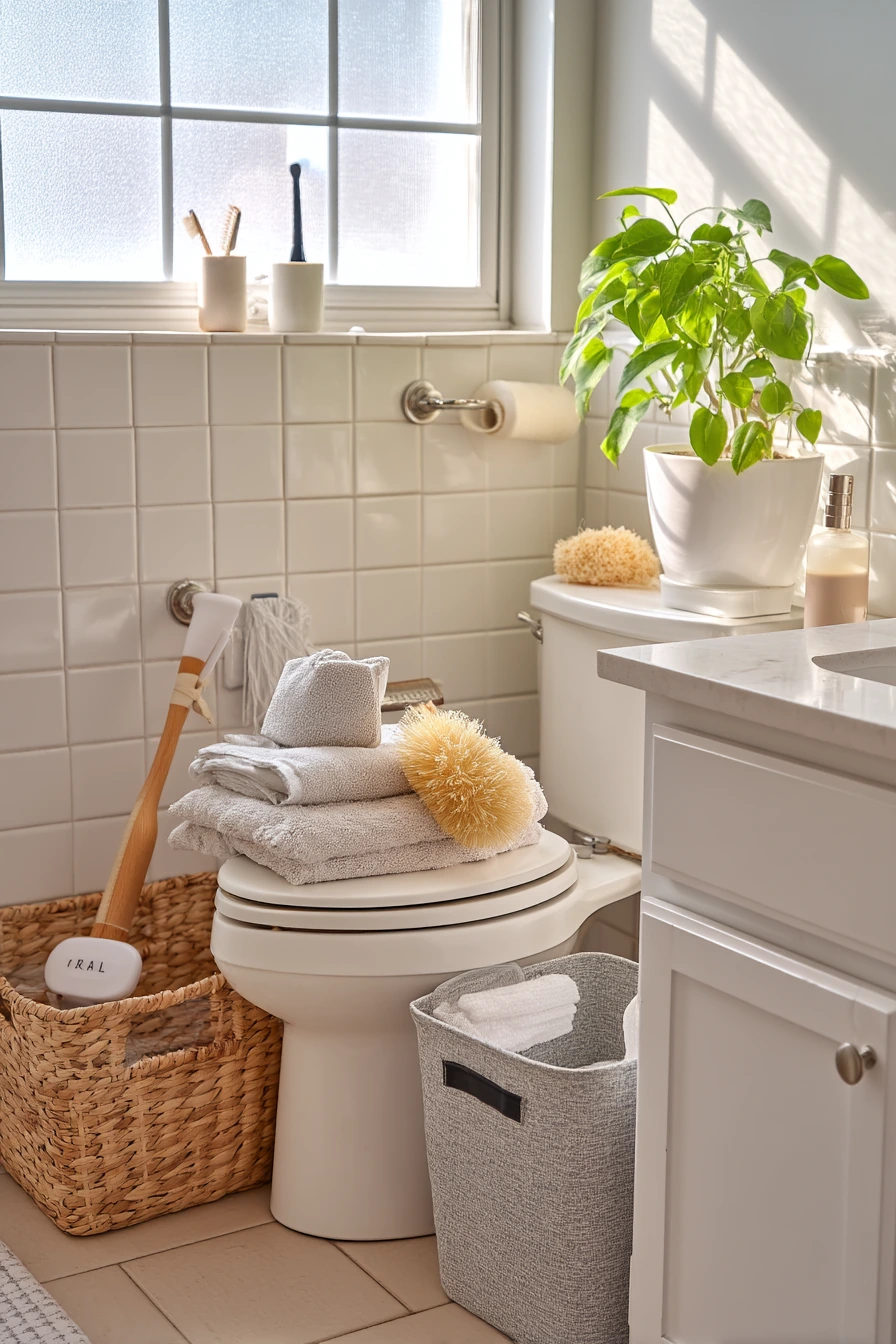
A weekend bathroom reset keeps clutter from building up. Start with the easy wins: swap in fresh towels, empty the trash, and wipe the counter. Then do a quick scan of the shower and tub area. If you have one wet loofah, hang it where it can dry, and keep a shower squeegee on the tile so you can do a fast swipe after showers.
Use labeled baskets for bath toys so kids can help reset the room. A laundry hamper tucked beside the vanity is a simple fix if clothes and towels pile on the floor. Store the toilet brush discreetly in a holder that fits behind the toilet or inside a cabinet. Keep backup paper in a lidded bin so it stays clean and looks better than loose rolls stacked on the floor.
Add one small houseplant where it can catch window shadows, and keep the rest of the surfaces open. This makes the bathroom feel fresh without extra decor. If you do this reset once a week, your daily routine becomes easier because everything already has a place. The goal is a bathroom that can handle real life and still look good in soft late-morning light.
- Replace towels and restock hand soap during your weekly reset.
- Sort bath toys into labeled baskets for quick cleanup.
- Keep a hamper near the vanity to catch towels and clothes.
- Store backup toilet paper in a lidded bin for a cleaner look.
- Use a shower squeegee to reduce water marks and buildup.
Pro Design Tip: Create a 10-minute reset checklist and keep it inside a cabinet door. When it is visible, you are more likely to keep up with it.
Budget Considerations: Lidded bins and hampers can be found secondhand. Choose a neutral color so mismatched pieces still look calm together.
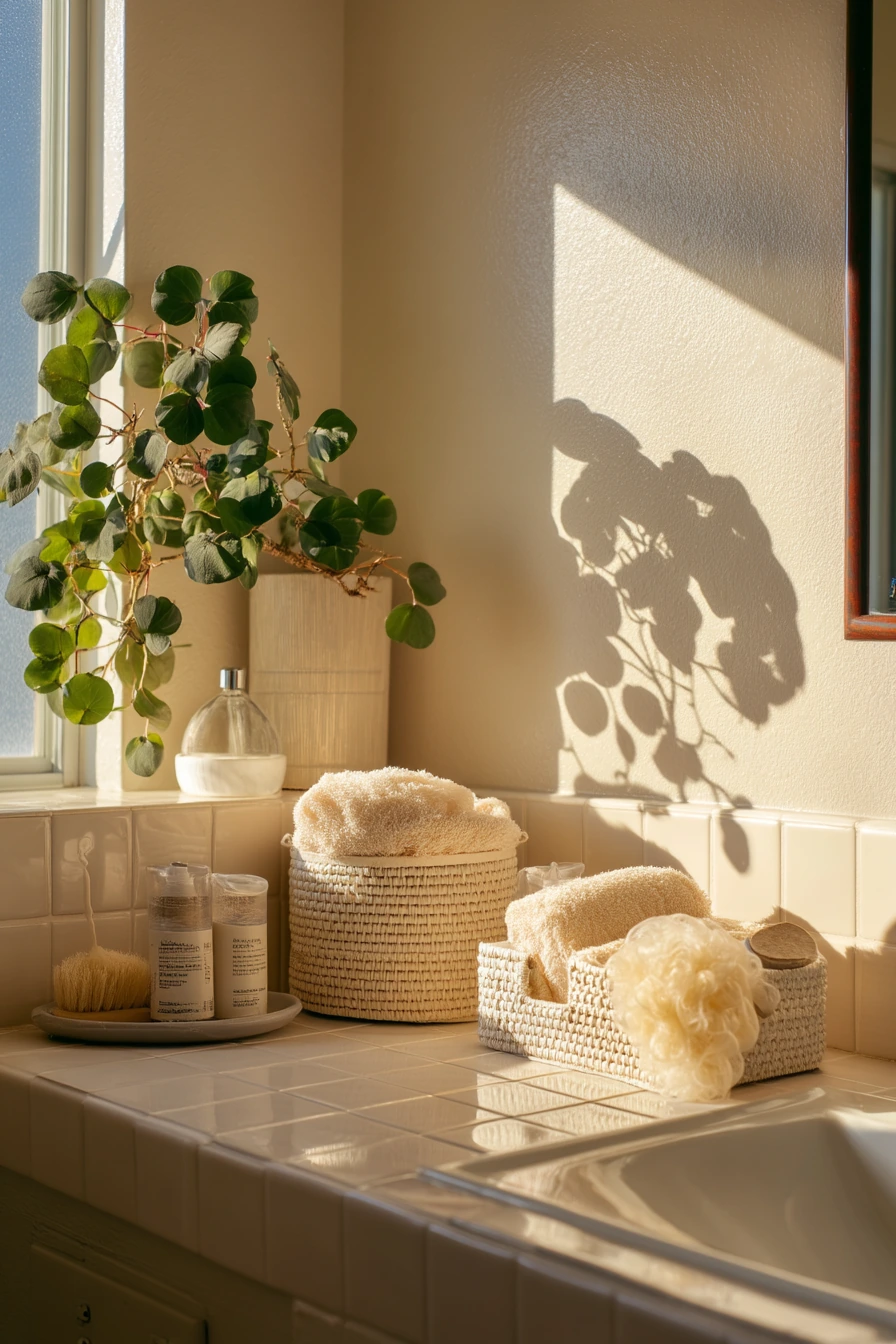
Small changes can make a big difference in bathroom organization. When you use zones, trays, bins, and hooks, daily clutter stays contained and cleanup takes less time.
Start with one problem area, like the counter or under-sink cabinet, and build from there. Keep the system simple enough for real life, including kids, renters, and shared spaces.
FAQ
1. What is the fastest way to organize a bathroom? Clear the counter, group daily items into one tray or caddy, then move backups into a cabinet or basket.
2. How do I organize a small bathroom with no storage? Use vertical space with narrow shelves, over-the-door organizers, and peel-and-stick hooks.
3. What should stay on the bathroom counter? Only daily essentials, like hand soap, toothbrush items, and a small skincare tray.
4. How can I keep a shared bathroom organized? Assign zones or labeled bins per person, and keep shared items in one basket.
5. Are clear bins better than baskets? Clear bins help you see items fast, while baskets hide clutter. Many bathrooms use both.
6. How do I stop drawers from turning into junk? Use dividers, keep like items together, and leave one small empty section for new items.
7. What is a simple weekly reset routine? Swap towels, wipe surfaces, empty trash, restock paper and soap, and return items to their zones.
Pick one idea from this list and try it this week. Once the first area stays tidy, it is easier to organize the rest of the bathroom.