
Epoxy basement floors are popular because they are easy to clean, tough, and bright enough to help a low-light space feel nicer. You can choose a smooth gray finish, a speckled charcoal look, or even a colorful flake style that hides dirt.
In this post, you will find epoxy basement floor ideas based on real, lived-in rooms. Each section pairs a floor finish with a basement use, like a family rec room, home gym, office, teen hangout, and laundry-mudroom.
You will also get small styling ideas, like what rugs work best, how to place storage, and what lighting makes epoxy look less shiny. Each section includes a Pro Design Tip and a Budget Consideration so you can plan your upgrade.
If you came from Pinterest, save the ideas you like, then use the DIY and layout tips to build a basement that looks good and works well day to day.
1. Smooth Gray Epoxy Floor for a Family Rec Room

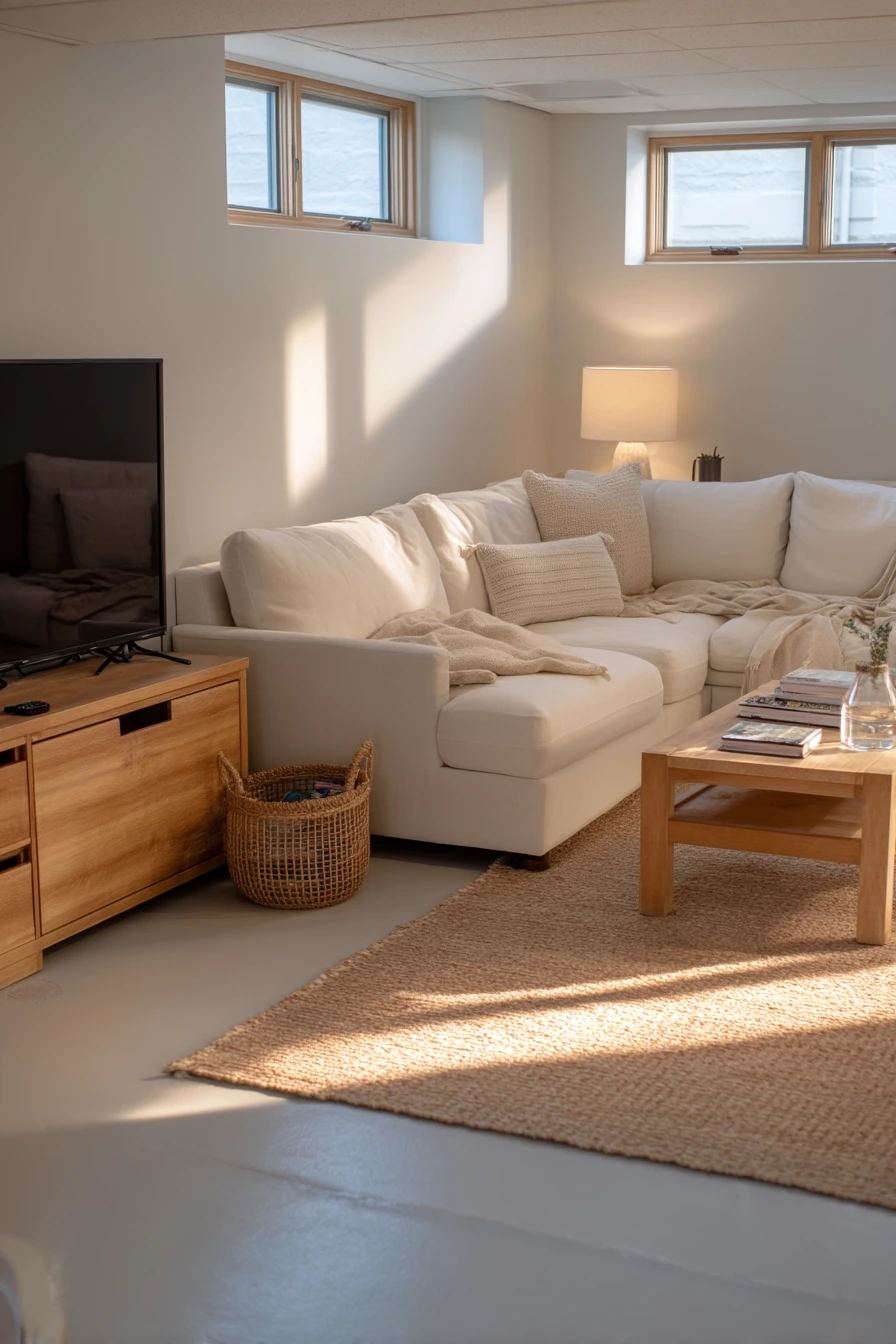
A smooth gray epoxy floor is a strong choice for a lived-in basement rec room. Gray works with almost any sofa color, and it helps the room feel clean even when toys and snacks show up. If you have small basement windows, the gray surface can bounce warm afternoon light and make the space feel less dark.
To keep the room cozy, add soft layers on top of the hard floor. A woven rug under the coffee table helps with sound and makes bare feet happier. Pair it with an ivory sectional and an oak media console for a simple, family-friendly mix. Keep daily items like a paperback, remote, and water glass on a tray so the table looks neat without feeling staged.
Style it for real life by building in a “drop zone” for clutter. A kid toy basket tucked beside the couch is easy to reach and easy to hide. Use a charging cable solution, like an outlet behind the sofa or a cord cover, so the cable near the armrest does not become a trip risk. If you want a softer look, pick a satin or low-gloss topcoat instead of high gloss.
- Choose a medium gray to hide dust and small crumbs better than very light gray.
- Add a woven rug with a rug pad so it does not slide on epoxy.
- Use closed storage (baskets, cubes) to keep toys from spreading across the floor.
- Pick warm wood tones like oak to balance the cool floor color.
- Use floor-safe felt pads under the media console and coffee table.
Pro Design Tip: Ask for a low-gloss or satin clear coat in a family basement; it cuts glare from lamps and makes scuffs less noticeable.
Budget Considerations: A simple solid-color gray system is usually cheaper than multi-layer flakes. Save more by doing one large rug instead of several small ones.

2. Charcoal Speckled Epoxy Floor for a Compact Home Gym


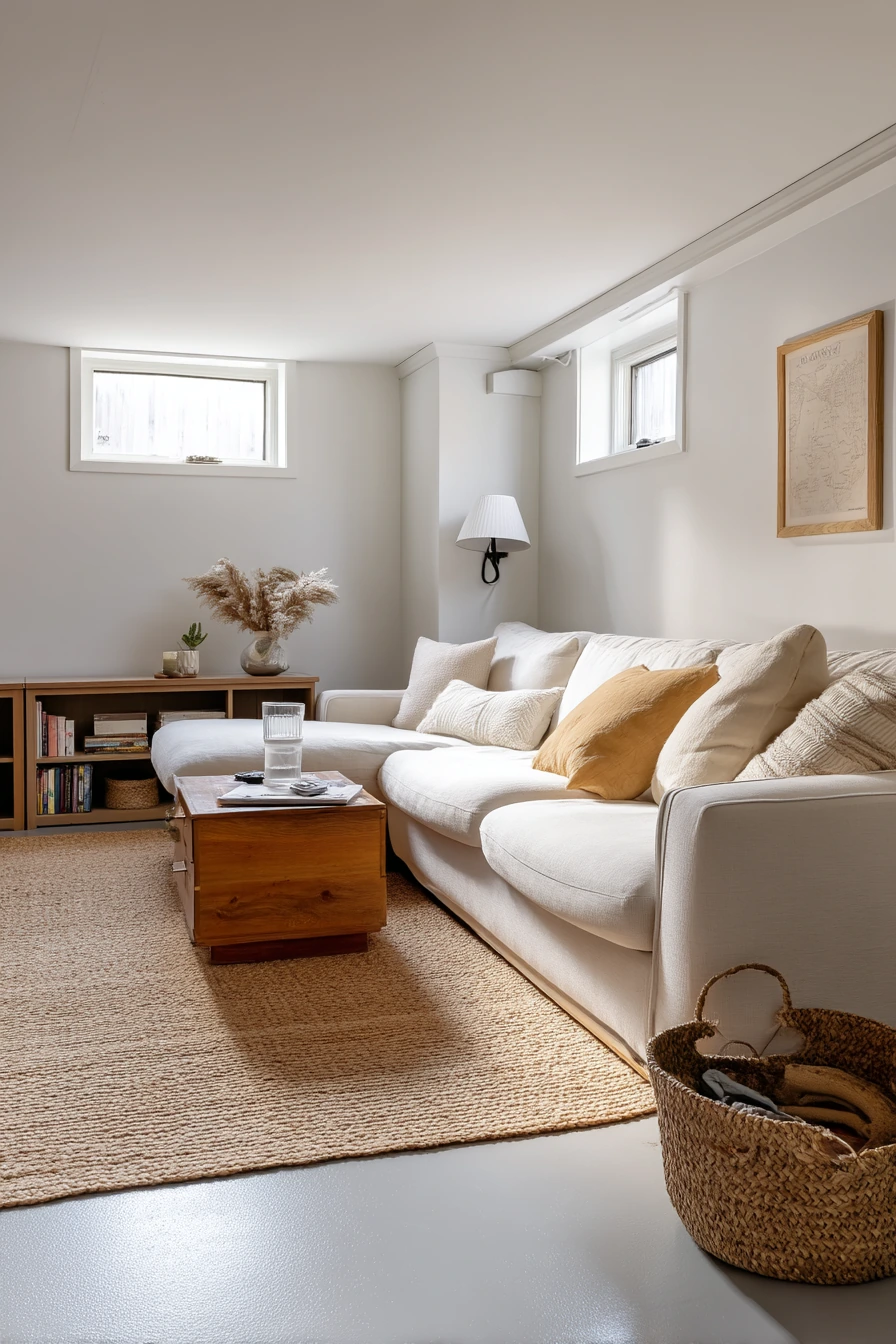
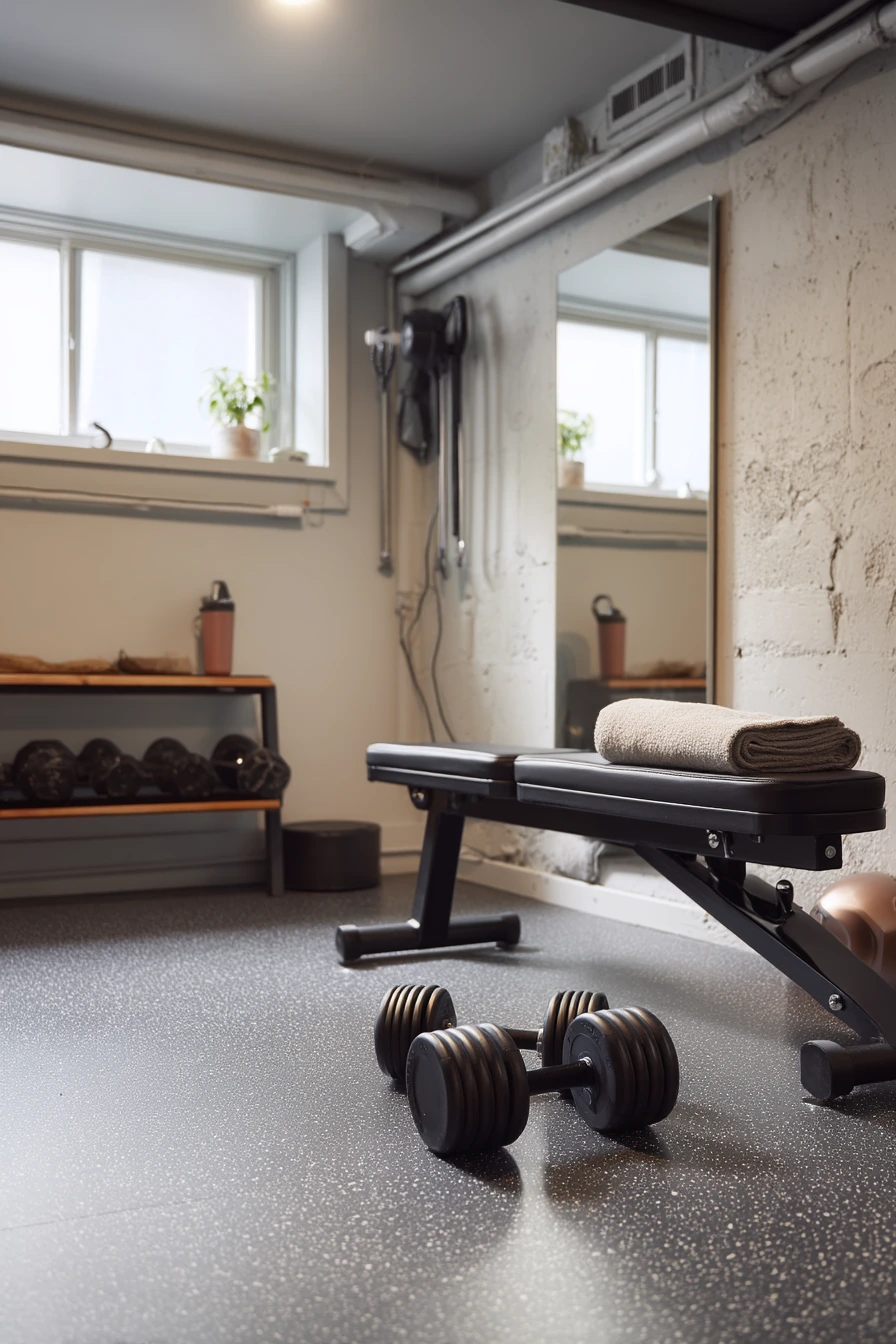
A charcoal speckled epoxy floor is great for a compact basement home gym because it hides marks and looks sharp with simple gear. The speckle pattern also makes the floor feel less “garage-like” than a plain dark coat. With a mirrored wall and natural daylight, the room can still feel open even if it is small.
When you set up weights, think about both noise and safety. Epoxy is hard, so add rubber mats where you place dumbbells or do kettlebell work. Keep a rowing machine on a thin equipment mat to protect the coating and help it stay put. A towel on the bench, a protein shaker, and earbuds can be stored in a small wall bin so they do not collect dust by the wall.
Style it so it feels like part of your home, not a storage area. Use a tight color plan: charcoal floor, black or gray equipment, and one warm wood piece like a small shelf. Add one framed print or a simple clock. Keep light simple too. Soft window light with a clean overhead fixture makes the speckles look even and reduces harsh shine.
- Use rubber tiles or mats in the lifting zone to protect the epoxy.
- Choose a speckle blend that includes a little gray to reduce visible footprints.
- Mount a slim shelf for towel, shaker, and yoga block to clear floor space.
- Place a small fan near the window well for comfort and airflow.
- Wipe sweat drops quickly; a damp microfiber mop keeps the surface fresh.
Pro Design Tip: Keep the epoxy finish satin and add anti-slip grit in workout areas so the floor feels steady when you pivot or lunge.
Budget Considerations: You can epoxy the full floor but only buy rubber mats for key spots. A secondhand mirror panel can give the same gym feel for less.

3. Concrete-Look Epoxy Floor for a Quiet Basement Office
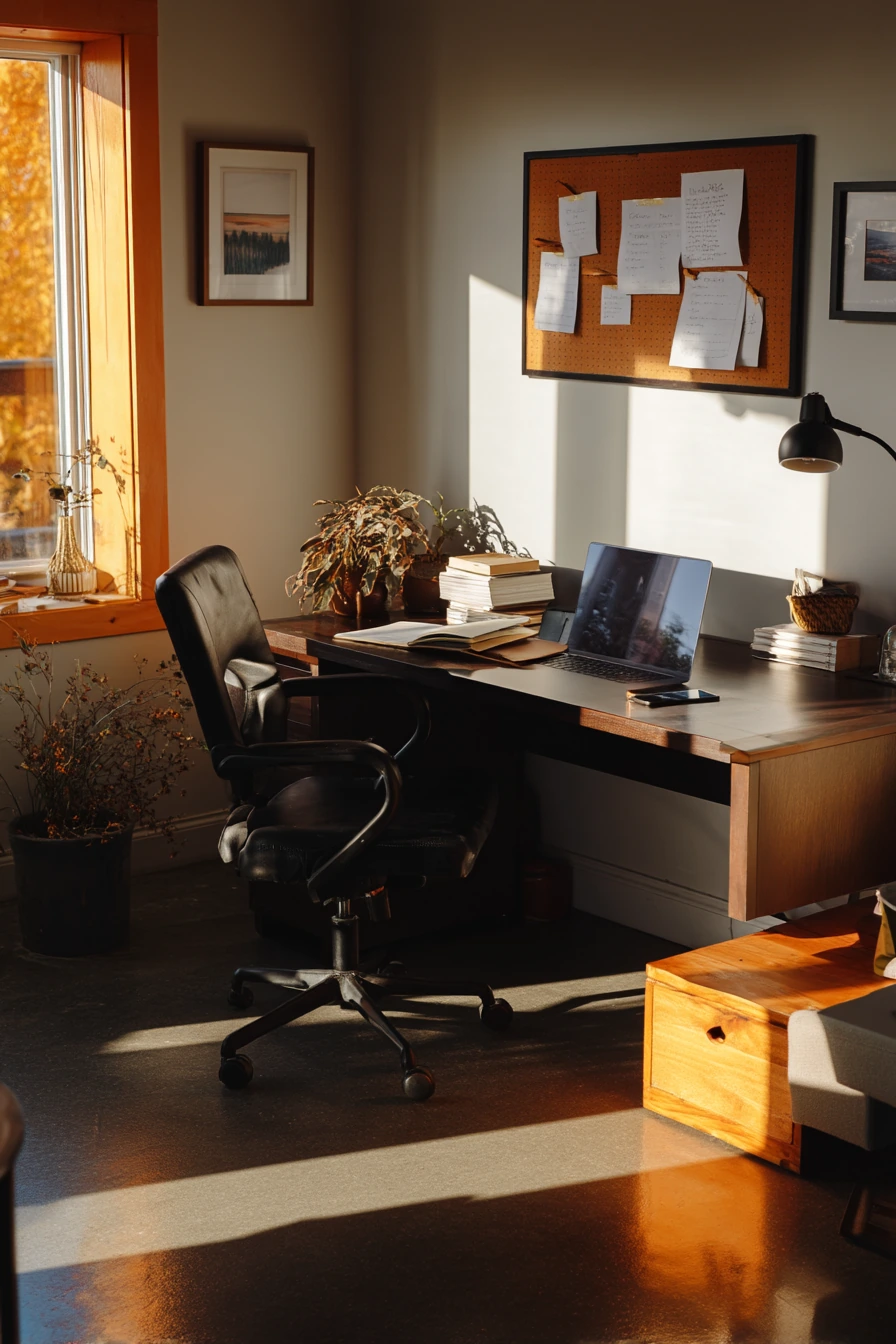

A polished concrete-look epoxy floor can make a basement office feel calm and put-together. It has the clean look of concrete, but it is easier to wipe and less dusty. In a basement with a window well, warm morning light can bring out the soft movement in the finish and keep the room from feeling flat.
Match the floor with warm materials so the space feels inviting during long workdays. A walnut desk is a strong fit because it adds color and makes the gray tones look richer. A task chair, pinboard, and a tidy book stack keep the office practical. Add a small plant and let it cast leafy shadows on the floor for a simple, lived-in touch.
To style it, use layers that also help with sound. Put a low-pile rug under the chair area or under the desk legs, so rolling noise is reduced. Keep cables clean with a cord tray under the desk, especially if you have a phone charging and a laptop open most days. Add one table lamp with a warm bulb to balance cool daylight and reduce glare on screens.
- Choose a matte or satin topcoat to reduce screen glare.
- Add a low-pile rug to soften sound and make the chair roll smoother.
- Use a walnut or oak desk to warm up gray flooring.
- Hide cords with an under-desk tray and a simple cable sleeve.
- Keep a small plant near the window well for life and better mood.
Pro Design Tip: Place the desk so light from the window well hits from the side, not from behind your screen, to avoid reflections on both the monitor and the epoxy.
Budget Considerations: A “concrete look” can be done with a solid gray base and a simple mottled effect. If you want savings, skip complex metallic layers and focus on a good clear coat.


4. Soft-Sheen Epoxy Floor for a Teen Hangout Basement


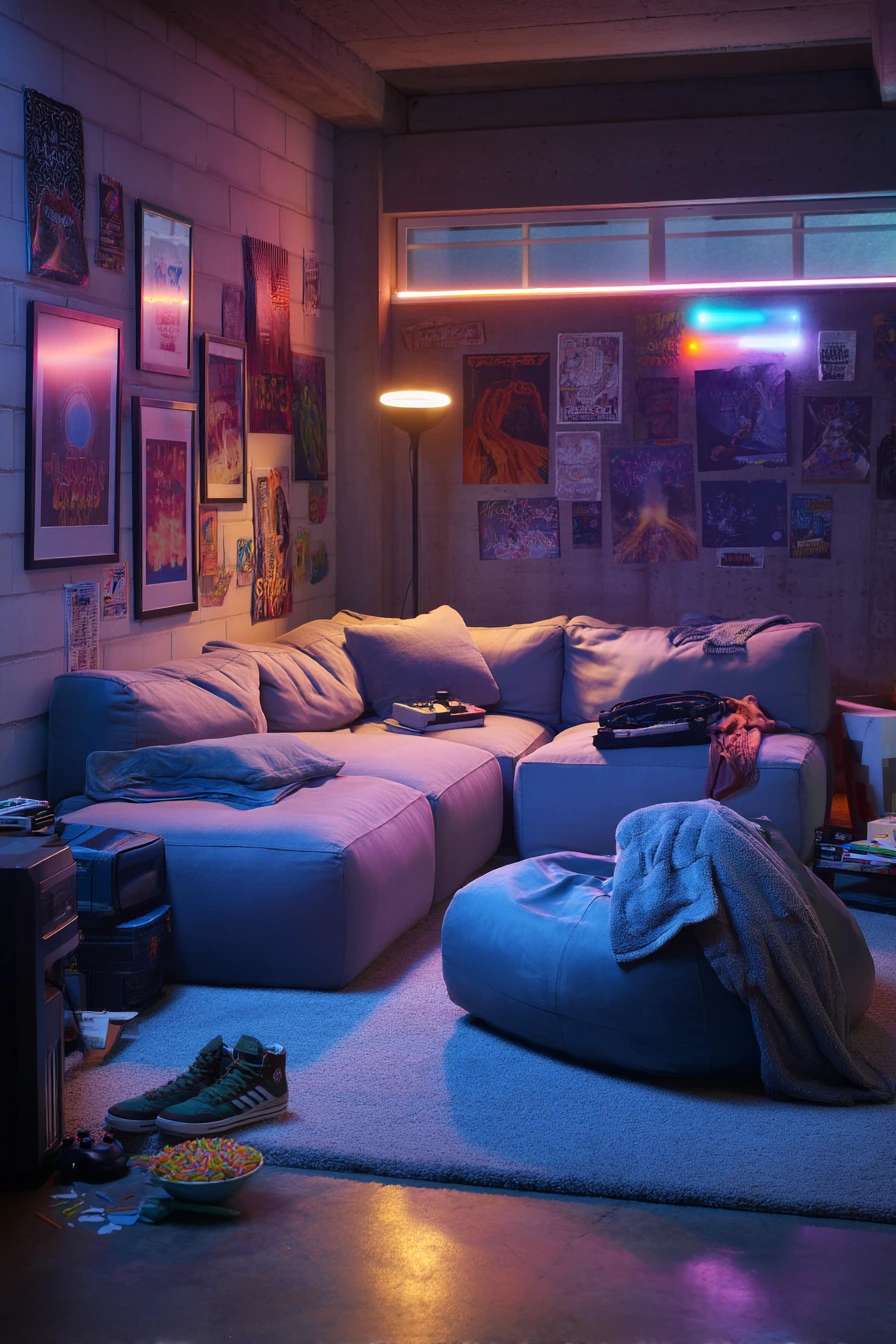
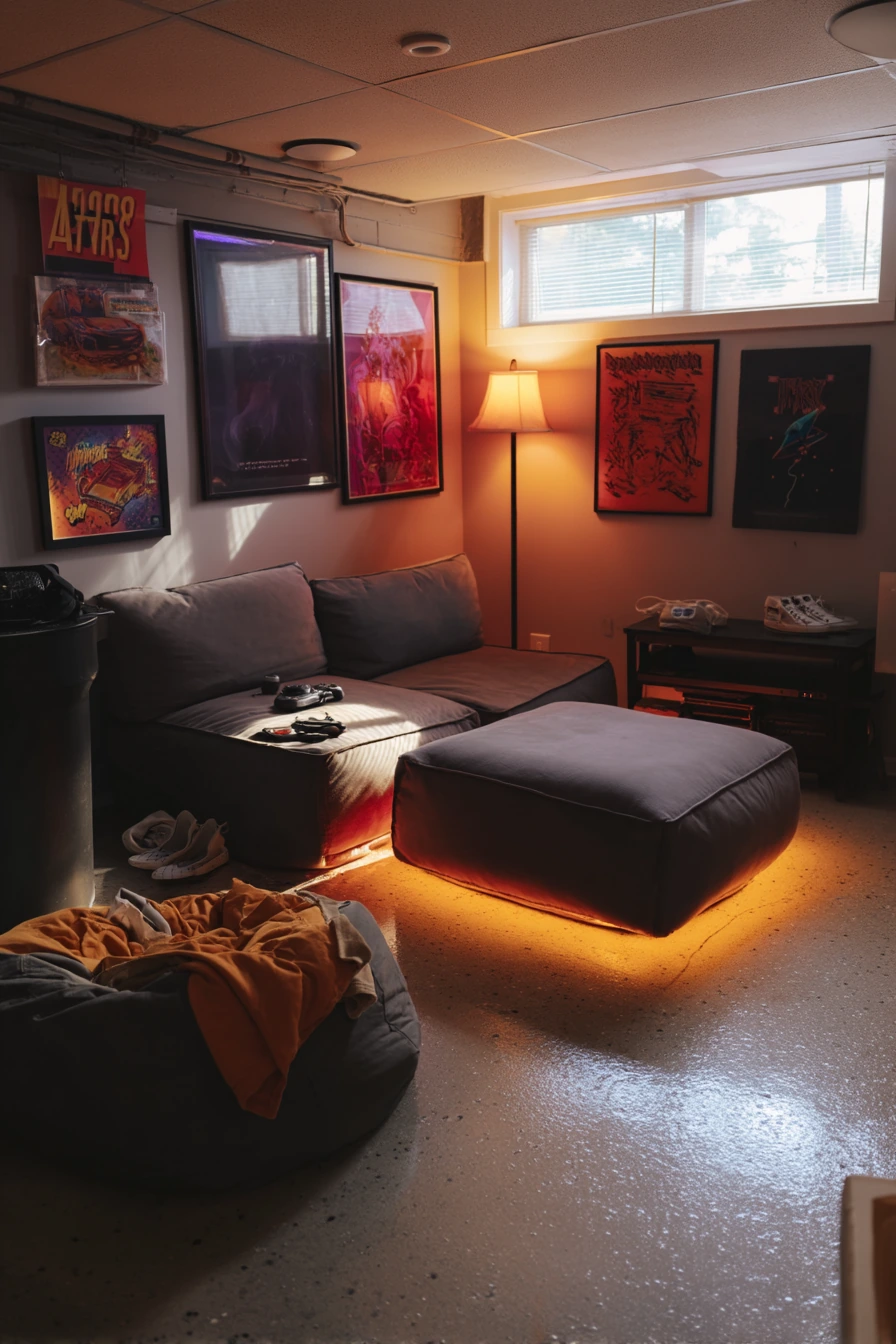
A soft-sheen epoxy floor is a smart pick for a teen hangout basement because it can handle spills, sneakers, and moving furniture. The finish looks more relaxed than high gloss, and it still reflects enough light to keep the room from feeling heavy. It works well with a modular sofa, beanbag chair, and a small game setup.
To make the space feel cool but not messy, keep the main pieces simple and let the details show personality. Add framed band posters and keep LED strip lighting subtle, like behind the TV or under a shelf. The floor becomes a clean base for all the activity, even when a controller ends up on the ground or a hoodie gets tossed over the sofa arm.
Style it with comfort zones. Use a durable area rug under the seating group to cut noise and make movie nights cozier. Keep a snack bowl on an ottoman but add a wipeable tray so crumbs do not spread. Add a slim basket near the wall for sneakers and extra blankets. Warm lamp light mixed with late afternoon window light makes the epoxy look softer and less shiny.
- Pick a soft-sheen clear coat to reduce the “wet look” and hide small marks.
- Add a rug with a tight weave so it is easy to vacuum.
- Use modular seating so the layout can change for games or friends.
- Choose closed storage for cords, controllers, and headsets.
- Use warm bulbs in lamps to balance cool LED strips.
Pro Design Tip: Use a darker epoxy tone with a bit of speckle or subtle movement; it hides scuffs from shoes better than a flat solid color.
Budget Considerations: Posters in simple frames and a secondhand modular sofa can make the room feel finished without a big spend. Save on lighting by using plug-in LED strips and one good floor lamp.
5. Light Taupe Epoxy Floor for a Laundry-Mudroom Basement


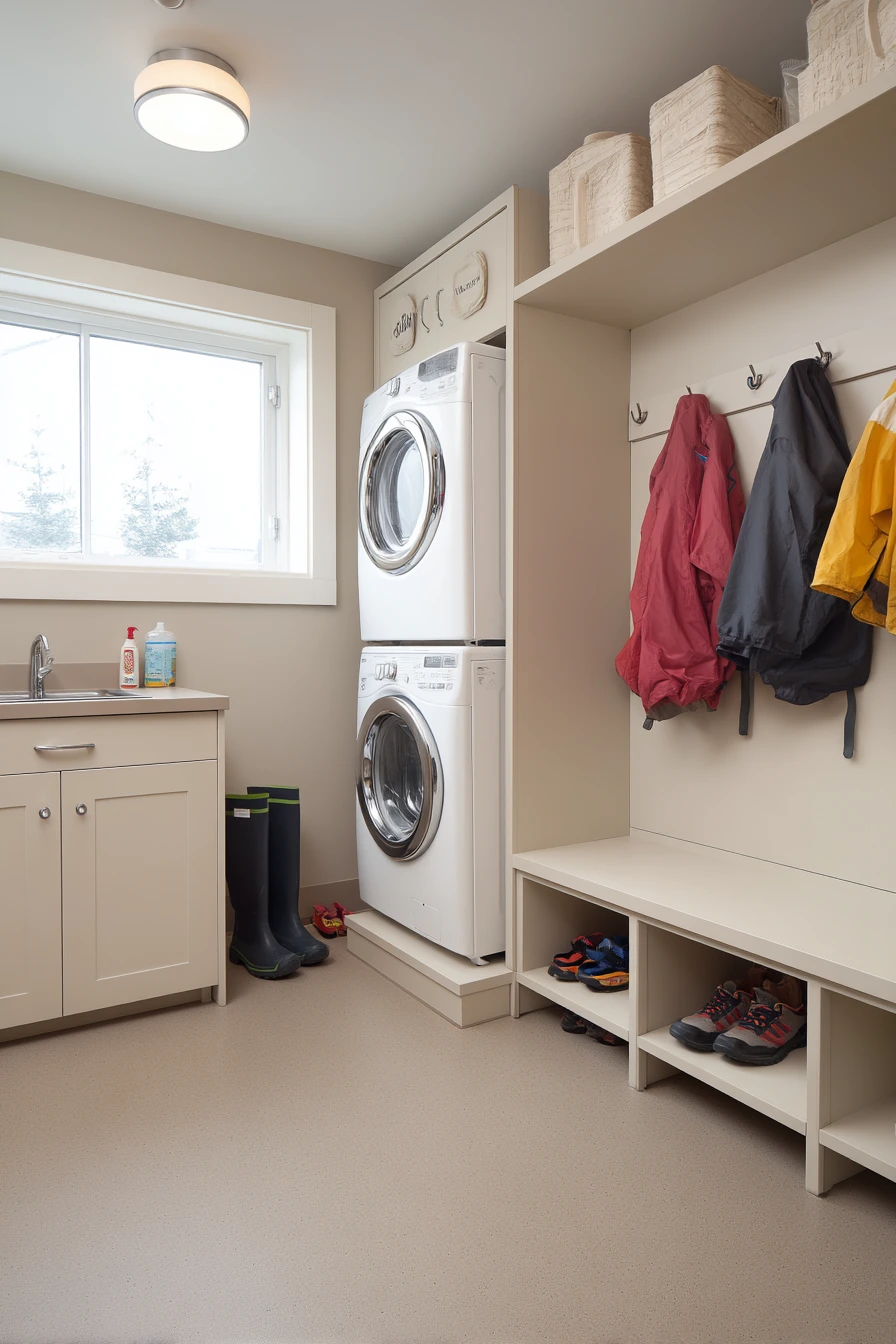
A light taupe epoxy floor is a great match for a basement laundry-mudroom because it looks clean, but it is not too bright. Taupe hides lint, dried water spots, and small dirt marks better than pure white or very light gray. It also pairs well with stacked washer and dryer units and built-in shoe cubbies.
In a hardworking space, layout matters more than decor. Put a bench near the door for shoes and bags, and add wall hooks for coats and a damp rain jacket. A utility sink is a must if you can fit it. Keep detergent and stain spray on a tray or a narrow shelf so you can wipe under it quickly. The epoxy finish makes it easy to mop after muddy cleats or a spill.
Style it so it feels calm, even when it is busy. Use matching baskets in the cubbies, and label them by person or task. Add one small runner with a rubber backing near the washer to catch drips. If the room gets soft overcast daylight from a basement window, choose a warm overhead light so the taupe does not look dull.
- Choose a taupe tone that leans warm for a cozy, clean look.
- Use a rubber-backed runner near the machines to catch water.
- Add wall hooks at kid height to reduce floor piles.
- Keep a small bin for lost socks and a basket for towels.
- Use a closed cabinet or shelf for detergents to cut visual clutter.
Pro Design Tip: Add anti-slip additive near the sink and the exterior door area, where wet shoes and water splashes are most common.
Budget Considerations: If you cannot add built-ins, use a ready-made bench with cube storage and inexpensive wall hooks. A basic solid taupe epoxy system usually costs less than flake blends.

6. Satin Epoxy Floor for a Cheerful Craft Room
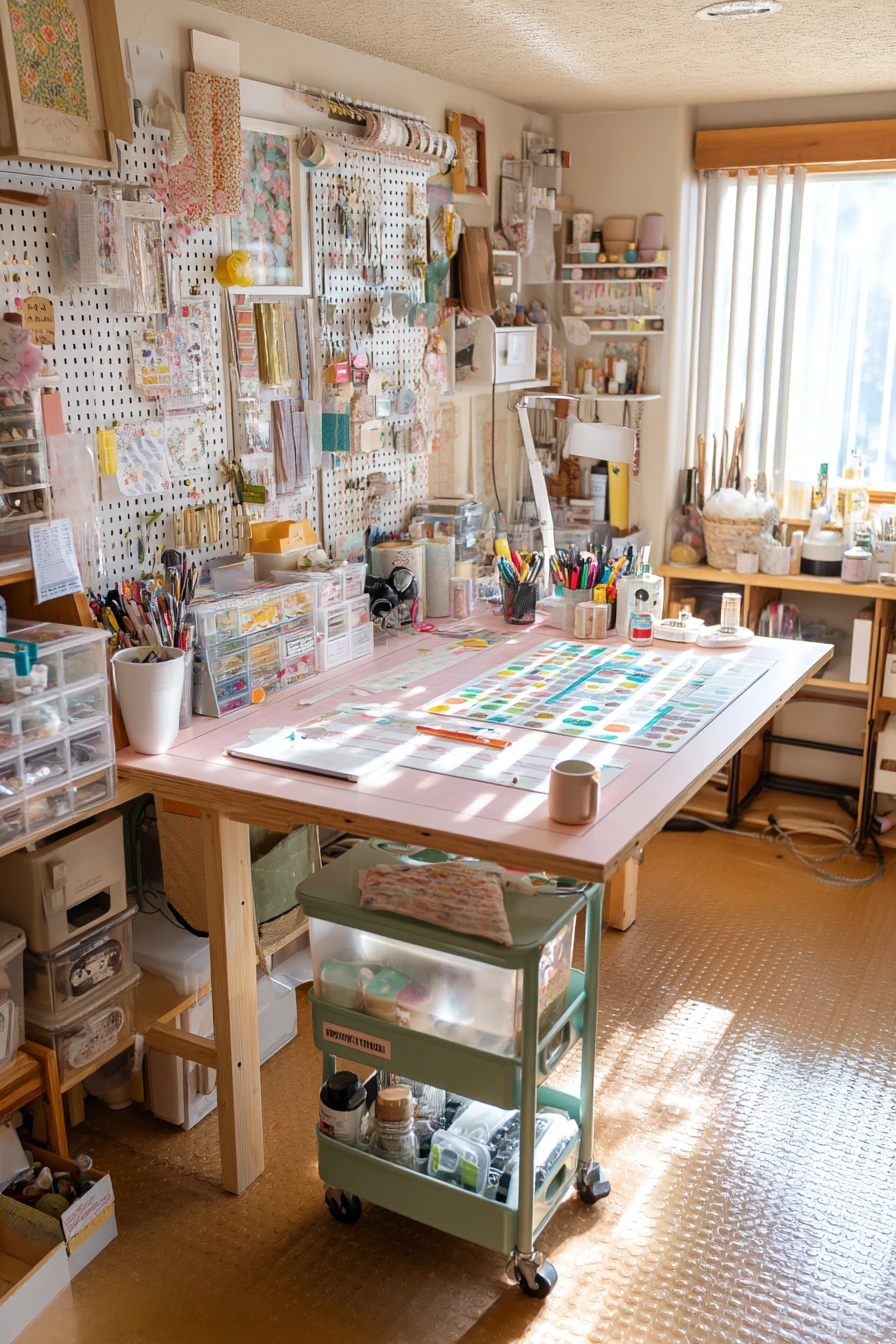
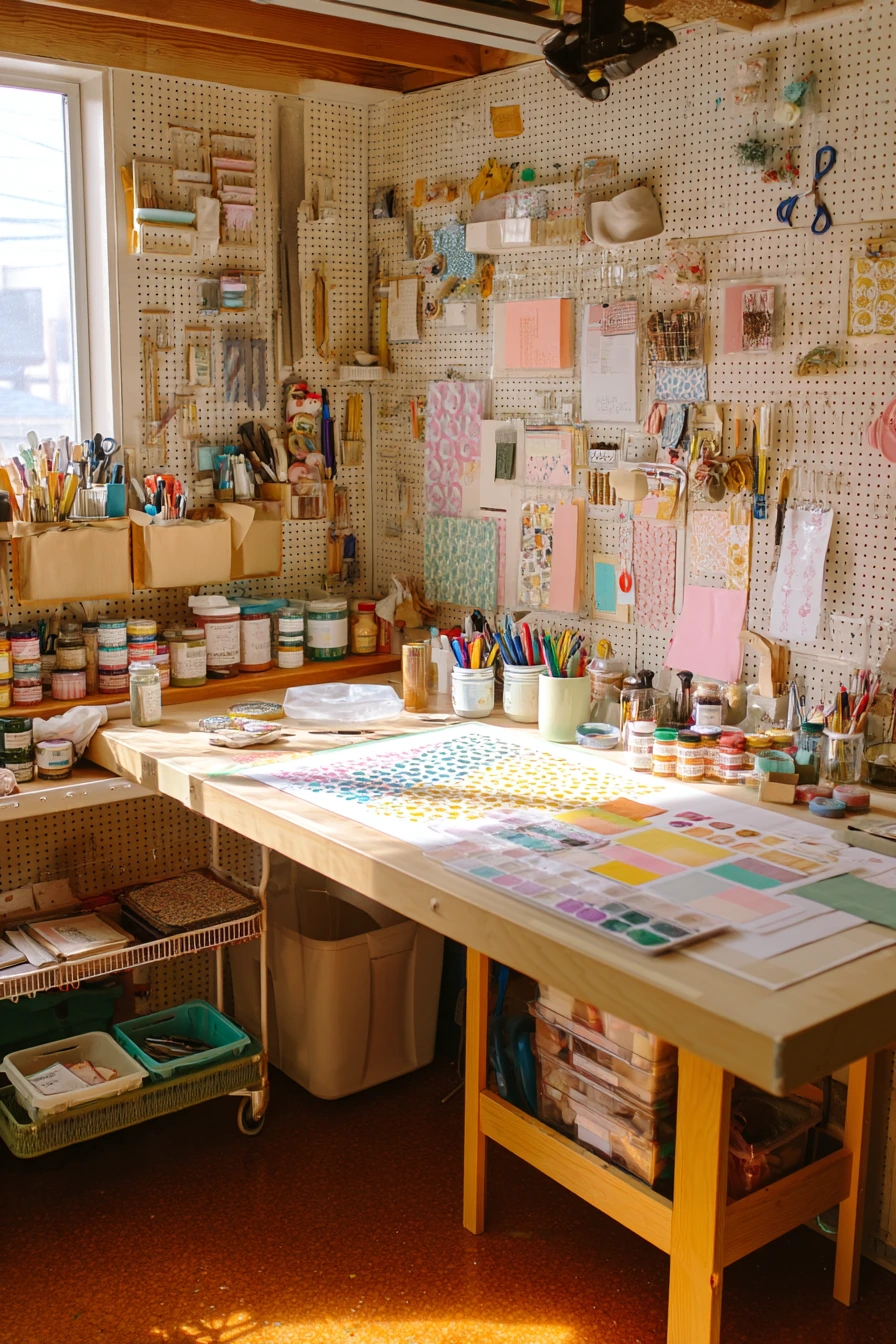
A satin epoxy floor works well in a basement craft room because it is smooth enough to sweep, but not so shiny that it shows every smudge. It is also forgiving when paint jars, scissors, and rolling carts move around. With sun-washed window light, the satin finish keeps glare low and makes colors look true.
Set up the room around one long worktable so projects can stay out without taking over the whole space. Add a pegboard for tools and labeled bins for paper, vinyl, and fabric. A rolling cart is useful for the items you use most, like glue sticks, pens, and tape. When scraps of paper and a half-finished scrapbook page are on the table, the room can still look organized if your storage is clear and easy to reach.
Style it with simple, clean zones. Keep the table surface mostly open, then use small trays for loose items like scissors and markers. Choose one or two accent colors for bins so the room does not feel too busy. Add a soft chair pad and a small rug near the table if you stand a lot. Epoxy makes cleanup fast, so you can craft more and scrub less.
- Pick satin epoxy to reduce glare and hide fingerprints.
- Use labeled bins to keep supplies sorted by type.
- Add a pegboard to get tools off the worktable.
- Keep a small trash can and a recycling bin within arm reach.
- Use a rolling cart for “current project” items to clear the table quickly.
Pro Design Tip: Choose a floor color in the mid range (not too light, not too dark) so you can spot small items like beads, but dust will not stand out.
Budget Considerations: Repurpose jars, shoeboxes, and secondhand drawer units for storage. You can upgrade to matching bins later once the floor is finished.


7. Warm Beige Epoxy Floor for a Cozy Basement Guest Suite


A warm beige epoxy floor can make a basement guest suite feel softer and more welcoming than a cool gray. Beige works well with linen bedding and warm lamp light, and it helps the room look bright in the morning window light. It is also practical for a basement because it resists stains and is easy to clean between visits.
To keep the room comfortable, build a simple, calm palette. Pair the floor with a linen bed, a small reading chair, and a thrifted nightstand. Add a lamp with an amber bulb so the space feels warm at night. Small details, like a folded sweater at the foot of the bed, a novel on the nightstand, and an extra blanket slightly rumpled, make the room feel real and inviting.
Style it like a small hotel room. Put a soft rug beside the bed so guests have a warm place to step. Add a hook or small bench for a bag. Keep a water glass and a phone charger ready, but use a cord clip so cables do not drape across the floor. If your basement is cool, consider a thin area rug and a warm throw to balance the hard surface.
- Choose warm beige tones to reduce the “cold basement” feeling.
- Add a bedside rug for comfort and sound control.
- Use warm lighting to flatter beige and keep the room cozy.
- Include a small chair and lamp to create a reading corner.
- Keep a basket with extra blanket and fresh towels for guests.
Pro Design Tip: Use a satin clear coat and layer in textiles (rug, linen, throws) to reduce echo, which is common in basement bedrooms with hard floors.
Budget Considerations: A thrifted nightstand and secondhand chair can look high-end with a fresh lamp and clean bedding. If you skip radiant heat, invest in a good rug pad for warmth.


8. Colorful Flake Epoxy Floor for a Playful Family Basement


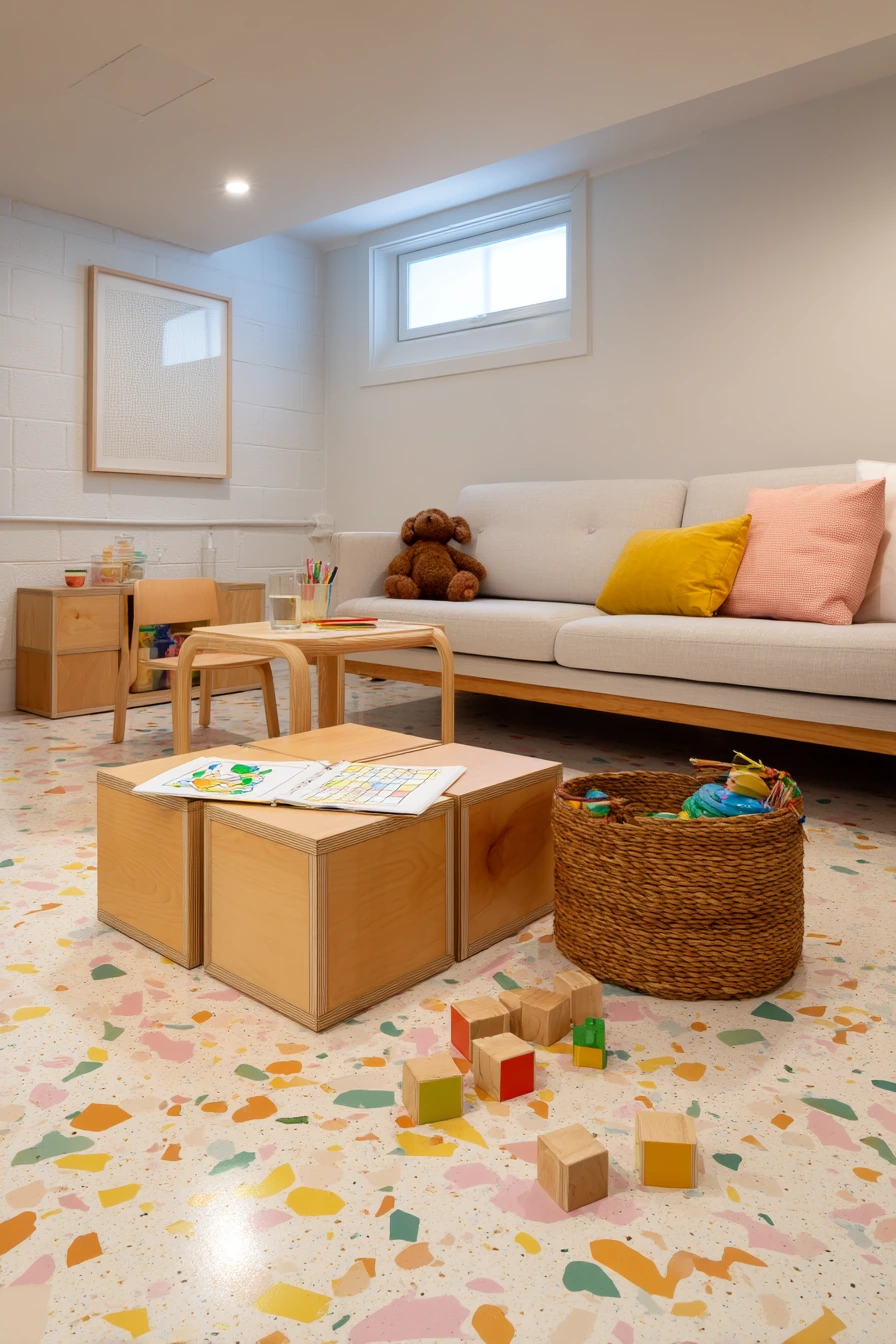
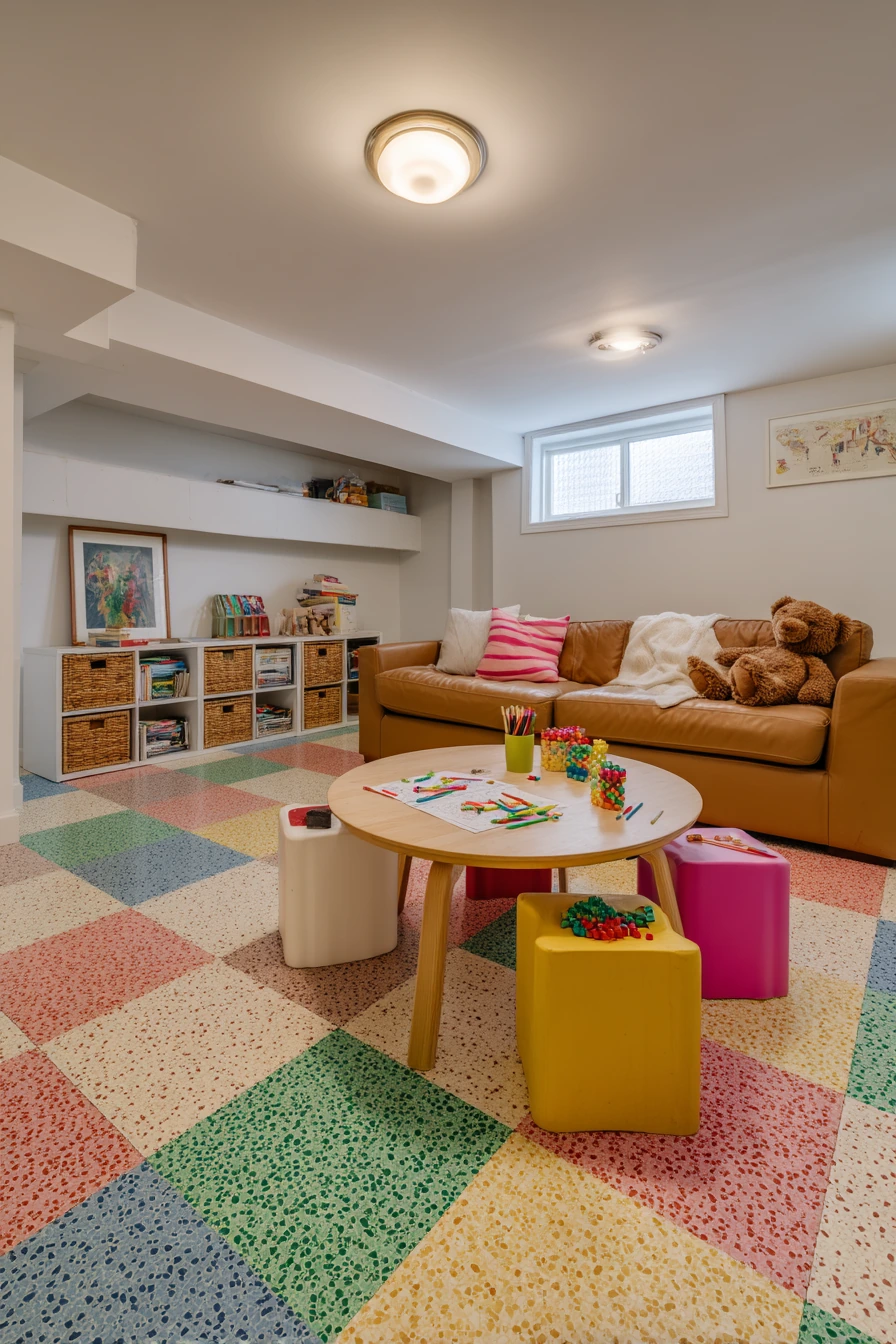
A colorful flake epoxy floor is one of the best epoxy basement floor ideas for a busy family room. Flakes help hide crumbs, scuffs, and small marks, which is perfect when kids play on the floor. The look is cheerful, but it still feels grounded if you keep the furniture simple and the walls light.
Plan storage first, then add the fun details. Low storage cubes make it easy for kids to put toys away without help. Add book baskets, a tiny table and chairs, and a soft play mat for safe play. When wooden blocks scatter and crayons sit open beside a coloring page, the floor still looks tidy because the pattern breaks up the mess visually.
Style it with “contained chaos.” Use baskets for stuffed animals and a lidded bin for small pieces. Keep a snack cup on the little table, but wipe the epoxy right after snack time so sticky spots do not collect dust. Choose a finish with good slip resistance, especially if kids run around in socks. Bright but natural light from a basement window will make the flakes look lively without feeling harsh.
- Use a flake blend with 3 to 4 colors for a fun but not busy look.
- Choose low furniture so kids can use the room safely.
- Add a soft mat for tumbles, but keep epoxy exposed for easy cleaning.
- Use labeled baskets so cleanup is fast.
- Keep a small wall shelf for art supplies to prevent spills on the floor.
Pro Design Tip: Pick flake sizes and colors that match your home’s main palette, then repeat one of those colors in pillows or bins for a pulled-together look.
Budget Considerations: Flake systems can cost more, but they reduce the need for constant touch-ups. Save by using budget storage cubes and upgrading baskets over time.
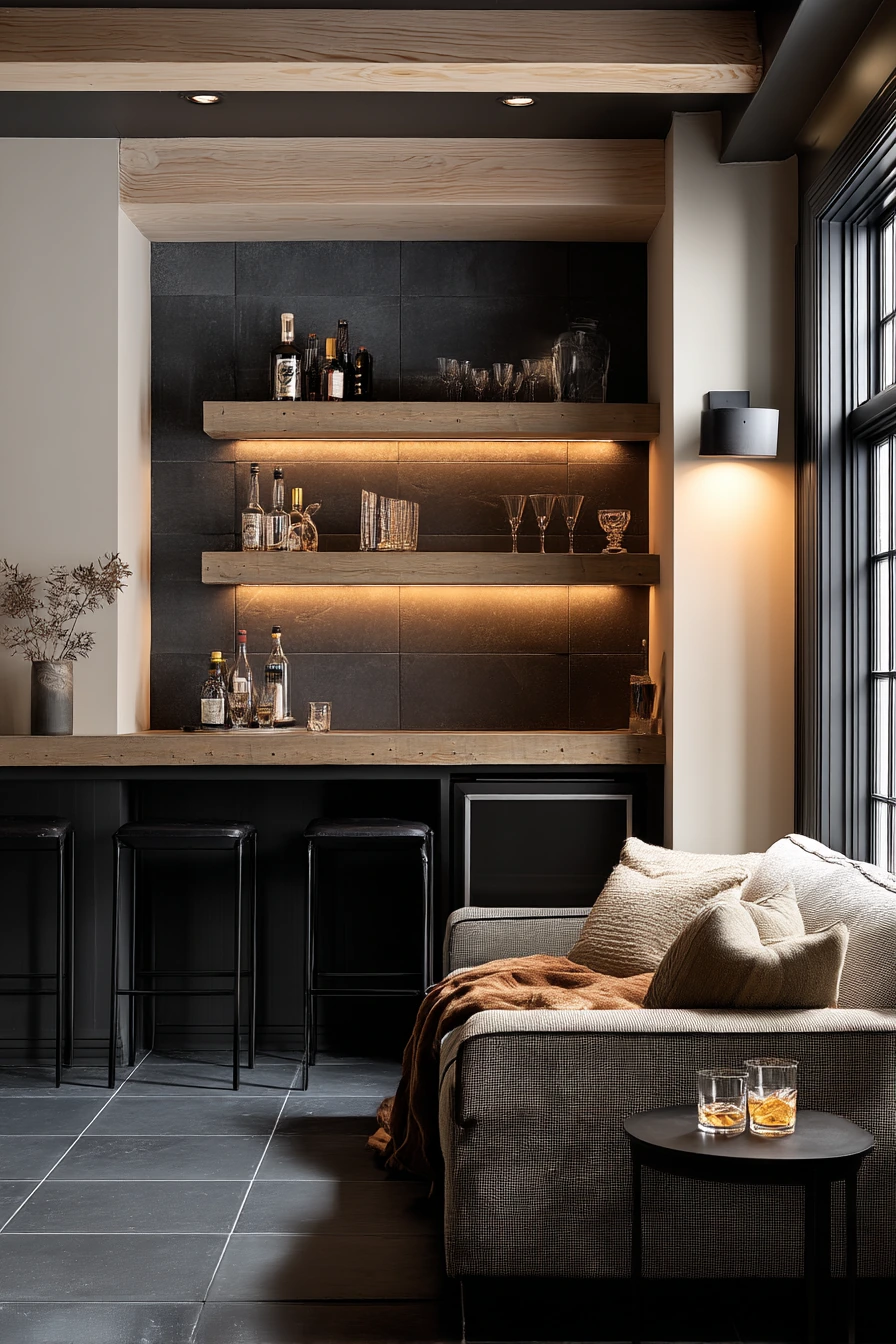
9. Deep Slate Epoxy Floor for a Sleek Basement Bar Lounge


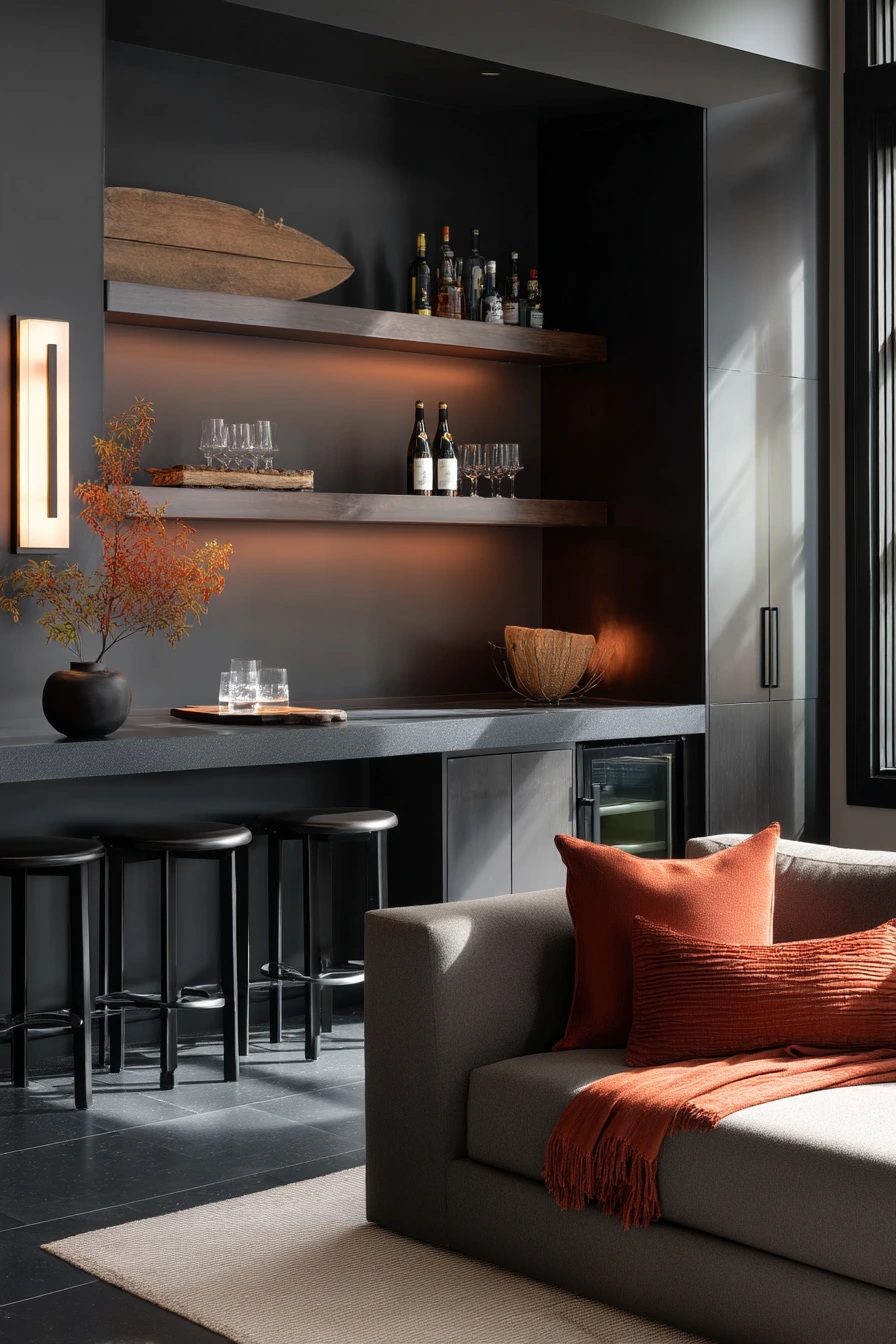
A deep slate epoxy floor can make a basement bar lounge feel modern and cozy at the same time. Dark flooring looks great with slim black stools, floating shelves, and built-in cabinetry. It also helps the space feel like a destination, not just a corner of the basement, especially when you add warm lamp light and keep the rest of the room simple.
Because dark floors can show dust, plan for easy upkeep. A small vacuum or microfiber mop nearby helps you keep it looking sharp. Use stemless glasses, a corkscrew, and cocktail napkins in a tray so the counter stays neat. If you have a small wine fridge, place it where the door swing is clear and add felt pads under stools to prevent scratches.
Style it for relaxed evenings. Add a folded throw on the sofa and one textured pillow to soften the sleek surfaces. Choose warm bulbs and consider dimmers, because dim light makes the slate tone look richer. If you have a faint window spill, balance it with layered lighting so the room does not feel cave-like. A small rug near the sofa can help with sound, but keep it low pile for easy cleaning.
- Use warm lighting to prevent a dark floor from feeling too heavy.
- Add felt pads to stools and chairs to protect the coating.
- Keep bar tools in a tray for a clean, simple counter.
- Use one textured throw to add comfort without clutter.
- Dust mop often; dark floors show crumbs and pet hair faster.
Pro Design Tip: Choose a satin finish for slate epoxy in lounges; it still looks sleek, but it reduces swirl marks that can show up under lamp light.
Budget Considerations: Floating shelves and a compact wine fridge can be added later. Start with paint-grade cabinetry, then upgrade hardware for a high-end look.
10. Greige Epoxy Floor for a Real Basement Renovation DIY


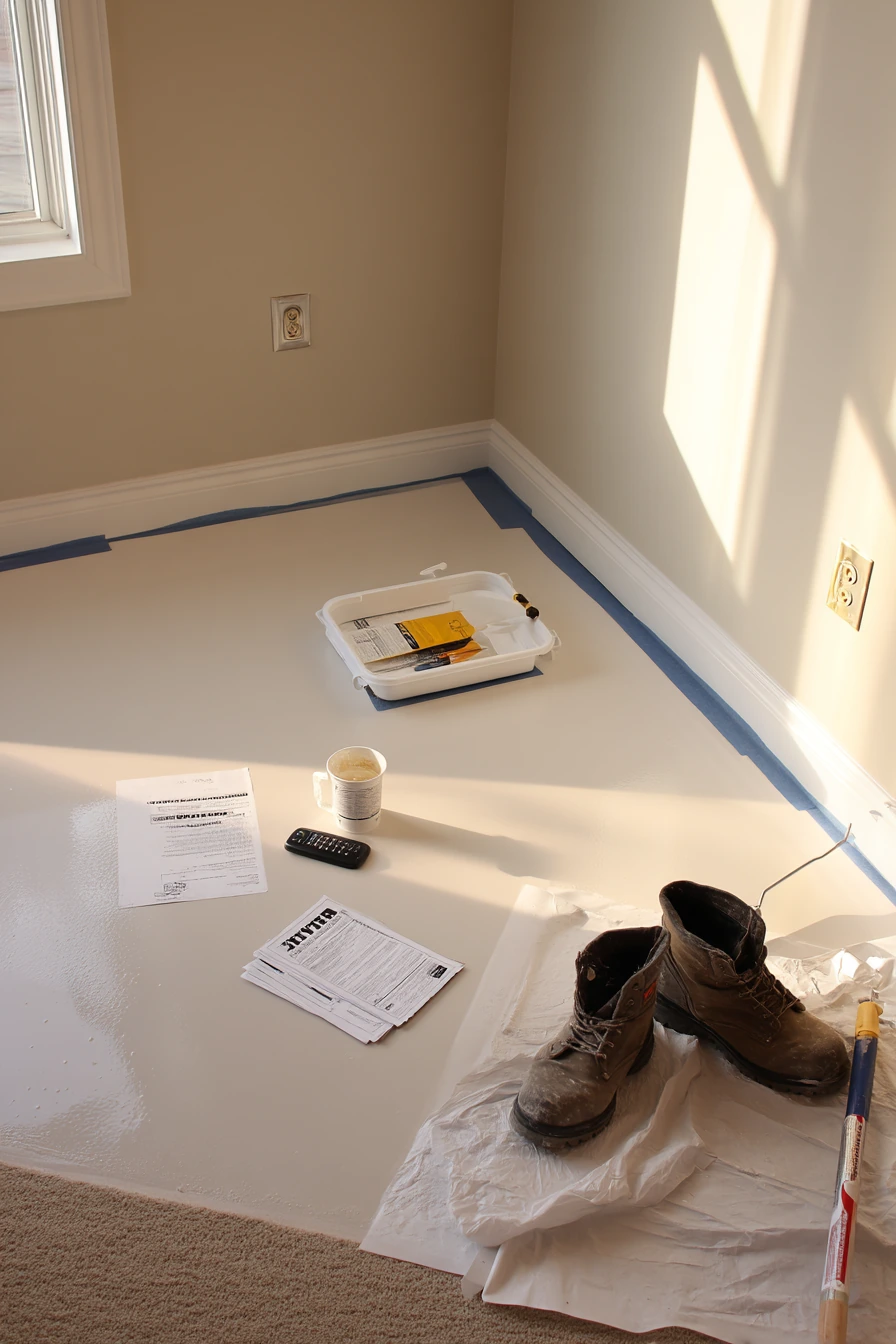
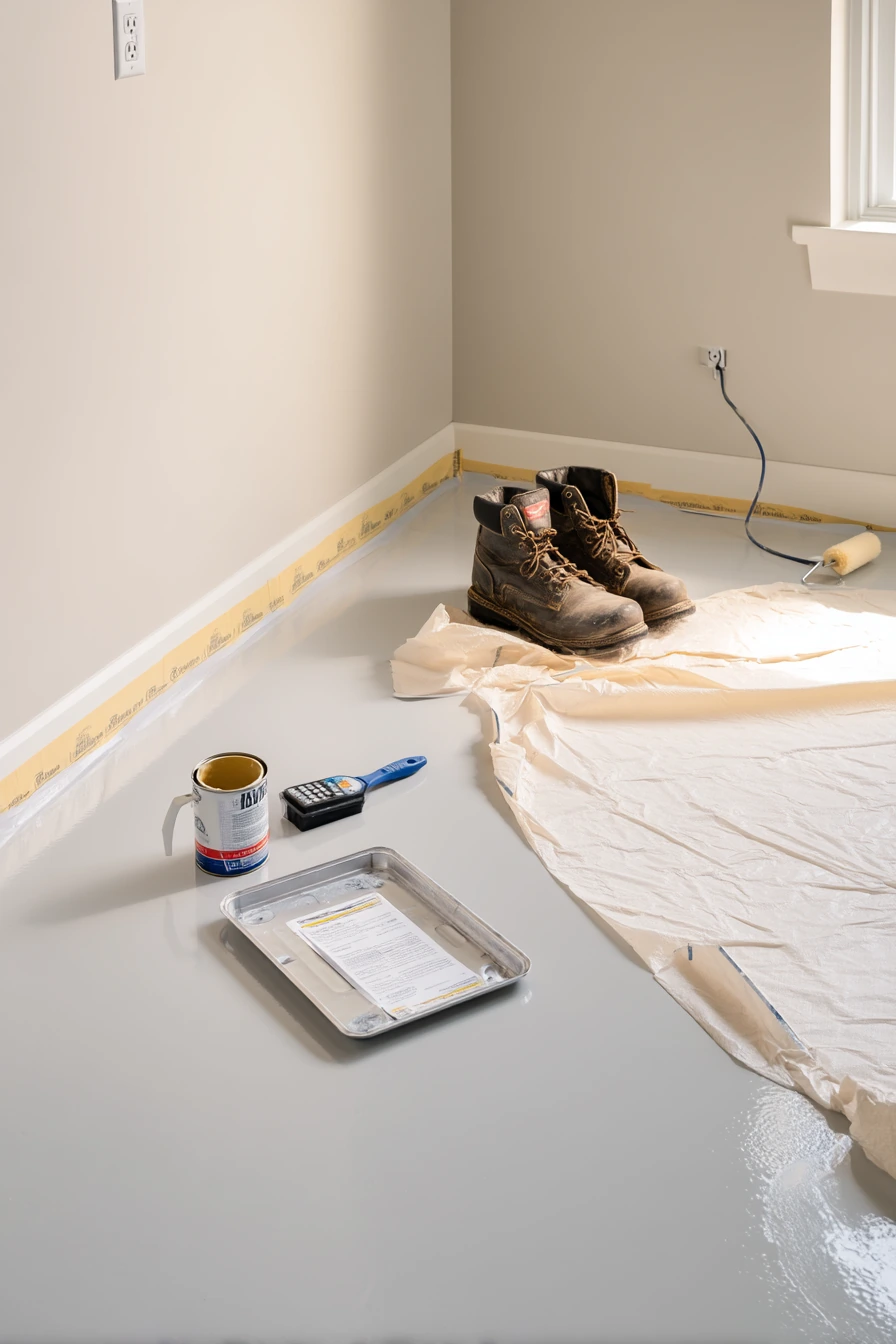
A soft greige epoxy floor is a safe, flexible choice during a basement renovation. Greige sits between gray and beige, so it works with both warm and cool decor later. When you see painter’s tape along the baseboards, a paint tray, a roller, and a half-folded drop cloth, it is a reminder that prep is what makes epoxy last.
For a DIY-friendly plan, focus on the steps you cannot skip. Clean and degrease the slab, repair cracks, and let it dry fully. Use the right primer if your kit calls for it. Roll the base coat evenly, then follow timing rules for the next layer. Keep shoes and dust under control. A work boot tracking debris across wet epoxy is a common problem, so set a clear path and keep tools staged.
Style matters even in the build phase, because it affects the final look. Tape clean lines at the baseboards, and keep the roller edge “wet” so you do not get lap marks. If you want more grip, add a light anti-slip grit in the clear coat. While the floor cures, plan the room: where storage will go, where outlets are, and how light from basement windows will hit the surface. A phone on speaker and an instruction sheet nearby is fine, but keep clutter off the wet floor.
- Pick greige if you want one color that fits most furniture styles.
- Do a moisture test before coating to avoid peeling later.
- Patch cracks and grind rough spots so the finish looks smooth.
- Use painter’s tape for crisp edges at baseboards and door thresholds.
- Let the floor cure fully before moving heavy items back in.
Pro Design Tip: Work in small sections and keep a bright work light aimed low across the floor so you can spot thin areas and roller lines before they dry.
Budget Considerations: DIY kits can save money, but prep tools may add cost. Renting a grinder for one day is often cheaper than fixing a peeling floor later.
Epoxy basement floors can look clean and stylish while still handling real life. The best choice depends on how you use the space, from a rec room and play area to a gym, office, or bar lounge.
Start by picking a color and sheen that fits your lighting and your mess level. Then add rugs, storage, and warm lighting to make the basement feel finished.
FAQ
1. Is epoxy a good basement floor? Yes, it is durable, easy to mop, and can make the room brighter. It is a solid option if the concrete is dry and prepped well.
2. What epoxy color hides dirt best? Mid-tone gray, greige, taupe, and speckled blends hide dust and marks better than very light or very dark solid colors.
3. Is epoxy slippery when wet? It can be. Add an anti-slip additive in the clear coat, especially near doors, sinks, and workout zones.
4. How long does epoxy take to cure? Many floors are walkable in 24 hours, but full cure for heavy furniture can take several days. Always follow the product directions.
5. Can I put rugs on epoxy basement floors? Yes. Use a rug pad that will not trap moisture and choose low-pile rugs for easy vacuuming.
6. Do I need to seal epoxy? Most systems include a clear topcoat that acts as the seal. The topcoat choice also controls gloss and slip resistance.
7. Why does epoxy peel in basements? Common causes are moisture in the slab, poor cleaning, or skipping grinding and etching. Testing and prep help prevent failure.
Use the room ideas above to match the finish to your basement’s job, then build comfort with lighting, textiles, and smart storage.