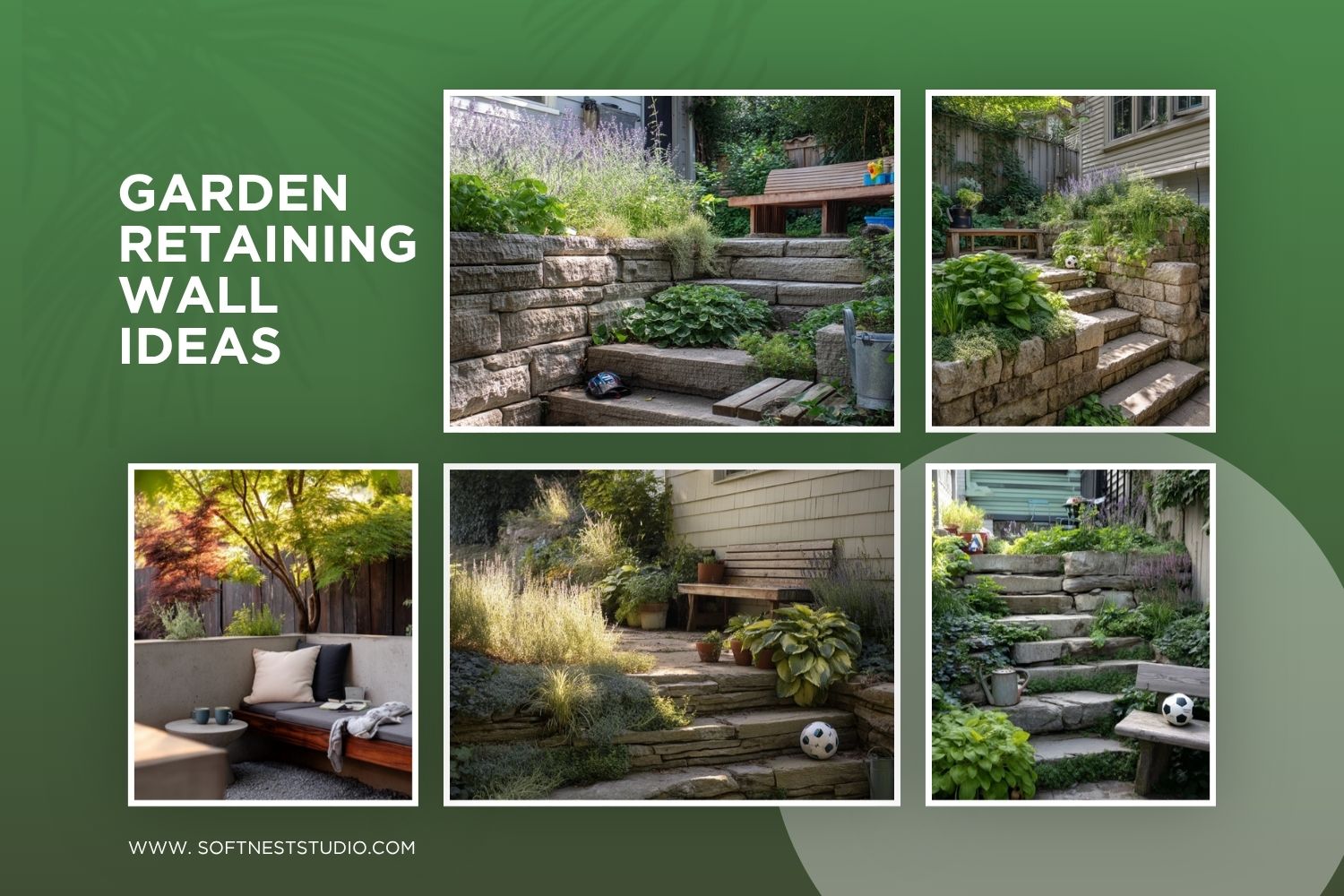
Looking for garden retaining wall ideas that look good and solve real yard problems. A well-placed wall can hold back soil, create flat planting beds, and make steps safer.
This guide uses realistic home scenes like a sloped backyard behind a family house, a compact urban yard, and a rain-ready patio after a shower. Each idea includes simple styling moves so your wall looks finished, not like a construction project.
You will also get practical notes on materials, drainage, and plant choices like hostas, lavender, creeping thyme, and ornamental grasses. These are easy upgrades that can help your yard feel calmer and easier to use.
Use the sections below to match your space, then save the plan you like for your next weekend project or a future remodel.
Intro: Stacked Stone Terraces for a Sloped Backyard

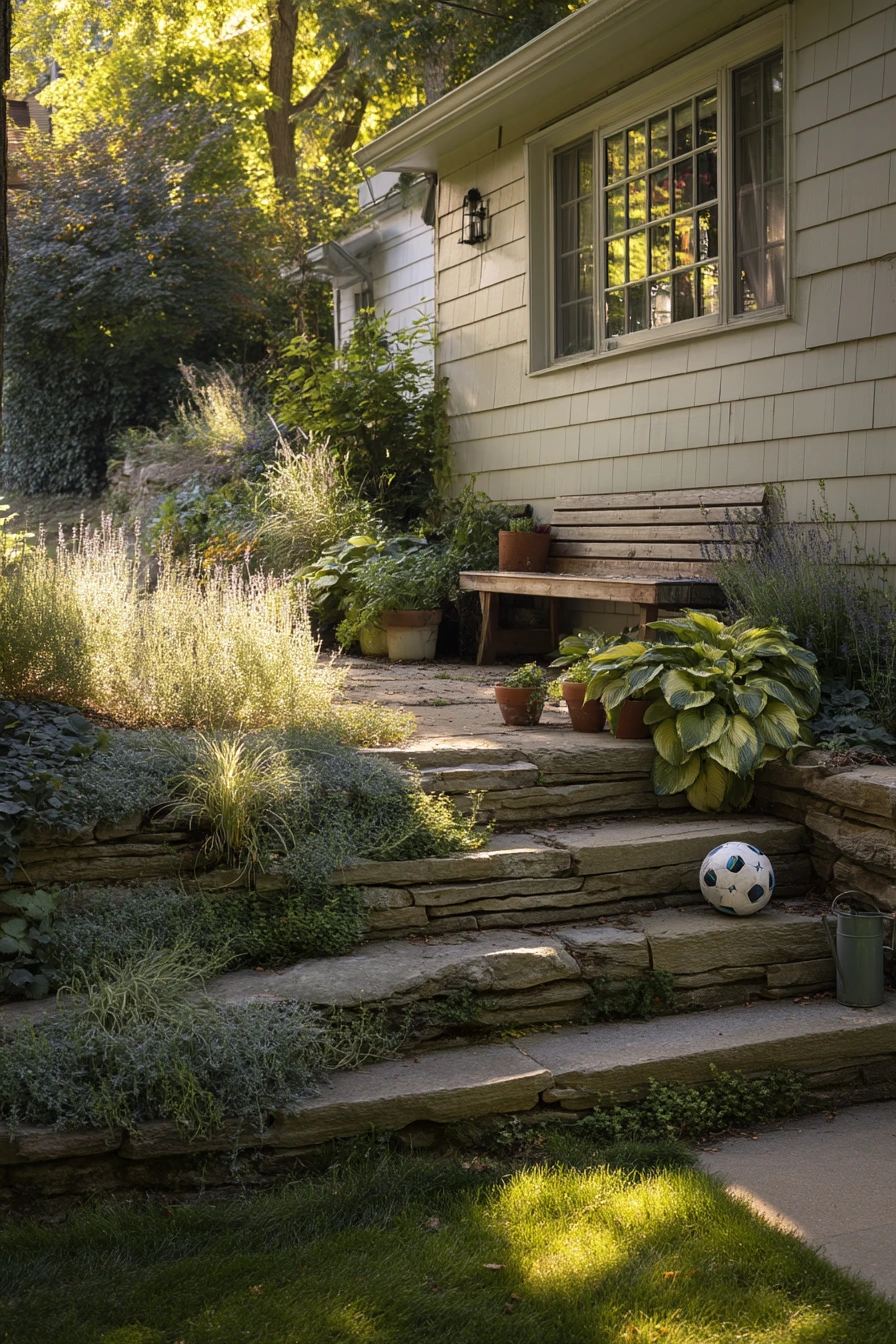
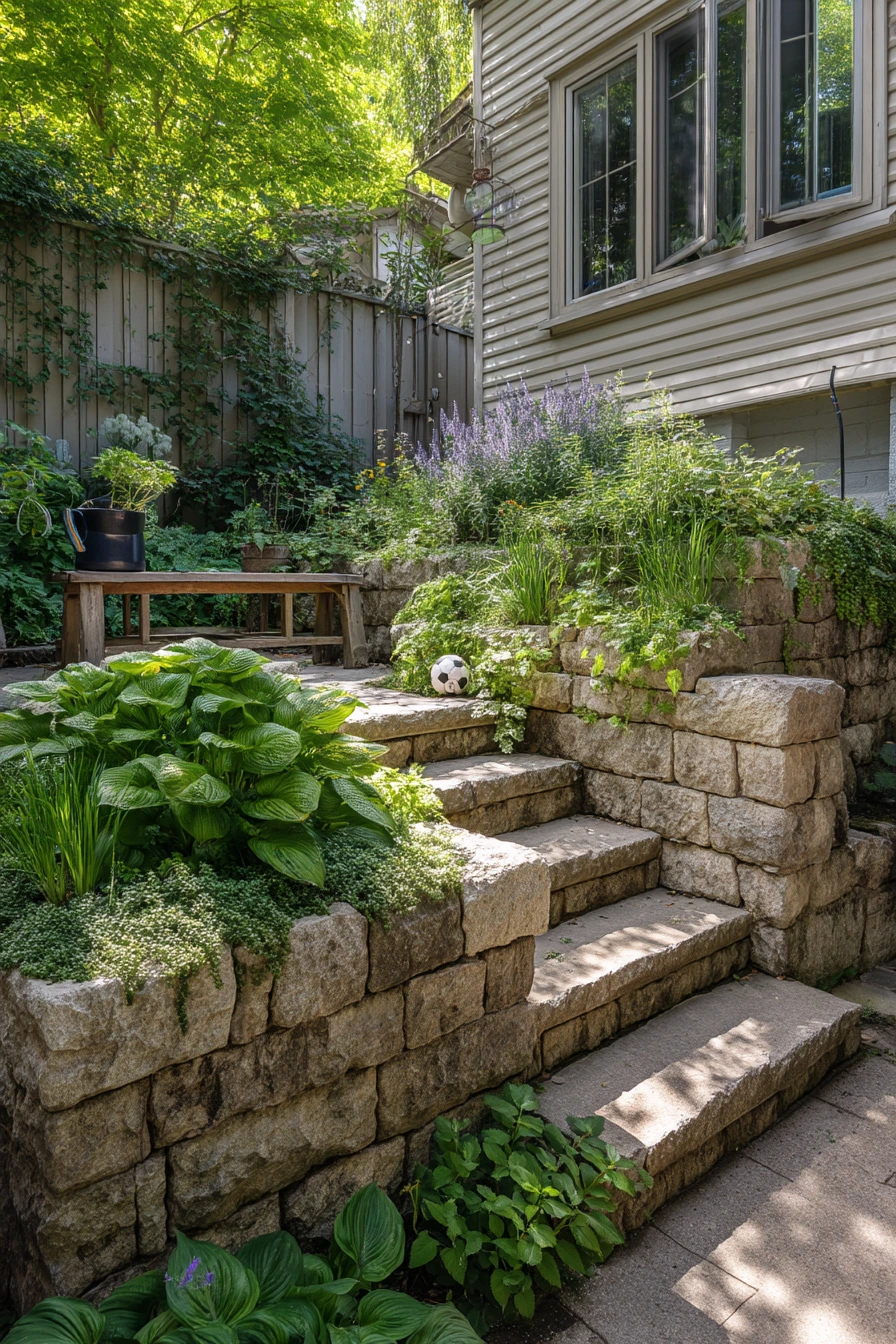
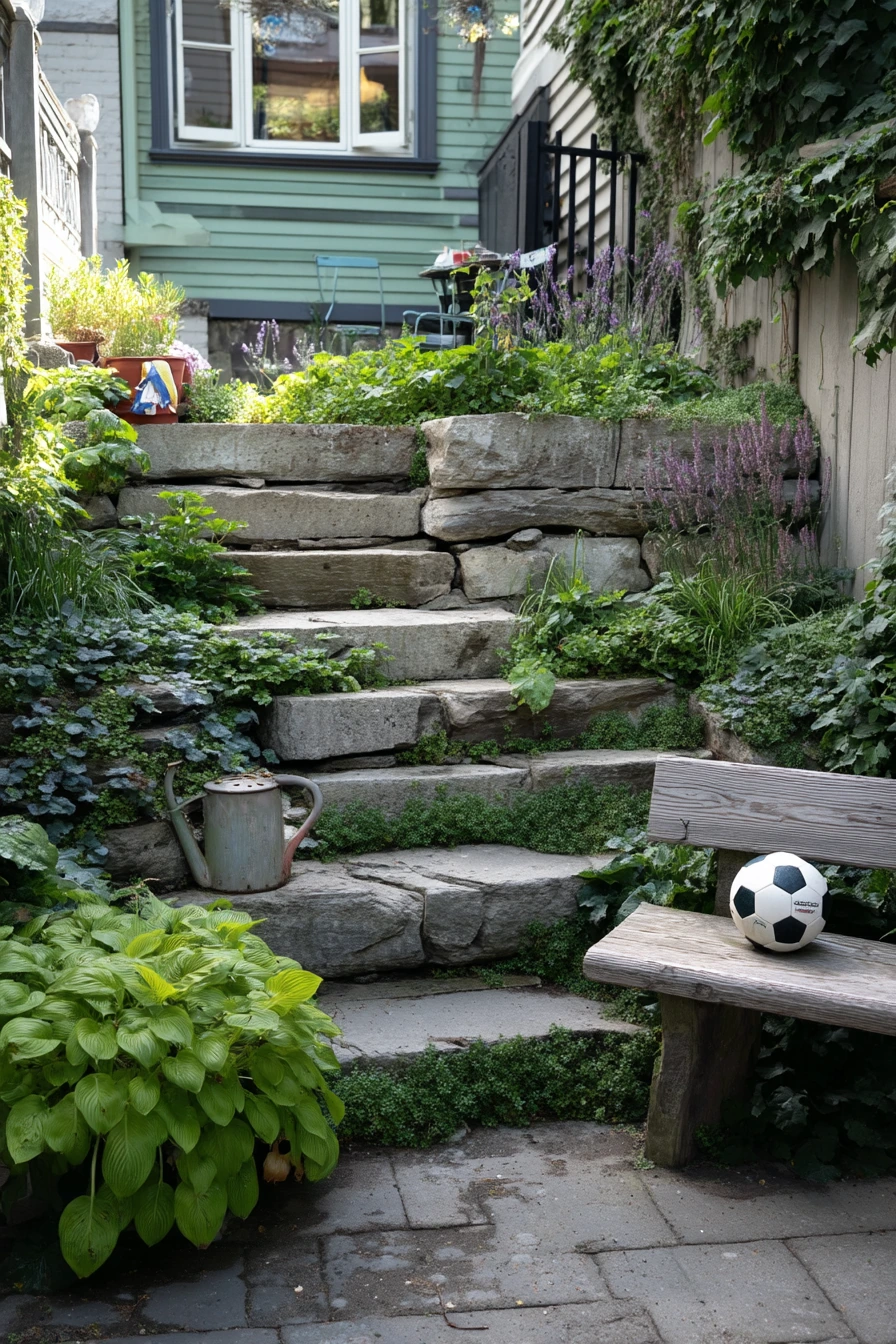
A sloped backyard can feel hard to use, but a stacked stone retaining wall can turn it into two simple planting terraces. This setup works well behind a modest family home because it adds flat spots for plants and creates safer steps. The stone texture also looks natural next to grass and patio edges.
For planting, use a mix of leafy and fragrant choices. Hostas fill shade and look full fast. Lavender adds scent and color in sun. Creeping thyme can spill over the wall cap and soften the hard line of stone. A worn teak bench nearby makes the terrace feel like a real sitting area, not just a garden bed.
Style it like a lived-in yard. A watering can, potting gloves on the wall cap, and even a kid soccer ball tucked near the steps make the space feel warm and useful. Keep the wall face clear so the stones stay visible, then let plants drape over the edges for a relaxed look.
- Set the lower terrace deeper to catch runoff and protect the upper bed.
- Use step stones or short stairs where people naturally cut across the slope.
- Plant thyme or small sedums at the top edge for a soft spill.
- Add a simple bench or two chairs on the wider level for daily use.
- Use morning light areas for lavender and sunnier herbs; save shade for hostas.
Pro Design Tip: Repeat one plant in both terraces, like lavender or thyme, so the two levels look connected and planned.
Budget Considerations: Stacked stone can cost more than timber, so consider a shorter wall with two smaller terraces, or use stone only on the visible face.
1. Low Concrete Retaining Wall Seating for a Compact Urban Backyard
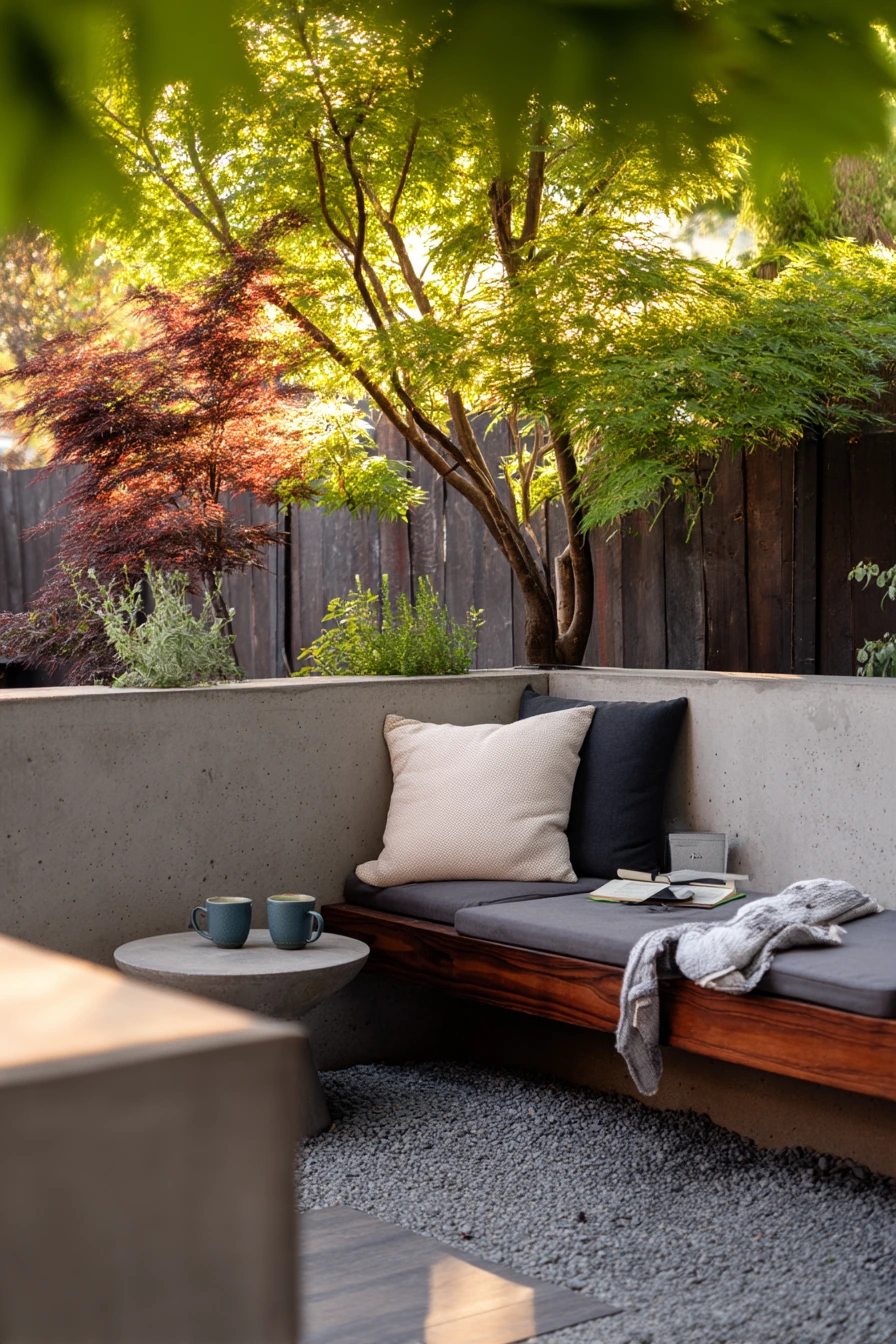
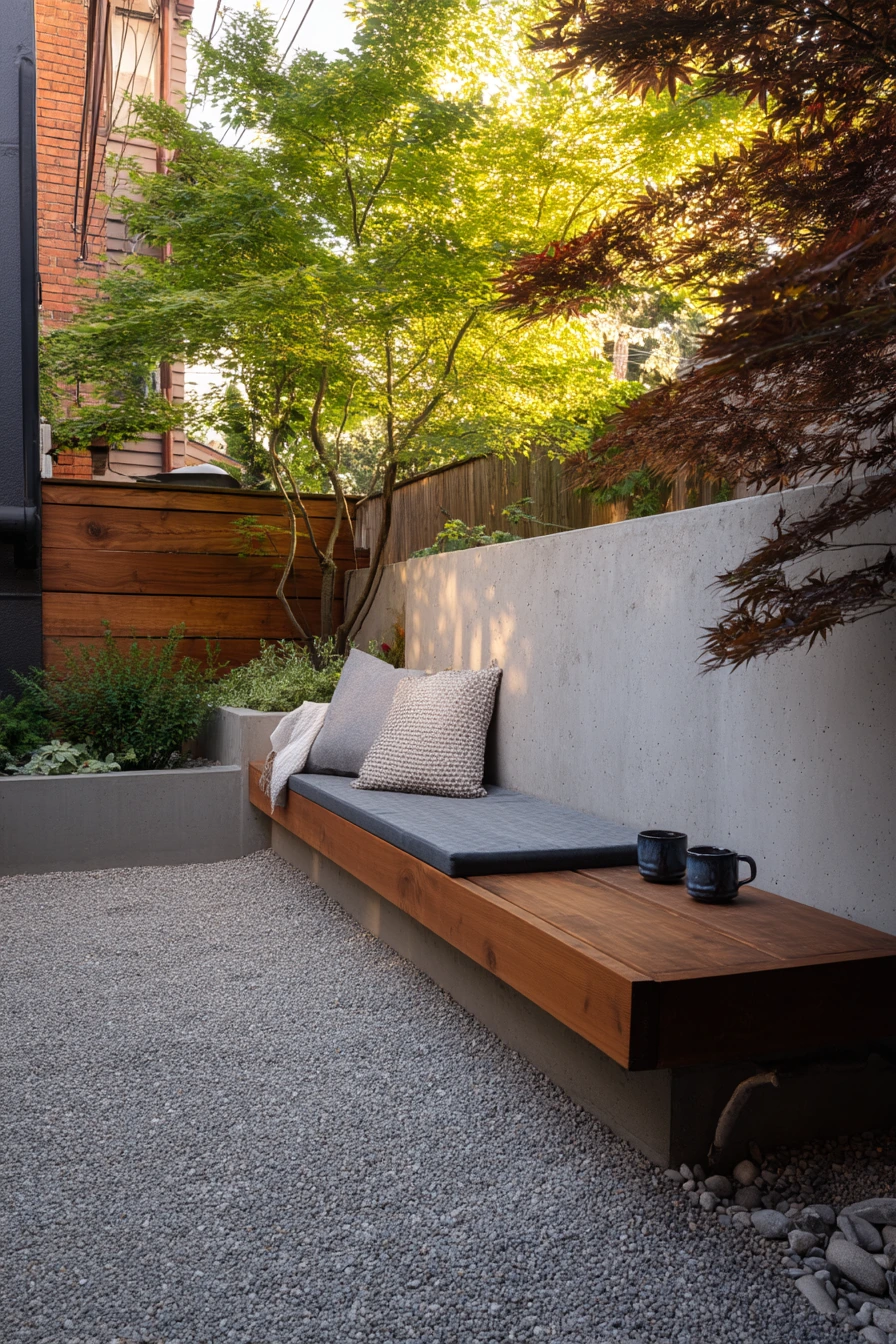
In a compact urban backyard, a low concrete retaining wall can do double duty as a built-in bench. It holds a small grade change and gives you extra seating without crowding the patio. This is a smart move for young couples or anyone who wants a calm, tailored space.
Keep the look warm with cedar planters and one small tree like a compact Japanese maple. A gravel border around the base helps with drainage and keeps mud off shoes. For comfort, add a simple cushion and a slightly wrinkled throw so it feels used, not staged. Two coffee mugs left on the wall makes the scene feel real and inviting.
How to style it: stick to two or three main materials, like concrete, cedar, and gravel. Use a small tray for candles or a book, and tuck away cords. If you need outdoor charging, run a safe outlet and use a cord cover so the cable does not drape near the seating edge.
- Choose a wall height that works as a seat, around chair height.
- Add a smooth cap stone or sanded top edge for comfort.
- Use cedar planters to bring warmth against gray concrete.
- Keep one focal plant, like a Japanese maple, for structure.
- Use gravel as a clean border to reduce weeds and splashback.
Pro Design Tip: Build in a slightly wider seat cap than you think you need so a cushion does not hang over the edge.
Budget Considerations: Poured concrete costs more up front; to save, use concrete blocks with a clean cap and spend the extra on a good seating top.

2. Simple Timber Retaining Wall for an Easy DIY Starter Home Project


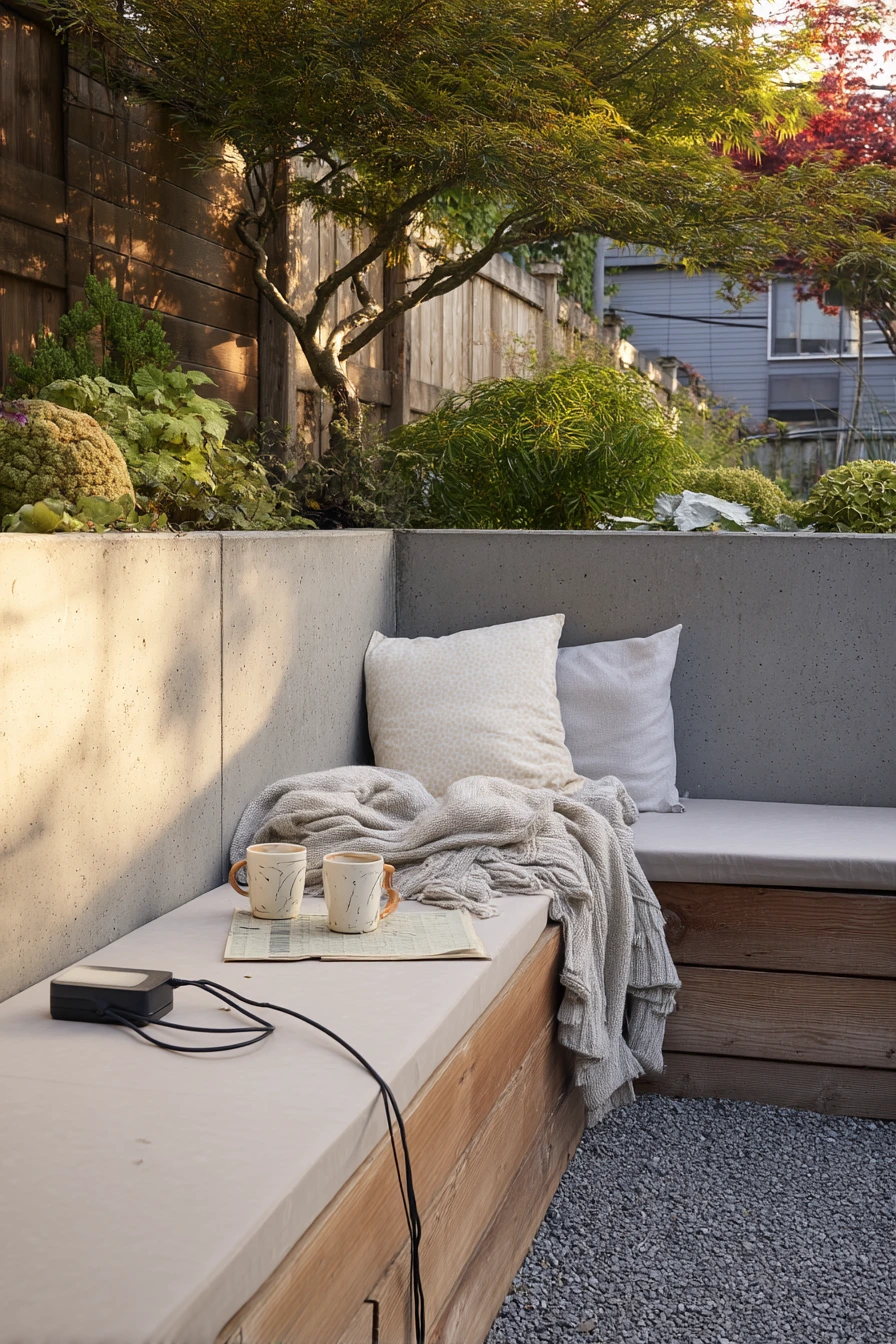
A simple timber retaining wall is one of the most beginner-friendly garden retaining wall ideas. It is fast to build, easy to cut to size, and works well for small height changes. In a starter home yard, it can turn a lumpy edge into a clean garden bed with fresh soil.
This look is honest and practical, even with unfinished edges while you work. Keep tools close, like a wheelbarrow, shovel, and stacked pavers, and focus on getting the wall straight and level. New grass beside the bed helps the area feel finished sooner, even if planting comes later. If the patio door gets muddy, set a boot tray outside so the dirt stays contained.
How to style it after the build: add a simple mulch layer, then plant in groups. Try three plants repeated in clumps, such as small shrubs, a flowering perennial, and a groundcover. Edge the lawn cleanly against the timber so it looks sharp. A folding table with a water glass and neatly not perfectly arranged tools fits the DIY vibe without looking messy.
- Use pressure-treated lumber rated for ground contact.
- Dig a shallow trench so the first board sits partly below grade.
- Add compacted gravel behind the wall for better drainage.
- Install landscape fabric to keep soil from washing out.
- Plan for a future cap board to make the top look finished.
Pro Design Tip: Use a long level and string line as you build so each course stays straight, even if the yard slopes.
Budget Considerations: Timber is often the lowest-cost option, but do not skip gravel and fasteners; those small items prevent early failure and costly repairs.


3. Sleek Retaining Wall Framing a Sunken Fire Pit Courtyard


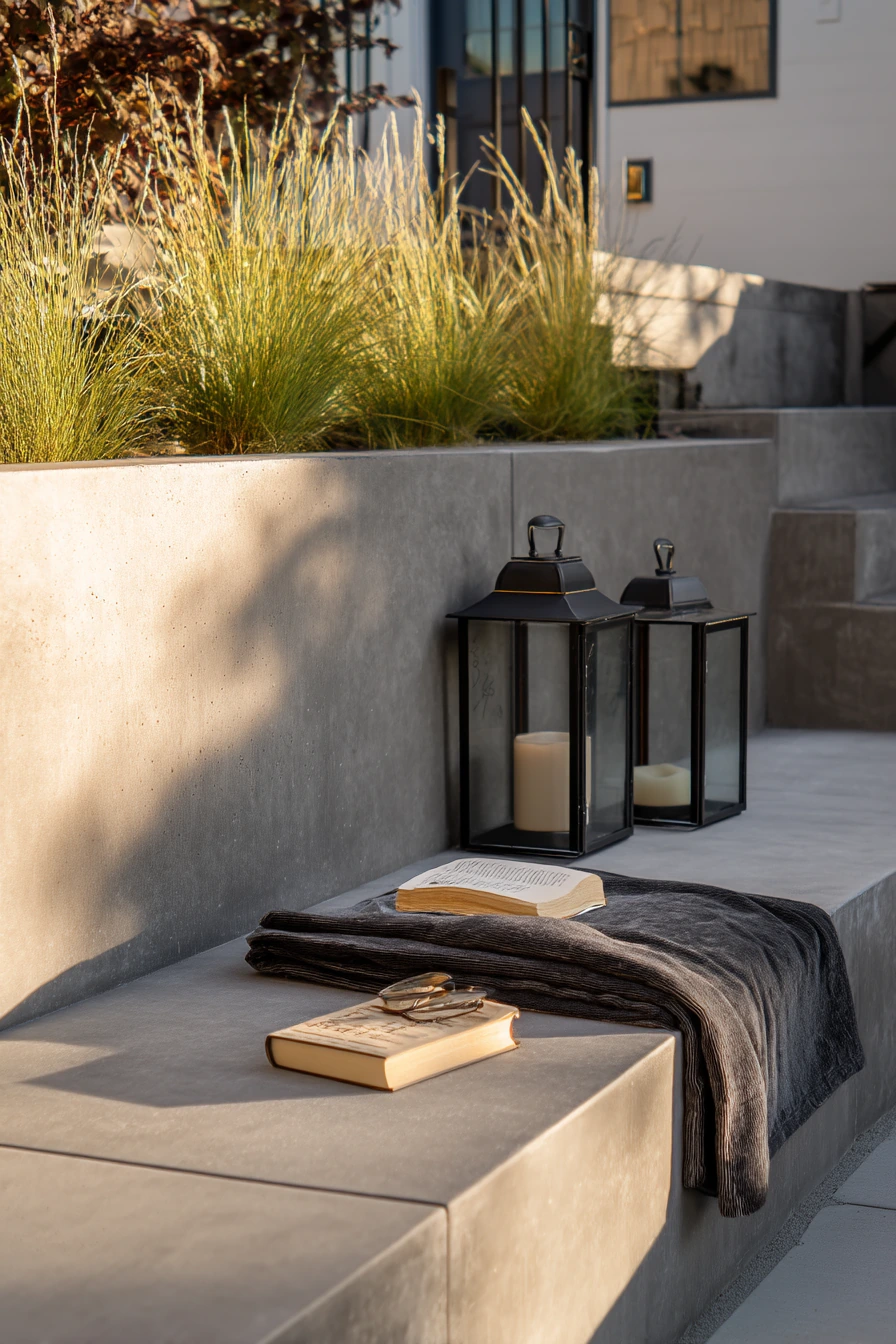
A clean suburban courtyard feels more usable when a sleek retaining wall frames a sunken fire pit area. The wall creates a clear boundary, helps with grade changes, and makes the space feel like an outdoor room. Smooth gray stone keeps the look calm and modern.
To keep it livable, layer in simple details. Ornamental grasses soften the stone and move in the breeze. Black metal lanterns add evening light without much wiring. A citronella candle helps when bugs show up. A paperback and reading glasses left on the ledge gives the area a quiet, real-life feel.
How to style it: treat the wall cap like a shelf, but do not clutter it. Use one folded blanket with a soft crease for warmth on cooler nights. Keep seating low and add a small side table for drinks. If the wall is near a walkway, keep the top edge smooth so it does not snag clothes.
- Use a stone finish that is smooth enough to sit near but not slippery.
- Plant grasses in clusters to frame the fire pit without blocking views.
- Add lanterns in pairs for balance and easy lighting.
- Use a simple blanket basket nearby so the ledge stays clear.
- Choose warm light bulbs to match golden hour tones at night.
Pro Design Tip: Keep the top cap the same material all around the sunken area so the space reads as one clean shape.
Budget Considerations: Stone veneer can lower costs compared to full stone, but spend on a durable cap since it gets the most wear from sitting and setting items down.

4. Curved Fieldstone Retaining Wall with Pollinator Planting
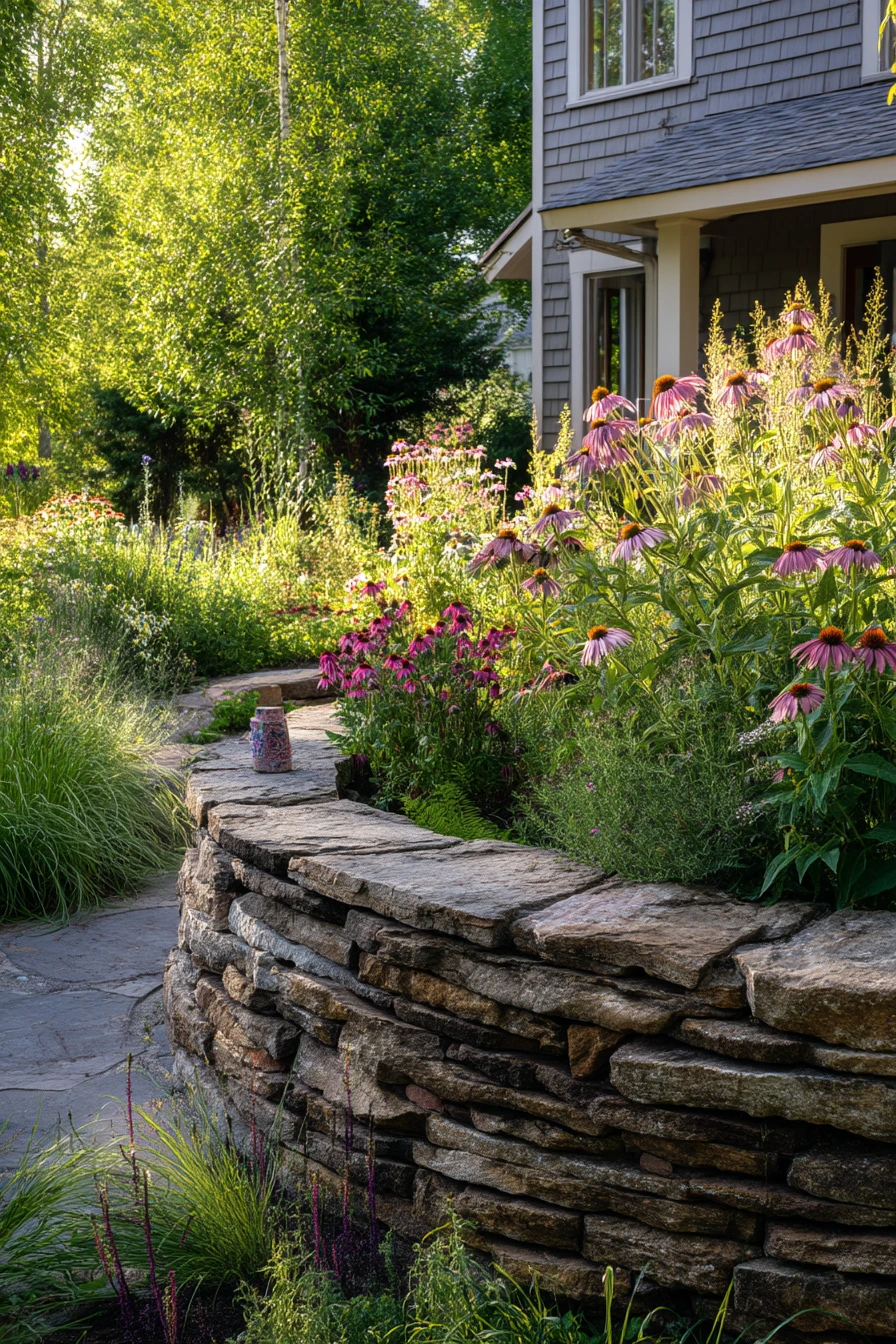
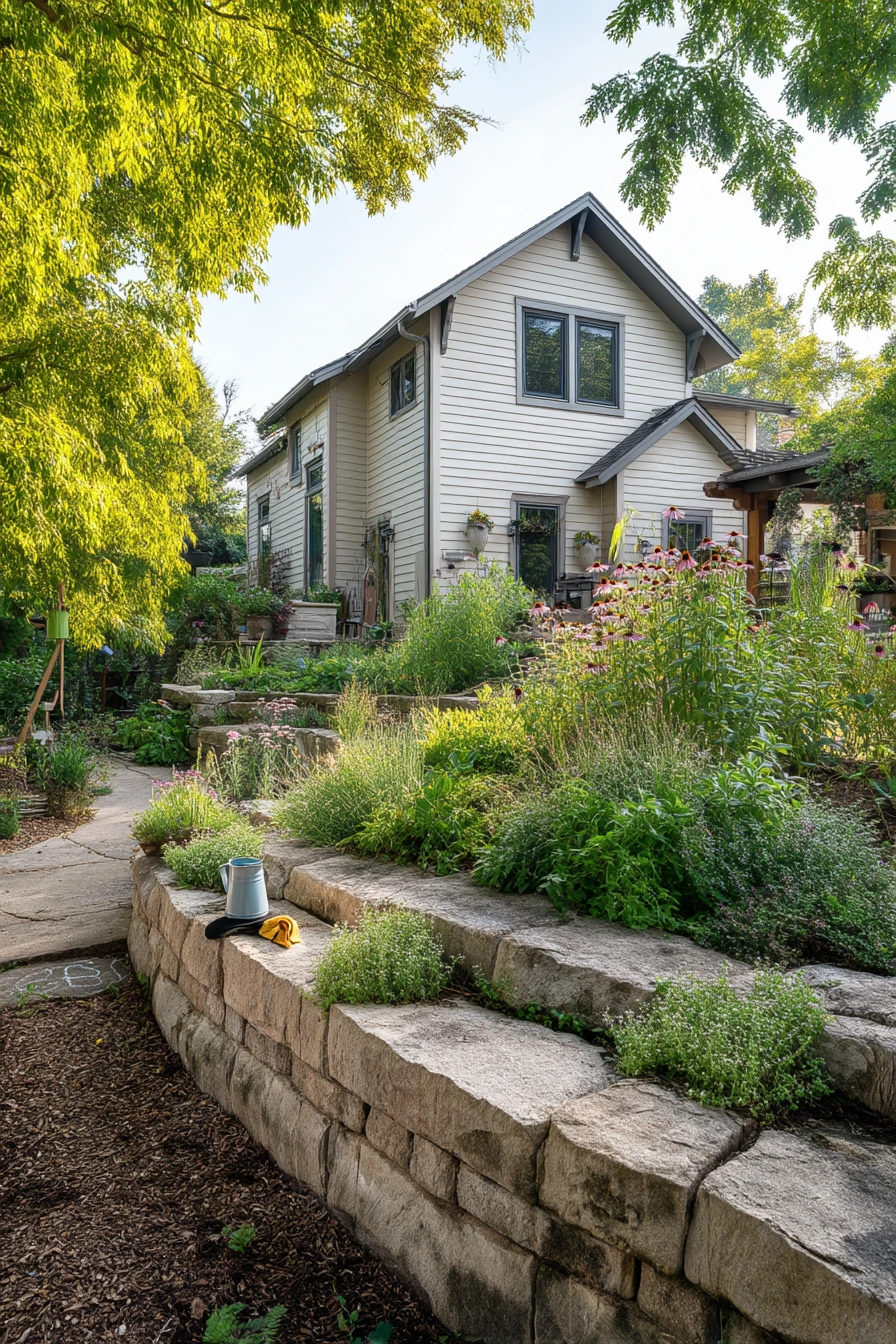
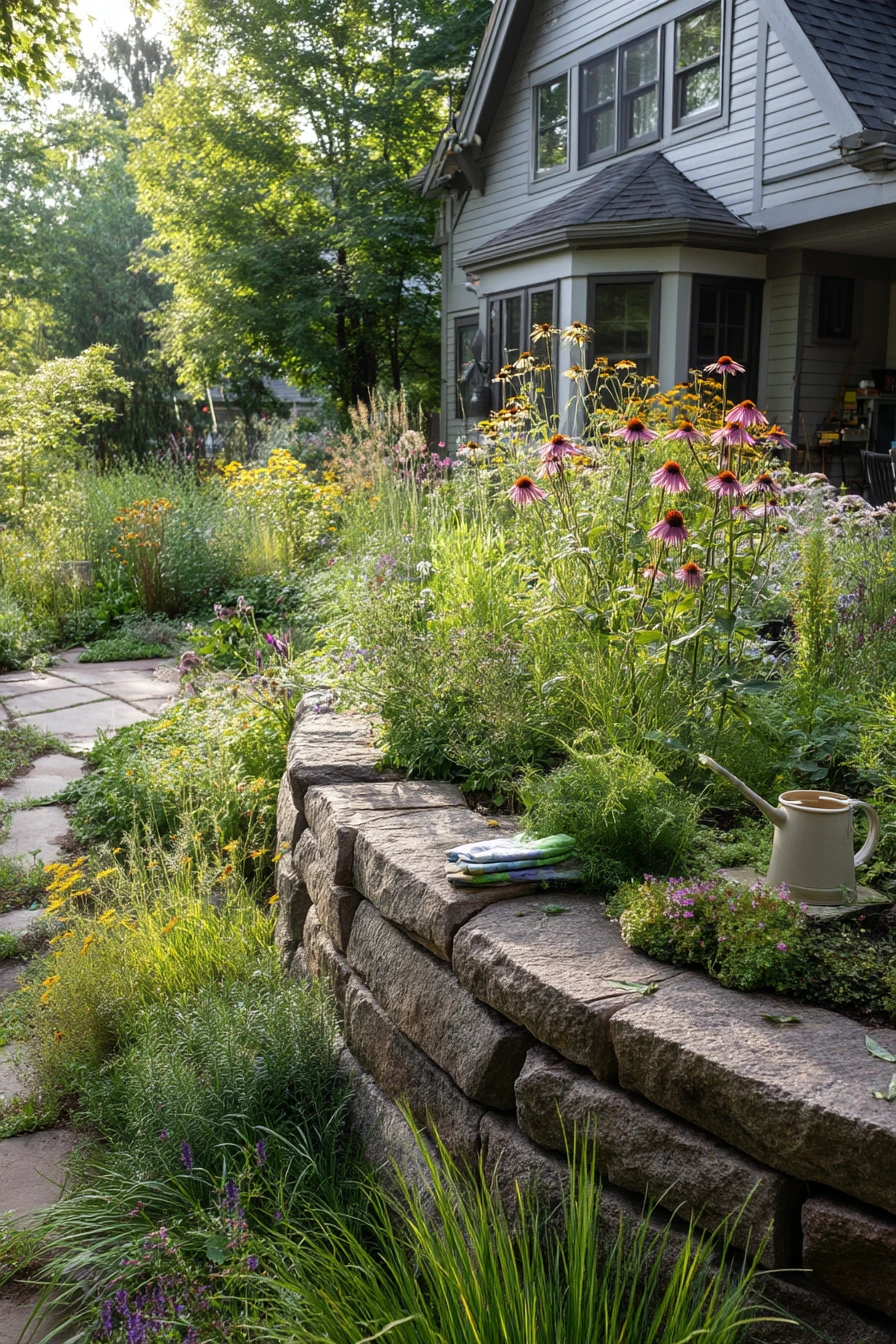
A curved retaining wall made from weathered fieldstone adds softness that a straight line cannot. In a rear garden beside a two-story home, the curve helps guide foot traffic and makes the planting bed feel deeper. Fieldstone also blends well with older patios and mixed landscaping.
Pair the wall with dense pollinator planting for a full, breezy look. Coneflowers, salvia, and bee balm bring color and feed bees and butterflies. Let some plants lean and spill slightly over the top course so the wall feels settled in. A ceramic watering jug, gardening journal, and garden gloves resting on the wall cap can make the space feel like a daily routine, not a show garden.
How to style it: keep hard items simple and natural. Add one or two terracotta pots near the curve to echo the warm stone tones. If there are faint child chalk drawings on the patio, leave a small spot for kids to draw so the garden stays family-friendly. In morning light with leafy shadows, this type of planting looks soft and layered.
- Use the curve to create a wider planting pocket where you want a focal plant.
- Mix tall and medium flowers so blooms show from different angles.
- Add a few grasses for movement between flower clusters.
- Deadhead coneflowers and salvia to keep color going longer.
- Leave a narrow mulch edge along the patio for easy sweeping.
Pro Design Tip: Repeat the same stone size and joint depth along the curve so it looks intentional, not wavy.
Budget Considerations: Fieldstone pricing varies by region; using locally sourced stone or mixing fieldstone with hidden block backup can reduce labor costs.

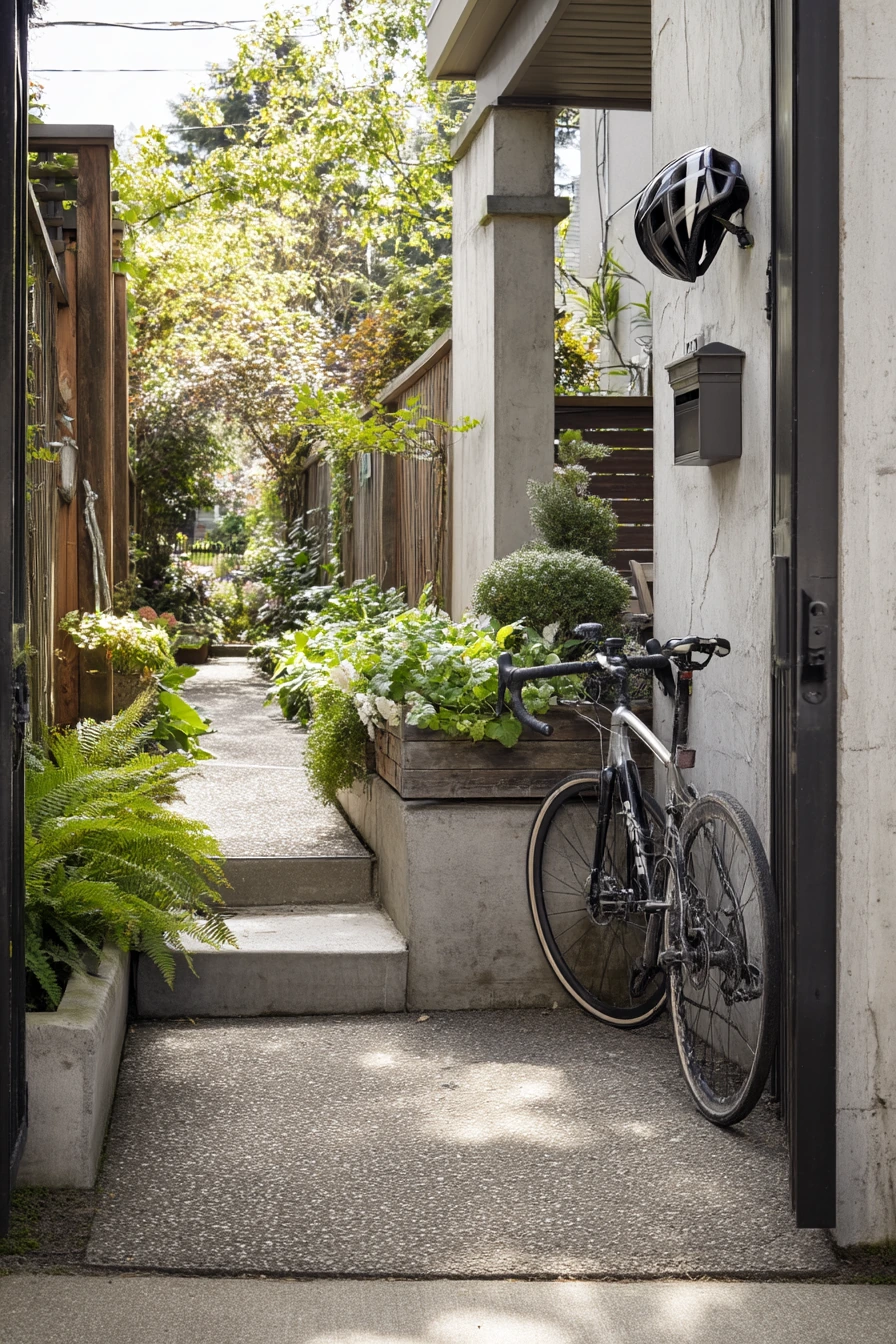
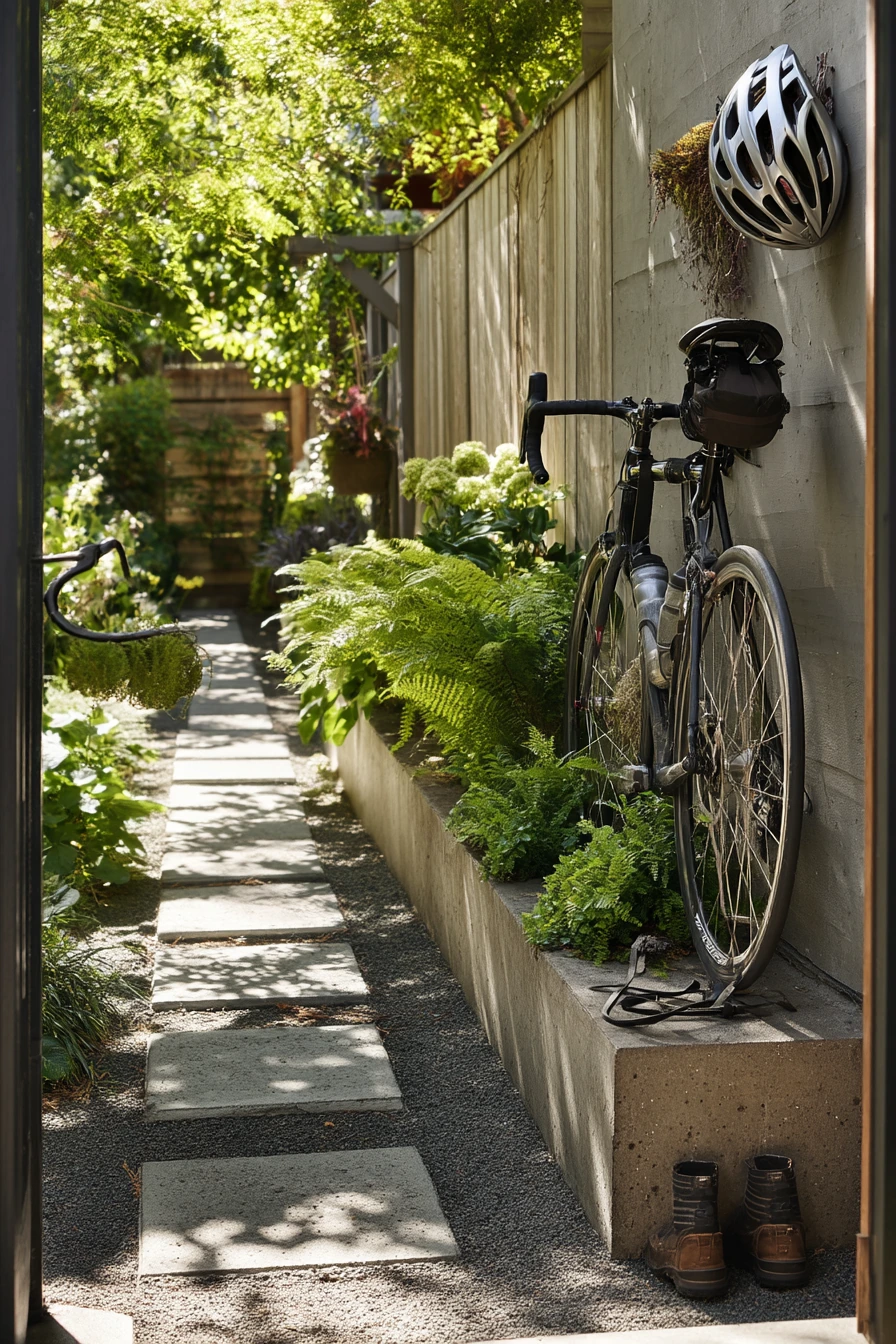
5. Narrow Side Yard Retaining Walls for a Functional Garden Path
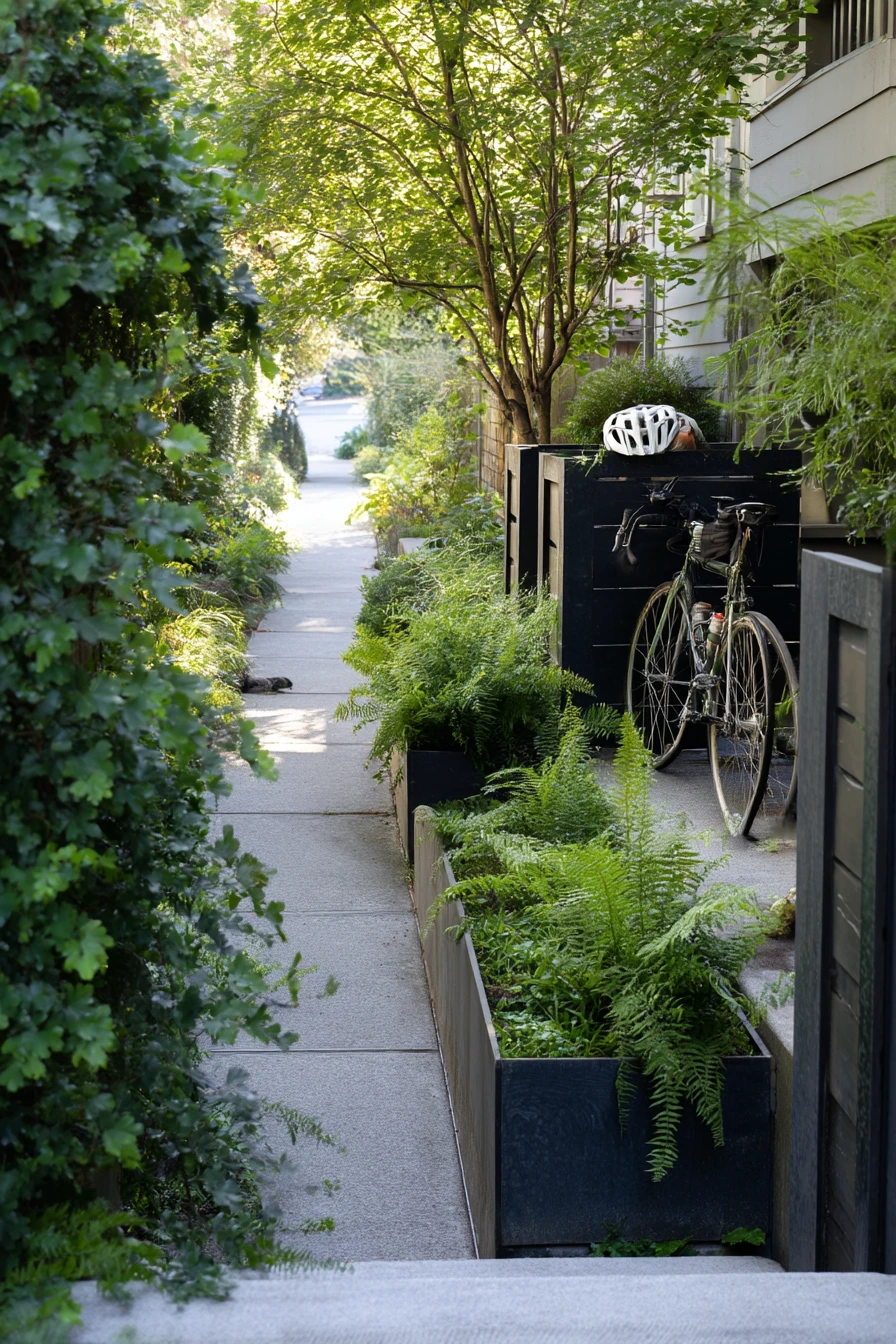

A narrow side yard often becomes wasted space, but two low retaining walls can create slim planting levels and a clear path. This layout makes the space feel organized and easy to maintain. It also helps when the grade drops toward the gate or steps.
Choose plants that stay tidy and handle lower light. Ferns add soft texture without taking over. Boxwood gives structure and keeps the space looking neat year-round. Climbing hydrangea can cover a fence and make the side yard feel like a small garden hallway. Real-life details like a bicycle helmet hanging on the gate and a dog leash by the step fit this practical zone.
How to style it: keep the path material simple, like compact gravel or pavers, and use the retaining wall tops as clean edges. If mail gets tucked under a planter, add a small wall-mounted box to keep paper dry. Muddy paw prints mean you may need a rinse spot, so consider a small hose hook or a boot brush near the back step.
- Keep wall heights low so the space does not feel tight.
- Use a consistent plant line to make the path feel longer and calmer.
- Install simple lighting, like small solar path lights, for safety.
- Prune hydrangea to keep it off gates and handles.
- Add hooks for leash and helmet to reduce clutter on the steps.
Pro Design Tip: Use one repeating evergreen, like boxwood, to keep a narrow space from looking busy.
Budget Considerations: Low walls use fewer materials; save more by using standard concrete blocks with a thin stone cap where it shows.
6. Retaining Wall Serving Ledge Next to an Outdoor Dining Area
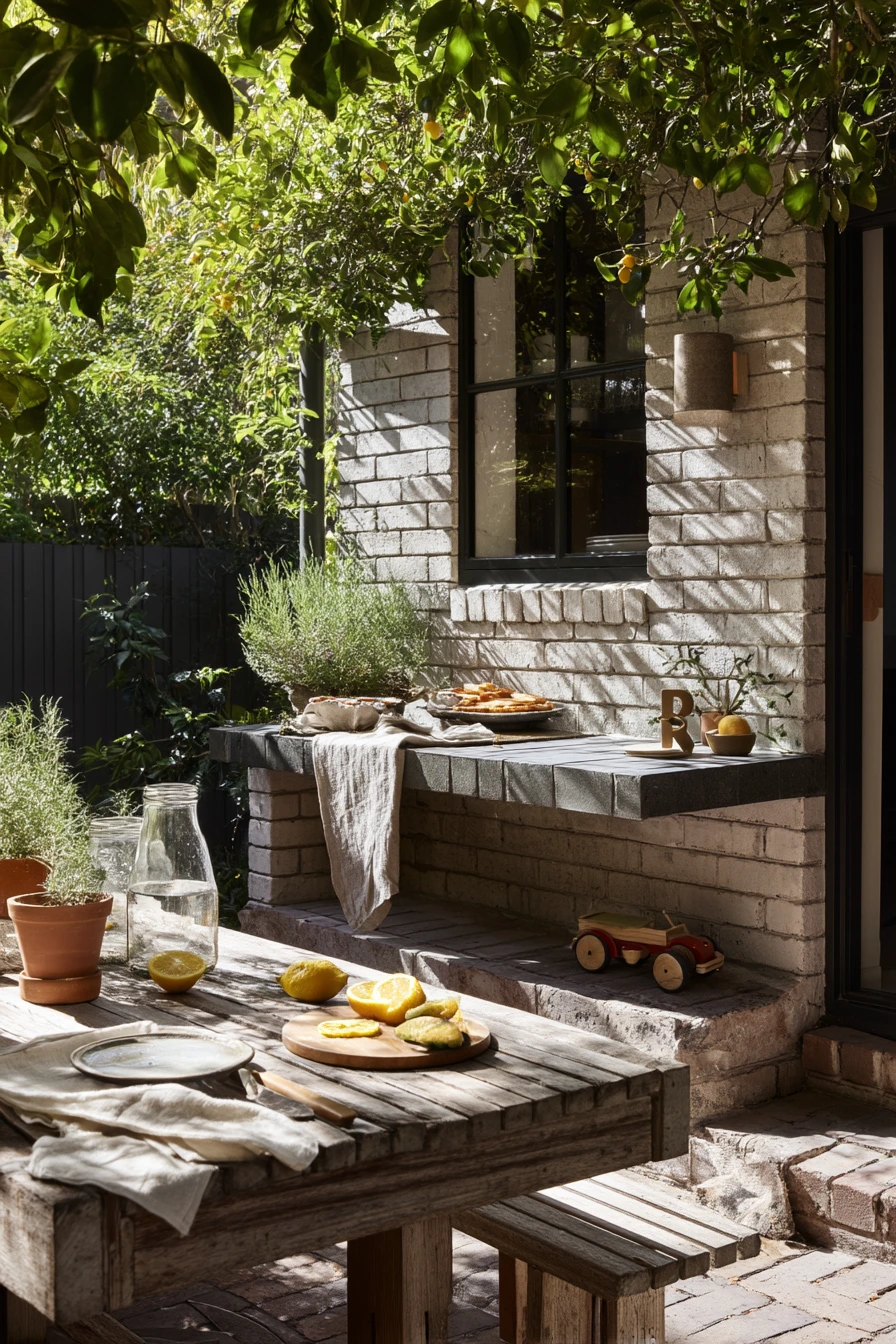
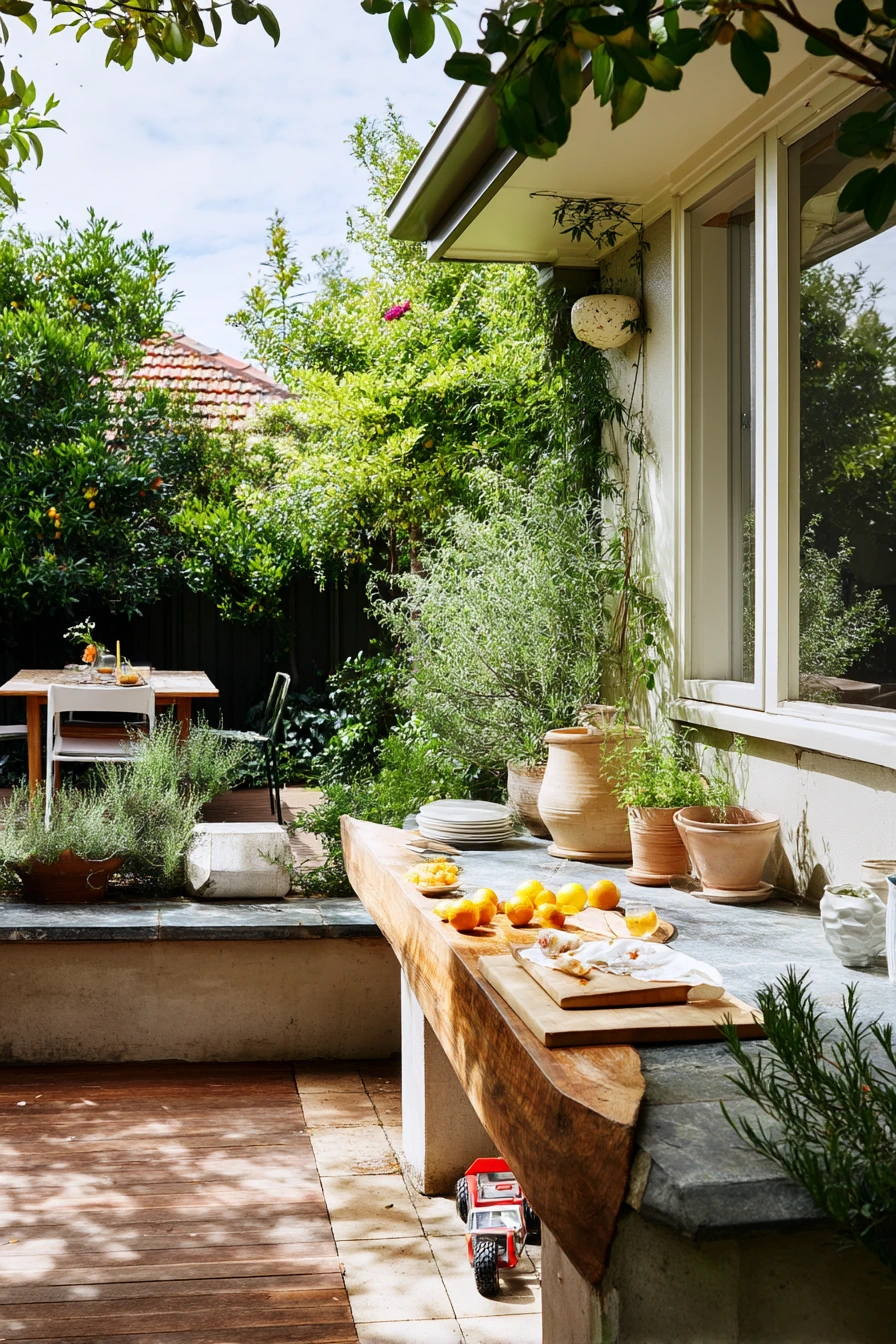
A retaining wall can be more than a soil holder. In a family backyard, a wall with a bluestone cap can double as a casual serving ledge beside an outdoor dining zone. It gives you a spot for plates, pitchers, and herbs while keeping the table less crowded.
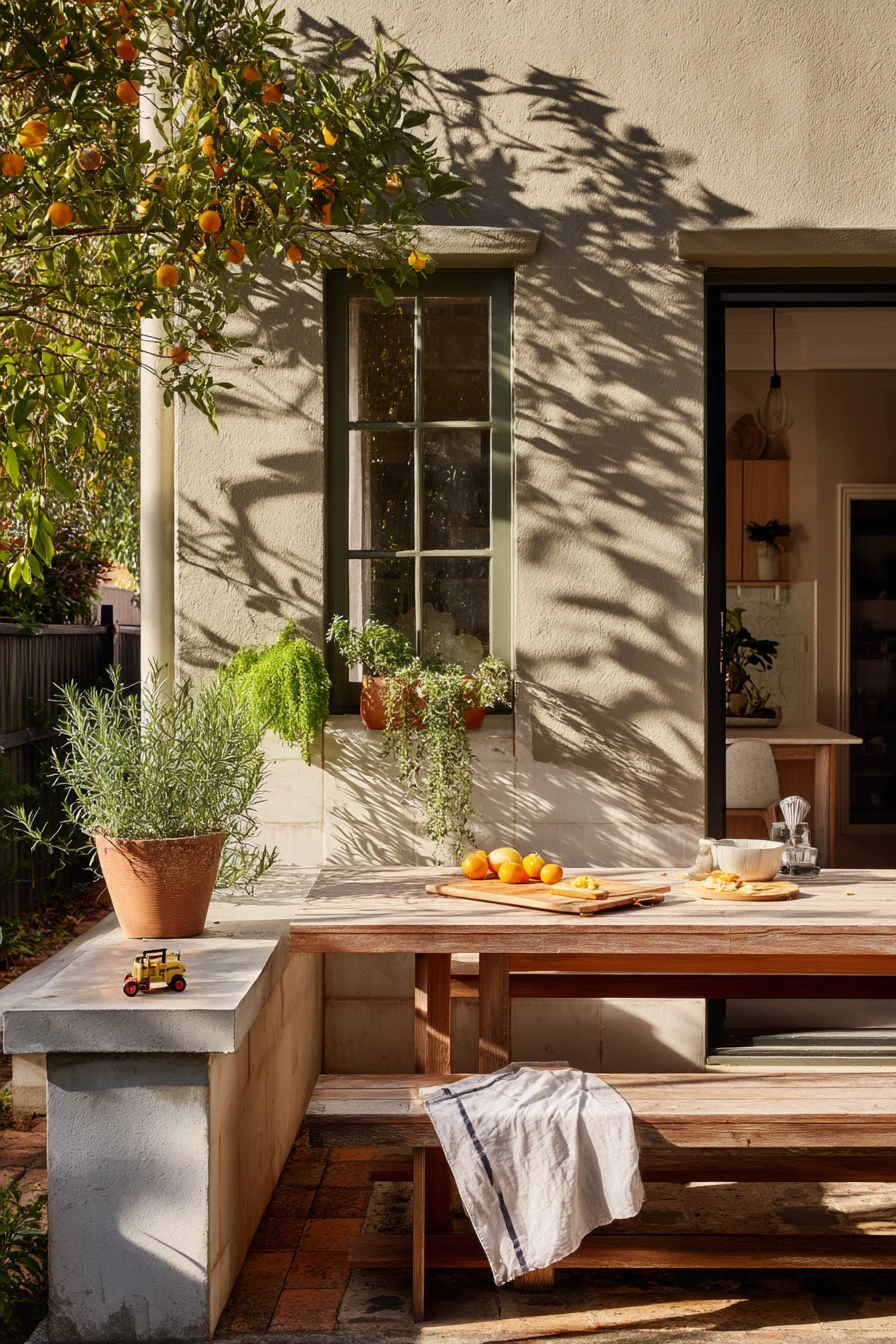
Keep planting close to the ledge but not messy. Trailing rosemary works well because it smells good and can drape over the edge without looking wild. Terracotta pots add warmth and are easy to move when you host. Small everyday items like a cutting board with half-eaten citrus, and napkins that flutter slightly, help the space feel like real summer use. A kid’s spoon and toy truck near the step reminds you to keep corners smooth and safe.
How to style it: use the wall cap like a counter. Add one slim tray for salt, napkins, and a small vase. Keep one section clear so people can set down food. If warm window light from the kitchen hits this spot, use it by placing herbs where you can clip them quickly while cooking.
- Choose a durable cap stone that handles spills and heat.
- Keep herbs near the ledge for easy cutting during meals.
- Add a narrow outdoor rug to define the dining zone.
- Use stackable stools or chairs so the area stays flexible.
- Keep a small bin for kids items so the steps stay clear.
Pro Design Tip: Make the cap overhang slightly so drips fall away from the wall face and staining is less visible.
Budget Considerations: Bluestone can be pricey; a concrete cap with a stone-look finish can give a similar feel for less, especially on long walls.

7. Natural Stone Retaining Wall for a Calm Poolside Grade Change

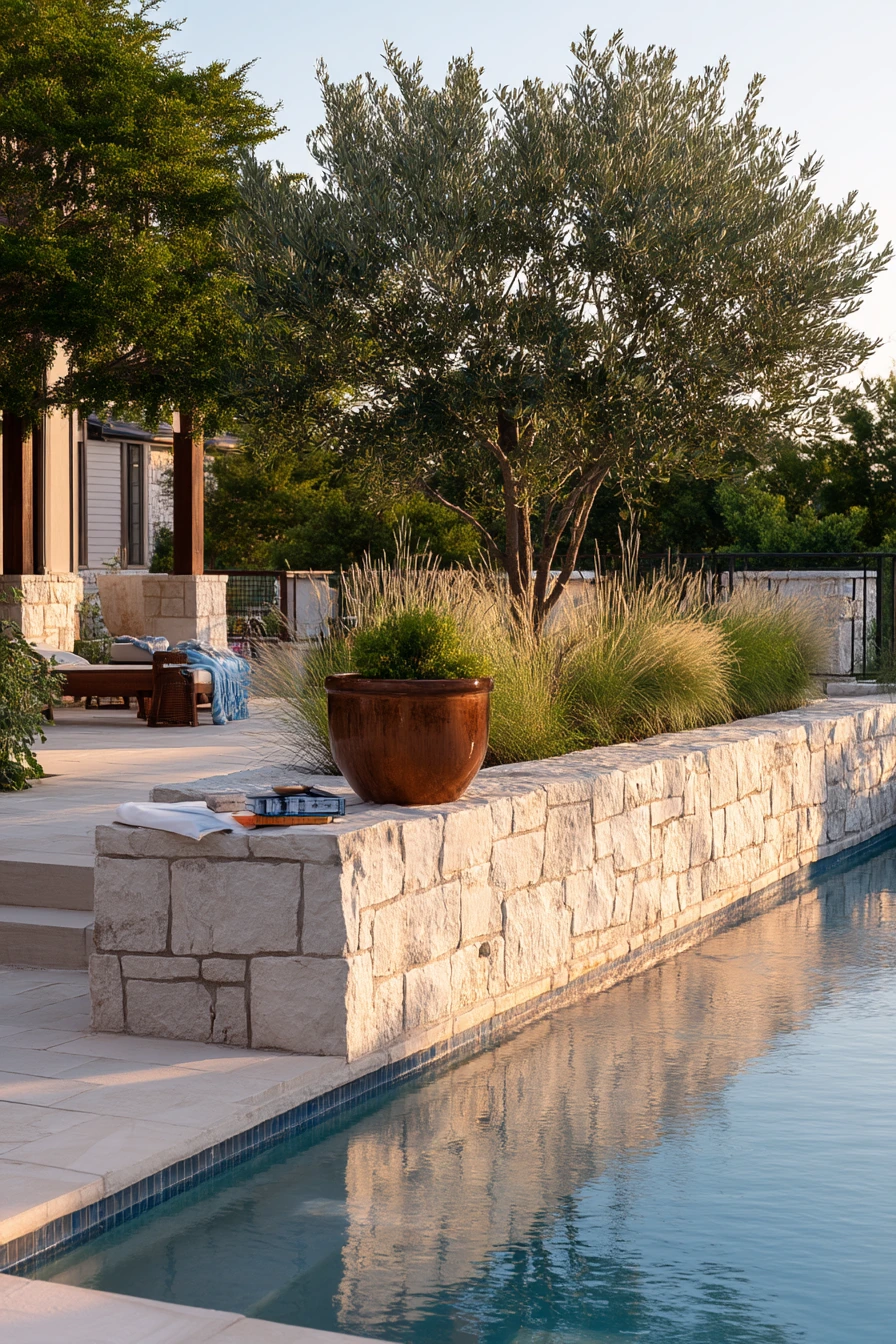
A quiet poolside garden needs a soft edge where the ground shifts level. A natural stone retaining wall can hold a shallow grade while still feeling relaxed and resort-like. It also keeps mulch and soil from washing onto the patio during watering or rain.
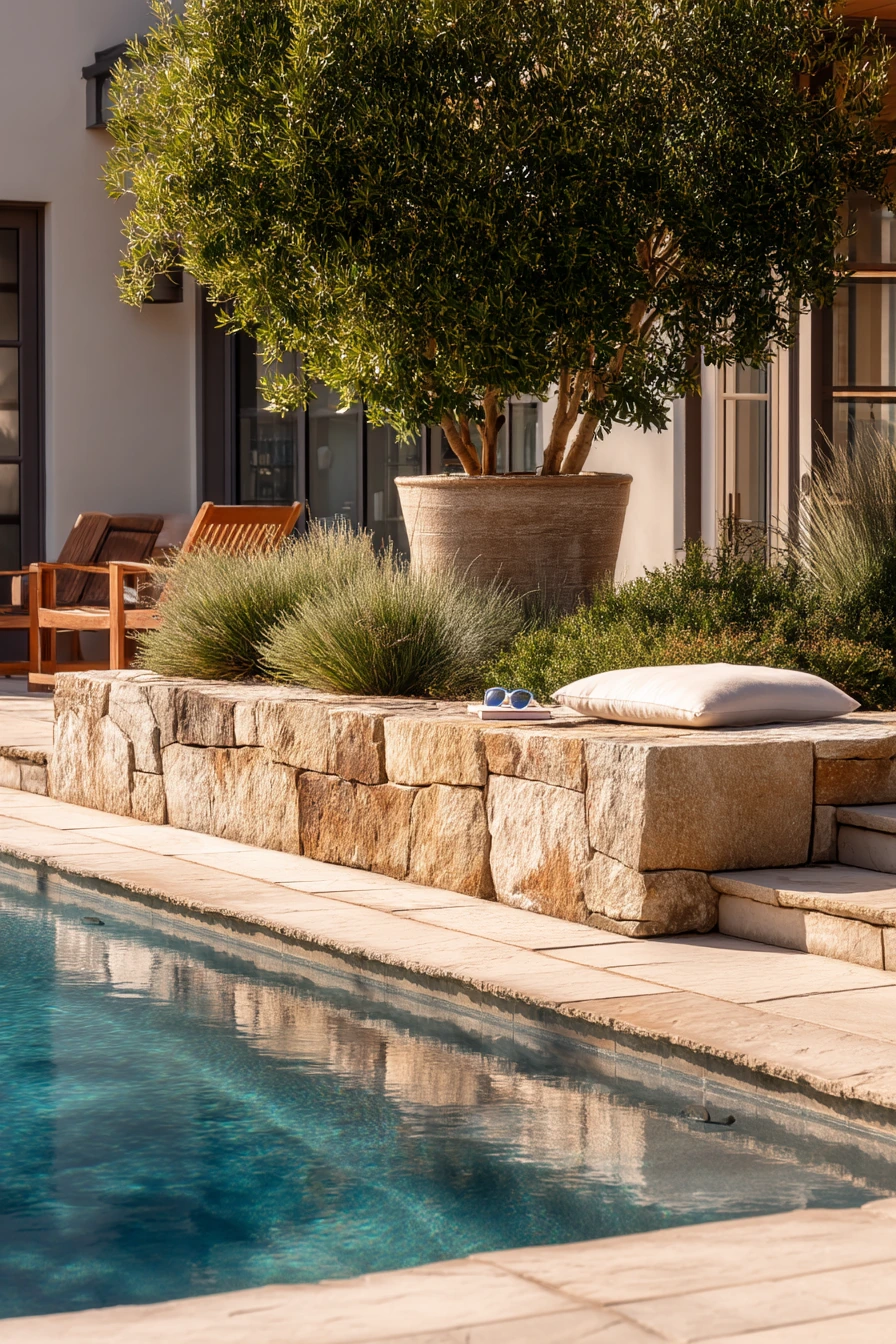
Planting should stay simple so the pool area feels open. Ornamental grasses add movement without blocking sightlines. An olive tree in a large planter brings height and a clean shape. Style details matter here because people notice them up close. A rolled towel and sunscreen on the coping, sunglasses beside a paperback, and subtle water reflections make the space feel used but still calm.
How to style it: match your wall stone to nearby hard surfaces. If the patio is warm-toned, choose stone with similar undertones so it does not clash. Keep planters large and few, not many small pots. Use a small basket for pool items so they do not spread across the wall cap.
- Keep the wall low so the pool area feels open and safe.
- Use grasses in groups for a clean, modern look.
- Add one statement planter, like an olive tree, for height.
- Choose light mulch that looks clean against stone and patio.
- Rinse stone edges often to prevent sunscreen and chlorine buildup.
Pro Design Tip: Pick a stone with a slightly textured face so it hides water spots and stays slip-resistant near the pool.
Budget Considerations: Natural stone costs vary; you can limit expense by using stone only on the pool-facing side and a less costly block system behind it.

8. Rain-Ready Retaining Wall with Integrated Drainage
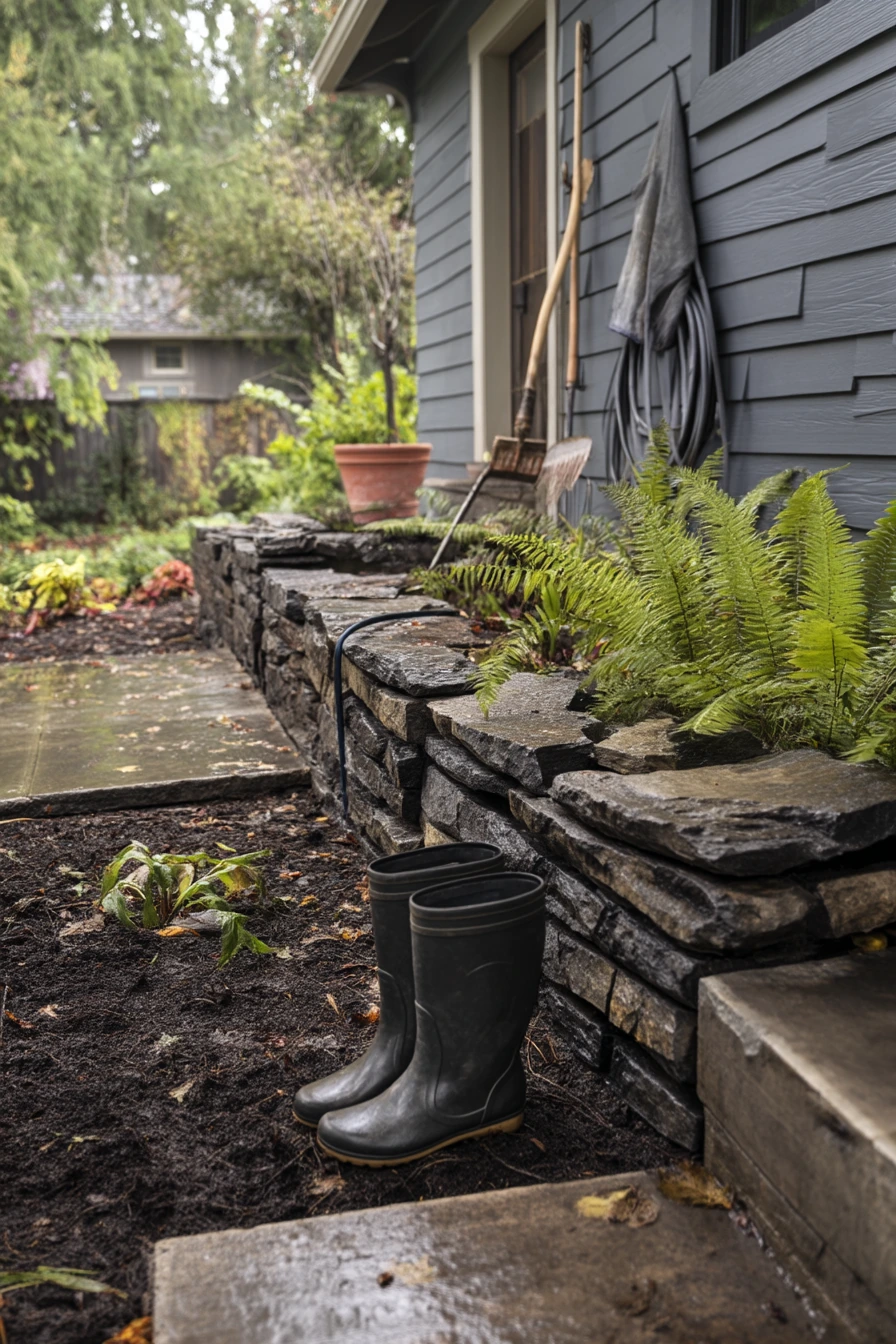
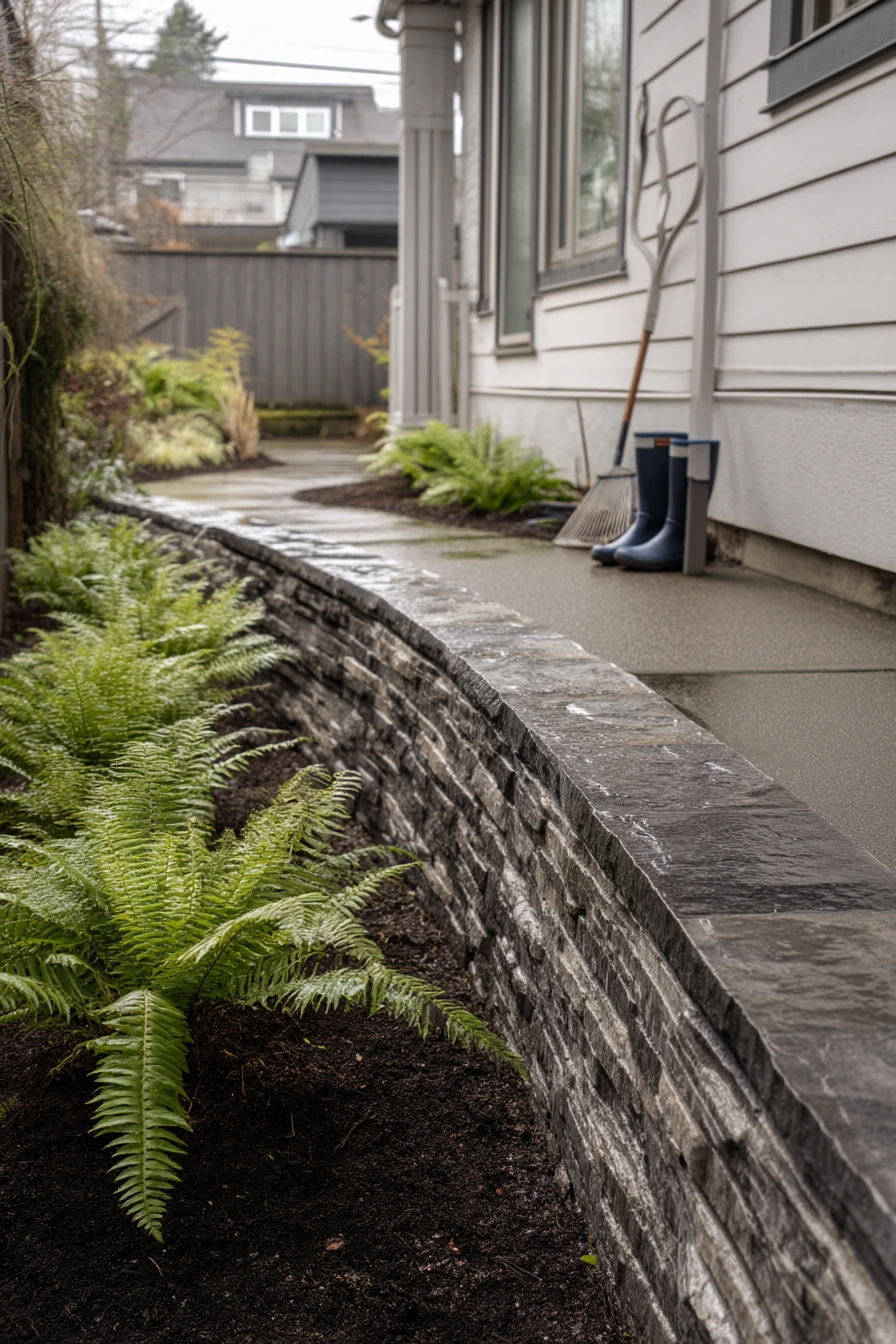
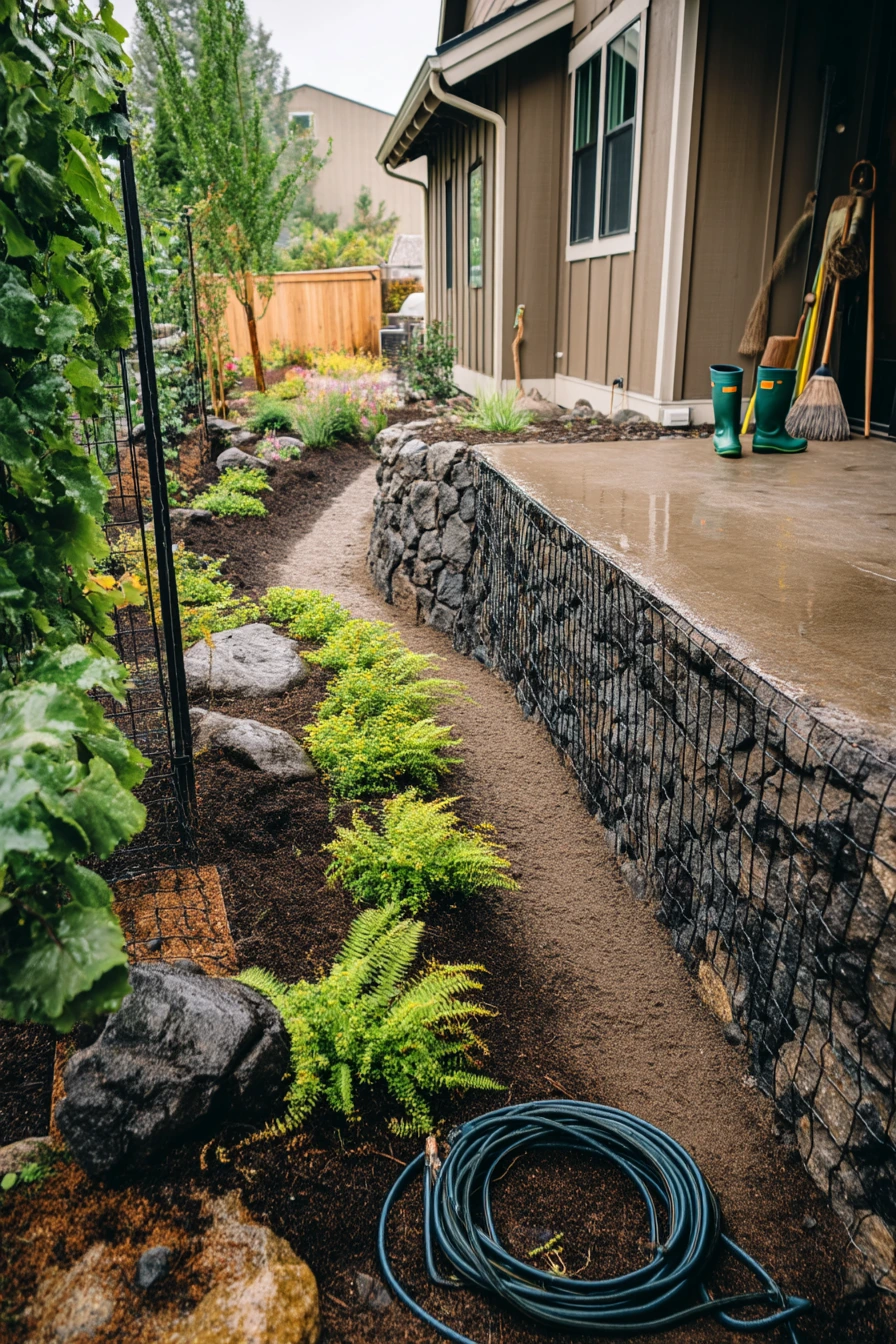
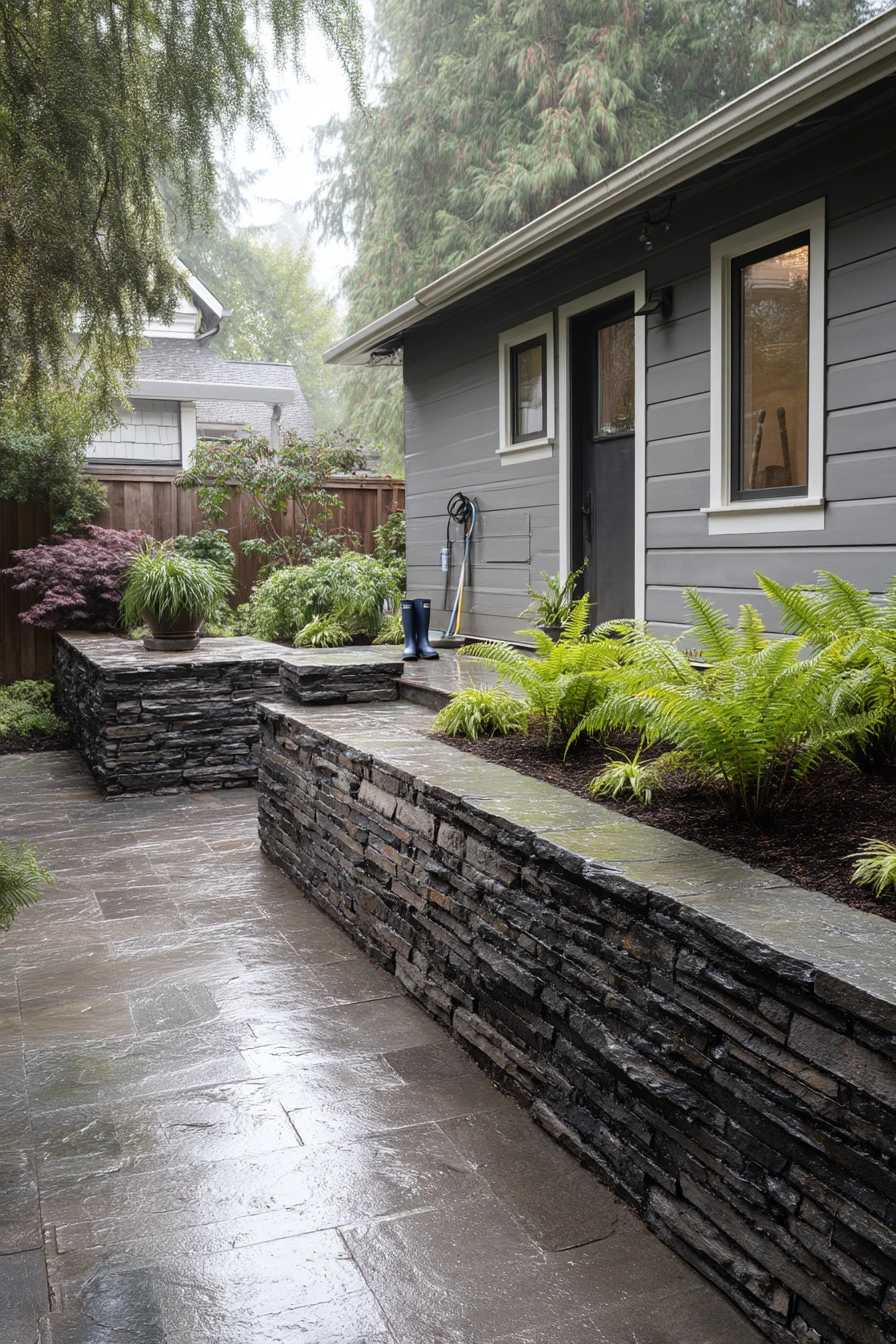
If your yard stays wet after storms, choose a textured retaining wall that is built for drainage. After a light shower, stone tones darken and every flaw shows, so good construction matters. Integrated drainage helps protect the wall and keeps your patio from turning into a muddy mess.
Plan the planting for moisture. Fern beds handle damp soil well and look fresh after rain. Use a clean layer of mulch to reduce splashing and keep weeds down. Real-life items like rain boots by the back door and a wet rake leaning against the wall fit this type of working yard. A garden hose coiled loosely nearby is fine, but add a hook so it does not kink.
How to style it: lean into the grounded look. Add a simple stone or gravel strip at the base to keep mulch off the wall face. Use darker planters or metal tools that look good when wet. Keep the back door area tidy with a small mat and a bin for gloves so the space does not feel cluttered on gray days.
- Add gravel and perforated pipe behind the wall to move water out.
- Use weep holes or a drainage outlet where needed.
- Pitch the patio slightly away from the wall to avoid pooling.
- Choose plants like ferns that like moisture and shade.
- Use a boot tray to keep mud from spreading indoors.
Pro Design Tip: Hide drainage outlets inside a gravel pocket or behind a low plant so the wall looks clean while still working well.
Budget Considerations: Drainage adds cost, but skipping it can lead to wall failure; if money is tight, prioritize gravel and pipe even if you delay decorative finishes.
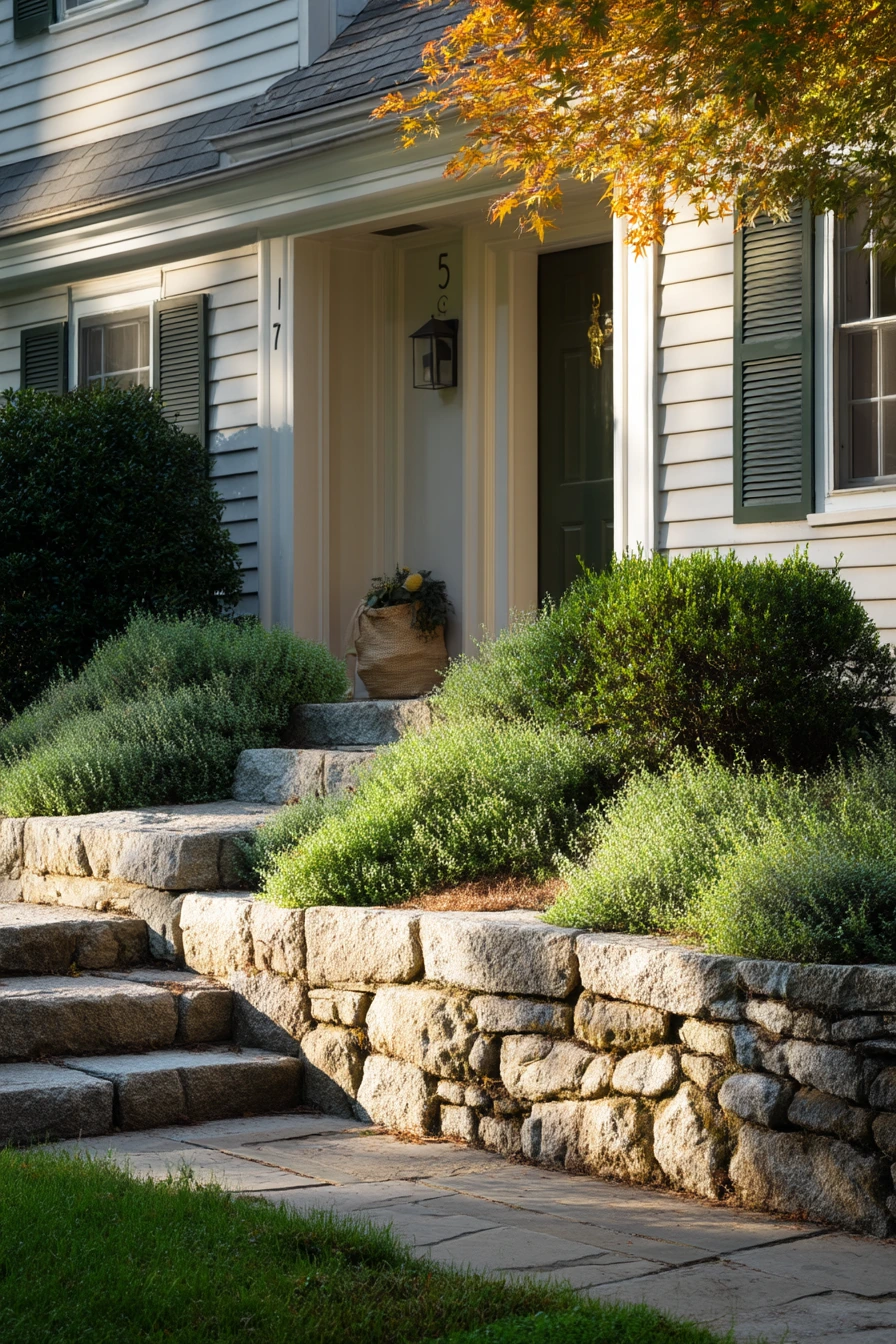
9. Front Yard Low Retaining Wall Ideas for Steps and Curb Appeal


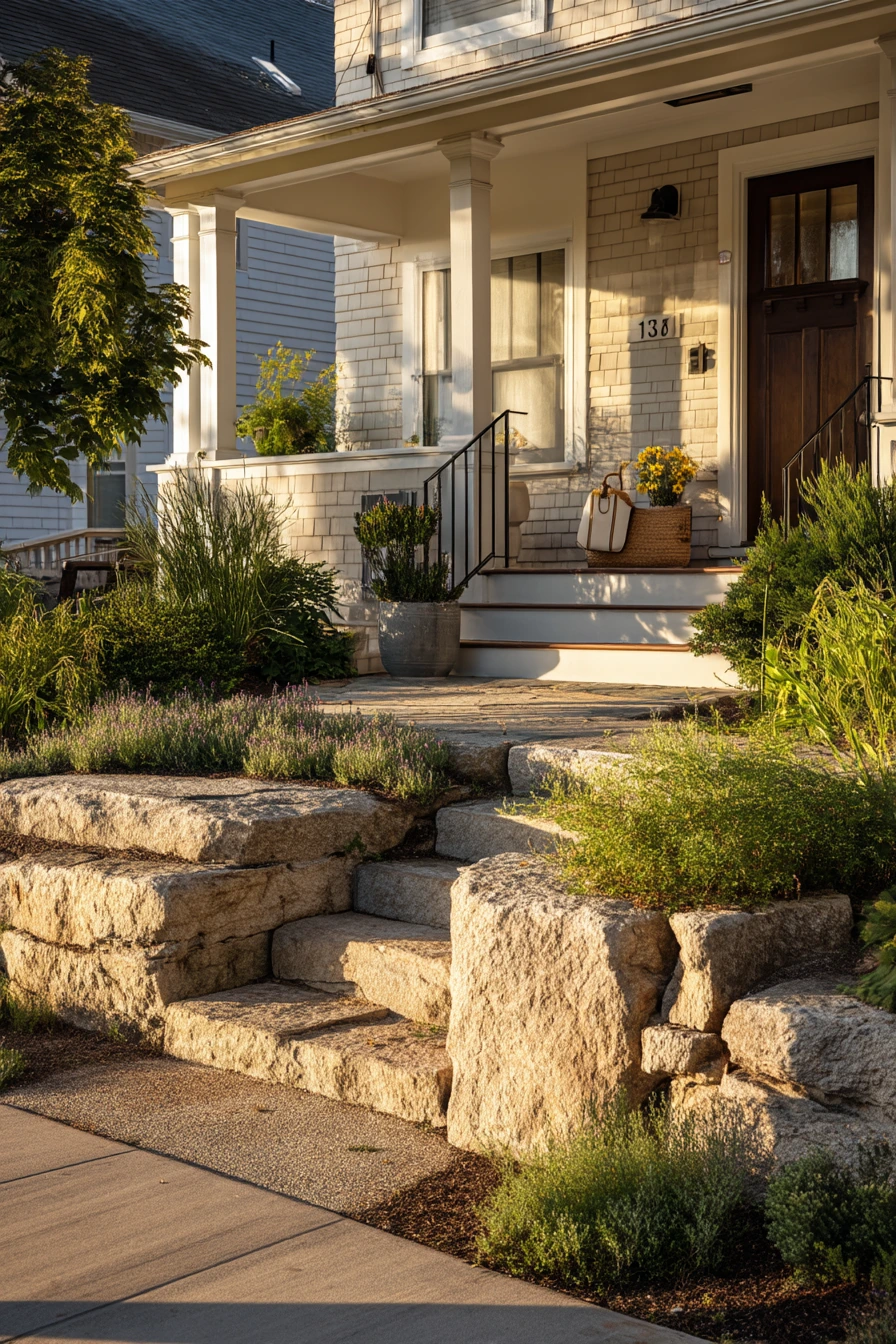
A low retaining wall in the front yard can guide a short set of steps to the porch and make the entry feel more welcoming. It also helps organize planting so shrubs do not spill into the walkway. For a lived-in suburban home, this is an easy upgrade that adds structure without a full landscape redo.
Layer plants for a tidy look. Use shrubs as the backbone, then add small fillers near the wall. Thyme between stones is a great detail because it stays low and adds a soft green line. Brass house numbers bring a clean finish and are easy to read from the street. Small home signs, like a tote bag and keys seen through an open door, fit a real morning routine with the porch light still on.
How to style it: keep the color palette calm. Repeat one mulch color and one pot color if you use containers. Add a simple doormat and one porch planter. Make sure step edges are even and not too tall, especially if kids or older guests use the entry often.
- Keep the wall low so it feels open and friendly.
- Use a consistent step width for safer walking.
- Plant thyme or low groundcover between stones for a soft edge.
- Add clear house numbers and a simple porch light for visibility.
- Trim shrubs so they do not hide steps or block the path.
Pro Design Tip: Line up the wall and steps with the front door so the entry path looks straight and calm from the curb.
Budget Considerations: A short wall uses fewer materials; to save more, use standard pavers with a matching cap and spend on good lighting and clean edging.
Conclusion: Choose a Retaining Wall Idea That Fits Your Yard
The best garden retaining wall ideas solve a problem first, like a slope, a wet corner, or a cramped path. Then they add comfort with seating, steps, and simple planting.
Pick materials that match your home and the way you live, from stacked stone terraces to low concrete seating and easy timber builds. Add small styling touches like herbs spilling over the cap, a bench, or lanterns so the wall feels like part of the space.
Before you start, plan for drainage and safe step heights. With a clear plan, even a small wall can make your yard easier to use and easier to keep looking good.
FAQ
1. Do I need drainage behind a retaining wall? Yes for most walls. Gravel and a drain pipe help move water so pressure does not build up.
2. What is the cheapest retaining wall material? Timber is often the lowest cost, but it still needs proper base gravel and strong fasteners.
3. How tall can a DIY retaining wall be? Many homeowners keep DIY walls low, often under about 3 feet. Check local rules and soil conditions before building taller.
4. What plants look good spilling over a wall? Creeping thyme, trailing rosemary, small sedums, and some groundcovers soften edges and hide hard lines.
5. Can a retaining wall be used as seating? Yes. A low wall with a smooth cap can work as a bench, especially in small yards.
6. How do I make a retaining wall look less harsh? Add plants at the top edge, use a warm cap material, and repeat textures like gravel or terracotta nearby.
7. What is the most common retaining wall mistake? Skipping base prep and drainage. A good foundation matters more than the finish.