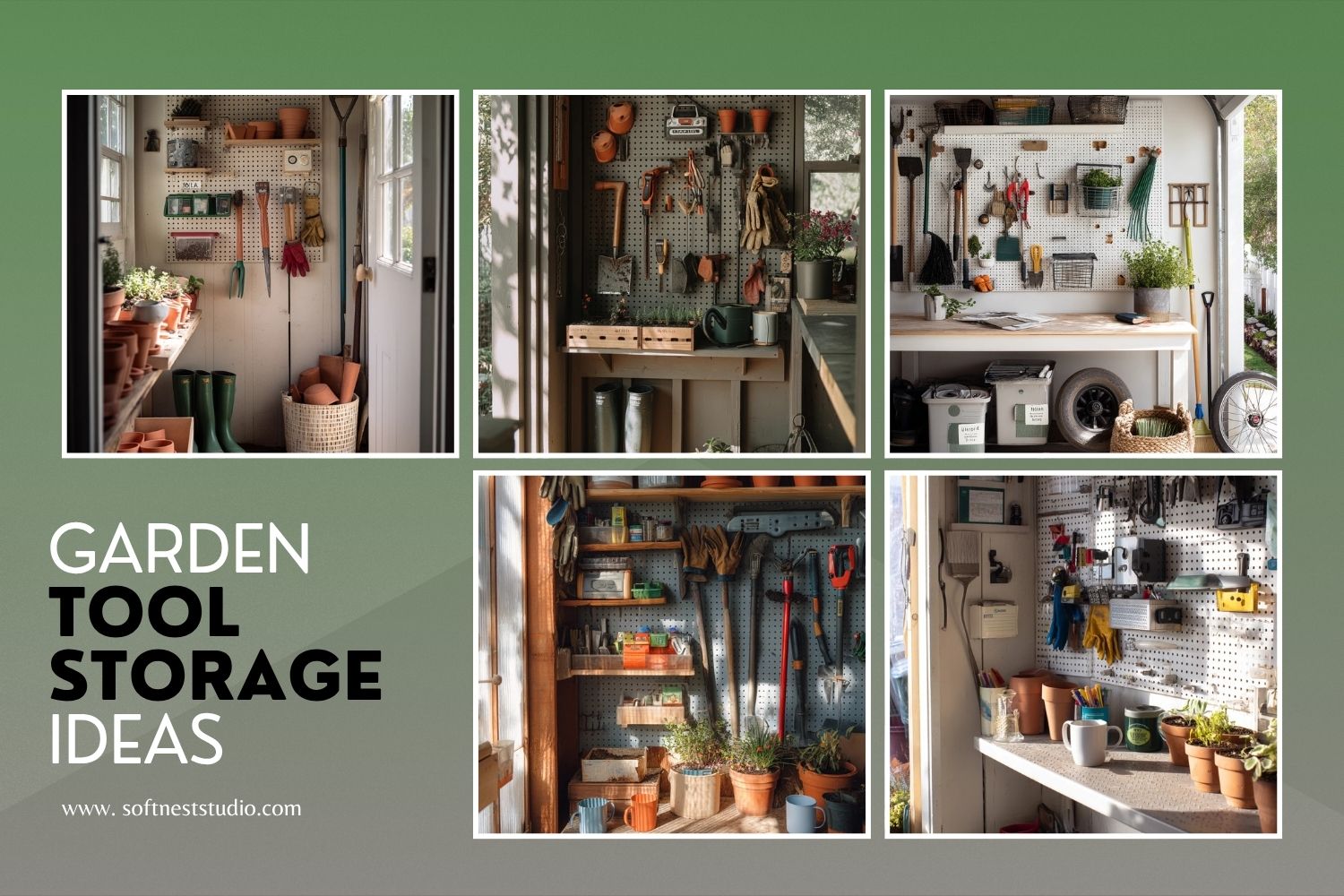
Good garden tool storage makes yard work faster and less stressful. When tools have a clear home, you stop hunting for pruners, gloves, or seed packets, and you keep sharp items away from kids and pets.
This guide shares garden tool storage ideas based on real-life spaces, from a suburban backyard shed with a galvanized pegboard wall to a rental-friendly balcony corner with an outdoor cabinet. Each setup is simple, practical, and easy to copy.
You will also get small styling ideas, like how to label hooks, stack terracotta pots, and keep a boot tray tidy without making it look staged. The goal is a space that feels lived-in, calm, and ready for daily use.
Use these sections to match your home: shed, garage, porch bench, mudroom cubbies, sunroom potting nook, fence-side rack, laundry closet, cottage shelves, or a slim rolling cart.
1. Backyard Shed Pegboard Wall Storage
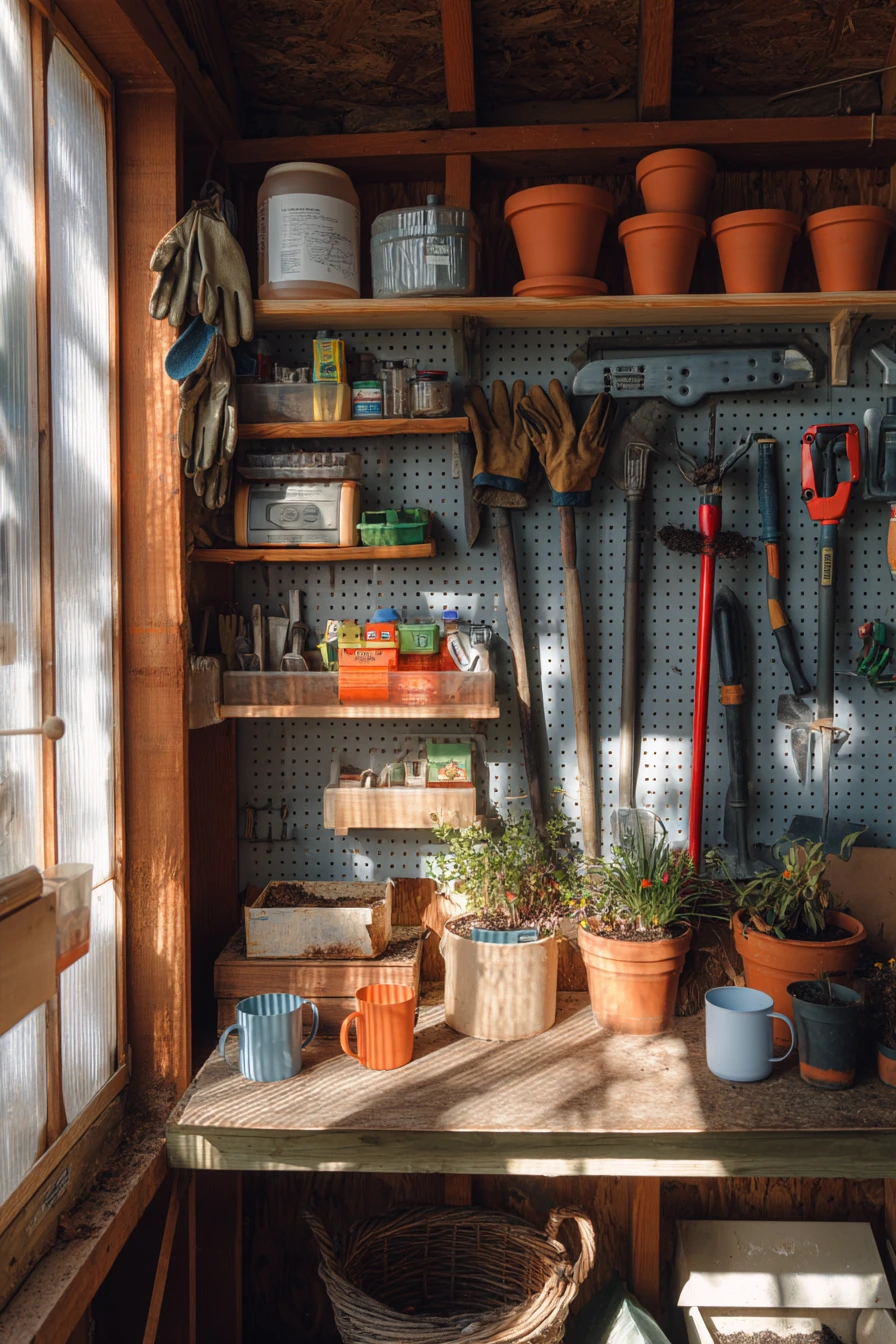
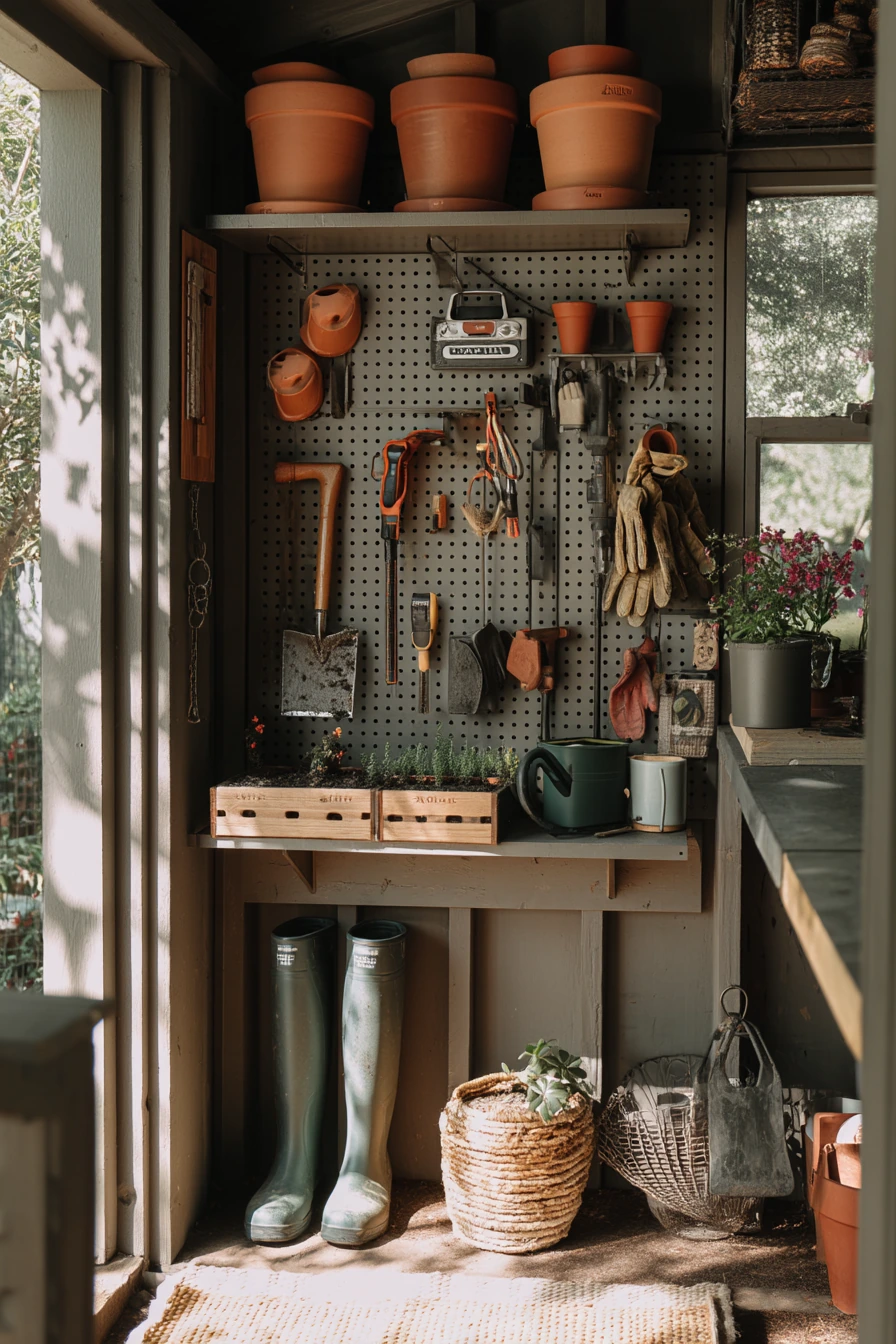
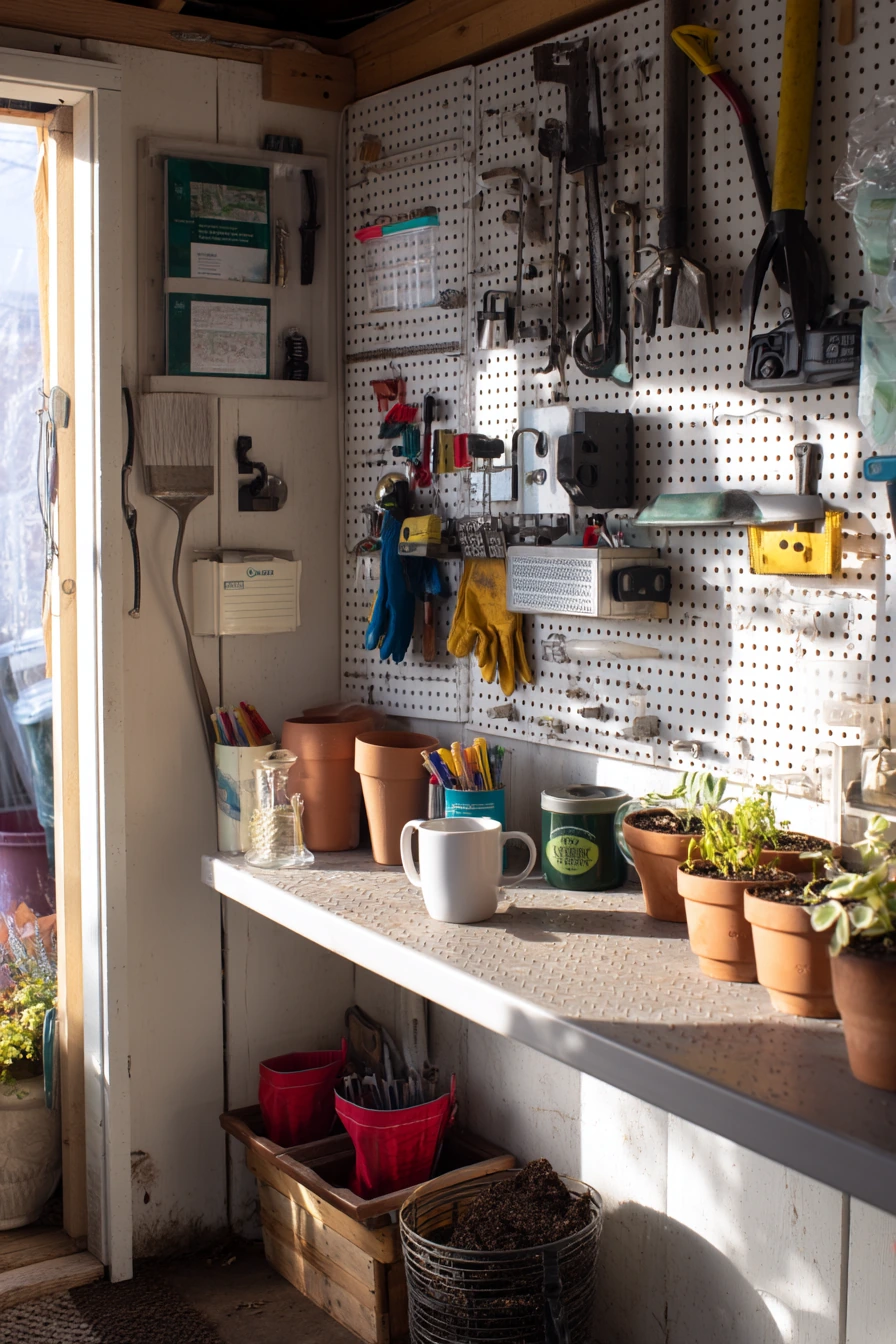
A compact backyard shed can hold a lot when the wall does the hard work. Start with a galvanized pegboard wall and place labeled hooks at kid-safe height for light items and higher for sharp tools. Put a slim shovel rack near the door so long-handled tools do not fall over when someone rushes in with muddy gloves.
Create small “zones” so the shed stays useful for a busy couple with kids. Stack terracotta pots in one corner, keep a boot tray under the bench or shelf, and add a seed box that closes tight. A narrow potting shelf works like a landing strip for hand trowels, twine, and a half-finished coffee mug, which keeps clutter from spreading across every surface.
To make it look neat without feeling too perfect, keep one open basket by the door for kid outdoor toys, and run one charging cable to a small radio shelf so it is not draped across tools. Wipe the pegboard once a week and shake out the boot tray outside. That one habit keeps calm clutter instead of chaos.
- Hang the most-used tools (pruners, trowels, gloves) at eye level.
- Use labeled hooks for each tool so everyone can reset the wall fast.
- Store stacked clay or terracotta pots on the floor to avoid tipping.
- Add a narrow potting shelf for seeds, twine, and a small brush.
- Place a boot tray by the entry to protect the shed floor from mud.
Pro Design Tip: Outline each tool on the pegboard with a paint marker, then match the label to the outline so tools go back in the right spot even on busy mornings.
Budget Considerations: Pegboard and hooks are low-cost, but racks can add up. Use basic utility hooks first, then upgrade to a slim shovel rack when you find a sale.
2. Rental-Friendly Balcony Tool Storage Corner
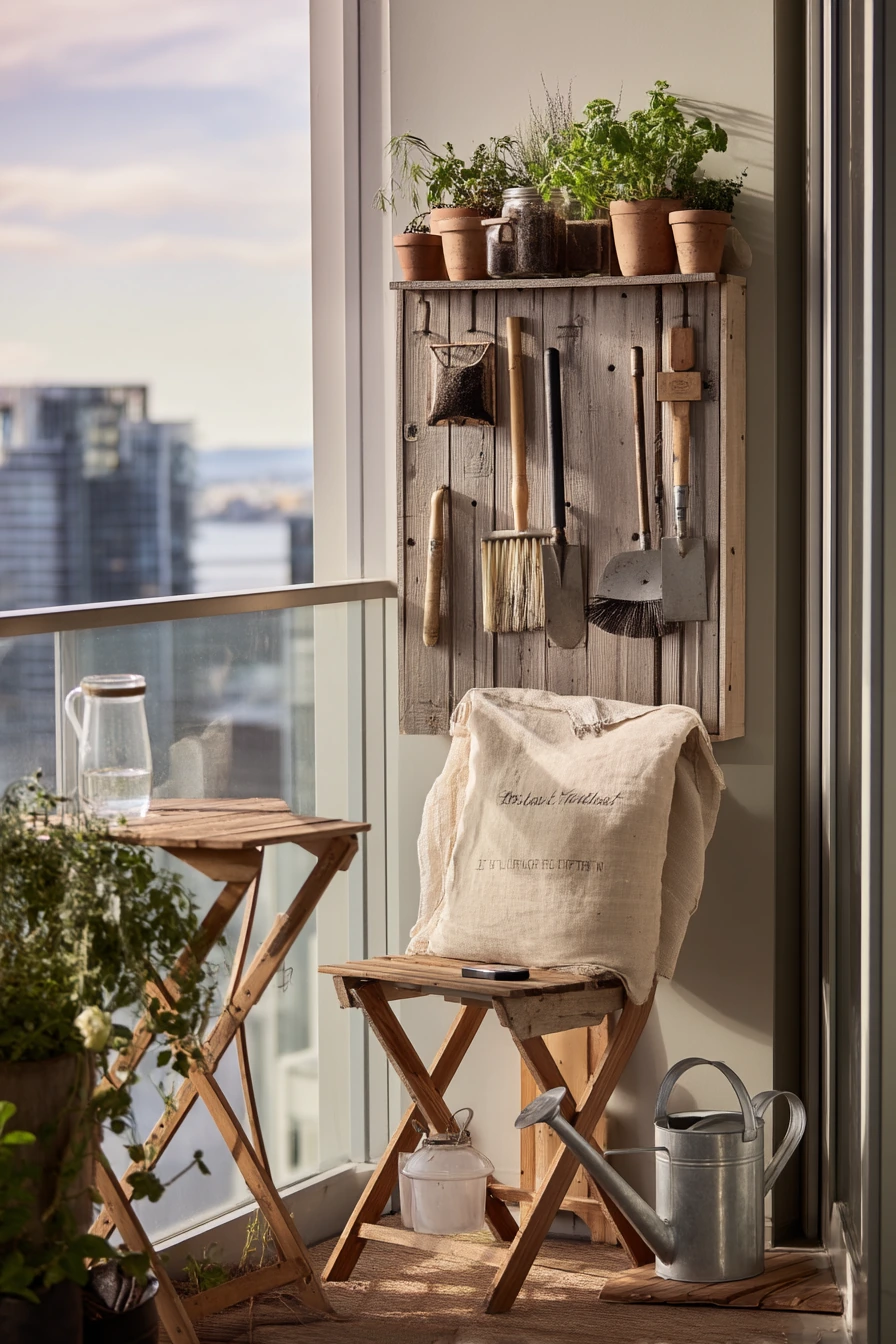
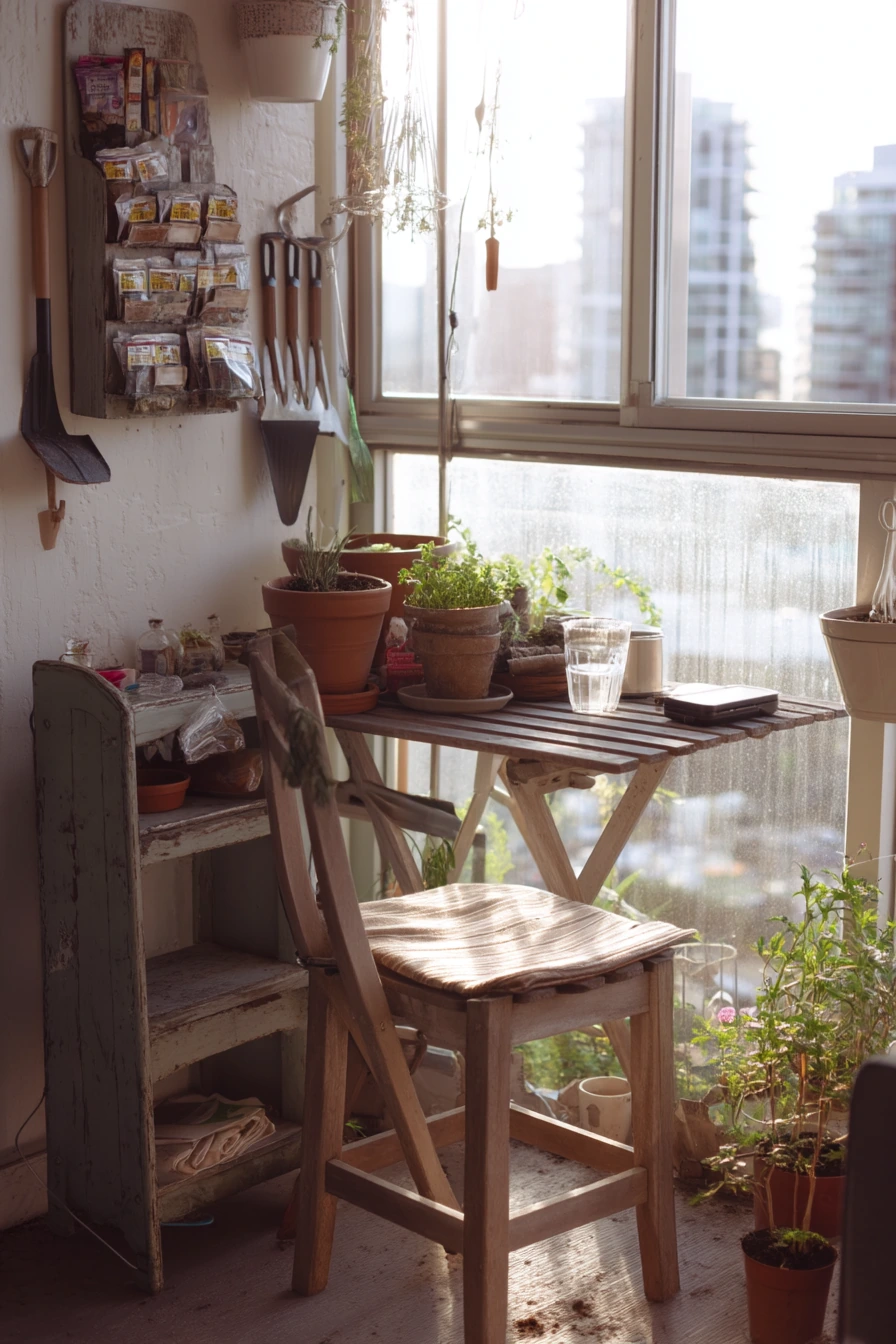
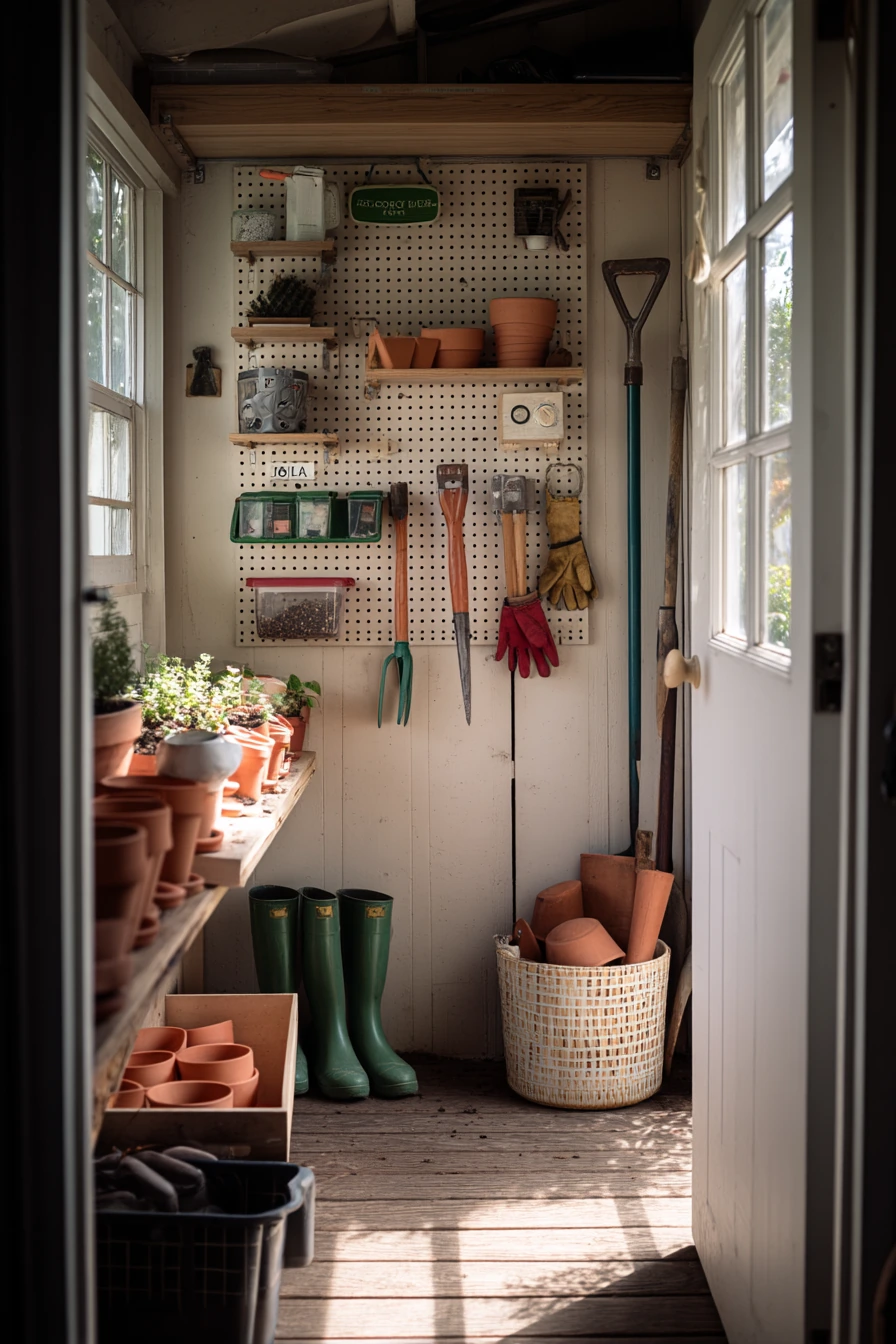
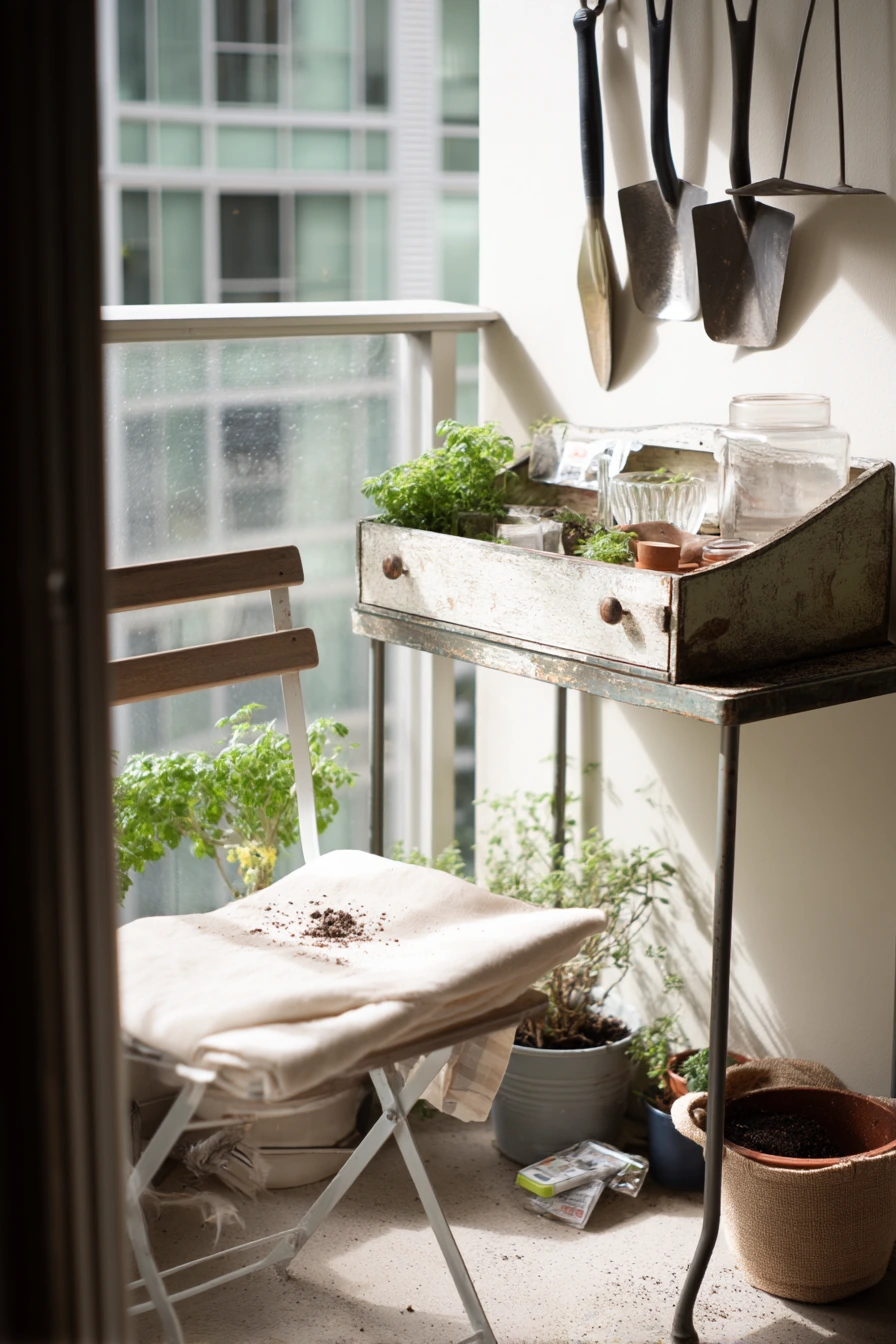
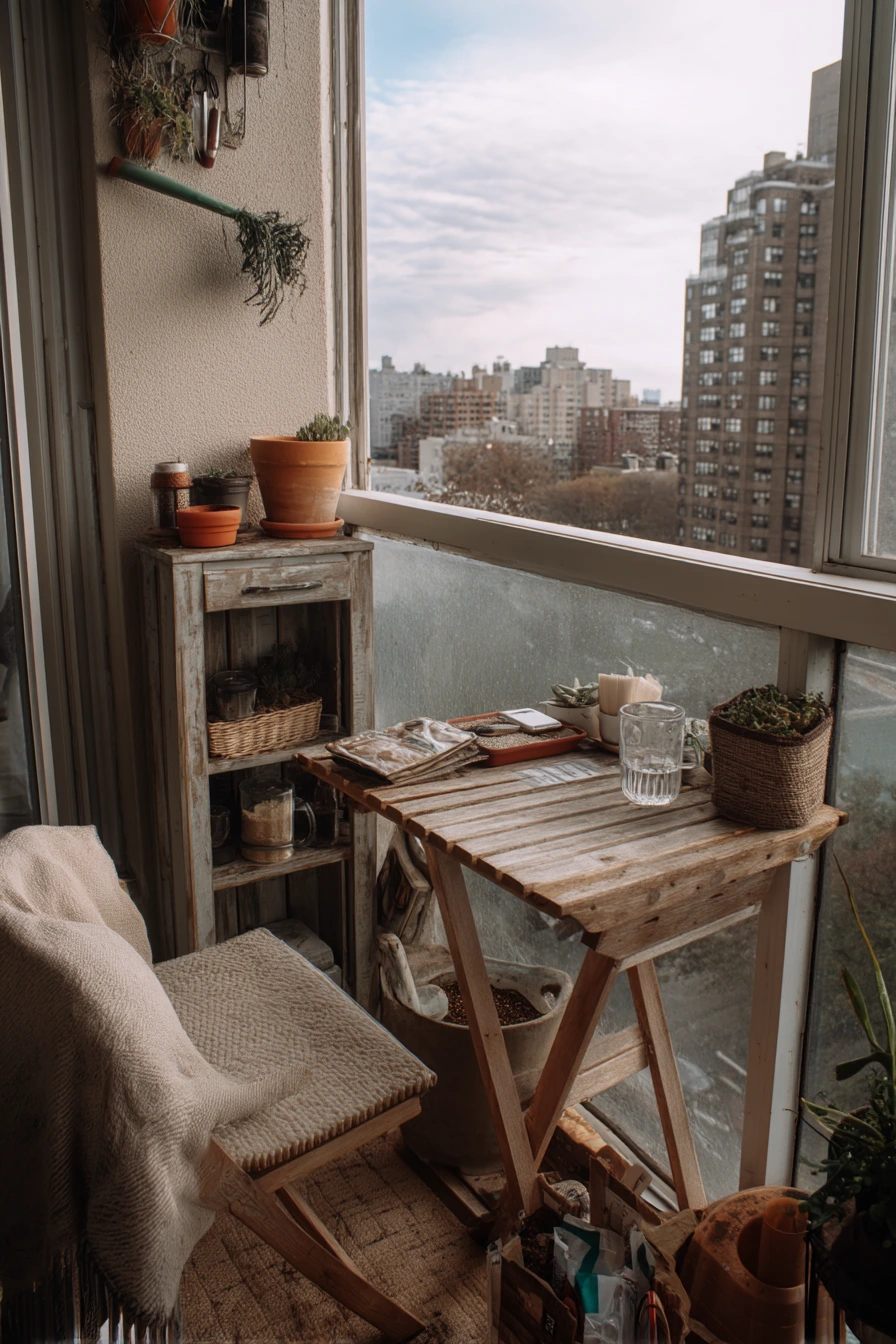
A balcony corner can still support real gardening when storage is vertical and light. A weathered outdoor cabinet is the anchor because it hides potting soil, extra nursery pots, and plant food without drilling into walls. Add a slim broom holder inside the cabinet door or on a removable adhesive strip so the broom and small hand rake do not slide around.
Use hanging trowels and a watering can on S-hooks so daily tools are easy to grab. Keep seed packets in a lidded box to protect them from humidity. A foldable stool is a smart add-on for renters, since it stores flat and gives you a spot to sit while deadheading herbs.
Styling matters on a small balcony because everything is in view. Set herb pots on top of the cabinet, group them by water needs, and leave a little breathing room so it does not feel crowded. If you often have a water glass on the sill or a phone charger on the table, add a small tray to “contain” those items. Sweep up potting soil crumbs after each session so your corner stays breezy and usable.
- Pick a compact outdoor cabinet with a flat top for herb pots.
- Store seed packets in a sealed box to keep them dry.
- Hang trowels and snips on hooks to free up shelf space.
- Keep a foldable stool nearby for potting and pruning.
- Use a small tray to corral chargers, gloves, and a water glass.
Pro Design Tip: Choose one cabinet color and repeat it with two small planters so the corner looks intentional, even when it is lived-in.
Budget Considerations: If an outdoor cabinet is pricey, use a waterproof deck box or a plastic storage bench. Add stick-on hooks instead of drilling to stay rental-friendly.
3. Garage Pegboard and Workbench Tool Storage
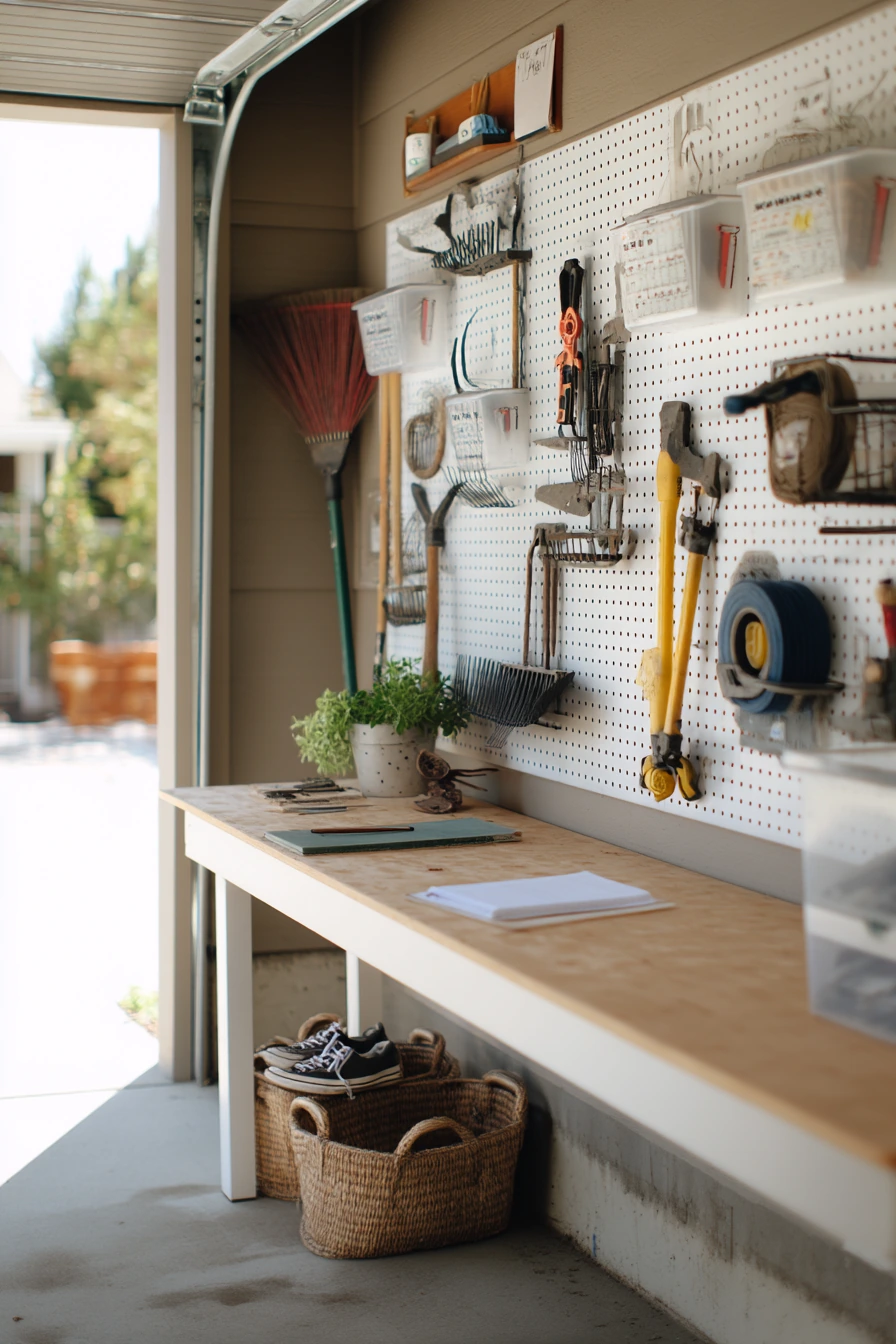

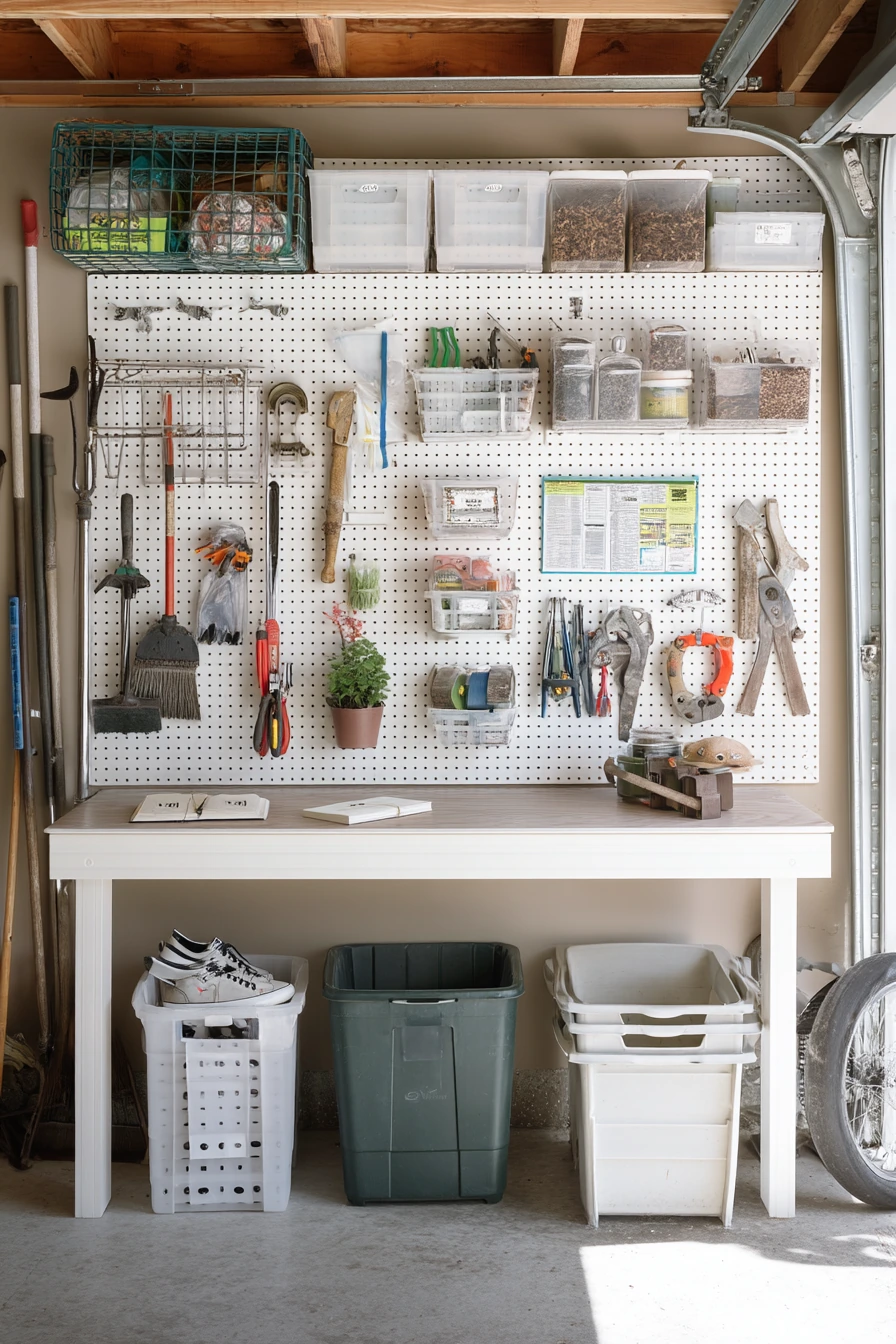
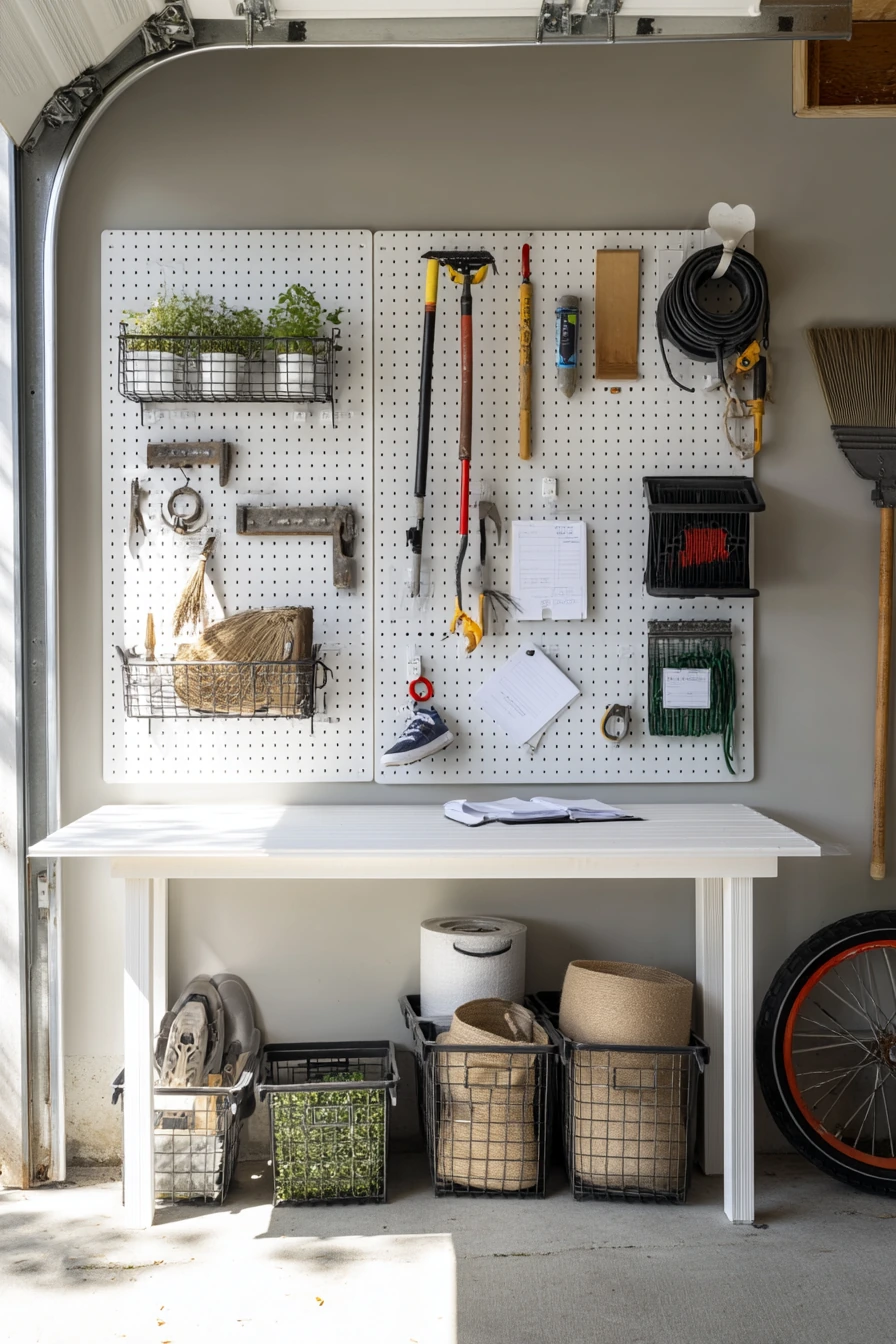
A garage work zone is ideal for family garden tool storage because it can handle heavy gear. A white pegboard makes tools easy to see, which helps kids and adults put things back. Start by hanging leaf rakes, hand pruners, and a hoe on sturdy hooks, then add a hose reel near the door so the hose does not kink or become a tripping hazard.
Metal baskets on the pegboard are perfect for small items that get lost, like twine, plant labels, and spare gloves. Place a workbench below the pegboard so you have a surface for quick fixes, sharpening, or repotting. Keep labeled bins for seeds and twine on the bench shelf or on a nearby rack. When life is busy and there is an open notebook, a tape measure, or a mud-splattered sneaker nearby, these “homes” stop the mess from spreading.
To style it without making it fussy, pick two label styles and stick with them. Keep the most-used items in the same left-to-right order every time: gloves, pruners, ties, then rakes and shovels. If a kid’s scooter wheel rolls through the background, that is real life, but the garage still feels grounded and utilitarian.
- Use a white pegboard so tools stand out and are easy to spot.
- Add metal baskets for twine, tags, and small hand tools.
- Mount a hose reel close to the garage door for quick access.
- Keep labeled bins for seeds, bulbs, and string on a shelf.
- Clear one section of the workbench as a “reset zone” after each project.
Pro Design Tip: Hang long tools with the handles all facing the same direction so the wall looks tidy and you can grab items without bumping others.
Budget Considerations: Pegboard is affordable, but heavy-duty hooks and a hose reel cost more. Start with basic hooks and add the reel when you are ready.
4. Covered Porch Bench Storage for Garden Tools

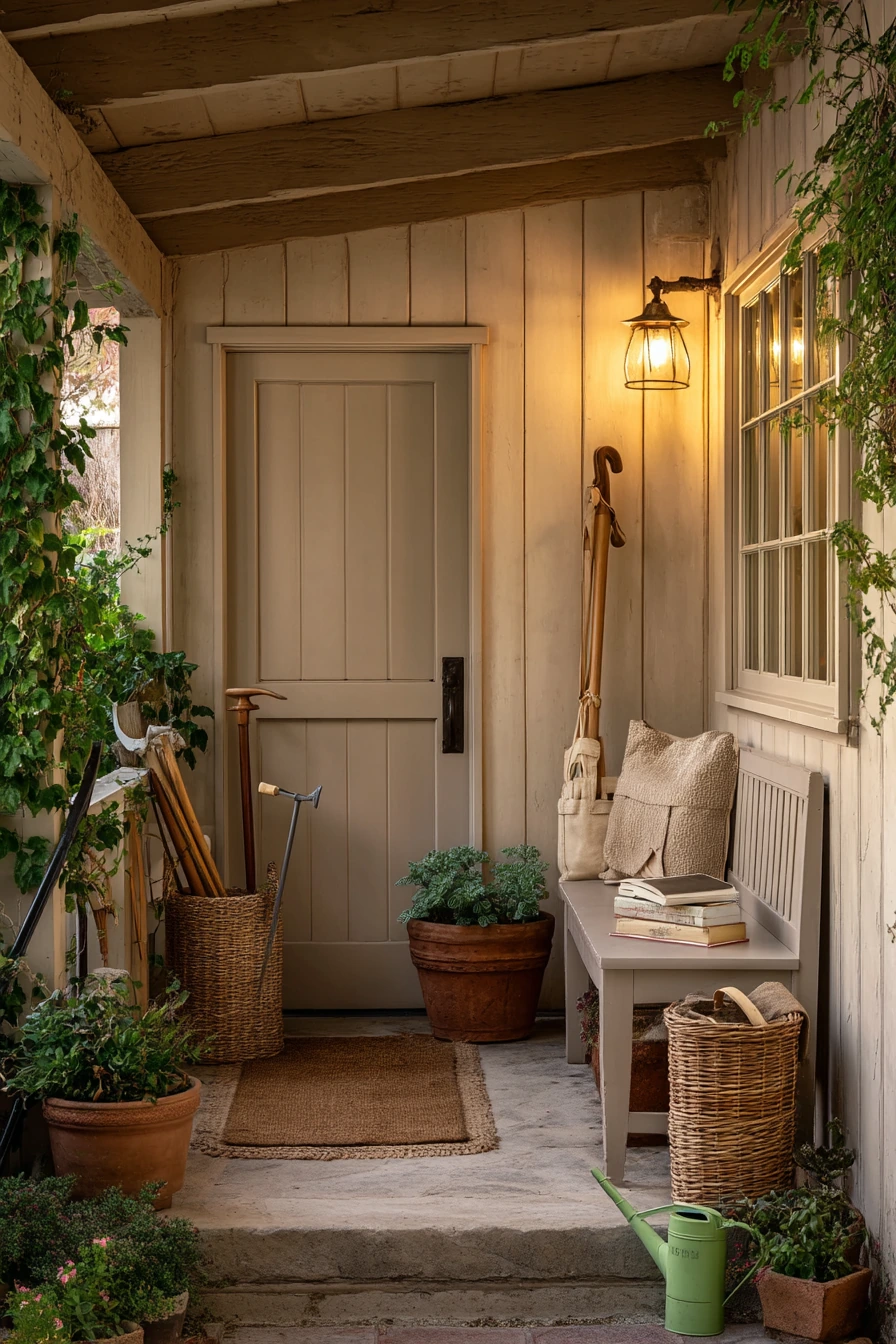
A covered porch is a smart place for garden tool storage because it is close to the yard and feels like part of the home. A painted bench with lift-top storage hides bulkier items like extra gloves, small fertilizer bags, and a garden apron. Keep woven baskets inside the bench to separate categories, so you are not digging through one big pile.
Long-handled tools can lean neatly beside the farmhouse door if you use a tall basket or a slim tool stand to prevent sliding. Stack clay pots in a corner, but keep the stack short so it is stable. The porch will naturally collect daily life items like a folded market tote, a dog leash, or a paperback with a bookmark. Give those items one hook rail or one tray so they do not mix with pruners and trowels.
To style it, keep the bench color calm and repeat it with a matching pot or basket. Warm lamp light in the evening makes the porch feel serene, so avoid bright plastic bins in the main view. Place a watering can near the steps, but empty it after use so it does not stain the boards. A quick weekly sweep keeps dirt from tracking inside.
- Use a lift-top bench to hide supplies and keep the porch clear.
- Sort items in woven baskets labeled by task, like “pruning” and “seeds.”
- Store long-handled tools upright in a tall stand so they do not fall.
- Stack clay pots low and keep saucers in a separate basket.
- Add a small tray for daily items like a leash, tote, and book.
Pro Design Tip: Line the bench interior with a washable mat so soil spills and damp gloves do not soak into the wood.
Budget Considerations: Built-in benches can be costly. A painted storage bench from a big-box store plus two baskets can give the same function for less.

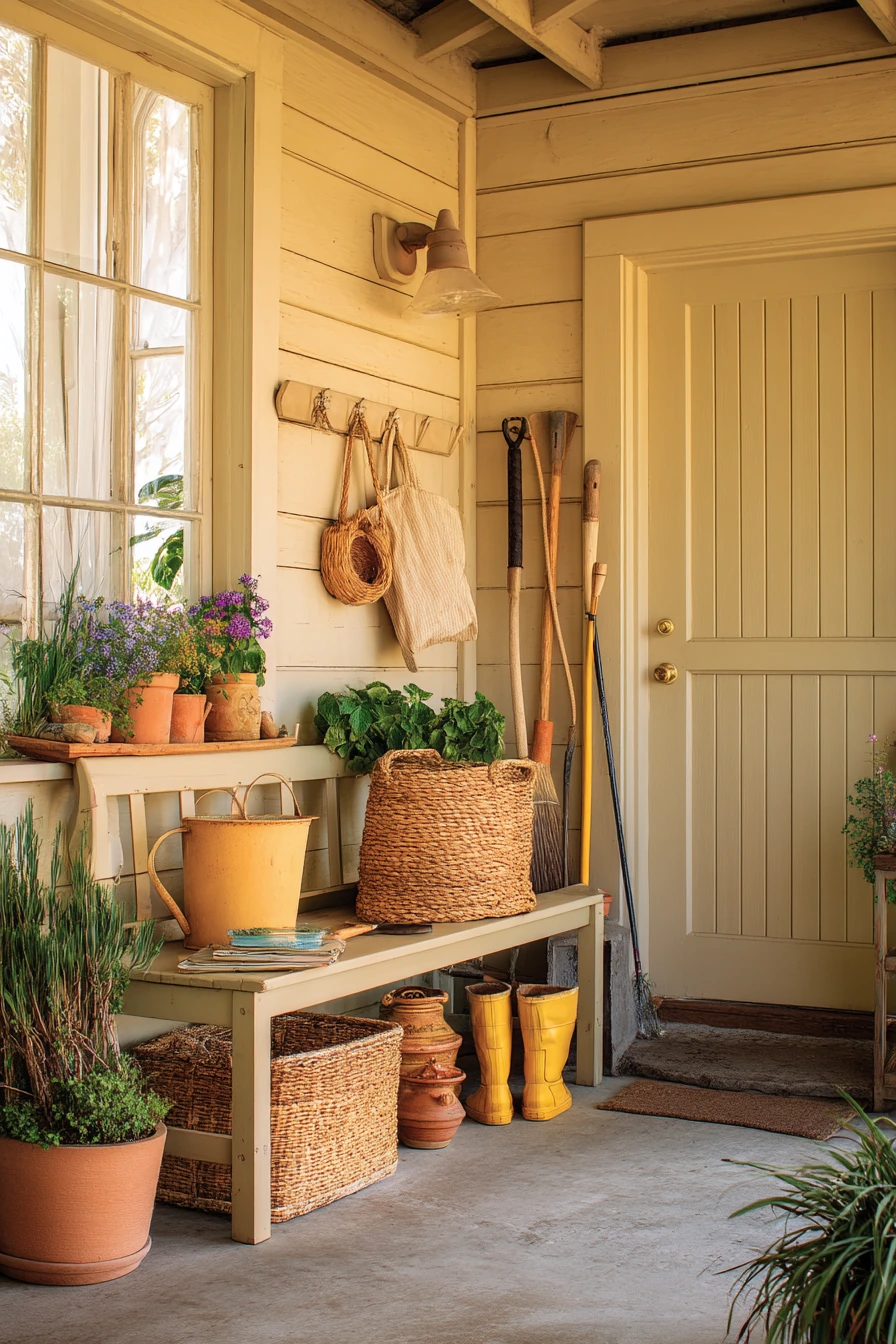
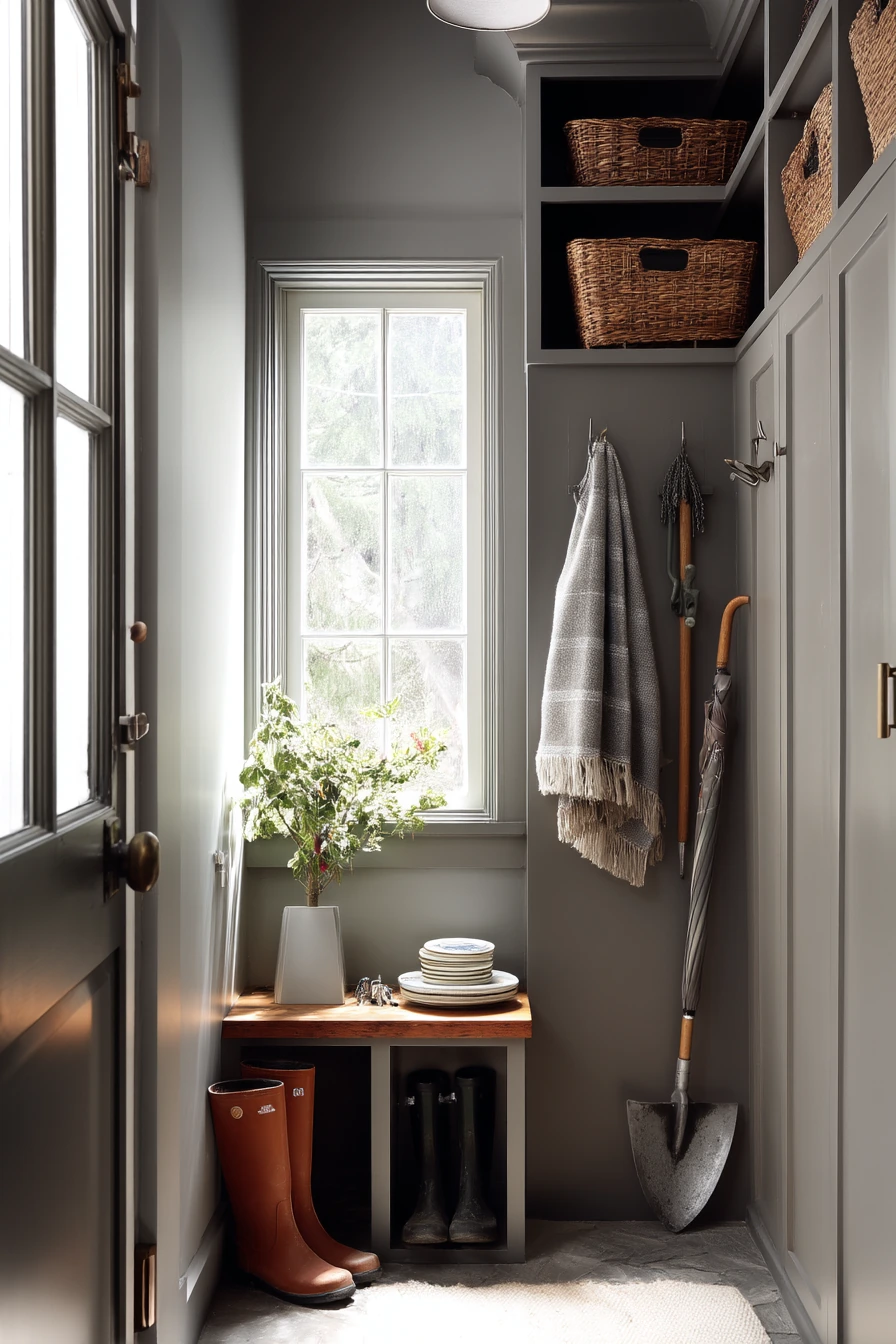
5. Narrow Mudroom Cubbies for Daily Garden Gear
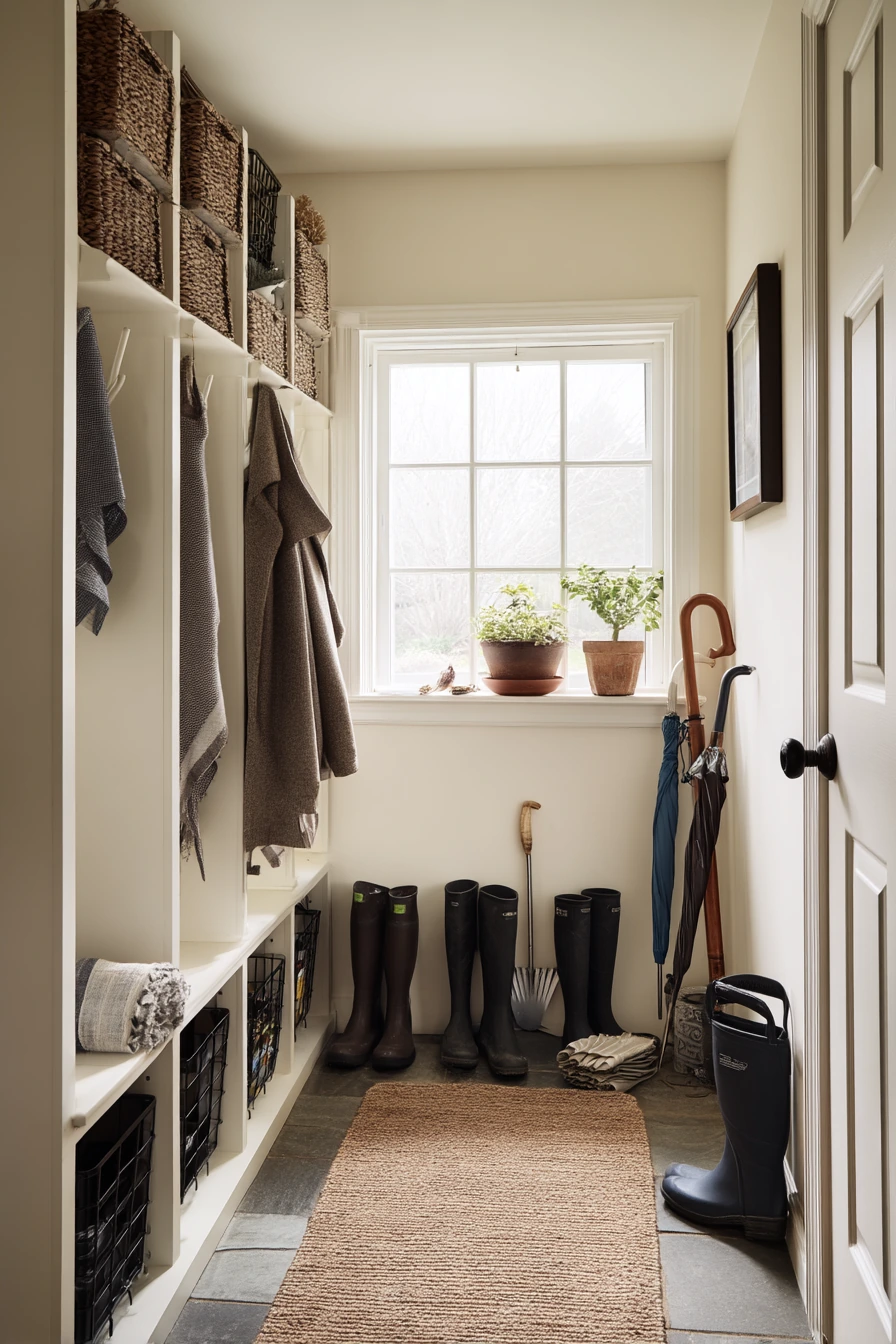

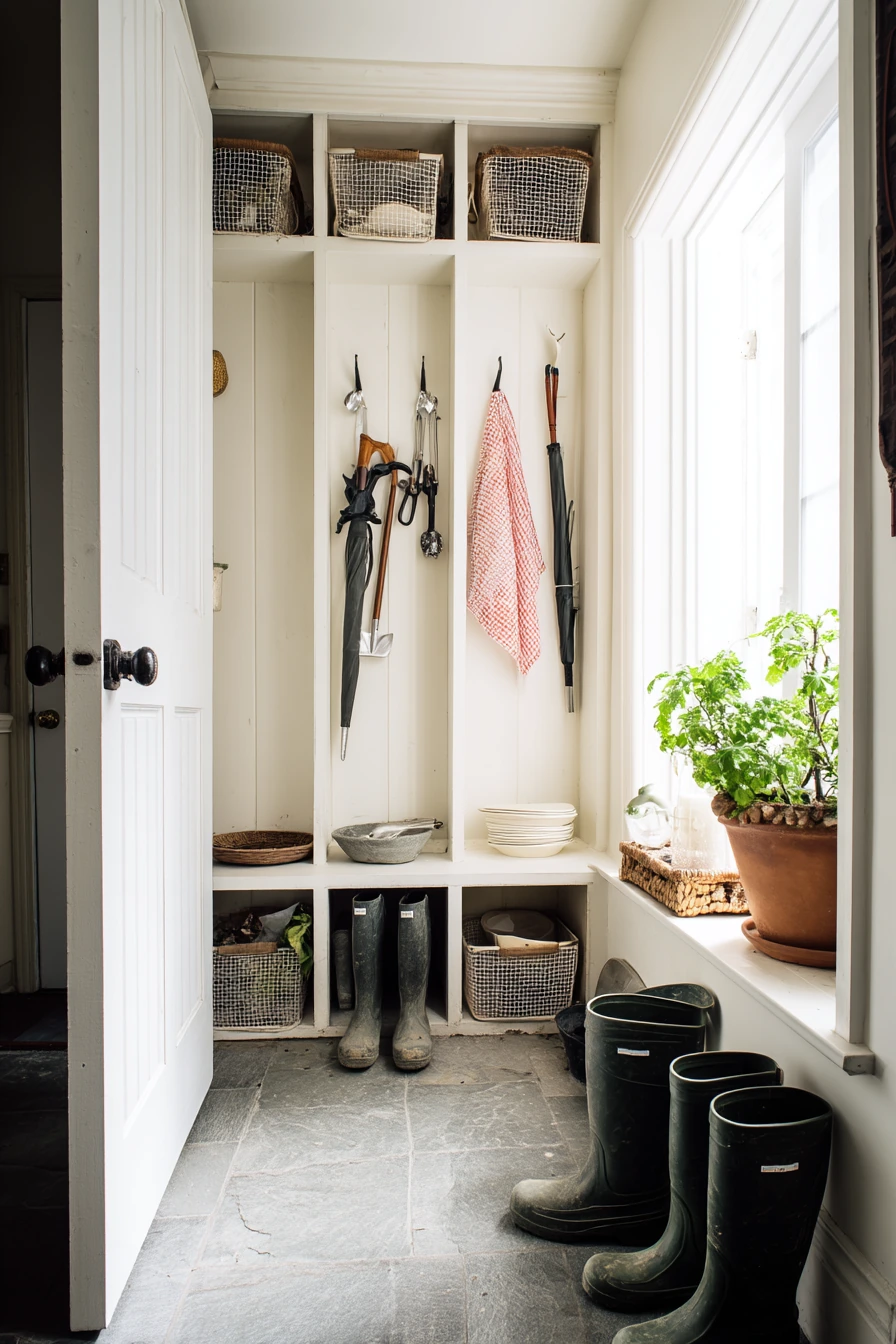
If you garden every day, the mudroom is the best place to stop dirt at the door. Tall cubbies create a vertical home for gloves, pruning shears, and a small hand broom. Add a hook rail for hats, a garden apron, and light tools in holsters. Keep a boot tray on the floor so muddy shoes do not spread across the room.
Mesh baskets work well because you can see what is inside, and damp items dry faster. Assign one basket to gloves, one to ties and twine, and one to small hand tools. A slim umbrella stand can double as storage for a soil scoop, small rake, or a narrow cultivator. Real life happens here, so plan for keys in a dish, a damp dog towel, and a rolled-up reusable tote. The goal is a functional, restrained system that handles daily traffic.
For styling, keep the mudroom colors simple and repeat the same basket shape for a cleaner look. Put plant pot saucers in a low bin so they do not end up stacked unevenly on a shelf. Wipe shears and snips before hanging them, and store a small rag in the cubby. That small habit keeps rust away and keeps the space feeling crisp.
- Use tall cubbies to separate garden gear from coats and backpacks.
- Install a hook rail for aprons, hats, and lightweight tools.
- Place a boot tray at the entry to catch mud and water.
- Choose mesh baskets so damp gloves and towels can breathe.
- Use a slim umbrella stand for narrow tools and handles.
Pro Design Tip: Create a “clean-to-dirty” flow: clean gloves and tools up high, muddy boots and towels down low, so the mess stays contained.
Budget Considerations: If built-in cubbies are out of reach, use a tall bookcase with bins and add wall hooks. A basic plastic boot tray works fine.
6. Sunroom Potting Nook with Vintage Drawer Storage


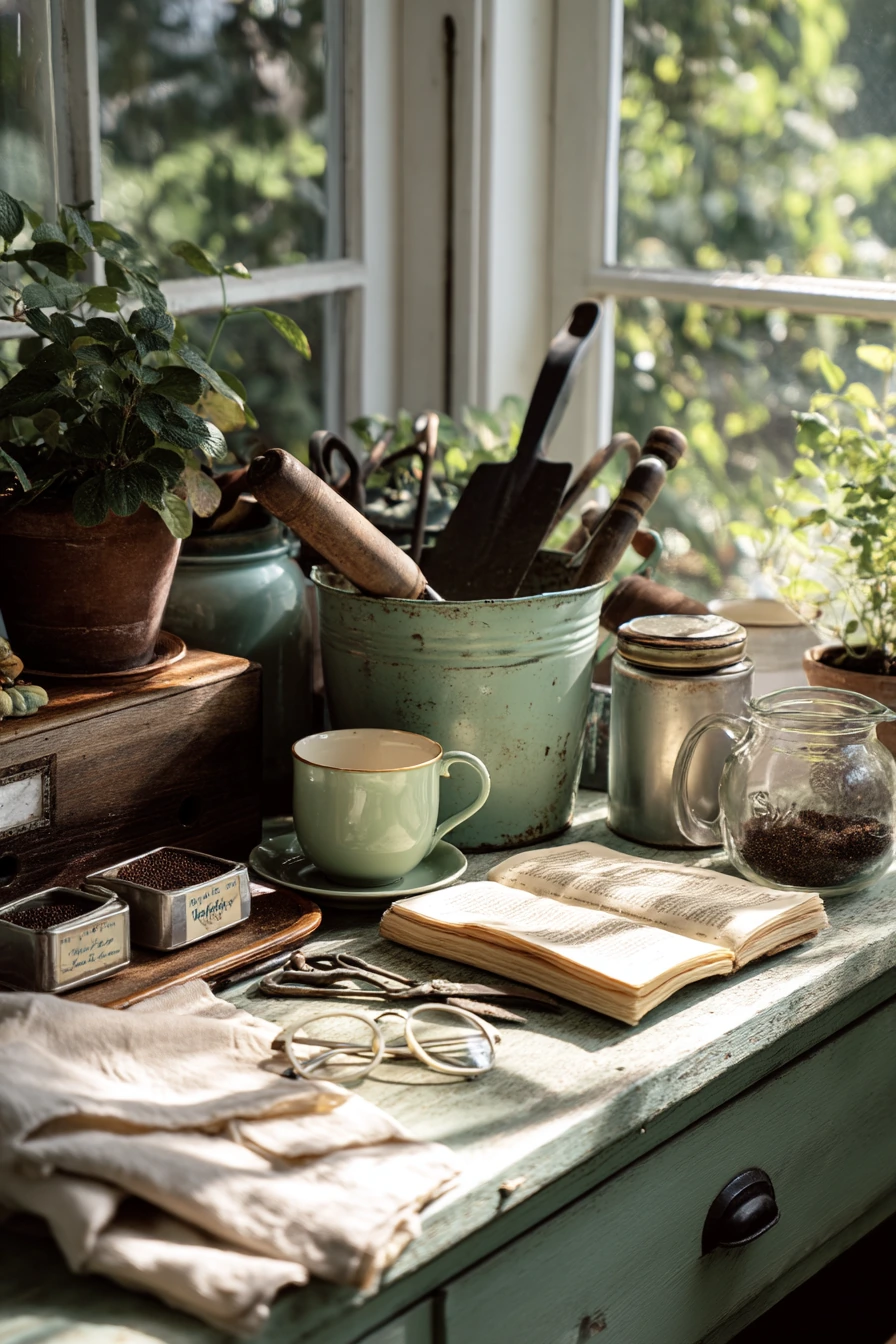
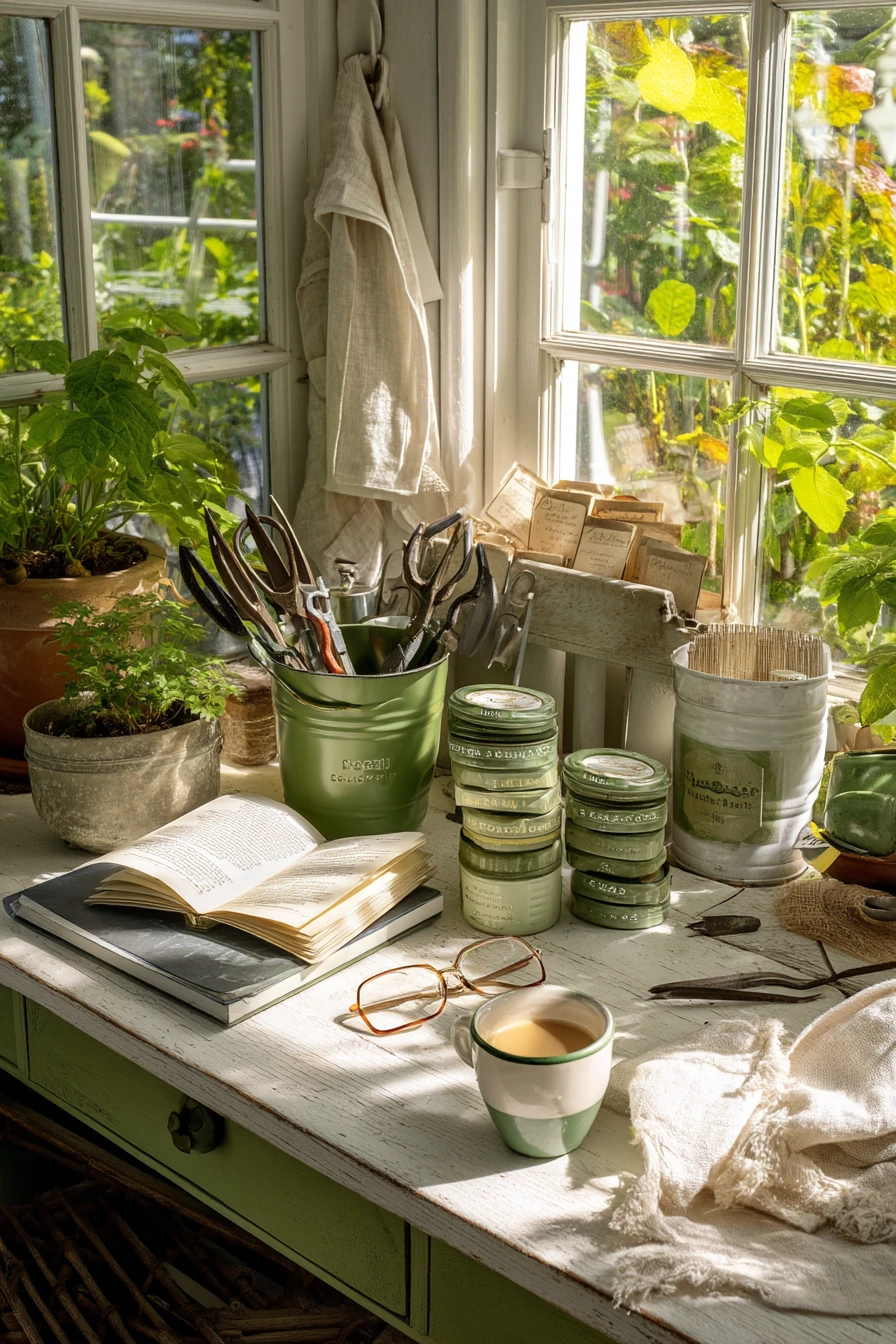
A sunroom potting nook can be both useful and calming, especially for an older homeowner who likes a slower pace. A vintage table with drawers is perfect for garden tool storage because it hides small items while keeping the top clear for potting. Put hand trowels, snips, and a twine spool in the top drawer, and use the deeper drawer for seed envelopes and plant ties.
Enamel buckets add flexible storage without looking industrial. Use one bucket for clean tools and one for “needs washing” tools, so you always know what to grab. Small labeled jars keep seeds organized and easy to check at a glance. Since this is a lived-in spot, plan for reading glasses, a half-drunk tea cup, and a gardening book with dog-eared pages. Add a folded linen towel on a hook to wipe hands and tools.
Styling is simple here because the light does most of the work. Let the sun-drenched window light and soft plant shadows be the focus. Keep labels neat and easy to read. Group jars by season, like spring sowing and fall cover crops, so you do not overbuy seeds. Sweep spilled soil into a small dustpan stored in the bottom drawer.
- Use table drawers for hand tools, snips, and plant ties.
- Sort seed envelopes by season in one labeled box or drawer.
- Store tools in enamel buckets to keep the table surface open.
- Keep small labeled jars for seeds you use often.
- Hang a linen towel nearby for quick cleanup and dry hands.
Pro Design Tip: Place a shallow tray on the table for today’s tools only, then reset it back into drawers at the end of the session.
Budget Considerations: Vintage tables can cost more. Look for secondhand desks or a small dresser with drawers, then add a washable top mat.
7. Small Backyard Fence Storage with Vertical Slat Rack
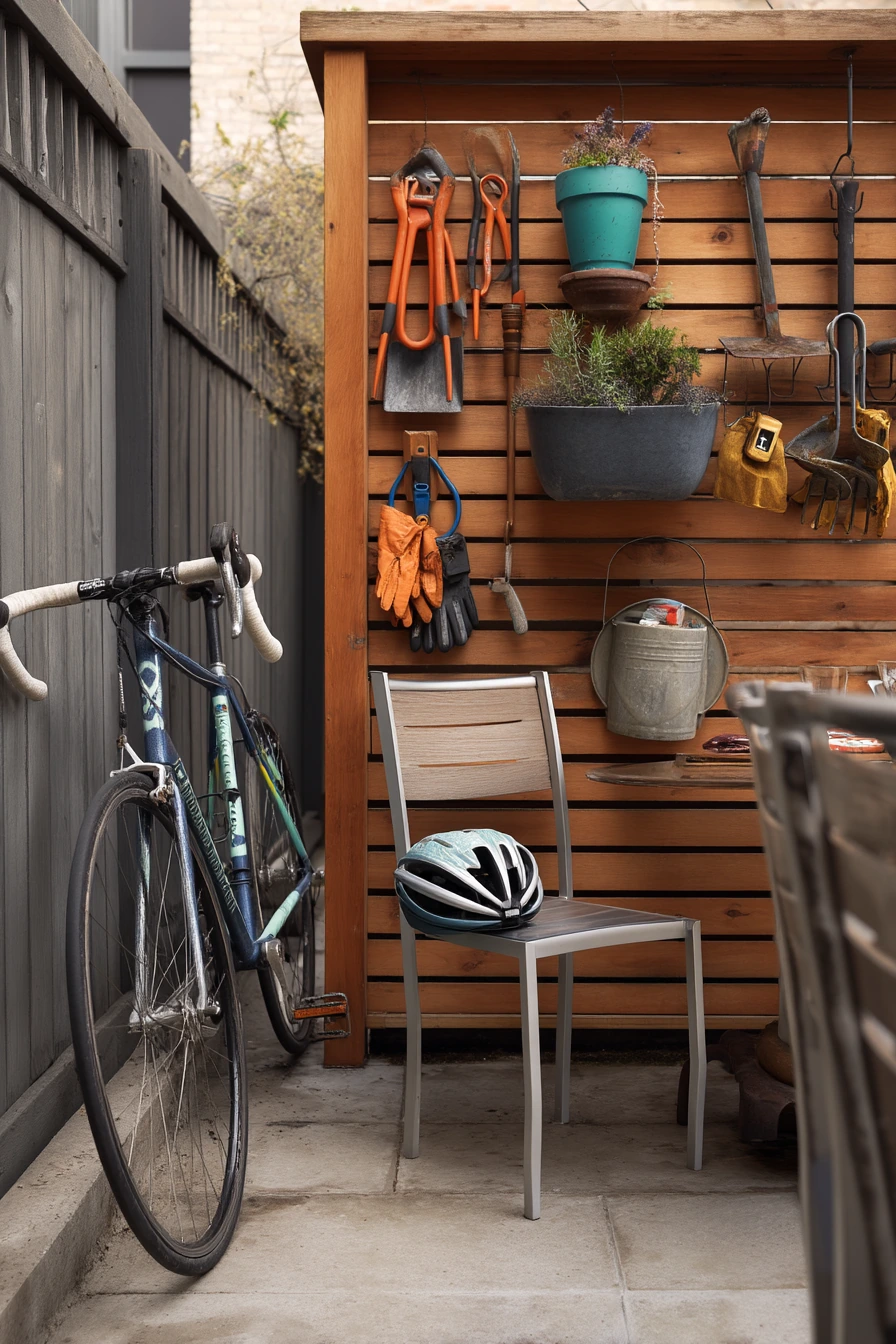
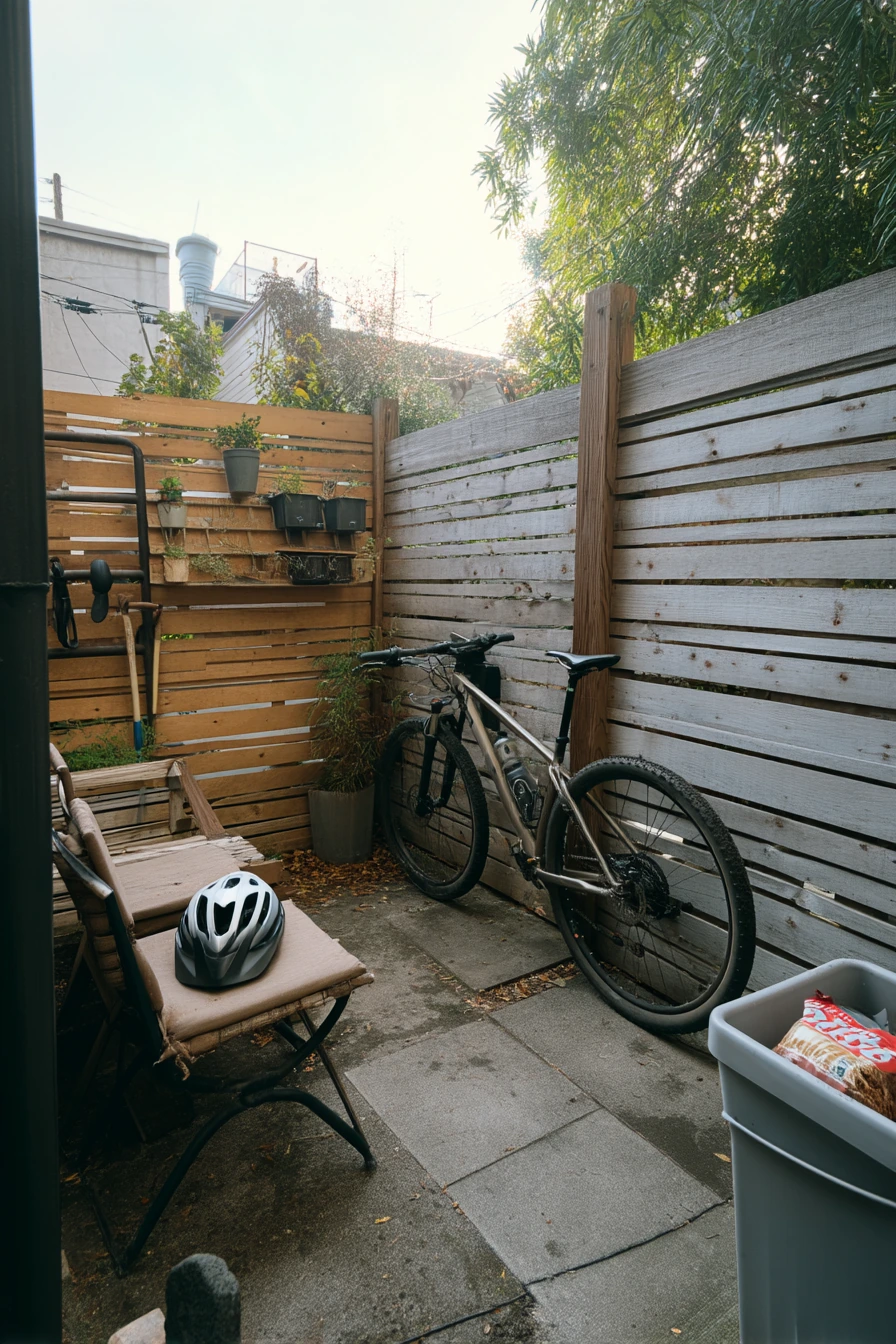
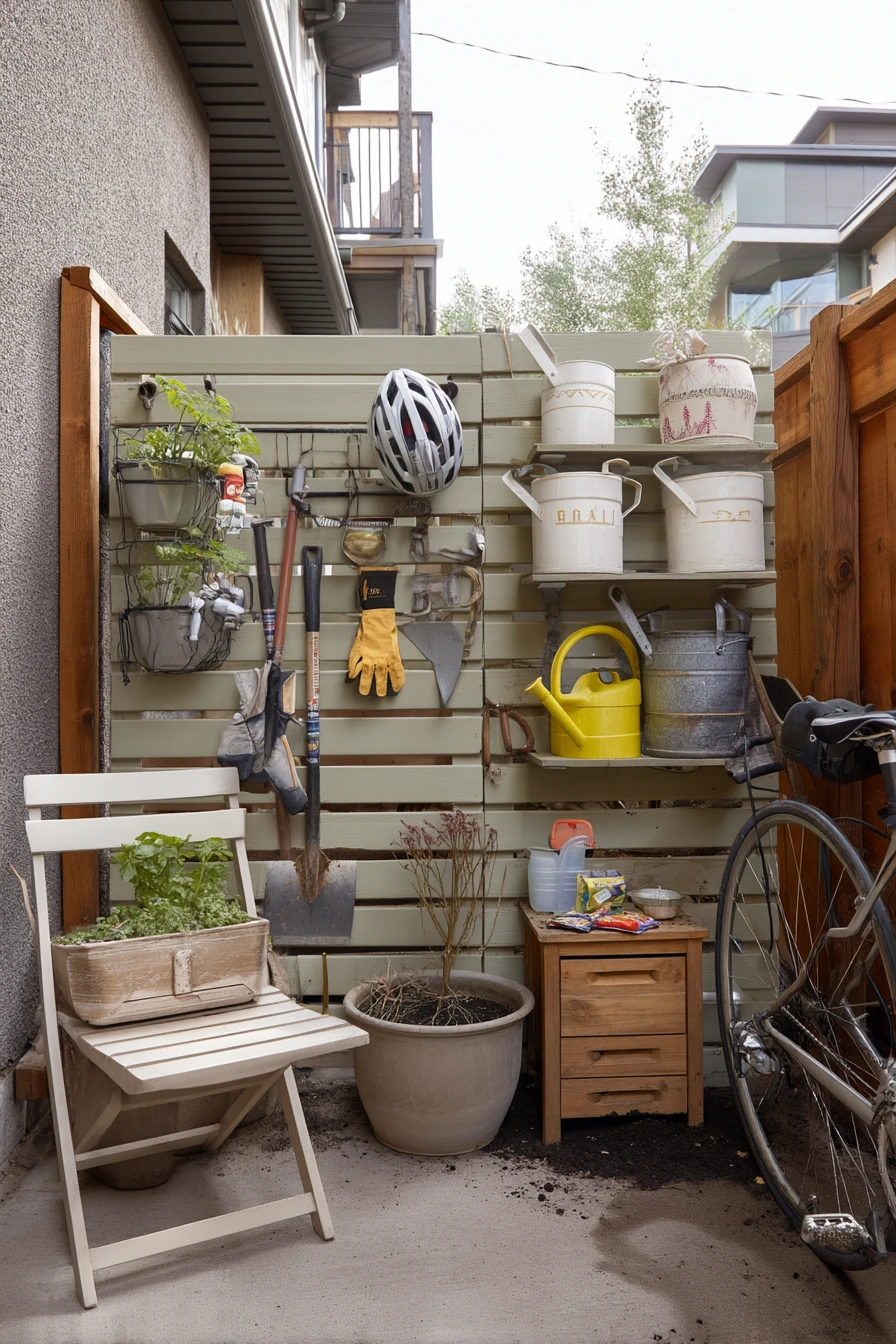
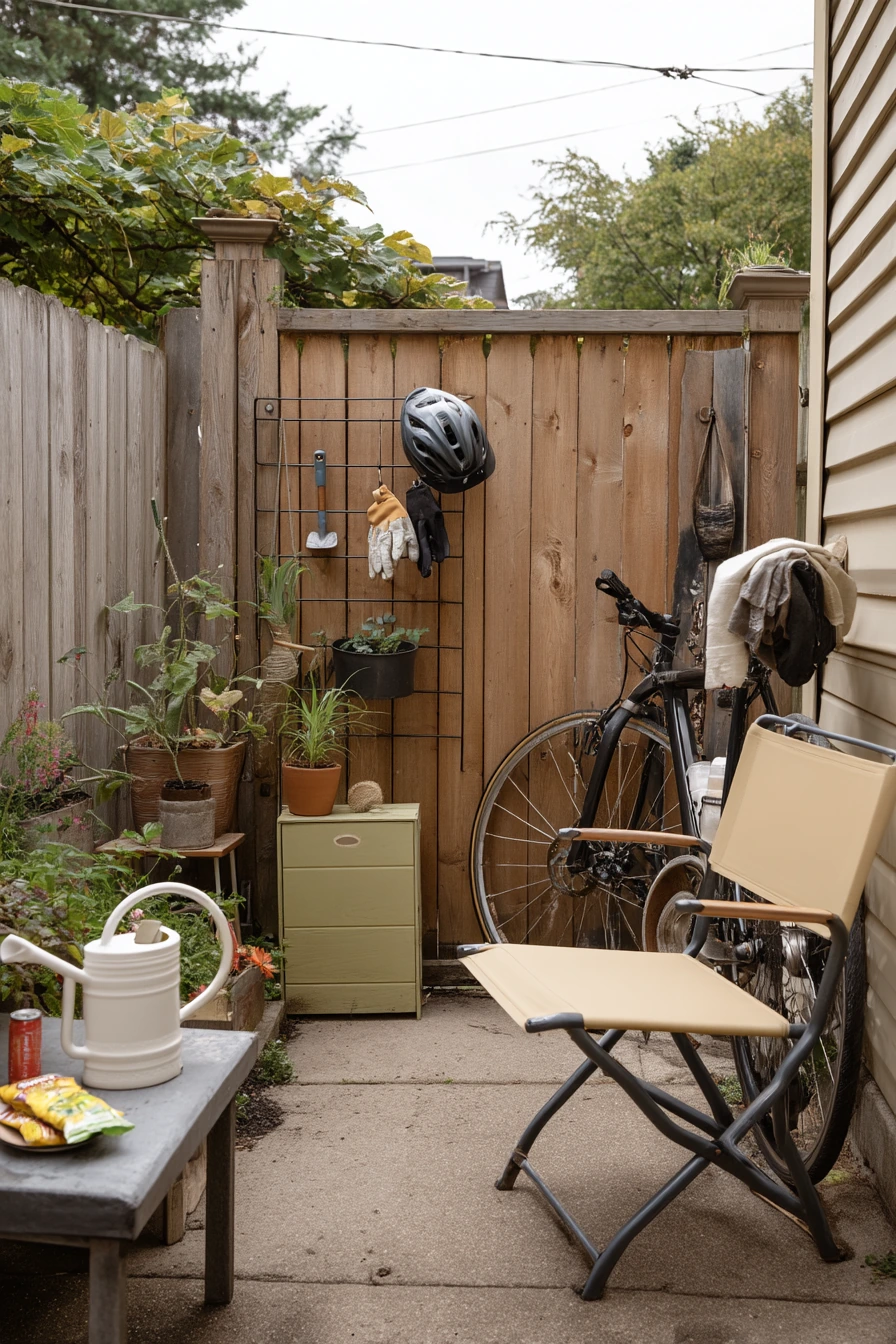
A tiny urban backyard can still feel organized when you store tools on the fence. A vertical slat rack uses narrow space well and keeps items off the ground. Hang shears and snips on hooks with simple safety covers, and add a compact hose holder so the hose does not pile up on the patio.
Because space is tight, choose stackable planters and keep them in one corner. A narrow compost caddy near the back door makes it easier to collect scraps without a big bin taking over the yard. Add a small weatherproof cabinet for seed packets, gloves, and plant food. This setup works for a first-time homeowner who is building habits and learning what tools they actually use.
To keep it looking clean, group items by shape: cutting tools together, watering tools together, then soil tools. If you often drop gloves on the fence hook or leave a watering can with soil marks, accept that and design around it. Add one small outdoor shelf or tray for “in-between” items like a bicycle helmet or a snack wrapper, so they do not end up mixed into the garden area.
- Mount a vertical slat rack to the fence for long and short tools.
- Hang shears and snips with safety in mind, higher than kid height.
- Use a compact hose holder to prevent tangles and trip hazards.
- Choose stackable planters to save floor space.
- Add a slim compost caddy and a small cabinet for supplies.
Pro Design Tip: Use matching black or galvanized hooks across the rack so the fence wall looks cohesive, even when tools are mixed sizes.
Budget Considerations: If a premade rack is expensive, build a slat wall with fence pickets and outdoor screws. A basic plastic cabinet can replace a pricier wood one.
8. Laundry Room Closet Storage for Garden Supplies

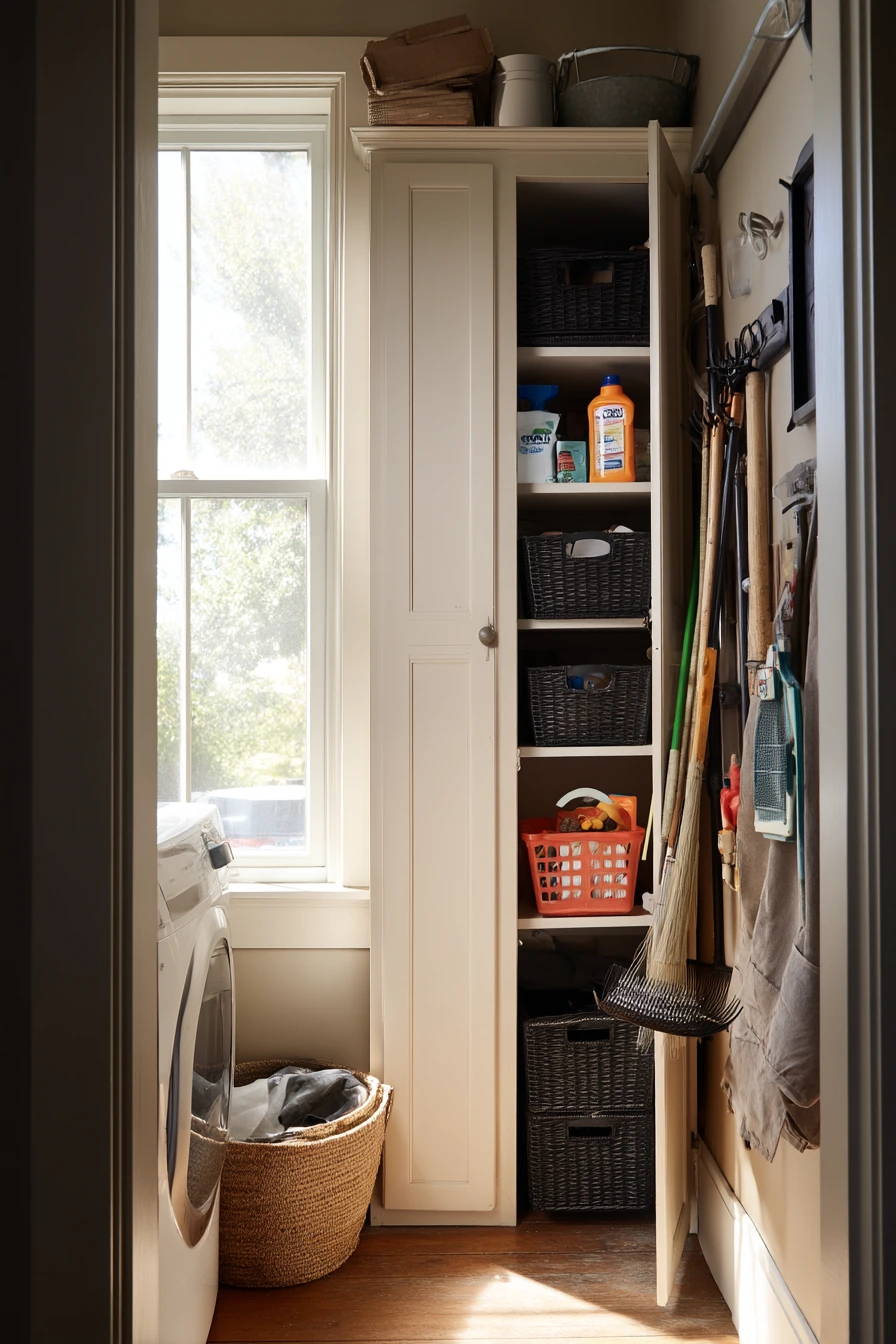
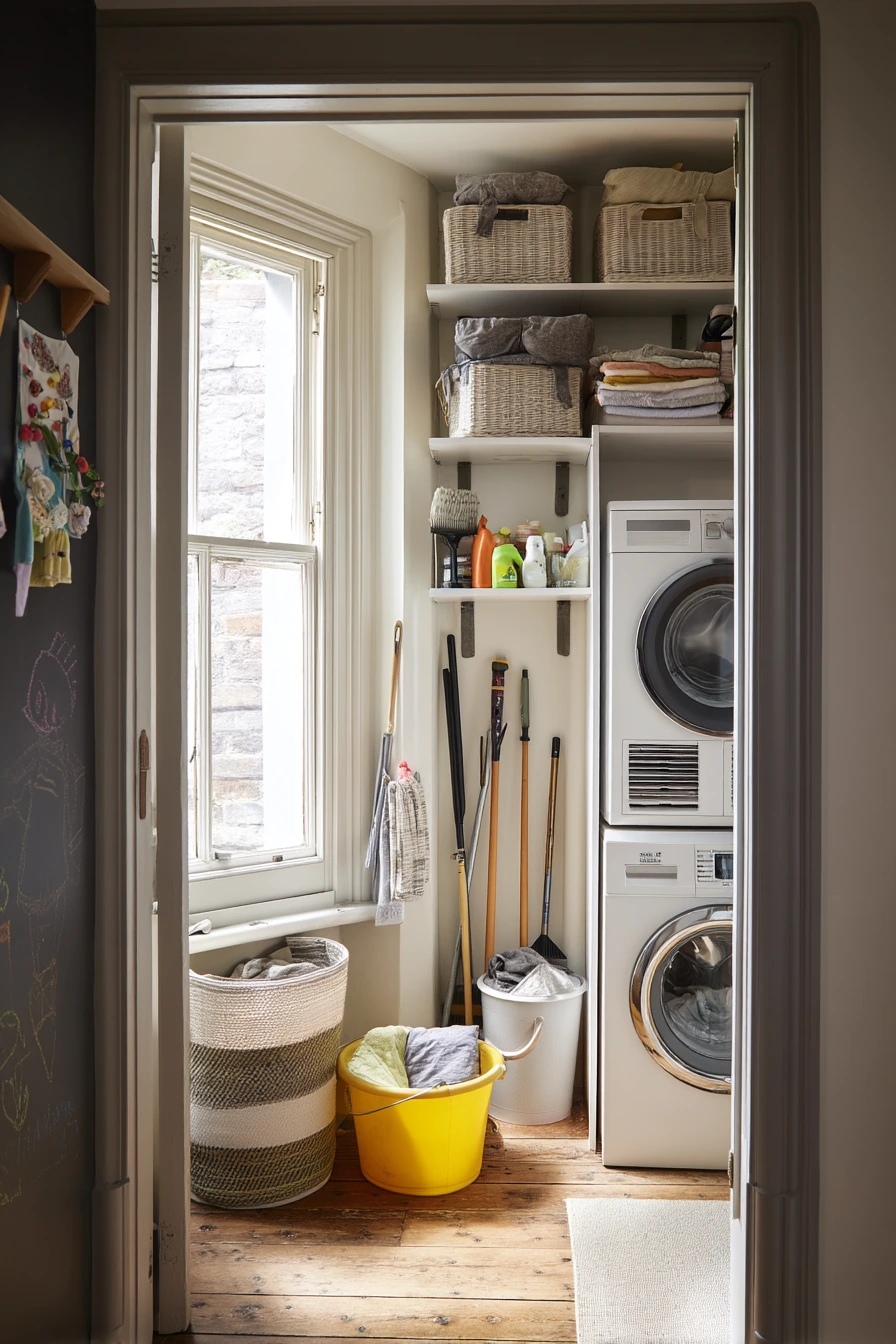
A laundry room closet is a hidden hero for garden tool storage in a busy family home. A tall closet keeps supplies away from kids and pets while staying close to the back door. Install pull-out shelves so you can reach items without stacking everything. Use broom brackets for long tools like a broom, a small rake, or a floor squeegee.
Hang pruning tools on the inside wall using hooks, and store seed trays on a middle shelf where they will not get crushed. Keep boot baskets on the bottom so muddy shoes do not drip onto clean items. A slim bin for fertilizers and plant food helps you keep chemicals upright and separated from seed packets. This is also a real-life room, so plan for a laundry basket half full, a detergent bottle, and the stray sock that shows up at the worst time.
For styling, keep bins in one color and label them in plain language. If there is a child’s chalk drawing on the door, leave it, but keep the inside orderly so the space still works. Add a small wipeable mat on the closet floor to catch soil crumbs. Do a quick monthly check for expired fertilizer and broken spray bottles.
- Use pull-out shelves so supplies are easy to reach and reset.
- Add broom brackets to hold long handles securely.
- Hang pruning tools on hooks so blades stay dry and visible.
- Store seed trays flat on a dedicated shelf to avoid warping.
- Keep fertilizers in a slim bin, upright and clearly labeled.
Pro Design Tip: Set the closet up like a “store aisle”: heavy items low, everyday tools at hand level, and seasonal supplies up high.
Budget Considerations: Pull-out shelves can be an upgrade. If needed, use sturdy baskets on fixed shelves and add inexpensive tension rods with hooks for hanging tools.

9. Cottage Back Door Shelves and Wire Basket Storage
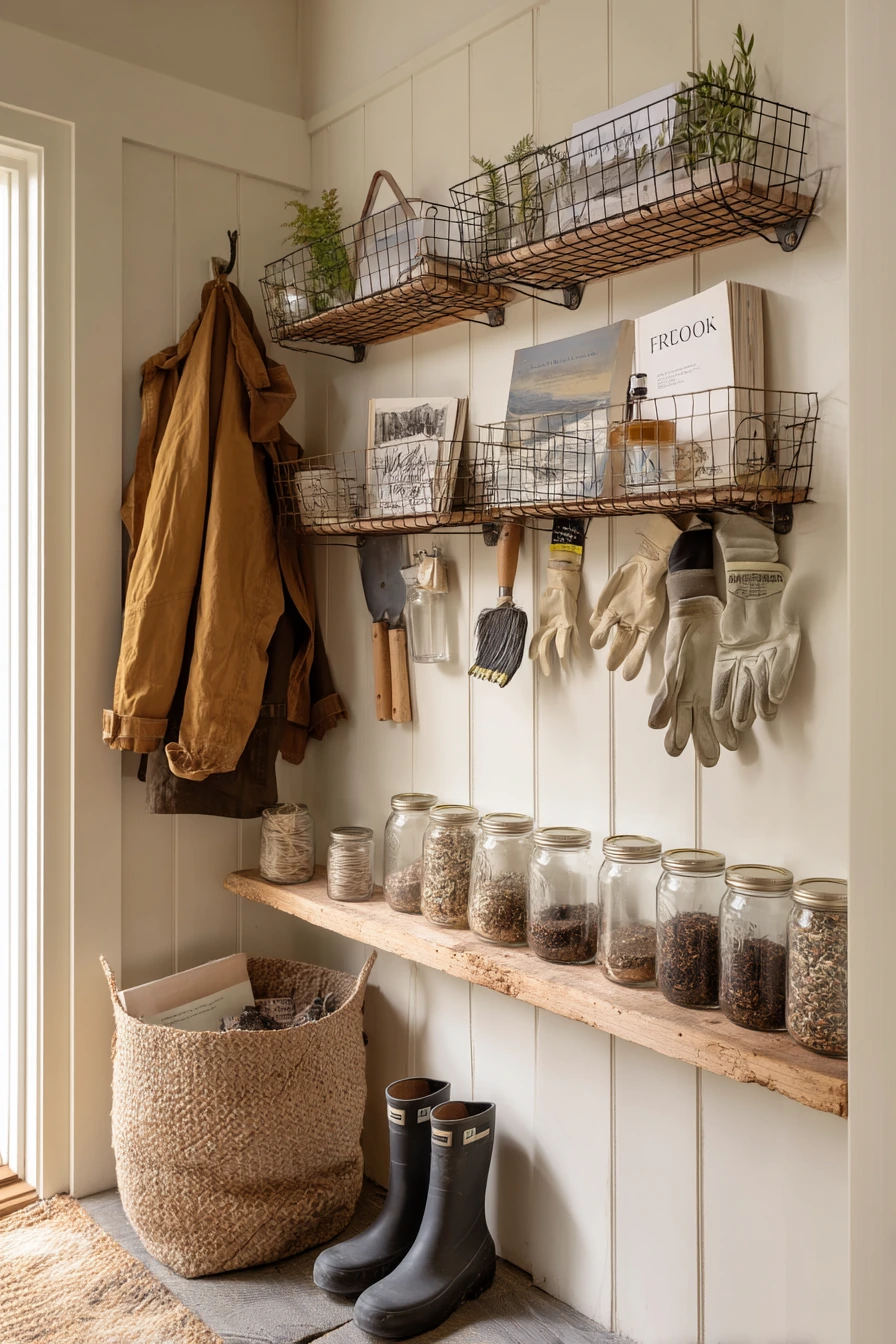
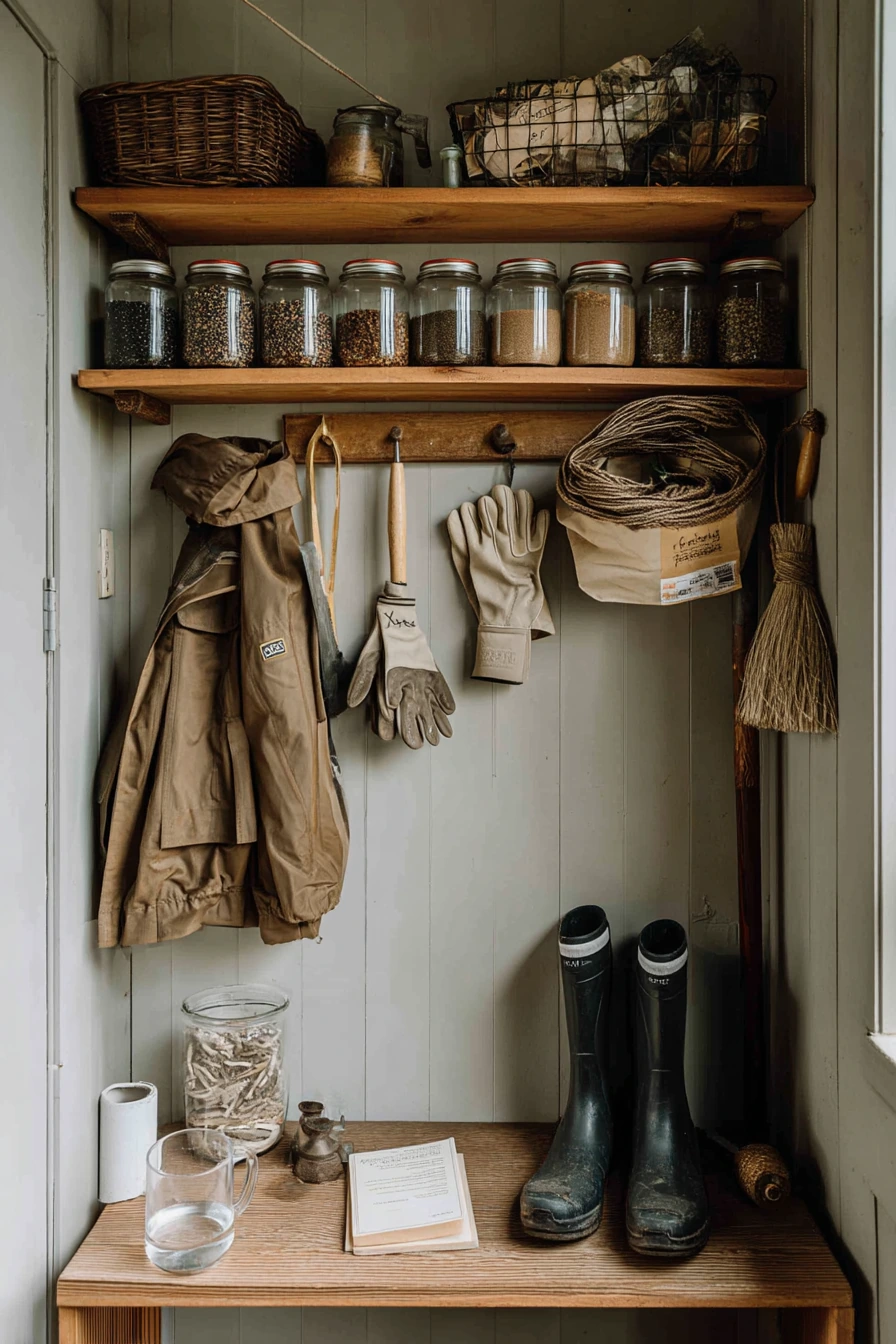
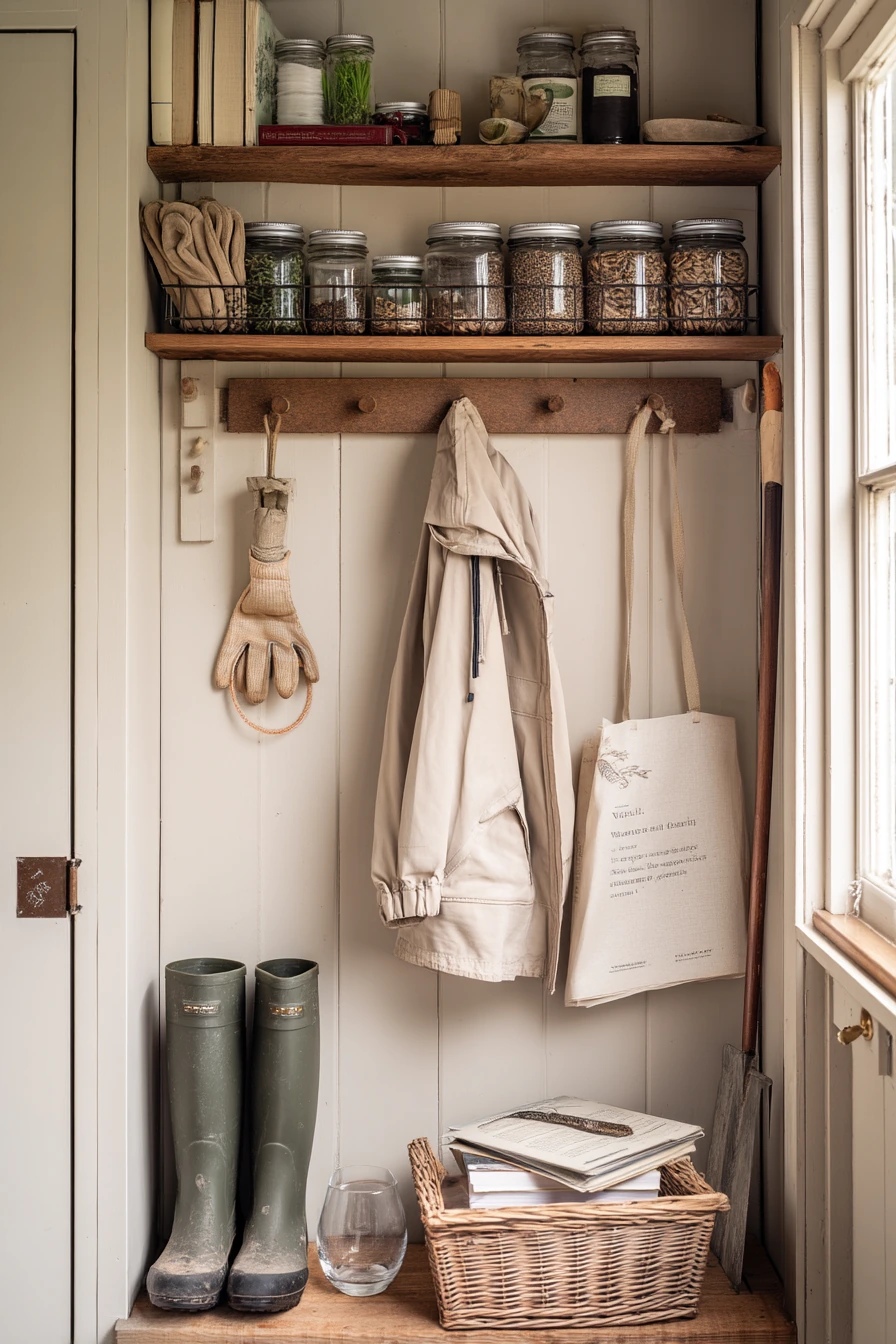
A back door nook is a great spot for garden tool storage because it is easy to access and easy to tidy. Open wood shelves keep the space light and airy, while wire baskets hold small items without hiding them. Put garden gloves in one basket, hand fork and secateurs in another, and keep twine close to where you will actually use it.
A row of labeled jars with seeds turns a messy pile into something you can scan quickly. Keep the jars on an upper shelf if kids visit often. Because this is by the door, you may also have a rain jacket on a hook, muddy boot prints on the floor, and a water glass set down for a second. Add a small boot mat and a narrow tray on the shelf edge so daily items do not push tools around.
To style it, choose warm wood tones and simple labels. Leave some open shelf space so it does not look packed. If you like a cozy feel, keep one paperback propped near the wall, but keep it away from damp gloves. Wipe jars and shelf edges often so dust and soil do not build up. This nook works best when it is a quick stop, not a storage dump.
- Install open wood shelves near the back door for easy access.
- Use wire baskets to separate gloves, twine, and small tools.
- Store seeds in labeled jars so you can see what you have.
- Add a hook for a rain jacket and a spot for muddy boots.
- Use a narrow tray to hold a water glass and keys without cluttering tools.
Pro Design Tip: Keep one “one-minute reset” basket for loose items, then sort it once a week so the nook never overwhelms the entry.
Budget Considerations: Open shelving can be DIY with basic boards and brackets. If jars are costly, reuse pasta sauce jars and add simple masking tape labels.

10. Rolling Cart Garden Tool Storage for Apartments
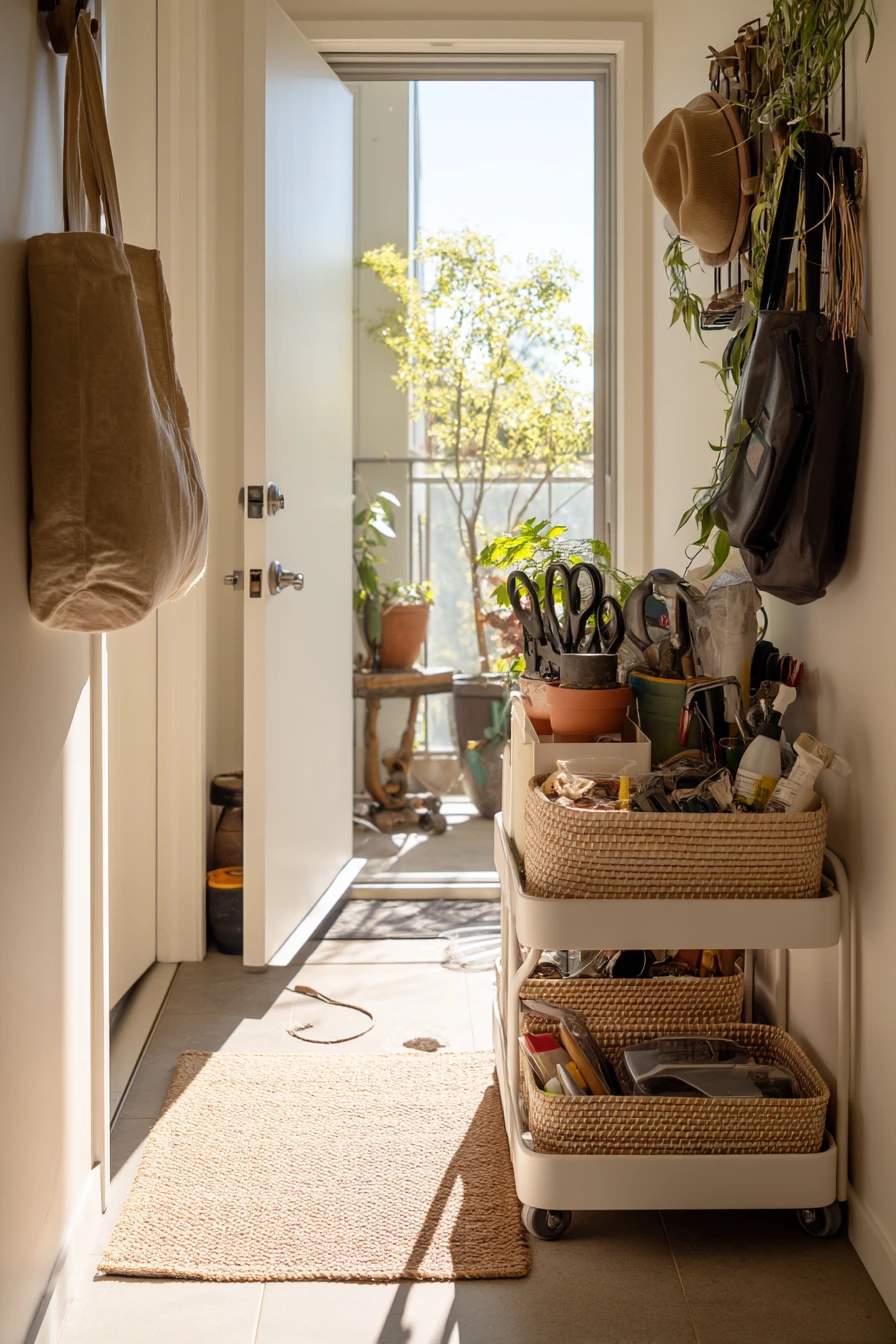
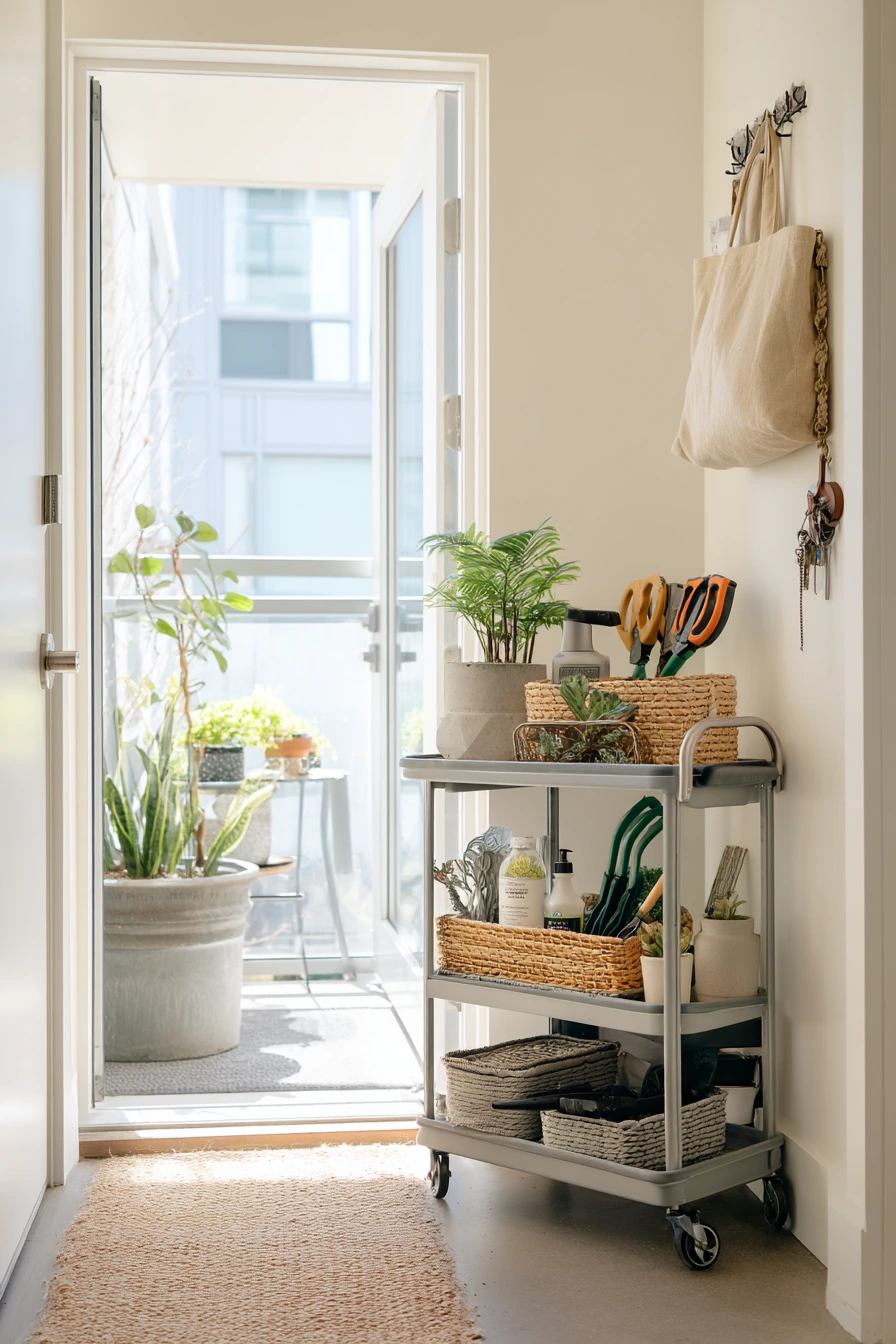
A slim rolling cart is one of the best garden tool storage ideas for renters because it moves where you need it. Park it by a balcony door in a bright apartment hallway, then roll it outside when you water or prune. Use the top tray for compact trowels, snips, gloves, and a spray bottle so you can do quick plant care without digging through a closet.
Put plant food and soil tools on the middle level, and store stacked nursery pots in woven trays on the bottom to keep them from sliding. Since this is a high-traffic spot, plan for real-life clutter like a tote bag hanging off the handle, keys on a tray, and a phone charger coiled near the base. Add one small catchall dish on the cart so those items do not take over the tool area.
For styling, keep the cart simple and not overloaded. Leave a little empty space so it looks clean but not sterile. Choose two materials, like metal and woven baskets, and repeat them. Wipe the wheels and the bottom shelf often, since a small plant leaf or soil bits can end up on the floor. When you are done, roll the cart back into its parking spot so your hallway stays clear.
- Use a slim rolling cart that fits beside the balcony door.
- Keep everyday tools on the top tray for fast access.
- Store plant food and spray bottles in an upright bin to prevent spills.
- Contain nursery pots in woven trays so stacks do not topple.
- Add a small catchall for keys and chargers to prevent mixed clutter.
Pro Design Tip: Assign each shelf a purpose and label it, even lightly, so the cart stays organized when you roll it between rooms.
Budget Considerations: A basic utility cart is usually affordable. If woven trays cost more than you want, use small plastic bins and cover them with removable shelf liner.


Garden tool storage works best when it matches your daily routine and your space. A pegboard wall, a small cabinet, a bench with baskets, or a rolling cart can all be “the right answer” if it makes reset simple.
Pick one idea from this list and set it up this weekend, then adjust after a week of use. Small changes, like better labels, a boot tray, or one seed box, can make your whole gardening season smoother.
FAQ
1) What is the best way to store long-handled garden tools?
Use a wall rack, pegboard hooks, or a tall stand so handles stay upright and do not fall. Keep them near the door you use most.
2) How do I store garden tools in a small apartment?
Try a slim rolling cart or a small outdoor cabinet on the balcony. Keep only the tools you use often and store extra pots nested.
3) How can I make garden tool storage kid-safe?
Hang sharp tools higher than child height, use blade covers, and keep fertilizers in a lidded bin or high shelf.
4) What should I keep near the door for quick garden trips?
A boot tray, gloves, snips, a small hand trowel, and a watering can. A small tray for keys and phone helps, too.
5) How do I stop my shed or garage from getting cluttered again?
Label hooks and bins, and keep a “reset zone” shelf or basket. Do a two-minute put-away after each use.
6) Should seeds be stored in jars or packets?
Either works if they stay dry and cool. Jars help you see what you have, while packets are easier to label by date.