
Good kitchen organization ideas make daily life easier. When snacks, tools, and cooking basics have a clear home, you waste less time looking for things and you clean up faster.
This guide walks through practical setups you can copy in a real home, from a family pantry with labeled bins to a small-space apartment with modular drawer dividers. Each section includes quick steps, styling touches, and realistic details like crumbs, grocery lists, and cooking in progress.
You will also get simple ways to keep zones working, like labels facing out, clear jars on upper shelves, and a whiteboard meal plan on the pantry door. These small habits help the system last.
Use the ideas that match your kitchen size and routine. Start with one spot today, then build from there.
1. Family Pantry Organization with Labeled Bins

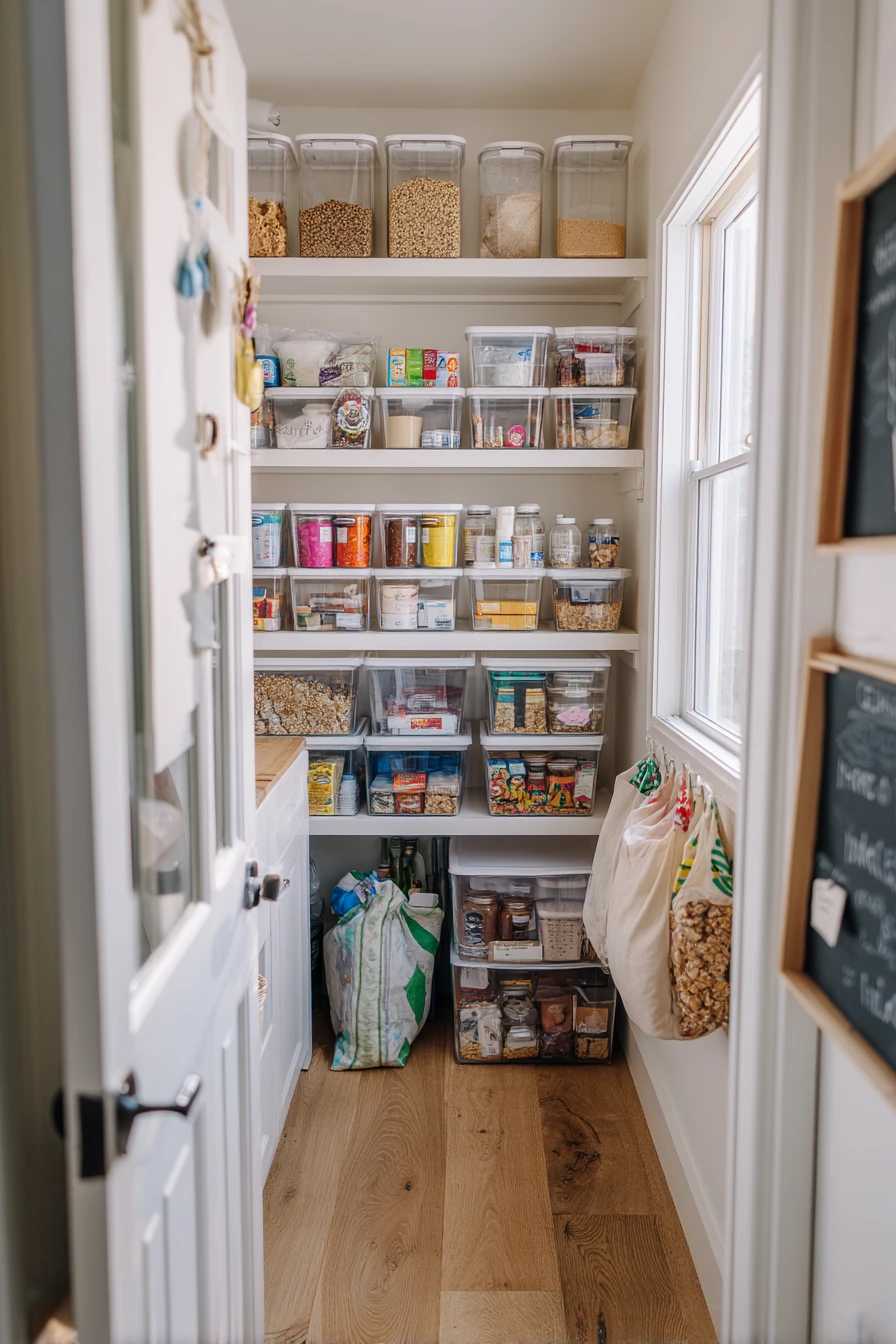
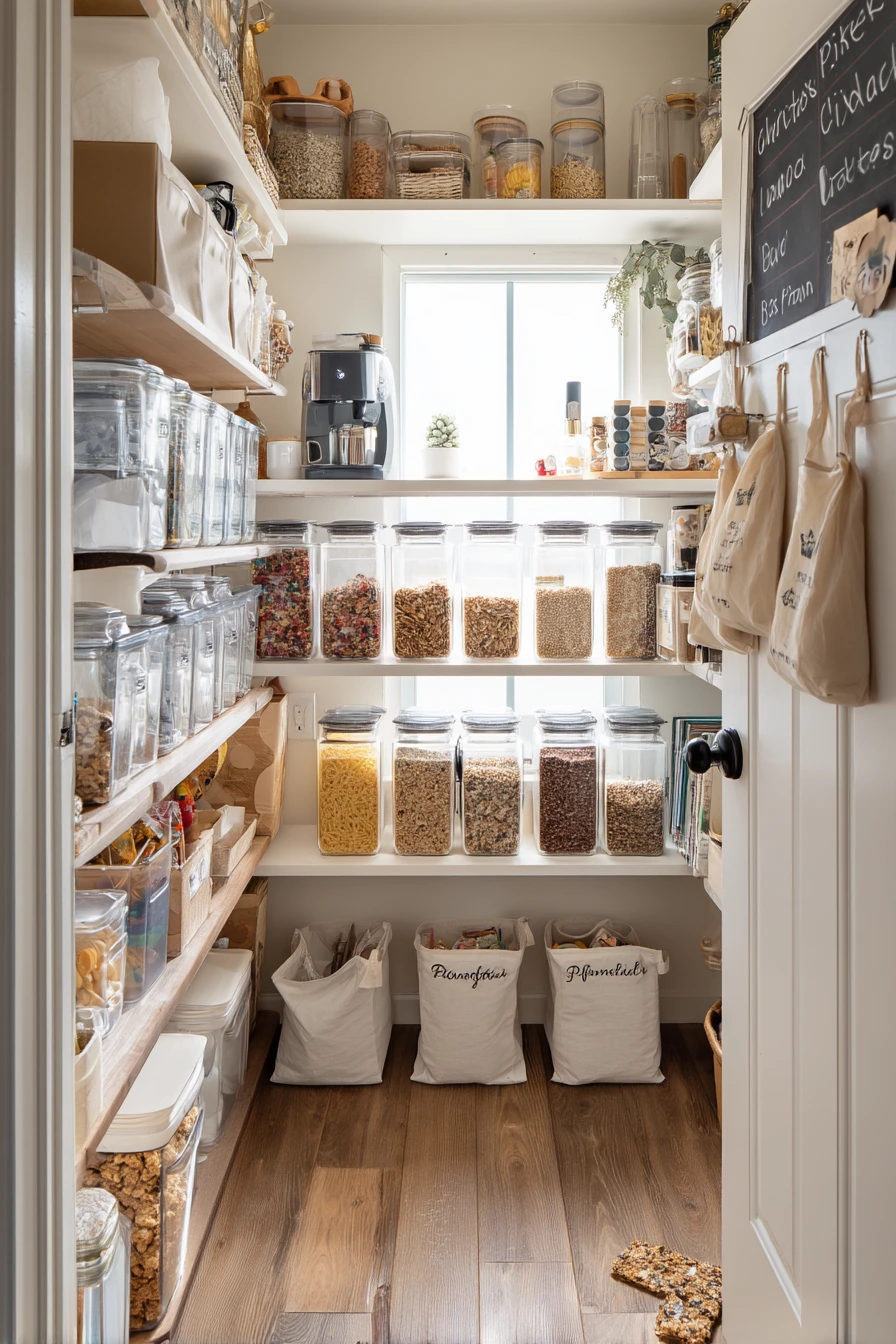
A family pantry works best when it supports real routines, not perfect shelves. Use labeled bins for snacks, pasta, baking supplies, and lunchbox items so everyone can put things back fast. Clear jars on upper shelves help you see what is running low, especially for cereal, rice, and flour. A small whiteboard meal plan on the door keeps the week in view and cuts down on last-minute stress.
Plan the pantry around how kids and adults actually move. Put lunchbox items and after-school snacks on lower shelves, and keep baking supplies higher if you do not need them daily. Expect signs of life like cereal crumbs near the lower shelf or a granola bar box half-tucked into an open bin. The goal is calm and practical, not staged.
To style it in a believable way, mix clear containers with a few opaque bins to hide busy packaging. Add reusable bags hanging from hooks on the inside wall or door for quick grocery runs. If the floor gets scuffed or you notice a kid shoe print, keep a small handheld broom nearby so resets take two minutes.
- Group by task: snacks, breakfast, baking, and dinner starters.
- Use clear jars for often-used dry goods so you can see levels.
- Choose bins that fit the shelf depth so space is not wasted.
- Place kid items at kid height to reduce spills and mess.
- Keep a simple backstock area for extras behind the main bins.
Pro Design Tip: Keep labels large and plain, and face every label outward so you can scan the pantry in seconds.
Budget Considerations: Reuse sturdy shoe boxes or old baskets at first, then upgrade only the bins that get used every day.
2. Small-Space Kitchen Drawer Organization for Apartments
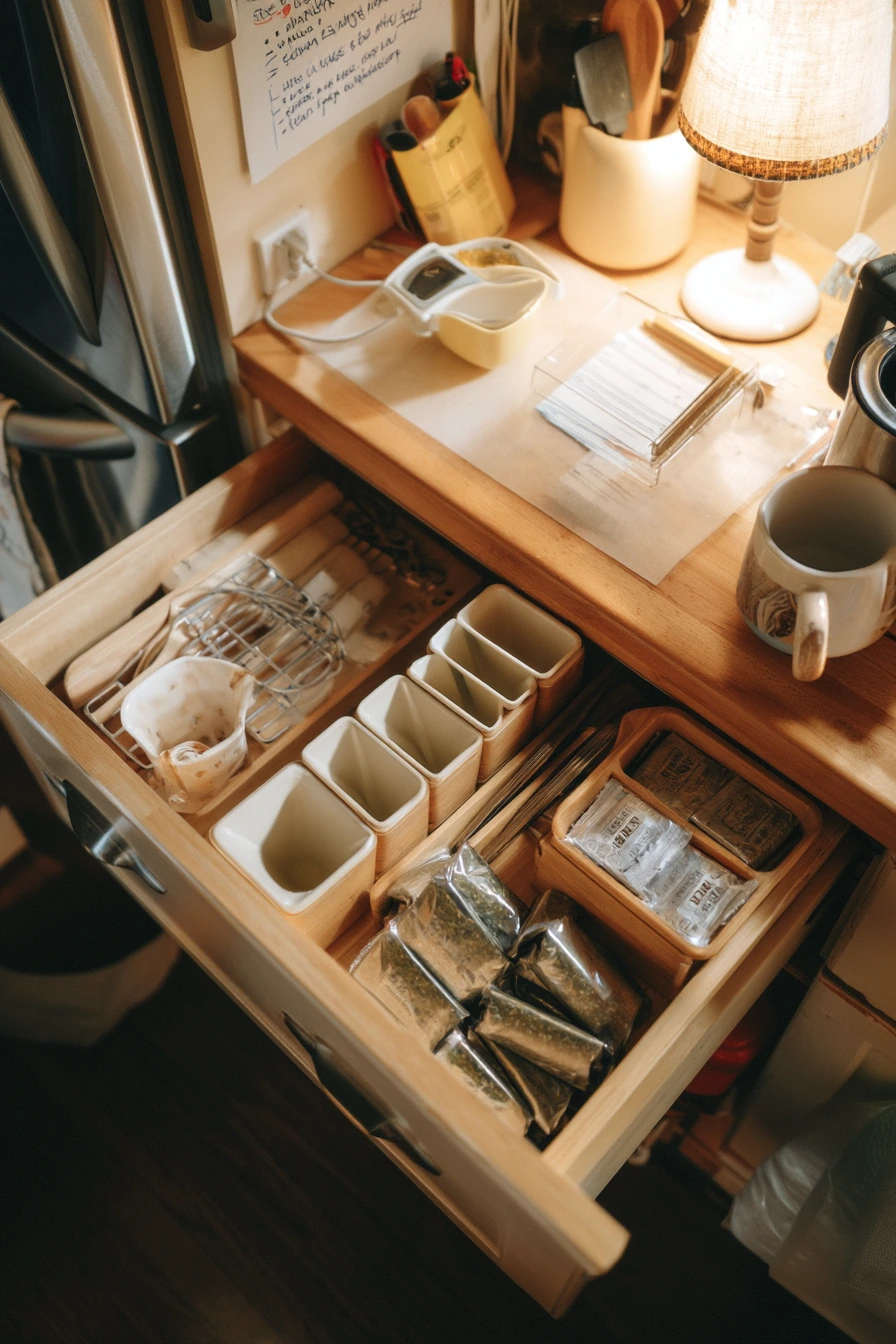
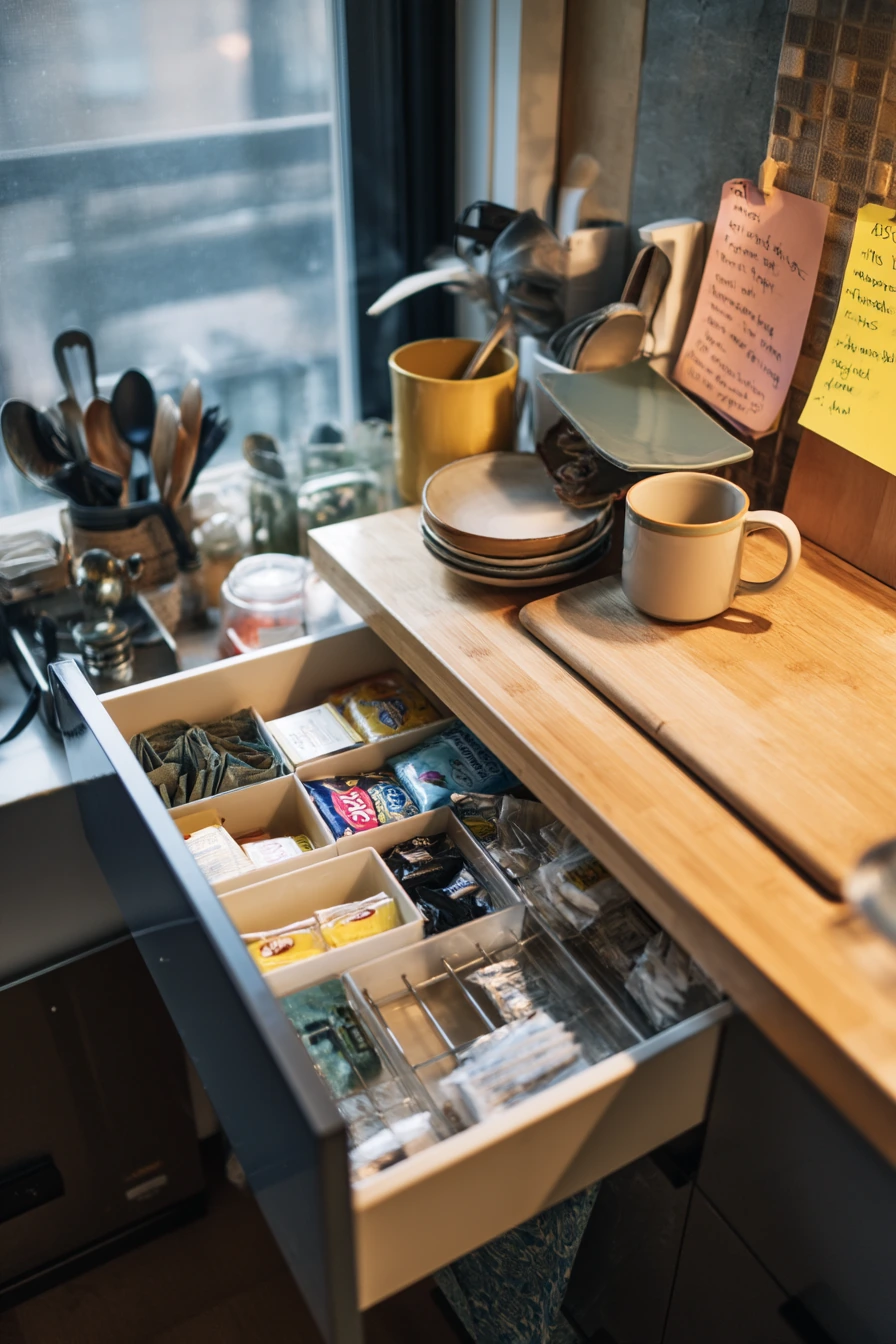
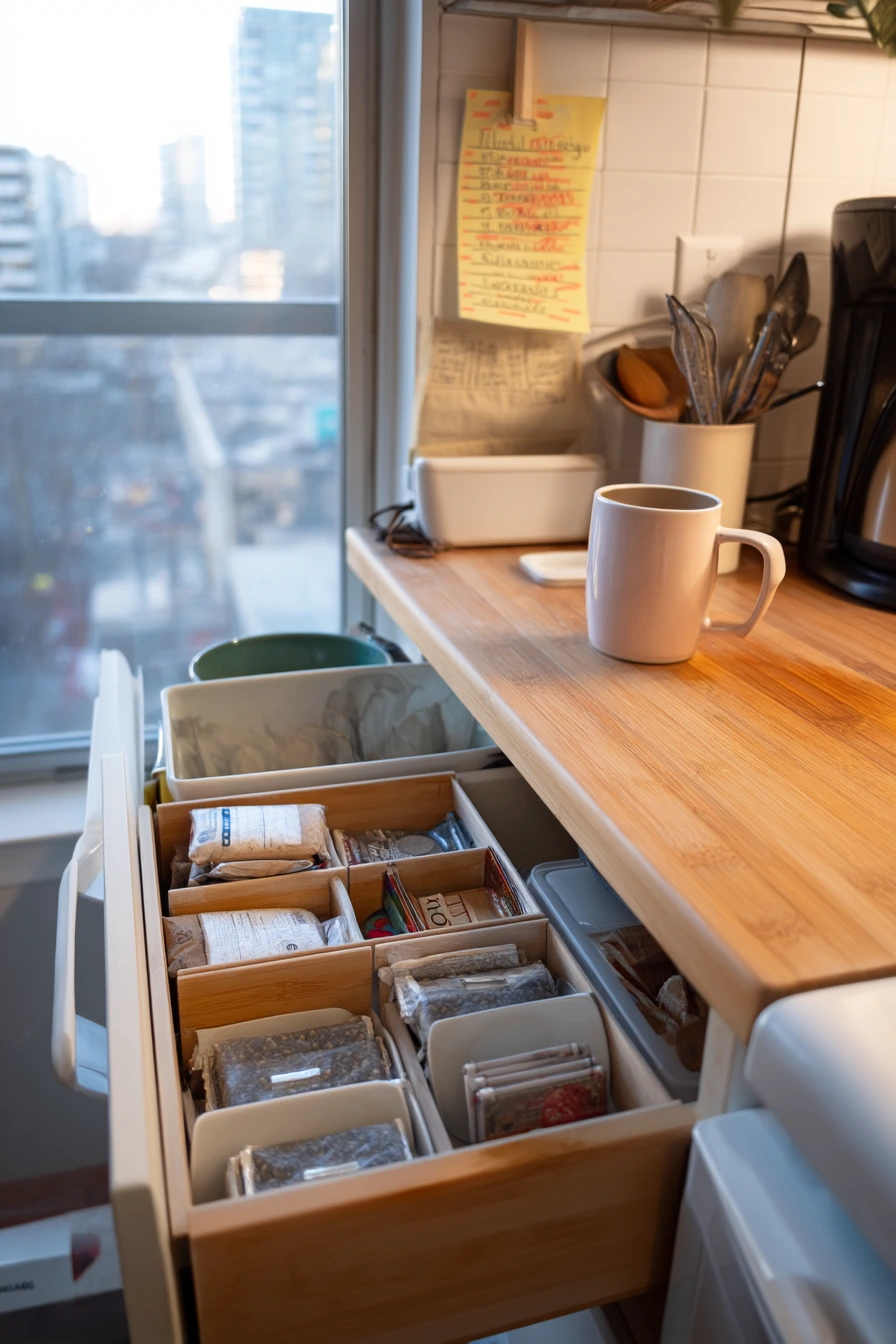
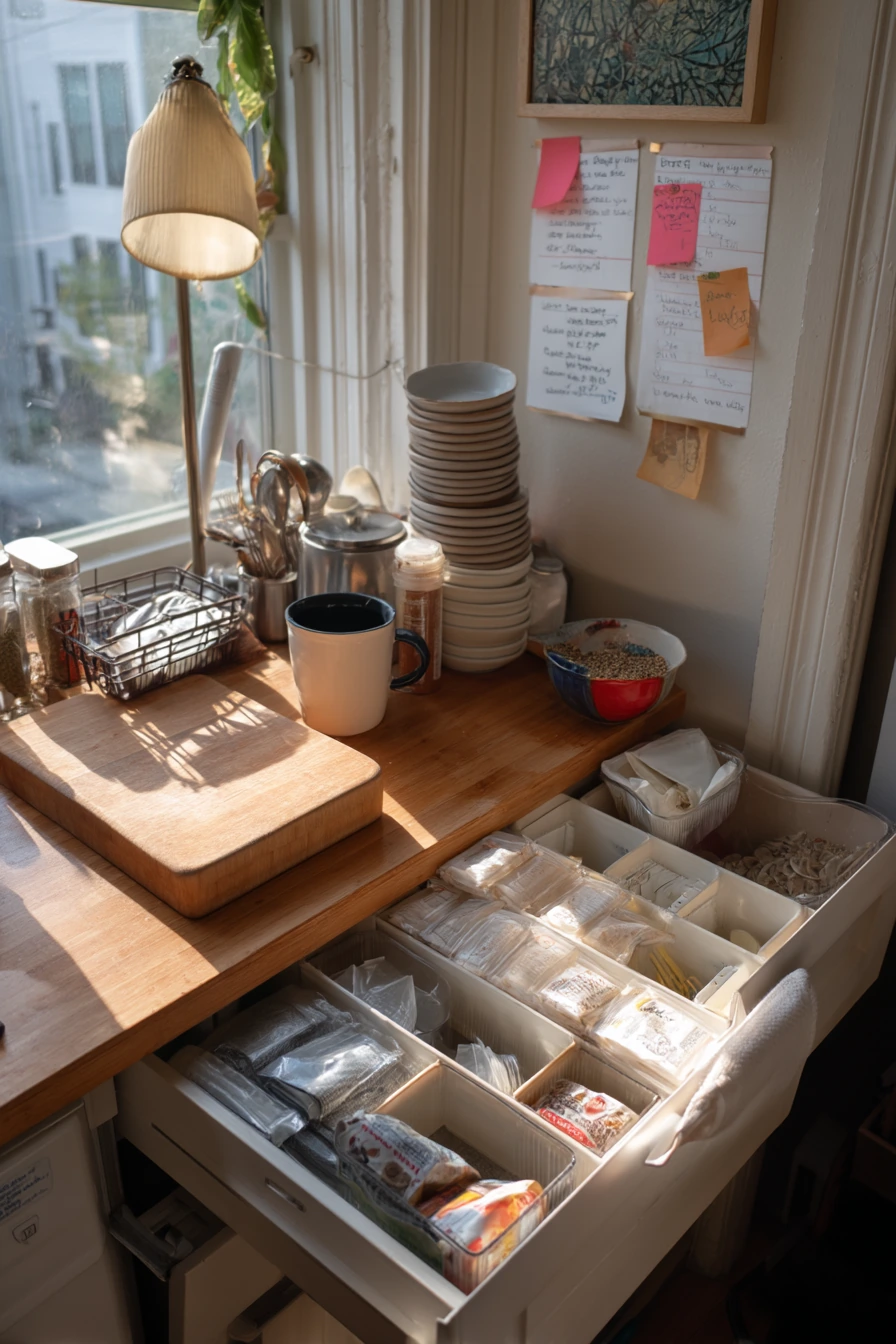
In a compact city kitchen, drawers do more work than cabinets. Shallow drawers with modular dividers can hold utensils, tea bags, foil, dish towels, and spice packets without turning into a messy pile. A narrow butcher-block counter feels bigger when drawer storage is tight and predictable.
Start by emptying one drawer and sorting into small groups: daily utensils, cooking tools, wrap and foil, and drink supplies. Use adjustable dividers so each category has a clear lane. Keep the most-used items near the front, and move backups to the back. If you keep a mug on the counter beside a charging cable, give it a small spot so it looks intentional, not forgotten.
For styling, keep the counter mostly clear and add one simple tray for “daily items” like a mug, a pen, and your keys. A handwritten grocery list pinned to the fridge is useful and makes the space feel lived-in. A dish rack with two drying bowls is fine when it has a home and you reset it each night.
- Use modular dividers that can be reconfigured as needs change.
- Store tea bags and spice packets in a small bin inside the drawer.
- Roll dish towels and stand them upright to save space.
- Keep foil and wrap in a slim box holder so rolls do not slide.
- Limit duplicates so the drawer closes easily every time.
Pro Design Tip: Pick one divider style and color for all drawers so the kitchen looks calmer even in a tight layout.
Budget Considerations: Dollar-store dividers and small food containers work well; upgrade later to nicer bamboo inserts if you want.
3. Renter-Friendly Open Shelving Organization (No Renovation)
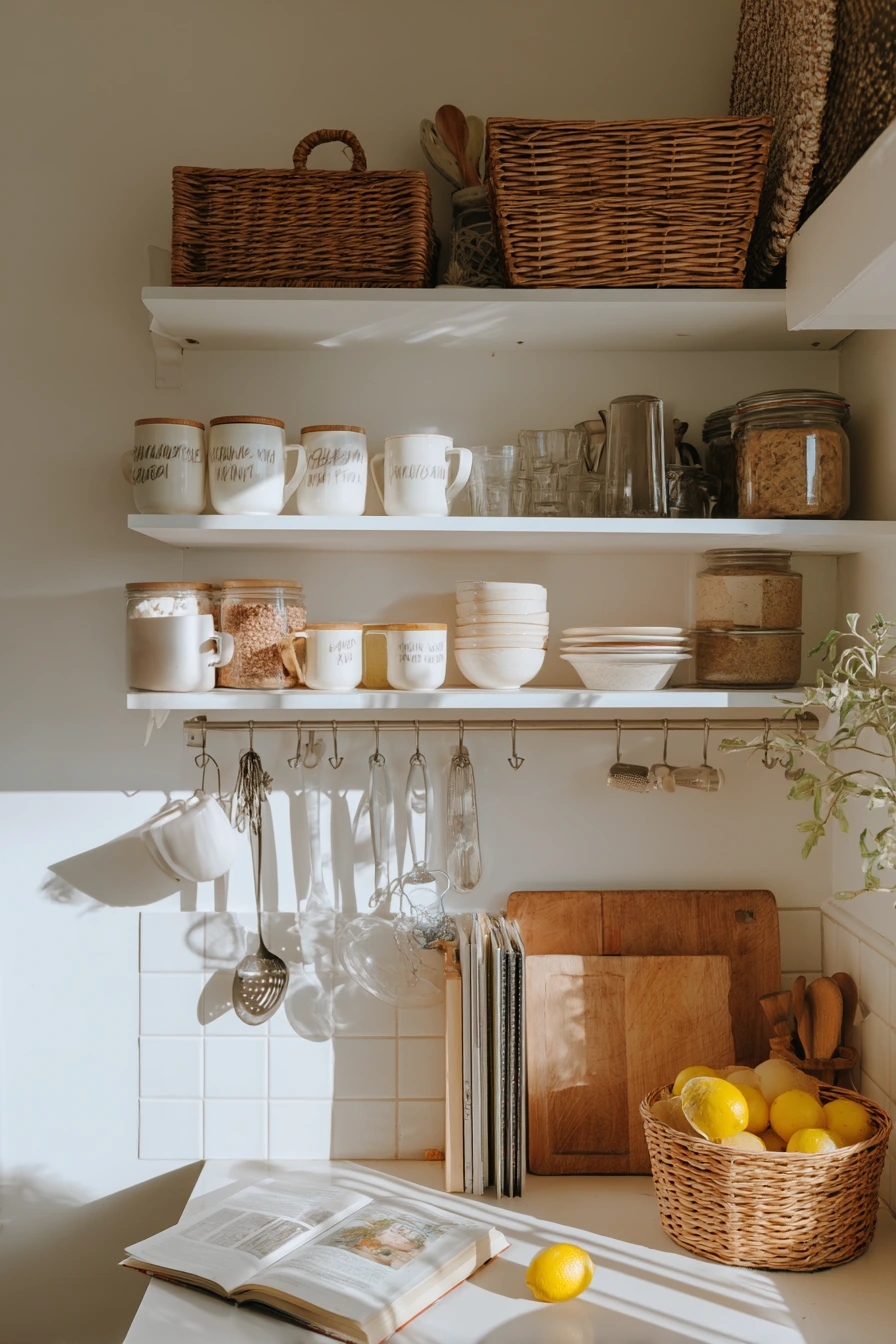
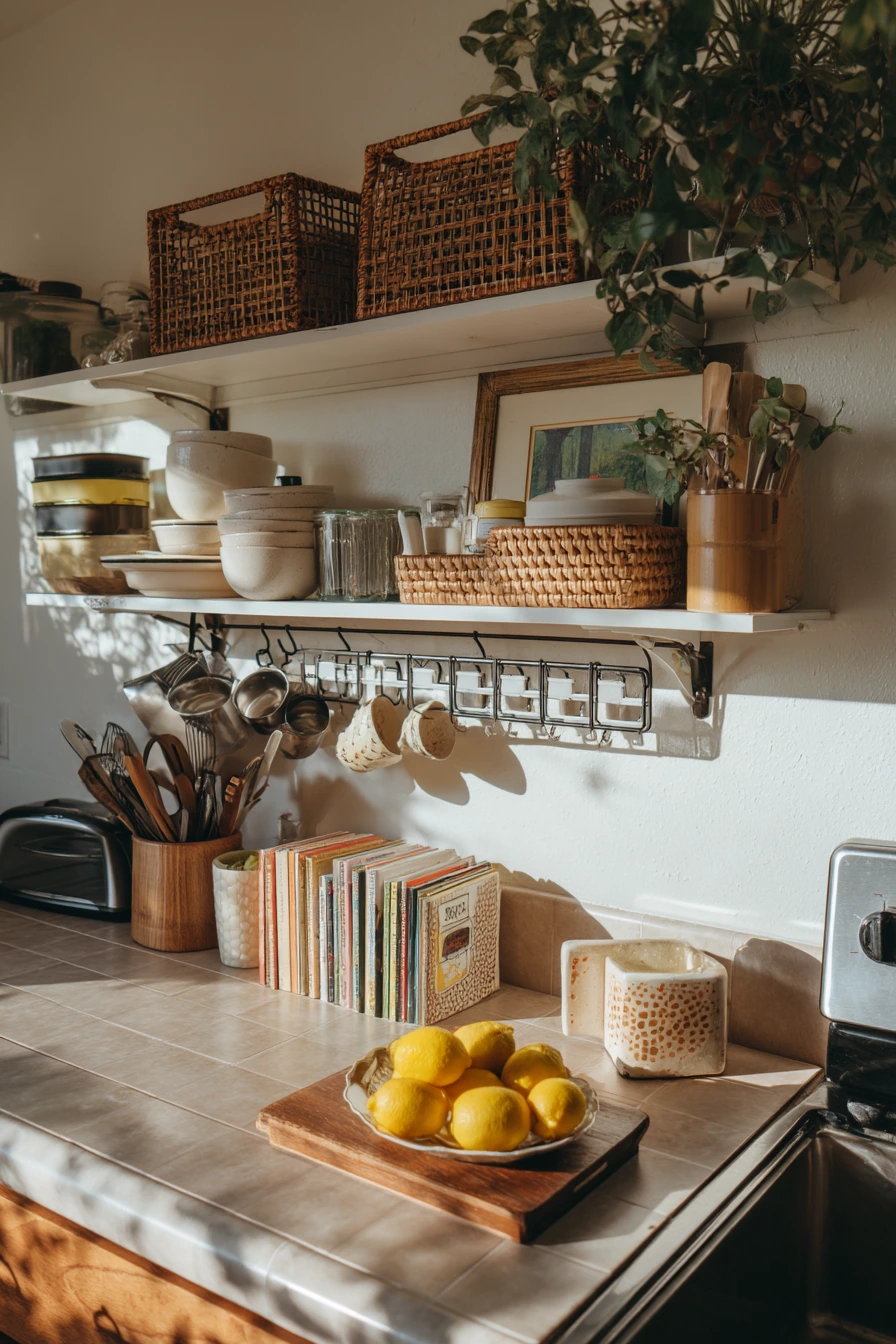
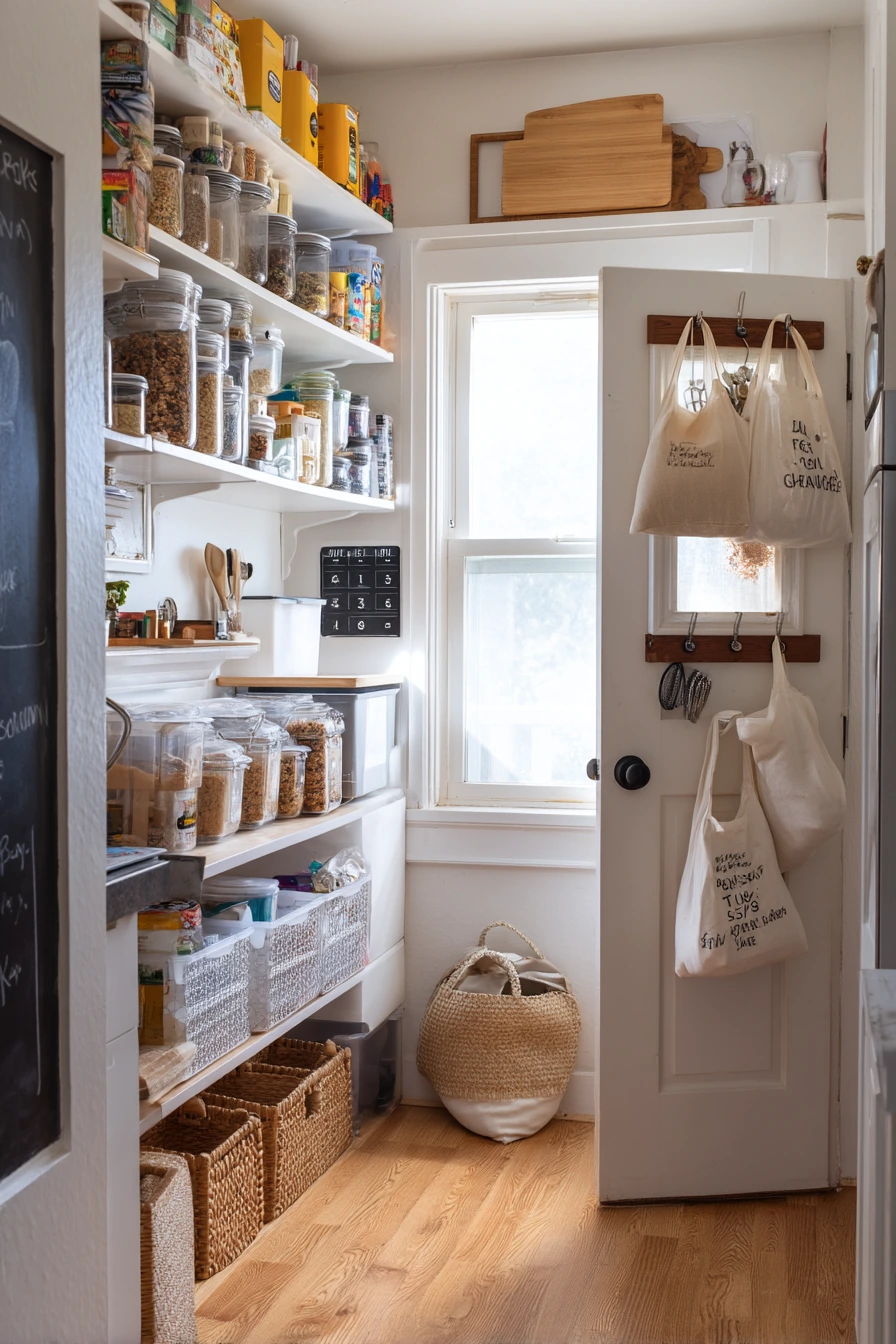
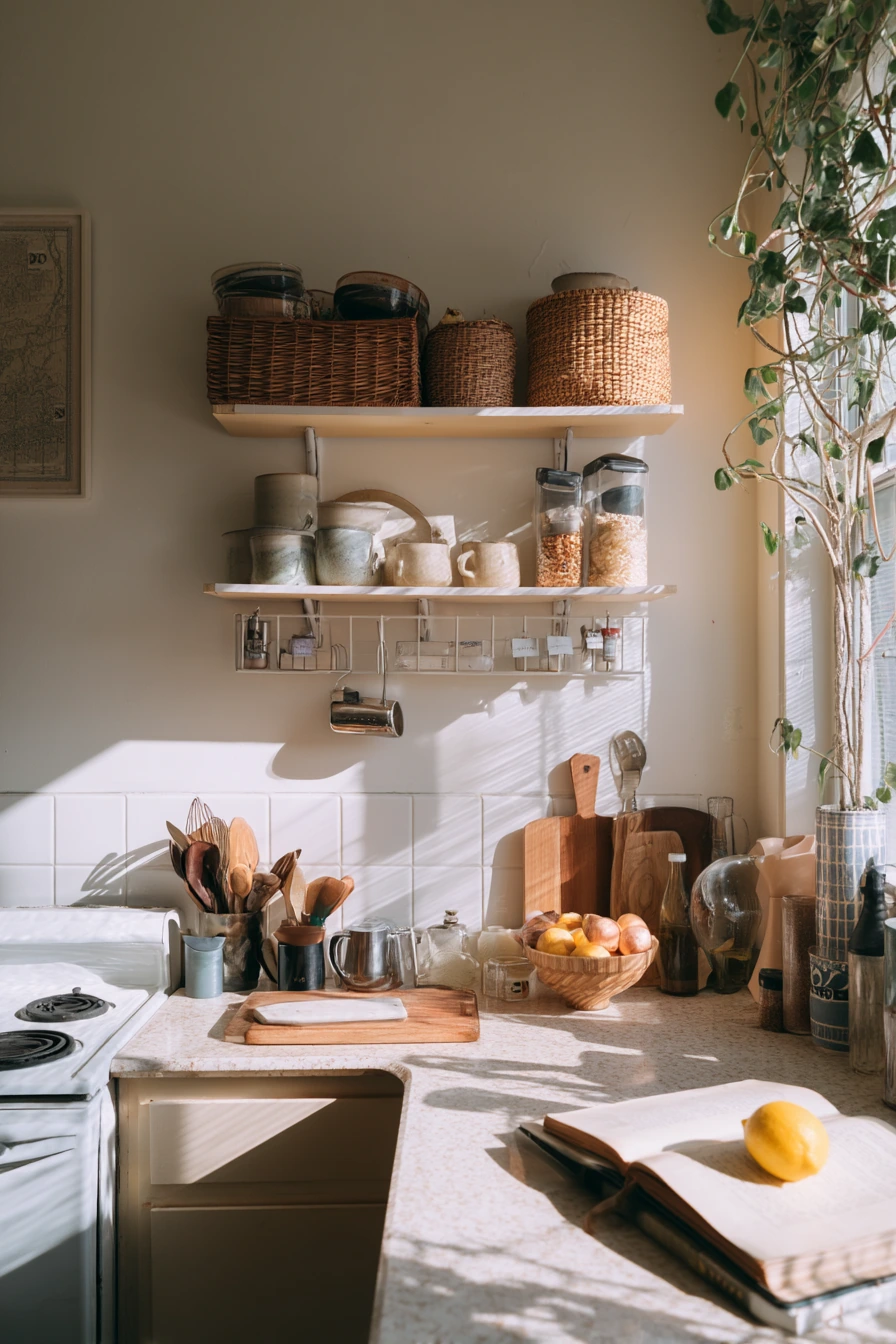
Renter-friendly kitchen organization is about light changes that make a big difference. Open shelving can look neat when you use matching stackable containers and keep a simple color plan. Woven baskets are great for onions and potatoes because they breathe, and they add warmth without needing new cabinets.
Build your shelves around daily use. Place plates and bowls on the easiest shelf to reach, then keep pantry staples in clear containers above or beside them. Use removable adhesive labels so you can update categories without damaging surfaces. A rail with S-hooks for mugs and measuring spoons keeps small items off the counter and makes the kitchen feel more open.
To style it, prop a thrifted cookbook open on a stand, and leave one stray lemon on the counter for a natural look. Add a small plant so it casts soft shadows in the sun, but keep it away from the stove area. The key is edited, not empty: you want enough items to be useful, but not so many that the shelves look crowded.
- Choose stackable containers that fit your shelf height.
- Use baskets for produce that should not go in the fridge.
- Add a hook rail for mugs and measuring spoons to free drawer space.
- Label containers with removable stickers for easy updates.
- Keep one open shelf space as a “breathing spot” for balance.
Pro Design Tip: Repeat the same container shapes across shelves, then vary textures with one or two baskets for a softer look.
Budget Considerations: Thrift stores often have matching jars and baskets; buy slowly and build a set over time.

4. Countertop Zone Organization with Trays and Baskets
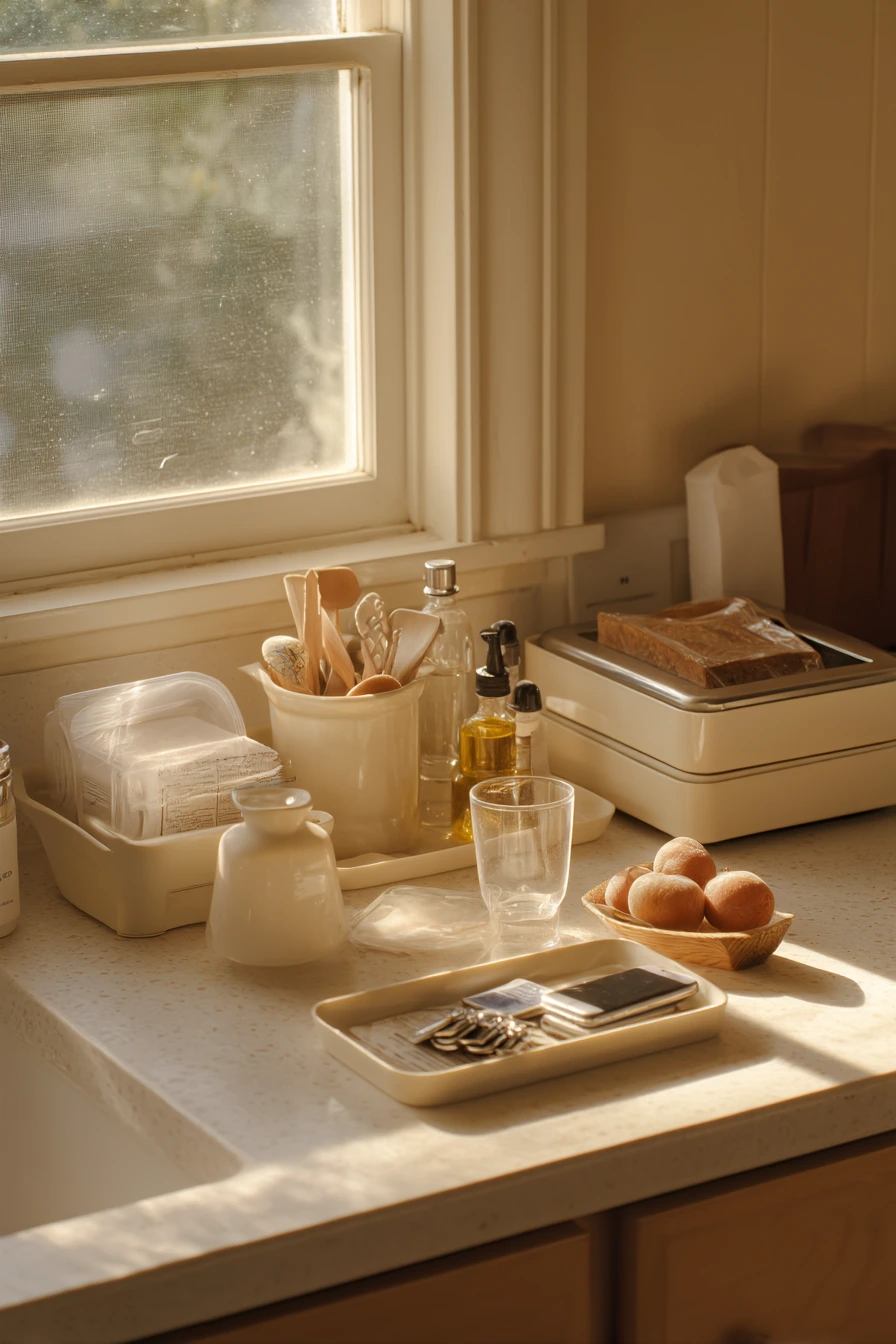

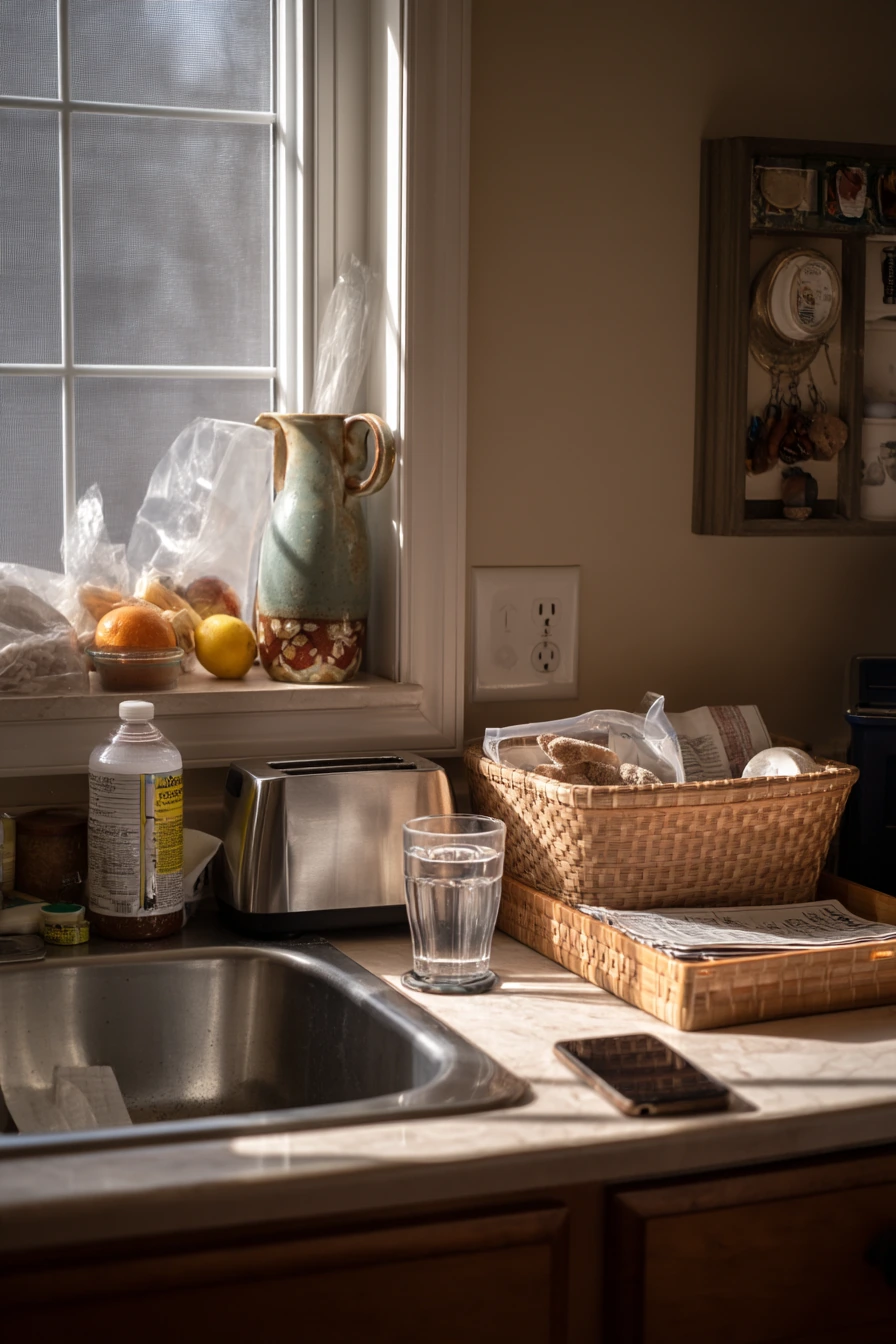
Countertop clutter is usually not about too much stuff, but about no clear zones. Countertop trays help you group items into simple stations for coffee, fruit, oils, and daily mail. When each group has a boundary, cleaning is quicker and the kitchen feels more ordered even during busy weeks.
Start with a full wipe down, then decide what truly lives on the counter. A ceramic utensil crock near the stove is useful if it holds only daily tools. Add a bread box if bread ends up everywhere, and give keys a small basket near the entry point. If a phone often rests by the toaster, add a small charging spot so it is safe and consistent.
Style it like a real family home with subtle clutter that still looks calm. A folded dish towel, a half-full water glass, and a small stack of mail can stay out if they are contained on a tray. Keep tray colors simple so the eye reads one clean shape instead of many small items.
- Create 3 to 4 zones: coffee, cooking oils, fruit, and drop zone.
- Use trays to define each zone and make wiping counters easier.
- Limit the utensil crock to tools you use every day.
- Add a key basket so small items do not spread.
- Reset zones for two minutes each evening to prevent buildup.
Pro Design Tip: Use one tray material across the kitchen, like wood or matte metal, so zones feel connected and not random.
Budget Considerations: Use plates or baking sheets as trays at first, then replace them with thrifted or discount-store organizers.

5. Pull-Out Spice Cabinet Organization Beside the Range
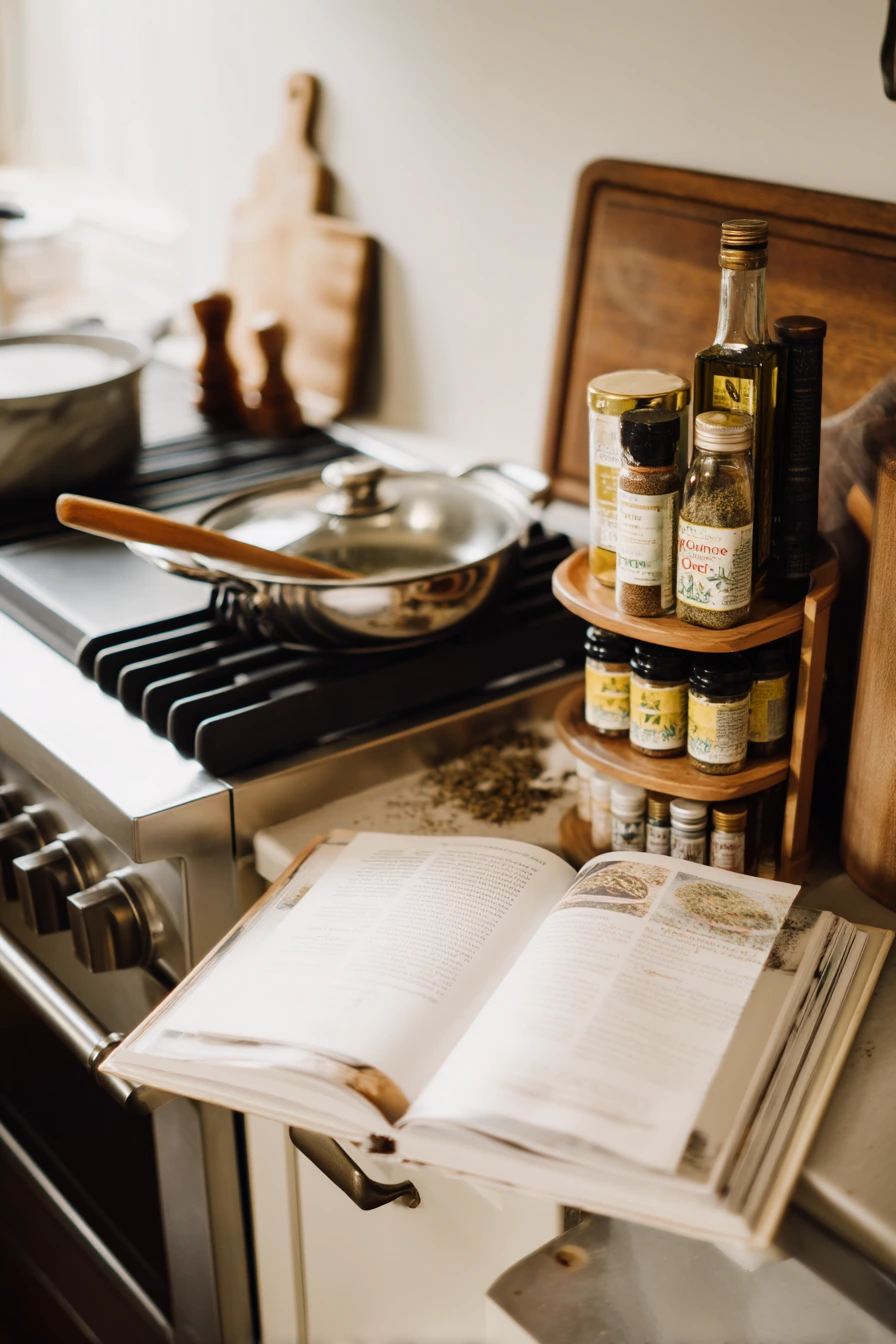
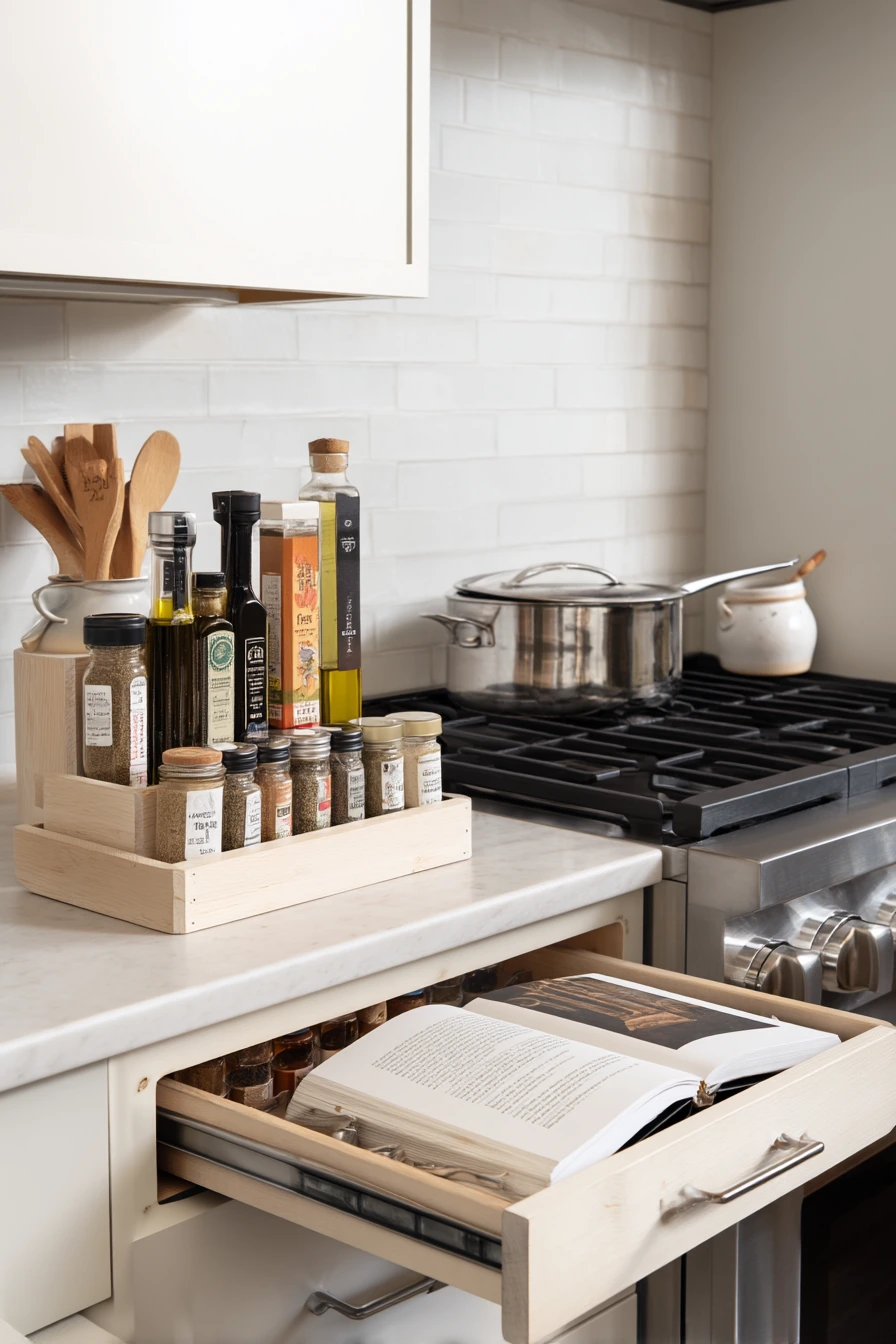
A pull-out cabinet beside the range is one of the best spots for kitchen organization because it supports cooking in real time. Set spices on tiered risers so labels face out and you can grab what you need without digging. Group olive oil and vinegar together so they do not wander across the counter during meal prep.
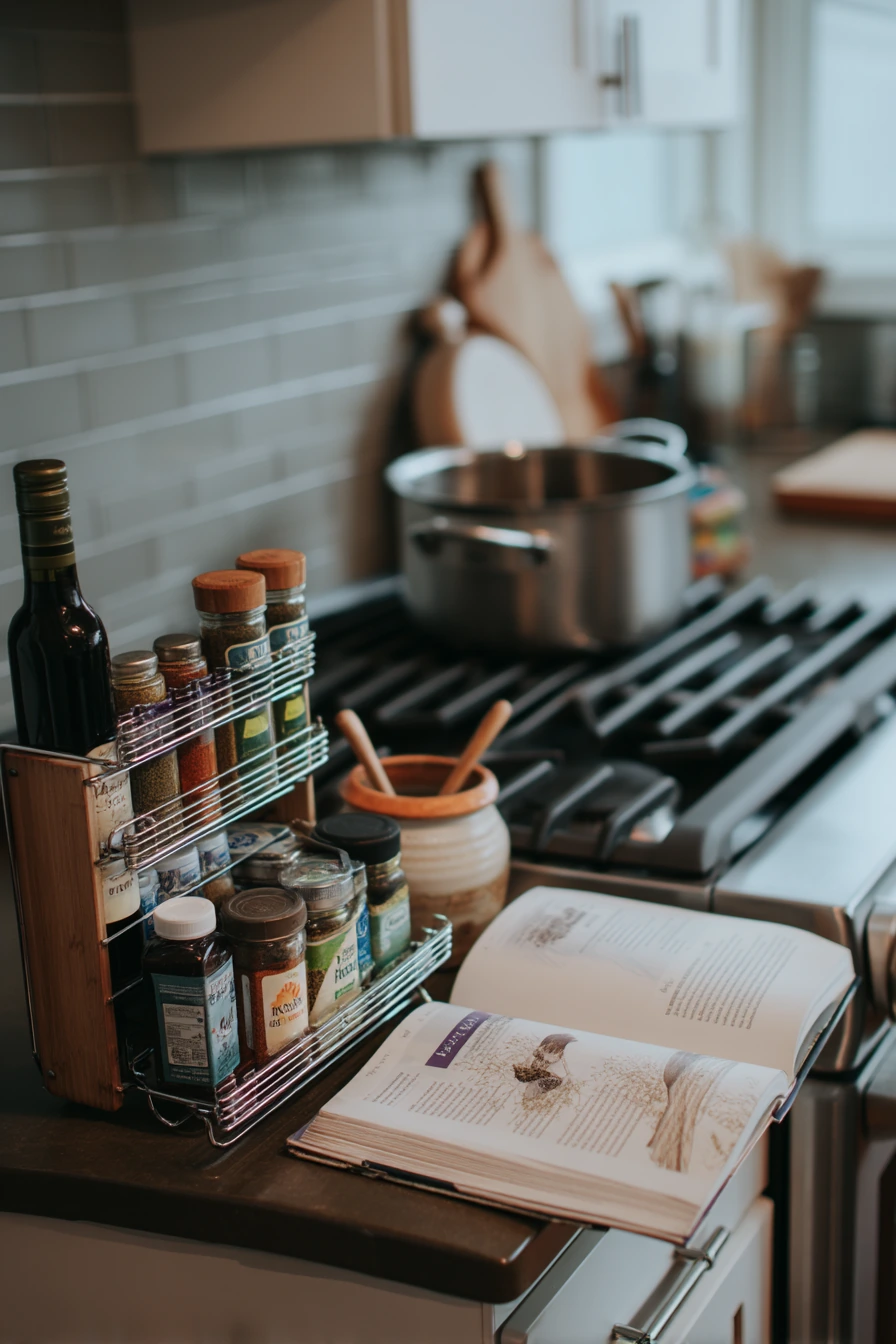
Build the system around how you cook. Put daily spices and salt at the front, and store less-used blends toward the back. Keep a small crock with a wooden spoon near the stovetop, and leave room for a saucepan cooling or a cookbook open to a recipe page. Small splashes near the backsplash happen, so choose surfaces you can wipe quickly and keep a cloth nearby.
To style this area, keep containers simple and consistent. A row of matching spice jars looks tidy, but it still needs function, so do not overpack the pull-out. Leave a little space for your hand to reach in. If you like the look of a cooking moment, keep one recipe open and one tool out, but put everything else back into the cabinet zone.
- Use tiered risers so every spice label is visible.
- Store oils and vinegar together in one section.
- Face labels outward to speed up cooking.
- Keep most-used items closest to the range.
- Wipe the pull-out base weekly to remove drips and crumbs.
Pro Design Tip: Arrange spices by cooking style you use most, like everyday basics in front and baking spices in a separate row.
Budget Considerations: Reuse cleaned jars and add simple tape labels; upgrade to uniform jars only if the mix of containers bothers you.
6. Under-Sink Organization with Clear Bins and a Tension Rod
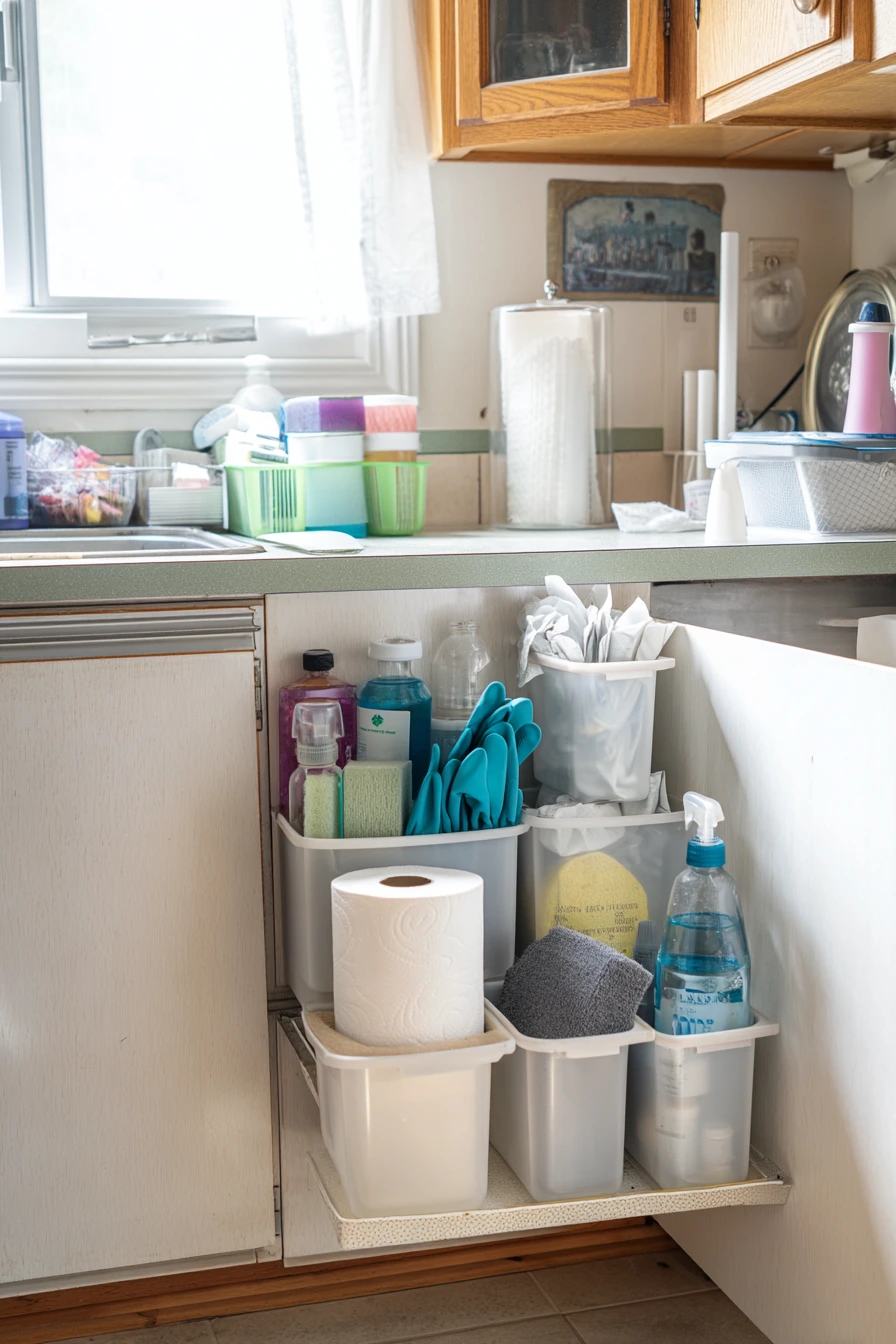
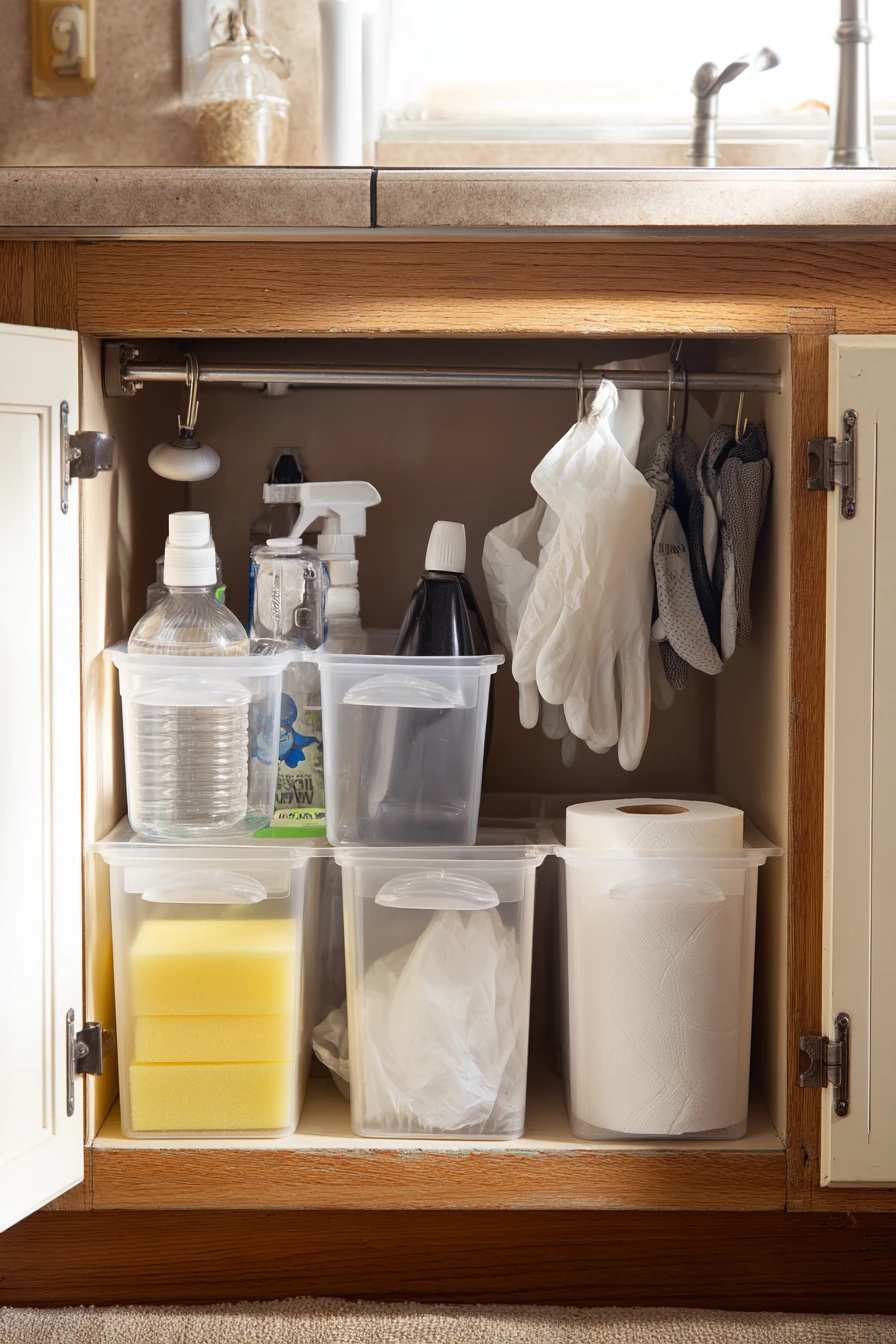
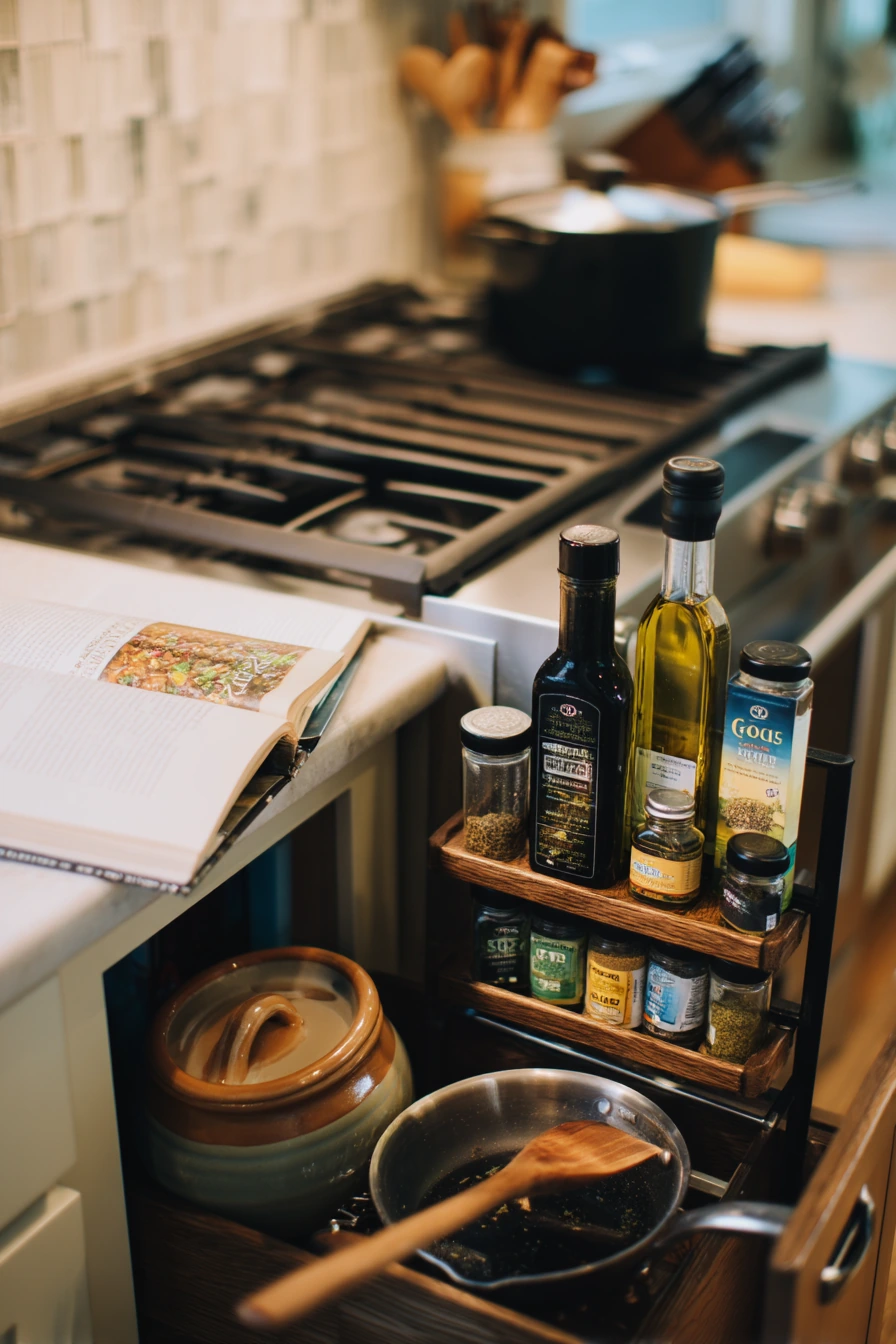
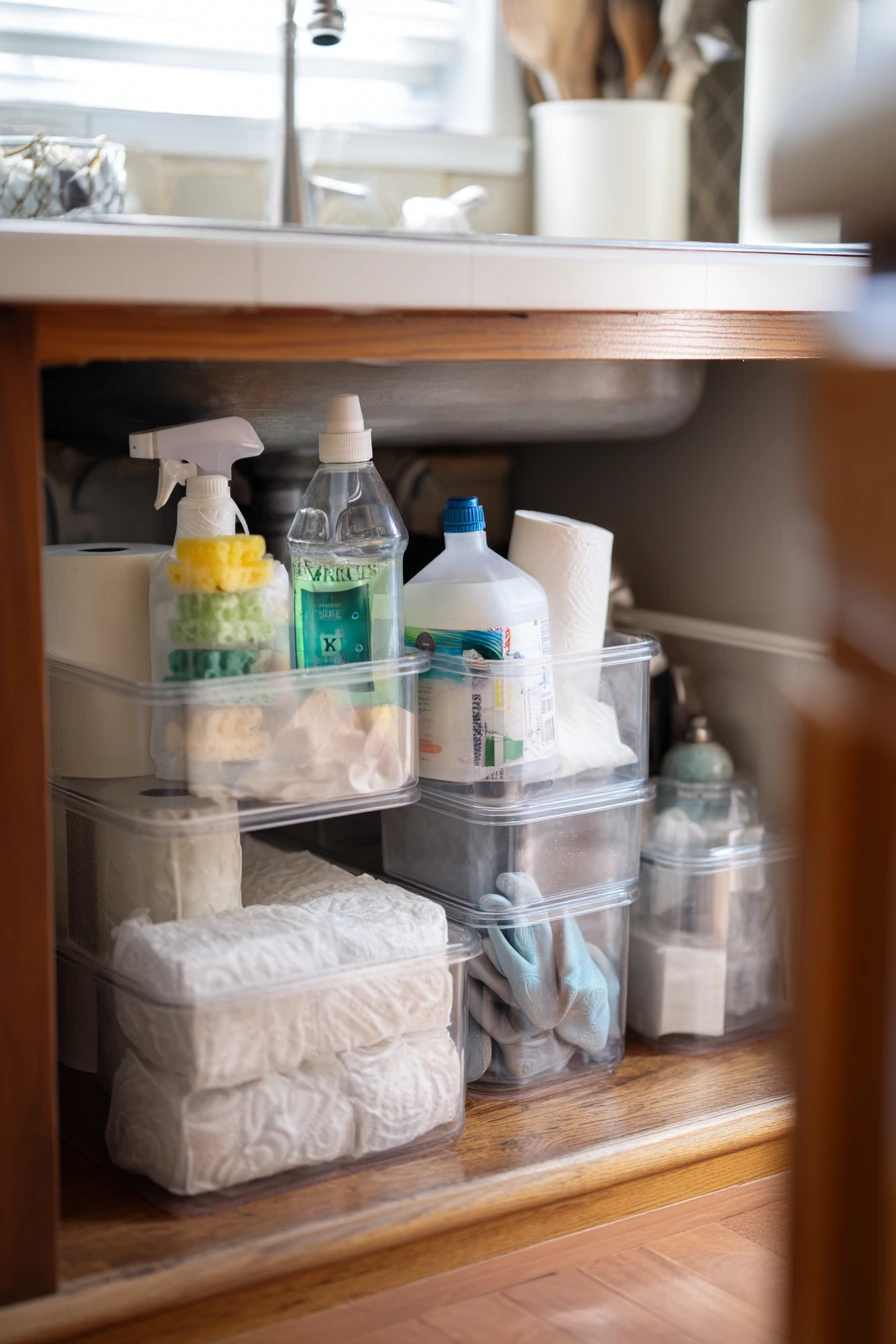
Under-sink storage gets messy because it holds many shapes and it is easy to ignore. A workable setup uses clear bins for sponges, dishwasher pods, spray bottles, trash bags, and gloves, so you can see what you have. A tension rod is a simple tool that can hold microfiber cloths and keep them off the cabinet floor.
Start by checking for leaks, then add a leak tray to protect the base. Group items by job: cleaning sprays in one bin, dishwashing supplies in another, and backups like trash bags in the back. If a bottle ends up slightly tilted, that is normal, but bins keep it from falling over and spilling. Scuffed cabinet paint and faint water marks happen in real homes, so focus on easy-to-clean and easy-to-reset.
For styling, match bin shapes and keep labels simple. Place a paper towel roll nearby if you reach for it often, but do not cram it in if it blocks access. Leave a small open space so you can slide things in and out without fighting the setup.
- Add a leak tray first to protect the cabinet base.
- Use clear bins so supplies stay grouped and visible.
- Install a tension rod to hang cloths and gloves.
- Keep daily items in front and backups in the back.
- Do a quick monthly check for empty bottles and expired products.
Pro Design Tip: Use a narrow bin just for “refill and replace” items so you always know what to add to your grocery list.
Budget Considerations: A tension rod and two or three plastic bins are low-cost; you can skip fancy pull-out drawers and still get a clean result.
7. Busy Morning Kitchen Station for Coffee and School Snacks
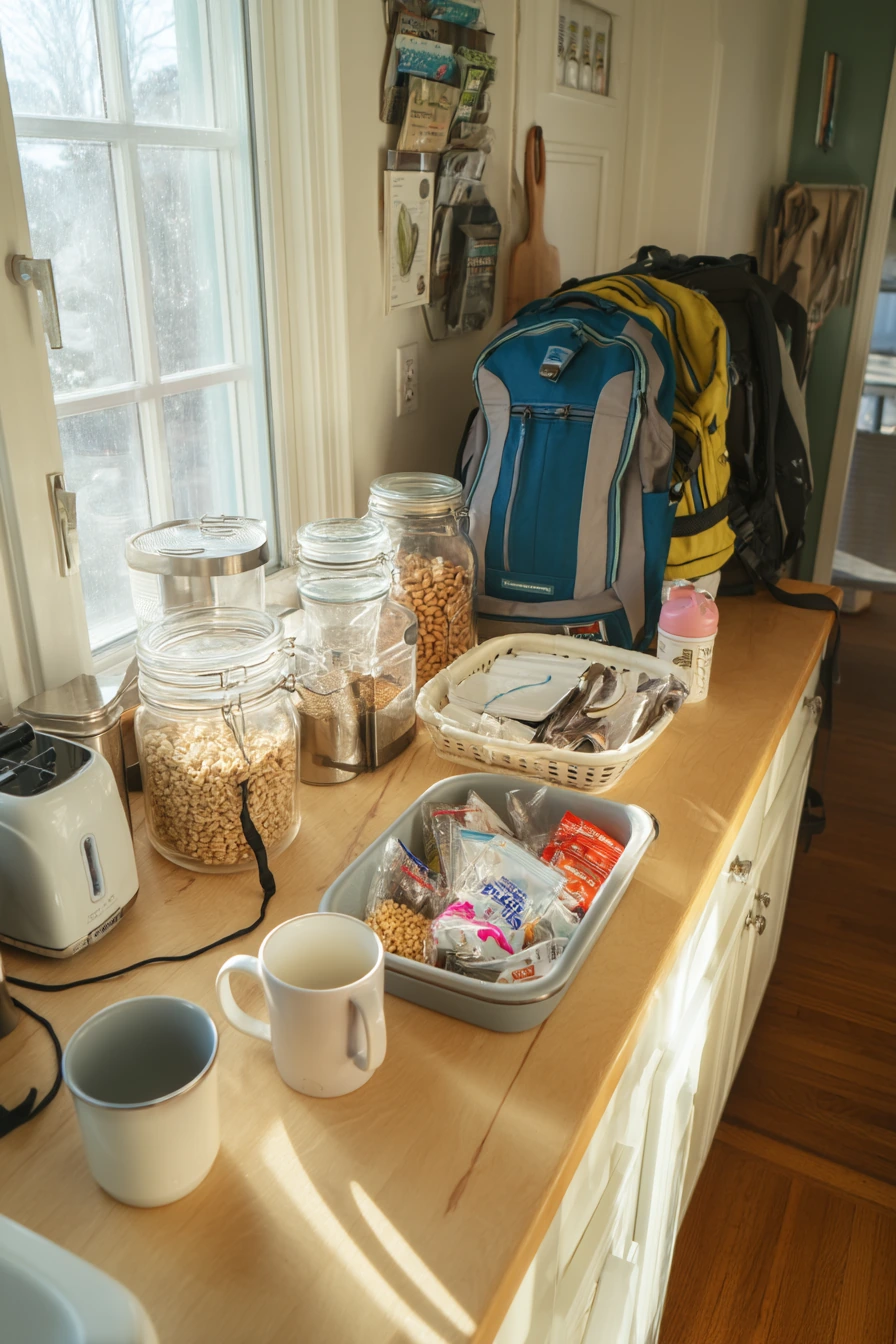
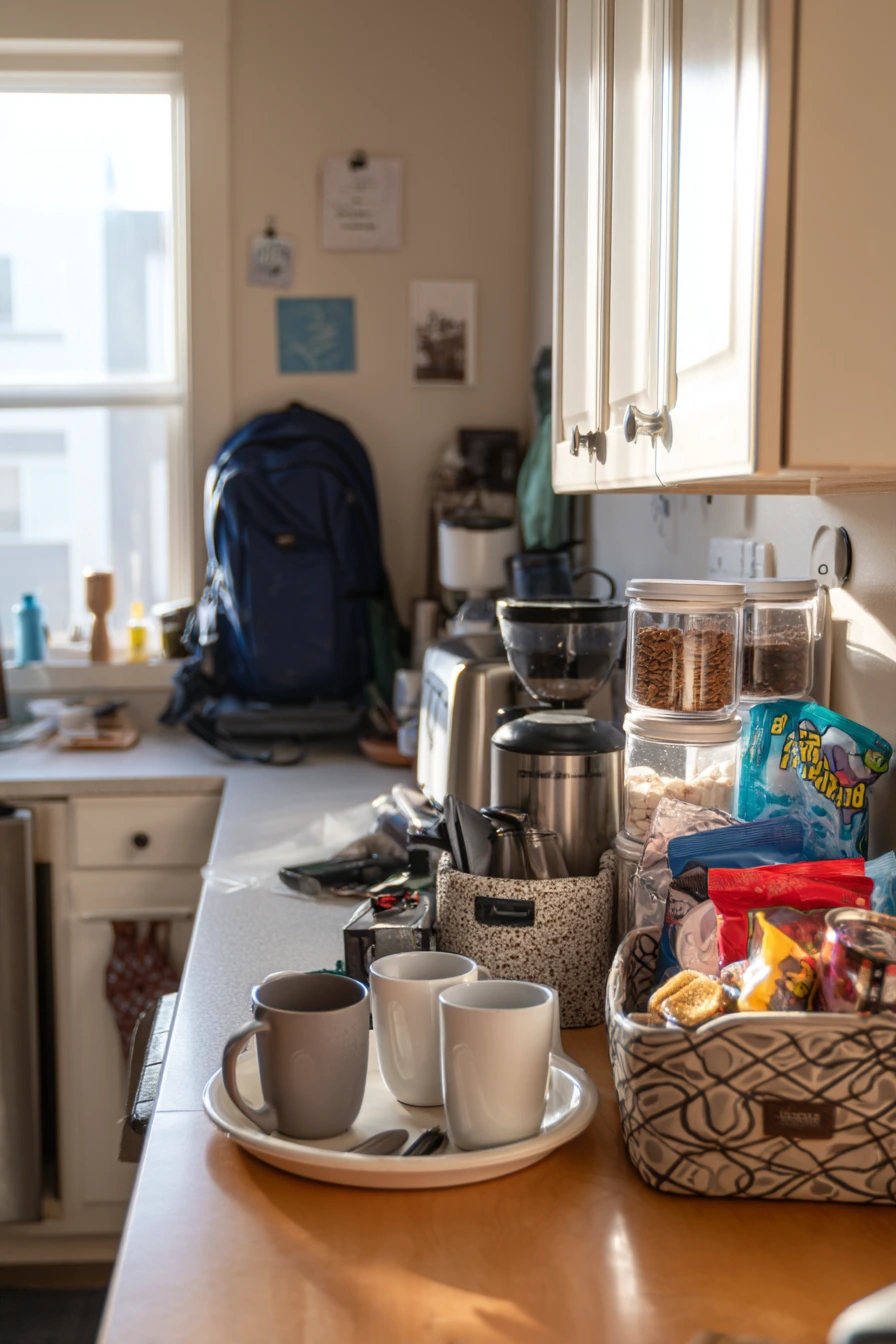
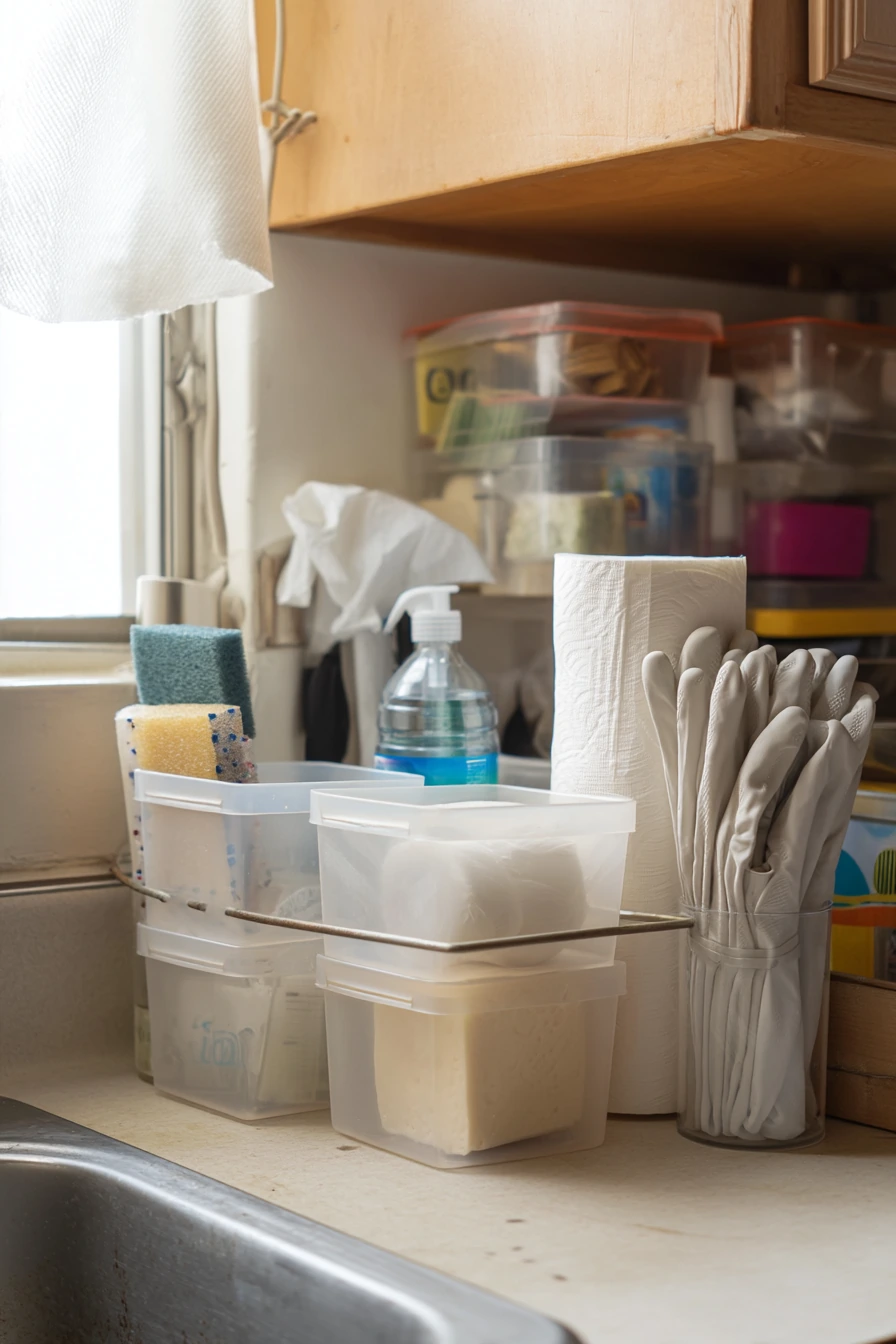
Mornings run smoother when you set up one clear launch area. A coffee station with canisters for beans and sugar, a toaster, and mugs on a small tray keeps breakfast from spreading across the whole counter. Add cereal dispensers or bins, plus baskets for school snacks, so kids can help without creating a mess.
Place the station close to where you actually stand in the morning. Keep backpacks visible by the doorway so you remember them, and store lunch add-ons at kid height. Small signs of a real morning, like an unplugged phone cable on the counter or one spoon in a sink bowl, will still happen, but a good system helps you reset quickly once everyone leaves.
For styling, use one tray for the coffee items and one basket for snack packs so the space looks tidy. Keep canisters simple and label them if more than one person refills. If you have sunlight in the morning, let it hit the station and keep colors warm and calm to reduce visual noise.
- Create a coffee tray with mugs, sugar, and coffee beans.
- Use snack baskets with clear categories like “grab and go.”
- Store cereal in dispensers or bins to reduce open boxes.
- Keep backpack and lunch items near the exit path.
- Reset the station each night in five minutes.
Pro Design Tip: Keep the station limited to morning needs only, so it does not turn into an all-day clutter zone.
Budget Considerations: Use bins you already own; even simple baskets and reused jars can create a strong routine without new purchases.
8. Meal Prep and Planning Organization with Labeled Shelves
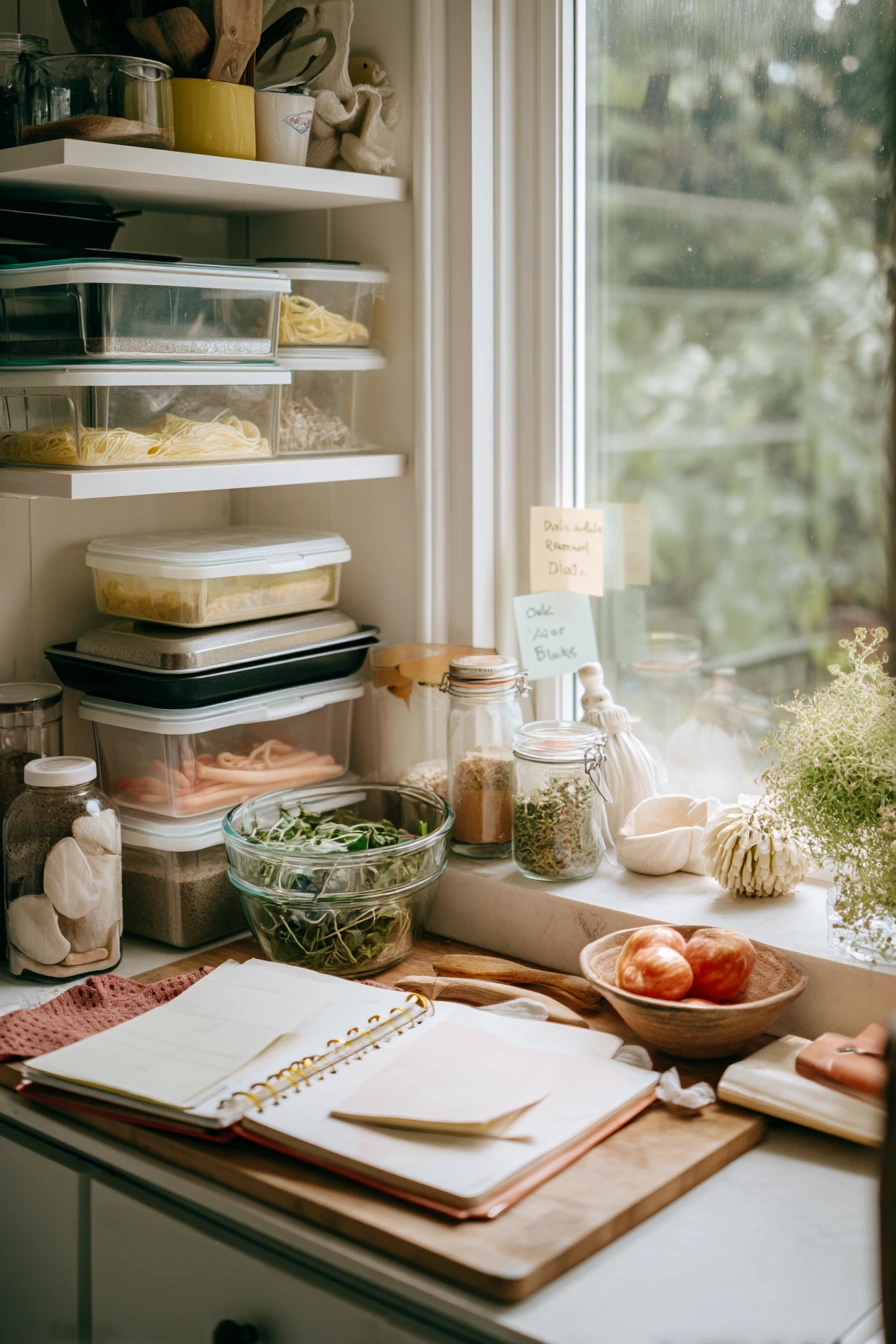
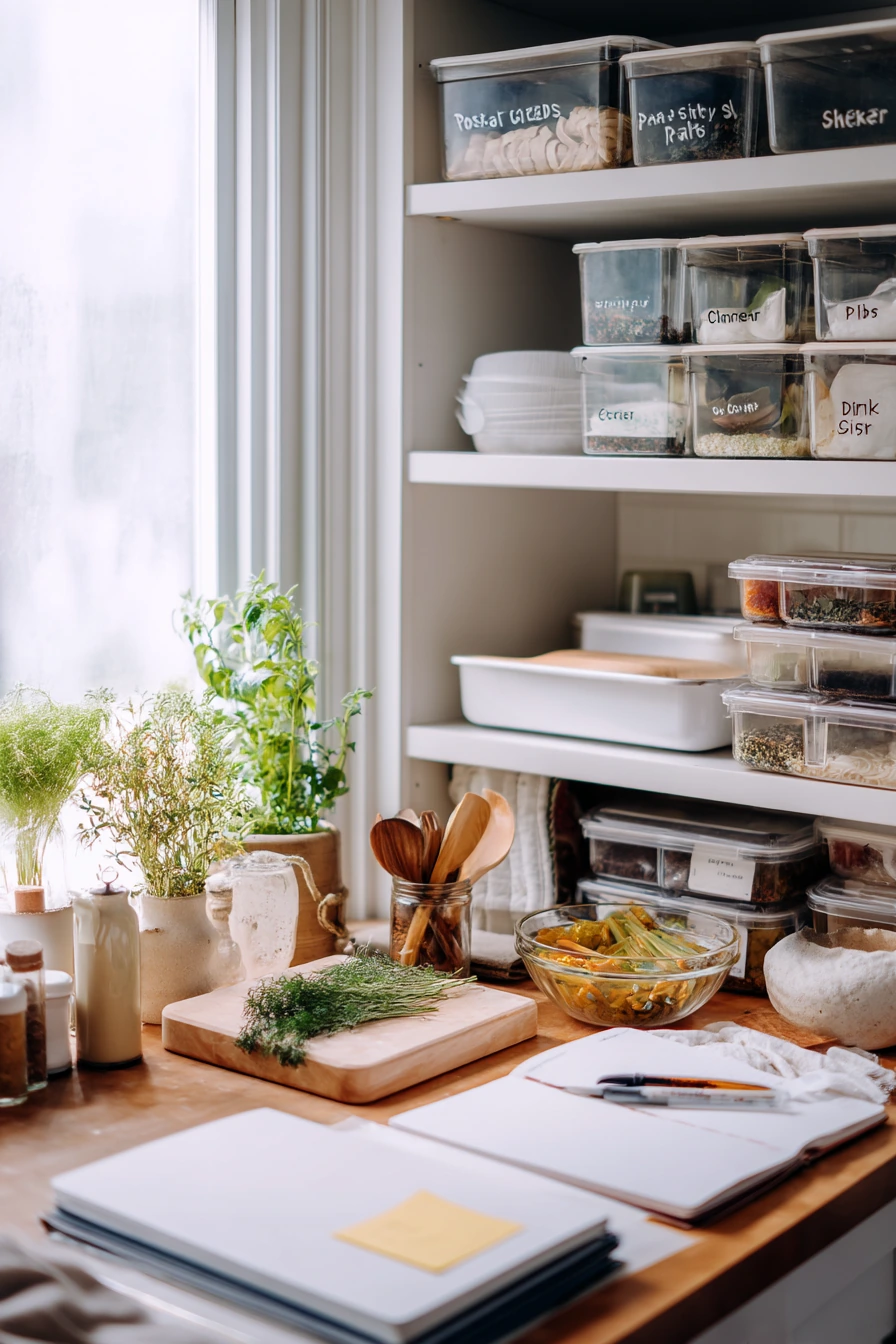
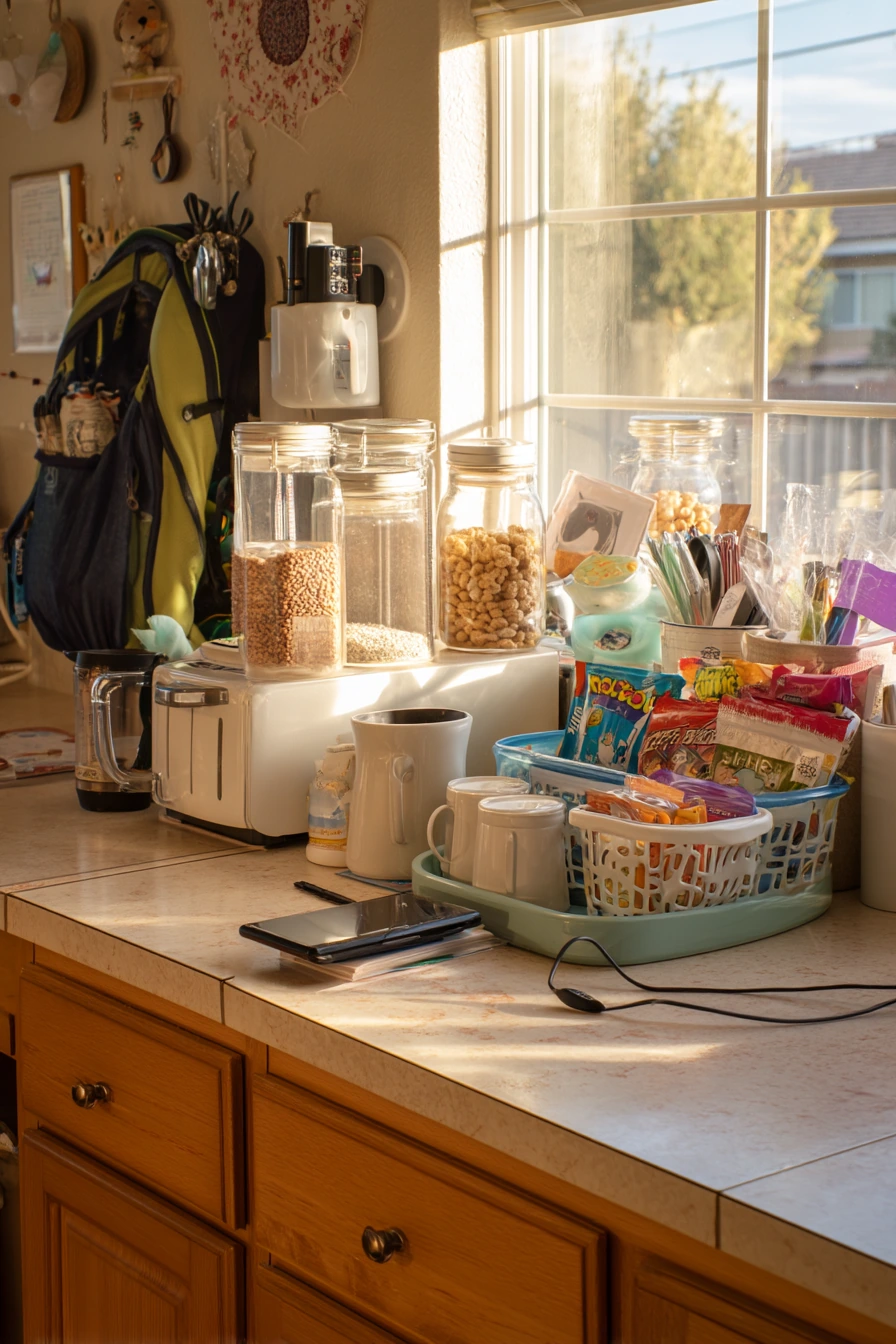
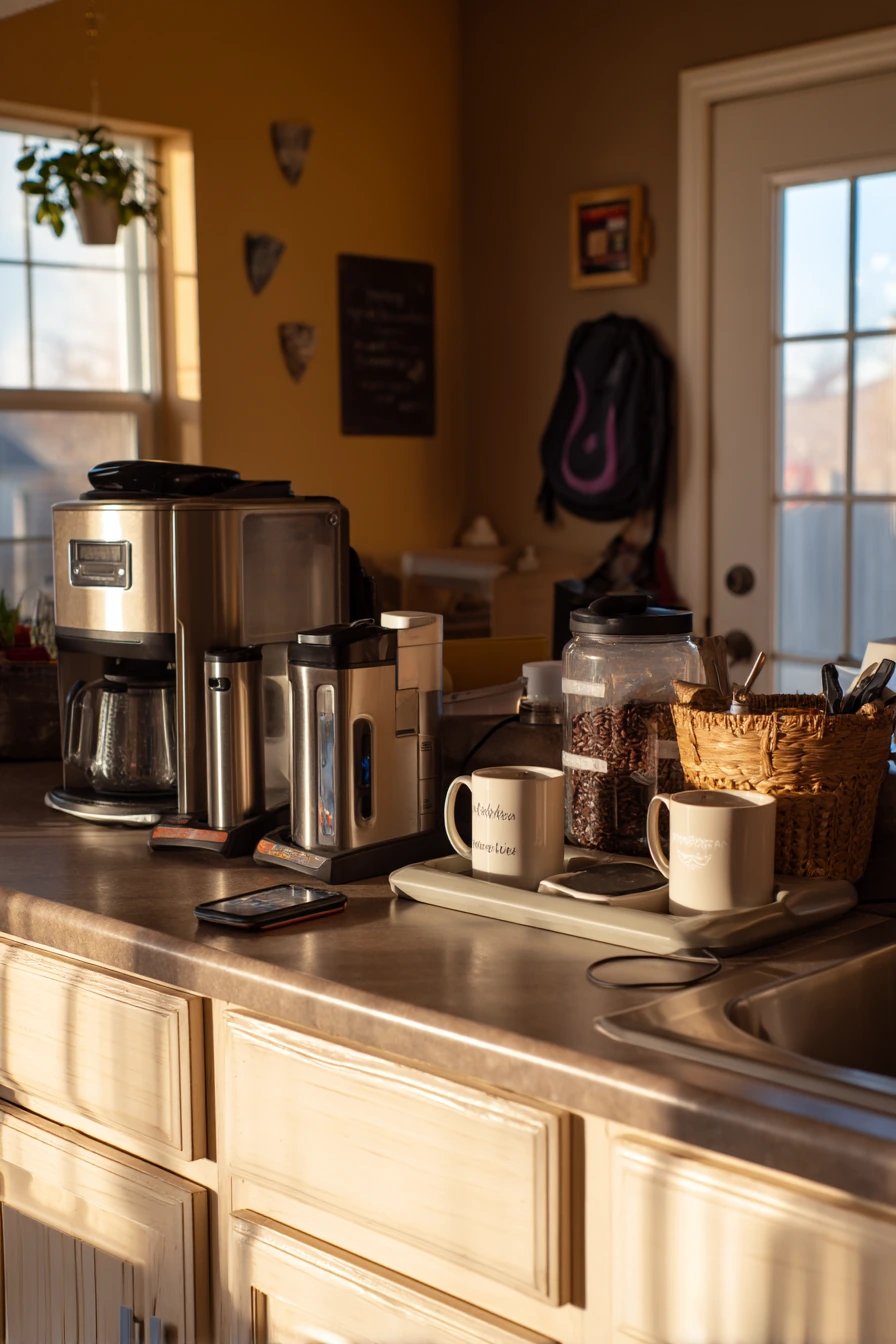
Meal prep is easier when tools and containers are stored like a small system. Labeled shelves for sheet pans, food storage containers, baking ingredients, and lunch containers save time because you do not need to hunt. Keep a recipe binder open near a cutting board when planning, and store it on the same shelf when done so it always returns to one spot.
Set up zones based on the steps you repeat. Put sheet pans and mixing bowls near the prep area, and keep storage containers close to the fridge so leftovers go away fast. A sticky note with dinner ideas is a simple planning tool that reduces decision fatigue. Add fresh herbs in a glass jar and a produce bowl on the counter to remind you what needs to be used first.
Style the prep area with one slightly wrinkled linen towel and a clean cutting board, then keep the rest tucked away. The look should be methodical and homey, not fussy. When labels are clear and shelves are not overfilled, it is easier to keep the routine going week after week.
- Label shelves by function: bake, prep, pack lunches, store leftovers.
- Stack containers by size with lids stored in one narrow bin.
- Keep sheet pans upright so you can grab one quickly.
- Use a binder or folder for recipes and meal plans.
- Keep a small “use first” produce bowl in sight.
Pro Design Tip: Store containers without lids on, so they nest better and you avoid chasing the right match during cleanup.
Budget Considerations: If glass sets are pricey, mix a few glass containers with sturdy plastic for the rest and replace only the ones that warp.
9. Kid-Friendly Snack Drawer Organization (Low and Reachable)
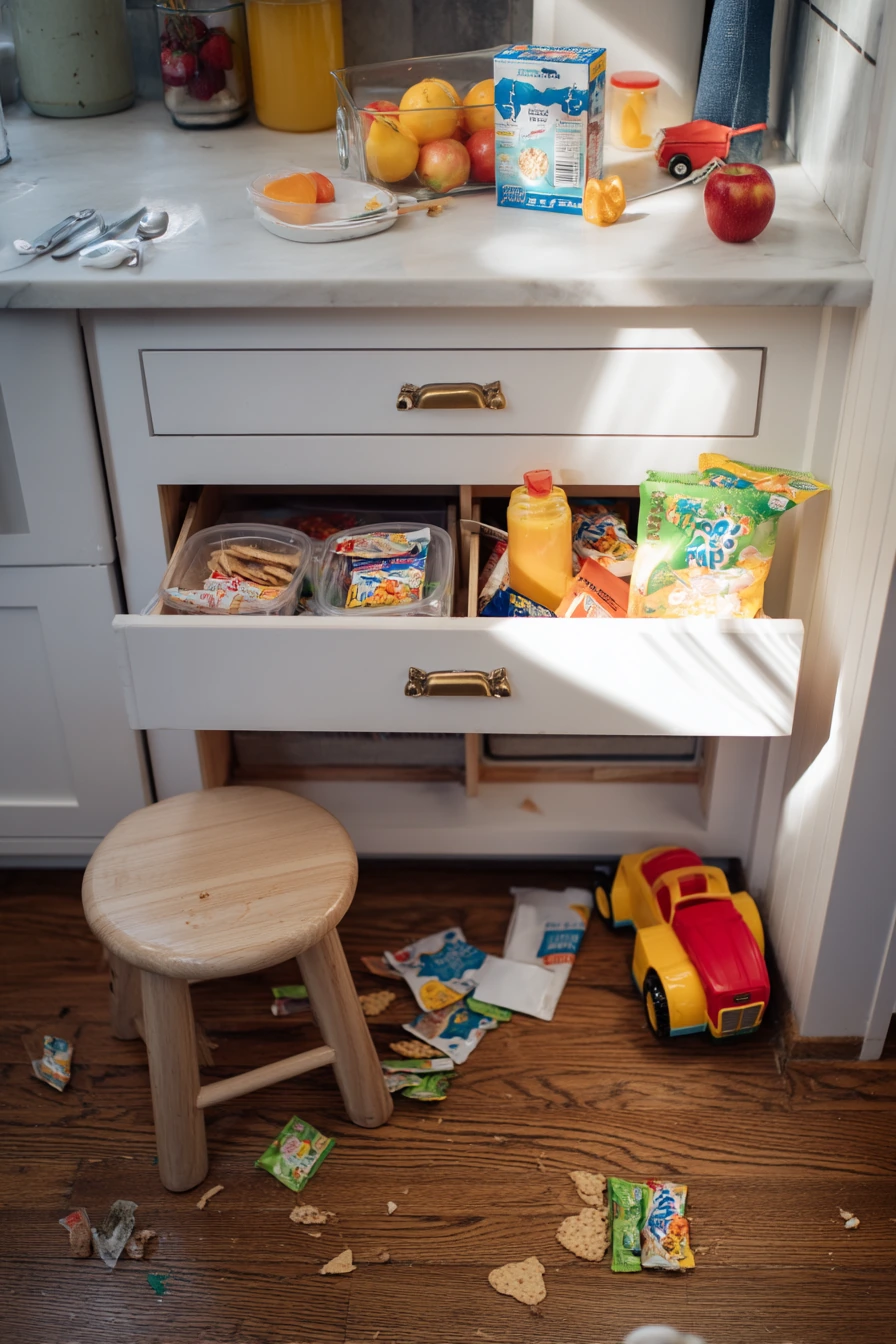
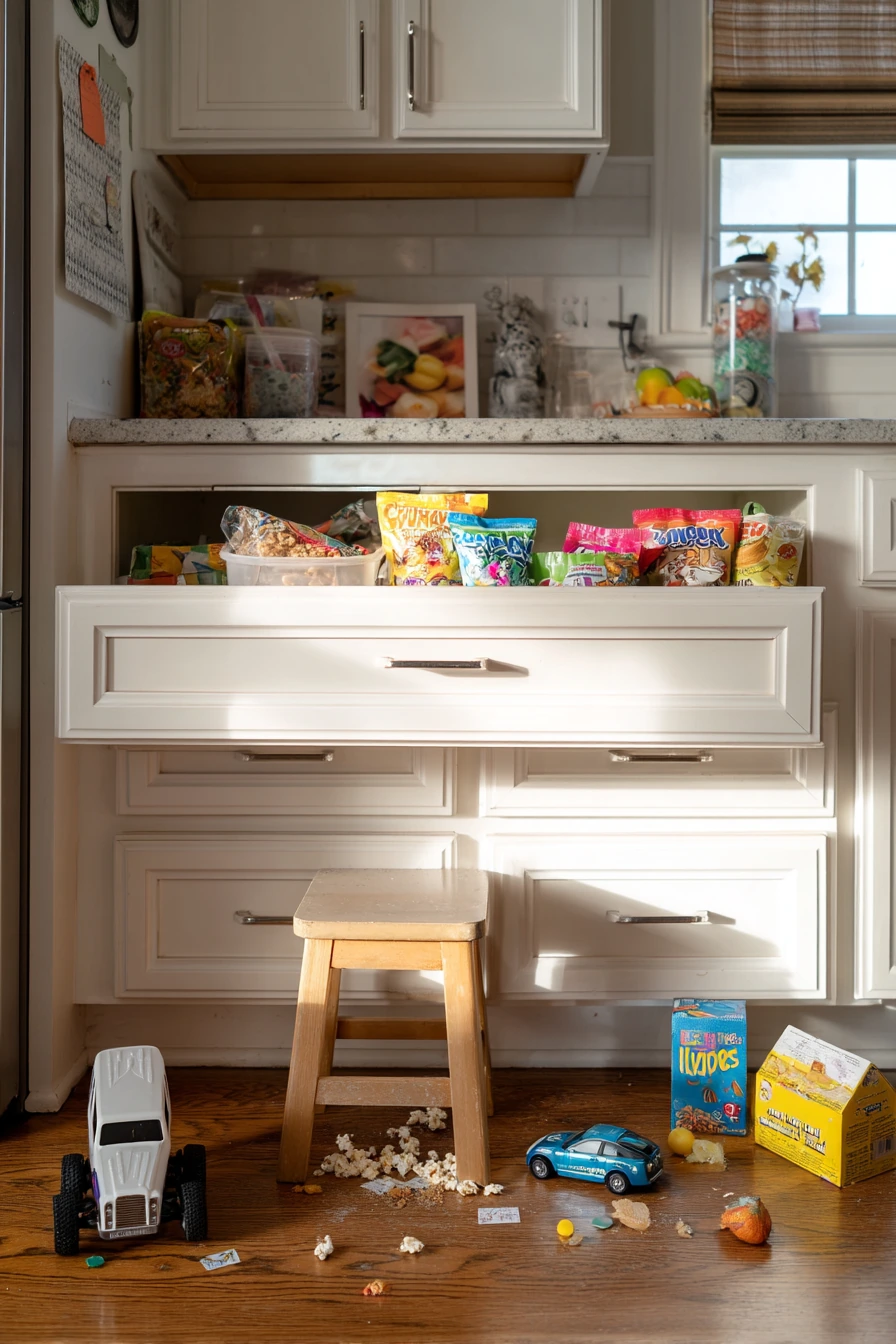
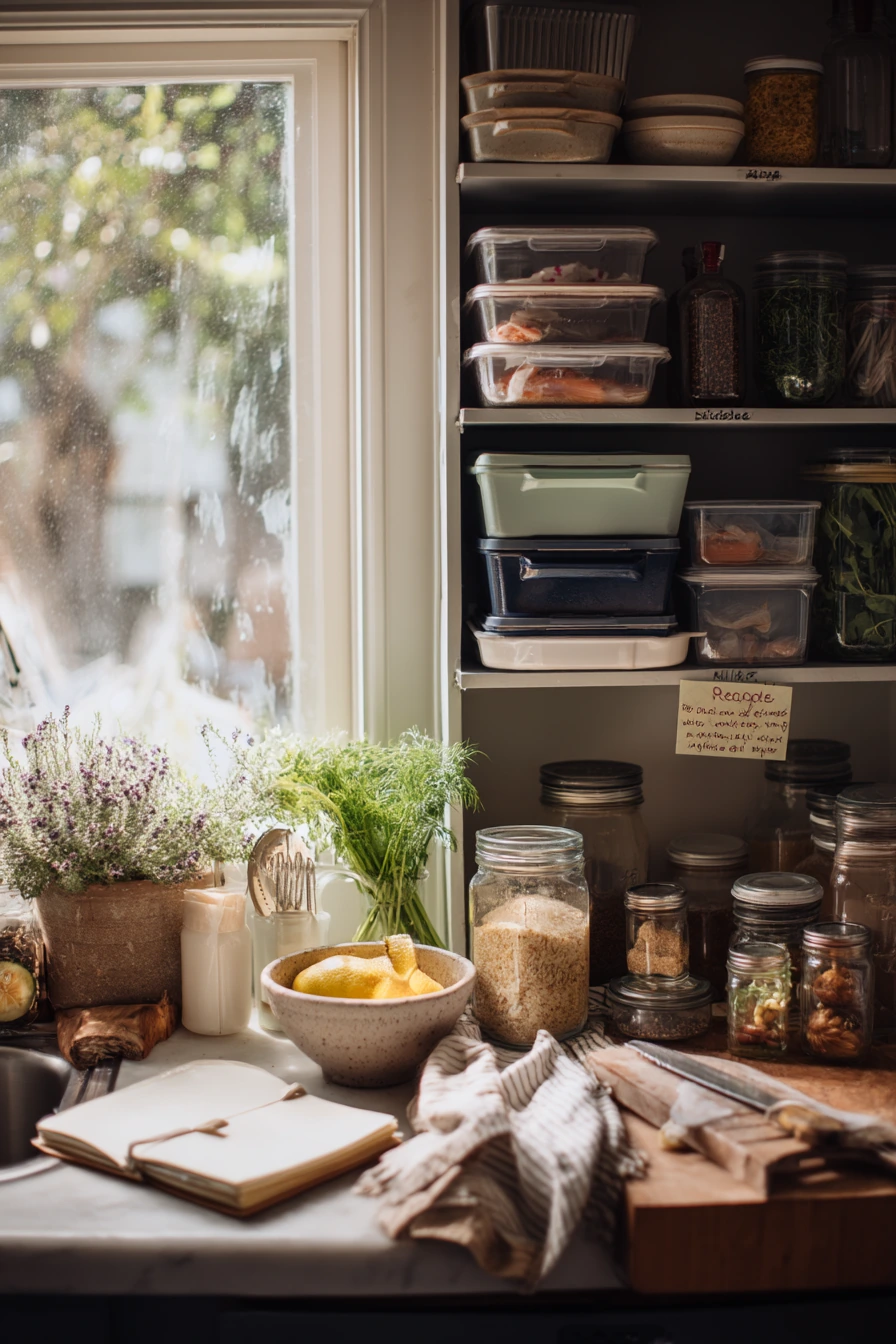
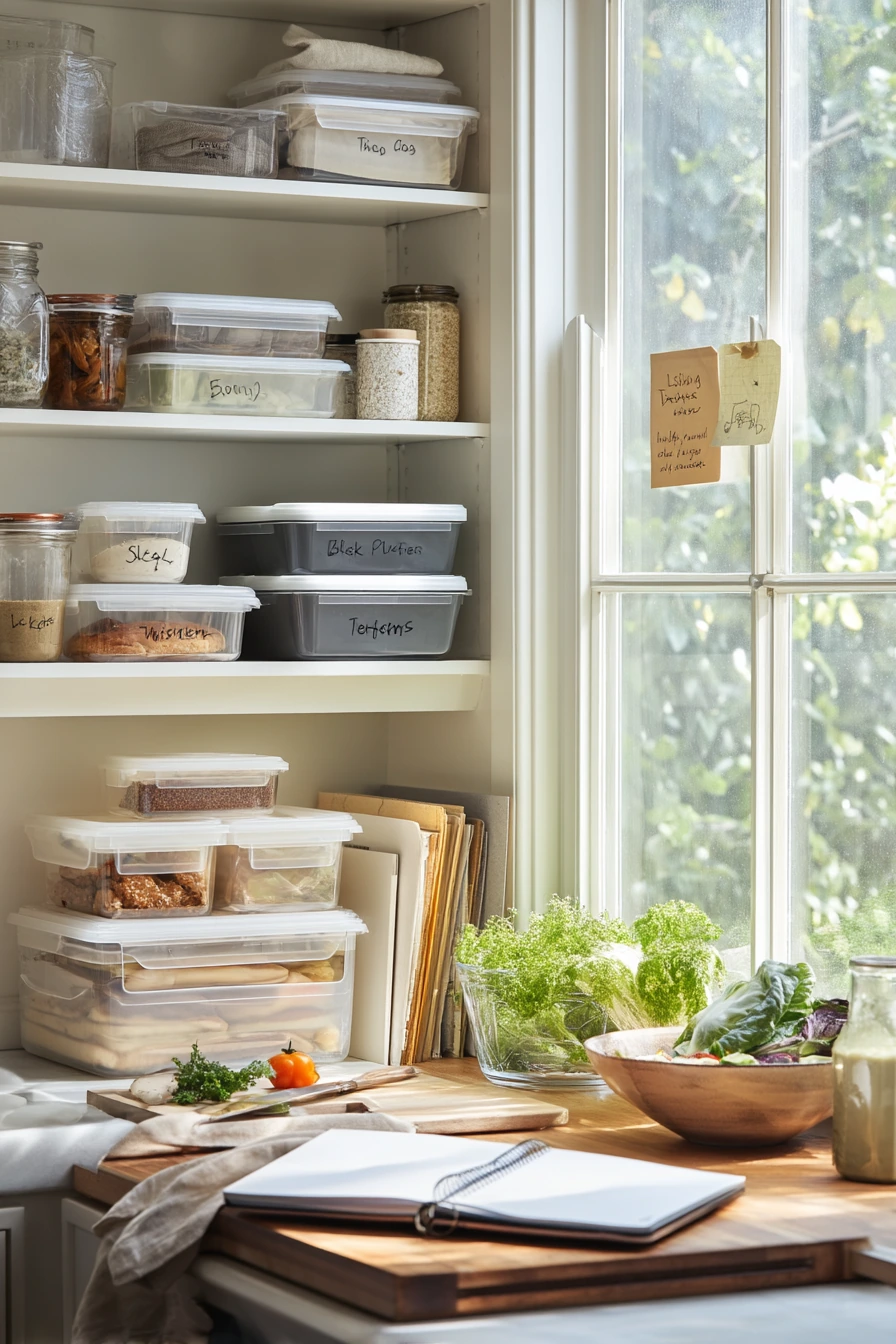
A lower snack drawer is one of the most useful kitchen organization ideas for families. When kids can reach their own options, they ask less and they learn to clean up. Use low bins for fruit pouches, crackers, applesauce cups, and lunchbox treats. Picture labels help younger kids choose and put items back.
Keep the drawer simple and durable. Leave room for a stool nearby if your child needs a boost, and expect real life details like crumbs on the floor or a toy car under the cabinet. Build in a fast cleanup plan: a small dustpan in a nearby drawer and a rule that snacks stay at the table. If a juice box ends up on the counter, add a small “today” bin so it does not get lost.
For styling, choose bins in one color so the drawer looks calm when opened. Keep packaging tidy by facing labels up, and refill from a backstock area once a week. The goal is an accessible drawer that actually gets used, not a perfect display.
- Put kid snacks in a low drawer with easy-grab bins.
- Add picture labels to support early readers.
- Separate “anytime snacks” from “lunch only” items.
- Keep a small backstock so refills take one minute.
- Do a quick crumb sweep after snack time to keep it pleasant.
Pro Design Tip: Use a simple color code, like one bin color for sweet snacks and another for savory, so choices are faster.
Budget Considerations: Printable labels and basic plastic bins work well; save money by buying only a few bins that fit the drawer exactly.
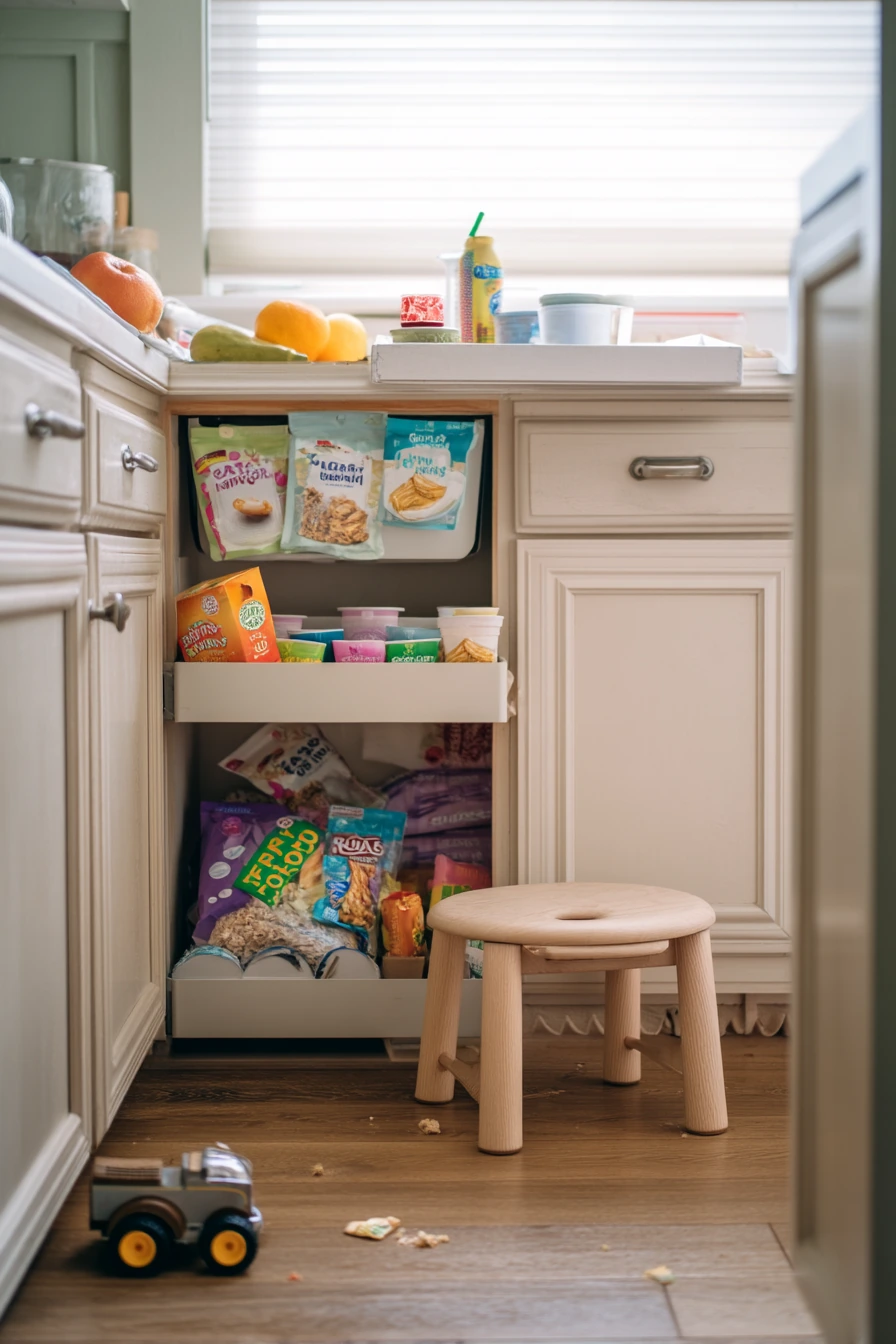

10. Weekend Kitchen Reset: Fridge, Pantry, and Grocery Unpack System
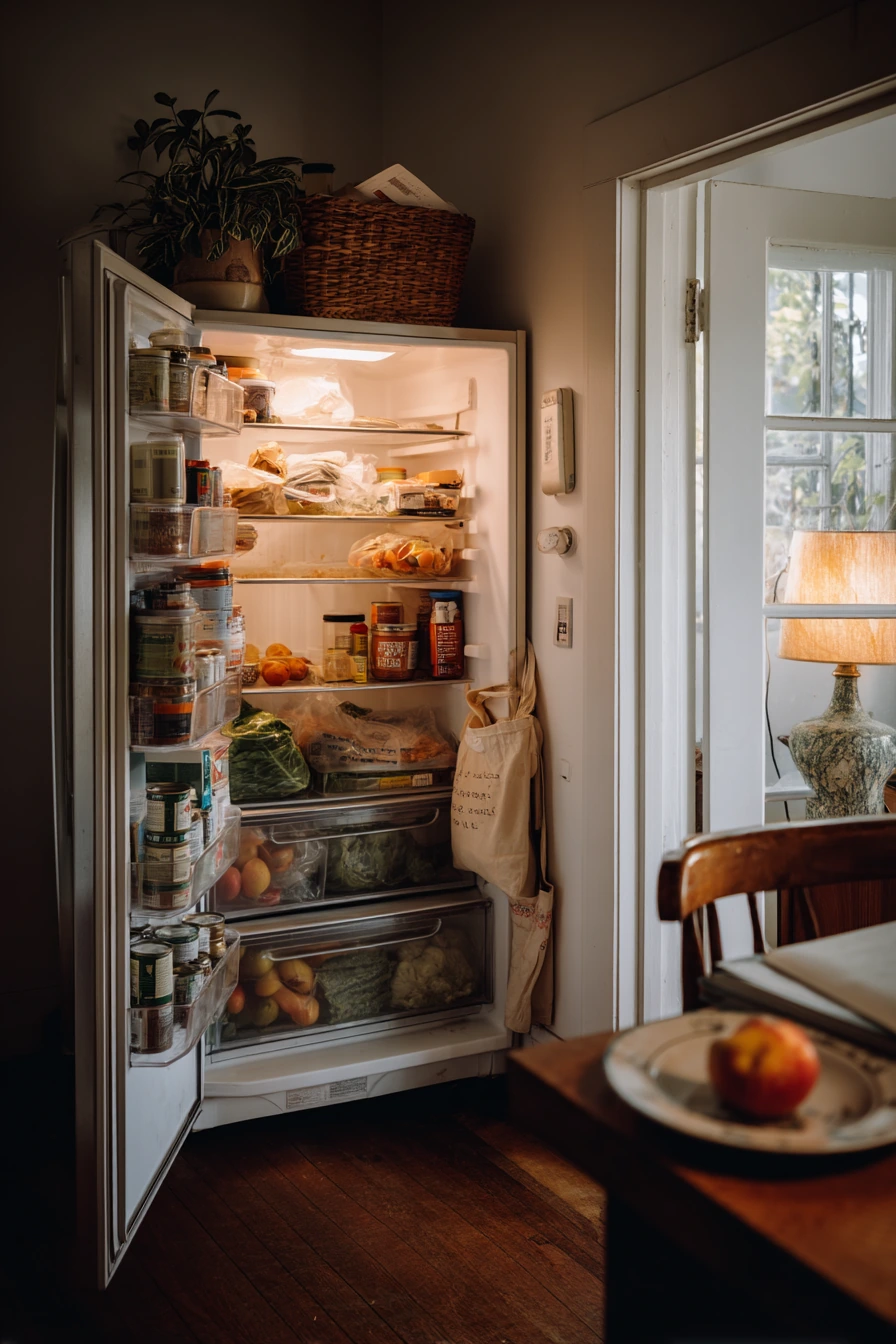
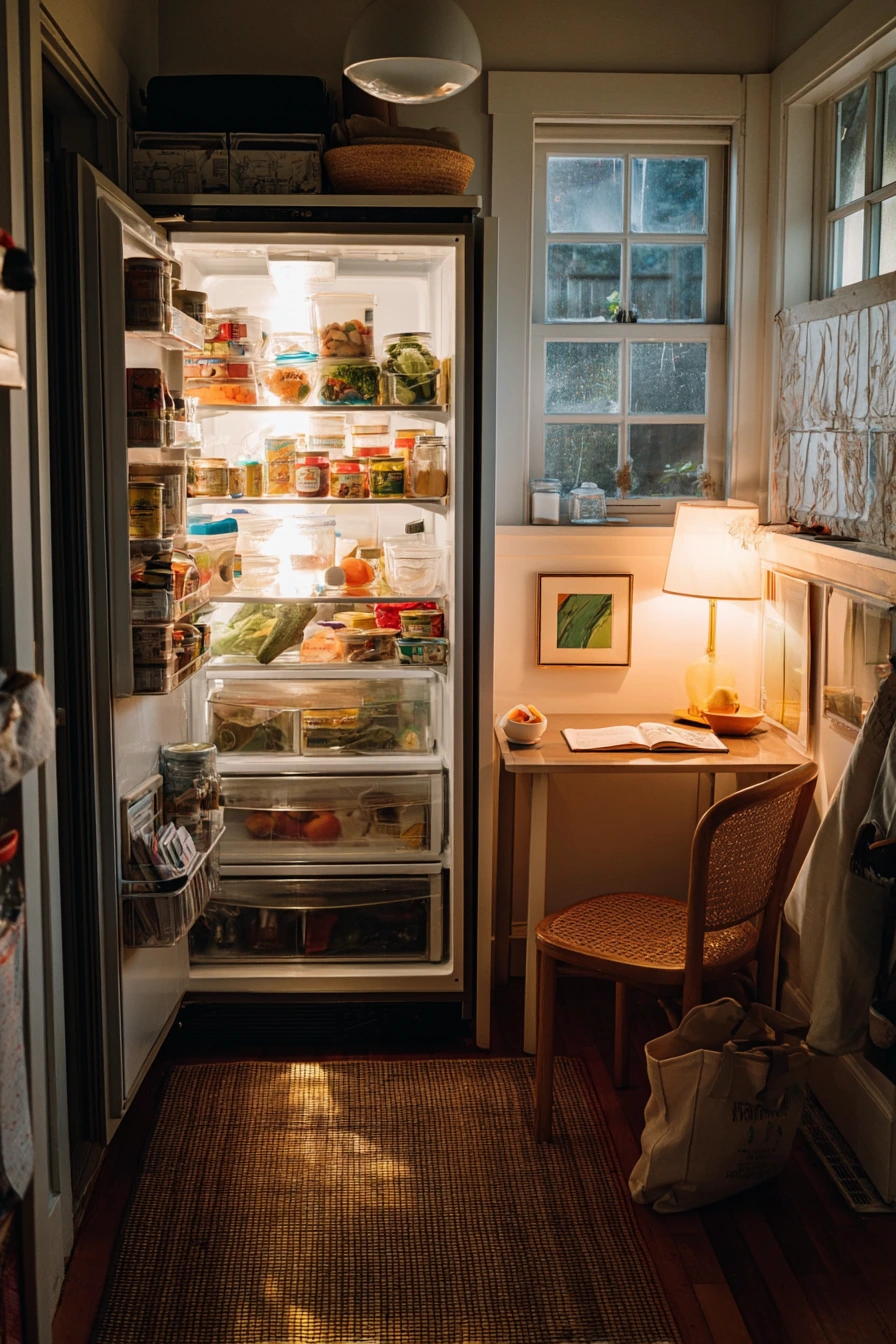
A weekend kitchen reset after grocery shopping keeps the week from feeling chaotic. Start with produce washed in mesh bags, then sort the fridge shelves by category so food is easier to find. Store leftovers in glass containers when possible, and align pantry cans with labels forward so you can see what you already have.
Create a simple unpack routine. Put cold items away first, then handle produce, then pantry goods. Keep one tote bag on a chair or hook until you finish, so bags do not pile up. If an open cookbook is on the counter, use it as your meal plan guide for the week. Small signs of a real reset, like an apple core on a plate, are fine as long as you clear them at the end.
To style the space, keep surfaces mostly clear and let warm window light and a small lamp glow make it feel calm. Use a matching set of containers for leftovers so the fridge looks less crowded. When categories stay consistent, everyone in the house learns where things go, and the reset gets faster each time.
- Unpack in order: fridge first, then produce, then pantry.
- Group fridge shelves by category like dairy, drinks, and leftovers.
- Store leftovers in clear containers so you see them.
- Face pantry labels forward to prevent duplicates.
- Set a 20-minute timer for the reset so it stays simple.
Pro Design Tip: Keep one “eat soon” fridge bin at eye level for leftovers and ripe produce to reduce waste.
Budget Considerations: Mesh produce bags and a few clear containers are affordable; reuse jars and takeout containers until you can replace them.
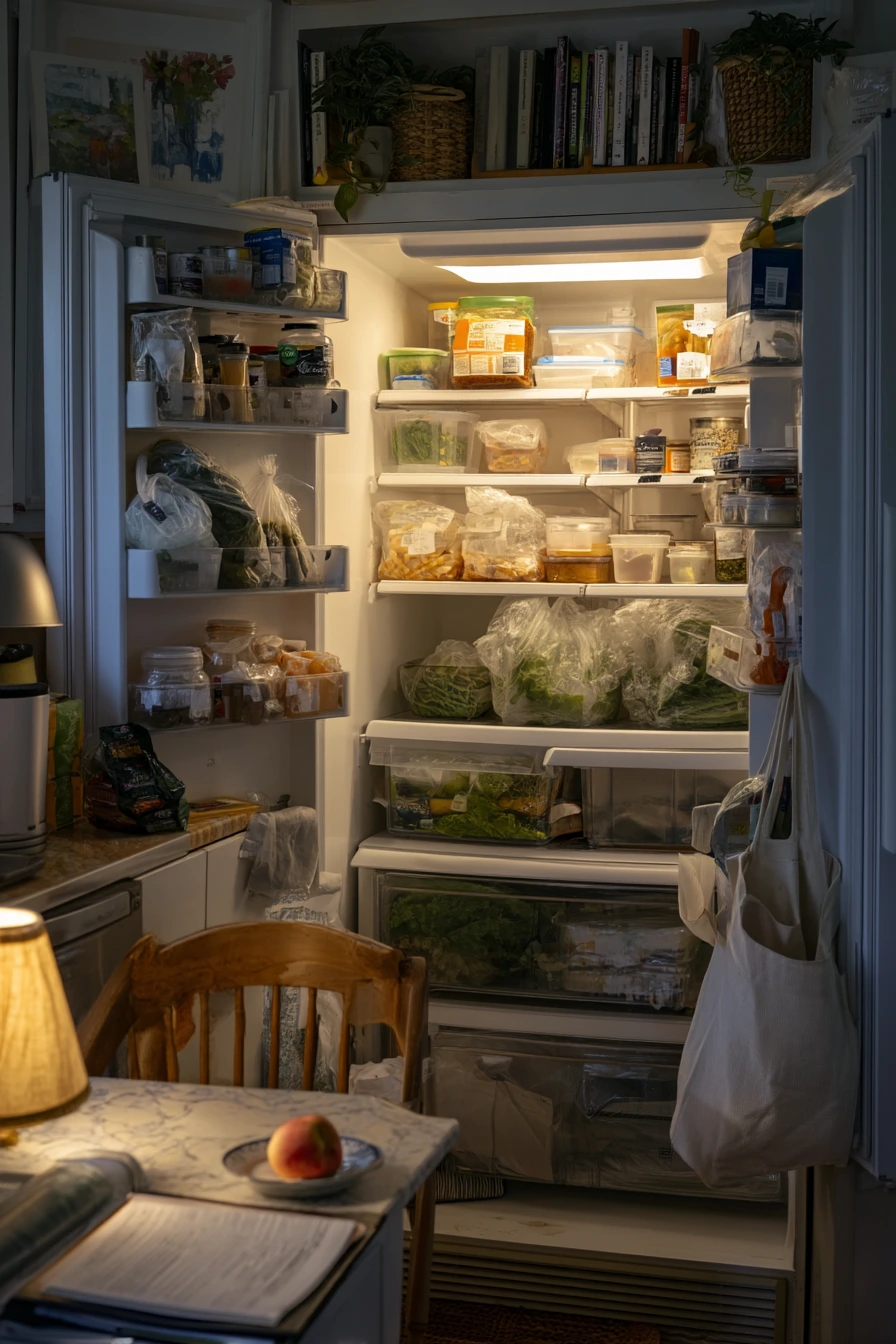
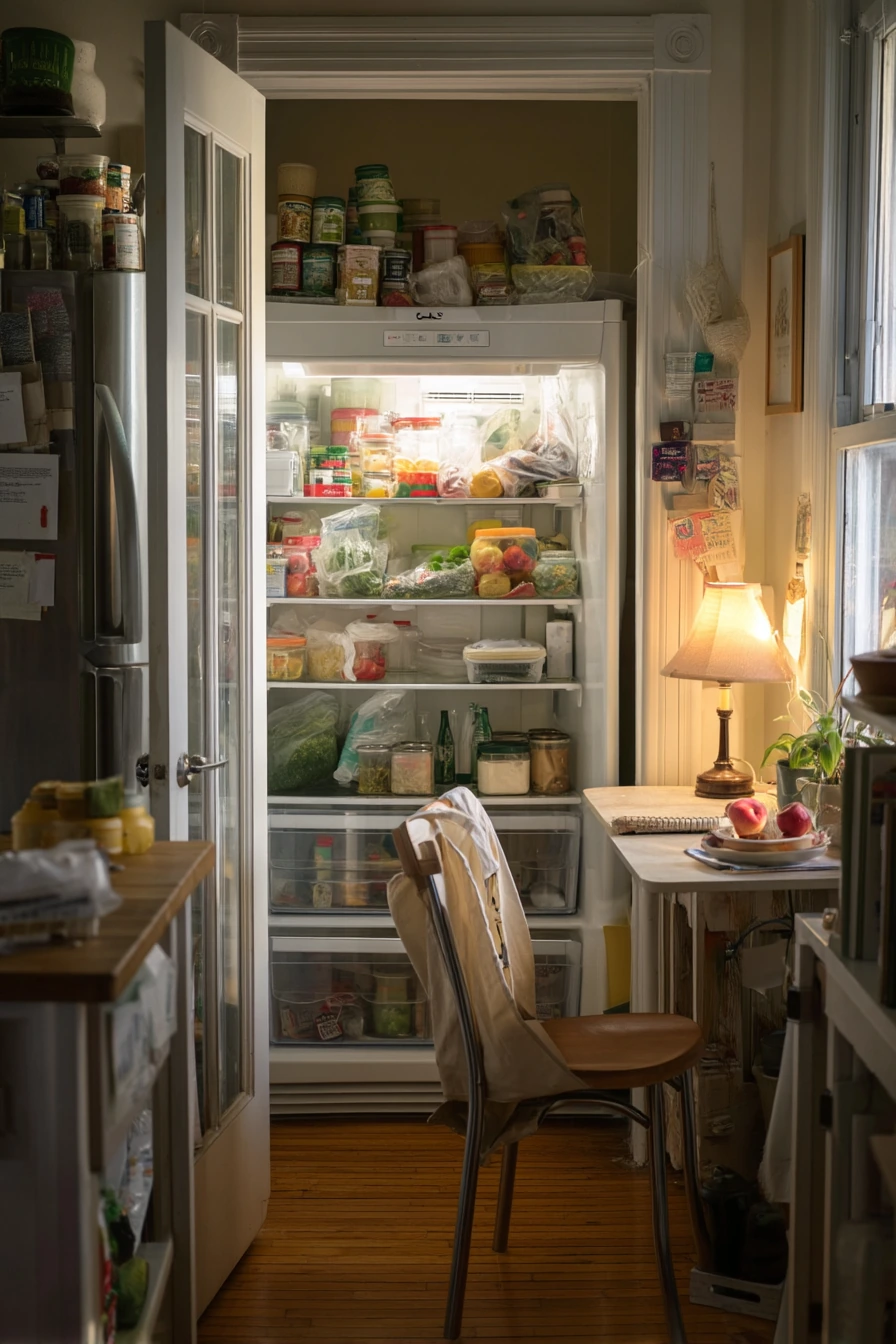
Kitchen organization works best when it matches your real habits. Pick one area, like the pantry, a drawer, or the counter, and give it clear categories and easy-to-see storage.
Small details matter, like labels facing out, trays that define zones, and a quick weekly reset. These habits keep the kitchen calmer without needing a remodel.
If you want the biggest impact fast, start with the spot you touch every day, then build from there.
FAQ
What is the best first step for organizing a kitchen? Start with one small area you use daily, like the snack zone or utensil drawer, and set clear categories before buying containers.
How do I keep a pantry organized with kids? Put kid snacks and lunch items on lower shelves in labeled bins, and keep backstock higher so kids only access what is meant for them.
Do clear containers really help? Yes, clear jars and bins make it easy to see levels and reduce overbuying, especially for staples like pasta, rice, and cereal.
How do I organize a tiny apartment kitchen? Use modular drawer dividers, keep counters mostly open, and store items by frequency so daily tools are easiest to reach.
What should stay on the countertop? Only items you use every day, grouped on trays into zones like coffee, cooking oils, and a small drop spot for keys or mail.
How can I organize under the sink safely? Add a leak tray, group supplies in bins, and use a tension rod to hang cloths so nothing sits in water or blocks plumbing.
How often should I do a kitchen reset? Do a two-minute nightly tidy of main zones and a longer weekly reset after groceries to keep systems from breaking down.