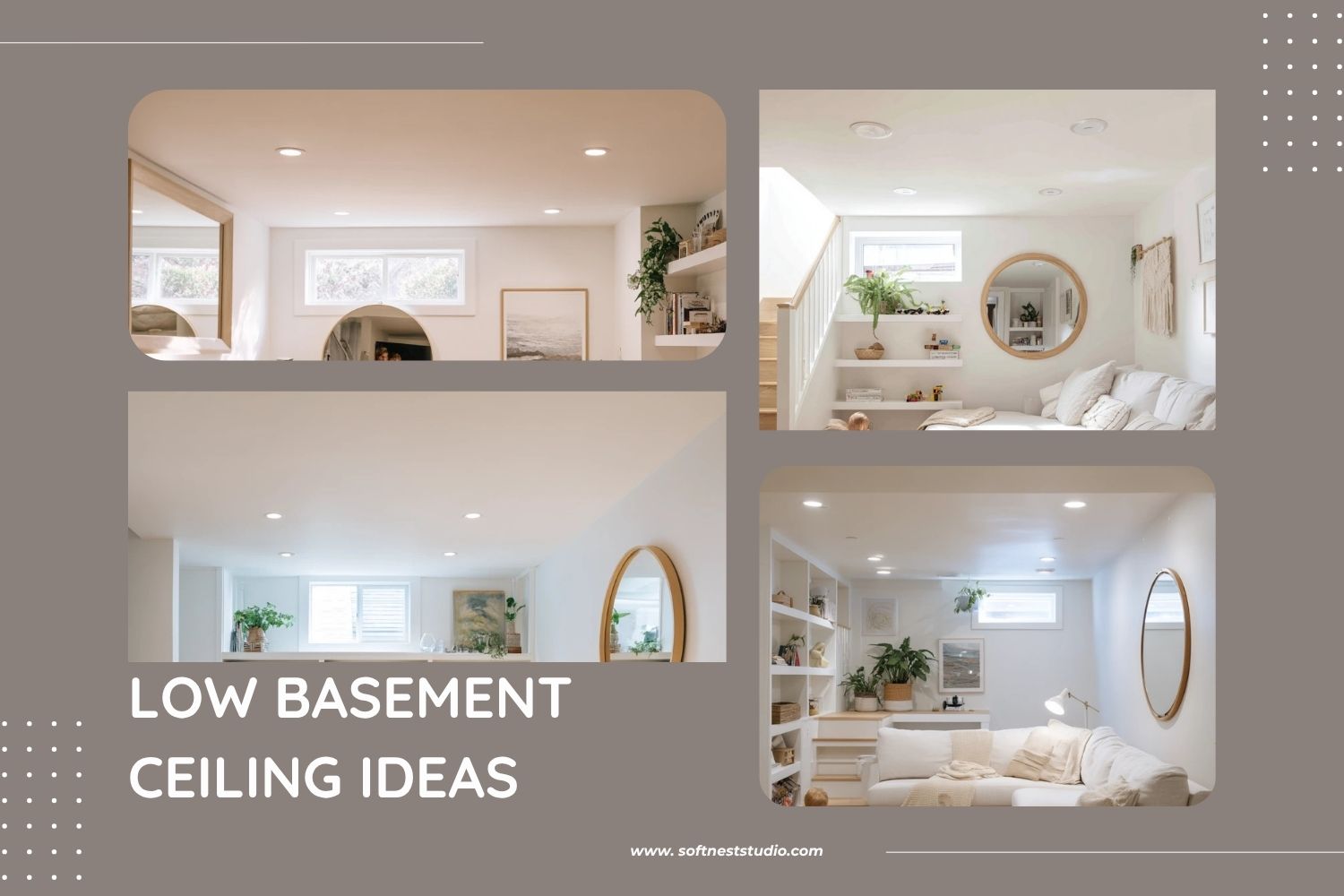
Low basement ceiling ideas can turn a dark, tight lower level into a room your family uses every day. The right paint, lighting, and furniture choices can make a low ceiling feel more open without major construction.
In this guide, you will see simple layouts for a basement lounge, rec room, office, playroom, movie den, guest space, workout corner, craft room, bar nook, and reading room. Each one is designed for real life, with storage for toys, cables, laundry baskets, and everyday clutter.
You will also get styling tips that work with low headroom, like flush mount lights, shallow built in shelves, mirrors that catch stairwell light, and low profile seating. Use the ideas that match your space, even if you rent.
For every room, you will find a Pro Design Tip and a Budget Consideration so you can choose upgrades that fit your home and your wallet.
H2: 1. Low Ceiling Basement Lounge That Feels Open
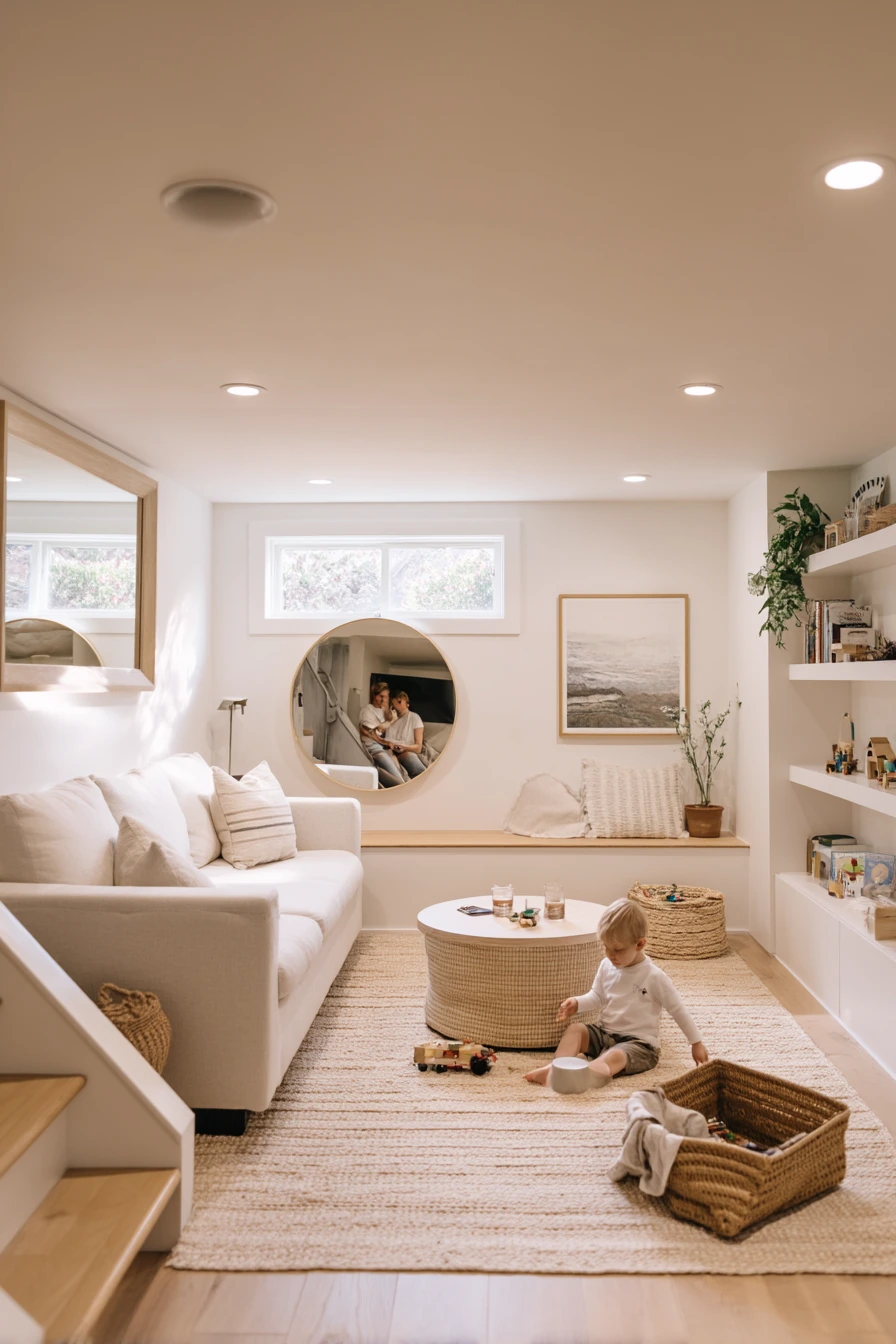
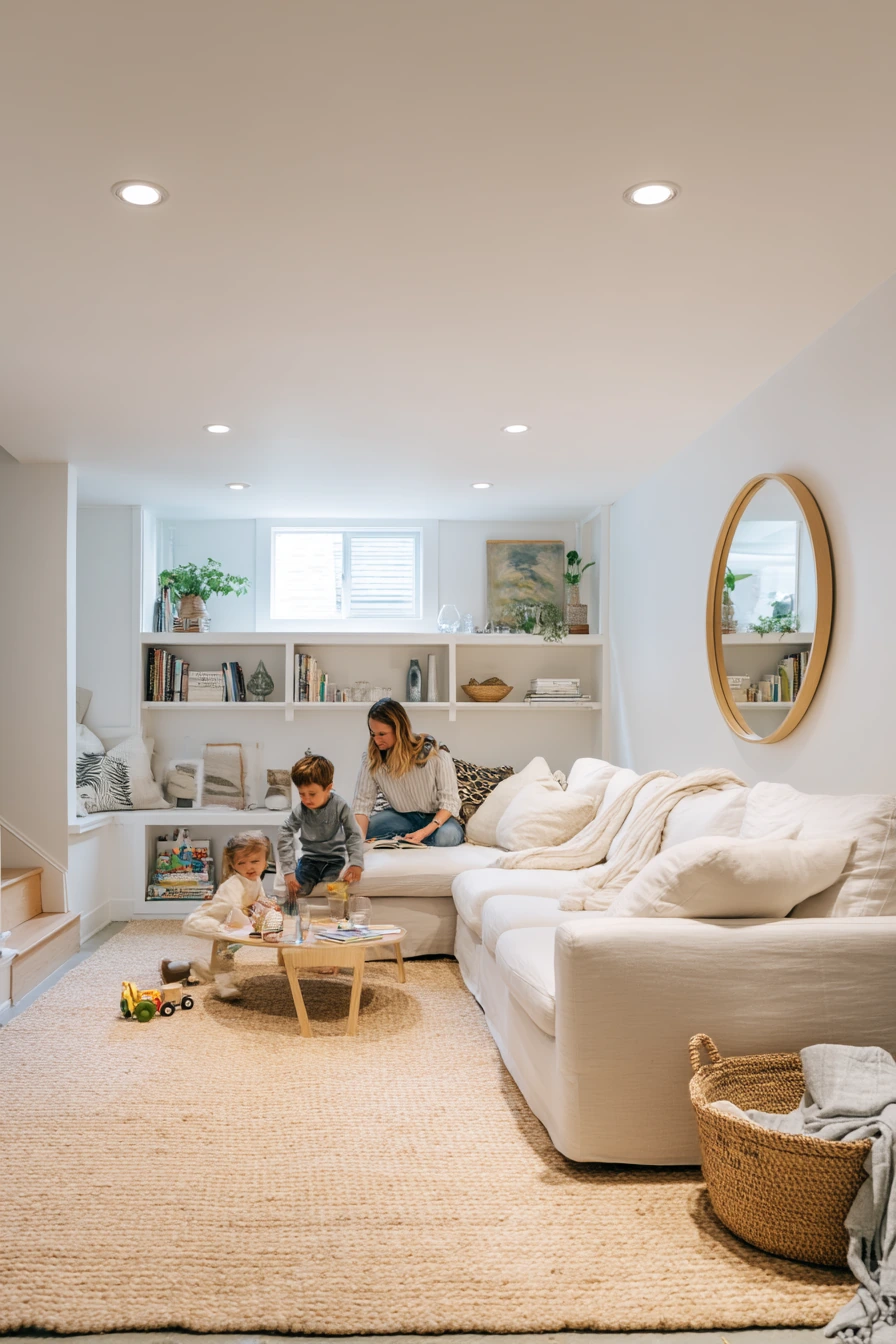
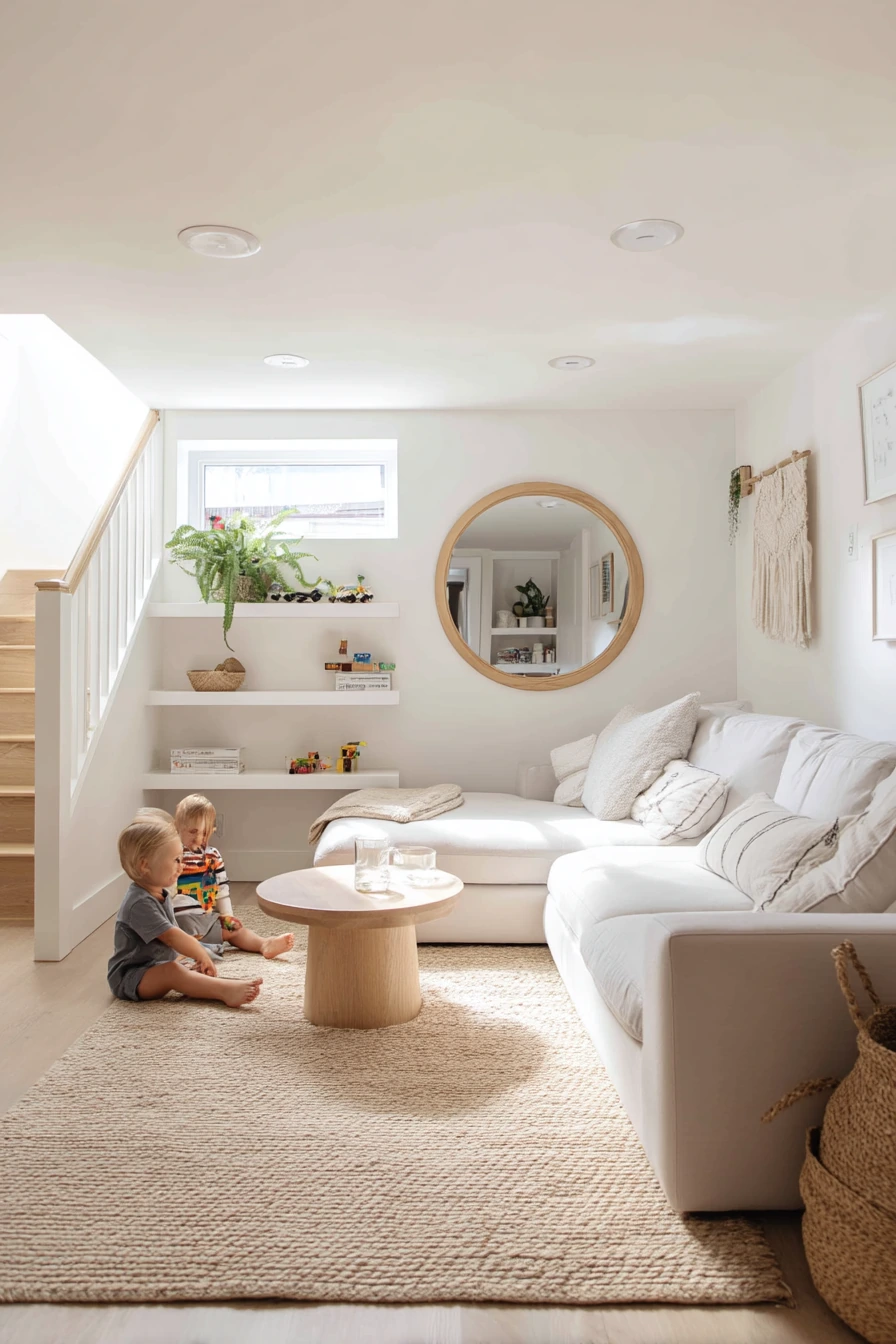
A family basement lounge with a low ceiling can still feel airy if you keep the top half of the room simple. Start with soft white paint on the ceiling and walls to reduce shadows. A flush mount light keeps headroom clear, and it looks cleaner than a hanging fixture. Choose a slim sofa and a round coffee table so the walking path stays open, even when a toddler is playing on the floor.
To make the room feel taller, use shallow built in shelves instead of deep bookcases. They hold a toy basket, a few books, and a plant without pushing into the room. Add one large mirror across from the stairwell or any window light source. The mirror will catch daylight and spread it, which helps a low ceiling basement feel brighter. Keep the woven rug light to medium tone so the floor does not look heavy.
Style it for real life, not for a photo. A folded throw can live on the sofa, a charging cable can stay near an outlet, and a water glass can sit on a coaster on the table. Use one lidded bin for small toys so cleanup is quick. If you get plant shadows along the wall, lean into it by placing a simple floor plant near the stair opening.
- Paint ceiling and trim the same soft white for a smoother look.
- Pick a low profile sofa with visible legs to show more floor.
- Use a round coffee table to soften corners in a tight room.
- Install shallow shelves to store toys without crowding.
- Hang one large mirror to bounce light from the stairwell.
Pro Design Tip: Mount curtain panels high and wide around the stairwell opening or any small window, even if the window is small, so the wall reads taller and the light feels larger.
Budget Considerations: Use IKEA style floating shelves instead of custom built ins, and buy a large secondhand mirror then paint the frame to match your trim.
H2: 2. Budget Low Ceiling Basement Rec Room for Renters
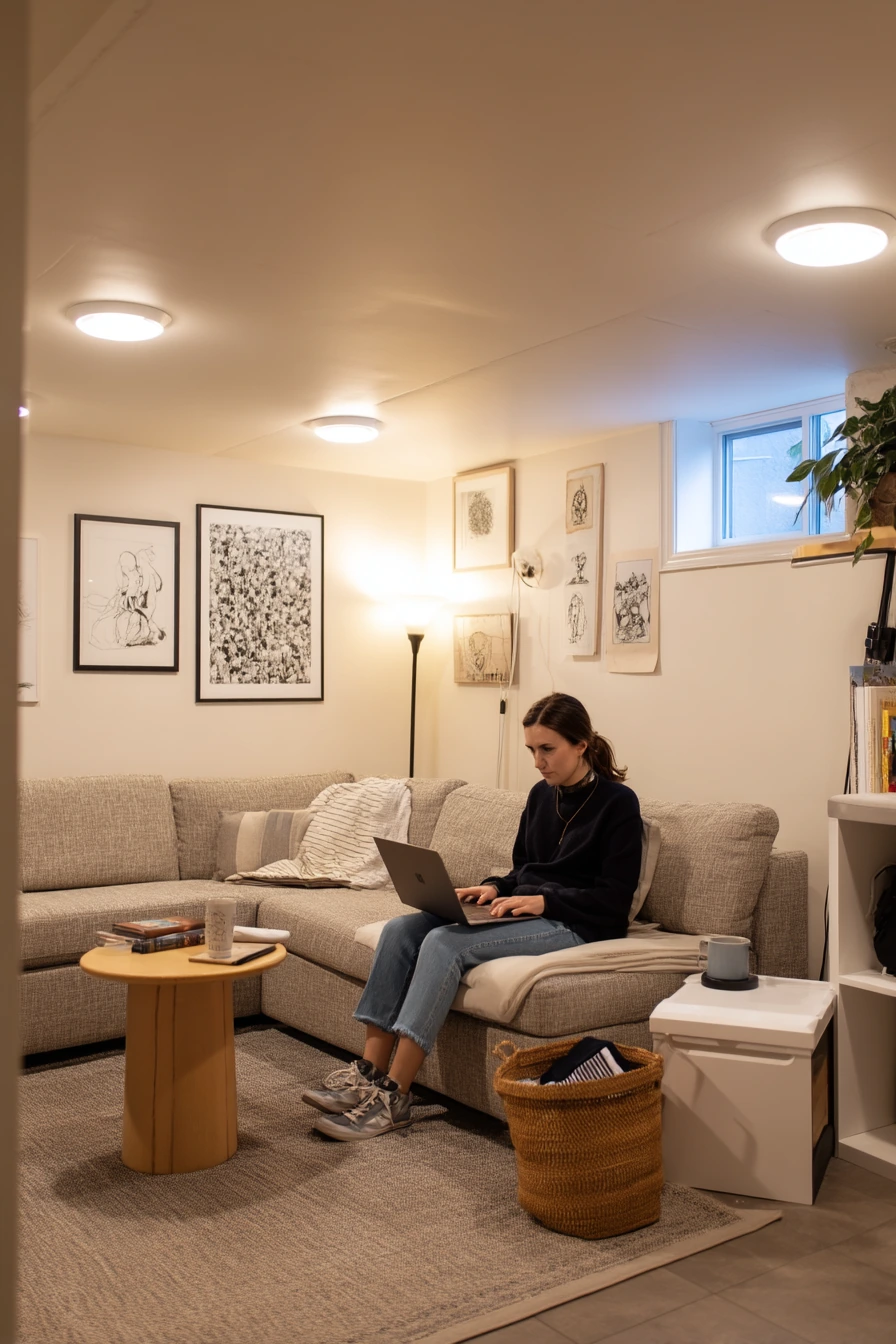
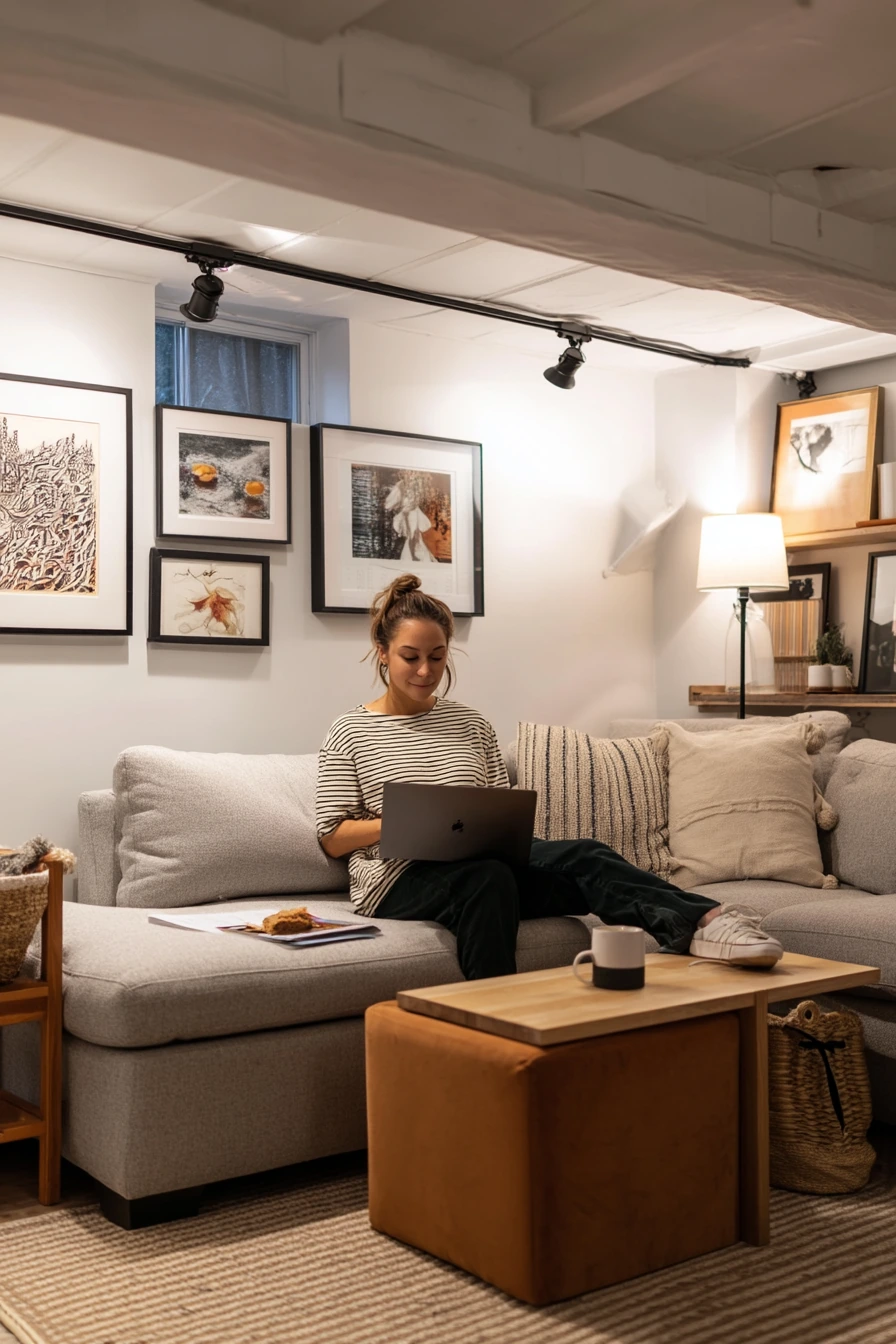
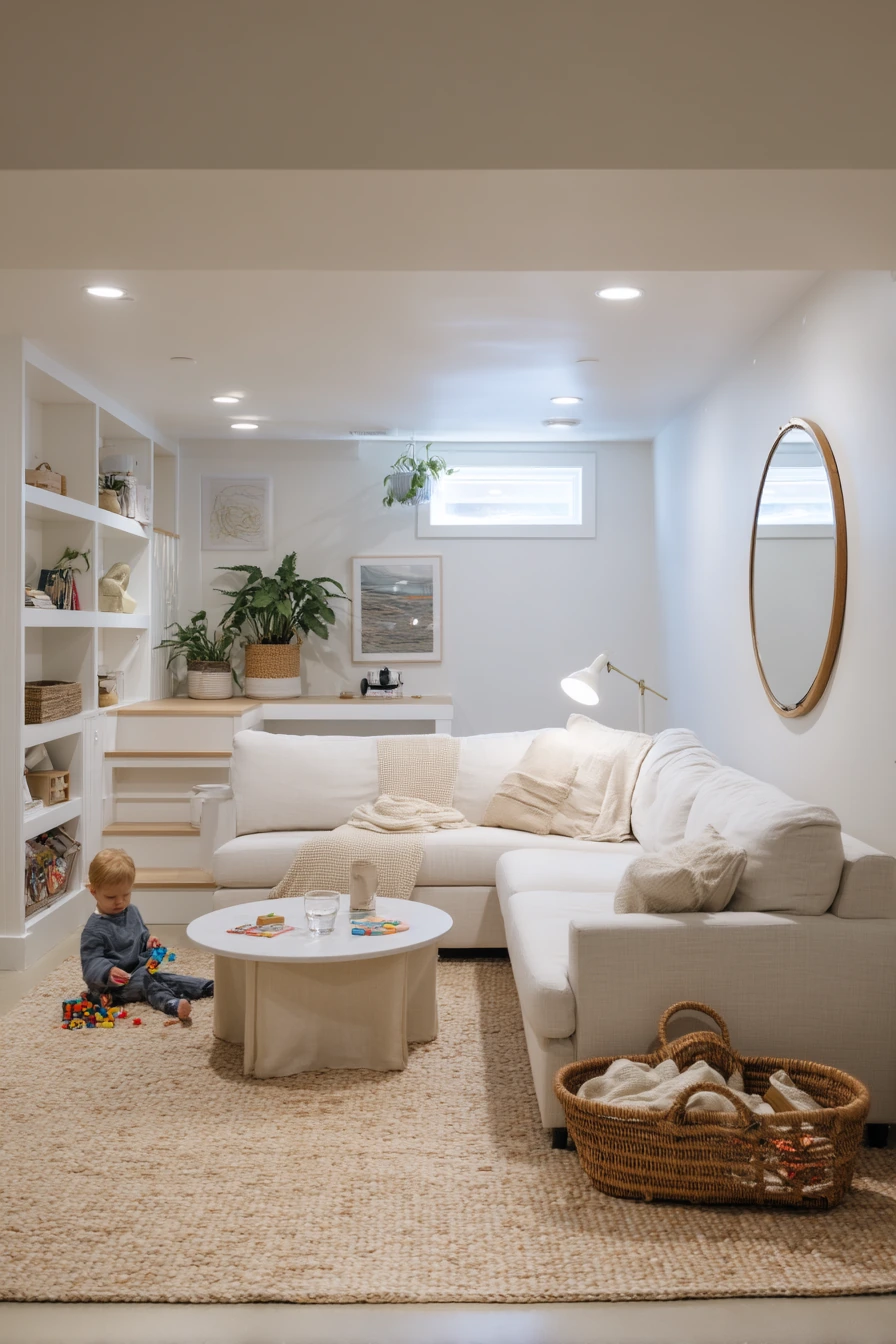
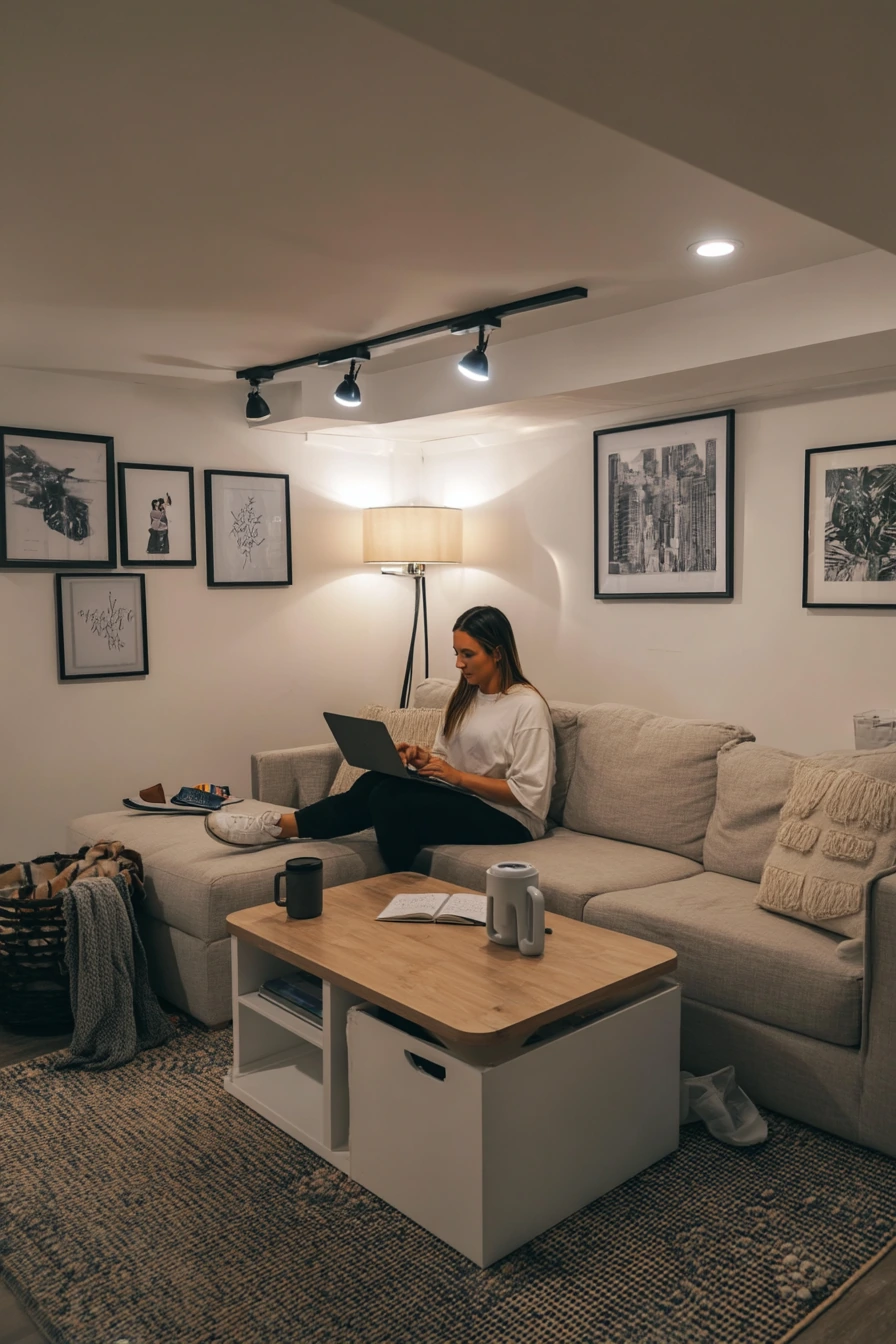
A renter friendly basement rec room can look updated fast, even with an old low ceiling. Matte white paint helps hide uneven texture and makes track lighting feel less harsh. Use compact track lighting or short rails so light spreads across the room without a bulky fixture. If you cannot hardwire, plug in track systems or slim floor lamps can still lift the mood.
Keep furniture low and flexible. A low profile sectional gives you seating without blocking sightlines. Add a freestanding storage cube unit for games, a laptop, and extra cords. If you work down there, set up a small side lamp near the sofa for warm light at night. Simple framed prints give the room a finished look, and peel and stick wood trim can create a clean grid or a low wainscot effect without permanent changes.
Style it like a real used space. A notebook open on the table, a coffee mug ring on a coaster, and sneakers by the sofa make it feel lived in. Hide the laundry basket in a corner behind the storage cube, or cover it with a neutral throw. Keep one tray on the coffee table for remotes and chargers so the surface stays usable. Choose warm bulbs so the basement feels inviting when daylight is faint.
- Use matte white ceiling paint to reduce glare and hide flaws.
- Add peel and stick trim for a quick upgrade that is removable.
- Choose compact track lights to spread light in a low ceiling room.
- Use cube storage to keep clutter and cords in one spot.
- Hang framed prints at eye level to draw attention away from the ceiling.
Pro Design Tip: Run peel and stick trim in long horizontal lines, then paint it the wall color, so the room feels wider and the ceiling feels less noticeable.
Budget Considerations: Stick to plug in lighting and removable wall products to avoid contractor costs and protect your deposit.
H2: 3. Compact Low Ceiling Basement Office Setup
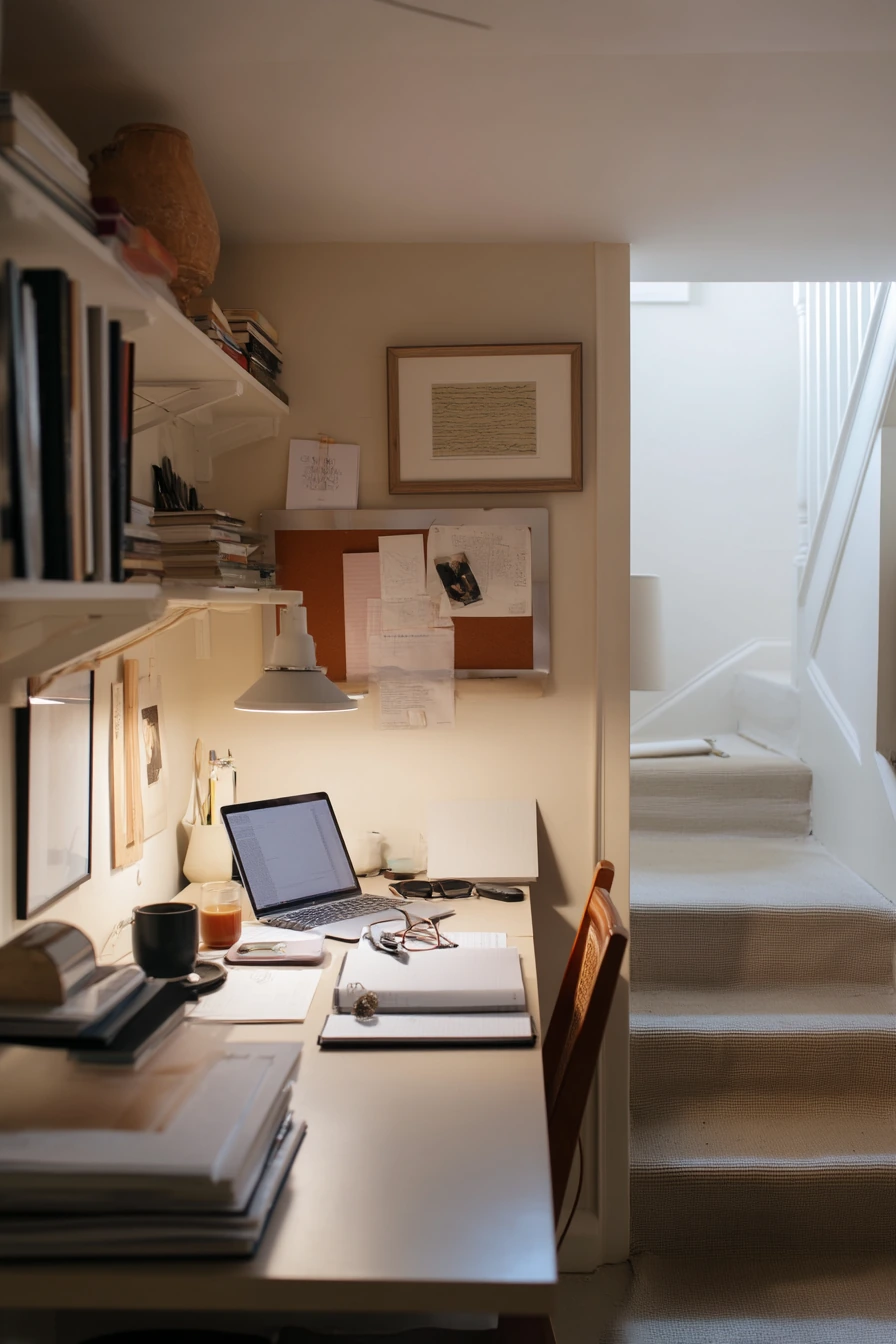
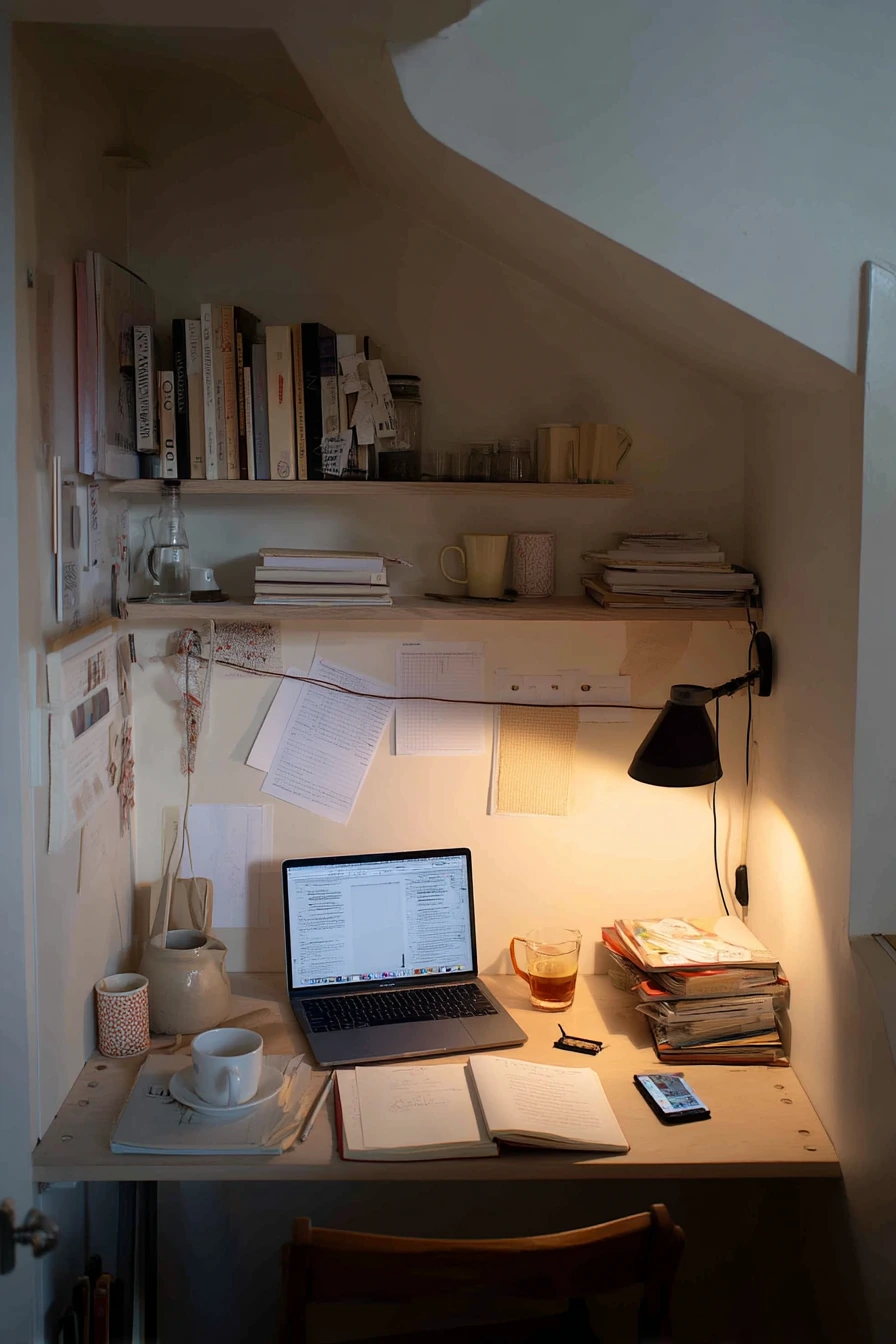
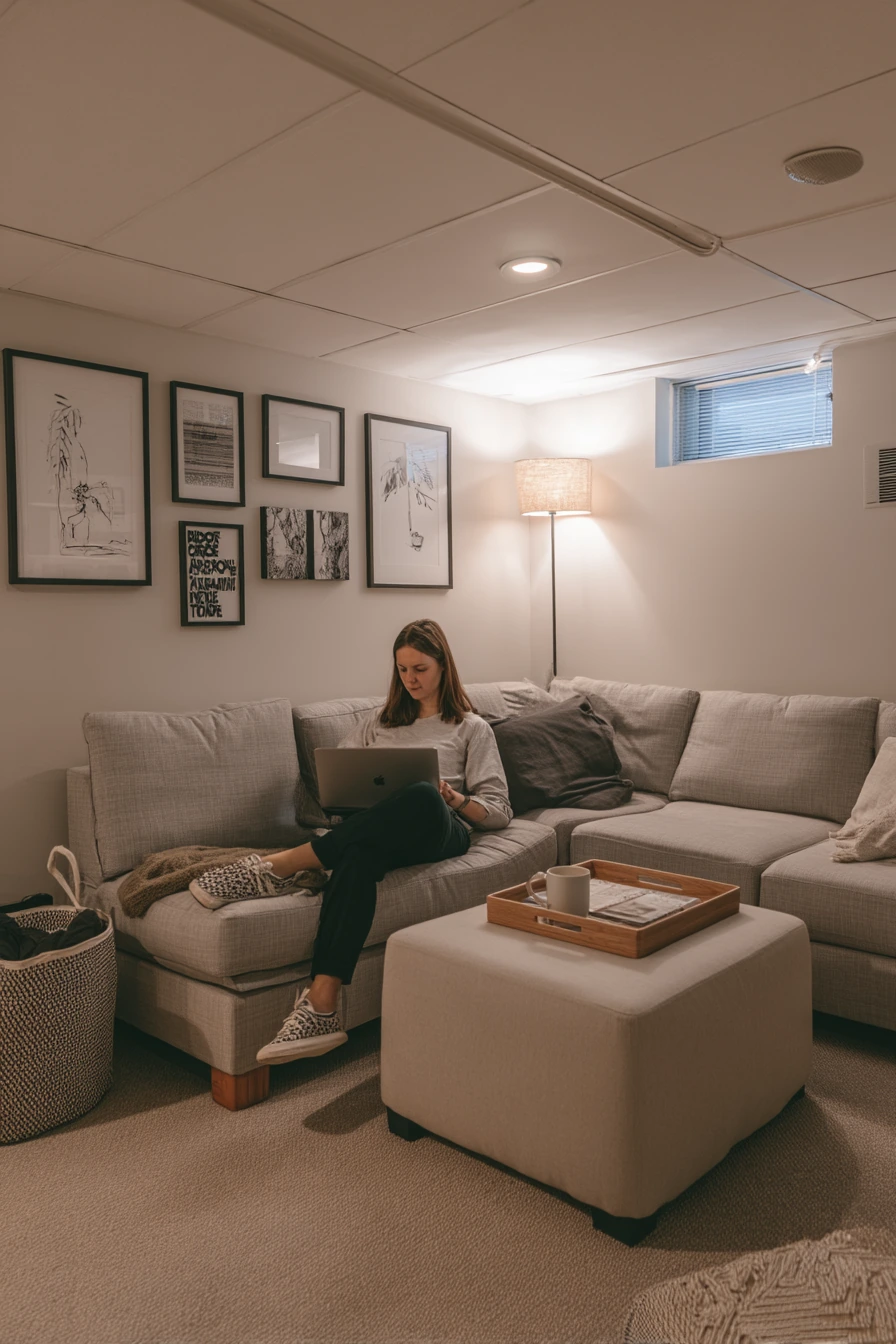
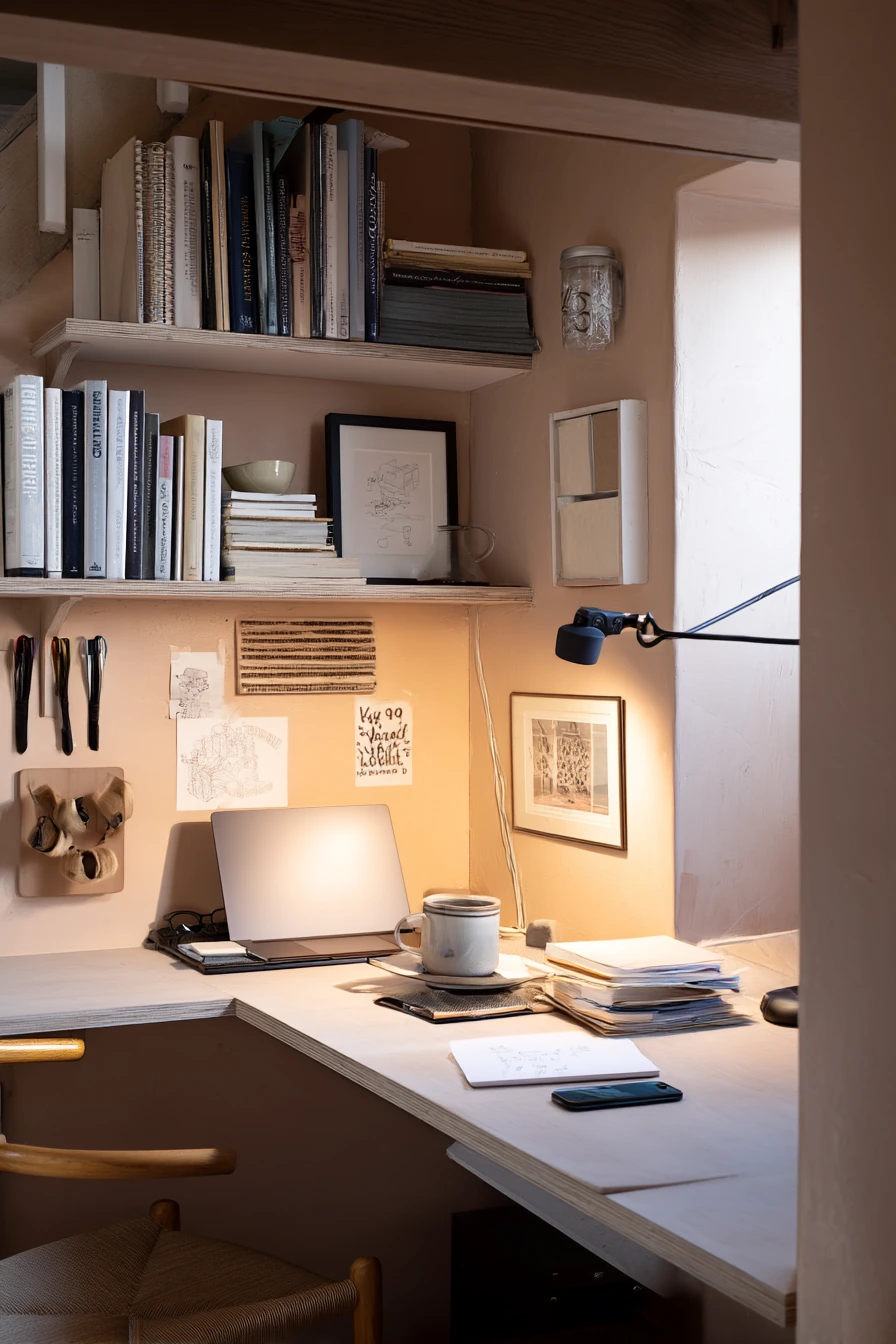
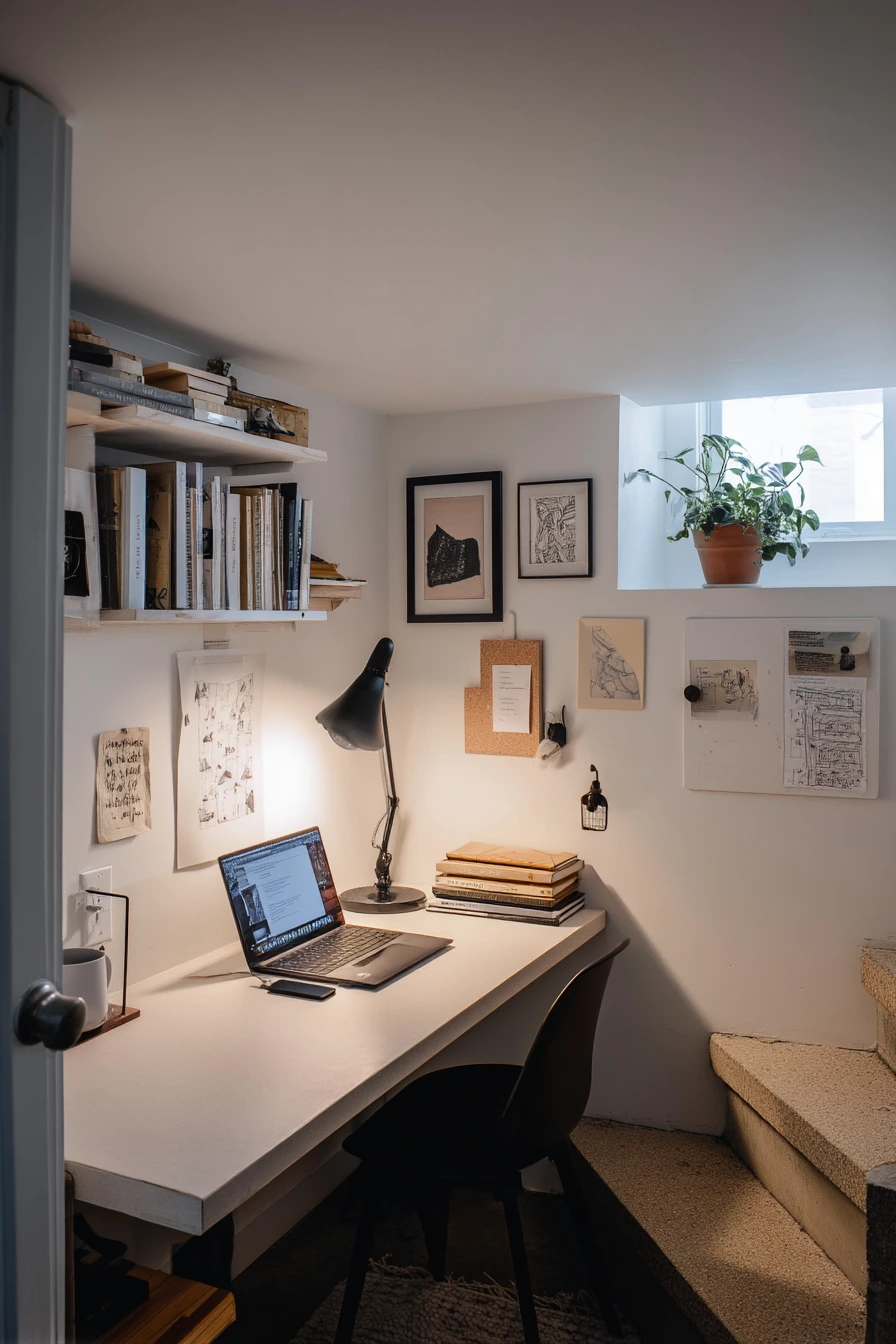
A basement office under a low ceiling works best when every item has a job. Choose pale walls so the corner stays bright, then use a slim desk to keep the floor open. A task lamp is key because a single ceiling light often makes shadows in a low basement. Add a cable tray under the desk so cords do not tangle or hang down, which can make the area feel messy.
Go vertical without using deep storage. A wall mounted peg rail can hold headphones, scissors, and small tools. Shallow book ledges keep reference books close but do not push into the room. One oversized pinboard can replace many small frames and notes, and it helps you keep deadlines, sketches, and a calendar in one spot. If your window light comes from the stair opening, angle the desk so the screen does not get glare.
Style it to feel calm and focused. Keep stacked notebooks aligned, store reading glasses in a small dish, and use one cup for pens. A cold tea can sit on a coaster to protect the desk. If the ceiling feels close, keep decor low contrast and avoid busy patterns near the top of the wall. Add one plant on a shelf for softness, and pick a desk chair with a low back so the room does not look crowded.
- Pick a slim desk with open legs to show more floor area.
- Use a task lamp plus one ceiling light for better layers of light.
- Install a peg rail for tools and headphones to clear the desk.
- Add shallow book ledges instead of deep shelves.
- Use one large pinboard to organize papers and inspiration.
Pro Design Tip: Paint the ceiling the same color as the walls in a flat finish to blur the edges, which can make the low ceiling feel higher.
Budget Considerations: Use inexpensive picture ledges and a cork board, and DIY a cable tray with adhesive hooks and a simple wire basket.
H2: 4. Low Ceiling Basement Playroom with Smart Storage
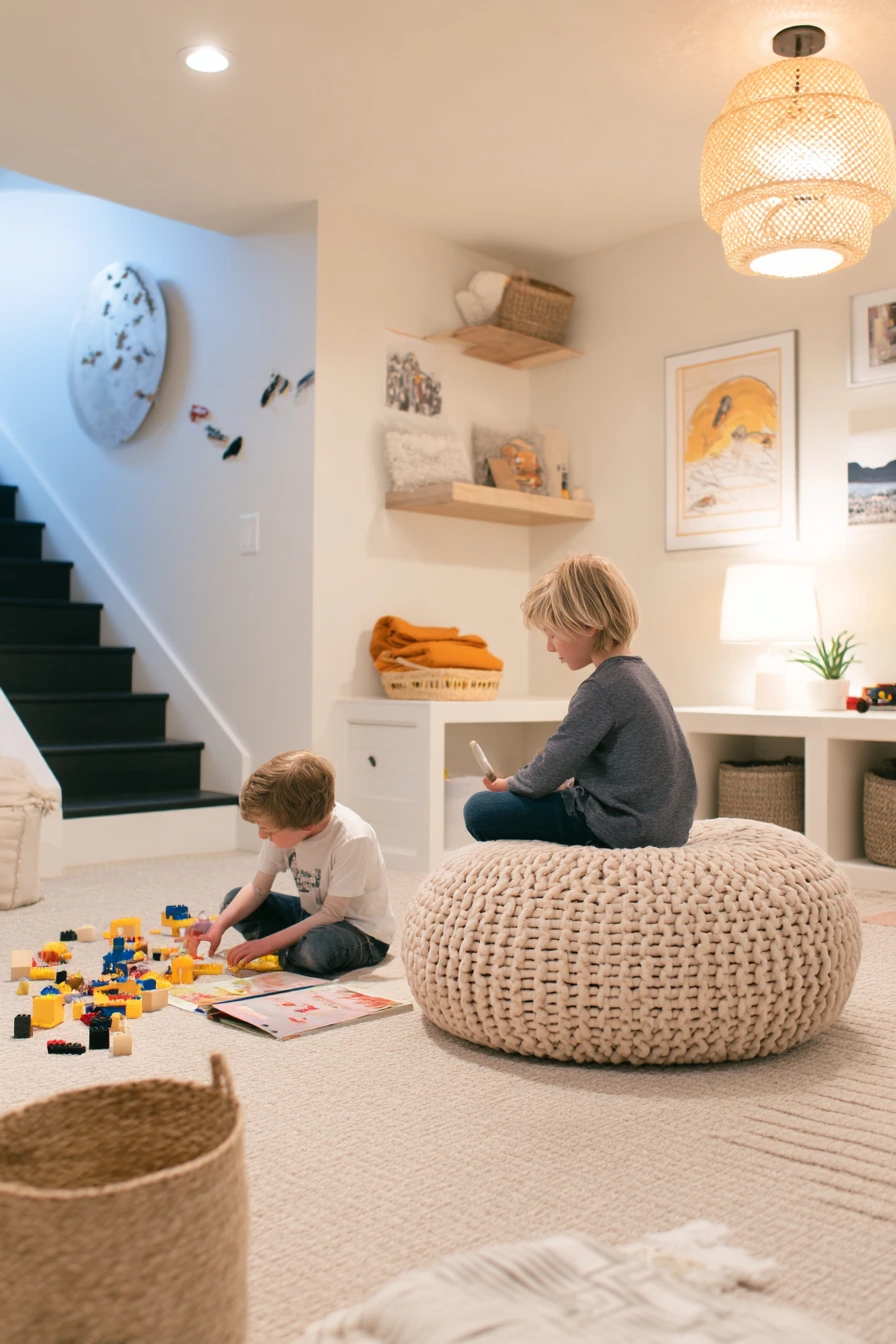
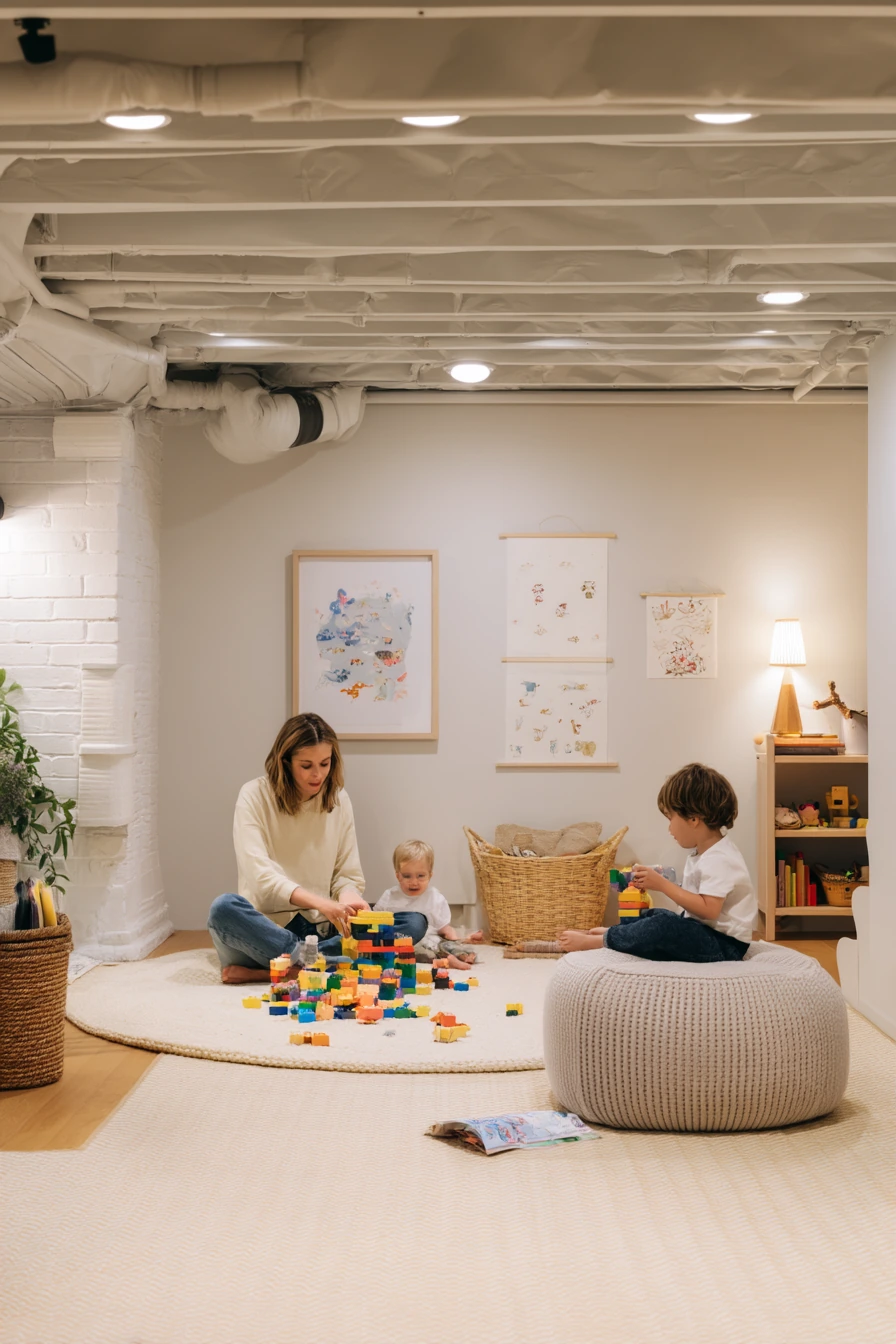
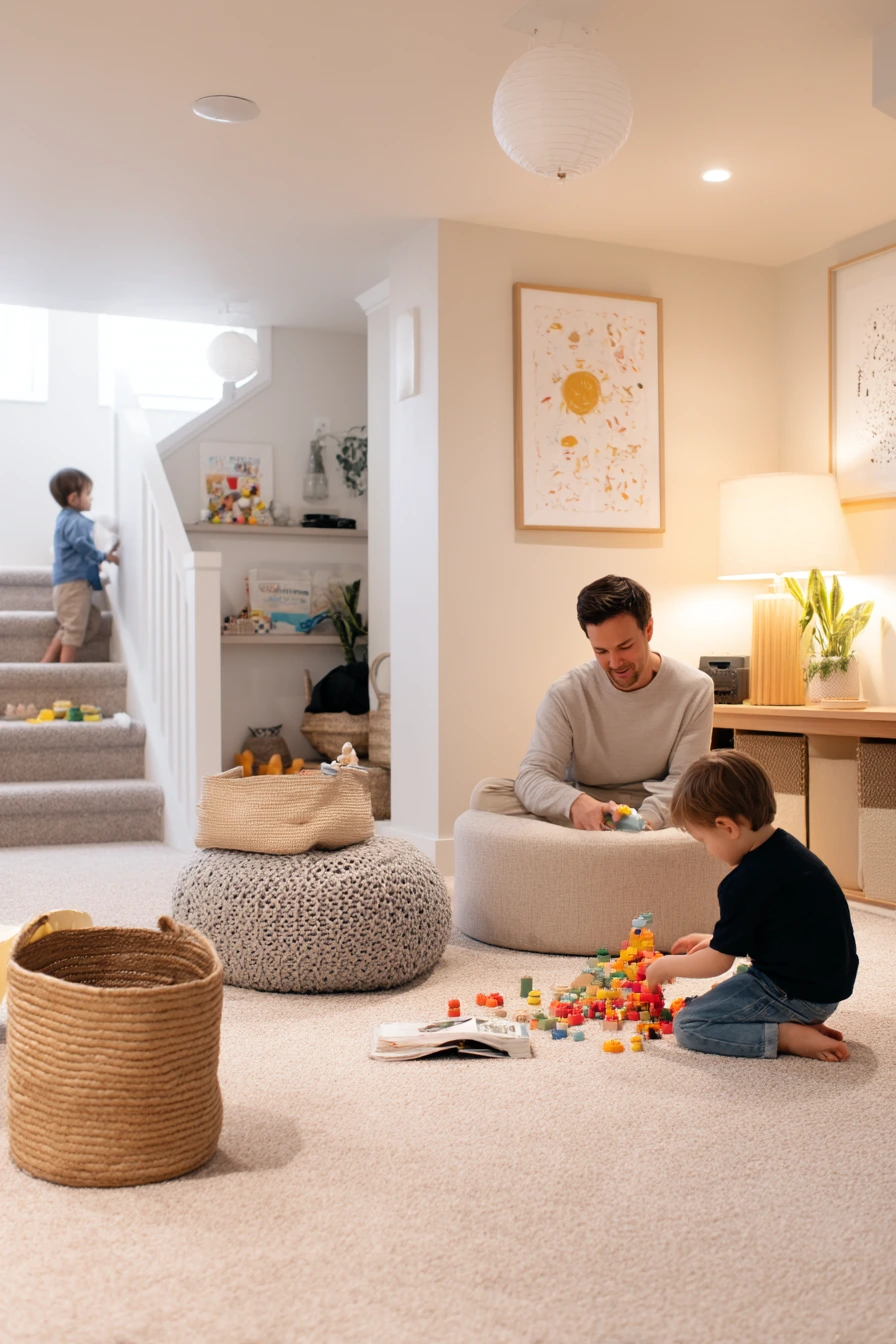
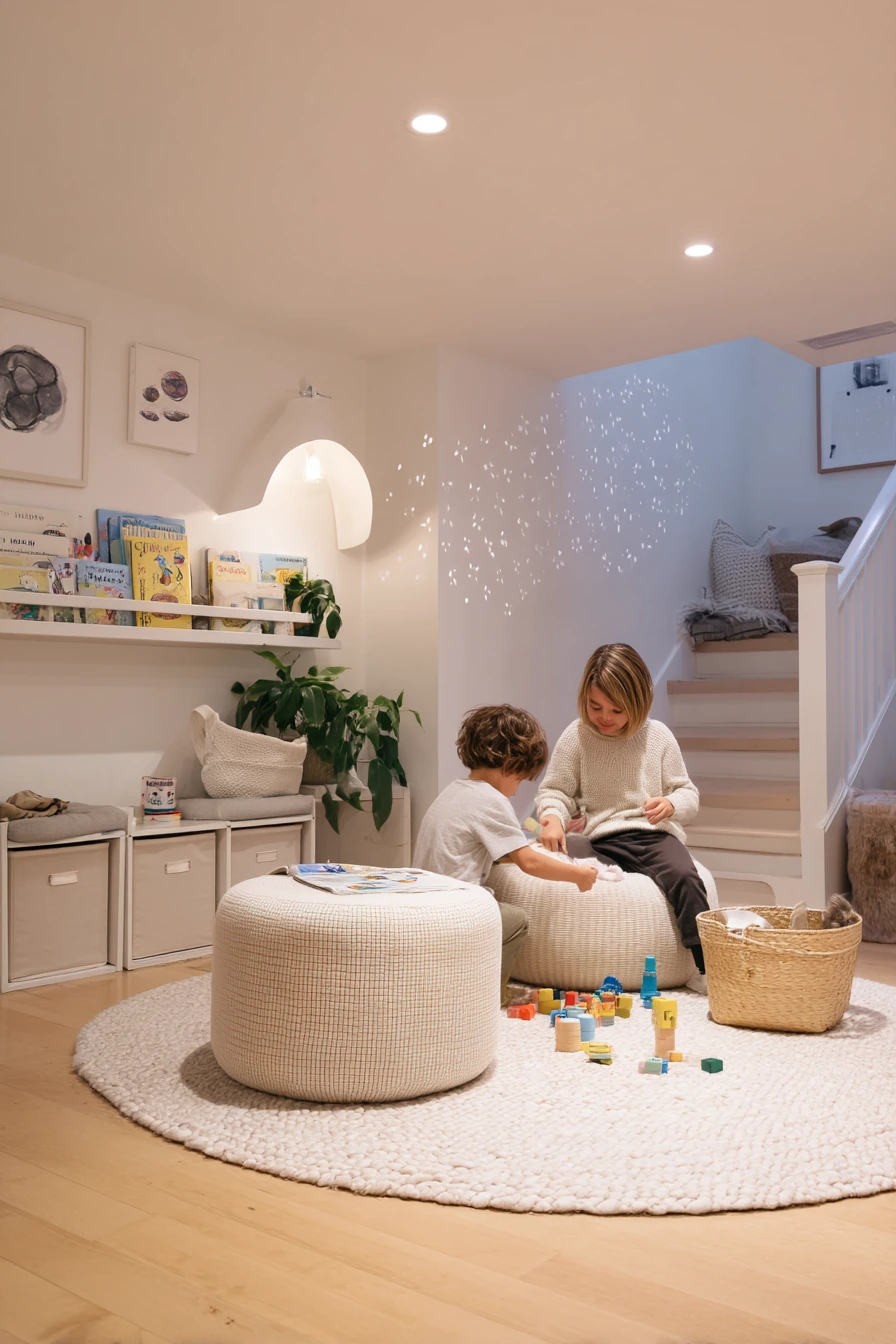
A cheerful basement playroom needs comfort, easy cleanup, and safe lighting. Bright neutral paint helps the room feel bigger, and it works with most toys and books. Choose flush mounted globe lights to preserve headroom and keep the ceiling line clean. A soft foam mat makes the floor warm and helps define the play zone in an open basement.
Keep furniture low so kids can reach it and the room feels less crowded. Use low storage bins and a toy basket so blocks and puzzles can be put away fast. A rounded ottoman gives extra seating without sharp corners. Keep wall decals minimal, and place them at kid height so the upper wall stays calm. If a parent folds laundry nearby, tuck a basket near the wall and keep a small shelf for detergent and wipes.
Style it so it stays tidy. Put picture books in a front facing bin or a shallow ledge. Keep one water cup rule with a tray table to cut spills. Add a small plant on a high shelf where it is safe. Use a warm lamp near the stairs for cozy evening light, but make sure cords are clipped to the baseboard. Rotate toys in bins so the room does not look overfull.
- Use flush globe lights to keep the ceiling clear and bright.
- Choose low bins so kids can put toys away on their own.
- Add a foam mat or rug to soften the floor and define the zone.
- Keep decals simple and lower on the wall to reduce clutter.
- Use a rounded ottoman for seating and quick toy hiding.
Pro Design Tip: Place the brightest light source near the stairs or window side, then add softer lamps deeper in the basement so the room feels evenly lit and less cave like.
Budget Considerations: Start with basic plastic bins and a washable mat, then upgrade to nicer baskets as the toy collection changes.
H2: 5. Low Ceiling Basement Movie Den for Cozy Nights
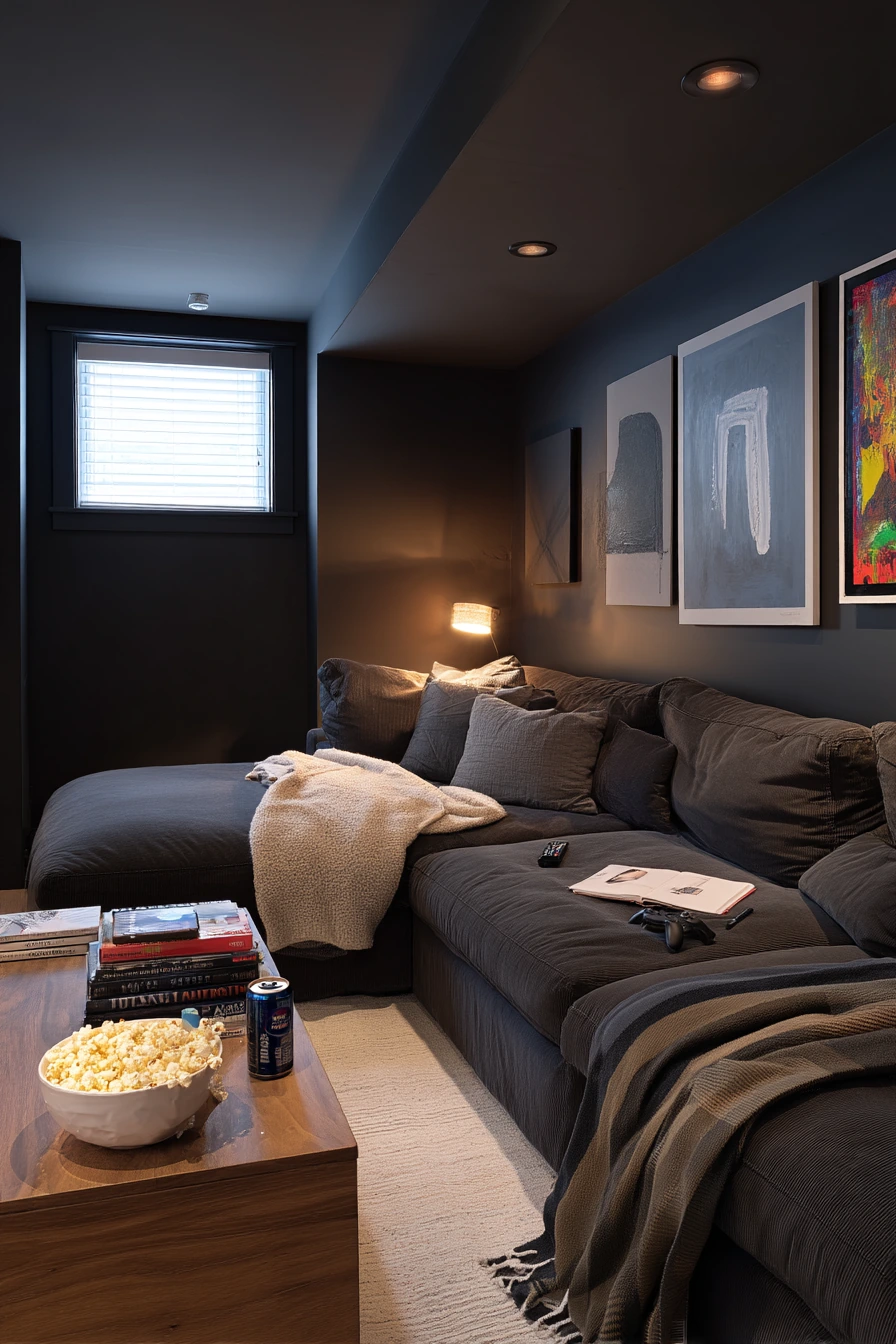
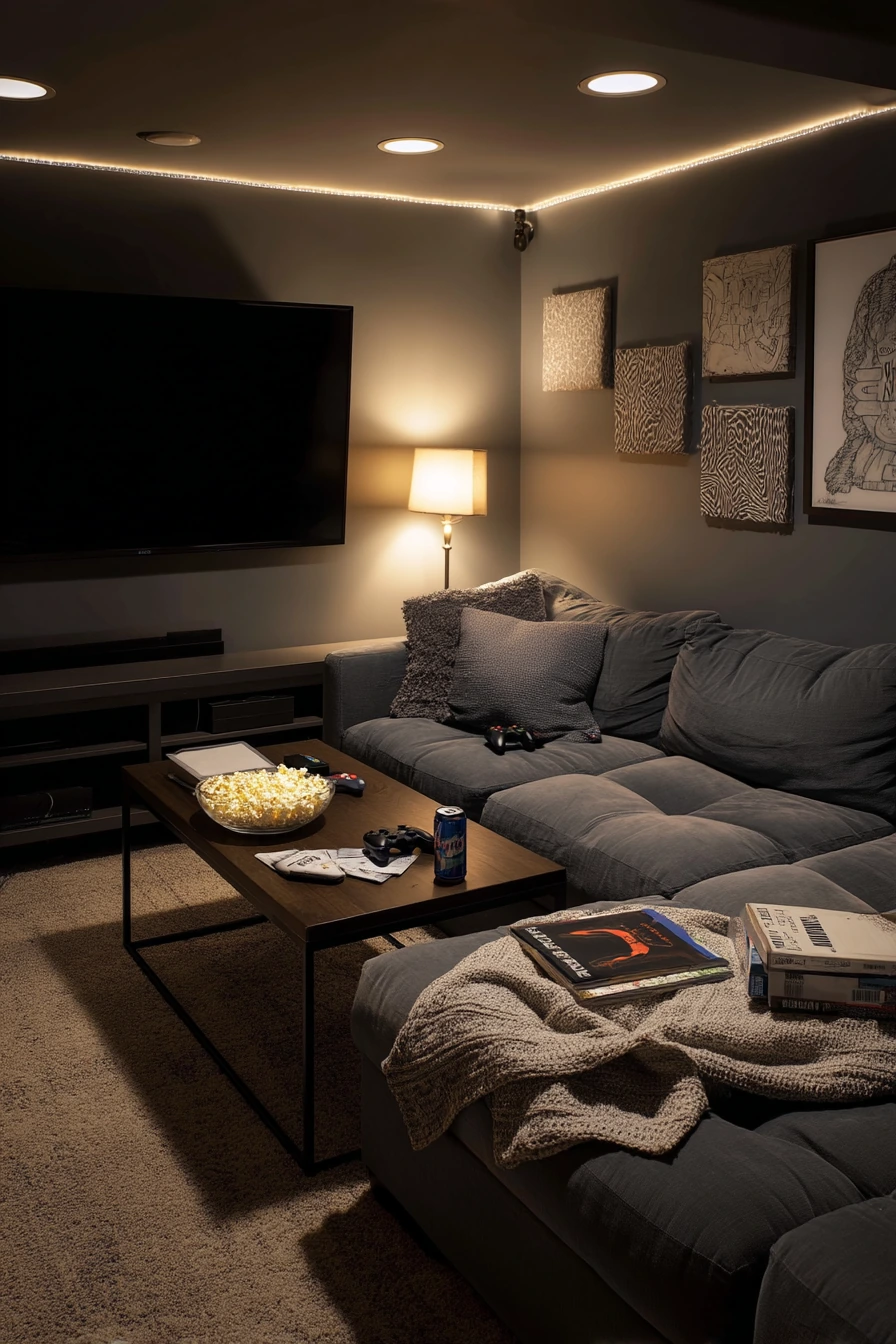
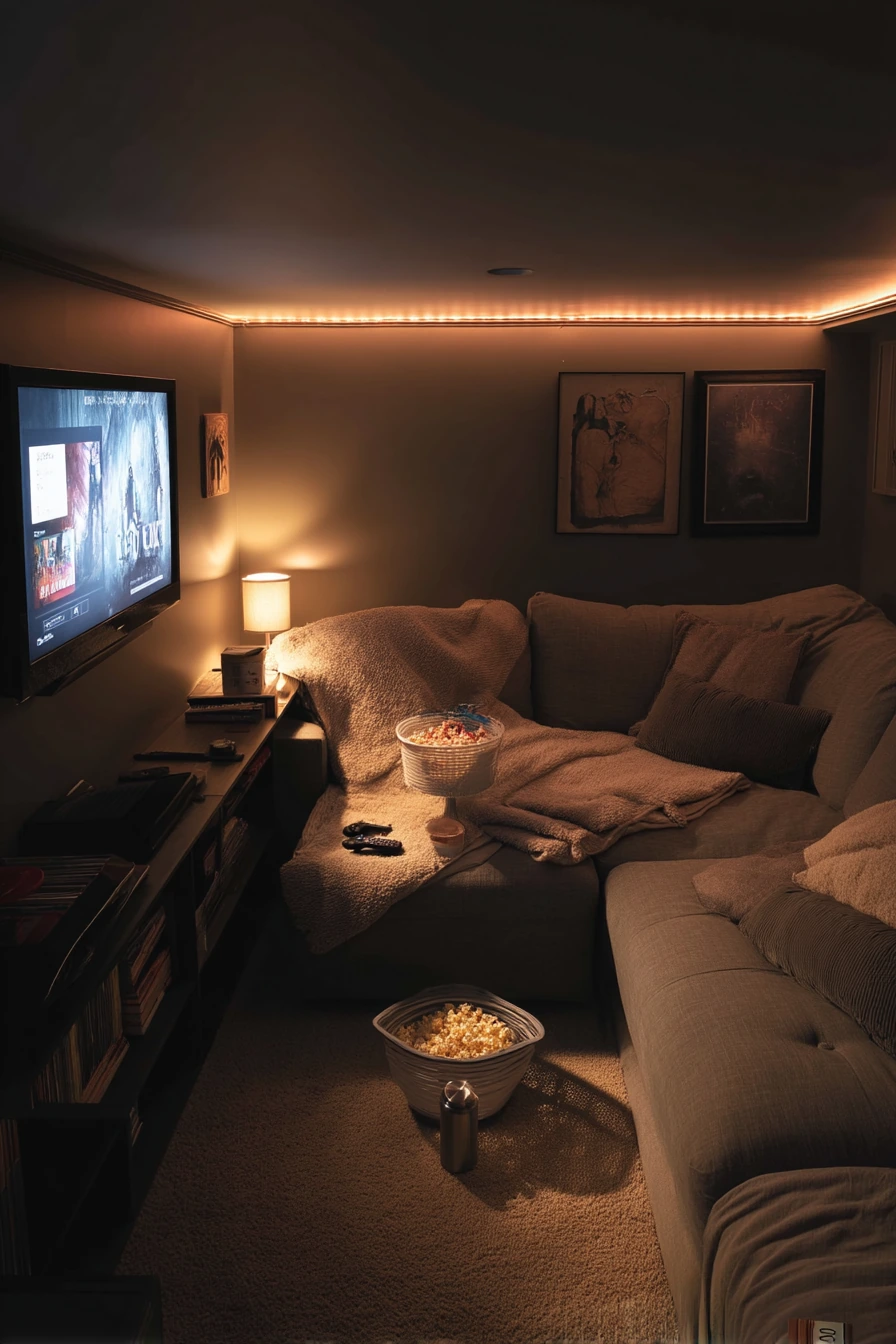
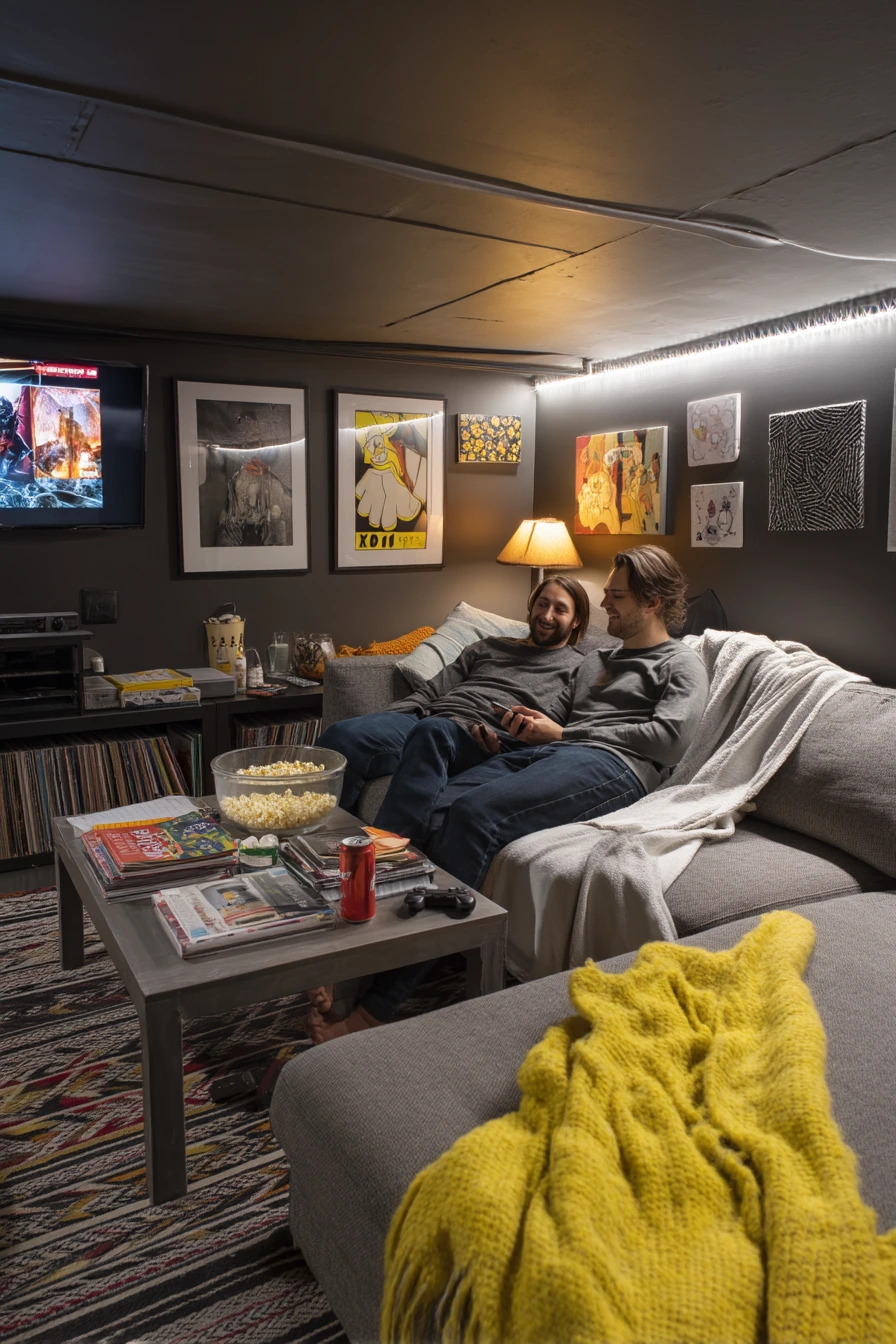
A low ceiling basement den can feel perfect for movie night when you lean into cozy and control the light. Dark matte paint can hide ceiling bulk and ducts better than satin finishes. It also reduces glare from the TV. Keep the media console low so the screen can sit at the right height without pulling your eyes up to the ceiling.
Choose an oversized sectional, but keep it low and deep so it feels grounded. Layer throw blankets and a few textured pillows to make the room inviting. If sound bounces, use acoustic panels disguised as art on the walls. Add a subtle LED strip hidden low along the trim or behind the console. Low lighting makes the ceiling fade away and keeps the room comfortable when the TV is on.
Style it for real use. Keep remotes in a small tray and leave a spot for a game controller near a stack of magazines. A side table with a coaster can handle soda cans and popcorn bowls without spills. If you want the room to look less heavy, choose one lighter rug to break up dark paint. Use warm bulbs in any lamps so faces look natural, even with the TV glow.
- Use dark matte paint to reduce visual clutter on the ceiling.
- Pick a low media console so the TV height feels comfortable.
- Add hidden LED strips low on the wall for soft pathway light.
- Disguise acoustic panels as framed art to improve sound.
- Layer blankets and pillows for comfort without adding tall decor.
Pro Design Tip: Keep all lighting below eye level during movie time, like wall wash LEDs or low lamps, so attention stays on the screen and the ceiling disappears.
Budget Considerations: DIY acoustic panels with insulation boards and fabric, and use affordable LED strip kits with dimmers instead of built in lighting.
H2: 6. Low Ceiling Basement Guest Room That Feels Restful
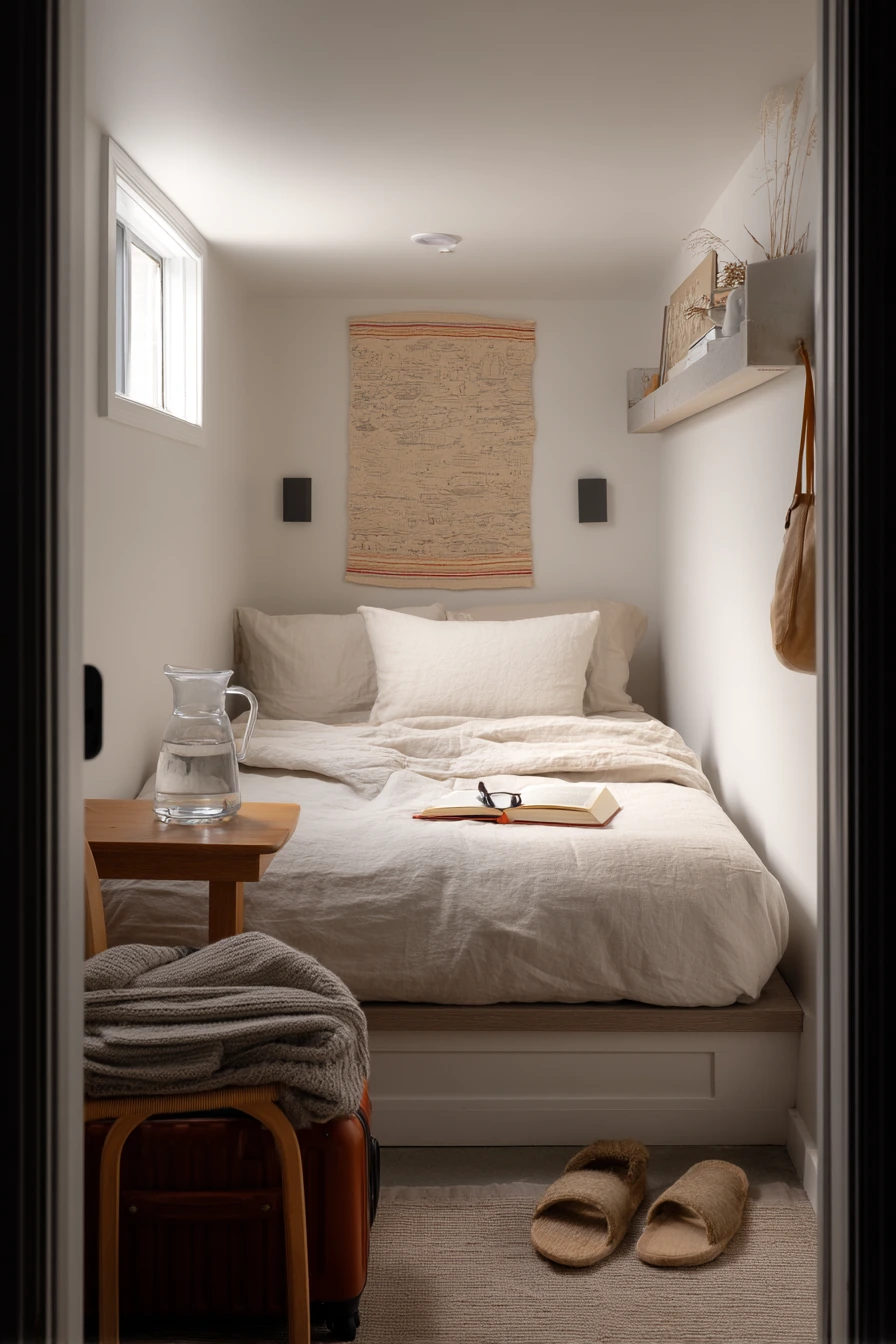
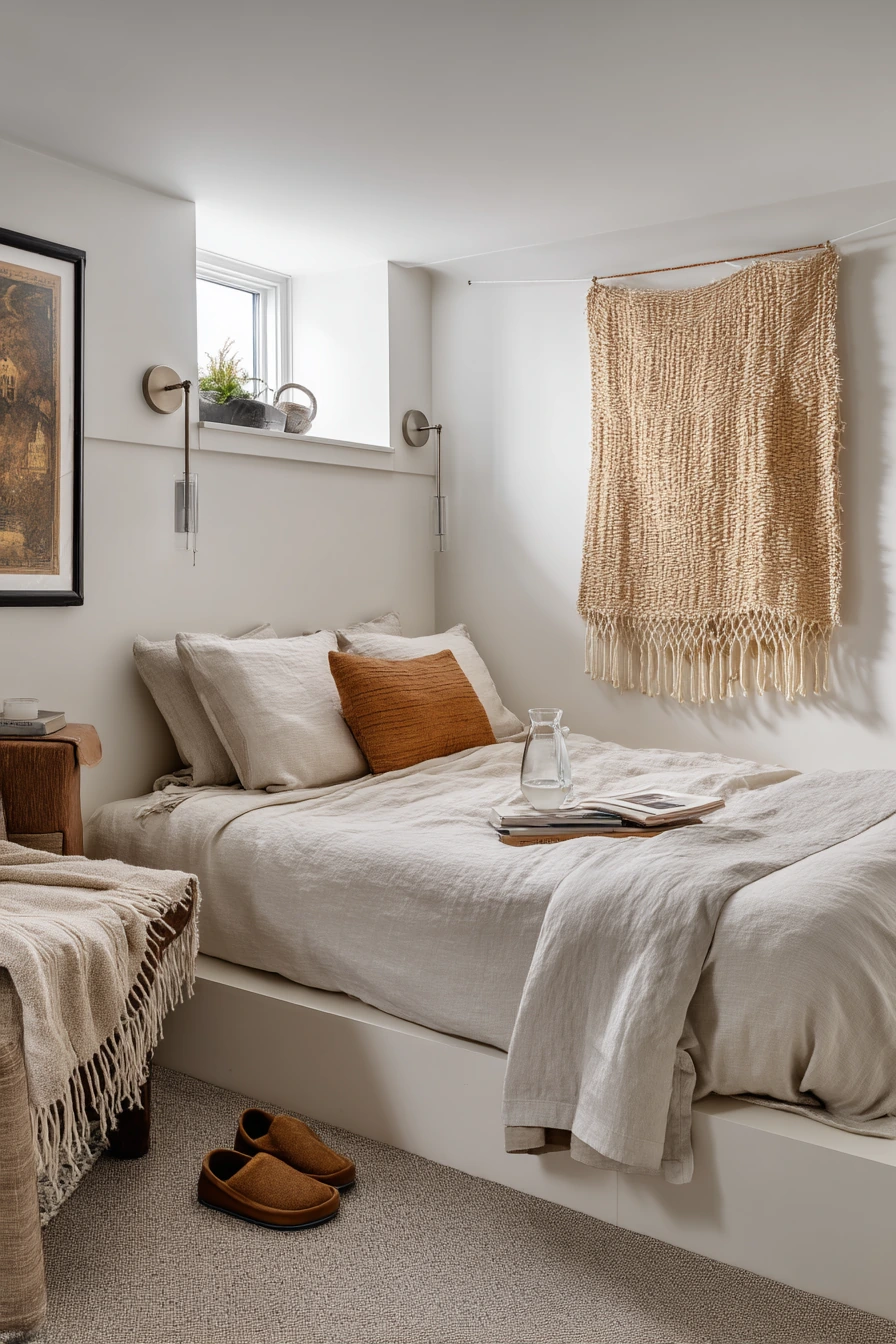
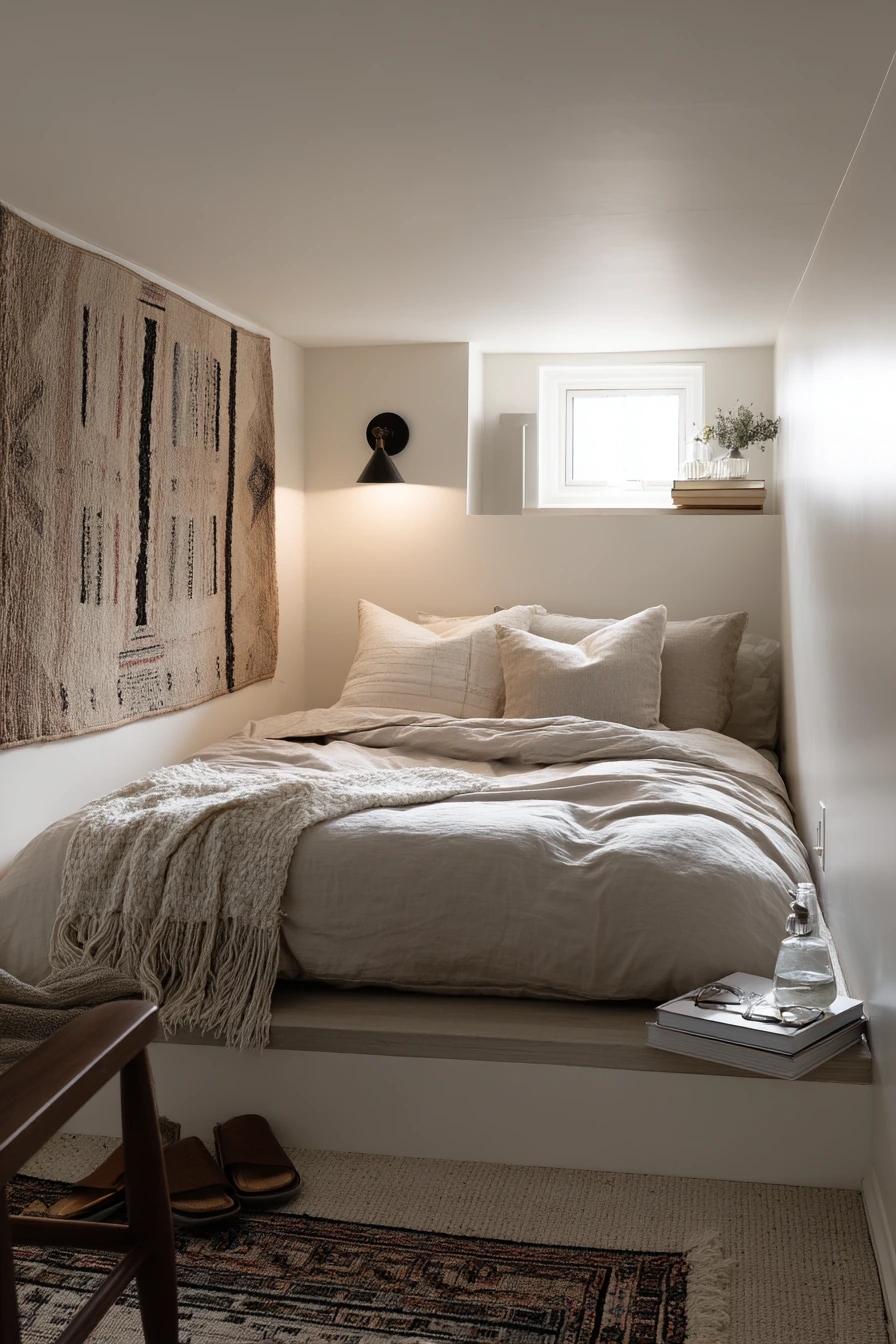
A compact basement guest room with a low ceiling should feel calm and simple. Warm white walls help the space feel clean without looking stark. A low platform bed is the best base because it keeps the mattress height comfortable while leaving more air above your head. Choose linen bedding in light colors so the bed looks soft and not bulky.
Skip tall lamps and use slender reading sconces mounted on the wall. This frees up the nightstand area and keeps the room from feeling crowded. A floating night shelf can hold a carafe of water and a book with a bookmark without taking floor space. To soften the low ceiling, hang a large textile wall hanging behind the bed. It adds texture and warmth without using a heavy frame.
Style the room for arriving guests. Keep a chair for a folded sweater and a suitcase partly open. Put slippers beside the bed and a small basket for chargers. If you have a small basement window, use a simple shade that lets in gentle morning light while keeping privacy. Add one scent free candle or a small vase, but do not overdecorate. The goal is a quiet place to sleep.
- Use a low platform bed to keep the ceiling feeling higher.
- Install slim sconces to save space and reduce tabletop clutter.
- Add a floating night shelf for water and small items.
- Hang a textile piece to warm up the room and soften edges.
- Choose light bedding to keep the bed from looking too heavy.
Pro Design Tip: Center the bed on the longest wall and leave equal space on both sides, even if it is small, so the room feels balanced and less tight.
Budget Considerations: Use plug in sconces and a simple plywood platform base with a bed skirt instead of an expensive low frame.
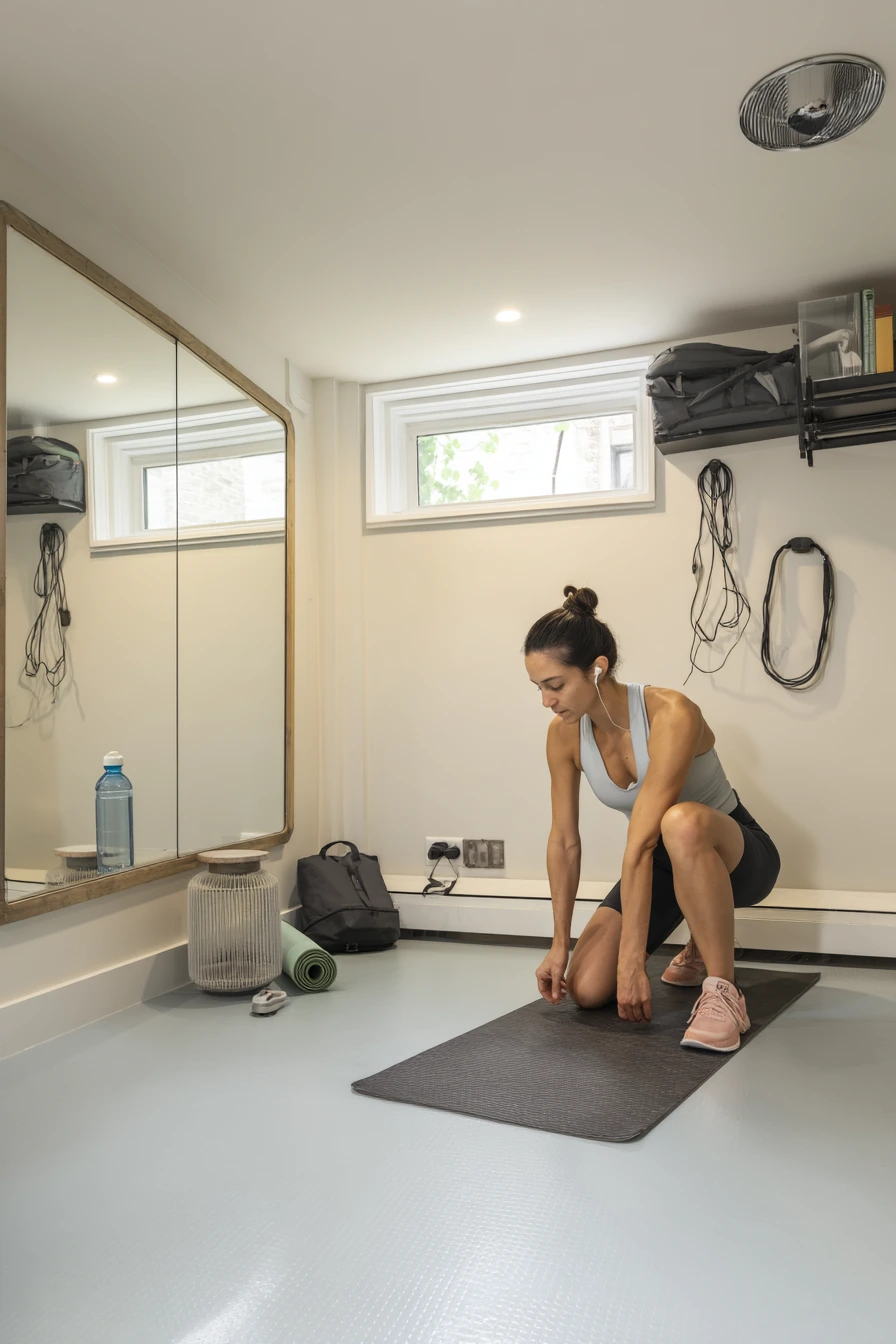
H2: 7. Low Ceiling Basement Workout Corner That Breathes
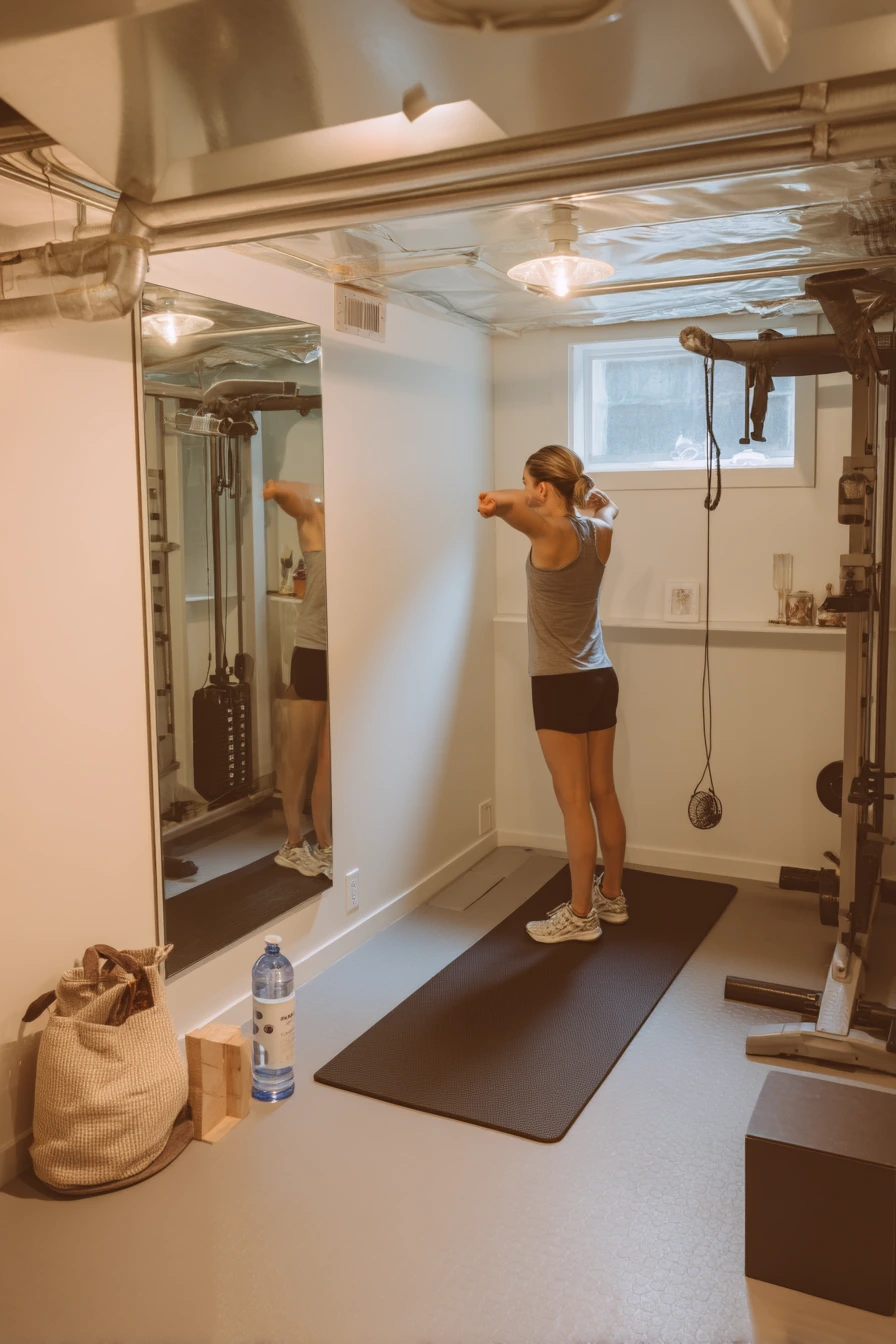
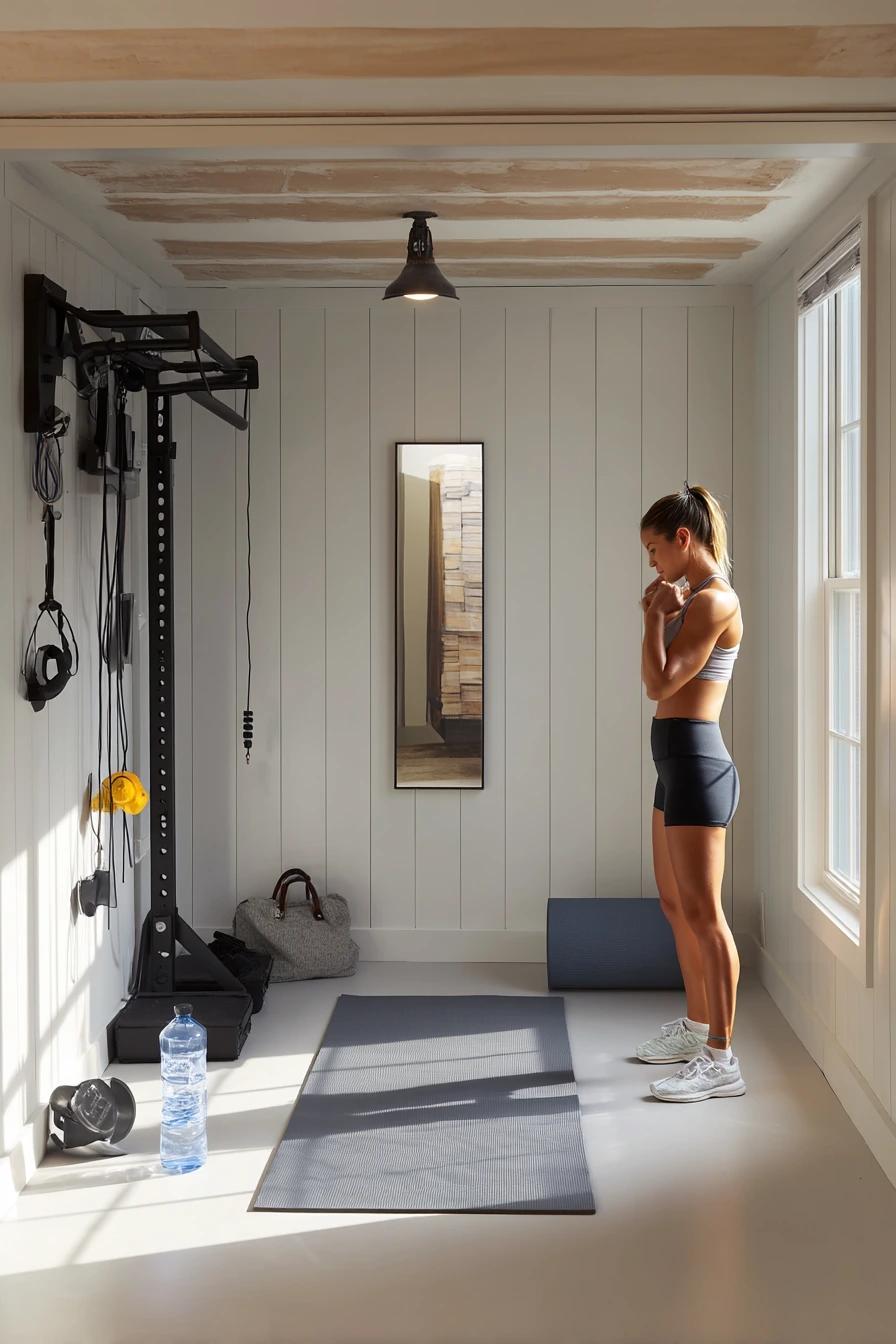
A basement workout corner under a low ceiling needs good light, clear floor space, and airflow. Pale reflective paint helps the area feel open and makes it easier to see form in a mirror. Keep the wall mirror narrow so it does not dominate the wall, and place it where it catches the most light. A rubber mat defines the workout spot and protects the floor.
Choose compact equipment like a small rack, a jump rope, and a few weights. Add a towel hook and a small shelf for earbuds, a water bottle, and a foam roller. A slim fan makes a big difference in a basement that can feel stale. If you have mixed lighting, use cool natural window light during the day and a warm practical lamp at night so the space stays comfortable.
Style it like part of the home, not a storage zone. Keep the gym bag half zipped on a hook, not on the floor. Use a small bin for bands and gloves. Put a yoga block and foam roller in a vertical corner stand so nothing sticks out. If cables are nearby, clip them tight to the baseboard so you do not trip. A clean corner makes it easier to work out more often.
- Paint the walls a light tone to reduce the closed in feeling.
- Use a narrow mirror to check form without taking over the wall.
- Choose compact gear and store it off the floor when possible.
- Add a slim fan for airflow in a low ceiling basement.
- Use a rubber mat to define the area and protect flooring.
Pro Design Tip: Mount hooks and shelves at one consistent height line to create a tidy visual stripe, which helps the wall look longer and the area feel organized.
Budget Considerations: Start with body weight tools like bands, a jump rope, and a used mat, then add weights over time from local resale listings.
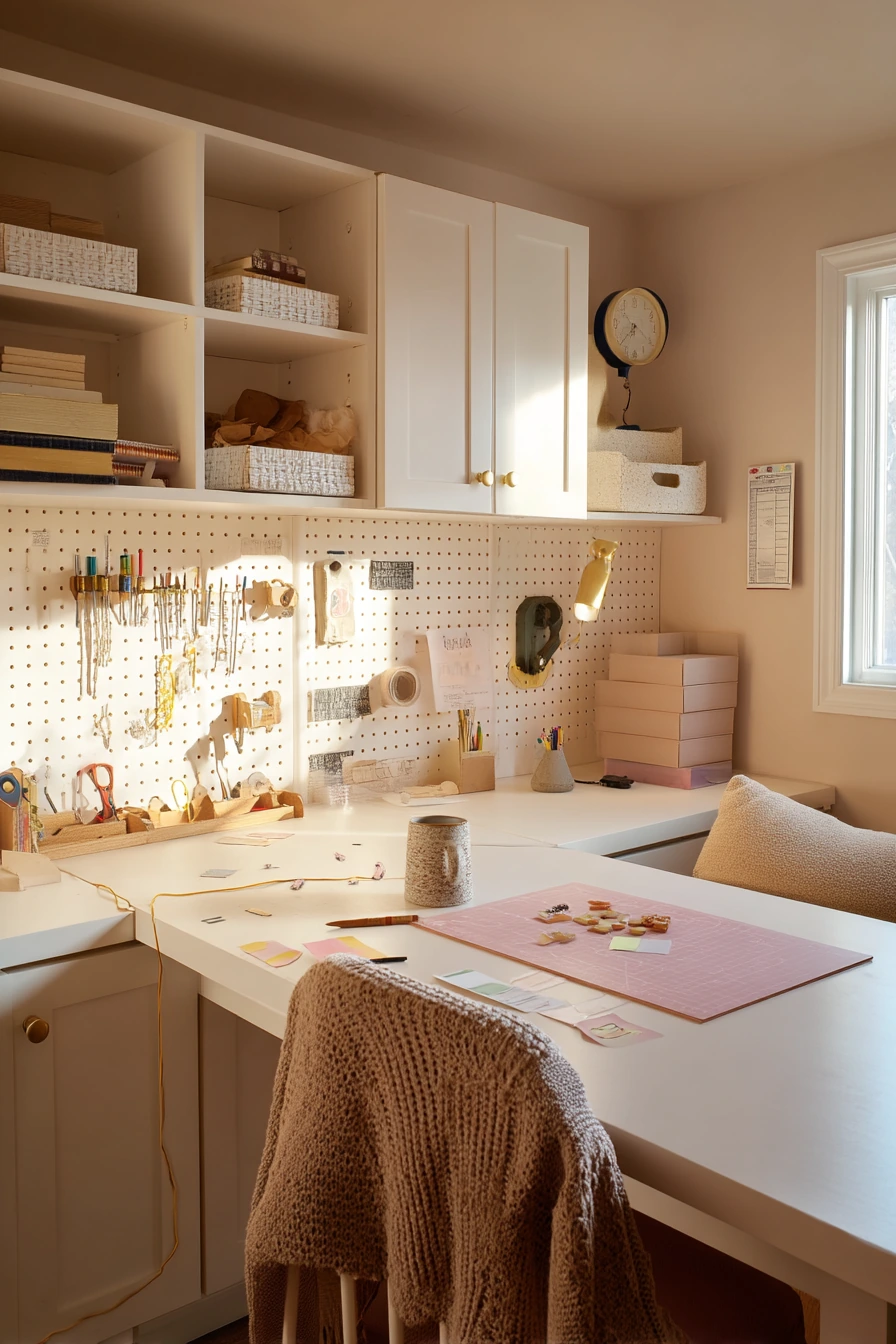
H2: 8. Low Ceiling Basement Craft Room for Everyday Projects
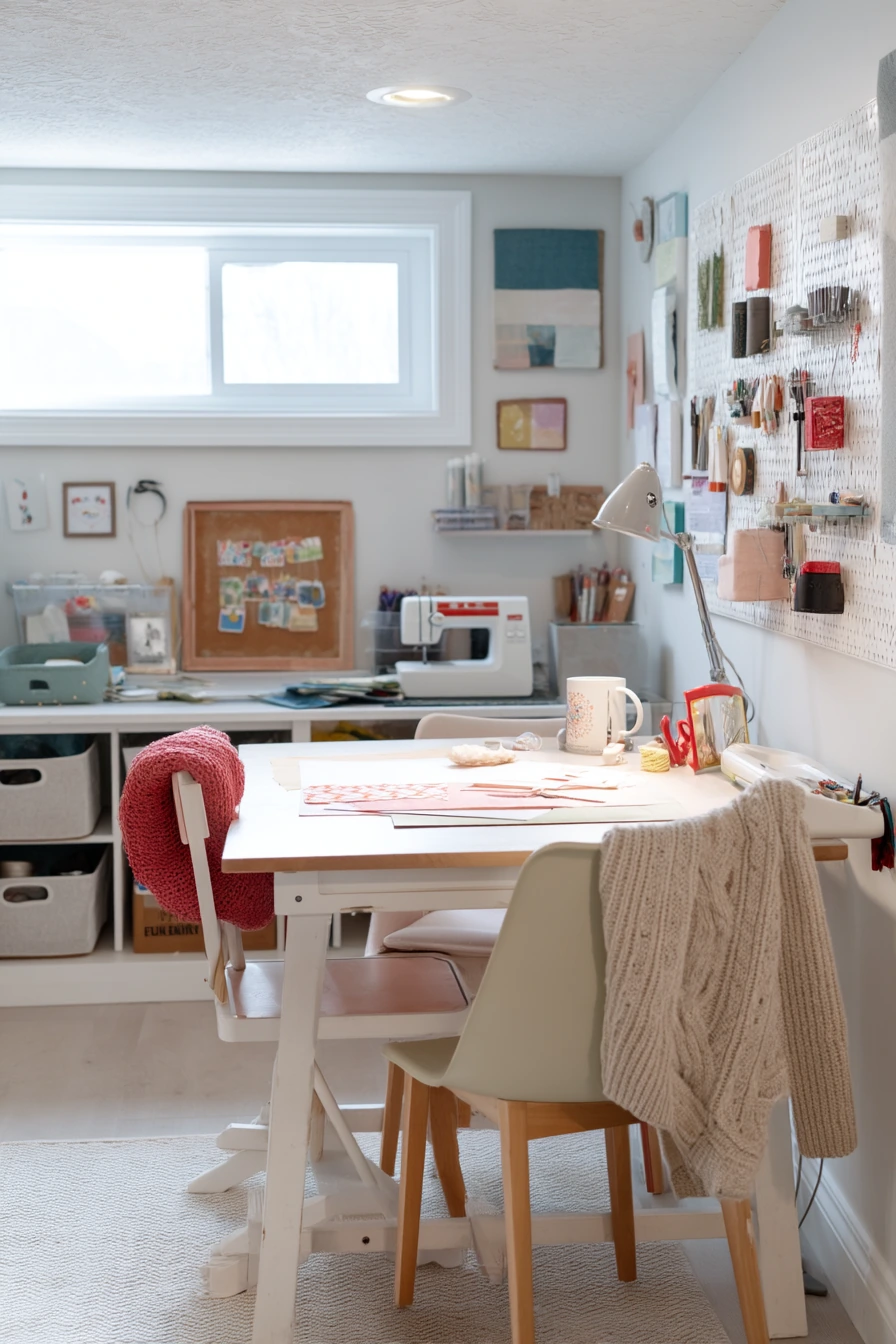
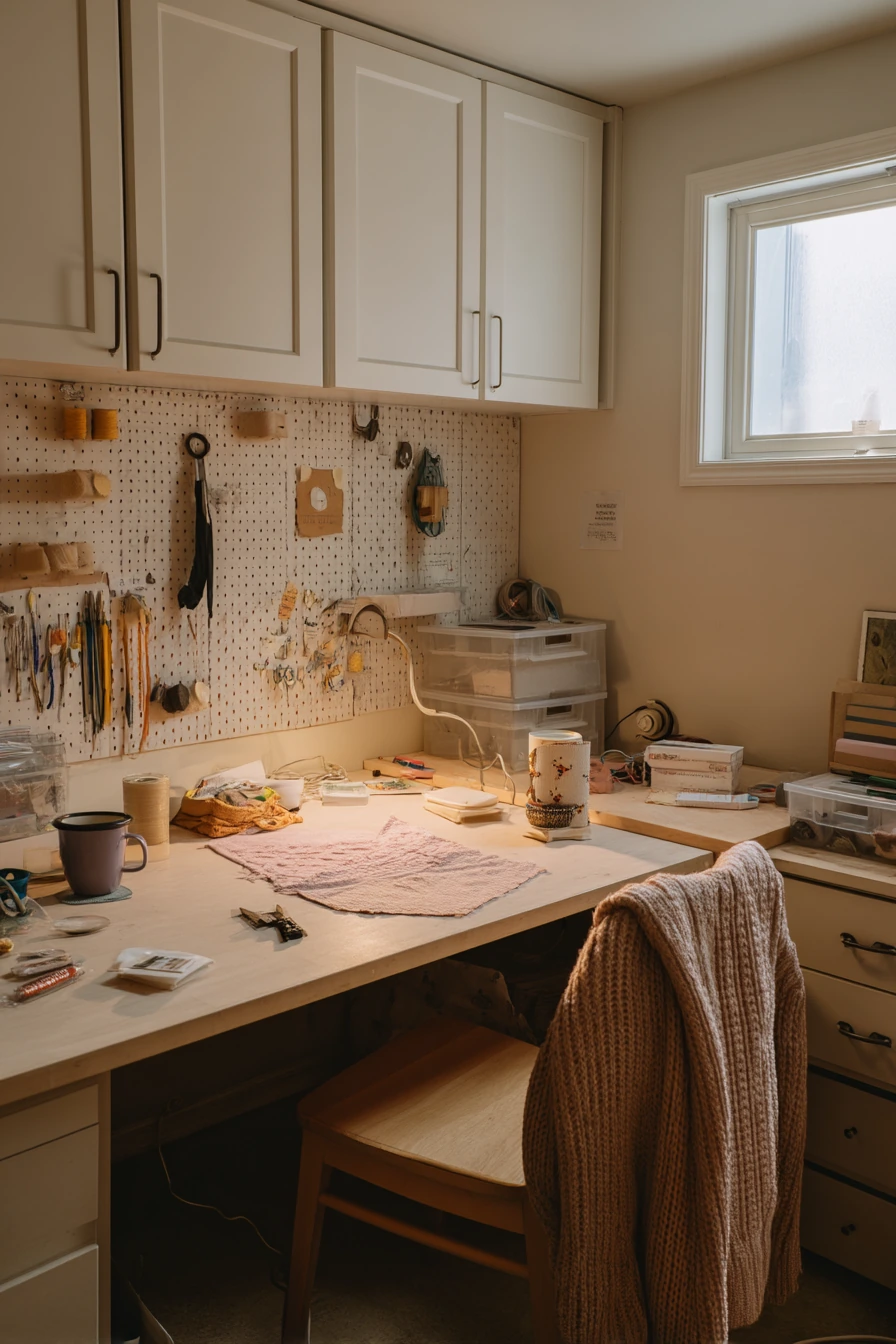
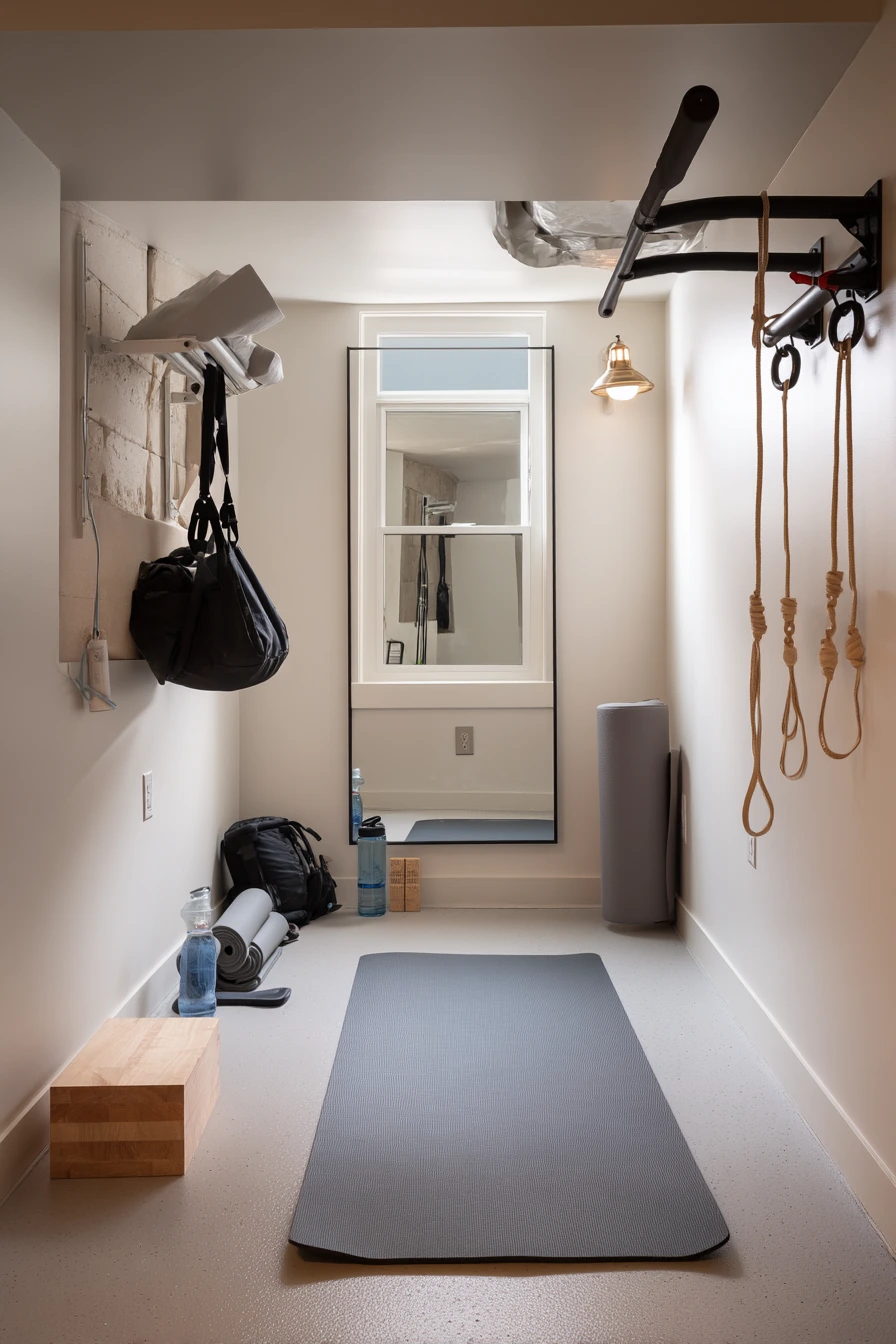
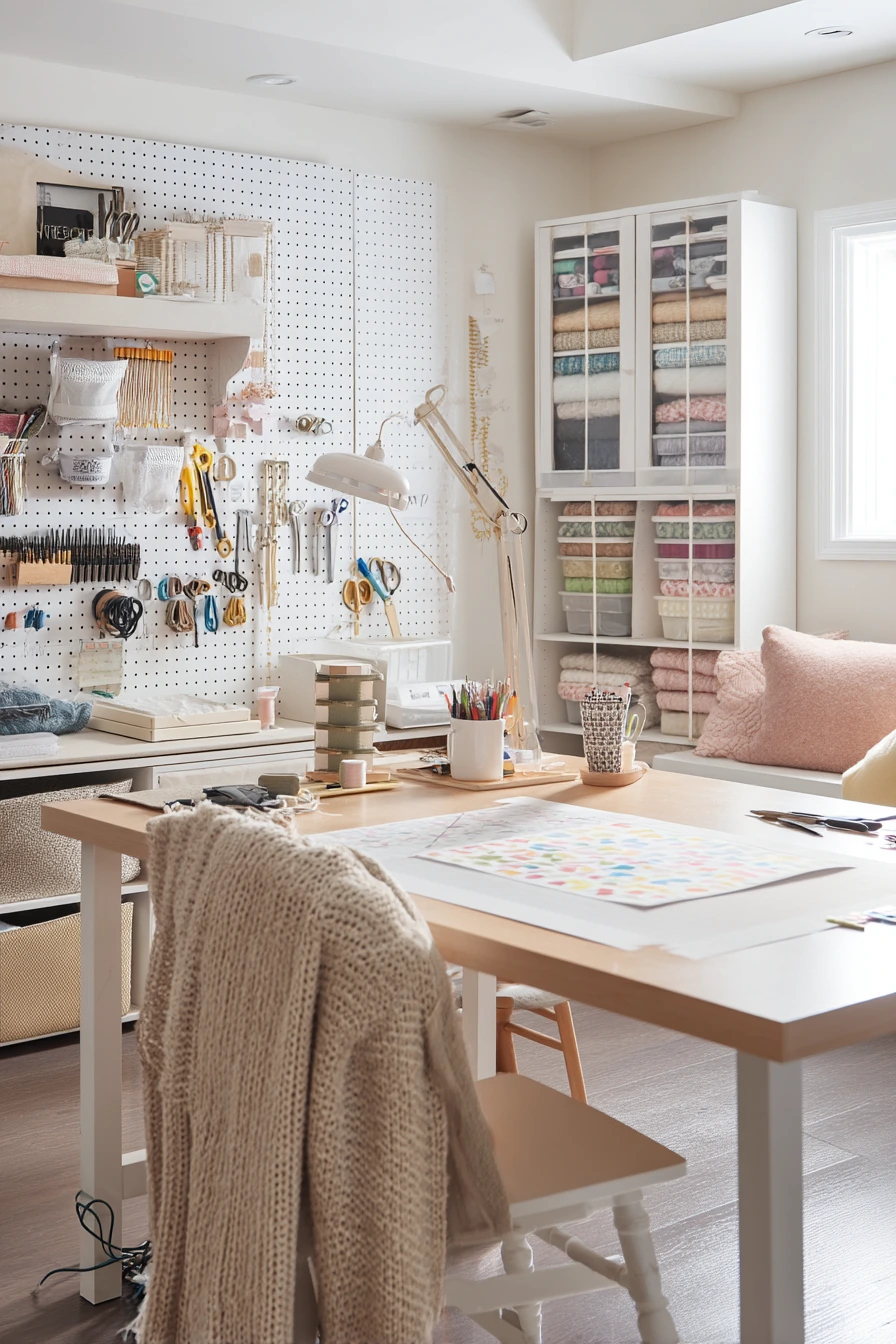
A low ceiling basement craft room should be bright, organized, and easy to reset after a project. Pale paint reduces visual weight, and it helps you find supplies faster. Use shallow cabinets so the room does not feel squeezed. A folding table is a smart choice because it can open for big projects and tuck away when you need floor space.
Keep tools visible but neat. A pegboard holds scissors, rulers, and tape, and it clears the tabletop. Labeled bins are a must for paper, glue, and kids projects. Add a soft cork board for notes, patterns, and reminders. Use a desk lamp for close work, since basement light can be dim in late afternoon. A charging cable can run to the wall, but clip it so it does not snake across the floor.
Style it so it feels homey, not like a utility room. Leave one mug spot on a shelf, not on the table, to prevent spills. Keep scraps in a small basket so you can save them or toss them later. If a kid has an unfinished project, slide it into a tray so it stays flat. Drape a sweater over a chair to make the space feel used, but limit extra decor so the room stays calm.
- Use shallow cabinets to store supplies without eating up space.
- Add a folding table for flexibility in a tight basement room.
- Install a pegboard to keep tools off the work surface.
- Sort items into labeled bins for quick cleanup.
- Use a desk lamp for focused light when daylight is low.
Pro Design Tip: Create one clear landing zone, like a tray or inbox, for unfinished projects so the room stays usable without forcing you to clean everything right away.
Budget Considerations: Pegboard, bins, and fold up tables are low cost wins, and you can repurpose jars and shoe boxes for sorting small supplies.
H2: 9. Low Ceiling Basement Bar Corner That Feels Social
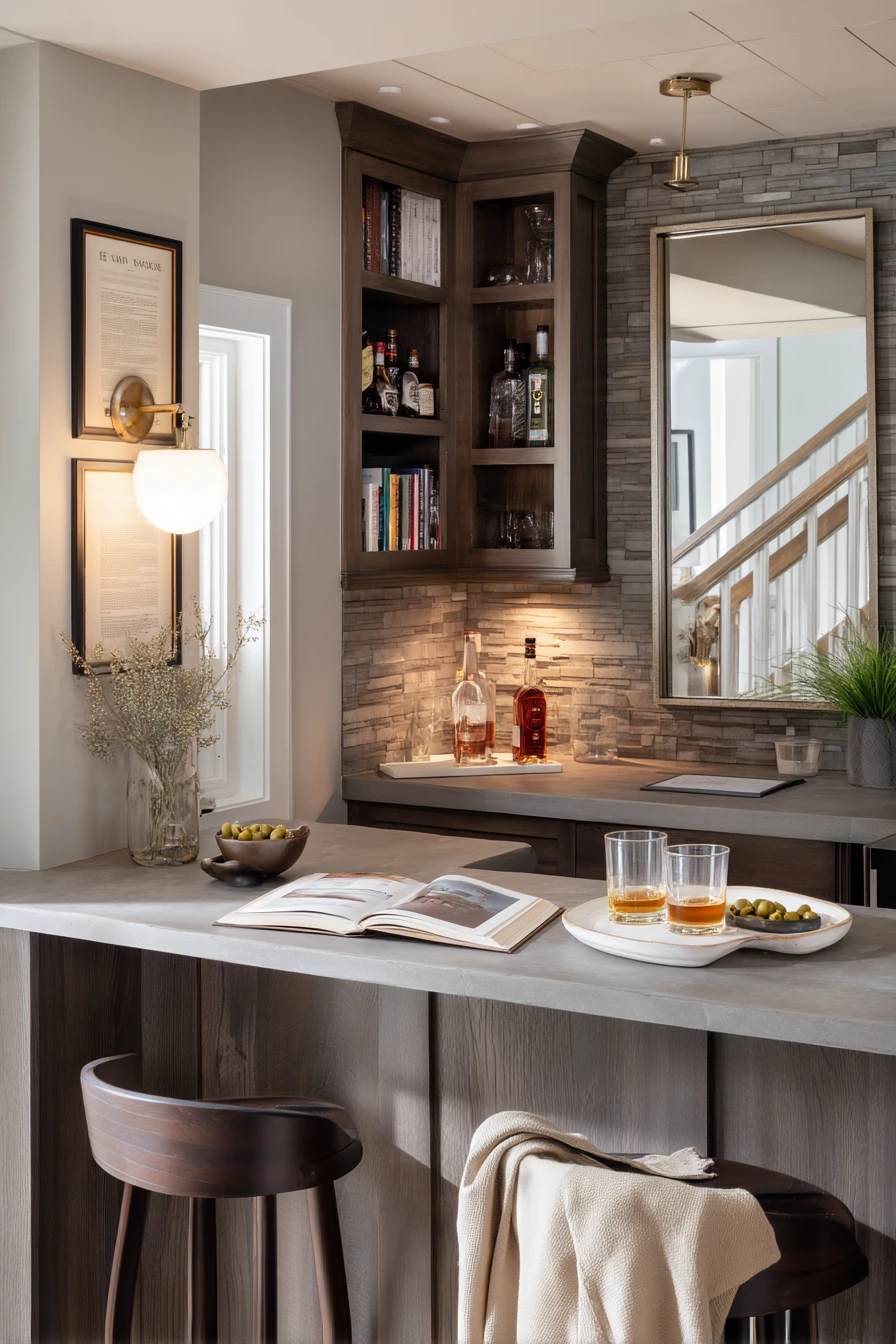
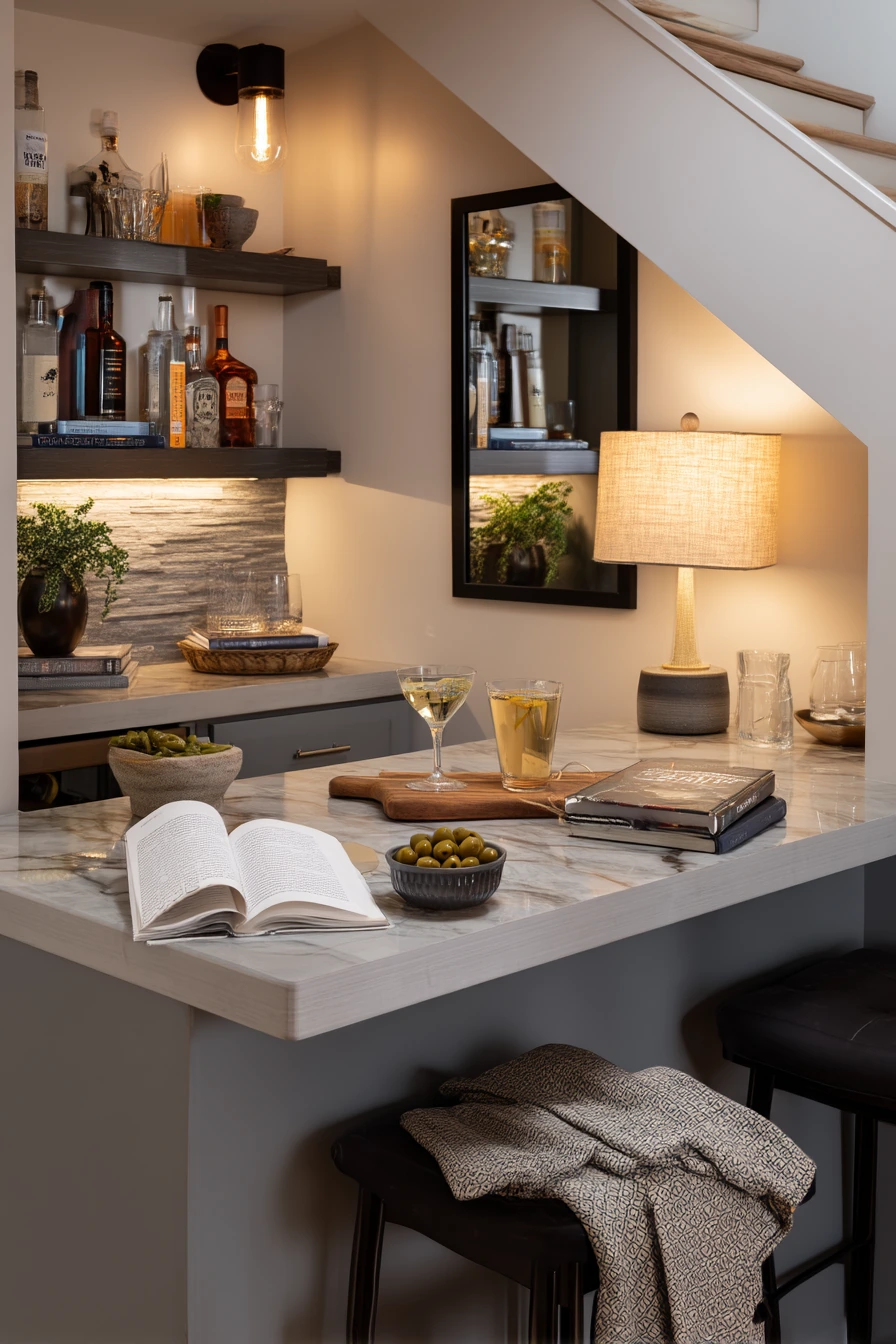
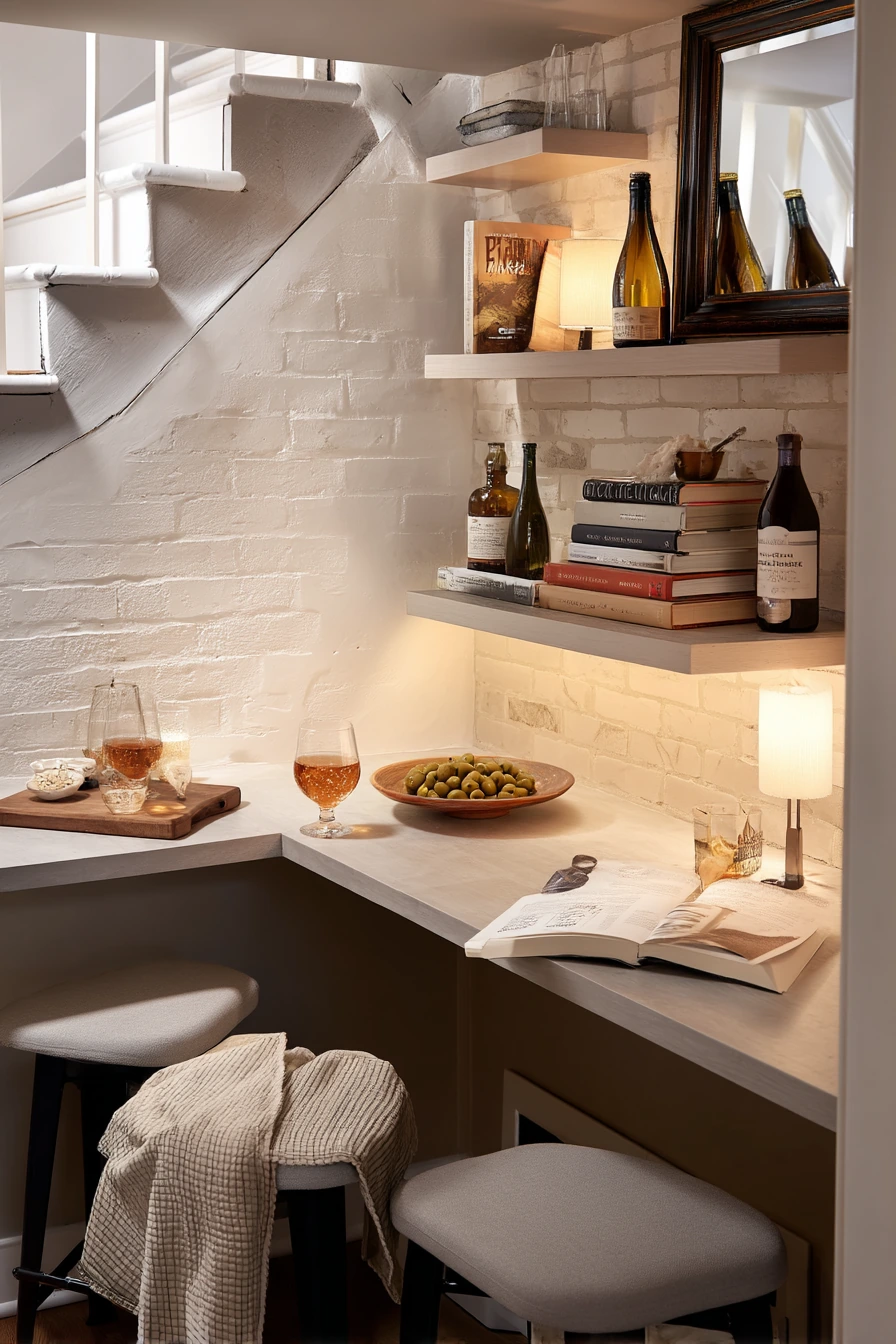
A small basement bar corner can work well under a low ceiling when you keep everything compact and low. Use built in shelves or a narrow bar cabinet, but avoid tall bottle displays that make the ceiling feel closer. Under shelf lighting adds glow right where you need it, and it highlights glassware without needing a bright overhead light.
A stone look backsplash gives texture and looks finished, even in a small nook. Petite counter stools are better than bulky chairs, and backless stools tuck in tight. Add a mirror to bounce light from the stairwell, but choose one with a soft frame so it does not feel too glossy. Keep the counter clear except for a small bowl of olives, a folded linen napkin, and two glasses with condensation when friends drop by.
Style it for easy hosting. Store napkins and openers in one drawer bin. Keep a cookbook open on a stand if you like mixing drinks, but put it away when not in use. Hang one small hook for a jacket so it does not end up on a stool. Use warm lamp light to make faces look good and to keep the corner feeling relaxed.
- Keep shelves low and shallow to avoid a crowded upper wall.
- Add under shelf lighting for a warm, practical glow.
- Choose petite stools that tuck under the counter fully.
- Use a stone look backsplash to add texture without clutter.
- Hang a mirror to reflect stairwell light and widen the nook.
Pro Design Tip: Use dimmable under shelf lights and keep the brightest light on the counter, not overhead, so the low ceiling fades into the background.
Budget Considerations: Use peel and stick backsplash tiles and a secondhand mirror, and start with a simple cart instead of a built in bar.
H2: 10. Low Ceiling Basement Reading Room That Feels Calm
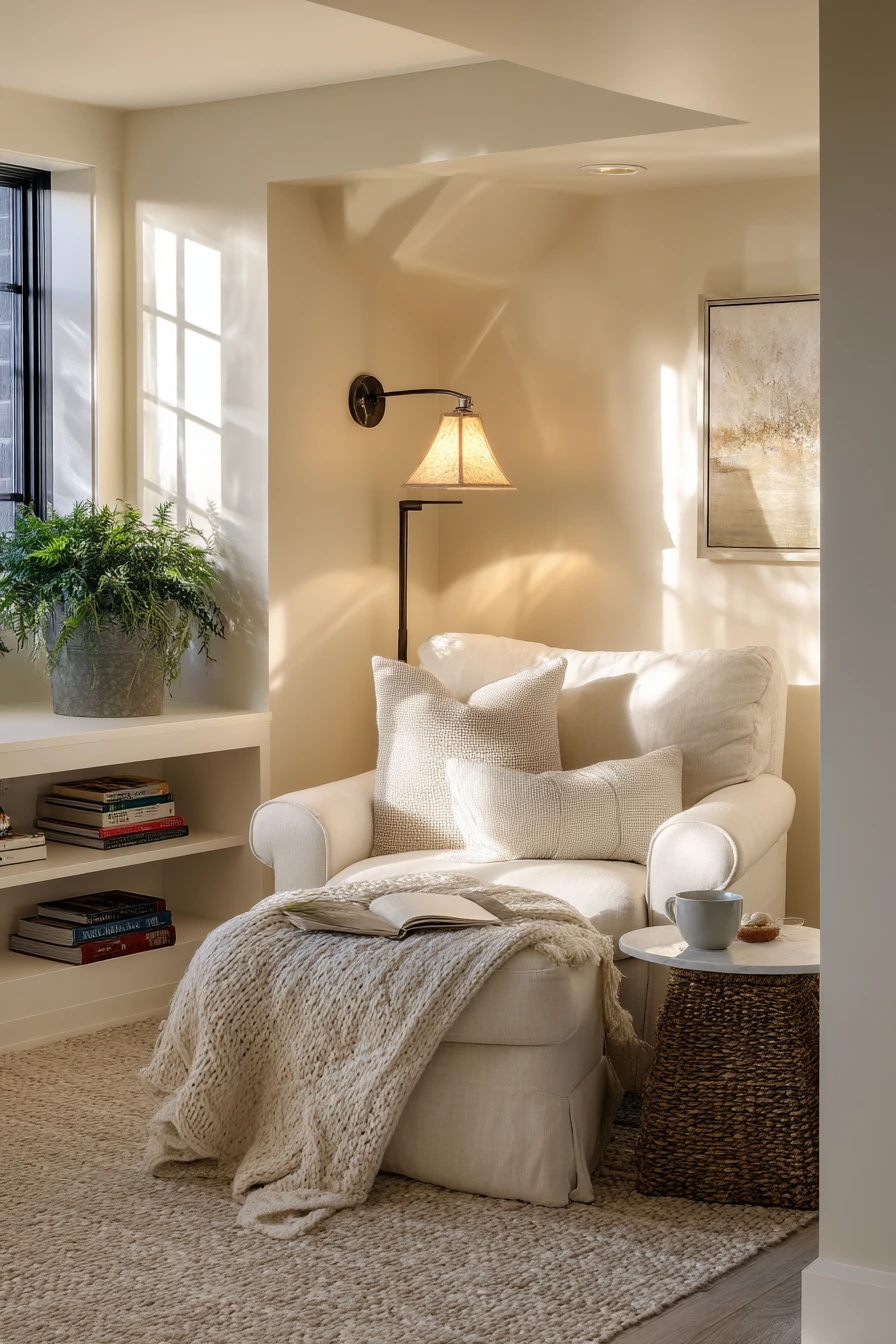
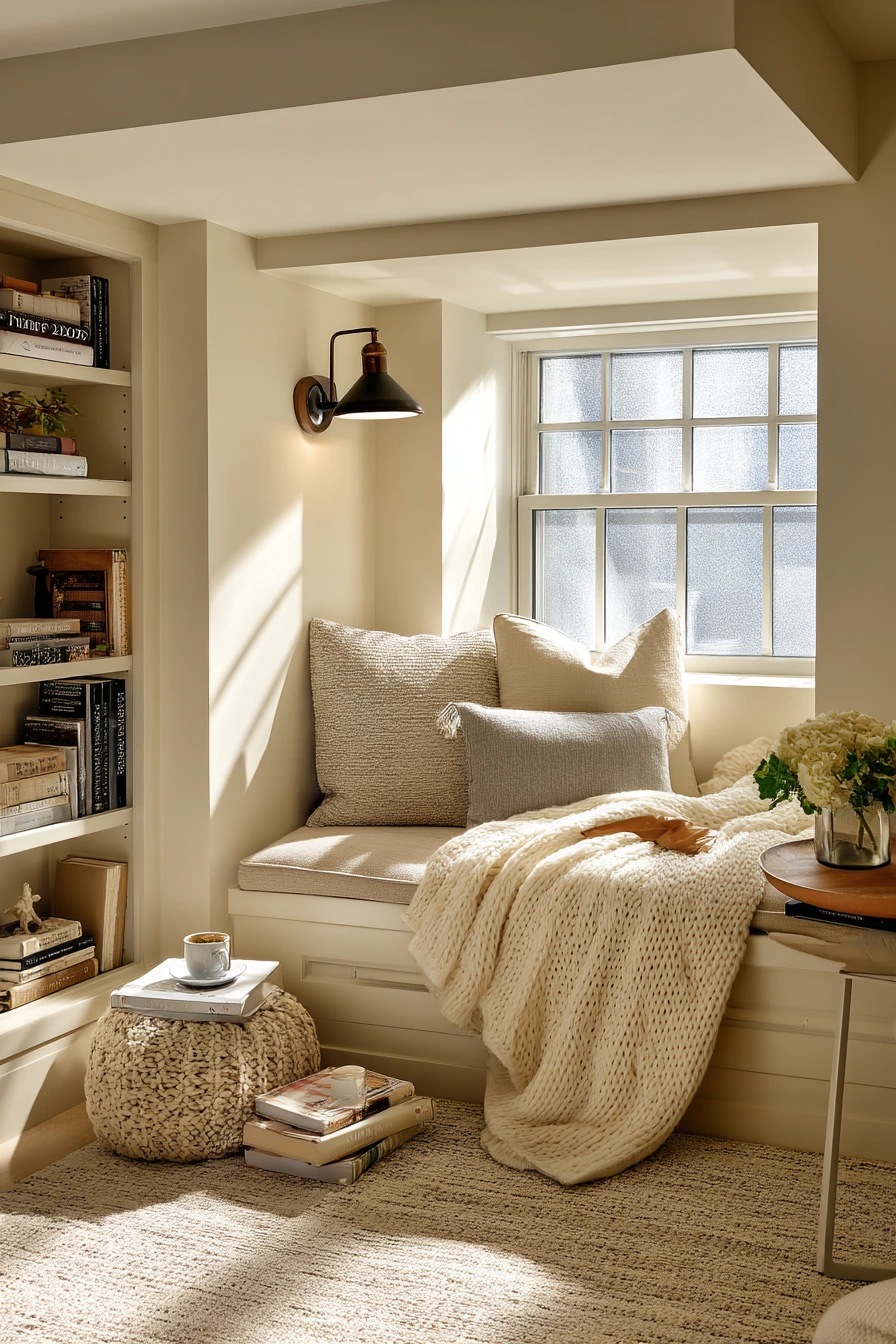
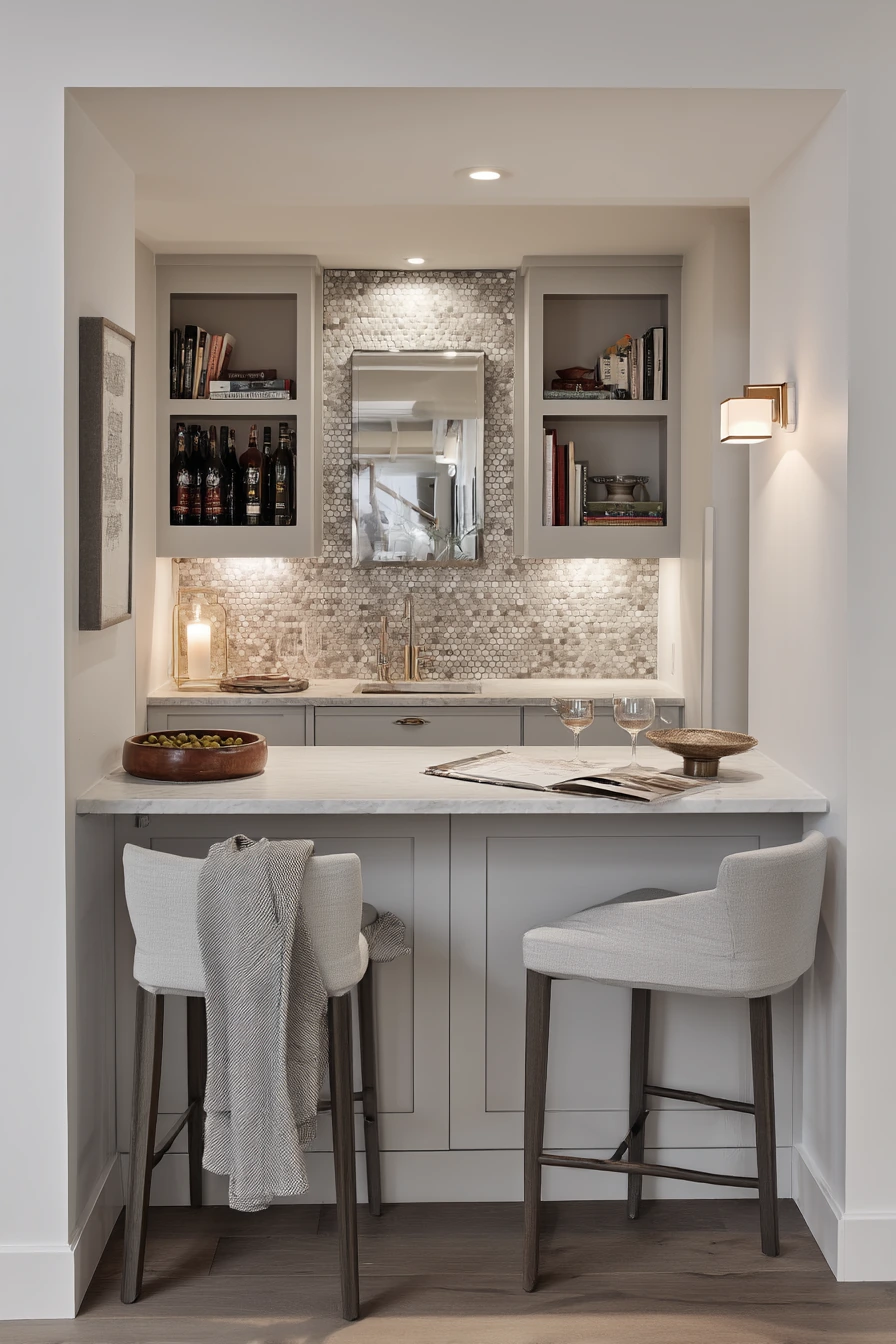
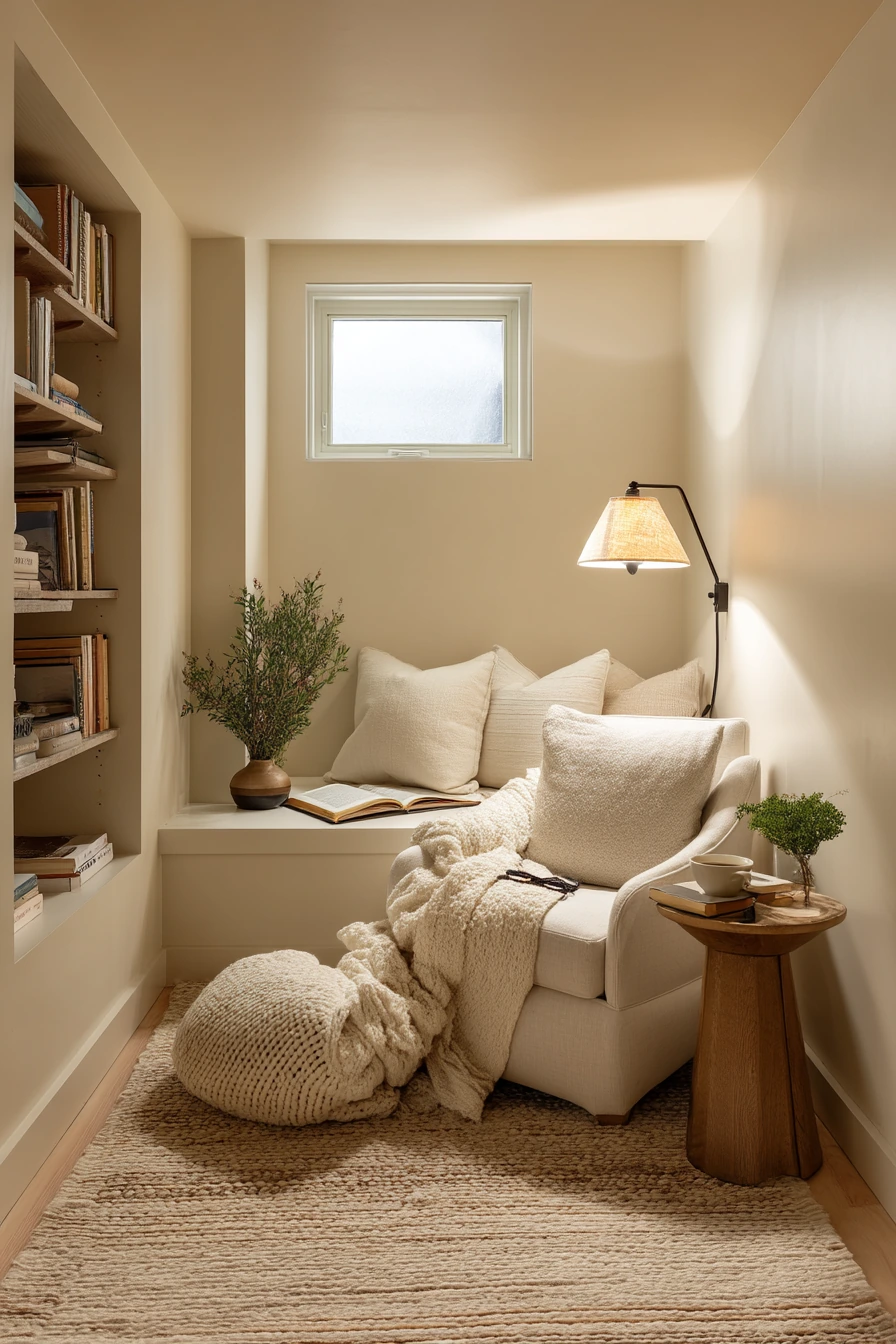
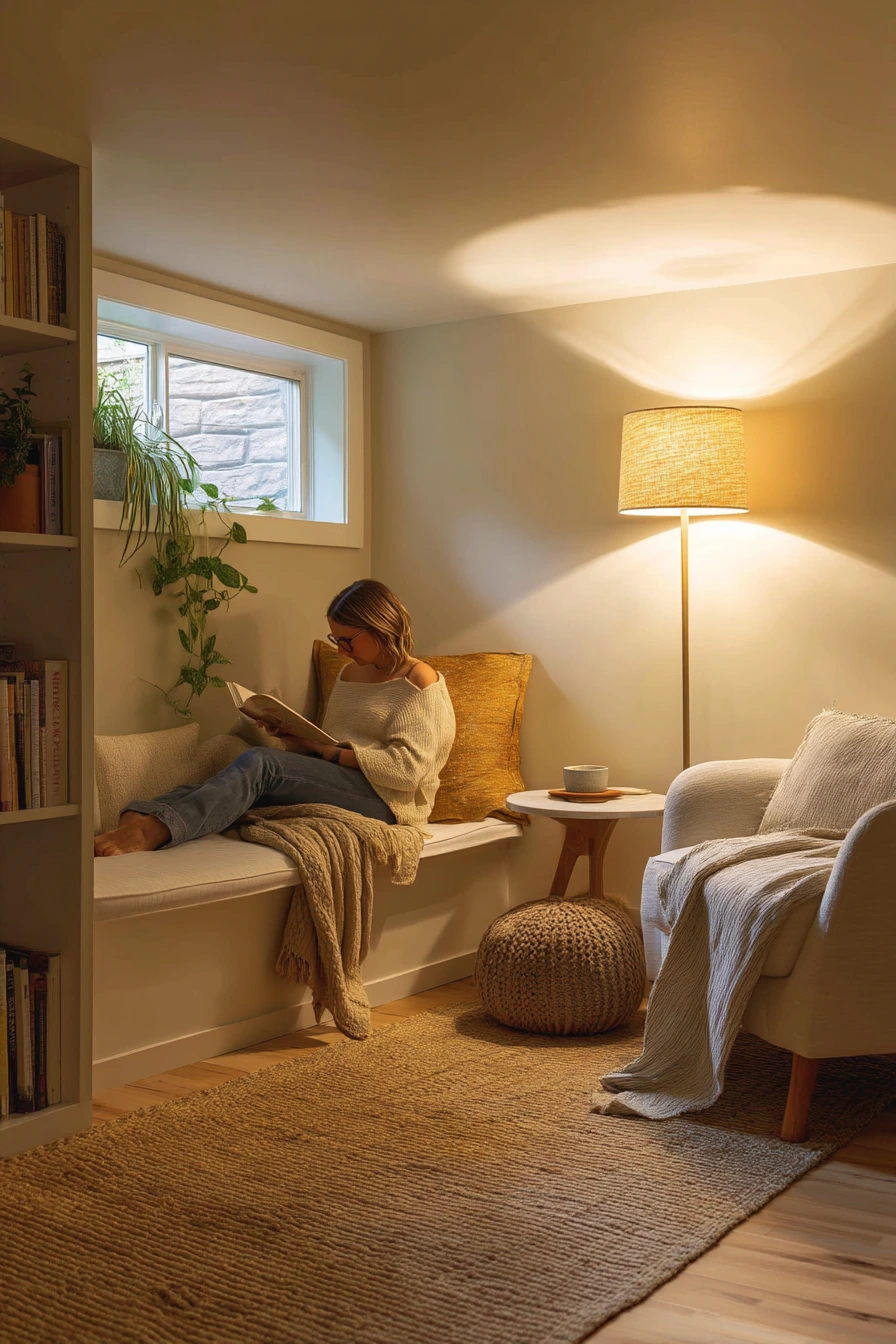
A quiet reading room is a great match for a low ceiling basement because it can feel snug in a good way. Creamy walls keep the space light, and a textured rug adds warmth underfoot. Built in bench seating saves space and creates a clear path through the room. Add one oversized armchair angled toward the light so the reading spot feels special.
Use layered lighting to avoid harsh shadows. A floor lamp with a warm bulb gives the chair a soft pool of light. If you have a high basement window, let it stay simple with a shade that filters light. Stack books on the bench or in a low shelf so you do not add tall storage. Keep surfaces calm with one tea cup on a side table and a bookmark peeking out of the book.
Style it to look lived in but not cluttered. Keep reading glasses on the bench in a small tray. Use a knit throw slightly rumpled on the chair for comfort. If you get plant shadows across the wall, place a small plant near the window to add gentle movement. Avoid tall art near the ceiling. Choose one or two pieces at eye level to keep the room grounded.
- Use creamy wall paint to keep the basement reading room bright.
- Add built in bench seating to save floor space.
- Place an oversized chair at an angle to open up the corner.
- Layer a floor lamp with window light for soft reading light.
- Keep book storage low to reduce focus on the ceiling height.
Pro Design Tip: Anchor the reading corner with a rug that extends under the chair and side table, which makes the space feel planned and less like leftover basement space.
Budget Considerations: Build a simple bench with plywood and foam cushions, or use a storage bench, then add a thrifted floor lamp and a new shade.
Low basement ceilings do not have to stop you from creating a room your family enjoys. Light paint, flush mount lighting, and low profile furniture can make a big difference without raising the ceiling.
Pick one purpose for your basement area first, then add smart storage like shallow shelves, bins, and low cabinets. Finish with a few comfort items like rugs, throws, and warm bulbs.
FAQ
What color paint makes a low basement ceiling feel higher? Soft white or very light warm gray in a flat finish helps reduce shadows and makes the ceiling blend in.
Are flush mount lights best for low ceilings? Yes, flush or semi flush fixtures keep headroom clear and spread light better than hanging pendants in short spaces.
How do I hide basement ducts and bulkheads? Paint them the same color as the ceiling, use matte paint, and keep decor and lighting lower so your eye stays down.
What furniture works best in a low ceiling basement? Low profile sofas, platform beds, backless stools, and chairs with visible legs usually feel lighter and less bulky.
How can I make a basement feel brighter with little daylight? Add layered lighting, use mirrors to bounce stairwell or window light, and keep walls and rugs in lighter tones.
What is a renter friendly way to upgrade a basement? Use removable peel and stick trim, plug in lighting, freestanding storage, and framed prints hung with damage free hooks.
How do I keep a basement playroom from looking messy? Use low bins and baskets, rotate toys, and keep one clear surface like a small table or bench for daily reset.