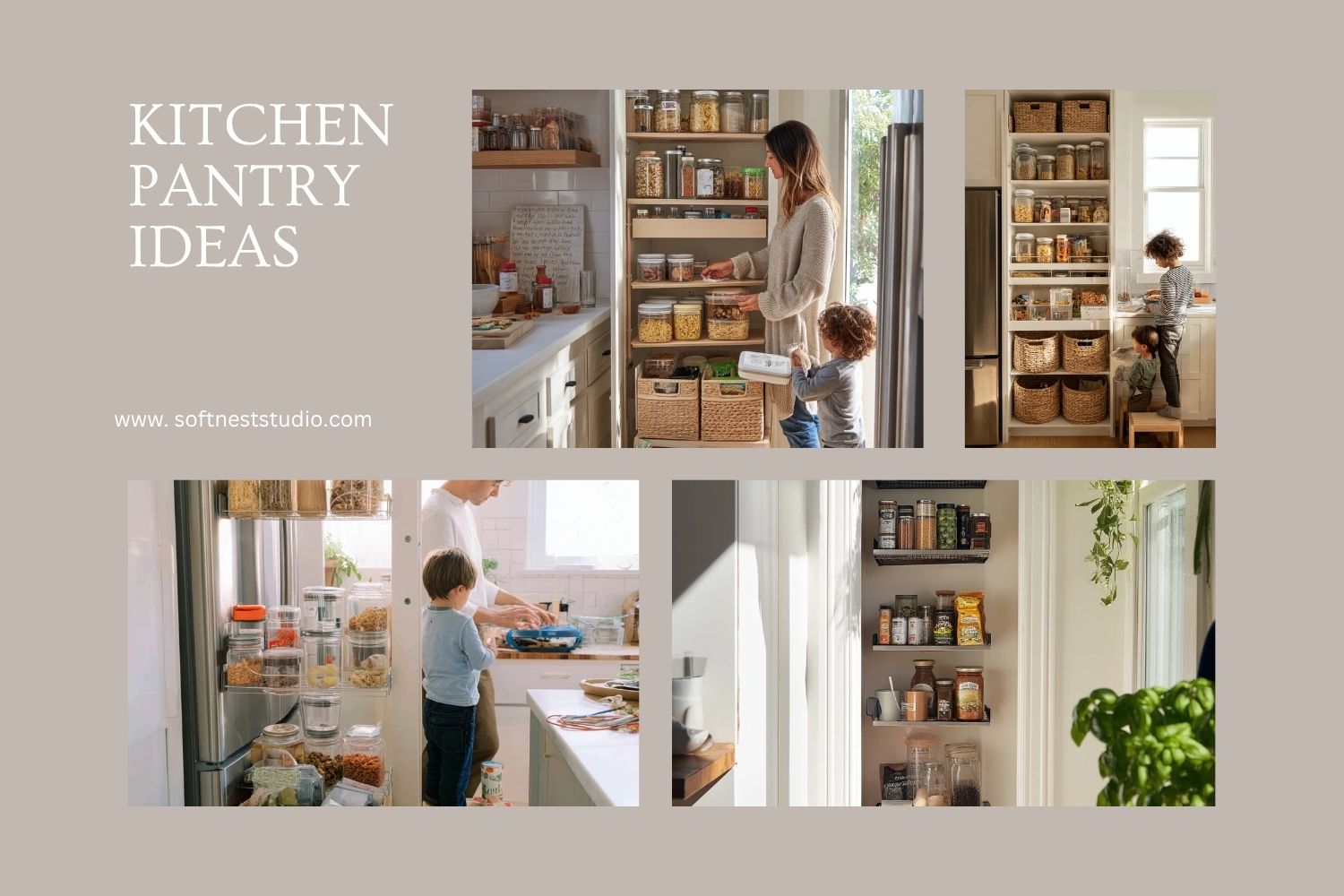
Good kitchen pantry ideas make cooking faster, grocery trips easier, and counters less messy. A pantry is not just extra shelves. It is a system for snacks, dry goods, spices, and small appliances.
This guide walks through 10 pantry styles inspired by real homes, from a full-height pull-out pantry by the fridge to a cozy corner pantry in a cottage kitchen. You will get layout notes, storage picks, and simple styling details that look great in photos and work in daily life.
Each section includes easy steps you can copy, plus a Pro Design Tip and a Budget Consideration. Use one idea or mix a few so your pantry fits your space, your family, and how you cook.
Keep it simple: clear containers for staples, labeled jars, and baskets for categories. When everything has a “home,” it stays organized even on busy mornings.
1. Full-Height Pull-Out Pantry for Busy Family Kitchens

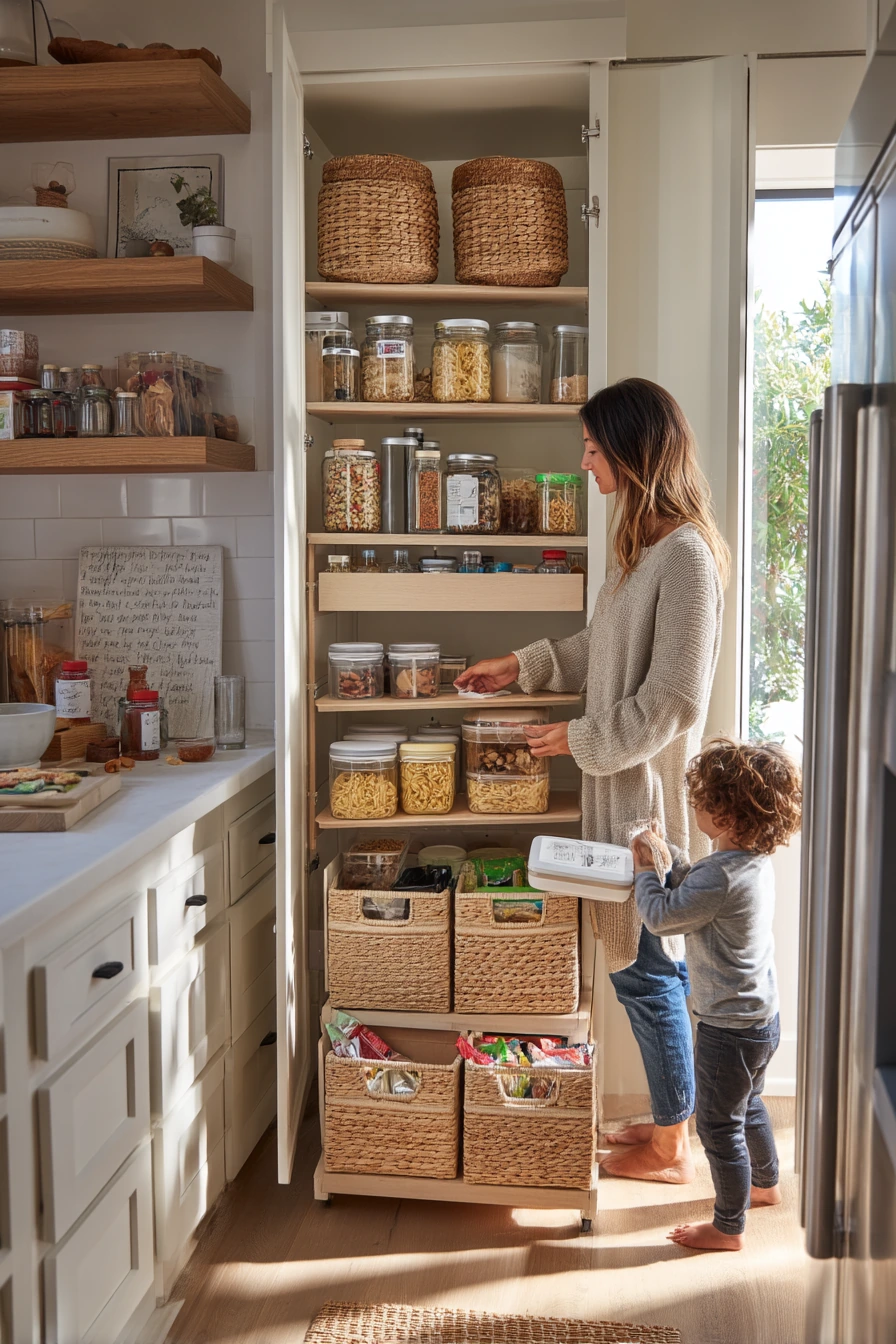
A full-height pull-out pantry beside the fridge is one of the best kitchen pantry ideas for a busy suburban family. It uses a thin slice of space and brings everything forward, so you are not digging behind boxes. With labeled glass jars for pasta and rice, woven baskets for snacks, and stackable bins for breakfast items, this setup supports fast meals and quick lunch packing.
To make it feel like a real working pantry, build in a snack drawer for kids and keep a small step stool tucked low. Put the most-used items at eye level, like cereal, pasta, and nut butter. Place backup items higher, and heavy items like canned goods lower. If you often have a lunchbox waiting on the counter, make a “school zone” bin with bag clips, napkins, and granola bars.
How to style it: keep jar labels uniform, but add warmth with a few woven baskets. Leave one small open space so it never looks jammed. Morning light makes glass jars sparkle, so if this pantry sits near a window, choose clear containers that look tidy even when half full.
- Create zones: breakfast, lunch, dinner, baking, snacks.
- Use glass jars for dry goods and match lid colors for a clean look.
- Add stackable bins for chips and crackers to stop bag clutter.
- Keep a “use first” bin for open packages and near-expiry items.
- Store a step stool low so kids can reach safely.
Pro Design Tip: Put a narrow tray in the pull-out for oils and sauces so bottles do not tip when the unit slides.
Budget Considerations: If a custom pull-out is pricey, add pull-out wire drawers inside an existing tall cabinet and upgrade later with nicer fronts.
2. Small-Space Pantry Ideas for a Narrow Apartment Nook
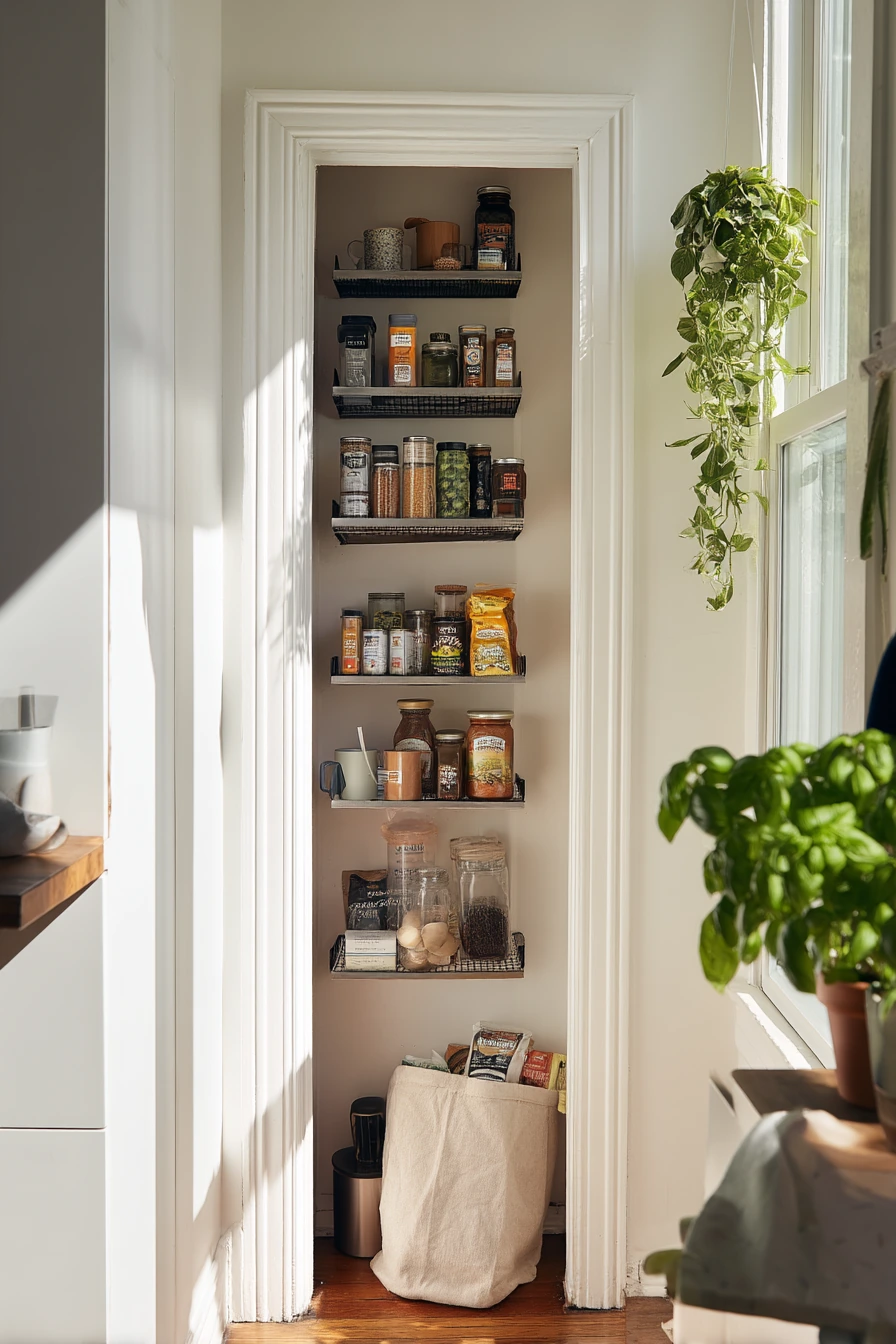
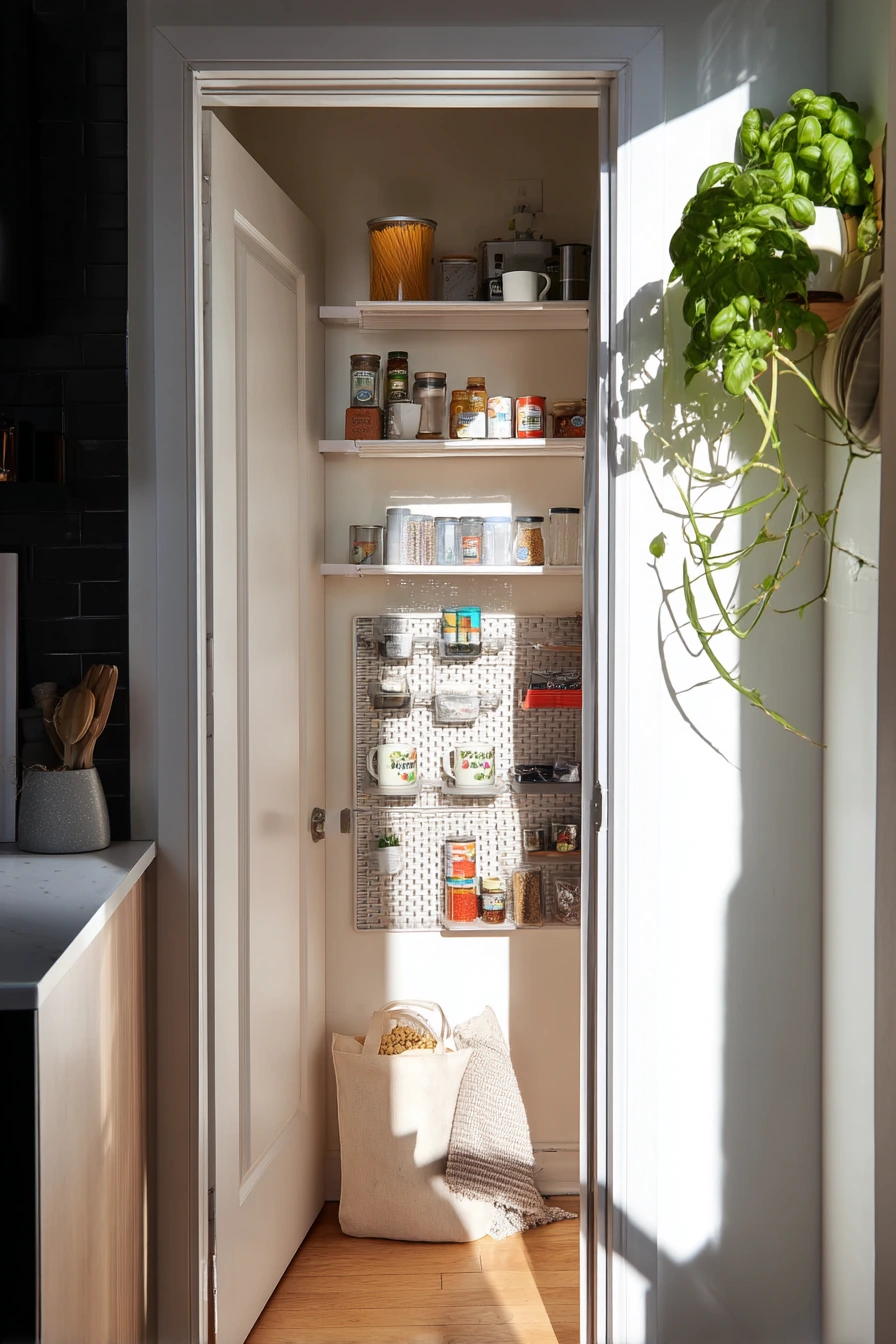
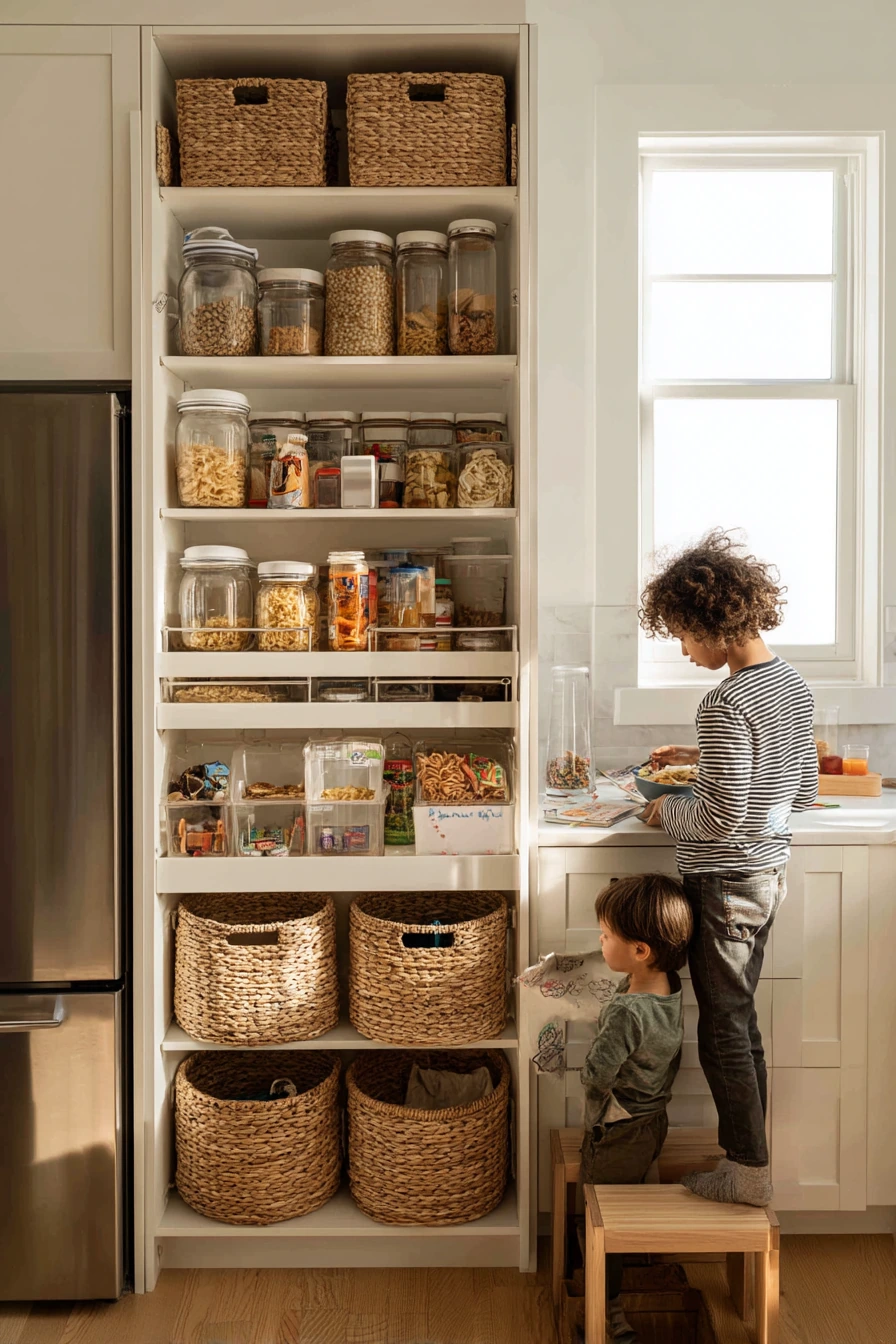
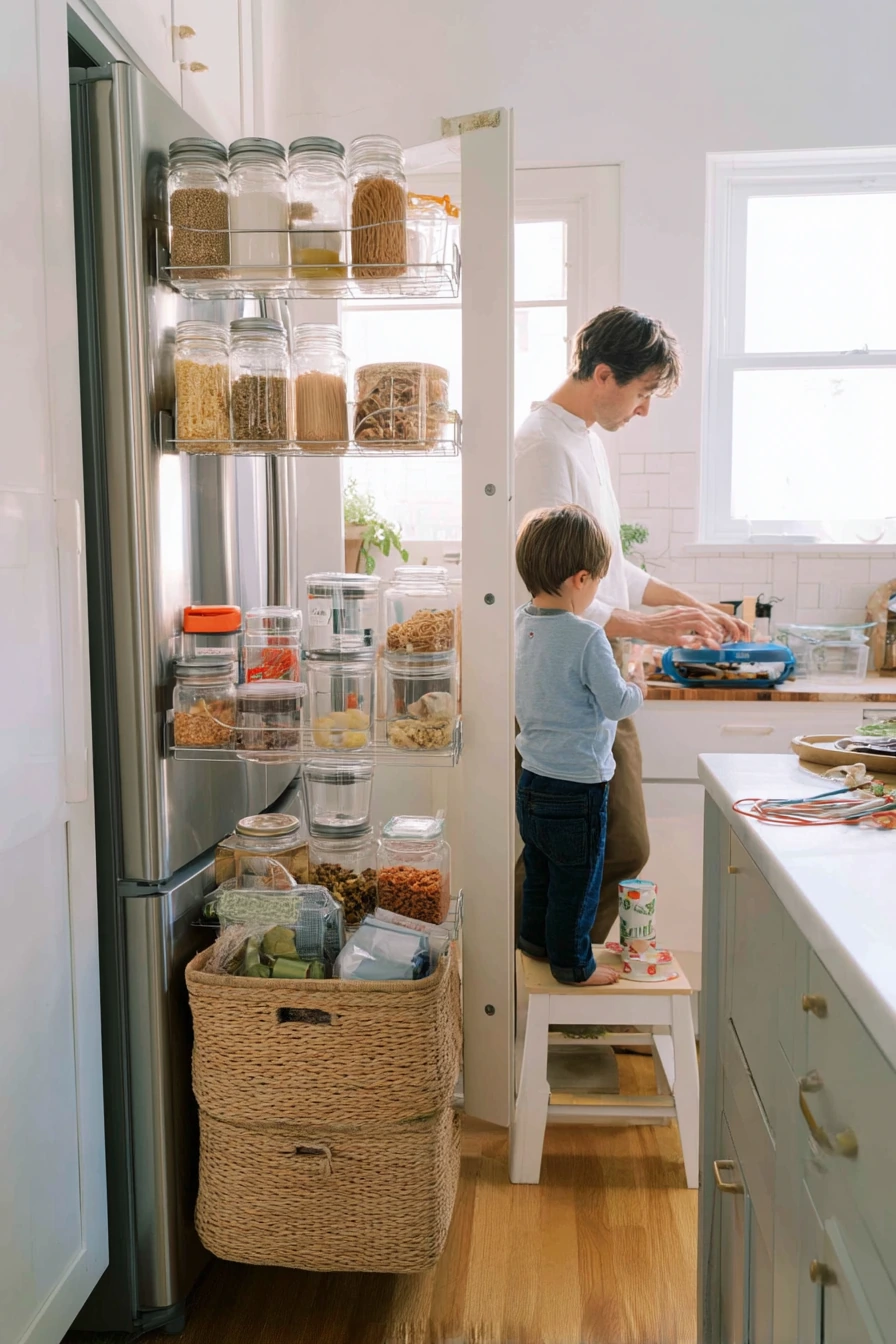
Small-space pantry ideas work best when every inch has a job. A shallow built-in nook with open shelves can hold a lot if you keep packaging tight and use clear containers. Add slim spice racks on the side walls, and use over-the-door storage for canned goods, sauces, and packets. This creates a pantry wall without taking over the kitchen.
For a renter-friendly setup, avoid heavy drilling. Use removable hooks, tension rods, and shelf risers. Place a tote bag of groceries on the floor while you unpack, then refill containers right away so clutter does not spread. A basil plant on the shelf adds life and helps the space feel intentional, not just storage. Keep one mug or small bowl in the nook to make it look like part of the kitchen decor.
How to style it: choose two container shapes, like tall canisters for pasta and short ones for snacks. Use matching labels and keep colors calm. Fold a tea towel and set it in a basket with clips and rubber bands. The goal is a compact pantry that stays airy in warm afternoon light.
- Use shallow bins so items do not disappear in back.
- Add shelf risers to double space for cans and jars.
- Hang a slim spice rack or magnetic strip for small jars.
- Use over-the-door pockets for canned goods and packets.
- Keep a small “restock” list on a clip inside the nook.
Pro Design Tip: Measure your deepest shelf and buy containers that are 1 inch less, so everything slides in smoothly and labels stay visible.
Budget Considerations: Clear containers can add up; start with the staples you buy most, then reuse jars from sauces and pickles for the rest.
3. Elegant Butler’s Pantry with Coffee Station and Walnut Cabinets
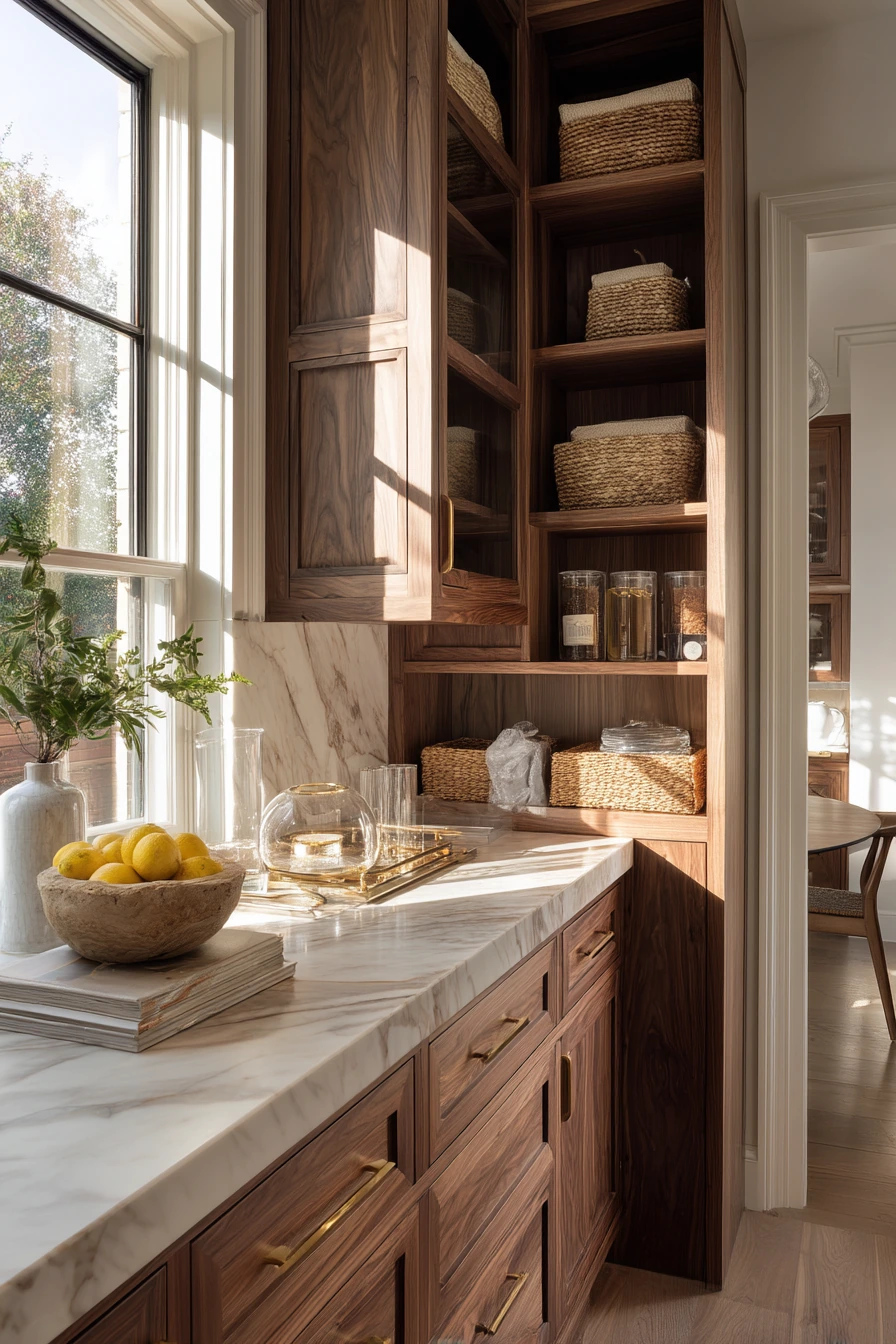
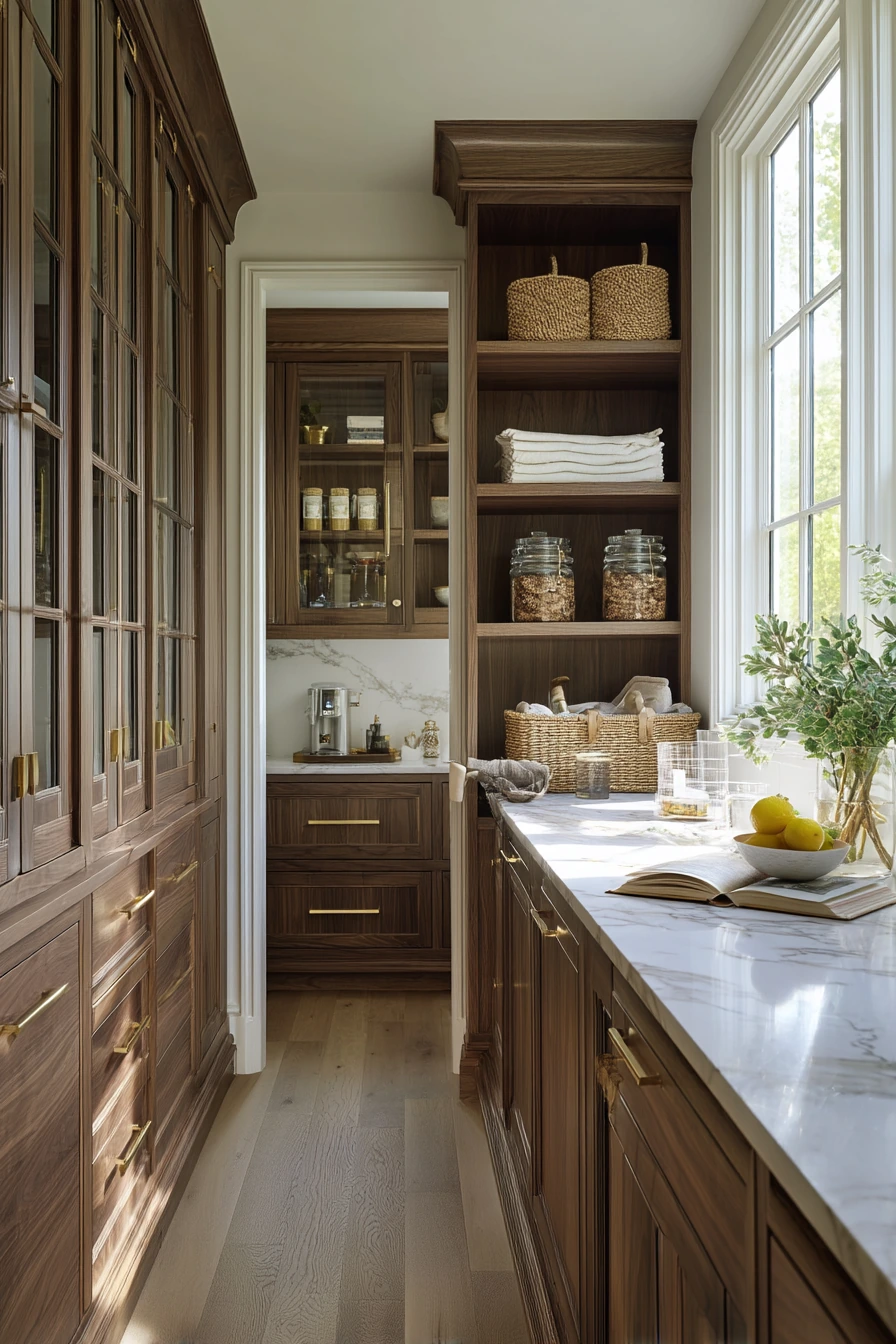
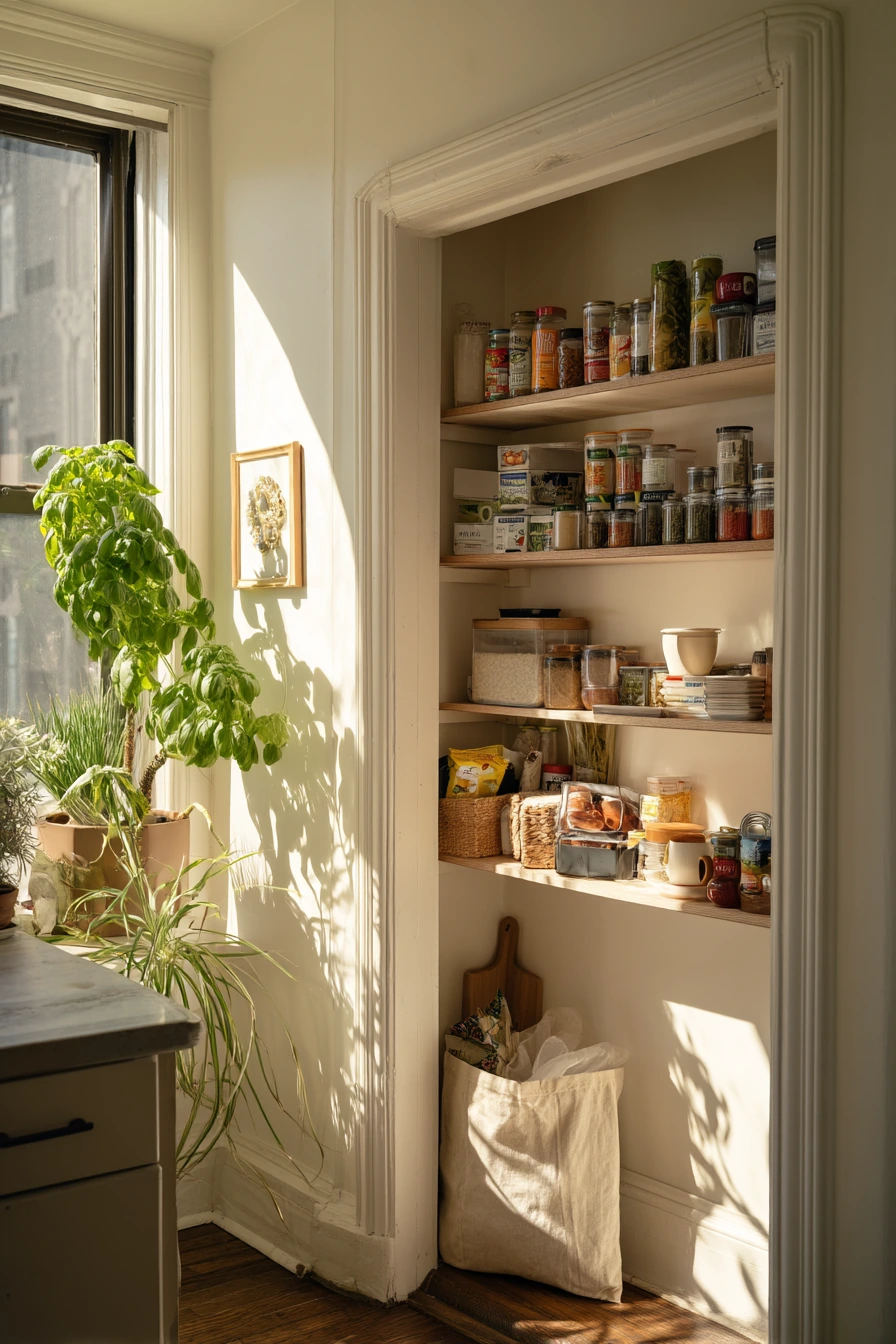
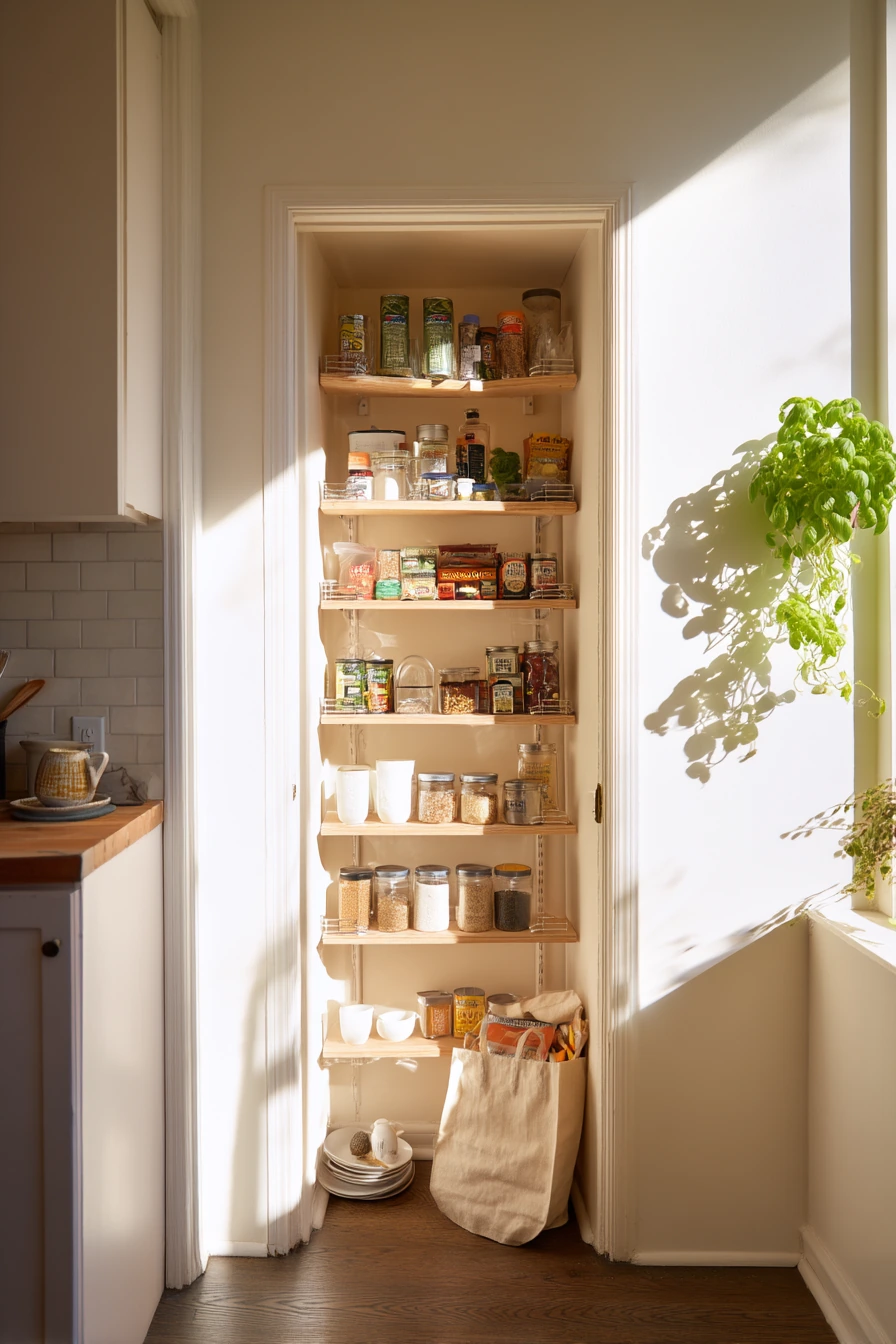
An elegant but lived-in butler’s pantry connects the kitchen and dining room and makes hosting easier. Walnut cabinetry with brass pulls looks rich, while marble counters add a clean work surface for plating and drink prep. Use decanted dry goods in glass canisters and linen-lined baskets for items you want to hide, like tea bags, napkins, and snack bars.
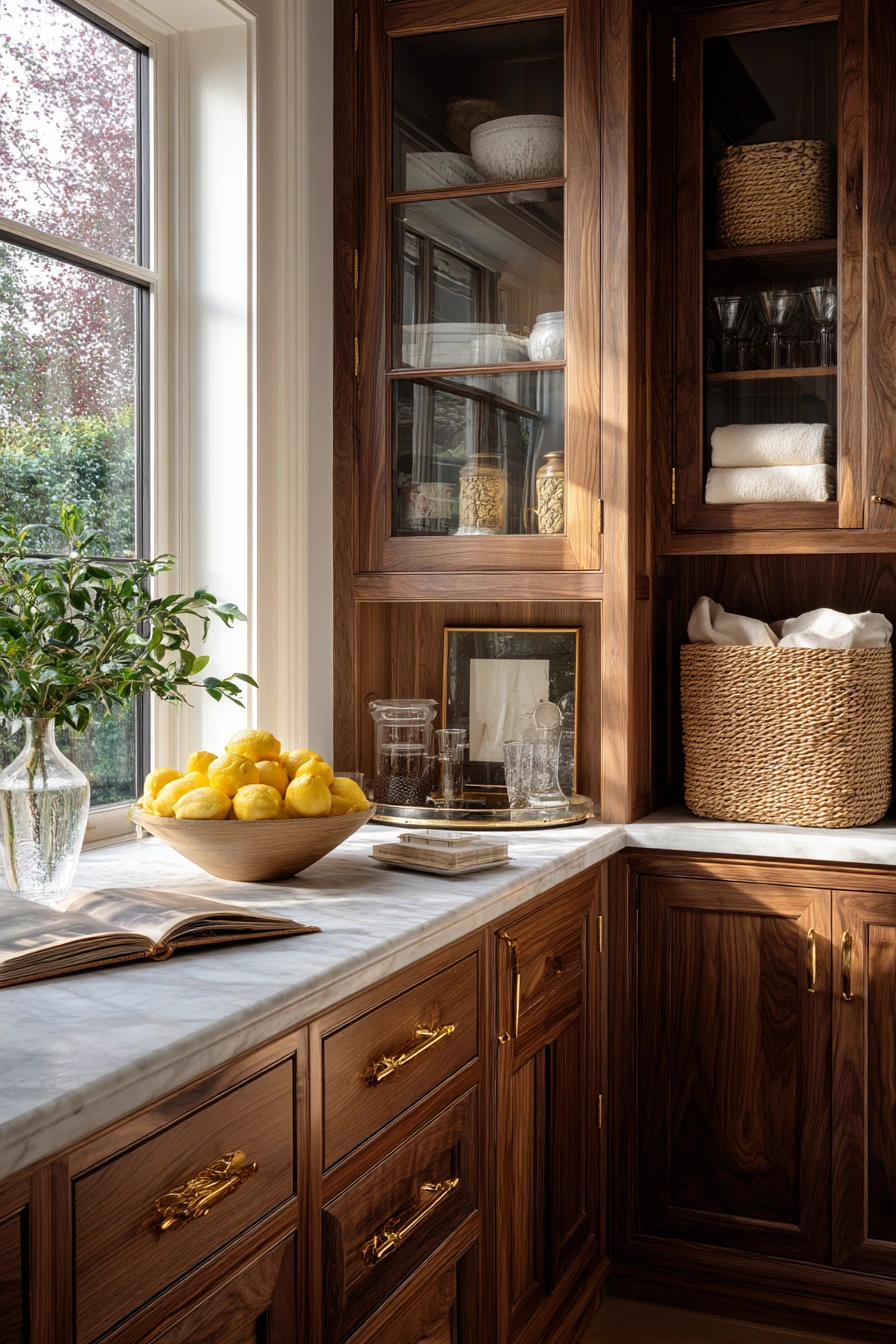
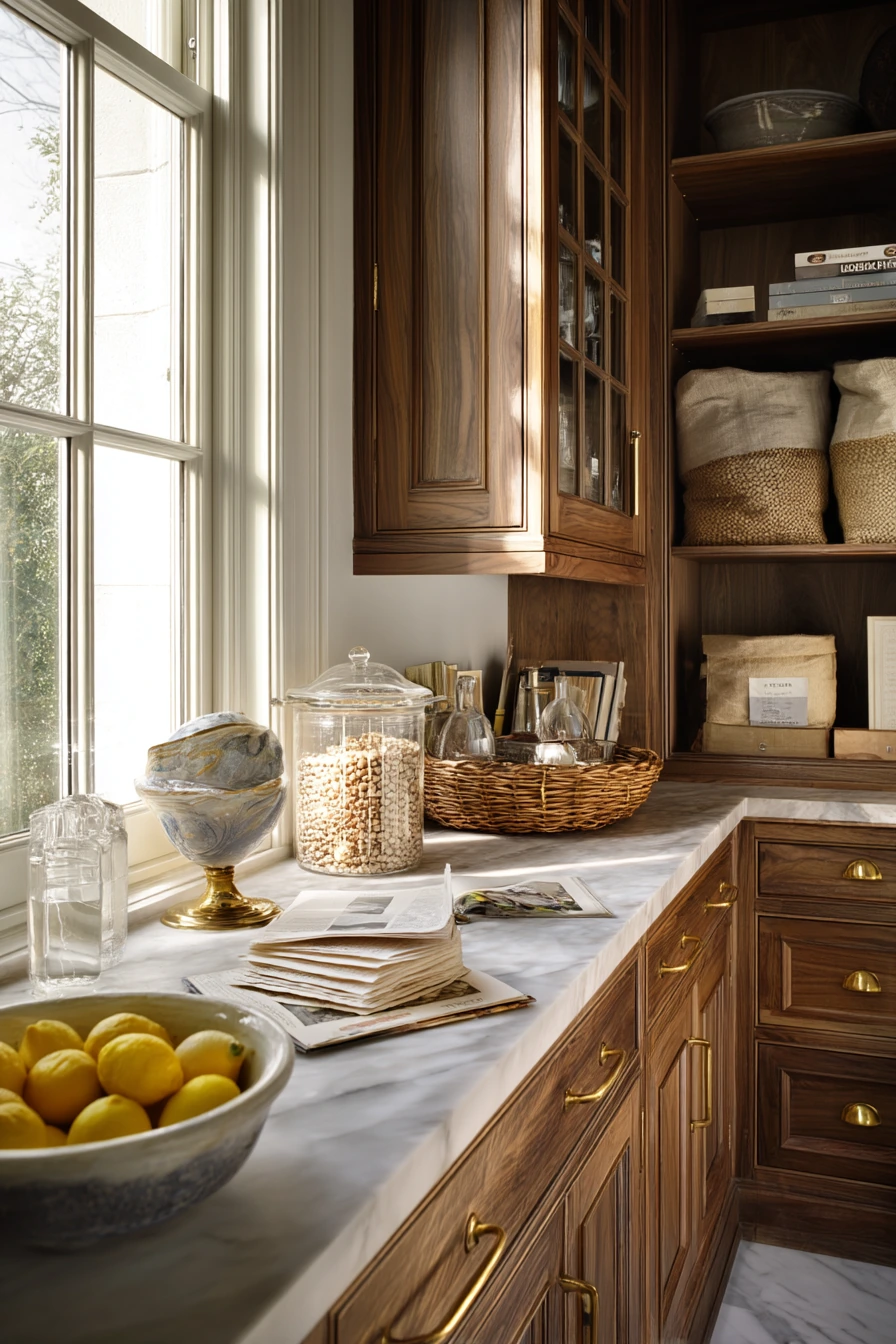
To keep it polished but human, plan for the things that land here every day. A ceramic bowl of lemons, an open cookbook, and a stemmed water glass make the space feel used. Add a small tray for mail so it does not spread across the counter. A hidden coffee station behind a cabinet door keeps the view calm while still being fast in the morning.
How to style it: mix clear jars with a few darker containers so the shelves do not look too “see-through.” Keep counter styling simple: one cookbook stand, one fruit bowl, one catch-all tray. Late-day window light will highlight the walnut grain, so avoid too many shiny items that reflect and feel busy.
- Place the coffee station near an outlet with room for mugs and pods.
- Use matching canisters for flour, sugar, and pasta for a clean line.
- Add linen-lined baskets for small, messy items you still need daily.
- Keep a serving tray and extra glasses on one shelf for hosting.
- Use a mail sorter or tray to control paper piles.
Pro Design Tip: Install under-cabinet lighting on a dimmer so the marble counter stays useful and the pantry feels warm at night.
Budget Considerations: If walnut and marble are out of reach, use stained cabinets or walnut-look veneer and a quartz or laminate counter in a similar tone.
4. Budget Renter-Friendly Pantry with Freestanding Shelving
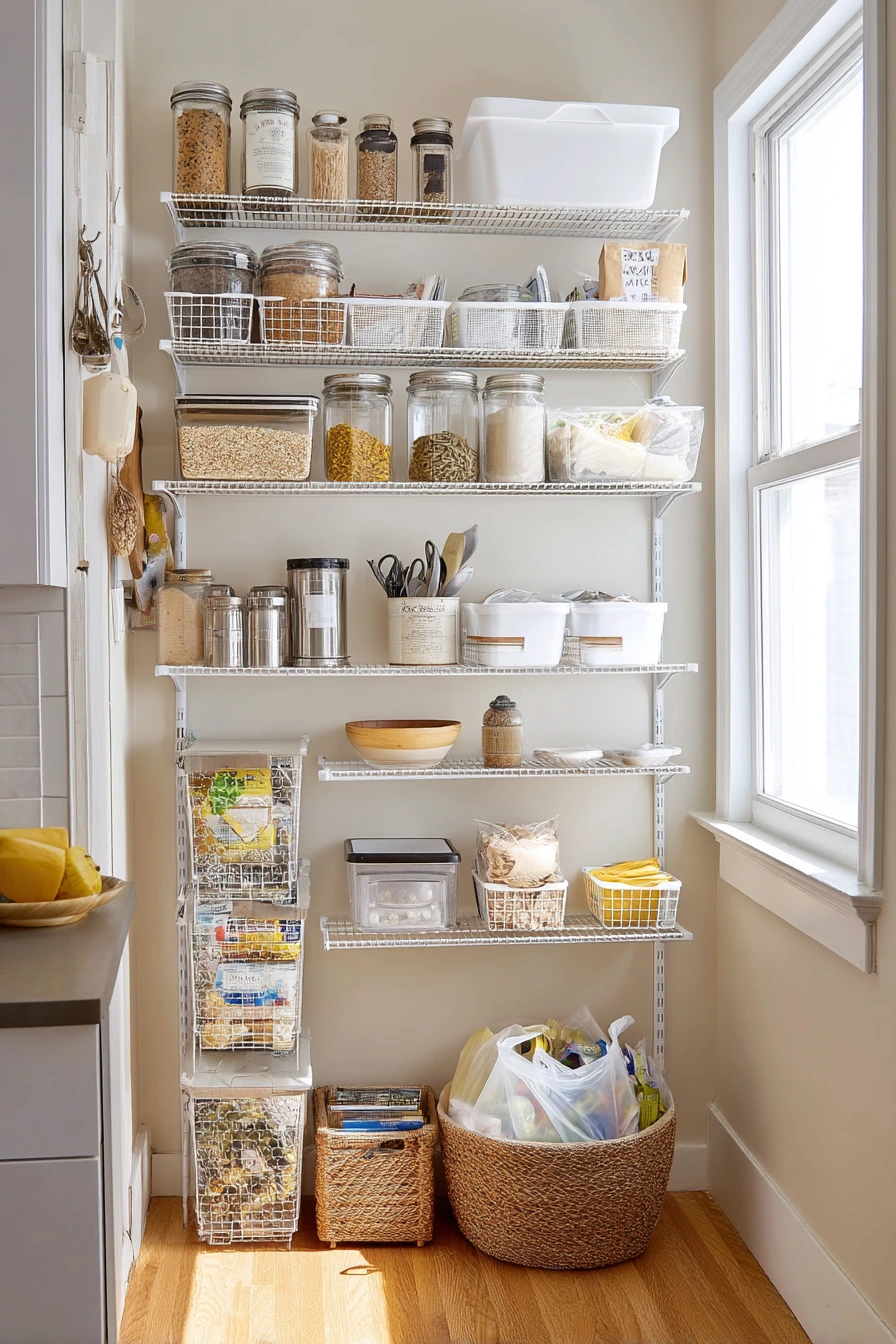

A budget renter-friendly pantry can still look coordinated and stay functional. Freestanding shelving against a plain kitchen wall is flexible, easy to move, and perfect for small kitchens without built-ins. Use labeled mason jars for grains, wire baskets for onions and potatoes, and coordinated bins for snacks and baking. A tension-rod spice strip adds storage without permanent hardware.
Make the system work for real life. When grocery bags are half unpacked and a paper receipt is on the counter, the pantry should help you reset fast. Place a “drop zone” basket for keys and small items. Keep cleaning supplies in one lower bin so you can wipe shelves quickly. If the sink is nearby, set one basket aside for dish towels and sponges so they are not floating around the counter.
How to style it: choose one bin color and one label style, then repeat. Keep the front edges lined up, and store bright packaging inside bins so the shelf looks calmer. Add one small plant or a simple tray, but keep most surfaces open so it stays practical.
- Anchor heavy items on the bottom shelf for safety.
- Use mason jars for rice, beans, pasta, and oats to cut visual clutter.
- Add wire baskets for produce that needs air flow.
- Use a tension rod with hooks for spice jars or small tools.
- Keep a “backstock” bin for extra paper towels and pantry refills.
Pro Design Tip: Choose shelves with adjustable heights so tall cereal containers and small jars both fit without wasted space.
Budget Considerations: Thrift stores often have matching jars and baskets; spray paint mismatched wire baskets the same color for a more custom look.

5. Discreet Pantry Behind Double Doors with Snack and Baking Zones


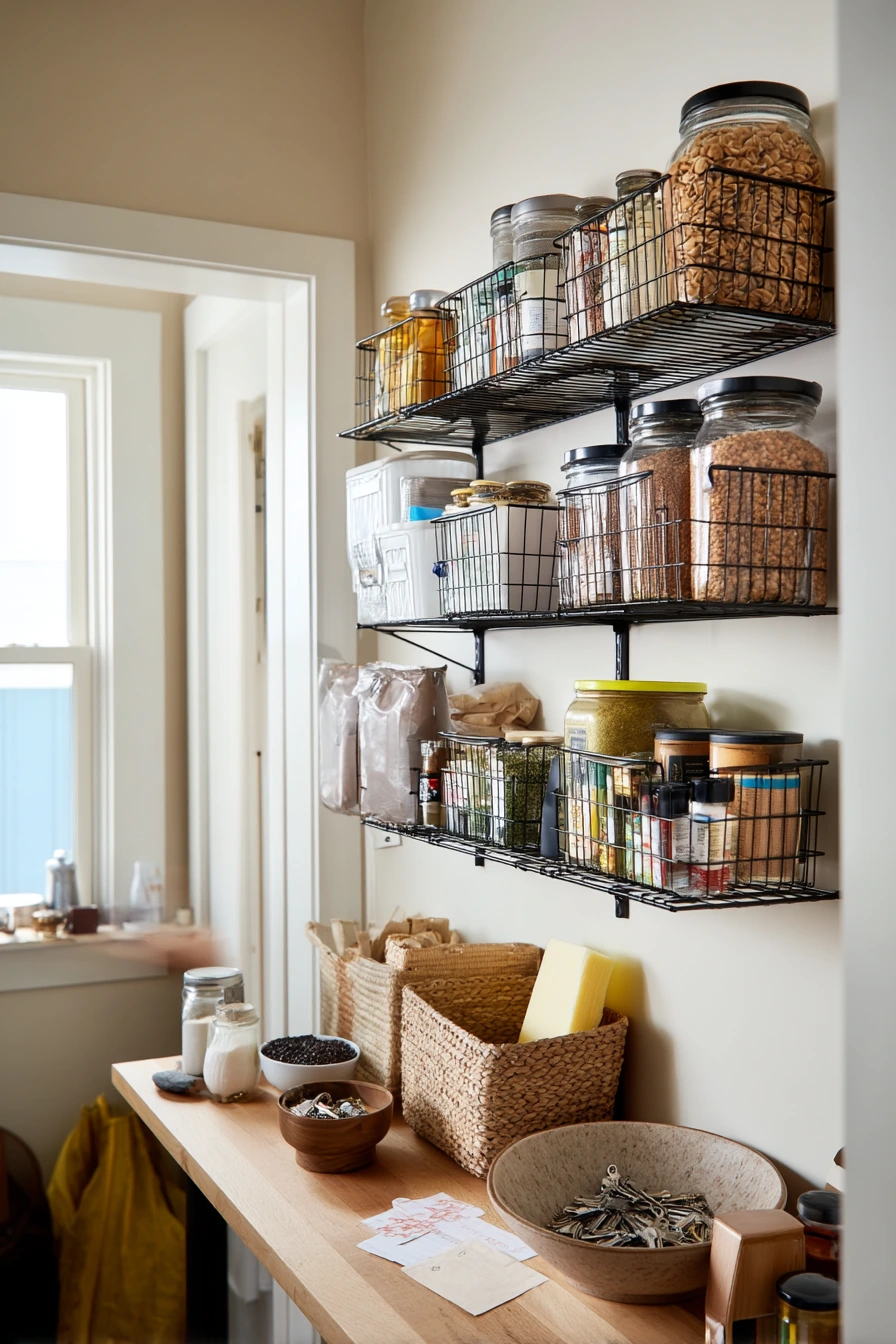
A discreet kitchen pantry with paneled double doors is ideal if you want storage to disappear. Inside, deep shelves can hold snack zones, baking supplies, and an appliance garage for bulky items like a blender or toaster. Add a handwritten list clipped inside the door so you can track what you are low on without opening every container.
Design it for real baking and real kids. Keep flour and sugar in easy-grab bins, and store mixing bowls close to the counter. If flour dust happens often, choose wipeable shelf liners and store measuring cups in a small open bin so you can pull them out in one move. A toddler’s snack cup belongs in a low snack area, so little hands do not pull down adult items. Keep cookbooks nearby, but not in the flour zone.
How to style it: match door panels to your kitchen cabinets so the pantry blends in. Inside, use a mix of clear bins and a few baskets to soften the look. Warm under-cabinet lighting makes the shelves feel calm and helps you find what you need when the kitchen lights are low.
- Set up zones: snacks, baking, breakfast, dinner staples, appliances.
- Use deep bins to corral chips, bars, and crackers by type.
- Store baking tools in a labeled drawer or caddy for quick prep.
- Clip a running list inside the door for restocking.
- Add shelf liners to handle spills and flour dust.
Pro Design Tip: Put the appliance garage on a pull-out shelf so heavy machines slide forward instead of being lifted.
Budget Considerations: If paneled doors are expensive, use plain doors and add simple trim molding and paint to mimic a built-in look.
6. Farmhouse Pantry Ideas for Meal Prep and Bulk Staples
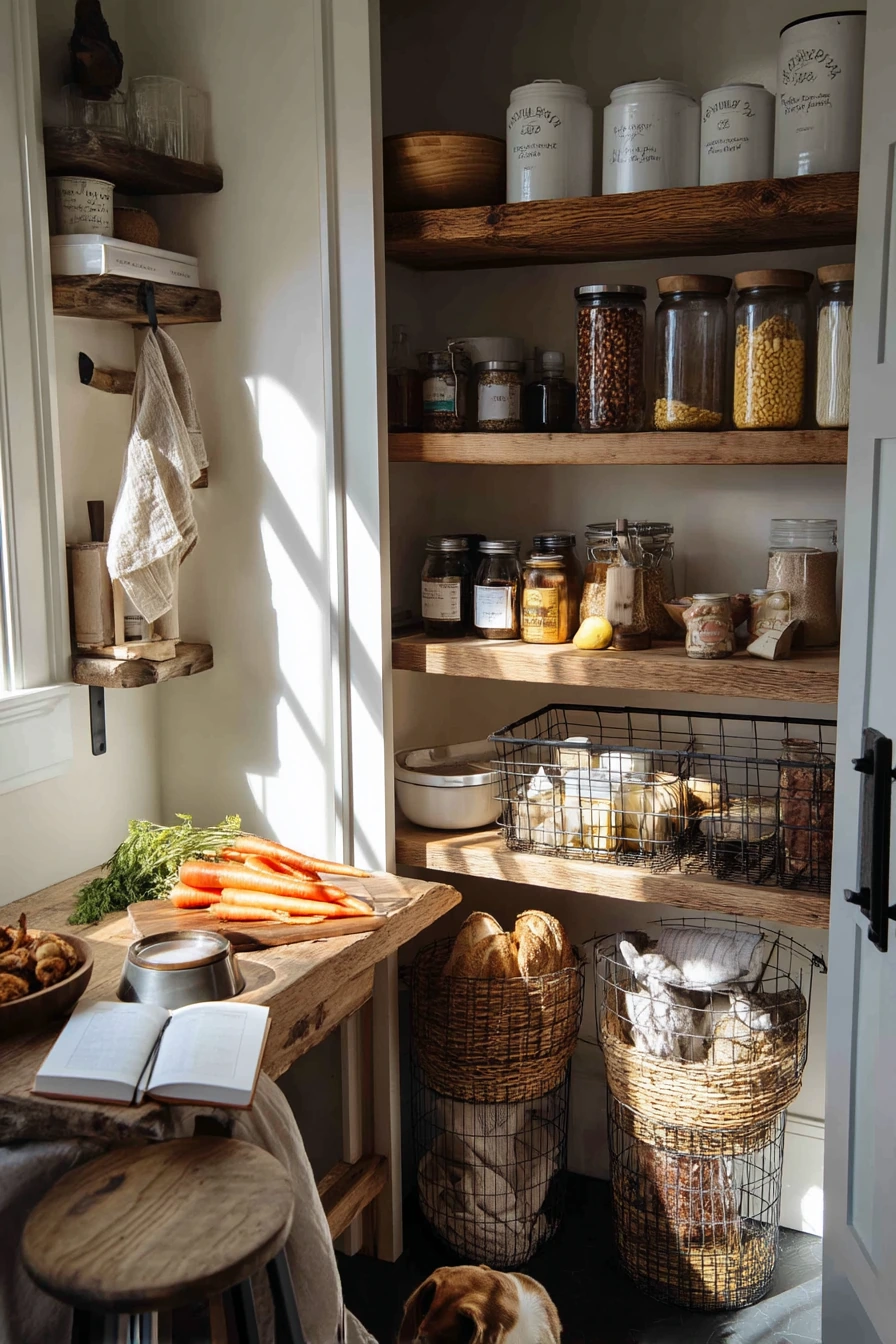
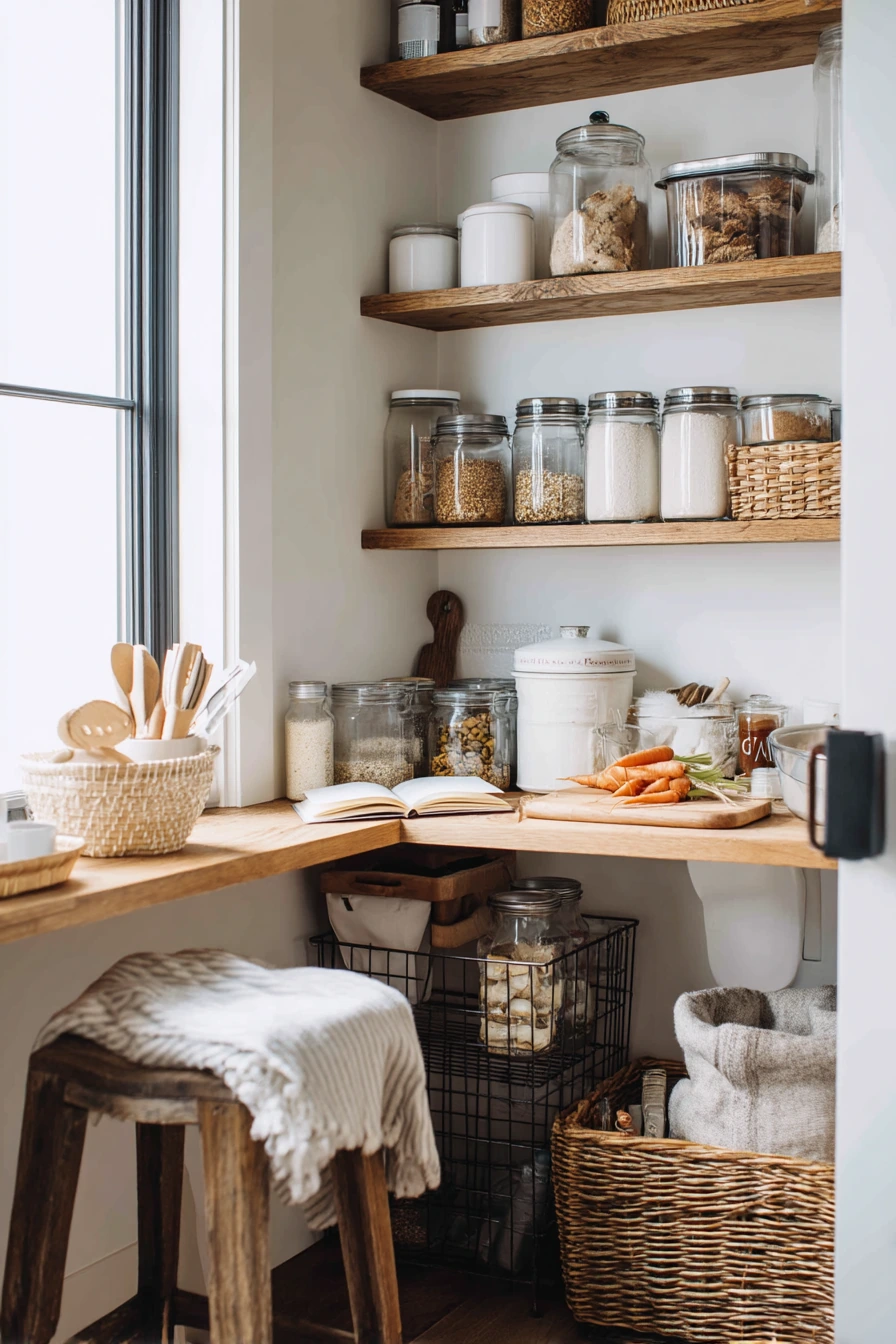
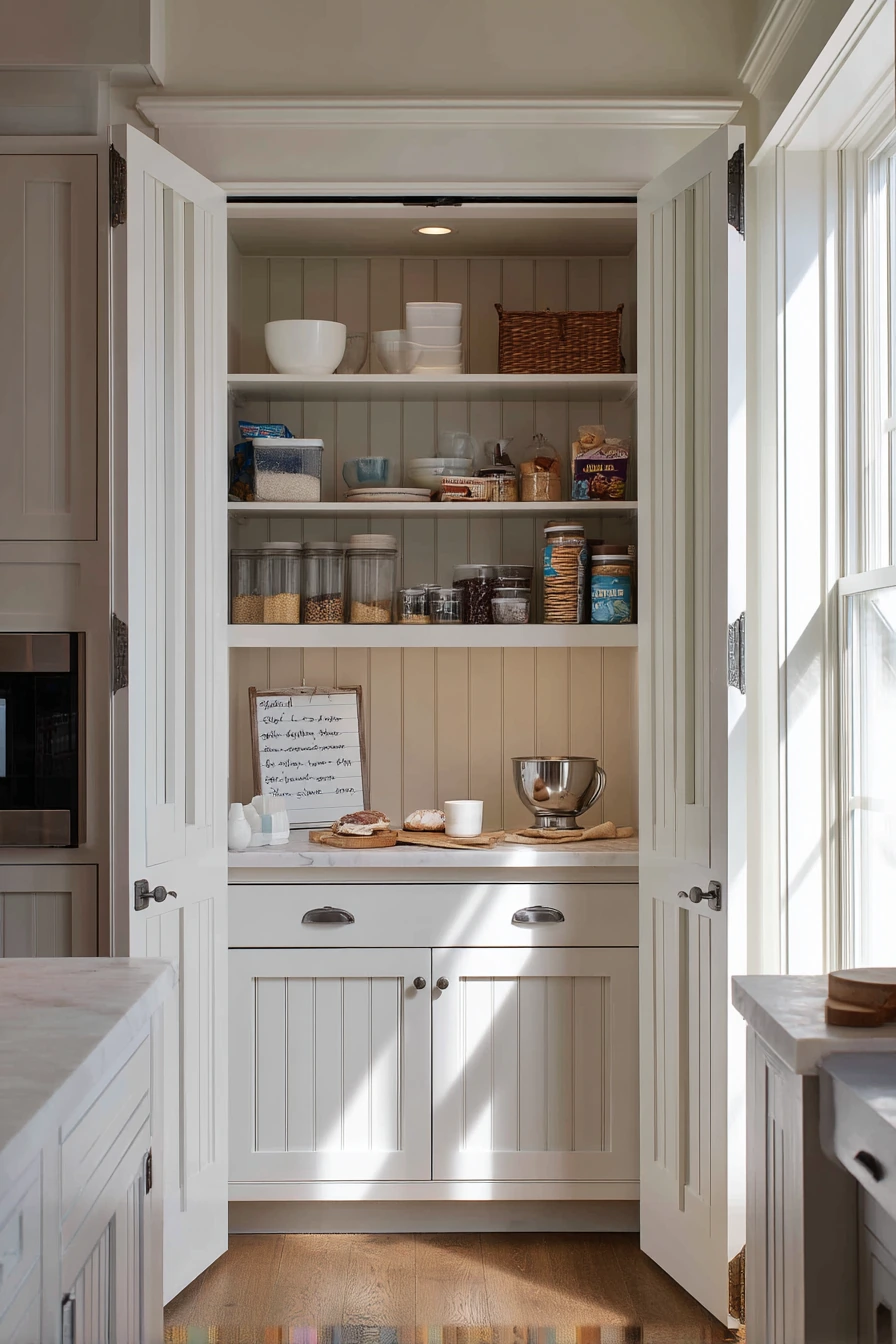
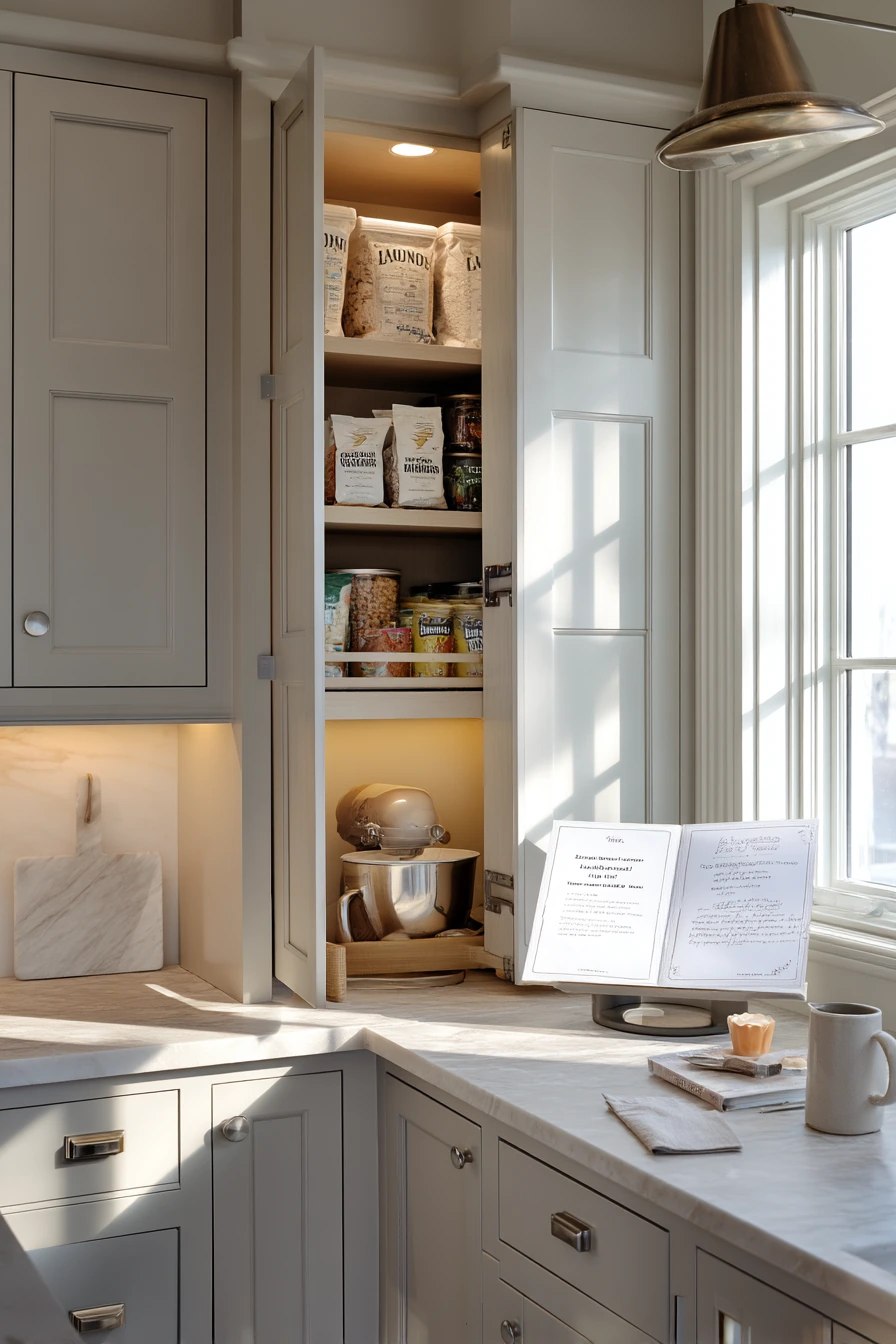
Functional farmhouse pantry ideas are great for a meal-prep household because they keep ingredients visible and easy to grab. Open wood shelving works well with enamel canisters, wire baskets, produce crates, and labeled jars for grains and spices. This style feels rustic and lived-in, but it can still be neat if you plan the layout.
Think like a prep cook. Put grains, beans, and canned tomatoes together for quick soups and bowls. Store spices near the front and group them by type, like baking spices, heat, and everyday blends. Use produce crates for onions, potatoes, and squash so air can circulate. Keep a stool nearby if you use higher shelves. If pets eat in the kitchen, leave a clear spot for a dog bowl near the kickboard so it does not block traffic.
How to style it: keep labels simple, like black text on white. Mix natural textures, such as wood shelves and wire baskets, to avoid a flat look. Add one folded tea towel on a hook and keep the rest in a basket so the pantry still reads as storage, not decor.
- Use open shelves for the items you reach for daily.
- Store bulk grains in labeled jars to stop bag spills.
- Add wire baskets for snacks and produce that needs air flow.
- Keep a meal-prep bin with parchment, foil, and containers.
- Create a “Sunday prep” shelf for tools you use once a week.
Pro Design Tip: Keep the heaviest bulk jars between waist and chest height to reduce strain during meal prep.
Budget Considerations: Basic pine boards and simple brackets cost less than custom cabinetry, and you can upgrade later with nicer hardware.
7. Minimal Pantry Ideas with Flat-Front Cabinets and Uniform Labels


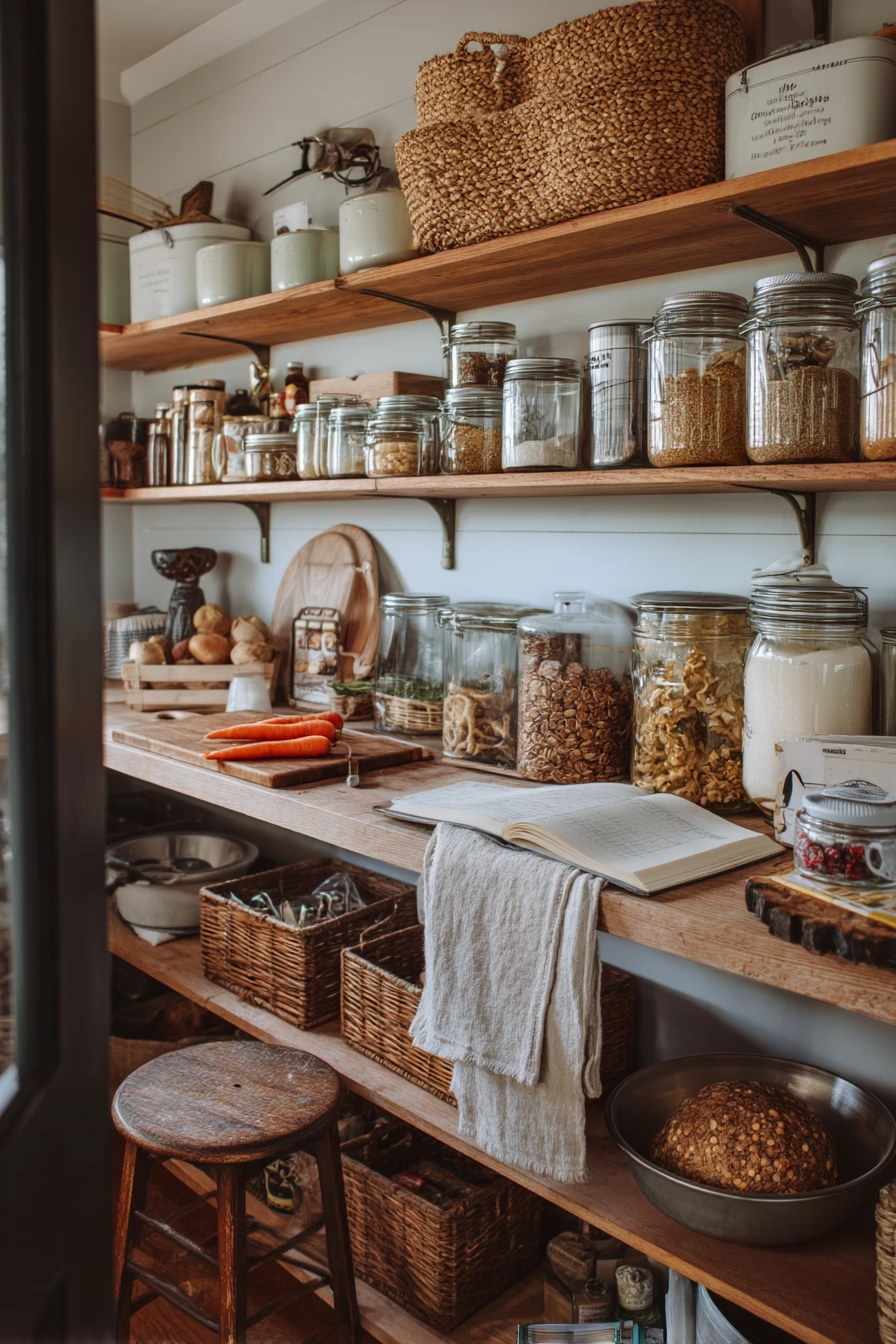
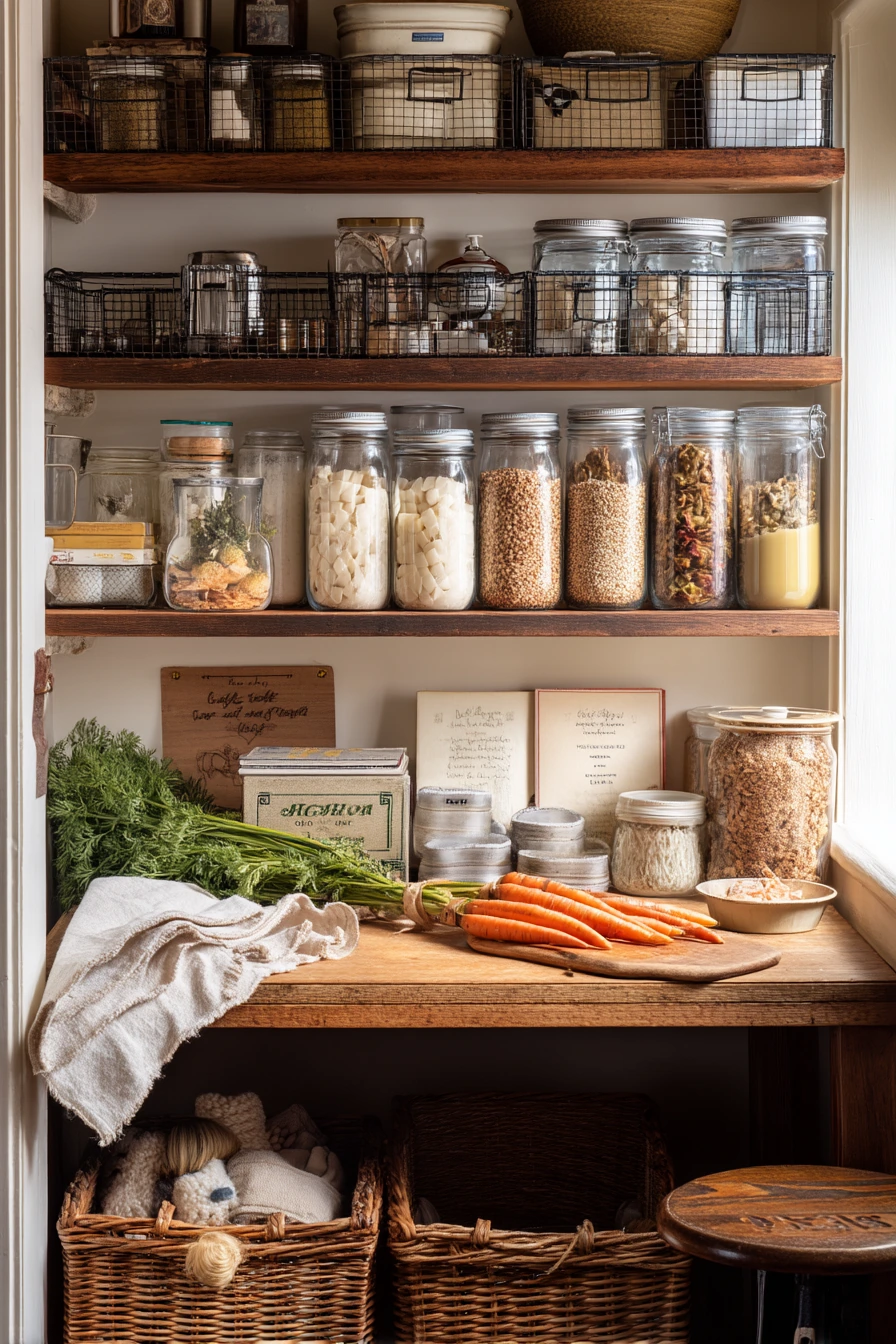
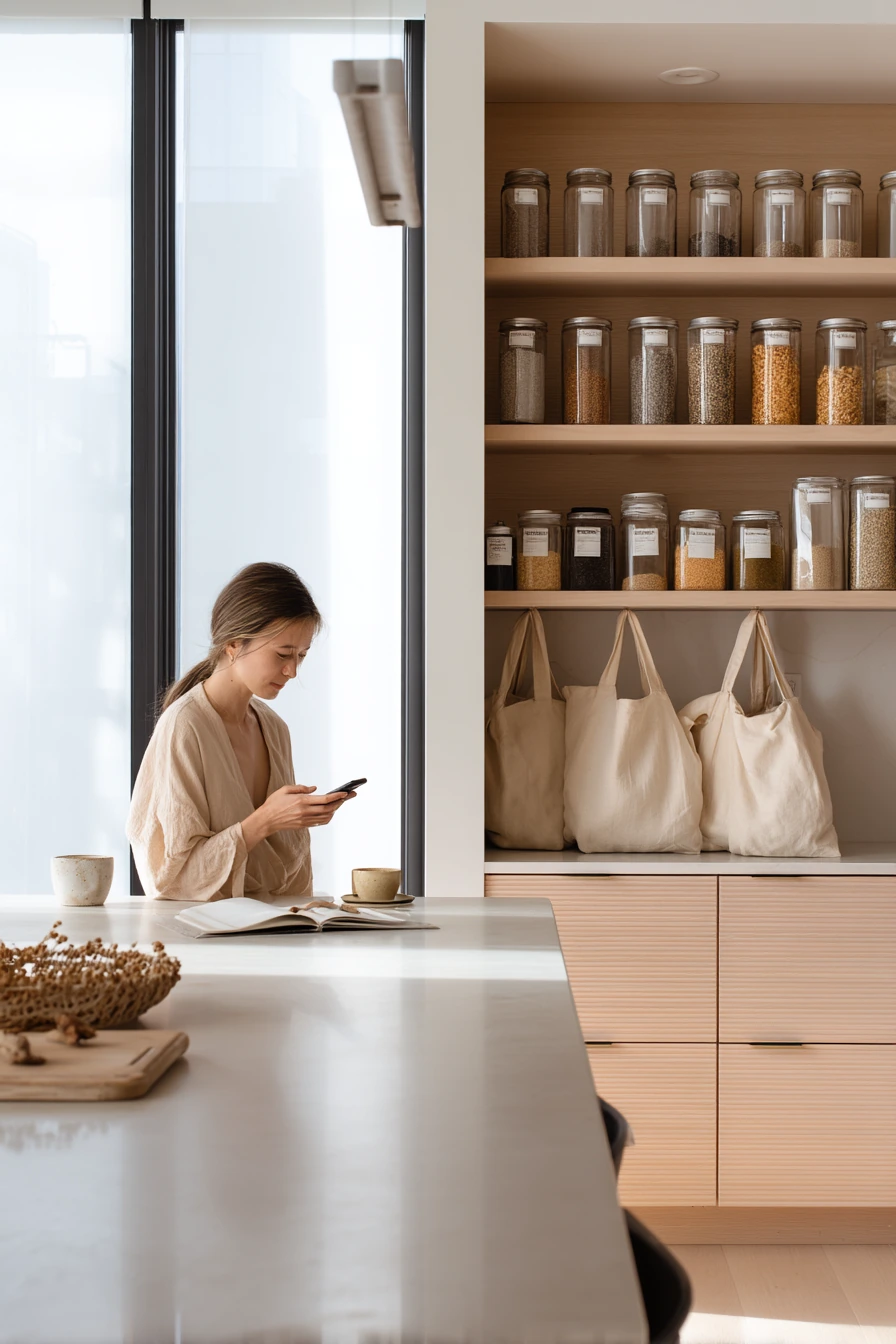
A minimal pantry idea fits a modern kitchen where you want everything to look calm. Flat-front cabinets hide visual clutter, while soft oak shelves and matte glass jars add warmth. Uniform labels make it easy to find food fast and keep the system consistent, even when you are tired and unloading groceries.
Build the layout around how you shop. If you use a grocery app on your phone, create sections that match your list, like breakfast, snacks, dinner, and baking. Hidden drawers for snacks and dry goods are great for keeping the main shelves tidy. Keep one shelf for “open now” items, like a bag of rice that is halfway used or the crackers you are finishing this week. A linen tote can hang on a hook near the pantry so it is ready for the next trip.
How to style it: limit the number of container materials. Matte glass looks soft in diffused window light and hides uneven packaging. Add one small tray for an espresso cup and reading glasses if the pantry is part of a larger wall, but keep surfaces mostly clear so the look stays crisp.
- Choose one label format and use it on every jar and bin.
- Use matte jars for staples and clear bins for items you need to see.
- Add hidden drawers for snacks to reduce shelf clutter.
- Store duplicates in a backstock area so shelves stay clean.
- Keep a small “open now” bin to prevent half bags everywhere.
Pro Design Tip: Use the same container footprint per shelf depth so rows line up and the pantry looks built-in, even in a standard cabinet.
Budget Considerations: Uniform jars can be costly; buy a starter set for the front row and use matching labels on reused containers behind them.

8. Walk-In Pantry Ideas for Home Bakers and Dessert Prep

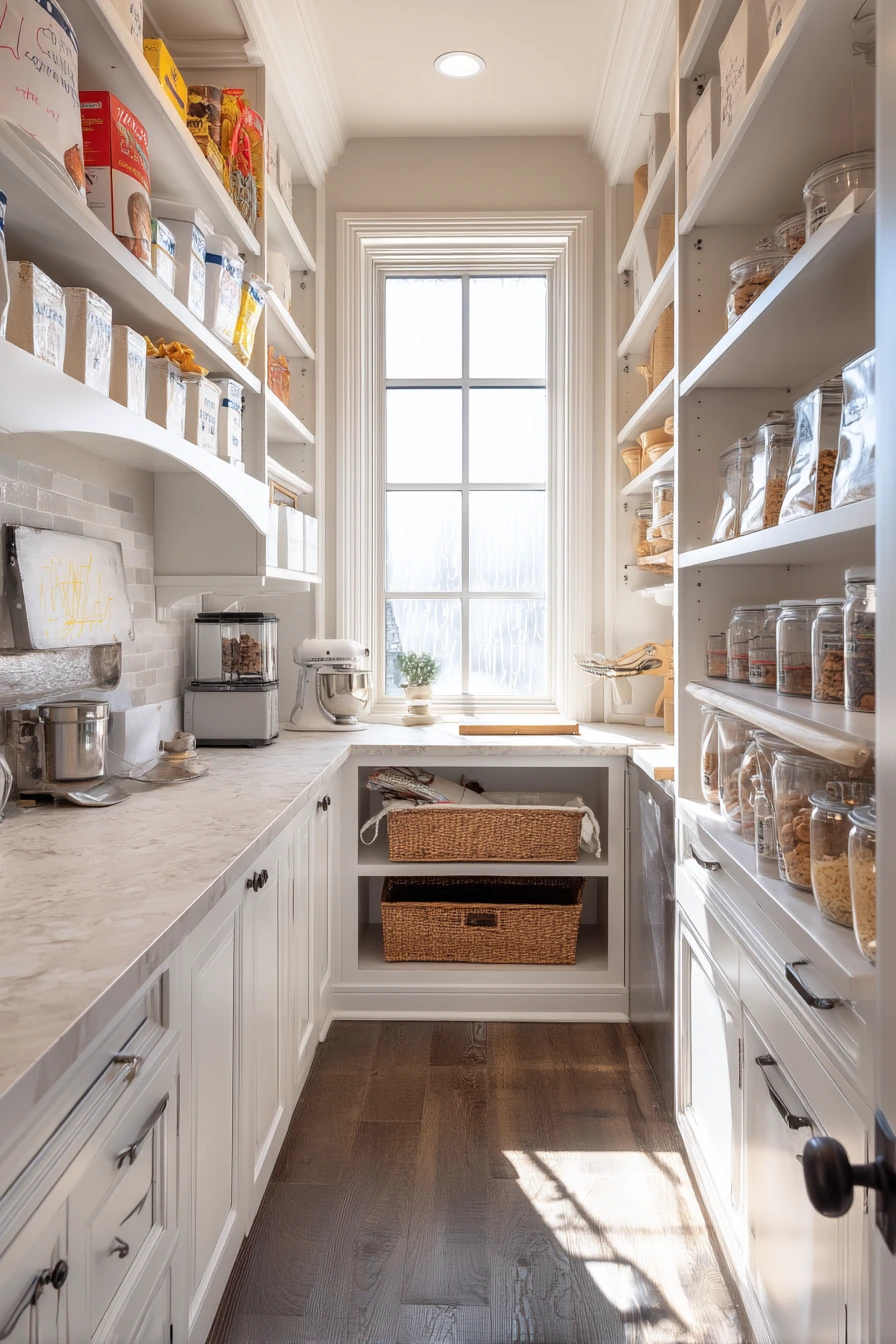
A walk-in pantry designed for home bakers needs deep shelves, strong storage, and easy cleanup. Flour bins, cookie tins, cooling racks, and mixer storage take up space fast, so plan shelves by tool size. Add a dedicated baking drawer with measuring cups, spoons, piping tips, and food coloring so you do not hunt mid-recipe.
Set up the pantry so baking can start right away. Keep flour, sugar, and brown sugar in sealed bins at waist height. Store parchment rolls and foil in a vertical slot. Put cookie sheets and racks in a divider so they stand upright. Leave a small counter section for quick tasks like weighing ingredients or setting out a brownie tray. Real-life details matter here, so you can also reserve a spot on the inside door for kids’ drawings or a simple recipe list.
How to style it: group tins and jars by height and keep labels facing out. Use one color family for bins so the room feels calm, even when there is flour dust. Late afternoon light makes this space cozy, so warm bulbs and light wood shelves photograph well for Pinterest.
- Store flour and sugar in airtight bins to stop bugs and clumps.
- Use vertical dividers for baking sheets, racks, and cutting boards.
- Keep a baking drawer with measuring tools and small supplies.
- Add a shallow bin for sprinkles, chocolate chips, and nuts.
- Reserve one shelf for mixer attachments and heavy tools.
Pro Design Tip: Install a pull-out work surface or rolling cart in the pantry so you can mix and measure without blocking the main kitchen.
Budget Considerations: Large flour bins can be pricey; start with one for flour and one for sugar, then use sturdy food-safe buckets or basic containers for the rest.
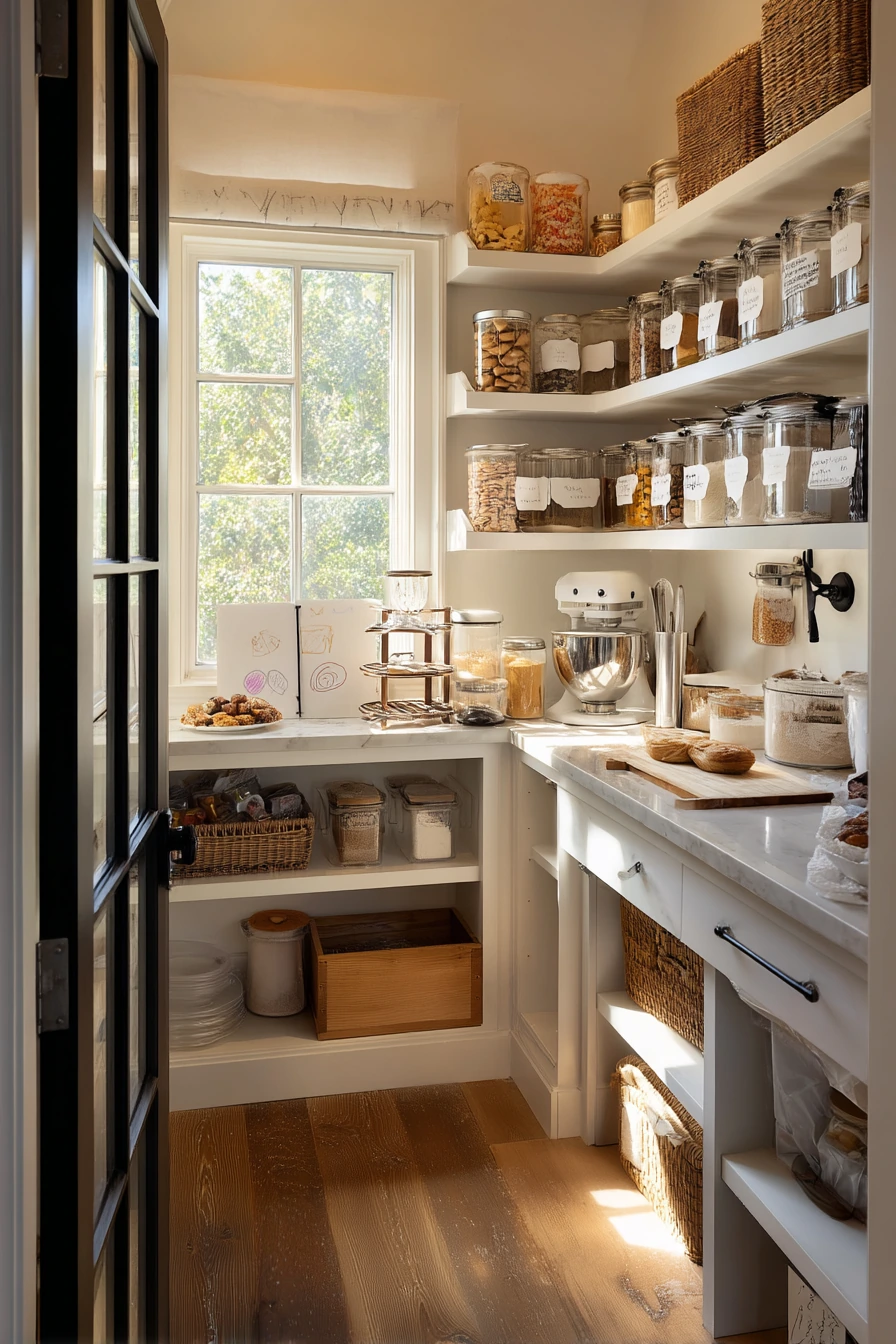
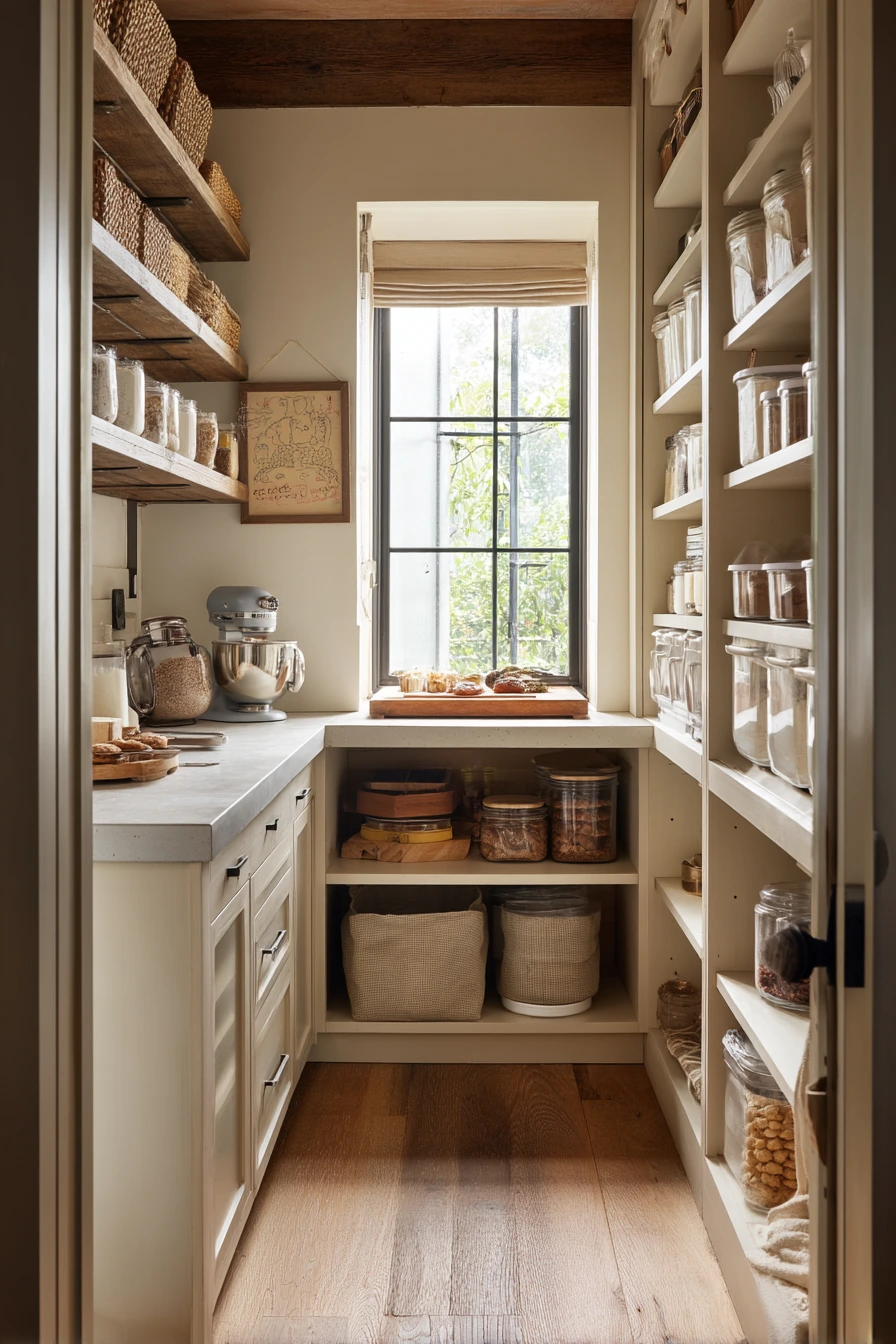
9. Family Pantry Ideas with Color-Coded Baskets and Lunch Prep Bins

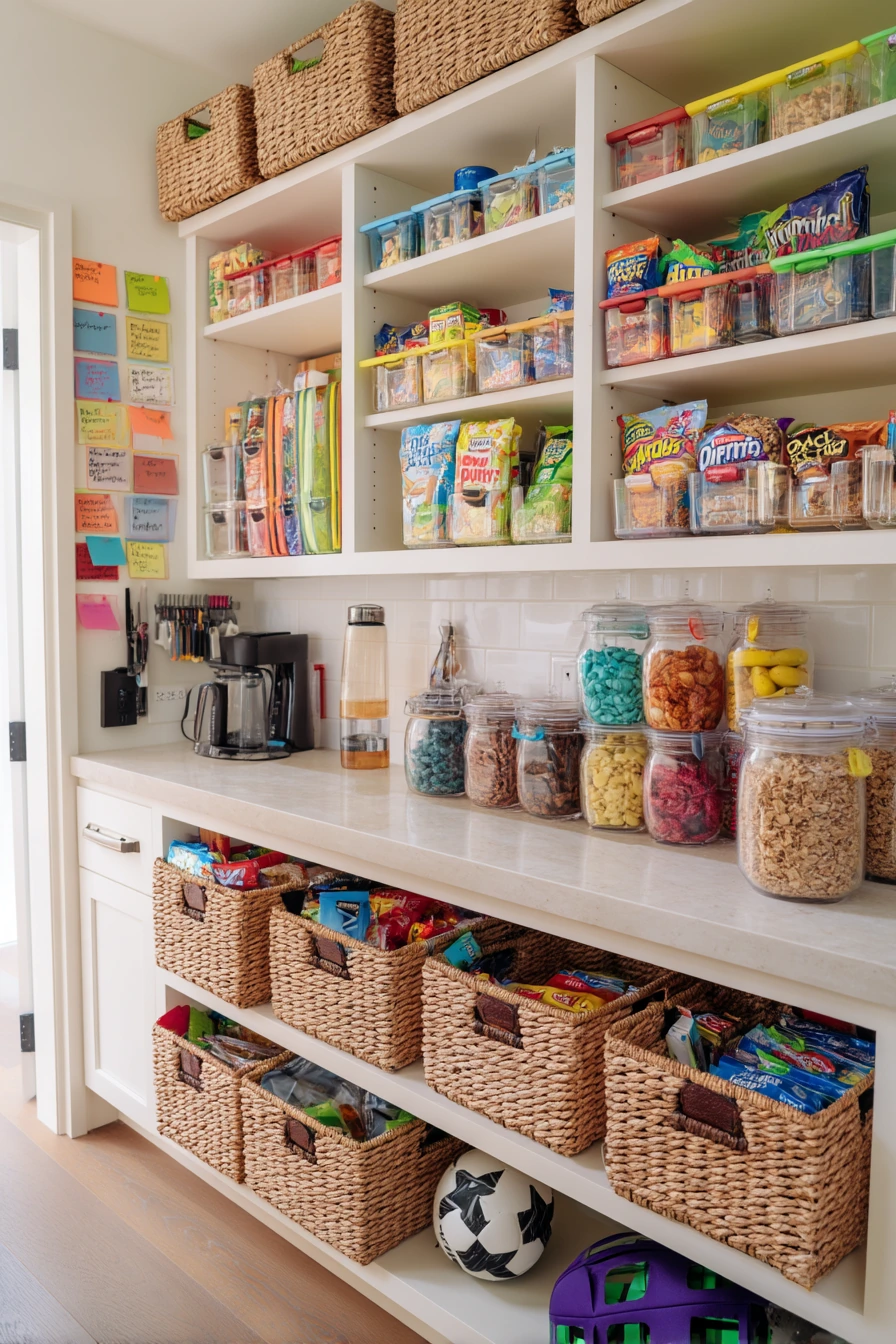
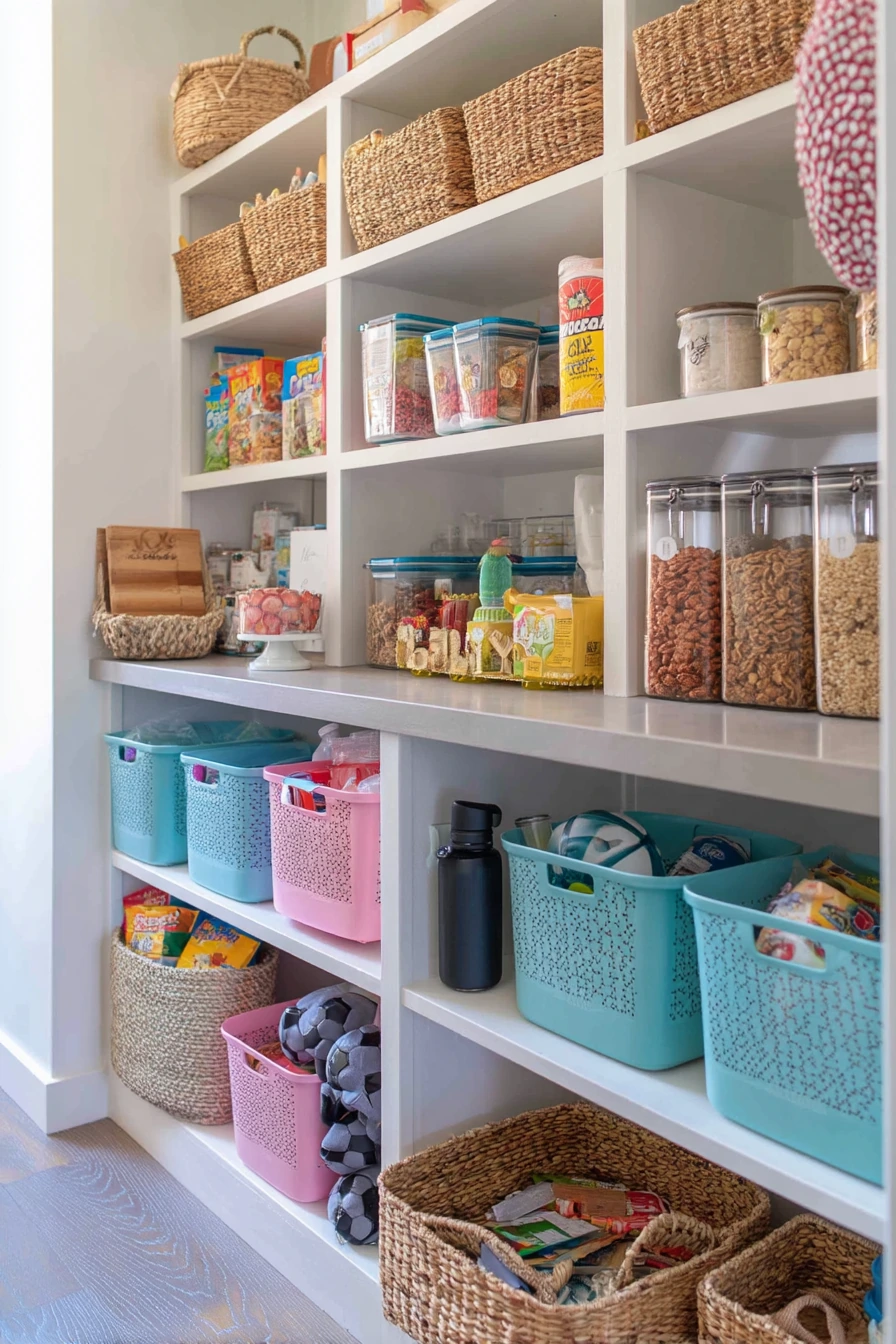
Family pantry ideas work best when kids can help and adults can still find everything fast. Color-coded baskets make it clear where items belong, and snack zones by kid reduce daily questions. Add a cereal shelf, lunch-prep bins, and clear bins for school-week staples like applesauce pouches, pretzels, and nut-free snacks.
Plan for the messy moments. A soccer bag on the floor and a spilled granola cluster on the shelf are normal, so keep a small handheld vacuum nearby or store a dustpan in the pantry. Sticky note labels can work, but consider upgrading to simple printed labels once the zones are proven. Store reusable bottles and lunch containers close to the pantry if you pack lunches daily, so you are not walking all over the kitchen.
How to style it: pick a simple color plan, like one basket color per child and one neutral color for shared snacks. Use clear bins for items you need to track quickly, like granola bars. Keep the front edge of baskets aligned so it looks tidy in photos, even if the inside is not perfect.
- Assign a basket to each child for grab-and-go snacks.
- Create a lunch-prep bin with baggies, napkins, and clips.
- Use clear bins for weekly staples so you can see what is low.
- Keep heavier items low so kids can help safely.
- Add a small “after school” zone for quick bites and sports snacks.
Pro Design Tip: Label shelves as well as bins, so the system still works when baskets get moved to the counter during packing.
Budget Considerations: Color-coded baskets do not need to match; use affordable bins in the same size, then add colored label dots or tape for each kid.

10. Cottage Corner Pantry Ideas for an Angled Nook
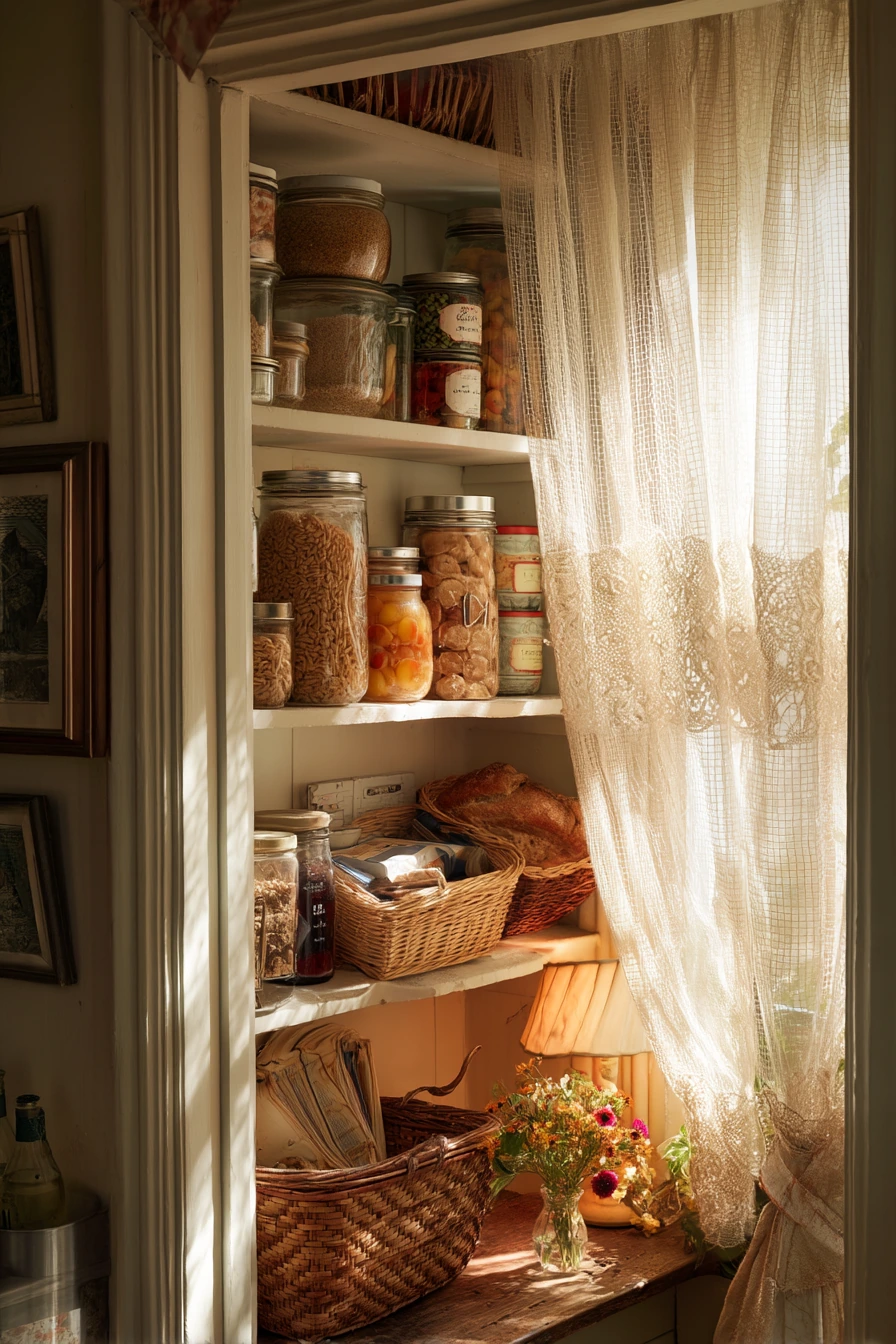
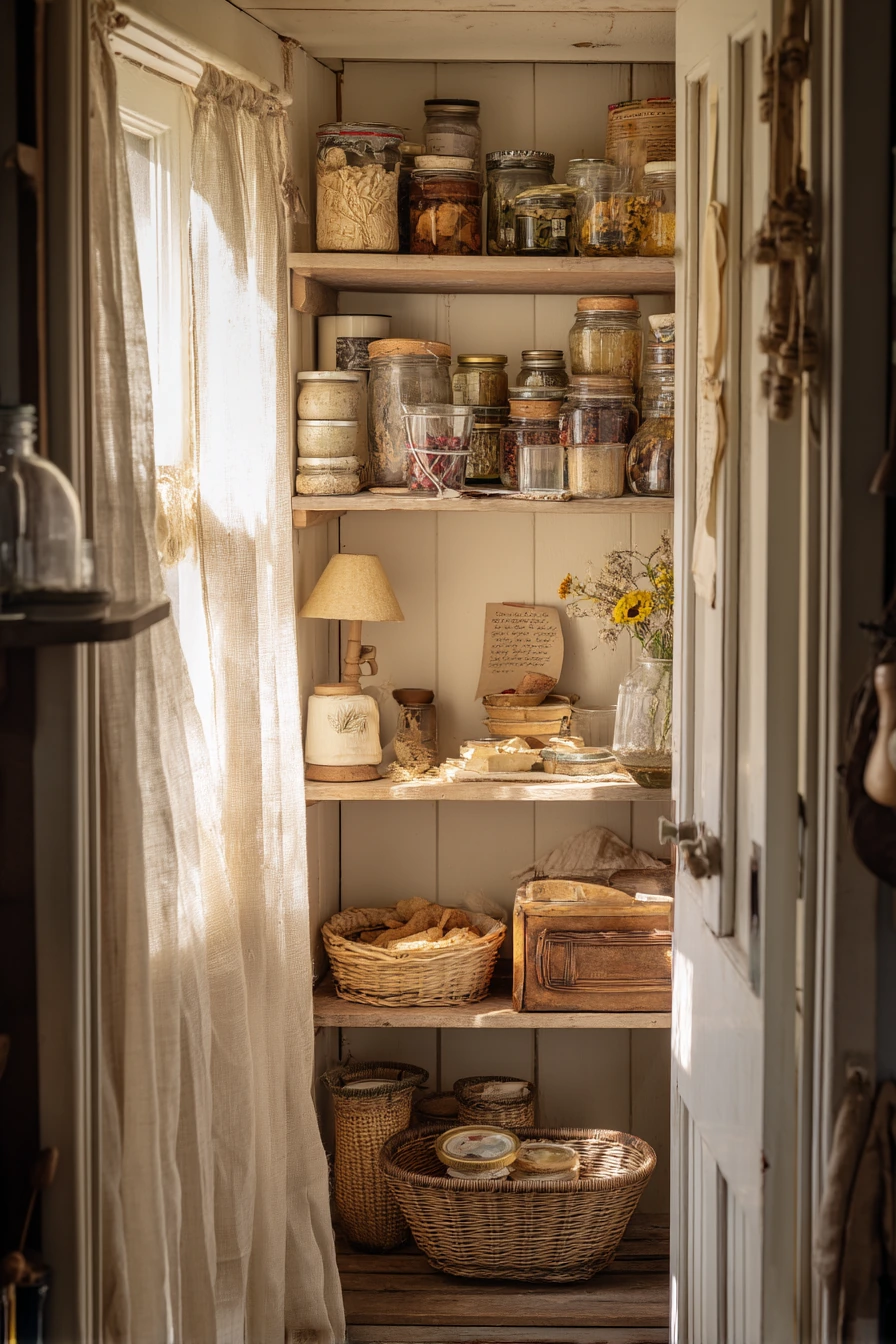
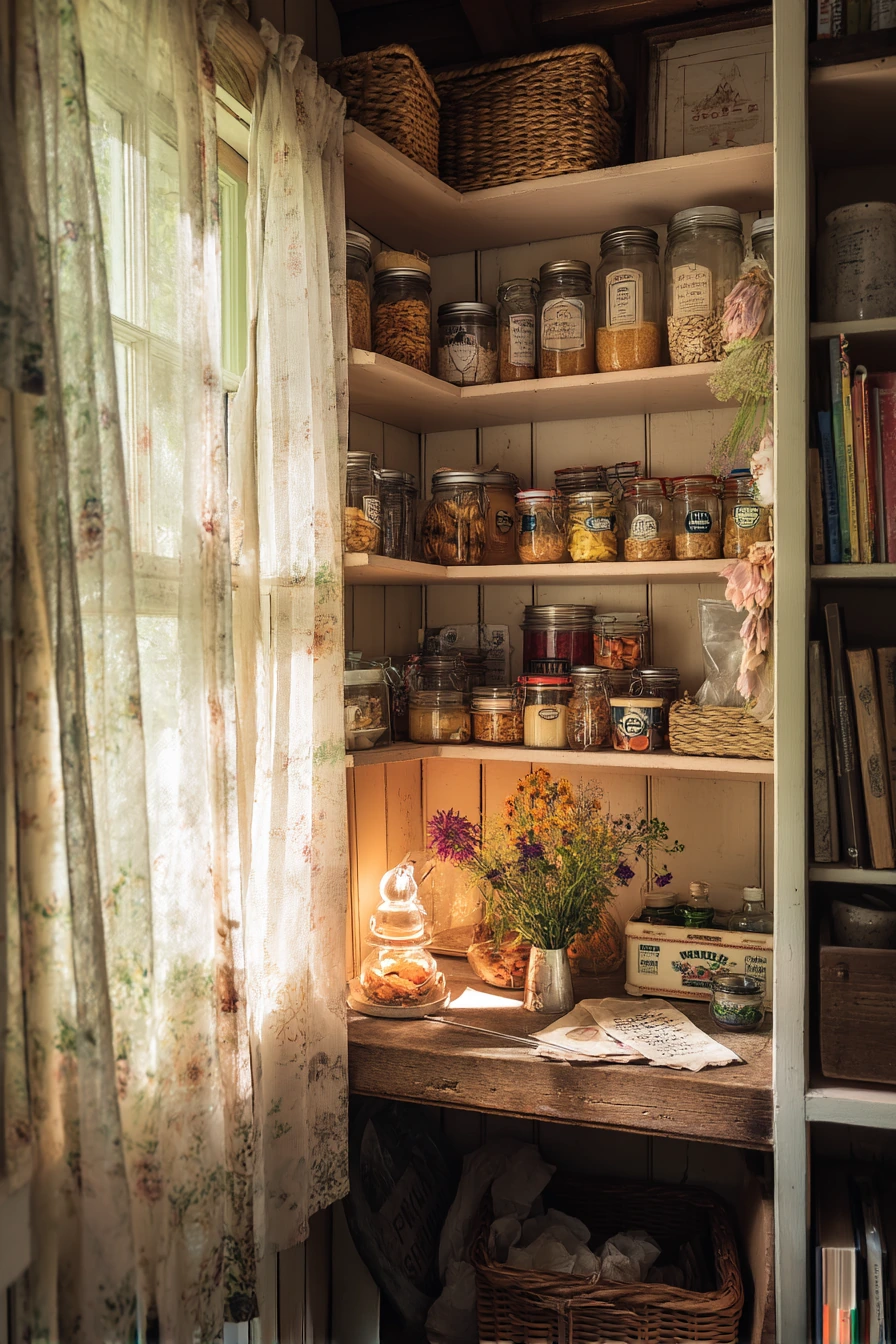
A corner pantry idea in a cottage kitchen is perfect for awkward angles. Fitted shelves tucked into an angled nook can turn a dead corner into useful storage. Use glass jars for dry goods, vintage tins for tea or cookies, and woven baskets for snacks and baking items. A small lamp on the lowest shelf adds a warm glow and helps you see into the corner.
Keep the layout cozy but practical. Put a bread box nearby if you bake or buy fresh loaves often. If you like to read while dinner simmers, a half-read novel can live on a lower shelf, but keep it away from food spills. Add wildflowers in a jar for a simple touch that looks natural in filtered sunlight through gauzy curtains. A smudged grocery note can be clipped to a tin so it stays visible.
How to style it: lean into soft textures and warm tones. Mix clear jars with a few patterned tins so the pantry feels collected, not sterile. Keep the most-used staples on the front edge, and store less-used items deeper in baskets so the corner does not become a black hole.
- Use fitted corner shelves or triangular shelves to match the nook.
- Store snacks in baskets so small items do not slide to the back.
- Use vintage tins for tea, baking chips, and cookies.
- Add a small lamp or battery puck light for the darkest shelf.
- Clip a grocery note where you will see it while cooking.
Pro Design Tip: Add a short front rail to one or two shelves so jars do not tip forward in the angled corner.
Budget Considerations: If custom fitted shelves cost too much, use off-the-shelf floating shelves cut to size, or add a corner bookcase for a similar effect.

The best kitchen pantry ideas match your space and your routine. A pull-out pantry helps busy families, open shelves suit meal prep, and a walk-in baking pantry supports big projects.
Start with zones, then choose containers that fit your shelves and the foods you buy. Add labels, a small restock list, and one or two styling touches like baskets or a lamp.
If you want the fastest win, pick one problem area, like snacks or spices, and fix that first. Small changes stack up, and your pantry will feel easier to use every day.
FAQ
What is the best way to organize a kitchen pantry? Group food by category, keep everyday items at eye level, and use bins and jars so small packages do not topple.
How do I organize a pantry in a small apartment kitchen? Use a shallow shelf setup, over-the-door storage, slim spice racks, and clear containers to save space and keep items visible.
Are glass jars better than plastic containers? Glass jars look tidy and do not hold odors, but plastic is lighter and cheaper. Use what fits your budget and shelf weight limits.
How can I make a pantry look good for Pinterest photos? Use matching labels, limit container colors, line up basket edges, and keep one open spot so it does not look overfilled.
What should not be stored in a pantry? Store heat-sensitive items like some oils away from hot spots, and do not keep cleaning chemicals next to food.
How do I keep kids from making the pantry messy? Give them a low snack zone, use labeled bins, and keep a simple rule that snacks go back into the same basket.